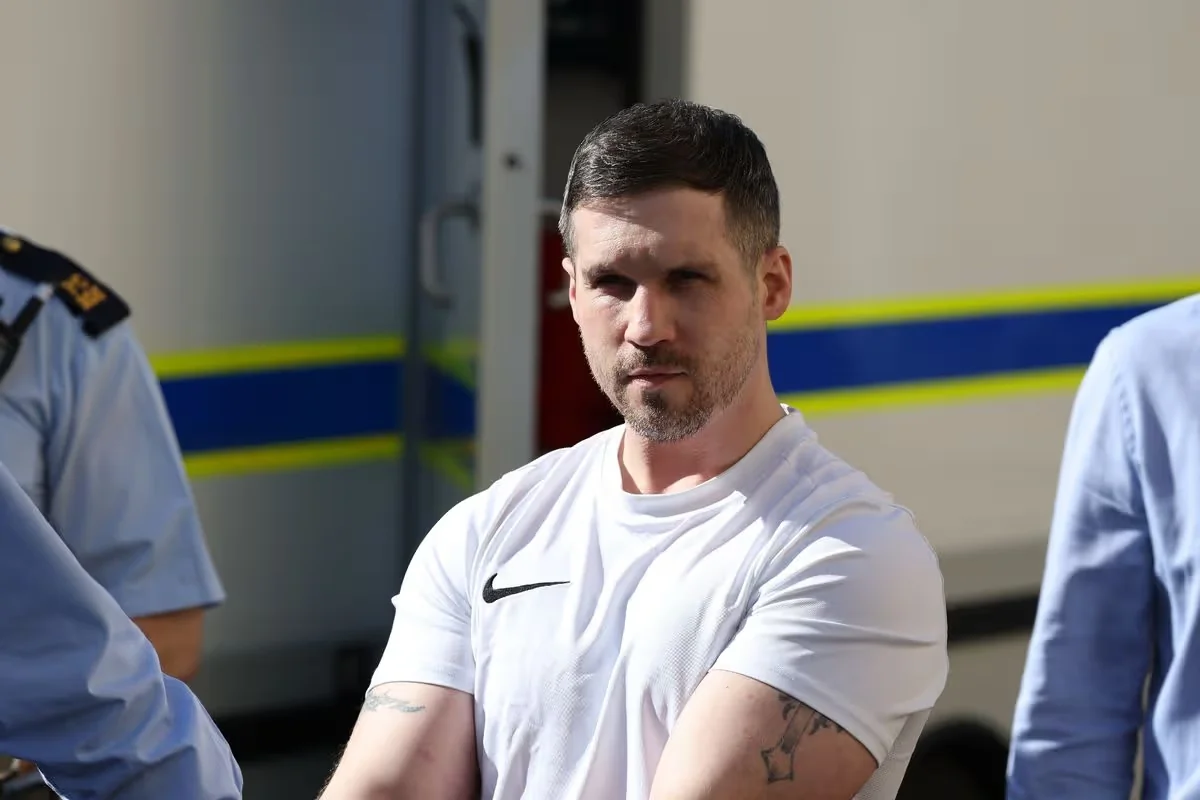
2026.3.19 Four in court over alleged Irish Defence Army ‘right-wing extremist’ Galway mosque plot
Garrett Pollock (35), Karolis Peckauskas (38), Charles Flynn (35), and Darren Gorman (33), all appeared before a sitting of Portlaoise District Court
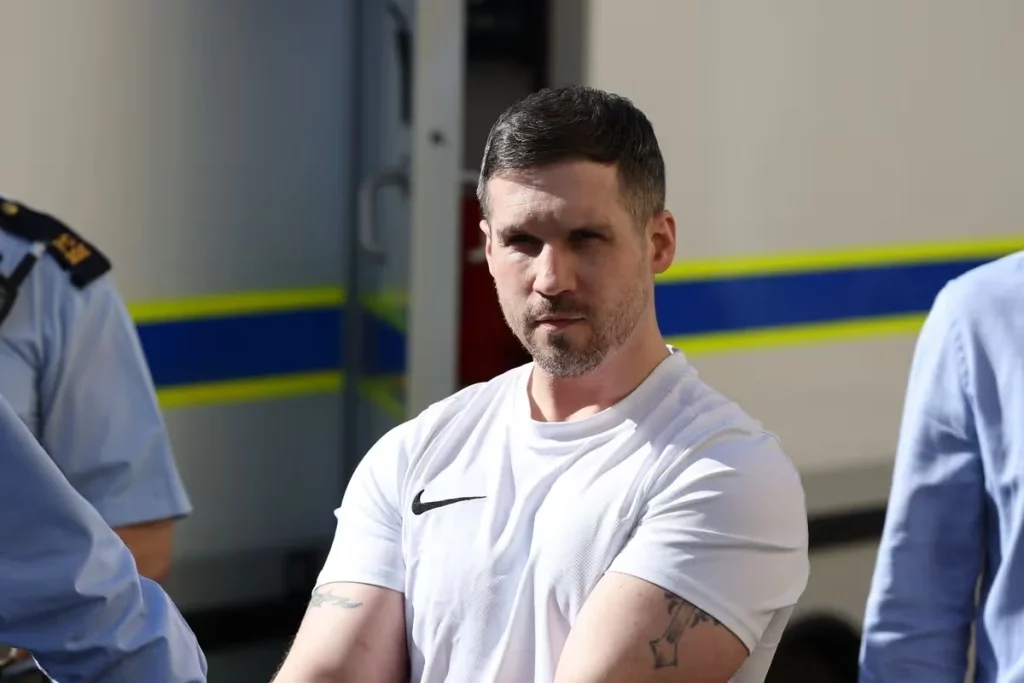
Four men have appeared in court charged over an alleged “violent right-wing extremist” plot to target a mosque in Co Galway.
Garrett Pollock (35), Karolis Peckauskas (38), Charles Flynn (35), and Darren Gorman (33), all appeared before a sitting of Portlaoise District Court, charged with a variety of offences related to an alleged attempt to set fire to the mosque in November of last year.
The court also later heard that gardai had information that other people with similar views to one of the accused had attempted to identify the home address of an investigating officer involved in the case.
In objecting to bail for three of the accused, gardaí played a video in court showing four men wearing balaclavas standing in front of a tricolour in what gardai allege is Mr. Gorman’s kitchen at O’Moore Place, Portlaoise, Co. Laois, around 9pm on November 4 last year. In the video a masked speaker claims they are the “Irish Defence Army” and are responsible for the “destruction” of the Galway mosque. Gardai would later tell the court that the group poses a threat to migrants and members of the Islamic community, and were planning further attacks.
In the video the man states that this won’t be the group’s last attack and described their philosophy as “an eye for an eye. A speaker in the video, goes on to say that they “simply do not care” and that this will not be their last attack. They also indicate in the video that their threats apply to anyone who has helped facilitate the erection of IPAS centres—and that they vow to rid Ireland of migrants.
Charles Flynn, 35, of Castlerock Avenue in Castleconnell, Co. Limerick, appeared before the court charged with attempting to engage in terrorist activity or terrorist-linked activity by attempting to damage the Maryam Mosque in Galway by fire. A Detective Garda with the Special Detective Unit, who cannot be identified by court order, said that Mr. Flynn responded “I apologise for my actions,” when charged after caution.
Darren Gorman (33) of O’Moore Place in Portlaoise, Co Laois meanwhile was also charged with attempting to engage in terror activity or a terrorist-linked activity by attempting to damage the Maryam Mosque in Galway by fire on November 4th and 5th last. A Detective Garda with the Special Detective Unit said the accused made “no reply” when charged after caution.
In objecting to bail, gardai said the alleged offence in relation to the terror charge carries a term of up to 10 years. He said Mr Gorman was stopped and searched and brought to Portlaoise Garda station. Four threaded pipe ends and bottles of hydrogen peroxide were recovered inside the vehicle, the Garda said. He said an examination of devices “strongly indicate” a plan to manufacture explosive devices.
He said that documents seized indicated that Mr Gorman was involved in the “planning of a “terrorist attack” on behalf of a group called the ‘Irish Defence Army.’ Gardai, he said, had located a manifesto document which outlined the intent of the group in the boot of a vehicle.
He said a Garda examination of a device belonging to one of the co-accused discovered a video featuring four masked men – one of whom they alleged was Mr Gorman. The group in the video say they are the Irish Defence Army and claim responsibility for an attack on the mosque in Galway, stating that they are responsible for its “destruction.”
The Detective Garda told the court that gardai found “strong evidence” that an attack on the Galway mosque was “imminent” and that Mr. Gorman was a member of a “violent right-wing extremist group” involved in planning further terrorist attacks. Evidence gathered from the video recovered indicated that the group intended to further target other mosques and IPAS centres if the Galway attack was successful, the court was told.
In objecting to bail for Mr Flynn, another Detective Garda also outlined that he believed the accused was a member of this “violent right-wing extremist group.” He said the group “identified IPAS centres as legitimate targets.”
Similar evidence was given in relation to the devices found in the vehicle, the manifesto, and the video played in court. The Detective Garda alleged in court that it was clear that Mr Flynn was involved in the manufacture of explosive devices. He said he believed if granted bail the applicant would fail to answer given the seriousness of the charge – and that he would “continue his affiliation” with a violent right wing group.
During the bail hearing Mr Flynn spoke up in court and said “do I not get a chance to talk?”
After frequent commentary from the accused Judge Cody said “this is not a Judge Judy court,” and told them to stay silent. Defence Counsel for Mr Gorman said his client has young children, resides with his family and is in receipt of a disability allowance. He was arrested originally in November 2025 and had no further dealings with gardai until today. He “denies the charges before the court,” Counsel said and was going to defend his position. Mr Gorman has “long-standing” mental health issues, he added.
Counsel for Mr Flynn said he has a young family and resides in Limerick – a “considerable distance from the mosque in question.” He said the evidence against his client largely comprises of implements found in the car that he’s not a registered owner of. His ties to this come from the video seen in court, he said. He said Mr Flynn has a possible avenue to object to the evidence brought against him, citing that it was circumstantial in nature.
A Detective Sergeant said the evidence will show the video was recorded on November 4th at approximately 9pm. The traffic stop was at approximately 11pm, two hours later – and they were arrested at approximately 1am on November 5th.
Mr. Peckauskas (38), with an address on Newfoundwell Road in Drogheda, Co. Louth, is charged with possessing a hunting knife, two hatchets and a knuckle duster in a silver BMW vehicle alleged to be his at O’Moore Place in Portlaoise, Co. Laois, on November 4 last. It is allehed he intended to use these to incapaciate a perosn during terorrist activity.
He is further charged with attempting to engage in a terrorist activity or terrorist-linked activity by damage by fire to the Maryam Mosque in Galway on the 4th and 5th of November that year.
Giving evidence of arrest, charge and caution, a Detective Garda from the Special Detective Unit who cannot be identified, said the accused replied, “Not mine,” regarding the possession charges after caution, and, “Was not mentioned in the video,” regarding the terror charge. Mr Peckauskas did not apply for bail and was remanded into custody.
Garrett Pollock (35) with an address at Kilhorne Green, Annalong in Co Down, is charged with attempting to engage in a terrorist activity or terrorist-linked activity by attempting to damage by fire the Maryam Mosque in Galway in an offence motivated by hatred on November 4th and 5th of last year.
He is also further accused of knowingly having in his possession an explosive substance in a Citroen Dispatch van at An Tobar, Newfoundwell Road in Drogheda, Co Louth on November 4th last year. He is also charged with having two hatchets, a hunting knife and a knuckle duster in his possession that he intended to use to incapacitate or intimidate a person during a terrorist activity or terrorist-linked activity.
In objecting to bail in relation to Mr Pollock, a Detective Garda who cannot be identified said that three pipe end caps and bottles of hydrogen peroxide, plumbers putty, two axes, a knuckle duster and a hunting knife were all found in a car he was stopped in.
An examination of devices indicated that Mr Pollock had knowledge of and was planning a terrorist attack, the Garda told the court. The accused man, he said, made admissions in relation to the items found in the vehicle.
The Det Gda also outlined that it is alleged Mr Pollock is one of the masked men speaking in the video, reading a statement with the intention to “take violent action.”
Mr Pollock’s DNA was subsequently found on two balaclavas which were recovered from the vehicle, the Garda said. The accused man holds an “anti-Islamic” view and has no regard for the law of this country, the Garda further alleged, and he has “no ties” to the Republic of Ireland.
Mr Pollock is a “participant” in a violent right-wing organisation, and officers have obtained information that persons with “similar right-wing beliefs” as him have attempted to ascertain the address of an investigating officer involved in this investigation, the Garda told the court.
He told the court that gardai are concerned that Mr Pollock is a flight risk even without a passport as he could “easily take a ferry from the North to the mainland UK.” Gardai are also concerned that he may use “criminal or right-wing connections to leave the jurisdiction.”
In ruling against bail for all three men, Judge Cody said that after viewing the video several times “I am satisfied that the threats are real and intended.” He said therefore he was satisfied that the prosecution had established that refusal was needed “to prevent the commission of further serious offences.”
He remanded all four accused into custody – to appear next before the court on March 23rd by video link. The court heard that the Director of Public Prosecutions (DPP) has directed a trial on indictment – and that a venue is awaited.
2026.3.16 Trial hears Adams pushed for ending of IRA ceasefire in 1996
A former British Army intelligence officer has told the Gerry Adams civil trial in London that the former Sinn Féin president pushed for the ending of the IRA ceasefire with bombs in England in 1996.
Retired Brigadier Ian Liles told the court that the bombs were intended to force the British government into political concessions.
Mr Adams is being sued in the High Court in London by three victims of separate IRA bomb attacks in 1973 and 1996 who claim he was directly responsible.
Ian Liles is the last of 11 witnesses to be called by the prosecution team in the case.
He was appointed battalion intelligence officer in 1982 and held the role until his retirement in 1990.
In his witness statement, he said that during that time he was privy to a great deal of “high-grade intelligence” including military and police reports showing that Gerry Adams “was a leader within the Belfast PIRA and held various command and support appointments”.
Mr Liles said he saw many intelligence reports at the time of the Docklands and Manchester bombings in 1996 that said Gerry Adams believed it was the best time “to take the war to the Brits”.
“Adams wanted the PIRA to cause whatever havoc they could on the mainland, Germany and elsewhere to reap the political benefits and send a message to the British that the PIRA were not spent, and to force the weary British into concessions,” his statement adds.
“The hope from the PIRA was that the 1996 bombings would leverage pressure on the British because they knew the government would not tolerate attacks on the mainland at this point in the conflict; it would not have been ‘an acceptable level of violence’.
“The targets chosen in London and Manchester were deliberately high-profile targets to put this pressure on the UK government, cause economic pain to the UK and gain maximum publicity.”
He added that there was simply no way the bomb attacks in England in 1996 “could have happened without the oversight and approval of Mr Adams”.
The witness also alleges that Mr Adams was involved in the Bloody Friday bombings in Belfast city centre in July 1972 in which nine people were killed, and that he authorised the attack on the La Mon hotel in which 12 people were killed in February 1978.
He told the court that the British army and MI5 had recruited agents who were close to Gerry Adams and Martin McGuiness, including Freddie Scappaticci, the former agent known as Stakeknife.
Earlier, the court heard from journalist John Ware.
IRA members were angered by Adams’ denials, court hears
A journalist who spent decades reporting on the Troubles told the trial that IRA members he interviewed were angered by his repeated denials that he was a member of the organisation.
John Ware worked for the Sun newspaper, ITV and the BBC, specialising in security issues.
Based on conversations with former IRA members and police sources, he said he believes Gerry Adams was a member of the IRA army council for more than 30 years from the late 1970s and was “one of the single most influential strategists in the Republican movement”.
The former Louth TD and West Belfast MP has repeatedly denied ever being a member of the IRA and strenuously denies the allegations against him.
The journalist said the driving force behind IRA members speaking to him for one of his documentaries about Mr Adams was their anger at his “brazen, unequivocal, and unambiguous denial of his role in the PIRA [Provisional IRA]”.
His witness statement adds: “It clearly grated with many of them that when Adams said that he strongly supported the armed struggle, his denial of actual PIRA membership allowed him to avoid taking personal responsibility for their actions.
“They believed it was a slippery way of Adams avoiding personal responsibility for the death and destruction caused by the PIRA’s violence, which he had either ordered in the operational phase of his PIRA membership, and later in his strategic phase as a member of the PIRA army council.”
Questioned by a lawyer representing Mr Adams, the witness confirmed that he had no first-hand personal knowledge of who was responsible for the three bombings cited in this case.
Asked about his reporting which exposed collusion between the security forces and loyalist paramilitaries, Mr Ware agreed that he was on record as saying MI5 and the British army had made statements about the issue that were not true.
Edward Craven KC told the court there had been a pattern of dissemination of false information by the British army, the RUC and MI5.
Mr Ware said he was giving evidence in the trial for public interest reasons, stating that it was his belief that it is “manifestly not the case that Gerry Adams was never a member of the IRA”.
He said it would be wrong “for history to record that Mr Adams was never a member of the IRA when it is perfectly clear to me, my colleagues and scores and scores of people” that he was.
2026.3.16 Man tells trial he killed partner but cannot recall attack
A man accused of the murder of his partner who was stabbed to death told his trial today that he killed her but doesn’t remember doing it despite previously telling gardaí she had died by suicide.
31-year-old Adam Corcoran was giving evidence on the sixth day of his trial for the murder of his partner Daena Walsh at their home in Midleton on 2 August 2024.
He has also pleaded not guilty to arson.
Warning: Some readers may find details in this report distressing
In cross-examination at the Central Criminal Court in Cork today, he also denied trying to dismember her body before trying to set their home on fire.
Earlier, he told Defence Counsel Brendan Grehan SC that the deceased had a knife with a red handle in her right hand that afternoon in their kitchen.
She was self-harming, he claimed, shouting at him that he was cheating on her and she was “sick of it, she was going to end it all”.
Mr. Corcoran claimed “she was swinging at him”. He said he grabbed her by the wrist “she was hitting me and headbutting me, she was lashing out. I didn’t know where the knife was. I started lashing out at her, she fell over, I was on top of her”.
He told Defence Counsel Brendan Grehan SC he “hit her twice in the chest, she stopped moving. I was out of breath. I was very dizzy. When I came around, I felt wet on my t-shirt and the red knife was in my hand, she pulled at it. I dropped the knife, it was going to hit her face so I grabbed it”.
He told Mr Grehan that he ran from the flat, but returned with a neighbour and then called 999.
“I didn’t know what happened. I told the operator I thought she committed suicide,” he told Mr. Grehan.
Asked if he remembered telling Det. Inspector Cormac O’Bric that he tried to save her and that she said “I love you so much, it wasn’t your fault”, Mr. Corcoran said he couldn’t remember anything he said to the guard.
Asked what his position was now on all the different injuries she had, Mr. Corcoran replied to Mr. Grehan “I must have done (sic)”.
Asked if he intended to kill her, he replied “no”.Asked if he loved her, he said “very much”. Asked if he knew how the fire started, he said “no”.
In follow-up cross-examination, Prosecution Senior Counsel Donal O’Sullivan asked Mr. Corcoran if he had been acting in self-defence. Mr. Corcoran replied “no”.
He asked him if he was saying it was an accident. He said “no”.
Mr. O’Sullivan asked him about his claims of dropping the knife during the fight. Mr. Corcoran said what happened was “as it fell I caught it and on the swing of the catch, it went into her arm where there was already a cut”.
“So it got stuck and when you pulled it out, the wound got much bigger”, Mr. O’Sullivan asked. Mr. Corcoran replied “yeah”.
Mr. O’Sullivan said “This is nonsense. You are making up a story to fit the facts. You are trying to say it hit her face and her elbow. Did it bounce into her neck too?”
He replied: “I don’t know”.
Mr. O’Sullivan asked him where the blue knife with the serrated edges was. Mr. Corcoran said he didn’t know.
“You disposed of your shirt in a bag, and the red knife in the bin”.
“The blue knife along with your tie is found in a bag in the bedroom. How did it get into the bag?”
“I don’t know”.
“It wasn’t you who put the aerosol cans on the cooker?”, Mr. Corcoran replied “no”.
Mr. O’Sullivan said he would put it to him that the blue knife was “the instrument of her death and you used it multiple times”.
He challenged him on his version of events, saying he attacked Daena Walsh.
“You stabbed her repeatedly and ferociously. The blue knife went through her breastbone four times, isn’t that what happened?”
Mr. Corcoran replied: “I don’t know”.
Mr. O’Sullivan said the court and jury of 8 men and 4 women heard evidence that the injury to the mother of two’s left arm was carried out by a bread knife, with serrated edges, post mortem.
“Essentially, you did that to dismember the body”, the prosecution counsel said. Mr. Corcoran replied “no”.
The defendant denied that when this didn’t work, he decided to put the aerosol cans on the cooker to start a fire.
Mr. O’Sullivan asked Mr. Corcoran if he was saying that she hadn’t taken her own life.
He replied: “Yes, I killed her, yes”.
“But why did you say it was a suicide to 999?”, Mr. O’Sullivan asked.
“That is what I believed at the time, I didn’t know what happened”.
Mr. O’Sullivan put it to the defendant that he lied repeatedly to the jury.
“You lied from the start, to the 999 operator, to the guards on the day, to the guards in the days after, and you are lying now”.
Mr. Corcoran denied this.
His trial before Ms Justice Siobhan Lankford continues.
2026.3.14 Garda give update on ‘unexplained’ death of Ballincollig woman Kelly Cremin
The young mum was a Ballincollig native
A post-mortem will determine the course of the investigation into the death of a woman in Ballincollig yesterday evening, Gardaí have confirmed. The woman was discovered in a property in the Innishmore Park area of the suburb after 5 pm.
The woman has been named locally as Kelly Cremin, 32. The young mother was a well-known native of Innishmore, having lived in Ballincollig all her life and known as a “lovely girl,” according to friends and locals.
Gardaí have confirmed that her death is so far as a result of “unexplained circumstances” and that no one else was in the home when the woman was found at the scene. Her body was conveyed to the morgue at University College Cork last night for post-mortem examination today, Saturday. The results will determine the course of the investigation, Gardaí say.
Gardaí are now seeking witnesses and obtaining home security, CCTV and dash-cam footage from between Thursday afternoon and Friday evening in an attempt to piece together events. Last night, Gardaí described it as a very “serious incident.”
Gardaí and emergency services rushed to the scene of the incident, a home in Innishmore Park, a mature residential area in the heart of the suburb. The property and the surrounding street have been sealed off for a technical examination by the Scenes of Crime unit.
Investigations continue this morning into the death of the young woman. News of her death has rocked the tight-knit community. At the scene last night, neighbours told CorkBeo how they were devastated to learn of the shocking incident, and many were too distraught to speak. A Family Liaison Officer (FLO) has been assigned to support the woman’s family.
Local Sinn Féin councillor, Joe Lynch, who lives in Innishmore, spent the evening with local residents near the scene and shared how the community has been “shell-shocked” by “truly shocking” news. He said: “In the first instance, my thoughts go out to the victim and their family. This is a truly shocking incident, and it has caused major upset in what is a close, tight-knit community.
“As a lifelong resident of the estate, I have spent the evening with friends and neighbours, and all I can say is that everyone here in Innishmore is shell-shocked. The Gardaí have a job to do now to bring the person responsible to justice, and we know they will do all they can to ensure that is done,” he added.
Gardaí are appealing for any witnesses to this incident to come forward. A spokesperson made an appeal: “Anyone who was in the Innishmore area of Ballincollig, Co Cork between 3:00 pm on Thursday 12th and 5:30 pm… Friday 13th March 2026, and who may have camera footage (including home security and dash-cam footage) is asked to provide this footage to investigating Gardaí.”
Anyone with information is asked to contact Togher Garda Station on 021 4947120, the Garda Confidential Line on 1800 666 111, or any Garda station.
2026.3.9 Man (35) who beat his friend to death in drunken row found guilty of murder
A scaffolder who meted out a “volley of violence” on a defenceless “drunken bowsie” in response to his mother being insulted with lewd requests for sex has been found guilty of murder by a Central Criminal Court jury on Monday.
The panel of eight men and four women took six hours and 54 minutes over three days to reject the defence case by a majority verdict of ten to two, finding that this was not an unlawful killing but a case of murder.
It was the State’s case that Juris Kokenbergs died after his head was “stomped” on and blows “rained down on him” during an assault by his friend Tomas Cypas.
In his closing speech, Conor Devally SC, prosecuting, said that Cypas was under no threat and had the intent to at least cause serious injury to Kokenbergs.
Counsel said Cypas had inflicted “a battering” and an “appalling attack” with huge violence on his friend after Kokenbergs made “the utterances of a very drunk man”.
The jurors had the option of returning three verdicts in relation to the murder charge against Lithuanian national Cypas, namely: guilty of murder, not guilty of murder but guilty of manslaughter or not guilty.
The jurors were told by the trial judge that they could find Cypas not guilty of murder but guilty of manslaughter by reason of lack of intention to kill or cause serious injury or on the grounds of self-defence, provocation or intoxication.
Cypas (35), with an address at Foxborough Road, Lucan, Co Dublin had pleaded not guilty to murdering Latvian national Juris Kokenbergs (49) at Old Bridge Park, Lucan, Co Dublin on October 28th, 2024.
The defendant told gardaí in his interviews that he visited his mother at Old Bridge Park on October 26th to celebrate her birthday and have “some drinks”. Cypas said that Kokenbergs was already “pretty drunk” when he arrived at the house and that he wouldn’t have invited his friend if he knew he was in that state.
Cypas described his friend as being “so drunk” that “he didn’t seem to know who he was talking to…..he had been drinking for two weeks straight”.
The defendant said that there was an argument between him and Kokenbergs, adding: “It started over him [the deceased] telling my mam to go up and have sex with him. He said it three times.”
Cypas said Kokenbergs “came at” him first and had “started the punches”, so he acted in self-defence.
Cypas said he hit the deceased up to eight times in the face and didn’t “mean to hurt him or anything”.
“I didn’t think it was that bad, I didn’t consider he would die of his injuries. I didn’t plan this, he is my friend, it happened,” the defendant told detectives.
He denied stamping on Kokenbergs’ head during the assault.
Under cross-examination by the defence, a pathologist told the jurors that punching alone could have caused the extensive damage she found to the deceased’s brain.
Expert witness Dr Heidi Okkers testified that while “definitely” some sort of contact had been made from a shoe to the deceased’s scalp, she could not determine if it was significant.
The trial heard evidence that three areas of blood-staining with DNA matching that of Kokenbergs were found on the defendant’s runner. The jury also heard there was “weak support” for the position that Cypas’ footwear had made a pattern on the deceased’s head.
Following today’s majority verdict, Justice Paul McDermott thanked the jury for their service, which he said required careful attention to detail. He exempted them from jury duty for the next five years.
The judge will hand down the mandatory sentence of life imprisonment to Cypas on March 23rd and remanded the defendant in custody until that date.
On that date, the Kokenbergs family will have an opportunity to make a statement to the court about the impact Juris’ death has had on their lives.
The jury had listened to a 999 recording of Cypas on the morning of October 28th requesting an ambulance for his friend, who he said was no longer breathing and was cold to the touch.
When gardaí arrived at Old Bridge Park at 8.15am that morning and cautioned Cypas, the defendant replied: “I hit him, this isn’t murder, I just hit him”.
The defendant told gardaí in his interviews that he had checked regularly on Kokenbergs when he lay on his sofa over the course of two days.
Cypas said his friend had been breathing and snoring at 5am on the morning of October 28th before he discovered him lying on the kitchen floor dead hours later.
When asked to carry out CPR by an emergency services dispatcher, Cypas had replied: “It’s not going to help, it’s not helping no”.
The dispatcher said the ambulance crew would not be able to help his friend if Cypas did not do this. “He’s…even the smell off him you know,” Cypas had replied.
In seeking a verdict of manslaughter for Cypas, Brendan Grehan with Rebecca Smith, defending, had submitted that his client’s case was that he had acted in some way in self-defence, but what was much more likely was that the defendant had “lost it” and hit his friend with “a flurry of punches” in response to his mother being insulted with a lewd comment.
Grehan asked the trial jury to return a verdict of not guilty of murder but guilty of manslaughter, asking the panel: “Where is the intent the prosecution suggest you grab onto and hold tight?”
The defence also queried how far the State’s case that there was “extensive stamping” on the deceased’s head was made out on the evidence.
Grehan suggested that the pathologist had been fairly unequivocal in her evidence, when she said that punching alone could have caused the “terrible injuries” suffered by the deceased.
It was the defence contention that the case was not one of murder. “Murder is something you know when you see it and hear it and it is not the situation here; we are dealing with an unlawful killing,” argued Grehan.
In his charge to the jury, Justice McDermott said the reality of the case focused on what was in the mind of the defendant when he inflicted these injuries on the deceased and that this was the main focus of contest between the prosecution and defence.
2026.2.26 Cork sex offender sent lewd Snapchat to girl within 3 hours of prison release, court hears
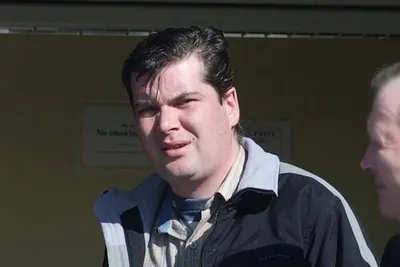
Anthony Quigley of Mitchelstown has 68 previous convictions
A 51-year-old convicted sex offender, who described Snapchat as a “safe haven for paedophiles,” sent a lewd message to a school girl on the mobile messaging app within three hours of being released from prison, a court has heard.
Gardai said in evidence at Cork Circuit Criminal Court that Anthony Quigley of Roches Heights, Mitchelstown, Co Cork also used What’s App to send a 16 year old autistic boy a picture of his penis and two memes of adult porn.
Det Garda Dave Barry told Judge Sinead Behan that Mr Quigley was released from the Midlands Prison in Portlaoise at 10.50am on September 17th, 2025. He had been jailed for nine months the previous February for a series of offences including one incident where he had put his arm around a woman in her sixties and asked her if she wanted to have sex with him.
When he was released from custody in relation to this offence he got on a train back to Cork. When he arrived in Mitchelstown he charged his phone and at 2.02pm he sent a Snapchat message to a 16 year old student in a Co Cork town.
Mr Quigley sent her the lyrics to a song. However, he had altered them to make them sexual. His Snapchat account name was SusieLol and he had 800 followers. The offence was brought to the attention of gardai and Mr Quigley was detained for questioning. He admitted using the Snapchat name Susie as a “decoy.” He told gardai that Snapchat was a “safe haven for paedophiles.”
He said he had become friends with school children. Det Garda Barry said that Quigley informed them that he had infiltrated the group of school children after he was added by just one student on Snapchat. Quigley told gardai that he “met one person (online) and that got me in the group.”
At the time he committed the offence he had received a ban from contacting any child under the age of 18 or from going within 50 metres of a school or such places where children gather. This ban was imposed on Quigley in February of last year by Judge Dermot Sheehan at a sitting of the Central Criminal Court in the city.
Under the terms of the 15 year order he was also warned not to engage in any sexually explicit conversation with females or to take up employment that would give him access to children.
This afternoon Defence barrister John Devlin said that his client had made full admissions in relation to his offending behaviour. He said that his client had suffered a head injury in a crash and that this impaired his memory and speech. The crash occurred over 25 years ago.
Meanwhile, Det Garda Shane O’Donoghue detailed the offending behaviour of Quigley which occurred between the 10th and the 15th of February 2025 shortly before he went in to jail in relation to an other offence. During that time Quigley had made contact with an autistic teenager.
He sent the 16 year old two memes of adult porn and a picture of his penis. 214 messages were exchanged between the two with Quigley sending 84 of them. The exchanges occurred on WhatsApp.
Meanwhile, Judge Sinead Behan said that she was very concerned that Quigley had started reoffending “at the very first opportunity” he got when he was released from custody in September 2025. She said that his behaviour was “extraordinary.”
She stressed that she needed to have a clear picture of what was causing Quigley to continuously reoffend. She ordered an updated psychiatric report and probation report and remanded Quigley in custody for sentencing on April 28th next.
Judge Behan said that it was important to obtain and understanding of how best to approach the matter “for the protection of society.” At one point during the hearing Quigley asked the Judge to “let him out on bail.” Judge Behan told him that there was “no question of you getting out on bail.”
Det Garda Barry gave the judge an outline of the previous offences of the accused. He received his first conviction in 2003 for making nuisance calls. Quigley has 68 previous convictions and has appeared before the Central Criminal, Court, the Circuit Criminal Court and the District court.
Of those convictions four are for sexual assault. He has 13 convictions for harassment or stalking, 12 for sending indecent messages or telephone communications, and three for hoax phone calls. The remainder are for public order or traffic offences.
Quigley has never had a job. He is in receipt of disability allowance and lives with his elderly parents.
2026.2.24 American man Michael Kelley rearrested over murder of Kerry farmer Michael Gaine
He was arrested at home earlier this morning
x1200
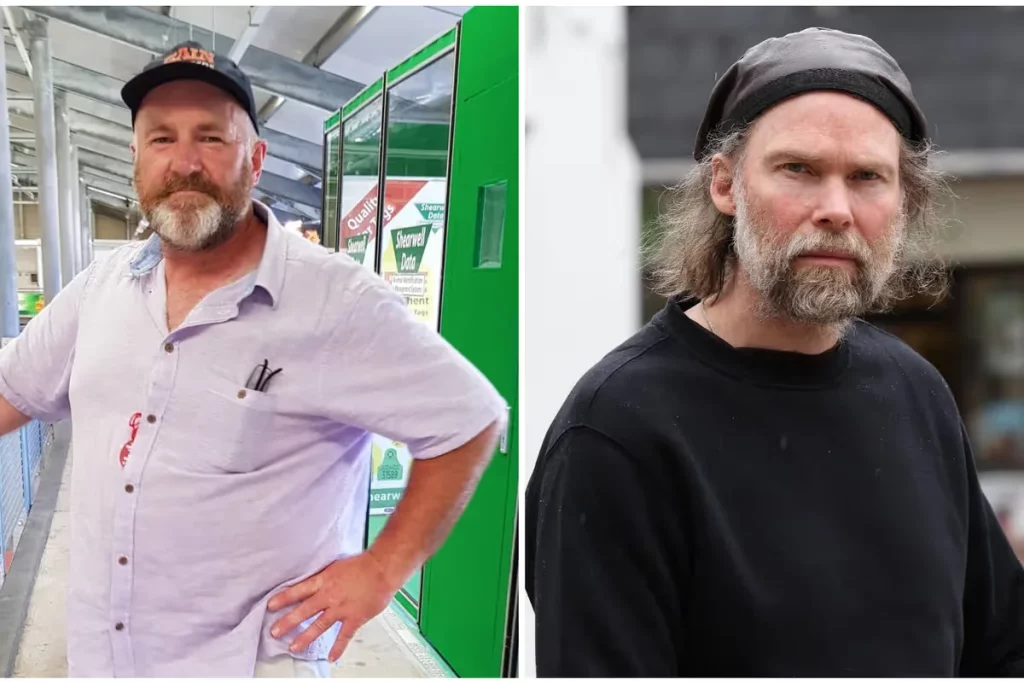
Gardai have rearrested Michael Kelley on suspicion of the murder of Kerry farmer Michael Gaine, it has emerged.
According to the Irish Mirror, American man Kelley, a self-admitted suspect for the murder of Mr Gaine, was arrested at his residence in Tralee earlier this morning.
The 54-year-old was arrested by gardai from the Kerry Division, as well as specialist detectives from the National Bureau of Criminal Investigation. They arrested him on suspicion of the murder of 56-year-old Mr Gaine, who gardai believe was killed at his farm outside of Kenmare on or around March 20 last year.
A Garda statement this morning confirmed: “Gardaí at Killarney Garda Station continue to investigate the disappearance and homicide of Michael Gaine (56), who was reported missing from his home near Kenmare, Co. Kerry, on Friday, 21st March 2025.
“A man (aged in his 50s) has been arrested in connection with the investigation this morning, Tuesday, 24th February 2026.He is currently detained at a Garda Station in Kerry Garda Division. The investigation led by Serious Crime Unit Kerry Division has been and continues to be supported by the Garda National Bureau of Criminal Investigation (GNBCI).
“An Garda Síochána, through family liaison officers, continue to liaise with and support the family of Micheal Gaine. Investigations are ongoing.”
Gardai initially treated the disappearance of Mr Gaine, last seen at a shop in Kenmare on that day, as a missing person’s case. But they later upgraded it to a homicide case on April 29 last year.
Kelley was first arrested on suspicion of murder on April 18, three days after the first of Mr Gaine’s dismembered remains were found on his land on May 16. He was later released without charge, but is now back in custody. The former American soldier, who lived on Mr Gaine’s farm at Carrig East, about 8km outside Kenmare, was being held at a Garda Station in Kerry this morning. Detectives can detain him for up to 24 hours.
The arrest of former US soldier Mr Kelley comes just over nine months after he was previously detained on suspicion of the murder of Mr Gaine. Mr Kelley, who denies any involvement in Mr Gaine’s death, was released without charge on Monday, May 19, last year, after being arrested the previous day. He was held at Killarney Garda Station on that occasion.
Sources have confirmed that the arrested man is Mr Kelley, who is originally from Maine in the north-east of the United States. He has been living in the Tralee area since he was released from Garda custody in May.
That arrest came just over 24 hours after the first of Mr Gaine’s remains were found spread on part of his farm. Gardai later established he had been killed before his body was dismembered and the remains were dumped in a slurry pit in a shed on his own farm.
On Friday, May 16, family and friends were looking after his farm and drew slurry from the pit which they then began spreading on the fields. The machinery broke down and, to their horror, they discovered what they suspected was bits of human tissue.
Gardai then rushed to the area, sealed off the entire farm and began a major search, later recovering the bulk of Mr Gaine’s remains in the slurry tank. Mr Kelley, who had been working on the farm in return for lodgings, was arrested on suspicion of murder on May 18. But he was released without charge at around 10.40 pm on Monday, May 19.
The following Friday, May 23, The Irish Mirror found Mr Kelley in Tralee, where he insisted he was innocent. He told us he was being framed for the murder by gangsters. He said: “There may be elements that want to string me up…people who have an interest in organised crime – people who are involved in organised crime.”
“Well that is a matter of record,” he told us when asked if he was being treated as a suspect and that he was arrested and interviewed by gardai. He added, “Do you know who I am? Well then why do you ask? Whether or not I’m a suspect is not a matter of perspective. It’s a matter of public record.”
Asked if he said anything to the gardai, Mr Kelley told us: “Well of course, but that’s all stuff that is privileged between the guards, the solicitor and myself.”
We then asked him if he denies any involvement in the murder of Mr Gaine, to which he said: “Yes.” When we asked Mr Kelley what he believed had happened to Mr Gaine, he responded: “It would be incautious for me to comment on that on the advice of my solicitor.”
Gardai have been continuing their investigation and made their fresh move against Mr Kelley on Tuesday morning. That is despite Pat Mann, Mr Kelley’s solicitor, telling an Irish Mirror documentary in its Shattered Lives podcast on the Gaine case that gardai had no evidence against his client.
Mr Mann also told us in November last year that he believed Mr Kelley should not have been arrested. “I didn’t think there was any basis for the arrest. And that subsequently is being borne out,” Mr Mann told us in an on-camera interview in Tralee.
The well-regarded solicitor said he believes that he was able to establish that the much-publicised murder of Mr Gaine had nothing to do with Mr Kelley. He told us: “Yeah, you’re quite right he said, there that he had been arrested back then in Killarney on suspicion of being involved in that incident. And we clearly were able to establish it had nothing to do with him, and with the result of that is sort of that.”
Mr Mann went further, saying he did not believe the arrest of his client was justifiable – and he felt that gardai clearly had nothing, as they released him without charge.
He said: “He was arrested on suspicion of having been involved in the death of that man and he was interviewed about it and quite clearly they must have thought, they must have as a result of the interview, they must have reached the conclusion that he wasn’t involved or otherwise they would have – which is the normal thing – they would have kept somebody, charged and them and brought them before a special sitting (of) court.”
Asked if his client is maintaining his innocence, he said: “Well, he is innocent. It isn’t a question of maintaining it. It is like somebody, for example, judges regularly say to people, juries, and things that somebody is entitled to the benefit of the doubt. Getting the doubt is not a benefit; it’s a fact.
“Because you see if you didn’t have any evidence against somebody, which clearly I don’t think they have against Michael, you’d actually be kind of defaming somebody, if you like, in a localised community or giving them a bad name, wrongly. Or targeting them for some lunatic to go after them, you know, if you said that.”
Asked if he felt gardai had any evidence against his client, he added: “I don’t think so, no. I just instinctively feel there isn’t. I just feel if there was going to be something – sure it’s a while back now. I can’t even remember. There’s been nothing sure in the meantime.”
发表回复