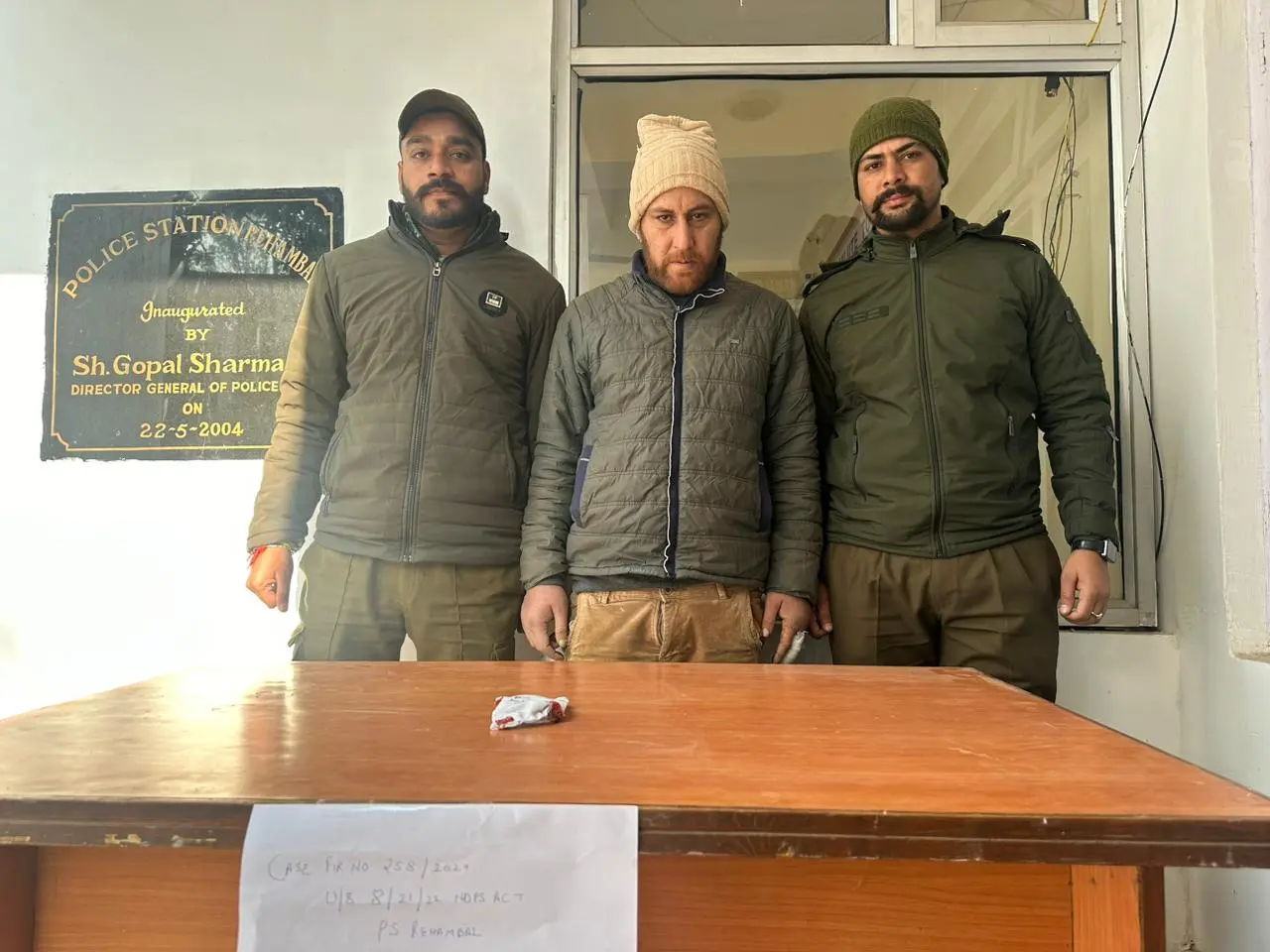

02 Drug peddlers namely Vijay Sharma S/O Premu R/O Jandrore & Sushil Sharma S/O ParasRam R/O Kaghote,Ramnagar held with contraband (heroin like) substance by police in Rehambal, Udhampur
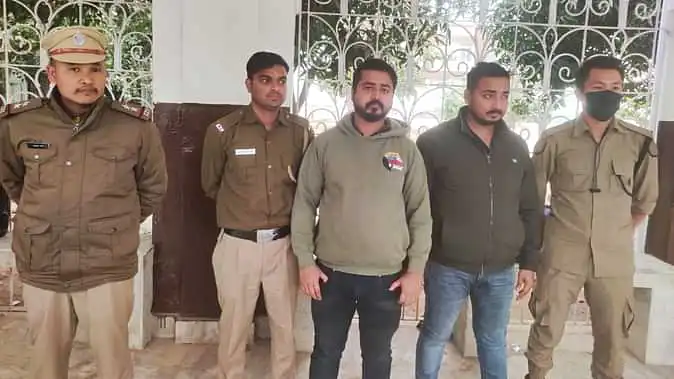
Bihar News: 100 crore GST fraud, Arunachal Pradesh Police arrested two chartered accountants from Darbhanga
2024.12.28 Bihar News: 100 करोड़ GST हेराफेरी, अरुणाचल प्रदेश पुलिस ने बिहार से दो चार्टर्ड अकाउंटेंट को गिरफ्तार किया
अरुणाचल प्रदेश पुलिस ने दरभंगा पुलिस के सहयोग से 100 करोड़ रुपये के जीएसटी हेराफेरी के मामले में दो चार्टर्ड अकाउंटेंट को गिरफ्तार किया है। यह कार्रवाई रैयाम थाना क्षेत्र के वंसारा गांव में की गई। गिरफ्तार किए गए चार्टर्ड अकाउंटेंट विपिन झा और आशुतोष झा पर आरोप है कि उन्होंने अपने क्लाइंट्स के जीएसटी रिटर्न फाइलिंग में करोड़ों रुपये की गड़बड़ी की।
तकनीकी निगरानी से मिली सफलता
अरुणाचल प्रदेश पुलिस ने टेक्निकल सर्विलांस के माध्यम से दोनों आरोपियों का पता लगाया। उसके बाद दरभंगा पुलिस की सहायता से वंसारा गांव में छापामारी कर दोनों को गिरफ्तार किया गया। गिरफ्तारी के बाद अरुणाचल प्रदेश पुलिस दोनों आरोपियों को अपने साथ ले जाने की कानूनी प्रक्रिया में लगी हुई है। बताया जा रहा है कि दोनों आरोपी अरुणाचल प्रदेश में चार्टर्ड अकाउंटेंट का काम करते थे और अपने ग्राहकों के जीएसटी रिटर्न में बड़े पैमाने पर हेराफेरी करते थे।
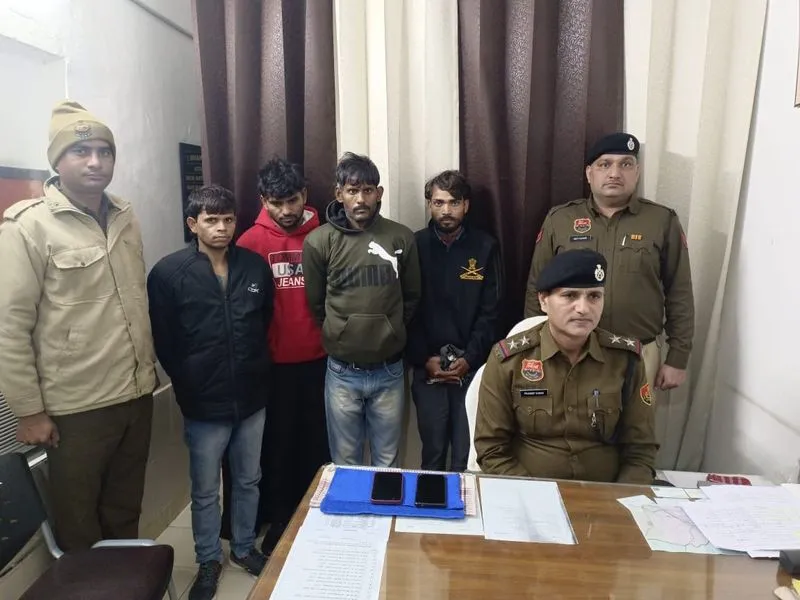
2024.12.27 Man beaten to death after dispute over mobile phone in Gurugram
Accused then dumped the victim’s body in the green belt of Dwarka Expressway to escape police
Gurugram, December 27
A 19-year-old youth was beaten and strangled to death by four men following an argument over a mobile phone. The accused then dumped the victim’s body in the green belt of Dwarka Expressway to escape police, but were later arrested.
The accused were identified as Brijesh, alias Rinku, Umesh, alias Nahne, Arvind Kumar and Siyasaran Sahu, alias Sibbu.
According to the police, they received information regarding a dead body lying near Harsaru village on December 22. A police team reached the spot and took the body in its custody. Later, the deceased was identified as Ashish (19), a resident of Bhangrola village. In his complaint, the victim’s father said Ashish, who was an autorickshaw driver, had injury marks on his head while his neck was tied to a muffler.
An FIR was registered under relevant sections of the BNS. “The accused revealed that Brijesh knew Ashish, who had forcibly taken the former’s mobile phone. On December 21, Brijesh and his friends went to Ashish’s place in Bhangrola, where they got into an argument, following which they hit Ashish on the head with a brick. When he got injured, they put him in the auto and killed him by strangulating with the muffler. After throwing away the body, they fled the spot. We are questioning the accused,” said a spokesperson of the police.
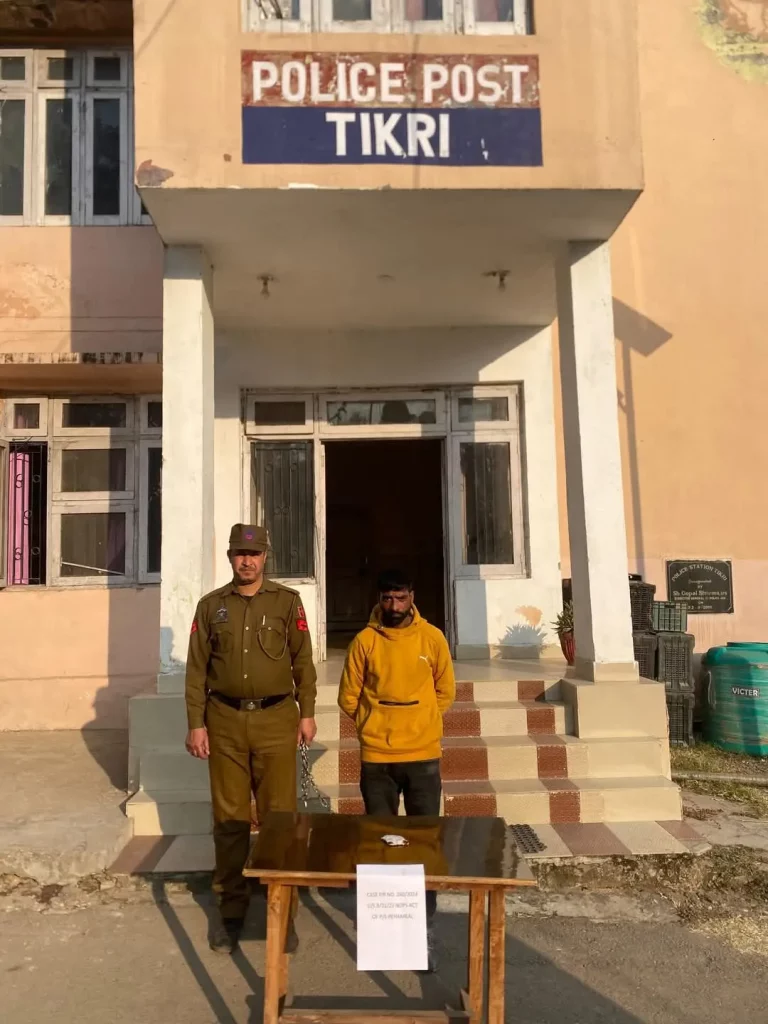
Another Inter-district drug peddler arrested, 7.60 Grams of Contraband Heroin recovered by Udhampur Police in the jurisdiction of Police Post Tikri
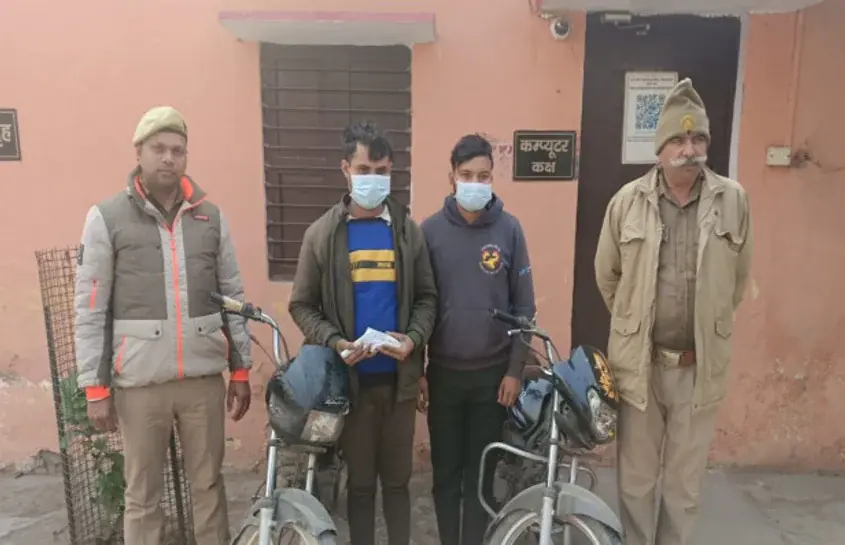
Two Members Of Bike Theft Gang Arrested Bike Was Stolen From Delhi And Haryana Hapur Police Sent To Jail
2024.12.25 बाइक चोरी करने वाले गैंग के दो सदस्य अरेस्ट : दिल्ली और हरियाणा से चोरी की गई थी बाइक, हापुड़ पुलिस ने भेजा जेल
Hapur News : चेकिंग के दौरान पिलखुवा कोतवाली पुलिस ने गांव बड़ौदा हिंदवान मार्ग से दो वाहन चोरी करने वाले गैंग के दो सदस्यों को गिरफ्तार किया है। पुलिस ने आरोपियों से दो चोरी की बाइक, एक तमंचा और एक जिंदा कारतूस बरामद कर आरोपियों के खिलाफ कार्रवाई की कर दी है।
क्या है पूरा मामला
पिलखुवा कोतवाली प्रभारी निरीक्षक रघुराज सिंह ने जानकारी देते हुए बताया मारवाड़ चौकी प्रभारी संजय सिंह यादव पुलिस टीम के साथ क्षेत्र में चेकिंग कर रहे थे, इसी दौरान गांव बड़ौदा हिंदवान मार्ग पर दो बाइक पर सवार होकर संदिग्ध आते हुए दिखाई दिए आते दिए, पुलिस टीम ने उन्हें रुकने का इशारा किया तो आरोपी भागने लगे। पुलिस ने घेराबंदी करते हुए दोनों आरोपियों को गिरफ्तार कर लिया। जिसके बाद पुलिस उन्हें थाने लेकिन आई।
ये है आरोपी
कोतवाली प्रभारी निरीक्षक ने बताया कि पकड़े गए आरोपी जिला बुलंदशहर के थाना डिबाई के गांव दौरो का गगन और गांव शाहपुर फगौता का लोकेश है। आरोपी गगन और लोकेश ने पूछताछ में बताया कि एक बाइक को दिल्ली और एक बाइक को हरियाणा से चोरी की थी। इसके साथ ही एक अवैध तमंचा और एक जिंदा कारतूस बरामद किया गया।
आरोपी पर अपराधिक मुकदमे दर्ज
उन्होंने बताया कि लोकेश पर हरियाणा, गाजियाबाद में पांच और गगन के खिलाफ दिल्ली में दो मुकदमे दर्ज है। ये आरोपी शातिर तरिके से वाहन चोरी ककी वारदात को अंजाम देते है। जिनको गिरफ्तार कर जेल भेजा जा रहा है।
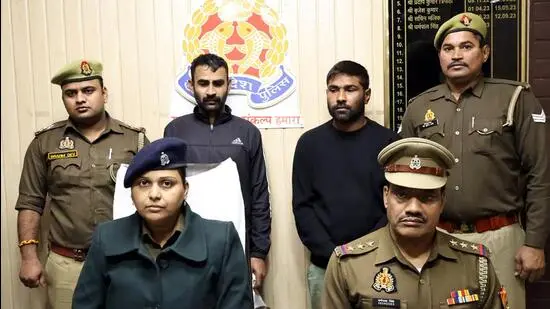
The four suspects allegedly in connivance with Pavitra Tyagi, 32, a homemaker, stole her husband Nitin Tyagi’s car from outside a banquet hall in Morti, Ghaziabad.
Ghaziabad: Police on Tuesday arrested two suspects allegedly hired by a Delhi-based woman to steal her husband’s Honda City car from outside a banquet hall in Ghaziabad on late December 6 night. The woman is absconding along with two other suspects. But the car has been seized from Saharanpur, officers said.
Police identified the arrested men as Muzaffarnagar residents Akash Tyagi, 30, and Gaurav Sharma, 35.
Officers said Akash has a criminal history, with 10 cases for attempted murder, looting, theft, etc. and Gaurav has five cases, including those of the Arms’ Act and looting, etc., against his name. Their friends Pankaj Tyagi, resident of Muzaffarnagar, and Siddharth Kumar, resident of Saharanpur, are absconding.
The four suspects allegedly in connivance with Pavitra Tyagi, 32, a homemaker, stole her husband Nitin Tyagi’s car from outside a banquet hall in Morti, Ghaziabad. Nitin operates a travel agency in Delhi and the couple resides in Chhattarpur, south Delhi, police said.
Gaurav told police that he came in contact with the woman during a wedding in Meerut about six months ago and they became friends.
“In between, the woman asked the suspect (Gaurav) to steal her husband’s car. She told him that after selling the car, they would equally divide the money while her husband would get an insurance claim. On the night of the incident, the woman called the suspect outside the banquet hall in Ghaziabad and handed over one of the original keys. It helped the four suspects flee with the car,” said Shweta Yadav, officiating assistant commissioner of police (Nandgram).
The suspects midway changed the number plate and hid it in Saharanpur.
Just after the theft, Nitin reported to police on the emergency number and later a first information report was lodged for theft at Nandgram police station on December 9.
Based on CCTV and electronic surveillance, police traced the suspects. Two of them were arrested from Nandgram.
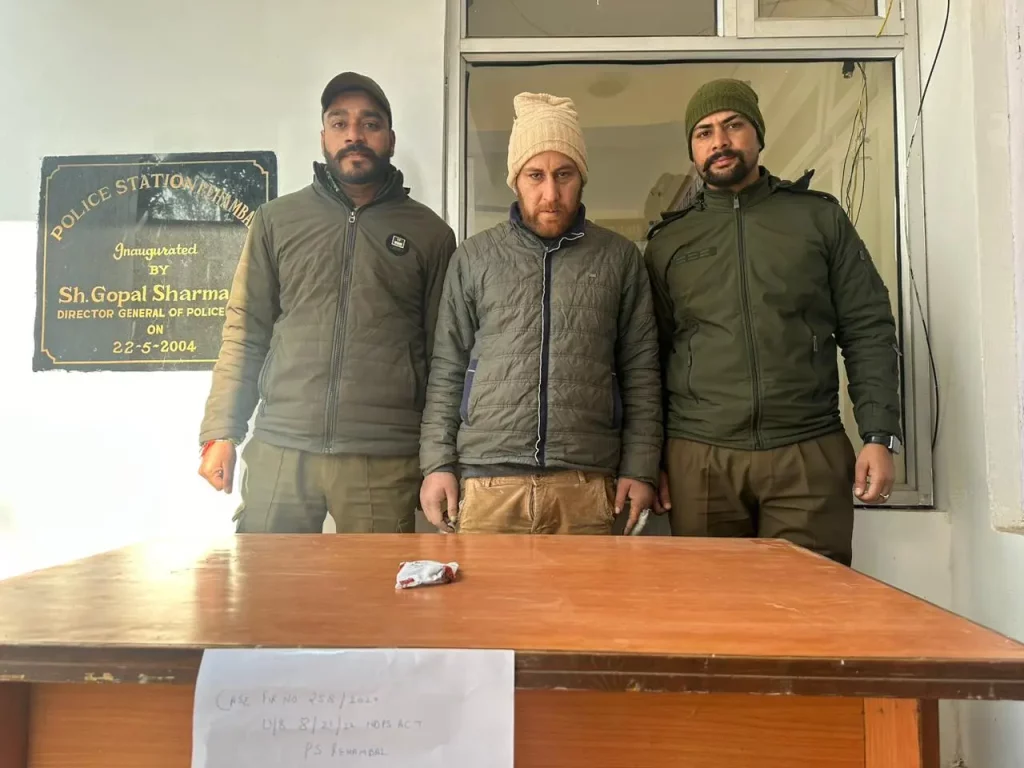
HARDCORE 𝗗𝗥𝗨𝗚 𝗣𝗘𝗗𝗗𝗟𝗘𝗥 ROHIT BAKSHI S/O LT. SH. ASHOK BAKSHI R/O CHOPRA SHOP, UDHAMPUR 𝗔𝗥𝗥𝗘𝗦𝗧𝗘𝗗, 𝗛𝗘𝗥𝗢𝗜𝗡 𝗥𝗘𝗖𝗢𝗩𝗘𝗥𝗘𝗗 BY UDHAMPUR POLICE
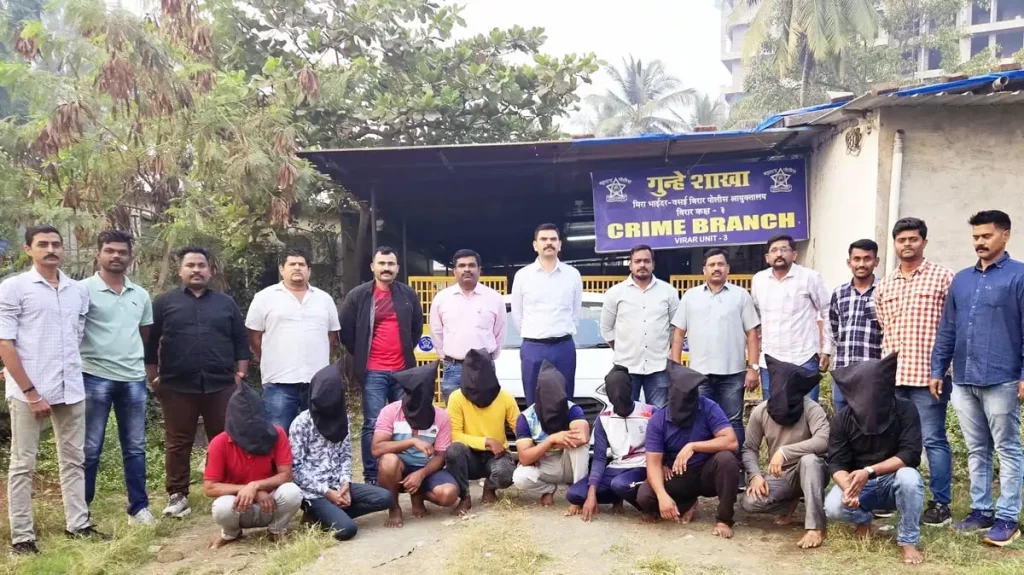
2024.12.24 Mira Bhayandar: MBVV Police Bust Mobile Tower Battery Theft Gang, Arrest 9
Alarmed by the rise in cases of equipment thefts from mobile towers, MBVV chief- Madhukar Pandey directed the crime branch unit to conduct parallel investigations and nab the culprits at the earliest.
Two months after they busted an interstate gang involved in theft of expensive telecom equipment from 5G mobile towers, the crime branch unit (Zone III) attached to the Mira Bhayandar-Vasai Virar (MBVV) police arrested nine people who stole batteries from the cabins of mobile towers and sold them to scrap dealers. Alarmed by the rise in cases of equipment thefts from mobile towers, MBVV chief- Madhukar Pandey directed the crime branch unit to conduct parallel investigations and nab the culprits at the earliest.
The gang had recently stolen 24 electrical back-up batteries from the cabin of a mobile tower in Bhalivali village. A team led by police inspector-Pramod Badhakh started investigations into the case and on the virtue of electronic surveillance apprehended seven members of the gang including- Sant Kumar Rajbhar (41), Ajit Mankar (32), Akash Pandey (29), Navnath Uttekar (32), Ajay Ghadi (24), Sudip Rajbhar (30) and Bullu Rajbhar (37)- all residents of the Virar-Nalasopara belt who were employed with a mobile tower servicing company.
Based on the information provided by the accused the police nabbed two scrap dealers- Ramesh Surat Singh (37) and Kishore Purabiya (34) who purchased the stolen batteries and other equipment. Investigations revealed the involvement of the gang members in six similar thefts committed by them in Vasai, Virar and Boisar.
An offence under section 303 (2) of the Bharatiya Nyay Sanhita (BNS) for theft has been registered at the Mandvi police station against the accused who have been remanded to custody. Further investigations were on.
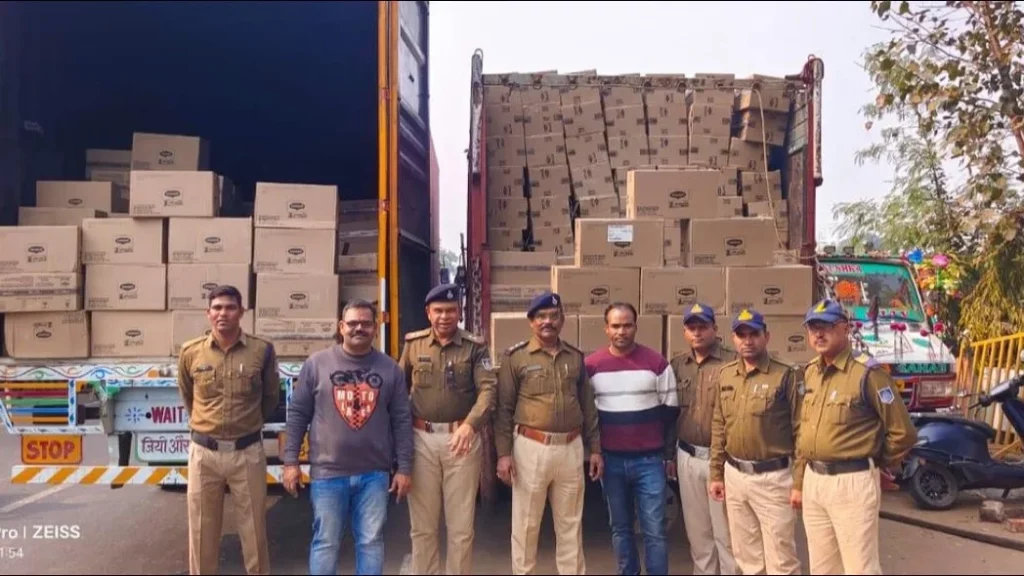
2024.12.24 Stolen Maggi packets worth Rs 11 lakh recovered in Bhopal, 3 arrested
Bhopal police have cracked a Rs 11 lakh Maggi noodles theft case, recovering the stolen consignment, and have also arrested three people in connection to the heist.
The police have been on the lookout for robbers since December 9, when a transport businessman named Shabbir lodged a complaint and alleged that the 1,661 boxes of the processed noodle brand that he loaded on a truck had been stolen. The theft took place on December 4 when the vehicle was en route from Sanand in Gujarat to Cuttuck in Odisha.
As per the complaint, Shabbir called the driver of the truck, Raees Mian, on his mobile phone when the vehicle’s toll amount was deducted from his account through Fastag (an electronic toll collection system) in Bhopal. This alerted Shabbir as he suspected some wrongdoing.
However, when he tried the driver’s number, the call continuously dropped. Later that day, Raees called Shabbir and told him that someone had got him drunk and fled with the loaded truck.
Shabbir further alleged that later, the CCTV footage from the cameras installed at the 11 Meel bypass toll plaza in Bhopal showed Shabbir’s truck, which the police took under its custody. However, the Maggi noodle consignment was missing from the vehicle.
Following this, the police registered a case against driver Raees, and launched an investigation into the matter. The local police also announced a reward of Rs 10,000 for the person who could provide information about the consignment.
During investigation and search operations, the police found that the noodle consignment had been kept at three depositories in the Bairagarh area. Police then detained a man named Hitesh Moinani and questioned him. Hitesh confessed to the crime and gave the police the location of the depositories, from where a total of 1,411 cartons of Maggi noodles were recovered, while 250 boxes had been sold off to local retailers.
Hitesh also told the police that he bought the consignment from a man named Kamlesh Gaur for Rs 11 lakh. Acting on the information provided by Hitesh, the police arrested Kamlesh, who said that he bought the consignment from Shabbir’s driver Raees for Rs 10 lakh and forwarded it to Hitesh’s depositories after they struck a deal.
The police have arrested three accused, including Hitesh and Kamlesh, while driver Raees Mian is on the run. A manhunt to trace Raees is underway, police said.
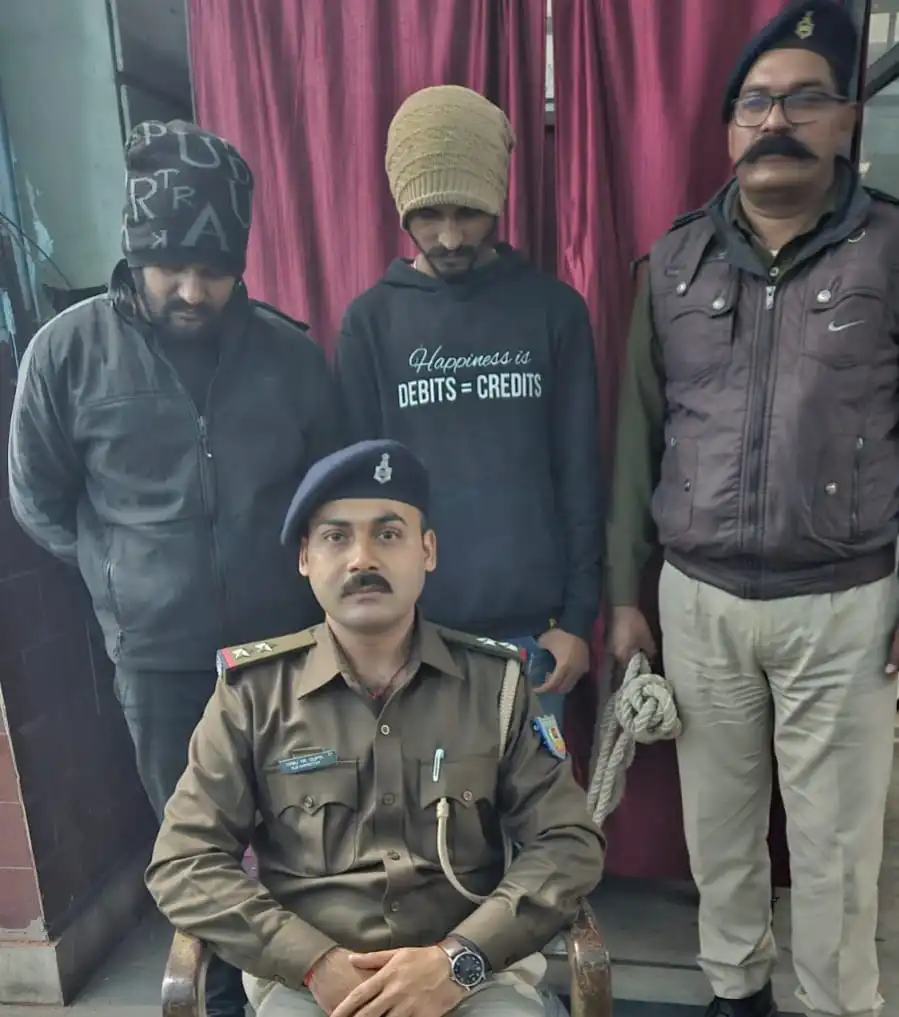
Jamshedpur Fraud Case:: साकची के आभूषण कारोबारी के बैंक ऑफ इंडिया के खाते से निकाले 58 लाख, 10 साल से दुकान में काम कर रहे अकाउंटेंट ने ही ट्रांसफर कराये पैसे, पुलिस ने पूछताछ की तो खोला राज
Jamshedpur. न्यू श्री दुर्गा ज्वेलरी के मालिक भरत चंद्र नंदी के बैंक खाते से 58.50 लाख रुपये की धोखाधड़ी करने के मामले में साकची पुलिस ने उनके ही अकाउंटेंट केशव कुमार सिंह और उसके साथी कुलवंत सिंह उर्फ हैप्पी को गिरफ्तार किया है. पुलिस ने कुलवंत के घर से 1.10 लाख रुपये नकद, तीन मोबाइल बरामद किया है. अकाउंटेंट केशव कुमार सिंह भरत चंद्र के दुकान में करीब दस वर्षों से काम करता था. 27 नवंबर को भरत चंद्र को उनके साकची स्थित बैंक ऑफ इंडिया के बैंक खाते से 58.50 लाख रुपये के ट्रांसफर्र की सूचना मिली.
छानबीन में पता चला कि भुवनेश्वर के एक मेसर्स विसर इंटरप्राइजेज के बैंक खाता में रुपये का ट्रांसफर किया गया है. सूचना मिलने के बाद उन्होंने फौरन इसकी जानकारी साकची थाना को दी. इसके बाद केस दर्ज कराया. छानबीन के दौरान जानकारी मिली कि अकाउंटेंट केशव ने भरत चंद्र के बैंक खाता का चेक बुक चोरी की थी. इसके बाद अपने साथी कुलवंत को दे दिया था. कुलवंत ने इस काम के लिए अपने दोस्त धर्मवीर से संपर्क किया. इसके बाद तीनों ने मिल कर रुपये की निकासी का प्लान बनाया.
धर्मवीर कई अवैध पैसे का लेन देन करने का काम करता है. इस कारण से उसके पास कई अलग-अलग बैंक के खाता हैं. 21 नवंबर को केशव ने चेक जमा कर 22 नवंबर को 58.50 लाख रुपये ट्रांसफर कर लिए. धर्मवीर ने इस अवैध लेनदेन के लिए 5 प्रतिशत कमीशन भी लिया. रुपये ट्रांसर्फर होने के बाद उसने 20-20 हजार रुपये कर पांच बार एटीएम से निकाले.
2024.12.24 A tribal man was among three people arrested for allegedly beating a Dalit man to death on suspicion of stealing rice in Chhattisgarh’s Raigarh district early Sunday. While activists claim this is a case of mob lynching, police said it does not fall under the definition of the offence under the Bharatiya Nyaya Sanhita (BNS).
The incident took place around 2 am in Dumarpalli village. According to his statement to the police, the main suspect in the case, Virendra Sidar, 50, said he was awoken by some noise and saw the victim, Panchram Sarthi alias Butu, 50, sneaking into his home and trying to steal a sack of rice. Enraged, he called his neighbours, Ajay Pradhan, 42, and Ashok Pradhan,44, and together, the three of them tied Sarthi to a tree.
According to police sources, the village sarpanch alerted the police in the morning, and when a team got there at 6 am, they found Sarthi unconscious and still tied to a tree. Police sources claim he was beaten with bamboo sticks, kicked and punched.
The three arrested have been booked for murder under section 103 (1) of BNS. Police are now investigating the involvement of more people in the case.
Meanwhile, the case has now courted controversy, with activists calling for the provision for mob lynching to be invoked in the case. The provision, Section 103 (2) of the BNS, defines mob-lynching as, “when a group of five or more persons acting in concert commits murder on the ground of race, caste or community, sex, place of birth, language, personal belief or any other similar ground each member of such group shall be punished with death or with imprisonment for life, and shall also be liable to fine”.
2024.12.23 BRS vs Congress intensifies after vandalisation at Allu Arjun’s house; all 6 accused get bail

NEW DELHI: Opposition parties including the BJP and BRS targetted the ruling Congress over alleged lapses in law and order following vandalism by a group claiming affiliation with the Osmania University Joint Action Committee (OU-JAC) outside Allu Arjun’s home.
Protesters reportedly scaled the compound wall and raised slogans against Allu Arjun, demanding financial compensation of Rs 1 crore for the family of a woman who died during a stampede at a screening of his film ‘Pushpa 2’. They left behind a placard accusing the film industry of profiting while endangering fans.
Six individuals involved in the attack, which saw flower pots damaged and tomatoes thrown at the actor’s home, were later arrested and granted bail by a local court.
Security was heightened at the residence of Telugu superstar after the incident on Monday. Hyderabad police confirmed that the actor was not home during the vandalism and that security at his residence has been reinforced.
The BJP and the BRS questioned the Congress government’s governance in the wake of the incident. BJP MP D K Aruna alleged that four of the perpetrators were from Kodangal, the constituency of chief minister A Revanth Reddy, hinting at a possible political conspiracy.
BRS MLA T Harish Rao joined the criticism, pointing to an alarming rise in crime in Hyderabad, with over 35,944 cases reported in 2024. He described the attack on Allu Arjun’s residence as a “complete failure of governance.”
TPCC chief Bomma Mahesh Kumar Goud on Monday accused the BRS and BJP of leveraging the Allu Arjun episode for political mileage amid the ongoing controversy over the Sandhya Theatre incident in Telangana.
“The BRS and BJP want to take undue advantage of the Allu Arjun episode. This issue is entirely unrelated to the film industry. We have always supported the film industry, and the Congress party has extended numerous facilities to the Telugu film fraternity. However, they are attempting to derive political mileage from this incident. We have no connection with the vandalism at Allu Arjun’s residence,” the TPCC chief told ANI.
Chief minister Revanth Reddy, while condemning the incident, directed the state’s Director General of Police and Hyderabad’s police commissioner to ensure strict measures to maintain law and order. “Attacks on film personalities or anyone are unacceptable,” he stated.
The vandalism comes amid ongoing controversy surrounding the December 4 stampede at Sandhya Theatre during the premiere of Pushpa 2. The tragedy claimed the life of Revathi, a woman in the audience, and left her son, Sri Tej, injured. Critics have blamed the event’s organizers, including Allu Arjun, for inadequate safety measures.
The actor dismissed the accusations as a “campaign of character assassination” and expressed concern for the injured. He revealed that legal proceedings had prevented him from visiting Sri Tej but assured support for the boy’s medical expenses. Allu Arjun was arrested following the incident but secured bail from the Telangana High Court on December 16.
—
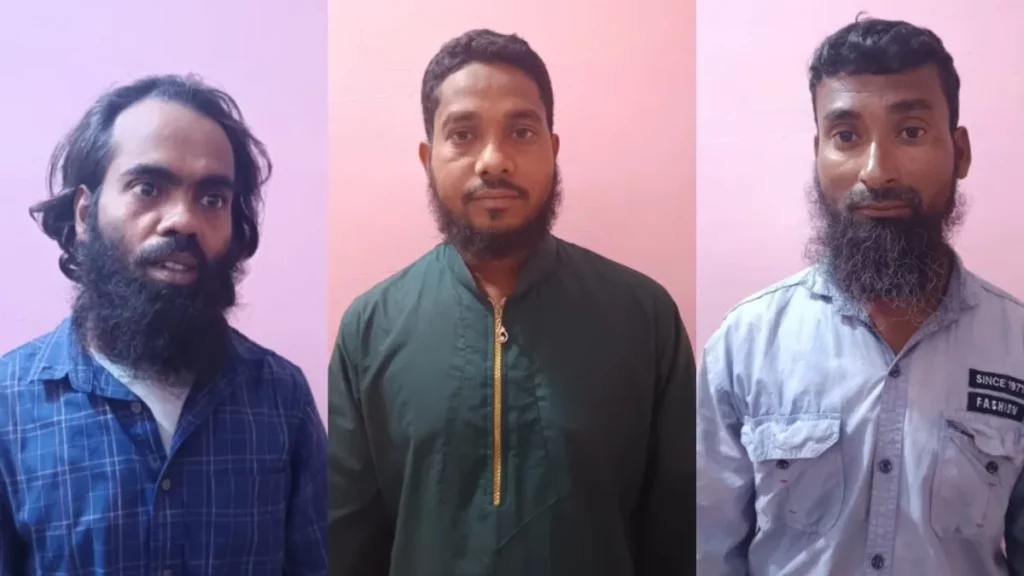
2024.12.21 Assam Police arrests 8 terror suspects in multi-state operation
The accused were arrested from Assam, West Bengal and Kerala under ‘Operation Praghat’ on the intervening night of December 17-18.
In Short
Assam Police says accused planned to target Hindu, RSS leaders
Special Task Force arrests 5 in Assam, 2 in West Bengal, 1 in Kerala
Seizes documents showing links to Pak, Bangladesh
Assam Police have arrested eight people, including a Bangladeshi citizen, and thwarted an attempt to carry out terrorist activities across the country, officials said.
The accused were arrested by the Special Task Force (STF) from Assam, West Bengal, and Kerala under ‘Operation Praghat’ on the intervening night of December 17-18, Senior Police Officer Harmeet Singh said.
According to the police, the arrested men had handlers in Pakistan and Bangladesh and claimed that they were planning to assassinate Hindu and RSS leaders.
The operation was launched after a detailed examination of intelligence inputs “regarding the anti-national activities being carried out by a group of individuals,” under the direction of one Md Farhan Israk, Singh told news agency PTI.
Israk is a close associate of Jasimuddin Rahmani, chief of Ansarullah Bangla Team (ABT), an affiliate of Al-Qaeda in the Indian Subcontinent (AQIS), he said.
The official further stated that a Bangladeshi citizen, Md Shab Seikh alias Md Sad Radi, was sent to India in November to spread their ideology and create sleeper cells among like-minded individuals across India to initiate violent and subversive actions.
Radi visited Assam and West Bengal to meet sleeper cell members of the banned ABT organisation before moving to Kerala to meet other sleeper cell members.
“The STF, under the direct supervision of its chief Partha Sarathi Mahanta, launched the operation and teams were dispatched to various parts of the country to identify the jihadi elements. During simultaneous operations in Kerala, West Bengal and Assam, the arrests were made,” the SDGP said.
Five arrests were made in Assam, two in West Bengal, and one in Kerala, he said, adding that four others were detained from Kokrajhar district but were released after questioning, as there was no evidence of their involvement in the incident.
Several documents and mobile phones were seized from the accused, which indicate their ongoing communication with Bangladesh- and Pakistan-based entities over the past few months, Singh said.
“Texts with distorted religious beliefs relating to Jihad, religious books with distorted narratives, printed and published in Bangladesh, four pen drives and various Bangladeshi certificates issued in the name of Md Sad Radi were also seized from the accused,” he said.
Singh said they were working to establish sleeper cells across the country, particularly in Assam and West Bengal.
Two of the arrested suspects had visited several locations across West Bengal in an attempt to recruit more people to join the terrorist organisations.
The official stated that their motive was to incite religious tensions and disrupt communal harmony in the region.
“These individuals were actively involved in the procurement of arms and ammunition, as a part of the larger conspiracy to wage war against the Indian government,” he said, adding that further investigation was on.
2024.12.21 Somaiya college admission racket: One more clerk held
MUMBAI: The Tilak Nagar police on Friday arrested the fourth accused, Pandit Karanke, 42, a junior clerk in the state education department, in connection with the Somaiya College admission racket. The police said Karanke was assigned to verify documents online at the verification centre during the admission process of class 11, in the academic year 2024-25.
Karanke was arrested on Friday. Earlier, police had arrested three persons, including two clerks of Somaiya college, Mahendra Patil and Arjun Rathod, and another person named Devendra Saide, who fabricated bogus marksheets and leaving certificates (LC) of around 50 students to facilitate their admission, after taking ₹2-3 lakh from each.
Karanke was assigned the duty for document verification at the Ghatkopar East admission centre. During interrogation, it was learnt that he approved the fake documents allegedly sent by arrested accused Rathod. He was produced in court and remanded in police custody till December 25.
The FIR was registered on December 16, based on a complaint filed by principal Dr. Kishan Pawar of K.J. Somaiya College of Arts and Commerce, who alleged that students, who were ineligible for admission, got their percentage fraudulently increased with help from the suspects in lieu of monetary benefits, and some students were found to have obtained admission with fake certificates.
The case was registered under charges of cheating, forgery, breach of trust and other acts of criminal conspiracy, against five individuals, including two staff members of the college.
The incident came to light after the parents of a student approached the principal when he did not get admission despite good percentage. The principal then started checking and found out about the scam. The college authorities set up a scrutiny committee, which contacted the students and their parents through email and also on phone asking them to visit the college with original documents. On verification of the documents, it was found that 50 students got in illegally, said inspector Dilip Mane of Tilak Nagar police station.
The clerks were running a cash-for-admission racket across colleges of Somaiya Vidyavihar University. The scam was busted in K J Somaiya College of Arts and Commerce, Vidyavihar, Shri S K Somaiyya Vinay Mandir Secondary School and Junior College, and K J Somaiyya College of Science and Commerce, said the police officer.
The accused clerks, Mahendra Patil and Arjun Rathod, along with three of their associates, Kamleshbhai, Jitubhai and Babubhai, also generated login IDs and passwords for the students to help secure their admissions, the officer said.
A Special Investigation Team (SIT) has been formed under an assistant commissioner of police rank officer for further probe.
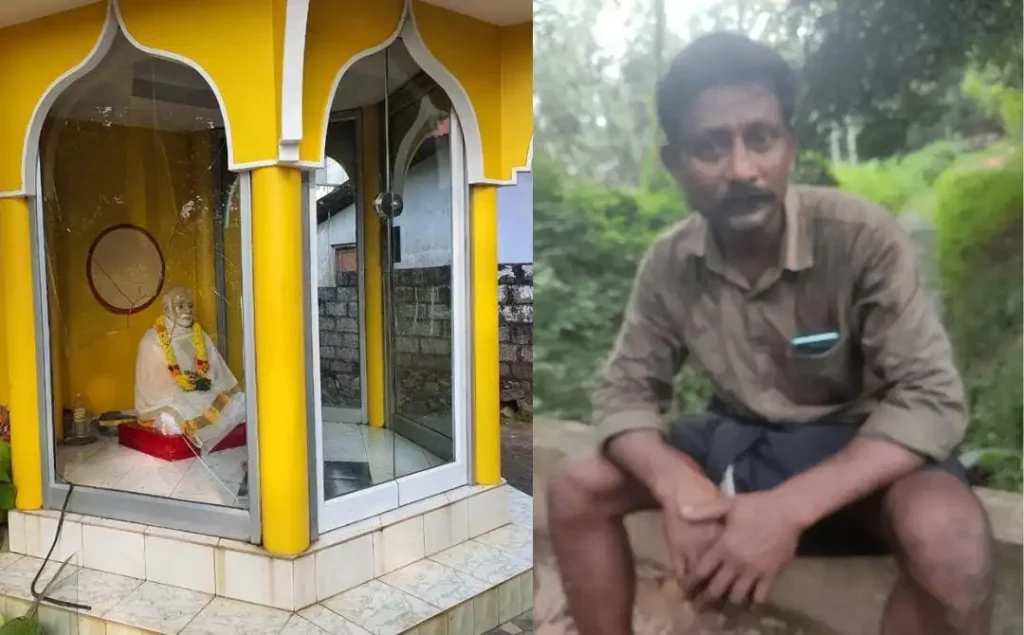
2024.12.18 Repeated attacks on Guru Mandirs in Kerala capital: Suspect arrested, charged with theft, vandalism
A 46-year-old man has been arrested for vandalising and stealing from Guru Mandirs in Thiruvananthapuram.
Thiruvananthapuram: One person has been arrested in connection with the recent repeated attacks on Guru Mandirs at the Naruvamoodu area in Balaramapuram here. The accused, identified as Anil Kumar (46), a resident of Pallichal here, has admitted to have carried out the attacks with an intent of theft, according to the Naruvamoodu Police.
As per the police reports, the accused confessed to have vandalised the Guru Mandirs using a shovel. The Guru Mandirs at Mukkampalamoodu and Nadukkadu were destroyed on last Saturday and during the early hours of Wednesday. The suspect also allegedly stole temple offerings barrels, ‘kanikka vanchis’, from the premises.
The police conducted evidence collection along with the suspect at the vandalised sites. They recovered the abandoned shovel and ‘kanikka vanchis’ from a canal located about a kilometer away from the crime scene. The police also revealed that the accused has a prior theft case registered against him at Naruvamoodu.
Anil Kumar will be presented before the court later in the evening, as confirmed by the police. The investigation is ongoing to determine if he was involved in other similar incidents.

A significant breakthrough in the fight against drug smuggling, #Ludhiana_Rural_Police (CIA Staff) arrested 02 drug smuggler with a motorcycle and recovered 304 grams of heroin from their possession.
2024.12.18 Police bust cross-border bike lifting gang, arrest 4
Guwahati: Officers from Garchuk police station have once again busted a bike lifting gang that operated across state borders and arrested four persons on Tuesday night following covert intelligence.
Garchuk OC Mayurjit Gogoi said the culprits had been involved in numerous bike lifting incidents across the city for a long time, subsequently transferring the stolen bikes to another party in Meghalaya, which facilitated their further transfer to the borders of Bangladesh.
“We nabbed both Gumsar Basumatary, who hails from Baksa district, and Ankur Rabha from Udalguri district, from the Khanapara area as a result of laying a trap. Both of them were involved in various bike-lifting incidents in the city,” the OC said.
The OC added that both of them used to sell the stolen vehicles for a sum of approximately Rs 30,000 or more, somewhere near Jorabat, located on the outskirts of the city. Additionally, they often dealt in areas near the Meghalaya border as well. “We subsequently laid another trap by placing old bikes in Meghalaya’s 13th mile along with the Meghalaya police, and a group of stolen bike receivers who got lured into it were caught.”
The apprehended culprits are Sanjay Singh and Ishan Mawnai, both hailing from Meghalaya’s Ri-Bhoi district. According to the police, all of them were produced before the CJM court of Kamrup (Metropolitan) on Wednesday and remanded in five days of judicial custody.
Additionally, the crime branch of Guwahati Police also nabbed five persons who were involved in a statewide vehicle theft racket, based on specific inputs. The five persons have been identified as Junmoni Deka from the state’s Baksa district, Raju Das and Montu Barman both from Nalbari district, and Raju Deka and Jayanta Haloi both from Kamrup (Metro) district.
According to a post on social media platform ‘X’, the Guwahati police stated that they had been actively stealing vehicles from the city.

2024.12.16 Nigerian man arrested for breaking promise to marry Indian woman
According to the police, the suspect reached out to the victim through an associate.
The Rajnandgaon police have arrested a Nigerian national, simply identified as Johnson, in India over an alleged marriage scam, Etvbharat has reported.
The suspect, said to be around 40 years old, allegedly wooed a Chhattisgarh woman using a fake profile he uploaded on a matrimonial website and duped her of Rs 15,72,000 after promising to marry her.
The police stated that the suspect, who had been secretly living in Delhi after the validity of his visa and passport expired, lured the victim through her profile and lied to her about being a UK-based businessman planning to move his business to India.
According to the police, the suspect reached out to the victim through an associate, falsely claiming he was stopped at Delhi airport and needed money to exchange UK currency in his possession.
The Additional Superintendent of Police of Rajnandgaon police station, Rahul Dev Sharma, said the suspect blackmailed and cheated the victim with the help of his accomplice.
Mr Sharma said the victim’s attempts to call the suspect afterwards failed as his phone was switched off, prompting her to realise she had been cheated and to lodge a fraud case against him at Dongargarh Police Cyber Cell.
“We started an investigation on the complaint of the applicant. With the help of a cyber cell, it was found that the accused lives in Delhi. Our team raided his Delhi accommodation and arrested him. Accused Johnson is a resident of Nigeria. He has cheated many girls so far. We are trying to gather further information through interrogation,” said Mr Sharma.
A laptop and four mobile phones have been recovered from the suspect, and his bank account has also been frozen.

2024.12.16 Nine years on, immigration agent held in fraud case
An immigration agent from Jalandhar, Amandeep Singh, was arrested in connection with a nine-year-old case of defrauding visa seekers of lakhs of rupees under the pretext of sending them abroad. The police had announced a reward of Rs 10,000 for his arrest.
According to Sriganganagar Superintendent of Police Gaurav Yadav, the fraud case was initially registered at the Padampur police station in 2016. Amandeep Singh, a resident of Pandori Nijra village in Adampur, who later moved to Farm Royal Society in Jalandhar, had been on the run since the case was filed. During his time absconding, he reportedly hid in several cities, including those in Gujarat, Mumbai, and Bengaluru.
Yadav confirmed that the police were able to track him down using technical evidence and information.
He further revealed that Amandeep was wanted in several other fraud cases registered across multiple police stations in Punjab, including Adampur, Phillaur, Gurdaspur, Hoshiarpur, Jalandhar, and Nawanshahr.
Padampur Police Station In-Charge Surinder Rana stated that the case dated back to 2016 when Amandeep and another suspect were accused of duping several people by promising them jobs in foreign countries. The second suspect had already been arrested by the police.
2024.12.15 Bhopal man outsmarts ‘digital arrest’ scammer, video of fake police call goes viral
Bhopal man outsmarts ‘digital arrest’ scammer, video of fake police call goes viral
A vigilant graphics designer from Bhopal thwarted a ‘digital arrest’ scam attempt by cleverly confronting a fraudster impersonating a police officer on a video call, exposing the scam.

In Short
Scammer posing as police seeks Aadhaar details
Anirudh confronts fake police officer during video call
Fraudster ask ‘what went wrong’ in scamming attempt
Scores of people across the country have fallen prey to fraudsters through the so-called “digital arrest scam,” losing substantial amounts of money. However, a vigilant young man from Bhopal thwarted an attempt by scammers who tried to target him. A video call with the fake police officer involved in the incident has since gone viral.
Anirudh, a graphics designer from Bhopal, received a call on Friday from someone claiming to be an officer of a private telecom company. The caller alleged that Anirudh’s phone number was being used to extort people, including celebrities, and that an FIR had been registered against him with the Mumbai Crime Branch.
Suspecting it was a scam, Anirudh decided to play along while staying alert. The caller warned him that he would soon receive a video call from the Mumbai Crime Branch, where senior officers would seek further details.
Shortly after, Anirudh received a video call on his mobile phone. On the call was a young man dressed as a police officer, who introduced himself as an officer of the Mumbai Crime Branch.
The impersonator asked Anirudh for his mobile number and the complaint number related to the alleged FIR. He then requested to see Anirudh’s Aadhaar card, claiming it was necessary to verify whether his Aadhaar details were being misused or if he was involved in any wrongdoing.
At this point, Anirudh decided to confront the scammer. He asked the man in uniform, “How do you set up something like this? It must take a lot of effort!”
Surprisingly, the fraudster replied, “It takes hard work. We are here to help you”. Suddenly, apparently realising that Anirudh wasn’t falling for it, the scammer abruptly disconnected the call.
What happened next was even more intriguing. After disconnecting the video call, the fraudster sent a message to Anirudh, asking, “Tell me, where did we go wrong?” Amused, Anirudh responded with an emoji and ended the chat.
On Saturday, Anirudh lodged a formal complaint with the Bhopal police about the incident.
—
博帕尔男子智胜“数字逮捕”骗子,假警察电话视频走红网络

The Indian Embassy said here on Saturday announced that six Indian nationals trapped in a job scam were released for deportation back to India, taking the total of such repatriations since July to over 100.
There has been an increase in the incidents of Indian nationals falling victim to the international crime syndicates active in the Myawaddy region on the Myanmar-Thailand border, according to the Embassy. They are lured for jobs in fraudulent, scam-based companies for cyber slavery.
“6 more Indian nationals trapped at scam-compounds in Myawaddy reached the local police station, for further deportation to India, y’day. 101 Indians repatriated to India since July 2024. We reiterate our advice against job offers in the area without consulting Missions,” it said in a post on X.
Myawaddy, a town in southeastern Myanmar, is a major trading point between Myanmar and Thailand.
The Indian Embassy’s advisory – which is prominently advertised on its website – says it re-emphasises the importance of adhering to the advisories on the subject for not taking any such job offers, especially advertised through social media, without consulting the respective Indian Embassies.
“A new location at Hpa Lu area, south of Myawaddy town is reported to have emerged recently where most of the Indian victims are being trafficked into, via Thailand, after being recruited from India as well as from countries like Malaysia, UAE etc.,” it said.
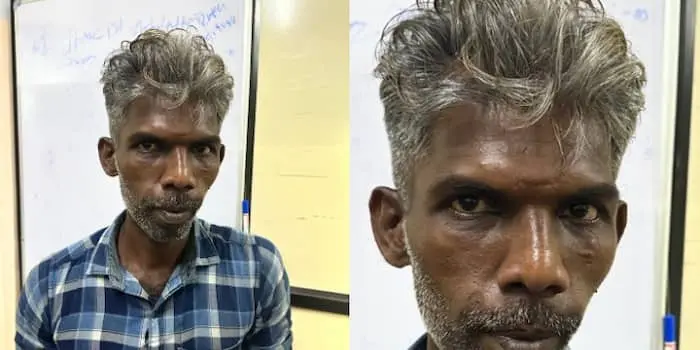
കെഎസ്ആർടിസി ബസിൽ നിന്നാണ് പിടികൂടിയത്. ആലപ്പുഴ നോർത്തിൽ മാത്രം മൂന്നു കേസുകൾ രജിസ്റ്റർ ചെയ്തിട്ടുണ്ട്. കോടതിയിൽ ഹാജരാക്കിയ പ്രതിയെ റിമാൻഡ് ചെയ്തു.
അമ്പലപ്പുഴ: ആലപ്പുഴ ടൗണിലെ നിരവധി പള്ളികളിലും ക്ഷേത്രങ്ങളിലും മോഷണം നടത്തിയ പ്രതിയെ ആലപ്പുഴ നോർത്ത് പോലീസ് പിടികൂടി. പുന്നപ്ര വടക്ക് പഞ്ചായത്ത് പത്താം വാർഡിൽ സനാതനപുരം പേരൂർ കോളനിയിൽ സുമേഷ് (38) നെയാണ് ആലപ്പുഴ നോർത്ത് പോലീസ് ദിവസങ്ങളായുള്ള അന്വേഷണത്തിലൂടെ പിടികൂടിയത്. തുമ്പോളി പള്ളിയിൽ രണ്ടുമാസം മുമ്പ് നടന്ന മോഷണ കേസിൽ റിമാൻഡിൽ കഴിഞ്ഞിരുന്ന പ്രതി കഴിഞ്ഞ മാസം 29നാണ് ജയിൽ മോചിതനായത്.
ജയിൽ മോചിതനായ ശേഷം ആലപ്പുഴ നോർത്ത്, ആലപ്പുഴ സൗത്ത്, പുന്നപ്ര എന്നീ സ്റ്റേഷൻ പരിധികളിൽ മോഷണം നടത്തി. പ്രതിയെ പിടികൂടുന്നതിനായി നിരന്തരമായി പരിശ്രമിച്ചുകൊണ്ടിരിക്കവെയാണ് പ്രതിയെ ഇന്നലെ രാവിലെയോടു കൂടി പിടികൂടാനായത്. ആലപ്പുഴ ജില്ലയിൽ മാത്രം 23 ഓളം മോഷണക്കേസുകളിൽ പ്രതിയാണ് സുമേഷ്.
കൊല്ലം ജില്ലയിൽ നീണ്ടകരയിൽ മത്സ്യബന്ധത്തിൽ ഏർപ്പെട്ടു കൊണ്ടിരുന്ന പ്രതി രാത്രികാലങ്ങളിൽ കെ. എസ്. ആർ. ടി. സി ബസ്സിൽ സഞ്ചരിച്ച് ആലപ്പുഴ ജില്ലയിലെത്തി ആരാധനാലയങ്ങളിൽ മോഷണം നടത്തി അതിരാവിലെ തിരികെ കൊല്ലത്തേക്ക് പോകുകയാണ് പതിവ്. മോഷണം നടത്തി തിരികെ പോകുന്ന വഴി വണ്ടാനം ഭാഗത്ത് വെച്ച് കെഎസ്ആർടിസി ബസിൽ നിന്നാണ് പിടികൂടിയത്. ആലപ്പുഴ നോർത്തിൽ മാത്രം മൂന്നു കേസുകൾ രജിസ്റ്റർ ചെയ്തിട്ടുണ്ട്. കോടതിയിൽ ഹാജരാക്കിയ പ്രതിയെ റിമാൻഡ് ചെയ്തു.
(白天在 Neendakara 钓鱼,晚上在 Alappuzha 偷窃;多起盗窃案被告人被捕)
—
2024.12.8 Five Held For Renting Bank Accounts To Fraudsters In Gwalior For Online Betting Scams
5 Held For Renting Bank Accounts To Fraudsters In Gwalior For Online Betting Scams
The police have also seized 3 mobile phones including 2 iPhones and ATM card of Canara Bank.
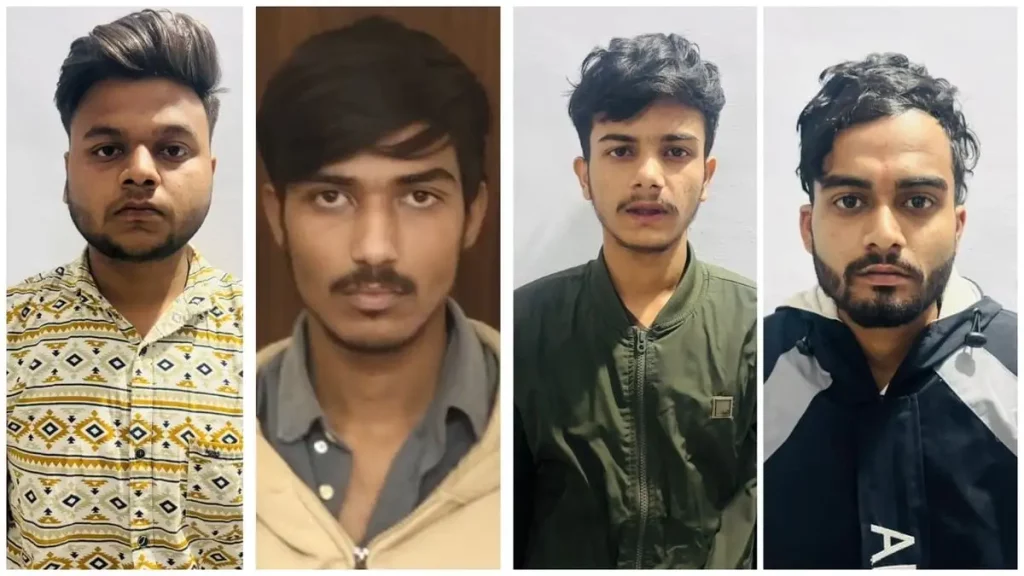
Gwalior (Madhya Pradesh): Five people were arrested by the Crime Branch in Gwalior on Sunday for renting out bank accounts to fraudsters involved in online betting scams.
Acting on a tip-off, the police detained the accused near the VC Bungalow on Sachin Tendulkar Marg.
The suspects allegedly used mobile phones to illegally rent out bank accounts, which were later used to deposit money obtained through cyber fraud.
The five accused were identified as Abhi alias Abhishek Yadav (20), resident of Bahodapur; Priyanshu Rajawat (19), resident of Lakshmipuram Colony Transport Nagar; Avinash Soni (22), resident of Porsa, Krishna Sharma (19), resident of Morena district; and Harsh Yadav (19), resident of Lakshmipuram Colony Transport Nagar.
Additional Superintendent of Police Krishna Lalchandani told Free Press that police are continuously interrogating the arrested accused. Also, the police had arrested a 3-member gang from a hotel on November 4, which might have connections with them.
According to information, the police after getting the information regarding the five accused reached the spot and detained them. During the investigation, one of the accused told the police that he used to take bank accounts on rent from people and gave them to a person living in Indore.
When the mobile phones of the accused were checked, details of several bank accounts were found. The police is currently tracing all the bank accounts and further investigations are underway.
The police have also seized 3 mobile phones including 2 iPhones and ATM card of Canara Bank.
The police registered a case against the accused under Section 318 of the Bharatiya Nyaya Sanhita (BNS) and Section 66D of the Information Technology Act.
—
瓜廖尔(中央邦):周日,瓜廖尔警方犯罪调查部门逮捕了五名涉嫌将银行账户出租给从事网上博彩诈骗的诈骗分子的嫌疑人。
根据情报,警方在 Sachin Tendulkar Marg 的 VC Bungalow 附近拘留了嫌疑人。
犯罪嫌疑人涉嫌利用手机非法出租银行账户,并将其用于存入通过网络诈骗获取的资金。
五名被告被确认为 Abhi(又名 Abhishek Yadav)(20 岁),巴霍达普尔居民; Priyanshu Rajawat(19 岁),Lakshmipuram Colony Transport Nagar 居民; Avinash Soni(22 岁),Porsa 居民,Krishna Sharma(19 岁),莫雷纳区居民; Harsh Yadav(19 岁),Lakshmipuram Colony Transport Nagar 居民。
2024.12.7 Cybercrime Alert: Digital Arrest Scam Busted by Uttarakhand STF, Rs 45.4 Lakh Recovered
Cybercrime Alert: Digital Arrest Scam Busted by Uttarakhand STF, Rs 45.4 Lakh Recovered
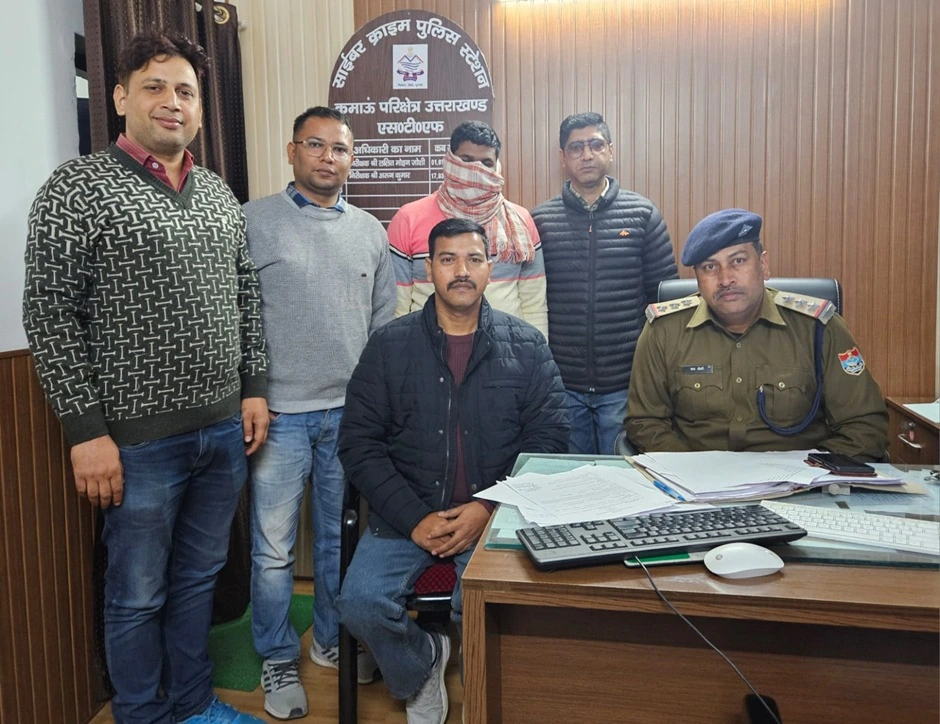
The Uttarakhand Special Task Force (STF) has successfully arrested the mastermind behind a sophisticated cybercrime syndicate that duped a victim of Rs 45.4 lakh under the guise of a “digital arrest.” The accused was apprehended in Lucknow, Uttar Pradesh. Here’s a detailed account of the case under relevant heads.
Case Brief
In July 2024, a Kashipur resident lodged a complaint with the Cyber Crime Police Station, Kumaon Region, alleging that they had been defrauded of Rs 45.4 lakh. The victim, Taruna Gaba, received a phone call from an imposter posing as an official from the Telecom Regulatory Authority of India (TRAI). The caller falsely claimed that her Aadhaar card and mobile number were involved in money laundering and a Rs 20-crore hawala scam. The fraudsters, posing as officials from Mumbai Police Crime Branch, coerced her into transferring money under the pretense of verifying her innocence.
The victim was kept in “digital arrest” for over 36 hours and manipulated into transferring the money through RTGS to the accounts provided by the fraudsters.
Modus Operandi
The accused used a meticulously planned strategy to execute the fraud:
Fake Authority Calls: Impersonated officials from TRAI, Mumbai Crime Branch, and other enforcement agencies, using WhatsApp voice and video calls.
Digital Arrest: Created a scenario of digital detention, claiming the victim was under police investigation and forbidding her from contacting anyone.
Fake Documentation: Sent forged documents, including an FIR copy, Supreme Court rulings, and bank statements, to lend credibility to the scam.
Threat and Isolation: Isolated the victim, instructing her to remain in a separate room and comply with their instructions to avoid immediate arrest.
Fraudulent Transfers: Collected bank details and coerced the victim into transferring Rs 45.4 lakh to bank accounts opened in the names of fake firms.
Use of Third-Party Accounts: Utilized commission-based accounts and internet banking kits to launder the defrauded money.
Arrest & Seizure
The STF Cyber Crime Police traced the prime accused, a 29 years old, to Lucknow, Uttar Pradesh. After a series of raids and technical investigations, he was apprehended. The seizure included:
1 Mobile Phone: Used for WhatsApp calls and video calls.
2 SIM Cards: Connected to the fraudulent activity.
1 PNB Chequebook: Linked to accounts used for laundering the stolen money.
The investigation revealed that the accused had been involved in multiple cases across India, with transactions amounting to crores of rupees over several months.
Team Led By
The case was handled under the supervision of Navneet Singh, Senior Superintendent of Police (STF), Uttarakhand, who provided specific directives for the swift resolution of the case. The team included Inspector, Sub-Inspector, Head Constables and a technical team.
Police Station Name
The investigation and arrest were carried out by the Cyber Crime Police Station, Kumaon Region, under the Uttarakhand STF.
The Uttarakhand Police has cautioned citizens against falling prey to such scams. Authorities emphasized that no government agency conducts “digital arrests” or demands money via WhatsApp or other platforms. Citizens are urged to report suspicious calls or messages immediately to the Cybercrime Helpline (1930) or via the cybercrime.gov.in portal.
—
北阿坎德邦特别工作组 (STF)成功逮捕了一个复杂的网络犯罪集团的幕后主谋,该集团以“数字逮捕”的名义骗取了一名受害者 454 万卢比。被告在北方邦勒克瑙被捕。
2024.12.7 Mother-Daughter Duo Trapped in Digital Arrest, Duped of Rs 36.58 Lakh
Mother-Daughter Duo Trapped in Digital Arrest, Duped of Rs 36.58 Lakh
A shocking case of cybercrime has surfaced in Noida, where a mother-daughter duo was held in “digital arrest” and swindled out of Rs 36.58 lakh. The victims, Taruna Gaba and her mother, Shashi Gaba, were subjected to psychological torture and relentless threats by fraudsters posing as government and police officials. The incident has sent ripples of concern throughout the city, highlighting the growing menace of cybercrime.
The Start of the Ordeal
The ordeal began when Taruna Gaba, a recent MBA graduate seeking employment, received a phone call from an unknown number in late November. The caller introduced himself as an official from the Telecom Regulatory Authority of India (TRAI) and accused her of involvement in money laundering and human organ trafficking, allegedly linked to her Aadhaar card.
Claiming to be part of an official investigation, the fraudsters coerced Taruna into participating in an online interrogation. To make their scam appear legitimate, they connected her to fake “Mumbai Police officers” via Skype and even sent a forged arrest warrant, further heightening their threats.
A Sophisticated Scam
The criminals manipulated the victims into transferring Rs 36.58 lakh in two installments, assuring them the money would be returned after the “investigation.” They also collected sensitive information about the Gaba family’s home and pressured them to provide additional funds. Although the fraudsters demanded more money by breaking fixed deposits and mortgaging property, the victims refused.
For four harrowing days, Taruna and her mother lived in constant fear, unable to seek help due to the criminals’ threats. The psychological pressure, coupled with the fear of public shame and legal consequences, led them to comply with the fraudsters’ demands.
Police Action and Recovery Efforts
After the fraudsters broke contact, the Gaba family finally reported the incident to the police. Acting swiftly, the authorities managed to freeze Rs 2 lakh of the swindled funds and registered a case against the cybercriminals. Efforts are now underway to track the perpetrators.
The Noida Police have issued a public advisory, urging citizens to remain vigilant against such scams and report suspicious activity immediately. “Fraudsters often employ psychological manipulation and fake documentation to gain their victims’ trust,” a police spokesperson said.
—
诺伊达发生了一起令人震惊的网络犯罪案件,一对母女遭到“数字逮捕”,并被骗走 365.8 万卢比。受害者塔鲁娜·加巴和她的母亲沙希·加巴遭到冒充政府和警察官员的诈骗分子的心理折磨和无情威胁。该事件在整个城市引起了关注,凸显了网络犯罪日益严重的威胁。
2024.12.2 Gang involved in stealing, dismantling 350 high-end bikes busted; key members arrested
Gang involved in stealing, dismantling 350 high-end bikes busted; key members arrested
New Delhi: Delhi Police has busted a gang involved in stealing over 350 high-end two-wheelers within six months, dismantling them, and selling the parts. The gang primarily consisted of juveniles who stole bikes and sold them for Rs 1,000 each to a godown owner. The owner, in turn, had his employees dismantle the vehicles and sold the parts to associates in other cities, using couriers or transport services. Police have apprehended three juveniles and two men in connection with the case.
A raid conducted by Delhi Police at a godown in Loni, Ghaziabad, led to the recovery of several vehicle number plates and cutting machines. The investigation began after a complaint on Nov 25 from Anand Singh, who reported that his bike was stolen from outside his residence in Burari. A case was registered following the complaint.
Deputy commissioner of police (north) Raja Banthia said CCTV analysis revealed the involvement of six individuals in the thefts. “After reviewing over 250 CCTV cameras, the team traced the suspects to Khajuri Chowk, Bhajanpura, and apprehended one boy,” he said.
The boy disclosed that two individuals from Khajuri Khas hired them to steal two-wheelers from different parts of Delhi, paying Rs 1,000 per motorcycle. He and two minor friends worked for these individuals, who then sold the stolen bikes to Mohammad Farooq.
“On the day of the incident, the trio, along with one Shahnawaz, went to Burari and stole three bikes, which they delivered to Farooq’s godown in Ghaziabad,” police added. During the raid, two more boys and Shahnawaz were apprehended. At the godown, 11 high-end bikes ready for dismantling were found, along with scattered bike parts. Farooq, the godown owner, was also nabbed.
Shahnawaz revealed that he would steal two-wheelers and hire minors for thefts across Delhi. The stolen bikes were then sold to Farooq, an auto-mechanic by profession. Initially, Farooq repaired bikes and scooters but later began dealing in stolen vehicles after coming into contact with two auto-lifters.
Farooq initially sold parts at his repair shop but soon expanded his operations, renting a godown and purchasing around 50 stolen bikes. He dismantled the vehicles and sent parts to receivers in Surat, Pune, Bangalore, and other cities using couriers and transport services.
—
盗窃、拆解 350 辆高端自行车的犯罪团伙被捣毁;主要成员被捕
2024.11.27 Curchorem bank fraud: Police reveal Rs 1.29 crore siphoned
How did a fraudster Tanvi Vast posing as bank official, dupe senior citizens at Curchorem?
South Goa SP Sunita Sawant says that Police have recovered the stolen gold. The fraud is estimated to be around Rs 35.5 lakh.
CURCHOREM/MARGAO: The Curchorem police uncovered a significant fraud involving Tanvi Vast, who prosed as a bank executive and Manager of the Bank Anand Jadhav. Both have been arrested. Vast targeted and defrauded senior citizens of lakhs of rupees and gold.
The accused, working in tandem with the Bank Manager of Central Bank Curchorem, exploited their trust to access their bank accounts and stole their savings and assets. Four complaints have been lodged against her. Meanwhile on Wednesday, SP South Sunita Sawant declared that the gold items which Tanvi Vast took from Ruzalina Correia of Kakoda Curchorem have been recovered from the Bank, based on which she took a gold loan.
In a shocking case of fraud, Tanvi Vast, the main accused, allegedly posed as an employee of the Central Bank of India’s Curchorem branch, gaining access to customers’ accounts and valuables. Vast targeted senior citizens, earning their trust by presenting herself as a bank official.
Tanvi, who fraudulently infiltrated the bank, convinced her elderly victims to deposit their savings and gold assets into the bank. Promising to set up high-value fixed deposits, she opened accounts in their names but manipulated the details to access their funds.
As per sources, Tanvi was working as bank employee in 2023. She had began her heist in 2023 by duping customers, to which the bank took action and fired Tanvi. Later on in April 2024, Anand Jadhav was transferred at the branch as the new manager. Through Jadhav, Tanvi got into the bank as NGO worker and together they began duping senior citizens till November 2024.
Working with the bank manager, Anand Jadhav, the duo withdrew money from these fixed deposits and emptied gold jewelry from the victims’ lockers. The fraud came to light when the victims, upon inquiry, discovered their accounts and lockers had been wiped clean.
The police arrested Tanvi Vast and Anand Jadhav on Tuesday. Investigations are ongoing to determine the full extent of the fraud and whether more victims or accomplices are involved.
Question also arises as to how did a centralised bank branch in Curchorem allowed the scam to take place, as the first fraud took place in July 31, 2023 wherein a 53-year-old resident of Chirknali, Cacora, Severina Fernandes, reported that she was fraudulently induced to transfer Rs 1.4 lakh from her account at the Central Bank of India. This case was not registered.
As per sources, Tanvi was working as bank employee in 2023. She had began her heist in 2023 by duping customers, to which the bank took action and fired Tanvi. Later on in April 2024, Anand Jadhav was transferred at the branch as the new manager. Through Jadhav, Tanvi got into the bank as NGO worker and together they began duping senior citizens till November 2024.
—
诈骗犯 Tanvi Vast 是如何假扮银行官员,欺骗 Curchorem 的老年人的?
—
Goa Fraud Case: तन्वीविरुद्ध 17 नव्या तक्रारी! 1.30 कोटींना गंडा; 83 वर्षीय ज्येष्ठ नागरिकालाही बनवलं बळीचा बकरा
Tanvi Vast and Anand Jadhav: सेंट्रल बँक ऑफ इंडिया बँकेच्या काकोडा शाखेचा व्यवस्थापक आनंद जाधव या दाेघांच्याही विरोधात आणखी १७ लाेकांनी फसवणुकीची तक्रार कुडचडे पोलिस स्थानकात दिली आहे.

मडगाव: आपल्या गोड वाणीने लोकांना भुरळ पाडून त्यांच्या लाखो रुपयांवर डल्ला मारणारी तन्वी वस्त आणि या कामात तिला साथ देणारा सेंट्रल बँक ऑफ इंडिया बँकेच्या काकोडा शाखेचा व्यवस्थापक आनंद जाधव या दाेघांच्याही विरोधात आणखी १७ लाेकांनी फसवणुकीची तक्रार कुडचडे पोलिस स्थानकात दिली आहे.
व्यवस्थापक जाधव याने खातेदारांच्या खात्यावरून परस्पर रक्कम उचलल्याची धक्कादायक बाबही समोर आली आहे. याप्रकरणी आज कुडचडे पोलिसांनी चौथा एफआयआर (FIR) नाेंद केला असून आतापर्यंत ज्या तक्रारी आल्या आहेत, त्या पाहिल्यास या द्वयींनी ५० पेक्षा जास्त लाेकांना १.३० कोटींचा गंडा घातल्याचे उघडकीस आले आहे.
दक्षिण गोव्याच्या(South Goa) पोलिस अधीक्षक सुनीता सावंत यांनी आज घेतलेल्या पत्रकार परिषदेत ही माहिती दिली. या प्रकरणात एका महिलेचे २५ लाखांचे सोन्याचे दागिने तन्वीने बदलले होते. तिने हे दागिने धनवर्षा गोल्ड लोन या संस्थेकडे गहाण ठेवून २५ लाखांचे कर्ज घेतले होते. त्यापैकी १८.४५ लाखांचे दागिने कुडचडे पोलिसांनी या संस्थेकडून जप्त केले आहेत, अशी माहिती सावंत यांनी दिली. यावेळी केपेचे उपअधीक्षक सागर एकोस्कर, कुडचडेचे पोलिस निरीक्षक तुकाराम चव्हाण तसेच उपनिरीक्षक अरुण ॲण्ड्र्यू हे उपस्थित होते.
आज जो चौथा एफआयआर नोंद केला, त्यात तन्वीने सुषमा अस्थाना (वय ६९ वर्षे) या महिलेचे २०.२९ लाख रुपये, स्टीव्हन फर्नांडिस (वय ५१ वर्षे) यांचे ८ लाख रुपये, तर पाश्कॉल वाझ (वय ८३ वर्षे) यांचे १.४० लाख रुपये स्वत:च्या खात्यात वळते केले. यावरून तन्वीने ज्येष्ठ नागरिकांना वृद्धांनाही सोडले नाही, हे स्पष्ट होते. तन्वी ही सेंट्रल बँकेची अधिकृत कर्मचारी नसतानाही आनंद जाधव हा व्यवस्थापक लोकांचे पैसे ‘एफडी’त गुंतविण्याच्या बहाण्याने तन्वीकडे पाठवायचा.
एफडी करण्याच्या बहाण्याने तन्वी त्यांची रक्कम दुसऱ्या खात्यात वळविण्यासाठीचे फॉर्म भरून घ्यायची आणि त्या फॉर्मचा वापर करून हे पैसे आपल्या खात्यात वळवायची. ज्यांना त्यांचे पैसे ‘एफडी’त गुंतविले आहेत असे सांगितले गेले, त्यांना ‘एफडी’त गुंतवणूक केल्याची पावती दिली जात नव्हती.
व्यवस्थापकाला विचारले तर तन्वी तुम्हाला नंतर रिसीट देणार, असे सांगितले जायचे. आतापर्यंत तन्वी आणि जाधव या दोघांनी लोकांना १.३० कोटी रुपयांना टोपी घातली असली तरी ही रक्कम आणखी वाढू शकते, असे सांगितले जाते.
तन्वी होती एअर होस्टेस
लहानपणापासून ग्लॅमरस जीवनशैलीची ओढ असलेल्या तन्वीने अवघ्या २० व्या वर्षी रॉयल एअरवेज या विमान कंपनीत एअर होस्टेसची नोकरी केली होती. तीन वर्षे तिने हे काम केले. त्यानंतर ‘मिस एशिया पॅसिफिक’ या सौंदर्य सुंदरी स्पर्धेत तिने भाग घेतला.
अशा तऱ्हेच्या अनेक स्पर्धांमध्ये तिने भाग घेतला हाेता. या स्पर्धांत भाग घेण्यासाठी ज्या महागड्या वस्तू खरेदी कराव्या लागत होत्या, त्यासाठी तिला भरपूर पैसा लागायचा. हा पैसा उभा करण्यासाठीच ती असल्या उचापती करत होती, अशी माहिती प्राप्त झाली आहे.
मडगावात जोडप्याने घातला १४.५० लाखांना गंडा
सरकारी नोकरी देण्याचे आमिष देऊन एका जोडप्याने आम्हाला साडेचौदा लाखांना गंडा घातल्याचे दोन महिलांनी मडगाव स्थानकात येऊन सांगितले. यावेळी पोलिसांनी त्यांना जेथे घटना घडली आहे, तेथील पोलिस स्थानकात जाऊन तक्रार नोंदविण्यास सांगितले.
संशयित म्हणून त्यांनी रोहित पै आणि त्याच्या पत्नीने आम्हाला फसविल्याचे सांगितले. आमचे पैसे परत देण्यासाठी जो धनादेश दिला होता, तो वठलाच नाही. नंतर रोहितचे आजारपणामुळे निधन झाले. परंतु आता त्याची पत्नी आमचे पैसे देण्यास नकार देत असल्याचे या तक्रारदारांचे म्हणणे आहे.
2024.11.27 नकली सोने आणि एटीएम कार्डाची हेराफेरी करणारे दोघे चोरटे पोलिसांच्या जाळ्यात
नकली सोने आणि एटीएम कार्डाची हेराफेरी करणारे दोघे चोरटे पोलिसांच्या जाळ्यात
बनावट सोन्याची विक्री आणि एटीएम कार्डाची हेराफेरी करणार्या दोन चोरट्यांना शहर पोलिसांनी मंगळवारी रात्री जेरबंद केले. या धडक कारवाईत चोरट्यांकडून नकली सोने, एटीएम कार्ड, वाहन आणि इतर साहित्य जप्त करण्यात आले.
तक्रारीनुसार, शहर पोलीस स्टेशनचे सहा. पोलिस निरिक्षक भागवत मुळीक, पोहेकॉ. गजानन बोरसे, पो.ना. सागर भगत, पो.कॉ. रविंद्र कन्नर, गणेश कोल्हे, राहुल थारकर, अमरदीपसिंह ठाकूर, अंकुश गुरूदेव शहर पोलीस स्टेशन हद्दीत पोलीस निरिक्षक रामकृष्ण पवार यांच्या आदेशाने दुचाकीने पेट्रोलिंग करीत होते. दरम्यान, नांदुरा रोडवरील भारतीय स्टेट बँकेच्या शाखेसमोरील एटीएम समोर एमएच २० एमपी ७९५५ या दुचाकीवर दोन इसम संशयितरित्या आढळून आले. त्यांची कसून चौकशी केली असता, पप्पुराम अर्जुनलाल जाट (३२) वर्ष रा. केमुणीया ता. रायपुर जि. भिलवाडा, राजु बालु जाट (४१)रा. बिडकाखेडा ता.भिलवाडा जि.भिलवाडा राज्य – राजस्थान अशी दोघांची नावे समोर आली. दोघेही अट्टल चोरटे असल्याचे समोर आले. त्यांच्या विरोधात राजस्थान आणि गुजरात राज्यात विविध गुन्हे दाखल असल्याचेही उघडकीस आले.
त्यामुळे दोघांनाही ताब्यात घेण्यात आले. त्यांच्या जवळून रोख ९० हजार रूपये, दोन लाख ५७ हजार ५२५ रूपये किंमतीच्या सोन्याच्या अंगठ्या, २७ हजार १४४ रुपयांच्या सोन्याच्या बाळ्या, ५५ हजार १०२ रूपये किंमतीचा सोन्याची चेन तसेच सोना सारख्या दिसणारी नकली नाणी, चांदीचे ११ हजार ५८७ रूपये किंमतीचे तीन पायल, ४ हजार ४३९ रूपये किंमतीचे चांदीचे कडे, दोन हजार २९० रूपये किंमतीचे डब्या आणि इतर साहित्य असे सोन्या चांदीचे तीन लाख ३९ हजार ७७१ रूपये किंमतीचे दागीणे जप्त करण्यात आले. याशिवाय सहा नगर एटीएम, इतर नावाचे आधार कार्ड, एक ५० हजार रूपये किंमतीची दुचाकी, दोन मोबाईल असा एकुण पाच लाख ०२ हजार ५६८ रूपयांचा मुद्देमाल जप्त करण्यात आला. जिल्हा पोलीस अधिक्षक विश्व पानसरे सर, अपर पोलीस अधिक्षक अशोक थोरात, उपविभागीय पोलीस अधिकारी विनोद ठाकरे यांच्या मार्गदर्शनात करण्यात आली.
—
周二晚上,两名出售假黄金和篡改 ATM 卡的小偷被市警方逮捕。此次突击行动中,从盗贼手中起获假黄金、提款卡、车辆等物资。
2024.11.27 Rs 11,333 crore lost in just 9 months: A look at the cyber scams that have hit India the worst
Rs 11,333 crore lost in just 9 months: A look at the cyber scams that have hit India the worst
Data compiled by the Indian Cyber Crime Coordination Centre (I4C) shows nearly half of the 12 lakh cyber fraud complaints received in 2024 were perpetrated by fraudsters based in Southeast Asian countries — Cambodia, Myanmar, and Laos.
India lost approximately Rs 11,333 crore to cyber fraud in the first nine months of 2024, according to data compiled by the Indian Cyber Crime Coordination Centre (I4C), a division of the Ministry of Home Affairs (MHA).
Stock trading scams accounted for the largest share, with losses of Rs 4,636 crore from 2,28,094 complaints. Investment-based scams caused losses of Rs 3,216 crore from 1,00,360 complaints, while Rs 1,616 crore was lost to “digital arrest” frauds across 63,481 complaints.
Data from the Citizen Financial Cyber Fraud Reporting and Management System (CFCFRMS), as seen by The Indian Express, showed nearly 12 lakh cyber fraud complaints were received in 2024, with 45% of these originating from Southeast Asian countries—Cambodia, Myanmar, and Laos. Since 2021, the CFCFRMS has recorded 30.05 lakh complaints, leading to losses amounting to ₹27,914 crore. Of these, 11,31,221 complaints were registered in 2023, 5,14,741 in 2022, and 1,35,242 in 2021.
An analysis of cyber frauds this year revealed that stolen money is often withdrawn using cheques, central bank digital currency (CBDC), fintech crypto, ATMs, merchant payments, and e-wallets. Over the past year, the I4C has frozen around 4.5 lakh mule bank accounts, typically used to launder the proceeds of cybercrime.
—
仅 9 个月就损失 11,333 亿卢比:印度遭受网络诈骗最严重案例一览
印度网络犯罪协调中心 (I4C) 汇编的数据显示,2024 年收到的 120 万起网络欺诈投诉中,近一半是由位于东南亚国家(柬埔寨、缅甸和老挝)的欺诈者实施的。
股票交易诈骗占比最大,共计 2,28,094 起投诉,损失金额达 4,636 千万卢比。投资诈骗共计 1,00,360 起投诉,损失金额达 3,216 千万卢比。而“数字逮捕”诈骗共计 63,481 起投诉,损失金额达 1,616 千万卢比。
2024.11.27 Retired Army officer held under 55-hour ‘digital arrest’, robbed of Rs 5 lakh
Retired Army officer held under 55-hour ‘digital arrest’, robbed of Rs 5 lakh
The fraudsters, posing as officials from the Telecom Regulatory Authority of India (TRAI), told Aditya Jha that illegal gambling had been done, and obscene messages were sent from his number and that a money laundering case was filed against him.
In Short
Aditya Jha told money laundering case lodged against him
Fraudsters said obscene messages sent from Jha’s phone
Retired Army officer called to Bihar’s Madhubani to transfer money
A retired Army officer in Haryana’s Faridabad has fallen prey to cyber fraud through ‘digital arrest’ and has been duped of Rs 5 lakh, police said on Wednesday.
Retired Army officer Aditya Jha was held under a 55-hour digital arrest by the fraudsters and was even called to Bihar’s Madhubani to transfer the money as demanded. Following the incident, Jha approached the police and a case was registered.
As per the complaint, the scammers called Jha, who is now working as a clerk at a local Punjab National Bank, at around 9:55 am on November 6.
The fraudsters, posing as officials from the Telecom Regulatory Authority of India (TRAI), told Jha that his phone would be switched off in about two hours and that another SIM had been issued on his Aadhaar number.
Jha, who was in Delhi at the time of the call, was shocked when the scammers told him that illegal gambling had been done and obscene messages had been sent from his number, so an FIR was registered against him.
Moments later, another person took the phone. This person, posing as a CBI officer, told Jha that an arrest warrant had been issued against him. Jha was really scared to know that and was even called to the CBI office at the earliest.
According to the complaint, Jha was further told by the so-called CBI officer that a money laundering case of Rs 6.68 crore had also been lodged against him and that he had been found to have connections with NCP (Ajit Pawar) leader Nawab Malik.
Nawab Malik is facing trial in an alleged money laundering case in Mumbai.
When Aditya Jha denied any wrongdoing and connections with the NCP leader, the fraudsters asked him to cooperate with them and threatened him with arrest if he did not comply.
Jha was also threatened that he might be imprisoned for three to seven years for the alleged crimes.
Jha further alleged in his complaint that he was then asked to receive a video call, leave his home and find a hotel to stay. He followed their instructions. After he moved to the hotel, he was asked to furnish his bank details so that the money laundering case against him could be further investigated.
They asked Jha not to call his family members, telling him that it would lead to a breach of security and his family’s arrest as well.
He was then directed to transfer Rs 5.03 lakh to a bank account as told by the scammers. Jha abided and reached a local branch of Punjab National Bank to transfer the money. However, the transaction could not be completed due to some technical reasons.
Jha was then asked to go to his base-branch in Madhubani in order to transfer the amount. He went to Madhubani and eventually transferred the money.
When Jha’s relatives in Madhubani came to know about the incident, they reached his location and disconnected the video call. His son also reached there the same night and returned home with him.
After returning to Faridabad, the retired Army officer filed a complaint with the local police, after which a case was registered.
Police Public Relations Officer Yashpal Singh said that a team had been formed to investigate the matter and a manhunt had been launched to track down the culprits.
Further investigation into the matter is underway.
—
退役军官遭“数字逮捕”55 小时,被抢劫 50 万卢比
这些诈骗者冒充印度电信监管局 (TRAI) 的官员,告诉阿迪亚·贾 (Aditya Jha),有人进行非法赌博,有人从他的号码发送淫秽信息,并且有人对他提起洗钱诉讼。
2024.11.27 WhatsApp call, then month-long ‘digital arrest’: How Mumbai woman lost Rs 4 crore
WhatsApp call, then month-long ‘digital arrest’: How Mumbai woman lost Rs 4 crore
The ordeal began when the woman received a WhatsApp call claiming that a parcel she had allegedly sent to Taiwan had been intercepted by authorities.
In Short
Fraudsters posed as senior law enforcement officials
They used fake parcel claim and Aadhaar misuse story
Authorities believe the scam was meticulously planned, case under investigation
A 77-year-old woman from South Mumbai was duped of Rs 3.8 crore in a month-long cyber fraud that saw con artists posing as senior law enforcement officials. The elderly homemaker, who lives with her retired husband, was kept under “digital arrest” for a month under the pretext of a fake money laundering case and threatened with arrest.
The ordeal began when the woman received a WhatsApp call claiming that a parcel she had allegedly sent to Taiwan had been intercepted by authorities.
The caller stated that the package contained five passports, a bank card, 4 kilograms of clothing, and MDMA drugs. When the woman denied sending any such parcel, the caller alleged that her Aadhaar card details had been used in the purported crime.
To add credibility to their claims, the fraudsters connected her to a man who introduced himself as IPS officer Anand Rana. Under the pretext of investigating her role in money laundering, he demanded details of her bank accounts.
Soon after, another fraudster, claiming to be IPS officer George Mathew from the finance department, joined the call. He instructed the woman to transfer money into shared bank accounts for verification, reassuring her that the funds would be returned if she was found innocent.
To further establish their authority, the scammers sent her a fabricated notice stamped with the Crime Branch’s seal. They also instructed her to keep her video call active for 24 hours to monitor her compliance.
The woman initially transferred Rs 15 lakh, but the pressure did not end there.
Whenever the video call was disconnected for any reason, the fraudsters would threaten her to restart the video immediately. This continued for a month, during which the woman was defrauded of nearly Rs 4 crore.
The Mumbai Crime Branch has taken up the case and launched a thorough investigation. Authorities believe the scam was meticulously planned, using fear tactics and fabricated evidence to isolate the victim and gain her trust.
—
WhatsApp 电话,然后长达一个月的“数字逮捕”:孟买女子如何损失 4 千万卢比
这件事的起因是,这名女子接到一个 WhatsApp 电话,称她寄往台湾的包裹被当局截获。
2024.11.19 Delhi Police arrests Chinese national for cyber fraud, unearth Rs 100 crore trading scam
Delhi Police arrests Chinese national for cyber fraud, unearth Rs 100 crore trading scam
The passport and visa of the accused were seized at the time of arrest by the Andhra Police. When the Delhi Police arrested him, Fang had no valid visa

New Delhi: The Delhi Police has arrested a Chinese national for his alleged involvement in a cyber fraud of Rs 43 lakh in Shahdara, officials said on Tuesday.
The arrest has helped the police unearth an online stock trading scam of more than Rs 100 crore which was being orchestrated via social media groups, Deputy Commissioner of Police (Shahdara) Prashant Gautam said.
The accused has been identified as Fang Chenjin, a Chinese national residing at Safdarjung enclave, he said.
Sharing details on the probe, Gautam said, “A complaint was lodged at the cybercrime portal in July, were the complainant reported that he was lured into fraudulent stock market training sessions and subsequently tricked into investing Rs 43.5 lakh in several transactions. These investments were directed to multiple bank accounts controlled by the fraudsters.”
During the investigation, the police obtained details of the bank accounts to which the stolen funds were transferred and further analysed the call records of several suspected mobile numbers.
A thorough investigation was conducted into the bank accounts and mobile numbers associated with all the suspects, and technical analysis revealed a link to fraudulent activities.
“We traced the funds to a bank account registered under the name Maha Laxmi Traders, located in Mundka, Delhi. This account was found to be involved in fraudulent transactions, including a transfer of Rs 1.25 lakh made in April this year,” he said.
Further inquiry led the police to a mobile number which was registered in the name of Fang, which led them to him. He was arrested after evidence from his mobile phone and social media chat logs related to the fraud were recovered, said the DCP.
The social media conversations between him and an associate clearly showed that he was directing the fraudulent activities, including the recharge of the mobile number used in the scam. Further probe revealed that Fang was linked to two other significant fraud cases involving cybercrime and money laundering in Andhra Pradesh and Uttar Pradesh, police said.
“There are also 17 criminal complaints registered with the cyber crime portal, all linked to the same Fincare Bank account with the total amount defrauded exceeding Rs 100 crore,” the DCP said, adding that the accused Chinese national revealed that he came to India on a work Visa for a Taiwani company in Andhra Pradesh in April 2020.
According to the police, Fang was even arrested by the Andhra Pradesh police in a cheating case that was registered on the complaint of the company’s owner where he was working as a vendor.
“He spent around 7 months in jail in Tirupati jail in Andhra Pradesh,” Gautam said.
The passport and visa of the accused were seized at the time of arrest by the Andhra Police. When the Delhi Police arrested him, Fang had no valid visa, he added.
—
德里警方逮捕一名中国公民,涉嫌网络诈骗,揭露 10 亿卢比交易骗局
安得拉邦警方在逮捕被告时没收了其护照和签证。德里警方逮捕方晨金时,他并没有有效签证
新德里:官员周二表示,德里警方逮捕了一名中国公民,其涉嫌参与沙赫达拉 430 万卢比的网络诈骗案。
副警察局长(Shahdara)Prashant Gautam 表示,此次逮捕有助于警方破获一起通过社交媒体群组策划的、涉案金额超过 10 亿卢比的网上股票交易诈骗案。
他说,嫌疑人已被确定为方晨金 (Fang Chenjin),一名居住在萨夫达疆 (Safdarjung) 飞地的中国公民。
高塔姆在分享调查细节时表示:“7 月份,网络犯罪门户网站上接到了一起投诉,投诉人称,他被诱骗参加欺诈性股票市场培训课程,随后被骗在几笔交易中投资了 435 万卢比。这些投资被转入诈骗者控制的多个银行账户。”
调查过程中,警方获得了被盗资金转入的银行账户的详细信息,并进一步分析了几个可疑手机号码的通话记录。
对所有嫌疑人的银行账户和手机号码进行了彻底调查,技术分析揭示了与欺诈活动的联系。
“我们追踪到这些资金来自一个以 Maha Laxmi Traders 名义注册的银行账户,该账户位于德里蒙达卡。我们发现该账户涉及欺诈交易,包括今年 4 月转账的 12.5 万卢比,”他说。
进一步调查后,警方找到了一个以方名义注册的手机号码,并找到了他。警方表示,在从他的手机和社交媒体聊天记录中获取与诈骗相关的证据后,警方逮捕了他。
他与同伙在社交媒体上的对话清楚地表明,他指挥了诈骗活动,包括为诈骗中使用的手机号码充值。警方表示,进一步调查发现,方与安得拉邦和北方邦的另外两起涉及网络犯罪和洗钱的重大诈骗案件有关。
印度刑事警察局表示:“网络犯罪门户网站上还登记了 17 起刑事投诉,均与同一个 Fincare 银行账户有关,诈骗总额超过 10 亿卢比。”他还补充说,这名被指控的中国公民透露,他于 2020 年 4 月持安得拉邦一家台湾公司的工作签证来到印度。
据警方介绍,方甚至因一起诈骗案而被安得拉邦警方逮捕,该案是根据他当时担任供应商的公司老板的投诉立案的。
Gautam说:“他在安得拉邦蒂鲁帕蒂监狱服刑了大约 7 个月。”
安得拉邦警方在逮捕被告时没收了其护照和签证。他补充说,当德里警方逮捕他时,方手中没有有效签证。
—
2024.11.10 UP Man, 50, Goes On Blind Date, She Kidnaps Him And Demands ₹ 3 Lakh
UP Man, 50, Goes On Blind Date, She Kidnaps Him And Demands ₹ 3 Lakh
Lallu Chaubey, a resident of Lalitpur, was held hostage in Jhansi since Thursday for a ransom of ₹ 3 lakh.
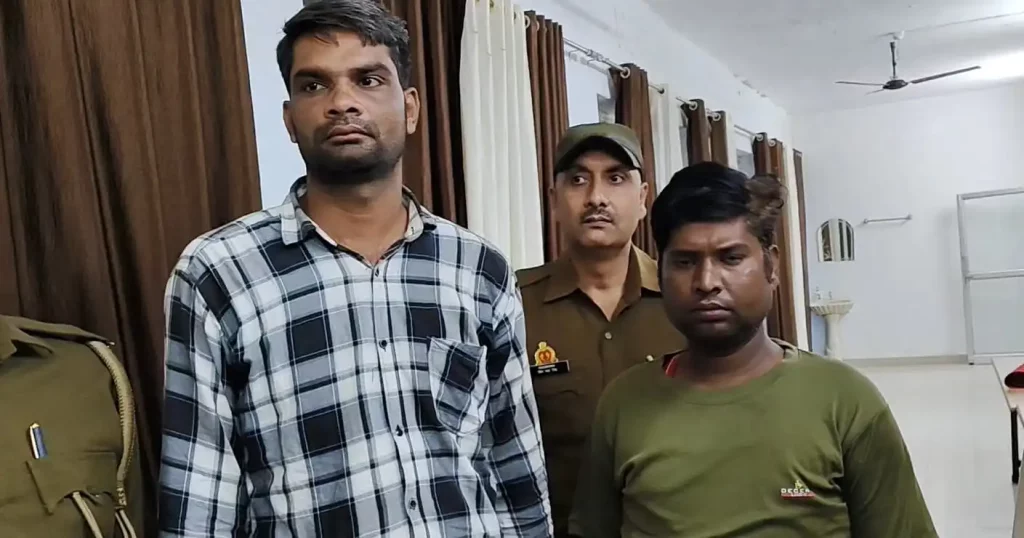
A 50-year-old man in Uttar Pradesh has been rescued and three persons, including a woman, have been arrested for allegedly laying a honeytrap and kidnapping him for ransom.
Lallu Chaubey, a resident of Lalitpur, was held hostage in Jhansi since Thursday for a ransom of ₹ 3 lakh, police said on Saturday.
The police launched a probe after Mr Chaubey’s son filed a complaint that he had been kidnapped and that they had received a ransom call.
Out of the total ransom amount demanded, ₹ 1 lakh was already paid, the police officer said.
Multiple teams of police were formed to find the man and a constable, posing as the son of the victim, went to give the ransom.
One of the accused then took him to a place where the man was held hostage.
Several police teams also then quickly arrived there and rescued Mr Chaubey and the three accused – Kiran (35), Akhilesh Ahirwar (30), and Satish Singh Bundela (27) – were arrested.
During interrogation, the accused told the cops that they used to first make a woman call a man over the phone and ask him to meet her in Jhansi where they held him hostage.
Many women have been associated with their gang, the police said.
—
北方邦 50 岁男子去相亲,被绑架并索要30万卢比
北方邦一名 50 岁男子被救出,包括一名女子在内的三人因涉嫌设下美人计绑架他索要赎金而被捕。
警方周六表示,拉利特布尔居民拉鲁·乔贝 (Lallu Chaubey) 自周四起在詹西被劫持为人质,勒索30 万印度卢比赎金。
在 Chaubey 的儿子报警称他被绑架并且警方接到了勒索电话后,警方展开了调查。
警官说,在要求的赎金总额中,已经支付了 10 万卢比。
警方派出多支警队前去寻找该男子,并有一名警员假扮受害者儿子前去支付赎金。
其中一名被告随后将他带到了该男子被劫持的地方。
随后,几支警队也迅速赶到现场,救出了 Chaubey 先生,并逮捕了三名嫌疑人——Kiran(35 岁)、Akhilesh Ahirwar(30 岁)和 Satish Singh Bundela(27 岁)。
2024.11.10 Promised loan under govt scheme, couple duped of 2.24L
Promised loan under govt scheme, couple duped of 2.24L
Ahmedabad couple cheated of Rs 2.24L in loan scam under stree shakti yojana
Ahmedabad: A couple residing in Chankheda were duped of Rs 2.25 lakh by two con men who lured them by promising to get them a loan under ‘Stree Shakti Yojana’, a govt business loan scheme.
The complainant, a 35-year-old woman, works at an electronics showroom while her husband works with a pharmaceutical company.
She told police that their relative told them about the govt scheme. “We were introduced to an Isanpur resident who promised to get a loan approved under the scheme. After taking our documents, including Aadhaar card, PAN card, electricity bill, caste certificate and photos, they asked us to transfer Rs 10,000. Later, in Jan, they asked us to send Rs 15,000 to a third person to prepare the loan file. Subsequently, we were told that the demand draft (DD) for the loan amount was ready and required the senior official’s signature. To expedite the process, we were asked to gift a mobile phone to the official’s wife,” she told police.
The complaint stated that the couple purchased a phone worth Rs 1.30 lakh on EMI and gave it to the official. “When we asked about progress on the matter, they kept making excuses. In Feb, they said an agreement was pending, causing the DD to be withheld.”
“They took more money as processing fees, to prepare the agreement and prepare a gumastadhara certificate from the AMC. They took another Rs 20,000 to get the DD. However, we still did not receive the loan amount,” the complainant told police.
Finally, she approached the police on Friday and registered a complaint of cheating and breach of trust against the two individuals.
—
艾哈迈达巴德:一对居住在 Chankheda 的夫妇被两名骗子骗走 22.5 万卢比,骗子承诺根据“Stree Shakti Yojana”(一项政府商业贷款计划)为他们提供贷款。
投诉人是一名 35 岁的女性,在一家电子产品展示厅工作,而她的丈夫在一家制药公司工作。
她告诉警方,他们的亲戚告诉了他们有关政府计划的事情。 “我们被介绍给一位伊桑普尔居民,他承诺通过该计划获得贷款批准。在拿走了我们的文件,包括 Aadhaar 卡、PAN 卡、电费单、种姓证明和照片后,他们要求我们转账 10,000 卢比。后来,在 1 月,他们要求我们将 15,000 卢比汇给第三人,以准备贷款文件。随后,我们被告知贷款金额的即期汇票 (DD) 已经准备好,需要高级官员签字。为了加快流程,我们被要求赠送一部手机给这位官员的妻子,”她告诉警方。
投诉称,这对夫妇分期付款购买了一部价值 13 万卢比的手机,并将其交给了官员。“当我们询问此事的进展情况时,他们一直在找借口。2 月份,他们说协议尚未达成,导致 DD 被扣留。”
“他们收取了更多的钱作为手续费,以准备协议并从 AMC 准备 gumastadhara 证书。他们又拿了 2 万卢比来获得 DD。然而,我们仍然没有收到贷款金额,”投诉人告诉警方。最后,她于周五向警方报案,对这两个人进行了欺诈和背信弃义的投诉。
2024.11.9 Conmen dupe businessman of ₹45,000 via fake Facebook profile of Bhopal top cop
Conmen dupe businessman of ₹45,000 via fake Facebook profile of Bhopal top cop; arrested
Bhopal crime branch Deputy Commissioner of Police Akhil Patel told PTI that police would seek custody of the suspects to further investigate their methods.
Two people were taken into custody on Saturday for allegedly fabricating fake social media profiles of the Bhopal police commissioner and defrauding people, the police said.
The accused have been identified as Shakeel Mohammed and Sunil Prajapat. They reportedly established fraudulent profiles on Facebook, one of them included Bhopal’s top cop.
The accused were apprehended in Alwar, Rajasthan, PTI reported quoting an official.
Bhopal crime branch Deputy Commissioner of Police Akhil Patel told PTI that police would seek custody of the suspects to further investigate their methods.
According to PTI, the two accused were also wanted by the Karnataka police for similar offences involving the impersonation of a superintendent of police online.
They allegedly curated fake profiles using the name and image of Bhopal Police Commissioner Harinarayanachari Mishra to deceive the public.
Impersonating profiles: What is the scam
The scam was uncovered on November 5 when a 48-year-old businessman reported the incident to the cybercrime cell, claiming he was swindled out of ₹45,000 by someone using a profile showcasing the commissioner in uniform.
The complainant recounted that he received a Facebook message indicating that the police chief was selling his old furniture, prompting him to pay through an online QR code.
According to a crime branch release, authorities have recovered four mobile phones, three SIM cards, and ₹5,000 in cash from the accused.
In another incident, two people have complained to the police here that they have collectively lost about ₹95 lakh to cyber fraudsters after they fell prey to fake videos allegedly featuring two top businessmen.
In both cases, the complainants didn’t check the authenticity of the alleged videos and ended up clicking some suspicious links which led them to fake websites created by fraudsters to cheat people and make money on promises of giving them higher returns, they said on Monday.
—
骗子通过虚假的博帕尔高级警官 Facebook 个人资料骗取商人45,000卢比;被捕
嫌疑人已被确定为 Shakeel Mohammed 和 Sunil Prajapat。据报道,他们在 Facebook 上建立了虚假个人资料,其中一个个人资料中包括博帕尔的高级警官。
据称,他们利用博帕尔警察局局长哈里纳拉亚纳查里·米什拉 (Harinarayanachari Mishra) 的姓名和形象制作虚假资料来欺骗公众。
11 月 5 日,一名 48 岁的商人向网络犯罪部门举报了这一骗局,声称有人使用一张展示身着制服的专员的个人资料骗取了他45,000卢比,从而发现了这一骗局。
投诉人回忆说,他收到一条 Facebook 消息,表示警察局长正在出售他的旧家具,并提示他通过在线二维码付款。
2024.10.27 Three men who were duping people under the pretext of high returns from investment were arrested
Delhi Police bust online fraud: 3 arrested in connection with Rs 23.90 lakh investment scam
NEW DELHI: Three men who were duping people under the pretext of high returns from investment were arrested. The complainant, Ankit, alleged that he was scammed during a phone call in which he was promised huge profits for investing in a company. He deposited Rs 23.90 lakh into the provided accounts and lost all his money. Feeling cheated, he filed a complaint on the NCRP portal.
Deputy commissioner of police (Outer North) Nidhin Valsan formed a team under SHO (Cyber) Raman Kumar Singh.
Based on information, the team conducted continuous raids in various locations in Gujarat and apprehended two cyber criminals who were attending the inauguration of a newly opened shop selling readymade garments and accessories in Kheralu village, Vadnagar, Gujarat.
The cyber criminals are Karan Dabhi (23) and Ankit Dabhi (22). Two mobile phones containing evidence linking them to the crime were recovered. It was revealed that the readymade garments and accessories were purchased with the defrauded money by the ringleader, Prakash, and the shop inauguration ceremony was scheduled to take place in the name of his deceased wife, on Oct 24.
Another accused, Suresh Thakor (26), was arrested earlier in this case and has been in judicial custody since September 11, 2024. Police stated that the accused call people using fake numbers, tricking them into investing in various schemes with promises of huge profits. They then ask the victims to open a Demat account and transfer the call to another accomplice.
“The next caller asks the victims to transfer money to fake accounts, promising huge profits. Eventually, all the money is lost, and no profit is returned. The criminals use fake SIM cards and fake accounts belonging to labourers,” police said.
Two of the accused are diploma holders in ITI from Gujarat. They used to call people to invest money in different commodities. “Ankit is the younger brother of kingpin Prakash. His father is posted as a GRD (Gram Rakshak Dal) Assistant at the Vadnagar police station,” police said.
Suresh worked in a factory and acted as the middleman for kingpin Prakash, arranging fake accounts. He would collect cash through ATM withdrawals and hand it over to Prakash.
—
德里警方破获网络诈骗案:3 名涉案人员因涉嫌 239 万卢比投资诈骗被捕
新德里:三名以高额投资回报为借口诈骗他人的男子被逮捕。投诉人安基特称,他被电话骗了,对方承诺投资一家公司会给他带来巨额利润。他向对方提供的账户存入了 239 万卢比,结果钱全都输了。
副警察局长尼丁·瓦尔桑在网络警察拉曼·库马尔·辛格的领导下组建了一支队伍。根据掌握的信息,该队伍在古吉拉特邦各地连续搜查,抓获了两名网络罪犯,他们当时正参加在古吉拉特邦瓦德纳加尔Kheralu 村新开的一家成衣和配饰商店的开业典礼。网络罪犯分别是卡兰·达比(23 岁)和安基特·达比(22 岁)。两部手机被追回,其中有他们与犯罪有关的证据。经查,该犯罪团伙主谋普拉卡什用骗取的钱财购买了这些成衣和配饰,并计划于10月24日以其亡妻的名义举行店铺开业典礼。
2024.10.26 The Agripada police on Friday arrested four individuals, including two BMC employees, who were involved in a fake recruitment scam
Cops arrest 4 for BMC’s fire dept recruitment fraud
Mumbai: The Agripada police on Friday arrested four individuals, including two BMC employees, who were involved in a fake recruitment scam in the Brihanmumbai Municipal Corporation(BMC) Fire Brigade department. They cheated 61 aspiring candidates by issuing bogus appointment letters and extorted large sums of money.
The four arrested individuals have been identified as fire officers Dattatray Pawar (36) and Devidas Dattatray Waghmare (36), along with two private individuals, Ajay Ahire (30) and Arjun Patil (29).
In July, the police registered an offence of fraud involving five officials who allegedly conspired with other accused individuals to defraud 61 aspiring candidates. The complaint was filed by Fire Brigade Divisional Officer Ramesh Bhor, alleging fraud in the recruitment drive.
Investigation revealed that one of the accused, Rupesh Patil, a former clerk appointed for the recruitment drive, allegedly collected Rs 2.3 crore from the victims.
The complaint details a recruitment drive conducted in 2023 for 910 firefighter positions. Of 42,534 applicants, 18,481 passed the initial tests. A final list of 873 successful candidates was published on the municipal corporation’s website on May 11, 2023. From this list, 550 candidates were invited for training in the first batch, of which 508 attended. Ultimately, 490 candidates completed the first batch of training, and 247 completed the second batch.
A waiting list of 277 candidates was created and kept in a confidential report, valid until November 2023. The accused allegedly fabricated and issued fake appointment letters for firefighter positions and promised permanent jobs through false medical examination results and fake appointment letters. On learning about the scam, the victims approached the police and lodged their complaints.
—
警方逮捕 4 名涉嫌 BMC 消防部门招聘欺诈人员
阿格里帕达警方逮捕了四名涉嫌在孟买市政公司消防队实施虚假招聘诈骗的人员,其中包括两名孟买市政公司员工。他们通过发布虚假的任命书欺骗了 61 名应聘者并勒索巨额资金。
被告涉嫌伪造和签发消防员职位的任命书,并通过虚假的体检结果和虚假的任命书承诺提供永久性工作。受害者在了解到这一骗局后,向警方报案。
2024.10.21 The Cyber Crime Wing of the Tamil Nadu Police has busted a six-member gang involved in running an online share trading scam
Online share trading scam: Six held by T.N. police for duping man of ₹14 crore
“Cybercriminals, forming a group via WhatsApp, have created share investment apps, misleading people into believing they can earn up to 500 times their investment by trading shares online,” said Additional Director General of Police, Cyber Crime, Sandeep Mittal
The Cyber Crime Wing of the Tamil Nadu Police has busted a six-member gang reportedly involved in running an online share trading scam and duping a person of ₹14 crore.
Additional Director General of Police, Cyber Crime, Sandeep Mittal, said the online trading scam involved “fraudulent individuals misleading victims into investing in fake share trading opportunities, promising high returns.”
“Cybercriminals, forming a group via WhatsApp, have created share investment apps, misleading people into believing they can earn up to 500 times their investment by trading shares online. They have circulated false information suggesting that many people are making significant profits through these apps, thereby cheating the public under the guise of online share trading,” he said in a statement.
The police said the complainant in this case was contacted via WhatsApp by a member of the gang in April, introducing himself as someone who represented an institution called Black Rock Asset Management Business School. He falsely claimed that investing in Black Rock would yield a 500% profit within two months, while also stating that the company was SEBI-approved.
The man convinced the complainant to invest with a stipulation that he must pay a 20% service charge on the profits generated from the investment. The complainant was then persuaded to download a mobile app through a link and subsequently invested ₹14 crore into various bank accounts, the police said.
When the complainant realised that the invested money was not being returned, he filed a complaint with the National Cyber Crime Reporting Portal. Based on this, an FIR was registered at Cyber Crime Wing Headquarters, Chennai – SCCIC (State Cyber Crime Investigation Centre), and the police retrieved the money from 13 bank accounts.
After analysing the call records and money trail, the special team of police arrested V. Subramanian, 39, from Chengalpattu, who is the first-layer beneficiary ICICI Bank account holder of the fraudulent transaction of ₹21.5 lakh.
Based on his confession, the other suspects were arrested. They are: M. Madan, 43, from Neelankarai, who owns a chit company in T. Nagar; R. Saravanapriyan, 34, from Thiruvallur, who is an associate producer in the film industry; Sathish Singh, 46, from Avadi, who is an associate of Saravanapriyan; Shafahed, 38, from Pulianthope, who owns a shop that converts currency; and D. Manikandan, 30, from Madurai, who previously worked at a cine producer’s office in Chennai.
Additionally, two cryptocurrency wallet accounts were frozen. Action is being taken to arrest a gang based in north India that allegedly masterminded these cybercrimes and recover the defrauded money, said Mr. Mittal.
—
印度泰米尔纳德邦警察局网络犯罪部门破获了一个由六人组成的团伙,据报道,该团伙涉嫌实施网上股票交易诈骗,并骗取一名个人 1.4 亿印度卢比。
网络犯罪警察局副局长桑迪普·米塔尔 (Sandeep Mittal) 表示:“网络犯罪分子通过 WhatsApp 组建了一个团伙,创建了股票投资应用程序,误导人们相信他们可以通过在线股票交易获得高达 500 倍的投资收益。”
2024.10.21 Retired UP government official duped of Rs 60 lakh in digital arrest scam
Retired UP government official duped of Rs 60 lakh in digital arrest scam
The victim, Pritam Singh Chauhan, a retired officer from the Food Corporation of India and a resident of Ghaziabad, detailed how the accused contacted him via a video call on October 10, impersonating cybercrime officials.
In Short
Scammers posed as Delhi Crime Branch officers
Victim falsely accused of money laundering and child trafficking
Pressured into transferring money to avoid fake arrest
A retired government official in Uttar Pradesh’s Ghaziabad was duped of Rs 60 lakh after cybercriminals falsely accused him of money laundering and kept him under “digital arrest” for six days. The accused posed as officers from Delhi’s Crime Branch and coerced the victim into transferring the money to multiple bank accounts.
The victim, Pritam Singh Chauhan, a retired officer from the Food Corporation of India and a resident of Ghaziabad, reported the crime to the cyber police.
In his FIR, Chauhan detailed how the accused contacted him via a video call on October 10, impersonating cybercrime officials. They falsely accused him of being part of a child trafficking ring, claiming that Rs 68 crore had been transferred through an account opened in his name, including Rs 68 lakh tied to child trafficking activities.
The accused told Chauhan that the CBI had already registered a money laundering case against him and that his arrest was imminent. To avoid arrest, they offered their “assistance” but warned him not to share any information about the case with anyone. Over six days, they pressured him into transferring more than Rs 60 lakh to various accounts as a “security deposit” to prevent his arrest.
Even after securing the money, the scammers demanded an additional Rs 50 lakh and sent him a fake court notice to further intimidate him. When Chauhan was unable to gather more funds, he realized he had been duped and reported the incident to the Ghaziabad Cyber Crime Police.
Santosh Tiwari, in charge of the cybercrime police station, confirmed that an FIR has been lodged, and an investigation is underway. The police are tracing the accounts involved in the scam and are making efforts to arrest those responsible.
—
北方邦退休政府官员因数字逮捕骗局被骗 600 万卢比
受害者名叫 Pritam Singh Chauhan,是印度食品公司的退休官员,居住在加济阿巴德。犯罪分子假扮德里犯罪调查部门的警官,强迫受害者将钱转入多个银行账户。他们诬告他是儿童贩卖团伙的成员,声称有 6.8 亿卢比通过以他名义开设的账户转账,其中 680 万卢比与儿童贩卖活动有关。
被告告诉 Chauhan,印度中央调查局已经对他立案,指控他洗钱,他即将被捕。为了避免被捕,他们主动提出“帮助”,但警告他不要与任何人分享有关案件的任何信息。六天来,他们迫使他将超过 600 万卢比的资金转入各种账户作为“保证金”,以防止他被捕。
即使在拿到钱之后,骗子们还要求他再支付 500 万卢比,并向他发送了虚假的法庭通知,以进一步恐吓他。当 Chauhan 无法筹集更多资金时,他意识到自己被骗了,并向加济阿巴德网络犯罪警察局报告了此事。
2024.10.21 A five-member gang led by a homemaker landed in police custody for allegedly cheating a contractor of over six acres of land
Woman, 4 other cheat contractor of 6 acres
Bengaluru: A five-member gang led by a homemaker landed in police custody for allegedly cheating a 67-year-old contractor of over six acres of land on the pretext of selling their five ‘rice-pulling’ vessels in his name and helping him earn Rs 30 lakh crore.
The accused are Nagarathna of Channarayapatna, Ramachandra of Holenarasipura, and Sukumar, Natesh, and Manjunath, all three from Bengaluru.
They were arrested following a complaint filed by contractor V Kantaraju of Hennur with the Central Crime Branch (CCB) last month.
According to Kantaraju, Nagarathna, in Aug 2021, promised him good fortune by purchasing the vessel possessed by the gang. “Besides my contract business, I’m interested in the crude oil. Knowing this, one of my friends introduced me to Nagarathna, who claimed to be a petrol bunk owner and had political contacts.
“Then she promised to help me in getting the crude oil business,” Kantaraju said.
Meanwhile, Nagarathna told Kantaraju that he needed thousands of crores of rupees to get into the crude oil business. “I have five rice-pulling vessels which work on beta and gamma rays and are capable of producing lakhs of crores of rupees,” Nagarathna said and offered to him the vessels.
In Nov 2021, the gang took Kantaraju to a hotel room in Yeshwantpur, where they promised to sell the five rice-pulling vessels on his behalf and pay him. They said the vessels would fetch Rs 30 lakh crore.
“In return, they asked me to transfer my lands (two acres near Nelamangala and four acres near Kanakapura) to their names. Trusting them, I transferred the land to their names. They transferred Rs 60 lakh to my bank account saying I could keep it,” Kantaraju said.
A few days later, they requested Kantaraju to transfer back the cash to their accounts, saying they would soon sell the vessels for around Rs 30 lakh crore. Trusting them, Kantaraju transferred back the entire Rs 60 lakh, and since then, the accused became incommunicado.
—
班加罗尔:一名家庭主妇领导的五人团伙因涉嫌以67 岁承包商的名义出售五艘“拉米船”帮助他赚取 300 亿卢比,骗取了超过六英亩的土地而被警方拘留。被告是Channarayapatna 的Nagarathna、Holenarasipura 的 Ramachandra 以及班加罗尔的 Sukumar、Natesh 和 Manjunath。
2024.10.15 Ahmedabad cybercrime branch arrested 17 people, including four Taiwanese nationals, for running a ‘digital arrest’ racket
4 Taiwanese men among 17 held for ‘digital arrest’ fraud in Ahmedabad
Ahmedabad cybercrime branch arrested 17 people, including four Taiwanese nationals, for running a ‘digital arrest’ racket. Victims were confined and forced to transfer large sums of money. The racket involved using apps to transfer money to accounts in Dubai. Police recovered cash, sim cards, mobiles, cheque books, credit cards, and bank passbooks.
AHMEDABAD: Seventeen individuals, including four from Taiwan, were arrested by Ahmedabad cybercrime branch on Monday for allegedly operating a nationwide “digital arrest” racket.
The modus operandi involves asking the victim to remain in confinement and accessible to fraudsters via video calls and other online tools. The victim is then coerced into transferring large sums of money into various bank accounts to be released.
The gang had “digitally arrested” a senior citizen for 10 days, monitored him via video calls, and compelled him to deposit Rs 79.34 lakh as “refundable” processing fees to resolve a “Reserve Bank of India issue,” said Joint Commissioner (Crime) Sharad Singhal.
The senior citizen filed a complaint, stating individuals posing as officials from TRAI, CBI and cybercrime branch alleged his account was being used for illegal transactions and made him deposit the money.
Following his complaint, police teams raided several locations in Gujarat, Delhi, Rajasthan, Karnataka, Odisha and Maharashtra and apprehended the accused.
“We believe they may have targeted around 1,000 individuals so far,” Singhal said.
The four Taiwanese nationals have been identified as Mu Chi Sung (42), Chang Hu Yun (33), Wang Chun Wei (26) and Shen Wei (35), while the remaining 13 are from Gujarat, Maharashtra, Jharkhand, Odisha and Rajasthan, he added.
“Cybercrime police teams conducted simultaneous operations in Delhi and Bangalore. Mu Chi Sung and Chang Hu Yun were apprehended at the Taj Palace Hotel in Delhi while Wang Chun Wei and Shen Wei were arrested in Bangalore,” a cybercrime officer said.
The four Taiwanese nationals had been visiting India for the past year and had provided mobile apps and other technical support to gang members to transfer money from one account to another.
“The mobile app used by the gang was developed by the Taiwanese men. They also integrated online wallets into their system. Money received from victims was transferred to other bank accounts and crypto accounts in Dubai using this app. They received a commission through hawala on the money routed through that app,” said Singhal.
Video calls were made to the victims from call centres designed to resemble real offices of probe agencies, Singhal said. Police recovered Rs 12.75 lakh in cash, 761 sim cards, 120 mobiles, 96 cheque books, 92 debit and credit cards and 42 bank passbooks.
—
17, including four Taiwanese nationals arrested for running ‘digital arrest’ cyber fraud gang
Later, technical analysis revealed that more than 120 mobiles were connected to it and such setups were operational in Delhi, Bengaluru and Mumbai.
Ahmedabad: The Cyber Crime Branch of Ahmedabad police on Monday arrested 17 people including four Taiwanese nationals from different cities in a crackdown on cyber crime network which used to con victims by placing them under “digital arrest.”
“Digital arrest” is a modus operandi of the cyber criminals claiming to be enforcement officers probing money laundering or anti-national activities. They would force the victims to be accessible via video or audio call round the clock while claiming to be investigating the crime.
In this case, the complainant and his wife were “digitally arrested” for ten days through video calls. The conmen claimed themselves as officials from TRAI, CBI and officers from Mumbai Cyber Crime and said that an FIR was registered against the duo in Byculla Police Station. The couple was told that an arrest warrant had also been issued against him.
The victim was made to deposit Rs 79.34 lakh in the conman’s account, which they claimed, was refundable after completing an inquiry by the RBI. The money, police investigation found, was deposited in different bank accounts located in Surat, Vadodara, Ahmedabad, Limbdi in Gujarat and different parts of Rajasthan, Delhi and Odisha.
After receiving the complaint and inputs, the cyber crime branch team raided places in Gujarat, Delhi, Rajasthan, Karnataka, Odisha and Maharashtra and arrested 17 persons, including four Taiwanese nationals.
The Taiwan natives have been identified as Mu Chi Sung, 42, Chang Hu Yun, 33, Wang Chun Wei, 26, and Shen Wei, 35. They were arrested from Delhi and Bengaluru. Police said that the Taiwanese had allegedly “rented” bank accounts from several agents and facilitated technical expertise. The police found a new modus operandi of racket. They were using rooted mobiles, which connected to routers passing OTP links of various bank accounts to Taiwanese Gmail IDs.
Later, technical analysis revealed that more than 120 mobiles were connected to it and such setups were operational in Delhi, Bengaluru and Mumbai.
The team raided various locations in these cities and arrested one of the prime accused identified as Saif Haider. He is alleged to have been in direct contact with one of the Taiwanese citizens.
Police have recovered Rs 12.75 lakh in cash, 761 SIM cards, 120 mobile phones, 96 cheque books, 92 debit and credit cards and 42 bank passbooks related to accounts taken on rent to make transactions.
The Taiwanese nationals are alleged to have integrated online wallets in their system. They would receive money from victims and transfer them to different bank accounts as well as crypto accounts in Dubai using this app.
—
超過千人受害!「4台灣人」印度大搞詐騙 姓名全被公開
印度艾哈邁達巴德(Ahmedabad)警方於14日破獲一個詐騙集團,成功逮捕17名嫌犯,其中還包含4名台灣人。當地警方表示,該集團涉嫌運作一個全國性的詐騙網絡,他們要求受害者通過視訊通話等方式保持聯繫,並迫使受害者將大量資金轉入多個銀行帳戶,以換取「無罪」。
根據印度媒體報導指出,艾哈邁達巴德網絡犯罪警察局表示,這些台灣人分別為穆啟松(音譯,Mu Chi Sung,42歲)、張昊雲(音譯,Chang Hu Yun,33歲)、王俊威(音譯,Wang Chun Wei,26歲)和沈威(音譯,Shen Wei,35歲),其餘13名嫌犯來自古吉拉特邦(Gujarat)、馬哈拉施特拉邦(Maharashtra)、賈坎德邦(Jharkhand)、奧里薩邦(Odisha)和拉賈斯坦邦(Rajasthan)。
警方表示,詐騙集團冒充印度電信管理局(Telecom Regulatory Authority of India,TRAI)、印度中央調查局(Central Bureau of Investigation,CBI)以及孟買刑事分局等多個政府部門的官員,對受害者進行恐嚇,稱其銀行帳戶涉嫌非法交易,並要求支付一筆79.34萬盧比的「可退還」處理費,以此來解決印度儲備銀行(Reserve Bank of India,RBI)有關的問題。詐團成員會透過視訊電話來監控受害者,受害者也因此被「網路逮捕」長達十天。
後續有受害者報案後,印度警方展開多次突襲行動,當中包含古吉拉特邦、德里(Delhi)、拉賈斯坦邦、卡納塔克邦(Karnataka)、奧里薩邦及馬哈拉施特拉邦等地,最終抓獲了17名嫌疑人。
其中,兩名台灣人穆啟松和張昊雲在德里的泰姬宮酒店(Taj Palace Hotel)被捕,而另外兩名台灣人王俊威和沈威則在班加羅爾(Bangalore)被逮捕。
印度警方還發現,台灣籍嫌犯還對詐騙集團提供技術支援,包含開發一款用於轉移資金的手機應用程式,該應用程式還整合電子錢包,方便將詐騙所得轉入其他銀行帳戶或杜拜的加密貨幣帳戶,最後通過地下匯款方式獲取佣金。
艾哈邁達巴德網絡犯罪警察局副局長辛格哈爾(Sharad Singhal)表示,根據目前調查結果,這個詐騙集團可能已經針對約1000名受害者進行詐騙。
在這次的逮捕行動中,印度警方查獲現金12.75萬盧比、761張SIM卡、120部手機、96本支票簿、92張借記卡和信用卡,以及42本與租賃的銀行存摺。
警方還逮捕主嫌之一的海德(Saif Haider),他與穆啟松有直接聯繫。警方表示,穆啟松負責提供手機、路由器等設備,並從台灣帶來必要的裝置來安裝這些設備。
警方也發現,穆啟松曾前往柬埔寨、杜拜、中國以及班加羅爾、德里和孟買等印度多個城市。最近一次訪印期間,穆啟松和張昊雲計劃擴大業務範圍,從印度代理人那邊大量收集租賃帳戶,用於非法博彩網站和網絡詐騙活動,沒想到還沒完成就遭到警方逮捕。
2024.10.8 I thought it was a scam call until I didn’t: Journalist’s digital arrest ordeal
I thought it was a scam call until I didn’t: Journalist’s digital arrest ordeal
A journalist received a call from a courier company claiming her Aadhaar number was linked to a parcel containing drugs. What followed was an hours-long ordeal that made the journalist feel as though she was being held digitally hostage by scammers.
The Aaj Tak journalist narrated her ordeal, alerting others so that they do not fall in traps set by cyber fraudsters. (AI generated image)
This is a first-person account by Richa Mishra, a Senior Assistant Editor at AajTak.in, India Today’s sister channel.
Saturday, October 5. It was 12.15 pm when I received a call from an unknown number (+00918380889795). The voice on the other end was a recorded message: “This call is from FedEx Courier Company. Press 1 for details of your courier. Press 2 for tracking updates”.
Hearing the word “courier” surprised me a bit, but I thought perhaps it was related to a parcel from the office or an Amazon order I had placed a few days ago. Thinking this, I pressed 1. That was my first mistake, and from then on, one mistake followed another. By the time I realised what was happening, I had endured hours of fear, trauma, and mental torture. Despite knowing all about cyber fraud, I had been digitally trapped.
The trouble began with pressing that number. As soon as I did, a voice said, “I am Karan Verma from FedEx Courier Company. How can I help you?” I replied, “Sir, I got a call. I haven’t sent any courier, but if someone has sent one to me, please tell me the details.”
Karan Verma put me on hold. After a while, he returned, saying, “Ma’am, you have sent the courier. You are the sender.”
Angry, I said, “I haven’t sent any courier. Stop making fake calls.”
He then said, “Ma’am, your courier has been seized at Mumbai airport.”
I laughed and replied, “Sir, tell this to someone else. I didn’t send a courier, so why would it be seized?”
In a more serious tone, he said, “Your courier was being sent from Mumbai to Taiwan. Suspicious items were found, which is why it was seized. Your Aadhaar card is linked to this; this call was made after verification. I can understand you might not have sent it, but it seems like your Aadhaar card has been misused. You should file a complaint. FedEx will also need to send this complaint to the Mumbai Police.”
His tone was so serious that I started believing something was wrong. I asked him, “What should I do?” He replied, “Your entire call is being recorded. After the beep, you have to say that you have nothing to do with the courier. We will send this recording to the Mumbai Police.”
I repeated what I was told: “I have nothing to do with any FedEx courier. Mumbai Police, please help me. My Aadhaar card has been misused.”
I thought it was over, but then Karan Verma dropped another bombshell: “You also need to speak with the Mumbai Police. We need a clarification note.”
Now, I was annoyed. “Sir, I don’t know anything about this courier. I did what you asked. Can I go now?”
But Karan Verma insisted, “Ma’am, this is important for your future. The clarification is crucial regarding the contents of the courier.”
For the first time, I felt a chill. I asked, “What’s in the courier?”
At that moment, he sensed my fear, and that’s when I was digitally trapped. The mental torture that followed would last for hours. Even as I sit in my office, writing this account, I still fear my ID may have been misused.
Karan Verma said, “Madam, I am transferring your call to the Mumbai Police. You can file your complaint with them. Please write down the details of the courier.”
I started writing…
Details of the item:
Department: FedEx Courier Company
Customer care: Karan Verma
Receiver: Zhang Lin
Mobile number: +8862737889
Receiver address: House No. 112/3, Sanbei Road, Taipei City, Datong District, Taiwan, 104001
Parcel tracking ID: 728932129197
Parcel contents: 5 passports, 3 bank credit cards, 4 kg of cloth, 1 HP laptop, 200 grams of MDMA
ICICI bank credit card last digits: 1551
Payment: Rs 16,754
While writing the details, I said, “This isn’t my credit card, nor do I know anyone in Taiwan. And what is MDMA?”
His answer left me shaken: “That’s drugs, ma’am. That’s why we contacted you. Your Aadhaar card may have fallen into the wrong hands.”
Hearing the word “drugs” shocked me. The conversation was so smooth that I felt it was necessary to file a complaint, just like when you report a stolen car. I said, “Please transfer the call. I will speak to the Mumbai Police.”
As Karan Verma transferred the call, he added, “After filing the complaint, please get a clarification note from the Mumbai Police. Otherwise, this issue will trouble you in the future.” His professional tone reassured me, and I waited for the transfer.
On the other side, the background noise changed—chaotic, like a police control room. A deep voice said, “I am Vinay Kumar Chaudhary from the Mumbai Police. Tell me, why did you call?” I explained the FedEx call to him. He assured me of help, much like Karan Verma did. He asked for my name and Aadhaar number. After putting me on hold for a bit, the tone changed, and I was interrogated as if I had committed a crime.
“You sent this courier. Are you involved in drug trafficking?”
“Which drugs? I don’t know anything about a courier. I don’t even live in Mumbai. Why would I send it?”
“Who will believe you? The name and Aadhaar are yours. If you are innocent, you will have to file a complaint.”
“That’s why I’m talking to you. FedEx told me they need a clarification note.”
“Okay, come to the Mumbai office.”
“Sir, I’m in Delhi. I can’t come to Mumbai.”
“Then file a complaint via an online video call. It will be recorded. Come on Skype.”
“I don’t have Skype. Can we use Zoom?”
“No. Download Skype immediately.”
The tone was commanding, like an officer giving orders. Fearfully, I assumed the situation was serious. I downloaded Skype while the call continued. Then a strange question was asked.
“Are you using Wi-Fi or data?”
“Wi-Fi.”
“Okay, turn off your data and put your phone on flight mode. If anyone interrupts the call, action will be taken against you.”
Scared, I agreed. “Okay, sir, I’ll take care.”
“Where are you? Home or office?”
“At home.”
“Who’s there with you? How many people?”
“No one’s home.”
The entire house was inspected on video call—doors closed, curtains drawn. Even my phone was put on charge as instructed. There was no time to think or question anything. I followed every command like a robot.
After the inspection, I was asked to click on “Mumbai 911” for a search. A man in a blue uniform appeared on camera—Vinay Kumar Chaudhary. He said, “You were talking to me on the phone. Now your statement will be recorded.” I was ready. He asked me to recount the entire incident and list the items. When I mentioned the 200 grams of MDMA, he snapped at me: “Do you know what that is? You were sending drugs.”
I insisted, “Sir, I didn’t send anything. I only just found out these are drugs.”
He shouted, “You’re lying. We are checking your Aadhaar across departments. The report will come soon, and we’ll know what you’ve done.” The camera suddenly switched off. I asked why, and a voice replied, “Serious information has come up about you. I need to take this to my superior. Stay on the line, and don’t move. Every 10 seconds, you must say, ‘I am here, sir’.”
Two minutes later, a new voice came on the line: “There’s a money laundering case against you. You embezzled Rs 2 crore with Panjapati Syed.”
I was asked for my bank details, how much cash and gold I had at home. When I couldn’t provide much, the voice grew angrier. Documents with four people’s faces, including two arrests, were sent to me on Skype. An arrest warrant was issued in my name too.
FAKE ARREST PAPERS
I was on the phone with the ‘Mumbai Police’, who accused me not only of drug smuggling but also of money laundering. On a Saturday afternoon, I had suddenly gone from a journalist to a criminal.
I was interrogated the same way. I had a bank account at the Bank of Baroda, and they gave me a detailed list of supposed financial manipulations. I was crying, but there was no mercy. The crime was too serious. One charge followed another, each accompanied by “evidence”.
Then the tone softened, as if I was being given a chance to defend myself. “Cooperate with the police, and the investigation will take seven days. You must have given your Aadhaar to someone in a café, and that’s how it got misused. Do you suspect anyone? Have you had any altercations?”
I denied everything.
They said from that side that this is a massive scam, worth crores. Two people have been arrested in this case, and your name is involved. If you cooperate with the investigation, you may get some relief. They also said your family is in danger. The scammers have been keeping an eye on your family. We have information about your house and office. If you disclose any details of this investigation to anyone, you will be jailed for two years. If the drug case is confirmed, you face 15 years in prison.
With the stern police tone in the background, amid the noise of the control room, everything seemed so real that even if you were innocent, you’d believe you were a drug smuggler. I was convinced that after this, no weekend would bring me peace, shopping, good food, or fresh air.
On the phone, you’re given a format: your name, location, what you’re doing, how much money you’ve spent. All your accounts are frozen. You can’t spend any money, nor can any be withdrawn. We know your every move. (What shocked me most was that they knew my office timings—they had my exact schedule. This convinced me everything was true).
After this 1-hour 30-minutes video call, I was told to hang up.
I put down the phone like a robot. The call ended, but I couldn’t make sense of anything. It felt like a mental jammer was blocking all my thoughts. Somehow, I realised that since I was on the verge of losing everything, I should at least tell someone. I thought of calling a relative. Then I remembered that my calls might be traced.
With the doors and windows closed, I carefully wrote down the entire incident and told one of my relatives over a video call. He was shocked and immediately called me on WhatsApp. He told me it was all fake — a trap. But my mind refused to believe it. On his advice, I called the cybercrime unit, where I was instructed to submit a written report. Even after trying through the website, I couldn’t register my complaint.
Next, I called a senior colleague from my office. He also said this was a widespread issue, happening to many people.
“It’s a scam. Don’t be afraid,” he reassured me.
But I was still stuck in the fear-filled trance. I told him everything was true and only called to make sure my situation didn’t cause problems for the office. But as he kept explaining, sharing similar cases of courier scams involving fake police and judges, I realised I was indeed caught in a trap. He urged me to file a cybercrime complaint.
When I called 112, the police arrived quickly. They, too, confirmed it was a scam and advised reporting it to cybercrime or visiting a police station.
The entire day passed in fear. Sunday, October 6th. Around noon, I received the same call (08380726430). This time, they sent a clarification note, claiming to be from Mumbai Police.
“This is Karan Verma from FedEx Courier,” the caller said. But now, I was prepared, and the conversation didn’t go any further.
As I write this now, I realise how dangerous this mental torture was. Reading about such scams, you wonder how people fall into these traps. But I don’t know what happened to me that afternoon. I, who had always warned others about such frauds, was mentally tortured for hours. The feeling of being digitally arrested and the fear still linger. Be alert. These scammers prey on your fear, making you lose your ability to think clearly. I’m writing this to warn others to stay vigilant.
In a statement, FedEx said, “FedEx does not request personal information through unsolicited phone calls, mail, or email for goods being shipped or held, unless requested or initiated by customers. If any individual receives any suspicious phone calls or messages, they are advised not to provide their personal information. Instead, they should immediately contact the local law enforcement authorities within the vicinity or report to the cybercrime department of the Government of India.”
—
我以为这是诈骗电话,后来才知道不是:记者被网络逮捕的痛苦经历
一名记者接到一家快递公司的电话,声称她的 Aadhaar 号码与一个装有毒品的包裹有关。接下来的几个小时里,这位记者经历了一场折磨,感觉自己就像被骗子绑架了一样。
Aaj Tak 记者讲述了自己的遭遇,提醒其他人不要落入网络诈骗分子设置的陷阱。
这是印度今日姊妹频道 AajTak.in 的高级助理编辑 Richa Mishra 的第一人称叙述。
—
2024.10.6 A government school teacher in Agra, Malti Verma, died from cardiac arrest after receiving a fraudulent phone call. Scammers, posing as police, claimed her daughter was involved in a sex scandal and demanded Rs 1 lakh. Despite her son’s reassurances, Verma’s anxiety led to her sudden death. The incident highlights the dangers of sophisticated scam tactics.
Teacher falls for ‘sex scandal’ scam call, dies
A government school teacher in Agra, Malti Verma, died from cardiac arrest after receiving a fraudulent phone call. Scammers, posing as police, claimed her daughter was involved in a sex scandal and demanded Rs 1 lakh. Despite her son’s reassurances, Verma’s anxiety led to her sudden death. The incident highlights the dangers of sophisticated scam tactics.
Fraud calls are becoming a widespread problem, exploiting unsuspecting individuals through deception and manipulation. While the tactic is generally used to ‘extort’ money, one such call led to the death of a government school teacher in Agra. According to a report, a teacher died due to cardiac arrest that was reportedly triggered by a fraud phone call she received from scammers who falsely claimed that her daughter is involved in a sex scandal.
According to a report by news agency PTI, cyber fraudsters posing as a police inspector, threatened to expose the fabricated scandal unless the teacher, identified as Malti Verma, paid them Rs 1 lakh.
What scammers told the teacher
On September 30, the fraudsters allegedly threatened the teacher and demanded Rs one lakh to not disclose the matter, the family of the teacher said.
“On September 30, she got a Whatsapp call at 12 pm in which they said that her daughter was caught in a sex scandal and began threatening her for the future consequences of revealing her daughter’s identity,” the teacher’s son was quoted as saying.
The report added that the teacher’s son assured her it was a scam.
“After that, she talked to me over [the] phone and informed me about the call. But when I checked the phone number, I told my mother that it was a fraud call from cyber criminals,” he added.
“After that I also talked to my sister and found everything normal. I asked my mother not to worry because she was a victim of cyber fraud, but she could not control her tension and her health deteriorated after that call,” he said.
Despite her son’s reassurance and confirmation that her daughter was safe, Verma experienced severe anxiety and chest pain after the call. Her condition rapidly deteriorated, and she was pronounced dead at the hospital.
“When her health began deteriorating, we took her to a hospital, where doctors declared her dead due to cardiac arrest,” he said.
How fraudsters target users and how to safeguard
Fraudsters often employ sophisticated tactics like caller ID spoofing to appear legitimate on calls. The scammers impersonate government officials, bank representatives, or even tech support personnel – that adds legitimacy to the scheme.
Scammers’ goals are diverse – from stealing financial information and personal data to tricking victims into making payments or downloading malware.
The only way to safeguard from such scam calls is to recognise the red flags of fraud calls. These may include unsolicited offers, high-pressure tactics and requests for personal information. Users should talk to the concerned person before believing such scams.
—
老师陷入“性丑闻”诈骗电话,死亡
阿格拉的公立学校老师马尔蒂·维尔马在接到诈骗电话后心脏骤停死亡。诈骗者冒充警察,声称她的女儿卷入性丑闻,并索要 10 万卢比。尽管儿子一再安慰,但维尔马的焦虑还是导致她突然死亡。这起事件凸显了复杂的诈骗手段的危险性。
据 PTI 通讯社报道,网络诈骗者冒充警务人员,威胁称除非这位名叫马尔蒂·维尔马的老师向他们支付 10 万卢比,否则他们将揭露这一捏造的丑闻。
2024.10.4 A 72-year-old retired engineer was duped of Rs 4.67 crore through video calls by scammers posing as police officials in Chennai.
Chennai retired engineer loses Rs 4.67 crore in courier scam, 13 arrested
A 72-year-old retired engineer was duped of Rs 4.67 crore through video calls by scammers posing as police officials in Chennai.
In Short
13 scammers were arrested by a special team of Chennai city police
Retired engineer was duped of Rs 4.67 crore through video call fraud
Scammers posed as officials and tricked her into transferring the money
A special team of the Chennai city police arrested as many as 13 people for allegedly duping a retired engineer of Rs 4.67 crore in a FedEx scam.
According to the police, the 72-year-old woman received an automated call claiming her mobile connection would be disconnected soon. The call prompted her to press a number for more details. Concerned that her phone number was linked to important services like Aadhaar and bank transactions, she followed the instructions.
HOW THE SCAM TOOK PLACE
The fraudsters told the woman that her phone number was linked to multiple bank accounts used for Hawala transactions. Her call was then transferred to one of the men impersonating to be a Mumbai Cyber Crime Police official, who falsely said that a parcel in her name containing drugs, fake passports, tiger skin and ATM cards was seized by customs.
The scammers warned her of immediate arrest unless she cooperated via a video call and isolated herself, which they called a “digital arrest”. They convinced the woman to transfer her savings to a supposed “RBI account” for verification, promising the money would be returned within 30 minutes. The victim was scammed out of Rs 4.67 cr in this manner.
FORMATION OF SPECIAL TEAM
After being alerted about the scam, a special team under the supervision of Greater City Commissioner Arun was formed to investigate the matter.
The police traced the suspects to Villivakkam and Triplicane. The investigation revealed that the stolen money was routed abroad through Hawala channels and returned to India as cryptocurrency via the Binance app. Officers recovered Rs 53 lakh, along with mobile phones, ATM cards, and laptops.
The 13 accused were remanded to judicial custody, and the city commissioner warned the public to be cautious of scam calls, advising them to report fraud using the 1930 helpline.
FedEx ISSUES STATEMENT FOLLOWING SCAM
In a statement, FedEx doesn’t ask for personal information through unsolicited phone calls, mail, or email for goods being shipped or held, unless requested or initiated by customers.
“If any individual receives any suspicious phone calls or messages, they are advised not to provide their personal information. Instead, they should immediately contact the local law enforcement authorities within the vicinity or report to the cybercrime department of the government of India,” the statement read.
—
钦奈退休工程师在快递诈骗中损失 4.67 亿卢比,13 人被捕
一名 72 岁的退休工程师在钦奈被冒充警察的骗子通过视频通话骗取了 4.67 亿卢比。
钦奈市警方的一支特别小组逮捕了多达 13 人,他们涉嫌在联邦快递诈骗案中骗取一名退休工程师 4.67 亿卢比。
据警方称,这名 72 岁的老妇接到一个自动电话,声称她的手机连接即将断开。电话提示她按一个号码以获取更多详细信息。由于担心自己的电话号码与 Aadhaar 和银行交易等重要服务有关,她按照指示操作。
骗局是如何发生的
诈骗者告诉该女子,她的电话号码与多个用于哈瓦拉汇款的银行账户相关联。随后,她的电话被转接给一名冒充孟买网络犯罪警察局官员的男子,该男子谎称海关查获了一件以她名义寄出的包裹,里面装有毒品、假护照、虎皮和 ATM 卡。
诈骗者警告她,如果不通过视频通话配合并将自己隔离,她将立即被逮捕,他们称之为“数字逮捕”。他们说服该女子将她的存款转入一个所谓的“RBI 账户”进行验证,并承诺 30 分钟内将退还这笔钱。受害者以这种方式被骗走了 4.67 亿卢比。
2024.10.4 A couple in Uttar Pradesh’s Kanpur has duped dozens of elderly people of ₹ 35 crore by promising to make them young through an “Israel-made time machine”.
UP Couple’s Massive Scam: Age-Reversal Using “Israel-Made Time Machine”
The couple opened a therapy center – Revival World – in Kanpur, with claims of using a machine brought from Israel to transform a 60-year-old into a 25-year-old.

Kanpur: A couple in Uttar Pradesh’s Kanpur has duped dozens of elderly people of ₹ 35 crore by promising to make them young through an “Israel-made time machine”.
Rajeev Kumar Dubey and his wife Rashmi Dubey opened a therapy center – Revival World – in Kanpur, with claims of using a machine brought from Israel to transform a 60-year-old into a 25-year-old, police said.
They promised their customers that they could restore the youth of the elderly through “oxygen therapy”.
The couple, who lived on rent, deceived people by telling them that due to polluted air, they were ageing rapidly and that the “oxygen therapy” would transform them within months.
“They offered packages for ₹ 6,000 for 10 sessions and ₹ 90,000 for a three-year reward system,” senior police official Anjali Vishwakarma said.
Renu Singh, one of the victims of the massive scam, filed a police complaint alleging that she was cheated of ₹ 10.75 lakh. She also alleged that hundreds of people were duped of about ₹ 35 crore.
Based on her complaint, the police registered a cheating case and are looking for the couple. The Dubeys are suspected to have fled abroad.
—
北方邦夫妇的大规模骗局:利用“以色列制造的时光机”逆转年龄
这对夫妇在坎普尔开设了一家治疗中心——复兴世界,声称使用从以色列带来的机器可以将 60 岁的人变成 25 岁。
印度北方邦坎普尔的一对夫妇欺骗了数十名老人3.5 亿卢比,承诺通过“以色列制造的时光机”让他们重返青春。
警方称,拉吉夫·库马尔·杜贝 (Rajeev Kumar Dubey) 和他的妻子拉什米·杜贝 (Rashmi Dubey) 在坎普尔开设了一家治疗中心——复兴世界 (Revival World),声称使用从以色列带来的一台机器,将一名 60 岁的人变成了 25 岁。
他们向顾客承诺,通过“氧气疗法”,老年人就能恢复青春。
这对靠租房生活夫妇欺骗人们,声称由于空气污染,他们正在快速衰老 ,而“氧气疗法”会在几个月内改变他们。
高级警官安贾利·维什瓦卡玛 (Anjali Vishwakarma) 表示: “他们提供的套餐包括10 次课程 6,000卢比,以及三年悬赏计划 90,000卢比。”
2024.9.16 Mumbai: The police have arrested two frauds who were planning to cheat a Delhi-based student by promising her admission to a prestigious medical institution- Grant Government Medical College (GMC) in Byculla- for which they demanded ₹45 lakh and took ₹2 lakh as deposit.
MBBS admission fraud: Two con men from Delhi arrested for promising student admission at GMC for ₹45L
Mumbai police arrested Saurabh Upadhyay and Sapan Taneja for attempting to defraud a student of ₹45 lakh for medical college admission.
Mumbai: The police have arrested two frauds who were planning to cheat a Delhi-based student by promising her admission to a prestigious medical institution- Grant Government Medical College (GMC) in Byculla- for which they demanded ₹45 lakh and took ₹2 lakh as deposit.
The accused, identified as Saurabh Upadhyay, 42, and Sapan Taneja, 46 are residents of Delhi and duped several students using a similar modus operandi in New Delhi and Uttar Pradesh. The police said the accused have several cheating cases registered against them.
Upadhyay used to run a fake college admission company named ‘Edupedia Education Center’ in sector 12, in Dwarka, New Delhi where the father of the student had visited him to secure his daughter’s admission.
Narrating the case, the police said Upadhyay and Taneja initially accepted ₹2 lakh cash from the father of the student, the complainant in the case, and took them to the college while pretending to introduce them to a senior doctor for a staged interview.
After the fake interview, the two accused collected documents such as student’s blood samples and IDs. Not satisfied with the way the interview was conducted, the father suspected foul play and decided to consult his lawyer friend who helped him identify red flags in the case. On Friday, they met a police officer at Cuffe Parade to discuss the case. Once it was confirmed that both the persons promising admission were frauds, the police laid a trap and arrested them from a spot near the Gateway of India.
There are a total of seven cases registered against Upadhyay- two in Lucknow, and each in Kanpur, Pilibhit, Lakhimpur in Uttar Pradesh, Dwarka police station in Delhi and Nerul police station in Navi Mumbai. One cheating case was registered against Taneja in Lakhimpur, Uttar Pradesh.
According to the police, the complainant is a resident of Delhi who works in a private firm and his daughter wanted to do MBBS and she has taken an entrance exam in NEET 2024. Her father on August 26 visited Upadhyay’s office in New Delhi where Taneja filled out the admission form promising a seat in GMC in Byculla and took ₹7,700 while filling out the form.
The accused demanded ₹45 lakh for total expenses for admission. The complainant paid ₹2 lakh in two instalments on September 5 and September 8 through a bank account to the accused. The accused promised the complainant to meet outside JJ College in Mumbai and on September 12, he along with his daughter met Tajena, Upadhyay and one more accused who is wanted in the case. They met at 1pm at Government Medical College, Byculla. The accused took the complainant and her daughter to a doctor’s room at the main OPD at Sir JJ Group Hospitals pretending that there would be an interview with her, said a police officer.
“One of the accused associates collected the documents and also a blood sample of the girl saying that it is part of the process. The accused then asked the complainant to meet the next day in South Mumbai,” said senior inspector Sanjay Kate of the JJ Marg police station.
But the complainant suspected foul play and informed his lawyer friend in Mumbai who knew police official Rupesh Bhagwat of the Cuffe Parade police station and informed him. Bhagwat then narrated the incident to the deputy commissioner of police Pravin Mundhe of zone 1 and as per his direction Bhagwat along with inspector Amit Deokar laid a trap near Gateway of India premises and as soon as they met the complainant were arrested, said Kate.
As the incident occurred in the jurisdiction of Sir JJ police station, an FIR was registered there under 318 (4), 3(5) of the BNS against the accused. Saurabh Upadhyay and Sapan Taneja were arrested in the case. The accused have received money in their bank account which has been frozen. Both were produced in the court and remanded in police custody till September 18, said a police officer.
—
MBBS 入学欺诈:两名来自德里的骗子因承诺以4.5 万卢比的价格让学生进入 GMC 而被捕
孟买警方逮捕了 Saurabh Upadhyay 和 Sapan Taneja,罪名是试图骗取一名学生 450 万卢比的医学院入学费用。
孟买:警方逮捕了两名骗子,他们计划欺骗一名德里学生,承诺让她进入一家著名医疗机构——位于拜库拉的格兰特政府医学院 (GMC),为此他们勒索45万卢比,并收取2万卢比作为押金。
嫌疑人分别是 42 岁的 Saurabh Upadhyay 和 46 岁的 Sapan Taneja,他们居住在德里,在新德里和北方邦使用类似的作弊手法欺骗了数名学生。警方表示,这些嫌疑人已立案调查,涉及多起作弊案件。
Upadhyay 曾在新德里德瓦卡区第 12 区经营一家名为“Edupedia 教育中心”的虚假大学招生公司,该学生的父亲曾拜访过该公司以确保其女儿被录取。
警方在叙述案件时表示,Upadhyay 和 Taneja 最初从学生的父亲(即本案原告)那里接受了 20 万卢比现金,并将他们带到大学,假装将他们介绍给一位资深医生进行面谈。
在假面试之后,两名被告收集了学生的血液样本和身份证等文件。父亲对面试的方式不满意,怀疑其中有欺诈行为,并决定咨询他的律师朋友,后者帮助他识别了案件中的危险信号。周五,他们在 Cuffe Parade 会见了一名警官,讨论此案。在确认两名承诺录取的人都是骗子后,警察设下陷阱,在印度门附近的一个地点将他们逮捕。
共有七起案件针对 Upadhyay,其中勒克瑙两起,北方邦坎普尔、皮利比特、拉基姆普尔、德里德瓦卡警察局和新孟买尼鲁尔警察局各一起。一起针对 Taneja 的欺诈案发生在北方邦拉基姆普尔。
2024.9.16 The cyber fraudsters duped a retired teacher of ₹46,000 while making him believe that his son had met with an accident and the money was needed for his treatment.
Three cyber thugs held for duping retd govt teacher of ₹46,000
The cyber fraudsters duped a retired teacher of ₹46,000 while making him believe that his son had met with an accident and the money was needed for his treatment
The cyber fraudsters duped a retired teacher of ₹46,000 while making him believe that his son had met with an accident and the money was needed for his treatment.
“The incident was reported September 14 to Gudamba police. On Sunday, three accused identified as Shailendra Gupta, 30, Anshumaan Singh, 23, and Ravi Singh were arrested. All the accused are unemployed,” said Lucknow police in a press note.
Bechelal Verma, a resident of Bahadurpur Gudamba, is a retired teacher at Sports College. Verma told police that his son Akash works as a contractor in Gonda. On August 27, at around 4.36 pm, he received a video call from an unknown number and the person seen on the video call was in police uniform. “He said that Akash had met with an accident near the toll plaza. After this, Akash’s voice for help was heard. Before I could understand anything, the accused demanded money for the treatment of the injury and said that it would cost ₹50 thousand,” the victim said.
He further added that he sent ₹40,000 through UPI, but the accused started demanding another ₹6,000. “After some time, when I called up my son Akash, and I realized that I have been cheated,” he told police.
Taking action on the complaint of fraud, the police started an investigation with the help of a cyber team and surveillance and arrested the three accused on Sunday. “Anshuman and Ravi live in a rented house in Sarojini Nagar. The accused had formed a gang and carried out the fraud. Police have found a mobile, an ATM card and a SIM acrd with the accused,” said SHO Gudamba Nitish Kr Srivastava.
—
三名网络暴徒因诈骗退休政府教师46,000卢比而被逮捕
网络诈骗者骗取了一名退休教师46,000卢比,让他相信他的儿子遭遇了事故,需要钱来治疗。
“该事件于 9 月 14 日向古丹巴警方报告。周日,三名嫌疑人被捕,他们分别是 30 岁的 Shailendra Gupta、23 岁的 Anshumaan Singh 和 Ravi Singh。所有嫌疑人均无业,”勒克瑙警方在一份新闻稿中表示。
巴哈杜尔普尔古丹巴的居民贝切拉尔·维尔马是体育学院的退休教师。维尔马告诉警方,他的儿子阿卡什在贡达做承包商。8 月 27 日下午 4 点 36 分左右,他接到一个陌生号码打来的视频电话,视频通话中的人身穿警服。“他说阿卡什在收费站附近出了车祸。之后,阿卡什的求助声传来。还没等我明白过来,就被要求支付治疗费用,并说要花5 万卢比,”受害者说。
他进一步补充说,他通过 UPI 汇了40,000卢比,但对方开始要求再汇 6,000卢比。“过了一段时间,当我打电话给我的儿子阿卡什时,我意识到我被骗了,”他告诉警方。
警方接到诈骗投诉后,在网络团队和监控的帮助下展开调查,并于周日逮捕了三名被告。“Anshuman 和 Ravi 住在 Sarojini Nagar 的一所出租屋里。被告组建了一个团伙并实施诈骗。警方在被告身上发现了一部手机、一张 ATM 卡和一张 SIM 卡,”SHO Gudamba Nitish Kr Srivastava 说。
2024.9.14 A Mumbai woman was arrested for allegedly trafficking job seekers to Cambodia where they were forced into cybercriminal activities under abusive conditions.
Mumbai woman arrested in Telangana for sending people to Cambodia for cybercrimes
A Mumbai woman was arrested for allegedly trafficking job seekers to Cambodia where they were forced into cybercriminal activities under abusive conditions.
In Short
Recruitment agent misled job seekers with false promises
Victims coerced into cybercrime activities upon arrival in Cambodia
Accused charged under human trafficking, cybercrime laws
Telangana Police’s cybercrime wing has arrested a 30-year-old woman from Mumbai, who is an alleged recruitment agent, in connection with an international job racket case.
The woman, Priyanka Shivkumar Siddu, from Mumbai’s Chembur, is accused of trafficking job seekers to Cambodia, where they were forced into cybercriminal activities under dire conditions, according to the Telangana Cyber Security Bureau (TGCSB).
The officials allege that after previously working at a now-defunct job processing agency, Siddu launched her own unlicensed agency, misleading job seekers with promises of legitimate employment visas. Siddu’s scheme involved collaboration with Narayana, another agent who had connections with one Jithender Shah, also known as Amer Khan, director of a Chinese-owned company in Cambodia.
Priyanka visited Cambodia to verify job opportunities and was offered a commission of around Rs 42,000 per candidate she sent. Upon returning to India, she began processing visas for her nephew Akshay Vaidhya and his friend Danish Khan, who were the first victims of her scam, police said.
After arriving in Cambodia, Vaidhya and Khan were subjected to intense travel before being coerced into cybercrime activities.
Priyanka’s deceptive advertisements attracted more victims, including Vamsi Krishna and Sai Prasad from Hyderabad, who paid Rs 30,000 each for their visas. These individuals faced severe abuse and psychological torture after refusing to comply with the cybercrime demands.
The Telangana Cyber Crime Police have charged Siddu under multiple sections, including human trafficking and cybercrime laws. The investigation continues as authorities work to uncover the full extent of her criminal network and the suffering of her victims.
—
孟买女子因将人员送往柬埔寨进行网络犯罪而在特伦甘纳邦被捕
特伦甘纳邦警察局网络犯罪部门逮捕了一名来自孟买的 30 岁女子,她涉嫌担任招聘代理人,并涉嫌参与一宗国际招聘诈骗案。
据特伦甘纳邦网络安全局 (TGCSB) 称,这名女子名叫 Priyanka Shivkumar Siddu,来自孟买 Chembur,她被指控将求职者贩卖到柬埔寨,并迫使他们在恶劣的条件下从事网络犯罪活动。
官员们指控,Siddu曾在一家现已倒闭的就业处理机构工作,之后她创办了自己的无牌机构,以合法就业签证的承诺误导求职者。Siddu的计划涉及与另一名中介人纳拉亚纳的合作,后者与柬埔寨一家中资公司的董事吉滕德·沙阿(Jithender Shah,又名阿梅尔·汗)有联系。
特伦甘纳邦网络犯罪警察已根据多项罪名指控 Siddu,包括人口贩卖和网络犯罪法。当局仍在继续调查,努力揭露她的犯罪网络的全貌以及受害者所遭受的苦难。
2024.9.14 The Enforcement Directorate (ED) has arrested four accused in a case related to cyber fraud of ₹2.60 crore by a person posing as a Central Bureau of Investigation (CBI) official, who was part of a network involving “Chinese scammers”.
Enforcement Directorate arrests four more accused linked to cyber fraud syndicate involving “Chinese scammers”
The accused were arrested from Pallipattu in Tamil Nadu
The Enforcement Directorate (ED) has arrested four accused in a case related to cyber fraud of ₹2.60 crore by a person posing as a Central Bureau of Investigation (CBI) official, who was part of a network involving “Chinese scammers”.
The accused have been identified as Tamilarasan Kuppan (29), Ajith (28), Prakash (26), and Aravindan (23). They were arrested from Pallipattu in Tamil Nadu. “All the four accused were involved in incorporation of shell companies and opening of bank accounts, through which Proceeds of Crime (PoC) generated from cyber scams were laundered,” said the Agency.
While the ED has secured their four-day custody from a special court in Bengaluru for interrogation, it has frozen PoC of ₹2.80 crore in the bank account of a shell company.
The ED initiated the investigation on the basis of First Information Reports (FIRs) registered at various police stations across the country, including the one lodged with the Special Offences and Cyber Crime Police, Jaipur.
“The whole process and activities related to transactions in the bank accounts of these shell companies were done through a WhatsApp group where Tamilarasan, Ajith, Aravindan, Prakash along with Chinese scammers were members,” it said.
The four accused ran a syndicate to assist cyber fraudsters in arranging dummy directors, addresses and documents for incorporation of shell companies and liaison with bank personnel for opening of accounts through which the funds generated from the cyber frauds were diverted and laundered.
Earlier, the ED had arrested four others named M. Shashi Kumar, M. Sachin, S.K. Kiran and C. Charan Raj in Bengaluru. They are currently in judicial custody.
“So far, 17 searches have been conducted on various premises which led to the seizure of various incriminating material, including mobile phones and other digital devices, and freezing of ₹2.80 crore in the bank account,” the Agency said.
—
执法局逮捕另外四名与“中国骗子”网络诈骗集团有关的嫌疑人
执法局 (ED) 逮捕了四名嫌疑人,他们涉嫌冒充印度中央调查局 (CBI) 官员实施 2.6 亿印度卢比网络诈骗,该诈骗犯是“中国骗子”网络的成员。
嫌疑人已被确定为 Tamilarasan Kuppan(29 岁)、Ajith(28 岁)、Prakash(26 岁)和 Aravindan(23 岁)。他们于泰米尔纳德邦 Pallipattu 被捕。“所有四名嫌疑人都参与成立空壳公司和开设银行账户,通过这些账户洗白网络诈骗产生的犯罪收益 (PoC),”该机构表示。
印度执法局已从班加罗尔特别法庭获得了为期四天的拘押审讯权,同时执法局已冻结了一家空壳公司银行账户中 2.8 亿印度卢比的存款
2024.9.14 A 28-year-old actor in Mumbai lost ₹5.10 lakh in a gift scam after befriending a man online who promised her a job and marriage. Police are investigating.
28-year-old actor loses ₹5.10 lakh in gift scam
A 28-year-old actor in Mumbai lost ₹5.10 lakh in a gift scam after befriending a man online who promised her a job and marriage. Police are investigating.
MUMBAI: The Malad police registered a cheating case on Thursday after a 28-year-old actor who specialises in VFX movies lost ₹5.10 lakh in a gift scam.
The incident took place this year between August 8 and September 8, when the victim identified as Shalini Jha was at her home in Chincholi Bunder, Malad West, when she received a friend request from a man, who identified himself as Amarpreet Singh on a social media app.
Jha accepted his request as his profile showed he was settled in the United Kingdom. The two began chatting and exchanged phone numbers.
A few days later, Jha said that Singh called her, offered her a job in the UK, and even sent her a marriage proposal, saying that he would start her visa formalities so she could move to the UK as soon as possible.
On August 7, the accused called Jha and told her that he had sent a gift worth around ₹90 lakh for her which would be arriving the next day. Jha said that on August 9, she received a call from a person who told her that he was speaking from the airport parcel department and that to claim the gift she would have to pay ₹9 lakh as tax.
Jha did not pay the money, following which on August 11, she received a call from a man claimed to be from the Income Tax department, and told her that if she failed to pay the amount, the parcel would be seized. After the warning, Jha transferred ₹5.10 lakh from her account to the bank account which was given to her by the fraud.
On September 9, she received a call asking her to make the remaining payment. She did not have the money; she approached her sister-in-law for a loan. Jha’s sister-in-law asked her as to why she wanted the money, she revealed the ordeal, and it was then she was told that it was a scam and that she was cheated.
“We have registered a case against the unidentified caller and are trying to identify and track the accused persons through the bank transaction that the victim made,” said a police officer from Malad police station.
—
28 岁演员因礼品诈骗损失 51 万卢比
孟买一名 28 岁的演员在网上结识了一名男子,这名男子承诺给她提供工作和婚姻,结果在一次礼物诈骗中损失了 51 万卢比。警方正在调查。
孟买:周四,马拉德警方立案调查了一起诈骗案,一名 28 岁的视觉特效电影演员在一次礼品诈骗中损失了 51 万印度卢比。
事件发生于今年 8 月 8 日至 9 月 8 日之间,受害者名叫 Shalini Jha,当时她正在位于马拉德西部 Chincholi Bunder 的家中,突然收到一名男子的好友请求,该男子在社交媒体应用上自称是 Amarpreet Singh。
贾接受了他的请求,因为他的个人资料显示他定居在英国。两人开始聊天并交换了电话号码。
几天后,贾说辛格给她打电话,给她提供了一份在英国的工作,甚至向她求婚,并表示将为她办理签证手续,以便她能尽快移居英国。
8 月 7 日,被告打电话给 Jha,告诉她他给她寄了一件价值约 90 万卢比的礼物,第二天就会到。Jha 说,8 月 9 日,她接到一名人员的电话,对方告诉她,他是机场包裹部门的,如果要领取这件礼物,她必须缴纳9万卢比的税款。
Jha 没有支付这笔钱,随后在 8 月 11 日,她接到一名自称来自所得税部门的男子打来的电话,并告诉她,如果她不支付这笔款项,包裹将被扣押。在收到警告后,Jha 将 51 万卢比从她的账户转入了诈骗分子给她的银行账户。
9 月 9 日,她接到一个电话,要求她支付剩余款项。她没有钱;她向嫂子借钱。Jha 的嫂子问她为什么要钱,她透露了整个过程,然后她被告知这是一个骗局,她被骗了。
马拉德警察局一名警官说道:“我们已经对这名身份不明的来电者立案,并试图通过受害者的银行交易来识别和追踪嫌疑人。”
2024.9.13 An FIR was registered at Wanawadi police station based on the complaint by the Brigadier who lost Rs 31 lakh over a period of 15 days in August.
Brigadier loses Rs 31 lakh in share trading cyber fraud, Pune police launch probe
An FIR was registered at Wanawadi police station based on the complaint by the Brigadier who lost Rs 31 lakh over a period of 15 days in August.
A Brigadier from the Indian Army lost Rs 31 lakh in an online share trading fraud, in which the cyber criminals misused the name of an American investment firm and offered high returns on a fraudulent phone-based application.
An FIR was registered at Wanawadi police station based on the complaint by the Brigadier who lost Rs 31 lakh over a period of 15 days in August.
According to the police, in July, the complainant received a Whatsapp message from an unidentified number which had a link to join a group. The Whatsapp group had the name of a US-headquartered investment major and members discussed getting profits on stock investments. The members were discussing a particular application that gave them huge profit margins. Sometime after joining the group, the complainant was sent a link of a fraudulent phone-based application, which he downloaded.
Based on the messages sent to him, the complainant started sending specific amounts to the bank accounts as directed. All these fund transfers to fraudulent accounts were reflected as his investments on the phone-based application, which was showing corresponding high gains against the total money sent.
When the complainant tried to withdraw his earnings, he was asked to make a large transfer, which he made. When he tried to withdraw once again, he was again asked to pay more which raised his suspicions. When he again checked the phone-based application, it was not available for download.
He subsequently registered a case on the cyber crime helpline and approached police. An officer from Wanawadi police station said a probe had been initiated in the case.
In a case registered last week, an Army doctor in his 30s lost a staggering Rs 1.2 crore in online share trading fraud to cyber criminals who made him believe that his total earnings were to the tune of Rs 10 crore.
In separate cases of share trading frauds registered with Pune City police in August, a veteran from the Indian Air Force and another from the Indian Navy lost total Rs 1.3 crore in share trading frauds. The two veterans were manipulated into making large transfers to fraudulent accounts after they were added to WhatsApp groups promising high returns on stock investments.
In an advisory issued in this regard on February 26, the Securities and Exchange Board of India (SEBI) said, “Fraudsters are enticing victims through online trading courses, seminars, and mentorship programs in the stock market, leveraging social media platforms like WhatsApp or Telegram, as well as live broadcasts. Posing as employees or affiliates of SEBI-registered Foreign Portfolio Investors, they coax individuals into downloading applications that purportedly allow them to purchase shares, subscribe to IPOs, and enjoy “Institutional account benefits”—all without the need for an official trading or Demat account. These operations often use mobile numbers registered under false names to orchestrate their schemes.”
—
准将因股票交易网络诈骗损失 310 万卢比,浦那警方展开调查
根据一名准将的投诉,瓦纳瓦迪警察局已立案调查,该准将在 8 月份的 15 天内损失了 310 万卢比。
印度陆军一名准将因一起在线股票交易诈骗损失了 310 万卢比,网络犯罪分子滥用了一家美国投资公司的名称,并通过欺诈性电话应用程序承诺提供高额回报。
根据一名准将的投诉,瓦纳瓦迪警察局已立案调查,该准将在 8 月份的 15 天内损失了 310 万卢比。
据警方介绍,7 月份,投诉人收到一条来自未知号码的 Whatsapp 消息,其中有一个加入群组的链接。该 Whatsapp 群组以一家总部位于美国的投资巨头的名字命名,成员们讨论了如何通过股票投资获利。成员们正在讨论一款能为他们带来巨额利润的应用程序。加入该群组后不久,投诉人收到了一个欺诈性手机应用程序的链接,他下载了该应用程序。
根据收到的信息,投诉人开始按照指示向银行账户汇入特定金额。所有这些汇入欺诈账户的资金都显示为他在手机应用程序上的投资,与汇出的总金额相比,该应用程序显示出相应的高额收益。
当投诉人试图提取他的收入时,他被要求进行一笔大额转账,他照做了。当他再次尝试提款时,他再次被要求支付更多费用,这引起了他的怀疑。当他再次检查手机应用程序时,它无法下载。
8 月份,浦那市警方登记了多起股票交易诈骗案,印度空军的一名老兵和印度海军的一名老兵在股票交易诈骗中损失了总计 1.3 千万卢比。这两名老兵被加进 WhatsApp 群组,并承诺股票投资能带来高额回报,随后被操纵向欺诈账户进行大额转账。
2024.9.13 CBI to investigate the ‘online trading scam’ cases in Assam. The announcement came after police arrested more than 60 persons across the state and stumbled on an alleged multi-score scam, in which deposits were collected with a promise of online trading and high returns.
CBI to investigate the ‘online trading scam’ cases in Assam
The announcement came after police arrested more than 60 persons across the state and stumbled on an alleged multi-score scam, in which deposits were collected with a promise of online trading and high returns.
Guwahati: Amid strong criticism of the Opposition parties, Assam CM Himanta Biswa Sarma on Friday announced that the CBI would investigate 32 cases registered related to alleged online trading scam that have rocked the state.
The announcement came after police arrested more than 60 persons across the state and stumbled on an alleged multi-score scam, in which deposits were collected with a promise of online trading and high returns.
“During my recent meeting with Home Minister Amit Shah in New Delhi, I requested him to handover the cases to the CBI. The Home Minister approved my request and the CBI will take over the cases within a month after necessary formalities. Police have already registered 32 cases and all these cases will be handed over to the CBI. If more cases come up, those will also be gradually handed over to the CBI,” CM Himanta Biswa Sarma told reporters after a meeting of the state Cabinet.
The Opposition parties slammed the Sarma government asking how such scams could take place and dupe people even as the CM continuously talks about zero tolerance against corruption and illegal activities.
Sarma recently said the state government had also written to the Enforcement Directorate and Income Tax department seeking their help to unravel the money trail in the alleged scam.
According to police, investigation revealed that crores were collected from depositors with the promise of investments in share markets and high returns. Some online applications were also created to collect the deposits.
Police set up special investigation teams for probes in at least 14 districts.
Police earlier said Vishal Phukan, one of the “prime accused” had promised 30 per cent returns from investments in just two months and collected crores from potential investors from across the state. The case was registered based on complaints from investors duped by the duo.
—
印度中央调查局将调查阿萨姆邦“网上交易诈骗”案件
此前,警方在全州逮捕了 60 多人,并破获了一起涉嫌多重评分诈骗案。该案中,诈骗者以网上交易和高额回报为承诺,骗取存款。
—
2024.9.8 Chandigarh police bust immigration fraud ring promising work visas. Arresting six people, including two women, the cyber cell of Chandigarh Police has dismantled a large-scale immigration fraud ring that duped numerous victims out of lakhs.
Chandigarh police bust immigration fraud ring promising work visas
The scam came to light when Ganeshmal, a resident of Rajasthan, filed a complaint against “Global Consultant”, a visa consultancy at SCO Number 292, Sector 32-D, Chandigarh
Arresting six people, including two women, the cyber cell of Chandigarh Police has dismantled a large-scale immigration fraud ring that duped numerous victims out of lakhs.
The scam came to light when Ganeshmal, a resident of Rajasthan, filed a complaint against “Global Consultant”, a visa consultancy at SCO Number 292, Sector 32D.
Ganeshmal said he saw an advertisement of the consultancy on Facebook, claiming to provide work visas to Azerbaijan.
Enticed by the offer, he visited the office with his son-in-law and met the consultancy’s staff, comprising two men and three women.
The consultancy promised to process work visas in exchange for ₹1.35 lakh per person, requesting half the amount upfront and the remainder upon receipt of the visa.
Complying, Ganeshmal deposited the full amount. However, when he and his family arrived at the Delhi airport on June 15, their tickets were found to be fake and their calls to the consultancy went unanswered.
As per police, through this modus operandi, the consultancy duped over 40-45 persons, totalling the fraud amount to approximately over ₹65 lakh.
The main accused was identified as Sanjeev Kumar,43, a resident of Sikar, Rajasthan. Investigators said Kumar advised his staff to use fake names and documents to deceive clients. He would never meet the clients directly to remain discreet.
After the fraud was discovered, he closed the office and reopened a new consultancy, “Dream Land Immigration” at Sector 34. Lakhvir Singh, 27, a resident of Rupnagar, worked as a bodyguard for Kumar. He would tackle complainants who would approach the office after realising the fraud.
Vicky, 28, residing in Mohali, served as a bodyguard alongside Lakhvir.
Navpreet, 34, a resident of Manimajra, worked as a receptionist at the fraudulent office. Monika, 24, residing in Kishangarh, and Mehak Kapoor, 26, from Nayagaon were also employed as receptionists.
Police also recovered 15 mobile phones, 15 SIM cards, three stamps and five reception registers from the accused.
According to police, the accused used various deceptive tactics to lure victims, posting attractive advertisements on social media platforms, promising work visas to various foreign countries.
The operation involved creating a facade of legitimacy through social media advertisements and a seemingly professional office set-up. The fraudulent nature of the visas was only revealed when victims arrived at their intended destinations with fake tickets.
—
昌迪加尔警方破获承诺发放工作签证的移民诈骗团伙
这一骗局是在拉贾斯坦邦居民 甘尼什马尔(Ganeshmal) 向位于昌迪加尔 32-D 区 SCO 292 号的签证咨询公司“Global Consultant”提出投诉时曝光的。
该咨询公司承诺以每人 13.5 万印度卢比的价格办理工作签证,要求先预付一半金额,收到签证后再支付剩余金额。
甘尼什马尔遵从了要求,存入了全部金额。然而,当他和家人于 6 月 15 日抵达德里机场时,却发现他们的机票是假的,他们给咨询公司的电话也无人接听。
警方表示,通过这种作案手法,该咨询公司欺骗了 40 至 45 人,诈骗总额约为650多万印度卢比。
主要嫌疑人是 43 岁的桑吉夫·库马尔 (Sanjeev Kumar),拉贾斯坦邦西卡尔居民。调查人员称,库马尔建议其员工使用假名和文件来欺骗客户。为了保持低调,他从不直接与客户见面。
欺诈行为被发现后,他关闭了办公室,并在 34 区重新开设了一家新的咨询公司“梦想之地移民”。
据警方介绍,嫌疑人采用各种欺骗手段引诱受害者,在社交媒体平台上发布诱人的广告,承诺向受害者提供前往各个国家的工作签证。
此次行动包括通过社交媒体广告和看似专业的办公室设置来营造合法的假象。只有当受害者持假机票抵达目的地时,签证的欺诈性质才会被揭露。
2024.8.11 A 25-year-old man in Jaipur fell victim to a “digital arrest” scam, where cyber fraudsters posed as officials from central agencies like CBI and ED, threatening to implicate him in a terror funding case.
25-yr-old man duped of ₹4.55L in ‘digital arrest’ scam in Jaipur
Jaipur: A 25-year-old man in Jaipur fell victim to a “digital arrest” scam, where cyber fraudsters posed as officials from central agencies like CBI and ED, threatening to implicate him in a terror funding case.
The youth was coerced into paying Rs 4.55 lakh over the course of eight days, only informing the authorities on Saturday.
DCP (West) Amit Kumar said that the victim’s family filed a complaint on Saturday.PollAppointing Udhayanidhi Stalin deputy CM will benefit DMK, says Tamil Nadu Housing and urban development ministerDisagreeAgreeThe scam began on August 1, when the victim received a call from someone posing as a Reserve Bank of India (RBI) customer service officer, who informed him of a supposed issue with his credit card.
When the victim denied any such problem, the call was transferred to someone claiming to be with Hyderabad Police.
A woman posing as a police officer accused the young man of being involved in a terror funding case, stating that his bank account had been used for this purpose.
Despite the victim’s denials, the woman insisted that money from his account had been sent for terrorist activities. Under the guise of an investigation, she collected his Aadhaar and bank account details, further intimidating him by claiming that the case was being handled by the apex court and that over 200 people were under suspicion.
She warned him that a preliminary investigation had begun against him and that he would soon be arrested. The fraudsters, seeing the young man under pressure, continued their deception by calling him from different numbers, each time posing as officials from various investigative agencies.
They made him purchase a mobile phone, download the Skype app, and then took him on a video call. The scammers kept him under video surveillance until Friday afternoon, even making him stay in a hotel for a day.
Police are currently investigating the case, working to track down the individuals responsible for the elaborate scam and recover the stolen money..
—
斋浦尔一名 25 岁男子遭遇“数字逮捕”诈骗,被骗 45.5 万卢比
斋浦尔:斋浦尔一名 25 岁男子成为“数字逮捕”骗局的受害者,网络诈骗者冒充中央调查局和印度执法局等中央机构的官员,威胁要将他牵连到恐怖主义融资案中。
这名年轻人被迫在八天内支付 45.5 万卢比,直到周六才通知当局。
2024.8.11 A Noida woman was duped out of nearly Rs 10 lakh after being subjected to a 48-hour “digital arrest” by cybercriminals, police said.
Noida woman loses Rs 10 lakh in 48-hour ‘digital arrest’ scam
A Noida woman lost nearly Rs 10 lakh to cybercriminals who held her as a digital hostage for two days.
In Short
Scammers posed as DHL and Mumbai Crime Branch
Victim coerced into revealing personal info
Money transferred under threat of legal trouble
A Noida woman was duped out of nearly Rs 10 lakh after being subjected to a 48-hour “digital arrest” by cybercriminals, police said.
The victim, identified as 36-year-old Ranjana, a resident of Sector 62, filed a complaint at the Noida Cyber Crime Police Station.
According to the complaint, Ranjana received a call from an unknown number on August 7. The caller, posing as a representative of DHL courier services, claimed that a parcel in her name, with her Aadhaar card attached, had been found to contain drugs and other prohibited items. The caller then transferred the call to fake Mumbai Crime Branch officials.
Once connected to the supposed crime branch, the scammers initiated a video call via Skype, where they began threatening Ranjana. They coerced her into revealing sensitive personal information.
They kept Ranjana under constant surveillance, preventing her from contacting anyone else or carrying out any other activities.
On the morning of August 8, the scammers, under the guise of “saving” Ranjana from legal trouble, instructed her to transfer all the money in her bank account to an account registered under the name ZWIGATO (R R ENTERPRISES).
Overwhelmed by pressure and fear, Ranjana complied, transferring Rs 5 lakh initially, followed by another Rs 4.7 lakh, totalling Rs 9.7 lakh.
Even after the money was transferred, the scammers continued the digital confinement until August 9, when they stopped communicating. She then approached the Noida Cyber Crime Police Station in Sector 36.
Noida police have registered a case of cheating and extortion, and formed a team to investigate the matter.
—
警方称,一名诺伊达女子遭到网络犯罪分子长达 48 小时的“数字逮捕” ,被骗走近 100 万卢比。
受害者名叫 Ranjana,36 岁,住在第 62 区,她向诺伊达网络犯罪警察局报案。
Ranjana 于 8 月 7 日接到一个陌生号码打来的电话。来电者冒充 DHL 快递服务代表,声称一个以她名义寄出的包裹被发现装有毒品和其他违禁物品,该包裹附有她的 Aadhaar 卡。来电者随后将电话转接给了假冒的孟买犯罪调查局官员。
2024.8.11 A resident of Indirapuram allegedly lost over Rs 3 crore in a cyber fraud. Nabanita Mishra filed a complaint with the police, in which she claimed that she was lured into a fake investment opportunity via online advertisements.
Couple invests in ‘stocks’, loses ₹3cr
Ghaziabad: A resident of Indirapuram allegedly lost over Rs 3 crore in a cyber fraud. Nabanita Mishra filed a complaint with the police, in which she claimed that she was lured into a fake investment opportunity via online advertisements.
In an FIR filed with the Cyber Crime Police Station, Ghaziabad, Mishra claimed she and her husband Mrinal Mishra made 22 transactions to various bank accounts between July and Aug, which amounted to a total of Rs 3.1 crore, in the name of stock trading.
The complainant said that she came across an advertisement on Facebook. When she clicked on it, she was added to a WhatsApp group. The group claimed to be run by a popular investment platform that provides trading services, and its administrator was identified as Rajat Chopra. He encouraged group members to participate in a competition called GTC, promising good returns.
Mishra said that she had to initially pay a monthly subscription of Rs 2,000 for investment advice, and then she was convinced to make transactions for shares and IPO investments. The transfer details were shared by a number belonging to the company. .
Mishra also said that the company had given what appeared to be authentic SEBI registration details. Further, various members on the WhatsApp group would share details of transactions and profits.
The complainant said for one of the IPO transactions, the company loaned her Rs 80 lakh, but when she tried to access her account, it said she had to repay the debt. She mortgaged her late father’s fixed deposits to do so.
Later, although she could see details of her investment and profits in the company app, she was not allowed to access the money and was told to pay tax. She got suspicions when she tried to invest in IPOs through other platforms but could not do so. She said the company informed her that it had international status and traded in high volume upper circuit stocks, hence she could not find similar opportunities elsewhere.
Finally, upon probing for cyber frauds, she came across the details of the company. She tried to reach all the numbers on the WhatsApp group, including those of other investors, but they were unreachable. The numbers were registered in Rajasthan. A case was registered on Friday under Section 66 (D) of the IT Act and Section 318(4) (cheating) of BNS.
—
夫妇投资“股票”,损失 3000 万印度卢比
加济阿巴德:据称,因迪拉普拉姆的一名居民在一次网络诈骗中损失了 3000 多万卢比。纳巴尼塔·米什拉向警方报案,声称她被网上广告诱骗进入虚假投资机会。在向加济阿巴德网络犯罪警察局提交的一份 FIR 中,米什拉声称,她和丈夫米什拉在 7 月至 8 月期间以股票交易的名义向多个银行账户进行了 22 笔交易,总额达 3100 万卢比。
2024.7.31 Rae Bareli’s fake birth certificate scam: 1,700 certs issued to minority individuals in a village having one such family. The scam was exposed in Palhepur village when a central agency arrived to verify a birth certificate issued in the name of Yusuf, son of Zakir, with a birth date of 1978. The birth certificate was issued earlier this year in March.
Rae Bareli’s fake birth certificate scam: 1,700 certs issued to minority individuals in a village having one such family
The scam was exposed in Palhepur village when a central agency arrived to verify a birth certificate issued in the name of Yusuf, son of Zakir, with a birth date of 1978. The birth certificate was issued earlier this year in March.
LUCKNOW: More skeletons tumbled out in the fake birth certificate scam as the physical verification drive intensified in villages of the Salon block of Rae Bareli district. The verification drive revealed that at least 1,700 fake birth certificates bearing the names of individuals from the minority community were issued from the Hindu-dominated Palhepur village in the Salon block though only one minority family with eight members lives in the village, , said persons privy to the verification drive.
Palhepur is among 12 villages in the Salon block where village development officer Vijay Singh Yadav, the prime accused in the fake birth certificate scam, was posted over the past two years.
“It is surprising how so many birth certificates with minority names were issued on bogus addresses in Palhepur when only one minority family originally lives there,” said local social activist Jitendra Singh, who has been instrumental in raising the issue before district authorities. Besides, the National Investigation Agency (NIA) red-flagged certain certificates made with addresses in some of these 12 villages after recovering certificates from some individuals earlier this year.
He further said that the scam was exposed in Palhepur village when a central agency arrived to verify a birth certificate issued in the name of Yusuf, son of Zakir, with a birth date of 1978. The birth certificate was issued earlier this year in March.
He added that Palhepur village was under the jurisdiction of Vijay Singh Yadav until June this year. The fake birth certificates were issued to bogus residents of Palhepur, Nooruddinpur, Lahurepur, Gopalpur Anantpur, Sirsira, Gadi Islamnagar, Kalu Jalalpur, Sanda Saidan, Aunananish, Madhavpur Ninaniya, Prithvipur, and Dubahana.
These facts surfaced during an ongoing verification drive in 12 villages of the Salon development block over the past 10 days. This verification was initiated after the arrest of Vijay Singh Yadav, and his associates, Zeeshan and his father Rizwan, who operated the Jan Sewa Kendra in Salon town. They were arrested on July 19 following an FIR lodged by assistant development officer (ADO) Jitendra Singh on July 17 at the Salon police station.
The FIR was lodged under sections 318 (4) for cheating, 319 (2) for cheating by impersonation, 336 (3) for forging electronic record, 337 for forging a document, 338 for forgery of valuable security and 340 (2) for using forged document or electronic record as genuine, under the Bharatiya Nyaya Sanhita (BNS).
The certificates were issued from the computer system of the Jan Sewa Kendra using the government’s Civil Registration System (CRS) portal, with the ID and password of Vijay Singh Yadav, without filling in the proper address and other details of the beneficiaries. Most of these certificates were generated between 8 and 9pm when the Jan Sewa Kendra was closed to outsiders.
—
随着雷巴雷利县萨隆区村庄的核查行动不断加强,伪造出生证明骗局的更多黑幕被曝光。知情人士表示,核查行动发现,萨隆区以印度教徒为主的帕尔赫普尔村至少签发了 1,700 份印有少数民族姓名的伪造出生证明,而该村只有一个拥有 8 名成员的少数民族家庭。
2024.7.30 Up to 450 Indians Rescued From Scam Centers in Cambodia This Year, 14 Of Them This July
Up to 450 Indians Rescued From Scam Centers in Cambodia This Year, 14 Of Them This July
Action was taken by local authorities on a human trafficking case involving Indian victims in Cambodia with the recent rescue of 14 people, bringing the total number of human trafficking and cybercrime victims to 450 this year.
An email from the Indian embassy in Cambodia stated that the exact number of Indian citizens trapped in scam compounds in the country is unknown. “The individuals often end up in these centers because of fraudulent agents or misleading advertisements on social media.”
In the latest rescue, the embassy provided specific leads to the Cambodian police. The 14 individuals are currently being cared for by an NGO working in coordination with Cambodia’s Ministry of Social Affairs, Veterans and Youth Rehabilitation (MoSVY).
The embassy was engaged in ongoing communication with Cambodian officials, urgently requesting the expedition of necessary formalities to ensure the safe and timely repatriation of the rescued victims to India, it stated.
The embassy said victims commonly reach out to the embassy and local authorities on their own once they realize they are trapped and the place they were in was a scam center.
To address challenges, the Indian mission has collaborated with local authorities to rescue Indian victims. It has facilitated the rescue and release of approximately 650 Indian nationals since 2022, with 470 of them rescued in 2024 alone, the embassy said.
It added that their mission has also issued multiple advisories, which called on Indian nationals who plan to come to Cambodia for employment to only do so via authorized agents.
“The advisories have also asked Indian nationals to thoroughly check the
background of prospective employers in Cambodia. We have also advised Indian nationals not to indulge in practices contrary to the purpose for which the visa was granted by the host government, such as seeking employment on a tourist visa,” the embassy added.
It continues to closely monitor the situation and is committed to protecting the welfare of Indian citizens in Cambodia. Indian nationals have been advised to exercise extreme caution in job offers in Cambodia and immediately report suspicious activities.
The embassy also said that the mission has raised the issues to the “highest level”, including with the Ministry of Interior.
The mission has highlighted several proposals to tackle the menace, such as setting up of a joint task force between both countries, and cooperation of specialized agencies of both sides in containing cybercrime, including online scamming and human trafficking.
From the Indian side, the mission has proposed the Indian Cyber Crime Coordination Centre (I4C) for the cooperation and a working-level periodic meeting between the embassy and a designated officer of the General Commissariat of the National Police of Cambodia.
The embassy issued a statement in May about the rescue of Indian nationals trapped in scam operations in Cambodia.
At the time, local authorities confirmed that around 60 Indian nationals were evacuated from the Jin Bei 4 casino compound in Sihanoukville. However, the police denied any connection to a crackdown on online scams.
Meanwhile, Chiv Phally, Deputy Commissioner-General of the National Police, confirmed that they rescued 14 victims and arrested three suspects on July 13 and 14, 2024. Officials continue to search for other foreign suspects in the case, he told CamboJA News on July 25.
It was a human trafficking case from India into a scam center, essentially a secret scam to obtain a job elsewhere.
On the “importation of foreigners” with passports into human trafficking in Cambodia, Phalla said some cases people should be educated about foreign employment, particularly foreigners who come to look for jobs in Cambodia.
“For example, in India, if we think that India needs to prevent the people [from working in scam centers] and be aware of the risk of overseas jobs, then the people need to be educated. This is a good thing,” he said.
He confirmed the rescue of 14 Indians and arrest of three male suspects in Phnom Penh, which was a collaboration between the Commissioner-General of the National Police and the Central Security Department.
The three suspects, identified as Dubey Abhay Nath, 51, Yadav Rohingya, 22, and Abhiranjan Kumar, 29 were sent to the Phnom Penh Municipal Court, and charged for trafficking and illegal detention. They have been placed in pre-trial detention in prison.
Cambodian authorities continue to search for a network of 11 Indian suspects who have fled to India. Cambodian authorities are requesting cooperation with Indian authorities to investigate human trafficking networks in India and take legal action.
Touch Channy, spokesperson for MoSVY, said when trafficked victims were sent from the Ministry of Interior, his ministry would provide assistance and contact the relevant embassy to facilitate the return of the victims to their home country.
“We are seeking health services and a temporary shelter for the 14 victims through partner organizations. We then contact the embassy, so they make preparations to send them back to their country,” he added.
Am Sam Ath, operations director of rights group Licadho, expressed concern about human trafficking and cross-border trafficking.
He added that foreign media outlets have reported scams online, which was a matter of concern for Cambodia involving the enforcement of the law.
Sam Ath said Cambodia was in a bad position, especially with regards to drawing soft investment due to the safety and security of tourists amid issues of human trafficking.
“Relevant authorities must strengthen effective law enforcement, eliminate all forms of corruption related to human trafficking and cooperate with neighbors in the region to prevent human trafficking flow into Cambodia.”
It was necessary to cooperate with countries in the region to determine the identity of human traffickers and not have Cambodia as a human trafficking location.
“Relevant Cambodian authorities must be given more technical training to keep up with the modernization of human trafficking due to online scams,” he added.
Cambodia was classified a Tier 3 nation in June 2024, the lowest possible classification, according to the US State Department’s Trafficking in Persons (TIP) report.
It indicated that the government had not taken “serious and sustained” efforts to eradicate human trafficking and hold offenders responsible.
In September 2023, a UN report noted that Cambodia has shifted from a place of origin for trafficking victims to a destination where foreign victims are trafficked.
—
今年柬埔寨有多达 450 名印度人从诈骗中心获救,其中 14 人于今年 7 月获救
柬埔寨当地政府对一起涉及印度受害者的人口贩卖案件采取行动,近期解救出 14 名受害者,使今年人口贩卖和网络犯罪受害者总数增至 450 人。
印度驻柬埔寨大使馆在一封电子邮件中表示,该国被骗的印度公民的具体人数尚不清楚。“这些人往往因为欺诈性代理人或社交媒体上的误导性广告而被困在这些中心。”
2024.7.30 Dramatic Rise in Credit, Debit Card & Net Banking Frauds: Losses Over Rs 2,000 Cr, Govt Informs Parliament. The number of frauds reported skyrocketed from 2,677 in FY 2019-20 to an alarming 29,082 in FY 2023-24. This represents an increase of 26,405 cases, or 986%, over the five years
Dramatic Rise in Credit, Debit Card & Net Banking Frauds: Losses Over Rs 2,000 Cr, Govt Informs Parliament
The number of frauds reported skyrocketed from 2,677 in FY 2019-20 to an alarming 29,082 in FY 2023-24. This represents an increase of 26,405 cases, or 986%, over the five years
In a recent statement to Parliament, Pankaj Chaudhary, minister of state for finance, disclosed concerning statistics on financial frauds reported by banks over the past five fiscal years. The data from the Reserve Bank of India (RBI) reveals a troubling surge in fraud cases involving credit cards, ATM or debit cards, and internet banking.
The number of frauds reported skyrocketed from 2,677 in FY 2019-20 to an alarming 29,082 in FY 2023-24. This represents an increase of 26,405 cases, or 986%, over the five years. The total amount involved in these frauds escalated dramatically from Rs 129 crore in FY 2019-20 to Rs1,457 crore in FY 2023-24, a rise of Rs 1,328 crore, or 1,068 per cent.
In terms of recovery, the amount reclaimed grew from Rs 12 crore to Rs 139 crore, marking an increase of Rs 127 crore or 1,058 per cent. Despite the significant rise in both fraud cases and the amounts involved, the recovery rate has remained relatively stable. The proportion of the amount recovered compared to the amount involved was 9.3 per cent in FY 2019-20 and slightly increased to 9.5 per cent in FY 2023-24.
Over the five-year period, the total financial losses due to fraud amounted to Rs 2,137 crore, while the total amount recovered was Rs 174 crore. This stark difference underscores the challenges faced in combating financial fraud and the need for enhanced security measures.
Here’s a detailed breakdown of the data:
FY 2019-20
Frauds Reported: 2,677
Amount Involved: Rs 129 crore
Amount Recovered: Rs 12 crore
FY 2020-21
Frauds Reported: 2,545
Amount Involved: Rs 119 crore
Amount Recovered: Rs 7 crore
FY 2021-22
Frauds Reported: 3,596
Amount Involved: Rs 155 crore
Amount Recovered: Rs 15 crore
FY 2022-23
Frauds Reported: 6,699
Amount Involved: Rs 277 crore
Amount Recovered: Rs 11 crore
FY 2023-24
Frauds Reported: 29,082
Amount Involved: Rs 1,457 crore
Amount Recovered: Rs 139 crore
However, as per the minister, frauds within the Aadhaar Enabled Payment System (AePS) have been particularly notable, often linked to compromises of Aadhaar numbers and biometric data.
In response, UIDAI now provides a facility to lock Aadhaar numbers to prevent misuse. Banks have been advised to adopt advanced fingerprint authentication methods, offer multiple options for customers to manage AePS transactions, and enforce a cap of Rs 50,000 per month on AePS cash withdrawals to mitigate fraud risks.
—
印度财政部国务部长 Pankaj Chaudhary 在最近向议会发表的声明中披露了过去五个财年银行报告的金融欺诈统计数据。印度储备银行 (RBI) 的数据显示,涉及信用卡、ATM 或借记卡以及网上银行的欺诈案件数量令人担忧地激增。
报告的欺诈案件数量从 2019-20 财年的 2,677起 猛增至 2023-24 财年的惊人 29,082起。这意味着五年内案件数量增加了 26,405起,增幅达 986%。这些欺诈案件涉及的总金额从 2019-20 财年的 12.9 亿卢比急剧上升至 2023-24 财年的 1,457 亿卢比,增加了 1,328 亿卢比,增幅达 1,068%。
在追回金额方面,追回金额从 1.2 亿卢比增至 13.9 亿卢比,增加了 12.7 亿卢比,增幅为 1058%。尽管欺诈案件数量和涉案金额均大幅增加,但追回率仍保持相对稳定。2019-20 财年,追回金额占涉案金额的比例为 9.3%,2023-24 财年略有上升,为 9.5%。
在这五年间,因欺诈造成的财务损失总额高达 213.7 亿卢比,而追回的金额却高达 17.4 亿卢比。这一巨大差异凸显了打击金融欺诈所面临的挑战以及加强安全措施的必要性。
以下是数据的详细分类
2024.7.30 Techie loses Rs 28 lakh to dating scam; police reveals how he was trapped. An engineering graduate in Visakhapatnam fell victim to an online dating scam, losing over Rs 28 lakh. The victim was manipulated by fraudsters who created fake profiles to establish romantic relationships. One gang member has been identified, with investigations ongoing. Authorities urge caution, advising against sharing personal details or transferring money to online acquaintances.
Techie loses Rs 28 lakh to dating scam; police reveals how he was trapped
An engineering graduate in Visakhapatnam fell victim to an online dating scam, losing over Rs 28 lakh. The victim was manipulated by fraudsters who created fake profiles to establish romantic relationships. One gang member has been identified, with investigations ongoing. Authorities urge caution, advising against sharing personal details or transferring money to online acquaintances.
An engineering graduate in Visakhapatnam fell victim to a sophisticated online dating scam, losing over Rs 28 lakh. The victim, an unmarried mechanical engineer, was targeted by cyber crooks who created fake profiles on dating websites and apps to develop romantic relationships with unsuspecting individuals.
How the techie was trapped
Investigations revealed that the engineer was ensnared by a well-orchestrated scam involving a fake online profile.
The fraudsters, operating from Telangana, skillfully manipulated the victim’s emotions, convincing him to transfer large sums of money under various pretexts. The police have identified one member of the gang, Kommagoni Lokesh, and are on the lookout for the other two accomplices.
“This dating scam is a new type of fraud where cyber crooks create fake profiles, featuring attractive women, on dating websites or apps to trap gullible men. Once a contact is established with the potential victims, the imposter engages in frequent and intimate communication to build trust and emotional connection with them,” Cybercrimes police station inspector K Bhavani Prasad, told TOI.
“Thereafter, the cybercrooks devise a fascinating story to seek money. Besides extorting money through fake narratives, the fraudsters also blackmail their victims by threatening to make public their personal information and compromising photos shared during the relationship. We have received complaints from some of the victims, who have lost good amounts of money in the fraud,” added Prasad.
—
科技人员因约会诈骗损失 280 万卢比;警方透露他是如何被骗的
维沙卡帕特南一名工程专业毕业生成为网络约会骗局的受害者,损失超过 280 万卢比。受害者被骗子操纵,他们创建虚假个人资料以建立恋爱关系。一名团伙成员已被确认,调查仍在进行中。当局敦促谨慎行事,建议不要向网上熟人透露个人信息或转账。
这些诈骗者来自特伦甘纳邦,他们巧妙地操纵受害者的情绪,以各种借口说服他转移大笔资金。警方已经确定了该团伙的一名成员 Kommagoni Lokesh,并正在寻找另外两名同伙。
“这种约会骗局是一种新型的诈骗,网络骗子在约会网站或应用程序上创建虚假的个人资料,以漂亮女性为特色,以诱骗容易上当的男性。一旦与潜在受害者建立联系,冒名顶替者就会与他们进行频繁而亲密的交流,以建立信任和情感联系,”网络犯罪警察局督察 K Bhavani Prasad 告诉《印度时报》。
“此后,网络骗子会编造一个引人入胜的故事来骗钱。除了通过虚假故事勒索钱财外,诈骗者还威胁要公开受害者的个人信息,并泄露他们交往期间分享的照片。我们收到了一些受害者的投诉,他们在诈骗中损失了大量金钱,”Prasad补充道。
2024.7.21 The fraudsters allegedly befriended a Thiruvananthapuram resident via Instagram and persuaded him to invest in the stock market, claiming they could facilitate profits using AI-powered applications. As a result, the victim was siphoned off Rs 2 crore last month.
Four Malayalis held in Cambodian call centre scam
The fraudsters allegedly befriended a Thiruvananthapuram resident via Instagram and persuaded him to invest in the stock market, claiming they could facilitate profits using AI-powered applications
THIRUVANANTHAPURAM : Thiruvananthapuram city police have arrested four individuals from Kerala in connection with an online fraud scheme operated through a Cambodian call centre. The arrested are Sadiq, 48, of Nallalam in Kozhikode, Shefeeq, 37, of Idukki, Sadiq, 24, of Vadakara, and Nandu Krishna, 21, of Thrissur.
The fraudsters allegedly befriended a Thiruvananthapuram resident via Instagram and persuaded him to invest in the stock market, claiming they could facilitate profits using AI-powered applications. As a result, the victim was siphoned off Rs 2 crore last month.
The investigation, which was initiated by a special team led by assistant commissioner C S Hari of Thiruvananthapuram City cyber crime police and supervised by deputy commissioner Nithinraj, uncovered incriminating WhatsApp conversations between the victim and the accused individuals. It was determined that the fraudulent activities were orchestrated from outside India.
The modus operandi involved the transfer of defrauded funds through branches of various nationalised banks in Kerala. “Some locals rented out their bank accounts to the fraudsters in exchange for a commission, facilitating the withdrawal of illicitly obtained money. Additionally, certain individuals were found selling their bank account details and associated SIM cards,” said DCP Nithinraj.
According to him, Pappanoor resident Manu is the mastermind behind the operation, with Sadiq playing a significant role by sourcing bank accounts for rentals to carry out the fraud. Shefeeq was responsible for transferring the embezzled funds to Cambodia in the form of digital currency. Sadiq and Nandu Krishna were involved in the scheme by offering their bank accounts for a share in the commissions. All four suspects have been remanded by the court.
—
四名马拉雅利人因柬埔寨呼叫中心诈骗被捕
据称,诈骗者通过 Instagram 与一名特里凡得琅居民交朋友,并说服他投资股市,声称他们可以利用人工智能应用程序来获利
特里凡得琅:特里凡得琅市警方逮捕了四名来自喀拉拉邦的嫌疑人,他们涉嫌通过柬埔寨呼叫中心实施网络诈骗。被捕人员分别是来自科泽科德纳拉拉姆的 48 岁萨迪克、来自伊杜基的 37 岁谢菲克、来自瓦达卡拉的 24 岁萨迪克和来自特里苏尔的 21 岁南杜克里希纳。
据称,诈骗者通过 Instagram 与一名特里凡得琅居民交朋友,并说服他投资股市,声称他们可以使用人工智能应用程序来获利。结果,受害者上个月被骗走了 2 千万卢比。
2024.7.21 The Indian Embassy in collaboration with Cambodian authorities has rescued 14 Indian citizens trapped in cybercrime scam and is working for their expeditious return home, the Indian Embassy said in a statement.
14 nationals trapped in cybercrime scam in Cambodia rescued: Indian Embassy
Earlier in May, the Indian Embassy in Cambodia issued an advisory for those travelling to Cambodia for jobs
The Indian Embassy in collaboration with Cambodian authorities has rescued 14 Indian citizens trapped in cybercrime scam and is working for their expeditious return home, the Indian Embassy said in a statement.
In a post on X, the Indian Embassy in Cambodia stated, “@indembcam in collaboration with Cambodian authorities have got 14 Indian citizens trapped in cybercrime scam released. They are being looked after by Cambodian side. The Embassy working for their expeditious return home & remains committed to their welfare.”
14 Indian nationals trapped in cybercrime scam in Cambodia rescued: Indian Embassy
“In close cooperation with Cambodian authorities, the Embassy has facilitated the rescue and repatriation of over 650 Indian citizens who had fallen victim to these scams,” it said.
“Most recently, the Embassy provided specific leads to the Cambodian Police, leading to the rescue of 14 additional Indian victims. These individuals are currently being cared for by an NGO working in coordination with Cambodia’s Ministry of Social Affairs, Veterans and Youth Rehabilitation,” it added.
The Indian Embassy is in ongoing communication with Cambodian officials, urgently requesting the expedited completion of necessary formalities to “ensure the safe and timely repatriation of the 14 rescued Indian nationals back to India,” the statement said.
“The Embassy continues to closely monitor the situation and remains committed to protecting the welfare of Indian citizens in Cambodia. Indian nationals are advised to exercise extreme caution regarding any job offers in the country and to immediately report any suspicious activities to the Embassy,” it added.
Earlier in May, the Indian Embassy in Cambodia issued an advisory for those travelling to Cambodia for jobs. It asked Indian nationals to secure employment only through authorised agents approved by the Ministry of External Affairs (MEA).
The advisory outlines the significant risks associated with fraudulent job offers and emphasises the need for caution. Indian Embassy in Cambodia stated that job seekers can also approach the Embassy of India in Phnom Penh. It noted that instances have been reported wherein Indian nationals are being lured for employment through Thailand in Laos.
The Indian Embassy in Cambodia noted that these fake jobs are for posts like ‘Digital Sales and Marketing Executives’ or ‘Customer Support Service’ by dubious companies involved in call-centre scams and crypto-currency fraud in Golden Triangle Special Economic Zone in Laos.
“All Indian nationals who are travelling for jobs in Cambodia and the Southeast Asian region, are advised that there are many fake agents operating in the region, who along with agents in India, are luring people to scam companies, involved especially in cyber crimes. Anybody who takes up a job in Cambodia should do so only through authorised agents approved by the Ministry of External Affairs of India,” the advisory stated.
According to the Indian Embassy in Cambodia, agents in places like Dubai, Bangkok, Singapore and India associated with these firms are recruiting Indian nationals by taking a simple interview and the typing test, and are offering high salaries, hotel bookings along with return air tickets and visa facilitation.
—
印度大使馆救出柬埔寨网络犯罪诈骗案中受困的 14 名国民
印度大使馆在一份声明中表示,印度大使馆与柬埔寨当局合作,救出了 14 名陷入网络犯罪骗局的印度公民,并正在努力帮助他们尽快回国。
印度驻柬埔寨大使馆在 X 上的一篇帖子中表示,“@indembcam 与柬埔寨当局合作,成功解救了 14 名陷入网络犯罪骗局的印度公民。他们正在接受柬方的照顾。大使馆正在努力帮助他们尽快回国,并将继续致力于他们的福利。”
声明称:“印度大使馆与柬埔寨当局密切合作,协助营救和遣返了 650 多名遭遇此类诈骗的印度公民。”
“最近,大使馆向柬埔寨警方提供了具体线索,成功营救了另外 14 名印度受害者。这些人目前由一家非政府组织与柬埔寨社会事务、退伍军人和青年康复部合作照顾,”它补充道。
声明称,印度大使馆正与柬埔寨官员保持持续沟通,紧急请求柬埔寨加快完成必要手续,“确保 14 名获救的印度公民安全及时地返回印度”。
“大使馆将继续密切关注局势,并致力于保护在柬埔寨的印度公民的福利。建议印度公民对该国的任何工作机会保持高度谨慎,并立即向大使馆报告任何可疑活动,”它补充道。
—
2024.7.20 Until now, many are aware of the viral dating scam sweeping across India. In this cunning scheme, women befriend men and lure them to specific pubs and restaurants they are allegedly affiliated with, coercing them to splurge on pricey food and drinks. As the bill arrives, the women vanish on some pretext, leaving the men to face the music. The pub staff then strong-arm the men into paying the exorbitant bill, even resorting to violence if they refuse. Shockingly, after making waves in Delhi and Hyderabad, this scam has now surfaced in Mumbai.
‘Meet Via Dating App, Bills in Thousands’: Viral Dating Scam Reaches Mumbai, Details Revealed
Until now, many are aware of the viral dating scam sweeping across India. In this cunning scheme, women befriend men and lure them to specific pubs and restaurants they are allegedly affiliated with, coercing them to splurge on pricey food and drinks. As the bill arrives, the women vanish on some pretext, leaving the men to face the music. The pub staff then strong-arm the men into paying the exorbitant bill, even resorting to violence if they refuse. Shockingly, after making waves in Delhi and Hyderabad, this scam has now surfaced in Mumbai.
Deepika Bhardwaj, a journalist and men’s rights activist, recently took to ‘X’ and highlighted six men who fell prey to this scheme in Mumbai. She shared compelling evidence, including bills and messages from the victims, showing a consistent pattern. One photo revealed a bill of around Rs. 32,000, while another message described a man’s ordeal of being trapped and forced to shell out Rs. 43,000. Despite paying the bill and asking the woman to stay a bit longer, she made an excuse to go to the restroom and never returned.
Another victim recounted being billed Rs. 24,000. In his words, “When I said I didn’t have enough money in my account to pay the bill, she said she’ll go out and call some friends and arrange the money. After which she left the building and messaged me saying that she was getting her periods, so she had to go home.” Left alone, the man faced threats from the waiter and had to settle the bill by any means necessary.
🚨 MUMBAI DATING SCAM ALERT 🚨
THE RED ROOM ANDHERI WEST
◾1 club, different names, daily trapping
◾6 victims in touch, scammed at same club
◾Trap laid through Tinder, Happn
◾Bill amounts of 23K, 33K, 43K
Furthermore, Bhardwaj highlighted the scam’s modus operandi through these screenshots, underscoring the deceptive tactics used.
MODUS OPERANDI :
◾Meet via dating app
◾Push for quick meet
◾Story of she being make-up artist, just arrived in Mumbai
◾Costliest drinks ordered
◾Drinks are fake, she gulps many
◾Guy isn’t shown menu card
◾Bill in thousands within an hour
◾She absconds & then blocks
In the midst of this, many have pointed fingers at Andheri-based ‘The Red Room’ pub, accusing it of being complicit in the viral scam.
However, Hema Chowdhary, a partner of the pub, refuted these claims, telling Mid-day, “The menu of my pub is expensive, for which we pay tax to the government. The price of every item is listed on the menu. Apart from the internal staff, PR teams also work for the pub, they bring in customers and take a commission on the bill. Allegations that girls from dating sites and pubs collude to dupe customers are baseless and false. The allegation of beating up a customer is false.”
—
“通过约会应用相识,账单高达数千美元”:病毒式约会骗局蔓延至孟买,细节曝光
到目前为止,许多人都知道席卷印度的约会骗局。在这个狡猾的骗局中,女人会和男人交朋友,然后引诱他们到他们所谓的附属酒吧和餐馆,强迫他们花大价钱买昂贵的食物和饮料。结账时,女人会以某种借口消失,让男人自食其果。然后,酒吧工作人员会强迫男人支付高昂的账单,如果他们拒绝,甚至会诉诸暴力。令人震惊的是,在德里和海得拉巴引起轰动后,这种骗局现在又出现在孟买。
2024.7.20 3 more held in Gujarat in connection to Rs 5 crore water supply scam, total 13 arrested till now. According to the FIR, the accused siphoned off funds meant for water distribution works at Navsari, Vansda, and Bilimora under the Rejuvenation Tribal Programme without following the tender procedure
3 more held in Gujarat in connection to Rs 5 crore water supply scam, total 13 arrested till now
According to the FIR, the accused siphoned off funds meant for water distribution works at Navsari, Vansda, and Bilimora under the Rejuvenation Tribal Programme without following the tender procedure
The Surat unit of the Gujarat CID on Friday arrested three more people including a government employee in connection to the misuse of Rs 5.48 crore of government funds meant for a rural water supply project.
The police had earlier arrested 10 accused including four government officials in the case.
The three arrested on Friday have been identified as Rajeshkumar Jha, a resident of Surat and native of Katihar district in Bihar; Mitesh Shah, a resident of Bilimora in Navsari district; and Chirag Patel, a resident of Gandevi taluka in Navsari.
Jha is an accountant in the Gujarat Water Supply and Sewerage Board (GWSSB) and was posted in Navsari last year when the scam allegedly took place. The other two are contractors who purportedly submitted fake bills to claim the amount for the water supply work without doing anything on the ground.
All three will be produced before the Surat court on Saturday evening.
The CID started investigating the case after a complaint was filed by Jatinkumar Patel, an executive engineer at the GWSSB.
According to the FIR, the accused siphoned off funds meant for water distribution works at Navsari, Vansda, and Bilimora under the Rejuvenation Tribal Programme without following the tender procedure between April 1, 2022, and August 25, 2023.
According to the FIR, officials of the GWSSB vigilance department had carried out physical checks at 94 of the 163 locations where the works were said to be undertaken.
While no work was found to have been undertaken at 90 locations, partial work was carried out at just four locations, the complainant stated.
Talking to The Indian Express, CID officer A M Captain said, “We are carrying out further investigation. A few more accused are yet to be arrested and we have sent our teams to nab them. We are also collecting evidence against them.”
—
古吉拉特邦又有 3 人因涉嫌 5 千万卢比供水诈骗被捕,迄今共有 13 人被捕
据 FIR 称,被告挪用了部落复兴计划下用于 Navsari、Vansda 和 Bilimora 供水工程的资金,且没有遵循招标程序
周五,古吉拉特邦刑事侦缉处苏拉特分局逮捕了另外三人,其中包括一名政府雇员,他们涉嫌滥用原定用于农村供水项目的 5.48 亿卢比政府资金。
此前警方已逮捕了10名嫌疑人,其中包括4名政府官员。
周五被捕的三人分别是拉杰什库马尔·贾 (Rajeshkumar Jha),苏拉特居民,比哈尔邦卡蒂哈尔县人;米特什·沙 (Mitesh Shah),纳夫萨里县比利莫拉居民;以及奇拉格·帕特尔 (Chirag Patel),纳夫萨里甘德维塔卢卡居民。
2024.7.14 The Union Home Ministry’s cyber crime unit issued an advisory on Sunday alerting people to beware of suspicious e-notices that they receive from government offices on their email.
Cybercrime unit alerts public on rising fake government e-notice scam
Urging people to practice caution, the Indian Cyber Crime Coordination Centre (I4C) stated in a public advertisement that everyone should always check the Internet to authenticate the identity of the official named in the e-notices and call the mentioned department.
In Short
Home Ministry warns of fake e-notices
Asks people to verify sender’s identity before responding
Says people must check ‘gov.in’ domain for authenticity
The Union Home Ministry’s cyber crime unit issued an advisory on Sunday alerting people to beware of suspicious e-notices that they receive from government offices on their email.
Urging people to practice caution, the Indian Cyber Crime Coordination Centre (I4C) stated in a public advertisement that everyone should always check the Internet to authenticate the identity of the official named in the e-notices and call the mentioned department.
This comes as several cases of “fake emails” being sent in the garb of the government’s e-notices are popping up.
In the advertisement, the cyber crime unit warned that such e-notices could be a con that can expose people to becoming “victims of cyber fraud”.
Suggesting countermeasures to be considered before responding to such e-mails, I4C stated, “Check if the email has originated from an authentic government website that ends with “gov.in”; check the internet for information regarding officials named in the email; and call the mentioned department to verify the email received.”
Earlier this month, the Union Finance Ministry issued a cautionary advisory regarding fraudulent emails. These emails, as per the advisory, falsely bear the names, signatures, stamps, and logos of prominent entities such as the Delhi Police Cyber Crime and Economic Offence, the Central Economic Intelligence Bureau (CEIB), the Intelligence Bureau, and the Cyber Cell of Delhi.
“The recipient of any such email should be aware of this fraudulent attempt. It is informed to the public that any such e-mails with the attachment should not be responded to, and such cases may be reported to the nearest police station or cyber police station,” it said.
The Indian Cyber Crime Coordination Centre (I4C), an organisation under the Ministry of Home Affairs (MHA) tasked with addressing cyber crimes comprehensively, issued a similar advisory in August last year. This advisory warned users about counterfeit emails impersonating its CEO, with subject titles such as “urgent notification” and “court notification.”
“These misleading emails are targeted at various government offices and individuals and falsely accuse them of cyber crimes, urging them to respond,” the I4C was quoted as saying by news agency PTI in its report.
—
印度内政部网络犯罪部门周日发布了一份警告,提醒人们警惕政府办公室通过电子邮件发送的可疑电子通知。
2024.7.14 A 74-year-old retired Lieutenant Colonel was scammed out of ₹73 lakh by fraudsters posing as FedEx and police officials.
‘Fedex’ scam in Bengaluru: Retired Lt. Colonel loses ₹73 lakh – Report
A 74-year-old retired Lieutenant Colonel was scammed out of ₹73 lakh by fraudsters posing as FedEx and police officials.
A 74-year-old retired Lieutenant Colonel from Vasanth Nagar, Devansh (name changed), was defrauded of ₹73 lakh in a sophisticated FedEx scam, according to a complaint filed with the East CEN crime police on July 5.
On June 13, Devansh received a call from an unknown number where the caller posed as a FedEx executive, The Times of India reported. Claiming that a parcel in Devansh’s name contained illegal items like passports and drugs, the caller informed him that a case had been filed against him with the Delhi police and that an officer would be in touch shortly.
Minutes later, Devansh received a WhatsApp video call from someone claiming to be a senior police officer. The scammer, dressed in a police uniform and situated in what appeared to be a police station, falsely informed him that his Aadhaar details were involved in a money laundering case, and that he was under digital surveillance, the report stated.
The scammer then put Devansh on a Skype call for his “digital arrest” and instructed him to transfer money to various bank accounts for an investigation mandated by the Supreme Court. Fearing arrest and trusting the fraudulent “officer”, Devansh transferred ₹73 lakh to five different accounts by June 26, the publication added.
When the promised return of his money did not materialize, Devansh realized he had been deceived and reported the incident to the police. A senior officer revealed that they have managed to freeze ₹30 lakh from the fraudsters’ accounts, and investigations are ongoing to recover the remaining funds and track down the perpetrators.
These courier-related scams are becoming a frequent occurrence in Bengaluru, with a 30-year-old employee from a local private company being swindled out of a staggering ₹1.9 crore recently. These cases also prompted the courier firm, FedEx, to clarify in April that it never requests personal information in any of its communications from its clients.
—
班加罗尔“联邦快递”诈骗案:退休中校损失730 万印度卢比- 报告
一名 74 岁的退役中校被冒充联邦快递和警察官员的诈骗者骗取了 730 万卢比。
2024.7.10 Woman from Mangaluru loses Rs 74.1 lakh in online stock market scam. The Scam initiated through an Instagram advertisement link. The victim was tricked in promise of high returns
Woman loses Rs 74.1 lakh after clicking on an Instagram advertisement link, here is what happened
A woman from Mangaluru fell victim to an elaborate online stock market scam, losing Rs 74.1 lakh after clicking on an Instagram advertisement link.
In Short
Woman from Mangaluru loses Rs 74.1 lakh in online stock market scam
The Scam initiated through an Instagram advertisement link
The victim was tricked in promise of high returns
In the past few weeks, we have reported numerous cases of share trading scams. Tens of victims have shared their ordeals of losing money after joining a finance group on WhatsApp, which urged them to invest in trades but ultimately led to financial losses. While most cases were connected through conversations on WhatsApp, it seems WhatsApp is not the only platform these scammers use to target victims. In one recent case, a woman from Mangaluru reportedly lost Rs 74.1 lakh in an elaborate online stock market scam.
The victim lost her money after clicking on an advertisement link on Instagram. According to a report by TOI, the incident began on March 15 while the victim was browsing Instagram. An advertisement about share trading caught her attention, promising high returns. Intrigued by the prospect, she clicked on the link and was directed to a page with information about share trading.
The advertisement then provided a contact number, which she messaged out of curiosity. She was soon contacted by an unknown individual via WhatsApp, who seemed knowledgeable and convincing. This person provided her with a link, which led her to join a group named D101 Artemis Seminar Group on a messaging platform.
Within this group, the woman received regular updates and information about online trading, which appeared legitimate and promising. On April 25, she was sent another link to open a trading account with a company called Artemis Profit Trading. The scammer assured her that larger investments would yield higher returns, a common tactic used in fraudulent schemes to lure victims into parting with more money.
Initially, the woman was cautious and invested Rs 10,000. However, over time, the lure of high returns and the convincing nature of the scam led her to invest more money. Between March 15 and July 4, she made several transactions, gradually transferring a staggering total of Rs 73.6 lakh to various bank accounts. Additionally, she paid Rs 50,000 directly to the Artemis Profit Trading company.
The woman realised it was a scam when she attempted to withdraw her money. Despite multiple attempts, she found herself unable to access her funds. After realising, the victim promptly reported the incident to the Cyber Crime and Economic Offences (CEN). While the case is under investigation, this incident highlights the growing prevalence of online scams and the need for increased vigilance among internet users. Scammers often use social media platforms like Instagram to target unsuspecting individuals, exploiting their curiosity and trust. It is important to stay vigilant.
Notably, to help users deal with these scams, WhatsApp has recently announced a new context cards feature for groups. This feature will provide users with information about the group and more to help them make informed decisions if they are added to an unknown group without their will or accidentally.
—
一名来自芒格洛尔的女子成为精心策划的网上股票市场骗局的受害者,在点击 Instagram 广告链接后损失了 741 万卢比。
2024.7.10 A 24-year-old woman from Hyderabad fell victim to a phone scam and lost over Rs 1 lakh to scammers posing as officials from various government agencies.
India: Woman loses money in new Aadhaar-Sim card link scam
The fraudster then claimed there was an asset seizure warrant in her name
Hyderabad: A 24-year-old woman from Hyderabad fell victim to a phone scam and lost over Rs 1 lakh to scammers posing as officials from various government agencies.
“According to a press release from the Hyderabad Cyber Crime Department, the victim, a 24-year-old female private employee from Hyderabad, received a phone call from someone claiming to be from the customs department inquiring about a package sent by her.”
“Following this, they transferred the call to someone claiming to be from the Delhi Police, who informed the victim of an arrest warrant under her name for several non-bailable offences in a confidential, high-profile case under investigation.”
“The fraudster then claimed there was an asset seizure warrant in her name. They subsequently transferred the call to another person posing as a CBI officer.”
“During the call, the victim was not allowed to consult any family members or well-wishers. The fraudsters also threatened her family, as per the Hyderabad Cyber Crime Department.”
“The victim, terrified, complied with the fraudster’s demands, transferring Rs 1,05,000 (one lakh five thousand) and sharing her Aadhaar card details.”
“The fraudsters claimed these transfers were to validate assets as per RBI regulations and to have them notarised. Sensing something amiss, the victim promptly filed an online complaint for assistance, as per the Hyderabad Cyber Crime Department.”
“If a call raises suspicion, individuals should immediately end the call and report it to the nearest police station without further engagement. Beware of fraudulent calls impersonating FedEx, BSNL, and TRAI,” the release warned.
“Scammers often use psychological tactics to manipulate emotions and decision-making. Do not deposit money into unknown bank accounts based on false promises from unknown individuals,” cautioned the Hyderabad Cyber Crime Department.
“Law enforcement officials do not initiate contact via Skype calls or demand money transfers to resolve issues.”
Cyber Crime department warns residents:
End suspicious calls immediately.
Report scams to the nearest police station without engaging further.
Be cautious of calls claiming to be from FedEx, BSNL, or TRAI.
Never deposit money to unknown accounts based on false promises.
Law enforcement doesn’t use Skype calls or demand money transfers.
—
海得拉巴:一名 24 岁的海得拉巴女性成为电话诈骗的受害者,骗子冒充各政府机构官员,骗取了她超过 10 万卢比的钱。
“根据海德拉巴网络犯罪部门发布的新闻稿,受害者是一名来自海德拉巴的 24 岁女性私营企业雇员,她接到一个自称是海关部门人员的电话,询问她寄送的包裹。”
2024.7.3 A 49-year-old businessman from Palghar lost Rs 34.47 lakh to fake cops who duped him on the pretext of a money laundering case. The fraudsters even shared purported documents of the Enforcement Directorate (ED), Lucknow crime branch and the Central Bureau of Investigation (CBI) with the complainant.
Mumbai: 49-Year-Old Palghar Businessman Loses ₹34.47 Lakh To Fake Cops In Money Laundering Scam
The fraudsters even shared purported documents of the Enforcement Directorate (ED), Lucknow crime branch and the Central Bureau of Investigation (CBI) with the complainant.
Mumbai: A 49-year-old businessman from Palghar lost Rs 34.47 lakh to fake cops who duped him on the pretext of a money laundering case. The fraudsters even shared purported documents of the Enforcement Directorate (ED), Lucknow crime branch and the Central Bureau of Investigation (CBI) with the complainant.
According to the police, a person claiming to be an official from the telecom department in Delhi called the businessman on May 27. The caller informed that his Aadhaar card and SIM had been misused in Uttar Pradesh for illegal purposes and that Lucknow police would contact him shortly.
Posing as an inspector, the con spoke to the complainant and told him an unaccounted amount of Rs 70 lakh has been parked in three accounts opened using his Aadhaar card and contact details. Subsequently, the man received another call from the ‘deputy commissioner of police, Lucknow’, who said that the dirty cash needs to be scrutinised by the Reserve Bank of India. Hence, he would have to transfer the money from his account to other accounts, said the fake cop.
After seeing the forged documents of the probe agencies, the complainant fell for the fraud and transferred more than Rs 30 lakh to the cheaters between May 28 and 30. He finally realised the scam, after they demanded more money. When he sought identity cards, the imposters went incommunicado.
—
孟买:49 岁的 Palghar 商人遭遇假警察洗钱骗局,损失 344.7 万印度卢比
诈骗者甚至与投诉人分享了执法局(ED)、勒克瑙犯罪调查部门和中央调查局(CBI)的所谓文件。
在看到调查机构的伪造文件后,投诉人落入骗局,在 5 月 28 日至 30 日期间向骗子转账超过 300 万卢比。在骗子索要更多钱财后,他终于意识到这是骗局。
2024.7.1 The East Siang district police arrested a couple, identified as Rajan Kalikoty and his wife Saritra Sonar, from New Delhi, with support from the Delhi Police, on 29 June, in connection with a jewellery scam.
Couple arrested for jewellery scam
PASIGHAT, 1 Jul: The East Siang district police arrested a couple, identified as Rajan Kalikoty and his wife Saritra Sonar, from New Delhi, with support from the Delhi Police, on 29 June, in connection with a jewellery scam.
SP Dr Sachin Kumar Singhal informed that the police received an FIR on 27 June from Yongge Tamut,stating that she had given Rs 42,000 to the couple, who ran a jewellery shop opposite the Solung ground here, as advance money for “making of jewellery,and was promised that it would be delivered in 25 days, that is, on 29 March, 2024.”
“However, Tamut did not receive anything as promised, and the couple began ignoring her calls. They were later found missing from their rented house,” the SP informed.
On enquiring at the market area here, Tamut came to know that the couple had taken money from a few more people and did not return the amounts. Other victims, including Kamala Chettry, Pumam Chettry and Bina Sonar, had also reported the matter to the police.
A case (u/s 420/120 B/34 IPC) was registered against the couple and endorsed to SI Kodak Dagium for investigation.
Eventually, a police team, comprising SI Dagium and others, under the supervision of the SP, tracked down the location of the accused.
“The accused persons were apprehended from the rent of Kalpana Sharma, the elder sister of Saritra Sonar, with the help of Delhi Police and were brought back to Pasighat police station on 29 June,” the SP informed.
—
帕西加特,7 月 1 日: 6 月 29 日,在德里警方的支持下,东桑区警方逮捕了一对来自新德里的夫妇,他们是拉詹卡利科蒂 (Rajan Kalikoty) 和他的妻子萨里特拉索纳 (Saritra Sonar),涉嫌犯下珠宝诈骗罪。
2024.6.24 Online job frauds have risen steadily in Karnataka in the last five years, totalling 9,479 between January 1, 2020, and May 25, 2024. Of this, 6,905 cases were reported from Bengaluru alone.
Bengaluru is Karnataka’s online job fraud capital
Online job frauds have risen steadily in Karnataka in the last five years, totalling 9,479 between January 1, 2020, and May 25, 2024. Of this, 6,905 cases were reported from Bengaluru alone.
Bengaluru: Nearly 73 per cent of online job frauds reported in Karnataka since 2020 came from Bengaluru alone, according to the State Crime Records Bureau (SCRB).
Moonlighting techies and students make up 20-30 per cent of the victims while the rest are unemployed individuals and fresh graduates, police investigations show.
Online job frauds have risen steadily in Karnataka in the last five years, totalling 9,479 between January 1, 2020, and May 25, 2024. Of this, 6,905 cases were reported from Bengaluru alone.
While 4,098 cases were reported last year, the number has already crossed the half-way mark (2,185) this year (until May 25), the data shows.
Investigators feel the total cases may cross 5,000 this year but believe job fraud incidents are slowing down because of increased awareness.
M A Saleem, Director General of Police, Criminal Investigation Department (CID), said online job frauds were “an extended form of traditional job scams where scamsters physically stick advertisements in public places and siphon off money by falsifying job opportunities”.
“The setup has changed and moved online but the primary targets and bait to attract people have not,” he told DH.
He said unemployed individuals and fresh graduates actively looking for jobs were most vulnerable.
Deputy Commissioner of Police Shivakumar Gunare, who is in charge of the tech hub of Whitefield, said that of the 10–20 online frauds reported in the division daily, 5-7 were job frauds.
Another police officer from Whitefield said techies and college students, especially those looking to earn during their free time, made up 20-30% of the total victims.
Techies in low-paying, work-from-home jobs or those laid off also fall prey to online jobs. Techies from middle- and lower-middle-class backgrounds, eager to earn more, are another set of victims, the officer said.
In January this year, the Central Crime Branch (CCB) cracked down on a gang that swindled Rs 158 crore through a nationwide job fraud.
While the CCB traced a network of mule bank accounts that received money from the victims, it found that all phone calls originated outside India.
Saleem says these calls originate from Southeast Asia, especially Cambodia. Investigations showed many Indians were taken to Southeast Asia years ago on false job offers and forced to run such scams. “Over 300 Indians were rescued from Cambodia recently. The operation is still ongoing,” he told this newspaper.
Data leaks
Investigations by Bengaluru police showed that scamsters hire certain people only to identify potential victims by mining their data from banks, post offices, etc.
In many cases, these conduits work in banks for months to extract as much data as possible and pass it on to call centres, which later contact prospective victims with “job offers”.
Some members of these scouring team even work as cabbies and save their passengers’ phone numbers.
—
班加罗尔是卡纳塔克邦的在线招聘诈骗之都
过去五年来,卡纳塔克邦的网络求职诈骗案件稳步上升,2020 年 1 月 1 日至 2024 年 5 月 25 日期间共计发生 9,479 起。其中,仅班加罗尔就报告了 6,905 起案件。
2024.6.23 Cybercrooks continue to pose a threat online, using tactics like deepfakes and AI-enabled misinformation. In Gujarat, 1.59 lakh cybercrime applications were made between Jan 1, 2020, and May 15, 2023, highlighting the importance of awareness against cyber threats.
Con-spiracy calling: From deepfakes to innovative financial scams, how cybercrime landscape is evolving
Cybercrooks continue to pose a threat online, using tactics like deepfakes and AI-enabled misinformation. In Gujarat, 1.59 lakh cybercrime applications were made between Jan 1, 2020, and May 15, 2023, highlighting the importance of awareness against cyber threats.
From deepfakes in poll campaigns to innovative financial scams, the cybercrime landscape is evolving fast. here are mos you cannot miss
Every time you connect to the internet, you are at the risk of falling prey to prying cybercrooks. They can steal your personal information, hack into your bank accounts and even ruin your reputation. With technology at their disposal, they are also getting dangerously inventive — deepfakes and AI-enabled misinformation took centre stage in the recently concluded Lok Sabha polls.
According to the data from the National Crime Records Bureau, between Jan 1, 2020, and May 15, 2023, netizens in Gujarat made 1.59 lakh applications on the National Cyber Crime Reporting Portal (NCCRP) or helpline number 1930.
It comes to 5,585 applications a month and one every 7.5 minutes on average. Only awareness can help you stay ahead of these cybercrooks and keep yourself from becoming their next target.
The impersonators: Fraudsters pose as bank execs or online shopping representatives and trick their victims into revealing their WhatsApp verification code or ask them to scan a QR code. It links the victim’s account to the fraudster’s device. They then exploit the compromised accounts to target contacts with requests for money, perpetuating the scam further.
AI calls: Scammers are now employing AI to clone voices. Victims receive calls under the pretext of emergency and the caller’s voice sounds like that of a relative/friend in distress. The victims are then asked to quickly transfer large sums of money to help their loved ones.
‘Power play: Criminals pose as govt officials, intimidating victims with threats of disconnection from public utilities unless they pay the forged bills, causing fear and financial loss.
Quite respect-fool: Scammers exploit victims’ respect for the military by posing as Army officers and manipulate them into giving away their money.
Dubious policy: Fraudsters pose as employees of insurance firms and promise to help you discontinue the policy and get the surrender value. They keep demanding money from you on the pretext of releasing the amount and once you have transferred the money, they disappear.
ID scam: Cybercrooks obtain photo ID cards of people through agents who enrol citizens in various govt schemes.
Using these documents, they acquire SIM cards to make con calls to defraud people. Likewise, if you haven’t bothered to retrieve copies of your identification documents from a bank executive after an unsuccessful attempt to obtain a bank card or personal loan, you may be in for similar trouble.
Deepfakes: Deepfake videos are generated via AI tools that use facial reenactment. It involves studying pre-recorded video footage of a person and then applying their facial expressions to someone else via AI-face swap tools.
Lovestruck: Scammers posing as rich NRIs lure singles into a relationship and propose marriage to them. They then call up their targets, saying they are at an Indian airport, but can’t leave the premises without paying certain charges since they are carrying foreign currency. The victims transfer the money asked for and the crooks disappear.
Badlapur: Cybercrooks avenge perceived ill-treatment or humiliation by creating fake Instagram accounts and sending friend requests to their targets. They lure them into exchanging explicit chats and nude photos and later blackmail them or send the screenshots to the victim’s family.
Custom-Ary Call: Fraudsters posing as customs officials call up people to tell them that a parcel in their name has been found with drugs in it. They also send forged CBI letters and make video calls to the gullible target to “settle the case”. A few days ago, the Union finance ministry advised people to stay vigilant and said that customs officials never get in touch with individuals over phone or through email to ask them to remit customs duties in private accounts. Be alert.
Sim Cloning: Fraudsters gain access to a phone’s data and clone it in many ways. They can use a SIM scanner, which is a small device that enables them to scan a phone from a short distance. Sometimes, scammers make people apply for a new SIM card by sending links, which the victims unwittingly click on. This enables the fraudster to obtain key information from the victim’s mobile and replicate their digital identity.
Pharming: A type of attack where victims are directed to fraudulent websites or miscreants manipulate victims’ computer systems to collect sensitive info. Be very careful while clicking on any link.
OTP fraud: Criminals bypass OTP security by duping bank customers into revealing OTPs to access their accounts and steal money.
Crypto fraud: Gangs making fake cryptocurrencies create fake profiles of USDT traders and dupe people by offering to sell them USDT cryptocurrencies at half the market price. Once the victims invest their money, the callers go incommunicado.
CIBIL trouble: Cybercrooks have been running a distinctive scheme that exploits victims’ CIBIL scores and demand money to improve them.
Commission fraud: Scammers lure netizens into earning from movie-ticketing business. They are asked to buy tickets in bulk, and watch and rate the films to claim commission. But here’s the catch: To get the commission, they must buy more tickets.
(Un)lucky draw: Criminals hack into databases to target individuals based on their spending history, tricking them into believing they have won a prize and then extort money.
Trafficking for fraud: Syndicates lure youths with false promises of foreign jobs, particularly in Cambodia, Laos and the Golden Triangle Special Economic Zone, only to force them into working at call centres engaged in credit card fraud and fraudulent cryptocurrency investments using fake applications and honey trapping.
Recruitment fraud: Cybercriminals exploit professionals by conducting fake interviews and demanding payments to register for non-existent jobs. Money is gone, and so is the promised job and the imaginary pay package.
Stock shock: Stock market junkies are lured into investing in shares with ‘upper circuit’ potential on the promise of good returns. They are made to download links. They end up investing lakhs, but get no money back.
Edu loan fraud: Shady firms “hire” students from campuses and misuse their documents to secure education loans without their knowledge. Besides irregular salaries, they also face considerable financial distress in the form of EMIs for loans they never took.
Sextortion: Cybercrooks click screenshots of their nude selves along with the faces of the hapless victims who pick their calls. They then disconnect the calls and use the screenshots to extort money out of the victims, who even include women.
Info bites back: Youngsters posting every little detail about their lives, including videos and pictures on social media about their hangouts, might become fodder for cybercrooks.
The criminals exploit these posts to scam parents, falsely claiming their children have been booked in crimes.
—
从深度伪造到创新金融诈骗,网络犯罪格局正在如何演变
网络犯罪分子继续利用深度伪造和人工智能虚假信息等手段在网上构成威胁。根据国家犯罪记录局的数据,2020 年 1 月 1 日至 2023 年 5 月 15 日期间,古吉拉特邦网民在国家网络犯罪报告门户网站 (NCCRP) 或帮助热线 1930 上提交了 15.9 万份申请。
每月有 5,585 份申请,平均每 7.5 分钟就有一份。只有提高警惕,才能让您领先于这些网络犯罪分子,避免成为他们的下一个目标。
—
2024.6.23 A 52-year-old man lost Rs 2 crore to cyber cheats in a fake stock market scam. The victim, who lives in Hiranandani Estate in Ghodbunder and works as a general manager at a private company.
Pvt firm top offical loses 2cr in share trade scam
Thane: A 52-year-old man lost Rs 2 crore to cyber cheats in a fake stock market scam. The victim, who lives in Hiranandani Estate in Ghodbunder and works as a general manager at a private company.
Around a month back, the complainant came across a link on his Facebook account about investing in the stock market promising handsome returns on the investment.
Upon clicking the link, he was added to a WhatsApp group where investment information was shared by the cyber cheats.
“Lured by the prospects, the complainant expressed his willingness to invest. He was subsequently sent a link and joined WhatsApp, where he was instructed to install an app on his mobile phone,” said a police officer.
The complainant invested nearly Rs 80.80 lakh in various stocks through a sham application that they shared. “After investing the amount, the application showed him that his profit was Rs 7.59 crore on his investment of Rs 80.80 lakh,” said a police officer.
When the complainant attempted to withdraw this amount, he was told by the cyber cheats that he will have to pay a 20 percent fee which he denied and asked them to return his money. Despite repeated requests, he could not get back his amount.
But on the same day, he clicked on another similar link and was added to another WhatsApp group. Here also he invested another Rs 1.20 crore in a similar manner through another sham app. Despite repeated attempts to withdraw his money, he neither received the promised returns nor his principal amount, said a police officer.
Realizing he had been scammed, the complainant lodged a complaint with the Kasarvadavali police station under various sections of the Information Technology Act.
The police said that they have launched the probe into the scam and technical analysis into the case has been initiated.
In a similar incident, a 70-year-old man was swindled of Rs 2 crore by online scamsters in an investment stock scam. The police said that the complainant is the resident of Kolshet and it was last week he alleged that he was added to a WhatsApp group by an unknown number. The group purportedly was on share market trading and claimed to hone their investment skills for substantial returns.
The incident occurred last week when the complainant was added to a WhatsApp group by an unknown number, claiming to provide share market trading tips and investment opportunities for substantial returns.
“This is the common modus operandi that the online scamsters are using to cheat their targets. Here also, the victim trusted the group, believing their assurances and the convincing performance of the sham website, which falsely showed higher returns,” said a police officer.
—
塔纳:一名 52 岁的男子在一次虚假的股票市场骗局中被网络骗子骗走 2 千万卢比。受害者住在 Ghodbunder 的 Hiranandani Estate,是一家私人公司的总经理。大约一个月前,投诉人在他的 Facebook 帐户上看到了一个关于投资股票市场的链接,承诺投资回报丰厚。
点击链接后,他被添加到WhatsApp 群组,网络骗子在该群组中分享投资信息。
“在前景的诱惑下,投诉人表示愿意投资。随后,他收到了一个链接并加入了 WhatsApp,并被指示在手机上安装一个应用程序,”一名警官说。
投诉人通过他们共享的虚假应用程序投资了近 808 万卢比购买各种股票。一名警官说:“投资后,应用程序显示他的 808 万卢比投资获利 7.59 千万卢比。”
当投诉人试图提取这笔钱时,网络骗子告诉他必须支付 20% 的费用,他拒绝了,并要求他们退还他的钱。尽管他一再要求,但他无法取回他的钱。
但就在同一天,他点击了另一个类似的链接,并被添加到另一个 WhatsApp 群组。他还通过另一个虚假应用程序以类似的方式投资了 1.2 千万卢比。一名警官说,尽管他多次试图提取资金,但他既没有收到承诺的回报,也没有拿到本金。
意识到自己被骗后,申诉人根据《信息技术法》的各项规定向 Kasarvadavali 警察局报案。
警方表示,他们已对这起骗局展开调查,并已对案件展开技术分析。
在类似事件中,一名 70 岁的男子在一次投资股票骗局中被网络骗子骗走 2 千万卢比。警方称,申诉人是 Kolshet 的居民,他声称上周被一个未知号码添加到 WhatsApp 群组。该群组据称在进行股票交易,并声称要磨练他们的投资技能以获得可观的回报。
事件发生于上周,当时一名不知名的号码将投诉人添加到 WhatsApp 群组,声称提供股票市场交易技巧和可获得丰厚回报的投资机会。
“这是网络骗子用来欺骗目标的常见手法。受害者也信任该群组,相信他们的保证和虚假网站令人信服的表现,虚假网站虚假显示更高的回报,”一名警官说。
2024.6.23 Delhi police arrests six individuals for fraudulent activities pretending to be FedEx agents
Delhi police arrests six individuals for fraudulent activities pretending to be FedEx agents
The accused, arrested from various states across the country, were found in possession of incriminating evidence implicating them in the scam. Delhi Police confirmed the recovery of ₹38 lakhs in cash, along with five mobile phones, a chequebook, debit cards, and crucial company documents belonging to a shell company used to facilitate the fraudulent operations.
The Delhi Police has apprehended six individuals across different states for their involvement in a scam operation using the guise of FedEx services. The arrests come after a thorough investigation into a series of complaints filed on the NCRP Portal, highlighting fraudulent activities under the pretence of the logistics company.
The accused, arrested from various states across the country, were found in possession of incriminating evidence implicating them in the scam. Delhi Police confirmed the recovery of ₹38 lakhs in cash, along with five mobile phones, a chequebook, debit cards, and crucial company documents belonging to a shell company used to facilitate the fraudulent operations.
The operation, masterminded through a fictitious company posing as FedEx, targeted unsuspecting victims through elaborate schemes, promising delivery services and parcels that were never intended to reach their destinations. The scam affected a substantial number of individuals, with a total of 72 complaints lodged on the NCRP Portal, all of which have now been resolved following the arrests.
—
德里警方逮捕六名冒充联邦快递代理进行欺诈活动的嫌疑人
被捕的嫌疑人来自印度全国各地,警方发现他们持有与诈骗案有关的罪证。德里警方证实,他们缴获了 380 万卢比现金、五部手机、一本支票簿、借记卡以及一家空壳公司用于协助诈骗行动的重要公司文件。
印度德里警方在不同州逮捕了六名涉嫌以联邦快递服务为幌子实施诈骗的嫌疑人。警方在对 NCRP 门户网站上的一系列投诉进行彻底调查后逮捕了他们,这些投诉揭露了以这家物流公司为幌子的欺诈活动。
2024.6.19 A fraudulent SMS message, purportedly from India Post, is making rounds with scammers targeting unsuspecting users. The deceptive message claims to inform users that their package has arrived at a warehouse and urgently requires address updates to avoid the package being returned.
Beware: Govt warns against a fake India Post scam, hundreds of users receive scam message
A fraudulent SMS message, purportedly from India Post, is making rounds with scammers targeting unsuspecting users. The deceptive message claims to inform users that their package has arrived at a warehouse and urgently requires address updates to avoid the package being returned.
In Short
A fraudulent SMS message, purportedly from India Post, is making rounds
Hundreds of users who have been impacted by this scam have reported on X
The fake SMS includes a random link that users are advised not to open
A fraudulent SMS message, purportedly from India Post, is making rounds with scammers targeting unsuspecting users. The deceptive message claims to inform users that their package has arrived at a warehouse and urgently requires address updates to avoid the package being returned. The fake message also includes a link which users are advised not to open as they could lose money. Hundreds of users who have been impacted by this scam have reported on X (formerly Twitter).
The Press Information Bureau (PIB) Fact Check, a reliable government authority, has debunked this message as a scam. They took to social media to alert the public, emphasising that India Post never sends such messages asking for address updates for package deliveries.
“Have you also received an SMS from @IndiaPostOffice stating that your package has arrived at the warehouse, further asking you to update your address details within 48 hours to avoid the package being returned? #PIBFactCheck Beware! This message is #fake,” reads the post shared by PIB Fact Check on X.
What does the fake SMS include?
The text message typically reads: “Your package has arrived at the warehouse and we attempted delivery twice but were unable to due to incomplete address information. Please update your address within 48 hours, otherwise the package will be returned. In order to update the address click on the link [indisposegvs.top/IN]. After the update is complete, the package will be re-delivered within 24 hours.”
This message exploits the trust users place in postal services and attempts to lure them into providing personal information by clicking on a malicious link. Such scams are designed to steal sensitive data or install harmful software on the user’s device.
—
警惕:政府警告警惕虚假印度邮政诈骗,数百名用户收到诈骗信息
一条据称来自印度邮政的欺诈性短信正在被骗子广泛传播,他们瞄准毫无戒心的用户。这条欺骗性短信声称会通知用户他们的包裹已到达仓库,并紧急要求更新地址,以避免包裹被退回。这条虚假信息还包含一个链接,建议用户不要打开该链接,因为可能会损失金钱。数百名受到此骗局影响的用户已在 X(原 Twitter)上报告了此事。
印度新闻信息局 (PIB) 事实核查部门是一家可靠的政府机构,他们已揭穿这条消息是骗局。他们通过社交媒体提醒公众,强调印度邮政绝不会发送此类要求更新包裹寄送地址的消息。
短信内容一般是:“您的包裹已到达仓库,我们尝试送货两次,但由于地址信息不完整而未能成功。请在 48 小时内更新您的地址,否则包裹将被退回。要更新地址,请点击链接。更新完成后,包裹将在 24 小时内重新发货。”
此消息利用了用户对邮政服务的信任,并试图通过点击恶意链接诱骗他们提供个人信息。此类诈骗的目的是窃取敏感数据或在用户的设备上安装有害软件。
2024.6.19 A Greater Noida resident has allegedly fallen victim to a cyber fraud that cost him Rs 20.54 lakh after he was lured into the scam through a text message offering a work-from-home job, which involved rating hotels on Google Maps for monetary rewards.
Gr Noida man duped of Rs 20.54 lakh in ‘work-from-home hotel rating’ scam
The police said they have registered an FIR against an unidentified accused and launched investigation into the case, which took place in January this year but reported to them only on Monday.
Noida: A Greater Noida resident has allegedly fallen victim to a cyber fraud that cost him Rs 20.54 lakh after he was lured into the scam through a text message offering a work-from-home job, which involved rating hotels on Google Maps for monetary rewards.
The police said they have registered an FIR against an unidentified accused and launched investigation into the case, which took place in January this year but reported to them only on Monday.
In his complaint to the police, Sandeep Kumar, who lives in Chi-1 sector of Greater Noida, said, “I received the text on his WhatsApp number that I can do a work-from-home job in which I need to rate hotels on Google Maps and I will receive money in return as rewards.”
He was then added to a Telegram group with about 100 members, where he started performing the rating tasks. As he continued, the tasks soon included investment activities, according to the FIR.
“I started rating the hotels etc. With these tasks, there were some investment tasks too where I invested Rs 50,000 first, but I couldn’t withdraw the money from the website,” Kumar said, adding that when attempted to withdraw his money, he was asked to pay an additional Rs 5 lakh as tax.
Realising he had been defrauded, Kumar found himself unable to access the Rs 20,54,464 he had invested, he claimed.
“They asked me to pay Rs 5 lakh more as tax to their account, where I got to know that I have been a victim of financial fraud. I am not able to withdraw my approximately Rs 20,54,464 invested money,” Kumar stated.
In addition to the financial loss, Kumar alleged he has been receiving “death threats” from the fraudsters via Telegram and phone calls.
“I am getting death threats from these people on Telegram as well as on calls to defreeze the accounts,” he added.
A police official said an FIR was registered at the Cyber Crime police station in Noida Sector 36 and the matter is under investigation.
“The FIR has been registered under Indian Penal Code sections 420 (cheating), 506 (criminal intimidation), and provisions of the Information Technology Act,” the local police official added.
—
诺伊达:据称,大诺伊达的一名居民遭遇了一场网络诈骗,损失 205.4 万卢比。诈骗人员通过一条短信诱骗他参与此次诈骗,短信中提供了一份在家办公的工作,工作内容是在谷歌地图上对酒店进行评级以获得金钱奖励。
2024.6.18 A major PAN card misuse scam likely unfolding across India; many cases already reported. PAN numbers of deceased people, illiterate people, people who do not frequently use the number, etc., are being misused to carry out property transactions. The cases only come to light after I-T department notices.
A major PAN card misuse scam likely unfolding across India; many cases already reported
Synopsis
PAN numbers of deceased people, illiterate people, people who do not frequently use the number, etc., are being misused to carry out property transactions. The cases only come to light after I-T department notices.
A major PAN card misuse scam is likely unfolding across the country, ToI reported on June 18. Quite a few cases of the scam have already been reported from various places, the report said.
According to the report (by Lubna Kably), a senior citizen and homemaker from Mumbai had to escalate her case to the Income-tax Appellate Tribunal (ITAT) due to alleged misuse of her PAN. A tax officer claimed she had sold a property worth Rs 1.3 crore in 2010-11, treating it as her income. Being illiterate and a cancer patient, she could not respond to the I-T notices. At a recent ITAT hearing, her counsel argued that her PAN had been misused in the property registration. The tribunal observed that the tax officer had not conducted an independent investigation, such as obtaining details from the property registrar and the buyer. Consequently, it ordered the I-T department to gather complete information from the registrar and ensure the woman receives a fair hearing.
This incident is not unique. Across India, there have been multiple reports of PAN misuse. For instance, Usha Soni from Betul, Madhya Pradesh, received an I-T notice for Rs 7.5 crore a decade after her death. Similarly, Nand Lal, a small shopkeeper in Rajasthan, filed a police complaint after receiving an I-T notice for Rs 12.2 crore. Fraudsters often target vulnerable groups such as the deceased, senior citizens, farmers, and students.
The ToI report quoted Ketan Vajani, chartered accountant, as saying, “Misuse of the PAN by unscrupulous elements can cause lots of difficulties, including huge demands being raised on an individual due to additions to his/her income during assessment for transactions that do not pertain to the PAN holder. While the highest secrecy must be maintained of one’s PAN, the reality is that details are freely shared for various purposes.”
The Central Board of Direct Taxes (CBDT) told the newspaper in a mailed response that “individuals should restrain from sharing their PAN information/PAN card where it is not mandated by the government’s guidelines or is in public domain.
“The PAN database at present is more than 70 crores. Linking with Aadhaar was brought in largely to prevent/stop misuse of PAN. However, if there are cases of suspected misuse of PAN, it is advised that a complaint may be filed with the police,” it added.
Ameet Patel, tax partner at Manohar Chowdhry & Associates, said in view of the ITAT order: “The issue of the I-T department relying completely on information filed by various agencies and initiating action against the taxpayers is a serious issue and needs a lot of rethinking by the department. It has now come to a stage that every taxpayer has to necessarily check his/her annual information statement (AIS) every few weeks.”
The Annual Information Statement (AIS) provides comprehensive data from reporting entities like banks and property registrars. This includes details on bank interest, dividends, and transactions related to the purchase and sale of securities or immovable properties.
According to Patel, as soon as a wrong entry is found the AIS, feedback in the AIS system should be provided immediately and the mistake pointed out. If the mistake is not rectified, the need to file an FIR with police arises, he further said.
Vajani told ToI that a police complaint could also act as a shield if, during assessment, additions are made for transactions that do not belong to the PAN holder.
“It would be a taxpayer friendly move for the I-T department to provide a tab on its website to report any misuse,” he added.
The CBDT explained that when a reporting entity confirms a transaction, the I-T department cannot take action unless the PAN holder reports the issue to the police and it is investigated. Additionally, a PAN is not deactivated upon the holder’s death to allow the I-T department to initiate or complete any pending proceedings. Family members or legal heirs must inform the jurisdictional assessing officer of the death (details available on the e-portal) and provide copies of the PAN card and death certificate. The officer will then mark the death against the PAN.
According to Patel, the system has scope for an obvious improvement: Whenever a death certificate is issued, an automatic intimation should go to I-T department, following which that particular PAN number can be marked as having belonged to a dead person, which would make it easy to stop any big future transactions against that number.
—
印度各地可能正在上演大规模 PAN 卡滥用骗局;多起案件已上报
已故人员、文盲、不经常使用该号码的人等的 PAN 号码被滥用来进行财产交易。这些案件都是在 IT 部门注意到后才被曝光的。
2024.6.16, A 63-year-old woman residing at Grant Road was cheated of Rs 5 lakh in a parcel scam last month by a cyber fraudster who used fake ID cards of senior officials of Mumbai police.
Sr citizen gets call from ‘cops’, is duped of Rs 5 lakh in Mumbai
MUMBAI: A 63-year-old woman residing at Grant Road was cheated of Rs 5 lakh in a parcel scam last month by a cyber fraudster who used fake ID cards of senior officials of Mumbai police.
The woman first got a threaten call on May 13 and another one earlier this month. She reported the incident at Gamdevi police station. She received an automated voice message on her phone, saying ‘Your parcel for Iran has been undelivered for more information please click 1.’
An officer from Gamdevi police station said that the woman was told that her name was involved in a case of money laundering and drugs, and that her Aadhaar card information had been used in the crime.
The woman told TOI: “The fraudster threatened that they had my Aadhar Card details. They also made me show them my house on Skype after the two fake cops, who had concealed their faces while on the Skype call, made me give details of my bank statement for the last six months,”
The fraudsters also intimidated her by claiming there was a money laundering investigation involving her account and a politician named Nawab Mallick.
She has lodged a complaint on the National Cyber Crime helpline (number 1930), which has managed to freeze Rs 50,000 out of the total amount she lost.
The woman has mentioned that the money, Rs 4.99 lakh, had been given to her by a friend to deposit into her bank account as part of her preparations to apply for a UK tourist visa. “I am clueless now from where I will manage to arrange the money to return to my friend…”.
The senior citizen also noticed that the fraudsters had erased the call history on Skype. “When I visited Sahar police station, they told me that there are such senior cops in Mumbai police, but the identities were fake. I found out that the money that I transferred got credited to a bank account in Bhidar, Karnataka,” she said.
These counterfeit identity cards that were used by the fraudsters depicted former joint commissioner Milind Bharambe as deputy commissioner of Cyber Crime Mumbai and senior superintendent of police of Punjab Police Amneet Kondal as a cyber police inspector.
—
格兰特路一名 63 岁妇女在包裹诈骗中被一名冒充孟买高级警察的网络诈骗犯骗走 50 万卢比。诈骗犯使用假身份证恐吓该妇女并窃取其个人和财务信息。
孟买:上个月,一名居住在格兰特路的 63 岁妇女在一次包裹诈骗中被一名使用孟买警方高级官员假身份证的网络诈骗者骗走了 50 万卢比。
这名妇女于 5 月 13 日第一次接到威胁电话,本月早些时候又接到了另一通。她向Gamdevi 警察局报案。 Gamdevi 警察局的一名警官说,这名妇女被告知她的名字涉及洗钱和毒品案,她的 Aadhaar 卡信息被用于犯罪。这名妇女告诉《印度时报》:“诈骗者威胁说他们有我的 Aadhar 卡信息。他们还让我在 Skype 上向他们展示我的房子,两名假警察在 Skype 通话时隐藏了他们的脸,并要求我提供过去六个月的银行对账单信息,”
诈骗者还恐吓她,声称正在调查她的账户和一位名叫纳瓦布·马利克 (Nawab Mallick) 的政客的洗钱行为。
这位老人还注意到,诈骗者删除了 Skype 上的通话记录。“当我去 Sahar 警察局时,他们告诉我,孟买警察局有这样的高级警察,但身份是假的。我发现我转账的钱被记入了卡纳塔克邦 Bhidar 的一个银行账户,”她说。
诈骗者使用的这些伪造身份证将前联合专员 Milind Bharambe 描绘成孟买网络犯罪副专员,将旁遮普省警察局高级警司 Amneet Kondal 描绘成网络警察督察。
2024.6.15, The Greater Chennai City Police on Saturday arrested a 23-year-old young man who was part of a gang that stole money from people, by pretending to be Mumbai police personnel who were conducting an inquiry into the trafficking of drugs through courier services.
Man from Rajasthan arrested in Chennai for swindling money online while pretending to be Mumbai police officer
Police said the 23-year-old had called a Chennai resident, accusing him of trafficking drugs through a courier service, and had then swindled ₹15.26 lakh from him
The Greater Chennai City Police on Saturday arrested a 23-year-old young man who was part of a gang that stole money from people, by pretending to be Mumbai police personnel who were conducting an inquiry into the trafficking of drugs through courier services.
Police said S. Ashok Ranjith, 39, a resident of Kilpauk was contacted by an unknown person over his mobile phone on March 17. The caller claimed that he was from the FedEx courier firm’s Mumbai branch, and a parcel that contained contraband was being sent under the name Ashok Ranjith, from Mumbai to Taiwan. The caller said Ashok Ranjith would be interrogated by Mumbai Police. The phone was then passed on to another person, who claimed to be from the Mumbai police. He accused Mr. Ranjith of trafficking drugs and said he would be arrested.
Later, the same person contacted Mr. Ranjith via a Skype call and told him that to transfer a sum of money to an account. The caller said he would send these details to the Reserve Bank of India for verification. If it was proved that the money belonged to Mr. Ranjith legally, they would return it, he claimed.
Mr. Ashok Ranjith sent a total of ₹15.26 lakh in two installments to the said bank account. Later, when he went to his bank and made enquiries, Mr. Ranjith realised that he had been conned by fraudsters. He lodged a complaint at the East Zone Cyber Crime Police Station of Greater Chennai City Police. After analysing the mobile phone number, bank account, IP address and network ID used by the suspect, the police managed to track him down and identified him as K. Vishal Kumar of Jaipur, Rajasthan.
Kumar was arrested in Jaipur and remanded to judicial custody after being produced in a city court in Chennai.
—
拉贾斯坦邦男子因冒充孟买警察在网上诈骗钱财在钦奈被捕
警方称,这名 23 岁的男子打电话给一名钦奈居民,指控他通过快递服务贩卖毒品,然后从他那里骗取了 152.6 万卢比
2024.6.12, Seven persons were apprehended from Maharashtra in connection with a “dating scam” in which 50-60 people were duped of lakhs of rupees by some young women who were working with pub owners and other persons who organised the racket.
7 Held In ‘Dating Scam’ That Duped 50-60 People Of ₹ 30 Lakh
One member of the gang used to chat with the customers posing as a woman on the dating apps, and called the customers to the pub.
Hyderabad: Seven persons were apprehended from Maharashtra in connection with a “dating scam” in which 50-60 people were duped of lakhs of rupees by some young women who were working with pub owners and other persons who organised the racket.
Police on Wednesday said that women lured men to a pub here and allegedly made them pay hefty bills after ordering expensive liquor and food, and that the bill amount was shared by the pub owners and the group.
The accused, who were apprehended at Nagpur, recruited women and allegedly attracted the customers through online dating apps and called their victims to the pub in Madhapur here, they said.
One member of the gang used to chat with the customers posing as a woman on the dating apps, and called the customers to the pub where they, along with other women, made the victims order expensive food and beverages, police said.
After the women allegedly forced the customers to drink the expensive liquor in the pub, the accused duped them by charging a huge amount of money in the form of bills, police said, adding that the bill amount was then shared among the accused, the pub owner, the organisers and the women.
The accused who have a night club at Delhi had repeated this modus operandi in Delhi, Bengaluru and Hyderabad, Deputy Commissioner of Police (Madhapur Zone) Vineeth G said.
They used to select pubs that were running in losses and having very poor ratings online.
With regard to the pub in Hyderabad, the accused operated for 45 days, especially on weekends and they duped 50-60 customers to the tune of ₹ 30 lakh and shared the bill amount among themselves, the pub owner and the women, police said.
Police had last week registered a case over the “dating scam”. Further investigations are on.
—
7 人涉嫌“约会骗局”,骗取 50-60 人₹ 30 十万
该团伙的一名成员曾在约会应用程序上假扮女性与顾客聊天,并把顾客叫到酒吧。
马哈拉施特拉邦逮捕了七名涉嫌“约会骗局”的嫌疑人,在该骗局中,一些年轻女子与酒吧老板和其他组织者合作,骗取了 50 至 60 人数十万卢比。
警方周三称,一些女子引诱男子到当地的一家酒吧,并要求他们点昂贵的酒和食物,然后支付高额账单,而账单金额由酒吧老板和该团伙分摊。
据称,嫌疑人在纳格浦尔被捕,他们招募女性,并涉嫌通过在线约会应用程序吸引顾客,然后把受害者叫到马达普尔的酒吧。
警方称,该团伙的一名成员曾在约会应用程序上假扮女性与顾客聊天,然后将顾客叫到酒吧,与其他女性一起让受害者点昂贵的食物和饮料。
警方称,据称,在这些女子强迫酒吧里的顾客喝下昂贵的酒之后,被告以账单的形式欺骗她们,并补充说,账单金额随后由被告、酒吧老板、组织者和这些女子分摊。
警察局副局长(马达普尔区)维尼思·G 表示,嫌疑人在德里拥有一家夜总会,并在德里、班加罗尔和海得拉巴重复了这种作案手法。
他们过去常常选择那些亏损并且在线评分很差的酒吧。
2024.6.10, A 30-year-old PhD student living on the IIT campus was deceived by individuals pretending to be police officers. She transferred Rs4.2 lakhs, including Rs1 lakh after breaking her Fixed Deposit certificate, to the fraudsters’ account. The scammers falsely claimed to be officers from a nonexistent ‘Fort police station’ in Mumbai and threatened to file an FIR against her.
Fraudsters impersonating police officers deceive PhD student in IIT Mumbai campus
MUMBAI: A 30-year-old PhD student living on the IIT campus was deceived by individuals pretending to be police officers. She transferred Rs4.2 lakhs, including Rs1 lakh after breaking her Fixed Deposit certificate, to the fraudsters’ account. The scammers falsely claimed to be officers from a nonexistent ‘Fort police station’ in Mumbai and threatened to file an FIR against her.
The fraudsters accused the student, S. Yadav, of being involved in illegal money transactions and money laundering through her bank account. According to Powai police, “Yadav realised that she was duped after she discussed the same with people known to her. We have sought details of the accounts that the fraudster has used to make Yadav transfer the money. Meanwhile, the nodal officer of the bank has been asked to block the accounts. The fraudster impersonated as cop and threatened her after making her come on Skype to talk with them,” a police officer from Powai police station elaborated.
Yadav fell victim to the scam on June 5, after receiving a call from a man claiming to be a cop named Sandeep from the Fort police station in Mumbai. In her complaint, Yadav recounted, “I was informed by the caller, who claimed to be a cop, that my number has been used in the fraud and a case has been registered against me. I was asked to visit the police station for an inquiry in a money laundering case as they have noticed illegal money transactions being carried out from my bank account.”
She continued, “I was first asked to download Skype and two persons appeared on the video call dressed in uniform. They threatened and later told me that they would not register FIR. Instead, they asked me to transfer Rs4.2 lakhs to an account to verify the banking details.”
Yadav initially transferred Rs3.2 lakhs, fearing the threat of a frozen bank account. “When Yadav again received another call from the fraudster threatening not transferring the complete Rs4.2 lakhs. This made her to break her FD and transfer another Rs1 lakh. They assured her that the money would be returned after a probe and verification from the RBI,” a police officer stated.
The matter remains under investigation as the police is working to track the accounts used by the fraudsters and have requested the bank’s nodal officer to block these accounts.Share to Twitter
—
诈骗分子冒充警察,欺骗印度理工学院孟买分校的博士生
孟买:住在印度理工学院 (IIT) 校园的一名 30 岁博士生被冒充警察的人欺骗。她将 42 万卢比(包括取出定期存款的 10 万卢比)转入诈骗者的账户。诈骗者谎称自己是孟买一个不存在的“堡垒警察局”的警官,并威胁要对她提起 FIR。
诈骗者指控学生 S. Yadav通过她的银行账户参与非法资金交易和洗钱。Powai 警方称,“Yadav 在与认识的人讨论此事后意识到自己被骗了。我们已经要求了解诈骗者用来让 Yadav 转账的账户的详细信息。同时,银行的负责人已被要求封锁这些账户。诈骗者冒充警察,并让她通过 Skype 与他们交谈后威胁她,” Powai 警察局的一名警官详细说明道。
6 月 5 日,Yadav接到一名自称是孟买 Fort 警察局警察的男子打来的电话,这名男子名叫桑迪普 (Sandeep),自称是警察。Yadav在投诉中回忆道:“打电话的人自称是警察,他告诉我,我的号码被用于诈骗,并已对我立案。他们要求我去警察局调查洗钱案,因为他们注意到有人从我的银行账户进行非法资金交易。”
她继续说:“他们先是要求我下载 Skype,然后视频通话中出现了两个穿着制服的人。他们威胁我,后来又告诉我,他们不会立案。相反,他们要求我将 42 万卢比转入一个账户,以核实银行信息。”
亚达夫最初转账了 32 万卢比,因为担心银行账户被冻结。“当亚达夫再次接到诈骗犯的电话,威胁不转账全部 42 万卢比时,她不得不取出定期存款,再转账 10 万卢比。他们向她保证,在印度储备银行进行调查和核实后,这笔钱会退还给她,”一名警官表示。
此事仍在调查中,警方正在努力追踪诈骗犯使用的账户,并已要求银行负责人封锁这些账户。
2024.6.10, A prompt tip-off from officials at a private sector bank proved pivotal, as the Pimpri Chinchwad police’s cybercrime cell recently unearthed a sophisticated cyber fraud operation. Thirteen suspects, all in their 20s—operating across three layers and working as cyber foot soldiers by international criminals in Dubai—have been arrested in connection with a network of 50 bank accounts that saw Rs 20 crore move in just two months. These accounts served as conduits for funds pilfered by international kingpins from unsuspecting victims of online frauds.
Pune Crime Files: How timely alert from bank helped cops unearth 3-layered cyber fraud ring with Dubai nexus
Transactions worth Rs 20 crore in just two months in 50 bank accounts triggered the police investigation which led to the arrest of 13 suspects.
A prompt tip-off from officials at a private sector bank proved pivotal, as the Pimpri Chinchwad police’s cybercrime cell recently unearthed a sophisticated cyber fraud operation.
Thirteen suspects, all in their 20s—operating across three layers and working as cyber foot soldiers by international criminals in Dubai—have been arrested in connection with a network of 50 bank accounts that saw Rs 20 crore move in just two months. These accounts served as conduits for funds pilfered by international kingpins from unsuspecting victims of online frauds.
How did the investigation begin?
A team from the Pimpri Chinchwad police cybercrime cell was investigating an online task fraud case registered at the Dehu Road police station. When the team was investigating the bank accounts linked to the frauds, the investigation team received input from the manager of a private sector bank about suspicious activity in close to three dozen accounts opened over the last two months.
As later turned out, these accounts were in the name of labourers and farmers and had seen unusual activity totalling multiple crores of rupees. As the investigation team started digging into the transactions of these accounts, they realised they were looking at ‘rented’ accounts used for receiving funds siphoned from cybercrime victims.
In the probe conducted over the last week, the investigation team unearthed the network of 50 bank accounts that were flagged in at least 16 cybercrimes registered in Maharashtra.
The three-tier operation of the racket
An officer from Pimpri Chinchwad police said, “We have made arrests from what we believe are three layers of the racket with their fourth and above layers operating from abroad, in this case, Dubai. The modus operandi of this racket is like any other cybercrime operation, more or less.”
The officer added, “In the case of this specific operation, the first layer is of the people in whose name the accounts were opened. They were receiving a fixed monthly amount or a minuscule percentage of the transactions. These people were told that their accounts were being used for gaming or share trading purposes and received large sums for letting the next layer operators handle their bank accounts. The next layer is of those who helped these people open bank accounts and maintained them.”
They also received their share of the money from the operation. The officer said the third layer connected the lower two layers to the masterminds in Dubai.
“Our investigation indicates that the money was ultimately being used to buy cryptocurrency, which was then deposited into the digital wallets of the operators based in Dubai. We have apprehended six individuals from the first layer, five from the second layer, and two, including a 23-year-old engineer, from the third layer. We hope to make more arrests from each layer,” the officer stated.
“While our probe began with a case of online task fraud, we have reasons to believe that these accounts have received money from other types of frauds, including online share trading frauds and drugs in parcel scams. A large chunk of victims of these cases are well-educated professionals.”
The investigation team consisted of Senior Inspector Vaibhav Shingare, Assistant Inspector Praveen Swami and Sub Inspectors Sagar Poman, Nitin Gaikwad and Ravindra Panhale, along with constabulary staff.
What are online task frauds?
Since January 2023, Pune citizens have reported many online tasks. In arguably the biggest such case so far with the City Police, a 69-year-old retired Colonel from the Indian Army was cheated of Rs 2.4 crore in May and June last year in an online task fraud.
In these task frauds, the victims initially receive messages offering money for performing tasks such as liking videos and giving online reviews to businesses such as hotels. They are initially paid small amounts to win their trust.
For example, Rs 100 per like to Rs 1,000 per review, etc. Later, they are told that they have been “chosen” for a “higher level” task and asked to pay a fee to receive ‘prepaid tasks’ that will get them higher amounts as returns.
For a ‘prepaid task’ for which the victims pay Rs 1,000, they get Rs 1,500 in return. The fraudsters start increasing the fee while dangling the lure of higher returns. Finally, when the promised returns fail to materialise, the victims realise they are being cheated.
—
浦那案件:银行及时报警如何帮助警方揭露与迪拜有关的三层网络诈骗团伙
短短两个月内,50 个银行账户中的交易总额就达 2 亿卢比,这引发了警方的调查,并逮捕了 13 名嫌疑人。
来自一家私营银行官员的及时举报起到了至关重要的作用,皮姆普里钦奇瓦德警察局的网络犯罪部门最近发现了一起复杂的网络欺诈行动。
十三名嫌疑人全部 20 多岁,他们跨越三个层级,在迪拜充当国际犯罪分子的网络步兵。他们通过一个由 50 个银行账户组成的网络,短短两个月内就转移了 2 亿卢比。这些账户充当了国际主谋从毫无戒心的网络诈骗受害者手中窃取资金的渠道。
—
2024.6.10, A businessman from Andheri who deals in industrial oil was cheated of Rs 1.5 lakh by a fraudulent caller. The caller, claiming to be from ‘Indian Army’, sought delivery of 2,090 litres of industrial oil to the military camp at Kalina.
2 fake links with Indian army, con bizman of 1.5L
Mumbai: A businessman from Andheri who deals in industrial oil was cheated of Rs 1.5 lakh by a fraudulent caller. The caller, claiming to be from ‘Indian Army’, sought delivery of 2,090 litres of industrial oil to the military camp at Kalina.
A case was registered at Andheri police station on Saturday against two persons — Rajiv Ranjan Kumar and Kuldeep Singh — who impersonated army personnel.
TOI has a copy of the first information report based on a complaint filed by the businessman, ME Shah (59).
On May 30, Shah received a WhatsApp message that read: ‘Sir whether industrial machinery oil is available with you’. The person also enquired about the price for 2,000 litres.
Shah’s complaint states that the following day, the person ordered 2,090 litres of oil and asked for it to be delivered at the military camp gate at Kalina. “I prepared the bill for Rs 2.73 lakh and sent it to the WhatsApp number. The person said that the payment would be made after delivery and asked me to reach the gate with the consignment,” the complaint states.
On reaching the gates, Shah got a call from Singh who said that Kumar had asked to coordinate with him. Shah has said in the FIR: ‘Upon arrival, I was asked to transfer Rs 2.73 lakh to a bank account to obtain a gate pass, with the assurance that the amount would be reimbursed along with the delivery payment.’
Singh requested an initial transfer of Rs 1.5 lakh. “But when the caller disconnected after he transferred Rs 1.5 lakh, Shah realised it was a scam,” a police officer said, adding that his suspicion was confirmed when he enquired at the gate and found out that it was a fraud.
A police officer said they have now sought details from the bank of the account to which the money was credited. Also, the police have directed the bank to block the account to which Shah was asked to transfer Rs 1.5 lakhs.
The police have urged citizens to be wary of such deals and to verify the authenticity of people they deal with.
—
安德赫里一名从事工业用油交易的商人被一名电信诈骗者骗走 15 万卢比。该电话自称来自“印度军队”,要求将 2,090 升工业用油运往卡利纳军营。周六,安德赫里警察局对两名冒充军人的人——拉吉夫·兰詹·库马尔和库尔迪普·辛格——立案调查
2024.6.10, A new investment scam is currently spreading across the country, luring individuals with promises of high profits by investing in stocks. However, instead of real investments, the scammers make people invest on fake websites and later steal all their invested money. The latest victim of this scam is a 41-year-old businessman from Nagpur named Manish Mishra, who ended up losing Rs 87 lakh within a span of ten days.
Nagpur man tries to invest Rs 87 lakh in New York Stock Exchange, ends up losing all the money in new online scam
A 41-year-old businessman from Nagpur lost Rs 87 lakh in an online investment scam involving a fake NYSE trading platform. Lured by promises of high returns, the victim was scammed by an online man who he connected to on Facebook.
In Short
Nagpur businessman loses Rs 87 lakh in online investment scam
Scammer lured the victim with promises of high returns on NYSE trades
Victim realised the scam after being asked to pay an additional Rs 82 lakh for a security code
A new investment scam is currently spreading across the country, luring individuals with promises of high profits by investing in stocks. However, instead of real investments, the scammers make people invest on fake websites and later steal all their invested money. The latest victim of this scam is a 41-year-old businessman from Nagpur named Manish Mishra, who ended up losing Rs 87 lakh within a span of ten days.
The ordeal began when Mishra received a friend request on Facebook from Jesleen Prasad. Shortly after accepting the request, Prasad made an enticing offer to Mishra, suggesting he could trade on the New York Stock Exchange (NYSE) through a portal named newyorkstockexchangev.top. To convince him further, Prasad shared screenshots of successful trades from other investors on Facebook, which purportedly showcased significant profits, reports Times Of India.
Impressed by these testimonials, Mishra trusted the scammer and was persuaded to start with a small investment of Rs 10,000. After sharing his bank details, he received a login ID for the trading platform. To his surprise, an initial investment of Rs 50,000 appreciated to Rs 1.42 lakh within just ten minutes, and the amount was promptly remitted to his bank account. This initial success further strengthened Mishra’s confidence in the platform.
Within a week, Prasad offers the victim another lucrative offer: invest Rs 30 lakh with a promise of a tenfold profit. Additionally, Mishra was told that he would need to share 10 percent of the gains with the operators. Trusting the platform, Mishra proceeded with the investment and followed the trading instructions provided. However, instead of gaining profits, Mishra saw his entire investment wiped out within ten minutes.
When Mishra contacted Prasad in a panic, he was told that the losses occurred because he did not follow the instructions correctly. Prasad then presented another opportunity to invest Rs 57 lakh with a similar promise of tenfold returns. Desperate to recover his losses, Mishra agreed and invested the amount. This time, the trading screen showed a profit of Rs 8 crore in his name.
However, when Mishra requested a payout to his bank account, he was informed that a security code was required to process the transaction. To generate this code, Mishra was told he needed to pay an additional Rs 82 lakh. Realising he had been scammed, Mishra decided not to make the payment and instead approached the police and filed a complaint.
—
一名来自纳格浦尔的 41 岁商人在一次涉及虚假纽约证券交易所交易平台的在线投资诈骗中损失了 870 万卢比。受害人在高额回报的诱惑下,被一名在 Facebook 上认识的网民骗走。
目前,一种新的投资骗局正在印度蔓延,骗子们承诺通过投资股票获得高额利润,以此引诱人们进行投资。然而,骗子们并没有进行真正的投资,而是让人们在虚假网站上进行投资,然后盗取他们所有的投资资金。这种骗局的最新受害者是来自纳格浦尔的 41 岁商人马尼什·米什拉 (Manish Mishra),他在十天内损失了 870 万卢比。
2024.6.7, Online scams have reached epidemic levels in the cyber world, with a notable increase in various types of cyber fraud, including work-from-home scam, stock market fraud, and WhatsApp scams, leaving victims financially drained and emotionally stressed. Among these, one particular type stands out for its emotional manipulation: the romance scam. In this scam, perpetrators build a romantic relationship with their victims before deceitfully stealing their money.
Dating scams rising in metro cities, leaving hearts and bank accounts empty
Romance scams are surging in metro cities, leaving victims both heartbroken and financially ruined. Scammers use dating apps to lure individuals into costly traps, preying on their emotions and trust.
In Short
Dating scams are rising in metro cities like Delhi
Scammers are targeting individuals on apps like Tinder and Bumble
Scammers build fake romantic relationships and later deceive victims into playing hefty bills
Online scams have reached epidemic levels in the cyber world, with a notable increase in various types of cyber fraud, including work-from-home scam, stock market fraud, and WhatsApp scams, leaving victims financially drained and emotionally stressed. Among these, one particular type stands out for its emotional manipulation: the romance scam. In this scam, perpetrators build a romantic relationship with their victims before deceitfully stealing their money.
Currently, romance scams are on the rise in metropolitan areas like Delhi and Hyderabad, with many individuals reporting losses to supposed love interests they met on dating apps like Tinder. After going on dates and forming what they believed to be genuine relationships, these victims ended up losing their money in the name of love.
Let’s take a detailed look at what exactly is happening:
What is the Dating App Scam?
Individuals, especially men, seeking romance on popular dating apps like Tinder and Bumble, are falling prey to this well-orchestrated dating scam. In this scam, the fraudsters trick victims into going on expensive dates, leaving them both financially and emotionally drained.
According to reports, the perpetrators of this scam operate the ploy with precision and cunning. They initiate contact through dating apps, engaging their targets in seemingly genuine conversations. The scammers, often masquerading as newcomers to the city, fabricate stories of loneliness and the desire for companionship. They paint themselves as vulnerable individuals seeking solace in the company of others, a narrative carefully crafted to manipulate the emotions of their unsuspecting victims.
After establishing a connection of friendship and sometimes even love, the scammers then quickly try to arrange to meet at a local club, setting the stage for their deceptive ploy. Once at the club, the scam reaches its climax. The scammer, portraying an affluent lifestyle, orders drinks without regard for the cost, catching the men off guard.
Notably, many cafe managers or employees are said to be connected with these scammers to run the scheme collectively. After ordering food, when the bill arrives, it generally costs thousands, ranging from 20,000 to 40,000 rupees. Despite their initial disbelief, the victims are left to foot the entire bill as the scammer refuses to contribute a single penny or in some cases, scammers are often seen leaving the place earlier than the person they came with, leaving the victims to pay the hefty amount.
What sets this scam apart is its systematic nature. Multiple victims have come forward, each recounting a strikingly similar experience. From the initial contact on dating apps to the costly outings at local clubs, the pattern remains consistent.
—
大都市中爱情诈骗猖獗,受害者不仅伤心欲绝,而且财物倾家荡产。诈骗者利用约会应用引诱人们陷入代价高昂的陷阱,利用他们的感情和信任。
网络诈骗在网络世界中已达到泛滥程度,各种类型的网络诈骗显著增加,包括在家办公诈骗、股市诈骗和 WhatsApp 诈骗,使受害者在经济上和情感上都陷入困境。其中,有一种类型的诈骗因其情感操纵而尤为突出:爱情诈骗。在这种诈骗中,犯罪者先与受害者建立恋爱关系,然后欺骗性地窃取他们的钱财。
目前,德里和海得拉巴等大都市地区的爱情骗局不断增多,许多人报告称,自己在 Tinder 等约会应用上遇到了所谓的恋人,却因此蒙受损失。这些受害者在约会并建立了自认为是真诚的关系后,最终却以爱情的名义损失了钱财。
让我们详细看看到底发生了什么:
个人(尤其是男性)在 Tinder 和 Bumble 等热门约会应用上寻找浪漫,却沦为这种精心策划的约会骗局的受害者。在这种骗局中,诈骗者会诱骗受害者参加昂贵的约会,让他们在经济和情感上都精疲力竭。
据报道,这种骗局的实施者手段精准狡猾。他们通过约会应用程序主动联系目标,与目标进行看似真诚的对话。骗子们经常伪装成刚到这座城市的人,编造孤独和渴望陪伴的故事。他们把自己描绘成脆弱的人,在他人陪伴中寻求慰藉,这种叙事是精心编造的,目的是操纵毫无戒心的受害者的情绪。
在建立友谊甚至是爱情关系后,骗子们会迅速安排在当地一家俱乐部见面,为他们的欺骗伎俩做准备。到了俱乐部,骗局达到了高潮。骗子假装自己生活富裕,不计成本地点酒,让男人措手不及。
值得注意的是,据说许多咖啡馆经理或员工都与这些骗子有联系,共同实施这一骗局。点餐后,账单送到时,通常要花费数万卢比,从 20,000 到 40,000 卢比不等。尽管受害者最初不相信,但最终他们不得不支付全部账单,因为骗子拒绝分一分钱,或者在某些情况下,骗子经常比他们一起来的人更早离开,让受害者支付巨额费用。
这种骗局的独特之处在于其系统性。多名受害者站出来承认了这一骗局,每个人都讲述了惊人相似的经历。从约会应用程序上的初次接触到在当地俱乐部的昂贵出游,这种模式始终保持一致。
2024.5.30, The Telangana police identified eight more individuals from the State who were promised a job and smuggled to Cambodia for running a fake call centre. This comes a month after Sircilla police arrested K. Sai Prasad, an agent of the cyber fraud gang, allegedly running a fake call centre in Cambodia.
Eight more Telangana youth who were smuggled to Cambodia for running a fake call centre identified
The Telangana police identified eight more individuals from the State who were promised a job and smuggled to Cambodia for running a fake call centre. This comes a month after Sircilla police arrested K. Sai Prasad, an agent of the cyber fraud gang, allegedly running a fake call centre in Cambodia.
“In the list of 20 individuals shared by the Ministry of Home Affairs (MHA), we have identified eight people who are currently in Cambodia working in the call centre. They have been in touch with their families through WhatsApp. Details of these individuals are being shared with the Indian Embassy and will be rescued,” informed an official from Telangana State Cyber Security Bureau (TSCSB).
Meanwhile, verification of whereabouts of 12 others in the list is also being done through other channels, the official said.
The case was transferred to TSCSB on May 16 owing to the involvement of international criminals after the network was unearthed following the return of A. Shiva Prasad, who was conned into working in the call centre, after collecting ₹1.40 lakh on the pretext of a job in the Southeast Asian nation.
The police have identified three more agents in the network, of which one has been issued a notice under Section 41 of the CrPC while lookout notices are being issued for the other two who are currently not in the country.
The scam dates back at least three years which led to raids in call centres allegedly run by Chinese nationals defrauding individuals in loan app scams in the State. “They then decamped and re-established themselves in Nepal and Bangladesh. Following the clean-up operation in the two neighbouring countries, they have now shifted their base to Myanmar, Cambodia and Vietnam and have been targeting Indian youth from there,” the official explained.
Earlier this week, 60 Indian nationals, 15 of whom were from Vizag, were rescued by the embassy from fraudulent employers and returned home following the arrest of Chukka Rajesh Vijay Kumar, Mannena Gnaneswara Rao and Sabbavarapu Kondala Rao — local agents from Vishakhapatnam.
“The interesting part is that in many cases, like in Telangana, such agents themselves know their counterparts from Cambodia only through social media. They reach out to unemployed youth by offering them software jobs against the fee of ₹1.5 lakh and after reaching there individuals are forced to participate in cyber scams in India,” the official explained.
—
又有八名因经营虚假呼叫中心而被偷运到柬埔寨的特伦甘纳邦青年被确认身份
2024.5.30, How criminals based in southeast Asia are trapping Indians online. In its analysis of trends seen from January to April, the Indian Cybercrime Coordination Centre (I4C) found that 46% of such frauds reported in this period — in which the victims cumulatively lost an estimated Rs 1,776 crore — originated in these three countries.
How criminals based in southeast Asia are trapping Indians online
In its analysis of trends seen from January to April, the Indian Cybercrime Coordination Centre (I4C) found that 46% of such frauds reported in this period — in which the victims cumulatively lost an estimated Rs 1,776 crore — originated in these three countries.
A large number of Indians are falling prey to financial fraud carried out over the Internet, allegedly by criminals based in three contiguous southeast Asian countries: Myanmar, Laos, and Cambodia.
In its analysis of trends seen from January to April, the Indian Cybercrime Coordination Centre (I4C) found that 46% of such frauds reported in this period — in which the victims cumulatively lost an estimated Rs 1,776 crore — originated in these three countries.
The I4C works under the Union Home Ministry “to create an effective framework and ecosystem for the prevention, detection, investigation, and prosecution of cybercrime in the country”.
National Cybercrime Reporting Portal (NCRP) data show 7.4 lakh complaints were made between January 1 and April 30 this year, while 15.56 lakh complaints were received in all of 2023.
A total 9.66 lakh, 4.52 lakh, 2.57 lakh, and 26,049 complaints were received in 2022, 2021, 2020, and 2019 respectively.
Types of cybercrime
The I4C has identified four broad categories of fraud originating from these three countries, following certain modus operandi.
TRADING SCAM: The alleged fraudsters issued ads on social media offering free trading tips, often using pictures of well known stock market experts and fake news articles. The victims were asked to join a WhatsApp group or Telegram channel, where they would receive “tips” on making money by investing in shares.
After a few days, the victims would be asked to install some specific trading applications and register themselves in order to receive further guidance on making “huge” profits. The victims would start “investing” on the apps, following recommendations made by the cybercriminals. None of these apps would be registered with the stock market regulator Securities and Exchange Board of India (SEBI), but the victims typically neglected to check this.
The victims deposited money in particular bank accounts to “buy shares”, and were shown some fake profits in their digital wallets. But when they tried to withdraw this “money”, they were shown a message that they could do so only after they had accumulated a certain amount, say Rs 30-50 lakh, in their wallet. This meant the victim had to keep “investing” and, sometimes, had to also pay “taxes” on the “profits” they were purportedly earning.
“After analysing data from the first four months of this year, we found that Indians lost Rs 1420.48 crore in the trading scam,” I4C CEO Rajesh Kumar said.
DIGITAL ARREST: Potential victims would get a call in which the caller would tell them that the victims had sent or were the intended recipients of a parcel containing illegal goods, drugs, fake passports, or other contraband.
In some cases, relatives or friends of the target would be told that the target had been found to be involved in a crime.
Once they had the target — who would be chosen carefully — in their net, the criminals would contact them over Skype or another video calling platform. They would pose as law enforcement officials, often wearing uniforms and calling from places resembling police stations or government offices, and demand money for a “compromise” and “closure of the case”.
In certain cases, the victims were “digitally arrested”, which meant they were forced to stay visible to the criminals until their demands had been met. Indians lost a total Rs 120.30 crore in this type of scam in the January-April period, Kumar said.
INVESTMENT SCAM (TASK-BASED): Victims typically received a WhatsApp message from an overseas number, purportedly belonging to a representative of a company, with an offer to earn a large sum of money, say, Rs 30,000, while working from home.
Those who responded were told they would have to help boost the social media ratings of some entities by giving them a five-star rating. After the “task” was completed, victims received a “code”, which they were asked to share with their “admin” on Telegram.
The “admin” would ask the victims where they wanted to receive their money and, after a few five-star rating “tasks” on YouTube or Google reviews etc. were completed, would deposit a small sum, perhaps Rs 500.
At this point, the victim would be asked to participate in a “pre-paid” or “merchant” task, in which a higher return would be promised after a certain amount — which could be between Rs 1,500 and Rs 1 lakh — had been deposited. Victims who refused were blocked, but those who chose to participate were told the money and profit would come to them in a day.
However, the following day, the victims would be told that their “performance score” was not good enough, and they needed to improve it by participating in new tasks so they could get their money. Indian victims lost a total Rs 222.58 crore in this “investment scam (task based)”, Kumar said.
ROMANCE/DATING SCAM: This was a somewhat more conventional trap, though laid online. The victims, who were male, were lured by people they thought were foreign women. These “women” would propose relationships or marriage, and then make plans to come and meet in person. However, the victim would typically get a call from the “woman” that she had been detained at the airport, and needed money to get out.
On its website, the US FBI, which has dealt with such cases, says romance scamsters are experts at appearing genuine, caring, and believable. These con artists lurk on most dating and social media sites, and seek to quickly gain the victim’s trust.
Kumar said Indian victims lost a cumulative Rs 13.23 crore in romance/dating scams in the first four months of this year.
Why Southeast Asia
I4C zeroed in on Myanmar, Laos, and Cambodia after analysing data on its National Cybercrime Reporting Portal (NCRP), inputs received from states and Union Territories, and some open-source information.
“The cybercrime operations based in these countries employ a comprehensive array of deceptive strategies, including recruitment efforts by exploiting social media to lure Indians with fake employment opportunities,” Kumar said.
The I4C has found that many web applications used in the crime had Mandarin characters. “We cannot rule out some kind of Chinese connection,” Kumar said.
—
东南亚犯罪分子如何在网上诱捕印度人
2024.5.30, Indian authorities have arrested five people accused of trafficking unwitting job seekers into Southeast Asian scam compounds, days after the repatriation of dozens of Indian nationals who had been lured into “fraud factories” in Cambodia and Laos.
Indian police arrest five accused of trafficking people into scam compounds
Indian authorities have arrested five people accused of trafficking unwitting job seekers into Southeast Asian scam compounds, days after the repatriation of dozens of Indian nationals who had been lured into “fraud factories” in Cambodia and Laos.
On May 27, the National Investigation Agency (NIA) said it had searched locations across six states and seized evidence like digital devices and bogus employment letters.
“NIA investigations have revealed the accused to be involved in an organized trafficking syndicate engaged in luring and trafficking Indian youth to foreign countries on the false promises of legal employment,” the agency said in a press release, adding that the victims were forced to work in “fake call centers” in Laos and Cambodia.
“They were coerced into undertaking illegal activities online, such as credit card fraud, investments in Crypto currency using fake applications, honey trapping, etc,” the NIA said.
Southeast Asia’s cyber fraud industry, which is run primarily by Chinese organized crime groups with local connections on the ground, is fueled by a forced labor pool of people who are lured by promising job opportunities into large scamming compounds.
They are often paid little or nothing and are forced under physical threat to carry out cyber fraud like pig butchering scams — where a scammer gains the trust of a victim through messaging apps before tricking them into phony investments. Given their English language skills, strong technological skills and for many the lack of opportunities at home, Indians are an attractive target for scam groups.
According to Indian police, the five detainees were allegedly working “at the behest of foreign-based agents belonging to well organised syndicates.”
One of the five people arrested is the bodybuilder and social media influencer Balwant “Bobby” Kataria, who according to a complaint filed by two victims advertised fictitious job opportunities on his YouTube and Instagram channels.
Rather than going to the United Arab Emirates for work, as promised, the two men said they ended up in a scam center in Laos.
The trafficking of Indians into scam compounds in Southeast Asia has become such a problem that the Indian Embassy in Cambodia has posted a pop-up warning on its website warning citizens to be wary.
“It has come to [our] attention that Indian nationals, lured by fake promises of lucrative job opportunities in Cambodia, are falling into the trap of human traffickers,” the embassy says. “Indian nationals intending to visit Cambodia for employment are cautioned to do so only through authorized agents. It is also advised that the background of the prospective employer in Cambodia is checked thoroughly.”
The embassy recently helped secure the release of dozens of its citizens allegedly trafficked into a compound in the coastal city of Sihanoukville, one of the hubs of the cyber scam industry.
On May 20, video emerged on X (formerly Twitter) of a large group of Indians reportedly demanding their release from a compound in Sihanoukville called Jinbei 4. The men can be seen shouting on a basketball court within the compound when local police arrive.
The following day, after the video was shared widely, the Indian Embassy said it had heard from citizens trapped in the compound and that 60 of them had been taken by authorities to Phnom Penh for repatriation to India. In total, they said, 360 Indians have been rescued from scam centers in Cambodia.
On Sunday, 13 Indians trafficked into compounds in Laos returned to their home country.
—
印度当局逮捕了五名涉嫌将不知情的求职者贩卖到东南亚诈骗场所的嫌疑人。几天前,印度当局刚刚遣返了数十名被诱骗到柬埔寨和老挝“诈骗工厂”的印度公民。
2024.5.27, The police said a cybercriminal added the complainant to a WhatsApp group and told him that he could earn huge profits through online share trading. A Pune-based 53-year-old man and his brother lost Rs 2.45 crore to an online share trading scam. The victim, who is a resident of Charholi Budruk, lodged the FIR in this case at the Dighi police station on Saturday.
Pune man, brother duped of over Rs 2 crore in online share trading scam
The police said a cybercriminal added the complainant to a WhatsApp group and told him that he could earn huge profits through online share trading.
A Pune-based 53-year-old man and his brother lost Rs 2.45 crore to an online share trading scam.
The victim, who is a resident of Charholi Budruk, lodged the FIR in this case at the Dighi police station on Saturday.
The police said a cybercriminal added the complainant to a WhatsApp group and told him that he could earn huge profits through online share trading.
Later, the fraudster also added the complainant’s brother to the same WhatsApp group.
The police said the complainant followed the instructions given by the fraudster and created a ‘share trading account’, through which he and his brother started ‘buying shares’ as per the tips received on the WhatsApp group.
Between January 5 and March 8, the complainant transferred Rs 1,67,80,000 and his brother transferred Rs 77,50,000 from their bank accounts to various other bank accounts through multiple online transactions, believing that the money was being invested in the share market.
“The complainant and his brother kept on transferring more money into fraudulent bank accounts… After a while, it was falsely shown to them that they had earned Rs 8 crore in the share trading business. The brothers then tried to withdraw the profit amount but failed. Then they realised it was a scam and filed a complaint with the police,” said senior police inspector Vijay Dhamal, the investigation officer of this case.
Dhamal said the complainant and his brother are into private jobs and lost their valuable savings to the cyber scammers. “We have identified three bank accounts in which their money was transferred. Attempts are on to recover the money,” he said.
Officials said that cyber criminals fish for potential targets through social media posts or phone messenger texts. Those who respond are added to online groups where they are offered online lessons and are asked to log in to certain share trading applications designed by cybercriminals.
“These applications have intriguing and technical-sounding names to make them seem authentic and fraudsters also misuse many big names in the wealth management sector claiming affiliations. As victims start sending money to fraudulent accounts, the fake apps start deceitfully displaying unrealistically high returns, luring victims into further investing substantial amounts. The fraudulent apps often mimic legitimate trading platforms, creating a false sense of security even reflecting ups and downs in the market. When victims try to withdraw their earnings, the fraudsters vanish,” a senior police officer said.
—
浦那男子及其兄弟在网上股票交易骗局中被骗逾 2 千万卢比
警方称,一名网络犯罪分子将投诉人添加到 WhatsApp 群组,并告诉他可以通过在线股票交易赚取巨额利润。
2024.5.27, Most victims fell prey to online investment fraud, gaming apps, algorithm manipulations, illegal lending apps, sextortion, and OTP scams. Here is how much they lost. Between January and April 2024, Indian citizens suffered losses exceeding Rs 1,750 crore due to cybercriminal activities. This was reported through over 740,000 complaints lodged on the National Cybercrime Reporting Portal, which is managed by the Ministry of Home Affairs.
Here is how much Indians lost to cyber frauds between Jan and Apr of 2024
Most victims fell prey to online investment fraud, gaming apps, algorithm manipulations, illegal lending apps, sextortion, and OTP scams. Here is how much they lost
Between January and April 2024, Indian citizens suffered losses exceeding Rs 1,750 crore due to cybercriminal activities. This was reported through over 740,000 complaints lodged on the National Cybercrime Reporting Portal, which is managed by the Ministry of Home Affairs.
The Indian Cyber Crime Coordination Centre (I4C) stated that in May 2024, an average of 7,000 cybercrime complaints were recorded daily, marking a significant surge of 113.7 per cent compared to the period between 2021 and 2023, and a 60.9 per cent increase from 2022 to 2023, according to a report in the Economic Times.
Additionally, 85 per cent of these complaints pertained to financial online fraud.
The I4C, established by the Ministry of Home Affairs, serves as a framework for law enforcement agencies to combat cybercrime. The significant escalation in reported cases is evident from 2019 to 2024, with 26,049 complaints recorded in 2019, 257,777 in 2020, 452,414 in 2021, 966,790 in 2022, 1,556,218 in 2023, and 740,957 in the first four months of 2024 alone.
Most victims fell prey to online investment fraud, gaming apps, algorithm manipulations, illegal lending apps, sextortion, and OTP scams. In 2023, the I4C reported over 100,000 investment fraud incidents. Digital arrests resulted in a loss of Rs 120 crore across 4,599 cases in the initial four months of 2024. Trading scams accounted for 20,043 cases, leading to a loss of Rs 1,420 crore to cybercriminals during the same period.
According to the data from I4C, investment scams resulted in a loss of Rs 222 crore across 62,687 complaints, while dating apps caused losses amounting to Rs 13.23 crore in 1,725 complaints. The total financial toll inflicted by cybercriminals on Indians from January to April 2024 reached Rs 176 crore.
The I4C reported its ongoing collaboration with regulatory bodies such as the Reserve Bank of India and fintech companies, among others, to address issues related to cybercriminals’ misuse of mule accounts and telecom infrastructure. Additionally, it continues to monitor and disrupt cybercrime operations, including blocking Skype accounts, Google and Meta advertisements, SMS headers, SIM cards, and bank accounts.
—
2024 年 1 月至 4 月期间,印度人因网络诈骗损失惨重
以下是 2024 年 1 月至 4 月期间印度因网络欺诈造成的损失
大多数受害者都沦为在线投资诈骗、游戏应用程序、算法操纵、非法借贷应用程序、性勒索和 OTP 诈骗的受害者。
2024.5.26, It is recently reported that Indian nationals are being lured for employment through Thailand in Lao People’s Democratic Republic (PDR) — also known as Laos. These fake jobs are for posts such as of Digital Sales and Marketing Executives or Customer Support Service by dubious companies involved in call centre scams and crypto currency fraud in Golden Triangle Special Economic Zone in Laos, the Department said.
Tamil Nadu government warns against fake overseas job offers
To prevent Indians from falling into these traps and to stay alert against employment scams, it is advised to thoroughly investigate recruitment agents and the companies they will be working for before going abroad
Non Resident Tamils’ Welfare Department has flagged the issue of fake job offers overseas and warned of strict legal action through police against agents/agencies in Tamil Nadu sending people abroad for work without being registered with the Union Government.
Tamils are increasingly migrating to foreign countries for various employment opportunities. It has been reported that they have been taken to Cambodia, Thailand, and Myanmar on tourist visas under the pretense of IT jobs and are pressured to engage in illegal online activities, the department said in a statement.
Those who refuse are subjected to electric shocks and physical abuse. So far, the Department has rescued 83 Tamils from these countries, it said.
It is recently reported that Indian nationals are being lured for employment through Thailand in Lao People’s Democratic Republic (PDR) — also known as Laos. These fake jobs are for posts such as of Digital Sales and Marketing Executives or Customer Support Service by dubious companies involved in call centre scams and crypto currency fraud in Golden Triangle Special Economic Zone in Laos, the Department said.
Agents in places such as Dubai, Bangkok, Singapore and India associated with these firms are recruiting Indian Nationals by taking simple interviews and the typing test and are offering high salaries, hotel bookings along with return air tickets and visa facilitation, it added.
Victims are illegally taken across the border into Laos from Thailand and held captive to work in Golden Triangle Special Economic Zone in Laos under harsh and restrictive conditions. At times, they are taken hostages by criminal syndicates indulging in illegal activities and forced to work in strenuous conditions under constant physical and mental torture, the department said.
Visa on Arrival in Thailand or Laos does not permit employment and the Lao authorities do not issue work permits to Indian nationals coming to Laos on such visas. It may be noted that tourist visa is to be used only for the purpose of tourism, it noted.
Those convicted of human trafficking crimes have been sentenced up to 18 years in prison in Laos. Therefore, Indian nationals are advised not to get enticed and entrapped in such fraudulent or exploitative job offers and are requested to exercise extreme caution and verify the antecedents of recruiting agents as well as any company before taking up any job offer in Laos, the State government said.
For any help or clarification on job offers in Laos and Cambodia, please contact Indian Mission at Laos: Contact Number.+856-2055536568 or email: cons.vientianne@mea.gov.in and Indian Mission at Cambodia: cons.phnompehh@mea.gov.in andvisa.phnompehh@mea.gov.in, it said.
To prevent Indians from falling into these traps and to stay alert against employment scams, it is advised to thoroughly investigate recruitment agents and the companies they will be working for before going abroad, the department said.
Indians should only travel with an employment visa and a proper job contract and before travelling verify the authenticity of the visa through the Indian Embassy in the respective countries and the embassies of those countries in India, it said.
For information on overseas employment and resolving issues faced by Tamils abroad, contact the toll-free numbers of the Tamil Nadu Government’s Commissionerate of Welfare of Non-Resident Tamils: 18003093793 (within India) and 8069009901 (for calls from abroad) and 8069009900 (Missed Call No.)
Additionally, one can contact the Protector of Emigrants, Chennai, for assistance at 9042149222, B. Krishnamoorthy, Commissioner, Non Resident Tamils’ Welfare Department, said in a statement
—
泰米尔纳德邦政府警告民众警惕虚假的海外工作邀请
为了防止印度人落入这些陷阱,并警惕就业骗局,建议在出国之前彻底调查招聘代理和他们将要工作的公司
据最近报道,印度国民正被诱骗通过泰国前往老挝人民民主共和国 (PDR) 就业。该部门表示,这些虚假职位是由涉嫌在老挝金三角经济特区实施呼叫中心诈骗和加密货币欺诈的可疑公司提供的,包括数字销售和营销主管或客户支持服务等职位。
报道还称,这些公司在迪拜、曼谷、新加坡和印度等地的代理商通过简单的面试和打字测试招募印度国民,并提供高薪、酒店预订、返程机票和签证便利。
受害者被非法从泰国带入老挝,在严酷和受限制的条件下被关押在老挝金三角经济特区工作。该部门表示,有时,他们被从事非法活动的犯罪集团劫持为人质,被迫在艰苦的条件下工作,不断遭受身体和精神折磨。
2024.5.26, It has been reported that fraudsters are making international spoofed calls displaying Indian mobile numbers to Indian citizens and committing cyber-crime and financial frauds. These calls appear to be originating within India but being made by the cyber-criminals from abroad by manipulating the calling line identity (CLI). Such international spoofed calls have been misused in recent cases of fake digital arrests, FedEx scams, drugs/narcotics in courier, impersonation as Govt and police officials, disconnections of mobile numbers by DoT/TRAI officials, etc.
(Ministry of Communications)
Government issues directions for blocking of incoming international spoofed calls displaying Indian mobile numbers
It has been reported that fraudsters are making international spoofed calls displaying Indian mobile numbers to Indian citizens and committing cyber-crime and financial frauds. These calls appear to be originating within India but being made by the cyber-criminals from abroad by manipulating the calling line identity (CLI). Such international spoofed calls have been misused in recent cases of fake digital arrests, FedEx scams, drugs/narcotics in courier, impersonation as Govt and police officials, disconnections of mobile numbers by DoT/TRAI officials, etc.
Therefore, Department of Telecommunications (DoT) and Telecom Service Providers (TSPs) have devised a system to identify and block such incoming international spoofed calls from reaching any Indian telecom subscriber. Now directions have been issued to the TSPs for blocking of such incoming international spoofed calls.
The incoming international spoofed calls with Indian landline numbers are being already blocked by the TSPs as per the directions issued by DoT.
As safety and security of the users is an integral part of vision of Digital India, DoT has already taken many initiatives including citizen centric Sanchar Saathi portal (https://sancharsaathi.gov.in/) to protect telecom users.
Despite best efforts, there may still be some fraudsters who succeed through other means. For such calls, you can help everybody by reporting such suspected fraud communications at Chakshu facility on Sanchar Saathi.
—
政府发布指示,拦截显示印度手机号码的国际欺诈来电
据报道,诈骗者正在向印度公民拨打显示印度手机号码的国际假冒电话,并实施网络犯罪和金融诈骗。这些电话看似来自印度境内,但实际上是由来自国外的网络犯罪分子通过操纵呼叫线路身份 (CLI) 拨打的。此类国际假冒电话最近被滥用于虚假数字逮捕、联邦快递诈骗、快递毒品/麻醉品、冒充政府和警察官员、电信部/TRAI 官员切断手机号码等案件。
因此,印度电信部 (DoT) 和电信服务提供商 (TSP) 设计了一个系统来识别和阻止此类国际来电诈骗电话打到印度电信用户。目前,已向 TSP 发出指令,要求他们阻止此类国际来电诈骗电话。
—
2024.5.25, The Special Investigation Team of the Criminal Investigation Department, probing the alleged bitcoin scam, has arrested Robin Khandelwal in a case registered at New Extension police station in Tumakuru. He is said to be a close associate of hacker Srikrishna Ramesh alias Sriki, the key accused in the alleged scam.
Bitcoin scam: SIT arrests Robin Kandelwal, invokes KCOCA
He is said to be a close associate of hacker Srikrishna Ramesh alias Sriki, the key accused in the alleged scam
The Special Investigation Team of the Criminal Investigation Department, probing the alleged bitcoin scam, has arrested Robin Khandelwal in a case registered at New Extension police station in Tumakuru. He is said to be a close associate of hacker Srikrishna Ramesh alias Sriki, the key accused in the alleged scam.
Sources in the SIT said the sleuths picked him up from a North Indian State. Sriki was arrested from a plush hotel in Ganganagar, Bengaluru, on May 7. He is now in judicial custody.
Meanwhile, the SIT has now booked accused Khandelwal and hacker Sriki under the draconian Karnataka Control of Organised Crime Act 2000. The duo has cases of hacking government websites and hacking and stealing bitcoins in different police stations in Karnataka.
In 2017, based on a complaint filed by Harish B.V., Director of Unocoin Technologies Private Limited, a case was registered against unknown persons. The complaint alleged that some unknown persons hacked into the database of the company and stole 60.6 bitcoins. One coin was worth ₹1,67,481 when they were stolen.
The sources in the SIT said that after Sriki stole the coins, Khandelwal converted them into money. The accused, Khandelwal, was allegedly converting, laundering, and trading cryptocurrency for Sriki for a long time after they came into contact through an internet platform. Sources say that Khandelwal also transferred money to the accounts of Sriki’s friends.
—
比特币骗局:SIT 逮捕 Robin Kandelwal,援引 KCOCA
据称,他是黑客 Srikrishna Ramesh(别名 Sriki)的亲密伙伴,后者是涉嫌诈骗案的主要被告
负责调查比特币诈骗案的刑事调查部特别调查组已逮捕了罗宾·坎德尔瓦尔 (Robin Khandelwal),此案由图马库鲁新扩展警察局立案。据称,他是黑客斯里克里什纳·拉梅什 (Srikrishna Ramesh,别名 Sriki) 的亲密伙伴,斯里克里什纳·拉梅什是这起诈骗案的主要嫌疑人。
特别调查局的消息人士称,侦探们从印度北部的一个邦抓获了他。5 月 7 日,斯里基在班加罗尔甘加纳加尔的一家豪华酒店被捕。他目前被司法拘留。
与此同时,特别调查局已经根据严苛的《卡纳塔克邦有组织犯罪控制法》2000 逮捕了被告 Khandelwal 和黑客 Sriki。这两人曾在卡纳塔克邦的不同警察局内犯下入侵政府网站以及入侵和窃取比特币的罪行。
2024.5.25, Fake parcel scam is becoming a growing cyber concern of India. In the last few months many Indians have lost lakhs and crores in this online scam. The scam involves reaching out to victims through social media platforms and extortion through fake calls claiming digital arrests by fake law officers. In a decisive move to combat the escalating parcel scam, the Indian government has started a series of actions aimed at curbing this fraudulent activity and protecting its citizens.
Govt starts action against parcel scam, urges citizens to report suspected calls on cyber crime website
The Indian government has launched a series of actions to combat the rising parcel scam, urging citizens to report suspicious calls on the cyber crime website.
In Short
Indian government initiates actions to tackle the growing parcel scam
I4C and DoT collaborate to block spoof calls and prevent misuse of official logos
Public urged to report suspicious calls and follow safety measures outlined by MHA
Fake parcel scam is becoming a growing cyber concern of India. In the last few months many Indians have lost lakhs and crores in this online scam. The scam involves reaching out to victims through social media platforms and extortion through fake calls claiming digital arrests by fake law officers. In a decisive move to combat the escalating parcel scam, the Indian government has started a series of actions aimed at curbing this fraudulent activity and protecting its citizens.
The Indian Cyber Crime Coordination Centre (I4C) and the Department of Telecom (DoT) have joined forces to block spoof calls originating from outside India, reports Economic Times. These calls often impersonate officials from the Narcotics Control Bureau (NCB), Central Bureau of Investigation (CBI), and other law enforcement agencies. Additionally, I4C is collaborating with Microsoft to prevent the misuse of official logos by scammers, a tactic frequently used by scammers to fake credibility to their fraudulent claims.
Highlighting the gravity of the situation Rajesh Kumar CEO of I4C said, “Many cases have come to light in which the caller, claiming to be from the police or law enforcement agencies, asserts a digital arrest and extorts money. The victim is contacted via a normal call from an Indian number, and call spoofing is used to pose as personnel from CBI, RBI, NIA, or banks. Thousands of Skype IDs have been created impersonating Indian agencies. I4C has proactively reported 1,500 Skype IDs to Microsoft.”
Modus Operandi of the Parcel Scam
The scam typically starts with a call to the victim from what appears to be an Indian number. These scammers reach out to victims through social media platforms like WhatsApp or call on the mobile number. Using call spoofing technology, the scammers disguise their identity, posing as officials from various enforcement agencies. The victims are informed that a parcel in their name contains illegal items such as drugs, fake passports, or other contraband. In some cases, the scammers claim that a relative of the victim is in custody due to involvement in a crime or an accident.
Once the victim is threatened and falls for the scammer’s words, the scammers demand money to resolve the fabricated case. They employ various channels for money extortion, including international fund transfers, physical gold, cryptocurrency, and ATM withdrawals. Some victims are even subjected to a “digital arrest,” where they are required to remain on video calls with the scammers until the payment is made.
The MHA has also noted that these scams often involve well-organised crime syndicates operating from abroad. These syndicates go to great lengths to appear legitimate, using studios designed to look like police stations and government offices, complete with uniforms.
Government urges citizens to report scam
Meanwhile, In response the government is urging citizens to remain vigilant and report any suspicious calls or messages. “Citizens should report fraudulent phone numbers, WhatsApp identities, or URLs on the cybercrime website. This can be done under the ‘suspect data’ section. Additionally, phone numbers can be verified on the website from the ‘suspect repository data,” said Kumar emphasising the importance of public awareness.
—
印度政府推出一系列行动打击日益猖獗的包裹诈骗案,呼吁公民向网络犯罪网站举报可疑电话。
假包裹诈骗正在成为印度日益严重的网络问题。在过去几个月中,许多印度人因这种网络诈骗损失了数十万甚至上千万卢比。这种诈骗通过社交媒体平台联系受害者,并通过虚假电话勒索,声称被假执法人员逮捕。为了打击日益猖獗的包裹诈骗,印度政府采取了果断措施,采取了一系列行动,旨在遏制这种欺诈活动并保护其公民。
2024.5.24, In a significant rescue operation, the Indian Embassy in Cambodia successfully repatriated the first batch of 60 Indian nationals who had fallen victim to fraudulent job offers. The embassy, in collaboration with Cambodian authorities, rescued these individuals from a location called Jinbei-4 on May 20, 2024. Their return on May 23, 2024 marks a crucial step in addressing the growing issue of job scams targeting Indians abroad.
60 Indians rescued from job scam in Cambodia return home
The Indian Embassy has been proactive in issuing advisories to caution Indians seeking employment in Cambodia
In a significant rescue operation, the Indian Embassy in Cambodia successfully repatriated the first batch of 60 Indian nationals who had fallen victim to fraudulent job offers. The embassy, in collaboration with Cambodian authorities, rescued these individuals from a location called Jinbei-4 on May 20, 2024. Their return on May 23, 2024 marks a crucial step in addressing the growing issue of job scams targeting Indians abroad.
The operation, conducted with the help of local authorities in Sihanoukville, involved meticulous planning and coordination. The rescued individuals were initially transferred from Sihanoukville to Phnom Penh, where the Indian Embassy provided necessary travel documents and other logistical support to facilitate their journey back home.
In a series of posts on X (formerly Twitter), the Indian Embassy in Cambodia expressed its commitment to helping Indian nationals in distress. “Always committed to helping Indians abroad. First batch of 60 Indian nationals rescued by the Indian Embassy in Cambodia from fraudulent employers returned home. Thank the Cambodian authorities for their support,” the embassy stated.
The embassy also mentioned that the matter had been escalated to the highest levels of Cambodian authorities to ensure the immediate repatriation of the affected individuals. A temporary control room was set up in Sihanoukville for three days (May 21-23) to provide on-ground assistance to any other Indian nationals facing difficulties.
The Indian Embassy has been proactive in issuing advisories to caution Indians seeking employment in Cambodia. These advisories urge nationals to secure jobs only through authorized agents approved by the Ministry of External Affairs (MEA) and warn against using tourist visas for employment purposes. The embassy has also advised against engaging in illegal activities, such as cybercrimes, and encouraged individuals to contact the embassy or Cambodian hotline numbers if they need help.
The Government of India remains dedicated to extending all possible help to Indian nationals trapped in scam centers by unscrupulous elements. To date, over 360 Indian nationals have been rescued or repatriated to India through the embassy’s intervention. This latest batch of 60 individuals is part of ongoing efforts to combat job scams and ensure the safety of Indian citizens abroad.
The rescue operation in Cambodia is part of a broader effort by the Indian government to tackle the rise in cybercrime incidents originating from Southeast Asia, particularly Cambodia, Myanmar, and Laos. The Union government recently constituted a high-level inter-ministerial committee under the Ministry of Home Affairs to address this issue. This committee includes officials from various ministries, the Central Bureau of Investigation (CBI), National Investigation Agency (NIA), Central Board of Indirect Taxes and Customs (CBIC), and the Department of Post, among others.
Victims of these scams are often lured to Cambodia with promises of lucrative job offers, only to have their passports confiscated and be forced into online scams targeting people in India. These scams involve communication platforms such as Telegram, WhatsApp, Facebook, Google Ads, and other fake apps. Many of these individuals are coerced into participating in these scams under the threat of violence or further exploitation.
The Indian Embassy’s efforts have been crucial in rescuing these individuals. Recently, 150 victims, mostly from Andhra Pradesh, protested at a suspected scam compound in Sihanoukville, demanding the return of their passports. While 60 of these individuals are set to be repatriated, the remaining 90 expressed a desire to stay but sought the return of their passports.
The Indian government is working closely with Cambodian authorities to ensure the safe return of the remaining victims. On May 21, 2024, the Indian embassy in Phnom Penh issued another advisory warning Indian nationals about fraudulent job advertisements that coerce victims into illegal activities.
The rise in cybercrimes originating from Southeast Asia is a significant concern for India. Between January and April 2024, nearly 7,40,957 complaints were registered on the National Cyber Crime Reporting Portal, with a significant portion originating from Southeast Asia. The Indian government, through its various agencies and international collaborations, is taking concerted action to end this menace and protect its citizens from falling prey to such scams.
The successful repatriation of 60 Indian nationals from Cambodia is a testament to the Indian government’s commitment to protecting its citizens abroad. Continued vigilance, awareness campaigns, and international cooperation are essential in combating the growing threat of job scams and cybercrimes. The Indian embassy in Cambodia, along with other government agencies, remains dedicated to ensuring the safety and well-being of Indian nationals working overseas.
—
Cambodia job scam: Trafficked Telugu youth tortured, not given food for days for ‘under performance’ in cyber fraud
Handlers in Cambodia had served only one meal a day to the Indian youth who were trafficked, and sometimes they went empty- stomach for days for ‘under performance’ in cyber fraud.
On Monday, as many as 300 Indians revolted on a large scale against their handlers in Cambodia, causing large-scale riots in Jinbei Compound, Sihanoukville, Cambodia, which is the hub of cybercrime fraud factories. A large section of them requested that Indian authorities look into their fate and safely repatriate to India.
Following these arrests, many people called up Vizag City police WhatsApp numbers and sent videos.
Vizag police commissioner Ravi Shankar Ayyanar received around 15 youth belonging to Vizag and other surrounding areas repatriated with the help of the Indian Embassy.
Around 115 individuals from Andhra Pradesh fell into Cambodia’s clutches. He said that the handlers subjected the Indian youth to torture, including confinement in a dark room and occasional beatings with a baseball bat due to their poor performance.
Handlers in Cambodia had served only one meal a day to the Indian youth who were trafficked, and sometimes they went empty- stomach for days for ‘under performance’ in cyber fraud.
“In our preliminary interactions with those who returned today we understood that each of them paid around Rs 1.5 lakh to a local agent for a data entry job and went to Cambodia. Once in Cambodia, these young individuals found themselves compelled to participate in cyber scams in India, such as the Fed X scam and the stock market frauds. They were also given targets. They would not receive food if they underperformed for several days in a row. They had to starve or eat only one meal a day. If their performance was commendable, they received a daily meal and occasionally even attended parties,” Vizag city police commissioner Ravi Shankar Ayyanar said on Friday that underperformers sometimes face punishments such as confinement to dark rooms and beatings with a baseball bat.
They receive training to handle specialized cybercrimes against Indian citizens, including FedEx scams, stock market scams, task game scams, and various other types.
Police a few days ago arrested the local agents Chukka Rajesh Vijay Kumar, Mannena Gnaneswara Rao, and Sabbavarapu Kondala Rao, who had recruited local youth. These agents provided the names of the youths who arrived in Cambodia.
For a year, traffickers from Vizag and the surrounding area forced around 115 youth to commit cybercrime by putting them under duress.
The Indian embassy in Cambodia took to X to inform us that the first batch of 60 Indian nationals rescued by the embassy from fraudulent employers have now returned home.
“Always committed to helping Indians abroad. The first batch of 60 Indian nationals rescued by the Indian Embassy in Cambodia from fraudulent employers returned home. Thank the Cambodian authorities for their support,” said the Indian Embassy in Cambodia on X.
—
60 名在柬埔寨被骗工作获救的印度人已回国
在一次重大救援行动中,印度驻柬埔寨大使馆成功遣返了第一批 60 名成为欺诈性工作机会受害者的印度国民。2024 年 5 月 20 日,大使馆与柬埔寨当局合作,从一个名为 Jinbei-4 的地方救出了这些人。他们于 2024 年 5 月 23 日返回,标志着解决针对海外印度人日益严重的工作诈骗问题迈出了关键一步。
此次行动是在西哈努克当地政府的帮助下进行的,涉及细致的规划和协调。获救人员最初从西哈努克转移到金边,印度大使馆在那里提供了必要的旅行证件和其他后勤支持,以方便他们回国。
2024.5.23, Analysis of data by the Indian Cyber Crime Coordination Centre (I4C), a division of the Ministry of Home Affairs (MHA), has revealed that around 7,000 cyber-related complaints on average are registered with the National Cybercrime Reporting Portal (NCRP) daily and most of the frauds have origin in three Southeast Asian countries — Cambodia, Myanmar and Laos.
Southeast Asia origin of at least 45% cyber frauds targeting Indians… can’t rule out China connection: Official
Over 5,000 Indians are suspected of being stuck in Cambodia and forced to carry out cyber frauds. According to government estimates, people in India have been duped of at least Rs 500 crore in the past six months.
Analysis of data by the Indian Cyber Crime Coordination Centre (I4C), a division of the Ministry of Home Affairs (MHA), has revealed that around 7,000 cyber-related complaints on average are registered with the National Cybercrime Reporting Portal (NCRP) daily and most of the frauds have origin in three Southeast Asian countries — Cambodia, Myanmar and Laos.
“We have found that many web applications used to commit the crime are written in Mandarin, so we cannot rule out China connection,” Chief Executive Officer (I4C) Rajesh Kumar said on Wednesday.
“I4C has observed a significant rise in the number of cybercrime incidents targeting India, and about 45% of them originate from the Southeast Asian region, mainly Cambodia, Myanmar and Laos PDR,” he said.
Data compiled by the NCRP shows that there were 7.4 lakh complaints till April 30 this year; while there were 15.56 lakh complaints in 2023, 9.66 lakh in 2022, 4.52 in 2021, 2.57 in 2020, and 26,049 in 2019. “There are four types of scams — digital arrest, trading scam, investment scam (task based) and romance/dating scam. We found that Indians lost Rs 120.30 crore in digital arrest, Rs 1,420.48 crore in trading scam, Rs 222.58 crore in investment scam, and Rs 13.23 crore in romance/dating scam,” he said.
According to Kumar, cyber crime operations based in these countries employ a comprehensive array of deceptive strategies, including recruitment efforts by exploiting social media to lure Indians with fake employment opportunities. “These individuals are then compelled to engage in various cyber scams; investment scams, pig butchering scams, trading app scams, dating scams, often communicating via messaging platforms using Indian SIM cards to target Indians,” he added.
Kumar has claimed that according to open-source information, China was also a victim of such scams and around 44,000 Chinese nationals were brought back from these countries.
As reported by The Indian Express on March 28, over 5,000 Indians are suspected of being stuck in Cambodia and forced to carry out cyber fraud. According to government estimates, people in India have been duped of at least Rs 500 crore in the past six months.
The Andhra Pradesh Police recently arrested three local agents after some Indian nationals employed in a cybercrime suspected scam compound in Sihanouk City Cambodia protested. “The Indian Embassy in Phnom Penh has taken steps for their safety and 360 Indians are being sent back while some 60 people have been arrested by the local police. The Indian government is in touch with the Cambodian government for repatriating the rest of the Indians stuck there and being forced into cybercrimes,” he said.
On May 16, a high level inter-ministerial committee under the chairpersonship of Special Secretary (Internal Security) was constituted to coordinate with relevant ministries and departments for implementing comprehensive measures aimed at mitigating cybercrime originating from Southeast Asia,” he said.
—
46% of cyber frauds in India originate in Southeast Asia
NEW DELHI: Jamtara and Mewat have been upstaged as hotspots of financial cyber fraud in India, with 46% of defrauded money now lost to cybercrimes like investment scams, digital arrest scams, trading scams and dating scams originating in southeast Asian countries like Cambodia, Myanmar and Lao PDR.
Organised cybercrime gangs, according to the Indian Cyber Crime Coordination Centre (I4C) CEO Rajesh Kumar, are operating ‘corporate style’ from compounds in these countries, hiring Indian job-seekers through illegal recruitment agents and then compelling them to defraud fellow citizens in India.
Between January and April this year, Rs 1,420 crore was lost to 62,587 investment scams, Rs 222 crore to 20,043 trading scams, Rs 120 crore to 4,600 digital arrest scams and Rs 13 crore to 1,725 romance/dating scams originating from southeast Asia, the I4C chief shared on Wednesday. In 2023, more than 1 lakh investment scams originating from southeast Asia were reported on the national cybercrime reporting portal and 10,000 FIRs registered.
Not ruling out China’s involvement in these scams, Kumar said Chinese people were known to work in the scam compounds of southeast Asia and many of the suspected apps used for the cyberfrauds were also written in Chinese.
Amid an overall increase in big ticket frauds reported in 2024, with over 6 lakh complaints involving a total amount of Rs 7,061 crore received on the national cybercrime reporting portal, I4C has intervened to save Rs 812.7 crore from being defrauded. Collaboration between I4C and law enforcement agencies has helped debit-freeze 3.2 lakh mule accounts in last four months, get more than 3,000 URLs and 595 apps blocked under Information Technology Act and 5.3 lakh SIM cards and over 80,000 IMEI numbers suspended since July 2023. Also, 3,401 cases of unlawful content have been taken down from social media, websites and WhatsApp in last two months.
Indians who are lured to southeast Asia’s organised cybercrime factories with fake jobs advertised by illegal recruiters — detected in states like Andhra Pradesh, Tamil Nadu, Odisha and Delhi — are pushed into defrauding unsuspecting victims in India through social media advertisements and messaging promising quick financial gains on their investments or through gaming, digital arrests where the cyber offenders pose as as a law enforcement personnel; or romance/dating scams. “These gangs work in an organised manner, from scam compounds…many of them were linked to casinos earlier,” said Kumar.
The illicit gains from these cybercrime activities originating in southeast Asia are laundered through sophisticated financial channels including Indian bank accounts, cryptocurrency transactions, cash withdrawals, etc, he added.
In May this year, Visakhapatnam cybercrime police had arrested three illegal recruitment agents who were sending gullible youth to Cambodia. Similar arrests were carried out in Odisha as well. The India embassy in Phnom Penh has been ensuring the well-being of Indian citizens hired by these agents. Around 360 Indians were brought back from these compounds and 60 more will return soon.
The govt had earlier this month set up an inter-ministerial committee comprising various law enforcement and intelligence agencies to tackle the recent ‘spurt’ in transnational organised cyber crimes being launched against Indians from southeast Asian countries.
—
内政部 (MHA) 下属部门印度网络犯罪协调中心 (I4C) 的数据分析显示,国家网络犯罪报告门户 (NCRP) 每天平均登记约 7,000 起与网络相关的投诉,大多数欺诈起源于三个东南亚国家——柬埔寨、缅甸和老挝。
I4C 首席执行官拉杰什·库马尔周三表示:“我们发现许多用于犯罪的网络应用程序都是用普通话编写的,因此我们不能排除与中国有联系。”
他说:“I4C 发现针对印度的网络犯罪事件数量显著增加,其中约 45% 来自东南亚地区,主要是柬埔寨、缅甸和老挝人民民主共和国。”
库马尔称,这些国家的网络犯罪活动采用了一系列欺骗性策略,包括利用社交媒体招募印度人,向他们提供虚假的就业机会。“这些人随后被迫参与各种网络诈骗,包括投资诈骗、杀猪诈骗、交易应用程序诈骗、约会诈骗,他们经常使用印度 SIM 卡通过消息平台进行交流,以印度人为目标,”他补充道。
库马尔称,根据公开信息,中国也是此类骗局的受害者,约有44,000名中国公民从这些国家被遣返回国。
2024.5.22, A resident of Shalimar Bagh, Northwest Delhi, has become the latest victim of an online scam after joining a WhatsApp group. The victim fell prey to a sophisticated scheme in which the scammer lured him into investing over Rs 1 crore through a WhatsApp group. The group, posing as an investment research platform, slowly gained the victim’s trust before exploiting his desire for high returns.
Delhi man loses Rs 1 crore in a new WhatsApp Stock market investment group scam
A sophisticated investment scam has claimed another victim in Delhi, where scammers used a realistic web interface to lure a man into investing over Rs 1 crore.
In Short
The victim joined a WhatsApp group posing as an investment research platform
He was lured in investing Rs 50,000 for high returns
The victim ended up investing a total of Rs 1.13 crore over 55 days.
A resident of Shalimar Bagh, Northwest Delhi, has become the latest victim of an online scam after joining a WhatsApp group. The victim fell prey to a sophisticated scheme in which the scammer lured him into investing over Rs 1 crore through a WhatsApp group. The group, posing as an investment research platform, slowly gained the victim’s trust before exploiting his desire for high returns.
According to TOI, the victim was contacted by an unknown individual on WhatsApp and offered a stock market investment scheme promising hefty returns. He was later added to a WhatsApp group claiming to be an offline investment research group. This group, consisting of around 150 members, provided stock market tips to gain the trust of the participants.
To build credibility with the victim, the scammers offered a few profitable investment tips, which encouraged him to invest a modest initial amount of Rs 50,000 on January 19. Seeing initial positive returns, the victim was gradually convinced to invest more money. However, as the victim continued to invest, his funds became increasingly difficult to withdraw.
The scammers began demanding additional payments under various pretexts, ostensibly to secure the withdrawal of his investments. Over a period of 55 days, the victim ended up investing a total of Rs 1.13 crore just to withdraw his gains. Throughout this period, all transactions were conducted online, and a web page was used to display the victim’s supposed investments and profits, which falsely showed a total of Rs 7.4 crore.
What is this WhatsApp group scam?
This scam falls under the category of an investment scam, specifically a type of Ponzi scheme. The scammers first gained the victim’s trust with small, genuine-looking returns and then progressively trapped him with larger investments. In this case, the scam was sophisticated, involving the creation of a realistic web interface that displayed fake profits to further convince the victim of the legitimacy of the investment.
The scammers manipulated the victim by exploiting his trust, encouraging him to invest more money in the hope of recovering the already invested funds. The difficulty in withdrawing funds and the additional payment demands were also part of a strategy to maximise the financial damage before the victim realised the fraud.
—
德里男子在 WhatsApp 股票市场投资集团的新骗局中损失 1 千万卢比
德里又有一名受害者遭遇了一起精心策划的投资骗局,骗子利用逼真的网络界面诱骗一名男子投资超过 1 千万卢比。
德里西北部沙利马尔巴格 (Shalimar Bagh) 的一名居民在加入 WhatsApp 群组后成为网络诈骗的最新受害者。受害者落入了一个复杂的骗局,骗子通过 WhatsApp 群组诱骗他投资超过 1 千万卢比。该群组伪装成投资研究平台,慢慢赢得了受害者的信任,然后利用了受害者对高回报的渴望。
2024.5.21, Recently, a housewife and a businesswoman were duped of Rs 28.51 lakh and Rs 24.36 lakh respectively, between January and April this year in Mumbai. The housewife was promised lucrative returns for subscribing to certain videos.
Mumbai women lose Rs 53 lakh to ‘task fraud’: Latest scam decoded
In a ‘task scam’, fraudsters pose as representatives of reputable companies, offering seemingly easy remote work opportunities
“Hello, I’ve a job opportunity for you. I would like to offer you a part-time job. This is a simple job and you are not required to pay any joining fee. And you can earn Rs 150-5,000 in a day in your account.”
If you’ve come across a message like this on WhatsApp, Telegram, or even a regular text message, you might have been a target of the ‘task fraud’ scam. This fraudulent scheme has been on the rise since 2023, preying on victims through online messaging platforms like Telegram and WhatsApp.
Recently, a housewife and a businesswoman were duped of Rs 28.51 lakh and Rs 24.36 lakh respectively, between January and April this year in Mumbai. The housewife was promised lucrative returns for subscribing to certain videos.
Fraud type: Task scam
Total amount: Approx Rs 53 lakh
Modus operandi
1.Initial contact: The victim receives a message offering an attractive part-time job.
2.Initial tasks: Victims are asked to complete simple tasks, such as liking and subscribing to YouTube videos, for which they receive small payments (Rs 150-200).
3.Bigger tasks: Gradually, victims are asked to perform prepaid tasks, promising higher returns.
4.Money transfer: The housewife transferred Rs 28.51 lakh to four different bank accounts in just three days.
Similarly, a 44-year-old woman running a rental car business lost Rs 24.36 lakh after being promised handsome returns for reviewing videos and eateries. Initially, she received Rs 56,000 to gain her confidence but later ended up transferring the substantial amount into eight different bank accounts.
In February, a Pune techie, a firm manager, and six others collectively lost Rs 1.04 crore to various task fraud schemes.
What is a task scam?
In a ‘task scam’, fraudsters pose as representatives of reputable companies, offering seemingly easy remote work opportunities. These offers often involve unrealistic returns on investments or simple tasks like watching videos, filling out forms, or writing reviews. The scammers initially pay small amounts to build trust, then persuade the victims to invest larger sums, promising bigger returns. Eventually, the victims realise they’ve been scammed when the fraudsters disappear.
How it works
1.Attractive job offer: Victim receives a message about a part-time job.
2.Simple tasks: Initial tasks involve trivial activities, for which small payments are made.
3.Trust building: Small amounts are credited to gain the victim’s trust.
4.Larger tasks: Victims are directed to a Telegram handle for bigger tasks with supposedly high returns.
5.Increased fees: Over time, the fee requirements and number of tasks increase.
6.Investment demand: Victims are encouraged to invest more money for “prepaid tasks” promising higher earnings.
7.Scammers disappear: After substantial investments, scammers vanish, leaving victims with financial losses.
Who are targeted?
“Usually people in their mid-20s to late 60s are targeted. Though data is limited, these scams are rampant in densely populated urban areas. Mostly, people from the middle-class income group, especially those with disposable income to invest, fall prey,” explained Pooja Shimpi, founder of SyberNow, in a LinkedIn post.
The scale of the scam
Task frauds have caused significant financial losses across India. For instance, Pune residents have lost Rs 27.23 crore in task frauds since March 2023, according to the Cyber Cell of Pune city police. Bengaluru police reported a staggering Rs 470 crore lost to fraudsters in nine months of 2023. In Delhi, January 2023 alone saw 30,000 people defrauded of Rs 200 crore.
—
孟买女性因“任务欺诈”损失530万卢比:最新骗局破译
在“任务骗局”中,诈骗者冒充知名公司的代表,提供看似轻松的远程工作机会
“您好,我有一个工作机会给您。我想为您提供一份兼职工作。这是一份简单的工作,您无需支付任何入会费。而且您每天可以在您的账户中赚取 150-5,000 卢比。”
如果您在 WhatsApp、Telegram 甚至普通短信上看到过类似的消息,那么您可能已成为“任务欺诈”骗局的目标。这种欺诈计划自 2023 年以来一直在增加,通过 Telegram 和 WhatsApp 等在线消息平台对受害者进行诈骗。
最近,今年1月至4月期间,孟买一名家庭主妇和一名女商人分别被骗285.1万卢比和243.6万卢比。这位家庭主妇因订阅某些视频而被承诺获得丰厚的回报。
2024.5.21, The Delhi Police recently busted a gang of cyber-fraudsters and arrested nine people for allegedly impersonating stock market experts and cheating four people of nearly Rs 2.38 crore, officials said on Monday. The accused allegedly lured the victims to invest money through a trading app to get ‘high returns’.
Stock market trading scam busted in Delhi, 9 held
The fraudsters used 25 different beneficiary bank accounts to collect money from the victims.
The Delhi Police recently busted a gang of cyber-fraudsters and arrested nine people for allegedly impersonating stock market experts and cheating four people of nearly Rs 2.38 crore, officials said on Monday. The accused allegedly lured the victims to invest money through a trading app to get ‘high returns’.
The case came to light on January 17 when Vishal Sodhi, a resident of Uttam Nagar in West Delhi, filed a complaint with the Delhi Police Special Cell saying he had been duped off nearly Rs 60 lakh via a trading app. During the investigation, it was revealed that other people had also fallen prey to these fraudsters, the police said.
According to the victims’ complaints, they were added to a WhatsApp group where they received online tutorials on investing in the stock market for high returns. They were allegedly persuaded to invest in multiple companies and invested Rs 2.38 crore, collectively. The fraudsters used 25 different beneficiary bank accounts to collect money from the victims, the police said.
A special team of officials, led by Inspector Satish Kumar and supervised by Assistant Commissioner of Police Sanjeev Kumar, was formed to catch the accused. Through technical surveillance and digital tracking, the police arrested Munish Sharma, 37, who had allegedly been using a cellphone that was also used in duping the victims. He was also logged into a Gmail account linked to one of the 25 bank accounts, the police said.
During questioning, Sharma allegedly revealed the role of eight of his accomplices. All of them have been arrested, the police said. The nine accused, including Sharma, Gaurav Kumar, 34, Vikas Bansal, 52, and Tushar Garg, 30, allegedly targeted economically vulnerable people, convincing them to open bank accounts in exchange for commission.
“They would collect the victims’ Aadhaar, PAN and other KYC documents and then create bogus firms in their names…,” explained Hemant Tiwari, deputy commissioner of police at Intelligence Fusion and Strategic Operations (Special Cell). “Bansal and his associates have created more than 400 bogus firms as well as opened over 400 current bank accounts linked to these firms. The accused use these accounts to siphon off money,” Tiwari added.
The bank credentials, including ATM and SIM cards linked to these accounts, were also sold to the counterparts of the accused in Dubai for more cyber frauds, the police claimed, adding that further investigation is underway.
—
官员周一表示,德里警方最近破获了一个网络诈骗团伙,并逮捕了 9 人,罪名是涉嫌冒充股市专家并诈骗 4 人近 23.8 千万卢比。据称,被告通过交易应用程序引诱受害者投资,以获得“高额回报”。
2024.5.16, The Dewan Housing Finance Corporation (DHFL), a prominent housing finance company in India, has been embroiled in a massive financial scandal worth over Rs 34,000 crore (approximately $4.3 billion). The scam involved accusations of loan fraud, money laundering, and a web of fake borrowers and shell companies.
DHFL scam: CBI arrests Dheeraj Wadhawan in ₹34,000-crore bank fraud
The former director of DHFL and his brother Kapil were earlier arrested in the case in on July 19, 2022
May 14, 2024
The CBI has arrested former DHFL Director Dheeraj Wadhawan in connection with the alleged defrauding of a 17-member lender bank consortium to the tune of ₹34,000 crore, officials said on May 14.
Mr. Wadhawan, arrested from Mumbai on Monday night, was produced before a special court in New Delhi which remanded him in judicial custody on Tuesday, they said.
The former director of DHFL and his brother Kapil were earlier arrested in the case in on July 19, 2022, they said.
The agency had filed a charge sheet against 75 entities including Kapil and Dheeraj on October 15, 2022.
They were granted “statutory” bail from the special court on December 3, 2022, on the grounds that the investigation was incomplete and the charge sheet filed was piecemeal. This order was upheld by the Delhi High Court as well.
The CBI had challenged the order in the Supreme Court, which set aside the bail orders noting that the Special Court as well as the High Court “committed serious error of law” in disregarding the legal position enunciated and settled by the apex court.
In the meanwhile, Dheeraj Wadhawan got interim bail in a separate matter on medical grounds from the Bombay High Court as he was admitted at the Lilavati Hospital for treatment. The Bombay High Court had regularised the bail in that case on May 2 this year and had also extended his protection from CBI arrest for one week.
The CBI arrested Mr. Wadhawan after the protection period was over, they said.
At present, three accused are in judicial custody — Dheeraj Wadhawan and his brother Kapil Wadhawan and Ajay Nawandar.
The CBI had booked the Wadhawans and others on a complaint from the Union Bank of India, the leader of the 17-member lender consortium that had extended credit facilities to DHFL to the tune of ₹42,871 crore between 2010 and 2018.
The agency in its charge sheet has alleged that Kapil and Dheeraj Wadhawan, in a criminal conspiracy with others, misrepresented and concealed facts, committed a criminal breach of trust and abused public funds to cheat the consortium to the tune of ₹34,615 crore by defaulting on loan repayments from May 2019 onwards.
The CBI has alleged that the company committed financial irregularities, diverted funds, fabricated books and round-tripped funds to “create assets for Kapil and Dheeraj Wadhawan” using public money.
DHFL loan accounts were declared non-performing assets at different points of time by lender banks, the officials said.
When DHFL was hit by investigation in January 2019 after media reports on allegations of siphoning off funds surfaced, the lender banks held a meeting on February 1, 2019, and appointed KPMG to conduct a “special review audit” of DHFL from April 1, 2015, to December 31, 2018.
The audit pointed to the diversion of funds in the garb of loans and advances to related and interconnected entities and individuals of DHFL and its directors.
The scrutiny of account books showed that 66 entities having commonalities with DHFL promoters were disbursed ₹29,100 crore against which ₹29,849 crore remained outstanding, the CBI has alleged.
Most of the transactions of such entities and individuals were in the nature of investments in land and properties, it has alleged.
—
DHFL scam, simplified: Here’s all about the Dheeraj Wadhawan case — allegedly India’s biggest banking loan fraud ever
May 15 2024
As long as there exists money, there will exist illegal hoarding. Today, Dheeraj and Kapil Wadhawan are facing fresh arrests by the Central Bureau of Investigation (CBI) for yet another alleged bank scam. The brothers, who are the primary promoters of Dewan Housing Finance Corporation Ltd. (DHFL), have been connected to a bank fraud case to the tune of Rs 34,000 crores.
As more developments emerge on the biggest bank scam in Indian history, here’s a run-down into what happened.
What is DHFL?
The Dewan Housing Finance Corporation Ltd., or Piramal Capital and Housing Finance Limited as it is called now, is essentially a financial service company, whose primary function comprises issuing home loans to lower and middle-income Indian groups. DHFL is considered one of the earliest housing lenders in India and boasts a place among the country’s biggest financial companies.
The Wadhawan brothers commanded important roles on DHFL’s board, with Kapil being the Chairman and Managing Director, while Dheeraj was the non-executive Director of the company.
What happened?
In 2022, the officials of the Union Bank of India filed a complaint against the Wadhawans and a few others, claiming that the group had conspired to cheat and forged books, among other serious allegations. In their FIR, the bank mentioned that the housing company had borrowed Rs 42,000 crores from a consortium of 17 banks (led by them), of which over Rs 34,000 crores still remained unpaid.
Eventually, auditing firm KPMG was appointed to perform a special audit of DHFL’s finances from 2016 to 2019, to assess if there had been any financial wrongdoing on the housing company’s part. What they found was shocking, to say the least.
Fake companies, fake borrowers
The audit by KPMG alleged that DHFL had fraudulently lent over Rs 29,000 crores to 66 entities that had internal ties with the company’s promoters. These funds were given willy-nilly, with the borrowers — who were mainly DHFL promoters — receiving these loans without proper scrutiny or obtaining adequate securities.
Further, CBI’s probing revealed that the DHFL’s promoters had devised 87 shell companies — companies that exist only on paper and have no active business operations — to siphon money from these loans. These promoters transferred over Rs 11,000 crores of funding to these companies as and when required, which was primarily used for personal or business use. Kapil and Dheeraj themselves purchased 24 paintings worth 63 crores using these diverted funds, reports show.
It is important to note that most of these companies did not have any ongoing projects to justify these loans — criteria which are generally heavily scrutinised before the funds are received. “No formal process of loan appraisal or assessment, security, credit committee was followed in violations of applicable DHFL credit policies,” as the Economic Times explains.
Perhaps one of the most cunning aspects of the scam was the fact that a fake “virtual branch” was added to DHFL’s software system to account for the diverted funds. This “Bandra Branch” did not have a physical office and was primarily used to feed money to these shell companies.
The CBI also explains that the Wadhawans had allegedly created lakhs of fake borrowers by randomly using information on existing home loan borrowers of DHFL. Not only were these accounts used to borrow loans aggregating upwards of Rs 14,000 crores, but they were then leveraged against the Pradhan Mantri Awas Yojana — a scheme to ensure housing for poorer sections — to help DHFL illegally avail Rs 1,880 crores in interest subsidy from the Government.
What’s the latest?
Dheeraj Wadhawan has been arrested by the CBI for his alleged involvement in defrauding a bank consortium of Rs 34,000 crore. He was remanded in judicial custody after being arrested from Mumbai. This follows the previous arrests of Dheeraj and his brother Kapil in July 2022.
The CBI has since filed a charge sheet against 75 entities, including the Wadhawan brothers. Despite earlier bail, the Supreme Court revoked it, citing legal errors. Dheeraj got interim bail for medical reasons but was arrested after it expired.
Currently, three individuals, including the Wadhawans, are in custody. The CBI has accused them of financial irregularities, diverting funds, and misusing public money.
—
DHFL scam decoded: Fake borrowers, shell companies, and billions lost
The scam involved accusations of loan fraud, money laundering, and a web of fake borrowers and shell companies.
May 16 2024
The Dewan Housing Finance Corporation (DHFL), a prominent housing finance company in India, has been embroiled in a massive financial scandal worth over Rs 34,000 crore (approximately $4.3 billion). The scam involved accusations of loan fraud, money laundering, and a web of fake borrowers and shell companies.
Who was involved?
DHFL: A prominent Non-Banking Financial Company (NBFC) that provided housing loans in India. The primary function of the NBFC is to issue home loans to lower and middle-income Indian groups. DHFL is considered one of the earliest housing lenders in India.
Wadhawan brothers: Kapil and Dheeraj Wadhawan, the former founders and promoters of DHFL. The Wadhawan brothers commanded important roles on DHFL’s board, with Kapil being the Chairman and Managing Director, while Dheeraj was the non-executive Director of the company.
Multiple banks: A consortium of 17 Indian banks had loaned money to DHFL.
The Unraveling:
The cracks in DHFL’s facade began to show in 2019 when media reports surfaced alleging irregularities in loan disbursements. The allegations prompted a closer look, leading to a special audit by KPMG for the period 2016-2019. What the audit unearthed was a scheme of colossal proportions.
In 2022, the Union Bank of India, part of a consortium of 17 banks that had loaned money to DHFL, filed a First Information Report (FIR) alleging a conspiracy to cheat and manipulate financial records. The bank claimed DHFL had borrowed Rs 42,000 crore, with over Rs 34,000 crore outstanding.
A special audit by KPMG from 2016 to 2019 revealed shocking details:
Fake Borrowers, Real Fraud: At the heart of the scam lay a systematic manipulation of loan disbursements. The audit revealed that DHFL allegedly disbursed over Rs 29,000 crore to 66 entities that were connected to the company’s promoters, the Wadhawan brothers. These loans bypassed standard loan appraisal processes, lacked proper scrutiny, and often lacked adequate security. Essentially, the money was being lent to entities controlled by the promoters themselves, raising serious questions about conflict of interest and potential self-dealing.
Shell Game: The investigation further exposed a network of 87 shell companies allegedly created by the Wadhawan brothers. These companies existed only on paper, with no active business operations. Their sole purpose, investigators believe, was to siphon off funds from the fraudulently obtained loans. Over Rs 11,000 crore was reportedly transferred to these shell companies, diverted for personal or business use by the promoters. Reports suggest the diverted funds were used for extravagant purchases, including expensive paintings by the Wadhawan brothers themselves.
Virtual Branch, Real Theft: Adding another layer of deceit, the investigation uncovered a fictitious “Bandra Branch” within DHFL’s software system. This branch, existing only in the digital realm, was allegedly used to channel funds towards the shell companies. The existence of a fake branch within the company’s own systems further demonstrates the elaborate and premeditated nature of the scam.
Fake Borrowers, Government Scheme Abuse: The CBI investigation alleges the creation of lakhs of fake borrowers using real customer data. These fake accounts were not only used to borrow over Rs 14,000 crore but were also allegedly leveraged against the Pradhan Mantri Awas Yojana (PMAY), a government scheme aimed at providing affordable housing for the underprivileged. By manipulating the system with fake borrowers, DHFL is suspected of illegally claiming Rs 1,880 crore in interest subsidies from the government.
Money laundering: The diverted funds are suspected to have been used for various purposes, potentially including investments in real estate and other assets.
Impact of the scam:
Impact:This elaborate scam resulted in massive losses for the bank consortium and eroded trust in the Indian financial system. The Wadhawan brothers have been arrested and are facing trial. Investigations and efforts to recover the lost funds are ongoing.
Loss to Banks:The scam resulted in a loss of over Rs 34,000 crore (approximately $4.3 billion) to the consortium of banks that had loaned money to DHFL.
Impact on borrowers: Borrowers who had taken legitimate loans from DHFL faced uncertainty due to the company’s financial woes.
Current Situation: Following the revelations, the CBI arrested the Wadhawan brothers in 2022 on charges of criminal conspiracy and fraud. They are currently facing trial. Efforts are underway to recover the lost funds, with authorities attaching assets belonging to the Wadhawan brothers. The Securities and Exchange Board of India (SEBI) has also imposed penalties on the company and its promoters for non-compliance with disclosure norms.
What is the latest? The Central Bureau of Investigation (CBI) arrested Dheeraj Wadhawan in May 2024 in connection with the Rs 34,000 crore bank fraud case. He was already chargesheeted by the CBI in 2022 for his alleged involvement in the scam. It’s important to note that Dheeraj Wadhawan was previously arrested in connection with the Yes Bank corruption probe. This development signifies continued action from the authorities in the DHFL case. However, it’s important to remember that the overall investigation and legal proceedings are still ongoing.
Here’s how you can be aware of such scams and protect yourself:
Beware of easy loans: If a loan offer seems too good to be true, with minimal paperwork or unusually low-interest rates, it probably is. Do your research and compare loan terms from multiple lenders before committing.
Understand the loan agreement:Read and understand all the terms and conditions of the loan agreement before signing. Don’t hesitate to ask questions if anything is unclear.
Verify loan disbursement:Ensure the loan amount is deposited into your designated account directly. Be wary of requests to disburse funds to a third party.
Maintain credit awareness:Monitor your credit report regularly to ensure no unauthorized loans are taken in your name, as seen with the DHFL fake borrower case.
Choose reputable institutions:Do your research and choose established and well-regulated financial institutions with a good track record.
Verify Information: Double-check all information provided by the financial institution. Be wary of inconsistencies or discrepancies.
Report suspicious activity: If you suspect any fraudulent activity, report it immediately to the financial institution and relevant authorities.
—
DHFL 骗局:以下是有关 Dheeraj Wadhawan 案件的全部内容 — 据称是印度有史以来最大的银行贷款欺诈案
2024.5.15, Romance Scammers Find a New Way To Prey on Indian Women. It started with two simple words: “Hi, beautiful.” Jhumpa Biswas, 36, would have ignored this direct message from a stranger on Instagram. But intrigued by his name, Mark Anthony, she checked out his profile. He was a foreigner, indeed, and a white guy at that.
Romance Scammers Find a New Way To Prey on Indian Women
With more independent adult singles, fraudsters reach out directly rather than through their families
It started with two simple words: “Hi, beautiful.” Jhumpa Biswas, 36, would have ignored this direct message from a stranger on Instagram. But intrigued by his name, Mark Anthony, she checked out his profile. He was a foreigner, indeed, and a white guy at that.
“Fair and handsome,” she described him to me in her one-room apartment in Gurugram, a satellite city south of the Indian capital of New Delhi, in April 2023. She pulled up a screenshot of his Instagram display photo to prove it. The man had a nearly symmetrical face, a warm smile and well-groomed stubble. According to his bio, Anthony lived in Scotland and worked as a cosmetic surgeon specializing in rhinoplasty. Biswas, who worked as an assistant at a dermatology clinic, was impressed. She replied to him, saying, “Hi.”
After two weeks of furiously exchanged messages, Anthony had swept her off her feet with old-world chivalry of Clark Gable vintage. When she said she was single, he asked whether “all the men in your country were blind.” In another conversation, he told her it was “a man’s duty to take care of his woman.” He called her “princess.” No man had called her a princess before. In fact, her experience with men until this point had been negligible.
She hadn’t had much time for romance. When she was 16, her father abandoned the family in provincial West Bengal, and her mother, a housewife, moved halfway across the country to Gurugram, which was in the midst of rapid urbanization. Like many working-class women migrants from West Bengal, she found a job in a high-rise apartment as a domestic worker. Biswas and her older sister joined their mom a year later.
Biswas started her first job right after high school as a salesperson at a supermarket, where she earned a salary of nearly $50 a month. For the next 10 years or so, she moved from one job to another as her mother took on more domestic work. In 2014, Biswas joined the upscale dermatology clinic with an enviable salary of $600 a month. It made her feel settled. After her sister got married, she and her mother moved into a studio apartment.
But even while living in a big city and earning a sizable income, she complained about not having anyone in her life to train her in the ways of the world.
“No father, no brother, no husband.” At 36, she felt as naive as a schoolgirl, she said. “I don’t watch the news. Nor do I watch soap operas.” In her free time, she watched trending short videos on Instagram. Her own posts include photos of blooming flowers and goofy cats for her 200-odd followers. “I have posted a few photos of myself, but nothing too attention-seeking.” Once in a while, unknown men would message her, but she would ignore them because they were interested only in a casual relationship. “They don’t know how to talk.”
But Anthony was different. She admired that he took pride in his work: “On his profile, he had photos of himself at the clinic — wearing the doctor’s coat, performing a procedure, attending conferences for surgeons.” They soon exchanged numbers and proceeded to chat on WhatsApp. He checked in on her every day, asking: “How are you? Did you have dinner? How is your aunt’s health?” He would also ask her what time it was in India and told her where the clock was pointing in Edinburgh. Some days, he rang her using WhatsApp. On those calls, she was pleased to hear that he spoke good English (“just like any foreigner”) and never used inappropriate language. She didn’t mind that he asked her to send him photos; she worried only that they might disappoint him.
She decided to be honest.
“I am a little fat, you know,” she texted him one day.
He said all her problems were now his. “Together, we will work on your body.”
They were getting closer, sharing highs and lows during chats that were becoming longer. He told her he had been in love before. “He said his previous girlfriend dumped him. She ran away with his friend. It hurt him to talk about her,” Biswas said. Anthony was among the first people to know that Biswas was promoted at work. She had become a client coordinator at the clinic — a more senior role with a bigger salary. He was thrilled for her. “You deserve it, baby girl.”
A few days later, he inquired if she would like to live abroad. She said she would like it very much. He asked what she thought of the U.K. She wasn’t expecting his next question.
“Would you accept a foreigner for a husband?”
She kept quiet.
“A foreigner comes begging with real love.”
“But you don’t belong to my caste,” she reminded him, reasonably. Who cares about caste? he said. “We live in the 21st century.” He promised to fly to India and ask her mother for her hand.
Despite their vows over WhatsApp not to hide anything from each other, Biswas had kept something close to her chest. She was under enormous pressure to get married. “My mother had been banging on about it for some years.” Biswas looked at her mother as she said this. Sitting beside me on the sofa, the older woman said, “What else was I supposed to do as a mother?”
After Biswas turned 30, the critical age for marriageability in India, her only guardian took matters into her own hands and put up her profile on matrimonial websites, consulted her employers about suitable matches, and spread the word in the neighborhood. From the local shopkeeper to her landlord, everyone knew Biswas was seeking a husband. But finding one was proving to be complicated. “I worry who will take care of her when I am gone,” Biswas’ mother said, causing her to scoff in frustration.
Still, Biswas had tried everything. She met every man she was set up with and opened herself up to chance encounters. Nothing clicked. “I had come to the conclusion that there just wasn’t any man for me [to marry].”
In one of her phases of utter despair, a friend suggested a change of perspective: How about a man who would appreciate her ambition, rather than be intimidated by it? “Go for a basic guy,” he said. “Someone from the working class; someone who would look up to me.” Biswas wouldn’t have been content with a “basic” guy, though. “Were I to marry,” she said, “I would like to be with a man more accomplished than me. Someone who could support me should I want to lie low for a while.”
Anthony was that guy. He spoke about wanting her to relax after they got married. In another conversation, he promised to help her flourish in her career. “Maybe we can work together and achieve something great,” he said. His open-mindedness didn’t come as a surprise. Influenced by common perceptions, she believed men in Western countries were more liberal in their attitudes toward women. While she was still mulling over his proposal, he asked her to prepare for immigration and have her passport and visa ready. “You will love it here in Edinburgh.”
One day, nearly a month after she met Anthony on Instagram, Biswas received a call from an Indian woman representing a courier company who told her a package had been sent to her from a U.K. address. To receive it, she would have to pay a freight charge via a link sent to her mobile phone.
But Biswas wasn’t expecting anything.
Later, Anthony told her it was a gift. He had sent her some cash — almost $25,000 — to help with immigration expenses. At the going exchange rate, that would be 2 million rupees, more money than she had ever held. “He had also sent me the latest iPhone and a collection of gold jewelry — a necklace, bangles, bracelets,” Biswas said.
At least, that’s what he said. But in the weeks that followed, Biswas lost all her savings and every inch of trust in strangers.
To receive the gift of a lifetime, Biswas paid $1,900 in so-called processing charges, tax on foreign gold and bank transaction fees to the courier company that kept asking her for more. She liquidated her bank deposits, borrowed from friends and colleagues, and mortgaged a house she had bought in Kolkata for her mother. After all of this, when they asked for another $9,000 to upgrade her bank account so it could receive the $25,000 in Indian currency, it finally struck her that she was being scammed. “My mind went blank.”
Biswas first blamed the courier company, even as Anthony comforted her throughout, while gently pushing her not to let his gift go to waste. “I asked him — why did you send me so much!” He couldn’t help it, he said. “Baby, this was to show how crazy in love I am with you.” He promised her that his lawyers were on the job to sue the company.
A few days later, she went to file a complaint with the police. Her legs were shaking — it was her first visit to the police station. After five days of relentless chase, the police arrested a gang of four men. “Have a look,” said Satyender Singh, the investigating officer, while pointing to suspects lined up in a row. Three of them were Indian, while the fourth was a foreigner. Singh told her the foreigner was her supposed boyfriend, Anthony.
However, he wasn’t a doctor in the U.K. His name was Chibaka, alias Tall Issa, a native of Imo state in Nigeria who was living in India on a fake passport. “He wasn’t white; he was Black. His skin was darker than my hair,” she said. The constable asked Chibaka to join his hands and apologize to her, which he did. But Biswas turned back and went home.
Biswas had fallen victim to the Nigerian gift scam, one of the latest in the ever-growing range of romance and matrimonial scams targeting Indian women. At its center is an expensive gift that does not exist. Most scammers are African immigrants in India who impersonate white men from Western countries. “They know that as Indians, we always look up to the West. We are in awe of everything Western, from their liberal culture to their purchasing power,” said Shakti Avasthy, a senior police officer in Noida. They enlist like-minded Indians to do various tasks, such as opening bank accounts, buying SIM cards and impersonating courier agents.
Judging by newspaper reports, the scam has been used in many parts of the country, its web of victims ranging from a doctor in Chandigarh, Punjab, to a software engineer in Cuttack, Odisha. “They prey on women who can pay,” said Avasthy, who had arrested two gift scammers in the past two months. A gang of Nigerians, arrested for defrauding a journalist in Noida, had targeted up to 700 Indian women. At the time of his arrest, Chibaka had also been chatting with dozens of Indian women on multiple cell phones.
Most stories follow the same pattern, from the initial message on Instagram to the promised gold jewelry and Apple products in the gift box. There is always a wife who died or a girlfriend who cheated, along with photos of an angelic child who is the light of their lives. In some cases, women also received calls from fake customs officers alerting them that their prospective husbands were held up at the airport because of excessive cash and gold in their possession and would be released only after a proportionate fine was paid.
Media reports have relied on police statements to make sense of this new scam, as most women victims of romance fraud avoid telling their families, for fear that their parents and relatives will judge them or, worse, take away their freedoms. But few go to the police or initiate any legal action because of the stigma attached to being single and open to romantic relationships. Once their name enters the public record, they risk having to endure lifelong shaming. Most prefer to suffer in silence. Biswas made me promise to change her name before inviting me to her house for the rare interview.
Using the pretext of marriage to defraud women and their families is widespread across India, a country where no other social institution holds more value. From 2020 to 2021, the National Crime Records Bureau saw a 30% increase in matrimonial and romance scams. But discussions about these scams often concentrate on their more sensational elements, such as a man marrying 27 women or a woman discovering the deceit only after a year. While police and court documents may detail the methods and money trails, they often miss the larger picture. The prevalent narratives tend to simplify the situation, depicting scammers as ingenious and victims as naive, without addressing the deeper societal shifts these incidents reflect.
In my interviews with the victims, their self-possession stood out. It appeared as if these women were being punished under a patriarchal system for exerting their agency. Chitra Raghavan, a U.S.-based academic who has studied Indian matrimonial scams, appears in a recent documentary, “Wedding.con,” to argue that this is indeed the case. “It is a gesture of deep hostility for women daring to be brave, daring to be independent, daring to be adventurous,” Raghavan said. In a rare attempt to honor women’s testimonies, the documentary showed the range of matrimonial scams. The target is always a single woman earning an income, from a 24-year-old stepping into the arranged marriage market to a 38-year-old single mother looking for a second chance at love. Women speak clearly about what they do and do not want. One of them was looking for someone who did not subscribe to the dowry system. Another did not wish to go through the embarrassment of subjecting herself to the judgment of prospective in-laws.
As more women take the initiative in finding their life partners, they are ever more vulnerable to the traps set by matrimonial scammers, who are moving away from their usual playbook of preying on their families. Scammers capitalize on these women’s demand for agency in romantic relationships by pretending to embody the ideal partner their victims seek. For instance, Sneha, a coder for a multinational company in Bengaluru, agreed to a courtship because she felt the man “respected” her opinion. Priyanka, a product manager at an IT firm in Pune, was charmed by a foreigner who seemed to have a deep appreciation for his deceased wife. “I did not know such men existed who are so appreciative of their wives. I had not seen that,” she said. When he contacted her on Instagram, posing as a U.S. Navy engineer posted at a marine camp in California, she had just left an abusive marriage that left her with “intense trauma.” Living with her parents and caring for her young daughter, the 38-year-old was on a mission to “rebuild” herself.
In many instances, these scams would involve extended courtships where women met the supposed parents and relatives of the prospective groom who were part of the deceit, and fraudsters would spin elaborate stories to solicit money, citing various needs such as visa fees for post-marriage migration, down payments on property intended for shared use, bribes for their boss to ensure a job posting in the same town or the classic ploy of urgent funds needed for a sick mother’s surgery.
With more Indian women completing higher education than ever before, their aspirations have grown. Salaried work is often their first step toward upward mobility. Having a white-collar job facilitates unprecedented freedoms for women: She can go out on her own, have her own mobile phone, meet new people and make friends online. That Biswas could buy herself an iPhone 14 felt like a personal triumph to her. Buying a house with her own savings was another dream fulfilled.
According to the Indian government’s Periodic Labour Force Survey 2020, only 18.6% of working-age women in India are formally employed, with their numbers dipping year after year as many are held back because of caregiving duties and social restrictions. Nearly 50% of urban women don’t step out of the house even once a day, according to a 2023 paper based on findings from the 2019 Time Use Survey, which covers over 138,000 households across India. Those who left the house often did so on account of education or work.
Hence, like Priyanka, Biswas was leading an unusual life for a middle-class woman of her age, as over 90% of women in India are married before the age of 25. So to be in one’s 30s without a husband is practically rebellious. Few women would dream of doing that without an independent income. Some, like Biswas, are among those who are the first women in their families to boast a white-collar job.
Single women, especially in their 30s, are considered a problem in Indian society. Nosy relatives are easier to deal with than structural discrimination, under which women are denied housing and other necessities to set up an independent life. Women who live alone struggle to take out a bank loan or apply for a government-issued identity card for no reason other than the apparent lack of a husband or father.
Moreover, in India’s thriving market for arranged marriages, ambitious women are a red flag. If they are highly educated or career-minded, prospective husbands and their families ask, will they be able to devote themselves to home and family? Rejections are common and crushing for many young women who are pushed by their families to go through the routine of matchmaking for arranged marriages. Some refuse to take part, and today, thousands of women are also choosing to remain single. According to India’s last recorded census in 2011, 15% of women ages 20 to 34 had never been married, which meant that India had 22 million single women. With population growth, that number is larger today.
Despite enjoying greater freedoms and agency, many women still express a desire to find and settle down with the perfect partner, one who sees them as their equal and not inferior in any way. This longing, along with a widespread lack of awareness about digital privacy and financial security, has made women particularly vulnerable and created new opportunities for scammers.
Dheeraj Pandey, a Delhi-based customs clearance broker who has been raising awareness about these scams on his YouTube channel, has received hundreds of calls since 2020 from women who, he said, are “living in big cities, small cities, everywhere.” Most of them, he added, are in white-collar jobs and like the idea of being married to a foreigner or an Indian living abroad.
“They fell for the lure of being able to leave India and live in a better place,” Pandey said.
Fraudsters used to scour matchmaking websites, but now they prefer to hunt for victims on Instagram, because, unlike matrimonial portals where women’s accounts are often created and managed by their families, this is where they are on their own — posting selfies, engaging with followers, responding to trends and selling products. Owing to India’s sharp digital gap — women are 20% less likely than men to own a smartphone, and many access the internet under restrictions — those with public accounts also project a degree of independence and become a target of people who are on Instagram offering love, whether real or fake.
While social media makes them more vulnerable to romance scams, it also opens new channels to raise awareness. Some victims are sharing their experiences online and encouraging others to add their voices in comments, thereby creating a web of solidarity, which is especially important as they navigate a culture of fear and shame. Before weighing their options on how to report a scam, many first browse YouTube to see if anyone has posted something similar. Often, they discover someone else relates to what they thought was their unique story.
Information about the telltale signs of scams is also saving some potential victims. In one example, YouTube creator Nidhi Singh shared a zoomed-in photo of a luxury car that a scammer had sent her. In an effort to convince Nidhi that he is the kind of person who casually showers his loved ones with precious gifts, the scammer, who posed as a London-based doctor, claimed he just bought the car for his father. “I noticed it already had a number plate. I knew it couldn’t be a new car,” Nidhi shared with her viewers. When she questioned him about it, he responded with fury: “Are you mad? Are you sick?” She eventually blocked his account.
A couple of years before receiving Anthony’s direct message on Instagram, Biswas had earnestly tried to find a partner through the arranged marriage system in India. Her mother chose a man from a matchmaking website, and the family she cooked for, whose advice she respected, approved of the choice. Biswas had met him a few times and even had him over for a meal. Then one day he asked her to take out a loan for him in her name. That put her off him forever, but she had probably saved herself from a loan scam raging on matrimonial sites, in which fraudsters would propose marriage, and after the woman agreed, they would ask her to take out a loan on their behalf.
Now, in the aftermath of the gift scam, all Biswas wants is to have her money back. But the police were able to seize only $700 from the scammers because, they said, the remainder had long been dispatched to Nigeria. Biswas intends to take the accused to court unless they offer to settle the case by paying back what they took from her. Aware that court dates could disrupt her life, she is determined to fight it out.
She reckons that perhaps she will have more free time on her hands now that she won’t be looking for a man.
“I am going to be single,” she said, looking sideways at her mother, who pretended not to hear. “Is this your final decision?” I asked. “Yes. What is the problem with being single?”
—
浪漫骗子找到了诈骗印度女性的新方法
随着独立成年单身人士的增多,诈骗者会直接接触而不是通过家人
它以两个简单的词开始:“嗨,美丽。” 36 岁的 Jhumpa Biswas 可能会忽略 Instagram 上陌生人的这条直接信息。但她对他的名字马克·安东尼很感兴趣,于是查看了他的个人资料。他确实是一个外国人,而且还是一个白人。
2023 年 4 月,她在位于印度首都新德里以南的卫星城市古尔冈的一居室公寓里向我描述他,“又白又英俊”。她调出了一张他在 Instagram 上展示的照片的屏幕截图来证明这一点。男人有着一张近乎对称的脸,笑容温暖,胡茬修剪得很整齐。根据他的简历,安东尼住在苏格兰,是一名专门从事鼻整形术的整容外科医生。在一家皮肤科诊所担任助理的比斯瓦斯对此印象深刻。她回复他:“嗨。”
2024.5.15, A pregnant woman from Airoli, Navi Mumbai, lost Rs 54 lakh in an online scam while on maternity leave. She was lured into a work-from-home scheme where she was made to invest money with a promise of high returns.
Woman on maternity leave starts working from home online for extra money, ends up losing Rs 54 lakh in scam
A pregnant woman from Airoli, Navi Mumbai, lost Rs 54 lakh in an online scam while on maternity leave. She was lured into a work-from-home scheme where she was made to invest money with a promise of high returns.
In Short
A pregnant woman from Mumbai became latest victim to online scam
She was lured into the scam by four individual she connected with online
The scammers asked her to rate hotels online
Online scams are rampant in India, with countless individuals falling victim to the lucrative schemes of cyber fraudsters. In recent months, the country has witnessed a surge in such fraudulent activities, with thousands of individuals losing Lakhs and crores to unsuspecting victims. Latest victim to this plague is a pregnant woman hailing from Airoli, Navi Mumbai, who found herself ensnared in an online scam, ultimately losing a staggering sum of Rs 54 lakh.
According to a police official, the 37-year-old victim, who was on maternity leave, was looking for ways to earn some extra income online. During her search, she ended up connecting with some individuals online who offered a promising promise of freelance work that involved rating companies and restaurants. They assured her of a good sum of money upon completion of just five initial tasks, reports PTI.
The woman apparently got convinced by the offer and later started the work. During her online work, the scammers gave her instructions and shared links to rate the hotels and eventually made her invest money in a promise of high returns. Getting more tangled in the scam, the woman ended up making payments totaling Rs 54,30,000 across various accounts. These payments, allegedly meant for securing the promised tasks, were made between May 7 and 10, 2024.
However, after completing the assigned tasks, when the victim attempted to claim her promised remuneration, she was denied as the fraudsters became unresponsive, refusing to answer her calls. She then realised she had been defaulted and the victim approached the Navi Mumbai cyber police, who have registered a case against four unidentified individuals on charges of cheating.
Notably, this is not an isolated case of an online scam where fraudsters lure individuals with work-from-home tasks. In fact, there has been an increase in cases where people end up losing money through a similar pattern. Initially, scammers reach out to individuals online through social media platforms like Telegram, WhatsApp, or Instagram, offering money for simple tasks. However, once individuals start earning money, the scammers lure them into investment schemes where they are persuaded to invest significant sums of money. Once they receive the money, the scammers disconnect from the individual, leaving them in financial distress.
How to Stay Safe from Work-From-Home Scams
The government has warned people not to fall for such lucrative offers. Here are some instant tips to follow to prevent such scams:
Be cautious of unsolicited offers: If a work-from-home opportunity seems too good to be true, it probably is. Be wary of unsolicited calls, emails, or messages promising high returns for minimal effort.
Research before investing: Never send money upfront to secure work-from-home positions. Legitimate companies won’t require such payments. Research the company and the job description thoroughly before committing.
Verify the platform: If the job is advertised on an online platform, ensure its legitimacy. Check user reviews and the online reputation of the platform before engaging with unknown individuals or companies.
Report suspicious activity: If you encounter a work-from-home scam, report it to the authorities immediately. You can also report it to the platform where you encountered the offer to prevent others from falling victim.
—
休产假的妇女开始在家网上工作以赚取额外收入,最终在诈骗中损失了 540 万卢比
一名来自新孟买艾罗利的孕妇在休产假期间因网络诈骗损失了 540 万卢比。她被引诱加入一项在家工作计划,并被要求进行投资并承诺获得高回报。
—
2024.5.5, Crores siphoned in PF Scam. Fake establishments set up in city, bogus workers hired to claim benefits
(PF骗局中数千卢比被吸走。城市设立假机构,雇佣假工人索领福利)
Crores siphoned in PF Scam
Fake establishments set up in city, bogus workers hired to claim benefits
Crores of Indians look up to the provident fund for social security, both for old age as well as facing the exigencies of life. However, unscrupulous people have no qualms in exploiting the loopholes and making money. Now, a scam involving crores of rupees has come to light in Pune. As many as 89 companies registered with the Employees Provident Fund Office (EPFO) in Pune, embezzled crores of rupees given by the Central government in the form of aid during the Covid19 pandemic by submitting fake details of workers along with forged documents. These non-existent workers became eligible on paper for relief under the Atmanirbhar Bharat Rojgar Yojana of the Central government. These companies showed a provident fund of Rs 18.46 crore and cheated the government by withdrawing Rs 4.61 crore.
The scheme
A case has been registered at Wanawadi police station against these 89 companies. The enforcement officer of the EPFO, Manojkumar Asrani, lodged the complaint. Asrani lodged a complaint against proprietors of 47 establishments on December 4, 2023.
According to the Wanawadi police, the EPFO of the Ministry of Labour & Employment, Government of India, had published an office memorandum on December 31, 2020. During the Covid-19 pandemic, the Central government had launched the Atmanirbhar Bharat Rojgar Yojana to boost employment opportunities. Under the scheme, the Central government would pay the provident fund amount of employees of private companies, who had lost their jobs during the Covid-19 pandemic, as well as those who could not find private jobs, if the company employed them. The Central government was to pay the full PF amount on behalf of both workers and employers in the case of establishments having up to 1,000 workers and only on behalf of workers in case of companies having more than 1,000 workers. This scheme was implemented for 24 months.
Owners of another 42 companies also submitted details of fake establishments and workers with forged documents. They fraudulently withdrew provident fund amounts gained under the Atmanirbhar Bharat Rojgar Yojana for personal benefit. These companies fell under the jurisdiction of another enforcement officer of the EPFO, Rahul Eknath Kokate, who also lodged a police complaint.
Senior police inspector of Wanawadi police station, Sanjay Patange said, “We have registered a case based on the complaint received from the provident fund office. They have lodged a complaint against 89 establishments. This is a case of fraud and use of fake documents. An investigation has been started.”
Despite many attempts, EPFO officials could not be contacted for comments.
How the scam was exposed
In all, 89 establishments applied to the Central government’s EPFO office located at Golibar Maidan to take advantage of the Atmanirbhar Bharat Rojgar Yojana scheme. Online applications were made to get provident fund account numbers using forged documents mentioning false names and addresses of workers and establishments. Also, the same mobile number was shown as belonging to various workers. The PF office grew suspicious and started a probe into the matter and thus the fraud came to light. The detailed report is ready with the PF office.
Fraud running into crores of rupees
Out of these 89 establishments, 42 took Rs 9.56 crore from the Central government through provident fund accounts of fake workers. Of this, Rs 2.4 crore was withdrawn directly. The remaining 47 establishments took Rs 8.89 crore in their PF accounts in favour of non-existing workers and out of that Rs 2.21 crore was withdrawn directly and used for personal benefit.
We have registered a case based on the complaint received from the provident fund office. They have lodged a complaint against 89 establishments. This is a case of fraud and use of fake documents. An investigation has been started.” — Sanjay Patange, senior police inspector of Wanawadi police station
2024.5.4, ED attaches properties worth ₹205 crore in Chhattisgarh liquor scam case, involving retired IAS officer Anil Tuteja and other officials.
(ED(Enforcement Directorate,执法局)在恰蒂斯加尔邦酒类骗局中扣押 20.5 亿卢比资产)
ED attaches ₹205 crore assets in Chhattisgarh liquor scam
ED attaches properties worth ₹205 crore in Chhattisgarh liquor scam case, involving retired IAS officer Anil Tuteja and other officials.
New Delhi: The Enforcement Directorate (ED) on Friday said it has attached properties worth over ₹205 crore, including those of retired Indian Administrative Service (IAS) officer Anil Tuteja who was arrested last month, in connection with its money laundering probe into the alleged liquor scam case in Chhattisgarh.
The properties attached under the Prevention of Money Laundering Act (PMLA) include 14 assets of Tuteja worth ₹15.82 crore, 115 properties of Anwar Dhebar, elder brother of Raipur mayor and Congress leader Aijaz Dhebar, worth ₹116.16 crore, properties of one Vikash Agarwal alias Subbu worth ₹1.54 crore and 33 properties of another person, Arvind Singh, worth ₹12.99 crore, ED said in a statement.
Besides, a property worth ₹1.35 crore of Arunpati Tripathi, an Indian Telecom Service officer and special secretary of the excise department, nine properties worth ₹28.13 crore of liquor businessman Trilok Singh Dhillon and jewellery worth ₹27.96 crore of Naveen Kedia — linked to the Durg-based Chhattisgarh Distillery Limited — were also attached, it added.
The total value of these assets, 18 movable and 161 immovable, is worth ₹205.49 crore.
A 2003-batch IAS officer, Tuteja was arrested on April 21 and the federal agency has described him as the “kingpin” of the liquor syndicate operating in Chhattisgarh.
The Supreme Court on April 8 quashed the PMLA proceedings against Tuteja and others in connection with the alleged irregularities worth ₹2,161 crore, saying that predicate offence was not established. ED’s previous probe, which started in 2022, was based on an income-tax complaint and did not form part of the scheduled offence, a requirement for the agency to go ahead with money laundering probes.
On April 9, however, as reported by HT, the federal agency filed a fresh case in the matter based on a first information report (FIR) filed by the Chhattisgarh police on January 17 this year. The fresh ECIR (enforcement case information report) —equivalent to an FIR — allows ED to reinvestigate the charges.
ED claimed in a statement issued last month that it has gathered evidence stating while Tuteja “was not officially a part of the excise department, yet he was actively involved with operations of this department.”
The complicit actions of Tuteja resulted in a massive loss to the state exchequer and filled the pockets of the beneficiaries of the liquor syndicate with over ₹2,100 crore illegal proceeds of crime, the agency has alleged.
Tuteja, who retired last year, was last designated as joint secretary in the industry and commerce department of Chhattisgarh.
In its fresh ECIR, ED has named all 70 accused booked by the Chhattisgarh police, including Tuteja, several Congress leaders, bureaucrats and businessmen. The police FIR came roughly a month after the Bharatiya Janata Party (BJP) unseated the Congress in the Chhattisgarh assembly polls, results of which were announced on December 3 last year.
To be sure, Chhattisgarh Police acted on the matter with the reference of ED, which sent a detailed probe report to local police after the elections.
The controversy originally arose from allegations of corruption within Chhattisgarh’s liquor industry, implicating officials and influential functionaries. ED alleged there were irregularities between 2019 and 2022, when officials of the state-run liquor retailer, the Chhattisgarh State Marketing Corporation Ltd (CSMCL), took bribes from distillers. The then Congress government in the state accused the BJP-led Centre of using ED to target its leaders. The Centre defended the ED’s actions as upholding the law.
2024.5.4, BEWARE Of UPI SMS Scam! Bengaluru Woman’s Personal Experience Will Rattle You
Along with a convenient and smooth method of payment, this new technology is also proving to be a safety hazard for users.
(谨防 UPI 短信诈骗!班加罗尔女性的个人经历会让你感到不安
除了方便、流畅的支付方式外,这项新技术也被证明对用户构成安全隐患。)
BEWARE Of UPI SMS Scam! Bengaluru Woman’s Personal Experience Will Rattle You
Along with a convenient and smooth method of payment, this new technology is also proving to be a safety hazard for users.
UPI SMS Scam: Online methods of monetary transactions have become a norm now and almost everyone is using these modes to make or receive payments or transfer and receive money by using a UPI ID or a QR code.
However, along with a convenient and smooth method of payment, this new technology is also proving to be a safety hazard for users. This is because of the scammers, fraudsters, and online thieves.
One such case has been reported and shared by a Bengaluru-based woman who shared her experience on X. She goes by the handle Aditi Chopra | Web3 Community and has alerted people on matters related to the UPI SMS scam.
She wrote that she was busy on a call when she received a call from a man who told her that he had to send money to her father. However, he said that her father asked him to send it to her instead.
Aditi Chopra | Web3 Community posted on X: “Another day, another financial fraud scheme 🥸 TLDR: Please read and make sure you don’t trust any SMSes regarding financial transactions.
“Incident: Was busy on an office call when this elderly sounding guy calls me and says, ‘Aditi beta, papa ko paise bhejne the par unko ja nahi rahe toh unhone bola aapko bhejdu. Beta check karo aapka number yahi hai na (dear Aditi, I had to send some money to your papa but it is not getting transferred hence he has asked me to send it to you. Please check if this number is yours)’. Said out my number aloud and immediately I see this SMS pop up in the exact same format as any bank credit SMS would look like.
“I first received an SMS mentioning an INR 10k credit, then an INR 30k credit, all while he’s on the call. Then, he suddenly gets all worked up and is like, ‘beta, mujhe toh INR 3k hi bhejne the par galti se 30k bhej diye, pls aap baaki paise wapas bhejde mai doctor sahaab ke yaha khada hu, unko dena hai paise (dear, I had to transfer Rs 3K but by mistake I have sent Rs 30K. please return the balance amount. Im at the doctor’s and have to pay the doctor’s fees)’.
“The kind of urgency he was creating by crying out loud that he sent extra money, is at the doctor’s doorstep, sending UPI Ids to send the remaining amt back to etc. this is where I believe their real game lies. One could faulter and give in but Ik my dad, he over explains everything and triple checks in matters of money, whatever be the amount lol. He would have called beforehand and given me more context than needed 😝
“And then the obvious, one look into the SMSes and you could see that they are from a 10 digit phone number, not a branded company ID.
“Ofcourse when I called back in a minute’s time after checking my accounts, I was blocked. TLDR; Always check your actual bank account on a separate device and never go by any SMSes. That system is very easily gameable.
“Number I got the call from (also the UPI number he wanted money back on so there’s a bank account connected to it): 90246 13907. @Cybercellindia @Cyberdost @CybercrimeCID”
Well, we can convey our gratitude to Aditi Chopra for sharing this incident and request the competent authorities to be proactive as far as cyber crimes are concerned so that people’s hard-earned money is not robbed.
2024.5.4, D-Street Scam? Harsh Goenka warns of Harshad Mehta-era scam amid booming markets
(RPG 集团董事长哈什·戈恩卡 (Harsh Goenka) 对类似哈沙德·梅塔 (Harshad Mehta)/科坦·帕雷克 (Ketan Parekh) 时代的股市不当行为再次出现发出了警告,尤其是在加尔各答。他对发起人夸大利润并与经纪人勾结人为地将股价推高至不可持续水平表示担忧。戈恩卡敦促 SEBI 和财政部介入并进行调查,以保护小投资者免受潜在损失。该警告是在市场大幅下跌之后发出的,BSE Sensex 和 NSE Nifty 均出现大幅下跌。
20 世纪 90 年代初的哈沙德·梅塔骗局是印度历史上最臭名昭著的金融丑闻之一。梅塔是一名股票经纪人,利用银行系统的漏洞操纵股市。他被指控从事一种被称为“股价操纵”的行为,即人为抬高某些股票的价格,引发购买狂潮。梅塔的行动导致孟买证券交易所(BSE)指数大幅上涨。然而,这个骗局最终被识破,导致股市大幅崩盘。该丑闻的影响暴露了印度金融监管框架的系统性缺陷,并导致了旨在加强证券市场监督和透明度的改革。)
D-Street Scam? Harsh Goenka warns of Harshad Mehta-era scam amid booming markets
Synopsis
RPG Group Chairman Harsh Goenka has raised alarm over a resurgence of stock market malpractices akin to the Harshad Mehta/Ketan Parekh era, particularly in Kolkata. He expressed concerns about promoters inflating profits and colluding with brokers to artificially boost stock prices to unsustainable levels. Goenka urged SEBI and the Finance Ministry to step in and investigate to protect small investors from potential losses. The warning follows a significant market decline, with the BSE Sensex and NSE’s Nifty both experiencing sharp drops.
RPG Group Chairman Harsh Goenka has raised concerns about malpractices reminiscent of the Harshad Mehta/Ketan Parekh era resurfacing amid booming Indian stock markets, particularly in Kolkata. According to Goenka, promoters are inflating profits and colluding with brokers to drive their stock prices to unrealistic levels. He urged SEBI and the Finance Ministry to intervene and investigate the matter to prevent small investors from suffering significant losses.
“With a booming stock market, all the malpractices of Harshad Mehta/Ketan Parekh era are back primarily in Kolkata. Promoters are inflating profits (through profit entry) and in nexus with Gujarati-Marwari brokers driving their stock prices to unrealistic levels. It’s time for SEBI, Finance Ministry to step in and investigate before small investors suffer severe losses,” Harsh Goenka wrote in a post on X (previously Twitter) without elaborating.
The tweet follows a sharp decline in the stock market yesterday, with the BSE Sensex plummeting nearly 1,000 points intraday, falling below the 74,000 mark. Similarly, the NSE’s Nifty dropped by more than 200 points, slipping below the 22,450 level.
What was the Ketan Parekh Scam?
The Ketan Parekh scam was one of the most significant stock market frauds, leaving a lasting impact on equity investors and regulatory authorities like the Securities Exchange Board of India (SEBI). Parekh’s modus operandi allowed him to achieve returns multiple times higher than annual stock market returns, earning him a god-like status among many investors who believed in his Midas touch.
Within just two years, Parekh deceived numerous investors, banks, and the stock market, making his scheme a subject of study for many. This scam serves as a stark reminder of the stock market’s dual nature, capable of enriching some while causing devastating losses to others.
Parekh’s method of operation revolved around manipulating stocks in sectors such as Information, Communication, and Entertainment (ICE) during the dot-com boom of 1999 and 2000. This period allowed him to validate his predictions to many investors, including investment firms, overseas corporates, banks, and businessmen from listed companies, who entrusted him with their funds, given his dominance in the market.
Utilising the Kolkata stock exchange, where rules and regulations were less stringent, Parekh orchestrated his trades. He collaborated with several brokers to execute trades on his behalf, offering them commissions in return for their services.
Harshad Mehta Scam?
The Harshad Mehta scam, in the early 1990s, was one of the most infamous financial scandals in India’s history. Mehta, a stockbroker, exploited loopholes in the banking system to manipulate the stock market. He was charged with engaged in a practice known as “stock price rigging,” where he artificially inflated the prices of certain stocks, creating a frenzy of buying. Mehta’s actions led to a massive rise in the Bombay Stock Exchange (BSE) index.
However, the scam eventually unraveled, leading to a significant crash in the stock market. The fallout from the scandal revealed systemic weaknesses in India’s financial regulatory framework and resulted in reforms aimed at strengthening oversight and transparency in the securities market.
2024.4.22, 印度存在严重的网络欺诈问题,之所以没有引起我们的集体注意,是因为 90% 的事件涉及盗窃金额不超过 50,000 卢比的金额。
再比如最近发生的女律师案,骗子冒充禁毒局官员,要求她脱光衣服进行假“药检”,录制视频,然后勒索她,直到她同意支付赎金。
India loses Rs 70k crore to cybercrime annually, and the criminals are getting bolder
India has a massive online fraud problem, and the reason it hasn’t registered in our collective minds is because 90% of the incidents involve stealing a moderate amount of under Rs 50,000.
Last Updated 22 April 2024
We live in an age where most of our transactions are through digital means, whether it is UPI payments, card transactions or purchases made on e-commerce platforms. This also means that our financial and identity data are available to those who would use them for nefarious means, as recent instances of the ‘FedEx scam’, and other online frauds, show. But just how big is the problem?ADVERTISEMENT
According to the latest estimates by the cybersecurity industry, online cyber frauds bleed the Indian economy of Rs 70,000 crore annually. This is much higher than the previously reported estimate of Rs 10,000 crore.
India has a massive online fraud problem, and the reason it hasn’t registered in our collective minds is because 90% of the incidents involve stealing a moderate amount of under Rs 50,000.
The modus operandi
It’s all part of the modus operandi for scammers: Steal a small amount in a single incident so that it doesn’t come under law enforcement radar
“Scammers will start by stealing small amounts, say a few hundred rupees, and then will increase the amount stolen to a few thousands and then lakhs as the scammer understands the victim more. The scammer will also gain more confidence as they target new victims and will try to steal larger amounts,” said former IPS officer and cybersecurity expert Prof Triveni Singh.
Interestingly many of the online frauds where large amounts have been stolen are traced to China, Singh adds.
To make matters more complicated, online scammers will almost never be physically present in the same geographical location as the victims they target. A cost of a multi-state police investigation far exceeds the amount stolen when it’s only a few thousand rupees.
At the backend most scams involve 4-5 mule account hops so it is even harder to trace the actual scammer. A ‘mule account’ is when scammers use an innocent civilian’s bank account to transfer the stolen money.
Scammers simply pay an unwitting person such as a day labourer or a shopkeeper Rs 1,000 a day to use their bank account. In this way scammers will use 4-5 mule accounts to transfer the money before converting it into cryptocurrency, thereby making it impossible to trace the money trail back to the scammer. When the police investigate, the money will be tracked back to these innocent ‘mules’ who had little idea they were part of a grander operation.
Online fraud almost always involves social engineering or tricking the victim into doing something stupid. Scammers know it is too expensive and technologically more difficult to hack into banking systems and directly steal money from bank accounts. That’s why scammers engineer or create scams to trick victims.
Fear and hope
The ‘courier scams’ like the recent scam in the name of Fedex are some of the most popular scams right now. The scammers work as a team, some posing as courier company or airport security personnel and others as law enforcement officials.
They call and allege there is a parcel being couriered with the victim’s name containing illegal items, like drugs. The scammers then trigger fear and anxiety by claiming the victim can be arrested for this. The victim, out of fear, agrees to transfer money to what the scammers say is a ‘holding bank account’ until the ‘investigation’ into the illegal items is over.
Or in the case of the female lawyer recently, the scammers posing as narcotics bureau officials asked her to strip for a fake ‘drug test’, recorded the video and then blackmailed her till she agreed to pay ransom.
Other popular scams are job scams and investment scams. With job scams the fraudsters trick victims using the lure of a high paying job. But in order to get the job you need to pay a fee. The victim whose trust has been earned ends up paying a fee for a non-existent job.
It’s the same with investment scams. Scammers find victims via social media, messaging, and dating apps to cultivate trust, then convince victims to sink money into a ‘high return investment scheme’ usually involving cryptocurrency. The victim makes the investment and the scammer disappears with the money.
In the upcoming articles, we will focus more on these scams, why do people get defrauded, what do regulators and law enforcement officials do, and the laws which protect citizens against such scams.
2024.4.22, CID nabs multi-state online scam mastermind from Gujarat
Kolkata: The state CID has busted a multi-state online racket that targeted senior citizens through multiple modus operandi like KYC fraud, investment and loan fraud and IT return frauds.
The CID found that the gang had set up call centres in four states and ran operations under a corporate structure where “promotions were linked to performances.” The mastermind has finally been nabbed from Bhavnagar in Gujarat in an operation carried out on Friday.
The accused has been brought to Kolkata on transit remand.
“We had received a complaint from a retired person, a senior citizen, who was duped in the name of bank KYC up-gradation. He lost around Rs 5 lakh. We began the probe after the FIR was registered at a local police station. We found that the main operation is being carried out from Gujarat. A CID team held multiple raids and the mastermind, Shah Darshil Pareshbhai of Bhavnagar, Gujarat was arrested. He has accepted that the gang was proactive in at least three to four different states where they recruited locals as employees in the front office. Once produced in local court, Pareshbhai will be taken on remand for further probe,” said DIG (Special) Indra Chakravorty.
Cops said a hawala route was used to divide the profits. “The accused used traders across the country to route the money. Gujarat had recently nabbed a gang that routed money from China and we believe there are direct links with the man whom we have arrested. The accused, Pareshbhai, with help from these traders and some dealers in foreign shores, paid only 70% for goods bought from the foreign nations and kept 30% himself, thus redeeming the money earned from ‘I-tunes’ gift cards bought by US victims and processed in China,” added a cyber cell official.
2024.4.21, 恰蒂斯加尔邦酒类“骗局”:The Enforcement Directorate (ED,执法局) 逮捕前 IAS 官员 Tuteja
Chhattisgarh liquor ‘scam’: ED arrests former IAS officer Tuteja
According to the ED, the scam has cost the state exchequer Rs 2,161 crore, which has been pocketed by the accused including politicians.
The IAS officer was taken into custody under the provisions of the Prevention of Money Laundering Act (PMLA).
The ED Sunday arrested retired IAS officer Anil Tuteja, 61, in connection with a second Enforcement Case Information Report (ECIR), accusing him to be the Chhattisgarh liquor scam “architect”. Tuteja was produced before a court in Raipur and was remanded in 1-day judicial custody although the ED prayed for 14 days custody before the magistrate. He will be produced before a special PMLA court in Raipur again on Monday.
According to the ED, the scam has cost the state exchequer Rs 2,161 crore, which has been pocketed by the accused including politicians.
Based on an FIR in January 17 this year by Chhattisgarh’s Economic Offences Wing and Anti-Corruption Bureau, a second ECIR was registered by ED on April 11 this year, three days after the Supreme Court on April 8 quashed their first ECIR in the same scam. An FIR was registered on a complaint by the ED, naming 70 accused, including former excise minister and MLA Kawasi Lakhma and Anwar Dhebar, brother of Raipur Mayor Aijaz Dhebar of the Congress.
As per ED’s prosecution complaint filed in Raipur’s special PMLA court in the scam in July 2023, the alleged corruption began in 2019 and continued till 2022 in the Excise department and the syndicate was led by Dhebar and a retired IAS officer, who was not named as accused in the complaint. The duo systematically altered liquor policy as per their whims and extorted personal benefit for themselves, the complaint stated.
Tuteja’s lawyer Syed Zeeshan said, “We challenged the remand application on numerous grounds, primarily stating that the arrest is illegal and made even when the earlier ECIR was already quashed by the SC.”
Explaining the difference between the two ECIRs, ED’s Special Public Prosecutor, Dr Saurabh Kumar Pande told The Indian Express, “The PMLA investigation is always based upon a scheduled offence. The first ECIR was based on a criminal complaint filed by the Income Tax department before Tees Hazari Court New Delhi. The Scheduled offence was under section 120B of the IPC which was quashed by the SC because based on Pawana Dibbur’s judgment of Supreme Court as 120B of IPC cannot be a single Scheduled Offence as it must be connected with another Scheduled Offence.”
Pandey said: “The PMLA investigation in the first ECIR was based only on that. The SC judgment had never expressed any observation on the aspect that the liquor scam never occurred…”
—
Who is Anil Tuteja, retired IAS officer arrested in Chhattisgarh liquor scam?
The ED on Sunday arrested IAS officer Anil Tuteja in a money laundering case linked to the alleged liquor scam in Chhattisgarh.
The arrest comes a day after Tuteja and his son, Yash, were called for questioning by the probe agency in Raipur.
The Enforcement Directorate (ED) on Sunday arrested bureaucrat Anil Tuteja in a money laundering case linked to the alleged liquor scam in Chhattisgarh. Tuteja has been taken into custody under the provisions of the Prevention of Money Laundering Act (PMLA) and is expected to be produced before a magistrate court seeking his remand, reported news agency PTI.
The arrest comes a day after Anil Tuteja and his son Yash were called for questioning by the probe agency in Raipur.
Who is Anil Tuteja?
Anil Tuteja topped the Madhya Pradesh Public Service Commission (MPPSC) exam in 1998, and, in 2003 was awarded the Indian Administrative Service (IAS). Reportedly, he was posted as the joint secretary in the state’s industry and commerce department.
What is the alleged Chhattisgarh liquor scam and what are the allegations against Anil Tuteja?
The alleged liquor scam relates to the allegations of corruption within Chhattisgarh’s liquor industry, implicating officials and influential functionaries. According to the ED, there were some irregularities between 2019 and 2022 when officials of the state-run liquor retailer, CSMCL, took bribes from distillers.
In July last year, the probe agency filed a chargesheet in the case, claiming that ₹2,161 crore of corruption money was generated in the alleged ‘liquor scam’ that began in 2019. According to the ED, the money should have gone to the state exchequer. The ED also claimed that money was illegally collected from “every” bottle of liquor sold in Chhattisgarh by an alcohol syndicate led by Anwar Dhebar and Anil Tuteja.
On April 10, the ED filed a fresh money laundering case in the alleged liquor scam case after the Supreme Court recently quashed its earlier FIR that was based on an Income Tax Department complaint. Notably, the fresh case allows the probe agency to re-investigate the charges.
2024.3.30,有报道称,数百名印度公民被承诺提供信息技术行业的工作(例如数据输入操作员)而引诱到柬埔寨,但随后被迫成为网络欺诈网络的一部分。
“我们看到媒体报道有关印度国民被困柬埔寨的情况。我们驻柬埔寨大使馆一直在迅速回应印度国民的投诉,这些印度国民被就业机会引诱到该国,但被迫从事非法网络工作,”外交部发言人 Randhir Jaiswal(贾斯瓦尔)周六表示。
他说,大使馆与柬埔寨当局密切合作,已营救并遣返了约250名印度人,其中仅在过去三个月就营救并遣返了75名印度人。
印度新闻报道称,超过 5000 名印度人被困在柬埔寨,被迫对家乡的人进行网络诈骗,贾斯瓦尔上述发言是对此做出的回应。
New Delhi: Indian authorities have rescued and repatriated about 250 Indian nationals who were lured to Cambodia and forced to carry out illegal cyber work and are working to crack down on those responsible for such fraudulent schemes.
External affairs ministry spokesperson Randhir Jaiswal said on Saturday that of these 250 Indian nationals, 75 were rescued in the past three months.
Reports have suggested that hundreds of Indian citizens were lured to Cambodia with promises of jobs in the IT sector, such as data entry operators, but were then forced to become part of cyber fraud networks.
“We have seen media reports on Indian nationals stuck in Cambodia. Our embassy in Cambodia has been promptly responding to complaints from Indian nationals who were lured with employment opportunities to that country but were forced to undertake illegal cyber work,” Jaiswal said.
Collaborating closely with Cambodian authorities, the embassy has rescued and repatriated about 250 Indians, including 75 in just the last three months, he said.
India to Crack Down on Cambodia Cyber Work Scam, 250 Nationals Rescued So Far: MEA
India has rescued and repatriated about 250 Indians caught up in the Cambodia cyber work scam, of which 75 have been in just the last three months, said the Ministry of External Affairs (MEA) on Saturday, assuring the country’s commitment to crack down on fraudulent schemes and help Indian nationals who are stranded there.
MEA Spokesperson Randhir Jaiswal made these remarks in response to media inquiries regarding Indian nationals stranded in Cambodia. More than 5,000 Indians are allegedly being held against their will in the Southeast Asian country and being forced to carry out cyber frauds on people back home. Government estimates that the fraudsters have allegedly duped people in India of at least Rs 500 crore over the last six months
Official Spokesperson’s response to media queries regarding Indians stuck in Cambodia
March 30, 2024
In response to media queries regarding Indians stuck in Cambodia, the Official Spokesperson, Shri Randhir Jaiswal said:
“We have seen media reports on Indian nationals stuck in Cambodia.
Our Embassy in Cambodia has been promptly responding to complaints from Indian nationals who were lured with employment opportunities to that country but were forced to undertake illegal cyber work. Collaborating closely with Cambodian authorities, it has rescued and repatriated about 250 Indians, of which 75 in just the last three months.
Several advisories have also been issued by the Ministry and the Embassy of India in Cambodia to our nationals about such scams.
We remain committed to helping all those Indian nationals in Cambodia who seek our support. We are also working with Cambodian authorities and with agencies in India to crack down on those responsible for these fraudulent schemes.”
New Delhi
March 30, 2024
‘ACTIVELY ADDRESSING COMPLAINTS’
Jaiswal said that the Indian Embassy in Cambodia has been actively addressing complaints from individuals who were deceived with promises of job opportunities but were coerced into illegal cyber work. Collaborating closely with Cambodian authorities, the Indian mission in the country has successfully rescued and repatriated some 250 Indian nationals, with 75 individuals returned home in the past three months alone.
The MEA has issued multiple advisories to Indian citizens cautioning them about such fraudulent schemes. “We remain committed to helping all those Indian nationals in Cambodia who seek our support. We are also working with Cambodian authorities and with agencies in India to crack down on those responsible for these fraudulent schemes,” MEA spokesperson Jaiswal said.
‘EXTORTING MONEY’
Several reports said Indian nationals in Cambodia were reportedly held captive and coerced into cyber fraud activities. Individuals were coerced into scamming people in India and, at times, extorting money by impersonating law enforcement officials and claiming to have discovered suspicious items in parcels. Earlier, the Ministry of Home Affairs convened a meeting with officials from the Ministry of External Affairs, Ministry of Electronics and Information Technology, Indian Cyber Crime Coordination Centre, and security experts to devise a rescue strategy. Centre aims to free the trapped Indians and combat fraudulent schemes.
Second Secretary (Consular and Diaspora) Avaran Abraham said that they are getting four to five complaints on average almost regularly from different parts of Cambodia. “The moment we get a request we inform the police. We also guide them on how to travel to the embassy, and since they are in trauma we even counsel them,” he told The Indian Express newspaper. “The problem which should be highlighted is that when these people are being rescued and getting back to India, invariably, they are not filing an FIR with the police. It is only when FIRs are filed, the Indian police will be able to get to these agents/companies,” he said.
2024.2.23 一个由女性领导的团伙经营的通过运营金融公司假网站、以提供贷款为借口欺骗人们的假呼叫中心在诺伊达被破获,8人被捕。被捕者包括主谋 Chhaya Singh,和已确定的 Priya Shukla、Aanchal Chaudhary、Sulekha、Ankit Singh、Vijendra Pratap Singh、Archana Prajapati 和 Shivani Thakur。已根据《印度刑法》和《信息技术法》的相关条款向当地第 63 区警察局立案,目前调查正在进行中。官员们称,STF 从呼叫中心查获了 5 部手机、17 张 ATM/信用卡、三台笔记本电脑、两台平板电脑、13 张预激活 SIM 卡、13 个会计登记册、75 份虚假文件和超过 10 万名客户的数据。A fake call centre was busted in Noida, leading to the arrest of eight individuals, including the operation’s female ringleader. The Uttar Pradesh Special Task Force (STF) disclosed that the group, operating under the guise of facilitating online loans, had defrauded over 300 victims of substantial sums over six months. According to STF officials, the gang conducted its illicit activities from a rented office space in Sector 63’s industrial area. They lured unsuspecting individuals with promises of obtaining loans from India Bulls Consumer Finance, utilizing counterfeit documents disseminated through WhatsApp.
Noida: 8 arrested for running fraud finance site
STF arrests 8, including 6 women, for running fake finance company website in Noida, duping over 300 people of crores on pretext of loans.
The Special Task Force (STF) on Thursday arrested a gang of eight people, including six women, for allegedly running a fake website of a finance company, and duping people on the pretext of providing loans, said police.
The gang was operating from a rented place in Noida Sector 63 and duped over 300 people to the tune of crores of rupees for six months.
Special Task Force, assistant superintendent of police (AS), Vishal Vikram Singh, said, “The STF had been receiving information for past few days that a gang was involved in duping people on the pretext of providing loans, and making fake website of finance company was active in Noida’s Sector 63.”
“On the tip-off, on Thursday around 7.30am, a team of STF and Noida Police raided the spot and arrested eight people,” said Singh, adding an initial probe revealed that they used to collect data from online trade websites to contact people seeking loans.
Explaining the gang’s modus-operandi, the officer said that on the pretext of registration fees and GST on the loan amount, they duped over 300 people and earned crores of rupees.
“The accused were using 20 bank accounts on rent (used someone else’s bank account for transactions by paying fixed monthly income to the account holder) and 20 UPI accounts for online transactions,” he said.
The forged documents included ID cards issued in the name of India Bulls, loan approval letters and loan confirmation letters, the statement said, adding that loan-seekers were duped in the name of charges for registration, processing fees, GST and insurance against loans among others.
The accused were identified as Chaya Singh, a resident of Kanpur Dehat; Priya Shukla, a resident of Bisrakh in Greater Noida; Anchal Chaudhary, a resident of Hapur; Sulekha (goes by single name), Ankit Singh, Shivani Thakur, all three residents of Ghaziabad; Sonu Singh, a resident of Kannauj; and Archana Prajapati, a resident of Prayagraj.
“Chaya Singh was the mastermind in the gang. Earlier, she worked at a private firm where she came into contact with others. And later they decided to launch their own fake website to earn money,” said ASP Singh.
A total of 35 mobile phones, 17 ATMs, three laptops, three tablets, 13 sim cards, four Aadhaar cards, one voter ID, one driving license, cash ₹1,190, one car, 75 fake documents and customer data of more than a lakh people were found in their possession, the officer added.
A case of forgery under relevant sections of the Indian Penal Code and IT Act was registered against the accused at Sector 63 police station on Thursday. Meanwhile, further probe is on.
2024.1.13 Cleric arrested in ₹6.23 crore fraud scam
神职人员因诈骗金额 62.3 亿卢比被捕
Cleric arrested in ₹6.23 crore fraud scam
Jan 13, 2024 07:16 AM IST
The accused has been absconding since the first FIR was lodged against him at Kondhwa police station on August 10, 2023.
Earlier, the police had arrested the husband-wife duo identified as Abdul Hussain Hasan Ali Naeemabadi (40) alias Nadir and Roya alias Seema Abdul Hussain Naeem Abadi (35) on December 30 last year.
The crime took place between August 2020 and August 2022 at Rasta Peth and Shaikh Abdul Basit Abdul Latif (45), a resident of Kondhwa Khurd, had filed a complaint with Samarth police station.
Based on the FIR, the police had booked Nadir, Roya, Maulana Shoaib, Majid Usman Attar, Khalid Mainuddin Attar and Afifa alias Iram Shoaib Attar under the relevant sections of MPID and Black Magic Act.
According to the FIR, the cleric and Nadir who are real estate developers lured Shaikh into investing ₹2.40 crores in a ‘ non-existing ’ export-import business and cheated him. They did not give him any return on the invested amount and subsequently duped three others after which three more FIRs were lodged against them at different police stations in the city.
The accused currently face four FIRs where they have reportedly cheated their victims of above ₹6.23 crores.
The Samartha police during their investigation have recovered fourteen stamp papers, eleven notarised agreements of a private residential complex, two agreements of general Power of Attorney (POA), two stamp paper affidavits and four registered agreements carried out at sub registrar’s office from the accused.
Investigators in their remand application before the court submitted that there was a strong possibility of Maulana Shoaib’s involvement in the purchase of huge land and properties with the money.
The cleric and his associates recited spells over the drinking water fed to the complainant with the motive that he did not seek a refund of the invested amount and tried to influence his mental being.
Maulana Shoaib made transfers of huge amounts to non-investors and there was a need for his custodial interrogation, the police stated in their remand application.
Police inspector Pramod Waghmare said that a preliminary probe has revealed the cleric had formed at least eleven companies to carry out various monetary transactions.
The accused through a private firm had obtained a loan of above ₹1.90 crore while Afifa had got a sum of ₹52 lakh in her firm account.
The investigation has to be extended to probe the involvement of other accused in the case and their connections as there is a possibility of their involvement in cheating other citizens as well, he told the court.
Meanwhile, the court has sent him into police custody till January 12.
2024.1.12 Cyber scam targets Swiggy users in Tamil Nadu; 30 fall victim
网络诈骗针对泰米尔纳德邦的 Swiggy 用户 30受害人。欺诈者远程操作,专门针对将 LazyPay 应用程序帐户与其食品配送应用程序 Swiggy 关联的用户。LazyPay 允许用户在线购买产品并稍后付款
Cyber scam targets Swiggy users in Tamil Nadu; 30 fall victim
The fraudsters, operating remotely, are specifically targeting people who have linked the LazyPay app account with their food delivery app Swiggy. LazyPay allows its users to purchase products online and pay later
January 12, 2024 10:56 pm
After Bengaluru, cyber fraudsters have started targeting unsuspecting users of a popular food delivery app in Tamil Nadu to access their payment credentials and place food orders outside the State.
“From January 1 to 12 this year, 30 cyber complaints have been received on the National Cyber Crime Report Portal related to the scam in Tamil Nadu,” said Additional Director General of Police Sanjay Kumar.
According to the police, the fraudsters, operating remotely, are specifically targeting people who have linked the LazyPay app account with their food delivery app Swiggy. LazyPay allows its users to purchase products online and pay later.
One of the victims from Koyambedu in Chennai, said he had recently received an interactive voice response (IVR) call claiming to be from LazyPay stating someone was trying to add his account to make a purchase. The caller told him to enter the One Time Password (OTP) received on his mobile phone, if the remote transaction was not an authorised one.
“As it was an IVR call I thought it was a genuine one. I entered the OTP. After some time I noticed a transaction for ₹4,979 had been made. I called LazyPay customer care and blocked my account. A while later I got a call from a Swiggy delivery boy speaking in Kannada saying I had ordered some items and asked me for the location. I told him I had not placed any order. When I tried to log in to my Swiggy account, I found the access blocked. The fraudster had used my payment credentials to order food in Karnataka,” the complainant said.
Another Swiggy user from Tambaram in Chennai, who was cheated in a similar fashion, said a week ago, he was flooded with more than 100 SMSes and finally some order was placed by an unknown person using Swiggy for a value of ₹9,938 through multiple orders through Lazypay, in Gurgaon.
An officer at the Cyber Crime Wing of Tamil Nadu Police said the fraudsters also used IVR calls to convince the victims to press ‘1’ if the transaction was not being performed by them and then enter the OTP number. Many victims had told the police that they were bombarded by multiple SMSes when the fraud was being executed. “This is a diversionary tactic to keep the victim engaged while their payment credentials are being surreptitiously used,” said the officer.
Those cheated would have to eventually settle the money to LazyPay as they would receive calls from agents saying failure to make the payment would affected their CIBIL score (creditworthiness).
D. Ashok Kumar, Superintendent of Police, Cyber Crime Wing said, “In most cases, the cyber fraudsters swindled the money operating from far off locations. Our investigation has revealed the fraudsters purchased food and mostly alcohol bottles (in Delhi/Gurgaon) using the credentials of the real users. We suspect a security breach had leaked user data. As per provisions of the Information Technology Act, we have sought details on the security breach from Swiggy and Lazypay.”
2024.1.10 ‘All India Pregnant Job Service’: Indian men conned by ‘impregnating women’ scam
As cyber scams go, this one is rather unique.
In early December Mangesh Kumar (name changed) was scrolling on Facebook when he came across a video from the “All India Pregnant Job Service” and decided to check it out.
The job sounded too good to be true: money – and lots of it – in return for getting a woman pregnant.
It was, of course, too good to be true. So far, the 33-year-old, who earns 15,000 rupees ($180; £142) per month working for a wedding party decoration company, has already lost 16,000 rupees to fraudsters – and they are asking for more.
But Mangesh, from the northern Indian state of Bihar, is not the only person to fall for the scam.
Deputy superintendent of police Kalyan Anand, who heads the cyber cell in Bihar’s Nawada district, told the BBC there were hundreds of victims of an elaborate con where gullible men were lured to part with their cash on the promise of a huge pay day, and a night in a hotel with a childless woman.
So far, his team have arrested eight men, seized nine mobile phones and a printer, and are still searching for 18 others.
But finding the victims has proved more tricky.
“The gang has been active for a year and we believe they have conned hundreds of people, but no-one has so far come forward to complain, possibly because of shame,” he explained.
The problem is, cyber law expert Pavan Duggal explains, that people in India, “are by and large very trusting and rarely do an independent verification of information on the internet”, bolstered by an overconfidence in their safety.
However, the methodology of the scam in Nawada, he says, “is very novel”.
“The scammers lured them with promise of free money and free sex which is a deadly combination. In situations like these, prudence often takes a backseat.”
–
印度新兴怀孕诈骗 金钱、桃色双重陷阱
印度脸书上出现「印度怀孕工作」的广告,工作内容就是与女性发生关系,并协助她们怀孕,同时还有高昂的报酬。然而,这却是新兴的诈骗手段。
比哈尔邦纳瓦达区副警长阿南德(Kalyan Anand)说,目前已经有数百名受害者,被诈骗集团欺骗要求提前付款,并寄出多个女性的照片作为诱饵。其中一名受害者表示,「在我点进社群上的网路广告十分钟后,我的手机响了,电话那头要求我先支付799卢比,才能注册这份工作。」
诈骗集团向被害人宣称,工作内容就是与女性发生关系,报酬高达50万卢比,如果成功怀孕,奖励更高达80万卢比。后续,诈骗集团会向被害人以法律文件、押金等各式各样的名目,向被害人索讨费用。
网路法律专家杜佳尔(Pavan Duggal)指出,大多数印度人相当相信网路上的资讯,鲜少进行验证措施,导致这些族群更容易受骗。他指出,这个新兴的诈骗手法结合「高昂的报酬」与「免费的色情」,往往使民众的理智退居二线。
发表回复