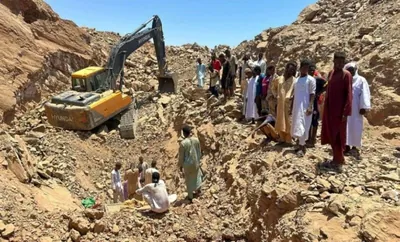
July 6, 2026 (WADI HALFA) – Fifteen miners were killed, and another was injured on Monday when a gold mine collapsed in Sudan’s Northern State.
The tragic accident adds to a series of gold mine collapses across various Sudanese states—most recently in Red Sea State last April—which have claimed the lives of a large number of artisanal miners in recent years.
The Sudanese Mineral Resources Company said in a statement that the Mohamed Towfik gold mine in the Samna area of Wadi Halfa locality collapsed, killing 15 miners and injuring one other.
According to the statement, the company immediately dispatched field teams to the site in coordination with mineral security, mining police, and rescue teams from the state government and Wadi Halfa locality to oversee rescue operations and recover the victims.
Preliminary information indicated that the accident occurred after a number of miners entered the mine despite it being closed by the Environment and Safety Department. The department had issued clear warnings banning work inside the mine following technical assessments that proved it was dangerous and prone to collapse.
The company added that some miners entered the site in violation of those directives, leading to parts of the mine collapsing on them.
A technical delegation from the company’s headquarters has been sent to the site to investigate the circumstances, review safety aspects, and reinforce preventive measures.
The Sudanese Mineral Resources Company reiterated that mine closure decisions are issued only after precise technical and engineering assessments, primarily aimed at protecting lives. It called on all miners to fully comply with safety directives and avoid entering closed mines.
The artisanal mining sector employs more than two million people, a number that has grown significantly since the outbreak of war in April 2023. Millions work in remote areas of Sudan under harsh conditions, producing more than 80% of the country’s total gold production.
Authorities have repeatedly stated that they are seeking to reorganize traditional mining and combat hazardous activities to protect the lives of artisanal miners.
2026.7.4 ‘The situation is terrible’: aid workers on life in Sudanese city pummelled by drone strikes
El Obeid becomes key battleground in war between Sudan’s armed forces and their paramilitary enemies, the RSF
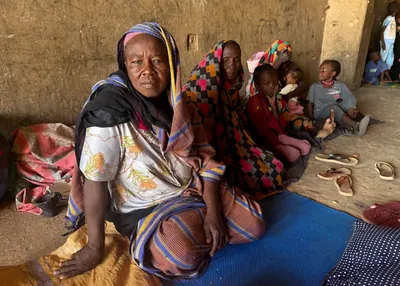
Fatima has lost count of the number of drone attacks on the besieged city of El Obeid in Sudan, but said the attacks this past weekend were the most violent so far.
The drones hit schools and fuel stations, killing more than 20 people, including students, she said. “Over the past few months, seeing 40 or 45 drones is the norm. You can literally count them,” said the aid volunteer, whose name has been changed for fear of retribution.
El Obeid, a city of half a million people, is a key battleground in the war between the Sudanese Armed Forces (SAF) and the paramilitary Rapid Support Forces (RSF). Attacks mounted by the RSF have prompted the UN and other agencies to warn of the risk of atrocities.
Located between RSF-held areas in the western Darfur region and army-controlled regions in the east, El Obeid has suffered repeated drone strikes on its infrastructure. The army is fighting to stop the paramilitary group setting up another blockade after a siege in February last year.
2026.6.27 The scars of war among survivors in Sudan
KHARTOUM, Sudan (AP) — Three years of war have devastated much of Sudan. The impact has been pressed into the skin of survivors, and their memories.
Thousands of people are dead. Millions are displaced. Associated Press journalists spent more than a week in and around the capital after the army retook Khartoum last year. It continues to fight elsewhere against the paramilitary Rapid Support Forces.
Here are some of the war’s survivors and their stories. A member of the military media accompanied the AP during the visit, including during interviews. The AP retains full editorial control of its content.
Soccer dreams shattered
When I saw that my leg was amputated, I knew that this is my fate.”
– Omer al-Toum
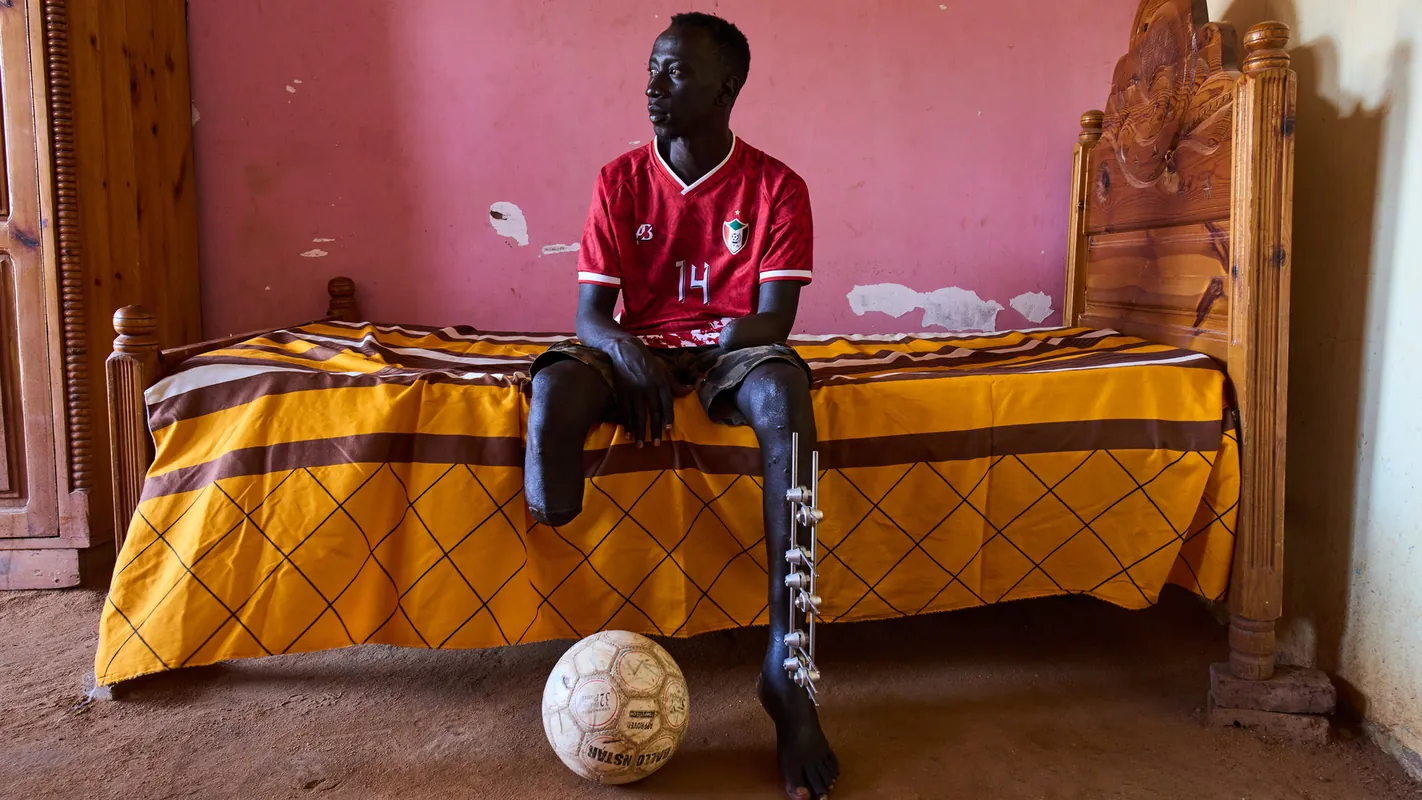
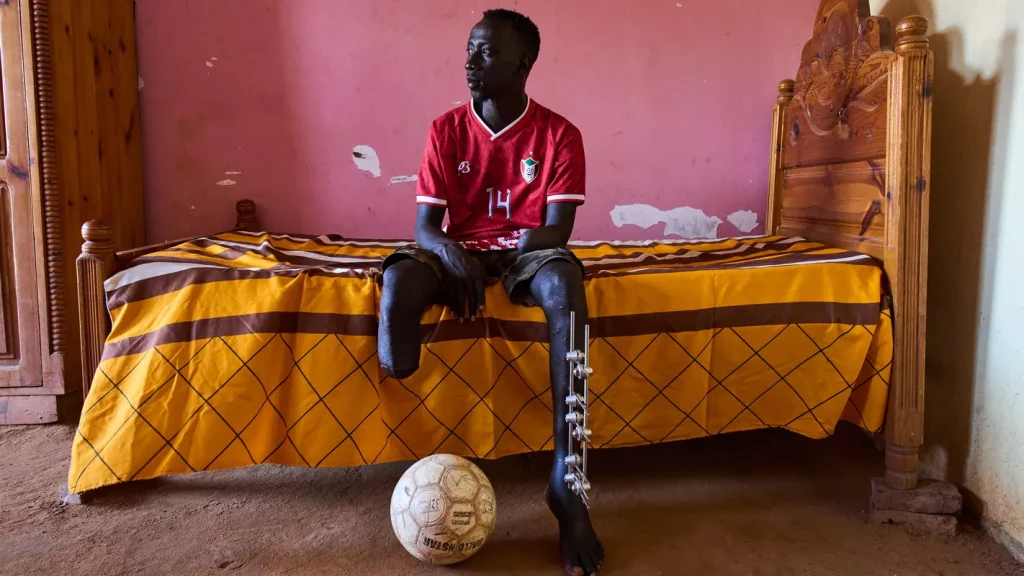
Omer al-Toum had dreamed of playing for Sudan’s national soccer team. But everything changed in October, when an unexploded weapon went off in his house as he tried to use it to loosen a nail. He lost part of his right leg and left arm. His remaining leg was shattered.
Calm and good-natured, the 33-year-old swoons these days over his 8-month old daughter, trying to stay positive.
“When I knew that my leg had been amputated, my family expected more of a reaction from me but I didn’t show them how affected I was,” he said.
Now al-Toum can’t bathe or get out of bed alone, and some doorways in the house aren’t wide enough for his wheelchair. He wants prosthetics but must travel abroad for good ones.
He’s found solace in coaching soccer, and tells young players to stay in school to keep other options alive.
“As long as you are still breathing, you are still capable of doing many things. And when God takes something away from you, he will surely compensate you with other things,” he said. x1200
2026.6.5 19.5 Million Sudanese face acute food insecurity as famine risk grows in 14 areas
June 5, Khartoum — The Integrated Food Security Phase Classification (IPC) warned on Thursday that 19.5 million people in Sudan — representing 41% of the population — are facing high levels of acute food insecurity, with conditions expected to worsen through early 2027.
The IPC, an international hunger monitoring body supported by the United Nations, said in a report covering February 2026 to January 2027 that 135,000 people are in catastrophic food conditions classified as Phase 5 — the highest level — while more than five million face a food emergency and 14.3 million are in acute food crisis. The number in Phase 5 is expected to rise to approximately 200,000 during the lean season, which coincides with the rainy season from June to October.
The report identified 14 areas in North Darfur, South Darfur, and South Kordofan as facing a risk of famine if fighting intensifies and restrictions on humanitarian aid, goods, and population movement continue. The areas at risk include Al-Tinah, Ambro, Kornoi, El Fasher, and IDP camps in Al-Tinah, Tawila, and Ambro in North Darfur, as well as Dilling, Kadugli, Al-Buram, and surrounding IDP camps in South Kordofan, and Bileil locality in South Darfur. Seven of these areas have been newly added to the famine-risk list.
Children hit hardest
Acute malnutrition rates have exceeded famine thresholds in parts of North Darfur. The Ambro locality recorded a global acute malnutrition rate of 52.9% among children under five, with severe acute malnutrition at 18.1%. Kornoi recorded a global acute malnutrition rate of 34%, with severe malnutrition at 7.8%, while Al-Tinah registered 19.7% overall with pockets recording even higher levels.
Approximately 825,000 children under five are expected to suffer from severe acute malnutrition in 2026 — a 7% increase over 2025 and a 25% rise compared to pre-war averages between 2021 and 2023. More than 98,500 children received treatment for severe acute malnutrition in the first three months of 2026 alone.
The report attributed the deepening crisis to the ongoing armed conflict, the expanding use of drones, mass displacement, rising food prices, declining agricultural production, and restricted humanitarian access.
Crop shortfalls
National cereal production last year stood at approximately 5.2 million tonnes — 22% lower than the previous season and 19% below the five-year average. Sorghum production fell to four million tonnes and millet to around 768,000 tonnes, according to FAO figures. The IPC warned that conflict and displacement have reduced cultivated areas, raised input costs, and weakened farmer incentives through lower crop prices.
FAO warned on 23 May that up to 40% of the coming agricultural season’s harvest could be lost without immediate large-scale intervention. The report noted some recovery indicators in irrigated agricultural systems in Gezira, Gedaref, Sennar, and Blue Nile states, but said significant challenges persist, with farm-level production in conflict-affected areas continuing to be disrupted by attacks, looting, land burning, and other violence targeting civilians and agricultural assets.
2026.6.4 Sudanese refugees face severe risks in Libya amid anti-foreigner campaigns
June 4, Tripoli — Sudanese nationals who fled to Libya are facing increasingly perilous conditions driven by a surge in anti-foreigner sentiment and growing calls for widespread protests against refugees and migrants.
Scores of Sudanese citizens have sought refuge in neighboring Libya since the outbreak of war in April 2023. However, escalating anti-migrant campaigns are raising deep concerns over safety in their place of asylum.
Apprehensions spiked on Thursday as Libyan activists launched a campaign to organize demonstrations across several cities. The organizers are demanding the closure of the United Nations High Commissioner for Refugees (UNHCR) headquarters, alongside an immediate halt to resettlement initiatives and irregular migration.
Hostile rhetoric has flooded Libyan social media platforms, with users demanding the expulsion and confrontation of foreign workers. These demands have not exempted Sudanese refugees, despite having fled a devastating war that has torn their country apart for over three years.
A Sudanese journalist residing in Libya told Sudan Tribune that the start of these demonstrations, combined with aggressive security campaigns in major streets and markets, has forced many Sudanese journalists to remain confined to their homes to avoid potential threats. The community is now living in a state of high anxiety and anticipation regarding what the coming days might hold.
The journalist added that media professionals have been deeply impacted by these developments. A number of them have been forced to quit temporary retail jobs and informal labor—which they rely on for basic survival—out of fear of being targeted or detained during random inspection campaigns and arrests aimed at foreigners. Their situation has grown increasingly complex due to a severely restricted labor market, dwindling income sources, and ongoing uncertainty surrounding their legal and humanitarian status in Libya.
According to the source, there are currently 39 Sudanese journalists living in Libya, including 13 women. Among them, 23 are formally registered with the UNHCR. The majority are concentrated in high-risk zones within the cities of Tripoli, Misrata, Sabratha, and Sorman—areas that have historically witnessed crackdowns on migrants and refugees.
Fleeing War to Face Insecurity
A Sudanese female journalist living in Libya, who spoke to Sudan Tribune on the condition of anonymity for security reasons, explained that Sudanese refugees who sought safety are now consumed by panic as xenophobic campaigns gather steam.
She noted that she arrived in Libya three years ago to escape the conflict in Sudan, but now avoids leaving her home except for absolute necessities due to a pervasive sense of insecurity. She further pointed out that job opportunities for Sudanese nationals are extremely scarce, as certain positions are legally restricted to Libyan citizens. Furthermore, no institutional body is currently providing support to displaced Sudanese journalists.
“I was forced to abandon journalism and pivot to giving private English lessons during exam seasons just to secure a basic income, though the financial return is minimal compared to the effort exerted,” she said.
She sharply criticized the Sudanese Embassy in Libya for its complete absence in monitoring the conditions of its citizens or intervening to mitigate their challenges, noting that the embassy has made no effort to contact or reassure the community.
“If any of us is harmed, we do not know who to turn to or who to call for help,” she added, expressing profound dread over a future she described as “completely unknown” under the prevailing circumstances.
Urgent Calls for Protection
Stranded journalists have appealed to international organizations and bodies concerned with press freedom and human rights to intervene urgently to guarantee their safety. They are requesting evacuation from high-risk zones to safer areas or resettlement in third countries, noting that previous appeals have yielded no practical response.
In a related development, the Sudanese Journalists Syndicate expressed grave concern on Thursday regarding the safety of Sudanese journalists stranded in Libya. The syndicate stated it had received direct testimonies indicating that some journalists are facing harassment, threats, and discriminatory practices that jeopardize their lives and those of their families.
According to the syndicate, journalists reported heightening security and humanitarian risks as part of the broader challenges facing foreigners in Libya. One testimony came from a journalist working for a Sudanese media outlet who reported receiving direct threats and facing harassment that forced him to flee his residence immediately to protect his family.
The Sudanese Journalists Syndicate called on international and regional organizations specialized in press freedom and human rights to conduct an independent assessment of the conditions of Sudanese journalists in Libya. It urged the provision of emergency protection mechanisms, alongside legal, humanitarian, and psychological support for affected individuals.
The syndicate further demanded that international stakeholders explore options for humanitarian evacuation, resettlement, or safe passage for the most vulnerable cases, while enhancing coordination with competent authorities to shield journalists from abuse or discrimination.
Concluding its statement, the body urged Libyan authorities to take all necessary measures to ensure the safety of Sudanese journalists and their families. It called for the fair application of the law to safeguard the rights and dignity of all residents, emphasizing that the situation of Sudanese refugees should be treated in accordance with international humanitarian principles and legal obligations.
2026.6.3 Crime wave hits Wadi Halfa as deportees from Egypt strain city’s security
June 3, Wadi Halfa — Residents of Wadi Halfa, Sudan’s northernmost city, have raised alarm over a sharp rise in theft, robbery, and begging in recent weeks, attributing the deterioration to the arrival of large numbers of Sudanese deported from Egypt, including individuals with criminal records.
Citizens told Sudan Tribune that the city, long known for its safety and tranquility, has undergone a dramatic shift, with incidents of robbery and looting reaching unprecedented levels. They said the situation worsened after Egyptian authorities deported significant numbers of Sudanese nationals and left them in Wadi Halfa without government facilitation to return them to their home regions.
A member of the Wadi Halfa Community High Council, who asked not to be named, told Sudan Tribune that the council submitted a memorandum to the Wadi Halfa locality on Wednesday raising concerns about the security consequences of the deportee influx. He said a number of the arrivals had spread across the city, particularly in market areas, and that the memorandum warned of a deteriorating security situation accompanied by rising robbery, property violations, and a marked increase in begging.
He said incidents of shop looting and break-ins increased noticeably during the Eid holiday, and that multiple incidents had fuelled growing public frustration. The memorandum noted that attacks on businesses and commercial properties had resulted in deaths, alongside the spread of begging across the city.
The council member warned that if the security situation continues to deteriorate and public anxiety grows, it could trigger popular protests demanding government intervention.
Wadi Halfa is located approximately 909 kilometres north of Khartoum and 345 kilometres south of the Egyptian city of Aswan. It serves as Sudan’s northern gateway and main land crossing with Egypt, with the Qastal border crossing having opened in 2014.
2026.6.2 War drives 35,000 divorces in Sudan as economic pressure tears families apart
June 2, Khartoum— Around 35,000 divorce cases have been recorded in Sudan since the outbreak of war in April 2023, according to sources in the Sudanese judiciary who spoke to Sudan Tribune, in what social researchers describe as an unprecedented social rupture driven by economic collapse and family displacement.
Family sociology researchers attribute the sharp rise to the radical shift in economic and social roles imposed by the conflict, including the loss of savings and jobs by breadwinners and the near-total suspension of salaries for more than three years.
Khartoum state led all regions in divorce petitions, khul cases, and alimony claims, followed by Gezira state and then the five Darfur states. High rates of divorce and alimony claims were also recorded in the courts of River Nile, Northern, Red Sea, Gedaref, and Kassala states — areas that have received large numbers of displaced families from Khartoum, Gezira, and Darfur.
The war has placed men under enormous pressure due to their inability to meet basic family needs, whether in displacement shelters or in the high-cost rented accommodation of stable states and neighbouring countries.
Recent UN data indicate that women and girls account for more than 53% of the millions displaced internally and externally since the war began, making them the group most exposed to the consequences of fragmentation and displacement. UN Population Fund reports show that more than 4.2 million women and girls in Sudan are in urgent need of protection and care services due to increasing gender-based violence and the economic pressures resulting from family breakdown in displacement settings.
International data show that approximately one million displaced women have suddenly become sole household heads — following the death, separation, or displacement of their husbands to other states — leaving them with the double burden of providing food and financial security for children in environments ill-equipped to support them.
2026.5.26 Three Sudanese Die at Argeen Border Crossing as Thousands Stranded in Heat
May 25, Argeen —Three Sudanese nationals died at the Argeen border crossing with Egypt after exposure to extreme heat and deteriorating conditions, as thousands of returnees remained stranded at the crossing amid a severe transport crisis, local sources said Monday.
A stranded citizen told Sudan Tribune that two women and one man died from direct sun exposure compounded by chronic illness complications, in the absence of adequate medical services.
The crossing, which had been operating normally through Saturday, saw the number of stranded travelers surge rapidly to around 5,000 people, according to Argeen crossing director Brigadier Mubarak Daoud. Temperatures exceeded 45 degrees Celsius in recent days, with families spending nights in the open with acute shortages of water, food, and basic services. Video footage and testimonies circulated by stranded travelers showed luggage and families crowded around the crossing perimeter as they waited for transport.
Daoud attributed the crisis to bus operators abandoning the Argeen route following a fare disparity created by a temporary 30 percent price increase approved by the transport chamber ahead of Eid al-Adha. With the Argeen ticket priced at around 196,000 Sudanese pounds (approximately $78), drivers opted for more lucrative routes — 260,000 pounds for the Wadi Halfa–Khartoum line and 240,000 pounds for the Dalgo–Khartoum route.
Stranded travelers also reported that some transport companies failed to honor existing ticket arrangements, refunding passengers their fares upon arrival at Argeen while bus prices had already risen by more than 50 percent.
The National Chamber of Intercity Buses had announced last Thursday a temporary 30 percent fare increase across interstate routes to offset buses returning empty from the states, saying passenger convoys would begin moving from Sunday.
Daoud said later Monday that the crisis had begun to ease following the deployment of additional buses to transport returnees to their respective states, and forecast the situation would be fully resolved by Monday evening.
2026.5.21 Hemetti sentences defector Al-Safna to death in absentia after stripping him of rank
May 21, Khartoum — Rapid Support Forces (RSF) commander Mohamed Hamdan Daglo “Hemetti” has ratified an in absentia death sentence against defected Brigadier General Ali Rizqallah, known as “Al-Safna,” after a field court convicted him of desertion and rebellion against the constitutional order, according to an internal RSF directive issued on Wednesday.
The directive, signed by Omar Hamdan, head of the RSF’s Administrative Department, and addressed to all RSF departments and sectors, stated that Hemetti had endorsed a ruling issued by the Grand Field Court on 17 May, sentencing Al-Safna — in absentia — to demotion to the rank of private soldier, dismissal from service, and execution.
The directive said Al-Safna was found guilty of abandoning military positions, assisting and joining what it described as “the enemy,” rebelling against the constitutional order, and fleeing from service.
Al-Safna announced his defection from the RSF on 11 May, publicly condemning the force’s leadership. He arrived in Khartoum on 15 May and declared his intention to fight alongside the Sudanese Armed Forces in Kordofan and beyond to Darfur.
Before his defection, Al-Safna was one of the RSF’s most prominent field commanders, having led forces in operations in North Darfur and played a key role in the RSF’s seizure of Al-Nahud and consolidation of its presence in West Kordofan.
The RSF’s response mirrors its reaction to the earlier defection of Major General Al-Nour Al-Qubba, whom the force also stripped of his rank and declared wanted for prosecution after he broke ranks and was received by Sovereignty Council Chairman General Abdel Fattah al-Burhan in April.
2026.5.15 Sudan prosecutor orders swift conclusion of war crimes investigations
May 14, 2026 (KHARTOUM) – Sudan’s public prosecutor ordered on Thursday the completion of investigations into crimes committed in areas affected by the ongoing military conflict, the prosecution office said.
The National Committee for the Investigation of Crimes and Violations of National Law and International Humanitarian Law held its first meeting at its permanent headquarters at the Khartoum State Public Prosecution office.
The meeting was chaired by Attorney General and committee head Intisar Ahmed Abdel Aal, with the senior assistant attorney general and committee members in attendance.
The public prosecution said in a statement that the attorney general emphasized the need to conclude investigations into abuses against civilians in war-affected zones to bring perpetrators to justice.
The committee reviewed its operational progress, periodic reports, and mechanisms to enhance efficiency following the relocation of its permanent headquarters to Khartoum State.
Abdel Aal stressed the importance of accelerating the execution of planned programs to meet the committee’s objectives.
The prosecution stated that the meeting aligns with efforts to document and investigate violations under national and international humanitarian laws, aiming to uphold accountability and prevent impunity.
The national war crimes committee previously disclosed that approximately 12,400 criminal complaints have been registered against members of the Rapid Support Forces (RSF).
The paramilitary group has been accused of war crimes, crimes against humanity, ethnic cleansing, sexual violence, looting, and forced displacement across Khartoum, Al Jazirah, White Nile, Blue Nile, Sennar, Darfur, and Kordofan.
Dozens of RSF leaders, including commander Mohamed Hamdan Daglo and his brothers Abdel Rahim and Al-Qoni Daglo, face trial in absentia on charges of waging war against the state, undermining the constitutional order, and committing war crimes.
2026.4.29 UN warns of ‘deafening silence’ as Darfur child crisis repeats 20 years later
April 29, 2026 (PORT SUDAN) – Two decades after the world first turned its eyes toward the humanitarian catastrophe in Darfur, the United Nations Children’s Fund (UNICEF) warned on Wednesday that history is repeating itself with a “deafening silence” from the international community.
Launching the latest UNICEF Child Alert in a briefing from Geneva and Port Sudan, officials said more than 5 million children across the five Darfur states are now facing extreme deprivation. Sheldon Yett, UNICEF Representative in Sudan, noted that while the region captured global attention twenty years ago, the current scale of the crisis is being met with relative indifference.
The report highlights a staggering humanitarian toll, with approximately 15 million people uprooted from their homes across Sudan, including 5 million children. In the city of El Fasher alone, more than 1,500 grave violations against children have been verified since April 2024. These include the killing and maiming of over 1,300 children, many by drone strikes and explosive weapons.
Famine conditions were confirmed in El Fasher in November 2025, and health officials report that global acute malnutrition rates have exceeded 50 per cent in some locations. The collapse of infrastructure has left over 3 million children in the region out of school, while routine immunization programs have been decimated by attacks on clinics and the looting of medical supplies.
UNICEF spokesperson Ricardo Pires said the Child Alert is designed to provide journalists with hard data and field evidence to paint a clear picture of the “catastrophic situation.” He noted that this is only the second time in twenty years that a Child Alert has focused specifically on Darfur, underlining the cyclical nature of the violence.
The conflict has also seen a rise in the recruitment of children by armed groups and widespread sexual violence. Yett described an environment where markets, schools, and humanitarian convoys are frequently targeted, stating that the intensification of the conflict has left children with nowhere safe to turn.
Despite the escalating needs, the U.N.’s 2026 humanitarian appeal for Sudan remains critically underfunded at only 16 per cent. UNICEF officials warned that without urgent and flexible funding, life-saving services—including malnutrition treatment and the provision of safe water—will be at risk for millions of children who are currently being pushed to the brink of survival.
—
2026.4.27 Photos of daily life in Sudan as war enters its fourth year
Photos from Sudan show how daily life continues as the war between the country’s army and paramilitary forces enters its fourth year.
This is a photo gallery curated by AP photo editors.
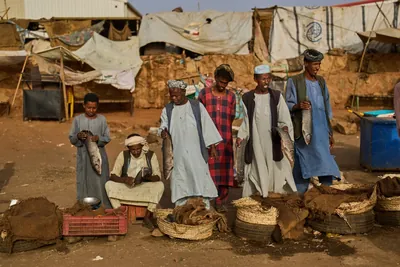
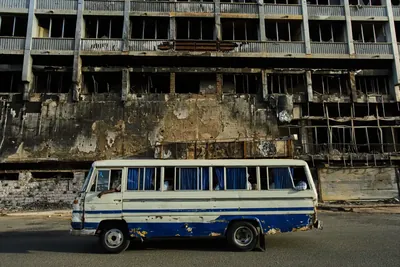
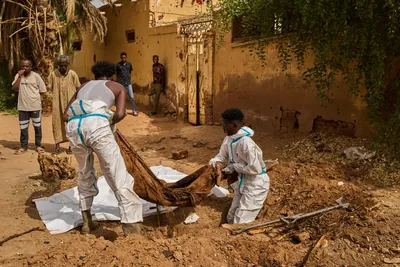
—
2026.4.14 War pushes 70% of Sudanese population into poverty, reports UN
Approximately 38% of the Sudanese population was estimated to be living in poverty before the conflict broke out in 2023, compared to 70% today. In 2026, at least a quarter of the population is estimated to be living on less than $2 a day.
2026.3.12 Dozens of civilians killed in drone strikes in southern Sudan
The region is home to oil deposits, arable land and the powerful paramilitary RSF group. It connects the RSF strongholds in Darfur to the east, which is controlled by the army. Since the war began, both sides have been accused of war crimes.
Dozens of civilians have been killed in drone strikes across southern Sudan over the past two days, medical sources told Agence France-Presse (AFP), as some of the heaviest fighting of the nearly three-year war grips the region. Sudan has been riven by conflict since April 2023, when a power struggle between the regular army and the paramilitary Rapid Support Forces (RSF) plunged the country into a war that has killed tens of thousands and displaced millions.
In White Nile state, which lies just east of the southern Kordofan region – an area now hit almost daily by drone attacks – a strike on a village killed 17 civilians on Wednesday, March 11, a medical source at the local hospital told AFP.
In West Kordofan state, at least 40 people died on Tuesday when a pick-up truck carrying mourners to a funeral was hit on the road between the towns of Abu Zabad and El-Fula, a medical source at Abu Zabad Hospital said.
Deadly drones
The Kordofan region, home to oil deposits, arable land and the RSF’s most powerful paramilitary allies, connects RSF strongholds in the Darfur region to the country’s army-controlled east. The RSF controls West Kordofan and has for months pushed eastwards in an attempt to recapture Sudan’s central corridor.
The army has pushed back, breaking paramilitary sieges on two key cities and attempting to cut off the RSF’s supply link with Darfur.
In their battle for territory, both sides have relied on advanced drone warfare, drawing frequent condemnation from the United Nations and suggesting healthy supply routes from their foreign backers. The UAE denies evidence it arms the RSF, while the army has been backed by Egypt and Saudi Arabia, and has historically used both Turkish and Iranian drones.
An army drone strike on Sunday on the South Darfur state capital Nyala killed 11 people and wounded 20, according to Doctors Without Borders (MSF). The local RSF-allied administration said the army attack had struck a market in the city, where the paramilitary has declared a parallel government.
MSF said, “drone strikes are being carried out in all areas of Sudan, by all warring parties, with civilians being killed and injured.” Since the war broke out, both sides have been accused of war crimes, including targeting civilians and indiscriminately shelling residential areas.
2026.2.9 MADAD monitors daily arrests of Sudanese refugees in Egypt, warns against rumours
An Egyptian refugee support group says Sudanese refugees and migrants in Egypt are facing a steady rise in arrests, with women, young people and the elderly increasingly affected.
Shaimaa Sami, founder and programme coordinator of the Egyptian MADAD initiative, speaking in an interview with Radio Dabanga today, said that the organisation records an average of five to ten arrests of Sudanese refugees and migrants every day. She said the current pattern differs markedly from that seen over the past two years.
Sami confirmed that MADAD has documented one death among detainees in recent days. She linked the death to a failure by detention authorities to take account of detainees’ health conditions and advanced age. In response, she said, the initiative has prioritised rapid legal intervention for elderly detainees.
Sami also said MADAD received information indicating a reversal in Egypt’s entry fee policy. After a period of reduced costs, security permit fees to enter Egypt have reportedly risen again to between USD2000-USD2500 per person, including infants. She described the move as part of broader efforts to curb the entry of Sudanese migrants or to pressure those already in Egypt to return to Sudan.
According to Sami, authorities release some detainees within days, or even on the same day, once their documents are corrected or their legal status clarified. Other cases, however, remain in prolonged detention, particularly those involving refugees whose residency has expired but who have submitted official renewal applications and remain in legal limbo.
Sami firmly rejected claims circulating on social media that two Sudanese girls died of starvation in Cairo after their mother was arrested and deported to Sudan. She said no documentation or credible source supports the story and described it as “illogical”. She warned that rumours and sensationalist reporting pose a serious danger, exacerbating fear and insecurity among Sudanese communities in Egypt.
She urged media outlets and social media users to verify information before sharing it, stressing that misinformation has a direct and damaging impact on an already vulnerable population.
2026.2.8 More than 300 detainees die in North Darfur prison, local group says
February 8, 2026 (EL FASHER) – More than 300 detainees have died in a prison in Sudan’s North Darfur state over the past two months due to deteriorating health conditions and a lack of medical care, a local group said on Sunday.
The Popular Resistance in North Darfur said in a statement that it documented the deaths at Shala prison in the state capital, El Fasher. The city has been under the control of the paramilitary Rapid Support Forces (RSF) since Oct. 26.
The group said the RSF is holding more than 9,000 civilians at the facility, located southwest of the city. Many of those detained are civilians with serious injuries from shelling who have been denied medical treatment, leading to severe infections, the statement said.
The RSF did not immediately respond to a request for comment.
The statement also alleged that a cholera outbreak is spreading through the prison, causing five to 10 deaths per week. It accused the RSF of leaving bodies inside cells with living detainees for long periods.
The local group further accused the RSF of carrying out extrajudicial killings, alleging that 15 wounded people were executed last week at a university dormitory after being accused of belonging to the Joint Force, a coalition of armed groups fighting alongside the Sudanese army.
Since seizing El Fasher, the RSF has restricted humanitarian access and maintained a shutdown of satellite internet services. Rights groups and international observers have previously accused both sides in Sudan’s 33-month-old conflict of committing atrocities.
The Popular Resistance called for an urgent international intervention to protect civilians and prisoners in the city.
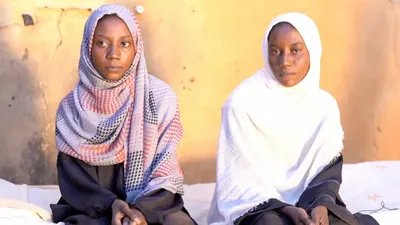
2026.1.24 ‘Half of my friends were killed’ – the girls returning to a school caught up in war
It had been a normal day for 18-year-old twins Makarem and Ikram when their school came under fire.
Makarem was in an English literature class and Ikram was in a science lesson when they heard “strange sounds” coming from outside the school in Sudan.
Then the shelling started.
Makarem says her shoulder “tilted” as she was struck. Screaming, her classmates dropped to the floor to avoid shellfire and find somewhere to hide.
“We took cover beside the wall and the girl who was standing in front of me put her hand on my shoulder and said: ‘Your shoulder is bleeding.’”
In the chaos, the two sisters, who had been in separate classrooms, tried to reach each other but couldn’t. Later, Ikram searched for her sister, not knowing she’d already been taken to hospital.
Like others who were injured, Makarem was taken to hospital by local residents who drove the wounded by car and animal-drawn carts because there was no ambulance service in el-Obeid, the city where they lived.
Eventually, her teachers and classmates had to convince Ikram to abandon the search and go home.
It was only when Makarem returned home from hospital later that day that her family found out she was still alive.
“I waited for her outside the front door and when I saw her coming we all cried,” says Ikram, who had been in a part of the school that wasn’t hit, so was unharmed.
2026.1.22 Sudan records longest school closure in history due to war
Save the Children International has highlighted an unprecedented education crisis in Sudan, where more than eight million children have been deprived of schooling during what they describe as the world’s longest school closure, lasting 484 days, amidst a war that has devastated health and educational infrastructure. Darfur and West Kordofan are among the hardest hit, with the majority of schools disrupted.
The organisation has issued a warning that the war that has raged in Sudan for nearly three years has deprived more than eight million children of education, in what it described as the longest period of school closures in the world.
As previously reported by Radio Dabanga, the “Pen Instead of Gun – Children Not Soldiers” campaign revealed a dangerous escalation in the rate of child recruitment in Sudan, confirming that the phenomenon is no longer confined to traditional conflict zones, but has become widespread throughout the country, taking advantage of poverty, displacement and the collapse of the education system.
2026.1.17 Sudanese authorities adopt incentives to recover looted artefacts
January 17, 2026 (KHARTOUM) – Sudanese authorities announced on Saturday the approval of financial incentives for individuals who hand over artefacts or provide accurate information leading to their discovery, as part of efforts to protect national heritage and recover looted antiquities.
The move follows an announcement on Jan. 13 by the Deputy Director General of the General Intelligence Service, Lieutenant General Abbas Bakhit, who said the service had recovered 570 artefacts looted during the war and thwarted a plot to smuggle a large number of items abroad.
Minister of Culture, Information, and Tourism Khalid Aleisir issued an appeal to citizens who have found or are keeping archaeological items, describing the legal surrender of these artefacts as a “noble national act” to preserve the country’s civilizational memory.
“The state is committed to rewarding any citizen who hands over artefacts or indicates their whereabouts with a financial reward in appreciation of their efforts,” Aleisir said in a statement.
The ministry’s press office said the initiative aims to strengthen community partnership and encourage public participation in safeguarding Sudan’s legacy for future generations.
The National Museum in Khartoum was subjected to widespread looting while under the control of the Rapid Support Forces, before the army regained the site in March 2024. Other targeted locations include the museums of the Presidential Palace, the Armed Forces, the Khalifa House, the Ethnography Museum, the Natural History Museum at the University of Khartoum, and the Sultan Ali Dinar Museum in El Fasher.
2026.1.16 Northern state official says Darfur and Kordofan IDPs reach 210,000
January 16, 2026 (AD DEBBA) – The number of people displaced from Sudan’s Darfur and Kordofan regions to the Northern state has climbed to approximately 210,000, a government official said on Friday.
Northern state authorities are currently planning to establish a second camp to alleviate pressure on the existing Al-Affad site, according to informed sources who spoke to Sudan Tribune. These sources indicated that the government recently abandoned plans to build a camp in the Um Jwasir area near Merowe due to security concerns. Consultations are now underway to identify a suitable alternative location for the new facility.
The influx of displaced persons to the Northern state began shortly after the outbreak of conflict in April 2023. However, the movement of civilians intensified significantly following the Rapid Support Forces’ (RSF) seizure of El Fasher in North Darfur and Bara in West Kordofan last October. This surge prompted the initial establishment of the Al-Affad camp in Ad Debba in November.
2026.1.12 Six-month jail term over Facebook post sparks outrage in Sudan
A court in El Gedaref has sentenced Resistance Committees member Ayman Hariri to six months in prison and fined him 2,000,000 SDG over a Facebook post yesterday, triggering widespread condemnation from political figures, lawyers, and civil groups.
The court convicted Hariri under Articles 24 and 25 of Sudan’s Cybercrimes Law for a post he published on April 19 2024, criticising arrests carried out at the Youth House, a building originally designated to shelter displaced people and host emergency response rooms before authorities dissolved the emergency rooms and handed the site to a security cell.
The post that sparked Ayman Hariri’s trial (Photo: Facebook)
In the post, Hariri wrote:
“When the authorities panic over a mere feeling,
the ‘media’ has no role with them
except to inflame it.
The Youth House
The new Ghost House (Sudanese name for secret government ‘torture locations’)
Release the comrades
Aref Abdallah
Walid Mohamed Al Reeh”
‘A normal Facebook post’
Jaafar Khader, a civilian and political leader in El Gedaref state, told Radio Dabanga that the court punished Hariri for “a normal Facebook post” that criticised what he described as illegal practices by the security cell.
“The security cell arrests citizens using armed, masked men in behaviour that does not reflect the rule of law,” Khader said.
The security cell, formed after the outbreak of the war, includes members of the Sudanese Armed Forces, Military Intelligence, the General Intelligence Service, and the police. Rights groups have accused it of widespread violations.
Case reopened after acquittal
Khader said the court initially acquitted Hariri after the first judge concluded the post did not constitute a criminal offence. However, the security cell, acting as the complainant, appealed the ruling, prompting a retrial and the current conviction.
2026.1.5 Sudan court convicts blogger for insulting army chief al-Burhan
January 5, 2026 (DONGOLA) – A criminal court in the Northern state capital, Dongola, has convicted a blogger for insulting the head of Sudan’s Sovereignty Council, Abdel Fattah al-Burhan, in a Facebook comment.
Judge Mohamed Taj Fadl al-Sid ordered the defendant, al-Tayeb Mohamed Omer, to pay a fine of 2 million Sudanese pounds ($1,600) or serve six months in prison, according to the state-owned “Northern Now” platform.
The case, which was filed on December 21, stems from a comment Omer posted under the pseudonym “al-Tayeb Abunduq.” The comment was made in response to another blogger’s post about al-Burhan’s appearance at a social event during the ongoing conflict.
Omer wrote that “trembling hands do not build a nation” and described the general as “half a leader,” according to court records. The court ruled the remarks constituted an “explicit insult” and violated Article 26 of the Informatics Crimes Law.
The ruling comes amid heightened concerns from legal advocates following amendments to Sudan’s cybercrime laws approved on October 13. The updated legislation allows for the simultaneous application of fines and jail time. It grants security forces expanded powers to conduct electronic searches and seize digital content without a judicial warrant.
“This verdict is a form of oppression resulting from merging security agendas with legislation,” said Mohamed Salah, a member of the Emergency Lawyers group.
Salah told Sudan Tribune that the new legal framework contradicts international standards and facilitates the tightening of restrictions on freedom of expression.
Rights groups see the conviction as a potential precedent for a broader crackdown on social media criticism as the war between the Sudanese army and the Rapid Support Forces continues.
Official representatives for the Sovereignty Council were not immediately available for comment on the ruling.
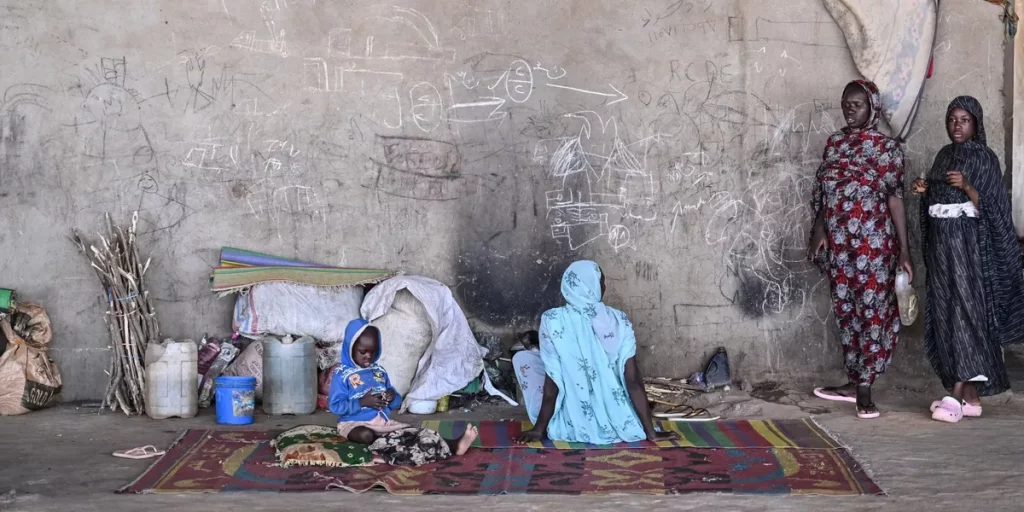
2025.12.30 Sudan: Inside besieged El-Obeid, the war’s new frontline
War in Sudan: A Trapped Nation (1/6). For nearly three years, Sudan has been torn apart by a conflict between the national army and the militias of the Rapid Support Forces, leaving some 200,000 people dead. For the first time, Le Monde traveled to El-Obeid, a city threatened by paramilitary forces and now crucial for controlling the country’s center.
The city of El-Obeid is hanging by a thread. A long, rutted road stretches 300 kilometers eastward, reaching all the way to the banks of the White Nile. On either side of the battered asphalt lie fields of sesame, peanuts and hibiscus, where the colorful silhouettes of women working can be seen, their backs bent beneath the relentless sun.
From time to time, a military convoy roared down the asphalt. Pickups mounted with missile launchers or heavy machine guns were dispatched as reinforcements toward the stronghold of the Sudanese Armed Forces (SAF) in Kordofan province, which has become the epicenter of the conflict. If El-Obeid were to fall, the paramilitary Rapid Support Forces (RSF) would once again be at the gates of Khartoum, the country’s capital.
On this road, amid gusting winds, warmongers crossed paths with those fleeing conflict. Squads of young soldiers raced by, shouting furious cries, carried away by the wind. With their fists raised high, they were cheered on by tea drinkers sitting in the shade of straw huts that lined the roadside. In the opposite direction, entire families crammed into overloaded livestock trucks or minibuses, carrying baggage, blankets and iron beds, left El-Obeid for Kosti, the nearest city 300 kilometers away. Kosti is the gateway to the eastern half of the country, which is under the control of the regular army.
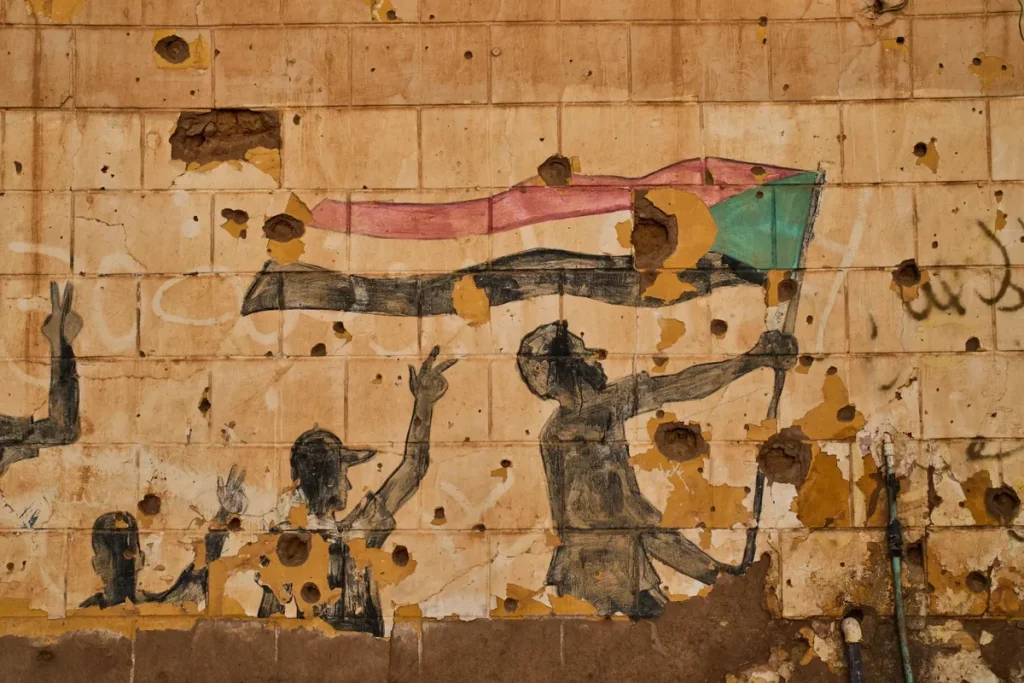
x1200
2025.10.30 Escaping el-Fasher
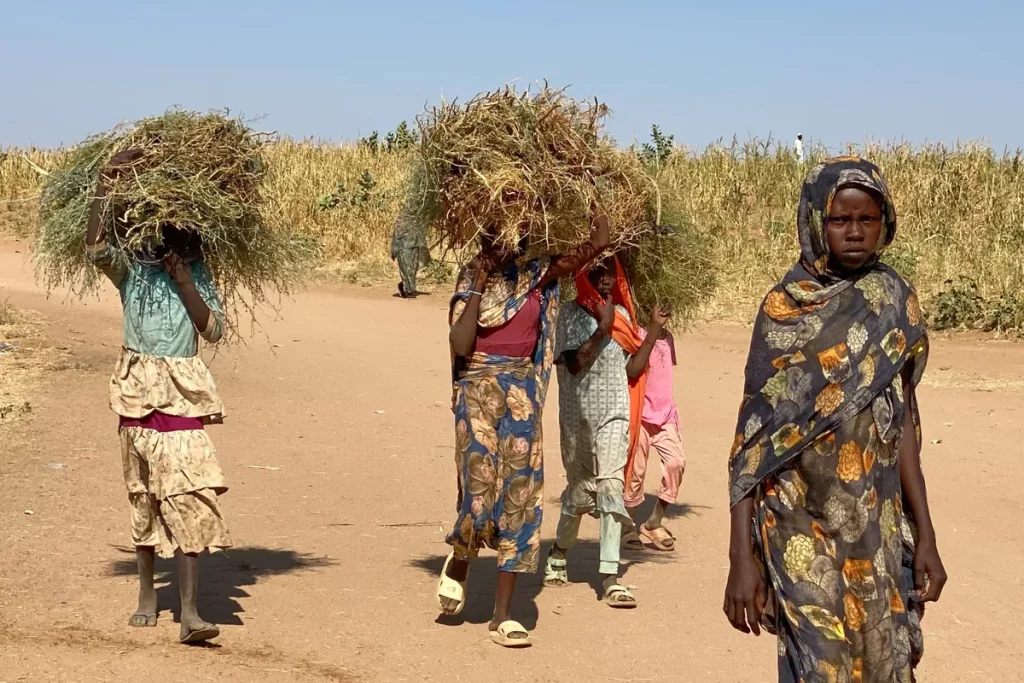
Groups of gunmen who reportedly killed at least 460 people at a hospital in Sudan attacked in several waves, abducting doctors and nurses, then gunning down staff, patients and people sheltering there, the World Health Organization said Friday.
The attack Tuesday in the country’s Darfur region was part of a reported rampage by the Rapid Support Forces, a powerful paramilitary group, as it captured the key city of el-Fasher after besieging it for 18 months. Witnesses have reported fighters going house-to-house, killing civilians and committing sexual assaults.
Many details of the hospital attack and other violence in the city have been slow to emerge, and the total death toll remains unknown.
The fall of el-Fasher heralds a new phase of the brutal, two-year war between the RSF and the military in Africa’s third-largest country.
The war has killed more than 40,000 people, according to U.N. figures, but aid groups say that is an undercount and the true number could be many times higher. The war has displaced more than 14 million people and fueled outbreaks of diseases believed to have killed thousands. Famine has been declared in parts of Darfur, a region the size of Spain, and other parts of the country.
Escaping el-Fasher
Communications are down in el-Fasher, located deep in a semi-desert region some 800 kilometers (500 miles) southwest of Khartoum, the capital. Aid groups that had been operating there have largely been forced out.
Some survivors have staggered into a refugee camp about 40 miles away in the town of Tawila.
More than 62,000 people are believed to have fled el-Fasher between Sunday and Wednesday, the U.N. migration agency said. But far fewer have made it to Tawila. The Norwegian Refugee Council, which manages the camp, put the number at around 5,000 people, raising fears over the fate of tens of thousands.
Fatima Abdulrahim, 70, fled el-Fasher with her grandchildren a few days before it was captured to escape the siege. She described to The Associated Press a harrowing five-day journey to reach Tawila, hiding in trenches, dodging bullets and gunmen behind walls and empty buildings.
“We ran on the streets, hiding for ten minutes behind the berm, then charging out, running until we made it out,” she said, adding that she kept falling and getting up amid gunfire and shelling. Her companions carried her at times, she said.
“Thirst almost killed us,” she said, describing picking grass to eat from the side of the road.
Along the way, she said she also witnessed militiamen shoot and kill young men trying to bring food into the city.
“The people dead on the streets were countless,” she said. “I kept covering the eyes of the little ones so they don’t see. Some were injured and beaten and could not move. We pulled some to the paved road, hoping a car would come and take them.”
She said some fighters stopped her, and the group she was traveling with, and took all their belongings and beat the children.
At least 450 people have been admitted to the hospital in Tawila, some suffering from severe malnutrition and sexual violence, said Adam Rojal, spokesperson for a local group that works with displaced people in Darfur.
The Norwegian Refugee Council said people were arriving at the camp with broken limbs and other wounds, and some with injuries sustained months ago. Many children arrived at the camp who had lost their parents in the fighting.
Of the 70 children younger than 5 that arrived in Tawila on Monday, 40 were severely malnourished, according to Doctors Without Borders.
2025.9.16 Sudan mourns 51 youths drowned in attempt to reach Greece
Sudan has been shocked and saddened by reports on Saturday that 51 Sudanese youths drowned while trying to reach the Greece across the Mediterranean, in one of the most painful recent disasters associated with migration. The exact details of the tragedy are still unclear; however, thousands of Sudanese are among the migrants who attempt to cross from Libya to Europe using small and often unseaworthy vessels, with more than 4,000 Sudanese citizens registered by the UNHCR as arriving in Greece by sea in 2025.
A relative of a number of victims told Radio Dabanga that most of the victims hail from the areas of El Usaylat, Dbeibeh, El Ilfon, Kassala, and Omdurman, where the list included many names of well-known families and families in those areas, which doubled the size of the tragedy and its great social impact.
Malik Dejaoui, head of the Organisation for Combating Illegal Migration and Voluntary Return, told Radio Dabanga that the tragedy represents a new link in the “chain of tragedies associated with illegal migration and human trafficking”, blaming smuggling networks that “exploit young people’s ambitions and dreams of reaching Europe through death-threatening routes”.
The Libyan city of Tobruk is the closest starting point for migrants’ sea journeys to reach Greece, he said, stressing that the organization has repeatedly warned of the danger of these routes, but “there is no life for those who are calling.”
Dejoui reiterated his call to the youth and their families to voluntarily return to stable areas inside Sudan, instead of being dragged into the illusions of smugglers, while at the same time sending an urgent message to the Ministry of Foreign Affairs and the Expatriates Service on the need to urgently intervene and develop more effective policies to curb this phenomenon.
The latest tragedy, according to observers, opens the door once again to serious questions about the reasons why Sudanese youth continue to die at sea, at a time when the country needs their energies to build the interior.
Attempts to reach Europe
According to figures by the UN refugee agency UNHCR on September 14, a total of 28,000 refugees have arrived in Greece by sea thus far in 2025. The UNHCR further shows that effective July 31, Sudanese constituted more than 4,000 sea arrivals in the Hellenic Republic.
发表回复