2026.6.30 A death sentence in 60 days: Pune rape-murder case sparks debate on fast-track trials
Pune court’s death sentence in child rape-murder case in 60 days has ignited debate on whether record-speed trials can deliver justice with due process & fairness. A look at India’s speediest trials.
New Delhi: Showing uncharacteristic speed in dealing with a case, a special POCSO fast track court in Pune Monday, sentenced a man to death in a “rarest of the rare” case—the brutal rape and murder of a three-year-old girl by a 65-year-old father of seven girls. The case went from day of crime to sentencing in just 60 days, and has now raised questions on fast trials: How fast tracked can justice be?
On 1 May, Bhimrao Kamble lured a 3-year-old to a cowshed in Nasrapur village, Pune district, by promising her sweets. There he raped and killed her most brutally, and on 29 June, a POCSO court pronounced that he should be hanged till death.
The Pune Police and Judge S. R. Salunkhe were hailed for the speedy trial, but the case stands as a statistical anomaly. The total number of pending POCSO cases across India is over 2.24 lakh, according to official data presented in Parliament in February.
In 2018, the Union Cabinet via an Ordinance prescribed time limits for criminal trials: Investigation of all rape cases must be wrapped up within two months; trial in two months. Aappeals have to be disposed of in 6 months.
Fast-track courts were born in India after the Eleventh Finance Commission allocated approximately Rs 500 crore to establish 1,734 fast track courts across various states with a primary mandate to clear an overwhelming backlog of under-trial cases languishing in sessions courts for five or more years.
In fact, following directives from the Supreme Court in July 2019, the Ministry of Law & Justice launched the Fast Track Special Courts (FTSCs) scheme with an exclusive focus on rape cases under the Bharatiya Nyaya Sanhita (formerly IPC) and child sexual abuse cases under the POCSO Act.
While conviction and disposing of cases within 2 months of the date of the crime is very unusual in Indian courts, there have been a few exceptions.
Speedy trials are rare
Judge Shashi Kant Rai gave two such verdicts: First in a one-day trial and the other in less than 60 days.
In October 2021, judge Rai’s court in Araria district of Bihar made a national record for completing the trial of a man accused of raping an eight-year-old and sentencing him for life in jail—all in one day.
Then in January 2022, ADJ-cum-POCSO Act Special judge Rai awarded a death sentence and a fine of Rs 10,000 under the SC/ST Act to 48-year-old Mohammed Major for sexually assaulting a six-year-old Dalit girl.
After the incident on 1 December 2021, the investigating officer had filed the chargesheet in court on 12 January; charges were framed on 22 January; the accused was convicted on 25 January; sentenced on 27 January.
When this case reached the Patna High Court after the accused appealed, it quashed the death sentence on 22 August, noting that the trial was performed “with ugly haste”, without giving the accused a reasonable opportunity to defend himself.
Finding the entire trial violative of the principles of natural justice, the HC ordered a restart of the trial from the stage prior to the framing of charges. In its judgement, the HC also directed the Registrar General of the high court to circulate the judgment to other officers of the district judiciary. Judge Shashi Kant Rai was suspended in February 2022.
‘Institutional bias’ against speed?
When he approached the Supreme Court challenging the “non-speaking” and unexplained suspension order, claiming institutional bias against swift justice, a Supreme Court bench of Justices U. U. Lalit and S. R. Bhat strongly advised the high court to drop the matter.
The apex court observed that unless there are clear allegations of corruption or mala fide intent, punishing an efficient judicial officer for being “overzealous” would send a terrible message to the lower judiciary.
Acting on the Supreme Court’s clear direction, the Patna High Court completely revoked the suspension orders in August 2022, and dropped all disciplinary proceedings against Judge Rai.
In December 2022, the court of additional district judge Vipin Kumar in Mathura sentenced a man to death for the rape and murder of a minor girl in Uttar Pradesh after completing a fast-track hearing in less than two months. The convict, 30-year-old Satish, a resident of Kotwali area, was sentenced within 57 days for a crime committed in the second week of October. He had taken the minor to his house on the pretext of a “bhandara” and raped her. Later, he strangled her and dumped her in a forest.
In 2018, Madhya Pradesh’s special POCSO court in Datia district convicted and handed a life term to a 25-year-old man for a raping a 6-year-old—all in three days. The special court conducted three hearings and heard 17 witnesses and considering the medical evidence before sentencing him.
Speed overrides safeguards?
But the push for speedy trials cannot come at the cost of procedural safeguards, warn legal practitioners
Advocate Saudamini Sharma believes that while fast-track courts are necessary to prevent victims and accused persons from being trapped in years of litigation, criminal trials require sufficient time to examine evidence and allow the accused a meaningful opportunity to defend themselves.
“In criminal law, the accused has to be given enough time to prove their innocence. That cannot realistically happen in one day, and perhaps not even in 15 days, unless the case is completely straightforward,” Sharma told ThePrint, adding that the burden of establishing guilt in a criminal trial remains on the prosecution, while courts must ensure that the accused get a fair chance to present their defence.
“Fast-track justice is not meant to take away due process of law. It is meant to ensure that cases do not linger endlessly. But due process has to actually be followed,” she said, pointing out that criminal cases often involve complex questions of evidence, especially where convictions are based on circumstantial evidence.
According to Sharma, the issue is not whether a case can be completed quickly, but whether the circumstances justify such speed, “If there are 50 people who have seen what happened, or there is unimpeachable evidence and the accused has nothing to say for himself, then perhaps a quick judgment is understandable. But otherwise, you cannot deny someone the opportunity to say, ‘I have not done this’,” she said.
On the broader debate between victims’ rights and accused persons’ rights, Sharma said both sides suffer when the justice system fails: either through excessive delay or through rushed trials.
“If a case takes six years, the victim’s family continues to live with trauma and the accused is also left in uncertainty. That is not fair either. There has to be a reasonable timeline, but within that timeline the evidence must be properly examined,” she said.
On death penalty cases, Sharma said that the stakes make procedural safeguards even more important. While capital punishment remains part of India’s legal framework, it is reserved for the “rarest of rare” cases. She added that additional safeguards, such as automatic review mechanisms in death penalty cases, could help ensure that the punishment is final only after the highest level of judicial scrutiny.
Advocate Urja Pandey told ThePrint how the Pune verdict demonstrates that speedy justice is possible within the existing legal framework and has also raised an uncomfortable question: “If it can happen here, why can’t it happen elsewhere?”
According to her, the difference is not necessarily the law but the functioning of institutions. Prompt investigation, timely forensic evidence, prepared prosecutors and uninterrupted hearings are key factors behind quick trials. “Unfortunately, that level of coordination is still an exception,” she said.
“Extraordinary verdicts are inspiring, but they should also make us introspect. One fast conviction cannot erase the reality that lakhs of criminal cases continue to await finality,” Pandey said.
On death penalty cases, Pandey said the need for procedural caution becomes even more important because the punishment is irreversible and “the higher the punishment, the higher the burden on the justice system to ensure that not a single constitutional safeguard is compromised”.
According to her, the Pune verdict should be viewed not merely as an exception, but as a benchmark for institutional reform.
2026.6.30 Four-year-old boy falls into 220-foot borewell in Haryana, rescue operation underway
According to sources, Nirbhay noticed the open borewell and leaned over to look inside, he reportedly lost his balance on the wet and slippery ground and fell into the borewell.
CHANDIGARH: A four-year-old boy fell into a 220-foot-deep open borewell in Dhanaura village of Haryana’s Ambala district on Tuesday morning, triggering a multi-agency rescue operation.
The child, identified as Nirbhay Singh, fell into the nine-inch-wide borewell at around 6.30 am while playing in a field. He had accompanied his father, Manjit Singh, to the fields, where his grandfather, Karnail Singh, had been working since early morning.
According to sources, Nirbhay noticed the open borewell and began dropping handfuls of soil into it. As he leaned over to look inside, he reportedly lost his balance on the wet and slippery ground and fell into the borewell.
Hearing the child’s screams, his father and grandfather rushed to the spot and tried to rescue him, but the narrow opening made it impossible. The family then alerted the police through the 112 helpline at around 7.30 am.
Police informed the fire brigade, following which teams from the National Disaster Response Force (NDRF), State Disaster Response Force (SDRF) and the Army joined the rescue operation. A camera has been lowered into the borewell to monitor the child’s condition.
Deputy Commissioner of Ambala Ajay Singh Tomar, who is monitoring the operation, said the child is trapped about 220 feet inside the borewell.
“The incident took place around 6.30 am today. A joint operation is being carried out to rescue the child and also heavy machinery of army is being pressed into the rescue efforts. Every effort is being made to rescue the child safely. If the initial rescue attempt is not successful, a parallel pit will be dug,” he said.
“We can see him via camera, and he is stable besides supplies are being sent to him based on the situation, but our priority is to rescue him at the earliest,” said Tomar.
Appealing to farmers to keep borewells covered, Tomar said children often visit fields and are at risk if borewells are left open.
He added that he had directed police to initiate action against the owner of the borewell.
“A piece of tile, a brick, concrete slab, or even a jute bag could have been enough to cover this 9-inch borewell. If the person had taken these precautions and covered the borewell, this situation would not have arisen,” he said.
The incident recalls the July 21, 2006 case in neighbouring Kurukshetra district, when five-year-old Prince Kumar fell into a 60-foot-deep borewell and was rescued after a 50-hour operation, following which the Supreme Court issued guidelines for capping abandoned borewells.
A report quoting officials said that the chargesheet was filed before the Court of the Additional Sessions Judge, TADA/POTA and Special Judge designated under the NIA Act, Srinagar.
The Kashmir State Investigation Agency (SIA) on Monday filed a 737-page chargesheet before a Special Court in Srinagar in connection with the 1990 abduction and murder of Sarla Bhat, who was a staff nurse at Sher-i-Kashmir Institute of Medical Sciences (SKIMS), Soura.
A report quoting officials said that the chargesheet was filed before the Court of the Additional Sessions Judge, TADA/POTA and Special Judge designated under the NIA Act, Srinagar.
The chargesheet is based on oral testimonies, documentary records, forensic and ballistic reports, medical evidence, electronic material and extensive field investigations collected and analysed during the course of the investigation, a report said.
The agency described it as a “historic milestone” in the pursuit of justice for victims of terrorism.
The SIA, which reopened the case after it was handed over in 2024, submitted the chargesheet before the designated NIA court here, 36 years after Bhat was found dead in downtown Srinagar, several kilometres away, a day after she went missing.
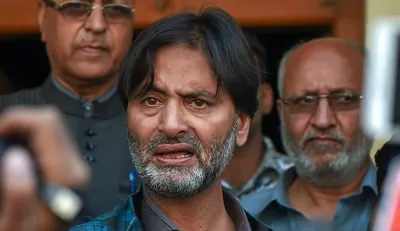
Besides Malik, who was the self-styled commander-in-chief of the JKLF terrorist outfit at that time, his four accomplices — Khursheed Ahmad Chalkoo, Abdul Hamid Sheikh, Ghulam Mohammad Taploo and Mohammad Yousuf Sofi — have also been named as accused in the case.
Chalkoo is believed to be living in Pakistan after exfiltrating from Kashmir.
The accused have been charged under various sections of the Terrorist and Disruptive Activities (Prevention) Act (TADA), 1987, and Indian Arms Act, 1959.
In a statement, the SIA said time can never become a shield for terrorism and those responsible for atrocities will continue to remain answerable before the law.
The case was handed over to the SIA in March 2024 and the investigation agency carried out raids at several places over the past two years to stitch up the chargesheet against the five accused persons.
A spokesperson of the SIA said the voluminous 737-page chargesheet, painstakingly compiled after an exhaustive investigation, brings together a formidable body of oral, documentary, forensic, ballistic, medical and electronic evidence accumulated over decades and analysed meticulously.
“The filing of the chargesheet after nearly 35 years marks a historic milestone in the pursuit of justice for victims of terrorism and stands as one of the most significant breakthroughs in the investigation of legacy terror crimes in Jammu and Kashmir.
“More importantly, the chargesheet sends a powerful and unequivocal message that time can never become a shield for terrorism.
No matter how many years have elapsed, those responsible for terrorist atrocities will continue to remain answerable before the law,” the spokesperson said in a six-page handout.
He said the case demonstrates that while terrorism may delay justice through fear, intimidation and violence, it can never permanently defeat the rule of law.
“The investigation has revealed the involvement of Mohammad Yaseen Malik, then Chief Commander of JKLF, along with Khurshid Ahmad Chalkoo, Abdul Hamid Sheikh, Mohammad Yousuf Sofi alias Idrees and Ghulam Mohammad Taploo in planning and executing the abduction and brutal killing.
“While Abdul Hamid Sheikh, Mohammad Yousuf Sofi alias Idrees and Ghulam Mohammad Taploo are deceased, Mohammad Yaseen Malik is presently in judicial custody in another case,” he added.
The spokesperson said legal proceedings, including proclamation proceedings, have been initiated against absconding terrorist Khurshid Ahmad Chalkoo, the man who pulled the trigger.
“The chargesheet establishes offences punishable under Sections 364, 341, 302 read with 34, 201 and 120-B RPC, Sections 3(2), 3(3), 4 and 6 of the Terrorist and Disruptive Activities (Prevention) Act, 1987 (TADA), and Sections 7 and 27 of the Indian Arms Act, 1959,” he added.
The accused have allegedly been involved in shooting incidents, and police have not ruled out the possibility that they may be operating as foot soldiers for the notorious Lawrence Bishnoi gang.
CHANDIGARH: In the wave of extortion cases targeting the South Asian community in Calgary, Canada, 16 individuals of Indian origin from Punjab are now facing a total of 56 criminal charges in extortion-related cases.
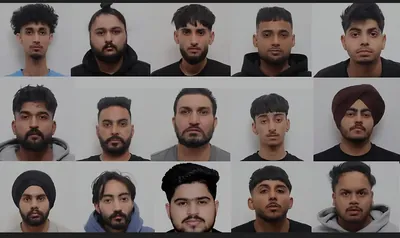
The accused have allegedly been involved in shooting incidents, and police have not ruled out the possibility that they may be operating as foot soldiers for the notorious Lawrence Bishnoi gang. The Calgary Police Service has released photographs of 15 suspects in connection with the cases.
Over the last year, extortion targeting South Asian communities has become a major concern for the Calgary Police Service, following similar trends in Vancouver and the Greater Toronto Area. Police have launched two operations focused on tackling the issue: Operation Orion, which is dedicated to investigations, and Operation Outage, which involves an increased police presence in South Asian communities to build trust.
According to Calgary police, 49 extortion-related incidents have been documented since April last year. The surge in criminal activity included 19 separate shooting incidents, 18 of which were directly linked to extortion demands, while one involved an internal violent conflict between individuals within the network. Sixteen individuals have so far been charged with a total of 56 offences, and police confirmed that none of them are Canadian citizens.
Superintendent Jeff Bell of the Calgary Police Service’s Criminal Operations and Intelligence Division said the suspects are in Canada on a mix of student and work visas.
“We hope that by releasing these photos, community members can provide additional information to help advance our investigations.”
Bell also said police are monitoring developments in other parts of the country, including Vancouver, where a recent trial involved allegations of links to the Lawrence Bishnoi gang.
“If we come across any evidence to suggest that, we will be working with our national security partners as they are considered a terrorist organization,” he said.
The suspects were identified as Ravjot Toor, Germanjeet Singh, Jaskaran Singh, Karanbir Singh, Amandeep Singh, Anurag Sidhu, Anurag Singh, Amandeep Malhi, Sandeep Singh, Daksh Gautam, Akashdeep Singh, Gagandeep Singh, Pardeep Singh, Taranveer Singh and Gurkaran Dhaliwal.
Police are also seeking public assistance in locating Germanjeet Singh, who is wanted on warrants related to an extortion incident, and in identifying suspects in two extortion cases in the Cityscape and Saddle Ridge communities.
The Financial Transactions and Reports Analysis Centre of Canada (FINTRAC) has issued a special bulletin detailing what it described as a sustained campaign of coercion. It stated that the activity typically involves “financially vulnerable, young male, Indian nationals in Canada on study permits” being used as foot soldiers by gangs to carry out targeted acts of violence against South Asian diaspora communities across Canada.
The bulletin also warned that copycat actors and smaller criminal groups are exploiting the fearsome reputation of major gangs to amplify the impact of their own extortion demands.
The Calgary Police Service is working closely with law enforcement agencies across Canada, as well as the Canada Border Services Agency (CBSA), to determine the full extent of the operation.
The CBSA said that, as of June 18, it had opened 138 immigration investigations across the Prairies. Thirty-seven removal orders have been issued, and 18 people have been removed from Canada.
2026.6.17 Delhi Police Bust ISI-Backed Terror-Criminal Gang Module, 7 Arrested
Giving details, special cell DCP Nara Chaitanya said Shahzad Bhatti, a Pakistani gangster and terrorist, together with his associate Ajmal Gujjar, ran this module.
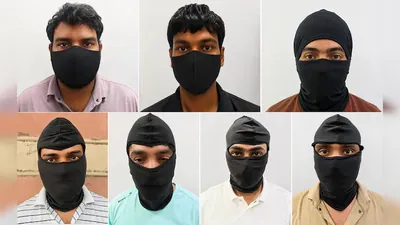
New Delhi: Delhi Police Special Cell has busted an international terror-criminal group which is controlled by the ISI of Pakistan and arrested seven people, police said. Acting under the direction of Pakistan-based handlers, the module is accused of utilising drones to transport arms and narcotics from the neighbouring country to conduct terror attacks in the Delhi-NCR belt. These individuals include Anas, Mohit, Deepak, Arif, Karanveer Singh, Jatan, and Sabir.
Giving details, special cell DCP Nara Chaitanya said Shahzad Bhatti, a Pakistani gangster and terrorist, together with his associate Ajmal Gujjar, ran this module. The accused had reportedly come in touch with these Pakistan-based handlers since November 2025, investigators added.
The cops seized five advanced semi-automatic pistols, 41 live bullets, seven mobile phones, and a Scorpio from the accused’s possession. Forensic analysis of the digital contents on the seized mobile phones showed several conversations, voice memos, and other data indicating that this group was working for both Bhatti and Gujjar. In addition to this, many bank accounts used for channelling money from their illicit trade of weapons and narcotics were frozen.
The intelligence information received in May 2026 indicated that the handlers, following orders from ISI, were actively involved in recruiting Indians on social media platforms by promising them a criminal lifestyle filled with riches. On receiving the information, the police initially arrested Mohit in the vicinity of Bhagirath Water Treatment Plant located in Yamuna Vihar, seizing an illegal pistol and a mobile phone containing Pakistan-related chats.
From interrogations, it emerged that there was a well-structured logistics network through which arms and drug consignments were dropped in Punjab from Pakistan by drones, taken to Delhi-NCR and then distributed through a secret “dead-drop” delivery method. More importantly, there were a few members who had done preliminary surveillance work on important installations at Delhi, Loni and Haryana, including an eating place, and the videos had been sent back to Pakistan.
2026.6.17 20 years rigorous imprisonment for 2 BSF jawans in 2017 Mizoram gang rape, acid attack case
The two convicts were sentenced to undergo rigorous imprisonment for 20 years, 10 years and 12 years under IPC Sections 376D, 376(2)(m) and 326A, respectively, and pay a fine of Rs 20,000 each.
GUWAHATI: A Mizoram court sentenced two Border Security Force (BSF) personnel, convicted in a nine-year-old case of rape and acid attack, to undergo 20 years of rigorous imprisonment.
Additional District and Sessions Judge-I, Aizawl judicial district, Sylvie Zomuanpuii Ralte, held the duo – Nilanjan Das and Dinesh Kumar – guilty of offences punishable under Indian Penal Code (IPC) Sections 376D (gang rape), 376(2)(m) (aggravated form of rape), and 326A (acid attack).
The two convicts were sentenced to undergo rigorous imprisonment for 20 years, 10 years and 12 years under IPC Sections 376D, 376(2)(m) and 326A, respectively, and pay a fine of Rs 20,000 each.
They will further undergo a simple imprisonment for two months if they fail to pay the fine.
All the substantive sentences shall run concurrently. The period of detention, already undergone by the two during investigation and trial, will be set off, the court said in its June 12 judgement.
On July 18, 2017, a man filed an FIR with the police in Mizoram’s Mamit district, alleging that on July 16 between 11 am and 5 pm, his sister had gone towards a river along with her friend for collecting crabs and wild vegetables, when she was apprehended by two strangers who subjected her to gang rape, and attacked her with a “corrosive substance” causing grievous injuries to her face.
The victim was subsequently examined and found in a severely injured condition with her face swollen and eyes affected due to chemical burns, the court said.
In her statement recorded with the help of an interpreter, the victim alleged that she was accosted by two men in BSF uniform who were earlier seen carrying a tiffin box. She stated that both raped her one after another before applying a burning substance on her face, causing severe pain and loss of vision.
After a medical examination, the doctor opined that the injuries suggested an attempt to disfigure or blind the victim and that the findings were consistent with recent forceful sexual intercourse.
During the investigation, the investigating officer obtained duty details of the BSF personnel. From the duty roster, the two convicted personnel were identified as having been assigned the duty of carrying food on the date and time proximate to the occurrence.
Later, after extensive search operations, the police recovered the body of the victim’s friend who was missing. Though the body was in a decomposed state, the surrounding circumstances and forensic indications suggested that her death was not accidental but homicidal in nature, connected to the same incident.
Meanwhile, on September 5 that year, a test identification parade was conducted by a judicial magistrate in Aizawl, during which the victim identified the two accused. Subsequently, both were arrested.
“Their biological samples, including blood and smegma, were collected and sent for forensic examination. The FSL reports, though not detecting seminal stains on the victim’s clothes or swabs (which was attributed to delay and washing), indicated the presence of corrosive substances and supported the prosecution’s case regarding the use of chemical agents,” the court said.
“Further forensic analysis of tissue samples from the deceased…revealed that the damage was caused by a corrosive substance (base), thereby strengthening the prosecution’s case that the same perpetrators were involved in both the sexual assault on the victim and the homicidal death…” the court further said.
Out of the 19 witnesses cited in the charge-sheet, 18 were examined during the course of the trial.
Police described the module as operating on instructions from Pakistan to conduct terrorist strikes, smuggle arms and drugs, and gather intelligence on potential targets.
New Delhi: Delhi Police have dismantled an international terrorist-crime syndicate with direct links to Pakistan’s Inter-Services Intelligence (ISI), arresting seven operatives connected to the network of Pakistan-based gangster-turned-terrorist Shahzad Bhatti and his associate Ajmal Gujjar.
The arrests, carried out by the Special Cell’s Eastern Range team, have prevented planned terrorist attacks in the Delhi-National Capital Region (NCR), along with related activities involving the supply of illegal weapons and narcotics.
Police described the module as operating on instructions from Pakistan to conduct terrorist strikes, smuggle arms and drugs, and gather intelligence on potential targets. The syndicate smuggled weapons, ammunition and narcotics such as heroin from Pakistan into India through Punjab.
The consignments were then distributed to locations across Delhi-NCR. Officials said the timely operation had foiled several major plots by the network, which was actively preparing a significant attack in the capital region. Investigations showed that members of the module, directed by Shahzad Bhatti and Ajmal Gujjar, had conducted reconnaissance of crowded public areas, important establishments and sites linked to religious leaders in Delhi-NCR.
The accused took photographs and videos of these locations and sent them to handlers in Pakistan. Police stated that several religious leaders in the region were also targeted as part of the plan. The apparent aim was to create an atmosphere of fear, incite communal tension and generate widespread panic.
Acting on specific intelligence about the Pakistan-backed network, the team used technical surveillance, analysis of mobile phone data and ground-level information to map the syndicate before carrying out the arrests.
The seven men arrested are:
Anas alias Anas Tyagi, 26, resident of Loni, Ghaziabad. He faces three previous criminal cases and had been in regular contact with Ajmal Gujjar and Shahzad Bhatti in Pakistan since November 2025.
Mohit alias Yogi, 26, also from Loni, Ghaziabad. He was in direct contact with Ajmal Gujjar.
Deepak alias Deepak Agrola, resident of Techno City, Ghaziabad. He has 23 previous cases, including charges of murder, robbery, attempt to murder and provisions under the Gangsters Act.
Arif alias Pradhan, resident of Loni. He faces cases under the Arms Act and the NDPS Act.
Karanveer Singh, resident of Fatehgarh Sahib, Punjab. He has a case registered under the NDPS Act.
Jatan, resident of Techno City. He faces cases related to attempt to murder.
Sabir, resident of Loni, Ghaziabad.
During the arrests, police recovered five sophisticated semi-automatic pistols, 41 live cartridges, seven mobile phones containing chats and voice notes linked to Shahzad Bhatti and Ajmal Gujjar, a Scorpio vehicle, and details of several bank accounts used to transfer proceeds from the sale of weapons and drugs.
The investigation indicated that Shahzad Bhatti and Ajmal Gujjar used social media platforms and encrypted messaging applications to identify and approach Indian youth. They sought to recruit them by offering money and the prospect of quick financial gains through criminal activities.
Recruits were then drawn into arms supply, reconnaissance work, drug smuggling and terrorist operations. The breakthrough came in May 2026 when the Special Cell received information that Shahzad Bhatti and Ajmal Gujjar were planning an attack in Delhi-NCR.
Mohit was arrested near the Bhagirath Water Treatment Plant in Yamuna Vihar. From him, officers recovered an illegal pistol, four live cartridges and a mobile phone. Examination of the device revealed communications with Ajmal Gujjar. During questioning, Mohit disclosed that he and his associates had been tasked with smuggling weapons and drugs.
Further probes revealed that weapons and drug consignments were delivered from Pakistan into Punjab using drones. Gang members, including Anas and Karanveer Singh, were sent to Punjab to receive and transport the material onward to Delhi-NCR. Interrogation also established that the network had carried out reconnaissance of religious leaders, public places and sensitive sites in Delhi-NCR on instructions from Shahzad Bhatti. Images and videos of these targets were transmitted to Pakistan.
Officials believe that without the intervention, the group could have executed a significant crime. Some of the accused had previously been involved in ordinary criminal activities involving illegal weapons used for intimidation.
They established contact with Ajmal Gujjar through social media, after which the group evolved into a terrorist network engaged in arms and drug smuggling. Arif, for example, purchased a Jigana pistol from Ajmal Gujjar for approximately ₹1 lakh through multiple UPI accounts. The network later expanded into smuggling heroin and chitta.
Investigations further showed that gangster Deepak Agrola continued to coordinate from inside prison using a mobile phone. He contacted Ajmal Gujjar through Anas and assisted in arranging arms shipments.
The Delhi Police Special Cell is continuing its search for other absconding accused, additional arms suppliers, drug networks and the Pakistan-based handlers.
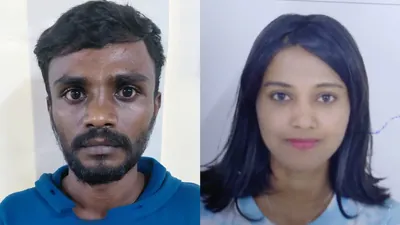
The couple had reportedly met through Instagram and had been living together in Malleswaram for the past six months.
A 27-year-old man has been arrested for allegedly strangling his 20-year-old live-in partner to death at their residence in Bengaluru’s Malleswaram area.
The victim, identified as Anusha, and the accused, Sharath, were both natives of Sakleshpur in Hassan district. The couple had reportedly met through Instagram and had been living together in Malleswaram for the past six months.
According to police, an argument over personal issues escalated on Saturday night, following which Sharath allegedly strangled Anusha to death. Sharath was working as a water tanker driver in the city.
The incident came to light on Monday after Sharath allegedly informed his lawyer about the crime. The lawyer alerted the police, following which officers from the Seshadripuram Police Station reached the spot and inspected the scene.
Police registered a case, launched a search operation and arrested the accused. Anusha’s body was handed over to her family after the necessary legal procedures.
The accused is currently being interrogated, and further investigation is underway.
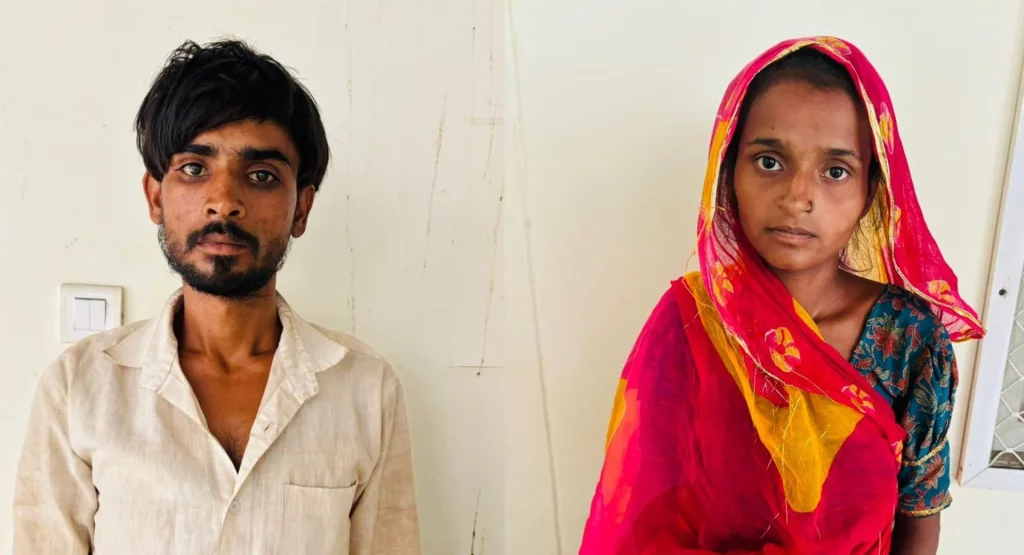
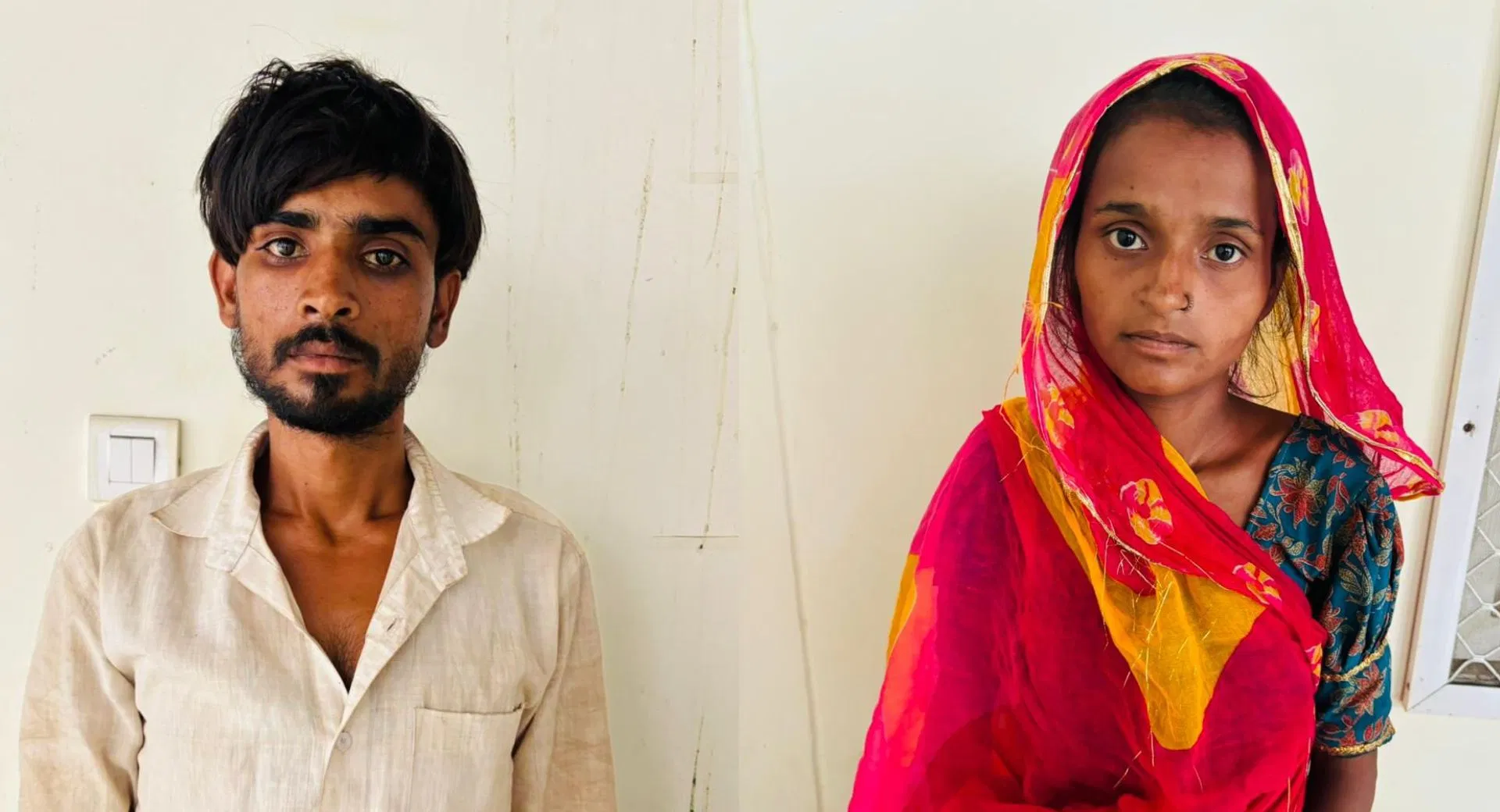
प्रतापगढ़ जिले में 15 दिन पहले हुई मां-बेटी की सनसनीखेज हत्या की गुत्थी पुलिस ने सुलझा ली है। देवगढ़ थाना क्षेत्र के भोपा खेड़ा पाल गांव में झोपड़ी के बाहर सो रही मां-बेटी पर धारदार हथियारों से हमला कर उनकी हत्या कर दी गई थी। शुरुआती जांच में मामला लूट का लग रहा था, लेकिन पुलिस की गहन पड़ताल में चौंकाने वाला खुलासा हुआ। वारदात को मृतका के चचेरे देवर और उसकी पत्नी ने अंजाम दिया था।
जंगल में बनी झोपड़ी में हुआ था हमला
29 मई की रात मानकी मीणा और उसकी बेटी कला मीणा झोपड़ी के बाहर एक ही खाट पर सो रही थीं। देर रात अज्ञात हमलावरों ने उन पर कुल्हाड़ी और छुरी से हमला कर दिया। बेटी कला की मौके पर ही मौत हो गई, जबकि गंभीर रूप से घायल मानकी को पहले प्रतापगढ़ और बाद में उदयपुर रेफर किया गया, जहां उपचार के दौरान उसकी भी मौत हो गई।
विज्ञापन
न नेटवर्क, न CCTV… पुलिस के लिए बड़ी चुनौती
घटनास्थल जंगल क्षेत्र में था, जहां न मोबाइल नेटवर्क था और न ही आसपास कोई सीसीटीवी कैमरा। डॉग स्क्वॉड और एफएसएल टीम की मदद लेने के बावजूद पुलिस को शुरुआती तौर पर कोई सुराग नहीं मिला। इसके बाद पुलिस ने मुखबिर तंत्र सक्रिय किया और 70 से अधिक पुलिसकर्मियों की टीम जांच में जुटाई गई।
विज्ञापन
तीन महीने पुराने विवाद ने खोला राज
जांच के दौरान पुलिस को जानकारी मिली कि मृतका के पति केसिया मीणा का तीन महीने पहले उसके चचेरे भाई बाबूलाल मीणा से विवाद हुआ था। पुलिस ने बाबूलाल और उसकी पत्नी गेंदाबाई की आर्थिक स्थिति की पड़ताल की तो कई संदिग्ध तथ्य सामने आए। हिरासत में लेकर पूछताछ करने पर दोनों टूट गए और हत्या की पूरी साजिश कबूल कर ली।
ट्रैक्टर की किस्त भरने के लिए बनाई थी योजना
पुलिस के अनुसार बाबूलाल ने कुछ महीने पहले 50 हजार रुपये देकर एक सेकेंड हैंड ट्रैक्टर खरीदा था। फाइनेंस की किश्त और अन्य खर्चों के लिए उसे पैसों की जरूरत थी। रिश्तेदारों से मदद नहीं मिली तो उसने पत्नी के साथ मिलकर मानकी के जेवर लूटने की योजना बनाई। दोनों को पता था कि मानकी के पास सोने-चांदी के आभूषण हैं और उसका पति मजदूरी के लिए बाहर गया हुआ है।
पहले हमला, फिर लूट
29 मई की रात दोनों आरोपी हथियार लेकर मानकी के घर पहुंचे। उन्होंने सो रही मां-बेटी पर कुल्हाड़ी और छुरी से हमला किया और उन्हें मृत समझकर झोपड़ी में रखे नकदी और जेवरात लूट लिए। बाद में जेवर एक सुनार को बेच दिए और मिले पैसों से ट्रैक्टर की फाइनेंस किस्त जमा करा दी।
अब हथियार और लूट का सामान बरामद करने की कोशिश
पुलिस अधीक्षक बी. आदित्य ने बताया कि दोनों आरोपियों को गिरफ्तार कर लिया गया है। पुलिस अब हत्या में इस्तेमाल हथियारों और लूटे गए सामान की बरामदगी के प्रयास कर रही है। मामले में आगे की जांच जारी है। x1200
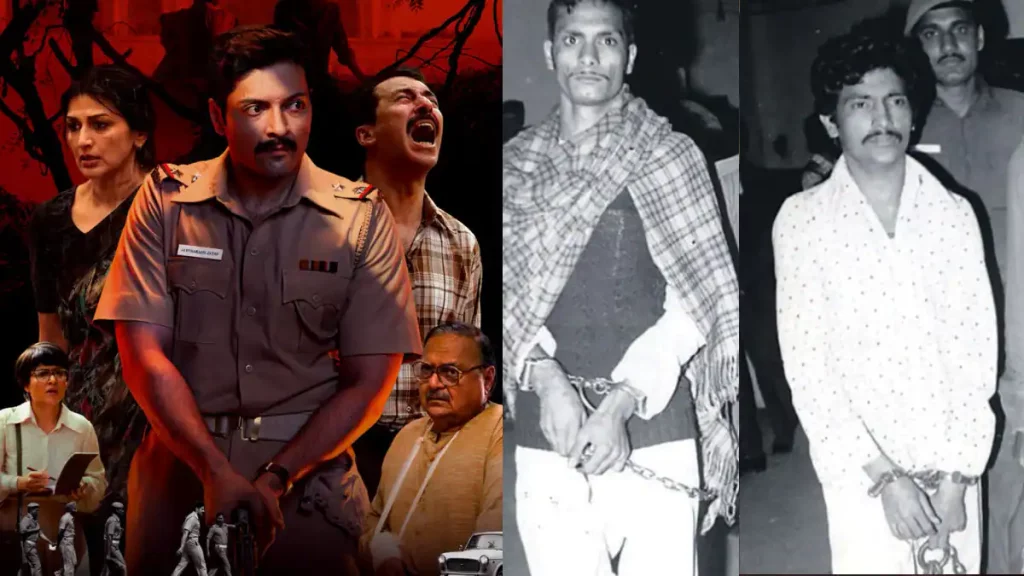
Prime Video’s Raakh is inspired by the infamous 1978 Ranga-Billa case. Here’s the tragic true story of Geeta and Sanjay Chopra, the crime that shook India and changed perceptions of child safety.
Prime Video’s Raakh, which premiered on June 12, takes viewers back to 1970s Delhi through a fictionalised crime narrative. While the series does not present itself as a direct retelling of real events, its story is rooted in one of India’s most haunting criminal cases, the 1978 kidnapping and murder of siblings Geeta and Sanjay Chopra.
The Real Life Tragedy Behind Raakh
Directed by Prosit Roy, Raakh stars Ali Fazal as Sub-Inspector Jayprakash, a police officer investigating the abduction and murder of two children. The series also features Sonali Bendre and Aamir Bashir in key roles.
Although fictionalised for the screen, the story draws inspiration from the infamous Ranga-Billa case, a crime that dominated headlines across India in 1978.
Who Were Geeta And Sanjay Chopra?
Geeta Chopra was 16, while her younger brother Sanjay Chopra was 14. The siblings belonged to a middle-class naval family living in the Officers’ Enclave at Dhaula Kuan in New Delhi. Their father, Captain Madan Mohan Chopra, headed the Judge Advocate General’s office in the Indian Navy and had relocated the family to Delhi.
On August 26, 1978, the siblings left home to participate in a youth programme at All India Radio. It was meant to be an ordinary evening. Geeta was scheduled to appear on air, and their father planned to collect them after the broadcast.
However, they never reached the destination.
The Evening That Changed Everything
Heavy rain swept across Delhi that evening. Unable to cover the entire distance on foot, the siblings accepted a lift that brought them closer to the destination.
At around 6.15 pm, they were last seen travelling towards the venue. When the family tuned in to hear Geeta’s programme later that night, her voice never came on air.
Concern quickly turned into panic. Captain Chopra rushed to the station, only to discover that neither child had arrived. A police search soon began.
Who Were Ranga And Billa?
The men later identified as the perpetrators were Jasbir Singh, known as Billa, and Kuljeet Singh, known as Ranga.
The pair were petty criminals who had reportedly met in Bombay before travelling to Delhi after facing increasing police attention. Both had recently been released from Arthur Road Jail.
Investigators later learned that the two men had been driving around Delhi in a Fiat Padmini with plans to kidnap children for ransom.
The Kidnapping And Murders
According to investigators, the siblings were abducted and taken to a secluded area near Delhi Cantonment. Witnesses reportedly saw the children attempting to seek help from inside the car.
What began as a ransom kidnapping ended in tragedy. The siblings were killed that night, and their bodies were abandoned near Upper Ridge Road, close to Buddha Jayanti Park.
Two days later, a cattle grazer discovered the bodies, bringing the search to a heartbreaking end.
How Investigators Tracked Down The Killers
The investigation gained momentum after authorities followed key leads linked to injuries the attackers reportedly sustained during the struggle with the siblings.
Ranga and Billa remained on the run for nearly two weeks. While travelling on the Kalka Mail, they entered a compartment reserved for military personnel, raising suspicion among soldiers. After noticing their resemblance to wanted photographs published in newspapers, the soldiers alerted authorities.
When the train arrived in Delhi, the two men were handed over to police.
Trial, Conviction And Death Sentences
The case became one of India’s most closely followed criminal trials. Ranga and Billa were convicted on charges including murder and kidnapping, with both blaming each other for the killings. Later, an Additional Sessions Judge sentenced them to death.
The two men were executed at Tihar Jail in New Delhi on January 31, 1982.
A Legacy That Endures
The tragedy left a lasting mark on India.
Geeta and Sanjay Chopra were posthumously awarded the Kirti Chakra, and bravery awards bearing their names were later established for children under 16. These honours continue to be presented annually alongside the National Bravery Awards.x1200
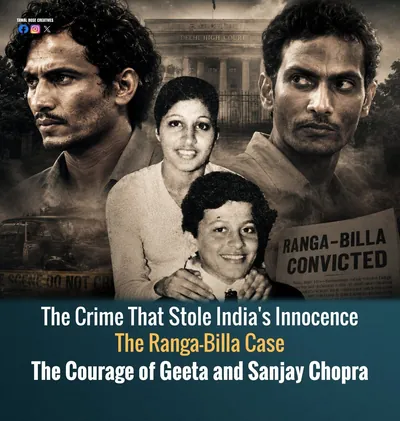
26 August 1978. It began as an ordinary evening in Delhi.
Sixteen-year-old Geeta Chopra and her fourteen-year-old brother Sanjay Chopra left home to participate in a program for young people at All India Radio. Their father, Captain M. M. Chopra of the Indian Navy, was supposed to pick them up later that night. But the two children never returned home.
While looking for a ride, they fell into the hands of two criminals, Kuljeet Singh, known as Ranga, and Jasbir Singh, known as Billa. The pair were already involved in various crimes and were hiding in Delhi while evading the police.
What followed would become one of the most horrifying crimes in modern Indian history.
Inside the car, Geeta and Sanjay fought back with remarkable courage. Witnesses later reported hearing cries for help from a moving vehicle. The siblings resisted their captors for hours, refusing to surrender despite overwhelming odds. But no one realized that a tragedy was unfolding before their eyes.
The kidnappers had initially hoped to use the children for ransom. However, after learning that their father was a naval officer, the situation took a darker turn. The two siblings were held captive and eventually taken to the secluded Ridge area of Delhi.
There, both Geeta and Sanjay were brutally murdered.
Two days later, their bodies were discovered. News of the crime spread rapidly across the country, triggering nationwide grief, outrage, and demands for justice. Newspapers carried the story on their front pages, and the case soon became one of the most closely followed criminal investigations in India.
The police launched a massive manhunt. On 8 September 1978, Ranga and Billa were finally arrested while attempting to flee aboard the Kalka Mail near Agra. They were reportedly identified by army personnel who recognized them from photographs published in newspapers. Weapons, bloodstained clothing, and other crucial evidence were recovered, helping investigators build a strong case against the two men.
The trial attracted enormous public attention. After a lengthy legal process, both Ranga and Billa were convicted of kidnapping and murder. Their death sentences were upheld all the way to the Supreme Court of India.
On 31 January 1982, the two were executed by hanging in Delhi’s Tihar Jail.
Yet the story is remembered not only because of the brutality of the crime, but also because of the extraordinary courage shown by Geeta and Sanjay Chopra. Their resistance in the face of terror left a lasting impression on the nation. In recognition of their bravery, they were posthumously awarded the Kirti Chakra, and bravery awards bearing their names were later established.
Nearly five decades later, the names “Ranga” and “Billa” remain synonymous with one of the most infamous crimes in Indian history. The tragedy of Geeta and Sanjay Chopra continues to be remembered as a story of courage, loss, and a nation’s demand for justice.
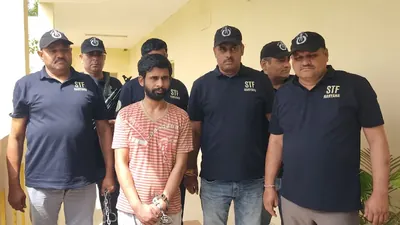
Garg, a known gangster, was wanted in several cases registered by the Haryana Police for offences relating to murder, attempt to murder, extortion, organised crime and use of illegal firearms, according to the CBI.
New Delhi: Gangster Vainket Garg has been successfully extradited from Georgia to India on Thursday, the Central Bureau of Investigation (CBI) announced.
The CBI, in coordination with the Ministry of External Affairs (MEA), the Ministry of Home Affairs (MHA) and Haryana Police, brought back Garg on Thursday, officials said.
Garg, a known gangster, was wanted in several cases registered by the Haryana Police for offences relating to murder, attempt to murder, extortion, organised crime and use of illegal firearms, according to the CBI.
“The subject was arrested during the course of investigation; however, after being granted bail by the Court, he absconded and fled from India to evade legal proceedings,” officials said.
Investigators said that at the request of the Haryana Police, NCB-New Delhi got a Red Notice published against Garg through INTERPOL channels.
“After the subject was geo-located and arrested by the Georgian authorities, an extradition request was submitted to them. Following due legal process, the Georgian authorities granted the extradition of the subject to India, the CBI said.
In coordination with the local authorities, the Haryana Police’s escort team visited Georgia, where they took the accused into custody. The Haryana Police team, along with Garg, arrived in New Delhi on Thursday.
“The CBI, as the National Central Bureau for INTERPOL in India, coordinates with all Law Enforcement Agencies in India through BHARATPOL for assistance via INTERPOL channels,” officials said.
Investigators further mentioned that over 160 wanted criminals have been successfully brought back to India in the last few years through coordination between different agencies.
The CBI also said that it has successfully secured the deportation of Red Notice subject Ganesh Balaso Kale from Thailand to India.
According to the officials, Kale was wanted in connection with cybercrime fraud, in which victims were lured with the offer of online part-time jobs. They were asked to make certain deposits as monetary investments and were later defrauded.
Investigators said that the accused used to operate a network of cyber financial criminals by involving various unsuspecting persons in the scam.
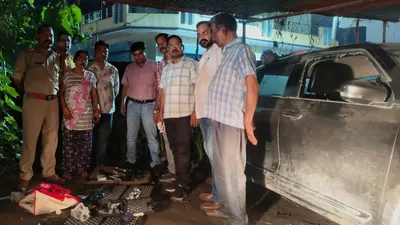
STF recovered one 12-bore pump-action gun, one .22-bore rifle, one .32-bore pistol and one .32-bore revolver from the vehicle parked in a private car park.
Udham Singh Nagar: Uttarakhand Police recovered four weapons and ammunition from a parked car in the Kashipur area here on Tuesday.
Acting on intelligence inputs, a 10-member Special Task Force (STF) team raided the car, a hatchback bearing registration number UK18P5046, that was parked in a private car parking and recovered the cache of weapons.
The team led by STF Inspector M P Singh and Arun Kumar recovered a 12-bore pump-action gun, a .22-bore rifle, a .32 bore pistol and a .32 bore revolver along with 237 cartridges.
According to STF officials, the identity and contacts of the vehicle owner are also being investigated and efforts are currently underway to determine who the recovered weapons belong to and where they were obtained from. They are also investigating the intended purpose of the weapons.
Investigating agencies are also trying to determine whether this case is linked to any criminal gang, smuggling network, or other illegal activities.
“The investigation is currently in its preliminary stages, and several important pieces of information are being gathered. A detailed account of the entire case will be released upon completion. Anyone found guilty will face strict legal action,” STF inspector MP Singh said.
This action in Kashipur is being considered a major success for the Special Task Force (STF) against illegal weapons.
Officials say the case has become extremely important for security agencies, and the investigation is expected to yield significant revelations in the coming days.
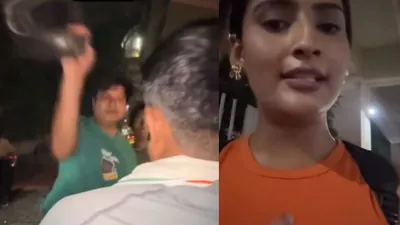
An alleged road-rage attack involving an Uber bike taxi has surfaced from Delhi after a woman shared a video from Rohini Sector 18–19. She claimed two motorcycles collided and both riders were partly at fault, but the dispute turned violent. The other biker allegedly beat the Uber rider with a helmet. The clip has drawn over 13.4K views
New Delhi: An incident concerning women’s safety has come to light from Rohini Sector 18–19 in Delhi. A young woman posted a video describing how her Uber bike taxi rider was assaulted by another man during a road rage incident.
In the video, the woman claims that she was returning from a shoot and heading towards a metro station when she booked an Uber bike taxi. She further stated that the Uber bike subsequently collided with another motorcycle.
She said that both drivers were at fault, but the dispute could have been solved by talking. However, the man dismounted from his bike and thrashed the Uber driver, as claimed by the woman in the viral video.
Notably, the start of the video shows the man smashing a helmet on the man’s head with brute force. The woman has claimed that pieces of the broken helmet spilled over onto her, resulting in her getting hurt.
The video posted on the X account “@gharkekalesh” has claimed the vehicle number of the accused as DL11PH6197.
The exact date of the incident is not known, and Uber has also not yet publicly reacted to the video. The video has garnered more than 13.4K views in just a few hours of being posted.
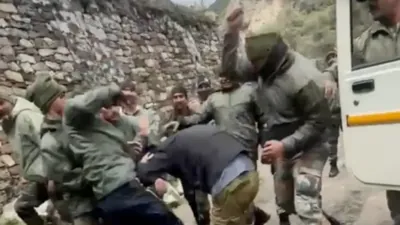
The All Sikkim Voice of Chauffeurs association claimed that four drivers were assaulted while returning from Zero Point.
Gangtok: An alleged assault involving local taxi drivers and Indian Army personnel in Sikkim’s Lachung area has triggered controversy, with the drivers’ fraternity and the Army presenting sharply differing accounts of the incident.
According to a statement issued by the All Sikkim Voice of Chauffeurs association, the incident took place in the Lachung Zero Point area. The drivers’ body stated that a child travelling with a tourist in one of the vehicles had suddenly fallen ill, following which the concerned driver allegedly requested an Army vehicle ahead and other drivers to allow passage due to the medical emergency.
The association claimed that while returning from Zero Point, four drivers were allegedly assaulted near a barricade close to the Shiv Mandir area. Videos purportedly showing the incident have since surfaced on social media, including one clip that appears to show a driver being beaten by multiple uniformed personnel.
The organisation said the complete facts surrounding the incident were still being ascertained and that further details would be shared after speaking with the drivers involved.
Expressing concern over what it described as increasing incidents of mistreatment of drivers, the association stated that any wrongdoing should be addressed through legal procedures rather than violence.
“Drivers are human too. Let us treat them with respect,” the statement said.
However, the Indian Army strongly contested the narrative and issued its own version of events.
According to an Army statement, Zero Point witnessed heavy tourist traffic on June 9, with approximately 350 to 450 vehicles present in the area. The Army said an essential convoy carrying operational requirements was moving towards the sector when it got stuck in a traffic jam allegedly caused by improper parking by some taxi drivers.
The statement said Army personnel politely requested the driver of a wrongly parked taxi to move aside and make way for the convoy. However, the driver allegedly refused and was joined by a few other drivers who “started physically pushing and grabbing the collar of Army personnel.”
The Army stated that convoy officials managed to defuse the situation and continue their movement without further escalation.
The statement further noted that the Zero Point tourist destination itself was developed under the Army’s Operation Sadbhavana initiative, including shops, public seating areas, and the iconic “I Love Zero Point” signage.
“The Army is with the people of Sikkim, but some troublesome drivers are giving a bad name to both the Army and Sikkim,” the statement said.
According to the Army, officials later, along with police personnel, stopped the drivers allegedly involved in the confrontation near Shiv Mandir in order to record their identities and file a formal complaint.
The Army alleged that one of the drivers, who was “likely to be drunk,” again misbehaved and abused at troops, leading to a scuffle.
The allegation regarding intoxication has not been independently verified.
The Army confirmed that it is filing an official complaint with the local police regarding the incident.
The incident has drawn reactions from political and social organizations as well.
The Driver Welfare Council of the Citizen Action Party (CAP)-Sikkim condemned the alleged assault and called for a fair and transparent inquiry while seeking accountability if wrongdoing is established.
The Sikkim Krantikari Morcha (SKM) State Level Chalak Wing and the Sarathi Welfare Board also condemned the incident and urged civil authorities and Army officials to conduct an impartial investigation.
2026.6.10 SC flags 40-year ‘extraordinary delay’ in murder trial in HC
The bench made these observations against the Allahabad HC, after hearing an appeal filed by the convict, Vijay Singh, seeking immediate direction to the HC for taking up his plea pending for four decades.
NEW DELHI: Voicing serious concern over the “extraordinary delay” by the Allahabad High Court in deciding a 40-year-old criminal appeal filed by a man convicted of murder, the Supreme Court recently termed this delay “extremely disturbing” and said what could be done to ease the pendency in the HC.
“If a man has to wait 40 years for his appeal to be heard, it defeats the very purpose of filing an appeal,” said a two-judge bench of Justices Prashant Kumar Mishra and S Chandurkar.
The bench made these observations against the Allahabad HC, after hearing an appeal filed by the convict, Vijay Singh, seeking immediate direction to the HC for taking up his plea pending for four decades.
Singh was convicted by the trial court in 1984 under Section 302 (Murder) of the Indian Penal Code (IPC) and sentenced to life imprisonment. He preferred an appeal before the Allahabad High Court the same year, but unfortunately this has been pending since then, and no significant hearing has been conducted so far.
Surprisingly, Singh, now 68, served nearly 17 years in prison before the HC granted him bail in 2000. The appeal has not been heard on merits yet by the HC.
Singh was arrested in November 1983 when he was 28 years old for allegedly shooting his brother dead.
While passing certain directions, the SC kept Singh’s Special Leave Petition (SLP) pending and directed the HC to list his criminal appeal for final hearing within three months.
The court, however, made clear it was not faulting any individual judge but stressed that systemic reform was needed.
It had also called the delay disturbing and asked what “innovative measures” could be taken to ease the heavy pendency burdening the Allahabad HC’s justice delivery system.
Also in top court
Plea filed against 3-language policy
A fresh plea has been filed in the SC challenging a CBSE policy mandating the study of three languages, including two native Indian languages, for Class IX students beginning July 1. The plea filed by Dr Fauzia Khan, an educationist and ex-Maharashtra minister, says that CBSE’s circular is arbitrary and unreasonable.
CJI Surya Kant says mediation a vital tool
Noting that international arbitration is now facing growing procedural roadblocks, Chief Justice of India Surya Kant said mediation has moved beyond being an alternative and is now a vital tool for securing quick, amicable and lasting dispute resolution. He was speaking at a conference in London.
2026.6.10 Andhra Sailors Stuck For Months On Cargo Ship In Iran Seek Evacuation
Several young men of North Andhra stranded in Iran have are facing dire time and remain uncertain about their return.
Vizianagaram: The plight of several young men of Andhra Pradesh who have been stranded for four to five months on a cargo vessel in Iran has come to the fore, leaving their families concerned about their safety. The sailors have sought their evacuation from the war-torn country.
The stranded men have said they are surviving under extremely difficult conditions of limited food, inadequate drinking water and remain uncertain about their return to home.
Komara Somaraju, a native of Chintapalli Panchayat in Pusapatirega Mandal of Vizianagaram district, shared his ordeal with family members through a video message. Somaraju is employed as a trainee wiper on the vessel MV Pascal, which has reportedly been anchored near the port of Bandar Abbas in Iran.
According to family members, there are 13 crew members on board, including four foreign nationals and nine Indians. Among the Indian sailors are four youths from North Andhra who have been identified besides Somaraju from Vizianagaram, Jerri Vishnu of Srikurmam, Durga Prasad of Amadalavalasa, and Parapati Ramana of Parapativanipeta in Srikakulam district.
In the video, the crew members alleged that they have been facing severe hardships for the past four to five months claiming that food supplies and drinking water have become scarce. According to stranded men, they were forced to survive on just one meal a day while spending long periods without electricity.
“We are living in darkness and are struggling to get even the basic necessities. We request the authorities to help us return home safely,” one of the stranded sailors pleaded.
Family members stated that the youths had travelled to Iran through a Mumbai-based agent after paying nearly ₹5 lakh each and alleged that despite the completion of their six-month contracts, no arrangements have been made for their return.
Somaraju’s parents further claimed that their son has not received his salary for the past 12 months. The families have appealed to both the state and central governments to intervene immediately to ensure the safe return of stranded sailors.
2026.6.10 Administration, police stop 9,982 child marriages in Tripura
District administrations, police and child welfare agencies helped prevent 9,982 child marriages in Tripura during 2025-26, Minister Tinku Roy said.
District administrations, police, gram panchayats and child welfare agencies in Tripura prevented 9,982 child marriages during the 2025-26 financial year, Social Welfare and Social Education Minister Tinku Roy said on Tuesday.
Addressing a press conference in Agartala, Roy said coordinated efforts by government departments and various stakeholders have led to a steady increase in the number of child marriages being stopped across the state.
“During 2025-26, as many as 9,982 child marriages were prevented by all stakeholders in the state, although we do not have exact data on child marriages that actually occurred,” the minister said.
Roy said the administration, police, Child Welfare Committees, gram panchayats, the Tripura Child Rights Commission and several non-governmental organisations have been working together to identify and intervene in cases of child marriage.
Despite the progress, he acknowledged that the practice remains a concern in certain areas, particularly Sonamura subdivision in Sepahijala district and Kailashahar in Unakoti district.
According to the minister, awareness campaigns and timely interventions by local authorities and child protection bodies have played a key role in preventing underage marriages. He said the government would continue efforts to curb the social practice and strengthen child welfare mechanisms across the state.
Also read: T’gana caste survey flags over 2 lakh child marriages in state
Roy also highlighted developments in Tripura’s Anganwadi network. He said electricity connections have been provided to more than 3,000 Anganwadi centres out of nearly 10,000 functioning across the state. The remaining centres are expected to receive electricity during the current financial year.
The minister further said around 100 Anganwadi centres have shifted from Bengali-medium learning materials to English-medium instruction following requests from parents and guardians.
The transition, he said, is expected to help children studying in Anganwadi centres gain admission to Vidyajyoti Schools without facing language-related barriers.
Tripura is among several states where the prevalence of child marriage remains higher than the national average. Other states facing similar challenges include Assam, Bihar, Jharkhand, Rajasthan, Telangana and West Bengal.
The minister said sustained cooperation among government agencies, local bodies and civil society organisations would remain crucial in tackling child marriage and improving child welfare indicators in the state.
2026.6.10 Uttar Pradesh Double Murder: Father-Son Duo Gunned Down in Shop in Baghpat, Main Accused Dies Hours Later
In a shocking incident from Uttar Pradesh’s Baghpat district, a father and son were shot dead in broad daylight at their shop on Tuesday, allegedly in a revenge attack linked to an old family feud. The prime accused, identified as history-sheeter Varun Luhari, later died while undergoing treatment at a hospital in Meerut after sustaining critical injuries during the chaos that followed the shooting. CCTV footage of the attack has since surfaced online, drawing widespread attention.
Attack Caught on Camera
According to police, Luhari and his associates allegedly entered the shop of trader Sohanlal Agrawal on Delhi Road in Baraut town and opened fire. Sohanlal Agrawal and his son, Vikas Agrawal, suffered fatal gunshot injuries and died on the spot. Investigators believe the attack was a planned act of revenge stemming from a long-running dispute between the two families. Police said Vikas, 24, had been married only a few months ago, and his wife is currently expecting a child.
Accused Injured While Fleeing, Dies in HospitalFollowing the shooting, local residents reportedly chased Luhari as he attempted to escape. During the ensuing commotion, he sustained serious injuries, including gunshot wounds allegedly fired by an unidentified person from the crowd. He was initially taken to a community health centre before being referred to a hospital in Meerut, where he succumbed to his injuries during treatment in the early hours of Wednesday.
Police Probe Revenge Angle
Superintendent of Police Suraj Kumar Rai confirmed Luhari’s death and stated that multiple police teams have been formed to trace and arrest the remaining suspects involved in the attack. According to investigators, the violence may have originated from an 11-year-old rivalry. Police sources said that in 2015, Luhari and his brother Kapil allegedly opened fire at the Agrawal family’s establishment. During that incident, members of the Agrawal family allegedly retaliated, resulting in Kapil’s death. Authorities suspect Tuesday’s shooting was carried out to avenge that killing.
Heavy Security DeployedTo prevent any further escalation, a heavy police presence was deployed across Baraut and surrounding market areas. The last rites of Sohanlal and Vikas Agrawal were conducted under tight security, with hundreds of residents, traders and public representatives attending the funeral. Meanwhile, police have arrested Baburam, the father of deceased accused Varun Luhari, based on a complaint lodged by the Agrawal family. The investigation remains ongoing.
2026.6.9 New Claim In Nashik TCS Case: Victims Were Allegedly Asked To Read ‘The Life Of Muhammad’
A book titled ‘The Life of Muhammad’ has emerged as a new focus in the Nashik TCS employee harassment case, with investigators examining claims that victims were allegedly asked to read it by the accused.
Investigators are now probing the role of a book in the TCS Nashik alleged conversion case, with victims claiming that they were asked to read the book by the accused. According to sources familiar with the probe, the accused, identified as Nida Khan and Danish, allegedly encouraged or pressured some victims to read a book titled The Life of Muhammad, authored by Abdul Hameed Siddiqui.
Investigators are now examining whether the book was used as part of the interactions between the accused and the complainants and whether it played any role in the allegations currently under investigation.
Sources told Times Now some of the victims during the course of the investigation reportedly mentioned the book and the circumstances in which it was offered to them.
Investigators are now trying to establish if reading the book was presented as a voluntary activity or whether victims were forced to read it.
The development comes as police continue to gather documentary, digital and testimonial evidence in the case. Officials are scrutinising messages, electronic communications and other material recovered during the investigation to corroborate the claims made by the complainants.
Police officials have said that all allegations are still under verification and that the investigation remains at a crucial stage. Statements from victims and witnesses are being cross-checked with available evidence before any conclusions are drawn.
The Nashik TCS employee harassment case has already attracted significant attention, with investigators probing multiple allegations raised by complainants.
2026.6.9 Dalit teen beaten to death over inter-caste friendship in Tehri
The deceased has been identified as Ketan Lal, a resident of Deval village. His friend, Diwakar Dimri, who was also assaulted, is undergoing treatment at the district hospital in Baurari.
An 18-year-old Dalit youth was reportedly beaten to death, while his friend suffered serious injuries, in Uttarakhand’s Tehri Garhwal district. Police said the attack was linked to the youth’s friendship with a minor girl from an upper-caste family.
The deceased has been identified as Ketan Lal, a resident of Deval village. His friend, Diwakar Dimri, who was also assaulted, is undergoing treatment at the district hospital in Baurari.
According to a complaint filed by Ketan’s father, Dhanpal Lal, the incident took place on Sunday night in Kholgarh village. Ketan was reportedly friends with a girl from the village and had known her for about six months.
Police said that around 11 pm on Sunday, the girl called Ketan and asked him to come to Kholgarh. Ketan went there along with his friend Diwakar.
When the two reached the village, members of the girl’s family allegedly confined them in a room and beat them with sticks, police said. The next morning, the girl’s father reportedly called Dhanpal Lal and informed him about his son’s condition. He asked him to come and take Ketan back.
When Dhanpal reached the village, he found his son badly injured and covered in blood. Ketan was rushed to a community health centre in Chaund Lambgaon, where doctors declared him dead, according to police.
The incident triggered anger among local residents and family members. They initially refused to take the body from the hospital and demanded immediate action against those responsible.
Tehri Garhwal Senior Superintendent of Police Shweta Choubey said a murder case had been registered along with charges under Section 3(2)(v) of the SC/ST (Prevention of Atrocities) Act. Police have detained one accused, Yashveer Singh Panwar, for questioning. Further investigation is underway.
2026.6.9 Gurgaon woman terrorised in road rage incident: Accused rammed the car, threatened her
Police said two men were arrested on Monday in connection with the incident which took place on the Rajiv Chowk flyover. Four suspects are absconding
Two men were arrested on Monday for allegedly ramming their car into a woman’s vehicle in Gurgaon, behaving indecently, and threatening to circulate a video of her on social media following a road rage incident on the Rajiv Chowk flyover, police said.
The arrested individuals have been identified as Kamal Verma (22), a resident of Nahra village in Sonipat, and Sujal Verma (29), a resident of Bakhtawarpur, Delhi. Police have also impounded the car involved in the incident.
The Rajiv Chowk flyover is a critical transit point on the Delhi-Gurgaon Expressway (National Highway-48) that serves as a vital multi-directional hub linking Old and New Gurgaon by connecting major arteries like Sohna Road and Civil Lines.
According to police, the incident took place around 8.10 pm on Saturday (June 6).
The complainant alleged that a speeding car approaching from behind hit multiple vehicles on the flyover before crashing into her car. When she confronted them, the occupants allegedly hurled abuses, made indecent gestures, and threatened to kill her while damaging her vehicle, police said.
A complaint was filed at the Sadar Police Station on Sunday. Based on the allegations, an FIR was registered against the two men and four other suspects. The accused were booked under the Bharatiya Nyaya Sanhita sections relating to rash driving, sexual harassment and assault, word, gesture or act intended to insult the modesty of a woman, mischief causing damage, and criminal intimidation with threat to cause death.
“During questioning, the accused told the police that they were travelling from Delhi to Manesar. They claimed an argument broke out following the collision, which quickly escalated, leading them to abuse and threaten the woman,” a Gurgaon Police spokesperson said.
Police said the two men have a prior criminal record. They were previously named in an FIR in Sonipat for obstructing a public way and using abusive language in a public place.
“The accused were produced before a city court on Monday and remanded to judicial custody. Further investigation is underway; we will nab the other four accused soon,” the spokesperson added.x1200

The child’s mother, advocate P Priyanka, and her friend Mohan G Mahalingappa, a real estate developer, have been booked for murder. Mohan has been remanded to seven-day police custody, while Priyanka remains untraceable.
The case follows a complaint filed by the girl’s father, Praveen Basappa, founder and teacher in an international school in Davanagere.
According to police, the suspected sequence of events began on the night of March 24, Priyanka’s birthday. She told her family that she fed Vennela biryani and ice cream and left her to sleep in the car with the air conditioning on while she went to a coffee shop with Mohan.
On returning home, Priyanka carried her sleeping daughter to bed. The following morning, Vennela did not wake up. She was rushed to Vydehi Hospital in Whitefield, where doctors declared her brought dead.
Initially, police suspected the child may have died due to food poisoning and registered the case as an unnatural death. However, after the autopsy report proved inconclusive and investigators noticed inconsistencies in Priyanka’s version of events, police sent viscera samples to the forensic science laboratory.
They also grew suspicious after Mohan applied for anticipatory bail soon after the incident. The girl’s father alleged that they killed her to be together.
Meanwhile, Praveen shared the autopsy report with his sister, a child specialist based in England, who said she suspected foul play.
Praveen then approached police accusing Priyanka and Mohan of murdering the child because she allegedly “stood in the way” of their new life together.
In his complaint, Praveen alleged his daughter was kicked in the stomach and smothered before being taken to hospital.
Praveen told police that cracks began to appear in his 17-year marriage to Priyanka in 2025 after she travelled to Bengaluru for a case.
During the visit, she reportedly reconnected with her former college mate, Mohan, a real estate developer who claimed to manage assets worth nearly Rs 1,000 crore.
He claimed the two secretly married in Dec 2025 and travelled to Dubai for New Year celebrations. Following the separation, the couple’s elder daughter stayed with Praveen, while six-year-old Vennela lived with Priyanka and Mohan in a rented villa at Seegehalli.
Praveen claims he signed the divorce papers as Priyanka threatened to cut off access to the daughters.
Deputy commissioner of police (Whitefield) Saidulu Adavat told to media that when Mohan got anticipatory bail they did not yet have the complete autopsy report of the case.
He pointed out that investigators relied on circumstantial and medical evidence to approach the court, following which Mohan’s anticipatory bail was cancelled Friday.
Police have now converted the case into a homicide investigation and are probing whether the child was left to suffocate in the car or poisoned before being left in the vehicle.x1200
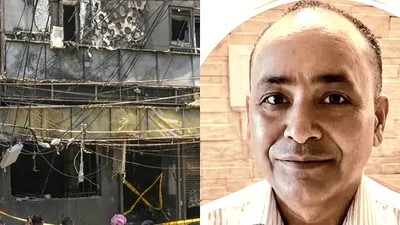
Dhami spoke to Rekha Gupta after chef Keshav Negi was arrested in connection with the Malviya Nagar blaze, as leaders across party lines questioned whether he was being made a scapegoat.
DEHRADUN: The arrest of Uttarakhand resident Keshav Negi, a chef, in connection with the hotel fire in Delhi’s Malviya Nagar has triggered a political storm in the hill state, with leaders across party lines questioning whether a low-ranking employee is being made a scapegoat.
Uttarakhand CM Pushkar Singh Dhami on Sunday spoke to CM Rekha Gupta regarding Negi’s arrest and sought a fair probe into the incident. According to officials, Gupta assured Dhami that no innocent person would face injustice and that the investigation would be conducted strictly on the basis of facts and evidence.
Dhami also spoke to Negi’s daughter, Kanishka Negi, and assured her of all possible assistance. “Our government stands shoulder to shoulder with all migrant brothers and sisters from Uttarakhand living across the country,” he said.
The issue has also drawn strong reactions from BJP leaders. Garhwal MP and BJP chief spokesperson Anil Baluni said he had spoken to the Delhi Police Commissioner and expressed “strong displeasure” over the handling of the case.
“Every possible legal assistance will be provided to Keshav Negi. The Delhi Police Commissioner has assured that the entire matter will be investigated fairly,” Baluni said. He added that he was in constant touch with officials.
Former Uttarakhand CM and Haridwar MP Trivendra Singh Rawat also said he and Baluni had spoken to senior Delhi Police officials. “We have sought a fair, thorough and transparent investigation so that the truth comes out and no innocent person suffers,” Rawat said.
The Congress too has extended support to Negi. Former CM Harish Rawat said the issue was not merely about a youth from Uttarakhand, but about fixing responsibility for the fire at the Flourish Stays B&B hotel in Malviya Nagar.
“The blame should have been fixed on the hotel owner, management and those actually responsible for running the establishment,” Rawat said.
“You are making a small chef an accused. Tomorrow, will a table boy or another employee also be blamed? Justice demands that responsibility be fixed where real accountability lies,” he further said.
Foreign national succumbs, toll climbs to 22
A foreign national died during treatment following the fire at Flourish Stay B&B in south Delhi’s Malviya Nagar, taking the death toll to 22, police said on Sunday. The blaze had broken out on Wednesday morning, killing 21 people initially. Police have arrested hotel owner Lavkesh Bajaj and chef Keshav Negi. Exact cause awaits the FSL report.
2026.6.8 Daughter, father arrested for religious conversion in U.P.; nine booked
In a complaint lodged with police, medicine trader Devraj Malik alleged that his son Ayush Malik (30) was converted to Islam years ago under the pretext of marriage with Chandni
Shamli police arrested a woman and her father on Sunday (June 7, 2026) and booked nine people in connection with the alleged religious conversion of a 30-year-old man, a senior police official said.
According to police, the accused are Chandni Qureshi and her father, Islam Qureshi.
In a complaint lodged with the police, medicine trader Devraj Malik alleged that his son Ayush Malik (30) was converted to Islam years ago under the pretext of marriage with Chandni.
He was brought to Delhi, where the nikah with Ayush took place using forged documents, he said.
Meanwhile, some Hindu activists, including Swami Yashveer Maharaj, have threatened to start an agitation against the illegal conversion and demanded strict action against the culprits.
Police said efforts are underway to find the remaining accused.
Superintendent of Police of Shamli N.P. Singh on Sunday (June 7, 2026) told reporters that police have registered a case against nine people, including a maulvi under various sections of the BNS — 308 (extortion), 318 (cheating), 336 (forgery), 338 (forgery of valuable security, will, etc) and 351 (criminal intimidation) and the Uttar Pradesh Prohibition of Unlawful Conversion of Religion Act.
2026.6.8 Security officer shoots wife, son dead after dispute at Gurugram residence
Police said Anil allegedly shot his wife, a school principal, and their son with his licensed pistol after a late-night argument at their Ashok Vihar home; investigation is underway.
CHANDIGARH: A 50-year-old security officer allegedly shot dead his wife and son with his licensed pistol following a domestic dispute at their residence in Gurugram’s Ashok Vihar colony early Sunday, police said.
The accused, identified as Anil, was taken into custody and an FIR was registered at the Palam Vihar police station. Police said his wife Asha (45), principal of a private school, and their son Prashant (25) died on the spot.
According to investigators, the couple frequently quarrelled and had another argument late Saturday night. Hearing loud voices, Prashant, who was sleeping in another room, woke up and tried to intervene. During the altercation, Anil allegedly pulled out his licensed pistol and opened fire on both his wife and son, police said.
Police reached the spot, examined the house and collected evidence. Officials said Anil was found sitting near the bodies when police arrived. The victims were taken to a civil hospital where doctors declared them dead. Further investigation is underway, they added.
Accused was sports trainer
Police said Anil had earlier worked as a physical education teacher and sports trainer before joining a private company as a security officer.
2026.6.8 Physical relationship between consenting unmarried adults no ground to show poor character: SC
The Bench made the observation while directing the Telangana Police Recruitment Board to appoint a candidate whose selection as constable was set aside due to his involvement in a criminal case arising from a failed romantic relationship.
NEW DELHI: The Supreme Court has held that physical relationship between two consenting unmarried adults cannot be a ground to draw an adverse impression about the character of the person in that relationship.
A bench of Justices Manmohan and Manoj Misra made the observation while directing the Telangana State Level Police Recruitment Board to appoint a candidate whose selection as a police constable was set aside due to his involvement in a criminal case arising from a failed romantic relationship.
“Physical relationship between two consenting unmarried adults cannot and should not by itself be a ground to draw an adverse impression about the character of the person in that relationship. There is no law which prohibits two consenting unmarried adults to have a relationship of their choice,” the bench said.
The top court allowed the appeal filed by the candidate and upheld a Telangana High Court single judge’s order directing reconsideration of his appointment to the post of Stipendiary Cadet Trainee Police Constable.
Telangana State Level Police Recruitment Board had cancelled his appointment on the ground that a rape on promise of marriage case registered against him in 2014 reflected moral turpitude.
The case arose from a relationship with a neighbour and was compounded before a Lok Adalat in 2015 after both parties reached a settlement. No charge under Section 376 IPC was ever pressed.
Referring to the case, the top court said the appellant and the victim were neighbours and in a relationship for about four years.
“Not every relationship culminates in marriage. Therefore, merely because the relationship did not culminate in marriage is no ground to believe that one party has cheated the other.
“Had it been a case of use of force or extension of threat to force a compromise, the respondent would have been justified in taking a call on the suitability of the appellant for appointment in a disciplined force. However, here there is no material to conclude that the compromise was foisted upon the victim,” the bench said.
The apex court said in criminal jurisprudence, unless the charge is proved in a court of law there shall be a presumption of innocence.
“In the instant case, the offence alleged was one of cheating. One of the ingredients of the offence of cheating is false representation/deception. Whether prosecutrix was deceived into entering a relationship, the prosecutrix alone could have disclosed.
“The public at large cannot tell whether she was deceived by the appellant. In such circumstances, when the prosecutrix chose not to pursue and had led no evidence, rather had expressed her consent to compound the case, there was no occasion for the respondents to read in between lines and draw an adverse inference regarding the character of the appellant,” the bench said.
2026.5.26 Police rescue Jharkhand woman who was sold for Rs 3 lakh by traffickers in Rajasthan
Police said the woman allegedly faced repeated torture at the hands of the family and also gave birth to a child during her captivity.
The Jharkhand Police have rescued a 22-year-old woman from Simdega, who was allegedly trafficked and sold for Rs 3 lakh in Rajasthan, officials said on Tuesday.
The woman was taken to Delhi in 2023 from a village in the Kurdeg police station area in Simdega district by a man from a neighbouring village who had promised her a job, they said.
DSP (Headquarters) Ranvir Singh said the woman was initially employed as a domestic help through a placement agency in Delhi.
However, she fled the house after a few days.
“While she was wandering near Anand Vihar bus stand in Delhi, a couple from Meerut took her with them.
The couple later sold her for Rs 3 lakh to a family in Barmer near the India-Pakistan border,” Singh told PTI.
Police said the woman allegedly faced repeated torture at the hands of the family and also gave birth to a child during her captivity.
The victim later managed to contact her mother and narrated her ordeal.
The woman’s parents then lodged an FIR at the Anti-Human Trafficking Unit (AHTU) police station in Simdega on May 20.
Based on the FIR, a special police team was formed, and the woman was rescued from Barmer and brought back home safely, the DSP said.

“We appreciate the state’s prompt action. They recommended a CBI investigation… Ask CBI to take over the investigation,” Chief Justice of India (CJI) Surya Kant said while presiding over a three-judge bench.
The Supreme Court said on Monday that CBI should “immediately” take over the probe into the alleged dowry death of model-actor Twisha Sharma amid growing allegations that the judiciary was obstructing a fair investigation given that the deceased’s mother-in-law, Giribala Singh, is a former judge.
“We appreciate the state’s prompt action. They recommended a CBI investigation… Ask CBI to take over the investigation,” Chief Justice of India (CJI) Surya Kant said while presiding over a three-judge bench.
He added that a narrative was being created that the judiciary was obstructing a fair trial. “One section has started saying that because the mother-in-law is a former district judge… It is quite unfortunate that they have started saying that the judiciary is not permitting a fair trial,” he said.
“We are slightly in pain because some of the sections, and we will request our media friends not to go for the statements of the victim’s family or the other family. Let things move as per law and procedure. The authority, the investigative agency, will follow up. Statements are being recorded,” the CJI added.
Maintaining that they had “absolutely no doubt on the state police”, he said, “They must be there, and they will continue to deal with absolute fairness and impartiality. We do not want to demoralise the state police. They must be doing a very good job.”
“We don’t want to cast aspersions against anyone… We are only intervening because this is the kind of narrative that is being created. Therefore, it is in the interest of all that some independent agency should take over it,” he added.
Solicitor General (SG) Tushar Mehta, appearing for the Madhya Pradesh Police, replied, “That would be done. Why this has started – one of the potential accused, the learned former judge, started giving interviews, hopping from one channel to another, almost maligning the deceased…”
He maintained that the state had recommended a CBI probe to avoid fingers being pointed at the MP Police.
The CJI said the action was “very fair and completely above board”. “Once the state has recommended (CBI probe), there is no need for us to issue a direction,” Justice Kant added.
“No, CBI would take over,” the SG said.
When the CJI said, “And they should do so immediately”, Mehta said, “I will ensure that it (necessary formalities) happens today.”
“We will ensure that whatever unfortunate incident has taken place, it must be fairly and independently investigated. That’s all,” CJI Kant added. The court recorded Mehta’s assurance.
In its order, the court said, “We would like to impress upon the family members of the victim, as well as the accused person(s), that instead of making statements in public or before media platforms, they should get their version recorded before the investigating agency so that no prejudice or adverse impact is caused to the ongoing investigation.”
To the media, it said, “…we also request the media to avoid recording statements of the persons who are likely to be potential witnesses or accused, as it may unnecessarily prejudge the outcome on certain issues, which are yet to be investigated.”
“We will also request the general public to refrain from speculation and have trust and faith in one of the premier investigating agency…,” it added.
Mehta, praising the media, said, “It’s not a subject matter to be sensationalised. At the same time, it is because of this media intervention that several things have taken place”.
“Undoubtedly, they helped a lot. Our only concern is not to… statements. After all, it came to our notice also only because of that,” the CJI said.
The SG also said, “One thing is clear, the girl has lost her life whether it’s by suicide or some criminal act. For parents, the moral is that’s it’s better to have a divorced daughter than a dead daughter. When she is repeatedly saying I’m living in hell, please save me….For parents, it’s better to take that call immediately rather than losing the daughter.”
On May 23, the Supreme Court had taken suo motu cognisance of the alleged dowry death of Twisha (33), originally from Noida. Twisha was found dead at her matrimonial home in Bhopal on May 12, less than six months after her marriage. Her husband, Samarth Singh, a lawyer, who has been arrested and whose licence to practise has been suspended by the Bar Council of India, is an accused in the case along with his mother Giribala Singh.
2026.5.26 Four men arrested for alleged involvement in abduction of Naga civilians in Manipur
The four are suspected to be involved in anti-social activities such as extortion, criminal intimidation, and illegal possession of arms and ammunition, police said.
A joint team of the Manipur Police, CRPF and Assam Rifles have arrested four people for their alleged involvement in the abduction of six Naga civilians, who are believed to be still held hostage amid simmering tensions in the ethnic-conflict hit state.
According to police, the four men were arrested from the stretch between P Molding and Leilon Vaiphei inter-village road in the Kangpokpi district on Monday.
The arrested persons were identified as Thangkhomang Khongsai (51), Seikholet Khongsai (40), Lunminthang Dimngel (27) and Kamgoulal Khongsai (30).
Police said the four are suspected to be active members of armed village volunteer groups operating in the district and may have been involved in anti-social activities such as extortion, criminal intimidation, and illegal possession of arms and ammunition.
“The role of the apprehended individuals in the abduction of six persons is suspected and will be ascertained during the course of investigation,” a police statement said, adding that further investigation is underway.
Several people were allegedly abducted and taken hostage by armed groups in Kangpokpi and Senapati districts on May 13, hours after three church leaders were killed in an ambush.
Police said 31 people, 14 Nagas, 16 Kukis and one Meitei, have since been released.
However, six Nagas are still missing.
The Kuki Inpi Manipur, the apex body of the Kuki tribes in the state, claimed that 14 members of the community are also being held hostage by Naga groups.
The accused had beheaded a businessman inside a hotel room in 1994, stuffed the body into a travel bag, and dumped it near Adalaj before disappearing.
AHMEDABAD: After evading for 13 years after jumping parole, a death-row convict linked to one of Ahmedabad’s most brutal murder-and-robbery cases has finally been arrested by the Gujarat Police.
The accused had beheaded a businessman inside a hotel room in 1994, stuffed the body into a travel bag, and dumped it near Adalaj before disappearing.
The Gujarat Police’s Ahmedabad Crime Branch arrested the death-row convict.
The accused has been identified as Satish Ruparelia, also known by the aliases Bhikhu and Sanjay Thakkar, the prime accused in the Neelam Hotel murder case.
The case dates back to October 22, 1994, when cloth merchant Arvind Shah was allegedly lured to Ahmedabad’s Neelam Hotel with the promise of a lucrative discounted cloth deal. However, it was a trap to rob Shah.
According to investigators, Satish and his associates targeted the businessman for cash and gold ornaments. Inside the hotel room, the accused allegedly murdered Arvind Shah.
Police said Satish severed the victim’s head from his torso in an attempt to destroy evidence and conceal the identity of the deceased. The mutilated body was then packed into a travel bag, transported from Ahmedabad to Adalaj, and dumped in a deserted area to mislead investigators and erase traces of the crime.
Following an extensive probe, Satish Ruparelia was chargesheeted under multiple sections of the Indian Penal Code, robbery, and criminal conspiracy. In April 2000, the Additional City Sessions Court of Ahmedabad awarded him the death penalty, observing the extreme cruelty and inhuman nature of the crime.
However, despite being sentenced to death, Satish later received temporary parole during his imprisonment. In 2013, he exploited that legal relief, violated parole conditions, and never returned to prison.
For nearly 13 years, the convict managed to stay out of prison by constantly shifting locations, changing identities, and using fake names. Investigators say he carefully avoided detection, making him one of the city’s longest-absconding death-row convicts.
Ahmedabad Crime Branch launched an intensive manhunt using technical surveillance, intelligence gathering, and ground-level tracking operations.
Crime Branch officials formed a special tracking team that quietly monitored movements, collected human intelligence, and pieced together clues from multiple locations before zeroing in on the fugitive’s hideout.
The Crime Branch surrounded the location and arrested Satish Ruparelia without any resistance.
Officials confirmed that all legal formalities against the absconding convict have now been completed, and he has been sent back to judicial custody for execution of the original sentence awarded by the court.
2026.5.25 Punjab plans strict ‘no-go zones’ for strays as dog bite cases surge
Local bodies target highways and public institutions for restriction zones while expanding sterilization centers to all 23 districts to curb the menace.
CHANDIGARH: In a major policy shift, the Punjab government is planning to establish “no-go zones” for stray dogs and cattle across the state in accordance with directions from the Supreme Court. This move marks a significant turnaround from Chief Minister Bhagwant Mann’s earlier remarks suggesting the euthanasia of stray dogs, a proposal for which the government had no official policy in place.
According to official sources, the state’s Local Government Department has begun identifying high-priority areas where stray animals will be strictly prohibited. These restricted zones are expected to be established along major highways and around critical public infrastructure, including educational institutions, hospitals, sports complexes, parks, religious places, bus stands, railway stations, and airports.
Before these zones are officially designated, the government will map vulnerable locations and appoint dedicated nodal officers from respective departments for monitoring and enforcement. Within eight weeks, these officers will be tasked with preventing the entry of animals, strengthening fencing and gates, and ensuring scientific waste management to eliminate the food sources that attract strays.
The Local Government Department is expected to issue detailed implementation directives to all Deputy Commissioners, Municipal Corporations, and Panchayats across Punjab as part of its comprehensive strategic action plan.
A senior government official confirmed that the formal action plan will be released this week, with the initial phase focusing heavily on highways. Civic bodies will collaborate with the Transport Department, Public Works Department, National Highways authorities, and the state police to clear stray cattle and animals from major roads.
Signboards featuring emergency helpline numbers will also be installed, allowing citizens to report stray animals immediately. The policy shift comes amid an alarming rise in dog bite incidents across the state, with Punjab recording 3.34 lakh dog bite cases last year. The crisis has intensified this year, with more than 1.37 lakh cases reported in the first four months alone, averaging over 1,100 cases daily.
To counter the menace, the government plans to set up Animal Birth Control centers in all 23 districts of Punjab, expanding from the current 18 centers which currently sterilize approximately 3,500 dogs each month. Additionally, the state plans to construct new dog pounds to house and care for stray animals in compliance with the Prevention of Cruelty to Animals Act and Animal Birth Control Rules. Punjab currently operates only one dog pound, located in the Haibowal area of Ludhiana, which accommodates around 500 dogs, a severely inadequate capacity for the state’s 166 urban local bodies.
2026.5.25 SC pulls up NTA over NEET paper leak, says agency has not learnt lessons; issues notices on pleas
The Bench asked NTA to file an affidavit by Thursday detailing compliance with directions issued by the apex court in 2024 following the earlier NEET paper leak controversy.
Expressing concern over recurring irregularities in the NEET examination, the Supreme Court on Monday said it was “sad” that the National Testing Agency (NTA) had failed to learn from past lapses as it sought responses from the Centre, NTA and the CBI on pleas seeking a replacement of the testing body.
A bench of Justices PS Narasimha and Alok Aradhe directed the petitioners to serve copies of the pleas to Solicitor General Tushar Mehta and asked the NTA to file an affidavit by Thursday detailing compliance with directions issued by the apex court in 2024 following the earlier NEET paper leak controversy.
“It’s sad that they have not learnt their lessons. The matter travelled to this court earlier also.
There was a committee, a monitoring committee which made some recommendations and they were accepted. We want NTA to file an affidavit on the steps taken for compliance of recommendations suggested by the committee,” the bench said.
The court issued notice on a plea moved by the Federation of All India Medical Association (FAIMA) through advocate Tanvi Dubey and said all similar petitions would be tagged together for hearing.
It also directed the Centre-appointed panel headed by former ISRO chief K Radhakrishnan, tasked with overhauling the NTA’s functioning, to place on record the steps taken to implement the court’s earlier directions.
In its plea, FAIMA urged the top court to order a restructuring or replacement of the NTA with a more robust and autonomous mechanism for conducting NEET-UG, arguing that repeated paper leaks amounted to a “direct assault” on the fundamental rights of over 22.7 lakh aspirants.
The association also sought the appointment of a high-powered monitoring committee to oversee the re-examination process until a new body is constituted.
It proposed a panel headed by a retired Supreme Court judge and comprising a cybersecurity expert and a forensic scientist to prevent future leaks.
The undergraduate-level National Eligibility cum Entrance Test (NEET), conducted by the NTA on May 3 for admission to medical courses, was cancelled on May 12 following allegations of a paper leak. The matter is currently under investigation by the CBI.
2026.5.25 18-year-old ends life over NEET-UG paper leak in Latur, says father; cops launch probe
According to the police, Maithili Ashok Sonwane, of Gondegaon village, allegedly died by suicide on the morning of May 16.
A 18-year- old NEET aspirant allegedly died by suicide in Maharashtra’s Latur, due to mental stress caused after the cancellation of the NEET UG-2026 over an alleged paper leak, her father, a farmer said.
According to the police, Maithili Ashok Sonwane, of Gondegaon village, allegedly died by suicide on the morning of May 16.
Her father Ashok Vitthal Sonwane submitted a statement to the police on Sunday, claiming that Maithili, who appeared for the NEET-UG held on May 3, had been under severe mental stress after the exam was cancelled following a paper leak controversy.
Ashok said his daughter dreamt of becoming a doctor. He said that Maithili had told her family members that despite preparing well and performing satisfactorily in the exam, the cancellation left her disturbed and anxious about her future. She was unable to handle the stress and ended her life, he said in the statement.
Police said they have registered an accidental death report and launched a probe into the farmer’s claim.
On May 12, the National Testing Agency cancelled the National Eligibility-cum-Entrance Test Undergraduate (NEET UG)-2026 held on May 3 for medical admissions following allegations of paper leak.
A re-examination has been scheduled for June 21. Nearly 23 lakh candidates had registered for the test.
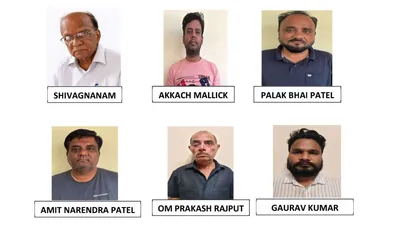
So far, the Karnataka cyber police have recovered Rs 1.60 crore of the swindled amount from 22 bank accounts.
A bank manager’s suspicion helped the Karnataka State Cyber Command (KSCC) police arrest six men who reportedly defrauded a retired woman in Bengaluru of Rs 24 crore.
The accused were arrested from different locations – N Sivagnanam from Erode, Tamil Nadu; Akkach Mallick in Mumbai; Palak Bhai Patel and Amit Narendra Patel in Ahmedabad; Om Prakash Rajput in New Delhi; and Gaurav Kumar in Bihar. The victim, Laxmi Ramamurthy, 74, is a resident of Shivajinagar in Bengaluru.
According to the police, the criminals targeted Ramamurthy after she sold a piece of land for several crores a few months ago. The accused contacted her in January, posing as law enforcement officers, and falsely accused her of involvement in money laundering activities. The suspects threatened her with serious legal consequences and placed her under round-the-clock video surveillance, claiming it to be a part of the “digital arrest” procedure.
“The accused had made Ramamurthy transfer money to 23 mule bank accounts in 26 transactions between February 10 and April 24,” said a police officer.
The woman, a retired teacher who earlier worked in Dubai, lives alone in an apartment, while her children live abroad.
The police said the fraudsters manipulated the victim into believing she would be cleared only after all her finances were verified. To help in the ‘verification’ process, Ramamurthy transferred Rs 24 crore to several accounts in multiple transactions. However, as the demand for more money continued, Ramamurthy approached the bank to pledge 1 kg of gold to avail a loan.
Suspecting something was wrong, the bank manager asked Ramamurthy about the need for the loan, but as she hesitated to share the information, he informed the police.
Later, Ramamurthy approached the police, who investigated the matter and found that the money was being siphoned by cybercriminals.
So far, the police have recovered Rs 1.60 crore of the swindled amount from 22 bank accounts, and efforts are underway to recover the remaining amount. During the probe, the police also found that the accused were operating from a 10×10-foot shop in Gurgaon.
During the investigation, the police, with the help of the National Cyber Reporting Portal (NCRP), were able to freeze several mule accounts used for laundering the proceeds of crime.
2026.5.25 31 inmates booked over Kapurthala jail clash
According to Senior Superintendent of Police, Kapurthala, Gaurav Toora, 31 inmates have been booked for rioting, arson, attempt to murder, obstructing public servants from duty, and criminal conspiracy. He added that the inmates have also been booked under relevant sections of the Information Technology Act and the Prisons Act.
Nearly 31 jail inmates have been booked on charges, including rioting and arson, in connection with a clash inside Kapurthala Central Jail that left three inmates injured, according to a senior police officer on Monday.
Police had to use tear gas shells and also resorted to a cane charge after inmates of Block-4 inside the prison clashed on Saturday night.
According to Senior Superintendent of Police, Kapurthala, Gaurav Toora, 31 inmates have been booked for rioting, arson, attempt to murder, obstructing public servants from duty, and criminal conspiracy. He added that the inmates have also been booked under relevant sections of the Information Technology Act and the Prisons Act.
During the clash, inmates tried to manhandle and attack jail officials. Some of them also set fire to an object outside their barracks. According to police, they managed to reach the roof of the barracks after breaking a gate and an iron grill that led to the rooftop.
Police said two inmates were injured during the clash. Another inmate was injured after being hit by a tear gas shell. No police personnel or jail staff were injured.
On Sunday, police recovered iron rods, sticks, and mobile phones from inmates who went on a rampage inside the jail. Opposition parties have criticised the Bhagwant Mann government over the Kapurthala jail incident. They said it once again shows a worsening law and order situation in the state.
2026.5.24 Woman gang-raped, held captive for three days in Lucknow; acquaintance among accused
The woman alleged that after her condition deteriorated, the accused took her to Charbagh railway station, arranged a sleeper-class ticket on the Suheldev Express and sent her to Delhi.
A woman was allegedly gang-raped and confined for three days in Lucknow, police said on Sunday. A case has been registered at the Sushant Golf City Police Station based on a zero FIR transferred from Delhi Police.
According to police, the zero FIR was received from the Anand Vihar Government Railway Police Station on May 22 under relevant provisions of the Bharatiya Nyaya Sanhita (BNS).
“The complainant alleged that two men, identified as Shivam Yadav and Sunny Yadav, both residents of Jaunpur district, along with an unidentified accomplice, raped her,” Additional Deputy Commissioner of Police (South) in Lucknow Rallapalli Vasanth Kumar said.
Police said a preliminary inquiry indicated that the alleged incident took place within the jurisdiction of the Sushant Golf City Police Station, following which an FIR was formally registered and an investigation launched.
“Four police teams have been formed to trace and arrest the accused, while evidence collection and other legal formalities are underway,” the officer said.
The woman, also from Jaunpur district, told police she had left for Delhi on May 15 after spending time in her hometown and was travelling on the Suheldev Express.
According to her complaint, she contacted an acquaintance, Shivam Yadav, on WhatsApp during the journey. When she arrived at Charbagh railway station in Lucknow, Shivam allegedly met her and persuaded her to accompany him to a rented accommodation in the Sushant Golf City area.
The complainant alleged that another man, identified as Sunny Yadav, was also present when they met at the station. The three allegedly travelled together by cab to the rented room.
She alleged that after consuming coffee there, she began feeling dizzy and drowsy, after which Shivam allegedly raped her. The woman further alleged that Sunny Yadav raped her the following day after Shivam briefly left the room.
According to her statement to police, another unidentified man joined the two accused on May 17 and allegedly gang-raped her.
She alleged that after her condition deteriorated, the accused took her to Charbagh railway station, arranged a sleeper-class ticket on the Suheldev Express and sent her to Delhi.
While on the train, she informed her father about the incident over the phone, prompting her family to contact the railway helpline for assistance.
Police said the Government Railway Police coordinated with authorities in Delhi, where the woman’s statement was recorded and a zero FIR registered before the case was transferred to Lucknow for further investigation.
Officials said the complainant and the main accused had reportedly known each other for four to five years and were believed to be distant relatives.
2026.5.24 2 held after missing girl found dead near Coimbatore lake, Vijay orders swift probe
Coimbatore lake murder shocks state, accused joined search, say police
Tamil Nadu Chief Minister C Joseph Vijay Saturday ordered a swift and intensive investigation into the abduction and murder of a girl near Sulur in Coimbatore district and said those involved in crimes against women and children would face strict punishment under the law.
The girl, reported as 10 years old, had gone missing Thursday evening near her residence in Sulur on the outskirts of Coimbatore city.
According to a senior police officer involved in the investigation, two persons connected to the case had been arrested. “One of the arrested men is suspected to have directly committed the crime while the other allegedly assisted him in the process. The main accused had reportedly been living near the victim’s family earlier and had only recently shifted from the locality,” the officer said.
Investigators also found that the accused had joined local residents and relatives in the search for the missing girl before police traced their alleged role in the case, the officer added.
Both the accused reportedly suffered major fractures during the process of their capture, according to police sources.
According to one account, the girl had gone to a local grocery store near her house but failed to return home. Her parents and neighbours searched the locality before approaching the Sulur police station later that night.
On inquiry at the grocery store, it emerged that an unidentified young man had allegedly picked up the girl on a two-wheeler, following which the family suspected she had been abducted. Police registered a case and launched a search operation.
On Friday evening, the Sulur police received information about the body of a young girl lying on the banks of Kannampalayam lake near Sulur. A police team rushed to the spot and identified the body as that of the missing girl.
The body was later shifted to Coimbatore Government Hospital for post-mortem examination. Police are also probing whether the child was subjected to sexual assault.
Coimbatore District Superintendent of Police Allatipalli Pavan Kumar Reddy visited the crime scene and ordered officials to expedite the probe. Police formed special teams to trace the perpetrators and analysed CCTV footage from the locality to identify the suspects and the vehicle allegedly used in the abduction.
Late Friday night, residents from the girl’s neighbourhood staged a road blockade on Tiruchi Road in front of the Sulur police station, demanding the arrest of those responsible. Traffic on the arterial road was affected for more than an hour before police diverted vehicles through alternative routes.
On Saturday, Vijay issued a statement describing the incident as “painful and shocking” and said such “inhuman and unforgivable crimes” could never be accepted in society.
“Such inhuman and unforgivable criminal acts can never be accepted in our society. I share the grief of the family and relatives of the young girl, who are suffering from the loss of their beloved child,” the Chief Minister said in a post on his official X handle.
Vijay said police had been instructed to conduct a “swift and thorough investigation” and to take all necessary steps to file the chargesheet at the earliest.
“The Tamil Nadu govt will act firmly to ensure strict punishment for those involved in atrocities against women and children. All immediate and necessary measures will be taken,” Vijay said.
The investigation was continuing Saturday. Senior police sources said the state government was keen on ensuring that the accused did not secure release before conviction, pointing to the recent fast-track conviction in a similar case involving the attack on a college girl in Coimbatore, where the accused was convicted within two months.
2026.5.23 Delhi riots conspiracy case: Sharjeel Imam, Umar Khalid bail matter referred to larger SC bench
A three-judge bench had in the Union of India vs KA Najeeb case, held that long incarceration can be a ground to grant bail in cases under the UAPA.
NEW DELHI: Joining issue with a coordinate bench that criticised the denial of bail to accused in the Delhi riots conspiracy case, Umar Khalid and Sharjeel Imam, arrested under the harsh Unlawful Activities Prevention Act (UAPA), a bench of justices Aravind Kumar and P B Varale referred the matter to a larger bench to resolve the perceived conflict in the higher judiciary.
A three-judge bench had in the Union of India v KA Najeeb case, held that long incarceration can be a ground to grant bail in cases under the UAPA. Citing this verdict, a bench of Justices Nagarathna and Ujjal Bhuyan had said, “Judicial discipline and certainty demands that Benches of smaller strength are mindful of the decisions rendered by larger Benches and are bound to follow the same.”
In its rebuttal, the Aravind Kumar-led bench observed that Najeeb was not a mathematical command to mechanically grant bail if there was a delay in trial. It pointed out that bail was granted to five accused on January 5 and denied to Khalid and Imam following an individualised assessment of their roles.
The order dictated in the open court said the issue concerns the proper constitutional approach to be adopted, where the prolonged incarceration and delay in conclusion of the trial are pressed as the grounds for bail, notwithstanding the statutory constraint contained in Section 43D(5) of UAPA.
The bench was considering arguments made by Delhi Police in the pleas filed by two other accused Tasleem Ahmed and Khalid Saifi seeking bail. It granted them interim bail for six months.
2026.5.23 One held from Pathankot over allegedly spying for Pakistani handlers
During questioning, the accused confessed that he had installed an internet-based CCTV camera at a shop on the Pathankot-Jammu highway in January.
CHANDIGARH: The Punjab Police has arrested a Pathankot resident, Baljit Singh, on charges of spying for Pakistan-based handlers. The police suspect he was transmitting live feed of troop movement on the highway corridor connecting Punjab to Jammu and Kashmir to handlers in Pakistan.
Sources said, as per the preliminary investigation, Singh, a resident of Chakk Dhariwal village, had installed a CCTV camera at a shop located near a bridge on NH 44 to allegedly keep an eye on the movement of the army and paramilitary forces and was transmitting the live feed to Pakistan-based handlers.
During questioning, the accused confessed that he had installed an internet-based CCTV camera at a shop on the Pathankot-Jammu highway in January. The police said he was also receiving directions from an unidentified person based in Dubai and had been paid `40,000. The CCTV camera was recovered from his possession.
Last month, police had busted two ISI-backed espionage modules, which used China-made solar-powered CCTV cameras to transmit live feeds of military locations to Pakistan-based handlers. Earlier, a CCTV camera mounted atop a pole in Kapurthala turned out to be part of an ISI-controlled spy network.
2 modules busted last month
Last month, police had busted two ISI-backed espionage modules, which used high-tech, China-made solar-powered CCTV cameras to transmit live feeds of military locations to Pakistan-based handlers. Earlier, a CCTV camera mounted atop a pole in Kapurthala in Pujab turned out to be part of an ISI-controlled spy network.
2026.5.22 Twisha Sharma death case: Madhya Pradesh HC allows second postmortem; husband withdraws bail plea
Twisha’s family had moved the high court after a lower court rejected their plea for a second autopsy, citing discrepancies in the postmortem conducted by AIIMS Bhopal.
The Madhya Pradesh High Court has allowed a second postmortem examination of Twisha Sharma, a Noida woman whose family alleges she was harassed for dowry before her death last week. The order came on a petition filed by her father, Navnidhi Sharma.
According to Twisha’s family lawyer, the HC has directed the state government to arrange for a team of doctors from All India Institute of Medical Sciences (AIIMS) Delhi to travel to Bhopal to conduct the examination. The family approached the high court two days after a lower court turned down their plea for a second autopsy.
The High Court also directed that the second post-mortem examination be videographed.
Meanwhile, Twisha’s absconding husband Samarth Singh has withdrawn his anticipatory bail plea filed in the high court.
Solicitor General Tushar Mehta, representing the state before the High Court’s principal bench in Jabalpur during the hearing of multiple petitions related to the alleged dowry death case, supported Twisha’s father’s plea.
Mehta, however, clarified that the state’s support for the petition should not be construed as doubting the competence of the doctors who conducted the first post-mortem at AIIMS-Bhopal on May 13.
A team of doctors had conducted the first autopsy a day after Twisha was allegedly found hanging on the terrace of her matrimonial home in Bhopal on May 12.
Based on the findings of the first post-mortem, Bhopal Police Commissioner Sanjay Kumar had stated that the report strongly suggested death by suicide and not murder.
Twisha’s family, however, rejected the findings, alleging several lapses in the autopsy process. They claimed the investigating team failed to submit the belt or band allegedly used in the hanging during the May 13 examination and also raised concerns over multiple injuries mentioned in the report.
The family had earlier approached a Judicial Magistrate First Class (JMFC) court in Bhopal on May 20 seeking permission for a second post-mortem at AIIMS-Delhi. The court dismissed the plea, citing jurisdictional limitations.
During the JMFC proceedings, Bhopal police had also informed the court that preserving the body adequately required a temperature of minus 80 degrees Celsius, while the mortuary facility at AIIMS-Bhopal could maintain only minus 4 degrees Celsius.
Following the dismissal of the plea, Twisha’s father moved the Madhya Pradesh High Court seeking a second post-mortem at AIIMS-Delhi.
Two days ago, Judicial Magistrate First Class Anudita Gupta in Bhopal rejected the family’s plea, stating that the conscience of the court must be satisfied to order a re-postmortem.
Minor infractions of procedure will not impel the court to order a second autopsy, the magistrate had noted.
The lower court also observed that the body was currently kept in the AIIMS Bhopal mortuary at -4 degrees Celsius, but required -80 degrees for longer preservation, a facility unavailable anywhere in the city.
Following Twisha’s death, police registered an FIR under Sections 80(2), 85, and 3(5) of the Bharatiya Nyay Sanhita along with relevant sections of the Dowry Prohibition Act, naming her husband Samarth Singh and mother-in-law and former judge Giribala Singh.
Police have also announced a cash reward of Rs 30,000 for information leading to Samarth Singh’s arrest and approached the court for revocation of his passport.
Karima Begum, her cousin and partner Abdul Rehman arrested in Vikarabad, allegedly targeted elderly women with money and living alone
A “borrowing spree” is alleged to be behind the murder of two elderly women belonging to Telangana’s Vikarabad district, with police arresting a couple and claiming they were planning to kill several others who had lent them money.
Along with Karima Begum, 43, and her partner Abdul Rehman, Karima’s cousin Abdul Nayeem has been arrested for the murder of Mahbub Begum, 65, and Abida Begum, 60. Belonging to Kokat and Khasimpur villages in Vikarabad, the two knew each other and had reportedly lent money to Karima and Abdul a year ago.
The murders were discovered after Mahbub and Abida’s relatives approached police, saying the two had been missing since they left for a scheduled meeting with Karima and Abdul to demand their money back.
As per the investigation report, while Mahbub was last seen on March 27, with a complaint being lodged at Yalal Police Station on March 31, Abida disappeared on May 5, and a missing complaint was lodged at Basheerabad Police Station on May 9.
After the second missing FIR was lodged, police started connecting the dots. With the phones of both Abida and Mahbub switched off, the first break came on May 15 when another phone they were tracking pinged briefly. Circle Inspector Pravin Kumar Reddy said that while the phone was active only for about 10 seconds, they were able to pinpoint its location to a bus stop outside Tandur town.
“We realised that another phone we were tracking was also active briefly at the same time at the same location. However, there are no CCTV cameras at the bus stop,” Reddy said.
The next crucial clue was that Abida had got onto a bus bound for Tolkatta area in Moinabad. As police scoured the area, they traced Karima and arrested her, followed by Nayeem.
Reddy said Nayeem confessed to killing Abida and Mahbub, and burying their bodies near a farmhouse. “Based on their confession, we exhumed the bodies and have sent them for postmortem,’’ the Circle Inspector said.
The money trail
A relative said Abida, a widow, had put together some savings over a lifetime, including from the Rs 6,000 a month she got as an attendant at an anganwadi in Tandur town. “Karima who lives in the same area used to visit her often and they became friends. She would often ask Abida for money saying it was for some emergency and that she would return it,” says the relative, adding that eventually the money owed by Karima, in small sums, amounted to Rs 70,000.
“Every time Karima came asking for money, Abida told her to first return the amount previously borrowed. But Karima would cajole, beg and plead that she would return the entire amount soon and managed to borrow more,’’ says the relative.
Mahbub, also a widow, lived not far from Abida’s house. Her savings were from the senior citizen’s pension provided by the state government. According to police, she lent Rs 40,000 to Karima.
Investigators believe Karima made friends with the two knowing they were vulnerable and lived alone. Once she had got the money, they say, Karima stopped visiting Abida and Mehbub, dodging their calls. So the two women turned to their relatives for help.
According to police, as the relatives asked around about Karima and Abdul, “they became aware that the duo had borrowed money from several others in the area and were similarly avoiding them”. Officials estimate that the couple borrowed from at least a dozen others, adding that after the case was cracked, eight people have approached police accusing Karima and Abdul of not returning their money either – up to Rs 50,000 each. “We have come to know there may be many others… We are going through missing persons complaints across the district,’’ an official said.
The plan
According to police, Karima and Abdul started panicking when Abida and Mahbub threatened to file police complaints against them.
Roping in Nayeem, they zeroed in on a deserted stretch in a forested area in Tolkatta. In the days leading up to the alleged abduction of Mahbub, they switched off location services on their mobile phones. Then they travelled from Tandur to Moinabad taking a route with minimal CCTV coverage.
Karima reportedly met Abida and Mahbub separately, and told them both she had arranged for money from a relative at Moinabad, and that the relative would give the amount owed only to them in person.
Karima allegedly first convinced Mahbub to travel by bus to Moinabad, 85 km away, without telling anyone. The 65-year-old was told that if word regarding the repayment spread, other lenders may turn up, and she may not get her money. Mahbub was allegedly also instructed to board the bus to Moinabad from a small roadside stop that didn’t have any CCTV coverage.
As per police, after luring Mahbub to a secluded spot they had scouted earlier, they smothered her to death. The two along with Nayeem allegedly buried the body in a shallow grave beside the farmhouse.
A similar sequence was allegedly repeated with Abida on May 5.
“Abdul and Nayeem said they intended to kill all the lenders after luring them to the same area,’’ Inspector Reddy said.
Karima and Abdul
Police say Karima married young, when just 20, around 23 years ago. There were problems in the marriage, allegedly due to her spending habits, and after two children, she and her husband got a divorce 10 years ago.
Karima reportedly started a clothing business, which did not take off and left her in debt. It was then that she met Abdul, another failed cloth trader, and they started living together. Nayeem, who is very close to Karima, spent a lot of time at their house.
With no source of income, the three allegedly fell back on borrowing money, initially small amounts like Rs 5,000 from different people. Police said Karima then came up with the idea of “targeting” elderly women living alone on pensions or life savings.
Story continues below this ad
Lodged at Karankote Police Station, Karima allegedly tried to commit suicide Sunday. She was taken to Tandur Government Hospital, and has since been shifted to NIMS in Hyderabad. x1200
ആലപ്പുഴ മാന്നാർ സ്വദേശി അശ്വതി ആണ് പിടിയിലായത്
തിരുവനന്തപുരം: കഴക്കൂട്ടത്ത് 23 കാരിയെ ബലാത്സംഗം ചെയ്ത സംഭവത്തിൽ ഒന്നാംപ്രതിയായ ഇടനിലക്കാരി പിടിയിൽ. ആലപ്പുഴ മാന്നാർ സ്വദേശി അശ്വതി (22) ആണ് പിടിയിലായത് .ജോലി വാഗ്ദാനം നൽകി പെൺകുട്ടിയെ പീഡിപ്പിക്കാൻ ഒത്താശ ചെയ്തത് അശ്വതി ആയിരുന്നു.
യുവതിയെ ബലാത്സംഗം ചെയ്ത സിപിഐഎം ബ്രാഞ്ച് സെക്രട്ടറിയുടെ അറസ്റ്റ് ഇന്നലെ രേഖപ്പെടുത്തിയിരുന്നു. ഒളിവിലുള്ള രണ്ടാം പ്രതി സ്പാ ജീവനക്കാരിക്കായി തിരച്ചിൽ ഊർജ്ജിതമാക്കി
കഴക്കൂട്ടത്തെ ഒരു സ്പായില് വെച്ചായിരുന്നു പീഡനം. ജോലി നല്കാമെന്ന് വാഗ്ദാനം ചെയ്ത് ആലപ്പുഴ സ്വദേശിനിയാണ് ഇവരെ തിരുവനന്തപുരത്തെത്തിച്ചത്. സ്പായില് എത്തിയതിന് പിന്നാലെ റിബ്സണിനെ വിളിച്ചുവരുത്തുകയായിരുന്നു.
ദുരുദ്ദേശ്യമാണെന്ന് മനസിലാക്കിയതോടെ ഒഴിഞ്ഞുമാറാന് യുവതി ശ്രമിച്ചെങ്കിലും ബലമായി മുറിയില് കൊണ്ടുപോയി പീഡിപ്പിച്ചു. റിബ്സനെ കോടതി റിമാന്ഡ് ചെയ്തു.
അക്രമികളെ എറണാകുളം സെൻട്രൽ പൊലീസ് കീഴടക്കിയത് സാഹസികമായി
കൊച്ചി: കൊച്ചിയിൽ 24കാരിയെ കത്തിക്കാട്ടി പീഡിപ്പിക്കാൻ ശ്രമിച്ച കേസിലെ മുഖ്യപ്രതി പിടിയിൽ. അരൂർ സ്വദേശി സഞ്ജയ് ആണ് അറസ്റ്റിലായത്. ഇന്ന് ഉച്ചയോടെയാണ് ഇയാൾ പൊലീസിൻ്റെ പിടിയിലായത്. ഇയാളെ പൊലീസ് ചോദ്യം ചെയ്തുകൊണ്ടിരിക്കുകയാണ്. ഇയാളെ നാളെ കോടതിയിൽ ഹാജരാക്കുമെന്നാണ് വിവരം.
സംഭവവുമായി ബന്ധപ്പെട്ട് 2 പേരെ നേരത്തെ പൊലീസ് പിടികൂടിയിരുന്നു. കൊല്ലം പരവൂർ സ്വദേശി രാഹുൽ, തിരുവനന്തപുരം സ്വദേശി ഡാനിഷ് എന്നിവരാണ് നേരത്തെ പിടിയിലായ പ്രതികൾ. പ്രതികളെ പൊലീസ് ഓടിച്ചിട്ട് പിടികൂടുന്ന ദൃശ്യങ്ങൾ ന്യൂസ് മലയാളത്തിന് ലഭിച്ചിരുന്നു.
മദ്യലഹരിയിലായിരുന്ന പ്രതികൾ റെയിൽവേ സ്റ്റേഷൻ പരിസരത്ത് നിൽക്കുകയായിരുന്ന യുവതിയെയും സുഹൃത്തിനെയും വളയുകയായിരുന്നു. സുഹൃത്തിനെ കത്തികാട്ടി ഭീഷണിപ്പെടുത്തി മാറ്റിനിർത്തിയ ശേഷം യുവതിയെ ബലാത്സംഗം ചെയ്യാനായിരുന്നു ഇവരുടെ ശ്രമം. എന്നാൽ, യുവതി ഓടി രക്ഷപ്പെടുകയായിരുന്നു.
മൃതദേഹങ്ങൾ രണ്ടു ദിവസം വീടിനു പുറത്ത് ഗ്രീൻ നെറ്റിൽ പൊതിഞ്ഞു വച്ചു
ഇടുക്കി: നെടുങ്കണ്ടം ഇരട്ടക്കൊലപാതകത്തിൽ പ്രതി സജിയുടെ ഞെട്ടിക്കുന്ന മൊഴി പുറത്ത്. സഹോദരൻ റെജിയെ കൊന്നത് മർദിച്ചും കഴുത്തിൽ തോർത്ത് മുറുക്കിയുമാണ്. അമ്മ മേരിക്കുട്ടിയെ മുഖത്തിടിച്ചും കയ്യിൽ പിടിച്ച് കറക്കി ഭിത്തിയിലേക്കെറിഞ്ഞും കൊലപ്പെടുത്തി എന്നും പ്രതി വെളിപ്പെടുത്തി. ഏപ്രിൽ നാലാം തീയതി രാത്രിയാണ് കൊലപാതകം നടന്നതെന്നും മൊഴിയിലുണ്ട്.
മൃതദേഹങ്ങൾ രണ്ടു ദിവസം വീടിനു പുറത്ത് ഗ്രീൻ നെറ്റിൽ പൊതിഞ്ഞു വച്ചു. മൂന്നാം ദിവസം അർധ രാത്രിക്ക് ശേഷമാണ് കുഴിച്ചിട്ടത്. കഴിഞ്ഞ ദിവസം പിടിയിലായ സജി ചോദ്യം ചെയ്യലിന്റെ ആദ്യഘട്ടത്തിൽ തന്നെ കുറ്റം സമ്മതിച്ചിരുന്നു. വീടിന് സമീപത്തെ പറമ്പിൽ നിന്നാണ് സജിയെ പൊലീസ് പിടികൂടിയത്. പിടികൂടുമ്പോൾ അവശനിലയിലായിരുന്നു.
ഈ മാസം രണ്ട് മുതൽ മേരിക്കുട്ടിയെയും മകൻ റെജിയെയും കാണാനില്ലെന്ന പരാതി പൊലീസിന് ലഭിച്ചത് കഴിഞ്ഞ ദിവസമാണ്. പരാതി പ്രകാരം പൊലീസ് സ്ഥലത്തെത്തി പ്രാഥമിക പരിശോധനയും ചോദ്യം ചെയ്യലും നടത്തിയിരുന്നു. അന്വേഷണത്തിൽ തന്നെ പൊലീസിന് ദുരൂഹത തോന്നിയിരുന്നു. തുടർന്ന് പൊലീസ് നടത്തിയ പരിശോധനയിലാണ് മനുഷ്യനോട് സാമ്യം തോന്നുന്ന ശരീരഭാഗങ്ങൾ വീടിൻ്റെ പരിസരത്ത് നിന്ന് കണ്ടെത്തിയത്. കാൽ ഉൾപ്പടെയുള്ള ഭാഗങ്ങൾ കണ്ടെത്തിയിരുന്നു.
പ്രാഥമിക അന്വേഷണത്തിന് പൊലീസ് വീട്ടിലെത്തിയപ്പോൾ സജി അവിടെ ഉണ്ടായിരുന്നു. എന്നാൽ ചോദ്യങ്ങൾക്കുള്ള അയാളുടെ മറുപടിയിൽ പൊലീസിന് സംശയം തോന്നി. വൈകിട്ട് വീണ്ടും പൊലീസ് വീട്ടിലെത്തിയപ്പോൾ സജി അവിടെ നിന്ന് രക്ഷപ്പെട്ടിരുന്നു. പിന്നീട് നടത്തിയ തെരച്ചിലിൽ ആണ് വീടിന് സമീപത്തെ പറമ്പിൽ നിന്നും സജിയെ പൊലീസ് പിടികൂടിയത്. അതേസമയം പിതാവിൻ്റെ തിരോധാനവും അന്വേഷിക്കണമെന്ന ആവശ്യവുമായി സജിയുടെ സഹോദരി സിനി രംഗത്തെത്തിരുന്നു.
2026.4.25 Man dies in Gurugram flat after inviting fiancé, cops suspect ‘sex-enhancing’ drug overdose
An officer said that preliminary investigations revealed the man had invited his fiancé to meet him in his Gurugram flat, but died before.
A possible overdose of “sex-enhancing” drug allegedly led to the death of a 29-year old man in Haryana’s Gurugram, police said on Friday, adding that wrappers of supplements were recovered from his room.
The man, a native of Nagpur, worked in Quality Council of India’s office in Delhi in a rented flat at Sector 53 of neighbouring Gurugram, PTI news agency quote police a saying.
The incident came to light on Thursday morning when the police was informed by the deceased’s co-worker. The person said the two often went to the office together, but that day his colleague was neither answering his phone nor opening his room door.
After receiving information, police reportedly arrived at the scene and broke down the door, where they found the man lying dead on the bed.
Wrappers of some medicines and health supplements were also recovered from the room, said police. Police handed over the body to the family after a postmortem.
What initial probe revealed
A senior investigating officer said that the preliminary investigations revealed that the man had invited his fiancé to meet him, but he died before.
Police suspect that he had taken a sex-enhancing drug, a possible overdose of which may have led to the heart attack.
“We sent viscera and the recovered medicines to FSL for testing. The exact cause of death will be revealed only after the viscera report is received. We are investigating all aspects,” PTI quoted Sector 53 SHO Satender Rawal as saying.
In an unrelated incident, authorities earlier this week unearthed a racket involving the manufacturing and sale of “fake” Mounjaro (tirzepatide) injections and arrested two persons in Gurugram in this connection.
A nationwide alert has been issued to detect the counterfeit injections and an investigation is underway to unravel the entire network, including all those involved in this racket, PTI quoted Drug Control Officer Amandeep Chauhan as saying on Monday.
He said a Health Department team raided a residential society in Sector 62 on Monday and arrested two people, including the key accused.
The accused were importing raw drugs from China and manufacturing counterfeit injections of Mounjaro. The entire racket was being run from a flat in the society. The accused supplied these illegal injections through the B2B portal Indiamart, the officer alleged.
2026.4.24 Boy Ends Life After Phone Taken Away; Dharwad Police Flag Concern
“If a child is addicted, parents should consult teachers or doctors and reduce usage step by step”: Commissioner
DHARWAD: A minor boy died allegedly by suicide after being denied access to a mobile phone in Hubballi on Thursday night, police said. According to Hubballi-Dharwad city police commissioner N. Shashi Kumar, the boy, aged around 13–14 years, had been addicted to mobile use during holidays.
After his mother snatched the mobile from him, he reportedly locked himself inside a room. When he did not respond for about 10 minutes, his family grew suspicious. “The father peeped through the window and found the boy’s body. They broke open the door and rushed him to the hospital, but he was declared brought dead,” the Commissioner said.
The incident occurred on Thursday around 10 pm.
Calling the incident unfortunate, the commissioner said increasing mobile addiction among children was becoming a serious concern, and both parents and children need to be cautious.
“Such addiction does not develop overnight. In many cases, parents themselves hand over mobile phones to children — sometimes while feeding them or as a reward for studying. Later, when the device is suddenly taken away, children may react drastically,” he said.
He advised parents to address mobile addiction gradually and sensitively. “If a child is addicted, parents should consult teachers or doctors and reduce usage step by step,” he said.
The commissioner also urged children to use mobile phones productively. “Instead of games, they can use it to improve skills, learn grammar, or take up online courses, especially during holidays,” he said.
Citing recent SSLC results, he noted that several students, including those from rural areas, had achieved top scores by avoiding distractions. “We have seen students score 625 marks by staying away from distractions like mobile phones,” he added.
2026.4.24 IRS officer’s daughter killed: Her stolen iPhone, accused’s blood-soaked clothes found
Police said Rahul Meena will soon be taken to recreate the crime scene and map his escape route.
The stolen iPhone of an IRS officer’s daughter, who was allegedly raped and murdered by a 23-year-old former domestic help at her home on Tuesday, has been recovered from a park near their residence in Southeast Delhi, The Indian Express has learnt.
A police officer said the accused, Rahul Meena, hired a cab to flee to Palam after allegedly killing the woman. Before leaving, he dumped her mobile phone in the park, fearing it could lead to his arrest.
Meena was carrying another phone, which he switched off after the murder. Before coming to Delhi, he sold three mobile phones for Rs 16,000, one of which belonged to him. Police said those phones have already been recovered by the Rajasthan Police.
Currently on a four-day police custody remand, Meena will soon be taken to recreate the crime scene and map his escape route — from the murder site to an Oyo hotel in Dwarka, where Delhi Police nabbed him just nine hours later.
Took clothes, shoes from victim’s house
The officer added that after the murder, Meena changed out of his blood-soaked clothes and shoes. He wore pants belonging to the victim’s brother and slippers from the house.
Police said he stuffed the looted cash from the family locker into a backpack belonging to the IRS officer before fleeing.
Police have recovered Meena’s blood-soaked clothes, along with the brother’s pants, slippers and the father’s bag.
Police said it was Meena’s uncle, who was in regular touch with him via social media, who tipped off the police about the former’s location after being picked up for questioning.
2026.4.24 Proddatur: Woman Pledges Gold To Hire Supari Gang To Eliminate Husband, Plan Fails
A woman from Proddutur pledged her gold to allegedly fund a ‘supari’ killing of her husband to continue an extramarital affair.
YSR Kadapa: As crimes related to extramarital affairs continue to rise, a case was reported from Proddatur in Andhra Pradesh where a woman pledged her gold to allegedly fund a ‘supari’ killing of her husband to continue an extramarital affair. However, the plan failed after the victim escaped and approached the police.
As per reports, the accused, Shilpa Reddy of Lingapuram, was married to Eshwar Reddy. Over the years, marital discord grew between the couple. During this period, Shilpa came in contact with Dasarigalla Nagasudheer of Jammalamadugu, a married man working at the Proddatur Government Hospital. The acquaintance soon turned into an extramarital affair. Eshwar Reddy confronted his wife several times after learning of the affair, but she continued the relationship, investigators said.
Viewing her husband as an obstacle, Shilpa allegedly conspired with Nagasudheer to eliminate him. According to police, Nagasudheer contacted Vinay, a rowdy sheeter from Rajupalem, who in turn hired a gang from Hindupur in Satya Sai district for Rs 10 lakh to kill Eshwar Reddy.
To arrange the money, Shilpa handed over 14 tolas of her gold jewellery to Nagasudheer. He sold part of it and pledged the rest at shops in Proddatur and Jammalamadugu, paying Rs 5 lakh as an advance to the gang with a promise to pay the balance amount after the job.
The hired gang reached Proddatur and tracked Eshwar Reddy using information Shilpa allegedly shared with Nagasudheer about her husband’s movements. In the first attempt, the gang rammed Eshwar Reddy’s two-wheeler on the Proddatur bypass road on Wednesday and tried to stab him after he fell. He managed to escape. The gang then planned a second attack at a farm. However, the victim managed to escape again and lodged a complaint with the Proddutur police. Based on his complaint, the police registered a case and have taken Shilpa Reddy, Nagasudheer, and others into custody and are conducting a detailed investigation.
—
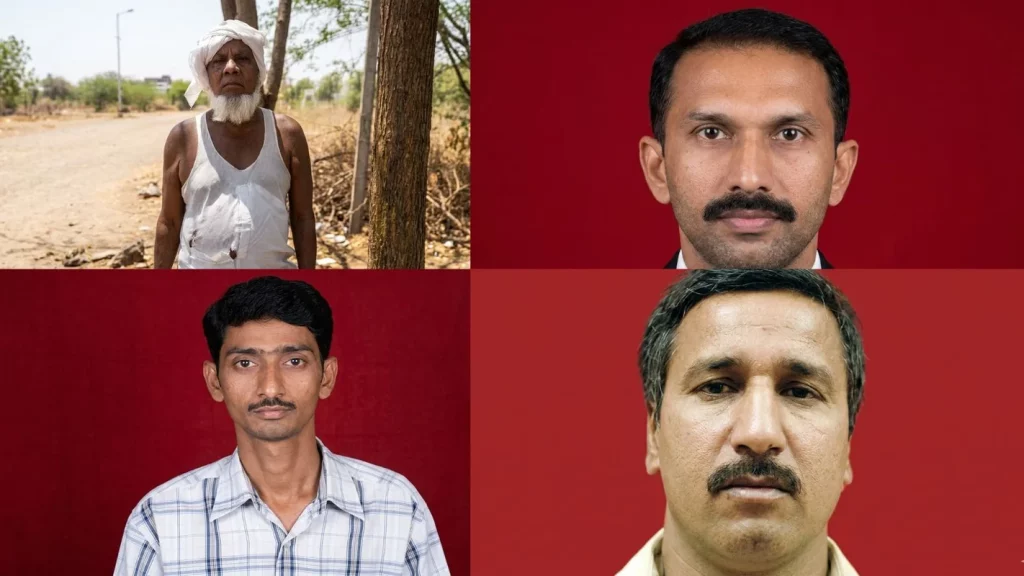
2026.4.23 The men who vanished: 7 accused in 2006 Malegaon blasts case were never found
Named in two separate investigations years apart, they include a Pakistani national, an electrical contractor from Indore, and residents of Malegaon itself, all wanted, none traced, as the case closes around them with no convictions.
Nearly two decades after four coordinated blasts ripped through Malegaon on a Friday afternoon in September 2006, killing 31 people and injuring over 300, the case stands in a peculiar limbo. Two separate investigations, carried out years apart, named two entirely different sets of accused. Today, 13 of those accused across both groups have been discharged. No one remains to face trial. And yet, the case is far from closed.
Seven men named across the two investigations have, over the years, vanished without a trace. Despite the involvement of the country’s top investigative agencies, their whereabouts remain unknown, leaving behind unanswered questions and grieving families.
The ATS and CBI Probe: Four Men Who Disappeared
The blasts took place on September 8, 2006. Three explosions struck the premises of Hamidia Masjid and Bada Kabrastan moments after Friday prayers, while a fourth detonated at Mushawarat Chowk nearby.
The Maharashtra Anti-Terrorism Squad (ATS), which first investigated the case, arrested nine men and accused a total of 13 individuals of being part of a conspiracy that, according to investigators, had taken shape months earlier at a wedding gathering. But even as arrests were made, four men named in the chargesheet were never found.
One of them, Muzammil, was identified as a Pakistani national. The other three — Munawwar Ahmed, Riyaz Ahmed Shafi Ahmed, and Ishtiyaq Ahmed Mohammed Isaaq, all residents of Malegaon — disappeared in October 2006, barely a month after the blasts.
Munawwar, then 36, was described in the chargesheet as a key conspirator who allegedly directed that the blasts be carried out at the mosque and cemetery complex. Riyaz was accused of placing an improvised explosive device at one of the sites, while Ishtiyaq was named as part of the wider conspiracy.
Munawwar’s father, Mohammed Amin, now in his seventies, lives in a tin-sheet structure on the outskirts of Malegaon. A former muezzin, he has spent years without closure on his son’s whereabouts. “People say losing a child is the greatest pain. For us, it is worse — we do not even know if our son is alive or dead,” he said in an earlier interview.
Riyaz’s family points to a troubling contradiction. Known to have been under police surveillance due to alleged SIMI links, he was frequently called in for questioning. “For someone who was under constant surveillance, it is surprising that he was made an accused in the first place. The bigger surprise is how he was allowed to disappear despite being watched. Either the system failed completely, or there is something we are not being told.” Little is known about Ishtiyaq’s family.
The NIA Probe: Three More Who Cannot Be Found
Years after the ATS wrapped up its investigation, the case took a dramatic turn. The National Investigation Agency, which took over in 2011, filed a chargesheet in 2013 pointing at an entirely different set of accused — this time linking the blasts to a right-wing extremist network. The NIA simultaneously dropped the original accused from its chargesheet, declaring the earlier nine men innocent.
Among those newly named were Ramchandra (Ramji) Kalsangra, Sandeep Dange, and Ramesh Mahalkar — three men who, like their counterparts in the earlier probe, could not be traced.
According to the NIA chargesheet, Kalsangra was accused of planting the bomb, Dange of guiding the operation, and Mahalkar of assembling the explosives in Indore.
Kalsangra, an electrical contractor from Indore, led what appeared to be a modest and stable life before his sudden disappearance around 2008. Living with his family in the city’s Bengali Colony, he left home one day for work and never returned. His name later surfaced prominently in investigations after statements by Swami Aseemanand linked him to a wider network. Authorities announced a cash reward for information on him, but he has remained untraceable. He is survived by his wife, Lakshmi Devi, and their three sons.
Sandeep Dange, also from Indore, trained as an electrical engineer and was associated with right-wing organisations. His father, a retired employee of the state education department in Madhya Pradesh, has largely withdrawn from public life following the allegations. Ramesh Mahalkar, a resident of Nanded, remains the least documented of the three.
All three have been named in multiple blast cases across the country and continue to feature on the NIA’s list of most wanted accused, including in the Samjhauta Express blast case.
In 2009, suspended Maharashtra Assistant Police Inspector Mehboob Mujawar, in an affidavit before a Solapur court, claimed that Kalsangra and Dange had died in the custody of the Maharashtra ATS, and that their bodies were disposed of as victims of the November 2008 terror attacks. The allegation has never been officially substantiated.
No Accused, No Answers
The seven missing men are the last loose thread in a case that has otherwise wound down without resolution. The nine men arrested by the ATS were discharged in 2016. The four men charged by the NIA had their charges quashed by the Bombay High Court this week. x1200
2026.4.23 20 years after 2006 Malegaon blasts, ‘diagonally opposite’ probes lead nowhere & leave nobody on trial
Bombay High Court discharged the 4 accused in 2006 Malegaon blasts case this week, saying there was insufficient evidence to proceed with trial. 31 people lost their lives in the blasts.
New Delhi: Twenty years after the 2006 Malegaon blasts that killed at least 31 people and injured hundreds, the Bombay High Court said Wednesday the case had reached a “dead end” because of “contradictory, irreconcilable” and “diagonally” opposite” investigations by two agencies.
This effectively means that nobody is on trial right now for the blasts, even after the case was investigated by three separate agencies—first the Anti-Terrorist Squad (ATS), then the Central Bureau of Investigation (CBI) and lastly the National Investigation Agency (NIA).
A division bench of Chief Justice Shree Chandrashekhar and Justice Shyam C. Chandak discharged all four accused—Manohar Narwaria, Rajendra Chaudhary, Dhan Singh, and Lokesh Sharma—saying there was insufficient evidence to proceed with a trial against them.
“The things as stand today give two contradictory versions of the incident and both stories as floated by the ATS and NIA cannot be reconciled by any stretch of imagination,” the high court said in a 25-page verdict.
Over nearly two decades, the case involving the four bomb blasts on 8 September 2006 has moved through multiple hands and sharply divergent investigative theories, both of which now cannot be reconciled by “any stretch of imagination”, the HC said.
This verdict comes almost a year after a Special NIA court acquitted all seven accused, including the BJP’s Pragya Thakur and then Col. Prasad Shrikant Purohit, in the separate 2008 blasts in Malegaon.
The probe for the 2006 blasts started by the Maharashtra ATS, later backed by the CBI, accused members of the banned Students Islamic Movement of India (SIMI).
However, when the NIA took over the investigation in 2011, it advanced a completely different theory of conspiracy, which it claimed was based on confessions and its broader investigation. The four individuals discharged on Wednesday by named by the NIA in 2013.
This shift left the prosecution between two mutually exclusive versions, each with a different set of accused. This, the Bombay High Court said, ultimately weakened the prosecution’s case to the point where neither could sustain a trial.
The original theory: ATS and CBI (2006-2010)
The ATS theory of the three blasts at Hamidiya Masjid, Bada Kabrastan and Mushawarat Chowk of Malegaon was that they were a conspiracy by members of the banned SIMI, who, according to the squad, had preplanned the attack at a meeting in May 2006.
It was alleged that they formed an “organized crime syndicate and committed illegal acts” in a criminal conspiracy with an object to promote insurgency and to overthrow the government”. It was also alleged that the accused SIMI members visited Pakistan in 2003 and received “terrorist training” there.
To support its theory, the ATS said that explosive bomb material RDX was procured by two of the accused, and bombs were prepared in another accused’s godown.
Even after the CBI took over in 2007 and filed a supplementary chargesheet in 2010, it corroborated the ATS’s findings and backed it with forensic voice samples of intercepted conversations recorded on CDs.
NIA’s theory of conspiracy (2011–2013)
In April 2011, when the NIA took over the investigation following a central government order and filed a supplementary chargesheet in May 2013, it completely discarded the findings of both the ATS and the CBI.
Departing from the earlier focus on alleged SIMI members, the NIA put forward a new theory of a conspiracy by a different group and named a different set of accused, including those currently discharged by the Bombay High Court order.
This new angle was based on a confession by Swami Assemanand, an RSS activist, who later retracted his statements.
In his confession, Assemanand said that Sunil Joshi, also an RSS activist, had told him that the “Malegaon blasts were the handiwork of his boys”.
According to him, “It was proposed in the meeting held in June 2006 that Malegaon may be a suitable place which has 86% Muslim population and Sunil Joshi assured that during the Diwali his persons would cause bomb blasts in Malegaon.”
The NIA also said that the first set of accused had retracted their confessions as they were obtained by the ATS under alleged “duress and pressure”.
Crucially, the Bombay High Court noted that the NIA’s version was built largely on the retraction in statements, which is impermissible in law.
The ‘dead-end’
The court highlighted the “intrinsic improbability” of the prosecution’s shifting stance. Some major investigative discrepancies identified by the high court were how the ATS claimed Mohd. Jahid Majjid Ansari was the bomb planter, while the NIA claimed he was 400 km away from the bomb site on the day of the blast.
Another inconsistency identified by the HC was how the ATS alleged that one of the accused purchased the bicycles used in the blasts, whereas the NIA claimed the appellant Rajendra Chaudhary, one of the four accused, purchased them under a false name.
The high court noted that the materials gathered by the NIA to demonstrate how the accused purchased bicycles on which the bomb was planted were actually hearsay evidence.
It said the NIA knew that the bicycles were purchased and used in the crime by the first set of accused by the ATS and CBI. Yet, the NIA was “projecting an entirely different story” and “completely ignored” the ATS’s chargesheet.
The court also questioned how the NIA could ignore forensic reports collected by the ATS that found RDX traces in the soil of the first set of accused’s godown.
The court also said there was “no explanation coming forth as to how the voice samples and FSL reports collected by the ATS and CBI”, which were contradictory, could be ignored by the trial court.
It said that the evidence collected by the ATS remained on record and had to be considered by the trial court, even if the current set of accused were implicated by the NIA while the ATS implicated different people
“There seems to be no answer in law as to how the trial Judge can deal with the materials collected by the ATS, which implicates another set of accused persons. The case seems to have reached a dead end,” said the high court bench.
The court also criticised the Special Judge’s September 2025 order framing charges against the four individuals, saying that the judge had acted as a “mere post office” and did not apply his mind before framing the charge against the accused person “at the behest of the prosecution” instead of sifting the evidence to find a prima facie case.
The high court also emphasised that a Test Identification Parade (TIP) conducted by the NIA six years after the incident had “no probative value”. Furthermore, it ruled that much of the NIA’s evidence was “hearsay” or based on inadmissible custodial statements.
“A criminal trial is not like a fairy tale where one is free to give flight to one’s imagination and fantasy,” said the judgment, reiterating a Supreme Court precedent.
The judgment concluded that because the ATS investigation, which implicated the first set of accused, was not wiped from the record, and the NIA version implicating the second set was inadmissible and contradictory, the prosecution had reached a point where no one was left on trial for the 31 lives lost.
—
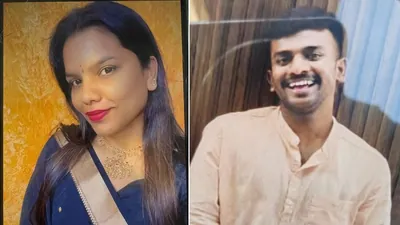
Kiran, who worked for a mobile network service provider, was allegedly burnt alive inside Prema’s rented house in Anjananagar on Magadi Road on Tuesday.
Bengaluru: The investigation into the sensational blindfold murder in Byadarahalli has gathered pace, with police indicating that the crime was premeditated based on crucial evidence collected so far.
Police, who have taken the 27-year-old suspect, Prema R, into three-day custody, said material evidence suggests prior planning. She allegedly filmed the incident for over 12 minutes. Police are nowexamining a video recovered from her mobile phone as key digital evidence.
Kiran, who worked for a mobile network service provider, was allegedly burnt alive inside Prema’s rented house in Anjananagar on Magadi Road on Tuesday.
While they were in a relationship for the past two years, tensions had been escalating for some time, a police officer said.
Kiran frequently spoke about his former girlfriend despite repeated objections from Prema, which reportedly led to frequent arguments. She was also pressuring him to marry her at the earliest. However, he allegedly expressed his inability, citing caste differences, which further intensified her anger and resentment, the officer added.
Investigationofficials learnt that Kiran had shared with friends his intention to distance himself from her, describing her behaviour as “abnormal”. She had come to know about this days before the incident.
She meticulously planned the murder between two-three days, purchased four litres of kerosene in advance and procured petrol by emptying a water bottle bought from a nearby bakery and filling it at a fuel station. The inflammable substances were mixed in a bucket and kept ready in the bathroom, the officer explained.
When Kiran arrived at her house, she allegedly tied his hands and blindfolded him with a shawl on the pretext of surprising him. She asked him to undress and then poured the fuel mixture on him and set him on fire, the officer said.
Police believe she had initially planned to end her life by hanging herself in a bedroom after the act. However, she changed her mind as the flames and thick smoke quickly spread through the house.
Alerted by screams and smoke, neighbours rushed to the spot and knocked on the door. The accused then stepped out, reportedly covering herself with a bedsheet.
Prema initially attempted to pass off the incident as a suicide. However, inconsistencies in her statement and subsequent evidence led police to suspect foul play, the officer noted.
Investigators are examining her mobile phone to establish the exact sequence of events. The body was handed over to the family on Wednesday after a post-mortem at Victoria Hospital.
Police also revealed that Prema had allegedly promised Kiran she would buy him a sports bike worth Rs 4 lakh as a gift and had assured him of paying Rs 1 lakh as a booking amount.
2026.4.23 Shared groceries & dreams, no legal protection. Extra-marital live-ins are uncharted territory
Once ignored by law, live-in relationships now enjoy legal recognition. But when it involves a married person, high courts have diverged in applying the laws.
2026.4.22 Manipur sit-in in Imphal urges justice after violence kills children
A sit-in protest was organised by Apunba Chingmeirong in Imphal on April 22, as demonstrators expressed grave concerns over recent violence in Manipur and called for immediate government action to protect civilians and secure justice for victims.
Protesters demanded strict measures against alleged militant groups accused of violent acts, accountability from security forces, and justice for victims, including children injured or killed in recent attacks. They appealed for urgent steps to prevent further violence in the state.
The demonstrators stressed the need for government intervention to restore peace and civilian safety in affected regions.
In a related event, a large rally was held in Imphal to protest the recent Tronglaobi incident, with participants seeking justice for victims of a militant attack. The rally started from Kongba Dhobi Lampak in Imphal East and proceeded towards Wangkhei Yonglan Leirak, attracting a considerable crowd from across the valley.
Authorities deployed police and security personnel who fired tear gas shells to disperse the crowd after tensions escalated in parts of the protest zone. Officials reported that the situation was brought under control following their intervention.
This unrest follows public outrage over the April 7 bomb attack in Moirang’s Tronglaobi Awang Leikai area, which killed two minor siblings—a 5-year-old boy and a 5-month-old girl—and injured their mother.
Protests have since spread across several districts, including Keishamthong, where demonstrations have continued for several days, disrupting normal life and triggering shutdowns in parts of the state.
Security forces have increased their presence in sensitive areas amid rising tensions. Rapid Action Force personnel were deployed following clashes during protest marches in multiple locations.
Police have cautioned that “anti-social elements” are attempting to exploit public gatherings to engage in violent acts, including stone pelting and use of improvised weapons against security personnel.
The situation in Manipur remains tense as protests persist, with demonstrators demanding swift justice and stronger action against those responsible for the recent violence.
2026.4.17 Saradha scam trials: 13 yrs on, Bengal’s biggest financial fraud stuck in a ‘stalemate’ in courts
ThePrint’s analysis of court records shows a pattern of stalled proceedings: charge sheets pending, witnesses not deposing, accused not being produced and crucial documents missing.
New Delhi: Strongly pulling up the state government for a “stalemate” in the Saradha case, the Calcutta High Court last week granted bail to the mastermind of the biggest political and economic scam of West Bengal which not just conned thousands of commoners but also had the who’s who of the state involved.
Sudipta Sen, chairman and the managing director of the Saradha Group, is accused of masterminding the inter-state multi-crore scam and was arrested in 2013. He is scheduled to be released from custody a week before West Bengal votes in a new legislature.
ThePrint’s analysis of court records from Barasat to Dakshin Dinajpur shows a pattern—stalled proceedings: charge sheets pending, witnesses not deposing, accused not being produced and crucial documents missing—that raises serious questions about whether meaningful closure is in sight for thousands of investors.
More than a decade after the Saradha scam surfaced, and beyond the court’s bail order, a broader look at the 389 cases against Sen reveals how the case is far from closure. Hundreds of cases continue to wind through courts in West Bengal, marked by slow progress and administrative lapses, a reality underscored by the Calcutta High Court.
Granting bail to Sen, Justices Uday Kumar and Rajarshi Bharadwaj pulled up the police for “candidly” acknowledging the “stalemate” and “procedural morass” caused by the missing record and its inability to reconstruct documents post which the trial would resume.
Since the state has admitted that the prospects of an early trial are “remote and bleak”, and noting the deteriorating health conditions of Sen—in jail for almost 13 years now—that include a recent brain stroke, the court said, “there appears to be a systemic collapse of the trial machinery” in trials in Barasat.
“The state failed to demonstrate any effort to seek production orders, and the trial court similarly failed to exercise its oversight. Where a decade is consumed merely in the supply of papers, the system has failed the mandate of speedy justice… The fact that the system has remained idle without reconstructing these records for years is a substantive barrier that renders the petitioner’s right to a ‘speedy trial’ a dead letter,” the bench said.
Stating that he is “ready to face trial”, Sen petitioned the Calcutta High Court in 2024 after the trial court rejected his bail plea. Lodged in Presidency Correctional Home, Sen stated that he would “cooperate” with the investigation in the ongoing trial pending even if out on bail from the Chief Judicial Magistrate’s Court in Barasat, the only case where he hasn’t got bail yet. Stating that he has been “falsely implicated for no fault of his”, Sen’s plea also said that since there are 27 witnesses, it is unlikely that the trial will conclude soon.
Sen also said that he was never interrogated by the police during the investigation of this particular case. The state’s failure to produce the main accused in the courts for a decade, to supply copies or to preserve the integrity of judicial records became a reason for the High Court to release Sen from jail.
ThePrint’s analysis of this case in the Barasat Court orders show that he has not been produced before the court in this case since 2013.
The Saradha scam
The Saradha Group, named after Sarada Devi, the spiritual consort of Ramakrishna Paramahamsa, operated in sectors like media, real estate and chit funds via over 200 companies.
Founded in 2006, the Ponzi scheme involved collection of over Rs 20,000 crore from more than 1.7 million investors centered in Bengal but extended to Assam, Odisha, Jharkhand, Chhattisgarh and Tripura. Different investment schemes were launched under the garb of sale of products and services, promising lucrative returns in violation of the provisions of regulatory statutes.
According to the Companies Act of 1956, companies are prohibited from taking money from more than 50 investors at any one time. Secondly, the company needs approval from the Securities and Exchange Board of India (SEBI) before raising large quantities of funds. But since none of the guidelines were followed, the SEBI had told the state governments as early as 2010—way before the first formal complaint—about the possibility of a ‘Ponzi scheme’ in the state.
Sitting ministers, Trinamool Congress (TMC) Members of Parliament and leaders, media groups, real estate agents, police officials—the who’s who of West Bengal were alleged to be involved in the case. Actor-turned-TMC leader Satabdi Roy served as Saradha’s brand ambassador, while former TMC MP Kunal Ghosh ran its Rs 988-crore media wing under the Saradha Group.
Bengal police chief Rajeev Kumar—now a Rajya Sabha member from TMC—was heading the Special Investigation Team (SIT) that investigated the scam and was also accused of tampering with the records by the Central Bureau of Investigation (CBI) in the top court.
Senior leader Srinjoy Bose, Transport Minister Madan Mitra, and Congress leader Matang Singh were also linked to the scam; Mukul Roy and Suvendu Adhikari—TMC leaders who later joined the Bharatiya Janata Party (BJP)—were named in the investigations.
Himanta Biswa Sarma, now Assam Chief Minister, was accused by Sen of receiving roughly Rs 3 crore in cash and vouchers, leading to his questioning by the CBI in 2015, also the year Sarma shifted from the Congress to the BJP.
The group also had involvement with the government of the day—as part of its corporate social responsibility programme, the Saradha Group donated motorcycles to the Kolkata Police. In 2011, the Mamata Banerjee government used Saradha Group-sponsored ambulances and motorcycles for the Jangalmahal area of West Midnapore.
Moving itself to the rich socio-cultural sphere of Bengal, Saradha Group invested in football rivals and the best-known clubs in Bengal: Mohun Bagan A.C. (Rs 1.8 crore in 2010-11) and East Bengal F.C. (Rs 3.5 crore since 2010).
Boiling point
Before the public and formal complaints, the SEBI first confronted the group regarding its fundraising activities, leading the group to create a complex web of nearly 200 companies to bypass scrutiny in 2009-10.
The first formal complaint which paved the way for hundreds of others was by an insider. Associated with the Saradha Group’s media operations, Arpita Ghosh in April 2013 moved against Sen for the abrupt closure of media outlets and non-payment of salaries to employees.
Another root of this case is a written complaint lodged by Archana Ghosh at Barasat Police Station which led to an FIR against Sen and Kunal Ghosh, a former TMC Rajya Sabha MP and the CEO of the Saradha Media Group.
Soon after, Sen left West Bengal and was arrested from Kashmir in April 2013. Within a year—almost 385 more FIRs were filed in Bengal alone by investors against Sen and others when they realised that their money was gone.
The transfer of some cases to the CBI was on a Supreme Court intervention after allegations of bias and bipartisan behaviour against the police. In May 2014, the Supreme Court via a landmark judgement transferred a handful of cases to the CBI which the West Bengal government strongly opposed.
Emphasizing that the scam had massive inter-state ramifications involving nearly Rs 10,000 crore and over 25 lakh claims from defrauded investors, a Supreme Court bench said that an independent central agency was necessary to restore public confidence, especially given the alleged patronage of influential persons.
The CBI filed its first charge sheet in the court of the Metropolitan Magistrate of Kolkata in October 2014, accusing Sen and Saradha Group executive director Debjani Mukherjee and TMC MP (suspended) Kunal Ghosh of cheating, criminal conspiracy under the Indian Penal Code and the Prize Chit and Money Circulation Schemes (Banning) Act of 1978.
In December 2020, when Sen was lodged in Presidency Jail, he wrote a letter to Prime Minister Narendra Modi and West Bengal Chief Minister Mamata Banerjee, saying that “there are many influential persons who have taken huge financial advantage” from him and “no action has been taken”.
“The list includes some political leaders of the CPI(M), the BJP, the Congress and the Trinamool Congress. I request the CBI and the state police (to) kindly take necessary action against them,” he wrote.
He also mentioned that the CBI was made aware of it and it is “painful” for him that “those who are talking of high morals have actually cheated poor people”, requesting the agency and state police to investigate the matter properly. This letter-turned-petition before the Calcutta High Court essentially became the case in which Sen got bail last week.
Trials in limbo
Even though Sen has been granted bail and won’t be held in custody, the actual trials for many of these hundreds of cases are in various stages, with some having reached a “total stalemate” due to missing records or administrative failures almost 15 years down the line.
There are 389 cases in West Bengal alone—77 of which are being probed by the CBI while the other 312 are being probed by the police. The trials of these 389 cases are spread across the district courts of Bengal with many now amalgamated with another based on how the transactions took place.
In the Enforcement Directorate’s case against Sen pending in the City Sessions Court over the course of 146 hearings till 2025, the court records indicate that the accused were still seeking documents from the ED and the court was giving time repeatedly to the counsel for the same.
In Biddhanagar court, 7 cases are pending and in one of these cases, an analysis of the 204 hearings from 2013 to 2025—when the case was last heard—the court is repeatedly ordering the police to conduct statutory verification of documents and notes the absence of accused who are out on bail.
In another case, from 2016 to 2019, the court kept on “requesting” the Additional Superintendent of Police/investigating officer of CBI on the point “whether the CBI intends to file any charge sheet or not in this after their share of investigation”. That report is still awaited by the court.
Another case remained pending as the court kept on asking the CBI counsel to issue the mandatory summons to witnesses to be produced before it for recording their testimony.
One of the cases in the Bidhanagar court was amalgamated with another as the fraud arose from the same transaction—even though the charges were levelled by different people.
In August 2025, Sen and Debjani Mukherjee were acquitted in three cases by Kolkata’s Bankshall court. Even though the judgement did not release them from jail because of other cases, the court said that the police failed to provide “enough evidence to corroborate the charges of fraud and criminal breach of trust” in these specific cases registered in 2013. It also noted that only a small number of the witnesses listed deposed, essentially weakening the state’s case.
In the Barasat case, Sen was last produced in 2013 and since then the trial is held up as there have been no prayers by the police to produce him before the court as well.
A status report submitted by the government before the court in 2025 detailed that the total number of cases registered against Sen in Bengal stood at 389. In those cases, the number of cases prosecuted by the police where Sen has been arrested is 305. The number of cases prosecuted by the police where Sen has been granted bail are 282 and where Sen is yet to obtain bail are 23.
There are 17 cases outside of West Bengal against Sen for which the production warrants are pending for execution. The number of cases where investigation is pending by the CBI stood at three in 2025.
One of the lawyers representing Sen in the high court told ThePrint how many of these cases have not achieved finality because his client couldn’t appoint a lawyer. “Being in jail since 2013, he was not aware of how many cases were pending against him and he had no appropriate defence counsel as well.”
After the 2020 letter to the PM and CM, the High Court ordered a status report, he said, which revealed the number of cases against Sen to him and the world outside.
He also detailed how the CBI amalgamated all the 77 cases under it and filed four Regular Cases (RCs). Even though the first charge sheet has been filed, he said that the CBI is filing supplementary charge sheets in most of the cases.
A lot of dates just got posted to the next one because the accused in jail weren’t produced either physically or via video conferencing, another lawyer representing Sen in the HC said.
For instance, in one of cases going on in the Balurghat district court at Dakshin Dinajpur which is at the stage of evidence examination since the last 13 hearings, the court has ordered the Dum Dum Jail superintendSaradha chief Sudipta Sen has been granted bail by Calcutta High Court after 13 years in custody | X ent to produce Debjani Mukherjee but it hasn’t been complied with. An earlier order also notes her application to be present before the court via video-conferencing, which was allowed.
The court records show that no witnesses have been present in court since 2018. In 2023, Sen sent a letter requesting a legal aid counsel to be provided to him. The court records show that Debjani Mukherjee was last produced in 2017 and “requests” for producing Sen before the Balurghat court remain pending till date.
Even if he faces a case, Sen’s lawyers say that “until and unless they (the police and the CBI) are willing to prosecute and move the trial ahead, why should Sen be in jail?” “Nobody is going to face a trial unless s/he is aware of it—this is the actual reason for delay,” said Sen’s lawyer.
2026.4.4 Nine of family killed as car falls into well in Nashik
The alert came at night time, resulting in a massive search and rescue mission that included the participation of the local police force, emergency workers, and divers.
Using two cranes and working under floodlighting conditions, they managed to pull out the Maruti Suzuki Ertiga out of the water from the deep well.
A family tragedy has stunned the Dindori taluka of Maharashtra’s Nashik district, after nine people, including six children, were killed when their car plunged into a wayside well on Friday night. The victims, all members of the Dargude family from Indore village, were reportedly returning home from a private tuition class reunion held at a local wedding hall when the accident occurred.
The alert came at night time, resulting in a massive search and rescue mission that included the participation of the local police force, emergency workers, and divers. Using two cranes and working under floodlighting conditions, they managed to pull out the Maruti Suzuki Ertiga out of the water from the deep well. All nine occupants were found inside the car by midnight.
Local officials have identified the deceased as 32-year-old Sunil Dattu Dargude, his wife Reshma, and another family member, Asha Anil Dargude. The loss of the family’s younger generation has proven particularly devastating; among the dead are five girls aged between seven and 14, and an 11-year-old boy.
The bodies were taken to the government hospital in Dindori for post-mortem examinations.
2026.4.4 Telangana Man Drowns Twin Daughters In Well. He Wanted A SonA man allegedly killed his four-year-old twin daughters following frequent family disputes in Telangana’s Karimnagar on Friday, officials said.
Karimnagar: A man allegedly killed his four-year-old twin daughters following frequent family disputes in Telangana’s Karimnagar n Friday, police said.
The accused, Kachhu Srisailam, a resident of Jubilee Nagar in Karimnagar Rural, was married to Mounika six years ago. The couple had twin daughters, Geethanshi and Geethanvika, both aged four.
According to police and family members, Srisailam had been unhappy since the birth of the children as both were girls, while he wanted a son. This often led to arguments between him and his wife.
On Friday evening, following another dispute, Srisailam allegedly took the children to agricultural fields on the outskirts of the village. Family members suspect he drowned them in a nearby well.
The body of Geethanshi was recovered from the well, while Geethanvika was initially missing. After hours of search, police, along with expert swimmers, recovered the second body as well.
Villagers, who came to know about the incident, caught Srisailam, assaulted him and handed him over to the police. He has since been taken into custody.
Police are also probing whether the children were given a poisonous substance before being thrown into the well.
Karimnagar Rural Circle Inspector A. Niranjan Reddy said preliminary investigation indicates frequent family disputes, primarily over the birth of daughters. “We are examining all angles, including whether the children were poisoned before being thrown into the well,” he said.
Assistant Commissioner of Police Vijay Kumar visited the spot and reviewed the situation. Heavy police deployment has been made in the area to maintain law and order.
2026.4.2 Human sacrifice of 13-yr-old jolts Jharkhand, three held
Local authorities confirmed on Wednesday that the victim’s mother herself conspired with an occult practitioner to carry out the gruesome act.
In a chilling case that has sent shockwaves across Jharkhand, a 13-year-old girl was allegedly murdered as part of a “human sacrifice” ritual in Kusumbha village in Hazaribagh district of the state.
Local authorities confirmed on Wednesday that the victim’s mother herself conspired with an occult practitioner to carry out the gruesome act.
The investigation, led by Hazaribagh Superintendent of Police Anjani Anjan and DIG Anjani Jha, revealed a dark tale of superstition. The victim’s mother, 35-year-old Reshmi Devi, had reportedly been consulting a 55-year-old ‘tantrik’ named Shanti Devi for years to seek a cure for her son’s ailments.
According to police, the occultist convinced Reshmi that sacrificing a “pure” soul was the only way to resolve her family’s domestic and medical troubles. On the night of March 24, amid the village’s Ram Navami celebrations, the young girl was lured to the practitioner’s home.
The details released by investigators paint a harrowing picture of the girl’s final moments. After undergoing prayers and consuming prasad, the girl was taken to a secluded area.
Also read: Three of family killed over suspicion of witchcraft in Jharkhand
According to police, the mother allegedly held the child’s legs to prevent her from resisting, an accomplice named Bhim Ram, 40, strangled her. To complete the ritual, the accused allegedly struck the child’s head with a stone to collect blood before hiding her body in nearby bushes.
While the suspects initially attempted to frame the incident as a sexual assault to mislead the police, forensic reports and post-mortem results quickly debunked the claim, leading detectives straight back to the family and the practitioner.
The brutality of the crime has sparked a national outcry and significant political unrest. The Jharkhand High Court has taken suo motu cognisance of the matter, demanding immediate reports from the state administration and the Director General of Police.
Additionally, the National Commission for Women has labelled the incident “deeply disturbing” and dispatched a three-member inquiry committee to the site.
Local residents have staged protests demanding the harshest possible punishment for the perpetrators, and the opposition BJP observed a 12-hour bandh in Hazaribagh.
All three suspects—Reshmi Devi, Shanti Devi, and Bhim Ram, who reportedly has a prior criminal record—are currently in judicial custody as the investigation continues.
2026.4.2 Zubeen Garg death case: Two probes, two differing views
Assam Police say Singapore’s no foul play finding in Zubeen Garg case will not affect trial, asserting their probe is broader and based on distinct evidence and charges.
Proceedings in the Zubeen Garg death case in Assam will remain unaffected by the Singapore Police concluding that there was no foul play, with state authorities asserting that the two investigations are based on different premises and evidence.
Advocate General Devajit Saikia said the charge sheet filed by Assam Police before a Guwahati court stems from a broader probe and will continue independently. “The investigation, findings and closure by Singapore Police into the drowning of Zubeen Garg in that country in September last year will have no bearing and impact on the ongoing proceedings in the fast-track court here,” he told mediapersons.
He added, “The charge sheet filed in Guwahati is on the basis of allegations of offences and premises which are different from those of the probe conducted by the Singapore Police.”
Singer-composer Zubeen Garg drowned while swimming off Lazarus Island on September 19, a day before he was scheduled to perform at the North East India Festival in Singapore.
A Special Investigation Team (SIT) of the Assam Police’s CID, led by Special Director General of Police MP Gupta, conducted a parallel investigation and filed a charge sheet in December naming seven accused, four of whom face murder charges. The case is currently being heard on a day-to-day basis by a fast-track sessions court in Guwahati.
Gupta maintained that the state probe examined a wider sequence of events. “In our investigation we had taken the larger picture into account, going back to a couple of years and the continued happenings,” he said.
“A clear picture emerges where the dots are connected…we have looked into the happenings over several years, how Garg was swindled by the accused,” Gupta added. “Omissions and commissions by these persons (accused) have been taken into account. Being a manager or a cousin accompanying him, they had some duties to perform and cannot shrug them off.”
He reiterated, “When the dots are connected, the larger picture emerges.”
Singapore Police, in a statement issued on Wednesday, said their investigations had found no evidence of foul play. The state coroner there had earlier ruled the death as “simply due to an unfortunate and tragic accidental drowning” and stated that no one had forced or pushed Garg into the water.
Saikia indicated that distinctions between the two probes could be formally drawn if required. “I don’t want to distinguish between the two investigations elaborately at this stage. But if needed we will distinguish the cases and situations at an appropriate stage,” he said.
The development has triggered political reactions in poll-bound Assam, with opposition parties claiming the “mystery” behind the death remains unresolved due to differing conclusions. Chief Minister Himanta Biswa Sarma, however, said there is “no difference” between the Singapore findings and the state police’s charge sheet, asserting that the verdict will “strengthen” the case.
2026.4.2 Gujarat: Surat police nab key accused in 1999 revenge killing after decades
The accused, Rajesh (also known as Rajeshwar or Gorelal Kalu Yadav), was caught in Bihar’s Nalanda district.
AHMEDABAD: After 27 years on the run, a key accused in a 1999 murder case has been arrested, giving Gujarat’s Surat police a major breakthrough in a long-pending investigation.
The accused, Rajesh (also known as Rajeshwar or Gorelal Kalu Yadav), was caught in Bihar’s Nalanda district. His arrest helps solve a case that began with a minor dispute over a machine but quickly escalated into a brutal, revenge-driven killing.
On November 29, 1999, in the Pandesara area of Surat, Rajesh and his associates allegedly attacked a man named Indradev on a dirt road. Armed with sharp weapons, they carried out a planned and violent assault, repeatedly striking him until he died on the spot. The attackers then fled, leaving the case unresolved for years.
While other accused were eventually tracked down, Rajesh managed to evade arrest for decades. Police traced his roots to a village in Bihar, but repeated searches failed to locate him. A non-bailable warrant was also issued, yet he remained untraceable.
Recently, fresh intelligence led police to Tikulipar village in Nalanda, where Rajesh had been living quietly as a farm labourer under a new identity. A special police team tracked him down and arrested him.
After being brought back to Surat, Rajesh reportedly confessed during interrogation. He admitted that he fled to Bihar immediately after the murder and stayed hidden for nearly three decades to avoid capture.
His arrest finally brings progress to a case that had remained unresolved for 27 years, showing that even after decades, the law can still catch up.
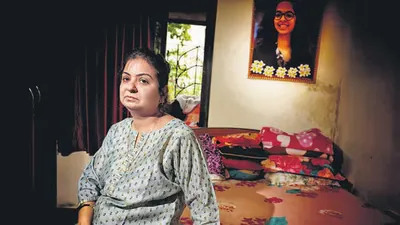
Unwilling to accept the acquittal, Jhanvi’s mother, Nidhi Kukreja, moved the high court on Friday through advocate Trivankumar Karnani
MUMBAI: Nearly two months after a sessions court sentenced 26-year-old Shree Ambadas Jogdhankar to life imprisonment for the murder of 19-year-old Jhanvi Kukreja and acquitted co-accused Diya Padalkar, the victim’s mother, Nidhi Kukreja, has moved the Bombay High Court challenging Padalkar’s acquittal, arguing that crucial evidence was ignored and justice for her daughter remains incomplete.
On January 21, 2026, the judge sentenced Jogdhankar to life imprisonment for the murder of Jhanvi, a Santacruz resident, during a New Year’s Eve party in the early hours of January 1, 2021. The court, however, acquitted Diya, Kukreja’s childhood friend, granting her the benefit of doubt due to lack of conclusive evidence.
Unwilling to accept the acquittal, Jhanvi’s mother, Nidhi Kukreja, moved the high court on Friday through advocate Trivankumar Karnani, contending that the trial court failed to properly assess the cumulative weight of circumstantial evidence and misapplied the legal standard of “benefit of doubt”.
According to the prosecution, the incident unfolded during a New Year’s Eve gathering at Bhagwati Heights in Khar, hosted by a common friend. Earlier that evening, Kukreja had celebrated her father Prakash’s birthday at home before heading to the party along with Padalkar and Jogdhankar.
Police alleged that tensions flared at the party when Kukreja objected to Jogdhankar getting physically close to Padalkar, who was also her neighbour. What began as an argument escalated into a violent confrontation. The trio reportedly moved towards the staircase, where Kukreja was assaulted and dragged down the steps.
At around 2am, the host discovered Kukreja lying in a pool of blood on the staircase and alerted the police. She was rushed to Bhabha Hospital, where she was declared dead. The post-mortem report documented 48 injuries, including a fractured skull, findings that underscored the severity and sustained nature of the assault.
Both accused were arrested on the same day.
In her plea, Kukreja’s mother has argued that the sessions court’s decision to acquit Padalkar was “erroneous and illogical”, asserting that the judgement failed to appreciate consistent witness testimonies, forensic and DNA evidence, as well as the conduct of the accused before and after the incident.
The petition states that the court overlooked the established legal principle that minor discrepancies in witness accounts do not dilute the overall credibility of the prosecution’s case. It further contends that the chain of circumstantial evidence was complete and pointed unequivocally towards Padalkar’s involvement.
“The trial court granted undue benefit of doubt despite cogent and consistent evidence. The principle applies only when two reasonable views are possible. In this case, the evidence overwhelmingly pointed to guilt,” the plea states.
The petitioner has also alleged that the trial judge “misdirected himself” by focusing on trivial inconsistencies while ignoring substantive material on record, thereby rendering the acquittal legally unsustainable.
Maintaining that Padalkar played an active and well-defined role in the crime, Kukreja’s mother has urged the high court to set aside the acquittal and convict her under provisions of the Indian Penal Code related to murder, abetment, and acts done with common intention.
The case now shifts to the high court, where the challenge is expected to test the evidentiary thresholds for overturning an acquittal, particularly in cases built largely on circumstantial evidence.
2026.3.30 Married Navy staffer kills lover, chops body into 3 parts; stores in freezer, hides under bed
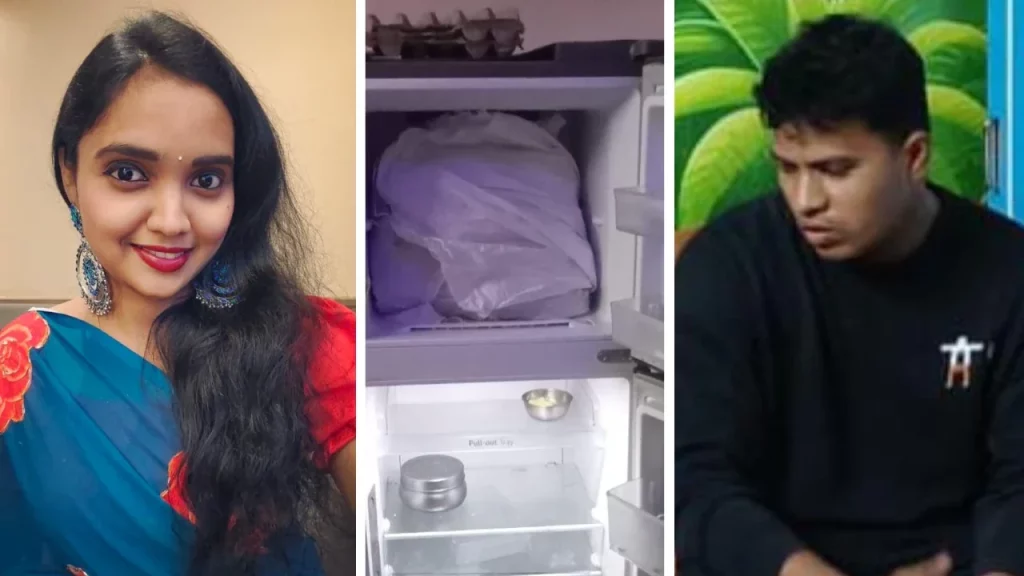
A private meeting, a violent fallout, and a crime that unfolded behind closed doors. What police found inside the flat, and what the accused did after, has left a city shaken.
Behind the closed door of a rented flat in Andhra Pradesh’s Visakhapatnam, a brutal crime unfolded piece by piece, over hours, in chilling silence. No one outside had any idea what was happening within.
A 30-year-old Indian Navy technician, Chintada Ravindra, was arrested on charges of killing his lover, dismembering her body, and attempting to erase every trace of the crime inside his home in Visakhapatnam.
It ended not with a chase, but with a confession.
A MEETING THAT TURNED FATAL
Ravindra, posted at INS Dega, had been living as a tenant in Gajuwaka for nearly two years. On Sunday, he called 28-year-old Polipalli Mounika to his flat in the afternoon.
The two had known each other since 2021, after meeting through a dating application. Over time, their relationship grew, with frequent meetings across the city.
But that afternoon, something snapped.
Police said an argument broke out soon after she arrived. The dispute, fuelled by allegations that Mounika had taken Rs 3.5 lakh from Ravindra and was threatening to reveal their relationship to his wife, escalated rapidly.
Inside that flat, the confrontation turned violent.
By the time it ended, Mounika was dead. Investigators said Ravindra allegedly smothered her.
“The accused, Chintada Ravindra, who has been working at INS Dega, came into contact with the victim, Polipalli Mounika, through a dating application in 2021. They developed a relationship over time. Preliminary investigation indicates that disputes arose between them, with allegations of financial demands and threats to disclose their relationship to the accused’s family,” Vizag CP Sankhabrata Bagchi said.
“On March 29, the accused allegedly called the victim to his residence in Gajuwaka, where a quarrel took place, during which he is suspected to have killed her by suffocation. In an attempt to destroy evidence, the accused allegedly dismembered the body and disposed of parts at different locations. The accused has been arrested and further investigation is underway,” he said.
A CRIME PLANNED, THEN CARRIED OUT
What has unsettled investigators further is what came before and after the killing.
Police said Ravindra had earlier gone to a store in Srinagar searching for knives. When he could not find what he needed, he ordered them online.
What followed inside the flat left even seasoned officers shaken.
Ravindra allegedly cut the body into three parts.
One portion was placed inside a refrigerator. Another was packed into a gunny sack and hidden beneath the bed. The third part, including the head and hands, was taken to a secluded area near Adavivaram and burned.
The flat, from the outside, gave nothing away.
Neighbours later spoke of an eerie calm. “Nothing seemed unusual. No noise, nothing,” one resident said.
AN EMPTY HOUSE, A HIDDEN CRIME
Police said Ravindra’s wife had recently delivered a child and was staying at her parents’ home. With the house empty, he had called Mounika over.
For hours after the killing, the crime remained hidden behind the ordinary facade of a residential building.
Inside, however, the evidence lingered.
THE CALL THAT ENDED IT
After attempting to conceal what he had done, Ravindra did not flee. Instead, he made a phone call.
He reached out to a friend. That conversation would unravel everything.
On the friend’s advice, Ravindra walked into the Gajuwaka Police Station and surrendered. He confessed to the murder, police said.
Officers then entered the flat and uncovered what had been hidden, the remains, the weapons, and the disturbing aftermath of what had taken place.
SHOCK AND UNANSWERED QUESTIONS
Mounika, a resident of Visakhapatnam, never returned home.
For her family, the loss is devastating. For neighbours, the shock lingers. For investigators, the case raises troubling questions about how quickly a relationship turned into something irreversible.
“This was not just a murder,” an officer said quietly. “It was what came after.”
2026.3.24 9 Tamil Nadu cops convicted over father-son custodial death in Covid. A look back at Sathankulam case
Jayaraj & his son Bennix were arrested on 19 Jun 2020 in Sathankulam for allegedly keeping their shop open beyond permitted hours during COVID lockdown. They died 3 days later.
Thoothukudi/Chennai: In a rare conviction in custodial death cases in Tamil Nadu, all nine police personnel facing charges over the death of a father-son duo in Sathankulam were pronounced guilty Monday, six years after Bennix and Jayaraj died following their arrest for allegedly violating COVID-19 lockdown norms.
Jayaraj and his son were arrested on 19 June 2020 in Sathankulam, Thoothukudi for allegedly keeping their mobile shop open beyond what was permitted during the COVID-19 lockdown period.
On 22 June, the family was informed that Bennix died at the government hospital, with Jayaraj dying the next day. The deaths sparked widespread outrage over allegations of torture in police custody.
With the verdict, by Madurai Principal District Judge Muthukumaran, coming about a month before Tamil Nadu goes to polls, it has also drawn sharp political reactions, with the Dravida Munnetra Kazhagam hitting out at the All India Anna Dravida Munnetra Kazhagam (AIADMK), which was in power in 2020.
Tamil Nadu Law Minister S. Ragupathi described the Madurai court’s conviction of all nine police personnel as exposing “falsehoods” spread by the previous AIADMK regime under then chief minister Edappadi K. Palaniswami.
He specifically pointed to Palaniswami’s statement in which the deaths of P. Jayaraj and J. Bennix after remand were attributed to “breathing difficulty” and “ill health”.
Ragupathi said the verdict “brought to light the falsity of those claims”. He accused the AIADMK government of attempting to “shield the accused police personnel by presenting misleading explanations and downplaying the incident”.
He demanded a public apology from Palaniswami for “misleading the public and trying to protect the guilty through false statements”.
The AIADMK, however, said the DMK has no moral authority to speak on the issue.
“It was Edappadi Palaniswami who ordered a CBI inquiry into this case. The DMK has no moral authority to speak on this issue, especially when multiple custodial deaths have occurred under its regime,” AIADMK spokesperson Kovai Sathya told ThePrint.
He further alleged that incidents such as the deaths of Vignesh and Ajith Kumar reflected a pattern of custodial violence being downplayed.
Vignesh, 25, died in police custody in April 2022 in Chennai after being arrested in a narcotics case. A post-mortem report found 13 injuries on his body, contradicting police claims that he died from a seizure. The case raised serious concerns about custodial violence and led to further investigation.
Ajith Kumar, a temple security guard from Sivaganga district, died in police custody in June 2025 after being detained in a jewellery theft case. He was allegedly assaulted during interrogation, and a post-mortem revealed multiple injuries and internal bleeding. His death intensified scrutiny over custodial practices in Tamil Nadu.
“The DMK cannot claim credit for the Sathankulam case. It was Edappadi Palaniswami who provided government jobs to the bereaved family,” Sathya said, adding he hoped the verdict would ensure justice for the victims’ family.
The convicts
The accused in the Sathankulam custodial deaths case were all serving police personnel from the Sathankulam police station.
Ten police personnel were initially arrested, including inspector S. Sridhar, sub-inspectors K. Balakrishnan and P. Raghu Ganesh; head constables S. Murugan and A. Samadurai; and constables M. Muthuraj, S. Chelladurai, X. Thomas Francis, S. Veilumuthu and special sub inspector P Paldurai.
Inspector Sridhar was said to be the prime accused.
One of them, Special Sub-Inspector Paldurai, died during the course of the investigation, after which the CBI proceeded against the remaining nine accused. The charges included murder, criminal conspiracy, wrongful confinement, and destruction of evidence.
The case involved an extensive investigation by the Central Bureau of Investigation (CBI), which examined 105 witnesses and filed a 2,427-page chargesheet. The court confirmed that the injuries sustained by the victims were the result of police assault, and questioned why the victims had been transported in a private vehicle instead of an official police vehicle.
All nine accused police personnel appeared before Madurai Principal District Judge Muthukumaran who convicted all the accused for murder, and set 30 March for the pronouncement of the quantum of punishment.
The judge ordered that all nine accused be remanded in judicial custody. The family members expressed their anguish, stating that those responsible were “not humans, but animals.”
Speaking to ThePrint, Bennix’s sister Persis said the family had been fighting for justice for over five and a half years. “They repeatedly assaulted my father and brother, which is what led to their deaths. The judge has now confirmed this,” she said.
Persis added that the family is awaiting the sentencing, scheduled for March 30, and spoke of the emotional toll the case has taken, noting that they had shielded their mother from the full details due to her fragile state. “But after hearing everything yesterday, she broke down,” she said.
The incident
Jayaraj, a resident of the Sathankulam town, was picked up by the Sathankulam Police on 19 June 2020 around 8 pm, when curfew began under the Coronavirus lockdown.
Soon after, his son Bennix visited the police station, who was later called inside the police station and no one was allowed to meet them after this. The police said Jayaraj and Bennix had died at the Kovilpatti Government Hospital, about 100 kilometres from Sathankulam.
The CBI’s forensic report showed that both were tortured for about seven hours on the night of 20 June, according to the inquiry report, a copy of which is with ThePrint.
Autopsy reports revealed that Jayaraj had sustained at least 17 injuries and Bennix 13 injuries, resulting in them suffering severe blood losses.
DNA samples collected from the lock-up walls, toilet, and lathis at the Sathankulam police station matched those of the victims. The inquiry report further said the two men were forced to clean up their own blood with their clothes and made to change multiple times as the garments became soaked in blood.
The CBI found that 11 sticks in total had been used to assault the victims, including two lathis and a plastic pipe.
According to the inquiry report, friends who saw Bennix and Jayaraj shortly after described them as being covered in blood, in extreme pain, and unable to even sit properly. Despite their critical condition, they were allegedly pushed through legal procedures without being able to speak freely before a magistrate, reportedly due to police intimidation.
The CBI in its inquiry report said that medical attention was delayed and inadequate, and within days, both men died—Bennix on 22 June 2020, and Jayaraj the following day—due to severe internal injuries.
The case exposed police brutality through post-mortem reports, witness statements, and trial evidence indicating the victims were subjected to prolonged physical abuse, with torture corroborated by medical findings and DNA matches on lathis.
The incident drew widespread attention across Tamil Nadu. Public pressure led to the transfer of the investigation to the CBI.
‘Deaths not due to Covid’
Jaba Singh, the counsel representing the father-son duo, said they had faced resistance from the police from the very beginning, noting that even registering a murder case under Section 302 took significant time and sustained protests.
“The court has highlighted crucial evidence, including DNA matches between the bloodstains on the lathis and the victims. The judge has also directed the Central and state governments, along with a probation officer and a psychiatrist, to submit reports regarding the convicts,” he said.
The post-mortem report revealed that the deaths were not due to COVID-19 infection but the result of severe physical abuse. The medical findings also indicated that the victims were assaulted with rod-like objects, their hands tied, and their bodies subjected to extreme violence, including being attacked while restrained on a table.
According to evidence produced during the trial, police personnel allegedly made remarks as they assaulted them, including statements suggesting they were using the victims to “practice” their methods of beating.
Low conviction rate
Tamil Nadu police records show 24 custodial deaths in the state since 2021. It also shows zero convictions in custodial death cases between 2017 and 2022.
Speaking to ThePrint, Human rights activist Evidence K. Kathir, described the verdict as significant, though delayed, noting that such convictions in custodial death cases remain rare.
“While this is a belated judgment, it is a welcome one,” he said, adding that stronger legal action—such as consistently invoking murder charges in such cases—is necessary to ensure accountability.
Kathir also said the conviction in this case was possible largely due to the presence of multiple witnesses, and added that any appeal against the judgment must be met with firm opposition.
Several cases of custodial violence in Tamil Nadu after the Sathankulam incident drew political and social attention.
In 2021, A. Murugesan, a fruit stall owner from Salem’s Edayapatti, died following alleged torture. In 2022, Vignesh, a 25-year-old Dalit balloon seller from Chennai, died after torture, with the autopsy showing 13 injuries including a leg fracture.
Four custodial deaths occurred in Madurai, Viluppuram, Chennai and Virudhunagar districts within 12 days in April 2024. In June 2025, B. Ajith Kumar, a 27-year-old temple guard, died after interrogation in a theft case at Sivaganga police station, with the autopsy revealing 44 injury marks, five policemen were arrested and the case was transferred to the CBI by Chief Minister M.K. Stalin.
The most recent case is of the death of 26-year-old Akash Delison from Sivagangai in March 2026, who died after allegedly being subjected to custodial violence.
2026.3.22 Woman chases down snatchers in e-rickshaw in South Delhi, recovers mobile phone
Two men arrested; Delhi Police to felicitate her
A 26-year-old woman was quick on her feet as soon as two men on a scooter snatched her mobile phone and sped in South Delhi’s Ambedkar Nagar on Thursday (March 19). She didn’t panic, but instead, chased the men in an e-rickshaw. Not only did she catch up to the snatchers and recover her phone, her courage and alertness also led to police arresting the accused.
The Delhi Police is now planning to felicitate her for her bravery.
The incident took place on the afternoon of March 19, around 3 pm, police said. Tanishka, who works as a home tutor teaching children, had stepped out of her house to visit the Kalkaji temple.
She was waiting for an auto-rickshaw near the Hanuman temple on the BRT Road falling at Ambedkar Nagar Police Station when two young men on a scooter suddenly approached her, police said. Before she could react, they snatched her mobile phone from her hand and sped away.
Tanishka told The Indian Express, “I was fasting, as it was the first day of Navratri. I had left my home to go to the Kalkaji Temple when two men on a scooter snatched my mobile phone.”
In most cases, victims are left shocked and helpless, but Tanishka refused to give up. Instead of panicking, she immediately ran after the snatchers. Demonstrating the remarkable presence of mind, she sought help from an e-rickshaw driver nearby and continued chasing the accused.
The chase continued for some distance and eventually came to an end near PSRI Hospital. By this time, her calls for help had mobilized local residents.
“I was a bit scared, but I immediately mustered the courage and started screaming “chor-chor” (thief-thief), alerting people in the area and drawing public attention,” she said.
With the assistance of bystanders, the scooter carrying the two suspects was surrounded and stopped. Seizing the opportunity, Tanishka stepped forward and snatched her mobile phone back from one of the accused.
The police were immediately informed about the incident. Responding swiftly, officers arrived at the scene and arrested both suspects. The accused were identified as Manish (28) and Sunny (24), residents of Khanpur. The stolen mobile phone and the scooter used in the crime were recovered from their possession, the officer said.
Meanwhile, the police praised Tanishka for her bravery, quick thinking, and determination. They stated that her actions serve as a powerful reminder that courage and awareness can help prevent crimes and inspire others in society.
Tanishka’s father, Ravi Kumar, who is an advocate, said that his daughter is the eldest among his three children. He said she teaches students from classes 1 to 5 at home.
2026.3.22 Andhra Pradesh Tragedy: 16 Dead, 3 Critical After Consuming Toxic Adulterated Milk
A shocking incident from Godavari district of Andhra Pradesh has left the entire nation alarmed, after consuming adulterated milk reportedly claimed 16 lives while three others remain in critical condition. According to available information, residents from areas such as Lalachervu, Chaudeshwar Nagar, and Swarup Nagar had been falling ill since February. Soon after drinking the contaminated milk, people began experiencing severe symptoms, including vomiting, stomach pain, and kidney failure. Initial cases were reported on February 22, but further investigation revealed that the milk supplied by a local dairy unit had been contaminated with the toxic chemical ethylene glycol.
The contamination resulted in more than 20 individuals being hospitalised, including children and elderly residents. The death toll has now risen to 16, while three patients continue to battle for their lives in intensive care units. In Narsapuram, a dairy unit had supplied milk to over 100 households, and within hours of consumption, many consumers developed serious health complications. Several patients required urgent medical interventions such as dialysis and ventilator support. Health department investigations confirmed the presence of ethylene glycol in the milk, a toxic substance known to cause severe and often irreversible damage to the kidneys and other vital organs, raising serious public health concerns.
Medical examinations revealed abnormally high levels of blood urea and serum creatinine among several affected patients, indicating acute kidney damage. Ethylene glycol, commonly used as an antifreeze agent, is extremely dangerous if ingested and has no place in food products. Following the incident, authorities immediately halted milk distribution in the affected areas and initiated a door-to-door health survey to identify more potential victims. The administration has taken the matter seriously, leading to the arrest of a suspected milk supplier. The food safety department has collected samples of milk, curd, ghee, and water from the dairy unit, while the animal husbandry department is also testing cattle feed and water sources.
Police have registered a formal case as investigations continue to uncover the extent of the contamination and identify those responsible. Senior health officials from Hyderabad are closely monitoring the situation to ensure swift action and prevent further harm. Authorities are focusing on tightening food safety regulations and increasing surveillance to avoid similar tragedies in the future. The incident has sparked widespread concern about food adulteration and public health safety, with residents demanding stricter checks on dairy products and accountability for those involved in endangering lives.
2026.3.21 Businessman loses ₹15.4 crore in digital arrest scam
The caller who identified himself as K. Siva Subramanyam, alleged that Mr. Saraf was found to have dealing with Naresh Goel of Jet Airways and was involved in money laundering
Ajit Gopalkrishna Saraf, 81, Belagavi based businessman, lost nearly ₹15.45 crore to a digital arrest scam that had gone on for nearly six weeks.
According to a complaint filed by the victim’s son, Mr. Saraf received a call on February 5. The caller claimed to be a CBI officer and accused Mr. Saraf of being involved in a financial scandal. He also produced copies of a complaint registered with the CBI and RBI vigilance cell, which were obviously fake.
The caller who identified himself as K. Siva Subramanyam, alleged that Mr. Saraf was found to have dealing with Naresh Goel of Jet Airways and was involved in money laundering.
Then, on subsequent days, another person, calling himself George Mathew of RBI vigilance, joined the call. They asked Mr. Saraf to produce details of his Fixed Deposit amounts and Stock market investments. They forced the victim to empty his FDs and the investments in Motilal Oswal.
Mr. Saraf, who was afraid of the callers, did not reveal this to anyone in his family. He transferred all the money that he had control on. Police officers said that the victim had not come out of his room for days on end. It was only after his son came to visit him for the Ugadi holidays that the offence was known to the family.
A case has been registered in the Belagavi Cyber, Economic, and Narcotics cell. Police officers said that the case would soon be transferred to the CID.
KOLLAM: A Kerala court on Saturday sentenced G Sandeep, a 42-year-old school teacher, to life imprisonment for the sensational murder of Dr Vandana Das at Kottarakkara Taluk Hospital in May 2023.
In addition, the court imposed a total of 30 years for other offences under the Indian Penal Code (IPC), which Sandeep will serve before commencing the life term for the murder, according to special public prosecutor Prathap G Padickal.
Dr Das, 23, a house surgeon and the only child of her parents from Kaduthuruthy, Kottayam district, was attacked with surgical scissors in the early hours of May 10, 2023. Sandeep, who had been brought to the hospital by police for treatment of a leg injury sustained in an alleged quarrel near his home, first assaulted police personnel and a private individual accompanying him, before fatally stabbing the young doctor.
Dr Das succumbed to her injuries at a private hospital in Thiruvananthapuram.
The court, which had convicted Sandeep on March 17, found him guilty under multiple IPC provisions, including murder, destruction of evidence, and wrongful restraint, as well as under the Kerala Healthcare Service Persons and Healthcare Service Institutions (Prevention of Violence and Damage to Property) Act, 2012. It rejected the defence claim of schizophrenia, ruling that Sandeep was fully aware of his actions and had premeditated the attack.
During the trial, over 70 witnesses testified and more than 200 documents—including medical and forensic reports—were examined. Psychiatric evaluations confirmed the accused’s mental fitness at the time of the incident.
Reacting to the verdict, Dr Vandana’s parents expressed relief but also indicated dissatisfaction with the punishment, signaling plans to pursue an appeal seeking the death penalty. The prosecution has confirmed it will recommend filing an appeal to enhance the life term to capital punishment, arguing the attack was a “rarest-of-rare” case.
Dr Vandana’s mother tearfully said the family wishes for maximum punishment, noting that her daughter had been stabbed 27 times in the attack. The incident had sparked widespread outrage across Kerala, prompting protests from the medical community demanding stronger protection for healthcare workers.
The 2007 murder of 17-year-old Ayesha Meera in a Vijayawada hostel remains one of Andhra Pradesh’s most haunting unsolved cases. Over nearly two decades, the investigation saw arrests, a conviction, and later an acquittal by the High Court, before being handed to the CBI in 2018. Despite years of scrutiny, the case was officially closed in 2026 without identifying the real killer, leaving Ayesha’s parents in a prolonged struggle for justice and raising troubling questions about the failures of the investigation and the system itself.
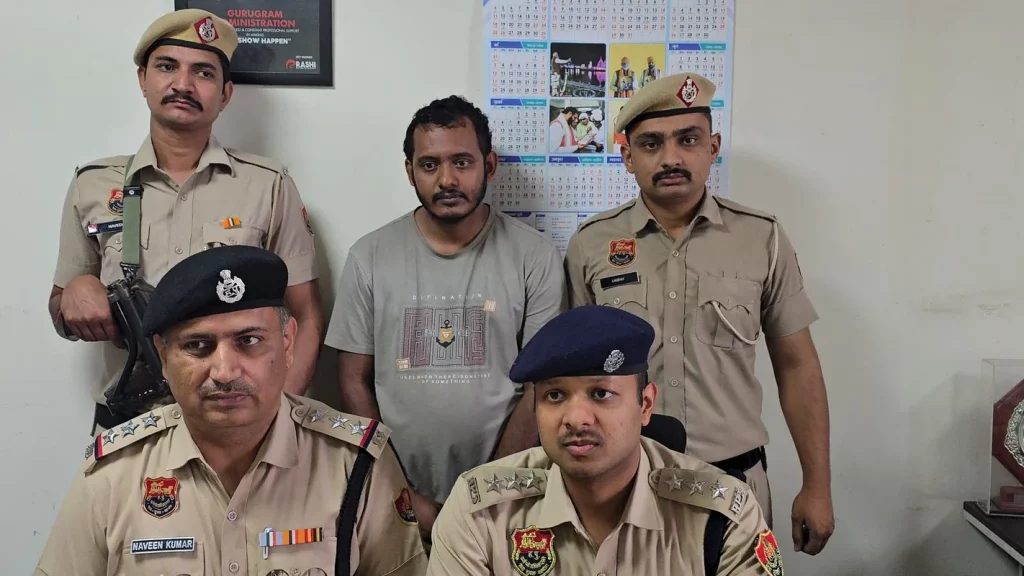
The accused entered India illegally from Bangladesh nearly nine years ago and was residing in West Bengal using fake documents.
New Delhi: A 30-year-old Bangladeshi national has been arrested for sending fake bomb threat emails to multiple schools in Gurugram, creating panic and fear among students, teachers, and parents.
The accused, Saurabh Vishwas, also known as Michael, had entered India illegally from Bangladesh nearly nine years ago and was residing in West Bengal using fake documents.
The incident came to light on January 28, when several schools in the city received emails claiming that bombs had been planted on their premises.
Acting immediately, police teams, including the dog squad, bomb disposal unit, and fire brigade, visited the schools to inspect the premises and didn’t find any explosives.
Speaking to the NDTV, a senior police officer said that the Cyber South Gurugram police team launched an investigation to trace the source of the emails.
On March 19, they successfully arrested the accused from Gujarat.
During interrogation, police discovered that Vishwas had been residing in India illegally, initially working as a labourer at a carmaker.
Over time, he acquired skills in digital marketing and graphics and had been freelancing in this field for the past five years.
The officer said that Vishwas had been part of a Facebook group where he connected with a Bangladeshi individual named Mamunur Rashid.
Rashid requested him to provide Gmail IDs in exchange for cryptocurrency in the form of USD.
Vishwas reportedly supplied around 300 Gmail IDs and received approximately 250 USD. One of the Gmail IDs provided by him was later used to send the fake bomb threat emails to the schools in Gurugram.
x1200
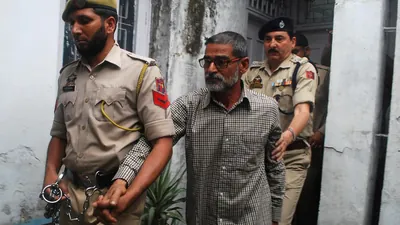
A division bench of Justices Gurvinder Singh Gill and Ramesh Kumari passed the order on Sanji Ram’s plea on the concession of suspension of sentence
The mastermind behind the 2018 rape and murder of an eight-year-old in Kathua does not deserve the “concession of suspension of sentence at this stage”, the Punjab and Haryana High Court has said while dismissing a plea from former temple caretaker Sanji Ram.
Ram, who was caretaker of the ‘devasthanam’ (temple) where the crime took place in January 2018, was sentenced to life by a sessions court in Pathankot the following year. His nephew Parvesh Kumar and special police officer Deepak Khajuria were also given life terms.
A division bench of Justices Gurvinder Singh Gill and Ramesh Kumari passed the order on Ram’s plea on March 6. The three-page order was made available earlier this week.
Without commenting on the merits of the case, the court said it was of the opinion “that it is not a case where the applicant/appellant deserves the concession of suspension of sentence at this stage”.
“The application, as such, is dismissed,” it said.
The court, however, directed the registry to list Ram’s main appeal against conviction for final hearing in September this year given the fact that he has already spent a substantial amount of time in custody.
According to the 15-page chargesheet filed by the Jammu and Kashmir crime branch in April 2018, the nomadic girl was abducted on January 10 that year and raped in captivity in the small village temple in Jammu’s Kathua region that was exclusively manned by Ram. She was kept sedated for four days and later bludgeoned to death, it said.
Arguing for suspension of Ram’s life sentence, senior advocate Vinod Ghai said before the high court that the prosecution examined as many as 114 prosecution witnesses but no concrete evidence was brought on record to establish his involvement.
He also said Ram had already undergone a substantial period of more than eight years and deserves the concession of suspension of sentence.
The state of Jammu and Kashmir was represented by senior advocate R.S. Cheema. Advocates Mandeep Singh Basra and Anupinder Brar represented the victim’s family.
Mr. Cheema recalled the manner in which the heinous crime was committed and said, based on the testimonies of the prosecution witnesses and the circumstances brought on record, the accused’s complicity is “clearly evident”.
“It has been submitted that since upon findings of guilt having been recorded by the trial court, the presumption of innocence of the applicant is no longer available to him, the applicant does not deserve to be released on bail,” he said.
The Pathankot sessions court had also sentenced three policemen to five years imprisonment for cover up and destruction of evidence while Ram’s son Vishal was acquitted.
In June 2019, then sessions judge Tejwinder Singh said, “In the present case, facts are many but truth is one that under a criminal conspiracy, an innocent eight-year-old minor girl has been kidnapped, wrongfully confined, drugged, raped and ultimately murdered. The perpetrators of this crime have acted in such a manner as if there is a ‘law of jungle’ prevalent in the society.” The judge summed up the enormity of the crime with a couplet by Mirza Ghalib: “Pinha tha daam-e-sakht qareeb ashiyaan ke, udhne hi nahi paye the ki girftar hum hue” (hunters had placed the net near a nest and the young one was caught before it could take its first flight).
In his 432-page judgment, the judge described the crime as a “devilish and monstrous” one committed in the most “shameful, inhumane and barbaric manner” for which poetic justice needs to be done to its perpetrators.
After initial hiccups, the case, which triggered nationwide outrage, was handed over to the crime branch, which unravelled the conspiracy.
In 2018, the Supreme Court directed the case to be shifted out of Jammu and Kashmir and directed the sessions court in Pathankot to hear it on a daily basis.
2026.3.15 STF Arrests Man Who Helped Bangladeshi Murder Suspects Sneak Into India After Dhaka Killing
The Special Task Force of West Bengal Police has arrested a Bangladeshi national for allegedly assisting the prime suspects in the murder of Bangladeshi youth activist Sharif Osman Hadi to illegally enter India after the December 12 killing in Dhaka. The accused, Philip Sangma, was apprehended from Nadia district following intelligence inputs. Police said Sangma allegedly arranged the suspects’ illegal border crossing and helped them move through different locations to evade arrest. Investigators believe he was operating as a border tout and facilitating illegal crossings in exchange for money, prompting authorities to widen the probe into the cross-border network involved in the case.
2026.3.15 ಊಟದ ವಿಚಾರಕ್ಕೆ ಗಲಾಟೆ: ಯುವಕನ ಬಡಿದು ಕೊಂದ ಕಿರಾತಕರು; ಆರೋಪಿಗಳು ಅರೆಸ್ಟ್
ಆನೇಕಲ್, ಮಾರ್ಚ್ 15: ಬೆಂಗಳೂರಿನ ಬನ್ನೇರುಘಟ್ಟ ವ್ಯಾಪ್ತಿಯಲ್ಲಿ ಮಾರ್ಚ್ 8ರಂದು ನಡೆದಿದ್ದ ಯುವಕನೊಬ್ಬನ ಕೊಲೆ ಪ್ರಕರಣ ಸಂಬಂಧ ನಾಲ್ವರು ಆರೋಪಿಗಳನ್ನು ಪೊಲೀಸರು ಬಂಧಿಸಿದ್ದಾರೆ. ಕೆಂಪನಾಯಕನಹಳ್ಳಿ ನಿವಾಸಿ ತಿಲಕ್(23) ಅಲಿಯಾಸ್ ಗುಡ್ಡೆ ಎಂಬಾತನ ತಲೆ ಮೇಲೆ ಇಟ್ಟಿಗೆ ಹಾಕಿ, ದೊಣ್ಣೆಯಿಂದ ಹೊಡೆದು ಕೊಲೆ ಮಾಡಲಾಗಿತ್ತು. ಈ ಸಂಬಂಧ ಬನ್ನೇರುಘಟ್ಟ ಪೊಲೀಸರು ಕೆಂಪನಾಯಕನಹಳ್ಳಿ ವಾಸಿ ಅಜಯ್ ಕುಮಾರ್(25), ರವಿಚಂದ್ರ ನಾಯಕ್ ಅಲಿಯಾಸ್ ಪಾಯಿಸನ್ ರವಿ (24), ಸಂಜಯ್ ಅಲಿಯಾಸ್ ನಾಯಿಬಾಬಾ(26) ಮತ್ತು ಮೊಹಮ್ಮದ್ ರಜಾಕ್(24) ಎಂಬವರನ್ನು ಬಂಧಿಸಿದ್ದಾರೆ. ಕುಡಿದ ಮತ್ತಿನಲ್ಲಿ ಗಲಾಟೆ ಮಾಡಿ ಆರೋಪಿಗಳು ತಿಲಕ್ನ ಕೊಂದಿರೋದಾಗಿ ತಿಳಿದುಬಂದಿದೆ.
ಬನ್ನೇರುಘಟ್ಟ ಗೊಲ್ಲಹಳ್ಳಿ ಗುಟ್ಟೆ ಮೈದಾನ ಬಳಿ ಕೊಲೆ ನಡೆದಿದ್ದು, ಪ್ರಮುಖ ಆರೋಪಿ ಅಜಯ್ 30ಕ್ಕೂ ಅಧಿಕ ಪ್ರಕರಣಗಳಲ್ಲಿ ಪೊಲೀಸರಿಗೆ ಬೇಕಾಗಿದ್ದ. ಖಾಕಿಯಿಂದ ತಪ್ಪಿಸಿಕೊಳ್ಳಲು ಹೆಚ್ಚಾಗಿ ಕಾಡಿನಲ್ಲಿ ವಾಸಿಸುತ್ತಿದ್ದ ಕೃತ್ಯ ನಡೆದ ದಿನ ಊಟ ತರಲು ಈತ ತಿಲಕ್ಗೆ ಹೇಳಿದ್ದ. ಆದರೆ ತಿಲಕ್ ಪ್ರೇಯಸಿ ಭೇಟಿಗಾಗಿ ತೆರಳಿದ್ದು, ಆಕ್ರೋಶಗೊಂಡ ಅಜಯ್ ತಿಲಕ್ ಬರುತ್ತಿದ್ದಂತೆ ಆವಾಜ್ ಹಾಕಿದ್ದಾನೆ. ತನಗಿಂತ ಹುಡುಗಿ ಹೆಚ್ಚಾ ಎಂದು ಈತ ಪ್ರಶ್ನಿಸಿದ ಹಿನ್ನೆಲೆ ವಾಗ್ವಾದ ನಡೆದಿದೆ. ಹೀಗಾಗಿ ತನ್ನ ವಿರುದ್ಧವೇ ಮಾತನಾಡುತ್ತೀಯಾ ಎಂದು ರೊಚ್ಚಿಗೆದ್ದು ತಿಲಕ್ ಮೇಲೆ ದಾಳಿ ನಡೆಸಿರೋದು ತನಿಖೆ ವೇಳೆ ಬಯಲಾಗಿದೆ.
Police suspect the woman stole about Rs 14 lakh in cash and two gold chains weighing 54 grams from the house since 2025 without their knowledge.
Bengaluru: A domestic help who had been working for nearly 25 years at an elderly couple’s house in Bengaluru’s Pulakeshi Nagar has been arrested for allegedly stealing cash and gold jewellery worth Rs 16 lakh.
Police said the complaint was filed on February 19 and the elderly couple used to withdraw cash from a nearby bank every month for household expenses and often took the domestic help along with them. Police suspect the woman stole about Rs 14 lakh in cash and two gold chains weighing 54 grams from the house since 2025 without their knowledge.
During questioning, the accused, Dhanalakshmi R, (55), confessed to the theft. Based on her information, police recovered 54 grams of gold jewellery and Rs 8 lakh in cash from her house in Cox Town.
2026.3.8 Muslim woman beaten up, allegedly forced to drink urine by mob in Bihar’s Madhubani, dies
According to eye witnesses, the attackers tied the victim to a pole and beat her severely. During the assault, she was also allegedly abused by those involved.
A Muslim woman succumbed to injuries after being allegedly brutally assaulted by a mob led by the son of the village head in Bihar’s Madhubani district, reported Maktoob Media on Saturday.
The victim has been identified as Roshan Khatoon, a resident of Amhi village in Madhubani’s Ghoghardiha.
According to the report, citing police officials and eye witnesses, Khatoon had gone to meet village head Kumari Devi on February 28 to resolve a local dispute. However, the village head’s son, Manu Singh, along with a mob, assaulted the woman, causing serious injuries.
Khatoon succumbed to her injuries on March 1 in Patna Medical College and Hospital.
A local digital news publication, Mithla Samachar, reported that the woman was fasting for the holy month of Ramadan while she was being beaten up, and when she kept asking for water, the mob allegedly forced her to drink alcohol mixed with urine.
According to eye witnesses cited by Maktoob, the attackers tied Khatoon to a pole and beat her severely. During the assault, she was also allegedly abused by those involved.
The woman’s husband has demanded a death sentence for the accused.
The police have registered an FIR in connection with the incident and detained Manu Singh for questioning.
“We have detained the son of the village head, and he is being questioned. We are identifying everyone present at the time of the incident. Strict action will be taken against anyone found responsible,” a police officer was quoted as saying by Maktoob.
“We have seen some reports about the victim fasting and asking for water. At this stage, we cannot confirm these details. The investigation is continuing, and all aspects are being examined,” the officer added.
Ajay Mansuri, state president of the Mansuri community, vowed to pursue the matter legally.
“I will make sure that we go to every length to bring justice to the deceased, and we all want the culprits to be hanged till death,” he said.

2026.3.8 Complainant in POCSO case against Swami Avimukteshwaranand attacked on train; seer calls claim ‘fabricated’
Ashutosh Brahmachari suffers minor injuries in razor attack near Sirathu station; police examining CCTV footage.
PRAYAGRAJ: Ashutosh Brahmachari, who had filed a complaint alleging that Swami Avimukteshwaranand Saraswati sexually exploited students at his ashram, was attacked by an unidentified person with a razor on a train here on Sunday morning, police said.
Reacting to the incident, Saraswati questioned the claim and said that the story appeared “fabricated”. He urged the railway administration to conduct an inquiry, so that “the truth comes out”.
According to a Government Railway Police (GRP) official, Ashutosh alleged that he was travelling to Prayagraj by the Rewa Express when the incident occurred.
The officer said that when the train was approaching Sirathu station in the morning, Ashutosh went to the toilet, where an unidentified person allegedly attacked him with a razor.
He sustained minor injuries in the incident and was sent to Calvin Hospital in Prayagraj for a medical examination, the officer added.
Based on the medical examination report, a case will be registered, the officer said.
The CCTV footage from the spot is also being examined to identify the attacker. Further legal action will be taken based on the findings of the investigation, he added.
On being asked about the alleged attack, Saraswati, who was in Varanasi, said the story appeared “fabricated” and urged the railway administration to clarify the matter after an inquiry.
The seer said that according to media reports, the attendant of the railway coach had stated that Ashutosh was fine when he went to the bathroom, but was found injured after returning.
“This appears to be a fabricated story created merely to build an atmosphere and to obtain security,” he said. He further said that if it were indeed true that an attack took place inside a moving train, it would raise serious concerns about passenger safety in the railway system.
“If someone can be attacked while travelling in a train, it means travelling by rail is no longer safe. This raises a major question, and the Railway Ministry should speak on the issue,” he added.
Saraswati said the railway authorities should conduct an investigation and present the facts clearly so that “the truth comes out.” He also clarified that he does not support any form of physical violence.
On February 21, an FIR was lodged against Saraswati and his disciple Mukundanand Brahmachari over allegations of sexual abuse of two persons, including a minor, over the past year.
The action was taken after an order passed earlier that day by the Special Judge (POCSO Act), Prayagraj, directing that a case be registered on an application moved by Ashutosh Brahmachari Maharaj and others.
The FIR was registered under relevant sections of the Protection of Children from Sexual Offences (POCSO) Act and Bharatiya Nyaya Sanhita (BNS).
Besides Avimukteshwaranand and Mukundanand Brahmachari, two to three unidentified persons were also named in the complaint.
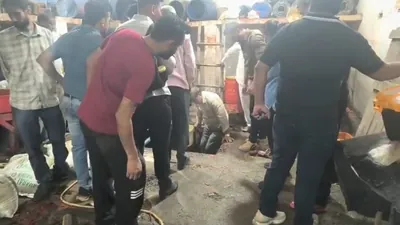
2026.3.8 Outer Delhi factory owner, son suffocate to death in well at pickle-making unit
Outer Delhi pickle factory owner suffocates to death, son suffocate to death, pickle factory owner suffocates to death, Outer Delhi , delhi news, India news, Indian express, current affairs
A man, along with his son, died as they suffocated after falling into a 10-foot well at a pickle manufacturing factory set up inside a residential building in Outer Delhi’s Nangloi on Saturday evening.
Police identified the deceased as Anil (60), the owner of the factory, and his son Neeraj (32).
According to the police, they received a PCR call in the evening regarding two or three persons falling into a well at a pickle-manufacturing factory in Rao Vihar. When a police team reached the spot, the officers found that the factory operated from the ground floor of a residential building. Anil stayed on the first floor with his family.
Police said there were four to five wells, each approximately 10-foot deep, in the factory, which were used in the pickle manufacturing process. The four wells were covered with wooden covers, they added.
“Initial reports indicate that a labourer went into one of the wells and lost consciousness, as he suffocated. In an attempt to rescue him, Anil and his two sons, Neeraj and 28-year-old Sandeep, also descended into the well. They also fell unconscious due to the lack of oxygen,” said an officer.
All four men were eventually pulled out of the well by Anil’s brother, Subhash, with the help of local residents. “While the labourer and Sandeep regained consciousness, Anil and his Neeraj did not. They were rushed to Sanjay Gandhi Memorial Hospital, where doctors declared them brought dead. The labourer and Sandeep are under treatment,” the officer said.
Police said they have registered a case. “Prima facie, it is suspected that they had inhaled some gas inside the well. However, the postmortem examination reports will ascertain the exact cause of the deaths,” the officer added.
Story continues below this ad
The officer said they are trying to ascertain if the owner had the required permission to run such a unit in the locality. “We are also checking if proper safety protocols were followed at the factory,” the officer added.
According to an officer from the Delhi Fire Service, a call regarding the incident was received at 7.22 pm, after which two fire tenders were dispatched. The rescue operation continued for two hours.
A video of the rescue operation has surfaced on social media, in which several people can be seen standing outside the well while a person comes out with the help of tension stairs.
Amritpal Singh alias Amrit Dalam, a native of Dalam Nangal village in Batala, was closely aligned with the Jaggu Bhagwanpuria gang and had fled abroad using a fraudulent passport.
CHANDIGARH: Amritpal Singh alias Amrit Dalam, a most-wanted gangster, has been detained at the Moldova border on the basis of an Interpol Red Corner Notice issued at the request of Punjab Police.
Director General of Police, Punjab, Gaurav Yadav said here on Saturday that the fugitive was detained on the basis of an Interpol Red Notice (Red Corner Notice) issued at the request of Punjab Police in coordination with the Ministry of External Affairs (MEA), Central Bureau of Investigation (CBI), Interpol and other central agencies.
Punjab Police has recently launched the Overseas Fugitive Tracking and Extradition Cell (OFTEC), led by Inspector General of Police (IGP) Counter Intelligence Ashish Choudhary to track criminals residing abroad and accelerate their extradition, ensuring they are brought back to Punjab to face legal proceedings.
As per information, Amritpal Singh, a native of Dalam Nangal village in Batala, was closely aligned with the Jaggu Bhagwanpuria gang and had fled abroad using a fraudulent passport. He has been actively making extortion calls targeting individuals and business owners, particularly in the Amritsar region.
DGP Yadav said that Amritpal Singh is wanted in multiple serious criminal cases, including drug smuggling, murders, attempt to murders, etc in Punjab and had been absconding abroad for a considerable period.
“His detention follows sustained international coordination and persistent follow-up by Punjab Police agencies,” he said, while adding that legal and diplomatic procedures are now underway to secure his extradition or deportation to India so that he can face the law. Yadav said that the OFTEC of Punjab Police is currently pursuing various criminals hiding abroad.
2026.3.7 Four masked men gang-rape 85-year-old woman in Madhya Pradesh’s Khandwa district
The incident occurred in a tribal-dominated village under the Punasa police station limits. The elderly woman, who lives alone, was reportedly asleep after dinner when the accused entered her house.
BHOPAL: An 85-year-old woman was allegedly gang-raped by at least four masked men in the Khandwa district of southwestern Madhya Pradesh on the night of Holi (Wednesday).
The incident occurred in a tribal-dominated village under the Punasa police station limits. The elderly woman, who lives alone, was reportedly asleep after dinner when the accused entered her house.
According to police sources, the men allegedly took turns assaulting her. When she tried to resist, they reportedly stuffed a cloth in her mouth.
The incident came to light on the morning of March 5 when the woman’s daughter, who lives in a nearby village, learned about the assault. The victim was later admitted to Khandwa District Hospital, where she is currently undergoing treatment.
Police have registered an FIR against unidentified accused in connection with the gang rape.
Khandwa Senior Superintendent of Police Manoj Rai said a Special Investigation Team (SIT) has been formed to probe the case and that efforts are underway to identify and apprehend the suspects.
A reward of Rs 10,000 has been announced for information leading to the identification of the suspects, who were masked, the police said.

Chandigarh Police used water cannons as Warring and several other leaders were detained in Chandigarh.
x1200
2026.2.27 Woman hacked to death on suspicion of practising witchcraft in Jharkhand, one held
The incident took place in Baghima Ambatoli village under the Palkot Police Station limits on Wednesday, 25, when the woman was attacked by two men
A 62-year-old woman was allegedly hacked to death over suspicion of practising witchcraft in Jharkhand’s Gumla district, police said on Friday (February 27, 2026). A man was arrested on Thursday (February 26, 2026) in connection with the death, a senior officer said.
The incident took place in Baghima Ambatoli village under the Palkot Police Station limits on Wednesday (February 25, 2026), when the woman was attacked by two men.
“Mangari Devi was hacked to death around 11:30 a.m. on Wednesday (February 25) when she was on her way to attend a marriage ceremony at Pandrapani, which is about 7 km from the village. The accused, along with his friend, attacked the elderly woman with an axe and killed her,” Palkot Police Station officer-in-charge Tarun Kumar said.
The two accused dumped the body in the Goja forest area, and one of them was arrested, he said. During the investigation, the arrested person admitted that he killed Devi over suspicion of practising witchcraft, the officer said. “The accused claimed that his mother and brother had fallen ill due to the black magic of the elderly woman,” the officer said. The police are conducting raids at multiple locations to arrest the other accused, who has been on the run, the OC added.
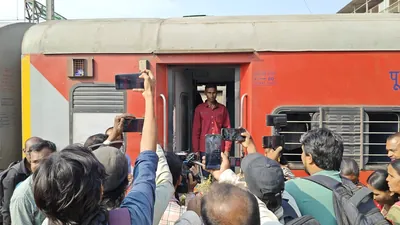
2026.2.26 Trafficked To J&K At 13, Odisha Man Reunites With Family At 31 Using Memorised Phone Number
For 18 years, Purushottam held on to the 10-digit mobile number he had memorised in childhood. That eventually helped him find his way back home.
Rourkela: Purushottam Goud, 31, had never forgotten the first mobile number his family had got about two decades ago. Those ten digits eventually helped him reunite with his family in Odisha’s Rourkela on Tuesday, 18 years after he was separated from them and allegedly trafficked to Jammu and Kashmir to work in bonded conditions.
“I am feeling very happy. Everything seems new to me. I always wanted to come back home but did not have money nor any identity proof,” Purushottam told ETV Bharat over the phone.
A resident of Sonaparvat Ganjutola under Suidihi panchayat in Lathikata block, Purushottam was allegedly trafficked to Jammu and Kashmir when he was 13 years old and forced to work as a labourer. He stayed in Samba district of Jammu, close to the India-Pakistan border, he said.
“I was at a businessman’s house there, doing all kinds of household work, and was also asked to drive trucks and other vehicles. They never tortured me. I was given food, clothes and other necessities, but they never paid me. I tried to contact home on that number earlier as well but could not connect,” Purushottam said.
Back home, his family members had launched an extensive search and filed a missing complaint with the local police, but there was no breakthrough. Meanwhile, his parents passed away waiting for their only child. He is now living with his aunt and cousins.
In 2022, Purushottam managed to call his home using the mobile phone number he had memorised as a child. He informed his family about his whereabouts in Jammu and Kashmir and sought help, but it did not yield any results.
He, however, hadn’t lost hope. Earlier in January this year, he again contacted his family from another phone and shared his exact location, pleading for rescue. His aunt approached the local Sarpanch, who facilitated contact with Raghunathpali MLA Durga Charan Tanti. The MLA took up the matter with senior police officials, prompting coordinated action.
After Tangarpalli police in Rourkela contacted Rajpura police in Samba district and explained the whole scenario, local authorities in Jammu and Kashmir rescued Purushottam. He was subsequently handed over to a Constable from Tangarpalli police station, who escorted him back to Odisha.
Upon his arrival in Rourkela by train on Tuesday, Purushottam was received by family members and local representatives. Villagers in Suidihi later celebrated his return with traditional music and floral greetings.
His family members mentioned how Purushottam was being allegedly threatened of ill consequences if he attempted to return to his native place. “We had lost all hope that he would return to us. We are very happy that he is back. Some people had threatened him that if he attempts to return, they would kill him portraying him as a terrorist,” said Anita Goud, his sister-in-law.
“He wept inconsolably after seeing us at the Rourkela railway station. We are thankful to the Police and our local MLA who took up the matter and helped in bringing him back,” she added.
Years away from home have taken a toll on him. Purushottam doesn’t remember his mother tongue, Odia, and now speaks only Hindi and the local language of Jammu.
“I want to start my life afresh here with my family. I will try to eke out a living by doing what I used to do there. I am facing little problem adjusting to the food and language here, but I will get along with it eventually,” Purushottam said, his voice filled with emotion.
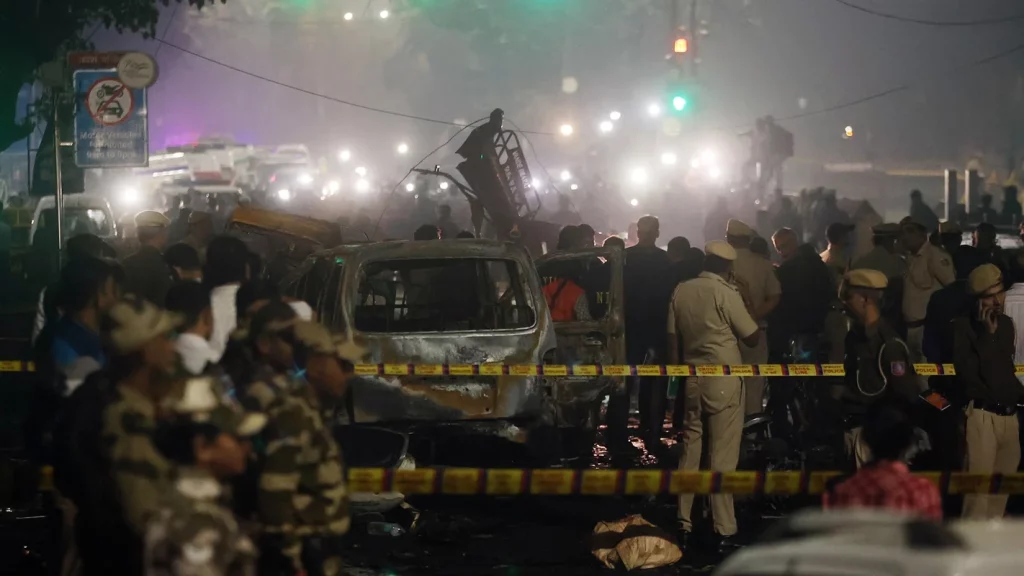
2026.2.26 Delhi Red Fort blast: NIA arrests 2 more from J&K, 11 in custody so far
Delhi Red Fort blast case sees two more arrests as NIA tightens probe into alleged arms supply network linked to the 2025 terror attack.
The National Investigation Agency (NIA) has arrested two more alleged terror operatives from Jammu and Kashmir in connection with the Delhi Red Fort bomb blast case, taking the total number of arrests to 11.
Who are the arrested suspects?
According to the NIA, the arrested men have been identified as Zameer Ahmad Ahangar, a resident of Ganderbal, and Tufail Ahmad Bhat from Srinagar. “Both were allegedly involved in supplying weapons to the prime accused, Umer Un Nabi, who was killed in the explosion that rocked the national capital on November 10, 2025. The blast had claimed 11 lives and injured several others,” a NIA spokesperson said.
“The NIA’s probe revealed that both accused were part of a wider network engaged in arms collection and supply for anti-India operations. They also played a role in multiple terror plots beyond the Delhi blast conspiracy,” the spokesperson said.
The Red Fort Blast on November 10, 2025, claimed 13 lives and injured around 30 people. The prime suspect was identified as Umar Nabi, a resident of Pulwama district and an assistant professor in the General Medicine Department at Al Falah University in Faridabad.
Forensic analysis of the explosives used in the blast has confirmed the presence of a mixture of ammonium nitrate and triacetone triperoxide (TATP), highly potent chemicals whose sale and handling are heavily regulate. Initial findings from the forensic science laboratory indicate that at least 30-40 kg of ammonium nitrate was present in the car, which could have caused an explosion of such magnitude.
x1200
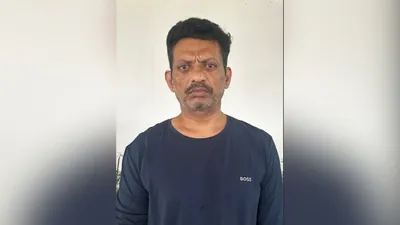
The CBI, in coordination with INTERPOL, MEA, and UAE authorities, successfully brought back Red Notice fugitive Anil Kumar Reddy Yeddula from Dubai to Hyderabad on 26 February 2026. Wanted by Andhra Pradesh Police for cheating, criminal breach of trust, and intimidation, he was handed over to local authorities for further action.
Mumbai: The Central Bureau of Investigation (CBI) has successfully coordinated return of Red Notice subject Anil Kumar Reddy Yeddula from UAE through INTERPOL Channels. Anil Kumar Reddy Yeddula is wanted subject of Andhra Pradesh Police in case of Cheating, Criminal breach of trust and Criminal Intimidation.
The International Police Cooperation Unit (IPCU), CBI in collaboration with MEA and NCB- Abu Dhabi successfully brought back wanted Red Notice subject Anil Kumar Reddy Yeddula to India on 26 February 2026. Anil Kumar Reddy Yeddula was escorted by a team of Dubai Police and arrived at Rajiv Gandhi International Airport, Hyderabad from Dubai. The subject was handed over to Police team of Andhra Pradesh at the Airport.
The subject Anil Kumar Reddy Yeddula is wanted by Andhra Pradesh Police in a number of cases registered against him on the allegations of Cheating, Criminal breach of trust and Criminal Intimidation.
CBI got the Red Notice published through INTERPOL in this case on 05.09.2022 on the request of Andhra Pradesh Police. Anil Kumar Reddy Yeddula was arrested by UAE authorities and decision was taken to extradite the subject to India.
Red Notices published by INTERPOL are circulated to all the Law Enforcement Agencies globally for tracking of the wanted Criminals.
CBI as the National Central Bureau for INTERPOL in India, coordinates with all Law Enforcement Agencies in India through BHARATPOL for assistance via INTERPOL channels. More than 130 wanted criminals have been brought back to India in last few years through coordination via INTERPOL channels.
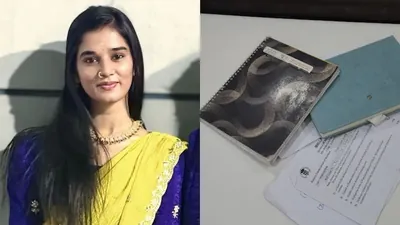
Komali, a resident of Visakhapatnam in Andhra Pradesh, was found hanging at an apartment where she had been living alone for nearly 11 months.
Hyderabad: Before she was found dead at her rented home in Telangana’s Hyderabad on Monday, 21-year-old part-time YouTuber and science student Bonu Komali wrote in her diary that she still waits for the man she was in a relationship with for three years.
Komali’s note read, “I’m scared to move on because what if he comes back? I know I should let go, I know he is not mine, I know he’s not even trying to stay. But a part of me still waits, still hopes, still imagines him choosing me one day.” She wrote that moving on feels impossible because when she she finally walks away, what if he “turns around and looks for me”.
Komali, a resident of Visakhapatnam in Andhra Pradesh, was found hanging at an apartment where she had been living alone for nearly 11 months while pursuing a BSc at a private college in Hyderabad.
According to police, Komali had been in a three-year relationship with a 27-year-old software engineer and fellow YouTuber, but the couple reportedly parted ways. She had allegedly attempted suicide six months ago.
Hours before she was found dead, she sent a message to her mother B Satya Varalakshmi, who works in Kuwait, in the early hours of Monday saying, “I love you mummy so much” and asking her to take care of her younger brother. When phone calls to Komali received no response, her mother alerted a friend who visited the flat in the afternoon. A ladder and a saree were found near the scene when her apartment was broken into by the police.
Her body has been shifted to Osmania General Hospital for autopsy as police register a case of suspicious death and collect digital and physical evidence to understand the full circumstances. Police are investigating the case, including reviewing phone records and messages and statements from friends and neighbours to establish all angles leading to her suicide.
Komali made a name for herself on social media by making YouTube videos on lifestyle, daily vlogs, and personal experiences. Her recent video on her Tirumala padyatra had gone viral. She walked up to the hill shrine to fulfil her personal wish. It became her last post.
2026.2.26 Man kills pregnant wife, three daughters in Delhi
Detectives currently suspect the motive behind the massacre may have been a twisted preference for a male heir.
A chilling murder has come to light in North Delhi’s Samaypur Badli, where a 27-year-old pregnant woman and her three young daughters were found with their throats slit in their family home. The prime suspect, Munchun Kewat — a vegetable seller originally from Bihar — is currently on the run, with police launching a massive manhunt to track him down.
The bodies of Anita, who was two months pregnant, and her daughters aged three, four, and five, were discovered on Wednesday morning by Kewat’s ten-year-old nephew. The young boy had gone to the house around 6:30 am to accompany his uncle to the Azadpur Mandi market, only to find the front gate pulled shut and the room inside covered in blood. Relatives described a “gory” scene, with the victims’ injuries so severe that their windpipes had been severed by a sharp weapon.
Detectives currently suspect the motive behind the massacre may have been a twisted preference for a male heir. Despite having three daughters and a fourth child on the way, Kewat allegedly harboured resentment over not having a son. There are also reports that he may have drugged or intoxicated his family before the attack to ensure they could not resist.
While neighbours recalled a verbal spat between the couple on Tuesday night, relatives noted that they did not usually fight. However, CCTV footage recovered from the area shows Kewat fleeing the street at approximately 5 am on Wednesday. His mobile phone was last active in the Jahangirpuri area before being switched off.
The Delhi Police have registered a murder case under Section 103(1) of the Bharatiya Nyaya Sanhita. Forensic teams have combed the ground-floor flat in Chandan Vihar, and multiple units are now following leads to apprehend Kewat before he can leave the city.
2026.2.26 The drama and the procedure: What happened when Delhi and Himachal cops faced off over arrest of 3 alleged Youth Congress workers?
Why were Delhi Police booked for kidnapping in Shimla? What is the proper legal procedure for arresting a person in another state? What will now happen to the FIR against the Delhi Police personnel? Read on.
An extraordinary stand-off between the police forces of Delhi and Himachal Pradesh took place in and around Shimla on Wednesday (February 25). A team from the Special Cell of the Delhi Police had picked up three men suspected of involvement in the so-called ‘shirtless’ protest at the AI Summit in Delhi last month, but they were prevented from taking the men out of the state by the Himachal Pradesh Police, who accused them of not having followed the proper procedure, and of kidnapping the suspects. An FIR was registered against the Delhi Police, and a faceoff between the two forces continued late into the night at the Shoghi police post on the Shimla-Chandigarh highway.
The suspects were ultimately produced before a court in Shimla on Thursday morning, and a transit remand was obtained. The Delhi Police team has come back to the capital, and the suspects will be likely produced before a Delhi court now.
While the day- and night-long standoff in Himachal Pradesh was dramatic and at times ugly, such situations between the police forces of two states over the legal procedure for arresting and taking action against accused persons is not entirely unheard of in the country.
2026.2.25 Who Are Amreen And Afreen? Bhopal Sisters Arrested For Rape, Forced Religious Conversion And Sex Racket On Pretext Of Job Offers
Bhopal sisters: Two sisters from Bhopal have been arrested on charges of rape, forced religious conversion and operating an alleged sex racket by luring young women with fake job offers. The accused, Amreen and Afreen were taken into custody along with their associate Chandan Yadav after two women filed complaints at Bagh Sewania Police Station on Sunday night.
Police said three other accused, Bilal, Chanu and Yasir are currently absconding and efforts are underway to trace them.
Investigators revealed that the sisters earlier lived in a modest house in Abbas Nagar but had recently shifted to a luxury property in Sagar Royal Villas. Authorities suspect the villa may have been purchased using proceeds from illegal activities.
How Young Women Were Trapped
According to the FIR, the accused targeted women from economically weaker backgrounds by offering domestic work with a monthly salary of ₹10,000, along with free food and accommodation. The victims were also promised a better lifestyle.
However, police said the job offers allegedly turned into exploitation. The complainants claimed they were introduced to parties, pubs and wealthy individuals. They were allegedly forced to consume alcohol and drugs, including MD, and in some instances were drugged without their knowledge and sexually assaulted.
One of the victims, a beautician from Mungeli district in Chhattisgarh, alleged that she was taken to Ahmedabad in December 2025 on the pretext of work and raped by Yasir. She further accused Bilal and Chanu of sexually assaulting her on different occasions.
The second complainant, a Bhopal resident who worked as a maid at Amreen’s house, alleged that she was raped by Chandan Yadav at a residence in Narayan Nagar and later threatened with dire consequences if she spoke out.
Who Are Amreen And Afreen?
Amreen and Afreen are sisters previously residing in Abbas Nagar, Bhopal, before moving to a luxury villa in Sagar Royal Villas. Police allege that they played a central role in recruiting vulnerable young women through false job promises.
Investigators stated that the sisters coordinated with associates across states, using social media and messaging platforms to identify and contact potential targets. Authorities are now examining their financial transactions and digital footprints to determine whether more victims are involved.
Allegations Of Forced Religious Conversion
Police are also probing serious allegations of forced religious conversion. One of the victims alleged that Chandan Yadav pressured her to convert to Islam, promising marriage into a “good family” if she complied.
She told police she converted out of fear and was later forced to follow specific religious practices, wear a burqa and marry Muslim youths. Authorities have invoked relevant sections related to forced conversion and sexual assault and are examining the claims carefully.
Possible Interstate Network Under Scanner
During the arrests, police seized mobile phones belonging to the accused and reportedly found multiple suspicious WhatsApp groups containing photographs of young women.
Investigators suspect a larger interstate network may be involved, as the victims claimed they were taken to Gujarat and Mumbai and introduced to unknown individuals. They also alleged they were blackmailed with compromising photographs when they attempted to leave.
Additional DCP Gautam Solanki confirmed that the accused are being interrogated and that bank records, travel details and digital communications are being analysed to uncover the full extent of the operation.
2026.2.25 Versova police arrest 25 illegal Bangladeshi nationals in Mumbai
In a significant crackdown on illegal immigration, Versova police in Mumbai arrested 25 Bangladeshi nationals, including 21 transgender individuals, officials confirmed on Wednesday.
The detainees were identified during a routine patrol at Shakulshaha Dargah in Versova. Following interrogation and examination of electronic evidence, authorities determined the group comprised Bangladeshi nationals. Officials stated that further arrests are possible as investigations proceed.
Senior Versova Police Officer Deepshikha Ware explained that these individuals reportedly enter India via routes through Kolkata and Mizoram. Many have been residing in India for six to eight years, with settlements not only in Mumbai but also in Gujarat and Delhi.
Regarding the transgender detainees, police noted the challenges faced by transgender individuals in Bangladesh, citing a lack of security and respect. “They seek alternative routes to India as they understand that everyone has the right to equality here,” officials said.
This operation represents the largest action against illegal Bangladeshi infiltrators in Mumbai so far this year.
Separately, Pune City Police detained two suspected Bangladeshi women during a comprehensive combing operation in the Budhwar Peth red-light area, conducted as part of a campaign against illegal activities and unlawful practices, officials reported.
The operation, directed by Police Commissioner Amitesh Kumar, involved a substantial deployment of police personnel across the area.
During the exercise, authorities inspected 41 buildings, verified 426 women and 290 men, and established nakabandis at five locations, checking 459 persons and 32 vehicles.
The two suspected Bangladeshi women, along with some minor girls, were taken into custody for safety and further verification at Faraskhana Police Station, with necessary legal proceedings underway.
Additionally, the same operation led to the arrest of a 31-year-old man from whom police seized 7 grams of charas and three injection vials. A case under the NDPS Act has been registered against him at Faraskhana Police Station.
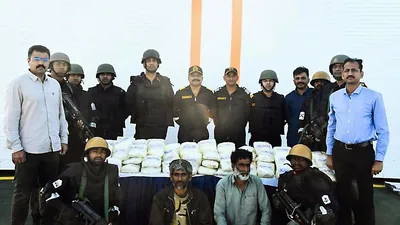
2026.2.17 Two Iranians held with over 200 kg suspected chemical substance off Gujarat
The bust was made after the Coast Guard intercepted a speedboat; police suspect new modus operandi to be in play
The Gujarat Anti-Terrorist Squad (ATS), in coordination with the Indian Coast Guard, apprehended two Iranian nationals and seized more than 200 kg of a suspected chemical substance from a speedboat intercepted off Gujarat, officials said on Tuesday (February 17, 2026).
The interception took place around 140 nautical miles off the Porbandar coast on Monday night (February 16). A total of 203 packets containing a white powder were recovered from the vessel, officials said.
“The packets containing a white powder have been sent to the Forensic Science Laboratory for examination. The substance could not be identified using the primary heroin detection kit,” they said.
Preliminary findings suggest that the two accused had navigated the speedboat from Iran to Indian waters. “The manner in which they travelled such a long distance in a speedboat is quite daring. As per our information, the consignment was to be received mid-sea and subsequently transported to Punjab. The investigation is underway,” police said.
According to the ATS, a tip-off was received that an Iranian drug smuggler identified as Haji Fida had dispatched a consignment from Konarak Port in Iran for delivery in Indian waters.
The arrested men have been identified as Abdul Majid and Abdul Sattar, both residents of Chabahar in Iran.
Officials said cases involving travel by speedboat from Iran are rare, with only two such instances reported in the past four years. “It appears to be a new modus operandi adopted by Iranian smugglers, as speedboats have a higher chance of evading Coast Guard vessels,” he said.
Two mobile phones were recovered from the accused, and investigators are analysing the data for further leads. Officials said the language barrier has posed initial challenges in questioning the suspects.
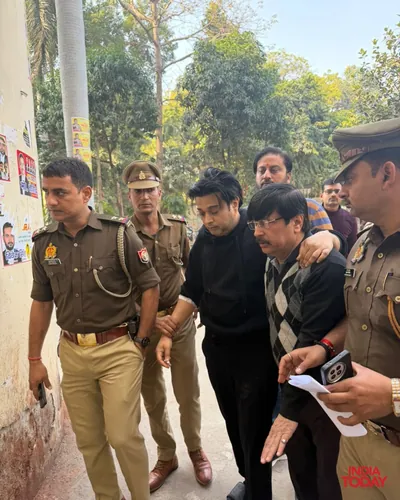
The Uttar Pradesh Police on Thursday arrested Shivam Mishra, son of Kanpur tobacco tycoon KK Mishra, in connection with the high-profile Lamborghini crash in the city’s upscale Gwaltoli area around 3 pm on February 8 that left six people injured and several vehicles damaged.
—
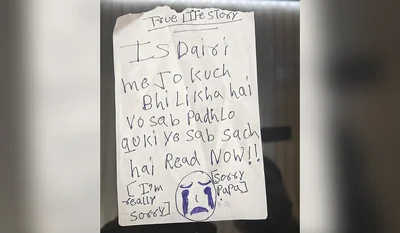
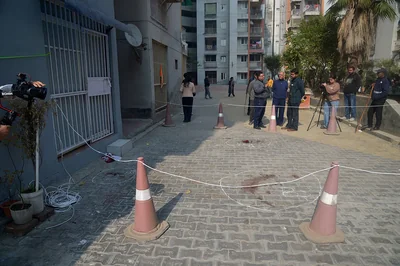
2026.2.8 Three wives, 2015 suicide: New revelations on father of Ghaziabad girls who died by suicide
The father first married 18 years ago and, after struggling to conceive, married his wife’s younger sister 15 years ago.
New details have emerged in the suicide case of three minor sisters in Ghaziabad, with investigators uncovering a complex family structure and long-standing domestic and financial stressors behind the tragedy.
The three sisters, aged 16, 14 and 11, lived in a high-rise apartment with their father, a 42-year-old stock trader, and his wives. They died by suicide after jumping from the building on Wednesday.
As police began probing the case, they found that the family structure was far more complicated than initially believed. Interrogation has confirmed that the father currently has three wives — Sujata, the mother of the eldest daughter Nishika; Heena, the mother of the two younger sisters Prachi and Pakhi; and Tina. All three women are biological sisters, according to PTI.
Investigators have also taken note of the father’s past relationship with a live-in partner, who died under suspicious circumstances in 2015 after falling from the roof of a flat in Rajendra Nagar under the Sahibabad police station area.
More details about the case
The father first married 18 years ago and, after struggling to conceive, married his wife’s younger sister 15 years ago. The eldest daughter was born to the first wife, while the two younger girls were born to the second, HT earlier reported.
The challenges faced by the family began compounding from 2020, when the father encountered economic hardships following the pandemic.
Investigators found that all three minor sisters who died by suicide were more attached to their father than to their mothers. This, they said, is why the sisters addressed their father in the suicide note and did not mention their mother’s name anywhere.
Initial findings from the scene reconstruction and autopsy of the three girls who allegedly jumped to their deaths from the ninth floor of a high-rise apartment in Ghaziabad on Wednesday suggest no apparent foul play. Investigators said on Thursday that, prima facie, the evidence indicates the three sisters likely jumped one after another.
Investigation is ongoing
Cyber crime teams are attempting to trace the buyers who purchased the mobile phones through their IMEI numbers so that data from Korean apps can be retrieved, DCP Patil said.
He added that the police are probing the case from multiple angles and are awaiting the forensic science laboratory report.
The police have maintained that the case is being treated as a suicide, with the probe focused on verifying the father’s claims regarding alleged online gaming obsession and examining all related aspects, including family circumstances.
Preliminary findings, including a nine-page pocket diary recovered from the sisters’ room on Thursday, point to an intense attachment to Korean culture and alleged family discord.
The three sisters were cremated at Delhi’s Nigam Bodh Ghat on Wednesday evening.
2026.2.7 Ghaziabad suicide: Initial investigation reveals minor sisters were depressed after father snatched phone
The police also mentioned that in 2015, the father Chetan Kumar’s live-in partner died under suspicious circumstances after falling from the roof of a flat at Rajendra Nagar Colony.
GHAZIABAD: Investigation into the suicide of three minor sisters in Uttar Pradesh’s Ghaziabad has revealed that they were depressed because their father had snatched their phones after observing that they were obsessed with the Korean culture, police said.
Due to this, the girls could not play online games and talk to their Korean friends, the police said, adding that their father later sold the phones.
On the night of the incident, they took their mother’s phone, but could not access the Korean app on that device.
The forensic team, which reached the spot and seized the mobile phone, could not find any access of the Korean app.
The fingerprints, including the handwritten suicide note and the messages, have been sent to the forensic science laboratory, the report of which is still awaited, DCP (Trans Hindon) Nimish Patil told PTI on Saturday.
In 2015, the father Chetan Kumar’s live-in partner died under suspicious circumstances after falling from the roof of a flat at Rajendra Nagar Colony in the Sahibabad police station area.
Later, the police dismissed the case, treating the death as a suicide, Patil told PTI.
Nishika (16), Prachi (14) and Pakhi (12) jumped to their deaths from the ninth floor of their residential tower in Bharat City Society under the Trans-Hindon police station jurisdiction earlier this week.
Interrogation has confirmed that currently, Kumar has three wives – Sujata (Nishika’s mother), Heena (Prachi and Pakhi’s mother) and Tina.
All three wives are biological sisters.
All three minor sisters who committed suicide were more attached to their father instead of mothers.
That is why they addressed their father in the suicide note, and nowhere they mentioned their mother’s name.
Cyber crime teams are trying to trace the buyers who purchased the mobile phones through the IMEI numbers so that data of Korean apps could be relieved, DCP Patil said, and added that the police are probing the case from various angles and waiting to get the report of forensic science laboratory.
The police have maintained that the case is being treated as a suicide, and the probe is focused on verifying the father’s claims regarding alleged online gaming obsession and examining all related aspects, including family circumstances.
Preliminary findings, which include a nine-page pocket diary recovered from the room of the sisters on Thursday, point to an intense attachment to the Korean culture and alleged family discord.
Patil said one mobile phone was purchased by Kumar for Nishika about three months ago, and another for Prachi around 15 days ago.
The three sisters were cremated at Delhi’s Nigam Bodh Ghat on Wednesday evening.
2026.2.6 Ghaziabad suicide: Debts deepened family’s isolation, financial stress began during pandemic, say cops
This financial collapse had direct affects for the girls, police said, adding that they were pulled out of school years ago and never sent back
As investigators piece together the family’s life, they say it was marked by a series of complex and layered dynamics — from financial stress that began during the pandemic and intricate marital relationships, to years of school dropout and a growing sense of isolation the girls experienced within their home.
Investigators said the sisters, aged 16, 14, and 11, lived with their father – a 42-year-old stock trader – his two wives (who are sisters), a 13-year-old deaf and specially-abled brother, and a four-year-old sister.
The family structure, at least three investigators that HT spoke to said, was convoluted: the father first married 18 years ago, and after struggling to conceive, he married his wife’s younger sister 15 years ago. The eldest daughter was born to the first wife; the two younger girls to the second.
The challenges that the family faced started getting compounded from 2020 with the father facing economic hardships following the pandemic, an officer cited above said.
Once comfortably middle-class, with a car and the children attending private school, the father suffered heavy losses. “Around eight to nine years ago, the family lived near Shastri Park and the girls were enrolled in Greenfield School in GTB Enclave. The eldest daughter attended school in Nainital for a brief period but dropped out after Class 5. At that time, the family owned a car and appeared financially stable.”
“But after the pandemic, he faced losses in his business and struggled to get a job… Due to the heavy losses, he took loans from people which he was not able to repay,” a senior investigating officer said. The family now lives in a rented apartment for which they pay ₹12,000 monthly.
This financial collapse had direct affects for the girls, another officer added. They were pulled out of school years ago and never sent back. “The father made them drop out as he believed they weren’t doing well in academics,” an officer stated.
Another officer said persistent financial distress led to frequent domestic disputes. “There were constant fights in the household. The father was extremely strict with his daughters. Initially, the girls shared two mobile phones and operated a common social media account in the eldest sister’s name. But due to mounting financial pressure, the father sold both phones – one around six months ago and the second barely 10 to 15 days before the incident,” the officer said, stating that this severely cut the girls’ only link to the Korean pop culture they cherished.
The two wives left the home in 2025 for a few days, fed up with the arguments, the officer said. “In May 2025, both wives left the house after repeated fights, leaving the children behind. No formal complaint was lodged, but the father contacted local police. The women returned within two to three days. Their current house has minimal furnishings — old furniture, a television and a few basics,” the officer said, adding the kids mostly stayed indoors.
Stranded at home, the three sisters started becoming insular, according to the testimonies the family members have given to the police. The officer said that the girls started “doing everything together”, while growing estranged from their siblings.
Investigators also noted the girls had a “failed relationship” with their mute brother and younger sister. This rift is detailed in their suicide note, where they expressed hatred for Bollywood –which they said that their siblings were “encouraged to like” – and eventually terming them their “enemy.”
The girls’ paternal uncle told HT that the family had little interaction with relatives. “They kept to themselves, and their father was always upset. He often told us about losses.”
2026.2.6 Ghaziabad triple suicide case: Minor girls refer younger sister Devu as ‘enemy’ in diary
Ghaziabad’s Additional Commissioner of Police Atul Kumar Singh reportedly noted the unusual, swift cremation of the girls’ bodies at Delhi’s Nigam Bodh Ghat on Wednesday evening.
LUCKNOW: The 9-page pocket diary recovered by the cops from the room of the three minor sisters who jumped to death from the 9th floor of their Bharat City residence in Ghaziabad in the wee hours of Wednesday, begins with a declaration: “We love Korean. Love Love Love.”
The note written by the minor girls before taking the extreme step ends with an apology, saying ‘sorry’ to Papa.
The sources claimed that the diary also spoke about their younger sister, referred to as “Devu.”
The sisters wrote of their failed bid to share their Korean passion with Devu, alleging their parents introduced her to Bollywood, something they claimed to hate more than our lives.
This led them to declare Devu their enemy.
“We separated Devu from ourselves and told her that we are Korean and K-Pop and you are Indian and Bollywood,” the note read.
Meanwhile, the investigators are also looking at the family’s financial condition.
An office-bearer of the residential society claimed, seeking anonymity, that the girls’ father, Chetan Kumar, was under severe stress after alleged stock market losses exceeding Rs 2 crore.
This used to lead to frequent domestic clashes in the family.
Meanwhile, Ghaziabad’s Additional Commissioner of Police Atul Kumar Singh reportedly noted the unusual, swift cremation of the girls’ bodies at Delhi’s Nigam Bodh Ghat on Wednesday evening, suggesting it may have been due to the family’s “personal reasons.”
The post-mortem report of the three girls — identified as Nishika, 16, Prachi, 14, and Pakhi, 12 — confirmed head injuries as the cause of death.
However, the diary recovered by the police would be the main document leading the investigation into the alleged triple suicide.
In the diary, the girls had registered that repeated parental opposition to their interests was culminating in the tragic final act.
“You tried to make us give up Korean fandom. But it was our life.. you expected us to marry an Indian, that can never happen,” a statement in the diary reads.
The girls have also allegedly accused the parents of physical punishment.
“Death is better than your beatings. That is why we are committing suicide,” the girls wrote.
The incident occurred around 2.15 am on Wednesday when the sound of the impact awoke residents.
The sisters had locked their room from the inside before jumping from the balcony window one by one, according to police accounts.
By the time family members forced entry, it was too late.
They were pronounced dead at a hospital in Loni.
As per the sources, the diary also revealed the that the area of girls’ interest had expanded beyond Korean culture to Thai, Chinese and Japanese films and music, Hollywood , English songs and cartoons.
2026.2.5 ‘Korea is our life’: Suicide note reveals victims’ obsession
Calling the incident tragic, the father urged parents to stop children from playing online games.
GHAZIABAD: The suicide note of three sisters, Nishika (16), Prachi (14), and Pakhi (12), who jumped to their deaths from a high-rise apartment in the Loni border area of Ghaziabad has revealed an intense obsession with Korea, police said on Tuesday. According to the girls’ father, the handwritten note stated: “Papa sorry, hum Korea nahi chhod sakte. Korea humari zindagi hai, Korea humari jaan hai, aur aap hume nahi chhuda sakte. I am sorry, hum jaan de rahe hai” (Papa, sorry. We cannot leave Korea. Korea is our life, Korea is our soul, and you cannot separate us from it. I am sorry, we are giving up our lives).
Police recovered an eight-page suicide note from the house. The father said he recognised the handwriting of all three daughters. Calling the incident tragic, the father urged parents to stop children from playing online games.
“No parent should allow their child to play games,” he said, claiming the family was unaware that the girls were involved in gaming. “We came to know only today through the forensic team. They were planning this for over two years,” he added. Recounting the incident, he said he was sleeping in one room while his wife was in another. “They came out on the pretext of drinking water, locked the room from inside and jumped,” he said. A mobile phone, which the girls had left behind before jumping, has been seized for investigation.
Asked if he had tried to stop them from gaming earlier, the father said he did not know the nature of the game. “If I had known that such tasks existed, no father would allow his children to be part of it,” he said. He also claimed that one of the daughters, Prachi, used to receive instructions from someone she referred to as her “boss”, which he assumed was part of a regular game.
The first page of the note was titled “true life story” and read: “Is diary me jo kuchh bhi likha hai vo sab sach hai… I am really sorry, sorry papa.”
The phrase “Make me a heart of broken. I am very very alone. My life is very very alone” was found written on a wall inside the house. Advocate Kumar Onkareshwar, a resident of the same tower, said one room was found locked from inside. Another room contained family photographs arranged in a circle, with one photograph having a face cut out. Family members and neighbours said the girls dressed like Koreans, used Korean names, and had Korean-themed mobile wallpapers. Coaching centres had earlier complained that the sisters introduced themselves as Koreans. Police said toys, cartoon-style images depicting a Korean royal family were recovered.
2026.2.4 Three minor sisters die by suicide in Ghaziabad; police probing addiction to Korean task game
Police said preliminary inquiries indicated that the sisters had developed a growing dependence on an online task-based interactive game, and had been spending increasing amounts of time on it.
LUCKNOW: Three minor sisters died after allegedly jumping from the balcony of their ninth-floor apartment in Ghaziabad in the early hours of Wednesday, with the police suspecting that the incident followed a dispute at home over excessive online gaming.
The victims–Nishika (16), Prachi (14) and Pakhi (12)–were found lying on the ground outside their residential tower in Bharat City township, under the Teela Mor police station limits, after local residents reported hearing a loud noise around 2–2.15 am, the police said.
Assistant Commissioner of Police (Shalimar Garden) Atul Kumar Singh said the police received information at 2:18 am and reached the spot immediately.
The girls had jumped from a height of 80 feet. The girls were rushed to a hospital in Loni, where doctors declared them dead on arrival.
The family said they heard a noise and ran outside. “We saw the room was locked. Then we broke the door and found the girls were not there. We ran downstairs and saw the girls lying on the ground,” they said.
As per police sources, all the three girls locked the room from inside and jumped from the balcony.
ACP Singh said preliminary inquiries indicated that the sisters had developed a growing dependence on an online task-based interactive game, and had been spending increasing amounts of time on it.
“The parents had objected to their excessive gaming, which appears to have led to discussions and disagreements at home,” he said.
According to the police, the sisters had also begun skipping school frequently and spent most of their time together at home.
Investigators said the siblings had become accustomed to doing most activities together, including studying and playing online games.
Sources said the girls were so obsessed with the game, they thought of themselves as Korean princesses.
The eldest daughter, Nishika, was born to Chetan Kumar and his first wife. The younger daughters were born to Kumar and his second wife.
According to ACP Singh, the girls were with their mother till midnight. After around 12:30 am, the girls left their room saying they wanted to get water to drink. The girls then bolted the balcony door and jumped, allegedly after being forbidden from playing the game.
The night of the incident, Kumar had forbidden the girls from playing the game. Kumar and his wife were sleeping with their son while the three daughters were resting in their room.
Police sources found a diary in the sisters’ room containing an eight-page suicide note. The diary also contained details about their lifestyle and their obsession with the task-based game, said police officers.
The note read: “Mom-Dad, sorry… we cannot quit the game. Now you will realise how much we loved the game, which you wanted us to give up.”
“I’m really sorry. Sorry, Papa, we could not leave the game. The Korean game is our life, our world,” the note said.
The father, Chetan Kumar, said he did not realise the intensity of their addiction. He said, “They had not been attending school for the past two years. They played games all day long. They did not talk to people around them. They often said that they wanted to go to Korea.”
Kumar said his daughter told him that she was the master and that her sisters listen to her commands. Prachi played the role of the game character ‘Death Commander’ and her sisters would follow everything she said.
—
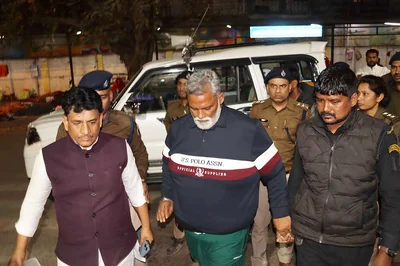
He was arrested after failing to appear in court for a case in which he was accused of fraudulently renting a house in Patna’s Gardanibagh locality to use it as an office for his party.
PATNA: Independent MP from Purnia, Rajesh Ranjan, also known as Pappu Yadav, was admitted to Patna Medical College and Hospital (PMCH) on Saturday after developing health complications following his arrest late Friday night in connection with a 1995 case.
Yadav was initially admitted to the Indira Gandhi Institute of Medical Sciences (IGIMS) on Friday night, soon after his arrest, and was later taken to the Indira Gandhi Institute of Cardiology (IGIC) for a check-up.
He was arrested after failing to appear in court in a case accusing him of illegally renting a house in Patna’s Gardanibagh area to use as his party office. The case had been filed against him and others at the Gardanibagh police station.
When police arrived at his residence in the Mandiri locality to take him into custody, Yadav expressed concerns for his safety. “I am not well… I don’t know what will happen to me. I suspect the police may harm me. I want to go directly to court instead of the police station,” he said.
He added, “The court had summoned me the next day, and I may be placed under house arrest. Police came to my residence in civilian clothes. I thought they had come to kill me. Is this a criminal’s house? This case was registered around 35 years ago, and the police came to arrest me in connection with it.”
Meanwhile, Congress leader Rahul Gandhi extended his support to Pappu Yadav on X, stating, “The death of a NEET aspirant in Patna under mysterious circumstances, and the actions that followed, have exposed the deep rot in the system. When the victim’s family demanded a fair investigation and justice, the same old BJP-NDA playbook came into play—derailing the case, harassing the family, and shielding the culprits with state power.”
He added, “Standing firmly as the voice for justice for this daughter was fellow MP Pappu Yadav. His arrest today is clearly an act of political vendetta, aimed at intimidating and silencing every voice that demands accountability. The alarming fact is that this incident is not confined to a single case. It points to a worrying pattern where more daughters are falling victim, and those in power remain indifferent. This is not politics; it is a matter of justice and the honour and safety of Bihar’s daughters.”
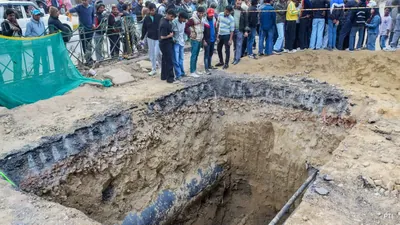
A probe revealed that the sub-contractor, Rajesh Prajapati, was allegedly alerted about the accident hours before police received information about it, but he failed to take any action, officials said.
A sub-contractor has been arrested after a biker fell to his death in a pool-sized pit dug by the Delhi Jal Board (DJB) in Janakpuri, officials said Saturday.
A probe revealed that the sub-contractor, Rajesh Prajapati, was allegedly alerted about the accident hours before police received information about it, but he failed to take any action, officials said.
Twenty five-year-old Kamal Dhyani, a resident of Kailashpuri and an employee of a private bank, was returning home late Thursday night from his workplace in Rohini when he fell into the deep pit and died. His body, along with his motorcycle, was found inside the ditch the next morning.
A family passing through the area the previous night had noticed that the victim had fallen into the pit. They immediately alerted a security guard deployed at the site.
The security guard informed a junior staff member the same night, stating that a person had fallen into the pit, police said.
The junior staff member then called Prajapati at around 12.22 am and asked him to reach the spot. Prajapati subsequently arrived at the site and saw a motorcycle and the man inside the pit but he didn’t inform anyone and went back home, officials said.
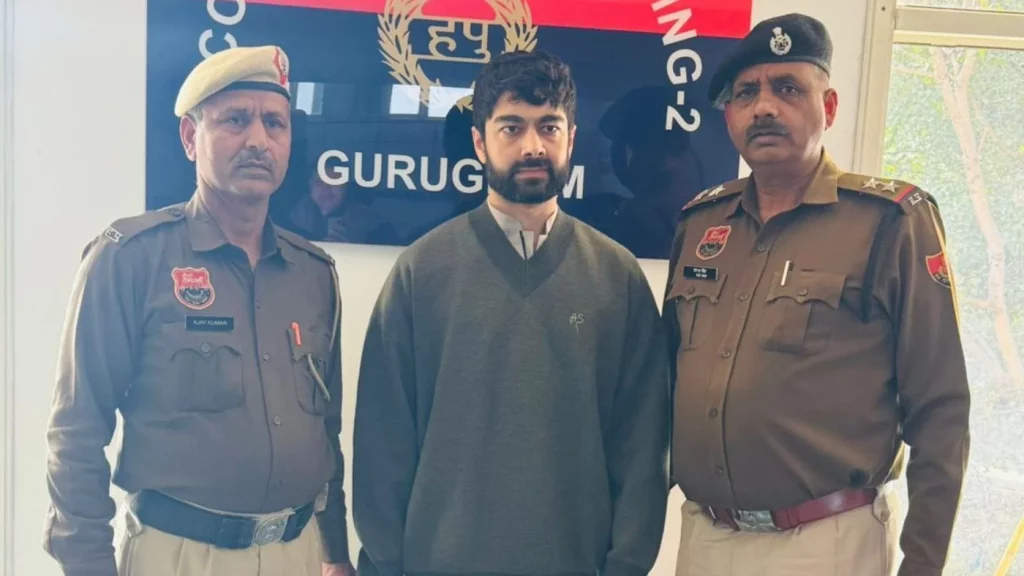
An FIR was registered on January 2 this year on the complaint lodged by one Trom Ventures Private Limited at the Kherki Daula police station. The complainant alleged cheating, criminal breach of trust, forgery, and criminal conspiracy.
Gurgaon Police on Friday arrested Dhruv Sharma, the founder, CEO, and managing director of 32nd Avenue, the commercial real estate project in Gurgaon, in connection with an alleged Rs 2.5-crore case of cheating.
He was produced before a Gurgaon court, which remanded him in six days’ police custody.
The case pertains to a 3,000-sq-ft first-floor unit at the 32nd Milestone complex at Sector 15. The complainant has alleged that the company failed to execute the terms of the sale agreement for a commercial unit, and instead allegedly sold it to 25 other individuals.
An FIR was registered on January 2 this year on the complaint lodged by one Trom Ventures Private Limited at the Kherki Daula police station. The complainant alleged cheating, criminal breach of trust, forgery, and criminal conspiracy.
A spokesperson for 32nd Avenue told The Indian Express on Friday evening that the issue had been amicably resolved with Trom Ventures after a mutual understanding.
Earlier this week, a company spokesperson had said recent delays in making payments to some investors were “driven by a short-term vacancy in a limited portion of our Gurgaon property, arising from normal tenant churn and a change in tenancy”.
“It is unfortunate that a brand widely regarded as both a customer and investor favourite has faced reputational impact due to cyclical vacancy in a minority of spaces, despite decades of strong operational performance and consistent delivery,” the company spokesperson said.
On the complaint filed by Trom Ventures, a police spokesperson said on Friday afternoon: “The accused company offered to sell the unit for Rs 2.5 crore. On September 21, 2021, the complainant company paid the full amount, and an agreement to sell was executed. However, the conveyance deed was not registered in the complainant’s name despite repeated follow-ups. The accused company continued to make rental payments as per the agreement but delayed the deed execution.”
x1200
2026.2.7 Meghalaya coal mine blast death toll rises to 27
Several Meghalaya organisations slammed the State government for failing to stop illegal coal mining.
GUWAHATI: Two more bodies were recovered on Saturday rising the death toll in Thursday’s dynamite blast at an illegal rat-hole coal mine in Meghalaya’s East Jaintia Hills district to 27.
Officials said the bodies were retrieved during rescue operations carried out by multiple agencies, including the National Disaster Response Force and the State Disaster Response Force.
Several other workers are feared trapped inside the illegal mine located at Mynsyngat, Thangsko area under the Umpleng police outpost in East Jaintia Hills district.
Nine injured people are undergoing treatment.
Until Friday, 17 bodies were identified. The victims were from Meghalaya, Assam and Nepal.
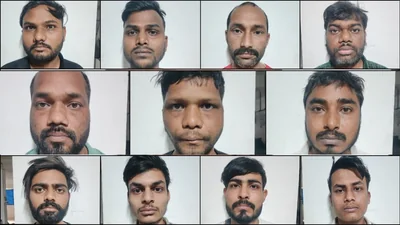
The gang included 16 Indian and Chinese nationals. Nepal Police arrested the Chinese fraudsters, while five Indians are absconding.
Mangaluru: The Mangaluru Cyber Economics & Narcotics (CEN) Crime Police Station has arrested 11 people who targeted Indians in Nepal to defraud them of hundreds of crores of rupees in the name of investment. All of the accused were arrested in Nepal, the police said.
The arrested accused include Makavan Vikram (25) from Gujarat, Soumyaditya Chattopadhyay (21) from Kolkata, West Bengal, Pupl Shivakumar Rao (32), Rajesh Mandan (30), Mithun Kumar Mangaraj (38) from Jharkhand, Gaurav Pandey (24), Harsh Mishra (22), Mohammed Aqib Ali (27), Naushad Ali (34) from Uttar Pradesh, Rajiv Ranjan Kumar (30) from Nalanda district of Bihar, and Om Prakash Yadav (37) from Jaipur district of Rajasthan.
The fraudsters’ team included 16 Indian and Chinese nationals. Nepal Police have arrested the Chinese fraudsters. Five more Indians in the gang are absconding. The police said search for them is ongoing.
When the mobile phones and laptops of the accused were examined, details of a total of 624 bank accounts were found, against the holders of which, over 4,580 cases have so far been registered on the National Cyber Crime Reporting (NCRP) Portal, the police said.
In one of these accounts, Rs 167 crore had been transferred. In the case registered at CEN Police Station, about Rs 30,70,26,725 was transferred into 10 bank accounts used by the fraudsters. The police said details of the remaining 623 bank accounts are yet to be obtained.
A laptop, 21 mobile phones, 20 SIM cards of different companies, and 20 different bank debit credit cards were seized from the arrested accused.
2026.2.6 Payal Tadvi suicide: 7 years on, why case that prompted new UGC rules is still in limbo
Bhakti Mehare, Hema Ahuja, and Ankita Khandelwal—3 of her seniors—were initially arrested on charges of harassment & casteist remarks but later released on bail. Case remains stalled.
Mumbai: The Supreme Court’s January stay on the University Grants Commission’s (UGC) fresh rules to tackle caste-based discrimination in colleges has once again turned the spotlight on the 2019 suicide of Payal Tadvi. A second-year postgraduate student of gynaecology and obstetrics at Mumbai’s BYL Nair Hospital, she died by suicide in her hostel room, her case eventually leading to the amended rules, which have now been stayed.
Just like University of Hyderabad student Rohith Vemula (26) died by suicide in 2016 following alleged caste discrimination, the 26-year-old Payal, who belonged to the Tadvi Muslim Bhil Scheduled Tribes community, was allegedly a victim of casteism.
Three of her senior colleagues—Bhakti Mehare, Hema Ahuja, and Ankita Khandelwal—were initially arrested on charges of harassment and casteist remarks on Payal.
In July 2019, the Mumbai Police filed the chargesheet against the trio. During the trial proceedings, Bhakti, Hema, and Ankita were granted bail in August 2019, only three months after their arrest. In February 2020, the Bombay High Court ordered their medical licenses—which had been suspended when the case broke— restored.
The case is yet to reach any conclusion, with Payal’s parents, Abeda and Salim Tadvi, awaiting closure more than six years after their daughter’s death.
“Initially, we were told that the case would be fast-tracked, and we would get a judgment in nine months. But, it’s been seven years now, and we are still waiting,” Abeda Tadvi told ThePrint.
In 2019, Abeda, along with Radhika Vemula, the mother of Rohith Vemula, filed a public interest litigation (PIL) in the Supreme Court, listing demands to combat caste discrimination on college campuses and to enforce the 2012 UGC regulations in this regard.
After the 2026 rules were updated at the end of the case, students from the ‘general category’ led countrywide protests. There is now a stay on the implementation of the new rules.
Small quarters, big dreams
Payal grew up in Jalgaon in a modest two-bedroom house with her parents and brother Ritesh, who is polio-affected. She left her home for the first time to study MBBS at the Government Medical College in Miraj, roughly 670 kilometres from Jalgaon.
After her graduation, Payal completed a one-year-long internship at Sangli-based PVP Government Hospital. In 2016, she got married to Salman Tadvi on Valentine’s Day. Like her, Salman was a doctor pursuing his MD in anaesthesia at the King Edward Memorial Hospital in Mumbai. He later took a job at the Cooper Hospital in Vile Parle, and after some time, Payal moved to Mumbai for her postgraduate studies. Salman rented an apartment in Mahalaxmi—close to Nair Hospital.
Traditionally an agricultural community, Tadvi Muslim Bhils were largely left on the margins of the education system, with Payal’s aspirations standing out within and outside her community. After Payal died, her grieving parents told the media she was not only the first doctor in the family but, perhaps, the first woman doctor ever from the entire community.
After Payal’s death, her friends from her MBBS days had told ThePrint how she was a warm, happy-go-lucky girl who, like any other quintessential young adult, loved watching ‘Game of Thrones’ and going out with her batchmates.
One of her friends from Miraj college—Dr Romil Kakad—had told ThePrint in 2019 that Payal, whose course at Nair Hospital started on 1 May 2018, had been disturbed for several months before she ended her life.
She had sent him a text message on 30 November 2018, discussing how everyone was stressed that she might commit suicide. Dr Kakad had mentioned Payal telling him about her three seniors, who were targeting her and not allowing her to perform procedures, such as deliveries and episiotomies—a surgical cut at the vagina to aid a difficult delivery—and that they would loudly scold her in front of patients and relatives.
The letter: ‘Bullied & ignored’
Following Payal’s death, all three accused seniors were booked under sections of the Scheduled Castes and Scheduled Tribes (Prevention of Atrocities) Act and immediately suspended from the college. Their medical licenses were suspended. In the remand hearing, the accused maintained that they did not make casteist remarks against Tadvi and that all their comments were about Payal allegedly shirking work.
While there was no physical suicide note at the spot, the Mumbai Police had recovered a photo of a handwritten note in Payal’s room, and a forensic report had confirmed it as Payal’s handwriting.
The suicide note, which was addressed to her parents, squarely blamed the three senior women for her condition and that of another fellow student, Snehal Shinde.
In the note, Payal wrote that they would not let her learn anything at Nair Hospital and restricted her to clerical work and that her complaints to the head of the department also did not help.
The 1,203-page chargesheet filed in July 2019 in three volumes carried statements from nearly 180 witnesses. Some of Payal’s colleagues and staff members, whose statements were attached, spoke about how the accused targeted her for being from the Scheduled Tribes community and getting admission in the medical course through the reserved category.
What is of note is that the chargesheet was filed over six years ago, but the charges are yet to be framed.
In August 2019, the Bombay High Court granted bail to the three accused, but under stringent conditions, which have since been relaxed.
“Most of the time since then has gone in hearing different pleas by the accused asking for relaxations in their bail conditions. The main case has been completely sidelined,” Abeda Tadvi told ThePrint.
The only thing that gets them going
In November 2024, Pradeep Gharat, then the special public prosecutor, made an application before the Mumbai sessions court, where the case was being heard, to include Dr Ching Ling Chiang, the former head of gynaecology and obstetrics at Nair Hospital, as an accused.
The court granted the request to add Chiang as an accused in the abetment to suicide case in February 2025.
However, in March 2025, the Maharashtra government abruptly removed Gharat from the position of special public prosecutor, replacing him with another prosecutor.
Unhappy, Abeda approached the Bombay High Court, challenging the state government notification that removed Gharat the same month that Chiang was named as a co-accused. That case is still pending.
Abeda and Salim have been visiting Mumbai to personally appear at the court hearings since 2019.
“Until about six months ago, we used to come two times a month. But our case has been stalled in the Bombay High Court for a year now, and even the sessions court is not giving any dates. So, our lawyer advised us to come only when there is a major development,” Abeda said.
“We have fought for so long already in the hope for justice that we feel we must see this through till the end. That’s the only thing that keeps us going.”
2026.2.4 Arrested for murder in 1982, 100-yr-old acquitted by Allahabad HC in case that lay pending 4 decades
Accused of a 1982 murder involving a land dispute, Dhani Ram was in his 50s when he was convicted. His challenge to the trial court conviction has been pending for over 40 years.
New Delhi: In a case pending for more than four decades, the Allahabad High Court Wednesday acquitted a 100-year-old murder accused. The court ruled for his acquittal, citing gaping holes and contradictions in the prosecution’s case as well as its eventual failure to establish the accused’s guilt beyond a reasonable doubt.
Accused of a 1982 murder involving a land dispute, Dhani Ram was in his 50s when he was arrested and, subsequently, spent some years in jail before he was released on bail.
A Hamirpur trial court found him guilty in July 2024, but he filed a challenge to this verdict that has remained stuck in the legal system for more than 40 years.
The high court, on 4 February, finally settled the matter, emphasising, “It is not in dispute that the appellant is now of extremely advanced age, stated to be about 100 years old.
”A division bench of justices Chandra Dhari Singh and Sanjiv Kumar said the prolonged pendency of the criminal proceedings, along with Dhani Ram’s advanced age and long periods of freedom on bail, prompted “relevant and weighty” considerations on their end, after which they decided in favour of relief for the accused.
The court opined that prolonging the custodial consequences for the elderly man would serve no useful purpose.
Pointing to significant inconsistencies between the medical evidence and the ocular evidence—essentially what’s witnessed by a person present during a crime, more commonly known as eyewitness evidence—the court exonerated Dhani Ram.
“Where guilt itself is not established beyond a reasonable doubt, and the accused has survived under the weight of the accusation for four decades, the only outcome consistent with justice, fairness, and human dignity is complete exoneration, with a conscious recognition that prolonged pendency and extreme age further militate against any residual penal consequence,” the bench said.
Speaking to ThePrint, Dhani Ram’s lawyer Ramesh Prajapati welcomed the judgment while saying that the accused had had been out on bail for quite some years now.
The murder case
The case dates back to August 1982. A man, called Raja Bhaiya, sent a written report to the Maudaha Police Station, saying that he and his elder brother were returning home after fetching water from a pond, when his brother was shot at by the accused, including Dhani Ram.
One of the accused was allegedly armed with a spear, while another had an axe. His complaint added that the men exhorted him to kill his brother, owing to past animosity between the two parties. His brother had allegedly taken over their six bighas, worth roughly 3.72 acres.
While Raja screamed, several locals rushed towards the spot, and the accused ran away. At the site, an empty cartridge had later been found, leading to a criminal case against the men, including Dhani Ram. Under the investigation that ensued, blood-soaked pellets and blood-stained soil were found at the spot. Forensics collected what they needed. The body was sent for a postmortem.
Although the accused, including Dhani Ram, pleaded not guilty before the trial court in 1984, the court convicted all of them of murder, taking into account eyewitness testimonies and other evidence in the case. The court sentenced all to life imprisonment.
Allahabad High Court ruling
After looking at the evidence—especially eyewitness accounts—“carefully” and “with due caution”—the high court found that their testimonies did not inspire confidence to sustain the conviction.
Accepting these testimonies as the “gospel truth”, without testing them on the anvil of settled legal principles, had resulted in a grave nuisance of justice, the high court noted, while adding that the prosecution failed to prove its case beyond a reasonable doubt.
Relying on the 2025 Supreme Court ruling in the state of Madhya Pradesh vs Shyamlal matter, where the court dealt with an 1989 incident—where the accused was nearly eighty years old—converting his murder conviction to culpable homicide, not amounting to murder, the Allahabad court said “the fact that the appeal was being considered after more than three decades and that the accused had remained on bail during the pendency of the proceedings” were among the factors that the SC had then taken into consideration.
On Wednesday, the Allahabad court noted that Dhani Ram, according to the charge sheet, was already more than 94 years of age when his appeal was first considered.
He “faced the agony of investigation, trial and appeal for over twenty-five years and had already undergone more than six years of actual incarceration, with total custody including remissions exceeding eleven years,” the court noted, reducing his sentence to what has already been served.
“When the system itself has been unable to deliver finality within a reasonable time, courts are justified in adopting a tempered, human approach while fashioning relief,” the court said, acquitting Dhani Ram.
2026.2.3 Cough syrup case: Four-year-old boy from MP dies months after being in coma
In September and October last year, several children from Chhindwara and Betul districts fell critically ill after consuming Coldrif cough syrup. At least 24 children died.
A four-year-old boy from Madhya Pradesh has died at AIIMS Nagpur, months after slipping into a coma allegedly after consuming Coldrif cough syrup, officials said on Monday.
The child, Harsh, a resident of Tikabarri village in Betul district, had been undergoing treatment in the intensive care unit since September–October last year. He died during treatment on Sunday night.
Betul Chief Medical and Health Officer Manoj Hurmade confirmed the death to PTI and said a post-mortem examination was conducted in Nagpur on Monday.
In September and October last year, several children from Chhindwara and Betul districts fell critically ill after consuming Coldrif cough syrup, with symptoms including vomiting, fever and inability to urinate.
At least 24 children were reported dead in the incident.
Investigations later revealed that the cough syrup contained diethylene glycol, a highly toxic chemical known to cause acute kidney failure. A sample tested at a government drug testing laboratory in Chennai was declared “Not of Standard Quality” by the Tamil Nadu Directorate of Drug Control.
According to the October 2 report, the Coldrif syrup manufactured by Sresan Pharmaceuticals, Kancheepuram, was found to be adulterated, containing 48.8% diethylene glycol, a substance injurious to health.
Following the deaths, the Drug Controller General of India conducted a probe into the matter.
The company owner and a government doctor who allegedly recommended the syrup were arrested, and the Madhya Pradesh government banned the sale of the cough syrup in October last year.
2026.2.3 Delhi’s Dark Underbelly: 191 Kids Go Missing In First 27 Days Of The New Year; 54 Recovered But 137 Still Traceless
The most worrying trend is seen in the 12-18-year age group. In this age group, 169 adolescents went missing and girls constituted the highest number.
New Delhi: The national capital is witnessing a frightening situation, with the latest statistics from the Delhi police revealing an endless wave of missing children cases, with adolescents, particularly teenage girls, being the most affected in such cases.
The latest figures released by the Delhi Police up to January 27, 2026, the capital has already witnessed 191 cases of missing children in the first 27 days of the year. Of these, 54 were recovered by the Delhi Police, but 137 children remain missing, casting a question mark over the safety network in the city.
The most worrying trend is seen in the 12-18-year age group. In this age group, 169 adolescents went missing and girls constituted the highest number at 138, the data revealed.
This age group also has the highest number of untraced cases even after recovery. According to police, the search for 121 children is still on. “The trend indicates that adolescents, especially girls, are at the greatest risk. From January 1 to 27 this year, nine children in the 0-8 age group went missing. Of these, three were recovered, and six are still missing. In the 8-12-year age group, 13 children went missing, three were traced, and 10 are still missing,” a press note released by the Delhi Police said.
The PRO, who requested anonymity, said the data clearly shows that the number of children missing is low among younger children and the recovery rate is also not satisfactory. “The situation in 2025 was even more alarming. Last year, a total of 5,915 children were reported missing. This means that on average, more than 16 children were reported missing every day. Of these, Delhi Police recovered 4,424 children, but 1,491 remain missing, with no trace of them,” he said.
According to him, the largest proportion was again in the 12–18-year age group. In this age group, 5,081 children went missing and 3,830 were recovered. The search for 1,251 children is still on. This data demonstrates that the nature of missing children cases in Delhi is both socially and criminally serious, due to the high number of juveniles, the data said.
A grim reality
While the number of young children is low, every case appears sensitive. The highest number of missing cases is among adolescents. According to the official, the proportion of girls is alarming. The recovery rate is good, but a significant number of children remain untraced each year. If this pace continues, 2026 could surpass the number of missing children by thousands, he said.
2026.1.29 SC reserves verdict, asks NHAI to create app for identifying stray dogs on highways
During the stray dogs case hearing Thursday, the top court was also informed of steps taken by the states and UTs in the last year to manage the population of stray dogs.
ചെറിയ പ്രായം മുതൽ തന്നെ വൈശാഖൻ ഈ പെൺകുട്ടിയെ ലൈംഗികമായി പീഡിപ്പിച്ചിരുന്നെന്നും ചോദ്യം ചെയ്യലിൽ വ്യക്തമായി
കോഴിക്കോട്: എലത്തൂരില് യുവതിയെ ജീവനൊടുക്കിയ നിലയിൽ കണ്ടെത്തിയ സംഭവം കൊലപാതകമെന്ന് പൊലീസ്. ഒരുമിച്ച് ജീവനൊടുക്കാമെന്ന് വിശ്വസിപ്പിച്ച് വിളിച്ച് വരുത്തി ആൺസുഹൃത്ത് കൊലപ്പെടുത്തുകയായിരുന്നു എന്നാണ് പൊലീസ് പറയുന്നത്. സംഭവത്തിൽ സുഹൃത്ത് വൈശാഖനെ പൊലീസ് കസ്റ്റഡിയിലെടുത്തു. യുവതിയുടെ സഹോദരിയുടെ ഭർത്താവാണ് വൈശാഖൻ. പ്രതി ലൈംഗിക വൈകൃതമുള്ള ആളാണെന്നും യുവതിയെ കൊന്നശേഷവും ഇയാൾ ലൈംഗികാതിക്രമം തുടർന്നുവെന്നുമാണ് പൊലീസ് അറിയിക്കുന്നത്.
ജ്യൂസിൽ ഉറക്ക ഗുളിക നൽകിയ ശേഷം ജീവനൊടുക്കാൻ കഴുത്തിൽ കുരുക്കിടാൻ യുവതിയോട് ആവശ്യപ്പെടുകയായിരുന്നു. സിസിടിവിയിൽ നിന്ന് ലഭിച്ച ദൃശ്യങ്ങളാണ് കേസിൽ നിർണായകമായത്. യുവതിയുമായുള്ള ബന്ധം പുറത്തറിയും എന്നതാണ് കൊലപാതകത്തിലേക്ക് നയിച്ചത്. യുവതി മരിച്ചത് ബന്ധുക്കളെ അറിയിച്ചതും ആശുപത്രിയിൽ കൊണ്ടുപോയതും വൈശാഖൻ തന്നെയാണെന്നും പൊലീസ് വ്യക്തമാക്കി.
ഈ മാസം 24നാണ് യുവതിയെ എലത്തൂരിലെ വർക്ക് ഷോപ്പിനുള്ളിൽ തൂങ്ങിമരിച്ച നിലയിൽ കണ്ടെത്തിയത്. വൈശാഖന്റെ ഉടമസ്ഥതയിലുള്ള വർക് ഷോപ്പാണിത്. വർഷങ്ങളായി വൈശാഖനും യുവതിയും തമ്മിൽ പ്രണയത്തിലായിരുന്നുവെന്നാണ് പൊലീസ് പറയുന്നത്. ചെറിയ പ്രായം മുതൽ തന്നെ വൈശാഖൻ ഈ പെൺകുട്ടിയെ ലൈംഗികമായി പീഡിപ്പിച്ചിരുന്നെന്നും ചോദ്യം ചെയ്യലിൽ വ്യക്തമായി.
അടുത്ത കാലത്ത് തന്നെ വിവാഹം കഴിക്കണമെന്ന് യുവതി ആവശ്യപ്പെട്ടിരുന്നു. എന്നാൽ, പ്രതി ഒഴിഞ്ഞുമാറി. ഒന്നിച്ചു ജീവിക്കാൻ പറ്റില്ലെങ്കിലും ഒന്നിച്ചു മരിക്കാമെന്ന് പറഞ്ഞ് വൈശാഖൻ യുവതിയെ വർക്ക് ഷോപ്പിലേക്ക് വിളിച്ചു വരുത്തുകയായിരുന്നു. രണ്ടുപേർക്കും മരിക്കാനായി കുരുക്ക് തയ്യാറാക്കിയ വൈശാഖൻ യുവതി കഴുത്തിൽ കുരുക്കിട്ടയുടൻ സ്റ്റൂൾ തട്ടി മാറ്റി. മരണം ഉറപ്പിച്ചതിനു പിന്നാലെ ഇയാൾ സ്ഥലത്തുനിന്ന് കടന്നുകളഞ്ഞതായും പൊലീസ് പറയുന്നു.
പ്രണയം നടിച്ച് ഇയാള് പെണ്കുട്ടിയെ പലതവണ പീഡിപ്പിച്ചിട്ടുണ്ടെന്നാണ് വിവരം. പോക്സോ വകുപ്പുള്പ്പെടെ ചേര്ത്താണ് ഇയാള്ക്കെതിരെ പൊലീസ് കേസെടുത്തിരിക്കുന്നത്. തട്ടമ്പാട്ടുത്താഴം സ്വദേശികളാണ് യുവതിയും വൈശാഖനും. പ്രതിയെ ചോദ്യം ചെയ്തു വരികയാണെന്ന് എലത്തൂര് പൊലീസ് വ്യക്തമാക്കി.
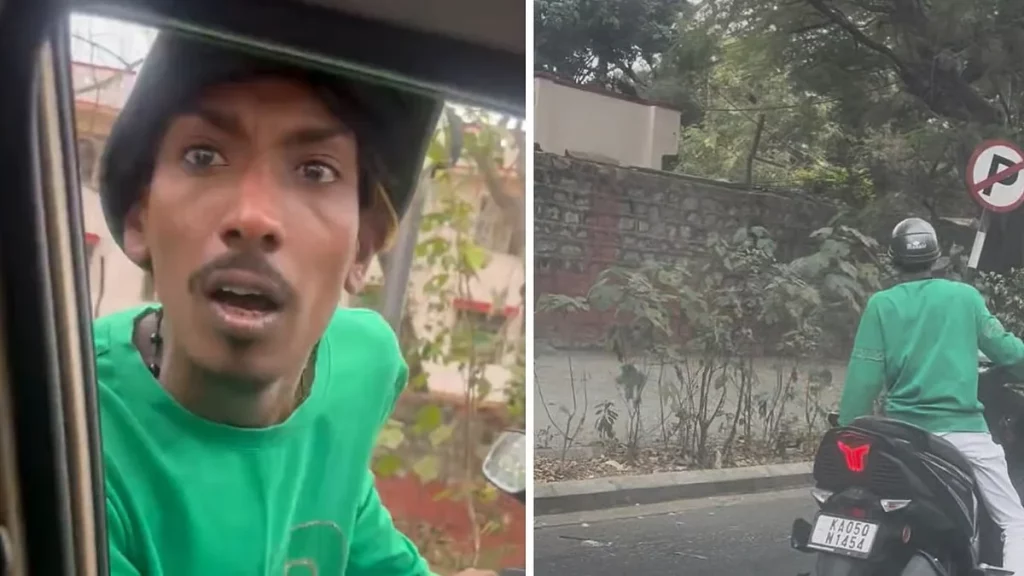
A road rage incident in Bengaluru has gone viral, showing a biker jumping a traffic signal and colliding with a car before turning aggressive when confronted. In the video, the rider is heard saying, “My bike, my rules.” He then attempts to slap the man recording the incident before speeding away, sparking outrage online.
A video circulating on social media shows a biker allegedly jumping a traffic signal and colliding with a car, following which a heated confrontation ensues on the streets of Banglore. The car driver, who recorded the incident, claims the biker hit his vehicle and reacted aggressively when confronted.
Verbal abuse and threat caught on camera
In the video, the biker seen wearing a green long-sleeve T-shirt and white pants is heard telling the man recording, “My bike, my rules, my road, my wish.” When asked to repeat the statement before the police, the biker turns hostile and attempts to slap the person filming.
Aggressive behaviour before fleeing
The biker is seen leaning toward the car window in a threatening manner, gesturing angrily and attempting to strike the recorder. The blow appears to miss, after which the biker pulls back, revs his scooter and speeds away from the spot.
The video has since gone viral on social media, with netizens questioning the man’s aggressive behaviour. Many users remarked, “What kind of criminal entitlement is this?” and expressed hope that the police would arrest him. Several also asked whether his punishment would be limited to traffic violations or if his verbal abuse is punishable under the Bharatiya Nyaya Sanhita (BNS).
Responding to the viral clip, authorities acknowledged the complaint online, stating, “We have noted your complaint and are working on further action. We request your cooperation in this regard. Thank you.”
x1200
2026.1.27 ‘Yaha Musalmano Ke Pooja-Path Horahe Hai’: Woman Asked To Leave Premises Of Rajasthan Temple For Disrupting Communal Harmony; Netizens React
A video alleging that Ridhima Sharma performed a Hindu–Muslim act inside Rajasthan’s Gogaji Maharaj Temple sparked controversy online. Locals reportedly objected, accused her of disturbing communal harmony, and asked her to leave. Claims of an FIR in Raebareli surfaced but remain unverified. The incident triggered sharp, divided reactions on social media
A video featuring social media figure Ridhima Sharma has sparked intense debate online after it was shared with claims that she attempted a Hindu–Muslim act inside the Gogaji Maharaj Temple in the Gogamedi area of Hanumangarh district, Rajasthan. The clip, which continues to circulate widely, has led to polarized reactions and renewed discussions around religion, public spaces, and communal harmony.
What the viral video claims
According to allegations made in the video, locals present at the temple objected to Sharma’s actions, accusing her of trying to disturb communal peace within the religious premises. The situation reportedly escalated, with temple visitors confronting her and eventually asking her to leave. The video claims she was removed from the temple following the disagreement.
It has also been alleged online that an FIR has been registered against Ridhima Sharma in Raebareli, although official confirmation from authorities regarding the details and sections involved has not been publicly verified at the time of writing.
Social media reactions pour in
The video quickly went viral, drawing sharp and divided reactions from netizens. Several users criticised Sharma and questioned her intent. One user commented, “Their thinking is already filled with garbage; they bring up caste everywhere. If this sister talked about cleanliness, good governance, education, employment, healthcare, then in the present time, people would appreciate her. But they know that if this works out this month, then I too will be roaming around in big cars like those babas.”
Another user reacted more harshly, saying, “This women needs to be locked up”.
At the same time, some comments called for religious tolerance and inclusivity. One user wrote, “me being catholic just asking one question like are Muslim and catholic not allowed at religious places of Hindus we dont stop hindus at our religious place and one thing maas machi khana is not the issue its about the inner heart how you worship god he doesn’t see religion”.
Temple’s significance and broader context
Gogaji Maharaj Temple is a revered site in Rajasthan, attracting devotees from multiple communities. Incidents like this underline how viral content can quickly inflame sentiments, even before facts are fully established.
Authorities are yet to release a detailed statement, and viewers are advised to approach unverified claims with caution as investigations, if any, continue.
2026.1.25 Woman injects HIV virus on ex-lover’s wife in Andhra, four held
The attack itself was staged on January 9. As the victim, an assistant professor at a local medical college, was riding her scooter home for lunch, two of the accomplices intentionally rammed into her with a motorcycle near the KC Canal.
In a plot that sounds more like a dark thriller than real life, four people — including a woman and a nurse — were arrested in Kurnool for allegedly attacking a doctor with an HIV-infected needle. The primary suspect, 34-year-old B. Boya Vasundhara, reportedly orchestrated the attack because she couldn’t move on from her ex-lover, who had married the victim.
According to the police, the scheme was disturbingly meticulous. Vasundhara allegedly teamed up with a private hospital nurse, Konge Jyothi, and Jyothi’s two adult children to get their hands on HIV-positive blood samples. They reportedly tricked a government hospital into giving them the samples by claiming they were for medical research, then kept the infected blood in a home refrigerator.
The attack itself was staged on January 9. As the victim, an assistant professor at a local medical college, was riding her scooter home for lunch, two of the accomplices intentionally rammed into her with a motorcycle near the KC Canal. When she fell, the group pretended to be Good Samaritans rushing to help. While they were trying to usher her into an autorickshaw, Vasundhara allegedly jabbed her with the syringe. The attackers fled as soon as the doctor realised something was wrong and started screaming for help.
Fortunately, the victim’s medical background may have saved her. Being a doctor, she immediately sought preventative treatment. Medical experts have since noted that the HIV virus typically doesn’t survive long outside the human body, even if refrigerated, so the primary medical concern was actually the injection of foreign particles. Her condition is currently stable, though she is under observation for the next few weeks.
Following a complaint from the victim’s husband — who is also a doctor — the Kurnool III Town Police tracked down and arrested all four suspects on January 24. They are now facing multiple charges under the Bharatiya Nyaya Sanhita, ranging from criminal conspiracy to causing hurt by means of poison or dangerous substances.
2026.1.24 Father thrashes four-year-old daughter to death in Faridabad after she fails to count to 50, held
The father rushed hid daughter to a nearby government hospital after assaulting and lied to the doctors that she had slipped from the staircase.
CHANDIGARH: Krishna Jaiswal, a 31-year old man, thrashed his daughter, Vanshika, studying in Class 1, to death in Faridabad after she failed to count to 50 as part of her homework.
The accused has been arrested by the Haryana Police after a complaint was lodged by his wife.
Sources said that the accused was teaching his daughter, Vanshika, at home on January 21. She was enrolled in a government school in Jhar Setli, Sector 58.
When he asked his daughter to count to 50, she was unable to do so. He turned furious and beat her severely. In a fit of rage, he repeatedly assaulted her with a rolling pin and kept slamming her to the floor.
She turned unconscious. He rushed her to a nearby government hospital, where he lied to the doctors that she had slipped from the staircase. However, the doctors declared that she was dead.
Thereafter, he called his wife and reportedly told her that their daughter was playing upstairs and had fallen from the stairs, sustaining injuries.
His wife immediately rushed to the hospital and noticed several injuries on the body of her daughter. She turned suspicious and reported the matter to the police.
The seven-year-old son of the accused, who was present in the house at the time when his father was assaulting her sister, narrated the entire incident, first to his mother and later to the police.
The deceased individual sustained over a dozen bruises, fractures, and severe head injuries in the alleged assault.
Acting on the complaint, the police team arrested the father of the deceased and carried out sustained interrogation, during which he confessed to the crime.
Faridabad Police spokesperson Yashpal Yadav said that the accused Krishna Jaiswal, a resident of Kharantiya village in Sonbhadra district of Uttar Pradesh, was living with his wife in a rented house in Jharsaintli village of Faridabad in Haryana for several years.
The incident took place between 12.10 pm and 12.30 pm on Wednesday.
“She could not count numbers from one to fifty, which enraged him,” Yadav said.
He added, “The accused was taken into custody, and the brother of the deceased was counselled. He narrated the entire sequence of events. He said he was playing while his father was making his sister do her homework, and when she failed to count the numbers, he began hitting her.’’
The couple was working at private companies. Jaiswal worked the night shift at a private firm in Ballabgarh, while his wife, Ranjeeta Kumari, is employed on the day shift with another private firm. The couple has three children, including a seven-year-old son, a 4.5-year-old daughter, and a two-year-old daughter. Jaiswal hails from UP.
A case was registered under Section 103(1) (murder) against Jaiswal at Sector 58 police station on Thursday, and he was formally arrested on the complaint of his wife.
The accused was produced before a Faridabad court on Friday and was sent to a one-day police remand for interrogation.
2026.1.23 Killed for a cow: A mob lynching in Odisha and deepening mistrust between communities
On January 14, a man was beaten to death in Odisha’s Balasore district on suspicion of his involvement in what is now being called cattle trafficking by the police. Satyasundar Barik visits the family to piece together the events of that day, and examine how cattle trading is emerging as a flashpoint, deepening mistrust between majority and minority communities
Clasping her two-month-old daughter close to her chest, Manori Bibi sits silently inside her mud house. Her face is expressionless even as her baby’s first social smile flickers across her face. Under a thatched roof riddled with holes, torn apart not by a storm, but by poverty, Manori’s life appears more difficult than it already was in Astia village of northern Odisha’s Balasore district.
Her husband, Seikh Mukander Mohammed, a 35-year-old mason, whose meagre daily wages kept the household afloat, died on January 14. His life was allegedly taken after he was lynched by gau rakshaks (cow protectionists), who operate openly in vigilante groups predominantly across Bharatiya Janata Party-ruled States.
Odisha has recorded an average of about 20 cow-related episodes of obstruction and violence in a month since mid-2025, as per the Odisha Police’s Crime Branch. Typically, groups that operate in the name of preventing alleged cattle smuggling obstruct vehicles carrying cattle. They call the police thereafter. After Mukander’s death, the police in Keonjhar, the home district of Chief Minister Mohan Charan Majhi, launched multi-district raids to dismantle organised cow smuggling.
Rizwan, a resident of the village and a photographer with an Odia daily, says Mukander’s family now faces a double battle: “They will grapple with both social stigma and deepening financial distress.”
In the early hours
Mukander was born and raised in Astia village, 12 kilometres from Balasore town and about 15 km from Chandipur’s Integrated Test Range, India’s premier missile testing centre. Astia’s lanes tell a different story from many rural settlements: Hindu and Muslim households sit side by side, often within 50 metres of each other. With no agricultural land to inherit, Mukander turned to daily-wage labour. Over time, he picked up masonry skills, earning about ₹100 more a day than an unskilled labourer. The improvement did little to ease the family’s precarity.
“On average, my brother got work for barely 18 days a month at ₹500 a day. For the remaining days, he did odd jobs to survive,” says his younger brother, Seikh Jitender Mohammed. Their father is bedridden. January 14, 2026, was Makar Sankranti, a major Hindu harvest festival. It would mean almost a complete halt to construction work in the area. With no wages for the day, Mukander needed alternative work.
His mother, Manwari Bibi, recalls that he received a phone call in the early hours of the day. “He was asked to accompany a fish-laden pick-up van to its destination, and was promised ₹1,000. He accepted gladly,” she says. Mukander left home between 2.30 a.m. and 3 a.m. Manori says the family had borrowed money from two self-help groups, and the debt had climbed to ₹90,000. “Work comes rarely. When it does, you cannot refuse,” she says.
A few hours later, the family received frantic phone calls from villagers saying Mukander had met with an accident, she says. By the time they reached Jaydev Kasaba, where the pick-up van had skidded off the road, Mukander had already been shifted to the hospital by the police. He died later that afternoon.
Initially, the police treated the case as cattle smuggling having gone wrong. “An injured cow was found near the vehicle, so we invoked provisions of the Odisha Prevention of Cow Slaughter Act, 1960; the Prevention of Cruelty to Animals Act, 1960; and relevant Sections of the Bharatiya Nyaya Sanhita, 2023,” says Debajyoti Dash, Additional Superintendent of Police, Balasore.
As the day progressed, videos began doing the rounds of a person, allegedly Mukander, being mercilessly beaten by a group of men. While the authenticity of the footage is being verified by the police, the visuals showed the person being forced to chant slogans such as “Jai Shri Ram” and “Go mata, mo maa” (The cow is my mother).
Mukander’s brother Jitender filed a complaint, following which the police registered a new case under Section 103(2) of the Bharatiya Nyaya Sanhita, dealing with mob lynching. “We have arrested six persons in connection with the incident. The investigation is ongoing, and no one will be spared,” says Balasore Superintendent of Police Pratyush Diwaker. A resident living near Jaydev Kasaba, the site of the incident, about 10 km from Mukander’s home, says there were nearly 10 men who intercepted the van in the early hours of the morning.
On the streets
Odisha Police’s Crime Branch records show a recurring pattern: cattle-laden vans being waylaid and frisked by vigilante groups. In November 2025 alone, at least 20 cattle transport vehicles were tracked down by the groups across different parts of the State. In several instances, the groups were linked to Hindu organisations, say the police.
On November 5, 2025, acting on information provided by members of the Hindu Ekta Manch, a group for a Hindu rashtra (nation), the police say they seized four bullocks and arrested a man from Barbil in Keonjhar district. Four days later, on November 9, a Bajrang Dal member filmed the alleged slaughter of a cow in Jagatsinghpur district, following which a case was registered at Balikuda police station.
On November 14, Bajrang Dal members intercepted another cattle van in Bhadrak, rescuing eight animals, say the police. On November 18, gau rakshaks alerted Khordha police about a truck allegedly carrying 12 buffaloes. Yet again, on November 21, Bajrang Dal members intercepted a cattle vehicle in the Sukinda area of Jajpur district, leading to the seizure of 12 cattle.
September 2025 saw cattle transport vehicles being intercepted on 26 occasions across Odisha. In at least 8 of these cases, including 6 involving Bajrang Dal members, and one each involving the Vishwa Hindu Parishad and gau rakshaks, the groups reached the spot before they alerted the police.
Police records show that 30 cases related to cattle transportation were registered in August 2025. On August 4, a BJP zilla parishad member tipped off authorities about the assembly of 21 cows in the Sinapali area of Nuapada district. According to police documents, at least 15 people associated with Sangh Parivar organisations, including the VHP, Bajrang Dal, and Rashtriya Swayamsevak Sangh, had first confronted a person linked to the cattle before the police stepped in and formally registered a case.
However, while police reports routinely acknowledge the role of these groups in intercepting cattle vehicles, they rarely document whether violence preceded their arrival on the scene. Some of those caught were Hindus.
In 2021, as many as 80 incidents of Hindu-Muslim tension were recorded, 35 of them triggered by issues related to cows, including alleged trafficking and slaughter. The number of communal incidents stood at 58 in 2022, and rose sharply to 85 in 2023 with cow-related issues emerging as the flashpoint in 30 and 60 cases respectively. By July 2024, up to 65 Hindu-Muslim incidents had already been reported, of which 49 were centred on cow-related disputes.
As Mukander’s death triggered outrage, gau rakshaks denied any role in the violence that led to his killing. “We have grown into an organised group of volunteers who only inform the police about cow transportation and slaughter. We have never been involved in violence,” says Jitendra Swain, secretary of Maa Bharati Go Seva Kendra in Balasore, which claims to shelter nearly 3,000 stray cattle.
According to Swain, around 30 gau rakshaks and a much larger number of gau sevaks (servants) are active in the district. “We not only hand over those involved in cow trading to the police, but we also follow the cases to their logical conclusion. We ensure the police do not dilute cases at any stage of the investigation, and we even fight cases in court so that culprits do not go unpunished,” he says. Swain claims public support is growing. “The winds of change have started blowing. More people are coming forward to fund efforts to save cows in Odisha,” he says.
Operating extra-constitutionally
Human rights activists express serious concern over the violence that often precedes police action in cases of alleged cattle trading. “We have a more than 60-year-old law in the form of the Orissa Prevention of Cow Slaughter Act, 1960. Where does it mention the role of cow vigilantes? Who has given them the power to assault people, even if they are on the wrong side of the law?” says Biswapriya Kanungo, a human rights lawyer.
Kanungo says gau rakshaks are exercising “private-army-like” powers. “If they are such nationalists, how many ganja-laden trucks have they intercepted? What have they done to stop the theft of minerals from the State?” he says. By seeking assistance from gau rakshaks to curb cattle transportation while turning a blind eye to their high-handedness, Kanungo says, the police appear to have effectively let these forces loose on the streets of Odisha.
The Balasore district police cannot remember gau rakshaks ever being educated on their role as informers rather than street-level enforcers. “During the Ama Police meetings, we do discuss the duties and responsibilities of citizens. People are informed about the repercussions of taking the law into their own hands,” says Balasore SP Diwaker.
Kowtowing to the cow
The killing on the streets of Balasore failed to provoke much of a political response. Odisha Pradesh Congress Committee president Bhakta Charan Das addressed a press conference to condemn the killing of Mukander while the Biju Janata Dal dispatched a State-level delegation to Astia village five days later to meet the bereaved family. A team from the All India Majlis-e-Ittehadul Muslimeen (AIMIM) also visited the family. Beyond these gestures, however, there was little evidence of sustained political agitation or serious efforts to hold the administration accountable.
In the third week of January, the focus of public attention shifted. Keonjhar police launched one of the largest crackdowns on alleged cattle smugglers in recent memory, conducting raids across Keonjhar, Mayurbhanj, Bhadrak, and Jajpur districts. The police seized ₹1.4 crore in cash, 1 kilogram of gold, and 3 kg of silver. They arrested 9 people linked to the cattle trade. The scale of the operation dominated headlines, while Mukander’s death was pushed to the margins.
Amplifying the police action, Animal Husbandry Minister Gokula Nanda Mallik told PTI that the government was acting firmly against cattle smuggling. “Properties worth more than ₹50 crore belonging to cattle traders have been confiscated. The Chief Minister has instructed officials to keep a close watch on cattle smuggling,” he said.
On the alleged involvement of gau rakshaks in violence, Mallik said the cow protection was linked to “religious sentiment and asmita” (pride), adding that while social activists often assist the police, “they should not take the law into their own hands”. Addressing the Fisheries and Livestock Conclave, Chief Minister Majhi warned cattle smugglers, saying strict action would be taken against them. Revenue and Disaster Minister Suresh Pujari announced that cow shelters would be constructed across the State. For this, the government would provide the land.
2026.1.23 UP court junks Dadri lynching accused’s plea, says can’t transfer criminal trials ‘for convenience’
The 2015 mob lynching of Mohammad Akhlaq that shocked the nation would continue to be heard by same judge of fast-track court.
New Delhi: A sessions court in Gautam Buddha Nagar has dismissed a plea filed by the accused in the 2015 Mohammad Akhlaq lynching case to transfer the case out of the fast-track court, underlining that criminal proceedings cannot be shifted on “speculative grounds”.
In rejecting the plea on Thursday, the court in Greater Noida’s Surajpur relied on precedents set by the Supreme Court to stress that criminal trials cannot be transferred “for the convenience of parties”.
The transfer plea filed by the six accused claimed there are “compelling circumstances” to contend that continuing the trial before the same judge would leave the accused with no prospect of getting justice.
The rejection of the transfer plea comes weeks after the fast-track court dismissed the Uttar Pradesh government’s application seeking withdrawal of the prosecution in the case. With both pleas turned down, the trial is set to continue before the same court as before.
In his order, sessions judge A. Shrivatava said, “A sessions trial cannot be transferred from one court to another merely on the basis of possibilities.”
Citing the Supreme Court’s judgement in Abdul Nazar Madani v. State of Tamil Nadu and others case, the judge held that a sessions trial case “cannot be transferred for the convenience of parties or merely on the basis of apprehensions”.
The court held that such grounds, without substantive material, do not justify shifting a trial from the court lawfully seized of the matter.
The plea “lacks merit and is dismissed”, the judge said.
Before Thursday’s order, the matter had last come up for hearing the previous week, when the state government sought an adjournment on the ground that it intended to file additional documents in the same case.
Advocate Yusuf Saifi, representing Akhlaq’s family, said that the trial will now continue before the same judge.
Meanwhile, the trial has already reached the evidence stage before Judge Saurabh Dwivedi and was scheduled to be taken up on Friday, January 23. However, the hearing could not take place as proceedings across courts were delayed due to rainy weather.
The Uttar Pradesh government’s plea to withdraw the case against the accused, filed under Section 321 of the Code of Criminal Procedure—which allows a public prosecutor to withdraw from prosecution with the court’s consent—had cited inconsistencies in eyewitness accounts, lack of evidence of prior enmity, and the need to “restore social harmony”.
The lynching
Mohammad Akhlaq was killed on 28 September 2015 after a mob attacked his home in Bisahda village under the Jarcha police station area in Greater Noida. The violence followed allegations that Akhlaq had slaughtered a cow and stored beef in his refrigerator.
The mob, allegedly led by Vishal Rana and his cousin Shivam, dragged Akhlaq and his 22-year-old son Danish out of their house and assaulted them. Akhlaq, then 52, later succumbed to his injuries at a Noida hospital. Danish survived after undergoing major head surgery.
The incident sparked nationwide outrage and a broader debate on mob violence and communal tensions.
2026.1.22 Interfaith couple brutally murdered in UP’s Moradabad; girl’s brothers arrested
The bodies of the couple were found behind a temple on the outskirts of their village in the Pakbada police station area of Moradabad on Wednesday.
An interfaith couple was brutally murdered, allegedly by the girl’s brothers, in Uttar Pradesh’s Moradabad in what is suspected to be an ‘honour killing’.
The incident took place under Pakbara police station area of Moradabad district in western UP.
The bodies of the couple—a 24-year-old Muslim man and an 18-year-old Hindu woman—were found behind a temple on the outskirts of their village.
Both Kajal Saini and Mohd Arman were residents of Umri Sabzipur village.
After receiving the information, district police, in the presence of a magistrate, exhumed the bodies on Wednesday night and sent them for post-mortem.
The action followed a complaint filed by the boy’s father, after which police registered an FIR against the brothers. Two of the accused were taken into custody.
According to sources, Kajal, a resident of Umri Sabjipur village, was a student who also taught at a private school. She had been in a relationship with Arman for the past two years.
On the night of January 18, Arman went to Kajal’s house to meet her, sources said. Family members allegedly caught the couple together and, angered by the relationship, detained them.
The relatives are accused of killing the couple with spades. To destroy evidence, they allegedly took the bodies out of the village to the banks of the Gagan river near the Neem Karauli Baba temple and buried them in a pit.
Meanwhile, Arman’s family grew worried when he did not return home and approached the local police seeking help to trace him. Sources said the family had been visiting the police station for the past three days and had also filed a complaint, expressing fear of an untoward incident.
However, the cops at the local police station ignored their concerns. Due to this supine attitude of the local police station, the accused got three days to tamper with the evidence.
Ultimately, the deceased boy’s family met Moradabad SSP Satpal Antil, on whose orders action was initiated.
As per the SSP, the boy and the girl knew each other. After a thorough investigation, the police suspected the girl’s brothers and took two of them into custody.
During the interrogation, they admitted to the crime, stating that they had murdered their sister and her lover. Both bodies were buried in a field behind the temple, the SSP said.
On Wednesday, teams from the SP Crime office, Pakbara Police, and the police stations of Katghar, Majhola, Mugalpura, and Munda Pandey began excavation along River Gagan.
After several hours, the bodies of Armaan and Kajal were recovered from a pit near the Neem Karauli Baba Temple.
As the recovery became known, people from both communities gathered at the spot. In view of the situation, the CO Civil Lines called in additional police force along with PAC.
The bodies were later sent for post-mortem.
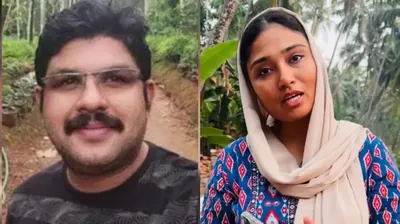
Following the incident, Musthafa deleted the original video and later uploaded another clip defending herself. That video was also subsequently made private.
A 35-year-old social media influencer in Kerala has been arrested in connection with the suicide of a 42-year-old man whom she had accused of sexual harassment on a public bus. The arrest comes days after the allegation surfaced online and the video related to it went viral.
The influencer, Shimjitha Musthafa, and the man, identified as Deepak U, were travelling on the same bus last week. Musthafa recorded a video during the journey, alleging that Deepak had sexually harassed her, and uploaded it on her social media account. The clip quickly gained traction, clocking more than 20 lakh views.
In the video, Musthafa said, “Yesterday, I shared a video from a public bus where a man deliberately touched me without my consent. This was not an accident or a misunderstanding. It was a clear violation of my sexual boundaries.”
She further claimed, “I began recording after noticing a woman in front of me was uncomfortable. Despite knowing he was being recorded, the man still went ahead and touched me. This shows a deliberate act, a lack of empathy and the belief that he would face no consequences.”
Two days after the video was recorded, on Sunday, Deepak’s parents found him hanging at their residence in Kozhikode. The family said he was deeply distressed after the video went viral and maintained that he was innocent. According to them, Deepak had not eaten for two days, including Saturday, which was his birthday.
“My child could not bear it. He has not been accused of anything wrong ever,” his mother had said.
Following the incident, Musthafa deleted the original video and later uploaded another clip defending herself. That video was also subsequently made private.
On Monday, the police registered a case against Musthafa for abetment of suicide. The Kerala State Human Rights Commission also took cognisance of the matter, ordering a police investigation and directing the North Zone Deputy Inspector General of Police to submit a report within a week.
Musthafa was arrested on Wednesday as the investigation into the case continues.
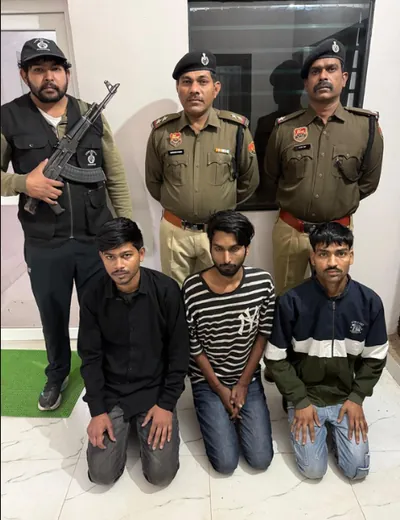
Gurugram Murdered With Brick: गुड़गाँव में मंगलवार को युवक से मोबाइल लूटने के बाद उसकी ईंट- पत्थर मारकर हत्या करने का मामला सामने आया है। तीन युवकों द्वारा इस वारदात को अंजाम दिया। मोबाइल लूटकर भाग रहे आरोपियों का युवक ने पीछा किया। गंभीर रूप से घायल करने के बाद आरोपी मौके से फरार हो गए थे। लोगों ने उसे अस्पताल में भर्ती कराया जहां इलाज के दौरान उसने दम तोड़ दिया था। मृतक की पहचान बीरबल के रूप में हुई थी। मामले की सूचना मिलते (Gurugram Murdered) ही नाथुपुर चौकी पुलिस मौके पर पहुंची।
शव कब्जे में लेकर पोस्टमार्टम के लिए भेज दिया। मामले में गुड़गाँव पुलिस ने कार्रवाई करते हुए तीन आरोपियों को काबू कर लिया। आरोपियों की पहचान मूल रूप से बहार के रहने वाले नरेश कुमार उम्र-24 वर्ष, राजू कुमार झा उम्र-28 वर्ष निवासी गांव मीरजापुर, जिला सारसा बिहार व विपिन कुमार उम्र-23 वर्ष निवासी गांव जलेघर, जिला दरभंगा बिहार के रूप में हुई है।
Gurugram Murdered, 13 जनवरी की वारदात-
पुलिस प्रवक्ता संदीप की मानें तों प्रारंभिक पूछताछ के दौरान सामने आया कि 13 जनवरी की रात को ये गांव नाथूपुर मंडी में स्थित शराब ठेके के पास खड़े थे। उसी दौरान मृतक बीरबल भी वहां मौजूद था। इसी दौरान ये उक्त मृतक का मोबाईल फोन छीनकर भागने लगे, तभी उक्त मृतक ने इनका पीछा किया तो इन्होंने उस पर ईंट व पत्थर से हमला कर दिया, जिससे वह गंभीर रूप से घायल हो गया। बाद में घायल अवस्था में उपचार के दौरान उसकी मृत्यु हो गई। अपराधिक रिकॉर्ड खंगालने पर सामने आया कि आरोपी नरेश कुमार के विरुद्ध पहले भी चोरी करने के 2 केस गुड़गांव में तथा एनडीपीएस एक्ट के तहत 1 केस असम राज्य में दर्ज है। आरोपियों से पूछताछ की जा रही है।
पश्चिम बंगाल के रहने वाले था बीरबल-
15 जनवरी को नाथुपुर चौकी पुलिस को सूचना मिली थी कि एक व्यक्ति को गंभीर हालत में सेक्टर-10 सरकारी अस्पताल में भर्ती कराया गया है। यहां जब तक पुलिस पहुंची तो पता लगा कि उसे रोहतक पीजीआई रेफर कर दिया गया है। पुलिस जब रोहतक पीजीआई पहुंची तो उसकी हालत गंभीर थी जिसके कारण बयान दर्ज हुए। वहीं, इलाज के दौरान उसकी मौत हो गई।
यहां मृतक के परिजन मिले जिन्होंने बताया कि मृतक जलपाईगुड़ी पश्चिम बंगाल के रहने वाले बीरबल ओरान थे। हाउस कीपिंग का काम करता था। मृतक की बहन ने पुलिस को बताया कि बीरबल गली में घायल अवस्था में पड़ा मिला था जिसे वह इलाज के लिए अस्पताल लेकर आए थे। जहां उसकी मौत हो गई। पुलिस ने केस दर्ज कर जांच करते हुए उक्त तीनों आरोपियों को काबू कर लिया है।
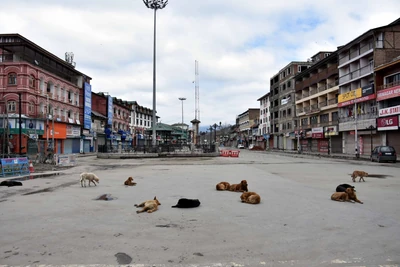
2026.1.3 Vets On Frontline Against Canines In Jammu Kashmir As Dog Bite Cases Cross 2 Lakh
The move comes after Supreme Court directions to states and union territories to manage the menace of stray dogs at public places.
Srinagar: In a policy shift, the government has drafted veterinary doctors into a frontline canine management plan to curb the spiralling stray dog menace. Faced with public health crisis that has seen over 2.12 lakh dog bites in the last three years, the sheep and animal husbandry department overseeing domesticated animals until now has mandated veterinary assistant surgeons to lead large scale management plan ranging from sterilization (Animal Birth Control), vaccination, deworming, treatment of injured and diseased stray dogs, said an official order assessed by ETV Bharat.
This mobilisation follows the Supreme Court order directing all states and union territories to manage stray dogs by removing them from the premises of educational institutions, hospitals, railway stations and bus stands and relocating them to designated shelters. The court also directed the appointment of nodal officers to ensure the sterilisation and vaccination of dogs before relocation and the J&K government has nominated Deputy Secretary Jal Shakti Department Suheel Ahmad Lone as the Nodal Officer for management of stray dogs.
Under the new mandate, the vets will move beyond their traditional duties and handle Animal Birth Control rules management alongside the district administration and the local bodies. Director Animal Husbandry department Dr Sheikh Younis said that veterinary doctors will get special skill training for sterilization and other allied activities from civic bodies to master the standard operating procedures under the ABC rules.
“The department will extend logistic support to vets for effective discharge of the assigned duties and is in addition to their own duties, ” said the official order.
2026.1.3 Three Held With Rs 20 Crore Worth Of Heroin Smuggled Via Drone From Pakistan
Superintendent of Police Amrita Duhan said the accused were intercepted following specific intelligence inputs about cross-border drug trafficking.

Gharsana (Rajasthan): Security agencies have arrested three men and seized 4.88 kg of heroin worth an estimated Rs 20 crore near the India–Pakistan international border in Rajasthan, officials said on Friday.
The arrests were made during a joint operation by the police and the Border Security Force (BSF) in Rawla village, located close to the international boundary. Superintendent of Police Amrita Duhan said the accused were intercepted following specific intelligence inputs about cross-border drug trafficking.
According to the police, the trio was spotted near a canal bank close to the 15 KND culvert under Rawla police station limits while carrying a plastic bag. They attempted to flee on noticing a police vehicle but were apprehended after a brief chase. A search led to the recovery of 4.88 kg of heroin.
Preliminary investigation revealed that the narcotics had been smuggled into India from Pakistan using a China-made drone, which was also seized during the operation.
The arrested men have been identified as Jagandeep Singh alias Labbu Singh (26), a resident of Anupgarh; Neetu Singh alias Ravneet Singh (21), a resident of Hanumangarh; and Satpal Singh (27), a resident of Ghadsana. Police said 1,019 grams of heroin was recovered from Jagandeep, 2,048 grams from Neetu, and 1,021 grams from Satpal, who was also found carrying the drone.
A case has been registered against the accused under the Narcotic Drugs and Psychotropic Substances (NDPS) Act, and further investigation is underway.
Officials said the three accused had been detained a day earlier in a preventive action for breach of peace and were later released on bail. Following their release, police received fresh inputs about a likely drug consignment from across the border. Acting on the information, the accused were arrested with the heroin and drone at a location around four kilometres from the international border.
2026.1.3 ‘Punches Thrown, Attack With Sticks’: Viral Video Shows Violent Altercation Between Devotees & Volunteers Over Darshan Lines At Uttarakhand’s Siddh Bali Temple
A heated scuffle broke out between devotees and volunteers at Uttarakhand’s Siddh Bali Temple after a dispute over darshan lines for incoming and outgoing visitors. The altercation, caught on camera and now viral, shows pushing and shoving inside the crowded premises. No case has been registered and no arrests have been reported so far.

A heated argument broke out between devotees and volunteers inside the Siddh Bali Temple premises in Kotdwar, Uttarakhand, on 2 January morning. The incident was caught on camera, and the video has since gone viral on social media.
Violence Caught on Camera
The video shows devotees and volunteers pushing and shoving each other amid raised voices in the crowded area near the temple entrance. As the altercation escalates, a man wearing a white shirt is seen striking another individual with a stick and charging towards him, while the other person attempts to fight back.
Several onlookers can be seen trying to intervene and defuse the situation. However, the footage shows multiple people charging at one another, adding to the chaos inside the packed temple premises.
According to Hindi media reports, the dispute was over entry and exit darshan lines between devotees and volunteers. No case has been registered, and no arrests have been reported so far.
Similar Incident at Badrinath Temple
In another incident of violence at a religious site, a video that surfaced on social media on July 3, 2025, shows devotees involved in a physical fight on the staircase of the Badrinath Temple in Uttarakhand.
According to reports, the fight broke out following a dispute over taking photographs for social media. The brawl, which was also captured on camera, shows devotees engaged in a heated physical altercation over access to a spot on the temple stairs.
Dispute Over Photos Turns Violent
The viral footage shows two men arguing and pushing each other within the temple premises, as other devotees present at the spot attempt to separate them. Reports suggest the altercation began when one individual tried to take photos on the staircase and another group objected, leading to a full-blown fight between the two sides.
2026.1.3 Delhi Police Bust Rs 180 Crore Cyber Crime Network Operating Via Shell Companies, 2 Arrested
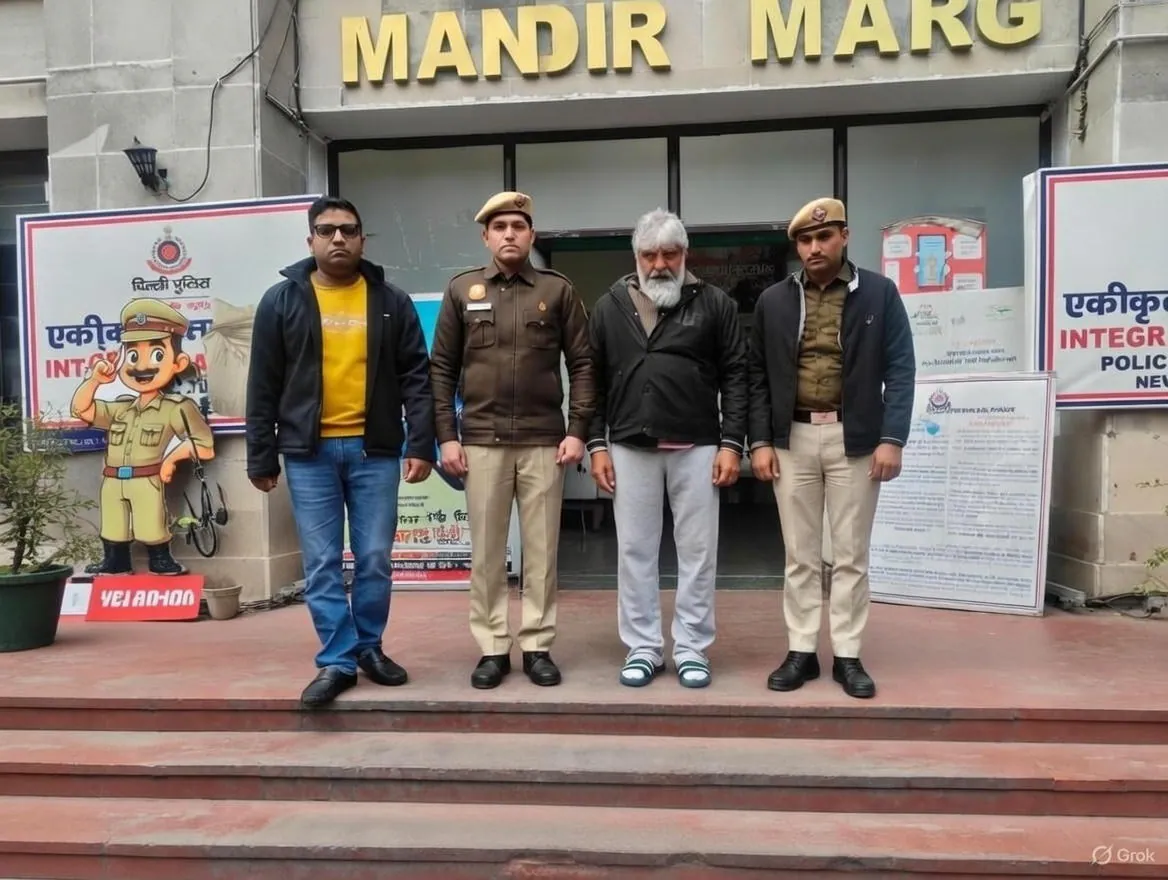
New Delhi [India], January 3: Delhi Police have busted a major cyber crime syndicate operating through a web of shell companies, arresting two accused and uncovering transactions linked to nearly Rs 180 crore in cyber fraud cases traced across the country.
The crackdown was carried out under Operation Cy-Hawk, launched to dismantle organised cyber fraud networks and choke illicit financial channels used for routing cheated money.
According to the Cyber Police Station of the New Delhi District, the operation focused on mule accounts, cash handlers and shell companies allegedly created to launder proceeds of cyber fraud. Investigators identified multiple hotspots in the district linked to suspicious financial activity. Scrutiny of complaints on the National Cyber Crime Reporting Portal (NCRP) revealed that an IDFC Bank account was being repeatedly used to receive fraud proceeds. The account was registered in the name of M/s Kudremukh Trading (OPC) Private Limited, based in Connaught Place.
Police said the account bore the hallmarks of a mule account, with multiple complaints pointing to organised cyber crime. An FIR was registered on November 19, 2025, under relevant sections of the Bharatiya Nyaya Sanhita (BNS), and an investigation was initiated.
During the probe, it emerged that the company account was opened in the name of Rajesh Khanna, who later disclosed that he had acted on the directions of Sushil Chawla and Rajesh Kumar Sharma. Investigators found that the duo controlled fund transfers and had allegedly opened 20 shell companies to siphon off the money. Further scrutiny revealed links to 176 cyber fraud complaints amounting to approximately Rs 180 crore, with funds routed through multiple layers of these companies.
Police said Rajesh Khanna has since died in Noida. The remaining accused, Sushil Chawla and Rajesh Kumar, initially joined the investigation but later evaded notices and failed to cooperate, following which they were arrested. Digital evidence suggested Khanna was allegedly used as a pawn, while the accused claimed links to a person reportedly involved in similar fraud cases in West Bengal.
Two mobile phones and a laptop have been seized. Devices and bank accounts are being examined with the Indian Cyber Crime Coordination Centre for nationwide linkage, as further investigation continues.
发表回复