Homeowners in Cork city and surrounding areas are being warned about active car thieves caught lurking in driveways late at night.
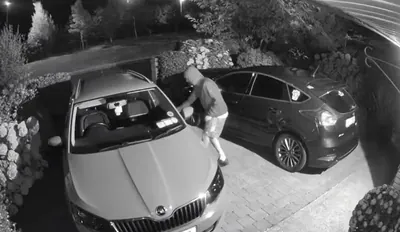
It comes as new CCTV shows one man trying vehicle door handles in the Maryborough Hill area in recent days. The prowler – who was seen lurking at around 4am, while many homeowners were sound asleep – was captured with his hood up trying to gain access to cars. Another person can be seen in the shadows watching him as he attempts to open the cars.
The footage was captured on Friday, 24th July, and it’s understood that at least two housing estates in the Douglas area were targeted that night. The CCTV video has been provided to Gardaí, who confirmed to Cork Beo that one vehicle was stolen in the area.
A spokesperson said: “Gardaí are investigating an unauthorised taking of motor vehicle near a residential premises in Douglas, Co. Cork.” They said the theft occurred between 4am and 12pm on Friday 24th July.
One local told Cork Beo that it was “shocking” thieves could cover such a large area in such a short space of time. This homeowner, who wishes to remain anonymous, already had their car broken into in late 2024, when thieves took cash and medications.
Cork City Councillor Peter Horgan has raised the alarm about crooks in the area, and has urged members of the public to take simple steps to keep their personal belongings safe. These include making sure your car is locked, taking any valuables out of the vehicle, and always rolling up your car’s windows at night.
So far this year, we’ve already seen a large number of cases where thieves were caught trying to steal vehicles on CCTV. In February, locals in Glenville, near Watergrasshill, and Glanmire got video footage as they were targeted by what appeared to be a mobile gang operating along the M8 corridor between Cork City and North Cork.
It’s believed Glenville alone was targeted three times in just one week, where crooks wearing hoods and face coverings made off with a number of personal belongings.
Meanwhile, West Cork Gardaí have also issued a warning about vehicle thefts last month, saying people “aren’t listening” when it comes to basic steps to secure their property. Garda Frances Murphy said that the majority of car thefts happen when keys are left in a vehicle’s ignition.
She warned: “We all need to get more mindful… We need to get into better habits. Take your keys out, get into the habit of locking your car, and remove your valuables. The same goes for your house, make sure everything is locked up. It’s very simple to prevent these incidents from happening.”
East Cork has also seen issues with car thefts in recent weeks. This includes one instance where a masked gang stole a farmer’s jeep that was ‘full to the brim of tools’.
During the summer months, Cork drivers are further advised to be cautious of their car when heading to the beach, as there is often a jump in thefts from vehicles in these areas.
According to Gardaí, 60% of thefts from vehicles at outdoor activities locations occur during the summer months, with millions of euros worth of valuables being taken from vehicles across Ireland every year.
While homes and vehicles at private properties are usually targeted at night – the most likely time for beach thefts to occur is between 2 pm and 7 pm. Gardaí have said catalytic converters, cash, electronics, jewellery, and tools are among the items most targeted by opportunistic crooks.
2026.8.2 Gardai learn where Glen Hansard spent final hours between Wren’s Nest and fatal crash
Gardai investigating the death of Glen Hansard are understood to have established more of the musician’s movements in the hours before his fatal crash.
The Oscar-winning songwriter died after coming off his motorcycle in the Strawberry Beds area of west Dublin in the early hours of Wednesday morning.
2026.8.2 Former flag protester accused of assaulting and harassing leading loyalist
Freddie Boyd Jnr (34) was once granted bail to appear on The Jeremy Kyle Show
2026.8.1 Brazilian escort earned over €730k by helping operate Dublin brothel gang
Bruna Da Silveira was in a relationship with the head of an organised crime group, which was investigated by gardaí, Europol and Interpol.
2026.8.1 Cork Woman who tried on €3.6k diamond ring in jewellers and replaced it with fake one jailed
Woman trying on ring valued at €3,650 returned a fake version of the ring to staff
A woman tried on a diamond ring in a jewellers and then returned a fake version of the ring and left the store with the real one which was worth €3,650.
At Cork Circuit Criminal Court, Margaret Foley, aged 39, of Cork Simon Community, was sentenced to a year in jail for the theft.
Judge Sinéad Behan said: “This was a planned operation. It was not just that she took the ring, she tried to con the unfortunate employee.”
The judge imposed a sentence of two years and suspended one year of that. The sentence was backdated to February when the accused went into custody.
Garda Ben McInerney testified that the accused and another woman went into the store. Margaret Foley tried on the diamond ring.
This occurred after lunch on February 18. She entered Michel jewellers on St Patrick’s St and asked to try on a diamond ring to the value of €3,650.
“She placed the ring on her finger. At this point she asked about a ring in a separate display. When the member of staff was doing this she took the ring off her finger and placed another ring on her finger.
“This was the ring that she handed back to the store employee. He told her it was not the initial ring but she left the store with the ring.
“She was stopped a short time later in the city centre and the diamond ring was on her finger.
“She has 74 convictions for theft previously,” Garda McInerney said. The ring was recovered and returned to the jewellers.
Defence barrister Jessica Kelleher said: “She wants to get her act together. She is working to that end. Her family are supportive.”
A total sentence of two years was imposed with the last year suspended and backdated to February.
Cindi Bonny was just 16 but she had already experienced homelessness, drug addiction and an abusive relationship when she first entered Bessborough in 1993, pregnant with her son Kevin
“They put the pressure on while I was pregnant.”
“But after, it was like, he’d be better off without you, and he deserves better. He’d end up with some lovely family that could bring him up and look after him and he could become a doctor one day.
“… I was constantly told that a mother like me, a person like me, shouldn’t have a child. Because at the time I would have had Indian ink up my arms and stuff like that.”
Cindi Bonny was just 16, but she had already experienced homelessness, drug addiction and an abusive relationship, when she first entered Bessborough in 1993, pregnant with her son Kevin.
Adamant that she wouldn’t give him up for adoption, determined to breastfeed her baby, she was kept from him for six weeks as the pressure mounted to give him up.
Eventually she left with Kevin and returned to her abusive boyfriend — only to fall pregnant a second time, returning to Bessborough in 1994.
Her second stay was different, but ended in tragedy with the sudden, shocking death of baby Zoei at just two days old.
Zoei was the last baby to die under the care of Bessborough. Unlike so many others before her, she has a grave her family can visit.
Cindi shared her story in the Irish Examiner earlier this week in an impassioned plea to authorities for a full investigation of burials at Bessborough, and for a memorial there instead of the planned apartments.
Cindi is today’s guest on The Deirdre O’Shaughnessy Podcast.x1200
2026.7.29 Gardaí drop ‘decuplet’ deportation obstruction case
Gardaí have withdrawn the first-ever prosecution for obstructing deportation brought against a Nigerian man who claimed he was a “decuplet” mixed up with one of his nine identical brothers.
Sam Okwuoha, 28, who had remained subject to deportation proceedings since January and had been in custody for months, was set to face a pre-trial hearing at Dublin District Court today.
However, the case did not proceed following a prosecution application to strike out, and he did not have to attend.
The case stems from a Garda National Immigration Bureau (GNIB) investigation and Judge John Hughes had sought a psychiatric report on Mr Okwuoha’s fitness to plead.
The alleged “decuplet” had insisted his arrest was a case of mistaken identity, leading to him being charged with a single offence under the Immigration Act 1999.
He was accused of obstructing deportation on 6 March at Dublin Airport, after the Minister of Justice, Equality and Law Reform signed the order to remove him on 6 January.
Mr Okwuoha had denied the charge.
Earlier, the court had heard that the man, who had previously lived in Dublin, replied, “I am not the person”, when charged, and bail was denied in March.
“It is the first time we have ever used it,” GNIB Detective Garda Graham Dillon had said.
He had alleged that officers attempted to remove the accused from the State, “and the removal had to be aborted due to his behaviour”.
The GNIB officer has said the charge “has not been prosecuted before”.
“I suppose the level of resistance is unusual,” he said.
Detective Garda Dillon disagreed: “We are 100% confident,” he said, adding that it had been confirmed by legitimate authorities.
The court was told the accused maintained to be “one of decuplets”, 10 children from the same pregnancy.
The proceedings have also heard that Mr Okwuoha had maintained he had identical brothers and that he “swapped places with his brother and came to Ireland”.
The detective believed Mr Okwuoha would not appear in court if granted bail, and that he had a history of failing to attend proceedings in the State and for “giving different names, using different dates of birth and identities”.
The charge is a “summary only” offence, dealt with at the District Court level, and punishable by a maximum 12-month sentence and a fine of up to €2,500.
2026.7.28 Derek Boyd jailed for life for murder of man in Dublin
Double killer Derek Boyd has been jailed for life for murdering a father-of-four at his north Dublin home and told that his sentence for the manslaughter of his sister four years ago will now be referred back to the Circuit Court.
Boyd (31), who was serving the suspended part of his sentence for killing his sister when he fatally stabbed father-of-four Mark Carroll in the chest, was on Tuesday described by the victim’s family as a “monster”.
In an emotional victim impact statement delivered to the Central Criminal Court, the deceased’s family said that Mark was taken from them in “a vicious and unnecessary act of violence”.
The deceased’s father, Kevin Carroll, told the court that the family had to go through a “painful and soul-wrenching trial”, where they had to listen to evidence of Mark’s “sickening injuries”.
A Central Criminal Court jury took nearly nine hours last week to find Boyd guilty of murder, unanimously accepting the State’s position that self-defence was not open to the accused.
The prosecution had argued that Boyd chose to pick up a knife in “a determined, murderous attack”.
In his closing address, Sean Guerin SC, prosecuting, said that Carroll’s return to Boyd’s home moments after he initially left “wasn’t remotely threatening but entirely reasonable”, as he was going back to “sort out” an earlier row.
Boyd fled the jurisdiction by boarding a ferry from Belfast to Scotland just hours after he killed Carroll. He had also fled the scene of his sister’s killing in March 2022, later telling gardaí he felt ashamed for leaving her like that.
At his sentencing for killing his sister Sandra, the Circuit Court heard that Boyd was assessed as being “at low risk of homicidal reoffending”.
In a statement given to gardaí over a year after Carroll’s death, Boyd said he believed his life was at risk and that he acted in self-defence when he carried out the fatal stabbing.
The defence said that Carroll had let himself back into Boyd’s home after being ordered to leave just minutes beforehand.
Boyd also said that, “given what had happened with his sister”, he “did not want to harm anyone intentionally and certainly did not intend to end someone’s life”.
Boyd took the stand at the trial, telling the jury how he picked up a knife and “begged” Carroll – who he’d been drinking with just moments earlier – to leave his home, claiming that the deceased repeatedly threatened to kill him.
“He told me ‘I’ll stick the knife up your h*le’”, Boyd said of the deceased.
Boyd said that Carroll grabbed him and, during a struggle, tried to take the knife. The defendant said he managed to “break free” and swung the knife at least three times but never intended to kill or seriously injure Carroll.
“Exactly what passed between them in the house was not established on the evidence,” Guerin noted on Tuesday.
A pathologist had told the trial that Carroll died from a stab wound to the chest, which measured around 10.5cm in depth and was unsurvivable.
The expert witness also said Carroll had minor injuries consistent with being in a fight.
Handing down the mandatory term of life imprisonment for murder on Tuesday, Judge Melanie Greally said Boyd’s sentence was to date from August 5th 2025, when the defendant went into custody.
In relation to the suspended sentence which Boyd was serving for killing his sister when he murdered Carroll, Judge Greally said she would list the case for re-entry before the Circuit Court on Thursday.
Boyd, with an address at Scribblestown Place, Finglas in Dublin 11 had pleaded not guilty to murdering Carroll (34) at his home on June 9th 2024.
In seeking a verdict of manslaughter or an acquittal for his client, Brendan Grehan SC with Seoirse Fennessy BL, defending, had argued that Boyd had “acted out of instinct” when he fatally stabbed Carroll.
Counsel argued Carroll had “trespassed” on Boyd’s north Dublin home and that the defendant was entitled to protect himself if he was under attack.
The deceased’s partner, Megan Rock, had denied to Boyd’s lawyers that her boyfriend had returned to the defendant’s house not to make peace, but to “sort out” Boyd.
Carroll had come to garda attention over the years and had pleaded guilty to assault causing harm to his girlfriend Rock in her home, where gardaí noted on arrival that she was bruised, bloody-faced and visibly shaking.
Carroll was also awaiting trial on a second unrelated assault causing harm charge at the time of his death.
Boyd had also pleaded not guilty that on the same occasion he assaulted Rock, causing her harm.
Boyd’s girlfriend Chantelle Harcourt (34) had pleaded not guilty to impeding her partner’s prosecution, and it was the State’s case that she knew some or all of what had occurred that night and avoided telling the truth to gardai in the hours after the fatal stabbing.
The 11 jurors were unable to reach a verdict on either of these two counts on which at least ten of them agreed, and they recorded a disagreement on the remaining two counts on the issue paper.
Guerin said a nolle prosequi would be entered on the count of assault causing harm, meaning that the State would not be proceeding with that charge against Boyd.
Detective Sergeant Niall Murray, of Finglas Garda Station, told Guerin that Carroll was a father-of-four from Finglas but had lived in Ashbourne in Co Meath, as well as in Co Monaghan with his father.
Guerin said Boyd and Carroll were known to each other through a family connection but “not very closely it seems”.
The prosecutor said the murder weapon was never recovered and that Boyd told gardai he had taken it with him from the house.
The Det Sgt said Boyd is the only boy in a family of eight children and that he had seven sisters.
The witness said at the time of the murder, Boyd had two children but now had a third child. He said he was not aware of the defendant having any employment history.
The court heard that Boyd has 18 previous convictions, with the most significant being the manslaughter of his sister and the unlawful possession of a semi-automatic pistol at the family home at Collins Place in Finglas, Dublin 11 on March 19th 2022.
Boyd was given a four-year sentence with the final two years suspended for the manslaughter and a concurrent five-year sentence with the final three years suspended for the firearm and ammunition offences. The two-year sentence was backdated to March 21, 2022.
Guerin said today that Sandra Boyd’s death had resulted from an accidental discharge of the unlawfully held firearm. He also said Boyd was serving the suspended part of that sentence “at the time of this offence” for the murder of Carroll.
Under cross-examination by Grehan, the officer agreed that Carroll was only out of Scribblestown Place for four minutes – having previously been ordered out by Boyd – when the deceased had returned.
Grehan said it appeared from how the two men were getting on that day and their previous knowledge of each other that the murder was “motiveless”.
“Yes, senseless,” replied the Det Sgt.
Judge Greally said that this was undoubtedly a “senseless and motiveless” killing. The judge described it as “an act of anger” which has had “the most catastrophic consequences” for all those connected to Carroll.
The judge said she could not imagine how painful it must have been for those close to Carroll to have had to listen to “evidence of his last minutes” during the trial.
Kevin Carroll said he was making the victim impact statement on behalf of the many family members present in court today.
“On June 9, 2024 our family suffered a life-changing loss when we got the news of our son Mark’s murder by what can only be described as a monster.
Carroll said the killing had caused their family “psychological stress and pain” and that the suffering had really taken a “toll” on them.
He said Mark’s two brothers “have been through hell trying to deal with it” and that it was “a hard pill to swallow” knowing they “will never be able to sit and laugh and joke with Mark”.
Carroll said the family had to go through “a painful and soul-wrenching” trial and listen to Mark’s “sickening injuries”.
He said they had to hear how Mark was taken from them in such “a vicious and unnecessary act of violence”. He said they “are broken by the loss of Mark” and their lives have not and never will be the same.
“Mark had four children ..the older kids miss him terribly, and the younger ones will have to be told about their dad…knowing the kids are going to have to grow up without daddy in their day to day lives is heart wrenching”.
“Our whole future has been altered, and our way of life will never be the same. Mark’s smile and laughter is only a memory now but memories we will cherish forever; but the hurt, the pain, sorrow and grief we will have to live with…But our love we had for Mark and memories will keep us strong as a family.
“There are no words that could explain the hurt and loss and the pain we are all going through. He is missed but never forgotten”.
2026.7.28 Law student charged over bomb in car: ‘I thought I’d get out today on bail’
A law student and an employee at a Dublin museum – both charged in relation to a bomb intercepted in a car near the border – have been remanded in custody.
Isobella Perrie Sullivan, 25, appeared before Monaghan District Court yesterday – wearing a white T-shirt with the logo ‘faith over fear’ – via video link from the Dóchas Centre in Dublin.
2026.7.27 Gardaí and Jacob family renew appeal on 28th anniversary of Deirdre’s murder
An Garda Síochána and the family of Deirdre Jacob have renewed their appeal for information on the 28th anniversary of her disappearance, urging anyone with knowledge of her murder to come forward.
Jacob, then 18, was last seen on Tuesday, July 28th 1998, near her home in Roseberry, Newbridge, Co. Kildare at approximately 3pm. She would be 46 this year.
The Kildare teen had just completed her first year at St Mary’s University in Twickenham, London.
On the day she disappeared, Jacob had walked into Newbridge town to organise a bank draft for £100.
CCTV footage tracked her movements through the town centre that afternoon.
At 2.14pm, she was seen walking on Main Street. 4-minutes later, she was recorded inside AIB bank obtaining the draft, before leaving a short time afterwards.
At 2.26pm Jacob was seen queuing in the post office, and 6-minutes later she stopped to speak with a friend outside on Main Street. The last confirmed sighting placed her outside PTSB bank on Main Street at 2.35pm. S
he was seen again for the final time near her family home shortly after 3pm.
At the time of her disappearance, Jacob was 5’3″ with a slim build, grey/green eyes and dark, chin-length hair. She was wearing a navy V-neck T-shirt with white trim on the collar and sleeves, navy or black straight jeans and blue Nike runners.
She was carrying a black satchel bag that was never recovered, with the word “CAT” printed in large yellow capital letters on the side.
The case was initially treated as a missing persons investigation, but on the 20th anniversary of her disappearance, An Garda Síochána upgraded it to a murder investigation.
An incident room remains in place at Newbridge Garda Station, and An Garda Síochána regularly updates Deirdre’s parents, Michael and Bernadette, and her family through a designated Family Liaison Officer.
Gardaí are appealing directly to anyone who might be holding back information, however small it may seem. The investigating team is asking the public not to assume that details already known have “limited value” or that Gardaí are already aware of them.
Anyone with information in relation to this investigation should contact the investigation team at Newbridge Garda Station at (045) 440 180, the Garda Confidential Line 1800 666 111, or any Garda Station.
2026.7.23 Judge says animal cruelty case is ‘one of worst cases I have come across’
“WHEN I heard the facts and saw the photos, it was one of the worst cases that I have come across on the bench,” Judge Geraldine Carthy said at the sentencing in Carlow District Court of 40-year-old Bernard Jackman of Munny Upper, Coolkenno, Carlow for 32 counts of dog cruelty.
In May, Mr Jackman pleaded guilty to 32 counts of dog cruelty following an inspection by a National Society for the Prevention of Cruelty to Animals (NSPCA) officer in October 2024, which led to 11 dogs being removed from his care for urgent medical treatment. The NSPCA had been contacted over concerns about the welfare of 20 dogs living on a farm at Munny Upper, Coolkenno, Shillelagh, Co Wicklow that Mr Jackman owns. Mr Jackman’s registered address is at another property he owns in Clonegal.
Mr Jackman had his case heard at Carlow District Court on 13 May, but the judge had delayed sentencing until a probation report was completed on Mr Jackman.
Reiterating the facts of the case, Judge Carthy said that Mr Jackman had failed to meet the dogs’ “basic welfare needs as they had no access to clean water or food” in the kennels they were housed in on the property. She reminded the court that the dogs were found in filthy conditions among “faeces and pools of urine”.
Many of the dogs had untreated skin conditions, infections and wounds, some from fighting that had broken out between the dogs as a lack of food makes the dogs more aggressive. Although Judge Carthy acknowledged that Mr Jackman denied being an illegal dog breeder, she said that he met the legal threshold to be considered as one.
Some of the dogs were found with their tails docked, which Judge Carthy reminded the court “is an offence in itself”.
Judge Carthy said that when deciding his sentence, she had taken into consideration his personal circumstances, previous offending history and substance misuse issues.
Mr Jackman’s defence lawyer John O’Sullivan said that Mr Jackman’s dogs had been in the care of another individual until not long before the inspection but that his client is fearful of this other individual so did not want to pursue it. Mr O’Sullivan said that his client wanted to show that he could stay out of trouble and keep engaging with the probation services.
The court heard that Mr Jackman’s probation report put him at a moderate risk of reoffending. Mr O’Sullivan pointed out the recommendation at the bottom of the probation report which said that Mr Jackman would be happy if the matter was to be resolved on a community basis so that he could continue to work on himself and for it not to impact on his daughter.
Judge Carthy sentenced Mr Jackman to ten months in prison, suspended for 24 months, with a €300 own bond, and banned him from ever owning animals again. The other dogs that were left in his care were ordered to be given up to the state, either that day or the next.
She also ordered him to pay a class A fine, the prosecution’s costs, which come to €3,000, to be paid within 120 days, and the rest of the NSPCA’s costs in looking after the dogs removed from his care, which come to €13,059.43, €6,100 of which has been paid, with the remaining to be paid within 12 weeks or Mr Jackman will be re-entered in court to activate his sentence.
The judge also expressed astonishment at the fact that the NSPCA’s costs, which were relayed to Mr Jackman at the May hearing, had not been paid, considering that Mr Jackman had told inspector Conlan that he was “not stuck for money”.
Mr O’Sullivan said that his client regretted saying that and that his personal circumstances had changed since then as he had become a father.
“Your client is fortunate to walk out of this court with his liberty. I think I have been more than fair,” Judge Carthy said as she concluded her sentencing.
Mr Jackman signed his bond in the court room before leaving.
2026.7.22 Remains of another 22 infants recovered from burial site at Tuam mother and baby home
Forensic excavating of the site of the former Tuam mother and baby home has recovered the remains of 22 more infants, bringing the total number of babies found to date to 99.
The announcement was made by the Director of Authorised Intervention at Tuam (ODAIT), Daniel MacSweeney, who is leading the exhumation.
A media conference held at the GAA club in Tuam, to mark the one-year anniversary of the first ever mass exhumation to take place here, also saw the unveiling of a new forensic facility and mortuary that will hold the remains of the infants while they will also be forensically analysed.
The building, located in Toghermore in Galway, has begun receiving the remains of the children where they are being washed and stablised as preparations are made for DNA examinations.
Mr MacSweeney said the biggest surprise for the team in working at the site had been the discovery of 99 babies in coffins at an area near a laneway that had no surface indication of graves beneath.
There is nothing on the surface that indicates that this is a location reference. There was indications on one map that there might be burials there, but what has surprised us is the concentration of burials.
“We found 99 sets of remains, mostly buried individuality in a small number of cases, two or three babies in a coffin. We are going to continue to excavate this larger burial ground area.
“Whether the same concentration of burial ground will be maintained throughout it, we just don’t know. We will continue to work in both directions from there, to deal with this whole area before we go to the memorial garden.
The forensic team is currently excavating 5,000sq m at the centre of the housing estate that was built on the grounds of the former mother and baby home.
Mr MacSweeney said the current burial site that is being excavated was “stacked”, but so far, the team will have to excavate further before they “figure out in which way they were buried”.
However, he said the excavation work at the moment may involve moving closer to the gardens in the Tuam estate.
“In this burial ground, if it goes up to the wall, which is the perimeter of the workhouse and mother and baby home, that back wall is exactly where the back wall was of the workhouse.
“If they buried remains up against that back wall and they are down 2m, from a health and safety perspective, we have to go at a 45-degree angle into those gardens. That is something we are engaged in and planning for.”
The area currently being excavated is not the green memorial garden the public is aware of, Mr MacSweeney said.
He also confirmed the children recovered will be individual skeletons as well as commingled babies.
“The scale and size of the 20 tanks in the green area, we just don’t know how many individual bodies are represented in those tanks,” he said.
“We will only be able to discover that when we recover them, and whatever else there is on the site, but it is only when we have dealt with the site that we will know more.”
He confirmed also the 99 children who have been recovered to date are from the Tuam home. “It is the style of burial, the way in which they are buried,” he said.
He also confirmed he did not expect the work to be completed within two years.
The budget for the next year’s work is €12m, which includes the building forensic lab and mortuary.
To date, 62 DNA samples have been given overall, which is included in the 200 enquires made form around the world about possible links to the Tuam grave.
“In nine short months, the forensic excavation team have recovered the skeletal remains of 99 infants and children at this site,” said Niamh McCullagh, ODAIT’s senior forensic archaeologist.
“This is a hugely significant development in the history of the site, and for all who are invested in it: Families, survivors, local communities, Irish society.”
Ms McCullagh said it was possible hundreds of remains would be found at the site.
“We have found 99 sets of remains in a very concentrated area. So it’s not outside the realms of probability that we will find up to 800 individuals, but it’s impossible to say at this point,” she added.
Mr MacSweeney said there had been no reason to refer any of the cases to gardaí at present.
2026.7.21 Stabbed as she knelt saying the Rosary: Witnesses describe Waterford church horror as victim in ICU
Mary McNamara fled for her life after but the man followed her and stabbed her in the torso
A ‘gentle’ local woman is in intensive care after a man stabbed her as she said prayers in her local church in Tramore in Co Waterford.
Mary McNamara, who was described by locals as a ‘kind’ and dedicated parishioner, was attacked as she said the Rosary ahead of 10am Mass at Holy Cross Church in the seaside Co Waterford town. Ms McNamara, who is in her 50s and well known in Tramore, was kneeling and saying her prayers at the top of the church when the attacker came up the aisle, stopped in front of her, and “lunged” at her, a witness told the Irish Mirror.
The terrified victim fled for her life – but the knife wielding man pursued her and stabbed her in the torso. Horrified onlookers attempted to intervene – and the man escaped the building.
Armed gardai were alerted to the area and along with local officers pursued the suspect – a white Irish national – to his residence in the town. He was arrested and is being detained at Tramore Garda Station.
It is understood that the suspect, who is in his 30s, is known to gardaí, and a major line of inquiry concerns mental health. The man had been known to attend the church and frequently posted a number of Christian related religious content on his social media page recently.
While Ms McNamara is not related to the attacker, she may have known him as a member of the parish, locals said.
Speaking to the Irish Mirror, local parishioner Ann O’Connor, who was with Ms McNamara when the attack occurred, described the horror she witnessed on Tuesday morning: “The lady that was stabbed was kneeling behind me so I didn’t see a lot but it was very traumatic. He was there and he came down the church and stopped. He just lunged with a knife and she ran and he after her,” she said.
Describing the victim as a “lovely person,” and “very gentle,” Ms O’Connor told how Gardai and emergency services rushed to her aid.
“Oh yes the Gardai and the ambulance and all the emergency people. Yes you would get a shock,” she added. “You don’t expect something like that. A tragedy.” Ms O’Connor said the victim was “very stressed” at the scene and added that her thoughts and prayers were with her.
The victim is understood to be in a serious condition in the hospital and is in intensive care after receiving a single stab wound. Gardai have recovered the knife believed to have been used in the apparent random attack.
Meanwhile Parish Priest Richard O’Halloran described what had occurred as “a very shocking event”: “However, the people and indeed my colleague who was there at the time responded wonderfully well. All the emergency services were called and they looked after everything that was happening. This was an incident before Mass. It was in the main body of the church.”
Fr O’Halloran confirmed that the woman is a member of the parish and well known in the area. He believed the incident to be random in nature but said “that’s in the hands of the guards.” He said his prayers and prayers of those in the parish are with the victim.
In a Statement the Diocese of Waterford and Lismore said it was “deeply shocked by a violent incident which occurred this morning during Mass at Holy Cross Church, Tramore.
“Our thoughts and prayers are with the injured parishioner, and we pray for her full and speedy recovery,” the statement continued.
“We wish to commend the courage and presence of mind shown by the parishioners who assisted during this frightening incident. We also thank the priests of the parish for their immediate pastoral care and concern, and we express our sincere gratitude to An Garda Síochána, the National Ambulance Service and all emergency personnel for their prompt response.
“We ask the people of the Diocese to pray for the injured woman, for everyone affected by this distressing incident, and for the parish community of Holy Cross, Tramore.
Local Independent councillor Joe Kelly spoke to the Irish Mirror at the scene – and spoke of the “shock” in the area.
“Everybody is shocked. Really it’s the last thing you would expect to happen in a Catholic Church and in a beautiful seaside town. That it would happen during the rosary and in the lead-up to the Mass starting makes it even more shocking.
“You’d have to wonder then where are you safe?”
Cllr Kelly added that a constituent had only recently told him that she no longer felt safe in her local church.
“I was talking to a lady in Waterford city this morning and she told me that she doesn’t light candles in the church anymore during the week. She won’t go into the church during the day because she said she feels unsafe.”
Local Fianna councillor Eamon Quinlan said crimes like this just don’t happen in Tramore – and people are stunned by this morning’s events.
And, speaking to the Irish Mirror, he urged anyone with information about the attack to contact gardai. He told us: “This has been deeply shocking to the town of Tramore.
“It is probably about 14,000 people there on a regular basis and at the height of summer which we find ourselves in now, the population of the town swells quite considerably.
“There has always been a history of Tramore being quite a safe town, even with large numbers of people coming and going.
“Therefore, the stabbing earlier today outside the Roman Catholic Church at the heart of the town is deeply shocking.
“This would be seen as quite a busy nexus, with many businesses such as Supervalu, Tesco and Lidl nearby. I would strong encourage anyone who was in the vicinity who saw anything or was aware of anything to please make contact with Tramore Garda Station.”
He added: “Tramore would have a young and vibrant community but would also have quite a considerable older population as well who live there all year round.
“This type of thing simply does not happen in Tramore. People would consider where this happened to be a very safe place and a place where they could come and go at all hours without any mindfulness of their safety.
“This really will have hurt a lot of people’s perceptions of their ability to go about their business in a more innocent way.”
On Tuesday morning gardai issued a detailed statement and appealed for witnesses to come forward. Gardai say a man in his 30s was later arrested at a domestic residence in the area – and is currently being detained at a Garda Station in Co Waterford.
Officers can hold him for up to 24 hours. Gardai also say they have seized a knife as part of the investigation.
The force said in its statement that although the woman suffered serious injuries in the attack, her life is understood to be not in danger at this stage.
The statement said: “Gardaí in Tramore are appealing for witnesses following a serious assault in Tramore, Co. Waterford on Tuesday 21st July 2026.
“At approximately 9:45am Gardaí and emergency services responded to reports of an assault in a premises on Summerhill, Tramore, Co. Waterford.
“A female (aged in her 50s) was conveyed to Waterford University Hospital for treatment of serious but non-life threatening injuries. Gardaí arrested a male (aged in his 30s) at a domestic residence located nearby.
The male is currently detained under Section 4 of the Criminal Justice Act 1984 in a Garda Station in Co. Waterford. Gardaí seized a knife which will be technically examined.”
Officers are now asking for anyone who was in the area to contact gardai. The statement said: “Gardaí are appealing for witnesses to come forward.
“Any person who was in the vicinity of Summerhill, Tramore between 9:15am and 10:15am on Tuesday 21st July and who may have camera footage (including dash-cam) is asked to make this footage available to Gardaí. Anyone with information is asked to contact Tramore Garda Station on (051) 391620, the Garda Confidential Line on 1800 666 111, or any Garda Station. Investigations are ongoing.”
2026.7.16 ‘Jennie’s Law’ approved as Irish domestic violence offender register to be signed into law
The Bill will go to President Catherine Connolly to be signed into law
‘Jennie’s Law’ is finally a reality as TDs have approved legislation for an Irish public register of domestic violence offenders. For the family of Jennifer Pool, it is a relief after more than four years since she was killed.
The Domestic Violence (Judgements) Register Bill 2026 will now go to President Catherine Connolly to be signed into law. The names of people convicted of domestic violence will be included on a register, available to view publicly.
Ms Poole’s family said, “It’s finally here” after years of campaigning.
The Dubliner’s brother, Jason Poole, said: “Jennie’s Law is no longer a fight or a battle; instead, it’s a law in her memory and a tool for victims in the future. It’s also a moment of sadness, but obviously a moment of remembering Jennifer’s name as a legacy.”
Jennifer’s family and friends were in the public gallery of the Dáil chamber on Wednesday afternoon when Minister for Justice Jim O’Callaghan announced the enactment of ‘Jennie’s Law,’ the Irish Mirror reported, and TDs gave Jason and the Poole family a standing ovation after the law was passed.
The Bill, which has become known as ‘Jennie’s Law’, is named in memory of 24-year-old Jennifer, who was murdered by Gavin Murphy at her home in Finglas in April 2021. Jennifer had been unaware that Murphy had a history of abusive behaviour, including a conviction for assaulting a former partner. She believed Murphy had just returned from Spain, when in fact he had been in jail.
Murphy, of Coultry Drive in Ballymun, admitted to attacking and stabbing mum-of-two Jennifer to death and is currently serving a life sentence for her murder.
After her death, Jennifer’s family launched a high-profile campaign calling for greater transparency around serious domestic violence convictions. They pleaded for public access to information that could help protect potential victims and prevent further tragedies.
Jason Poole has worked with politicians from across the political spectrum to bring the legislation before the Oireachtas. The legislation will amend the Domestic Violence Act 2018 by creating a Domestic Violence (Judgements) Register Bill 2026, which will be maintained by the Courts Service.
It will ensure that relevant convictions for serious domestic violence offences are made public as part of the conviction process. The register will assist people in a relationship or considering a relationship with a person to ascertain whether they have a history of serious domestic violence convictions.
The new legislation inserts a Part 3A into the Domestic Violence Act 2018 and applies to convictions on indictment for serious domestic offences.
The trial judge will have discretion to publish a judgment in an appropriate case, which will contain details of conviction and sentence, as well as any information relevant to the offence that the judge deems appropriate. The objective of Jennie’s Law is similar to ‘Clare’s Law’, which has been in operation in the UK since 2014.
Jason told The Irish Mirror on Wednesday: “We are finally here. Jennie’s Law is no longer a fight or a battle. Instead, it’s a law in her memory and a tool for victims into the future.
“It’s a moment of sadness, but obviously a moment of remembering Jennifer’s name as a legacy. It took four and a half years, four justice ministers, two Governments and a General election thrown in for good measure. We finally have gotten a Domestic Violence Judgements Register called Jennie’s Law.
“I am grateful for all the work that Minister O’Callaghan, Paul McAuliffe and Fiona O’Loughlin have done to support my campaign and ensure that we have a publicly available Domestic Violence Register.
“As a family, I suppose to take into account everything that we’ve been through, the legislation that wasn’t there that failed Jennifer is now there to protect victims and families into the future, so that victims and families don’t have to suffer the way we have to suffer with the loss of Jennifer’s life.
“It’s a legacy that Jennifer’s two children can be proud of and we as a family are proud of too,” said Jason, “It has been a long four and a half years of fighting for this piece of legislation in memory of Jennifer. We as a family never want Jennifer to be just another statistic.
“We never want other families to suffer like we suffer,” Jason said, “This legislation will save lives.”
At a special reception afterwards in Dáil Éireann for the Poole family and friends, An Taoiseach Michael Martin praised Jason for never giving up on Jennie’s Law.
“It’s easy to give up on trying to get a Bill introduced, but you didn’t,” said An Taoiseach, “And in the midst of your horrific grief you have done something very valuable to society. You’ve changed the law in respect of domestic violence.
“You have created an awareness in a way that’s far more direct and engages people out in society much more effectively than any of us could do. This is a big moment in terms of how laws are being made because increasingly people are coming to us saying this is how we feel.
Addressing Jennifer’s two children, Nevaeh and Zach, An Taosieach said: “When you lose a loved one it stays with you for the rest of your life.
“It’s very challenging and very traumatic but you never lose the spirit of the person you love. Jennifer will be with you and guiding you in a way difficult to explain but your mother would want you to smile too and to participate fully in life, she would want you to go out there and live life with zest,” An Taoiseach said.
The campaign for Jennie’s Law received widespread support from politicians, domestic violence campaigners and members of the public over the past four and a half years.
At the reception after Jennie’s Law was passed, Jason thanked Irish Mirror journalist Nicola Donnelly, who led the ‘Jennie’s Law’ campaign in the paper, calling for legislative change and highlighting the family’s fight to ensure Jennifer’s death would lead to lasting reform. That campaign was shortlisted for two awards – in the Irish Journalism Awards 2025 Campaign of the Year and Law Society of Ireland Justice Media Awards.
“I want to thank Nicola Donnelly. She has reported on every aspect of Jennie’s Law to keep Jennifer and Jennifer’s memory alive. She was always at the other end of the phone, if needed for a chat or just a question. Her work on Jennifer’s story got her nominated for two awards, which I know was hard work, but you kept Jennifer’s story out in the media while supporting our campaign one hundred per cent.”
2026.6.29 Man pleads guilty to terrorist offence over Galway mosque fire
A man has pleaded guilty to a terrorist offence in connection with a plot to set fire to a mosque in Galway last year.
38-year-old Karolis Peckauskas, of Newfoundwell Road, Drogheda in Co Louth, was remanded in custody at the Special Criminal Court.
Two other men have already admitted their involvement in the plot. All three will be sentenced in October.
A fourth man charged in connection with the case is due back in court next month.
Three of the four men arrested in connection with a plot to carry out a terrorist attack on a mosque in Galway have now each pleaded guilty to a terrorist offence, admitting their crimes were aggravated by hatred.
Peckauskas was arraigned before the Special Criminal Court.
The 38-year-old pleaded guilty to attempting to engage in a terrorist activity or a terrorist-linked activity by trying to set fire to the Maryam Mosque on Monivea Road in Galway between 4 and 5 November 2025.
He is the third man to plead guilty to this offence under the Criminal Justice (Terrorist Offences) Act 2005.
34-year-old Darren Gorman, with an address at O’Moore Place, Portlaoise in Co Laois, and 35-year-old Garrett Pollock, from Kilhorne Greene, Annalong in Co Down, also pleaded guilty to the same charge last month and appeared by video link.
The court was told that Pollock still faces other charges.
The case of the fourth man, 35-year-old Charles Flynn, from Castlerock Avenue, Castleconnell in Co Limerick, who has been charged with the same terrorist offence, was adjourned until next month.
Peckauskas is also facing an explosives charge, but he has taken a case to the High Court claiming he cannot get a fair trial due to the wording of the Explosives Act.
He argues that it places the burden on him to prove he is not morally culpable.
A stay has been imposed on his prosecution on this charge until the High Court gives its judgment.
Peckauskas, along with Gorman and Pollock, are due before the Special Criminal Court for sentencing in October, while Flynn is due to appear again next month.
2026.6.26 Behind the Story: 30 years since the murder of Veronica Guerin
Journalist Veronica Guerin was murdered in her car 30 years ago as she waited at traffic lights on the Naas dual carriageway.
Ms Guerin, who was a crime journalist for the Sunday Independent, had been the victim of gun attacks on two previous occasions.
Special Correspondent at the Irish Independent, Paul Williams, told Behind the Story he remembers the ambition of his work rival.
“She wasn’t a trained journalist, so she wasn’t the way the rest of us were all churned out of college,” he said.
“She just jumped into the whole scheme of things like a tornado.”
Following the money
Mr Williams said she would always “follow the money” to get the story, like that of crime boss John Gilligan.
“When John Gilligan got out of prison in 1993, and he started building this massive equestrian centre that you could not miss, she started asking the questions,” he said.
“Verona basically did what the State should have been doing: she asked him, ‘where did you get the money?’”
‘Enemies we could not see’
Mr Williams said her death came just days after that of Detective Garda Jerry McCabe.
“Her legacy is that, if she hadn’t been murdered, I would hate to see what kind of a place we have now,” he said.
“Remember as well, this murder of Veronica came 19 days after Jerry McCabe was murdered by the Provisional IRA on the street.”
Mr Williams said the two murders meant there was a feeling of “incredible turmoil”.
“We were in the midst of a war against enemies we could not see. It united the country, in a way,” he said.
“Right across the board between media, policing, government, all politics, the public – everybody was galvanised in that period of time.
“And it was, to use the line from that famous movie, our finest hour.”
Mr Williams said moves by government under Taoiseach John Bruton to introduce legislation also meant changes to how authorities operated.
“Within a month they created a raft of legislation designed to dovetail the entire system, so they could all work as one,” he explained.
“For example, before this, Revenue couldn’t tell the Guards about your tax affairs, Social Welfare couldn’t tell Revenue.
“They were all little silos, and of that suddenly was amalgamated.
“If it hadn’t been for Veronica’s murder, that would never have happened.”
‘Veronica’s memory’
Mr Williams recalls the last time he saw her.
“The last time I saw Veronica was at that hastily convened press conference at Henry Street Garda Starion [about] Jerry McCabe,” he said.
“I waived across the room, and she waived across at me – 19 days later, Veronica is shot dead on the side of the road in what we call, and what is internationally accepted as narco-terrorism.”
Mr Williams said he wants people to remember what she died for.
“I always felt that one thing was fierce important: that we never allow Veronica’s memory to be forgotten,” he said.
“Her death represented the absolute pinnacle of what journalism is about: the righteousness of journalism.
“She was pursuing the truth, and she was pursuing a story to tell the public of this most pernicious phenomenon that was happening, and for that she was butchered.”
2026.5.24 ‘Highly qualified’ Laois woman placed on 12-month probation bond
A ‘HIGHLY qualified lady’ was sentenced to 60 hours of community service for possessing drugs.
Portlaoise District Court had previously been told that the defendant had a level 8 degree in childcare.
The accused Amy Dempsey (31), Cullenwood, Mountmellick, who has no previous convictions, had pleaded guilty to possessing €430 worth of cannabis for her own use and for sale or supply at her address, along with €430 in cash, weighing scales and cling film on 4 November last year.
Judge Susan Fay had asked that an assessment be undertaken on Ms Demsey to determine her suitability for community service.
When the case resumed last week, the defendant’s solicitor Josephine Fitzpatrick said that her client was willing to engage with the probation services and carry out community service.
She said that her client “who is a highly qualified lady” was very concerned that if a conviction was imposed it would affect her further employment prospects.
Judge Fay imposed 60 hours’ community service in lieu of a four-month custodial sentence and placed Ms Dempsey on a 12-month probationary bond with a condition that she engages with all support services Funded by the Court Reporting Scheme.
2026.5.22 Man who attacked teen then claimed she lied about ‘b-t’ Donegal assault faces justice
Seamus Cooley repeatedly punched Shanan Reid McDaid in the face in a random assault on the 18-year-old in October 2017

A quantity surveyor has been jailed after launching a savage and unprovoked attack on a teenage woman in Donegal.
Seamus Cooley repeatedly punched Shanan Reid McDaid in the face in a random assault on the 18-year-old in October 2017.
Cooley, who has had addresses at The Grange, Letterkenny and St Jude’s Court, Lifford, was sentenced to four years in prison by Judge John Aylmer at Letterkenny Circuit Court.
The 51-year-old Cooley has 13 convictions, including 10 for public order matters, from the District Court and also one conviction for an aggravated assault from Northern Ireland.
The court heard that he walked off into the night after leaving his victim covered in blood at Castle Street, Letterkenny in the early hours of October 15, 2017.
The case was outlined to Ms Fiona Crawford BL, barrister for the State, by investigating Garda Neil Kemmy. Ms Reid McDaid had been out socialising with some friends and was walking up the Market Square to meet with friends. A man, now known to be Cooley was close by and he shouted some derogatory remarks to Ms Reid McDaid.
The victim reported that she noticed the man had stopped walking, but had continued to verbally taunt her. When she got within arm’s length of Cooley, he was facing her head-on and he stuck her to the face with a closed fist. Cooley rained a series of punches to Ms Reid McDaid’s face. The young woman estimated that she was struck eight-to-10 times by Cooley.
“He just left,” she later told Gardai. Ms Reid McDaid was able to give a detailed description of her attacker to Gardai. A friend of Ms Reid McDaid told how the woman told her pals “I have been hit”. The man said that Ms Reid McDaid’s face “didn’t look real”.
Ms Reid McDaid was taken to hospital, where injuries were found including a suspected broken nose, two chipped teeth, a cut to the side of the head, a sore jaw as well as swelling and bruising to her face.
A report from Mr Gerry Lane, a consultant in Letterkenny University Hospital, noted that the injuries were “entirely consistent with an assault”.
When Garda Kemmy saw the victim, her face and clothes were covered in blood, while he also noted chips to teeth and a cut to the side of her head.
CCTV was harvested and Cooley was identified by members of An Garda Síochána. A search warrant was obtained and executed at Cooley’s home, where a jacket was found and forensically analysed by Forensic Science Ireland. Blood staining with a profile matching the victim was located.
When he was interviewed by Gardai, Cooley was said to have been “extremely derogatory” towards Ms Reid McDaid and also to other women. He claimed to Gardai that she was a liar and outlined that forensics was “all nonsense”. He said the allegation against him was “bullshit” and claimed that the Gardai were planting evidence.
Cooley denied the attack and pointed the finger at another man when he was shown CCTV. “I am innocent and done nothing wrong,” he told Gardai, while he said he was prejudiced and discriminated against.
In a victim impact statement, which was read out by Ms Crawford, Ms Reid McDaid said that a night out in her home town with friends turned into a “life-altering event that had a lasting impact”. She told how she required dental intervention and was in pain for months afterwards.
Ms Reid McDaid said she suffered from physical injuries and was also at a significant financial loss, but said the most devastating impact was the emotional trauma. She told the court that she has had symptoms of PTSD and panic attacks, triggered by minor incidents.
“My body is stuck in a constant state of fight or flight,” she said, adding that she has avoided social settings and felt afraid in her own community.
The incident occurred just as she was starting university. She said that NUIG were “extremely supportive”, but she “always felt a few steps behind.
What made her ideal even harder was that it took almost eight years for Cooley to take accountability – something that made her feel as if justice was being denied.
“I had to carry the weight of it for so long,” she said. It made me angry, resentful and deeply frustrated.”
Ms Reid McDiad recalled how Cooley engaged with one of her social media platforms after she moved to Australia. This, she said, “deeply unsettled me and reopened old wounds.”
At this point, she feared that she “might not ever be truly free from his presence or reach” and noted the toll the matter took on her family.
Mr James McGowan SC, with Mr Senan Crawford BL, instructed by solicitor Conor Moylan of Madden & Finucane, represented Cooley.Mr McGowan said his client was bullied and troubled at home as a child. He said his childhood was “traumatic” and outlined difficulties with his parents
He said that Cooley reported that the atmosphere was “bad much of the time” and said Cooley, a qualified quantity surveyor, suffered from depression and had suicidal ideations.
Mr McGowan told the court that Cooley’s father died in 2017 and his client was binge drinking thereafter, suffering from a lot of anger and depression.
The incident for which he was before the court happened four months after the death of his father. Mr McGowan added that Cooley has since stopped drinking and his anger has “come down” since going sober. He said that Cooley reported that he “finally copped on”.
The court heard that Cooley had been subjected to some “distressing incidents”. Mr McGowan said there had been attacks on his home and car, while he was targeted by “intimidation and abuse” on social media. Mr McGowan said that Cooley is finding prison “difficult”.
Cooley offered €2,500 to the victim, but she did not wish to accept it, the court was informed. In sentencing Cooley, Judge Aylmer said the maximum penalty for such an offence at the time of its commission was five years in prison.
Judge Aylmer said this was a “random attack in the early hours of the morning on a lone, young female on her way home from a night out”.
Judge Aylmer said that the victim sustained a “very violent physical attack” and said she was “extremely fortunate” not to have suffered more serious physical injuries.
He noted the “appalling psychological impact” suffered by Ms Reid McDaid who he said “will be left suffering that impact for a very significant time to come.”
The appropriate headline sentence, Judge Aylmer said, was one of four and a half years in prison “This is very much on the upper end of the scale,” the judge said.
An albeit late guilty plea had to be given credit, while Judge Aylmer noted that Cooley has a “very complex psychological history”.
The mitigating factors were few, Judge Aylmer said, but he added that the accused had come to a realisation in 2025 and said it appeared as if he is now angered in “better self-regulation”. The judge told Cooley: “It better continue”.
Judge Aylmer took account of the offer of compensation, but said: “I would consider it to be far short of a true concrete demonstration of remorse from a quantity surveyor whose business has continued”.
Judge Aylmer reduced the sentence to one of four years in prison with credit to be given for all time spent in custody.
Last June, Cooley was remanded in custody after being found to have breached conditions of his bail when he appeared at Cavan Circuit Court.
In remanding Cooley in custody, Judge Aylmer said that Cooley “displayed arrogance” and showed a “flagrant disregard” for bail conditions previously set by the court.
Under the terms of his bail, Cooley was due to sign-on three times a week at Buncrana Garda Station, but he had only an 82 per cent adherence.
Cooley told the Gardai that he was happy with the amount of times he was signing on and that he was happy to sign on when it suited him. He told Gardai that he started working throughout the country and it “didn’t suit him some days” to sign on.
2026.5.22 What to know about the death of a Congolese man in Ireland
Sakila, 35, had been chased and detained May 15 by several security guards who suspected him of shoplifting at Arnotts, Ireland’s oldest and largest department store, in the heart of Dublin. He was unresponsive when police arrived and was later pronounced dead at a hospital.
2026.5.22 Man given suspended sentence for harassing female colleague with ‘relentless’ sexual innuendo
Judge said case derived from a male culture where speaking disrespectfully of women ‘is excused by the manosphere and the likes of the Tates’
A man who harassed a female colleague with “relentless” sexual innuendo in front of co-workers, driving her from her job, has been ordered to pay her €5,000 compensation.
He pleaded guilty to harassing the woman over several months in 2021.
Judge Keenan Johnson imposed a 2½-year sentence at Mullingar Circuit Criminal Court, suspended on the condition the accused does not reoffend in the next seven years.
The court heard the woman had upskilled to a new role in the company, after which the accused began making “comments of a sexual nature about her” at their workplace.
Often it took place in the company canteen, where he told her to “get down on your knees and start sucking”. She was shocked and embarrassed, and put on earphones to avoid hearing him.
Five minutes later another colleague came in, and the accused told that man the victim was “just sucking me off” and he made a gesture as if he was zipping up his trousers. Various other examples were cited in evidence.
Previously, the victim had told the court the harassment was relentless, humiliating and degrading. It affected her professionally, psychologically and emotionally, she said.
The man had claimed his comments had been intended as “banter or slagging”, but the judge described them as “vulgar, cheap, malicious” and told him his attitude was “a relic of the past with no place in polite society”.
The woman had asked him to stop before making a complaint to their employer, the court heard. Her brother also spoke to the accused about his behaviour but the man claimed it was “craic”.
[ Dubliner Daniel Tatlow-Devally says German arms plant break-in motivated by ‘urgent humanitarian concerns’Opens in new window ]
The woman resigned and got a new job, which she enjoys, the court was told.
After being arrested, the man described the harassment allegation as “bulls**t”.
While speaking to the investigating garda, he called the woman a poisonous bitch and an attention seeker who was using him as a scapegoat because she was leaving work.
Later, he posted a video on his social media account saying he wanted to apologise to her. It was played in court, and his defence counsel, Shane Geraghty, conceded the apology seemed “hollow”, while the judge branded it “cavalier and smug”.
The judge added various terms to the sentence, ordering him to comply with 18 months’ supervised probation, pay restitution in instalments through gardaí, and have no contact with his former colleague for at least 20 years.
Johnson said the accused gave no thought to his victim, adding, “He seemed interested only in his own misguided belief that others thought he was funny.”
He had also said the case derived from a male culture where speaking disrespectfully of women “is excused by the manosphere and the likes of the Tates”.
The man had eight prior convictions – one for assault causing harm, the rest for traffic offences. He is in his 50s, and married with children. To protect the complainant’s anonymity, he cannot be named.
2026.5.21 Man who stabbed partner at least 13 times and hit her with lamp jailed for 12½ years
Sean Egan (39) left Sharon Crean without medical help after attack at Laois home in December 2022
A man who stabbed his partner at least 13 times, struck her with a Himalayan rock lamp and then left her alone at her home without calling for medical help has been jailed for 12½ years.
Sean Egan (39) was found not guilty of murder but guilty of manslaughter by diminished responsibility of Sharon Crean on December 14th, 2022, at College Avenue in Mountmellick, Co Laois.
The jury at a trial in Cork earlier this year heard that Crean (35) was discovered in the doorway of her apartment by a neighbour. She was conscious when her neighbour made the 999 call.
However, her condition deteriorated rapidly and she died later that day. The mother of one had suffered “at least 15 sharp force injuries” of which “at least 13” were identified as stab wounds. A number of stab wounds entered the chest cavity and were fatal.
Consultant psychiatrists for both the prosecution and defence agreed Egan, a qualified electrician formerly of Rathmiles in Portarlington, Co Laois, was suffering from a mental disorder when he committed the offence.
It was however determined that he was able to know the nature and the quality of the act involved.
In their reports he was variously described as being “impervious to reason”, “psychotic at time of interview” and suffering a “psychotic disorder with potential diagnosis of schizophrenia”. However, both sides agreed that a verdict of not guilty by virtue of insanity was not applicable in the case.
Memos of Garda interviews were read out during the trial. Egan had told gardaí that he took out the knife to use as a fear factor.
“I picked up the candlestick and cracked it over the head … I stabbed her two or three times in the side … I went in jest with the knife … She said, please, please … At no point I thought her life was took.
“Up until I struck her, I did not think I would do it. I can’t believe she is dead. I did not know I was penetrating her. I never stabbed anyone. If I can change the clocks, I would wind them back.”
The jury were told Egan had left the scene. He returned 18 minutes later as his partner was being treated by paramedics.
At a sentencing hearing at the Central Criminal Court sitting in Cork on Thursday, Judge Siobhan Lankford said the deceased was “hugely loved and a woman of great substance”.
She said the young son of the late Sharon Crean had “lost a loving and committed mother” and offered her condolences to her family.
She set a headline sentence of 20 years in the case. Lankford indicated that she agreed with the Director of Public Prosecutions that the case should be placed “at the highest level in terms of culpability”.
The judge described the actions of the on/off partner of Crean as a “gross breach of trust”. She described the attack as “ferocious” and noted it was completely unprovoked.
Taking the verdict of the jury as regards diminished responsibility into consideration as well as the expression of remorse of Egan, his admissions at the scene and the offer of a plea of manslaughter in the case, she imposed a jail sentence of 13½ years.
She suspended the final year of the sentence for two years with conditions. The sentence was backdated to December 16th, 2022, when Egan first entered custody in relation to the case.
The court had heard that Crean was the much-loved eldest child in a family of seven. She was originally from Arklow in Co Wicklow.
Speaking outside the court, her brother Nigel said his sister had not received justice.
“My sister is lying under six foot of clay while he [Egan] is being watered, fed, dressed and showered. And we are watering flowers [at her grave] and looking at a cold headstone.”
Catherine Crean, her mother, said Sharon Crean was “caring and loving” and expressed huge disappointment with the sentence imposed on Egan.
2026.5.21 Man wanted for the murder of Robbie Lawlor hit with €860k CAB bill
Jonathan Gill, who is wanted in Northern Ireland to face a charge that he murdered gangland figure Robbie Lawlor, has been hit with a liability of more than €860,000 by the Criminal Assets Bureau for unpaid taxes, a court heard.
The liability formed part of an objection by the State to Gill (44) being granted bail while he awaits a hearing which will decide whether he will be extradited to Northern Ireland to face the murder charge.
A garda cited several reasons, including access to large sums of cash and alleged links to organised crime, as to why he believes Gill poses a flight risk if he is granted bail ahead of that hearing on June 3rd.
Gemma McLoughlin Burke BL, for Gill, argued that the €860,000 liability is largely made up of interest payments for income tax going back to 2005.
She said her client is still in negotiations regarding the income tax he owes and the liability with CAB.
Judge Patrick McGrath did not rule on the bail application but adjourned the hearing to June 3rd to allow Ms McLoughlin-Burke to clarify what taxes Gill has paid in that period.
Det Gda Robert Cumerford told Leanora Frawley BL, for the State, that Mr Gill was arrested following the issue of a Trade and Cooperation Agreement warrant by the Northern Irish authorities.
The warrant alleges that Mr Gill, of Malahide Road, Clontarf, on Dublin’s northside was part of a joint enterprise to murder Robert Lawlor on April 4th 2020.
The murder of Lawlor, the detective said, arose out of an ongoing feud involving criminal gangs from Dublin, Drogheda, and Sligo in which several key personalities have been killed.
Gardaí believe Lawlor murdered Drogheda teenager Keane Mulready Woods, whose remains were dismembered before being discovered in various locations.
Gill faces a further charge that between April 2nd and 5th 2020 he possessed a 9mm self-loading pistol with the intent to endanger life or cause serious property damage or to allow another person to do so.
Det Gda Cumerford cited in his objection to bail the seriousness of the charges, both of which carry a potential life sentence, and the weight of the evidence as detailed by the PSNI in the warrant.
He said allegations that Mr Gill has links to organised crime create further concerns that he has the means to leave the country.
The detective further cited a liability Gill has with the Criminal Assets Bureau CAB for more than €860,000. Det Gda Cumerford said the liability indicates that Gill has access to large sums of cash, which could be used to leave the country.
The detective said that while Mr Gill had filed an affidavit claiming to have worked “for many years” for his own company, Jonathan Gill Mediation, CAB has said he has not filed a tax return since 2005.
The detective said there was also a concern that Gill could have access to what gardaí call a “false genuine passport”. In 2009, he said, a man applied for a passport using his own name and a genuine birth certificate but with Gill’s photograph attached.
When gardaí investigated, the man to whom the passport was issued denied having made the application or receiving the passport.
The passport was never found, and Gill also denied any knowledge of it. The Director of Public Prosecution opted not to prosecute, he said.
The detective further cited an article by journalist Nicola Tallant alleging that Gill applied for residency in the United Arab Emirates but was denied.
The court heard that Gill’s father, John Gill, had offered an independent surety of €100,000 for his son’s bail.
John and Catherine Gill both took the stand to say they understood the nature of the charges against their son and the responsibility placed on them.
They said Jonathan would live with them and they would call gardaí if he breached any of the conditions of his bail.
They said the €100,000 was available to them as they recently sold an apartment and Catherine received a substantial settlement following an “accident”.
The State accepted that the surety was suitable and legitimate.
Catherine Gill asked the judge to grant bail, saying her son “definitely will be here every time you want him”. She said: “There is no way he is going to abscond. He has children, he has a young child, he is going nowhere.”
In submissions for the State, Ms Frawley said the evidence establishes that Gill has access to large amounts of money which the court can be satisfied comes from an unlawful source.
She said there is further evidence that he is linked to organised crime and suggested the court could infer that a person looking to obtain a ‘false genuine passport’ is “seeking to leave the jurisdiction under another identity”.
While the State accepts that Gill’s father is a suitable surety and the €100,000 is legitimate, Ms Frawley said the court must weigh up all the factors.
In response, Ms McLoughlin Burke said the State was “scraping the barrel” in its objections.
She said her client has ties to the jurisdiction through his parents, siblings, and children, and the independent surety offered is substantial.
She said there is no evidence her client had any involvement in the application for a false passport and asked the court to consider as irrelevant the newspaper article regarding an alleged application for residency in the United Arab Emirates.
Any further concerns can be dealt with by conditions, she said, including that her client would observe a curfew and sign on twice daily at a garda station.
2026.5.19 Waterford man, 60s, raped vulnerable teenage boy on beach
The complainant said that after the incident he felt “dirty, used and violated” and described it having a physical and mental impact on him
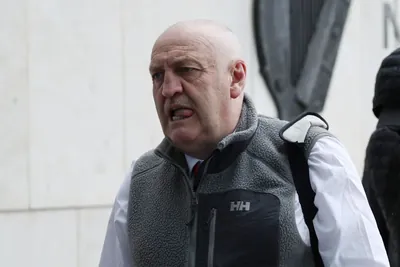
A man who raped a 16-year-old boy on a Waterford beach after meeting him on a dating app has been jailed for four years.
Neil Elliott (63) of Milestone Cottage, Cheekpoint, Waterford, pleaded guilty at the Central Criminal Court to section four oral rape of the boy, who was under the care of the State at the time, on August 8, 2022 in Tramore, Waterford. Further charges of anal rape and oral rape were taken into account.
Garda Edel O’Sullivan told Maddie Grant BL, prosecuting, that gardaí were contacted at 9.30pm on the evening in question by social care workers who were responsible for the teenager that weekend while they were at a caravan park.
They said he had left the holiday home in a distressed state and they were concerned for his well-being.
Gardaí arrived 30 minutes later and after a short search of the local area, they met Elliott and the teenager walking up the beach. They identified themselves to gardaí and the teenager said he was fine, while Elliott told him they were friends and had been out walking.
The teenager was returned to the care of his social workers and immediately reported that he had engaged in oral sex with Elliott. He said he had told the accused he was 16, while Elliott later claimed he believed the teenager was 17 years old.
The teenager said he had been on a dating app and had met with Elliott. They had sent photographs to each other and had been communicating for a short period of time. He had got a text from Elliott that day asking if they could meet up.
The teenager later said to gardaí he told Elliott “no” during the sexual interaction with him. He said he “almost passed out” during the anal rape and said he did try to tell Elliott “no” but he didn’t stop.
He claimed that he told Elliott he was 16 and the accused replied: “It was OK as long as you are nearly 17.”
He said Elliott told him: “I am not going to stop – you are a good boy”.
Elliott was arrested that same evening. He provided his mobile phone number, email address and relevant passwords. He has no previous convictions.
A victim impact statement was read into the record.
The complainant said that after the incident he felt “dirty, used and violated” and described it having a physical and mental impact on him. He said he turned to drugs and drink and later was diagnosed as having Post Traumatic Stress Disorder.
He said he won’t go anywhere on his own, adding: “I should have been in a safe place.”
“I hope he gets what he deserves and he doesn’t do this to anyone else,” the victim concluded his statement.
Colman Cody SC, defending, acknowledged that there was a disparity in age between the accused and the teenager. He further acknowledged that the victim was “vulnerable in the care system” but he told the court that Elliott said he was not aware the teenager was under State care at the time.
Mr Cody said the teenager initiated contact and accepted that Elliott maintained that contact and arranged the meeting.
Counsel accepted his client made no admissions during garda interview but asked the court to accept that he co operated with the gardaí.
He further accepted that the victim was waiting some time before it was confirmed that Elliott was going to plead guilty.
Counsel said his client had written a letter of apology to the victim in which he said he was sorry for putting the teenager through this and apologised for the fact that the teenager “got caught up with my life at the time”.
Mr Cody handed in a forensic psychological report for the court’s consideration. He said his client had an unremarkable childhood and had a consistent history of employment.
He said Elliott never had a significant relationship and was attracted to both men and women. He said he had been caring for his mother for eight years before she died. He then began to engage in online communication with others, which he found helped to alleviate his grief.
Mr Cody said Elliott accepts that it was not appropriate for a man in his 60s to communicate with a teenager.
“It was a catastrophic error of judgement,” Mr Cody said.
Counsel said his client has no history of violence, no convictions for sexual offences and does not have difficulties with empathy. He said he has been assessed as a “low average risk of re-offending”.
Mr Justice Paul Burns noted that while the teenager claimed to be 18 years old in order to access the dating app, his bio on that app clearly stated that he was 16 years old. He said anyone accessing the app would have known the true age of the teenager.
He set a headline sentence of eight years taking into account the fact that Elliott would have been aware of the young age of the complainant and that he subjected him to “a rough and aggressive ordeal involving both anal and oral rape”.
Mr Justice Burns also noted that from Elliott’s appearance in court he was a “relatively well built man” which he said was a consideration in the context of the offending behaviour also.
He acknowledged that Elliott’s plea of guilty was “valuable” as it saved the victim the ordeal of “an unpredictable trial process” and that it also recognises the harm his behaviour has caused to the victim.
Mr Justice Burns also acknowledged that Elliott was deemed to be below average risk of re-offending, has no history of engagement with minors and that custody would be a particularly difficult time for him given his age and mental health difficulties.
He imposed a sentence of five years with the final year suspended on strict conditions including that Elliott engage with the Probation Service for three years upon his release from prison. He said due to this supervision order there is no need for the imposition of additional post release supervision.
2026.5.15 Mother of murdered Jastine Valdez passes away on visit to her grave – 8 years after killing that shocked Ireland
Tess’s tragic death happened while she was on a trip to the Philippines – where she was visiting her daughter’s grave in November of last year

The mother of murder victim Jastine Valdez died while on a trip to visit her daughter’s grave in the Philippines, it has emerged.
Tragic Jastine (24), who had moved with her parents to Ireland in search of a better life, was kidnapped and brutally murdered by monster Mark Hennessy in Enniskerry, Co Wicklow on May 19, 2018.
Now as her loved ones are preparing to mark eight years since the senseless crime, the Irish Mirror has learned that Jastine’s mother Tess sadly passed away, several months ago.
Tess’s tragic death, which has gone unreported until now, occurred while she was on a trip to the Philippines – where she was visiting her daughter’s grave in November of last year.
Jastine’s remains had been repatriated to the Philippines after the horrific murder that saw Hennessy kill her and dump her remains at Puck’s Castle in the Dublin Mountains – before he was ultimately shot and killed by an armed Garda.
It is understood Tess had been quietly battling cancer as she and her husband Danilo continued to grieve their daughter and tried to live and work in Ireland.
However now it is understood that heartbroken Danilo has decided to remain in the Philippines following the tragic death of his wife.
When contacted by the Irish Mirror, the former Philippine Consul to Ireland, Raymond Garrett, who was a friend of Tess, paid tribute to a woman who had incredible strength despite suffering so much pain.
“After the loss of Jastine, she carried a pain that no parent should ever have to face. Yet, through all of that unimaginable trauma, she never gave up. Her faith in God, her courage and her quiet strength were remarkable,” he said.
“In the years after Jastine’s passing, Tess faced many difficult personal and health challenges, but she kept fighting, supported with great love and devotion by her husband, Danny, who has also shown enormous courage and strength.
“In the time that followed, I was proud to call Tess a friend. She showed what it means to keep going when life has taken more than anyone should ever be asked to bear. Tess will be remembered with deep respect, not only as Jastine’s mother, but as a strong and loving woman who left a lasting mark on those who knew her,” he added.
Another friend, Vanda Brady, told the Irish Mirror of her heartbreak at Tess’s death, and spoke of her and Jastine’s father Danilo’s incredible strength.
“I was deeply saddened to learn of the passing of Thessie Valdez, the mother of Jastine Valdez. I stayed in touch with the family following Jastine’s murder in 2018. I last spoke with Thessie in August 2025 when I invited her and her husband Danny to the Philippine National Heroes event and to meet the new Philippine Ambassador to Ireland. “During the event, I paid tribute to Jastine’s memory and to the remarkable strength and dignity her parents showed through unimaginable loss,” she said.
“Despite everything they endured, Thessie and Danny always carried themselves with grace, courage, and deep love for their daughter. My thoughts and prayers are with the Valdez family at this very difficult time.”
Jastine’s parents, who have always wanted her to be remembered, have paid tribute to her time and again in powerful statements issued to this paper on a number of anniversaries.
In a statement issued to us two years ago they said: “Thinking of you each day with an aching heart. So we whisper and call your name every time just to ease the pain of losing you. The shock and the trauma still lingers. We are trying to live our best to fill the void.
“The emptiness that you left and that no one can feel. We love you and missing you terribly Jastine our princes.”
Evil Mark Hennessy snatched and murdered Jastine because he is believed to have been infatuated with her – even rehearsing her abduction beforehand.
Speaking publicly for the first time about the frantic search for Jastine, retired detective superintendent Frank Keenaghan previously told us that he believed Hennessy sexually assaulted the student before murdering her – and dumping her in heavy gorse in south County Dublin.
The respected former senior garda told us how emergency workers begged Hennessy to tell them where he had hidden Jastine – as they fought to save his life after a Garda detective shot him at the end of a 24-hour manhunt.
“Mark was on the ground being treated and I know that one or two of the ambulance people were there imploring him to tell us where she was. But there was no response,” Mr Keenaghan said.
Hennessy was shot dead by an armed garda in the Cherrywood Industrial estate after it was believed he was harming himself or even Jastine in the car he was in.
After Hennessy died, gardai discovered a note in the car which contained the words “Pucks Castle,” – the location where they ultimately found Jastine’s remains.
An inquest at Dublin Coroner’s Court into Jastine’s death, the jury returned a verdict of unlawful killing.
At the time Detective Superintendent Frank Keeneghan said that gardaí had carried out extensive examinations of the phones and social media profiles of Ms Valdez and Hennessy.No prior link between them was discovered.
The cause of death, according to deputy state pathologist Dr Linda Mulligan, was asphyxia through external pressure on the neck.
Ms Valdez’s boyfriend Joseph Squire said that she never took drugs and ‘was way too innocent for anything like that’.
‘The image of that beautiful young woman remains with us,’ coroner Dr Myra Cullinane told the inquest.
‘It is inconceivable how her parents can bear the loss of their only child. We’ve had a glimpse of the person that Jastine was and it is tragic that she’s been so cruelly taken in this way.’
2026.5.14 Ireland’s youngest killers now eight years after Ana Kriégel’s brutal murder
Eight years on from the horrific murder of 14-year-old Ana Kriégel, we look back at the harrowing case and the lives of Ireland’s youngest killers, Boy A and Boy B, who remain in prison today
Ireland’s youngest killers have now reached 21 years of age—and will eventually be released from custody following a crime that devastated the nation eight years ago this week.
Their victim was Ana Kriégel, 14, who was deceived into visiting a derelict farmhouse in Lucan, Dublin on May 14 2018, where she was sexually assaulted and fatally attacked with a piece of timber and a large block.
As another painful anniversary approaches, we revisit the disturbing case, while examining what became of the two former best mates who made history as the youngest individuals in Ireland ever found guilty of murder.
Who was Ana Kriégel?
The schoolgirl hailed originally from Russia but was adopted aged two. Her parents were Irishwoman Geraldine and French-born Patric. She was portrayed as someone who longed to belong but found friendships difficult. She loved creating YouTube videos for her channel, which had attracted around 100 subscribers, featuring content about dance, fashion and cosmetics.
Certain comments beneath these videos were unkind and, throughout a six-week murder trial, her mother characterised her as vulnerable, disclosing she was receiving counselling.
Ana also excelled at swimming and gymnastics, though Geraldine told the court of her daughter: “She was very immature. She looked so much older, but inside she was younger, far younger than her youth.”
She continued: “She was trying to make friends all the time. She spent a lot of time at the house, she loved her family and was happy at home. It would have been nicer for her to have a best friend.”
Ana’s father, a retired lecturer who has since passed away, recalled how his daughter’s primary school years were “very happy”, though secondary school brought challenges with bullying.
Speaking to the court, he said: “She would come home and tell stories and they were not happy stories. They were calling her weird. Some people did not understand her. She was herself. She was full of fun.
“She couldn’t hate anyone even though some of these people were bullying her. She was disappointed in people, in how they reacted to her. She would try and make friends. She was impulsive and might say the wrong thing. She was a teenager.”
On that fateful morning when Ana vanished, Geraldine kissed her daughter goodbye before school – a moment that would tragically be their final goodbye.
Who were her killers?
The killers have been identified only as Boy A and Boy B, having been granted lifelong anonymity under the Children Act – offering considerable relief to both the teenagers and their families.
Yet despite being convicted of murder at just 15 years old, both families were ultimately forced to relocate from their west Dublin communities, as neighbours throughout the area knew precisely who they were. Gardaí discovered 12,500 pornographic images on two devices in Boy A’s bedroom.
It emerged that he had also searched terms like “horse porn”, “animal porn” along with “dead boy prank in abandoned haunted school”.
On a sunny day in May 2018, he lay in wait at Glenwood House, which remains cordoned off to this day, while his best friend, Boy B, went to collect Ana Kriégel.
Boy A had assembled what’s been described as a murder kit, comprising gloves, knee pads, shin guards, and he donned a sinister mask.
While he remained there, Boy B travelled to Ana’s home in Leixlip. After Boy B, who is said to have come from a stable family background, told her his friend fancied her, she informed her father she was going out.
Boy A then assaulted and killed Ana while Boy B witnessed the appalling incident.
Three days afterwards, clothed only in a pair of socks, her body was discovered with a ligature wrapped around her neck in the abandoned property within the verdant grounds of St Catherine’s Park.
The cause of death was subsequently confirmed as blunt force trauma to the head and neck following the identification of 50 separate injury sites.
Boy B was interviewed by gardaí in Finglas, where he slept on a mattress alongside his mother as he was too young to remain in a cell unaccompanied. He was also permitted breaks from questioning during which he consumed Ribena.
When asked why he didn’t step in to assist Ana, he stated: “Because I was scared. I was shocked. I didn’t know what to do, because my brain was frozen in place. I didn’t know what to do.”
When asked a similar question about why he failed to intervene, Boy B, who admitted feeling ashamed at his inaction, responded: “I don’t know.”
Following the six-week trial, both boys were convicted of murder. Boy A faced the additional charge of aggravated sexual assault, of which he was also found guilty.
Boy A received a life sentence with a review after 12 years, while Boy B was handed a 15-year sentence.
What became of Boy A and Boy B?
Throughout the court proceedings, the former close friends avoided looking at one another. Boy A, who displayed little remorse and never admitted to the crime, frequently rested his head on his father’s shoulder, while Boy B clung to his mother’s hand throughout.
The pair were initially held together at Oberstown Children Detention Centre in Dublin, with Boy B requesting Lego just weeks into his sentence. Both are now aged 21 and are serving their time in an adult prison.
Due to their anonymity, little is publicly known about their lives, though both reportedly sat their Leaving Certs and were offered the chance to enrol with the Open University online. Upon his eventual release, Boy A will be subject to sex offenders monitoring.
Anna’s father passed away peacefully at home in 2022, having previously said of his daughter’s killers’ convictions at Dublin’s Central Criminal Court: “Forever. It’s not enough.”
In 2023, Boy B’s father spoke to the Irish Mail on Sunday, describing his son as a “stupid, stupid boy” while insisting he was not “this monster that people are calling him”. He also conveyed his sympathy towards the Kriégel family and stated he wishes to “throw myself down on my knees and beg them for forgiveness”.
Regarding his son, he maintained he should have saved Ana’s life, though he does not believe he is a murderer.
He continued: “He is being punished because he was too much of a coward to tell me what happened. He was too weak and afraid to be able to say what happened on that day.
“I know this boy. He is not what they say he is. He is not this monster.”
Meanwhile, Boy A is now seeking to challenge his life sentence for Ana’s murder.
His legal team informed the Court of Appeal in March that the case would require “document-heavy analysis” after requesting additional time before an appeal hearing date could be scheduled.
2026.5.11 Gardaí investigating murder of Liam Murray begin searching land in Rathfarnham
Gardaí are searching an area of land in Dublin as part of an investigation into a murder in 2009.
Liam Murray’s body was discovered in his home in Rathfarnham on March 20th 2009.
The 42-year-old had spent a large part of St Patrick’s Day 2009 in the Headline Bar in Clanbrassil Street in Dublin 8, before making his way towards his home at Rockbrook Cottages in Edmondstown Road at around 6.20 pm.
Advertisement
On that day, he had been driving a black Mitsubishi Pajero, and the last known contact with Mr Murray was that evening, March 17th.
On Monday, An Garda Siochana said they were conducting searches of land in Rathfarnham as part of the investigation.
“The primary focus of this investigation is the victim, Liam Murray, and his family.
“The investigation team are seeking to gather all available information and evidence to bring this matter to a positive conclusion.”
They are appealing to any person who met, spoke to or had any interaction with him leading up to the discovery of his body.
Murray was described as 5ft 10in in height, stocky build, with short, dark brown, curly hair.
2026.5.8 Self-styled ‘healer and fairy whisperer’ assaulted teenage girl on flight to US
A self-styled Celtic healer and fairy whisperer who sexually assaulted a 16-year-old girl on a transatlantic flight will learn his court fate in July.
At Ennis Circuit Court yesterday, Judge Francis Comerford listed Pat Noone’s sentencing date for July 29.
A self-styled Celtic healer and fairy whisperer who sexually assaulted a 16-year-old girl on a transatlantic flight will learn his court fate in July.
At Ennis Circuit Court yesterday, Judge Francis Comerford listed Pat Noone’s sentencing date for July 29.
In February, Noone, of Curragh, Kilconnell, Ballinasloe, Co. Galway pleaded guilty to the sexual assault of a then 16-year-old girl on board the Aer Lingus flight bound for Boston on November 15, 2023.
After the cabin crew informed the captain of the flight that a male passenger had allegedly inappropriately touched a teenage girl who was sitting beside him, the captain turned the plane around and returned to Shannon Airport.
Judge Comerford yesterday confirmed that a probation report on the 59-year-old Co. Galway farmer has been completed and handed into court.
In court in February, defence counsel Antoinette Simon asked for the probation report on her client for the sentencing hearing, as she said it may provide insight into his offending.
Prosecution counsel Sarah Jane Comerford, instructed by State solicitor for Clare Aisling Casey, told the court previously that the State has the victim impact statement from the complainant, who has now turned 18.
Ms Comerford said that the complainant was aged 16 at the time of the offences ‘so there is some degree of priority’.
Noone was excused from attending court but was present to hear that the sentencing is to proceed on July 29.
In the case, Noone pleaded guilty in February when arraigned on two counts of sexual assault contrary to Section 2 of the Criminal Law (Rape) Amendment Act on November 15, 2023.
Noone has also pleaded guilty to sexual assault of the girl by rubbing and grabbing her buttocks on board the EI135 Aer Lingus flight within the jurisdiction of the State.
The defendant, who has no previous convictions, also pleaded guilty to the sexual assault of the girl by kissing her arm and rubbing her thigh during the flight.
Noone is well-known in the spiritual and healing world, and is described on his website as ‘a renowned Celtic healer’.
The court previously heard there is no connection between Noone and the injured party.
Ms Comerford told the court in February that the guilty plea was of some assistance as arrangements had been made for the US-based witnesses to provide their evidence via video-link for the trial.
In December, Judge Comerford had granted permission for four State witnesses to give evidence via video-link from the US in the trial. Ms Comerford said that the complainant is currently studying at a US college.
When the case was before the District Court, Judge Alec Gabbett transferred it to the Circuit Court, where more serious penalties apply on conviction after hearing an outline of the case against Noone.
Detective Garda Ruth O’Sullivan told the District Court previously that the cost to Aer Lingus of returning the Boston-bound aircraft to Shannon was €28,213.
Giving an outline of the alleged sexual assaults, Det Gda O’Sullivan said that an hour into the transatlantic flight, at around 3.30pm, the girl informed cabin crew that a male passenger sitting beside her had touched her inappropriately.
Det Gda O’Sullivan said: ‘They then informed the captain who took a decision to turn the flight back to Shannon.’
She said the girl and her family returned to Shannon where statements were taken before they took off again for the US.
Judge Comerford further remanded Noone on continuing bail to July 29 at Ennis Circuit Court for sentencing.
2026.4.29 Inside the ‘foul’ home of Richard Satchwell as he talked to TV reporter while his wife was buried feet away
A new book details the lies and manipulation of the Youghal killer
A new book from the former RTE reporter who interviewed Richard Satchwell – inside the home where he had killed and entombed his wife Tina – details the dark lies and manipulation behind the terrible crime.
Former RTE Primetime reporter Barry Cummins was one of the few journalists to be invited inside the home in Youghal where Satchwell hid his secret for five years. The full time-line of the case – which you can see here – shows how the muderer went to extreme lengths to hide what he had done.
A new book from former RTE man Cummins details the bizarre encounters he had with Richard Satchwell, who invited him into his foul-smelling home in Youghal in the months after his wife Tina supposedly ‘vanished’ in March, 2017.
The brazen killer, who murdered his wife and hid her body under the stairs where it remained undiscovered for six and a half years, maintained a lie to the RTE reporter and many others that Tina had simply walked out of the home and was never seen again.
Now following Satchwell’s conviction for the murder, Barry has penned a new book Buried Secrets: The Murder of Tina Satchwell and a Journalist’s Journey Into Ireland’s Most Chilling Court Case – chronicling his bizarre encounters with the killer, who repeatedly lied – all while tragic Tina was lying in a grave dug under the stairs of his home.
“One of the weird things—he wouldn’t let us film this—but he invited us upstairs to see the walk-in wardrobes he told us he had built for Tina as part of their anniversary present,” Barry told the Irish Mirror in an exclusive interview for the Shattered Lives podcast today.
“He was walking us above Tina’s body. That’s chilling to think of and why was he doing this? He could have said no to any reporter, but he let me in and I don’t know why. It stays with you, the manipulation he was doing.”
Barry was invited into the Satchwell home in November 2017 – during which time the killer brought him past the crypt he had dug for his wife, and through rooms filled with parrot and dog poo.
“I could smell the dog shit and the parrot poo when I was in the house. That was unpleasant,” Barry said.
“We turned right just before the stairs into the living room and then he directed us to turn right again into the sitting room. I know there was clutter in the living room but it was dark as well so you couldn’t see too much. We were able to do an interview in there but it was still very cluttered. The parrot cage with the parrot Valentine in it was over in the corner. The one thing I remember was how dusty it was in the room. There were two flies that flew around occasionally in the room. There was no air in the room and that was the room we were in mostly.
“The curtains had been pulled in the front room but there was the sensation of it being dark and dusty. I was trying to figure out, well, maybe this man sitting beside me can’t really function without her. Then I’m thinking I can smell the dog shit; I can see the parrot cage with poo stuck on the bars. I was juxtaposing this with how he was talking lovingly about the dogs and the parrot and looking over and thinking, “Well, you haven’t cleaned your parrot cage in a while.”
Barry conducted four interviews with Satchwell over the course of several months – all of which were played during the murder trial last year. The jury got to see the interviews as the prosecution sought to show them the repeated lies he had told the media about his missing wife – all while she lay hidden in the home.
“I ended up in the middle of the courtroom and I did in the corner of my eye steal a glimpse of Richard Satchwell as the report was being played and he never looked up. He kept his head down. It was myself and Richard up on the screen in all these interactions going for walks and he in my car, and also me in his home and looking through photos of Tina and him looking at different items of Tina’s like her nail varnish. The house was frozen in time in a sense. But he never looked up. He never looked up at the report.
“I’m not someone who’s stuck for words normally. But that day after the report was played in court I didn’t know what to say because it was a very odd situation.
“I never intended when I set out to do these interviews or a television report that these would one day be used as evidence in the Central Criminal Court. That’s not my job. I certainly wanted to get the truth of something – but to see it up there and being used by the prosecution to be part of their case that this man obviously lied, but the motivation, his demeanour, his whole way of going on – and the callousness of having a camera crew in the house and the lies that just fell out of his mouth routinely in those interviews.”
Satchwell told Cummins and others that his wife had left the house having taken €26,000 in cash and two suitcases – and that she’d gone away to “get her head straight.”
“All of these yarns and he was looking me in the eye and saying all this. The more I interviewed him and the more I met him I felt I got a different Richard,” Barry added.
In later interviews Satchwell began sowing the seeds of a narrative he was privately telling gardai – a lie that his missing wife had been abusing him. Looking back now, Barry recalls how the killer began to feed him the suggestion that Tina might have been violent.
“In the fourth meeting he’s talking about Tina that if somebody sought to attack her, she would defend herself. And this is coming out, like in his previous meetings he wouldn’t even countenance that any harm had come to Tina. Yet there he was in the fourth meeting starting to have you thinking that this small woman would fight back. This was the picture he was painting in my mind as he was doing this interview.”
Barry also recalls Satchwell’s disturbing body language – and how the killer had a way of staring at him that he’s not seen in many people before or since.
“He was able to do that thing of staring at somebody so it would get a bit uncomfortable. It’s now looking back at what we now know and what he had done and the lies he was telling me and other journalists and the manipulating he was doing, that this kind of staring – was he trying to figure out what I felt about him?”
And he feels that Satchwell, who often presented as meek and dim-witted, was far more intelligent than he might have let on.
“I think he was more clever than people felt at the time. Over the four interviews I began to feel there was more to Richard. He seemed to have secrets. He seemed to like control. He seemed to love saying to me there are reasons why Tina might have left but I can’t tell you because I don’t want to betray her confidence,” Barry said.
“He was looking to draw me in and feed me little bits of information. His speech pattern would throw you a little bit. He would say ‘lickle’ instead of little, ‘pacific’ instead of specific.
“Even his demeanour – he was a big man but he would hunch himself. I noticed this just as his physical disposition would round his shoulders a bit; I felt so he would look less threatening. Also his speech pattern: he was always low. He seemed to be maintaining that all the time. It wasn’t natural. I felt he was trying to keep control of himself. But still at the end of it all in the absence of any evidence of a crime I was still trying to keep in my mind’s eye – what if it’s not him?”
—
2026.4.20 Daniel Kinahan trial in Ireland poses ‘unprecedented’ security concerns
Cartel leader arrested by Dubai police on behalf of Ireland after warrant sent to UAE last week
Gardaí and the Defence Forces will put in place an unprecedented security operation when Daniel Kinahan arrives back in Ireland, including counterterrorism measures.
Sources told The Irish Times that Kinahan would be, by far, the most significant organised crime figure the Irish criminal justice system has dealt with.
One said Kinahan’s trial would be unprecedented as he will be the first head of a global drug cartel to go on trial in the State, assuming he is extradited from the United Arab Emirates (UAE).
He has been the day-to-day leader of the Kinahan cartel, based in Dubai for the last decade. Kinahan is also a member of the European super cartel, which controls about a third of the cocaine trade in Europe. It is effectively a coalition of European mafias, including the Italian mafia.
Asked about the arrest in Dubai, Taoiseach Micheál Martin declined to comment or even name Kinahan, though he said the new extradition agreement in place between Ireland and the UAE was “working effectively”.
“I think that’s positive because we work globally with other countries on matters of this kind, and it’s good to see that we have that good sharing of information and operational strength in terms of the relationship,” he said.
Kinahan (48), a married father from Dublin, was arrested in Dubai last Friday.
Kinahan was never under investigation in Dubai and faced no charges there. The execution of the Irish arrest warrant last week – by Dubai police on behalf of Ireland – was the first time he was arrested there.
Kinahan has been at the centre of a Garda investigation into the cartel’s crimes in Ireland for years, with a file sent to the Director of Public Prosecutions (DPP) in 2023. Though a decision to charge him took almost three years, the DPP recently directed he be charged with organised crime offences related to the Kinahan-Hutch feud.
That began the first steps of the extradition process, in Ireland, all done secretly last week. A warrant for his arrest was issued by the High Court in Dublin and immediately sent to the UAE authorities. Dubai police confirmed its arrest operation on Friday was based on the Irish warrant, which it pointed out was executed less than 48 hours after being received.
A number of gardaí with decades of service in the force said Kinahan was a more significant criminal figure than anyone previously on trial. One said he posed “unprecedented risks”.
They said the prospect that he may try to escape custody, including while being transported from prison for court appearances, would be a big consideration when the security operation was being planned.
That would mean being driven around in convoy surrounded by armed gardaí, with support from the Defence Forces. Buildings would also be swept for explosives and concealed weapons, precautions usually forming part of counterterrorism operations.
Though it is technically possible Kinahan could be extradited within weeks, certainly by late May or early June, gardaí believe the process will probably take much longer. They expect him to challenge his extradition, especially as he will be the first person ever extradited to the Republic under a new treaty agreed with the UAE.
In the event he mounts a legal challenge, hoping to find shortcomings in the new extradition treaty, gardaí believe he may not be extradited for another six to eight months.
When his close associate, Sean McGovern, was arrested in Dubai in October 2024 for extradition to Ireland, he was not extradited until May 2025. McGovern’s extradition went ahead under a special once-off arrangement between the UAE and Ireland. A permanent extradition treaty has been activated since then.
2026.4.18 Alleged Irish crime boss Daniel Kinahan is arrested in Dubai
LONDON (AP) — Daniel Kinahan, the alleged leader of one of Ireland’s biggest criminal networks, has been arrested in Dubai, Irish media reported Friday.
Ireland’s national police force, the Garda Síochána, said an Irish man in his late 40s was arrested on Wednesday under a warrant from Irish courts over alleged serious organized crime offenses.
The force said it was “steadfast in our determination that we would pursue those allegedly involved in serious organized criminal activity, wherever they go.”
Dubai Police said they had arrested an “Irish fugitive for his alleged role in an international organized crime network.”
Police did not identify Kinahan, who is in his late 40s, by name. Ireland’s national broadcaster, RTE, confirmed he was the arrested man.
The High Court in Dublin previously named Kinahan, who lives in the United Arab Emirates, as a senior figure in an organized crime gang involved in international drug trafficking operations and firearm offenses.
A feud between the Kinahan cartel and the rival Hutch gang has been linked to 18 killings in Ireland since 2015. In 2016, David Byrne, an associate of the Kinahan cartel, was shot dead at a boxing weigh-in at the Regency Hotel in Dublin. Authorities believe Kinahan was the intended target.
He later moved to Spain and then Dubai.
Kinahan was one of the founders of boxing management company MTK Global. He has been pictured with then-heavyweight champion Tyson Fury and has attempted to organize fights for him, including a proposed all-British superfight against Anthony Joshua that never materialized.
In 2022 the U.S. offered a $5 million reward for information leading to the “financial destruction” of the Kinahan crime gang or the arrest and conviction of its leaders.
2026.4.17 Daniel Kinahan timeline: Arrest follows lengthy investigation spanning continents
Born in 1977 in Dublin, he is the eldest son of Christy Kinahan, alleged to be the founder of his family’s criminal operation
The arrest of Daniel Kinahan is the latest stage in a lengthy law enforcement operation which has spanned continents.
The alleged crime boss has previously been named in the High Court in Dublin as a head of an international drug cartel.
Born in 1977 in Dublin, he is the eldest son of Christy Kinahan, alleged to be the founder of his family’s criminal operation.
In 2015, the Kinahan cartel became involved in a feud with the rival Hutch crime gang in Ireland, which was to claim the lives of 18 people.
David Byrne, an associate of the Kinahan cartel, was shot dead by members of the Hutch gang at a boxing weigh-in in 2016.
Gardai have always believed the intended target was Daniel Kinahan.
After that, Kinahan left Ireland, first to go to the Costa Del Sol and later settling in Dubai.
He was identified in the High Court in Dublin as a senior figure who “controlled and managed” the operations of the Kinahan organised crime group.
The international crime syndicate was alleged to have been involved in the smuggling of drugs and guns into Ireland, the UK and Europe.
Kinahan drew further scrutiny when it was revealed he played a role in organising an aborted heavyweight fight between Tyson Fury and Anthony Joshua.
Kinahan claimed to have stepped away from boxing after the controversy that followed.
In 2022, US authorities issued a reward of up to five million dollars for his arrest.
The US treasury department imposed sanctions against senior members of the Kinahan crime gang, including Christy Kinahan Snr and his sons Daniel and Christopher Jnr.
While Kinahan left Ireland years ago, the investigation by gardai continued.
They recently secured a warrant for his arrest in the High Court in Dublin.
This was sent to the Dubai police as part of a bilateral agreement.
Officers there launched “intensive search and surveillance operations”, which led to Kinahan’s arrest this week.
A spokesperson said: “Dubai Public Prosecution issued an arrest warrant to initiate legal procedures ahead of his extradition.”
—
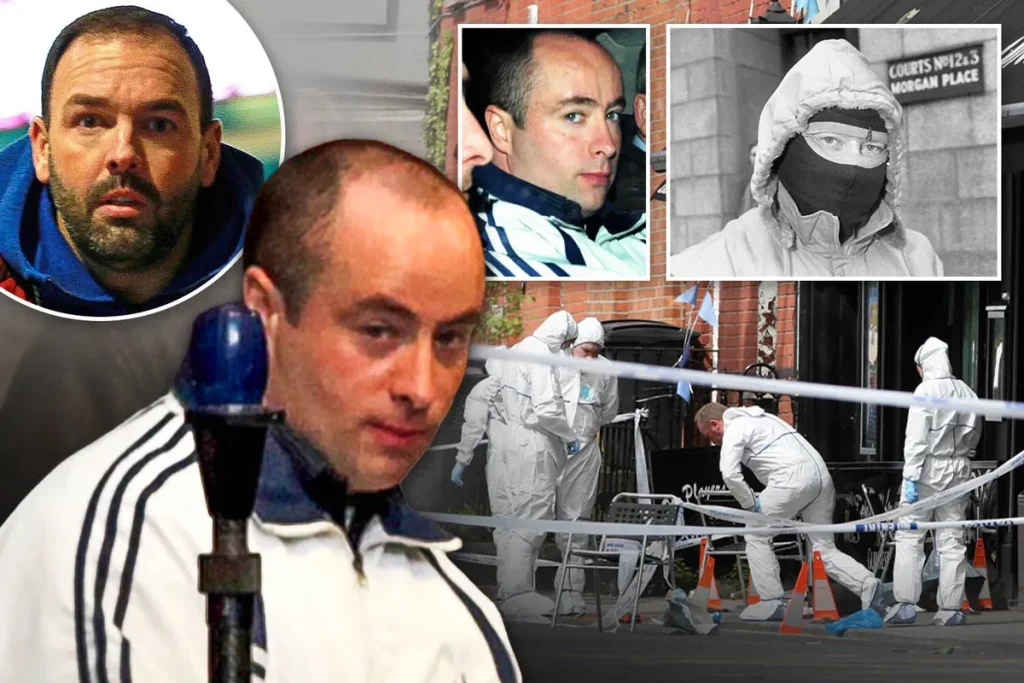
A FEARED Kinahan cartel gunman whose hit team once threatened to shoot a baby is continuing his bid for freedom.
The Irish Sun can reveal Alan ‘The Madman’ Wilson, 47, is due to appear before the Court of Appeal tomorrow as part of his efforts to have his conviction for conspiracy to murder overturned.
During a hearing at the same venue on Friday, the court heard how Wilson had “waived legal professional privilege”.
The court also heard how he wants to change the guilty pleas he made over an attack at the Players Lounge pub in Dublin and the plot to kill a Hutch associate to “not guilty”.
Although due in court tomorrow, a hearing on his appeal is set for October.
Wilson — who was also nicknamed ‘The Soldier’ by convicted killer Brian ‘King Ratt’ Rattigan due to his willingness to follow orders from crime gangs — is representing himself.
At present, Wilson is being held in Midlands Prison and is due for release in 2029.
A source said: “Wilson has been offered legal advice but is embarking on this alone. He spends his days in prison going over his case files and doesn’t interact with any inmates.”
We can also reveal that his separate legal bid for €75,000 in damages is also ongoing.
Wilson made the claim after he was beaten when he was being held in Dublin’s Mountjoy Prison on June 26, 2019.
During the attack, he claims to have suffered a broken nose and was left with permanent scarring.
He maintains that the Kinahan cartel have placed a €100,000 bounty on his head.
In his submissions to the High Court, seen by us, Wilson claimed the assault “involved the use of sharp bladed weaponry and kicks and punches to the body”.
His claims referred to the breakdown of his relationship with Daniel Kinahan’s mob when he said: “The plaintiff (Wilson) indicated he had a €100,000 bounty placed upon him for death.
“Mountjoy Prison contained many prisoners affiliated with the Kinahan drug cartel.
“The plaintiff indicated that continuing to place him in Mountjoy put his life in danger due to the disputes and relationship with the Kinahan drug cartel.”
Wilson — a nephew of Martin ‘The General’ Cahill — received a ten-year sentence after he was secretly recorded by cops when his team were targeting a Hutch associate in 2017.
In one conversation with accomplice Joseph ‘Joker’ Kelly, he said: “Remember the shooting at the Players Lounge? I done that.
“One of them shot right in the forehead and five times in the body — it’s amazing how the c-s pull through it like.”
Wilson had pleaded not guilty to the attempted murders of three men at the pub in 2010.
When his hit team were monitoring their target, they were also secretly recorded saying that a baby and their mother were “gonna get killed” if they got in the way of the gunmen.
x1200
2026.4.18 Explained: How to search through Census 1926 records
The National Archives officially released Census 1926 records at midnight, after the expiry of the 100-year limitation on their publication.
It is freely available and searchable on www.nationalarchives.ie following three years of work on more than 750,000 individual household and enumerator returns.
The 1926 Census was the first census carried out in the Irish Free State.
Search the 1926 Census
First names, surnames, counties, townlands/streets, and District Electoral Divisions can be used to search through the records.
You can also search using the map (see below). It gives geographical insights into your Census 1926 search and covers the 26 counties that were included in the census.
The National Archives said most people will find their relatives quickly and easily in the 1926 Census.
“The majority of names, households and addresses appear exactly as expected, and the search tools are designed to help you get started straight away,” it said.
“A small number of cases may require a little more detective work, but for most users the first steps of the search will be simple and rewarding.”
To help with trickier searches, the National Archives developed a list of tips and tricks to ensure you get the information you are after.
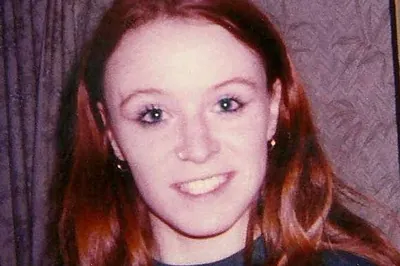
The mobile home that the 23-year-old art student lived in with her boyfriend Shane Bowe in Ballybornagh, Clare, was destroyed by a fire on April 8, 2005.
The family of murder victim Emer O’Loughlin is “still struggling to come to terms” with her death 21 years after her body was found, Gardai have said.
The mobile home that the 23-year-old art student lived in with her boyfriend in Ballybornagh, Clare, was destroyed by a fire on April 8, 2005.
Her badly burned remains were also discovered inside.
On May 19 2010, investigating Gardaí exhumed her remains, which were then removed to University Hospital Galway, where forensic anthropology tests were conducted.
The tests indicated that Emer had died a violent death, and as a result, the investigation was upgraded to that of murder.
In a statement, Gardai said: “This year is the 21st year since Emer’s death and her family are still struggling to come to terms with her loss and are asking for your assistance in order to bring them closure.
“If you believe you maybe in a position to bring closure and get justice for them, Gardaí would like to hear from you.
“Do you have any information that may assist with the investigation? Gardaí may have spoken to you previously and due to the passage of time, you may now feel better placed to assist with the investigation.
“Anyone with information can contact Gort Garda Station on 091 636400, the Garda Confidential Line on 1800 666 111 or any Garda station.”

WARNING: DISTRESSING CONTENT The attempted murderer was released from prison in Dublin just days ago after serving almost nine years of an 11-year sentence for the brutal attack on Stephanie Ng
A man convicted of attempted murder has been admitted to hospital within days of his release from prison – after informing gardaí that he feared he would kill again.
Dublin Live can reveal that the now 23-year-old, who slashed the throat of innocent young woman Stephanie Ng in Dún Laoghaire, South Dublin in December 2017, walked free from custody just days ago, having served just under nine years of an 11-year sentence for attempted murder.
He had remained behind bars since the attack took place, but following standard remission, he was released from Wheatfield Prison in Dublin on March 26.
The troubled individual, who cannot be named due to his age at the time of the offence, has already come to the attention of gardaí – after presenting himself to a Garda station in Dublin city centre in recent days.
Sources allege that the attempted murderer – who had been residing in a Dublin hostel – claimed he had the “urge” to kill and expressed concern that he might harm somebody once more. Sources further indicated that the man was actively seeking help, and made clear that he did not wish to act on his urge, reports the Irish Mirror.
He was subsequently taken to hospital, where he is currently undergoing a psychological assessment. The deeply concerning development comes just over a year after a judge raised serious concerns about the prospect of the man being released from prison without adequate supervision. Mr Justice Paul McDermott, during a hearing regarding the defendant’s sentence review, described this as a case that “cries out for supervision” and expressed “great concern” about the man’s mental health. Nevertheless, he explained that a Supreme Court ruling prevented him from reviewing such matters.
The release comes merely three years after the attempted murderer required hospitalisation following an incident where he smeared the words “Sorry Stephanie” in his own blood across his cell wall.
The dangerous individual had been imprisoned since admitting to the attempted murder, in which he used a dating app to lure Ms Ng to a secluded spot at the Sea Front, Queen’s Road, Dun Laoghaire, Co Dublin.
Aged just 15 at the time, the teenager contacted Ms Ng through an online dating platform, falsely claiming to be 19. He then enticed her to an isolated location at the seafront on Queen’s Road, Dún Laoghaire, under the pretence of wanting to take a selfie with her.
He led her to the waterfront where he seized her from behind, strangled her until she lost consciousness and slashed her neck with a knife.
In an exclusive interview in 2020, Stephanie Ng revealed the scars on her wrist and neck, which she described as a painful and permanent reminder of the traumatic experience.
“It will always be with me because I have the scars,” Stephanie told us. “I don’t know what to say because it’s out of my hands really. (But) I mean it will always be with me because I have the scars. So it’s not like it can change anything. I don’t think there will be justice on both sides because it’s quite sad on both sides to be honest.”
Stephanie also revealed how the incident has left her struggling to trust others, and she’s become more reluctant to venture outdoors.
“I just don’t go out as much or I’m careful who I’m with. I mean I just hang out with my own friends. So I’d just say to people just be careful,” she urged, in a warning to young women throughout Ireland.
The courageous young woman, who thankfully recovered fully despite being abandoned by her assailant, explained that she’s now attempting to move forward with her life.
“I’m just looking forward. I’m just trying to get on with my life now. I just have to look forward,” she said.
However, she noted that the lasting physical injuries from the assault continue to serve as a distressing reminder of the terrible experience she endured.
“Even my hand, my thumb is still numb. So even if I don’t look at myself I can still feel it. But I just have go get on with my life and I can only look forward now,” she said.
Five members of a criminal gang will serve prison terms of up to eight-and-a-half years for an assault in which the victim was waterboarded, beaten, and branded with the word ‘rat’ on his face and torso.
Judge Karen O’Connor said the facts of the case were ‘shocking’ and involved the use of a number of weapons designed to inflict injury and terror on the victim.
She said the court had difficulty describing what happened as words like ‘dreadful, horrendous and frightening are not sufficient to describe the horror’.
A file image of Jason Hennessy. Pic: Collins Courts
The branding marks on the victim’s face were designed to ‘maximise the visibility of his [the victim’s] humiliation’, she said, while the actions of the defendants ‘bypass any notion of humanity’.
The Special Criminal Court judge, sitting with Judge Sarah Berkeley and Judge Fiona Lydon, said the court also could not attach much weight to expressions of remorse by four of the accused, who she said had entered guilty pleas only after the trial had begun and when victim Barry Moore, 35, had been summoned to court by a warrant.
Brothers Jason Hennessy, 29, and Brandon Hennessy, 23, of Sheephill Avenue, Blanchardstown, Dublin 15, and Kenneth Fitzsimons, 46, and his son Dean Fitzsimons, 26, of Castlecurragh Vale, Mulhuddart, Dublin, were originally charged with various offences, including causing serious harm and false imprisonment of Mr Moore, both of which carry potential life sentences.
After Mr Moore refused to give evidence last year, the State accepted pleas of guilty to assault causing harm, an offence that carries a maximum sentence of ten years in prison. Before it became apparent that Mr Moore was not going to give evidence, Devon Hennessy, 30, of Edgewood Lawns, Corduff, Dublin 15, pleaded guilty to falsely imprisoning Mr Moore and to assisting a criminal organisation to inflict serious harm on Mr Moore.
Judge O’Connor imposed the shortest sentence, of three years, on Devon Hennessy as, she said, he was the only one who tried to intervene on Mr Moore’s behalf. He was also the only one who entered an early guilty plea.
Judge O’Connor said the offending of Jason Hennessy and Dean Fitzsimons warranted headline sentences of ten years. In each case, she reduced that to eight-and-a-half years, having considered their late guilty pleas and other mitigating factors.
Brandon Hennessy would have received the same sentence but Judge O’Connor said he is already serving a term that will expire in February 2028. She therefore imposed a six-year sentence which will run consecutive to that term. Kenneth Fitzsimons was jailed for eight years.
All sentences, except that of Brandon Hennessy, are backdated to February 17, 2025 when they each went into custody.
At the trial last year, Detective Garda Stuart Gleeson said he interviewed Mr Moore on February 13, 2025, the day after the assault. In his account to Gda Gleeson, Mr Moore said he called to Jason Hennessy’s home in Sheephill Avenue to buy a tracksuit. He arrived at about 6.15pm and entered into a shed at the back of the property where he met Devon and Jason Hennessy.
He said they chatted for about 15 minutes, during which time Brandon Hennessy and Ken Fitzsimons arrived. As Mr Moore was showing Ken Fitzsimons a photograph on his phone, he said Jason Hennessy ‘smashed’ the phone out of his hands and boxed him.
He said: ‘I asked Jason, what did you do that for? I was after falling on the ground and Devon jumped up and began to punch me in the head.’ He said Jason Hennessy struck him and shouted: ‘You know what this is about, I want the truth.’
Ken Fitzsimons, he said, left and came back with a ‘breaker bar’, which Mr Moore described as ‘five feet of solid steel’. He said Ken Fitzsimons ‘walloped’ him seven or eight times on the legs with the bar before striking his right arm, breaking it. Brandon Hennessy, he said, ‘came in like a mad man, screaming at me’.
Mr Moore said Brandon took the breaker bar and struck him repeatedly over the body. Devon Hennessy, he said, told Brandon to stop because he would kill him. Mr Moore heard Brandon telling his brother: ‘If you don’t like it, go out the back.’
Jason Hennessy left and returned with a blue camping stove and a ‘cattle marker’ with the word ‘RAT’ on it. Mr Moore said Jason Hennessy used the gas stove to heat the marker. Dean Fitzsimons, he said, threatened to cut off his ears with a Stanley knife before ‘waterboarding’ him using a towel and a bucket of water.
Mr Moore said: ‘I thought I was going to drown. I couldn’t breathe. I thought I was going to be murdered.’
At a previous hearing, Sergeant Emma Ryan told the court that Mr Moore declined to give evidence at the trial late last year as ‘he was afraid’.
Sgt Ryan said that the victim suffered a fractured elbow and multiple small stab wounds to his legs. She said gardaí found the cattle branding iron in an area of waste ground. Sgt Ryan said that at the time of the assault there was a feud between the Hennessys and another gang based in Finglas.
Jason Hennessy referenced the feud when he demanded to know who had set him up for an attack, Sgt Ryan said. Jason Hennessy Sr, the father of Devon, Brandon, and Jason, was shot in Browne’s Steakhouse in Blanchardstown on Christmas Eve 2023 and later died. The gunman, Tristan Sherry, was killed at the scene.
2026.3.19 Four in court over alleged Irish Defence Army ‘right-wing extremist’ Galway mosque plot
Garrett Pollock (35), Karolis Peckauskas (38), Charles Flynn (35), and Darren Gorman (33), all appeared before a sitting of Portlaoise District Court
Four men have appeared in court charged over an alleged “violent right-wing extremist” plot to target a mosque in Co Galway.
Garrett Pollock (35), Karolis Peckauskas (38), Charles Flynn (35), and Darren Gorman (33), all appeared before a sitting of Portlaoise District Court, charged with a variety of offences related to an alleged attempt to set fire to the mosque in November of last year.
The court also later heard that gardai had information that other people with similar views to one of the accused had attempted to identify the home address of an investigating officer involved in the case.
In objecting to bail for three of the accused, gardaí played a video in court showing four men wearing balaclavas standing in front of a tricolour in what gardai allege is Mr. Gorman’s kitchen at O’Moore Place, Portlaoise, Co. Laois, around 9pm on November 4 last year. In the video a masked speaker claims they are the “Irish Defence Army” and are responsible for the “destruction” of the Galway mosque. Gardai would later tell the court that the group poses a threat to migrants and members of the Islamic community, and were planning further attacks.
In the video the man states that this won’t be the group’s last attack and described their philosophy as “an eye for an eye. A speaker in the video, goes on to say that they “simply do not care” and that this will not be their last attack. They also indicate in the video that their threats apply to anyone who has helped facilitate the erection of IPAS centres—and that they vow to rid Ireland of migrants.
Charles Flynn, 35, of Castlerock Avenue in Castleconnell, Co. Limerick, appeared before the court charged with attempting to engage in terrorist activity or terrorist-linked activity by attempting to damage the Maryam Mosque in Galway by fire. A Detective Garda with the Special Detective Unit, who cannot be identified by court order, said that Mr. Flynn responded “I apologise for my actions,” when charged after caution.
Darren Gorman (33) of O’Moore Place in Portlaoise, Co Laois meanwhile was also charged with attempting to engage in terror activity or a terrorist-linked activity by attempting to damage the Maryam Mosque in Galway by fire on November 4th and 5th last. A Detective Garda with the Special Detective Unit said the accused made “no reply” when charged after caution.
In objecting to bail, gardai said the alleged offence in relation to the terror charge carries a term of up to 10 years. He said Mr Gorman was stopped and searched and brought to Portlaoise Garda station. Four threaded pipe ends and bottles of hydrogen peroxide were recovered inside the vehicle, the Garda said. He said an examination of devices “strongly indicate” a plan to manufacture explosive devices.
He said that documents seized indicated that Mr Gorman was involved in the “planning of a “terrorist attack” on behalf of a group called the ‘Irish Defence Army.’ Gardai, he said, had located a manifesto document which outlined the intent of the group in the boot of a vehicle.
He said a Garda examination of a device belonging to one of the co-accused discovered a video featuring four masked men – one of whom they alleged was Mr Gorman. The group in the video say they are the Irish Defence Army and claim responsibility for an attack on the mosque in Galway, stating that they are responsible for its “destruction.”
The Detective Garda told the court that gardai found “strong evidence” that an attack on the Galway mosque was “imminent” and that Mr. Gorman was a member of a “violent right-wing extremist group” involved in planning further terrorist attacks. Evidence gathered from the video recovered indicated that the group intended to further target other mosques and IPAS centres if the Galway attack was successful, the court was told.
In objecting to bail for Mr Flynn, another Detective Garda also outlined that he believed the accused was a member of this “violent right-wing extremist group.” He said the group “identified IPAS centres as legitimate targets.”
Similar evidence was given in relation to the devices found in the vehicle, the manifesto, and the video played in court. The Detective Garda alleged in court that it was clear that Mr Flynn was involved in the manufacture of explosive devices. He said he believed if granted bail the applicant would fail to answer given the seriousness of the charge – and that he would “continue his affiliation” with a violent right wing group.
During the bail hearing Mr Flynn spoke up in court and said “do I not get a chance to talk?”
After frequent commentary from the accused Judge Cody said “this is not a Judge Judy court,” and told them to stay silent. Defence Counsel for Mr Gorman said his client has young children, resides with his family and is in receipt of a disability allowance. He was arrested originally in November 2025 and had no further dealings with gardai until today. He “denies the charges before the court,” Counsel said and was going to defend his position. Mr Gorman has “long-standing” mental health issues, he added.
Counsel for Mr Flynn said he has a young family and resides in Limerick – a “considerable distance from the mosque in question.” He said the evidence against his client largely comprises of implements found in the car that he’s not a registered owner of. His ties to this come from the video seen in court, he said. He said Mr Flynn has a possible avenue to object to the evidence brought against him, citing that it was circumstantial in nature.
A Detective Sergeant said the evidence will show the video was recorded on November 4th at approximately 9pm. The traffic stop was at approximately 11pm, two hours later – and they were arrested at approximately 1am on November 5th.
Mr. Peckauskas (38), with an address on Newfoundwell Road in Drogheda, Co. Louth, is charged with possessing a hunting knife, two hatchets and a knuckle duster in a silver BMW vehicle alleged to be his at O’Moore Place in Portlaoise, Co. Laois, on November 4 last. It is allehed he intended to use these to incapaciate a perosn during terorrist activity.
He is further charged with attempting to engage in a terrorist activity or terrorist-linked activity by damage by fire to the Maryam Mosque in Galway on the 4th and 5th of November that year.
Giving evidence of arrest, charge and caution, a Detective Garda from the Special Detective Unit who cannot be identified, said the accused replied, “Not mine,” regarding the possession charges after caution, and, “Was not mentioned in the video,” regarding the terror charge. Mr Peckauskas did not apply for bail and was remanded into custody.
Garrett Pollock (35) with an address at Kilhorne Green, Annalong in Co Down, is charged with attempting to engage in a terrorist activity or terrorist-linked activity by attempting to damage by fire the Maryam Mosque in Galway in an offence motivated by hatred on November 4th and 5th of last year.
He is also further accused of knowingly having in his possession an explosive substance in a Citroen Dispatch van at An Tobar, Newfoundwell Road in Drogheda, Co Louth on November 4th last year. He is also charged with having two hatchets, a hunting knife and a knuckle duster in his possession that he intended to use to incapacitate or intimidate a person during a terrorist activity or terrorist-linked activity.
In objecting to bail in relation to Mr Pollock, a Detective Garda who cannot be identified said that three pipe end caps and bottles of hydrogen peroxide, plumbers putty, two axes, a knuckle duster and a hunting knife were all found in a car he was stopped in.
An examination of devices indicated that Mr Pollock had knowledge of and was planning a terrorist attack, the Garda told the court. The accused man, he said, made admissions in relation to the items found in the vehicle.
The Det Gda also outlined that it is alleged Mr Pollock is one of the masked men speaking in the video, reading a statement with the intention to “take violent action.”
Mr Pollock’s DNA was subsequently found on two balaclavas which were recovered from the vehicle, the Garda said. The accused man holds an “anti-Islamic” view and has no regard for the law of this country, the Garda further alleged, and he has “no ties” to the Republic of Ireland.
Mr Pollock is a “participant” in a violent right-wing organisation, and officers have obtained information that persons with “similar right-wing beliefs” as him have attempted to ascertain the address of an investigating officer involved in this investigation, the Garda told the court.
He told the court that gardai are concerned that Mr Pollock is a flight risk even without a passport as he could “easily take a ferry from the North to the mainland UK.” Gardai are also concerned that he may use “criminal or right-wing connections to leave the jurisdiction.”
In ruling against bail for all three men, Judge Cody said that after viewing the video several times “I am satisfied that the threats are real and intended.” He said therefore he was satisfied that the prosecution had established that refusal was needed “to prevent the commission of further serious offences.”
He remanded all four accused into custody – to appear next before the court on March 23rd by video link. The court heard that the Director of Public Prosecutions (DPP) has directed a trial on indictment – and that a venue is awaited.
2026.3.16 Trial hears Adams pushed for ending of IRA ceasefire in 1996
A former British Army intelligence officer has told the Gerry Adams civil trial in London that the former Sinn Féin president pushed for the ending of the IRA ceasefire with bombs in England in 1996.
Retired Brigadier Ian Liles told the court that the bombs were intended to force the British government into political concessions.
Mr Adams is being sued in the High Court in London by three victims of separate IRA bomb attacks in 1973 and 1996 who claim he was directly responsible.
Ian Liles is the last of 11 witnesses to be called by the prosecution team in the case.
He was appointed battalion intelligence officer in 1982 and held the role until his retirement in 1990.
In his witness statement, he said that during that time he was privy to a great deal of “high-grade intelligence” including military and police reports showing that Gerry Adams “was a leader within the Belfast PIRA and held various command and support appointments”.
Mr Liles said he saw many intelligence reports at the time of the Docklands and Manchester bombings in 1996 that said Gerry Adams believed it was the best time “to take the war to the Brits”.
“Adams wanted the PIRA to cause whatever havoc they could on the mainland, Germany and elsewhere to reap the political benefits and send a message to the British that the PIRA were not spent, and to force the weary British into concessions,” his statement adds.
“The hope from the PIRA was that the 1996 bombings would leverage pressure on the British because they knew the government would not tolerate attacks on the mainland at this point in the conflict; it would not have been ‘an acceptable level of violence’.
“The targets chosen in London and Manchester were deliberately high-profile targets to put this pressure on the UK government, cause economic pain to the UK and gain maximum publicity.”
He added that there was simply no way the bomb attacks in England in 1996 “could have happened without the oversight and approval of Mr Adams”.
The witness also alleges that Mr Adams was involved in the Bloody Friday bombings in Belfast city centre in July 1972 in which nine people were killed, and that he authorised the attack on the La Mon hotel in which 12 people were killed in February 1978.
He told the court that the British army and MI5 had recruited agents who were close to Gerry Adams and Martin McGuiness, including Freddie Scappaticci, the former agent known as Stakeknife.
Earlier, the court heard from journalist John Ware.
IRA members were angered by Adams’ denials, court hears
A journalist who spent decades reporting on the Troubles told the trial that IRA members he interviewed were angered by his repeated denials that he was a member of the organisation.
John Ware worked for the Sun newspaper, ITV and the BBC, specialising in security issues.
Based on conversations with former IRA members and police sources, he said he believes Gerry Adams was a member of the IRA army council for more than 30 years from the late 1970s and was “one of the single most influential strategists in the Republican movement”.
The former Louth TD and West Belfast MP has repeatedly denied ever being a member of the IRA and strenuously denies the allegations against him.
The journalist said the driving force behind IRA members speaking to him for one of his documentaries about Mr Adams was their anger at his “brazen, unequivocal, and unambiguous denial of his role in the PIRA [Provisional IRA]”.
His witness statement adds: “It clearly grated with many of them that when Adams said that he strongly supported the armed struggle, his denial of actual PIRA membership allowed him to avoid taking personal responsibility for their actions.
“They believed it was a slippery way of Adams avoiding personal responsibility for the death and destruction caused by the PIRA’s violence, which he had either ordered in the operational phase of his PIRA membership, and later in his strategic phase as a member of the PIRA army council.”
Questioned by a lawyer representing Mr Adams, the witness confirmed that he had no first-hand personal knowledge of who was responsible for the three bombings cited in this case.
Asked about his reporting which exposed collusion between the security forces and loyalist paramilitaries, Mr Ware agreed that he was on record as saying MI5 and the British army had made statements about the issue that were not true.
Edward Craven KC told the court there had been a pattern of dissemination of false information by the British army, the RUC and MI5.
Mr Ware said he was giving evidence in the trial for public interest reasons, stating that it was his belief that it is “manifestly not the case that Gerry Adams was never a member of the IRA”.
He said it would be wrong “for history to record that Mr Adams was never a member of the IRA when it is perfectly clear to me, my colleagues and scores and scores of people” that he was.
2026.3.16 Man tells trial he killed partner but cannot recall attack
A man accused of the murder of his partner who was stabbed to death told his trial today that he killed her but doesn’t remember doing it despite previously telling gardaí she had died by suicide.
31-year-old Adam Corcoran was giving evidence on the sixth day of his trial for the murder of his partner Daena Walsh at their home in Midleton on 2 August 2024.
He has also pleaded not guilty to arson.
Warning: Some readers may find details in this report distressing
In cross-examination at the Central Criminal Court in Cork today, he also denied trying to dismember her body before trying to set their home on fire.
Earlier, he told Defence Counsel Brendan Grehan SC that the deceased had a knife with a red handle in her right hand that afternoon in their kitchen.
She was self-harming, he claimed, shouting at him that he was cheating on her and she was “sick of it, she was going to end it all”.
Mr. Corcoran claimed “she was swinging at him”. He said he grabbed her by the wrist “she was hitting me and headbutting me, she was lashing out. I didn’t know where the knife was. I started lashing out at her, she fell over, I was on top of her”.
He told Defence Counsel Brendan Grehan SC he “hit her twice in the chest, she stopped moving. I was out of breath. I was very dizzy. When I came around, I felt wet on my t-shirt and the red knife was in my hand, she pulled at it. I dropped the knife, it was going to hit her face so I grabbed it”.
He told Mr Grehan that he ran from the flat, but returned with a neighbour and then called 999.
“I didn’t know what happened. I told the operator I thought she committed suicide,” he told Mr. Grehan.
Asked if he remembered telling Det. Inspector Cormac O’Bric that he tried to save her and that she said “I love you so much, it wasn’t your fault”, Mr. Corcoran said he couldn’t remember anything he said to the guard.
Asked what his position was now on all the different injuries she had, Mr. Corcoran replied to Mr. Grehan “I must have done (sic)”.
Asked if he intended to kill her, he replied “no”.Asked if he loved her, he said “very much”. Asked if he knew how the fire started, he said “no”.
In follow-up cross-examination, Prosecution Senior Counsel Donal O’Sullivan asked Mr. Corcoran if he had been acting in self-defence. Mr. Corcoran replied “no”.
He asked him if he was saying it was an accident. He said “no”.
Mr. O’Sullivan asked him about his claims of dropping the knife during the fight. Mr. Corcoran said what happened was “as it fell I caught it and on the swing of the catch, it went into her arm where there was already a cut”.
“So it got stuck and when you pulled it out, the wound got much bigger”, Mr. O’Sullivan asked. Mr. Corcoran replied “yeah”.
Mr. O’Sullivan said “This is nonsense. You are making up a story to fit the facts. You are trying to say it hit her face and her elbow. Did it bounce into her neck too?”
He replied: “I don’t know”.
Mr. O’Sullivan asked him where the blue knife with the serrated edges was. Mr. Corcoran said he didn’t know.
“You disposed of your shirt in a bag, and the red knife in the bin”.
“The blue knife along with your tie is found in a bag in the bedroom. How did it get into the bag?”
“I don’t know”.
“It wasn’t you who put the aerosol cans on the cooker?”, Mr. Corcoran replied “no”.
Mr. O’Sullivan said he would put it to him that the blue knife was “the instrument of her death and you used it multiple times”.
He challenged him on his version of events, saying he attacked Daena Walsh.
“You stabbed her repeatedly and ferociously. The blue knife went through her breastbone four times, isn’t that what happened?”
Mr. Corcoran replied: “I don’t know”.
Mr. O’Sullivan said the court and jury of 8 men and 4 women heard evidence that the injury to the mother of two’s left arm was carried out by a bread knife, with serrated edges, post mortem.
“Essentially, you did that to dismember the body”, the prosecution counsel said. Mr. Corcoran replied “no”.
The defendant denied that when this didn’t work, he decided to put the aerosol cans on the cooker to start a fire.
Mr. O’Sullivan asked Mr. Corcoran if he was saying that she hadn’t taken her own life.
He replied: “Yes, I killed her, yes”.
“But why did you say it was a suicide to 999?”, Mr. O’Sullivan asked.
“That is what I believed at the time, I didn’t know what happened”.
Mr. O’Sullivan put it to the defendant that he lied repeatedly to the jury.
“You lied from the start, to the 999 operator, to the guards on the day, to the guards in the days after, and you are lying now”.
Mr. Corcoran denied this.
His trial before Ms Justice Siobhan Lankford continues.
2026.3.14 Garda give update on ‘unexplained’ death of Ballincollig woman Kelly Cremin
The young mum was a Ballincollig native
A post-mortem will determine the course of the investigation into the death of a woman in Ballincollig yesterday evening, Gardaí have confirmed. The woman was discovered in a property in the Innishmore Park area of the suburb after 5 pm.
The woman has been named locally as Kelly Cremin, 32. The young mother was a well-known native of Innishmore, having lived in Ballincollig all her life and known as a “lovely girl,” according to friends and locals.
Gardaí have confirmed that her death is so far as a result of “unexplained circumstances” and that no one else was in the home when the woman was found at the scene. Her body was conveyed to the morgue at University College Cork last night for post-mortem examination today, Saturday. The results will determine the course of the investigation, Gardaí say.
Gardaí are now seeking witnesses and obtaining home security, CCTV and dash-cam footage from between Thursday afternoon and Friday evening in an attempt to piece together events. Last night, Gardaí described it as a very “serious incident.”
Gardaí and emergency services rushed to the scene of the incident, a home in Innishmore Park, a mature residential area in the heart of the suburb. The property and the surrounding street have been sealed off for a technical examination by the Scenes of Crime unit.
Investigations continue this morning into the death of the young woman. News of her death has rocked the tight-knit community. At the scene last night, neighbours told CorkBeo how they were devastated to learn of the shocking incident, and many were too distraught to speak. A Family Liaison Officer (FLO) has been assigned to support the woman’s family.
Local Sinn Féin councillor, Joe Lynch, who lives in Innishmore, spent the evening with local residents near the scene and shared how the community has been “shell-shocked” by “truly shocking” news. He said: “In the first instance, my thoughts go out to the victim and their family. This is a truly shocking incident, and it has caused major upset in what is a close, tight-knit community.
“As a lifelong resident of the estate, I have spent the evening with friends and neighbours, and all I can say is that everyone here in Innishmore is shell-shocked. The Gardaí have a job to do now to bring the person responsible to justice, and we know they will do all they can to ensure that is done,” he added.
Gardaí are appealing for any witnesses to this incident to come forward. A spokesperson made an appeal: “Anyone who was in the Innishmore area of Ballincollig, Co Cork between 3:00 pm on Thursday 12th and 5:30 pm… Friday 13th March 2026, and who may have camera footage (including home security and dash-cam footage) is asked to provide this footage to investigating Gardaí.”
Anyone with information is asked to contact Togher Garda Station on 021 4947120, the Garda Confidential Line on 1800 666 111, or any Garda station.
2026.3.9 Man (35) who beat his friend to death in drunken row found guilty of murder
A scaffolder who meted out a “volley of violence” on a defenceless “drunken bowsie” in response to his mother being insulted with lewd requests for sex has been found guilty of murder by a Central Criminal Court jury on Monday.
The panel of eight men and four women took six hours and 54 minutes over three days to reject the defence case by a majority verdict of ten to two, finding that this was not an unlawful killing but a case of murder.
It was the State’s case that Juris Kokenbergs died after his head was “stomped” on and blows “rained down on him” during an assault by his friend Tomas Cypas.
In his closing speech, Conor Devally SC, prosecuting, said that Cypas was under no threat and had the intent to at least cause serious injury to Kokenbergs.
Counsel said Cypas had inflicted “a battering” and an “appalling attack” with huge violence on his friend after Kokenbergs made “the utterances of a very drunk man”.
The jurors had the option of returning three verdicts in relation to the murder charge against Lithuanian national Cypas, namely: guilty of murder, not guilty of murder but guilty of manslaughter or not guilty.
The jurors were told by the trial judge that they could find Cypas not guilty of murder but guilty of manslaughter by reason of lack of intention to kill or cause serious injury or on the grounds of self-defence, provocation or intoxication.
Cypas (35), with an address at Foxborough Road, Lucan, Co Dublin had pleaded not guilty to murdering Latvian national Juris Kokenbergs (49) at Old Bridge Park, Lucan, Co Dublin on October 28th, 2024.
The defendant told gardaí in his interviews that he visited his mother at Old Bridge Park on October 26th to celebrate her birthday and have “some drinks”. Cypas said that Kokenbergs was already “pretty drunk” when he arrived at the house and that he wouldn’t have invited his friend if he knew he was in that state.
Cypas described his friend as being “so drunk” that “he didn’t seem to know who he was talking to…..he had been drinking for two weeks straight”.
The defendant said that there was an argument between him and Kokenbergs, adding: “It started over him [the deceased] telling my mam to go up and have sex with him. He said it three times.”
Cypas said Kokenbergs “came at” him first and had “started the punches”, so he acted in self-defence.
Cypas said he hit the deceased up to eight times in the face and didn’t “mean to hurt him or anything”.
“I didn’t think it was that bad, I didn’t consider he would die of his injuries. I didn’t plan this, he is my friend, it happened,” the defendant told detectives.
He denied stamping on Kokenbergs’ head during the assault.
Under cross-examination by the defence, a pathologist told the jurors that punching alone could have caused the extensive damage she found to the deceased’s brain.
Expert witness Dr Heidi Okkers testified that while “definitely” some sort of contact had been made from a shoe to the deceased’s scalp, she could not determine if it was significant.
The trial heard evidence that three areas of blood-staining with DNA matching that of Kokenbergs were found on the defendant’s runner. The jury also heard there was “weak support” for the position that Cypas’ footwear had made a pattern on the deceased’s head.
Following today’s majority verdict, Justice Paul McDermott thanked the jury for their service, which he said required careful attention to detail. He exempted them from jury duty for the next five years.
The judge will hand down the mandatory sentence of life imprisonment to Cypas on March 23rd and remanded the defendant in custody until that date.
On that date, the Kokenbergs family will have an opportunity to make a statement to the court about the impact Juris’ death has had on their lives.
The jury had listened to a 999 recording of Cypas on the morning of October 28th requesting an ambulance for his friend, who he said was no longer breathing and was cold to the touch.
When gardaí arrived at Old Bridge Park at 8.15am that morning and cautioned Cypas, the defendant replied: “I hit him, this isn’t murder, I just hit him”.
The defendant told gardaí in his interviews that he had checked regularly on Kokenbergs when he lay on his sofa over the course of two days.
Cypas said his friend had been breathing and snoring at 5am on the morning of October 28th before he discovered him lying on the kitchen floor dead hours later.
When asked to carry out CPR by an emergency services dispatcher, Cypas had replied: “It’s not going to help, it’s not helping no”.
The dispatcher said the ambulance crew would not be able to help his friend if Cypas did not do this. “He’s…even the smell off him you know,” Cypas had replied.
In seeking a verdict of manslaughter for Cypas, Brendan Grehan with Rebecca Smith, defending, had submitted that his client’s case was that he had acted in some way in self-defence, but what was much more likely was that the defendant had “lost it” and hit his friend with “a flurry of punches” in response to his mother being insulted with a lewd comment.
Grehan asked the trial jury to return a verdict of not guilty of murder but guilty of manslaughter, asking the panel: “Where is the intent the prosecution suggest you grab onto and hold tight?”
The defence also queried how far the State’s case that there was “extensive stamping” on the deceased’s head was made out on the evidence.
Grehan suggested that the pathologist had been fairly unequivocal in her evidence, when she said that punching alone could have caused the “terrible injuries” suffered by the deceased.
It was the defence contention that the case was not one of murder. “Murder is something you know when you see it and hear it and it is not the situation here; we are dealing with an unlawful killing,” argued Grehan.
In his charge to the jury, Justice McDermott said the reality of the case focused on what was in the mind of the defendant when he inflicted these injuries on the deceased and that this was the main focus of contest between the prosecution and defence.
2026.2.26 Cork sex offender sent lewd Snapchat to girl within 3 hours of prison release, court hears
Anthony Quigley of Mitchelstown has 68 previous convictions
A 51-year-old convicted sex offender, who described Snapchat as a “safe haven for paedophiles,” sent a lewd message to a school girl on the mobile messaging app within three hours of being released from prison, a court has heard.
Gardai said in evidence at Cork Circuit Criminal Court that Anthony Quigley of Roches Heights, Mitchelstown, Co Cork also used What’s App to send a 16 year old autistic boy a picture of his penis and two memes of adult porn.
Det Garda Dave Barry told Judge Sinead Behan that Mr Quigley was released from the Midlands Prison in Portlaoise at 10.50am on September 17th, 2025. He had been jailed for nine months the previous February for a series of offences including one incident where he had put his arm around a woman in her sixties and asked her if she wanted to have sex with him.
When he was released from custody in relation to this offence he got on a train back to Cork. When he arrived in Mitchelstown he charged his phone and at 2.02pm he sent a Snapchat message to a 16 year old student in a Co Cork town.
Mr Quigley sent her the lyrics to a song. However, he had altered them to make them sexual. His Snapchat account name was SusieLol and he had 800 followers. The offence was brought to the attention of gardai and Mr Quigley was detained for questioning. He admitted using the Snapchat name Susie as a “decoy.” He told gardai that Snapchat was a “safe haven for paedophiles.”
He said he had become friends with school children. Det Garda Barry said that Quigley informed them that he had infiltrated the group of school children after he was added by just one student on Snapchat. Quigley told gardai that he “met one person (online) and that got me in the group.”
At the time he committed the offence he had received a ban from contacting any child under the age of 18 or from going within 50 metres of a school or such places where children gather. This ban was imposed on Quigley in February of last year by Judge Dermot Sheehan at a sitting of the Central Criminal Court in the city.
Under the terms of the 15 year order he was also warned not to engage in any sexually explicit conversation with females or to take up employment that would give him access to children.
This afternoon Defence barrister John Devlin said that his client had made full admissions in relation to his offending behaviour. He said that his client had suffered a head injury in a crash and that this impaired his memory and speech. The crash occurred over 25 years ago.
Meanwhile, Det Garda Shane O’Donoghue detailed the offending behaviour of Quigley which occurred between the 10th and the 15th of February 2025 shortly before he went in to jail in relation to an other offence. During that time Quigley had made contact with an autistic teenager.
He sent the 16 year old two memes of adult porn and a picture of his penis. 214 messages were exchanged between the two with Quigley sending 84 of them. The exchanges occurred on WhatsApp.
Meanwhile, Judge Sinead Behan said that she was very concerned that Quigley had started reoffending “at the very first opportunity” he got when he was released from custody in September 2025. She said that his behaviour was “extraordinary.”
She stressed that she needed to have a clear picture of what was causing Quigley to continuously reoffend. She ordered an updated psychiatric report and probation report and remanded Quigley in custody for sentencing on April 28th next.
Judge Behan said that it was important to obtain and understanding of how best to approach the matter “for the protection of society.” At one point during the hearing Quigley asked the Judge to “let him out on bail.” Judge Behan told him that there was “no question of you getting out on bail.”
Det Garda Barry gave the judge an outline of the previous offences of the accused. He received his first conviction in 2003 for making nuisance calls. Quigley has 68 previous convictions and has appeared before the Central Criminal, Court, the Circuit Criminal Court and the District court.
Of those convictions four are for sexual assault. He has 13 convictions for harassment or stalking, 12 for sending indecent messages or telephone communications, and three for hoax phone calls. The remainder are for public order or traffic offences.
Quigley has never had a job. He is in receipt of disability allowance and lives with his elderly parents.
2026.2.24 American man Michael Kelley rearrested over murder of Kerry farmer Michael Gaine
He was arrested at home earlier this morning
x1200
Gardai have rearrested Michael Kelley on suspicion of the murder of Kerry farmer Michael Gaine, it has emerged.
According to the Irish Mirror, American man Kelley, a self-admitted suspect for the murder of Mr Gaine, was arrested at his residence in Tralee earlier this morning.
The 54-year-old was arrested by gardai from the Kerry Division, as well as specialist detectives from the National Bureau of Criminal Investigation. They arrested him on suspicion of the murder of 56-year-old Mr Gaine, who gardai believe was killed at his farm outside of Kenmare on or around March 20 last year.
A Garda statement this morning confirmed: “Gardaí at Killarney Garda Station continue to investigate the disappearance and homicide of Michael Gaine (56), who was reported missing from his home near Kenmare, Co. Kerry, on Friday, 21st March 2025.
“A man (aged in his 50s) has been arrested in connection with the investigation this morning, Tuesday, 24th February 2026.He is currently detained at a Garda Station in Kerry Garda Division. The investigation led by Serious Crime Unit Kerry Division has been and continues to be supported by the Garda National Bureau of Criminal Investigation (GNBCI).
“An Garda Síochána, through family liaison officers, continue to liaise with and support the family of Micheal Gaine. Investigations are ongoing.”
Gardai initially treated the disappearance of Mr Gaine, last seen at a shop in Kenmare on that day, as a missing person’s case. But they later upgraded it to a homicide case on April 29 last year.
Kelley was first arrested on suspicion of murder on April 18, three days after the first of Mr Gaine’s dismembered remains were found on his land on May 16. He was later released without charge, but is now back in custody. The former American soldier, who lived on Mr Gaine’s farm at Carrig East, about 8km outside Kenmare, was being held at a Garda Station in Kerry this morning. Detectives can detain him for up to 24 hours.
The arrest of former US soldier Mr Kelley comes just over nine months after he was previously detained on suspicion of the murder of Mr Gaine. Mr Kelley, who denies any involvement in Mr Gaine’s death, was released without charge on Monday, May 19, last year, after being arrested the previous day. He was held at Killarney Garda Station on that occasion.
Sources have confirmed that the arrested man is Mr Kelley, who is originally from Maine in the north-east of the United States. He has been living in the Tralee area since he was released from Garda custody in May.
That arrest came just over 24 hours after the first of Mr Gaine’s remains were found spread on part of his farm. Gardai later established he had been killed before his body was dismembered and the remains were dumped in a slurry pit in a shed on his own farm.
On Friday, May 16, family and friends were looking after his farm and drew slurry from the pit which they then began spreading on the fields. The machinery broke down and, to their horror, they discovered what they suspected was bits of human tissue.
Gardai then rushed to the area, sealed off the entire farm and began a major search, later recovering the bulk of Mr Gaine’s remains in the slurry tank. Mr Kelley, who had been working on the farm in return for lodgings, was arrested on suspicion of murder on May 18. But he was released without charge at around 10.40 pm on Monday, May 19.
The following Friday, May 23, The Irish Mirror found Mr Kelley in Tralee, where he insisted he was innocent. He told us he was being framed for the murder by gangsters. He said: “There may be elements that want to string me up…people who have an interest in organised crime – people who are involved in organised crime.”
“Well that is a matter of record,” he told us when asked if he was being treated as a suspect and that he was arrested and interviewed by gardai. He added, “Do you know who I am? Well then why do you ask? Whether or not I’m a suspect is not a matter of perspective. It’s a matter of public record.”
Asked if he said anything to the gardai, Mr Kelley told us: “Well of course, but that’s all stuff that is privileged between the guards, the solicitor and myself.”
We then asked him if he denies any involvement in the murder of Mr Gaine, to which he said: “Yes.” When we asked Mr Kelley what he believed had happened to Mr Gaine, he responded: “It would be incautious for me to comment on that on the advice of my solicitor.”
Gardai have been continuing their investigation and made their fresh move against Mr Kelley on Tuesday morning. That is despite Pat Mann, Mr Kelley’s solicitor, telling an Irish Mirror documentary in its Shattered Lives podcast on the Gaine case that gardai had no evidence against his client.
Mr Mann also told us in November last year that he believed Mr Kelley should not have been arrested. “I didn’t think there was any basis for the arrest. And that subsequently is being borne out,” Mr Mann told us in an on-camera interview in Tralee.
The well-regarded solicitor said he believes that he was able to establish that the much-publicised murder of Mr Gaine had nothing to do with Mr Kelley. He told us: “Yeah, you’re quite right he said, there that he had been arrested back then in Killarney on suspicion of being involved in that incident. And we clearly were able to establish it had nothing to do with him, and with the result of that is sort of that.”
Mr Mann went further, saying he did not believe the arrest of his client was justifiable – and he felt that gardai clearly had nothing, as they released him without charge.
He said: “He was arrested on suspicion of having been involved in the death of that man and he was interviewed about it and quite clearly they must have thought, they must have as a result of the interview, they must have reached the conclusion that he wasn’t involved or otherwise they would have – which is the normal thing – they would have kept somebody, charged and them and brought them before a special sitting (of) court.”
Asked if his client is maintaining his innocence, he said: “Well, he is innocent. It isn’t a question of maintaining it. It is like somebody, for example, judges regularly say to people, juries, and things that somebody is entitled to the benefit of the doubt. Getting the doubt is not a benefit; it’s a fact.
“Because you see if you didn’t have any evidence against somebody, which clearly I don’t think they have against Michael, you’d actually be kind of defaming somebody, if you like, in a localised community or giving them a bad name, wrongly. Or targeting them for some lunatic to go after them, you know, if you said that.”
Asked if he felt gardai had any evidence against his client, he added: “I don’t think so, no. I just instinctively feel there isn’t. I just feel if there was going to be something – sure it’s a while back now. I can’t even remember. There’s been nothing sure in the meantime.”
发表回复