
2026.9.19 Nine in nine weeks: The Kempton Park questions police still need to answer
The nine cases
The first woman was found on July 15 in a field in Kempton Park. She was 37, was found naked and with her hands bound with cable ties.
A suspect was arrested two days later. Her identity and cause of death have not been publicly disclosed.
On July 17, Itumeleng Kekana, 32, went missing in Kempton Park.
Her family searched hospitals, police stations and mortuaries before her body was found on August 3 on Great North Road in Pomona.
She left behind her parents and a 14-year-old daughter.
On August 24, a 32-year-old woman was found partially clothed near the R21. Her identity and cause of death have not been publicly disclosed.
On September 7, the body of a woman believed to be in her late 20s was found in a river in Clayville, near Mall of Tembisa.
She was wearing only her underwear.
Three days later, on September 10, a woman’s body was found near the R21 in Kempton Park.
Her family later identified her as Gracious Nkomo, 28. Police said she had been found partially clothed.
Around the same period, Elizabeth “Tsontso” Moselakgomo, 38, was found dead behind a hotel in Rhodesfield after going out for her usual run.
Her family later identified her.
On September 14, a semi-naked bruised woman’s body was found in Olifantsfontein.
She has not been publicly identified in the information available.
The following day, Dineo Evelyn Motapane, 38, was found beside a road in KwaThema, Springs. Preliminary pathology findings indicated she had been strangled.
Her family identified her at Springs Mortuary.
Then came Dawn Park.
The ninth body was found in Lama Street on September 17.
Gauteng acting provincial commissioner Major-General Fred Kekana said preliminary information indicated the woman had been killed elsewhere and her body dumped in Dawn Park.
2026.9.18 Tracking the Kempton Park Killings | Where the 9 bodies have been found, their names and faces
Gauteng police have now discovered nine bodies linked with the Kempton Park killings in Ekurhuleni, with a ninth body found dumped on the side of the road in Dawn Park, Boksburg.
From the nine known victims in what has been dubbed the Kempton Park killings of the East Rand, at least four victims have been positively identified by family members.
The first body was discovered by police two months ago in July in Pomona, Kempton Park, and the latest body was found in Dawn Park on Thursday morning, and has since been identified.
2026.9.16 School principal sentenced for brother-in-law’s murder after believing he used ‘muthi’ to kill her sister
A 45-year-old school principal has been sentenced to 17 years in prison for the murder of Limpopo Department of Education circuit manager, Dr Malekutu Johannes Mehlape.
Mahlodi Melida Mathole was sentenced by the Polokwane High Court after pleading guilty to the murder of Mehlape, who was shot dead at his home in Mankweng Zone 1, outside Polokwane, on December 28, 2023.
In her plea statement, Mathole said the murder was motivated by the death of her sister, the mother of Mologadi Mehlape, who was also sentenced for her father’s death.
She was sentenced in February 2026 to life imprisonment for murder.
2026.9.16 From ABC killer to Phoenix Strangler: Serial killers who terrorised SA
In September 2007, a dog carried a woman’s head into Shayamoya township in Umzinto, on the KwaZulu-Natal South Coast, leading residents to the first of 13 women murdered by Thozamile Taki.
Taki had lured the women with the promise of jobs before robbing and strangling them and leaving their bodies in sugar cane fields and tea plantations.
Nearly two decades later, another string of women’s bodies has been found in Ekurhuleni, bringing back memories of Taki’s killing spree.
But police said on Tuesday it was too early to say whether the latest deaths were the work of one killer.
Acting police minister Firoz Cachalia said on Tuesday night that the number of women found dead in Ekurhuleni since July had risen to eight, with the latest body found in Olifantsfontein.
Speaking at a media briefing in Parktown, Cachalia said the murders were unacceptable.
He said a high-level team had been formed to investigate the cases, bringing together detectives and other specialists from different police units.
Cachalia said police would “leave no stone unturned to bring the culprits to book”.
He said the deaths reminded the country that women were not safe, and that the thought of a woman going out for a run and never coming home was “too unbearable to think about”.

2026.9.14 Zolani Tete murder: State accused of ‘maliciously smuggling’ new evidence as bail ruling delayed
The state introduced a ballistics report in court on Monday.
A new ballistics report has put a hold on the bail ruling for two men accused of playing a role in the murder of former boxing champion Zolani Tete.
Alleged mastermind Uzuzole Goqwana and Sinebhongo Qase returned to the dock before the Mdantsane Magistrate’s Court in the Eastern Cape on Monday, 14 September 2026, where they had been due to learn whether they would be released on bail.
Instead, Magistrate Anton Pretorius postponed the judgment after the state brought additional evidence to light.
State produces firearms report
State prosecutor Thango Pangalele told the court that investigators had received a ballistics report concerning two firearms seized from alleged hitmen Siphesihle Kolisa and Athandwa Gangala when they were arrested.
According to the prosecution, ballistic testing had positively linked the firearms to Tete’s murder.
The development prompted an objection from the defence, which argued that the state had already concluded its case and should therefore not be allowed to introduce fresh evidence at this stage.
Pangalele, however, maintained that the court could still consider the report because the bail proceedings had not yet concluded.
He contended that the evidence was relevant to the interests of justice and could further bolster the prosecution’s case.
“This document will strengthen even more, and it could have been negative if, for instance, these firearms recovered at Scenery Park were excluded.
“It could have taken that direction, but because somehow it is leaning in the state’s favour, now there’s jumping up and down,” Phangalele said.
The prosecutor further argued that Pretorius was entitled to admit the report as evidence before delivering his ruling.
“You Worship, I want to submit that you are within your right to exercise your discretion, and that there is no overreach on your side, for as long as you have requested this evidence before your judgment.”
Defence disputes link to Goqwana
Goqwana’s lawyer, Ayabonga Kampi, questioned whether the new evidence actually connected his client to the alleged crime.
Kampi pointed to the contents of the ballistics report and the investigating officer’s affidavit, arguing that neither established a direct link between Goqwana and the firearms or cartridges recovered during the investigation.
He also rejected the suggestion that an alleged confession by his co-accused could be used as proof of Goqwana’s guilt.
“As much as the state says that the report is positive in their opinion, but this is a report that stands on shaky grounds because as we’ve already stated a confession does not translate to guilt,” the lawyer said on Monday.
Kampi added: “A confession finds only its writer and no others.”
‘Maliciously smuggled that evidence’
Qase’s lawyer, Asanda Phakade, similarly took issue with the prosecution’s decision to introduce the report after closing its case.
Phakade argued that the state should have followed the appropriate legal procedure if it wanted to reopen its case and introduce additional evidence.
“His approach is the one that is in the wilderness that is not informed by any framework.
“The framework that is acceptable is the one that he would have adopted or make an application to open the state’s case. It’s simple as that,” he told the court.
The lawyer further accused Pangalele of being “taken over by excitement” about the new development.
“He maliciously smuggled that evidence, which unfortunately enticed the court,” Phakade remarked.
The court will now deliver judgment on the bail applications on Friday, 18 September 2026.
Zolani Tete murder
Tete was killed on 21 August after allegedly being attacked by two armed men outside his Mdantsane home.
A 27-year-old woman, Tete’s alleged girlfriend, was seriously wounded during the shooting, while the former champion’s three young children were not injured.
Kolisa and Gangala stand accused of carrying out the shooting.
The alleged hitmen, who have already abandoned their attempts to secure bail, will return to court on 13 October.
According to the state, Qase allegedly served as an intermediary, connecting the suspected hitmen to the alleged plot to kill Tete.
Investigating officer Nkululeko Mtati’s affidavit also linked the alleged murder to Goqwana, who is accused of mistakenly believing that Tete was behind a shooting in July 2025 that left him paralysed and dependent on a wheelchair.
He reportedly believed that Tete had targeted him in retaliation for his alleged relationship with the former champion’s estranged wife, Thulisa.
Concerns over incarceration
Furthermore, Goqwana raised concerns about his detention.
His legal team told the court that West Bank Correctional Centre in KuGompo was not suitable for him because it did not have a hospital capable of medical treatment to inmates.
St Albans Correctional Centre in Gqeberha was identified as the closest facility offering the level of medical care Goqwana allegedly requires.
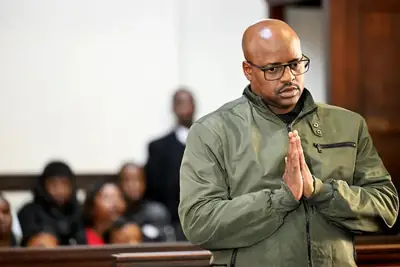
Suspended Ekurhuleni Metropolitan Police Department (EMPD) deputy chief Brigadier Julius Mkhwanazi has been granted bail in connection with the alleged illegal installation of blue lights.
Mkhwanazi together with MPD Fleet Manager Chris Steyn were each granted R10,000 bail in the Germiston Magistrates Court on Monday.
Independent Police Investigative Directorate (IPID) spokesperson Lizzy Suping Steyn was granted bail on August 28.
The two EMPD officers and businessman Vusumuzi “Cat” Matlala were arrested on August 27 and are facing charges of fraud and corruption.
However, Matlala opted not to apply for bail.
2026.9.14 Jayden-Lee Meek murder trial resumes in Johannesburg
The trial of Tiffany Meek, charged with the murder of her son, Jayden-Lee Meek, resumes in the Johannesburg High Court on Monday.
The matter was postponed after the judge, along with legal counsel, conducted an in-loco inspection at the Swazi Place apartment complex in Fleurhof, where Meek and 11-year-old Jayden-Lee lived on August 26.
While there was no filming of the inspection by the court, police photographers and other personnel were on-site to assist in detailing the events to be placed on the record during the trial.
After the inspection, Meek and legal counsel returned to the court, where the matter was formally postponed.
2026.9.14 Zolani Tete bail judgment postponed after ballistic report introduced
2026.9.10 Vanderbijlpark crash: Driver granted bail and barred from driving
A 23-year-old scholar transport driver accused of killing 14 learners in a Vanderbijlpark crash has been granted R3 000 bail.
Ayanda Dludla has also been banned from driving any motor vehicle until the case is finalised.
Dludla was granted bail on Wednesday by the Vanderbijlpark Magistrate’s Court, despite the State opposing his release.
2026.9.7 Woman convicted of drowning six-year-old girl in Eastern Cape river
The National Prosecuting Authority (NPA) has secured the conviction of 23-year-old Noluvuyo Sinyikatha for the premeditated murder of six-year-old Likuwe Mpokopi, who was drowned in a river at Ngcanasini, Mqanduli, in August 2024.
2026.8.25 Julius Mkhwanazi and co-accused to appear in court over R14.9 million precious-stones theft
Suspended EMPD deputy chief Brigadier Julius Mkhwanazi, his former romantic partner and others are due to appear at the Johannesburg Magistrate’s Court on Tuesday, after being granted bail in a case involving the alleged theft of precious stones worth R14.9 million.
Mkhwanazi and his partner, an inspector in the Johannesburg Metropolitan Police Department’s VIP Protection Unit identified as Witness K, were each granted R5,000 bail after being arrested during an intelligence-led operation by the Independent Police Investigative Directorate (IPID).
He faces charges linked to the alleged theft of precious stones worth R14.9 million.
The court previously heard that Mkhwanazi and Witness K had been in a romantic relationship. Mkhwanazi claimed she was in love with him and hoped they would marry.
Witness K previously told the Madlanga Commission of Inquiry that Mkhwanazi orchestrated the February 11, 2023, Killarney robbery.
She alleged that she and three others stole high-grade sugilite and manganese stones and that each received R110,000. However, Mkhwanazi has denied the allegations.
Their arrests followed testimony by EMPD officer Adrian MacKenzie and former EMPD officer Kersha-Leigh Stols, who alleged that they acted on Mkhwanazi’s instructions.
Stols and MacKenzie face charges of robbery with aggravating circumstances and fraud, and were each granted R5,000 bail earlier in July.
The State withdrew charges against businessman Etienne van der Walt.
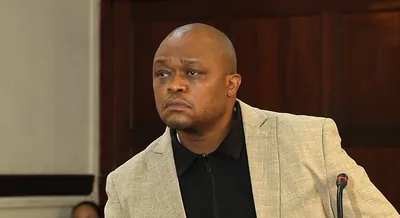
The State has alleged that Brown Mogotsi planned to escape from the Johannesburg Magistrates’ Court cells by disguising himself in a Correctional Services uniform.
The claim was made as prosecutors opposed his fourth bail application on Tuesday, 25 August 2026.
Mogotsi’s latest bail application has been postponed to next Tuesday.
The Johannesburg Magistrates’ Court has heard that alleged political fixer Brown Mogotsi attempted to escape from the court cells during his appearance last week.
According to the State, Mogotsi allegedly planned to disguise himself as a Correctional Services officer by putting on a uniform.
An affidavit, reportedly from an investigating officer, was read before the Johannesburg Magistrates’ Court on Tuesday, 25 August, detailing the alleged escape plan.
The officer stated that Mogotsi intended to use a Correctional Services uniform as a disguise and then run for his life.
“I received a phone call from Colonel Massenya from Johannesburg Correctional Services Centre. Colonel Massenya informed me that Mr Brown Mogotsi has planned an escape from court on the 20th of August 2026,” the state lawyer said.
He informed me that the plan is that he would disguise himself in the uniform of correctional officials and would walk out of the court cells”.
The claims were made as the State opposed Mogotsi’s fourth bail application, which is reportedly based on new factual information and two new addresses.
Mogotsi is facing charges of defeating the ends of justice for allegedly faking his attempted assassination last year.
He reportedly shot at his own car in Vosloorus, east of Johannesburg, in November 2025, during the early stages of the Madlanga Commission.
He also faces charges relating to the unlawful possession of a firearm and ammunition.
His latest bail application has been postponed to next Tuesday.
—
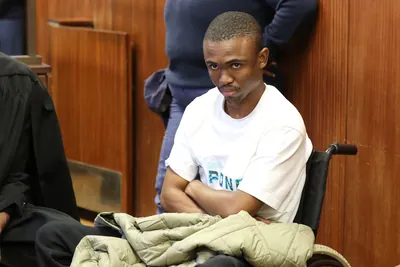
The murder of Zolani Tete was meticulously planned, with the alleged mastermind even going as far as hiring a middleman to recruit two hitmen to ambush the boxing champion at his own gate.
That is the state’s case against the four men who appeared in the Mdantsane Magistrate’s Court on Tuesday for Tete’s murder and the attempted murder of his girlfriend.
Tete, 38, was shot in NU17, Mdantsane, as he waited for his gate to open at about 6.30 pm on Friday.
He drove into the yard in an attempt to escape the gunfire but died at the scene.
His 27-year-old girlfriend, who was in the passenger seat, was shot several times and remained in hospital.
National Prosecuting Authority spokesperson Luxolo Tyali said the alleged hitmen were Siphesihle Kolisa, 28, and Athandwa Gangala, 27, and that Sinebongo Qase, 28, allegedly acted as the middleman.
He said Uzuzole Goqwana, 22, was the alleged mastermind.
Tyali said: “The state alleges that the murder was premeditated and that the matter falls under the ambit of Schedule 6 of the Criminal Procedure Act.
“Given the seriousness of the charges, the prosecution will vigorously oppose the granting of bail.”
Schedule 6 is the highest bail category, meaning the four accused will have to prove to the magistrate that exceptional circumstances justify their release.
Tyali said Goqwana was arrested on Saturday, Kolisa and Gangala at Scenery Park in KuGompo City on Sunday, and Qase on Monday.
Police recovered firearms and ammunition when they arrested Kolisa and Gangala.
The two appeared in the KuGompo Magistrate’s Court on charges of unlawful possession of firearms and ammunition on Monday.
They have abandoned their bail applications.
Goqwana and Qase are expected back in the Mdantsane Magistrate’s Court for a formal bail application next week Tuesday.
Goqwana, who is wheelchair-bound, was wheeled into court for the first time on Monday wearing a white T-shirt with the word “Capone” across the chest and a khaki jacket folded over his lap.
Tyali said he was being held in the medical ward of the West Bank Correctional Centre in KuGompo City.
Police spokeswoman Brigadier Nobuntu Gantana said a 30-year-old man arrested on Saturday had been released and remained a potential witness.
Tete, who grew up in Mdantsane and boxed as “Last Born”, won his first major world title in 2014 when he beat Japan’s Teiru Kinoshita in Kobe for the vacant International Boxing Federation junior-bantamweight belt.
He became a two-division world champion in 2017 when he won the World Boxing Organization (WBO) bantamweight title, which he held until Filipino John Riel Casimero took it off him in 2019.
Tete held the Guinness World Records for the fastest knockout in a world title fight, stopping fellow South African Siboniso Gonya in 11 seconds in Belfast in November 2017.
He was killed weeks after a four-year doping ban ended on July 29, and was preparing to fight again.
A memorial service for Tete will be held at the Orient Theatre in KuGompo City on Wednesday, a notice issued on behalf of his family and Boxing SA said.
His funeral will be held in Mdantsane on Saturday,
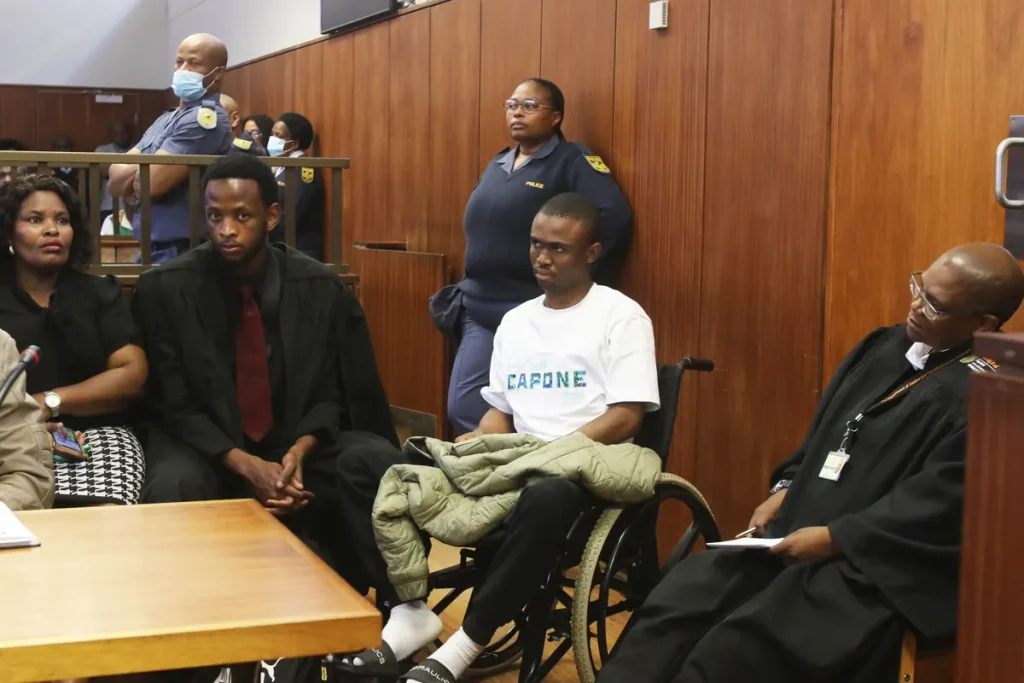
A 22-year-old man appeared in the Mdantsane Magistrates Court on Monday, as one of four suspects arrested for the murder of former world champion boxer Zolani Tete.
Uzuzole Goqwana was wheeled into the packed courtroom, as he is wheelchair bound and allegedly hired the hit on Tete.
State Prosecutor, Tango Phangalele, said Goqwana faces charges of murder, premeditated murder, and the attempted murder of Tete’s 27-year-old girlfriend, who is still hospitalised and was a passenger.
The former boxer was targeted outside his home on Friday evening.
The Prosecutor said that, given the seriousness of the charges, the state would oppose bail because this is a Schedule six matter, and Goqwana might also tamper with evidence.
Phangalele also expressed fear for the suspect’s life, saying he is safer in police custody.
Meanwhile, there was a back-and-forth with his defence attorney, who said that, given his disability, Goqwana could not stay behind bars and should be considered for bail.
The court adjourned shortly as the legal team addressed the Magistrate in chambers about Goqwana’s specific needs due to his medical condition, which was described as “exceptional.”
When back from the short adjournment, it was decided that Goqwana would be transferred to the medical side of the Westbank prison, where he will spend the night before appearing for a bail date on Tuesday – and ultimately where he will await to apply for bail and its outcome.
Meanwhile, community members picketed outside in support, while the courtroom was packed to capacity as the story is of national interest.
Tuesday, three other suspects will appear before the Mdantsane Magistrates Court, where the joinder of charges will eventually occur.
Goqwana’s case was postponed to Tuesday for a transfer to bail court.
Outside the courtroom, community members said they would sign a petition to oppose his release on bail.
Uyathandwa Myekeni, who was one of Tete’s trainees, was also present, heartbroken that his mentor and trainer was no more.
He said just an hour before the horrific incident, Myekeni was with Tete training at their local gym.
“Even on the day he passed on, it was just him and I at the gym. Not long after he dropped me off at home, I heard the news. He did not deserve for his life to end the way it did.”
He said Tete was neat and always clean, and they took his life in such a horrible and dirty manner – unrepresentative of the life he led.
Myekeni said those trained by Tete were torn, as they spent every day training with him.
Meanwhile, Eastern Cape Premier Oscar Mabuyane conducted a home visit to the Tete family.
He expressed his condolences, saying this occurrence was devastating, not just for the Eastern Cape and South Africa, but for the world too.
“It was quite satisfying to see the whole world giving that moment for him over the weekend in sporting matches. It’s a very sad story, a tragic one.”
The Premier said that what now consoles the province is that “the suspects have been found, including the suspected hitman,” saying he hopes everything will go well so that Tete’s family may close this chapter.
Goqwana will be back in the Mdantsane Magistrates Court on Tuesday for his bail date, while his co-accused will make their first appearance in Mdantsane after being arrested in Scenery Park and appearing in the KuGompo City Magistrates Court on Monday.x1200
—

On Monday, Mkhwebane appeared and pleaded not guilty to the two counts of perjury that she is facing.
The first witness is expected to take the stand in the Pretoria Magistrate’s Court on Tuesday, 24 August 2026, when former Public Protector Busisiwe Mkhwebane returns to court following a postponement.
On Monday, Mkhwebane appeared and pleaded not guilty to the two counts of perjury she faces. Initially, she faced three counts, but the National Prosecuting Authority (NPA) withdrew one charge in 2021.
The case relates to her investigation into the Absa/Bankorp matter in which she is accused of lying under oath about her meetings with former president Jacob Zuma.
Accountability Now laid a criminal complaint of perjury against Mkhwebane with the Hawks.
This followed the Constitutional Court’s (ConCourt’s) ruling in July 2019 that upheld a Pretoria High Court judgment which found the Public Protector was dishonest about meetings she had with Zuma in affidavits submitted to the High Court and the Pretoria Regional Court in 2017 and 2018.
The ConCourt also ordered that she personally cover 15% of the SARB’s legal costs in the case.
Mkhwebane’s case postponed
On Monday, the court postponed the matter to Tuesday, 25 August, where the first witness is expected to take the stand for cross-examination, according to her legal representation.
“We anticipate that by the end of this week, this matter will be… the State will have finished its case and we will take a decision on what we can foresee,” he said, in a video shared on the MK party’s social media pages.
“From the baseless charges, we will do a Section 174 application, which is an application to have the charges dismissed.”
Mkhwebane called on her supporters to come out in their numbers.
“Today already I have pleaded not guilty to the two remaining charges, charge two and charge three,” she said.
Mkhwebane was impeached before her term ended in September 2025.
This was after the Section 194 Committee adopted the final report that recommended Mkhwebane’s removal to the National Assembly, after she was found guilty of misconduct and incompetence.
She was removed from office after 318 of the 400 MPs voted in favour of the parliament’s Section 194 Committee Report, while 43 voted against it.
At the time, she said she was being targeted for “asking the 31 Phala Phala questions, the CR17 report, the so-called Rogue Unit report and for commenting on the economic impact of the Reserve Bank mandate on the poor”.x1200
2026.8.24 TMPD officer, wife deemed flight risk in multimillion fraud case
The investigating officer in the multi-million rand fraud case involving Tshwane metro police officer Peter “Gagash” Nonyane and his lawyer wife, Charlotte Tibane, has told the Polokwane Magistrate’s Court that the couple poses a flight risk.
2026.8.24 Suspects in court for murder of former Knysna mayor
Three suspects appeared in court in Knysna on Monday in connection with the murder of former mayor, Aubrey Tsengwa.
The accused face charges of murder, attempted murder and conspiracy to commit murder.
Tsengwa was in his vehicle with three other people in Joodsekamp on Wednesday 20 August when he was shot by a suspect who fled the scene on foot.
One passenger was wounded in the arm and was taken to hospital for treatment.
Western Cape Provincial Commissioner, Lieutenant-General Sizakhele Dyantyi and senior provincial officials attended Monday’s court proceedings, according to police spokesperson, Warrant Officer Christopher Spies.
“The accused aged 33, 36 and 45 were arrested following the investigation into the death of Aubrey Tsengwa.
“They were remanded in custody and the matter postponed to 31 August 2026 for a formal bail application,” Spies said.
He added that the investigation into Tsengwa’s murder continues.
According to Knysna-Plett Herald “further details regarding the identities of the accused and the possible charges against the fourth suspect are expected to emerge as the investigation continues and court resumes on 31 August.”
2026.8.21 R600 million drug lab bust rocks Musina
A multi-agency operation in Limpopo, South Africa, has dismantled a suspected crystal meth manufacturing laboratory, leading to five arrests and the seizure of R600 million in drugs and equipment. This significant breakthrough follows a two-month investigation into a sophisticated, industrial-scale drug operation.
2026.8.21 Pretoria man accused of deliberately infecting girlfriend with HIV gets R2,000 bail
A 47-year-old Boschkop man accused of deliberately infecting his girlfriend with HIV has been granted R2,000 bail by the Pretoria Magistrate’s Court while facing a charge of attempted murder.
According to the National Prosecuting Authority (NPA), the accused allegedly concealed his HIV-positive status from his 38-year-old girlfriend during their relationship, which lasted from October 2025 until June 2026.
The NPA spokesperson Lumka Mahanjana said the man allegedly told the complainant that he was HIV negative. However, on June 26, 2026, the woman reportedly discovered antiretroviral (ARV) medication in his bag and confronted him.
Allegedly hid HIV status from girlfriend
“It is alleged that the accused and the complainant were in a relationship from October 2025 to June 2026. During this period, the accused allegedly misrepresented his HIV status by informing the complainant that he was HIV negative,” Mahanjana said.
According to the allegations, the accused admitted he was HIV positive and allegedly told the complainant that he had intentionally infected her.
“The accused allegedly admitted that he was HIV positive and further stated that he had intentionally infected her because he did not want her to be in a relationship with another person,” Mahanjana said.
The complainant later underwent an HIV test at a medical facility on July 25, 2026, and was informed that she had tested positive. She reported the matter to police the following day, leading to the accused’s arrest at their shared residence.
State didn’t oppose bail
During the bail application, the State did not oppose the man’s release, arguing that he was not considered a flight risk.
“The court found that it was in the interests of justice to release him on bail of R2 000,” Mahanjana said.
The complainant later underwent an HIV test at a medical facility on July 25, 2026, and was informed that she had tested positive. She reported the matter to police the following day, leading to the accused’s arrest at their shared residence.
During the bail application, the State did not oppose the man’s release, arguing that he was not considered a flight risk.
“The court found that it was in the interests of justice to release him on bail of R2 000,” Mahanjana said.
The case has been postponed to August 27, 2026, for the determination of a regional court date.
The accused remains charged with attempted murder.
2026.7.22 Life sentence for Pretoria mother who orchestrated brutal murder of partner
A Pretoria mother, Antoinette Maritz, who was convicted of the premeditated murder of her partner, Wayne Henderson, and the attempted murder of his mother, will serve a life imprisonment term.
The Gauteng High Court, Pretoria, on Wednesday sentenced the 37-year-old, who was found to have orchestrated the brutal killing, to the maximum penalty after no mitigating factors could be found to warrant a lesser sentence.
Her co-accused, Johan Pratt, received a 30-year direct prison sentence last year after reaching a plea and sentencing agreement with the State.
On the night of November 5, 2023, Maritz opened the gate of the Suiderberg home she shared with Henderson and his mother. She allowed Pratt to enter through the window at the back of the house. This set in motion a deadly chain of events inside the home she shared with the victim and his mother.
The court heard how, on the night of November 5, 2023, Maritz had called her ex-boyfriend, Pratt, to the house before leading him to Henderson’s bedroom. Pratt began to assault the deceased and stab him multiple times on his body while he slept.
In a chilling sequence, the court found that the pair dragged his lifeless body to another room before hiding it until morning. At dawn, the violence escalated further. Pratt assaulted the deceased’s mother, Marina Henderson, with an ashtray – said to be the size of a soccer ball – several times on her head, tied her up, and took her belongings.
This was in a bid to silence Marina to the fact that Pratt was in the house. But Marina said she was not even aware of her son having been murdered the previous evening. She was at the time asleep in her upstairs bedroom, while her son was murdered downstairs.
The pair, meanwhile, loaded Henderson’s body into his mother’s vehicle, drove to a remote veld in Standerton, and dumped it before fleeing.
Maritz pleaded not guilty to the murder and attempted murder, but the court found her to be the main instigator and architect of the offences, although not by her own hand, but by a willing partner in crime, Pratt.
She and Pratt had three children, but she eventually left him about nine months prior to the incident and moved in with the deceased. Pratt retained feelings for Maritz and was concerned about access to his youngest child, whom Maritz had taken with her.
Pratt earlier told the court that he was motivated by his concern for his child and Maritz spurred him on to kill the deceased. She threatened to prevent him from accessing his child if he did not do so. Pratt admitted that Maritz had a significant hold over him and manipulated him.
She spurred him on by sending him a picture of his daughter on WhatsApp, showing a cut on her cheek and claiming the deceased was responsible. According to Pratt, Maritz was the one who was the motivating and directing force behind the offences.
While Maritz told the court that Pratt had acted on his own, it was noted that she had never reported the killing to the police. She instead assisted Pratt in dumping the body. According to Maritz, Pratt threatened to kill her if she reported the murder.
The court pointed to the fact that the construction workers who work with the deceased came to fetch him for work in the morning, after his death. Maritz had lied to them and said that they had a fight and that he had already left the house.
It was noted that while she had multiple opportunities to report the incident, every witness testified that she appeared normal, calm, and not in distress. The court commented that she is a “very good actor” as she tried to prove her innocence during her evidence.
2026.7.22 Court delays deportation case for ex-Miss South Africa contestant Chidimma Adetshina
2026.7.14 UK fugitive murder suspect Ndodana Mkhanyisi Tshuma appears in Johannesburg court
Ndodana Mkhanyisi Tshuma, a murder suspect and fugitive from the United Kingdom, made a brief appearance in the Johannesburg Magistrate’s Court on Monday after being arrested in Kensington over the weekend.
According to State Prosecutor Henry Mbobo, the case was rescheduled for July 22 in order to verify Tshuma’s immigration status in South Africa.
“Your Honour, I request that this matter be postponed until 22 July to enable the court to verify the accused’s legal status in the Republic,” Mbobo stated.
British authorities are still seeking the extradition of Tshuma, accused of murdering his wife and two daughters in Great Denham, Bedfordshire, on 6 July.
He faces three counts of murder relating to the deaths of his wife, Zandile and their two daughters, 15-year-old Natalie and 5-year-old Nala.
Adding to the gravity of this matter, it was revealed that Tshuma was found in possession of a 9mm firearm at the time of his arrest.
Defence lawyer Chrispin Machingura indicated that the defence was amenable to the postponement, stating: “We are engaging with the State. We will assess the position by 22 July and see what progress has been made, and we have discussed the matter and are in agreement that it be postponed until 22 July.”
The suspect’s alleged crimes have sent shockwaves in communities both in South Africa and in the UK. Reports detail that Tshuma’s wife and their daughters were discovered dead in their Bedfordshire home more than a week prior to his arrest.
Authorities had initially believed that Tshuma fled to Zimbabwe following the killings, prompting an international manhunt.
According to police, Tshuma’s route to Johannesburg included travel from Heathrow to Dubai before landing at OR Tambo International Airport in Johannesburg.
It is believed that he may have briefly returned to Zimbabwe before settling in Johannesburg. His arrest was the result of a collaborative operation involving the South African Police Service and Interpol, following the issuance of an Interpol Red Notice, which signifies his wanted status on an international scale.
Police spokesperson Brigadier Athlenda Mathe indicated that the 45-year-old was not flagged as a fugitive when he first landed in the country.
“When he landed on 5 July, he was not flagged because the UK authorities only discovered the bodies on 6 July. He was not yet circulated as a fugitive. Despite that, our teams acted before the red notice was issued, which shows commendable cooperation and intelligence work,” Mathe said.
2026.6.12 DD or didn’t he? Cocaine bust witness questioned about apparent David Mabuza message
Political connections have been the focus of the Madlanga Commission of Inquiry, where a Gauteng traffic official – initially testifying about a R286m cocaine interception – was grilled on whether his message referenced the late former deputy president, David Mabuza.
2026.6.12 Illegal mining emerges as a possible motive in deadly Johannesburg mass shooting
Gauteng Police Commissioner Tommy Mthombeni says illegal mining is among the possible motives being investigated following the mass shooting that left 12 people dead in Johannesburg.
He says the discovery of three deceased individuals near processing equipment forms part of the ongoing investigation into what may have led to the attack.
Mthombeni was speaking to the media on Wednesday afternoon, 10 June 2026, at the crime scene in the Jumpers Informal Settlement in Cleveland.
The shooting occurred on Tuesday evening when a group of more than 10-armed suspects allegedly opened fire on residents after arriving at the informal settlement.
The attack left 12 people dead, 10 others injured, and a community reeling from shock and trauma.
The bodies of the deceased have since been removed from the scene, while police continue to gather evidence.
Police have also recovered a hard drive from the scene, which will be analysed as part of the investigation.
The motive for the shooting has not yet been confirmed. However, police are investigating possible links to criminal activity in an area that has previously been associated with illegal mining.
2026.6.12 Government rejects 30 June deadline for undocumented foreigners to leave SA
Justice and Constitutional Development Minister Mmamoloko Kubayi has distanced government from calls for undocumented foreign nationals to leave South Africa by 30 June.
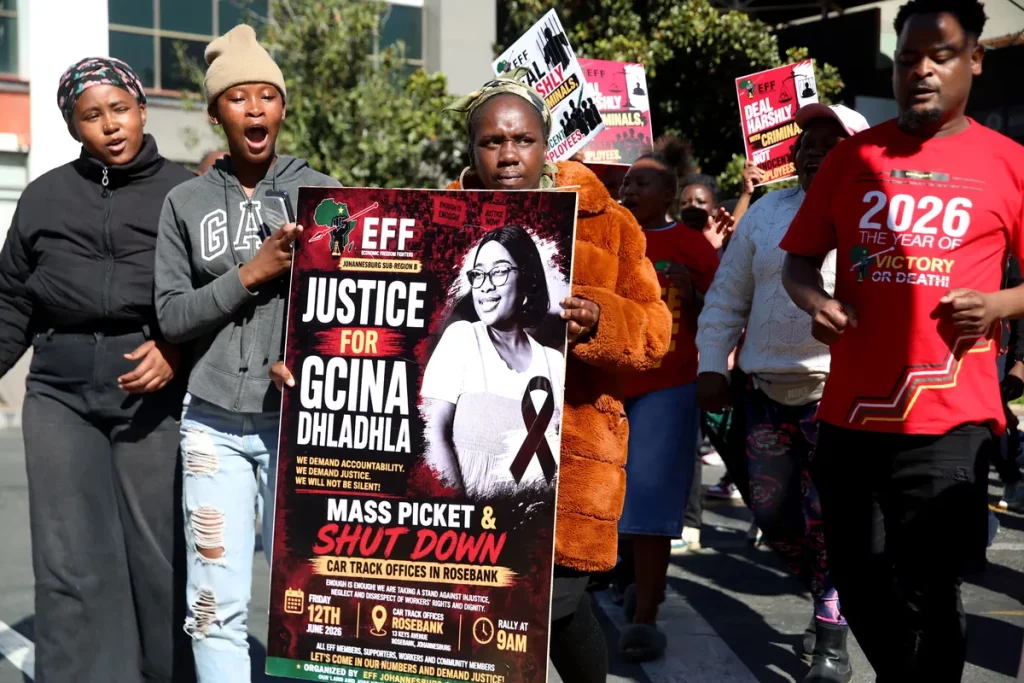
The EFF’s Johannesburg Sub-Region B branch has demanded that Cartrack close for one day to honour an employee who lost her life in the line of duty.
The party also demanded that customers suspend payment for their tracking services until the company commits to supporting Gcina Dhladhla’s 11-year-old child through university.
EFF members held a mass picket, led by chairperson of Sub-Region B Tuki Mbalo at Cartrack’s offices in Rosebank, Johannesburg, on Friday to demand accountability and justice for 29-year-old Dhladhla.
Dhladha, who had worked for nearly two years at Cartrack, died in a bathroom cubicle after she had allegedly been advised to take headache powders for pain.
She was discovered by a colleague after her team leader noticed she had been in the bathroom for an unusually long time, having allegedly reported several times to her employer that she was not well. Despite advising her employer, she was asked to report for duty.
“Our mission is to raise an issue of injustice pending the investigations around the death of Gcina Dhladhla and the outcome of that investigation. It is paramount that we show this business that this family is not alone,” Mbalo said.
Mbalo told TimesLIVE the EFF wanted an independent investigation.
Thabisile Binda, a member of the Dhladhla family, said it has been hard to arrange the funeral, and the family has not even had time to mourn their child.x1200
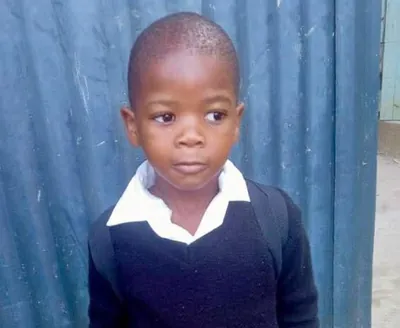
A 41-year-old Umlazi woman will stand trial in the KwaZulu-Natal High Court in Durban, charged with the kidnapping and premeditated murder of her five-year-old neighbour, Ntobeko Simphiwe Xaba.
2026.6.12 Seven Accused in AKA and Tibz Murder Case See Pre-Trial Conference Postponed to August 2026
Durban – The high-profile case against seven men accused of the murders of popular South African rapper Kiernan “AKA” Forbes and his close friend Tebello “Tibz” Motsoane has been postponed, with the matter now scheduled to return to the Durban High Court on 13 August 2026 for further pre-trial proceedings.
The postponement comes after the seven accused appeared together in court for the first time, as the legal teams work through complex procedural issues before the trial can begin.
Seven Accused Appear Together in Durban High Court
On 11 June 2026, all seven men linked to the killings stood in the dock at the Durban High Court. This marked the first joint appearance since two of the accused, brothers Siyabonga Gezani Ndimande and Malusi Dave Ndimande, were extradited from eSwatini late last year.
The other five accused are Lindokuhle Thabani Mkhwanazi, Lindani Zenzele Ndimande, Siyanda Eddie Myeza, Mziwethemba Harvey Gwabeni and Lindokuhle Lindo Ndimande. They face serious charges including conspiracy to commit murder, two counts of murder, multiple counts of attempted murder, unlawful possession of firearms and ammunition, and money laundering.
Security was tight inside and outside the courtroom as the men were brought in. The public and media interest remains high in a case that has gripped the nation since the shocking killings more than three years ago.
2026.6.12 Tiffany Meek murder trial postponed until August
The trial against murder accused Tiffany Meek, which barely kicked off, was postponed for two months.
The case is being heard in the Johannesburg High Court sitting in Palm Ridge.
The 32-year-old pleaded not guilty to the murder of her 11-year-old son, Jayden-Lee Meek
She also pleaded not guilty to child abuse, defeating the ends of justice, and crimen injuria.
Police Sergeant Rito Koveni took the stand on Friday.
Earlier, the police sergeant told the court that Meek showed no panic or concern during the search for Jayden-Lee.
In her testimony, the police officer was searching for a missing child in Swazi Place after the disappearance was reported.
During cross-examination by Meek’s legal counsel, it was put to the police officer that she had allegedly told Meek that the security guard of the complex was intoxicated.
“I never said that. He was sober. She was the one who told me not to take note of him. He is always sleeping and smoking ganja. In fact, every time I was speaking to him, she [Meek] interfered and kept saying ‘what do you know, what do you know?’.
The defence said Meek will deny all these conversations. The police officer had no objections to her denial.
The defence was persistent in implying that the police did not do enough, and in so doing, they did not knock on all the doors of the Swazi Place apartment complex.
The officer completed her testimony and was excused.
The State is expected to call the school transport driver and a teacher to testify.
While checking dates for the trial to resume, the Judge indicated that no other matters will be heard on the days set out for trial, and he wants as many witnesses to give their evidence on the days allocated.
The matter was set down for August 19 and 20.
2026.6.12 South Africa repatriates more Malawians as deportations surge
More Malawians are leaving South Africa as authorities intensify deportations, with nearly 1 000 repatriated in a major operation.
The number of Malawians leaving South Africa continues to grow, with nearly 1 000 nationals repatriated in one of the country’s largest single-day operations.
The Department of Home Affairs coordinated the departure of about 980 Malawians from the Lindela Repatriation Centre in Krugersdorp on Thursday night, using 14 buses to transport the group back home.
Another large group heads back to Malawi
While some Malawians have recently opted to return voluntarily amid ongoing anti-illegal immigration protests in parts of South Africa, Home Affairs officials said the latest group also included individuals detained during immigration raids, those transferred from correctional facilities and others found to have violated immigration laws.
Speaking to eNCA News, Home Affairs official Stephen van Neel said the repatriation centre receives foreign nationals from across South Africa’s nine provinces.
“They are coming from across the country. This centre serves all nine provinces and that is where we get our people,” he said.
According to Van Neel, those held at Lindela include people who have breached immigration regulations, while others may have faced criminal charges before becoming eligible for deportation.
South Africa intensifies deportation operations
The latest operation comes as South Africa ramps up efforts to remove undocumented migrants.
Earlier this year, Home Affairs Minister Leon Schreiber announced that the department had deported a record 51 000 illegal immigrants during April 2025, representing an 18% increase from the previous year.
The minister also revealed that more than 600 000 people had been removed or intercepted since the formation of the Government of National Unity (GNU).
Of these, over 500 000 were stopped at South Africa’s borders, while 109 344 were deported after being found inside the country.
Malawi remains one of the costliest destinations
Malawi remains one of the most costly destinations for deportation due to the long distance involved.
Van Neel said transporting Malawian nationals can cost millions of rands.
“For eight buses that we normally would take on a weekly basis or every second week, we are paying up to R2.5 million. Tonight’s exercise would probably be around R5 million for close to a thousand people. It is a costly exercise,” he said.
The latest repatriation highlights the growing number of Malawians leaving South Africa as authorities continue large-scale immigration enforcement operations across the country.
The Malawi government recently announced that it needs more than K1 billion (about R9.5 million) to repatriate over 3 000 citizens stranded in South Africa.
Campaigns against illegal immigrants continue to drive foreign nationals from their homes, jobs and businesses.
Chief Secretary to the Government Justin Saidi revealed the figure on Tuesday during a welcome ceremony for 150 Malawians who recently returned home.
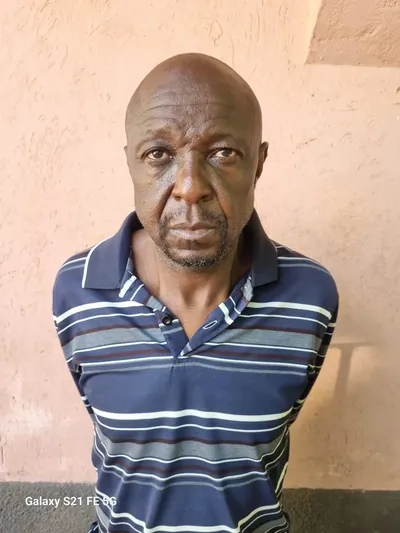
A Limpopo man who orchestrated and executed the murder of his wife has been sentenced in the Polokwane High Court.
Molabe Fannie Seribishane, 59, has been sentenced to life imprisonment for the murder of his wife, Mamsy Seribishane, 52.
Seribishane was sentenced on Wednesday after being convicted in connection with the murder of his wife, a nurse who was shot and killed on October 22, 2024, while reporting for duty at Lebowakgomo Hospital.
According to police, Mamsy was attacked at about 5.30pm near the hospital gate by a gunman who fled the scene in a white Volkswagen Golf 7. A murder case was registered at Lebowakgomo SAPS and later assigned to Provincial Detectives, with the investigation led by Captain Phaladi Makola of the Provincial Tracking Team. Police revealed that the couple was in the process of divorcing.
“The investigation uncovered evidence linking the deceased’s husband to the murder. Further investigations revealed that the couple was in the process of divorce at the time of the incident and that a protection order had previously been granted against the accused,” police said.
After the murder, Seribishane went into hiding. He was subsequently arrested on November 13, 2024, while visiting his home to collect personal belongings.
“Members of the Provincial Tracking Team and Provincial Investigation Unit apprehended him and recovered a 9mm pistol in his possession. Investigations later confirmed that the firearm had been stolen in Seshego during June 2024,” police said.
Ballistic analysis conclusively linked the firearm to the murder of Mamsy. Despite the overwhelming evidence presented before the court, Seribishane denied involvement in the crime throughout the proceedings. His bail applications were unsuccessful.
The case was prosecuted by Advocate David Sebelebele.
Crucial technological analysis evidence presented by the Hawks’ cellphone expert, Captain Machoene Mabotja, placed Seribishane at the crime scene, and his expert testimony strengthened the State’s case.
Seribishane was sentenced to life imprisonment for murder, six years’ imprisonment for contravening the Domestic Violence Act, 15 years’ imprisonment for possession of an unlicensed firearm, and six years’ imprisonment for possession of ammunition.
The court also advised the family of the deceased of their right to make representations before the parole board when Seribishane becomes eligible for parole.

As Atlantis still grapples in the wake of losing an innocent 15-year-old girl to gang violence, her school will remember her during a memorial on Thursday.
Nikita Finch was a learner at Robinvale High School.
The teenager, who celebrated her birthday on Friday, June 5, was shot and killed as she was heading home from a church youth event.
The schooling community of Robinvale High School is also reeling in shock after it had to announce the death of one of its learners.
In a post on its social media page, the school expressed its profound sadness at the loss of Finch.
“Nikita will be remembered for her beautiful smile that could light up any room and her bubbly personality that brought joy to those around her. She had a special way of making others smile and will forever remain in the hearts of her teachers, classmates, and friends.
“As we returned to school today, there was and will forever be an empty seat in the classroom — a painful reminder of a young life gone, far too soon. While that seat may be empty, the memories, laughter, and happiness Nikita shared with us will never fade,” it said.
The school also conveyed condolences to Nikita’s parents, family, and friends during this difficult time.
“Rest peacefully, Nikita. You will always be remembered, always be missed, and forever be a part of our school family,” the school said.
At 1pm on Thursday, the school will be hosting a memorial service for the slain learner.
The community of Atlantis, who are still reeling in shock, said it has had enough of the violence plaguing the area.
A march against the gang violence has been arranged for Sunday, June 14, and organisers are calling all residents to pitch up and walk the streets as they have had enough.
Previously, Ward Councillor Allister Lightburn told IOL the community was still reeling in shock after losing a 14-year-old girl a few months ago. The girl was shot after a stray bullet struck her while she was on school grounds.
This fatal shooting marks the second teenager killed by stray bullets in recent months.
“About three months ago, we lost a beautiful 14-year-old girl in a senseless shooting at a school, and on Saturday night, we lost a beautiful 15-year-old girl during rival gang shootings. This must be condemned in the strongest terms, and the perpetrators should be brought to book,” Lightburn said.
Police spokesperson, Ndakhe Gwala, said Atlantis SAPS is investigating the matter.
“Atlantis detectives are investigating a case of murder and attempted murder following a shooting incident at Alleghany Lane in Sherwood Park on Saturday, June 6, 2026. According to reports, two victims, aged 15 and 48, were caught in the crossfire. The 15-year-old female succumbed to her injuries. No arrests have been made at this stage,” Gwala said.
Police are urging anyone with information regarding the shooting incident to contact the investigating officer, Detective Captain Gavin Liedeman, at 082 302 4328, or Crime Stop at 08600 10111.

A 54-year-old man from Mabuyaze, Ezibeleni, appeared in the Ezibeleni Magistrate’s Court on 10 June 2026 after allegedly assaulting his girlfriend and locking her in his house for hours.
According to police spokeswoman Captain Yolisa Mgolodela, the incident occurred on 8 June 2026 at around 23:30. The suspect allegedly invited his 44-year-old girlfriend to his home and assaulted her with a stick and fists “without giving any reason”.
On 9 June at about 08:00, the accused allegedly locked the victim inside the house to prevent her from reporting the matter, then left the premises. Police said they were alerted by a witness.
“When officers arrived, the door was locked and the suspect was absent. After police contacted him, he returned and opened the door, allowing them to rescue the victim,” she said.
Mgolodela said the victim opened a case of assault GBH linked to domestic violence and sustained a swollen face, bruises and cuts all over her body.
“The accused was arrested immediately. He appeared in court on 10 June and the matter was remanded to 11 June for a formal bail application. He remains in custody,” she said.
ANC Women’s League coordinator Nosipho Papiyana said: “We unequivocally condemn all forms of violence against women and children. Gender-Based Violence remains a scourge that continues to rob women of their dignity, safety and fundamental human rights. No woman should ever be subjected to abuse, intimidation, torture or any form of inhumane treatment.”
Papiyana added the ANCWL is “deeply disturbed by the allegations and call upon the South African Police Service to conduct a thorough, impartial and urgent investigation.”
SADTU Ikhala Branch Secretary Hlon’phile Sigwayi-Mda also issued a strong condemnation following a separate GBV case involving former SADTU Branch Secretary Comrade Sandiswa Mkhwambi, who was allegedly kidnapped for two days and suffered severe physical assault.
“SADTU Ikhala condemns GBV in the strongest terms. Violence against women is an assault on human dignity, and it cannot and will not be tolerated. No one is above the law,” Sigwayi-Mda said.
She called on police and the justice system to act swiftly and said “no political or social connections should shield anyone”.
—
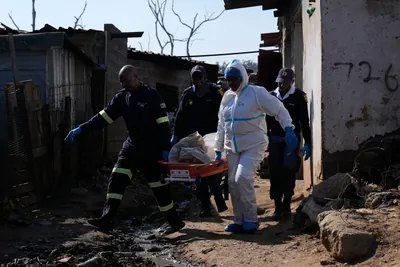
2026.6.12 “I Felt Something Hot”: Cleveland Mass Shooting Survivor Recalls Night 12 People Were Killed
A survivor of the deadly Cleveland informal settlement mass shooting has shared a chilling account of the moments when gunfire erupted
The man, who was wounded during the attack, revealed how a split-second decision saved him from suffering the same fate as many others
His testimony sheds new light on what unfolded that night as police continue searching for the armed suspects
2026.6.11 Gauteng Police Launch Manhunt After 12 Killed in Jumpers Settlement Massacre
JOHANNESBURG – Gauteng police have launched a large-scale manhunt for more than 10 heavily armed suspects following a brutal mass shooting that left 12 people dead and at least nine others wounded at the Jumpers Informal Settlement in Cleveland on Tuesday night.
The attack, described by provincial police commissioner Tommy Mthombeni as “heartless and barbaric”, has left the tight-knit community in shock and raised fresh fears about violent crime spilling over from illegal mining disputes in the area.
Gunmen Storm Settlement in Late-Night Rampage
According to police, the gunmen arrived in a white Toyota Quantum minibus and were dropped off near the settlement shortly before 9pm on Tuesday. They entered through the main gates and opened fire indiscriminately at multiple locations inside the informal settlement.
Eyewitnesses described a terrifying scene as bullets ripped through shacks and open spaces. Some residents said they heard sustained gunfire lasting for an extended period, forcing people to hide wherever they could. Children were reportedly made to lie under beds while adults tried to shield them from the chaos.
Eleven people died at the scene, while a twelfth victim succumbed to injuries in hospital. Nine others were wounded and rushed to nearby medical facilities. Police have confirmed they are investigating several crime scenes within the settlement.
The suspects fled the area in the same white minibus after the attack. No arrests have been made yet, and police have appealed to the public for information that could help track them down.
Possible Link to Illegal Mining Turf Wars
Investigators are exploring whether the massacre is connected to violent disputes between illegal mining syndicates, known locally as zama zamas. The Cleveland area and surrounding parts of Johannesburg have long been hotspots for illegal gold mining activities, with rival groups often clashing over control of mining sites and resources.
Community members told police that heavily armed groups linked to these mining disputes have been active in the area. Some residents believe innocent people were caught in the crossfire during what appears to have been a targeted attack on certain sections of the settlement.
Gauteng police have deployed specialised national units to assist with the investigation. Officers are examining whether the gunmen were settling scores or sending a message to rivals operating in the informal settlement and nearby mining zones.
Police Commissioner Condemns ‘Barbaric’ Attack
Gauteng police commissioner Lieutenant General Tommy Mthombeni visited the scene on Wednesday morning to assess the situation and reassure residents. He strongly condemned the killings, describing them as senseless and cruel.
The commissioner said police are treating the matter with the highest priority and have brought in additional resources to track down those responsible. He appealed to anyone with information about the suspects or the white Toyota Quantum used in the attack to come forward immediately.
Police have also urged community members to remain calm while the manhunt continues. Extra patrols have been deployed in the Cleveland area and surrounding settlements to prevent further violence and reassure frightened residents.
Community Left Traumatised and Fearful
For the people living in Jumpers Informal Settlement, Tuesday night’s attack has turned their already difficult lives into a nightmare. Many residents in informal settlements like this one struggle daily with poverty, limited services and high levels of crime. The sudden eruption of such extreme violence has left families grieving and terrified about what might happen next.
Relatives of the victims gathered at the scene on Wednesday, some in tears as they tried to make sense of the loss. Community leaders have called for more visible policing and better protection for residents who often feel caught between criminal elements and inadequate state services.
Children who witnessed the gunfire or lost family members are likely to carry deep trauma for years to come. In close-knit communities like Jumpers, everyone knows someone affected by the shooting, and the pain ripples far beyond the immediate victims.
Broader Challenge of Crime and Illegal Mining in Gauteng
This massacre highlights the ongoing struggle with violent crime in parts of Gauteng, particularly where illegal mining activities create dangerous power struggles. Zama zamas often operate in well-armed groups and have been linked to numerous violent incidents across the province in recent years.
While police continue to make arrests in connection with illegal mining, the syndicates remain deeply entrenched in some areas. The spillover into residential settlements puts ordinary people at risk and makes daily life even more precarious for those already living on the margins.
Government and police leaders have repeatedly pledged to tackle both illegal mining and the violent crime it fuels. However, residents in affected communities say they need faster and more visible action to restore a sense of safety.
As the manhunt for the Jumpers settlement gunmen continues, police are asking anyone with information to contact their nearest police station or call the crime stop line. For the grieving families and shaken community in Cleveland, justice cannot come soon enough.
2026.6.10 Illegal mining emerges as a possible motive in deadly Johannesburg mass shooting
Gauteng Police Commissioner Tommy Mthombeni says illegal mining is among the possible motives being investigated following the mass shooting that left 12 people dead in Johannesburg.
He says the discovery of three deceased individuals near processing equipment forms part of the ongoing investigation into what may have led to the attack.
Mthombeni was speaking to the media on Wednesday afternoon, 10 June 2026, at the crime scene in the Jumpers Informal Settlement in Cleveland.
The shooting occurred on Tuesday evening when a group of more than 10-armed suspects allegedly opened fire on residents after arriving at the informal settlement.
The attack left 12 people dead, 10 others injured, and a community reeling from shock and trauma.
The bodies of the deceased have since been removed from the scene, while police continue to gather evidence.
Police have also recovered a hard drive from the scene, which will be analysed as part of the investigation.
The motive for the shooting has not yet been confirmed. However, police are investigating possible links to criminal activity in an area that has previously been associated with illegal mining.
“At this stage, we cannot determine what the motive is, as you know that this area is adjacent to an illegal mining area; we have suspicions that this barbaric behaviour could be linked to that. We were here three weeks ago; through those operational activities, we managed to recover more than a thousand rounds of live ammunition for an AK-47, and we arrested three suspects,” said Mthombeni.
Gauteng has experienced several violent incidents linked to illegal mining over the years, with disputes over territory and control of mining operations often resulting in conflict.
Investigations into the shooting are ongoing, and no arrests have been announced at this stage.
2026.6.10 12 Killed In Deadly Cleveland Informal Settlement Mass Shooting As Police Hunt Gunmen
At least nine other people survived the attack and were taken to nearby medical facilities for treatment.
Twelve people have been killed and several others injured after gunmen stormed the Jumpers Informal Settlement in Cleveland, Johannesburg, in what is believed to be one of the deadliest mass shootings in Gauteng this year.
Police were called to the settlement shortly after 11pm on Tuesday following reports of multiple shots being fired. When officers arrived, they found victims lying at different locations throughout the community, many suffering from gunshot wounds.
Emergency services rushed to the scene, but for some victims help arrived too late. Eleven people were declared dead at the settlement, while a twelfth victim later succumbed to injuries in hospital.
Cleveland Mass Shooting Leaves Community Reeling
According to preliminary information from investigators, the victims include eight men and three women who died at the scene. Another male victim later died after being transported to hospital.
At least nine other people survived the attack and were taken to nearby medical facilities for treatment.
Residents were left traumatised as police and emergency personnel worked through the night, securing the area and assisting the wounded.
Police Search For More Than 10 Suspects
Investigators believe the attackers arrived in a white Toyota Quantum before carrying out the deadly assault.
Police allege that more than 10 armed suspects were dropped off near a petrol station before entering the informal settlement through different access points. The group is believed to have moved through the area, opening fire at several locations before fleeing in the same vehicle.
At this stage, authorities have not established a motive for the killings and no arrests have been made.
Provincial and district detectives, together with crime intelligence operatives and forensic specialists, have been assigned to the investigation as efforts continue to identify and locate those responsible.
Police are urging anyone with information that could assist the investigation to contact Crime Stop on 08600 10111 or submit tips anonymously through the MySAPS mobile application.
—
2026.6.10 Limpopo Teen Allegedly Stabbed After Warning School Guards He Feared For His Life
“My son remained at school and informed the guards that he was scared to go home because his fellow pupils teamed up with pupils from different schools and were waiting for him outside,” Maduwa said.
A Limpopo mother is demanding answers after her 17-year-old son was allegedly stabbed by fellow pupils despite reportedly warning school security guards that he feared for his safety.
Amukelani Junior Mashimbye, a Grade 10 pupil at DZJ Mtebule Secondary School in Nkowankowa, is recovering at home after he was allegedly attacked during a confrontation involving pupils from his school and neighbouring schools.
The teenager sustained serious injuries after being stabbed twice and is now too traumatised to return to class, according to his family.
Limpopo School Stabbing Raises Questions About Safety
The teenager’s mother, Clarah Maduwa, claims her son tried to seek help before the violence erupted.
According to Maduwa, information provided to the family and later confirmed by police indicated that her son remained on school grounds because he was afraid to walk home after learning that a group of pupils were allegedly waiting for him outside.
She alleges that security guards were informed about the threat but failed to alert authorities or intervene before the situation escalated.
“My son remained at school and informed the guards that he was scared to go home because his fellow pupils teamed up with pupils from different schools and were waiting for him outside,” Maduwa said.
2026.6.7 Almost 16,000 arrested and 2,773 convicted for crimes against children in past year
The South African Police Service (SAPS) says 15,888 suspects were arrested and 2,773 convicted for crimes against children over the past year, as law enforcement intensifies efforts to combat abuse, exploitation and violence against minors nationwide.
The figures were released as Child Protection Month came to an end, with SAPS reaffirming its commitment to safeguarding children and ensuring offenders face justice.
“The South African Police Service (SAPS), working closely with key stakeholders, continues to intensify its fight against those who perpetrate crimes against children,” the police service said.
SAPS said the annual campaign included coordinated awareness drives, prevention initiatives and targeted operations involving government departments, civil society organisations and community structures aimed at protecting children from abuse, neglect, trafficking and sexual violence.
“As Child Protection Month draws to a close, SAPS reaffirms its unwavering commitment to protecting children and ensuring that offenders are brought to justice,” police said.
The campaign concluded with a dialogue and learner engagement session held on Saturday, June 6, 2026, in Ntabankulu in the Eastern Cape, attended by more than 300 learners from surrounding schools.
Senior SAPS officials, government representatives and community leaders participated in the session, which focused on teenage pregnancy, statutory rape, and the long-term impact of sexual offences on young people.
“The solution-driven dialogue created an opportunity for SAPS, stakeholders and learners to engage openly on the consequences of teenage pregnancy, the legal implications of statutory rape, and the long-term impact these crimes have on the lives and futures of young people,” SAPS said.
Delivering the keynote address, Major General Mmantsheke Lekhele urged learners to make informed decisions and report abuse.
She also stressed the importance of safe environments for children, adding that they must be “protected, supported, and empowered to reach their full potential.”
SAPS also highlighted several high-profile convictions secured across the country during the campaign period.
In Gauteng, a Pretoria North Magistrates’ Court sentenced a stepfather to five life terms and an additional 60 years’ imprisonment for rape, sexual assault, crimen injuria, and possession of child sexual abuse material, involving a victim who was 12 years old when the abuse began.
In the Eastern Cape, two suspects were arrested in Humansdorp for the alleged rape of a critically ill seven-year-old girl, after hospital staff detected signs of abuse during treatment in Gqeberha.
In the Western Cape, a paedophile from Ceres received five life terms plus 78 years for sexual offences against two nine-year-old boys and a 16-year-old girl.
In Limpopo, a 22-year-old man was sentenced to life imprisonment for the rape of a 10-year-old girl in Motetema, while in KwaZulu-Natal, a Durban Magistrate’s Court handed a life sentence to a man convicted of raping his 12-year-old neighbour.
In the Free State, a Bloemfontein Regional Court sentenced a mother to three life terms plus 23 years, alongside her boyfriend who also received three life sentences for rape, sexual exploitation and assault.
SAPS said it remains committed to strengthening the fight against crimes targeting children through continued collaboration with stakeholders and tougher enforcement action.
2026.6.4 Trial of British botanists’ murder case uncovers shocking details
The State had to call more than one medical expert to perform a post-mortem on the bodies of renowned British botanists Rodney Charles Saunders and his wife, Rachel May, after they were found on the Tugela River, with their bodies decomposed and some parts eaten by animals.
The British couple was kidnapped and killed in February 2018 in Eshowe, KwaZulu-Natal. Bibi Fatima Patel and her husband, Sayefudeen Aslam Del Vecchio, and Malawian Mussa Ahmad Jackson are charged with their murders.
The trio is also charged with kidnapping, robbery with aggravating circumstances, and theft. Del Vecchio is further facing a separate charge of malicious damage to property.
He is alleged to have set alight sugarcane fields stretching more than 20km belonging to Tongaat Hulett, causing financial losses estimated at more than R2.3 million.
When the judgment proceedings got under way on Thursday at the Durban High Court, only Jackson was present in the dock. Del Vecchio and Patel refused to leave the holding cells below the court to hear the judgment being handed down.
Judge Esther Steyn, who presided over the trial from April 2023, noted that the matter was unusual in the number of interlocutory applications brought by the accused during proceedings.
“One of which was for the removal of senior State advocate Mahen Naidu, which I ruled against, and I had said I would give my reasons at the end of the trial,” said Steyn.
The scale of the evidence, she noted, was considerable.
“This trial had 15 physical exhibits. The remainder of the exhibits went all the way to WWWW — this is indicative of all the documentary evidence in this matter,” said Steyn.
The accused pleaded not guilty at the outset of the trial and opted to remain silent. The State called 60 witnesses. The Saunders family, based in the United Kingdom, has been permitted to follow the judgment proceedings remotely.
Among the evidence placed before the court was that the accused stole the couple’s Land Cruiser, camping equipment, and a gold FNB credit card, which was subsequently used to make purchases totalling more than R700,000.
The spending spree came to an end at a retail store, where an employee grew suspicious of Jackson.
Steyn, reading from her judgment, recounted the evidence of the store employee.
“The witness told the court that they made purchases totalling R11,000 and punched a valid PIN. The next day, all three accused came back to the store, and the witness noticed that they were just randomly picking items without even looking at the prices. At the till, after paying with the card, the witness asked the accused three (Jackson), if he was Dr Saunders, and he replied that Dr Saunders was his wife,” said Steyn.
When the employee indicated he needed to verify the claim, Jackson allegedly attempted twice to reach across the counter and grab the card. All three accused then fled the store.
The victims’ bodies were found in an advanced state of decomposition, with portions of the remains having been consumed by animals. Three forensic experts were called to assist the court.
The initial post-mortem failed to establish the cause of death or determine the sex of the bodies. A dentistry specialist subsequently made an identification of the remains through dental records.
“The expert established that Rodney had multiple predatory injuries and blunt force trauma wounds, as well as a history of drowning and advanced decomposition. Rachel had a fractured skull and stab wounds to the back of the body,” said Steyn, reading from her judgment.
A biological anthropologist, who specialises in forensics, testified that a significant number of bones were never recovered and that the fracture to Rachel’s skull was consistent with random strikes.
Steyn has so far reviewed the evidence of 15 of the 60 State witnesses. The court is expected to continue working through the remaining testimony in the days ahead.
A significant police presence, including officers from the National Intervention Unit (NIU) and the Task Force, was visible both inside and outside the courtroom. Additionally, guard railings have been installed throughout the floor, where the legal proceedings are taking place.
2026.6.4 Ngizwe Mchunu retracts defamatory statements against Julius Malema following court ruling
Controversial media figure Ngizwe Mlando Mchunu has issued a formal, unconditional public apology and retraction to Economic Freedom Fighters (EFF) President Julius Malema.
This comes in the wake of two binding court orders handed down in May 2026, compelling Mchunu to legally answer for a series of highly inflammatory and defamatory remarks made against the political leader.
In a statement on Thursday, Mchunu stated that after seeking legal counsel, he had come to a full appreciation of the legal implications of the directives and chose to profusely apologise to Malema while committing to refrain from publishing similar impugned statements in the future.
The retraction specifically addresses several severe allegations Mchunu had previously leveled against the EFF leader. Among the retracted statements were unfounded claims that Malema had received 60 million from Nigerian drug dealers and illegal foreigners to protect them, alongside assertions that Malema had looted the collapsed VBS Mutual Bank and misappropriated funds in Ekurhuleni and through On Point Engineering.
The pulled statements also contained deeply personal insults, in which Mchunu had referred to Malema as a “political devil,” a “dead snake,” and a “dog,” while aggressively challenging the politician to confront him at his location in Nkandla. Mchunu has formally withdrawn all such defamatory remarks made both before and after the court orders were issued.
During another interview in Johannesburg on April 30, Mchunu launched a series of personal and political attacks against the opposition leader.
“I won’t speak about a dead snake, Julius Malema is like a dead snake something that won’t wake up,” Mchunu said in the translated transcript before adding that Malema “must go to jail”.
He further accused Malema of taking money from “On Point Engineering”, “loot[ing] VBS”, and “eating money of illegal foreigners”, while again alleging that the politician was receiving “60 million dollars from illegal foreigners”.
Mchunu also referred to Malema as “a political devil” and claimed that “the president is scared of him”.
The North Gauteng High Court in Pretoria ruled that the statements constituted defamatory conduct and ordered Mchunu not to repeat the allegations “explicitly, impliedly, or otherwise”.
Concluding his legal compliance statement, Mchunu called upon the general public and his base of supporters to accept his decision and the formal retraction.
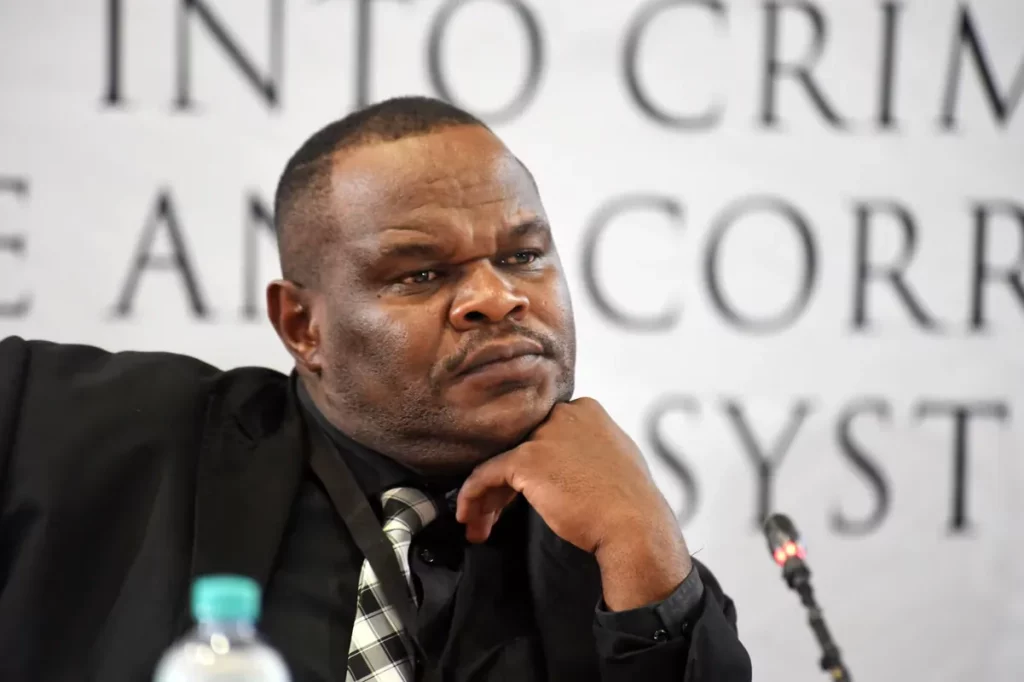
The police sergeant was arrested on 2 April by the task team investigating matters arising from the Madlanga Commission of Inquiry. His arrest followed testimony he gave before the commission as well as a search operation conducted at his Pretoria residence.
The Pretoria High Court has upheld a lower court ruling that denied bail to Sergeant Fannie Nkosi, who is facing multiple criminal charges, including possession of illegal ammunition and explosives, theft, and defeating the ends of justice.
Nkosi appeared before the High Court on Wednesday in an attempt to overturn a decision made by the Pretoria North Magistrate’s Court. In April, Magistrate Thandi Theledi found that he had not satisfied the court that he would refrain from endangering the public, interfering with witnesses or the investigation, or avoiding trial if released.
The police sergeant was arrested on 2 April by the task team investigating matters arising from the Madlanga Commission of Inquiry. His arrest followed testimony he gave before the commission as well as a search operation conducted at his Pretoria residence.
Pretoria High Court Upholds Bail Refusal For Fannie Nkosi
During proceedings on 26 May, Nkosi’s legal representative, advocate Hendrik Potgieter, argued that the magistrate had erred in both her interpretation of the facts and application of the law.
Potgieter maintained that the High Court had sufficient grounds to set aside the earlier ruling. He challenged the state’s position that Nkosi could interfere with evidence, police personnel, administrative systems, case files or exhibits if released on bail.
According to Potgieter, the prosecution had failed to present concrete evidence showing that such risks were likely.
Judge Mokhine Mosopa questioned the quantity of ammunition allegedly discovered during the search of Nkosi’s property.
“Why does he have to keep such a large amount of ammunition relating to the R5 rifle in his house? It doesn’t end there; only five [out of 62] of the ammunition found there were found to be police-issued. It means the rest were not police-issued,” commented the judge.
Potgieter responded by defending his client’s possession of the ammunition.
“With the number of firearms that the appellant has registered to his name, 400 rounds of ammunition is not a large quantity. He’s a licensed gun owner. The firearms and ammunition were seized by the police; they’re no longer in his possession. So, the reason that he would place society in danger does not exist any more because they were taken by the police,” Potgieter said.
Fannie Nkosi Faces Additional Criminal Charges
While Nkosi remained behind bars, investigators attached to the Madlanga Commission of Inquiry added a further case against him earlier this month.
The new charges relate to allegations of defeating and obstructing the course of justice.
Prosecutors claim that in November 2022, a suspect was arrested for allegedly possessing dagga, unlicensed firearms and explosives. The state alleges that Nkosi later obtained the original case docket after claiming he had been instructed by head office.
It is further alleged that months later he travelled to Thohoyandou, introduced himself as a colonel from head office and removed confiscated dagga from police custody.
Although the exhibit was reportedly booked in at head office, investigators later discovered that one of the bags containing the dagga had allegedly been tampered with.
Fannie Nkosi Court Case Set To Return In July
The state is seeking to combine the latest case with the existing matter before the courts.
Legal proceedings are expected to continue on 22 July, when the application to consolidate the cases will be considered.
Nkosi has denied all allegations against him. He continues to insist that the prosecution’s case against him is “weak”. x1200
2026.6.3 Sindiso Magaqa Murder Trial Drama Far From Over As Judge Loses Patience With Delays
Judge Mluleki Chithi did not hide his irritation during the last court appearance. He made it clear that the justice system cannot continue absorbing endless delays while witnesses remain in protective custody waiting to testify.
The long-running Sindiso Magaqa murder trial is back in the spotlight as proceedings resume in the Pietermaritzburg High Court on Wednesday. Nearly nine years after the shocking assassination that rocked South African politics, the case remains tangled in legal setbacks, courtroom disputes, and mounting frustration.
For many South Africans, the Sindiso Magaqa murder trial has become a symbol of how justice can move painfully slowly. And now, with a judge issuing a stern warning against any further hold-ups, all eyes are once again fixed on a case that refuses to fade from public attention.
2026.6.1 9 071 South Africans add their voices to call for justice in Gaby Ndaba case
More than 9 000 South Africans have added their names to a growing call for answers in the death of Nonkululeko Gabriella “Gaby” Luenza Ndaba, whose body was found under a bridge in Boksburg on 1 June 2023 after she had been missing for six days.
2026.5.27 Joe ‘Ferrari’ Sibanyoni Extortion Case Re-Enrolled Ahead Of Delmas Court Appearance
“The Director of Public Prosecution took a decision to take that matter to Delmas, which I support. I think it would proceed without any hindrance. For us to mount a successful prosecution.”
—
2026.4.18 Bellarmine Mugabe Case: Investigating Officer Denies Role In Victim Compensation Amid Hyde Park Shooting Probe
However, the officer has distanced himself from these assertions, stating he was not involved in any arrangement related to compensation.
The investigating officer in the case involving Bellarmine Mugabe has rejected claims that he played any part in facilitating compensation to a victim injured in a February shooting incident at a Hyde Park residence.
This follows submissions made in the Alexandra Magistrate’s Court by legal representatives for Mugabe and his co-accused, Tobias Matonhodze. The defence told the court that payment had been made to the complainant with the knowledge of Colonel CJ Raj after the accused’s families approached the victim.
However, the officer has distanced himself from these assertions, stating he was not involved in any arrangement related to compensation.
Court Postpones Case As Firearm Investigation Continues
The matter was postponed on Friday to allow authorities more time to verify whether compensation was indeed paid to the victim. The delay will also enable further investigation into the whereabouts of the firearm allegedly used in the incident.
Both Mugabe and Matonhodze have entered guilty pleas to the charges brought against them.
Colonel Raj told the court that the weapon used in the shooting has not yet been recovered. He also addressed the conduct of the accused during the investigation.
“Based on the attempted murder, a firearm was used to commit this crime, we are still looking for this firearm. Both the accused were there when the firearm was fired and injured the victim, the accused show no remorse assisting the police in any way to point out where the firearm is.”
Mugabe Defence Pushes For Fine And Deportation Instead Of Jail
Meanwhile, defence lawyers argued that both men are prepared to leave South Africa voluntarily at their own cost, provided they avoid custodial sentences.
Mugabe admitted to being in the country illegally and to pointing what his defence claims was a toy gun. Matonhodze pleaded guilty to more serious charges, including attempted murder, defeating the ends of justice, and illegal entry.
Advocate Laurence Hodes urged the court to consider alternatives to imprisonment, suggesting a financial penalty could resolve the matter efficiently.
“Should this court be inclined to impose a fine albeit a hefty fine tour worship both accused are in a position to pay they have the money set aside and the arrangements could be made, the monies can be paid this weekend by Monday including the purchase tickets to Zimbabwe your worship,” said Hodes.
The case is expected to resume next week as investigations continue.
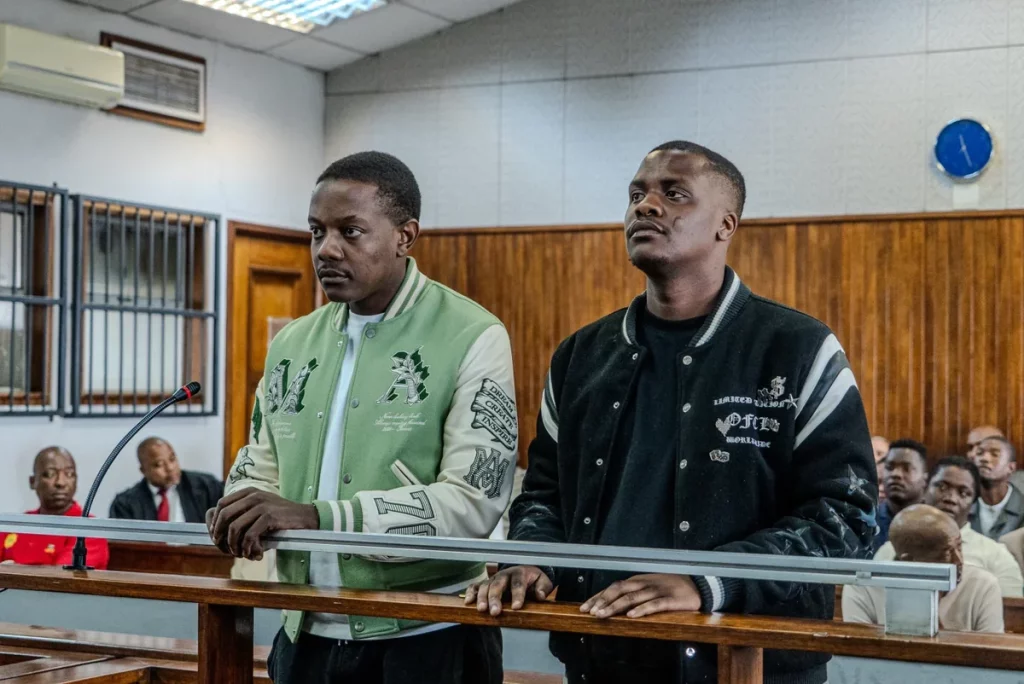
JOHANNESBURG (AP) — A son of former Zimbabwean President Robert Mugabe avoided being charged with attempted murder on Friday after reaching a plea deal in which he admitted to pointing a gun and breaking immigration laws in South Africa.
Bellarmine Chatunga Mugabe and his co-accused, Tobias Mugabe Matonhodze, have been detained since mid-February, facing attempted murder charges following the shooting of Sipho Mahlangu, whom the police identified as an employee at the home. He was hospitalized for his injuries.
Mugabe, 28, pleaded guilty to “the offense of pointing anything which is likely to lead a person to believe it is a firearm” in a separate incident and to illegally entering and staying in South Africa. He is the youngest son of the former leader of Zimbabwe, who died in 2019, and Grace Mugabe, his second wife.
Matonhodze pleaded guilty to five charges, including attempted murder, possession of an unlawful firearm and ammunition, defeating ends of justice and illegal immigration.
The pair’s legal representative, Sinenhlanhla Mnguni, told reporters outside court that the state and the defense had entered into a Section 112 plea deal after initial plea and sentence negotiations collapsed. Under South Africa’s Criminal Procedure Act, this kind of deal avoids a full trial.
Defense lawyer Advocate Laurence Hodes argued for mercy in sentencing, pointing out that both Mugabe and Matonhodze, who are cousins, had no prior convictions, had compensated their victim financially, and were able to pay any fine imposed by the court.
However, a police investigator brought in as a witness told the court that the police were still looking for the gun used in the incident and that the accused, who “were there at that time when the firearm was fired and injured the victim,” were not assisting them.
“The accused shows no remorse in assisting the police in any way to point out the firearm. They know where the firearm is,” Lt. Col. Raj Ramchunder told the court.
The court accepted the guilty pleas and set the sentencing for April 24.
In 2017, Grace Mugabe allegedly attacked Gabriella Engels, a young model, with an extension cord that cut her forehead at a Johannesburg hotel. The government awarded her diplomatic immunity, which was strongly criticized by opposition parties and human rights organizations, allowing her to depart South Africa despite calls for her prosecution. x1200
—
2026.4.15 SA Police arrest 13 suspected illegal miners, all allegedly from Lesotho
Thirteen suspected illegal miners have been arrested during a police operation in the Kaserne informal settlement in Johannesburg, South Africa (SA).
The Johannesburg Metropolitan Police Department (JMPD) say the suspects, all believed to be Lesotho nationals, were heavily armed and allegedly involved in illegal mining activities, commonly known as zama‑zamas.
The arrests followed a coordinated raid carried out by members of the JMPD’s Region F1 Operations, the CCTV Unit and SA Police Service tactical teams. The operation was launched after authorities received what they described as a credible tip‑off about a group operating in the Kaserne area and the nearby city and suburban districts.
JMPD Spokesperson Xolani Fihla said officers searched a shack in the settlement where the 13 suspects were found. During the search, police recovered two unlicensed firearms and 92 rounds of live ammunition.
“The JMPD Region F1 Operations members, the CCTV Unit, and SAPS tactical teams acted on a credible tip‑off regarding a group of heavily armed Lesotho nationals,” Fihla said. “The group was reportedly operating out of the Kaserne Informal Settlement and was allegedly involved in illegal mining activities within the City and Suburban areas.”
Preliminary investigations suggest the group may have been responsible for terrorising residents of the informal settlement and surrounding business districts. Police said the seizure of the firearms and ammunition represents a significant blow to criminal activity in the area.
“The removal of these high‑calibre rounds and illegal firearms serves as a significant blow to the local criminal infrastructure,” Fihla added.
2026.4.13 Duduzile Zuma-Sambudla Trial Resumes in Durban High Court

The high-profile trial of Duduzile Zuma-Sambudla, daughter of former president Jacob Zuma and a Member of Parliament for the uMkhonto weSizwe (MK) Party, is set to resume on Monday in the Durban High Court.
Zuma-Sambudla faces serious charges linked to the deadly July 2021 unrest that swept through parts of KwaZulu-Natal and Gauteng.
The case has drawn widespread attention because it centres on the power of words posted on social media and their alleged role in sparking violence that left more than 350 people dead and caused billions of rands in damage to the economy.
Background to the Charges
The unrest broke out after Jacob Zuma was jailed for contempt of court in July 2021.
Protests quickly turned into widespread looting, arson and violence, especially in townships and along major transport routes. Shops were emptied, trucks were set alight and many families lost everything in the chaos.
Prosecutors allege that Duduzile Zuma-Sambudla, then 43 years old, used her social media platforms to incite people to commit acts of public violence and terrorism.
She faces three counts of incitement to commit terrorism under the Protection of Constitutional Democracy against Terrorist and Related Activities Act, as well as two counts of incitement to commit public violence.
The state claims her posts encouraged supporters to act violently under the banner of “freeing” her father from prison.
Evidence presented so far includes WhatsApp messages and posts in numerous chat groups that were reportedly created to coordinate the unrest.
This is believed to be one of the first times in South Africa that terrorism-related charges have been brought mainly on the basis of social media activity.
Zuma-Sambudla has pleaded not guilty to all charges.
Her legal team argues that the state’s case is weak and that her statements amounted to protected free speech rather than direct calls for violence.
Trial So Far and What to Expect on Monday
The trial opened in November 2025 in the Durban High Court. Jacob Zuma himself attended some of the early sessions to support his daughter, along with senior MK Party leaders.
A small group of supporters gathered outside the court on the first day, showing their backing for Zuma-Sambudla.
Proceedings entered the second week before being adjourned. The state is expected to call around six witnesses, including experts in social media and cybercrime from the Hawks.
These witnesses have already begun testifying about how certain posts helped build a narrative that allegedly encouraged people to take to the streets.
On Monday, the court will continue hearing evidence as the trial moves forward.
The full case against 62 accused linked to the July 2021 unrest is scheduled for a separate two-month hearing starting in July 2026, but Zuma-Sambudla’s individual trial is proceeding on its own track.
The Human Cost of the 2021 Unrest
The July 2021 violence remains one of the darkest chapters in South Africa’s young democracy. More than 300 lives were lost, many of them ordinary people caught in the crossfire or killed during looting.
Factories and warehouses were destroyed, leaving thousands without jobs. Supermarkets and small shops in townships were burnt down, making it hard for families to buy basic food and goods for weeks afterwards.
The unrest also exposed deep problems such as poverty, unemployment and anger over inequality.
While some saw the events as political protest, others described them as criminal opportunism that hurt the poorest communities the most.
For many South Africans, the trial raises important questions about accountability. Can words on social media really lead to real-world violence? Where does free speech end and incitement begin?
The outcome could set an important legal precedent for how future cases involving online speech are handled.
Political Significance
Duduzile Zuma-Sambudla is not only Jacob Zuma’s daughter but also an active politician. Her involvement in the MK Party, which has gained strong support in KwaZulu-Natal, adds a political layer to the proceedings.
Supporters view the case as politically motivated, while others believe it is a necessary step to hold those in positions of influence responsible for their actions.
The trial comes at a sensitive time in South African politics, with ongoing debates about the legacy of the Zuma years, coalition governments and efforts to rebuild trust in state institutions.
What Happens Next
The Durban High Court is expected to hear more testimony from state witnesses in the coming days and weeks.
Once the state closes its case, the defence will have the opportunity to present its side, possibly calling its own witnesses or arguing that there is no case to answer.
If convicted, Zuma-Sambudla could face a lengthy prison sentence, given the seriousness of the terrorism-related charges.
If acquitted, it could strengthen arguments about the limits of prosecuting online speech.
Legal experts say the case highlights the challenges of proving intent in the digital age.
Prosecutors must show that the accused not only posted messages but also intended for them to cause violence and that the posts actually contributed to the unrest.
As the trial resumes on Monday, eyes across the country will be on the Durban High Court. For victims and families still living with the scars of July 2021, the proceedings represent a search for answers and justice.
For others, they serve as a reminder of how quickly social media can spread messages that affect real lives.
The case is likely to run for several more weeks.
Whatever the final verdict, it will form an important part of South Africa’s ongoing conversation about accountability, free speech and the lessons that must be learnt from one of the country’s most destructive periods of unrest.
PRETORIA – The high-profile murder trial of former Orlando Pirates goalkeeper Senzo Meyiwa resumed in the Gauteng High Court in Pretoria, with accused number 2, Mthunzi, taking the stand to give his testimony in a case that has gripped the nation for years.
Meyiwa was shot and killed on 26 October 2014 while visiting his then-girlfriend Kelly Khumalo’s family home in Vosloorus on the East Rand. The incident, which happened in front of several people including Khumalo and her family, has led to five men standing trial on charges of premeditated murder, robbery with aggravating circumstances, and unlawful possession of a firearm and ammunition.
Background to the Tragic Night
On that fateful evening, a group of men reportedly entered the Khumalo home. A scuffle broke out, and Meyiwa was shot once in the chest. He was rushed to hospital but died shortly afterwards. The football star, who had captained Bafana Bafana and was a popular figure in South African sport, was only 27 years old at the time of his death.
The case initially saw two men arrested soon after the murder, but they were later released. Years of investigation followed, with breakthroughs coming in 2020 when five suspects were arrested. The trial has faced numerous delays, including a change of presiding judge, lengthy cross-examinations and arguments over the admissibility of statements and confessions.
Accused Number 2 Takes the Stand
Mthunzi, identified as accused number 2, began his testimony today as the defence phase continues. He is expected to give his version of events surrounding the night of the murder and address the allegations against him and his co-accused.
The five accused are Bongani Ntanzi (accused 1), Mthunzi (accused 2), Muzi Sibiya (accused 3), Bongani Ntanzi’s co-accused in earlier references sometimes overlap in reporting, but the group faces collective charges. Earlier in the trial, accused number 2 (often referred to in proceedings as Bongani Ntanzi in some phases, but here specified as Mthunzi per the query) has been linked to statements and evidence presented by the state.
During previous sessions, the court heard detailed evidence about an alleged confession, cellphone records, bank statements and witness accounts from people present in the house that night. The defence has challenged much of this evidence, arguing that some statements were not given freely and voluntarily.
Mthunzi’s testimony is a key moment as the defence presents its side. He is likely to be cross-examined by the state on his movements, any connections to the other accused, and his knowledge of the incident. The court will carefully assess his credibility and how his account matches or contradicts the evidence already led.
The Long Road to Trial
The Senzo Meyiwa murder trial has become one of the longest-running and most closely watched cases in South Africa. It started in the High Court in Pretoria in 2022 but faced interruptions, including the recusal of the original presiding judge due to ill health. Proceedings restarted under a new judge, adding to the delays.
The state has presented evidence including ballistic reports, forensic findings, witness statements from people in the house, and alleged confessions from some of the accused. One key point of contention has been an alleged confession by accused number 2, which the defence claims was obtained under duress or without proper rights being explained.
The trial-within-a-trial on the admissibility of certain statements has taken significant time, reflecting the careful approach courts take in high-stakes murder cases to ensure fair proceedings.
Impact on the Families and the Nation
For the Meyiwa family, the trial represents a long search for answers and justice. Senzo’s mother, brothers and other relatives have attended many sessions, hoping the process will finally reveal the full truth about what happened that night.
Kelly Khumalo and her family have also been deeply affected. Some family members testified earlier, describing the chaos of the intrusion and the moments after the shooting. The case has placed intense public scrutiny on everyone involved, with constant media attention and strong opinions from football fans and the public.
Meyiwa’s death robbed South African football of a talented goalkeeper and leader. He was known for his skill, charisma and dedication to the game. His murder highlighted issues of crime and safety, especially in townships, and sparked widespread calls for justice.
What to Expect in the Coming Days
With Mthunzi on the stand, the defence will aim to cast doubt on the state’s case and present an alternative version of events. The state is expected to cross-examine him rigorously to test his story.
After all defence witnesses have testified, the court will hear closing arguments before the judge delivers judgment. Given the volume of evidence and the complexity of the case, the final verdict may still take some time.
The trial continues to draw large public interest. Many South Africans follow the proceedings closely, hoping it will bring closure to the Meyiwa family and send a strong message that no one is above the law.
A Case That Touches Many Hearts
The Senzo Meyiwa murder trial is more than a legal battle — it is a story of loss, justice and the search for truth in a country where violent crime remains a painful reality. As accused number 2 Mthunzi testifies, the court once again becomes the centre of national attention.
The coming sessions will be critical in determining the outcome. For the family of Senzo Meyiwa, every day in court is another step towards the answers they have waited years to hear. South Africans continue to watch and hope that justice will ultimately prevail in this long-running and emotionally charged case.
A Limpopo man described by police as a “jealous boyfriend” has been sentenced to life imprisonment for killing his girlfriend, Refiloe Letshedi, who had wanted to end their relationship.
Themba Mashiloane was sentenced on Tuesday, March 31, 2026.
The incident occurred on the evening of September 26, 2024, when Letshedi was found dead at Thabeng village.
Limpopo police spokesperson Colonel Malesela Ledwaba said members of the Nebo-Jane Furse tracking team were immediately summoned, and an investigation began the same day the matter was reported.
The case docket was later transferred to the specialised tracking team for further investigation.
The matter was assigned to Detective Sergeant Kabelo Shokane.
“The court heard that although the suspect behind the brutal killing was initially unknown, investigations later revealed that the deceased was killed by her boyfriend, Themba Mashiloane,” Ledwaba said.
Police worked to gather evidence linking Mashiloane to the crime.
He was arrested on September 27, 2024, and the victim’s cellphone was found in his possession.
Shokane successfully opposed bail following the arrest.
“Although the motive behind the senseless killing was initially unknown, the investigation later revealed that the deceased wanted to end the romantic relationship, but the suspect did not accept it,” Ledwaba said.
After multiple appearances at the Nebo Magistrate’s Court, the case was transferred to the Nebo Regional Court.
“The investigation was diligently carried out, with sufficient evidence gathered, resulting in overwhelming evidence against the accused. He was subsequently found guilty,” Ledwaba said.
On Tuesday, the Nebo Regional Court convicted Mashiloane of murder and sentenced him to life imprisonment.
Limpopo provincial police commissioner Lieutenant General Thembi Hadebe welcomed the sentence.

The murder case of media personality Warrick “DJ Warras” Stock has been delayed once again, as investigations remain incomplete.
Two men accused in connection with the killing – taxi boss Victor Mthethwa Majola and Mozambican national Armindo Joaquim Pacula – appeared in the Johannesburg Magistrate’s Court on Wednesday, 1 April 2026.
Majola is alleged to have orchestrated the hit, while Pacula is believed to be the gunman.
Both face charges of premeditated murder and conspiracy to commit murder.
Pacula is also charged with violating the Immigration Act.
Both accused remain in custody, with Majola – who was denied bail earlier this year – detained at the Johannesburg Correctional Centre, commonly known as Sun City.
Pacula withdrew his bail application before his transfer to Modderbee Correctional Centre in Benoni, Ekurhuleni.
DJ Warras murder case postponed
The state told the court that several critical aspects of the investigation have not yet been finalised.
Prosecutor Vincent Mochabela said outstanding work includes facial comparison analysis, call data records, and financial investigations.
In addition, the formal indictment is still being prepared.
As a result, the state requested additional time before proceeding to trial.
“This matter, I believe, when the investigations are ready, it is going to be transferred to the High Court and, therefore, at this stage, we will request a remand,” Mochabela said.
The defence proposed that the matter return to court on 27 May, a date the magistrate accepted.
However, the court made it clear that patience with delays is running out.
“Is it enough time to finalise the investigation? So, that next time you won’t have an excuse,” he said.
Mochabela responded: “I am hoping that we will be ready. Even the indictment will be ready.”
Fatal shooting
Stock was fatally shot on 16 December 2025 outside a building near the Carlton Centre in Johannesburg’s central business district.
According to the state, three suspects confronted the radio and television presenter before opening fire and fleeing the scene on foot.
Stock was laid to rest on 23 December 2025.
Investigators believe the killing was linked to a dispute at Zambezi Flats.
The dispute allegedly followed the appointment of Stock’s security company to install a biometric access system at the building.
The installation came amid allegations that certain individuals were illegally collecting rent from tenants.
Prior to his death, Stock allegedly received threats and had obtained a protection order against five individuals.
The alleged hit was reportedly worth R25 000 in total, of which Pacula is said to have received R7 000.
2026.3.31 Seven arrested in multi-million rand extortion scheme targeting long-distance bus operators
Seven suspects who have allegedly been tormenting and extorting long-distance bus operators between 2021 and 2023 have been nabbed.
Western Cape police said that four years of intensive investigation led to the arrest of the suspects across three provinces.
The suspects, six men and a woman, aged 35 to 62, were arrested in Cape Town, Matatiele in the Eastern Cape, and Nelspruit in Mpumalanga.
They were expected to appear in the Cape Town Magistrate’s Court on Monday, facing 125 charges ranging from intimidation, interference with essential infrastructure, to extortion and money laundering.
Police spokesperson Brigadier Novela Potelwa said the arrests are a culmination of years of meticulous investigative work targeting key figures within the transport sector.
“These suspects have allegedly been working in concert between 2021 and 2023, tormenting, intimidating, and extorting major long-distance bus service operators and coercing them to pay substantial monies in exchange for protection and permission to operate safely on their licensed routes.”
She said in some instances, the amounts imposed were so detrimental to the businesses that they either closed down or ran a limited service.
“This, in turn, negatively impacted travellers who require reliable long-distance transport services.
“The illegal operations are believed to have also increased prices, thereby hitting travellers hard in their pockets,” Potelwa said.
Potelwa said the investigation also revealed how the alleged suspects dictated terms of operation for the bus operators, the number of trips, and the number of passengers imposed on them.
“The illicit activities of the group are believed to be valued at hundreds of millions of rands.”
2026.3.30 Mother devastated by the loss of two sons in Uitsig mass shooting
A MOTHER from Uitsig has been left shattered after two of her sons died in a mass shooting in Uitsig Avenue at the weekend.
Brothers Luchen Samuels, 19, and Angelo Hufke, 32, lost their lives after unknown gunmen opened fire on a group of people on Saturday night.
Samuels and Hufke were coming from family when they were shot, both were declared deceased on the scene by medical personnel.
Three others aged 16, 19, and 29 were wounded and transported to a medical facility for treatment.
A resident said: “Those brothers were not involved in any wrongdoing; they are usually a large group who gamble or stand by the gambling table. When those shots went off, it was continuous, non-stop.”
At the family home yesterday, the victims’ mother and other family members were overwhelmed with emotion.
Community leader and anti-crime activist Bishop Adam Alexander spoke on behalf of the family and said: “It is with deep sorrow and outrage that we confirm the tragic and brutal killing of two young men, Luchen Samuels and Angelo Hufke who lost their lives in a senseless act of violence.
“The victims had just visited family and were passing the Gamble Pool area when unknown assailants opened fire. Both men were struck by bullets and tragically succumbed to their injuries.
“Three other individuals were also injured during the shooting and are currently receiving medical attention. This devastating incident has left a mother shattered beyond words.
“She has now lost two sons in one night, an unimaginable pain. Years ago, she also lost her eldest son to gang violence. No mother should ever have to endure such repeated loss. This is not normal. This is not acceptable.
Alexander said Luchen and Angelo were known to him as young men trying to make an honest living.
“They were inseparable in life, and now they are united in death through violence that continues to plague our communities.”
“Since Thursday alone, three young men have lost their lives in the same flats. Families are broken. Mothers are grieving. Communities are living in fear like prisoners in their own homes while promises of safety and intervention remain empty.
Police spokesperson Wesley Twigg confirmed the incident.
“Police members were patrolling in the area when they saw people running. They were informed by the public that several people were shot by unknown suspects who fled the scene.
“The 19 and 32-year-old victims were declared deceased on the scene by medical personnel, while the other victims were transported to a medical facility for treatment. The motive for the attack forms part of the police investigation.”
Anyone with any information on the incident is urged to contact Crime Stopon 08600 10111 or use the mobile application MySAPS anonymously.
2026.3.27 Armed thugs rob & steal car as driver waits for client… while cops rob residents of client services
It is evident that the Laudium and Erasmia CPFs are not playing a meaningful role in assisting the communities they represent, concerning the fight against crime, as residents continue to report more and more crime to the Laudium Sun each week, with weekly crime details and stats seemingly being withheld by the local police and the CPF.
In one of the many crimes reported this week to the Laudium Sun, armed thugs confronted a resident the previous weekend at around 9:30pm. Three thugs with guns accosted Pearl Street, Laudium resident, Yaseen Daud Essa Hasan, as well as a friend, as they were waiting for a client on Bengal Street, Laudium, stealing his company car, a white Suzuki Swift (registration number KW 83 WY GP), along with cash and other valuables.
Yaseen told the Laudium Sun, “I was driving my company car, a white Suzuki Swift. I work for a company called Home Remitt, and I am a field officer in that company, so the car stays with me all the time. The previous weekend, I went to see a client who told me to wait for him on Bengal Street, opposite the Himalaya Heights flats. It was around 9:30pm. I was parked off and sitting in the car with a friend, when suddenly three Black thugs who were on foot approached us. All of a sudden, one of the thugs pointed a gun at me and another thug pointed a gun at my friend who was sitting on the passenger side. The thugs demanded that we hand over all our money and cell phones. I had R5,000 on me, and the thugs took it, together with my friend’s cell phone and mine, which were both Samsung phones. They also took my passport, which was with me at the time. The thugs then threw us out of the car and drove off with my company’s car. We were left standing there in shock and fear, not knowing what to do next. This experience was really horrible for us, because we have never experienced such a crime, where thugs threatened to shoot us. We were frightened for our lives and at some point, we thought that the thugs would shoot us and we would die there on the street. It was a very traumatic moment for both of us. But, with the blessing of God, the thugs did not harm us, but only took our belongings. We are grateful that we survived the incident without any physical injuries, but the fear and shock are still there. The crime situation is really bad here in Laudium, especially at night. We cannot go anywhere without fearing for our lives and the situation is becoming very worrying for residents in the area. Police patrols play a crucial role in maintaining law and order, but unfortunately police visibility in the area is very scarce, so criminals get the upper hand to commit crimes. There is a pressing need for more police presence, especially at night, so that residents can feel safe in their own neighbourhoods. I hope we will get back our car and especially my Indian passport.”
Asif Patel of Pearl Street, told the Laudium Sun, “This is a really scary time we are living in. I heard about my neighbour’s company car being stolen on Bengal Street. This is really scary because it seems that residents cannot move around freely in Laudium, especially at night. Even when I go for prayers at the Mosque at night, I do not go alone as I am afraid, so we always go in groups. This is a very frightening time we are living in, where we do not have the freedom to move, the freedom to pray, or the freedom to eat out peacefully. People in the community are living in constant fear because crimes like these are becoming so common. It is not just about losing material things, but about the real fear of being attacked or killed at any time, especially during the night. The lack of security and visible policing is making the situation worse as criminals are becoming more daring and continue committing such crimes without fear of consequence.”
Sameer Patel, also of Pearl Street, told the Laudium Sun, “Residents feel helpless and worried about their safety and the safety of their families in this community. It is urgent that something is done to address this issue of crime before it becomes even more serious. Living in fear every day is not normal and people deserve to feel safe in their own area. The community needs proper police protection so that residents can live their lives without constantly worrying about crime. Everyone should be able to go to the Mosque, visit friends, or even step outside their homes without feeling unsafe. This is a serious concern that needs urgent attention.”
2026.3.25 ‘I haven’t done this’: Ex-cop denies killing Witness D
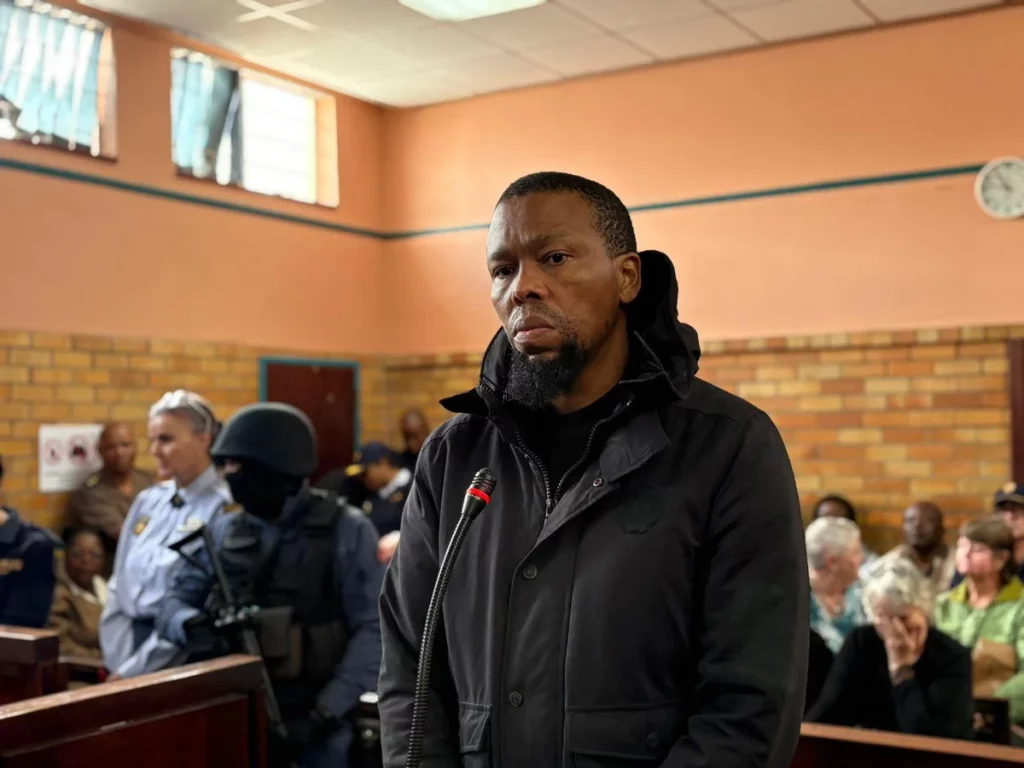
“I haven’t done this.” That’s what Matipandile Sotheni, 41, a former Special Task Force member accused of killing Madlanga Commission witness Marius van der Merwe, told the Brakpan Magistrate’s Court on Wednesday.
He was expected to apply for bail, however, it was postponed to May 14.
Sotheni first appeared in court last week, on March 16, following his arrest.
Police allege he acted as the gunman in the drive-by shooting that killed Van der Merwe outside his home in Brakpan on December 5, 2025.
He faces charges of conspiracy to commit murder, premeditated murder, three counts of attempted murder, and unlawful possession of ammunition.
Appearing in a black suit, Sotheni requested permission to address the magistrate directly after his bail application was postponed, but the magistrate denied his request.
“Permission to speak, Your Worship? I want to assist the court in the interest of justice,” Sotheni said.
He denied all charges.
“The allegations levelled against me, I deny them fully. I have nothing to do with this crime. I wish to state under oath. I want to state in English, Your Worship, because I wish to assist the court.
“The lawyer here – it’s the first time I’ve seen him today. He has not been given instruction by me. He did not even take my statement,” he said.
Sotheni said he was ready to give his statement but was unhappy with his legal representation and did not know who had appointed the lawyer.
“I’m arrested here for something I did not commit. Instructions are coming left, right and centre, Your Worship.”
“I have not done anything here. I’m on social media. My name is being painted. So, Your Worship, postponing this case delays the matter, and I wish to assist the court.”
The magistrate told him he could give instructions to his legal representatives.
“If you are not satisfied with the date that has been agreed, you can bring an application for repositioning before the scheduled date in this case,” the magistrate said.
As Sotheni left the courthouse, he told journalists he had not committed any crime.
“No, I am not okay. I have to take my children to school. I’ve got a lot to do. I have work, I have three kids,” he said.
“I haven’t done this,” he reiterated as he was escorted out of the courtroom.
Heavily armed police officers stood inside the courtroom.
IOL News previously that national police spokesperson Brigadier Athlenda Mathe said that WiandrePretorius, a police informant linked to the Madlanga Commission, who died by suicide at a petrol station in Brakpan, was also implicated in van der Merwe’s murder and drove the Suzuki Swift that was later traced to Sotheni’s girlfriend.
According to police, Sotheni joined the elite Special Task Force in 2010.
Mathe said Sotheni joined the SAPS in 2005 and later joined the elite Special Task Force.
He resigned in 2019 and moved into the private sector. This, she said, will give some insight into how Sotheni operated.
It tells you that he would execute and eliminate Witness D on the spot because of the training that our special task force members receive. So they knew that he was the best person for the job,” she said.
“[It is] quite an unfortunate day for us as the SAPS, having a former member of the SAPS being arrested on a very serious charge in relation to the murder of Witness D,” Mathe previously said.
“When you look at the cost that it takes to train a Special Task Force member, each member costs more than R1 million to train. It’s quite a loss for the SAPS.”
“But at the same time, it’s good that we rid our organisation of corrupt and criminal elements that do not deserve to be in a blue uniform,” she said.
Mathe said the investigation team has also interviewed two other people in connection with van der Merwe’s murder.
It was previously reported that Pretorius had survived a previous shooting, when his car was reportedly hit 16 times.
He was named in the alleged murder of Emmanuel Mbhense, whose body was found dumped at Duduza Dam in Nigel in April 2022. That investigation is still underway.
Van der Merwe, a former EMPD officer and security specialist, had testified before the commission in November last year, revealing alleged misconduct within the EMPD and blowing the whistle on Mbhense’s murder.
2026.3.25 Inside Job? Six Women In Court Over Multi-Million Rand Jewellery Theft
“During the Covid-19 pandemic, I never worked, and once I returned, the business continued without proper stocktaking,” she said, adding that her constitutional rights were violated during the investigation.
Six women, including managers and sales representatives from Premjis Jewellers, are on trial in the Durban Magistrate’s Court for allegedly stealing jewellery worth more than R3.2 million.
The accused — Nailash Lala (61), Reshmar Raghubar (39), Samendrie Pillay (30), Yagna Ramdeen (29), Kamentha Pillai (28), and Sashmila Rajkumar (34) — have all pleaded not guilty to the charges. They were arrested in September 2023 and later released on bail of R20,000 each.
Director Details Alleged Long-Running Scheme
The State’s case began with testimony from Vishnu Pather, who told the court that the alleged theft was uncovered in June 2023.
According to Pather, a sales representative raised concerns after noticing that three high-end watches were missing, prompting an internal investigation. The probe allegedly uncovered irregularities dating back to 2018.
“When Sewpersad raised the alarm on the theft, it triggered an internal investigation that unveiled a shocking manipulation of stock records. High-value items were allegedly mislabelled with low-value tags, and missing items were cleverly omitted from inventory sheets,” Pather recounted.
The court heard that the alleged scheme may have run for several years before being detected.
Six Women Deny Claims, Challenge Evidence
Several of the accused have strongly denied the allegations and questioned the credibility of the evidence presented.
Lala argued that she was not consistently present during the period in question and disputed the company’s stock control processes.
“During the Covid-19 pandemic, I never worked, and once I returned, the business continued without proper stocktaking,” she said, adding that her constitutional rights were violated during the investigation.
Rajkumar also rejected the accusations, claiming she left the company due to alleged mistreatment.
“The complainant is being malicious in charging for the alleged theft. I never stole anything,” she stated.
Ramdeen maintained her innocence, highlighting her part-time employment and raising concerns about how investigators handled her personal information.
“I was arrested less than two months after my co-accused because I refused to falsely implicate anyone,” she said.
The trial is ongoing as the court continues to hear evidence.
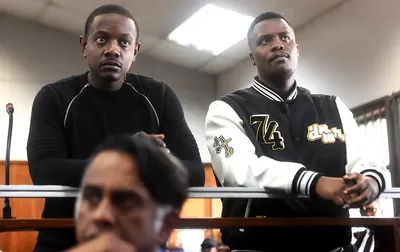
2026.3.24 More nights in jail: Mugabe’s son’s case postponed again over plea deal delays
The son of late former Zimbabwean president Robert Mugabe, Bellarmine Chatunga Mugabe, and his co-accused, Tobias Mugabe Matonhodze, will spend more nights behind bars as their case has been postponed once again.
The case was postponed because the State says it has not finalised plea agreements.
The pair appeared in the Alexandra Magistrate’s Court on Tuesday morning, where it reportedly emerged that no plea agreement has yet been reached between the State and the defence.
Prosecutors reportedly indicated dissatisfaction with the terms proposed by the defence.
The matter has been postponed until April 17 for further investigation. The two will remain in custody.
The case has faced multiple postponements since proceedings began, with the most recent delay having been caused by a power outage.
Last week, the accused abandoned their bail applications and signalled their intention to resolve the matter through a plea agreement.
The case had already been postponed the previous week to allow for negotiations.
Defence lawyer Sinenhlanhla Mnguni previously said discussions were at an advanced stage but could not be concluded because a senior public prosecutor was unavailable.
“We placed on record what transpired in negotiations between the State and the defence. The discussions are at an advanced stage,” Mnguni said.
“Unfortunately, the senior public prosecutor was not available today to conclude the negotiations so that we could proceed with the plea.”
Mnguni expressed optimism that the matter would be finalised when it returns to court.
“We are hopeful that we will be able to conclude the plea and finalise the matter then,” he said.
He declined to provide further details but confirmed that negotiations were ongoing.
State prosecutor Lufuno Maphiri reportedly told the court the plea agreement is awaiting input from a senior prosecutor who was unavailable due to other commitments.
The State requested additional time to finalise the agreement, leading to Tuesday’s postponement. Both accused remain in custody.
Mugabe, the son of former Zimbabwean president Robert Mugabe, and Matonhodze face multiple charges, including attempted murder, possession of a firearm and ammunition, defeating the ends of justice, theft, pointing a firearm, and contravening the Immigration Act.
They are accused of shooting a 23-year-old employee at Mugabe’s Hyde Park home in February, leaving the victim in a critical condition. The firearm used in the incident has not been recovered.
2026.3.24 “I Didn’t Escape”: Thabo Bester Tells Court He Was ‘Lawfully Released’ In Shock Claim
“A court could find that I have been serving it unlawfully and that I was, in fact, lawfully released.”
Convicted rapist and murderer Thabo Bester told the High Court on Tuesday that he did not escape from prison, insisting he was lawfully released from Mangaung Correctional Centre in May 2022.
Bester made the claim while bringing an urgent application challenging charges linked to his alleged escape from custody.
Authorities, however, maintain that he orchestrated a dramatic escape by faking his death in a prison cell fire, allegedly with the help of Nandipha Magudumana and several correctional officials.
Thabo Bester’s Legal Battle Over Transfer and Trial Preparation
Earlier this month, the High Court dismissed Bester’s urgent application for a second time. He had sought to be moved from eBongweni Super Maximum Correctional Centre to Kgosi Mampuru Correctional Centre.
The Department of Correctional Services transferred him to the KwaZulu-Natal facility in January, citing security concerns.
Addressing the court, Bester argued that his constitutional rights were being violated and that his current detention conditions limited his ability to prepare a proper defence.
“Now, if I’ve lost my humanity because of what I’m accused of – I’m convicted of rape and murder – does that mean I am no longer entitled to a fair trial?” he said.
He told the court that delays in receiving responses from the state forced him to bring the application on an urgent basis.
Claims of Unfair Treatment and Questioning of Detention
Bester said he had previously appeared in court without the necessary documents, resulting in the matter being struck off the roll before his transfer.
“I was physically in this court and the matter was struck off the roll because I had no answering papers. Then I was transferred to eBongweni,” he said.
He argued that sentenced inmates are not given the same level of access to prepare their defence as remand detainees.
“The challenge is that the sentence I am serving is itself in question,” he said.
“A court could find that I have been serving it unlawfully and that I was, in fact, lawfully released.”
Bester also challenged the validity of the warrant under which he is being held, stating: “The state must prove that I am guilty. I cannot be expected to furnish my defence to the respondents outside of a trial court.”
“There is no warrant in the world that is absolute,” he added, pointing out that legal and executive processes can alter such orders.
Court Previously Dismissed Application as Lacking Merit
In an earlier ruling, Judge John Holland-Muter dismissed Bester’s application, finding no urgency or merit in his request to be transferred.
The judge ruled that the Department of Correctional Services acted within its authority in relocating Bester for security reasons and found no violation of his constitutional rights.
Bester’s legal representative, Benjamin Moafrika wa Maila, argued that the transfer made it difficult for the legal team to consult with their client ahead of trial.
However, the court rejected this, noting that consultation facilities — including virtual options — were available.
“Nothing procedurally wrong or unfair took place. His right to legal representation was not infringed,” Holland-Muter said.
He further noted that Bester’s history of escape justified stricter supervision in a high-security facility.
“I see no urgency and no merit in the application for his transfer,” the judge said.
The matter remains before the courts as legal proceedings continue.
2026.3.24 Terblanche case: Sergeant expands statement after trial split
It is week three of the murder trial of Bay businessman Arnold Terblanche, who is accused of being the mastermind in the plot to kill his estranged wife, Vicki, in 2021.
Vicki’s body was discovered in a shallow grave on the outskirts of Gqeberha, days after she was given a drug overdose and suffocated, before her killers wrapped her body in a duvet, shoved her in the boot of a rented BMW, and tried to figure out how to get rid of her body.
Reinhardt Leach, Vicki’s boyfriend at the time, and Dylan Cullis have both pleaded guilty and are serving a sentence of 25 and 18 years, respectively, at the St Albans Correctional Facility.
On Monday, the state called Sergeant Francois Filllies to the stand, who was one of the officers who arrested Dylan Cullis just hours before he would lead them to Vicki’s grave.
Under cross-examination, Sergeant Fillies, for the first time, revealed on the stand that upon his arrest, Cullis said he was supposed to be paid by Leach, who was going to get money from Arnold Terblanche, who said he would rather part with R2 million for them than R5 million owed to Vicki in the divorce.
Defence Attorney Peter Daubermann told Judge Nyameko Gqamana that Fillies had gone beyond his original statement and that his testimony was inconsistent with the evidence he gave during last year’s trial of Reinhardt Leach. He asked for a postponement to Tuesday, where his cross-examination continued.
Tuesday cross-examination
Sergeant Fillies returned to the stand, where Daubermann asked him about his experience within the police, where he testified that although he dealt with serious crimes, such as hijackings, Vicki’s case was his first murder.
Daubermann then handed Sergeant Fillies a statement he had made on the 28th of January 2025, when he was called in by the lead investigating officer, Lieutenant Colonel Kanna Swanepoel, who asked to consult with him to elaborate on his initial statement.
The defence pointed out that this occurred a day after Leach pleaded guilty, resulting in the trials being separated.
The typed statement submitted as an exhibit stated that Fillies had consulted with state prosecutor Marius Stander, but Fillies was adamant that he had consulted only with Swanepoel.
It is in this statement where mention was made of Cullis stating he was going to be paid by Leach, who in turn would get money from Terblanche, as well as the added information of Cullis, who was aware of the divorce being finalised and that Vicki would have had to be killed before the divorce hearing.
Judge Nyameko Gqamana interjected, asking Fillies why Swanepoel would call him. To which Fillies again said it was to elaborate on his initial statement
“So what he asked you, prompted your responses”, asked Daubermann
“Yes”, Fillies replied.
Peter Daubermann again brought up the issue of his state-issued pocketbook, which he now has to go look for.
On Monday, the defence recalled Constable Chantel Stevens for the same reason: she was no longer in possession of her pocketbook from four years ago.
Before proceedings began on Monday, state prosecutor Marius Stander told the court that Stevens—and, in fact, all officers present that night—had been unable to find their pocket books.
The matter was postponed to Wednesday when the defence is expected to wrap up its cross-examination of Fillies.
The next witness lined up by the state is Warrant Officer Phillip Bekker from the Provincial Crime Scene Investigations, who was present during Vicki’s autopsy.
—
2026.3.24 Notorious apartheid police commander ‘Prime Evil’ testifies at South African hearing on killings
JOHANNESBURG (AP) — One of South Africa’s most notorious apartheid police commanders testified on Monday at an inquiry into the killing of four activists in 1985 as part of the country’s renewed focus on atrocities committed by security forces during decades of forced racial segregation that went unpunished.
Eugene de Kock, dubbed “Prime Evil” for his role in killing anti-apartheid activists, denied involvement in the prominent case of the Cradock Four — but said police at the time had photos of around 6,000 anti-apartheid activists described as “known terrorists” who should be tracked and killed if an arrest was not possible.
The Cradock Four were not among them, he said. Matthew Goniwe, Fort Calata, Sicelo Mhlauli and Sparrow Mkonto, three of them teachers, were abducted by police at a roadblock and killed. Their bodies were found burned, in one of the apartheid era’s most shocking cases.
De Kock testified that one of the police officers implicated in the killings had asked him to help assist with a cover-up.
“He wanted to know if I could get another firearm,” de Kock said, adding that he was asked “if we could interfere with the ballistics.”
De Kock, the commander of a special counterinsurgency police unit during apartheid, was sentenced in 1996 to two life terms and another 212 years in prison after being convicted of murder, kidnapping and other charges for his role in abducting, torturing and killing activists. He was released on parole in 2015.
Now 77, de Kock was given a police guard to a court in the southern city of Gqeberha, where the Cradock Four were killed. His image was blurred on the official video broadcast after the judge ruled that he not be shown, according to the Foundation for Human Rights, which is representing some of the victims’ families.
Two inquiries into the case conducted during apartheid were widely suspected of being cover-ups. One that started in 1987 found the men were killed by unknown people. The other that began in 1993, found that they were killed by unnamed police officers.
The latest inquiry started last year after families’ pressure. The six former policemen implicated in the killings were never prosecuted despite being identified and denied amnesty during South Africa’s post-apartheid Truth and Reconciliation process in the late 1990s. All six have died.
South African authorities have reopened other investigations into apartheid atrocities in recent years. They include the 1967 death of Nobel Peace Prize winner Albert Luthuli, the 1981 killing of lawyer Griffiths Mxenge and the 1977 death in police custody of iconic anti-apartheid figure Steve Biko.
South African President Cyril Ramaphosa last year ordered a separate inquiry to establish whether post-apartheid governments led by his party intentionally blocked investigations and prosecutions of apartheid-era crimes.
2026.3.24 Missing Cradock four docket fuels claims of interference
The disappearance of a critical case docket in the 1985 murders of the “Cradock Four” has come under renewed scrutiny in the Gqeberha High Court, with former police investigators providing testimony of administrative sabotage
and direct political interference.
The ongoing inquest in the Gqeberha High Court seeks to establish the circumstances surrounding the deaths of anti-apartheid activists Matthew Goniwe, Sparrow Mkhonto, Fort Calata, and Sicelo Mhlauli, who were intercepted
and murdered by security police in June 1985 in Port Elizabeth.
Captain Phakisa Masigela, who led the investigation from 2010, testified that he had compiled a complete docket linking the killings to apartheid-era security police.
Masigela told the court the file contained “100 original statements,” including crucial testimony from Eric Winter, a key figure who passed away in 2021.
Masigela confirmed in his opinion the file was sufficient for a prosecutorial decision when it was handed over to the National Prosecuting Authority (NPA).
However, following Masigela’s retirement in 2017, his successor, Colonel Johannes Ngaka Makua, testified to a systemic breakdown.
When he took over in 2018, the docket in the lever arch file and its copies had vanished.
Makua testified that NPA official Advocate Chris Macadam admitted the docket was handed to an unidentified individual claiming to represent former acting National Director of Public Prosecutions, Advocate Nomgcobo Jiba.
However, there was no record of receipt.
The court heard that on 1 April 2020, Makua contacted Nomonde, Fort Calata’s window and her son, Lukhanyo, to share the “bad news” that the original docket was missing.
Makua confirmed in court that he told the family he did not believe the loss was accidental.
“I do not believe that the docket went missing accidentally. I was concerned that powerful forces were protecting the suspects, in particular, the high-ranking suspects,” Makua testified.
Explaining why he shared this with the family, he added: “I was keen to do the job. I would like to see the family members get closure.”
Substantiating claims of political meddling, Makua detailed how his fieldwork in the Eastern Cape was intentionally stalled by senior police leadership.
“But to my surprise, my brigadier was ordering me to get back and that if I go down there, I will be defying his instructions,” Makua said.
“So in 2017, 18, 19, the working condition in our office, it was very bad by that time. And then I was one of those people who were no longer needed at that office because of the political influence, whereby we were told that we
are the old police officials who should move out of crimes against the state so that they can get the new blood.”
Makua’s testimony directly contradicted claims by Macadam that he provided material to help reconstruct the case.
Makua testified that he received only a two-page letter of instruction from Macadam, forcing him to rebuild the investigation from scratch using fragments from police stations in Port Elizabeth and the South African Human Rights
Commission.
The inquest continues.
2026.3.23 Eugene De Kock denies direct role in Cradock four murders
Former Vlakplaas commander Eugene de Kock testified in the Gqeberha High Court on Monday, denying any direct involvement in the 1985 murders of the “Cradock Four” while providing details on the apartheid state’s use of
lethal directives.
The inquest into the deaths of anti-apartheid activists Matthew Goniwe, Fort Calata, Sicelo Mhlauli, and Sparrow Mkonto resumed with De Kock appearing under heavy police guard.
While denying direct participation in the killings, De Kock confirmed that the term “permanent removal,” found in the 1985 “Signal” document, was a directive for assassination.
The document was authored by South African Defence Force officer Lawrence du Plessis and sent to the Joint Management Centre for approval.
De Kock told the court that orders for such operations came straight from the top of the apartheid government and the highest levels of the security police.
He explained that suspected “terrorists” were anyone seen as a threat to the state, including members of the ANC and PAC.
De Kock outlined the state’s approach to suspected terrorists:
“Terrorism is not race-based, gender-based, or based on religion or ideology. Terrorism is when nobody feels safe, even to go to a Wimpy or to a church and then being bombed or shot. If we couldn’t arrest them, we would shoot
them, and then you must take the head off the snake.”
When asked specifically whether the Cradock Four were seen as terrorists, De Kock said:
“Not one single one. They were civilians. That is, it.”
He also stated his involvement began after the murders were committed.
Captain Johan Martin “Sakkie” van Zyl of the Security Branch approached him to replace the barrel of a firearm used during the operation to frustrate ballistics testing.
De Kock said he was unable to assist.
He added that Van Zyl later informed him that senior officers, including General Engelbrecht and Harold Lotz, were present, which he said suggested evidence had been left at the scene, as it would not have been necessary for
senior officials to travel to Port Elizabeth given that the local Murder and Robbery Unit was regarded as one of the strongest in the country.
During his testimony, De Kock described the operations of Vlakplaas, explaining how missions were planned and carried out under a strict chain of command.
Defence lawyers briefly interrupted to question the relevance of his testimony on Vlakplaas history, to which De Kock responded:
“Let’s get the truth out.”
The Cradock Four were abducted in June 1985 after attending a United Democratic Front meeting.
Their bodies were later discovered near Bluewater Bay, showing signs of torture and burning.
De Kock also addressed the 1989 Motherwell car bomb attack, in which three police officers and an informant were killed.
He said the attack was partly intended to prevent information from surfacing about the Cradock Four murders, though he could not confirm whether the victims were directly involved in the 1985 killings.
He noted that the Motherwell incident was linked to broader security operations, including fraudulent financial activities and the interception of credit cards and cheques.
Lukhanyo Calata, son of Fort Calata, reacted to De Kock’s testimony, showing frustration that he was being interrupted by the defence:
“I just feel that they should let him speak.
He clearly knows a lot, he clearly wants to say a lot, and that they should just let him speak.
He obviously wants to get that off his chest, he’s 77 years old, and maybe he feels that would help him in the next lifetime or at least let that be part of his legacy here.
It would definitely help our families, because the more candor that we have from someone like Eugene de Kock, the better it is.
That truth helps us, no matter how small, no matter how big. It is a truth that will ultimately go towards helping us in our journey towards healing and closure.”
Previous witnesses in the inquest include:
Bantu Holomisa (UDM leader), who testified that while then-President FW de Klerk may not have personally signed the order, he held “ultimate responsibility” for the actions of the security forces.
Colonel Mthetheleli Dweba, who detailed the challenges of reconstructing the case after original dockets went missing and key figures, including former NIS head Niel Barnard, refused to cooperate before their deaths.
Craig Williamson, a former spy who admitted to tracking activists such as Steve Biko but denied involvement in domestic assassinations.
De Kock’s testimony comes decades after the murders, as the inquest seeks to clarify the chain of command and accountability within the apartheid security apparatus.
The inquest continues.
—
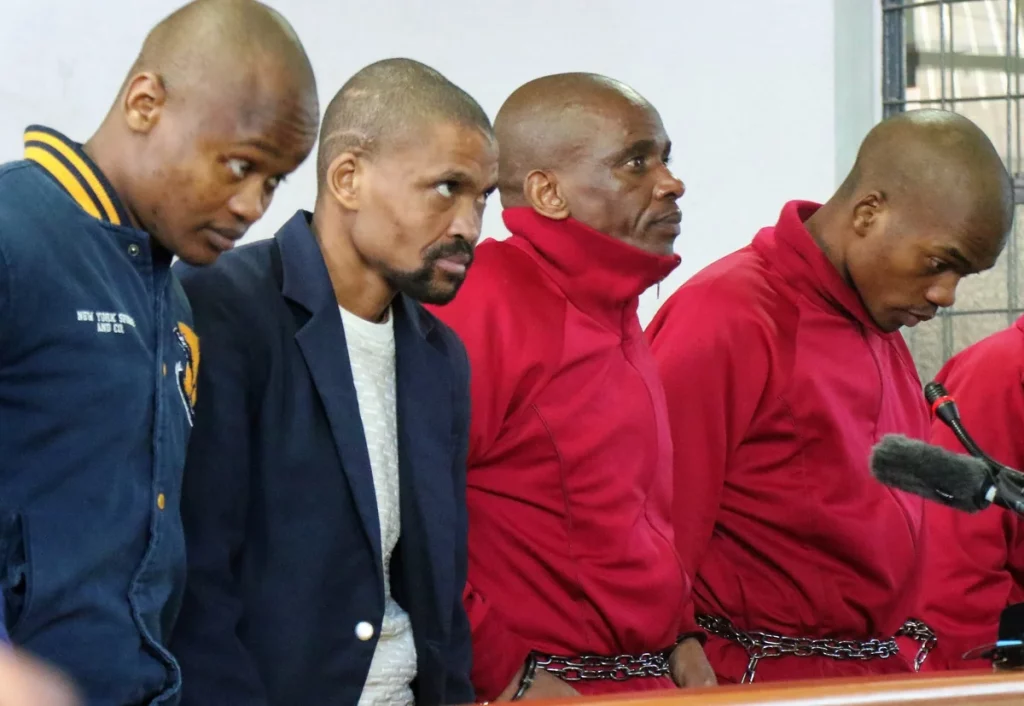
2026.3.23 Police impartiality questioned in Lusikisiki massacre trial
The defence in the Lusikisiki massacre trial has raised concerns about the impartiality of police, questioning why confession statements were taken by officers from the same policing district in which the crimes occurred.
The Mthatha High Court sitting in Lusikisiki heard on Monday that seven officers were assigned to take confessions. All had not previously been involved in the investigation.
Despite this, the defence alleges partiality and police brutality, arguing the officers could not be regarded as fully independent.
At the centre of the dispute is a decision by Brigadier Duduzile Ngculu, provincial head of the serious and violent crimes investigation unit, to appoint officers from within the OR Tambo district, including her subordinate, to take the statements.
During cross-examination, defence counsel questioned why officers from Lusikisiki, Port St Johns, Tsolo and Mthatha stations were selected instead of personnel from other units.
Attorney Mawande Nokwali, representing one of the accused, challenged the arrangement.
“Captain Sigcu is your subordinate; he reports directly to you. You could have requested another officer from a different unit. This was a high-profile case that drew national interest,” Nokwali said.
According to my knowledge, there is nothing wrong with them obtaining the statements
—Brigadier Duduzile Ngculu, provincial head of the serious and violent crimes investigation unit
Ngculu defended her decision, telling the court the officers were independent of the investigation.
“Yes, Captain Sigcu is my subordinate, but he was not involved in the investigation. The same applies to the other officers.
“According to my knowledge, there is nothing wrong with them obtaining the statements,” she testified.
Nokwali also questioned why a magistrate from Dutywa was approached to take a confession instead of local magistrates.
Ngculu said the selected magistrate was the only one available at the time but was ultimately unable to proceed due to interpreter constraints, leading to a police officer taking the statement instead.
Six men — including alleged mastermind Mzukisi Ndamase — face charges linked to a mass shooting at Ngobozana village near Lusikisiki on September 28 2024.
Eighteen people were killed when gunmen attacked neighbouring homesteads. A further murder charge relates to the killing of a politician in KwaBhaca in August 2024.
All the accused have pleaded not guilty.
Three of them are challenging the admissibility of their confessions, alleging they were forced or threatened into making statements.
Another accused has allowed two confessions — relating to both incidents — to be admitted, maintaining they were made freely.
The trial, which began on January 16, was paused for a trial-within-a-trial to examine the disputed confessions.
The state has called 20 witnesses, all police officers involved in arrests, detention, transport and the taking of statements.
Several officers testified about obtaining confessions from the accused at different times and locations.
One confession described how armed attackers entered homesteads and opened fire on occupants. A baby survived the attack.
Another statement detailed the events surrounding the separate killing linked to the case.
Judge Richard Brook has admitted two of the confessions into evidence.
The defence argues its clients were not informed of their constitutional rights and were subjected to threats and coercion, and is seeking to have the statements ruled inadmissible.
The prosecution maintains all procedures were lawful and denies any coercion.
The state’s case does not rely solely on confession evidence. It is expected to include ballistic and DNA analysis, phone records, financial data and testimony from former co-accused who have turned state witnesses.
Further cross-examination of Ngculu is expected as the trial-within-a-trial continues.
Proceedings are set to run until Friday before the court adjourns, with the focus remaining on the admissibility of the contested confessions and the conduct of police during the investigation. x1200

The Madlanga Commission of Inquiry has heard that high-ranking members of the police and national government allegedly weaponised the Cybercrimes Act to arrest notorious gossip blogger Musa Khawula in 2025.
What would normally have been a civil suit for defamation became a huge, costly multi-department sting operation to arrest Khawula due to provisions in the Cybercrimes Act.
SAPS Sergeant Fannie Nkosi testified before the commission, providing details about the resources used to arrest the blogger.
He claimed that the Hawks, SAPS, Gauteng tracking teams, and even the security company of suspected underworld figure Vusimusi “Cat” Matlata coordinated efforts to arrest the 33-year-old social media blogger in KwaZulu-Natal.
Nkosi told the commission that he was ordered to issue an “urgent warrant” for Khawula’s arrest by suspended Deputy National Police Commissioner Shadrack Sibiya.
The warrant charged Khawula with violating the Cybercrimes Act, with a second count of Crimen Injuria.
South Africa’s Cybercrimes Act No. 19 of 2020 was drafted to align cybersecurity and online privacy laws with international standards.
“Harmful digital behaviour” like posting revenge porn and inciting violence online is specifically targeted by the act, though it does not call for criminal arrests specifically for posting degrading commentary online.
Matthew Chaskalson, the commission’s chief evidence leader, called Khawula’s arrest warrant into question, explaining that it did not make sense for the charges to relate to contravening “Section 13” of the Cybercrimes Act.
“Section 13 of the Cybercrimes Act doesn’t create an offence,” said the evidence leader. “It is, in fact, a definition section. There is no offence of contravening section 13 of the Cybercrime Act.”
In the proceedings, Chaskalson tells Nkosi that he could “not identify with any certainty what [Khawula] was alleged to have done to contravene the act. It certainly wasn’t section 13.”
Nkosi, who issued the warrant, told the evidence leader that he had never read the Cybercrimes Act, but he would tell Chaskalson what the alleged crime was “after.”
Since being arrested in January 2025 following the operation, Khawula has been detained at Sun City maximum security prison in Johannesburg for more than a year after reportedly repeatedly being denied bail.
Nkosi said that the warrant stems from complaints received from ANC Secretary General Fikile Mbalula and businessman Ze Nxumalo. Reportedly, Khawula had shared gossip about their private lives.
“I received a call again from General Sibiya. He mentioned to me that he is feeling pressure from the office of the Deputy Police Minister,” the police sergeant said.
At worst, civil defamation cases over unverified claims about someone’s private life are dealt with by non-custodial criminal summonses.
If the allegations are true, it represents a gross exploitation of taxpayer funds to enact a vindictive and highly personal hunt against a social media personality.
It also further connects national police efforts with underworld figures, who are allegedly aiding in operations.
Finally, it represents an abuse of South Africa’s laws by people in high-ranking positions seeking to exact vengeance against social media personalities for their comments.
2026.3.23 Foreign Nationals Busted With Over 100 Phones, Bank Cards In Goodwood Cyber Fraud Sting
During the search, officials uncovered a large number of items believed to be linked to the alleged criminal activity.
Four foreign nationals are set to appear before the Goodwood Magistrate’s Court on Monday following their arrest in a suspected cyber fraud operation.
The suspects — three women and one man aged between 36 and 48 — are facing multiple charges, including the unlawful interception of data, cyber fraud, unlawful acts involving software or hardware tools, and possession of suspected stolen property.
They were apprehended on Friday, 20 March, during an operation led by the Directorate for Priority Crime Investigation, commonly known as the Hawks.
Major Seizure: Laptops, Bank Cards and Over 100 Cell Phones Recovered
Authorities say the arrest followed intelligence that the group was allegedly involved in cloning bank cards. This discovery triggered the involvement of specialised units, including the Hawks’ Serious Commercial Crime Investigation team, Cybercrime Investigation unit, the Local Criminal Record Centre, and SABRIC.
During the search, officials uncovered a large number of items believed to be linked to the alleged criminal activity.
“While processing the scene, the following items were collected: four Laptops, 103 cell phones, 82 Bank cards, 187 sim cards, a POS machine, and three notebooks,” Hani said.
The suspects were taken into custody at the scene.
Arrested Foreign Nationals In court
The four accused are expected to make their first appearance in court on Monday, 23 March 2026.
“The four will be making their first court appearance on Monday, March 23, 2026, at the Goodwood Magistrate’s Court,” Hani said.
Investigations into the matter are ongoing.
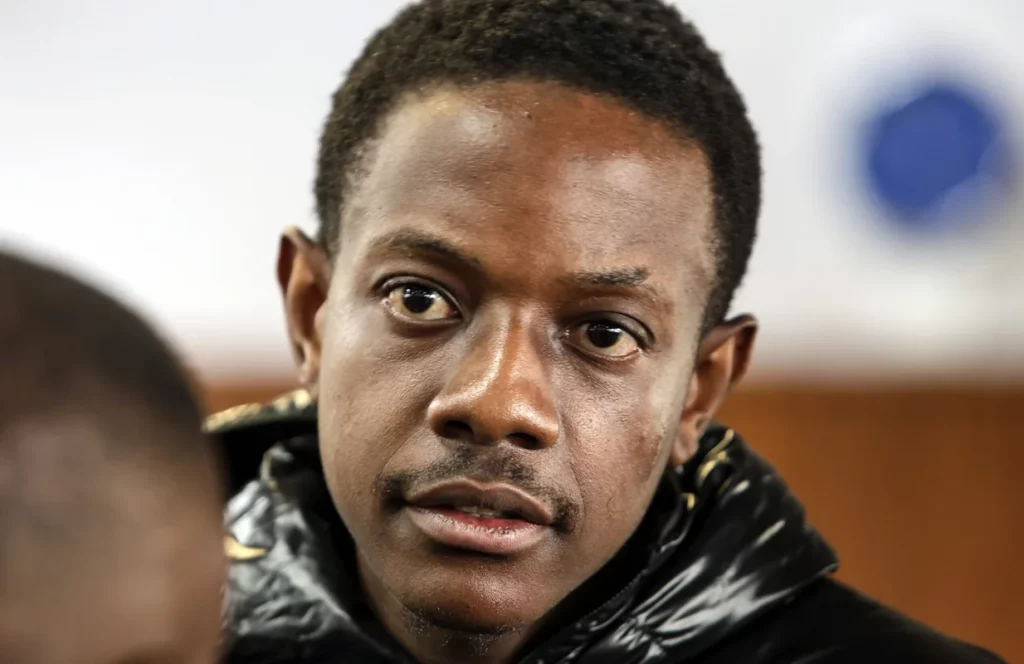
The case against Bellarmine Mugabe and his co-accused, Tobias Tamirepi Matonhodze, has been postponed to March 24 at the Alexandra Magistrate’s Court in Johannesburg due to the absence of a senior prosecutor.
The pair appeared on Tuesday for a plea hearing, where State prosecutor Lufuno Maphiri said more than 90% of the plea agreement had been finalised.
However, the matter could not proceed.
Defence lawyer Sinenhlanhla Mnguni told the media that discussions around a possible custodial sentence were ongoing, describing the stage of negotiations as delicate and focused primarily on the charges.
“I think you heard the prosecution stating that we’re almost 98% of our way there,” Mnguni said.
“So I don’t think I can, at this stage, say anything regarding what we’re considering in terms of any sentence or related matters.”
The accused remain in custody and face charges including attempted murder, defeating the ends of justice, possession of an unlicensed firearm and ammunition, contravention of the Immigration Act, and two additional counts of pointing a firearm linked to a separate incident.
Meanwhile, ActionSA supporters protested outside the Alexandra Magistrate’s Court, chanting that South Africa is not for illegal foreigners.
ActionSA leader Herman Mashaba addressed the media outside court, reiterating his party’s opposition to illegal immigration and maintaining a firm stance on the issue.
Mashaba referenced the Immigration Act charge against Mugabe and Matonhodze, alleging they had entered the country to commit crimes.
“We believe and expect our criminal justice system to mete out the harshest punishment,” Mashaba said.
“We hope they are not rewarded because, over the past few years, criminal elements—Nigerians, Pakistanis—without proper documentation are getting paid.”
He also called for a more effective criminal justice system and argued that plea bargains should be abolished.
“This guy committed serious, heinous crimes. They are in our country illegally,” he said.
“They’ve nearly killed someone. They’ve not, even today, produced the firearm that was used.”
Mashaba warned that any plea deal approved by the National Prosecuting Authority (NPA) could undermine the integrity of the justice system and constitute an injustice to law-abiding South Africans.
An ActionSA Ward 81 chairperson echoed these sentiments, claiming undocumented foreigners were straining resources meant for citizens.
“We can’t allow that. South Africa must be a country of law-abiding citizens,” he said.
He added that Mashaba, a mayoral candidate in Johannesburg, intends to enforce immigration laws strictly and that the party would back him.
“Whatever the media or government does against him, we will rally behind him to ensure that all illegal foreigners are deported to their countries.”
x1200
2026.2.25 Life in jail for Eastern Cape man for beating his drunk girlfriend to death
The Eastern Cape Division of the High Court of South Africa has sentenced a 45-year-old man to life imprisonment for beating his heavily intoxicated girlfriend to death after a night of drinking in October 2024.
The Eastern Cape Division of the High Court of South Africa in Makhanda has sentenced Siyabulela Tshemese, 45, to life imprisonment for the murder of his 34-year-old girlfriend, Amanda Kweyama, whom he beat to death after she became heavily intoxicated.
The court heard that the incident occurred on October 27, 2024.
Eastern Cape police spokesperson Captain Ursula Roelofse said Tshemese and Kweyama had been drinking at a local tavern.
After it closed at about 9pm, they left together.
“According to the accused, the deceased was intoxicated and could not walk any further, and it was also raining,” Roelofse said.
She said that while Tshemese was trying to support Kweyama as they walked, he noticed a group of men approaching. He allegedly left her next to the road and ran home to fetch a stick to defend himself and her.
When he returned, Kweyama was no longer where he had left her. He was told she had been taken to a nearby house.
Tshemese went to the house, where he found Kweyama still heavily intoxicated and unable to walk.
“He carried her and beat her with the stick until he got tired and left her on the roadside until the morning,” Roelofse said.
The following morning, Tshemese was woken by his father and informed that Kweyama had died. He went to the scene and found her dead. He was later arrested.
Tshemese first appeared in the Ugie Magistrate’s Court on October 30, 2024.
Bail was successfully opposed. The matter was transferred to the Makhanda High Court on September 1, 2025.
He remained in custody until 20 February 2026, when he was sentenced to life imprisonment.
Meanwhile, Joe Gqabi District Commissioner Major General Lindelwa Vellem commended the investigating officer, Detective Constable Brian Koitsiwe, and his mentor, Detective Warrant Officer Mboniswa Methuso of the Ugie detectives, for their dedication and professionalism in securing the conviction.
Vellem said the life sentence sends a strong message that crimes of this nature will not be tolerated.
“As SAPS, we remain resolute in the fight against gender-based violence and will continue to ensure perpetrators are brought to justice,” Vellem added.
2026.2.25 Serial rapist Marvin de Klerk sentenced to 25 years for parole offence
A serial rapist has been jailed for 25 years after he was convicted for a rape he committed while out on parole.
Marvin de Klerk, 40, was sentenced to 25 years’ direct imprisonment by the Springbok Regional Court for the rape of a 43-year-old woman.
National Prosecuting Authority (NPA) spokesperson, Mojalefa Senokoatsane, said the conviction and sentence stemmed from an incident that occurred on July 15, 2024, in the small mining town of Nababeep, approximately 20 kilometres from Springbok.
“On the evening in question, the complainant and her friend were at a local drinking establishment when they encountered the accused and his companions.
“Although the groups were separate, the complainant’s friend was acquainted with the accused and engaged him in conversation, expressing surprise at his release from prison.
“Later that night, as the complainant and her friend left the establishment, the friend noticed the accused outside and observed that he appeared to be in possession of a firearm.
“The two women considered reporting the matter at the nearby police station but walked past it, concerned about their state of intoxication,” said Senokoatsane.
However, De Klerk used a window of opportunity to accost the complainant approximately 150 metres from the police station, while she had briefly stepped aside. He approached her from nearby bushes, said Senokoatsane.
“He threatened her with a knife and forced her to undress before raping her. He then fled the scene. The complainant returned home and informed her husband, who accompanied her to the police station.
“In the meantime, the complainant’s friend had already reported the incident. Although there was initially only one police officer on duty and no police vehicle available, additional officers returned to the station shortly thereafter. The accused was identified by name, located, arrested, and subsequently charged with rape.”
Senokoatsane said during the trial, the accused claimed that the sexual encounter was consensual.
“However, under cross-examination by regional court prosecutor Bail Kock, his version was found to be improbable and inconsistent. He failed to explain how consent was obtained and declined to answer further questions.
“In aggravation of sentence, the State proved that the accused has eight previous convictions, including two, for similar offences. Notably, he was on parole for a similar offence at the time he committed this crime,” said Senokoatsane.
A Victim Impact Statement, compiled by court preparation officer Desmond Cloete, detailed the profound emotional and relational harm suffered by the complainant, including strain on her marriage and family life.
The State argued that no substantial and compelling circumstances existed to justify a deviation from the prescribed minimum sentence.
The court rejected the accused’s version and accepted the State’s case beyond a reasonable doubt. He was sentenced to 25 years’ direct imprisonment.
The court further declared him unfit to work with children, unfit to possess a firearm, and ordered that his name be entered into the National Register for Sex Offenders.
2026.2.24 Five Arrested for Alleged ATM Kidnappings in KwaMhlanga and Soshanguve-Case Postponed to 2 March for Bail Hearing
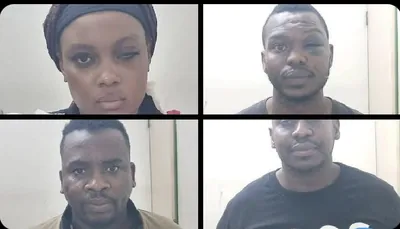
KwaMhlanga, Five people accused of running a kidnapping syndicate that forced victims to withdraw money from ATMs appeared in the local magistrate’s court on Monday, facing serious charges that have raised alarms about safety in communities around Mpumalanga and Gauteng. The group, made up of men and women from different age groups, was remanded in custody after a brief hearing, with the judge setting a date for their bail bid amid an ongoing police probe into their activities.
The Arrests and the Intelligence-Driven Operation
The breakthrough came last Friday when police launched a well-planned takedown based on solid tips. Teams from specialised units in the South African Police Service worked hand-in-hand with private security firms to track down the suspects. This joint effort shows how combining forces can help crack down on organised crime that preys on everyday people going about their business.
Officers swooped in on 21 February, nabbing the five in a swift move that caught them off guard. The operation focused on areas known for these kinds of attacks, where criminals spot vulnerable individuals near banks or shopping spots. Once caught, victims are bundled into vehicles, threatened, and taken to ATMs to pull out as much cash as possible. This method, often called express kidnappings, leaves people traumatised and communities on edge.
What stands out here is the mix of suspects involved. Ages range from 21 to 43, suggesting a group that might have drawn in younger members for specific roles, like scouting or driving. Police believe this was not a one-off but part of a pattern, with multiple incidents linked to them over recent months. By acting fast on intelligence, authorities hope to stop more harm and send a message to others thinking of similar schemes.
Details of the Accused and Charges Filed
The five facing the music are Itumeleng Matlou (30), Tshepiso Tlou (28), Tebogo Sithole (35), Urvin Mosupi (43), and Mbali Loni (21). They stood in the dock together, charged not just with kidnapping but also extortion and other linked crimes. These extra charges come from how they allegedly pressured victims under duress to hand over money, turning a simple abduction into a full-blown financial shakedown.
Kidnapping in this context means grabbing someone against their will, often with threats of violence if they do not comply. Extortion adds the layer of forcing money out through fear. In South Africa, these offences carry heavy penalties, with possible jail time running into decades if found guilty. The group is said to have operated in KwaMhlanga, a town in Mpumalanga known for its rural feel but growing urban issues, and Soshanguve, a bustling township north of Pretoria in Gauteng where crime stats have been climbing.
Investigators are digging deeper, looking for ties to more cases or even bigger networks. They want to know if the suspects had inside info on victims’ bank details or routines, perhaps from watching patterns at ATMs. This kind of crime spikes in areas with high foot traffic, where people might be alone after work or shopping. By charging them with multiple offences, prosecutors aim to build a strong case that covers all angles of their alleged wrongdoing.
Court Appearance and Postponement Explained
On 24 February, the accused made their first court appearance in a packed KwaMhlanga Magistrate’s Court. The mood was tense as family members and locals watched proceedings. The state asked for more time to wrap up key parts of the investigation, like gathering statements from victims and checking evidence such as vehicle records or cellphone data.
The magistrate agreed to push the case to 2 March for a proper bail hearing. This delay is common in serious matters, giving both sides time to prepare. For bail, the accused will need to show they are not a flight risk or danger to the public. The prosecution might argue against it, pointing to the nature of the crimes and the fear they have caused. Until then, the five remain behind bars, a move that has brought some relief to those worried about revenge or more attacks.
This postponement also allows police to strengthen their file. They could add more charges if new victims come forward or if links to other crimes surface. Courts in South Africa handle these cases carefully, balancing the rights of the accused with community safety. For anyone following, the next date is crucial – it could decide if they walk free while awaiting trial or stay locked up.
Understanding ATM Kidnappings in South Africa
ATM kidnappings are a growing worry in many parts of the country, especially in townships and smaller towns where security might be lighter. Criminals often work in teams: one spots the target, another drives, and others handle the threats. Victims are usually picked because they look like they have money, perhaps after using an ATM or carrying shopping bags.
In places like Soshanguve, with its mix of homes and businesses, these attacks happen more at night or in quiet spots. KwaMhlanga, being closer to rural areas, sees similar issues as people travel between towns. Stats show thousands of such incidents yearly, costing victims not just cash but also their sense of security. Many suffer long-term stress, avoiding banks or going out alone.
To fight this, police have ramped up patrols and encouraged people to use apps for banking or travel in groups. Community watch groups help too, sharing alerts on social media. This case highlights how intelligence – tips from the public or surveillance – can lead to arrests. It also reminds everyone to stay alert, like not flashing cash or using well-lit ATMs.
Community Impact and Calls for Action
Residents in KwaMhlanga and Soshanguve have mixed feelings: glad about the arrests but concerned about safety until the group is dealt with. Local leaders say these crimes hurt the economy, as people shop less or avoid certain areas. Families of victims often need counselling, and some push for harsher laws to deter copycats.
Broader efforts include better lighting at ATMs, more cameras, and partnerships between banks and police. Private security plays a role, as seen in this operation, providing extra eyes and tech. For the average person, simple steps like varying routines or using contactless payments can reduce risks.
As the investigation unfolds, more details might emerge about how the syndicate operated – perhaps using stolen cars or fake IDs. This could help prevent future groups from forming. Communities are urged to report suspicious activity, turning public awareness into a tool against crime.
What Happens Next in the Legal Process
After the bail hearing on 2 March, if granted, the accused might face conditions like reporting to police or staying away from certain areas. If denied, they wait in jail for trial, which could take months. The state will present evidence, including witness accounts and any recovered items like phones or vehicles.
Defence lawyers will challenge the case, perhaps questioning how IDs were made or if rights were followed during arrests. Trials like this often draw attention, shining a light on crime trends. A conviction could mean long sentences, serving as a warning. For now, the focus is on justice moving forward without delays.
This case underscores the ongoing battle against violent crime in South Africa, where quick police action and community support can make a real difference. As more facts come out, it might inspire changes to keep everyone safer.
2026.2.24 Accountant in dock over prostitute extortion scheme
A deeply religious 61-year-old who was duped out of hundreds of thousands of rands after an illicit rendezvous with a prostitute in her early twenties decided to go into prayer and reflection before approaching the police in a bid to escape the clutches of an alleged extortion syndicate.
This was the evidence presented in the Gqeberha Specialized Commercial Crimes Court on Tuesday, during the trial of a Pretoria accountant charged with fraud and extortion.
Mulalo Tshitambo faces charges of extortion, fraud, corruption, and defeating the ends of justice.
The accused was allegedly part of a syndicate that duped a Gqeberha businessman, who made use of the services of the prostitute, into thinking that he was being investigated for fraud and rape after his encounter with the woman.
The complainant, whose name is known to Algoa FM News, eventually turned to the police for help after he had already been duped out of more than R700,000.
He met the 24-year-old sex worker at a guesthouse in February 2022, paid for services rendered after their interlude, and left.
During his testimony, the court heard that shortly after he was bombarded by members of a syndicate who constantly demanded money, stating they could make the charges he stood facing disappear.
The complainant was allegedly first contacted by a “Mr Makwena” purporting to be an SAPS Warrant Officer.
He told the complainant that he was being investigated for fraud and rape by a woman who was apprehended by SAPS for having counterfeit currency.
The complainant was informed that the woman alleged that she received the counterfeit currency from him and that he raped her.
Thereafter, he was also duped into making payments to a woman, purportedly a Judge who could assist with making the impending charges disappear.
It is alleged that the so-called Judge is the accused before the court.
According to the complainant, who testified that he is a religious man, he approached the police after first praying about the matter.
His indiscretion weighed heavily on his conscience.
At this point, he had coughed up large amounts of cash from March 2022 to November that same year.
He stated that he also came forward in the hope that what happened to him could serve as a warning to others so that they could avoid falling into the same trap.
During cross-examination, the complainant was questioned about his age and that of the prostitute.
He stated that he is 61 years old and that the woman whose services he used was 24.
Regarding the complainant considering himself a religious person, he was asked whether his actions were those of someone who holds themself in that regard.
To this, he answered: “It was a mistake. I admit it was a mistake.”
The State alleges that R390,500 was paid into an FNB account belonging to Tshitambo.
The corruption and defeating the ends of justice charge pertains to the accused allegedly telling the Warrant Officer, Sergeant Dumisani Ntshanyana, that she wanted to purchase the docket from SAPS for R30,000.
It is further alleged that the accused flew to Gqeberha to strike the deal and that she was arrested after handing Ntshanyana the money.
During his testimony, Ntshanyana said he traced the accused to her workplace at the Department of Labour in Pretoria.
After tracing her through her boss, the pair met at a Nando’s in a mall, where he questioned her about the money in her bank account.
In response to a question by State Prosecutor Wilhelm de Villiers, he said he did not indulge in their chicken during the encounter.
During their meeting, the accused is said to have told Ntshanyana that she first wanted to consult with her attorney before he could take her warning statement, and they agreed to reconvene in three months when he returned to Gauteng, according to his testimony.
He further testified that the accused approached him a month later, offering him R30,000 to make the docket “disappear.”
In accordance with police procedures, a trap was set for the accused, and as part of the entrapment, he first asked for payment of R50,000.
Tshanyana told her that he would be in Gauteng for a workshop and that they could meet, but she allegedly told him that she would fly to Gqeberha to hand him the money.
The trial continues.
—

Naledi Aphiwe apologises to Zimbabweans for a comment she made last year, saying she never intended to disrespect anyone.
South African singer Naledi Aphiwe has publicly apologised for a comment she made a few months ago that drew criticism from Zimbabweans online.
This comes after some Zimbabweans took to social media to remind her of the comments ahead of her performance in Harare scheduled for April.
Naledi responds
In a statement posted on her Facebook page, Naledi said:
“Social media never forgets, and I’ve been reminded of a comment I made a few months ago. I want to address it properly instead of ignoring it,” she said.
“First, I want to make it clear that my words were never meant to disrespect Zimbabweans or come from a place of hate. I understand that intentions don’t always translate well online, and I can see how what I said may have hurt or offended people. For that, I sincerely apologise.”
Naledi owning up and learning from mistakes
The singer acknowledged that she is still learning about the weight of words on social media.
“I am still young and I’m constantly growing, learning, and understanding the weight that words can carry especially on social media,” she posted.
“I don’t claim to be perfect, and when I make mistakes, I believe in owning them and learning from them. This has definitely been a moment of reflection for me.”
She urged the public not to judge her based on one comment:
“Please don’t misunderstand my heart or define me by one comment. It truly wasn’t that deep or rooted in negativity. I respect people from all backgrounds, and I would never intentionally spread hate. I hope we can move forward with understanding and give each other grace. I genuinely wish peace for everyone involved.🤍one love 🤍🫀”
Moving forward
Naledi is still expected to headline Ama2k Fest in Zimbabwe.
Her apology comes amid ongoing discussions on social media about accountability, online behaviour, and the lasting impact of words in the digital age.
Fans and critics alike are watching closely to see how the singer engages with her audience in the lead-up to the festival.

Zimbabweans have resurfaced old comments by Naledi Aphiwe ahead of her expected performance at Ama2k Fest in Harare.
South African singer Naledi Aphiwe is expected to perform in Zimbabwe this April, but social media suggests the crowd hasn’t forgotten what she said last year.
Naledi is billed as one of the headline acts at Ama2k Fest, where she will also share the stage with Scotts Maphuma.
The event is set to take place in Harare, and fans are already talking.
But instead of just celebrating her upcoming performance, many Zimbabweans have taken to social media with reminders.
How a TikTok comment sparked outrage over Naledi
Last May, a simple TikTok exchange sparked unexpected tension.
A Zimbabwean fan, Constance Muzenda, commented on one of Naledi’s posts: “Naledi, please come to Zimbabwe.”
It was polite. Straightforward. Just a fan hoping to see her favourite artist live.
“Go and wait for me there” — Naledi’s reply that didn’t land
Naledi responded: “Hambani niyongilinda khona,” which loosely translates to, “Go and wait for me there.”
She likely meant it playfully. But it didn’t land that way.
Many Zimbabweans felt the comment carried an undertone.
Some interpreted it to mean that most Zimbabweans are in South Africa and should first “go back home” and wait for her there.
Whether that was her intention or not, the internet reacted fast — and harshly.
Social media users accused her of being dismissive. Others warned her that “the internet never forgets” and that one day fate might take her to Zimbabwe.
Social media receipts resurface ahead of Harare show
Now, as news spreads that she is set to perform in Harare, those old screenshots are making the rounds again.
The comment section under posts about her upcoming appearance has quickly turned into a reminder board.
Zimbabweans are reposting the exchange and tagging friends, saying this is the moment they were waiting for.
Zimbabweans demand an apology
Some users say they are still offended and believe she should apologise before stepping onto a Zimbabwean stage.
“I’m yet to forgive her about what she said about us last year, if possible can you please shower her with cans,” wrote @Liberty Muregi.
“We didn’t forget what she said about Zimbabweans thou,” posted @Nonoe Taa.
“She must apologize first, otherwise we coming for her particularly,” commented @cmk CMax.
“She must bring all Zimbabweans with her when she comes… I remember she said they are in S.A,” added @Morley Mai ve Boys.
x1200
—
2026.2.24 High Court sends bread-truck murderer to prison for ‘rest of his natural life’
The Western Cape High Court sentenced Ayanda Dayi to four life terms plus 102 years for multiple murders, robberies, and firearms offences in Cape Town.
The High Court of South Africa: Western Cape Division sentenced Ayanda Dayi to four life sentences and an additional 102 years of direct imprisonment.
The court imposed the sentences after convicting him of multiple violent crimes, including four murders committed in Delft and Du Noon.
Ayanda Dayi court convictions and charges
A circuit court sitting at the Wynberg Regional Court found Dayi guilty on four counts of murder, one count of attempted murder, two counts of robbery with aggravating circumstances, one count of theft, three counts of illegal possession of firearms, and three counts of illegal possession of ammunition.
The court handed down life imprisonment for each murder. It also imposed:
15 years for each robbery with aggravating circumstances
5 years for theft of a firearm
15 years for each count of illegal firearm possession
4 years for each count of illegal ammunition possession
10 years for attempted murder
The court further declared Dayi unfit to possess a firearm.
The convictions relate to a series of killings in Cape Town. In one incident, gunmen attacked victims travelling in a Sasko bread truck while they delivered bread at a spaza shop in Symphony Way, Delft, on 16 May 2024.
Dayi’s violent crimes began months earlier. On 24 January 2024, he and an accomplice fatally shot Eric Yaphi and Elvis Thembelani Cwethiso in Du Noon before stealing their vehicle.
Judge condemns violent conduct
Acting Judge Van Leeve described Dayi’s actions as extremely violent and said he showed complete disregard for human life.
The judge stated that his behaviour demonstrated that he posed a danger to society.
She also noted the prevalence of violent crime in Cape Town and South Africa and emphasised that Dayi had shown no remorse.
The court found substantial and compelling reasons to deviate from prescribed minimum sentencing guidelines.
During sentencing arguments, Senior State Advocate Esna Erasmus stressed the devastating impact of the crimes on victims’ families.
She said the families effectively received their own “life sentences” marked by grief, trauma, and loss.
Erasmus told the court that Dayi had prior convictions, including robbery and rape.
Authorities had released him on parole in 2018. His reoffending while on conditional release, the State argued, demonstrated a clear disregard for the law.
Pattern of violence concerns court
The State argued that Dayi’s crimes reflected planning and deliberation rather than impulsive behaviour.
Within five months, he committed four separate killings.
Prosecutors maintained that no substantial or compelling circumstances justified leniency. T
hey told the court that Dayi’s lack of remorse and repeated violent conduct indicated poor prospects for rehabilitation and a high risk of future offences.
The case followed a coordinated investigation and prosecution led by Senior State Advocate Esna Erasmus and investigating officer Lieutenant Colonel Pretorius.
Authorities credited their work with securing convictions on all charges.
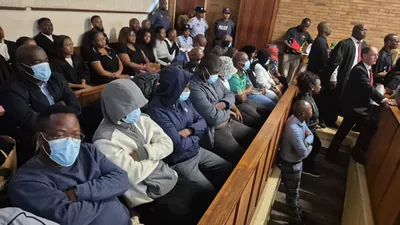
Thirty-three people appeared at the Nelspruit Magistrate’s Court yesterday following their arrest by the Hawks last weekend.
The accused are facing charges of corruption, fraud, and money laundering. Today, five additional individuals were charged and appeared before Magistrate Patrick Morris.
During the court proceedings, the prosecutor, Pranisha Jagganeth, informed the court that one of the accused was unwell. Another accused is wheelchair-bound and requires 24-hour medical attention. A third accused, who is a government employee, has a baby and is breastfeeding. Prosecutor Jagganeth requested the court to prioritise the bail application of the three accused and a total of five accused persons were granted bail.
The magistrate granted the wheelchair-bound accused bail of R5,000, while one service provider was granted bail of R50 000. The State submitted that bail should be set at R50 000. “The accused will not forfeit their bail provided that they appear in court until the matter is finalised,” said Jagganeth.
Magistrate Morris stated that the accused are facing a Schedule 5 offence, which means they must remain in custody until the court decides otherwise.
“It will be in the interest of justice to consider those who require medical attention, including the wheelchair-bound accused,” the magistrate told the court. Bail hearings will continue this morning.
On Sunday, February 22, the Hawks arrested government officials and service providers involved in the Mpumalanga Department of Education’s flawed tender worth R114 million during a blitz operation. 21 suspects were arrested in the province, four suspects arrested in Gauteng, one suspect arrested in Limpopo and one suspect arrested in the Western Cape.

“His unexplained re-entry highlights serious failures in border management and movement control systems,” the SIU said.
The Special Investigating Unit (SIU) has revealed that there is no official record showing how Nigerian rapper Prince Daniel Obioma, popularly known as 3GAR, re-entered South Africa before his involvement in a high-profile McLaren crash in Cape Town.
The findings form part of the SIU’s interim report into systemic maladministration within the Department of Home Affairs.
SIU Flags Border Control Failures in 3GAR Case
According to the SIU, Obioma overstayed his visitor’s visa in 2023 and remained in the country unlawfully until he departed.
However, when he later returned to South Africa, there was allegedly no official movement record documenting his re-entry.
Despite that status, he was identified as the driver in the March 2025 McLaren crash.
“His unexplained re-entry highlights serious failures in border management and movement control systems,” the SIU said.
R3 Million McLaren 570S Crash in Sea Point
SurgeZirc SA previously reported that a McLaren 570S, valued at approximately R3 million, crashed at high speed along High Level Road in Cape Town on 1 March 2025.
CCTV footage showed the luxury supercar travelling at significant speed before the driver lost control and slammed into a wall.
The crash unfolded along one of Cape Town’s most prominent coastal routes, drawing widespread public attention.
Investigation, Public Pressure and Prosecution Decision
Police confirmed shortly after the incident that a case of reckless and negligent driving was under investigation.
In the weeks that followed, questions were raised about the pace of the probe. Despite the visibility of the crash and the availability of video footage, no immediate charges were filed, sparking criticism and frustration.
By August 2025, SurgeZirc SA reported that the National Prosecuting Authority (NPA) had decided to prosecute Obioma on negligent driving charges linked to the crash.
The SIU’s latest findings now place renewed focus on border control systems and the handling of immigration records, as scrutiny intensifies over how Obioma was able to return to South Africa without an official entry record.
Investigations into both the administrative failures and the crash case continue.
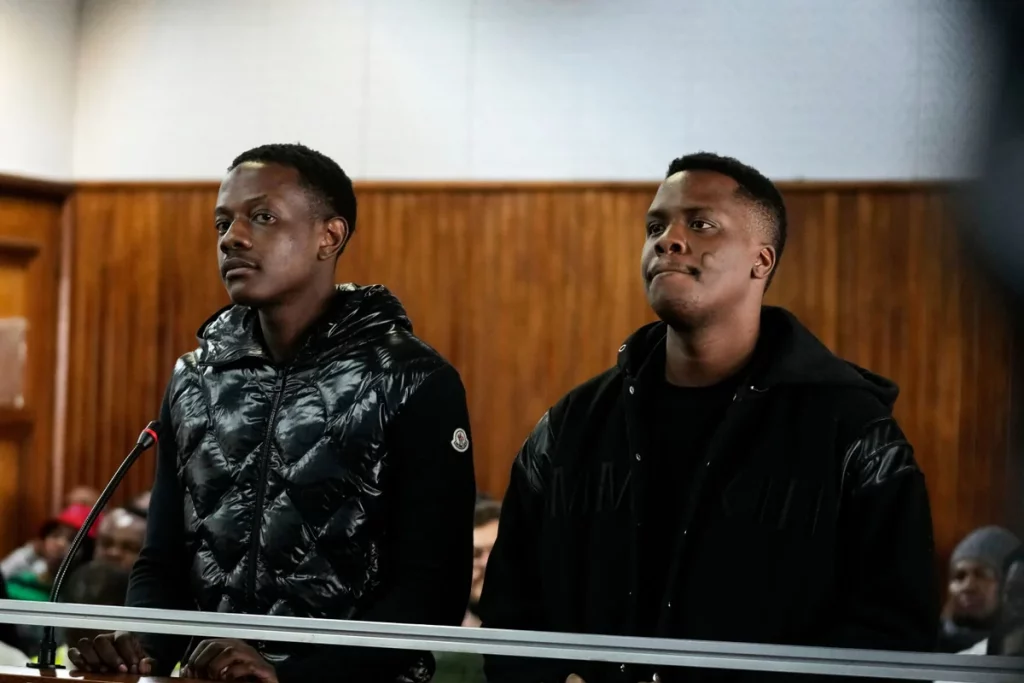
2026.2.23 Former Zimbabwe President Robert Mugabe’s son faces attempted murder charges in South African court
JOHANNESBURG (AP) — The son of Zimbabwe’s late former President Robert Mugabe appeared in a South African court on Monday with another man to face charges of attempted murder after a shooting at his home in Johannesburg last week.
Bellarmine Chatunga Mugabe, 29, and his co-accused Tobias Mugabe Matonhodze, 33, are also facing two additional charges of defeating the ends of justice and unlawful possession of a firearm.
These are related to the firearm believed to have been used during the shooting when an employee at the Mugabe home in the Johannesburg suburb of Hyde Park was shot on Thursday last week, leading to his hospitalization.
The two accused appeared in the Alexandra Magistrates Court and will appear again on 3 March to make a formal bail application.
According to the police, the firearm used during the shooting has not been found since the two men were arrested last Thursday.
Police identified the person who was shot as the gardener at the home and said there had been an “altercation,” though the motive was still unclear.
Bellarmine Chatunga Mugabe is the youngest son of Robert Mugabe and his second wife Grace Mugabe.
Robert Mugabe led Zimbabwe for 37 years before he was deposed in a coup in 2017. He died two years later in Singapore at the age of 95.
x1200
2026.2.20 Another Uber bike stolen in a jiffy… as polls show confidence in CPF leadership jittery
While the Laudium CPF and their cronies are trying hard to paint a picture that the CPF is making a huge difference in curbing crime in the area, residents are certainly are not being fooled.
Even a recent open poll on the Laudium Sun’s Instagram platform, revealed that 72% of the respondents did not believe that the CPF, under it’s present leadership, was effective in addressing the high crime situation in Laudium.
This follows yet more incidents of crime being reported this week to the Laudium Sun for stats purposes.
In one of the incidents, another Uber Eats delivery rider fell victim to crime. Within 3-4 minutes of the rider leaving his Uber delivery motorbike locked outside and popping in at a tuck shop on Delhi Ave, in Laudium Ext 3, last Monday morning in broad daylight, the motorbike went missing.
The Uber rider, Innocent Dhlakama, formerly from Zimbabwe, now living in Itireleng, told the Laudium Sun that he could not believe his eyes when he returned from the tuck shop to see that his Uber motorbike, a white Big Boy, Reg No: ML81VPGP, was gone, despite him parking the bike just outside the tuckshop.
Innocent added, “It was early on Monday morning at around 8am when I left home for work, on my delivery motorbike, which I hired from my boss to do Uber Eats deliveries. I stopped for less than 5 minutes at a tuck shop on Delhi Avenue to buy some snacks, before I started with my deliveries for the day. I parked my bike right outside the shop and I locked it properly, making sure it was secure before I went inside. After about 3-4 minutes, when I came out of the shop, I was shocked to see that my motorbike was no longer there, where I had parked it. At first I thought maybe I was mistaken about the exact spot where I had parked it, but when I looked properly, I realised that it was gone. I started to panic and began asking people around the area if they had seen anyone taking the motorbike. I was confused and shocked because I had only been inside the shop for a very short time. One Black guy told me that he saw someone take my motorbike towards Itireleng. I strongly suspect that the person I approached about my motorbike, is the same guy who planned with others for my motorbike to get stolen, because I saw a gun on him and he looked dangerous. He was not answering me properly and by his accent I could tell he was South African. The way he responded made me feel very uncomfortable and suspicious. I then immediately reported the theft to my boss, who owns the motorbike. This situation is really hectic for me because I was jobless a few months ago and I was lucky to finally get a job as a delivery driver. Now that the bike has been stolen, I cannot work. Crime in this area is just too high and we fear for our lives all the time. There is no law and order because people can just walk around, even with guns, without being questioned by the police. I hope that the police will recover the motorbike that was stolen, so that my boss can hire me again, as I have a family to support and it is very hard for me to survive without any job or income.”
2026.2.8 SAPS probing link between Mbhense murder, syndicate members’ killings
Police have confirmed that they are investigating whether members of a criminal syndicate implicated in the 2022 murder of Emmanuel Mbhense are assassinating each other.
This follows the killing of three of the twelve suspects in apparent hits.
Mbhense was allegedly tortured and killed by members of the Ekurhuleni Metro Police Department (EMPD) before his body was dumped in a dam.
The details were revealed this morning, hours after former police reservist Wiandre Pretorius took his own life at a filling station in Brakpan, east of Johannesburg.
Pretorius, who was also a person of interest in the Mbhense murder case, survived an attempt on his life outside a house in Boksburg on Thursday.
Police also confirmed that he was a person of interest in the murder of Marius van der Merwe, known as Witness D at the Madlanga Commission.
Police spokesperson Athlenda Mathe says, “The question is, are we dealing with a syndicate that is eliminating each other in relation to the Emmanuel Mbhense murder? So, that is what our detectives are probing. Are we dealing with the syndicate that is eliminating each other in terms of their role and involvement in the murder of Emmanuel Mbhense? So, that is an aspect that we are looking at.”
2026.2.7 Court hears shocking R2 million murder plot against Durban businessman
CALCULATED ASSASSINATION
A CONVICTED murderer has testified in court that he and his accomplice were promised R2 million to kill former ward 90 councillor and businessman Sunil Brijmohan.
In the Durban Regional Court this week, Santure Kirwin Mkhize revealed how what was initially planned as a robbery turned into a calculated assassination.
Mkhize, who pleaded guilty to murder and turned State witness, was testifying during the trial of Brijmohan’s friend, Vikash Brian Sewnath, 46; Vernon Chetty, 26; Farah Moosa, 25; and Sibusiso Ngcobo, 26. All four men, who are charged with murder, pleaded not guilty.
Mkhize, 33, and Al-Barakh Jaleel Van Rooyen, 21, who was also arrested and charged for murder, pleaded guilty and were sentenced to 18 years imprisonment.
They are both witnesses for the State in the trial. Van Rooyen has already testified.
Brijmohan, 46,was shot and killed outside a building site in Amanzimtoti on October 21, 2022.
Mkhize, during his evidence-in-chief, told the court that prior to the incident he knew Chetty, Moosa and Ngcobo, who were all from Chatsworth.
He said he bought car parts from the, and they knew good mechanics.
Mkhize said sometime during October that year, he was sitting in Chetty’s car together with Ngcobo, Van Rooyen and another person named “Ben”.
He said while speaking, Chetty informed them that there was a man he knew in possession of “a lot of money”.
“He said this person must be robbed. We need money. He said he is still going to reveal more detail about it.”
Mkhize said on the morning of October 21, Ben arrived at his place of residence.
“He came there to wake me up. I must go and commit that robbery. I woke up and proceeded to the main house to wake up Al-Barakh. I told him these guys want us to commit the robbery.”
Mkhize said they went to the road and saw two vehicles – one which belonged to Chetty and the other to Moosa. He said together with Van Rooyen and Ben, they jumped into Chetty’s car.
Mkhize said Chetty handed him a firearm.
“He (Chetty) said this person we are going to rob is in possession of 500k (R500 000). I asked how we were going to travel, and he pointed to accused two’s (Moosa) vehicle. I asked accused three (Ngcobo), if accused two was aware of the plan, he said no, he knows we are going to collect money.”
Mkhize said he together with Van Rooyen and Ben jumped into Moosa’s car and followed Chetty’s vehicle to Amanzimtoti.
He said as they were driving Chetty pointed to a construction site with a green net, and then they parked at a nearby garage.
“He parked there, bought some pies and juice. Then we saw a vehicle parked by there (construction site). Accused one (Chetty) told us that was the vehicle with the money.
“We started driving towards there, and I told accused two to reduce speed and park on the side of the road. Accused two and Ben remained inside. Al-Barakh and I stepped out and started walking down the road. When we were very close, we saw the vehicle drive away.
“Al-Barakh received a call from accused one. He said plans have now changed. We must kill this person, Sunil, and we will get R2 million. We realised it was too big. We could not stop this job.
“We had seen a picture of Sunil because we were supposed to rob him. Sunil was in the yard. I signalled to him to come close to us, as a person wanting a job. When he came closer, I asked him, ‘Are you Sunil?’. He said yes. I then did what I did. I shot him three times,” he said.
Mkhize said they then started running towards their getaway vehicle.
“We met up with the car. It was coming towards us. Ben already had the door open for us. Accused two wanted to jump out. He said ‘I am not here to do this’. I produced the firearm and told him to drive on. He kept saying this.”
Mkhize said he, together with Chetty, Moosa, Ngcobo, Van Rooyen and Ben went to Chatsworth.
“As soon as we arrived there, I warned accused two not to speak about what happened and then he ran away.”
Mkhize said they started discussing when they would get paid.
“Accused one said the person who directed us to do this said we must meet at a place in town. Accused one explained that the person killed was abusing his wife and was building a house for his girlfriend.
“On arrival at the place, it was closed. We asked people around us and they said the owner had just been killed. Accused one phoned the man again. He said he was at the scene where the victim was shot and would meet us later,” he said.
Mkhize said they met the person later on in the Jacobs area.
When asked who the person was, he said Sewnath.
“He asked who killed Sunil. I said it was me. He said good job. This person was very abusive to his family and was a bad person. He then took out his phone and made a call. He mentioned the name ‘Divakar’ and said he was sitting with the guys; we have done this job. The person on the phone said give them whatever you have.”
Mkhize said they were given R20 000.
“Accused four (Sewnath) said please take this for now. He said they are still waiting for the insurance to payout, but we will definitely get our money. Al-Barakh and I each took R5 000. The other three (Chetty, Ngcobo and Ben) shared the R10 000.”
Mkhize said the following month they had not received any payment.
“Accused one again called accused four to ask him. He said they were still waiting for the insurance payment. He (Sewnath) then sent R3 000, then R2 000, which we shared.”
Mkhize said they continued to request for their payment.
“We then met with the accused four again in November in Mobeni. I told him ‘see here, we are not playing’. I wanted him to realise we are very serious. I am the one who done the job. He took out his phone again and called that person, Divakar. We heard him saying, ‘Give them whatever you have’. He took out an envelope from his cubby, with R10 000…”
The trial continues.
2026.2.5 Alleged Crime Kingpin Katiso Molefe Appears in High Court Over Murder of DJ Sumbody
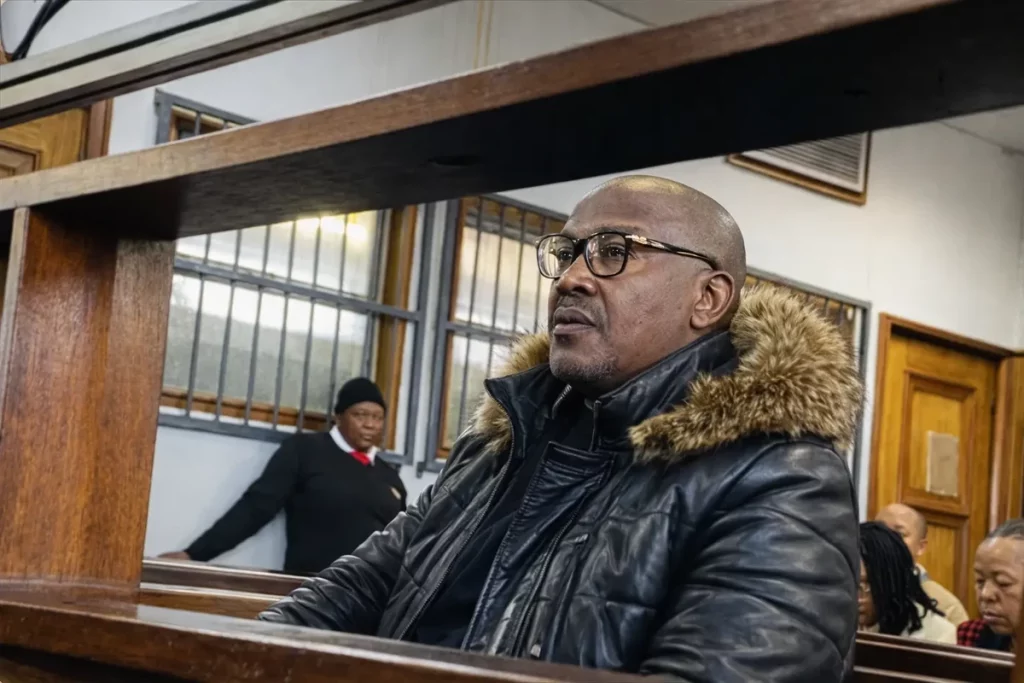
South Africa’s criminal justice system reached a significant milestone as alleged crime boss Katiso Molefe made his first appearance in the High Court facing charges related to the November 2022 murder of popular musician and entrepreneur Oupa “DJ Sumbody” Sefoka. The proceedings in the Gauteng High Court in Pretoria mark the culmination of extensive investigations into the high-profile killing that shocked the entertainment industry and exposed connections between organized crime and violence against public figures.
Molefe, who prosecutors allege occupies a senior position within organized criminal networks operating across Gauteng, appeared alongside co-accused individuals facing charges including murder, conspiracy to commit murder, illegal possession of firearms and ammunition, and participation in activities of a criminal enterprise. The State’s case alleges that DJ Sumbody’s assassination was orchestrated as part of criminal business rivalries and conflicts over lucrative entertainment industry territories.
The murder of DJ Sumbody occurred in the early morning hours of November 20, 2022, when gunmen ambushed his vehicle on Woodmead Drive in Johannesburg, opening fire with automatic weapons that killed the musician and one of his bodyguards while leaving his driver critically injured. The brazen nature of the attack—occurring on a major thoroughfare with military-style execution—immediately prompted speculation about organized crime involvement and professional hit squad tactics.
DJ Sumbody, whose real name was Oupa Sefoka, had built a successful career as a DJ, music producer, and businessman whose ventures included nightclub ownership and event promotion. His public profile and entrepreneurial success made him a beloved figure in South African entertainment circles, while also potentially exposing him to the violent underworld that sometimes intersects with nightlife and hospitality industries.
When alleged crime kingpin Katiso Molefe appears in High Court, the proceedings attract intense media scrutiny and public interest given both the victim’s prominence and the allegations about Molefe’s position within organized crime structures. Prosecutors characterize Molefe as a significant figure whose arrest and prosecution represent important progress in dismantling criminal networks that have operated with perceived impunity.
The State’s case, as outlined in court documents and prosecutorial statements, alleges that DJ Sumbody’s murder was planned and executed by individuals operating under Molefe’s direction, with the killing motivated by conflicts over business interests in the entertainment industry including nightclub operations, event promotion, and related ventures where legitimate business intersects with criminal extortion, protection rackets, and territorial control.
Molefe’s defense team has indicated that he intends to plead not guilty to all charges, with his attorneys arguing that the State’s case relies on circumstantial evidence, questionable witness testimony, and assumptions about organizational structures that prosecutors cannot definitively prove beyond reasonable doubt. The defense challenges both Molefe’s alleged senior position in criminal networks and any direct involvement in ordering or facilitating DJ Sumbody’s assassination.
The investigation leading to Molefe’s arrest involved multiple law enforcement agencies including the Hawks (Directorate for Priority Crime Investigation), South African Police Service detectives, and intelligence operatives who worked for months analyzing telecommunications data, surveillance footage, witness statements, and forensic evidence collected from the murder scene and related locations.
Alleged crime kingpin Katiso Molefe High Court appearance follows his initial arrest and bail proceedings in the Magistrate’s Court where prosecutors successfully opposed bail based on flight risk, witness intimidation concerns, and the seriousness of charges that carry mandatory minimum sentences if convicted. The High Court will now hear the full merits of the case through what promises to be a lengthy trial involving extensive evidence and witness testimony.
The murder weapon and ballistics evidence feature prominently in the State’s case, with forensic analysis linking firearms recovered during subsequent police operations to the bullets extracted from DJ Sumbody’s vehicle and the victims’ bodies. Prosecutors will argue that tracing these weapons through possession chains and communications surveillance establishes connections to Molefe and demonstrates his involvement in coordinating the hit.
Witness protection concerns have surrounded the case from inception, with several individuals who prosecutors intend to call to testify requiring security measures due to fears of intimidation or retaliation. The State has applied for certain witnesses to testify via closed-circuit television or behind screens to protect their identities from courtroom observers while still allowing defense attorneys to cross-examine them.
The entertainment industry connection raises broader questions about organized crime infiltration of legitimate businesses and the violence that sometimes erupts when criminal elements compete for control of lucrative sectors. Nightlife venues, event promotion, security services, and related businesses can generate substantial cash flows that attract both legitimate entrepreneurs and criminal enterprises seeking to extort, control, or directly operate these ventures.
When alleged crime kingpin Katiso Molefe appears in High Court, the trial also serves as an opportunity for prosecutors to present evidence about broader criminal organizational structures operating in South African urban centers. The case may reveal patterns of extortion, territorial disputes, and violence that extends beyond this single murder to systemic criminality affecting multiple industries and communities.
DJ Sumbody’s family, friends, and fans have waited over two years for this High Court trial to commence, enduring delays inherent in South Africa’s overburdened criminal justice system where serious cases often require extensive time from arrest through to trial commencement. The family’s presence in court reflects their determination to see justice served and those responsible for the beloved musician’s death held accountable.
Media coverage restrictions and courtroom decorum requirements will govern how proceedings are reported, with judges typically prohibiting filming inside courtrooms and limiting what case details can be publicly disclosed before testimony is formally presented. These protections balance public interest in transparency against fair trial rights and witness protection imperatives.
The trial’s duration remains uncertain but could extend for months given the complexity of the State’s case, the number of witnesses expected to testify, technical forensic evidence requiring expert explanation, and the defense’s right to thoroughly challenge all evidence presented. South African criminal trials often experience delays between testimony dates as courts manage competing case loads and scheduling conflicts.
Convicted perpetrators of murder in South Africa face mandatory minimum sentences of life imprisonment (25 years before parole eligibility) for premeditated killings unless substantial and compelling circumstances justify deviation from this minimum. If convicted on murder charges, Molefe and co-accused face extremely lengthy prison terms that would effectively end their freedom for decades.
The broader implications extend to South Africa’s ongoing struggles with organized crime, violence against public figures, and the capacity of law enforcement and judicial systems to successfully investigate and prosecute complex cases involving well-resourced criminal networks. The outcome will influence public confidence in the criminal justice system’s ability to deliver accountability even when cases involve allegedly powerful criminal figures.
As proceedings unfold with alleged crime kingpin Katiso Molefe appearing in High Court, DJ Sumbody’s legacy as an entertainer who brought joy to countless fans stands in tragic contrast to the violence that ended his life. The trial represents not just an individual prosecution but a test of South Africa’s commitment to confronting organized crime and ensuring that no one, regardless of their position in criminal hierarchies, operates above the law.
A former bank employee accused of stealing more than R1.9 million from his employer is set to return to court today, after he was released on bail in January, following his first court appearance.
The Directorate for Priority Crime Investigation, also known as the Hawks, said Vivian Brink, 60, appeared before the Johannesburg Magistrate’s Court on January 13, 2026, after his arrest a day earlier at his place of residence in Rosettenville.
Brink was arrested on January 12, 2026, on charges of theft and fraud.
According to the Hawks, the alleged offences occurred between January 2014 and November 2017, when Brink was employed as an IT operator at Standard Bank.
“It is alleged that between January 2014 and November 2017, the suspect, who was employed by Standard Bank as an IT operator, manipulated the system on his bank account by increasing the overdraft for his personal gain, and as a result his employer suffered an actual loss of over R1.9 million,” said Gauteng Hawks spokesperson Warrant Officer Thatohatsi Mavimbela.
In January, Brink was released on R5,000 during his first court appearance. The matter was postponed to February 3, 2026, and was remanded to the Palm Ridge Specialised Commercial Crimes Court.
The Hawks said investigations into the matter are continuing.
Last year, IOL reported that a 38-year-old former bank employee, Rachel Tsakani Bloko, appeared in the Polokwane Magistrate’s Court after being arrested for fraud involving more than R130,000.
Limpopo police spokesperson Brigadier Hlulani Mashaba said Bloko allegedly siphoned the money by fraudulently applying for loans in the names of unsuspecting clients.
“The suspect allegedly used the personal credentials of bank clients without their knowledge to apply for personal loans for herself. The victims only became aware of the loans after the bank informed them of unsettled accounts,” Mashaba said at the time.
A warrant of arrest was issued, and Bloko was taken into custody. The case was investigated by the provincial commercial crime investigation unit.
She appeared in court on Tuesday, where she was granted R5,000 bail.
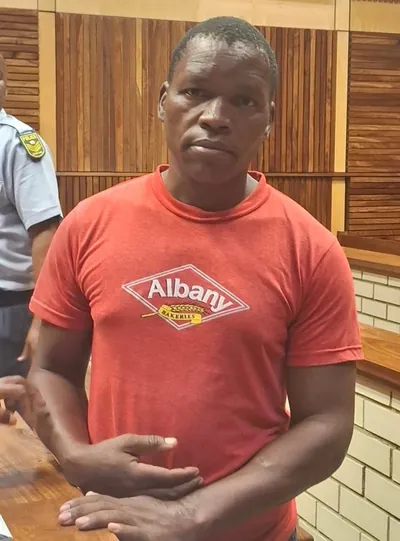
Sibusiso Lucky Mahlalela (45) was sentenced on 29 January 2026 for the murder of his female friend Pretty Fikile Mokone.
The incident occurred in the early hours of 11 August 2024 at Sinqobile Village, Barberton. Mahlalela and Mokone were in a domestic relationship and lived together. On the day in question, the couple was returning home from a tavern when Mahlalela received a phone call from an unknown person. An argument ensued after Mokone accused him of infidelity.
During the altercation, Mahlalela assaulted Mokone, striking her multiple times with a wooden plank. The couple later returned to their residence, where Mokone complained of severe headaches and indicated that she would seek medical assistance at a nearby clinic the following day.
While on their way to the clinic, Mokone requested water, which Mahlalela went to fetch. Upon his return, he found her lying unresponsive on the ground. Mahlalela concealed Mokone’s body in nearby bushes for the remainder of the day and only reported the incident to the police the following morning. He later confessed to the assault and was arrested and the case was investigated by Detective Sergeant Standford Gumede.
In court, Mahlalela pleaded not guilty, claiming that he had no intention to kill the deceased. However, the State presented compelling evidence. This evidence was corroborated by photographic exhibits and a post-mortem report, which confirmed that Mokone died as a result of multiple injuries sustained during the assault.
The court rejected Mahlalela’s version and found him guilty of murder.
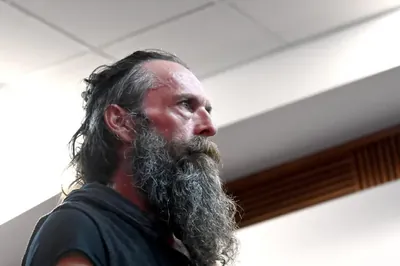
The next stop for the man accused of murdering a former Plettenberg Bay detective may be a psychiatric hospital.
Driftwood artist Bevan van Druten appeared briefly in the Plettenberg Bay Magistrate’s Court on Thursday, appearing calm in the dock while carrying a Bible.
A new prosecutor, Cameron Roode, came on record.
He told the court Van Druten, 53, faced a Schedule 6 murder charge for the killing of his girlfriend, Anneke “Nicky” van Heerden, and that bail would be opposed.
The Schedule 6 charge indicates that Van Druten must prove exceptional circumstances for bail to be granted.
The appearance had also brought a change on the bench, with magistrate Stephan Lourens having taken over the matter.
Roode said the state believed violence was implicit in the case.
He said Van Druten could potentially interfere with witnesses if released, as many were known to him.
He also asked that Van Druten be sent to Valkenberg Psychiatric Hospital for observation.
The district surgeon had also submitted an affidavit.
Van Druten handed himself over to police in the early hours of Monday last week, just hours after the 54-year-old’s body had been found on a dune, allegedly lying next to his bakkie.
Police spokesperson Sergeant Wesley Twigg reported that her body was found with multiple injuries.
His legal aid attorney told the court the defence needed time to take instructions from Van Druten, including on the state’s application for psychiatric evaluation.
The case has been postponed until next Friday to allow for further instructions to be gathered and to continue the bail proceedings.
2026.1.31 Biko Inquest Set to Resume at Gqeberha High Court on 20 February
Families and activists across South Africa are watching closely as the re-opened inquest into the tragic death of anti-apartheid hero Steve Bantu Biko gears up to continue next month.
The matter, which has stirred deep emotions and calls for long-overdue justice, was discussed in chambers on Friday, 30 January 2026, paving the way for proceedings to resume at the Gqeberha High Court on 20 February 2026, where final case management issues will be wrapped up.
Who Was Steve Bantu Biko?
Steve Bantu Biko remains one of the most inspiring figures in South Africa’s fight against apartheid.
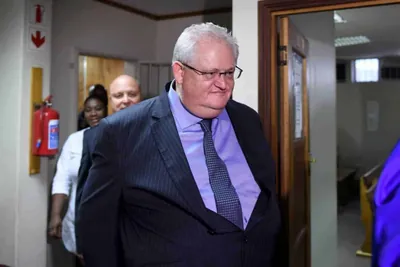
Agrizzi cut a deal with the state to avoid imprisonment for being part of a corrupt syndicate.
Former Bosasa CEO Angelo Agrizzi has testified in the corruption case against Sondolo IT company director Trevor Mathenjwa.
In November 2025, Agrizzi cut a deal with the state to avoid imprisonment for being part of a corrupt syndicate that bribed officials, including ministers.
In return, he had to provide honest testimony to the National Prosecuting Authority (NPA).
Corruption
Mathenjwa allegedly received R600,000 in kickbacks through his security systems company, intended for upgrades to the security systems at the home of the late former SAA board chairperson, Dudu Myeni.
During proceedings of the Bosasa-linked corruption case against Mathenjwa before the Johannesburg High Court, the state led its evidence through Agrizzi and four other key witnesses.
“The defence has started its cross-examination of Agrizzi on his testimony. The matter was postponed to 07 April 2026 for the continuation of cross-examination,” the NPA’s Investigating Directorate Against Corruption (IDAC) spokesperson Henry Mamothame said.
Bribes
Agrizzi was charged in a R1.8 billion corruption case where he is said to have paid bribes to government officials in exchange for lucrative contracts.
The contracts were awarded by the Department of Correctional Services (DCS) between August 2004 and 2007, for rendering catering and training services, installation of CCTV cameras, installation of perimeter fencing and supplying a CCTV system and monitoring equipment at prisons.
Poor health
The case has faced several delays due to Agrizzi’s apparent ill-health as well as finances related to the legal representation of some of the accused.
Agrizzi was sentenced to 10 years for each count of corruption and 10 years for money laundering. The sentences, however, were suspended for five years, meaning he won’t spend any time in jail.
Agrizzi, now in poor health and on an oxygen machine most of the time, initially offered to assist the state back in 2019, but that offer was spurned.
—
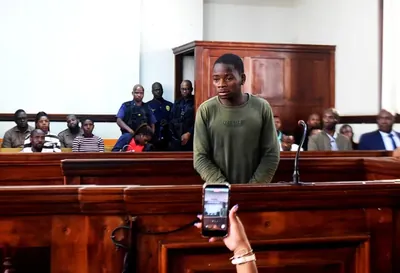
The case against Armindo Joaquim Pacula, the 25-year-old Mozambican linked to the alleged murder of popular DJ Warras, was postponed to February 9 for the verification of his immigration status and personal details.
Pacula appeared briefly before the Johannesburg Magistrate’s Court on Monday.
Pacula is facing charges that include murder, conspiracy to commit murder, and contravention of the Immigration Act. DJ Warras was reportedly killed in connection with ongoing disputes associated with the security company’s operations involving hijacked buildings.
Stock was gunned down in the Johannesburg CBD on 16 December in what is believed to have been a hit linked to work being done by his security company in relation to hijacked buildings.
Pacula was arrested on Friday evening during a crime intelligence operation at the Marathon informal settlement in Primrose, Ekurhuleni.
State Prosecutor Vincent Mochabela highlighted the complexities surrounding Pacula’s situation, indicating the State’s opposition to his bail application.
He further expressed concerns regarding Pacula’s questionable immigration status, saying, “The accused’s address remains unclear, and no passport for verification has been provided.”
Meanwhile, Pacula’s co-accused Victor Majola, 44, is scheduled to return to court on February 11 after he was denied bail by the same court.
During Majola’s bail hearing last month, the defence argued that the State had failed to present evidence directly linking Majola to the crime, while Mochabela requested that the court deny Majola bail. He argued that the accused was likely to evade trial.
2026.1.16 DJ Warras murder case: Defence makes fresh bid to submit new evidence
Mabunda says reopening the defence case would not prejudice the state in any way.
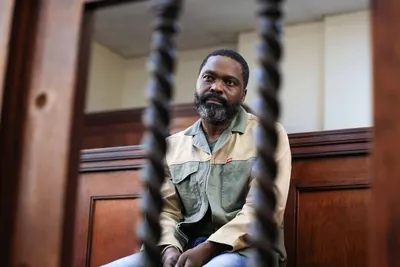
Victor Mthethwa Majola’s attorney, Dumisani Mabunda, started proceedings on Friday with an application to reopen the case after presenting his closing arguments on Thursday.
This comes after the court on Thursday denied Mabunda’s request for the state to provide video footage in its possession that it intends to use as evidence in the case.
Majola appeared in the Johannesburg Magistrate’s Court on Friday for his bail application.
The court was supposed to hear the state’s closing arguments in the bail application of Majola in the murder case of Warrick “DJ Warras” Stock.
‘New evidence’ in Majola’s favour
However, Mabunda said he had obtained new evidence that might assist his client in the bail application.
“Before the state process, I just need to please address the court. Your worship, I want to bring an application to actually reopen the case based on new evidence of video footage that we want to actually help this court with,” said Mabunda.
“This footage is actually from third parties. Your worship, we do not know whether that video footage is in the state’s possession. But as far as the court is concerned, your worship, it’s reliable footage that is in possession of Eyewitness News.”
Magistrate Annalise Tlhapi asked: “Is it reliable, and from what you said, you are not sure. So I want to say to you, is it a reliable source, and is it the same as what the state had?”
“Your worship, we don’t know what video footage the state has since the court decided that particular video footage was not necessary for these proceedings. So now, as we have always maintained, it is a matter of public interest,” responded Mabunda.
“In reopening the case, the court can actually look into evidence that is presented by a third party as long as we show that that particular footage is relevant, is material and is weighted to this case. And as far as I’m concerned, your worship, you don’t necessarily have to deal with the basic requirements in terms of normal trial proceedings. So in this instance, if the court is satisfied, we can bring it over just to satisfy the court on balance of probabilities, if there are exceptional circumstances in the interest of justice.”
‘Something new’
Magistrate Tlhapi lamented that the defence always seemed to file new applications immediately after closing its arguments, further delaying the proceedings.
“It seems each and every time on the next day of postponement, you always have something new,” said the magistrate.
“When I was asking you during your application, you said you’re done, you don’t have any further evidence, and every day you always bring something new.”
“It’s new evidence that was presented to me by a third party with a date of yesterday. Yesterday I spent the whole afternoon at court. I only found out about this late in the evening. It has a date of yesterday, late in the evening. And when I look at it, this is relevant for a bail application. The court will have to make a determination,” Mabunda responded.
“I don’t want to interrupt you, but do you agree with me? On the first application, you brought your application, then you closed your case. The following day, while I was expecting the state to proceed, you said you were not done, and you brought an address. Then we postponed. Today is another one,” said the magistrate.
“But isn’t it our right, your worship, to request or to bring an application to reopen the case at any stage? Before the court makes a judgment on the matter. As long as it gives satisfactory and compelling reasons to the court as to why the court should consider this footage. This footage is in the public eye. It’s there for everyone to see,” responded Mabunda.
State says no to Mabunda
State prosecutor Vincent Mochabela objected to the application, saying the defence should have obtained all its evidence before the case commenced.
“Well-experienced attorneys, before they start with their paid application, they may make sure that they investigate their case thoroughly, gather all the information. Before they can begin the paid application, gather all required information,” argued Mochabela.
“So in this one matter, my learned friend, all the time, he closes the case all the time, then supplementary evidence. New evidence. And therefore, the state requests that the court dismiss the defence’s request.
“We didn’t fail to produce video footage. The video footage is in the lab. At this stage, it is not readily available. Furthermore, my learned colleague says he is not sure whether the footage he has is the same as that the state has. So we are just going to deal with the thing which he is not sure about.”
However, Mabunda said reopening the defence case would not prejudice the state in any way.
“The law allows me to reopen or to bring an application or a request for the defence case to be opened before the court can make a decision or judgment on the matter. Nothing stops me from doing that. It is only for this court to decide,” he said.
The magistrate granted the defence’s request.
She further warned Mabunda that the state may also use the new evidence against Majola at a later stage.
—
2026.1.3 Fourth Arrest, R500 Bail: Questions Raised Over Justice System Leniency, Serial Phone Snatcher Nobert Zapambela Released
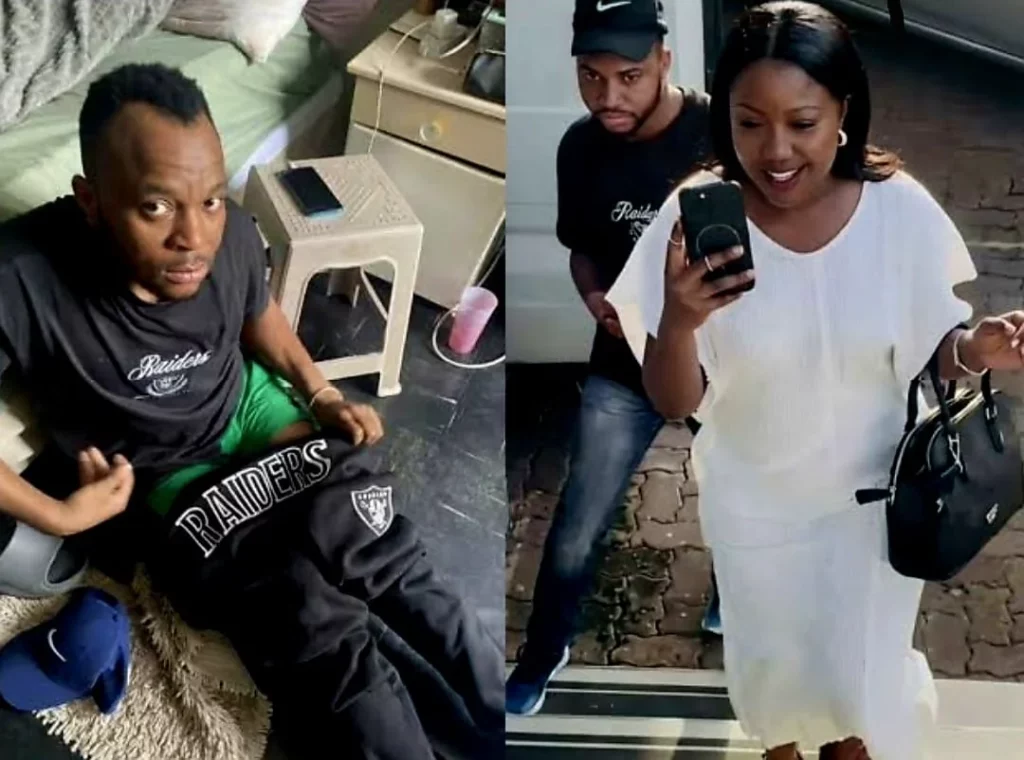
Johannesburg, South Africa – A man notorious for snatching phones in busy city streets has once again walked free on minimal bail, sparking fresh outrage over what many see as a lenient justice system.
Nobert Zapambela, a 26-year-old Zimbabwean national, was arrested for the fourth time in late December 2025 after a viral video showed him targeting a woman in Pretoria.
Released on just R500 bail despite his history of theft, the case has left communities frustrated and fearful, wondering if repeat offenders like him will ever face real consequences.
For everyday people walking the streets of Johannesburg or Pretoria with their phones in hand, this feels like a direct threat to their safety, as Zapambela’s quick grabs have become a chilling reminder of how vulnerable one can be in public.
Families who have lost valuables or felt the fear of being targeted share stories of helplessness, calling for tougher bail rules to keep dangerous criminals off the streets.
As 2026 begins, this release has ignited debates about justice in South Africa, where over 200,000 theft cases are reported yearly, many involving repeat offenders who slip through the system.
Police confirm Zapambela’s links to a syndicate including three Bangladeshi nationals, raising alarms about organised crime rings preying on unsuspecting victims.
With no stricter measures in place, residents worry this leniency only emboldens thieves, leaving ordinary folk to look over their shoulders in a country already battling high crime rates.
Zapambela’s pattern of arrests and quick releases has frustrated law enforcement and communities alike, turning him into a symbol of a system that seems to favour the criminal over the victim.
As details of his crimes emerge, the call grows louder for changes that protect the public and deliver real justice.
The Viral Video That Led to the Latest Arrest
The most recent chapter in Zapambela’s criminal saga began with a chilling video that spread like wildfire on social media in December 2025.
The footage, captured in Brooklyn, Pretoria, showed a man – later identified as Zapambela – walking behind a woman before swiftly snatching her phone and fleeing the scene.
The clip, which amassed thousands of views within hours, prompted a wave of online sleuthing from concerned citizens who helped pinpoint his identity.
This was not an isolated incident.
Similar videos from Johannesburg and other areas surfaced, depicting Zapambela using the same tactic: Approaching victims from behind in crowded streets, grabbing devices, and vanishing into the throng.
His method relied on speed and surprise, often targeting women or distracted pedestrians in busy urban spots like malls or sidewalks.
The viral nature of these clips turned public pressure into action, leading Johannesburg Metro Police Department (JMPD) officers to track him down to a flat in Hillbrow where he was hiding on a balcony.
The arrest unfolded dramatically, with Zapambela found in the company of three Bangladeshi nationals believed to be part of a larger phone-snatching syndicate.
This group operated across Pretoria and Johannesburg, fencing stolen devices on the black market for quick cash.
Police recovered evidence linking them to multiple thefts, but despite the mounting cases, Zapambela’s release on R500 bail has left many questioning if the system is equipped to handle repeat offenders.
Zapambela’s Criminal History: A Pattern of Thefts and Releases
This marks Zapambela’s fourth arrest for theft in South Africa, a record that has fuelled public anger over what seems like endless catch-and-release.
His first known brush with the law came in early 2024 in Pretoria, where he was caught in a similar phone-snatching incident and released on bail.
By mid-2025, he faced charges again in Johannesburg for targeting shoppers in malls, only to be let out on low bail once more.
Court records show a consistent pattern: Quick arrests followed by minimal penalties that allow him back on the streets. In one case from October 2025, he was linked to a Brooklyn Pretoria snatching but walked free after posting bail.
Critics point to this leniency as a failure of the justice system, where overcrowded courts and backlogs lead to rushed decisions that prioritise decongesting jails over public safety.
Zapambela’s operations often involved accomplices, like the Bangladeshi nationals arrested with him in his latest bust.
This syndicate specialised in high-traffic areas, using distraction techniques to grab phones, wallets, or bags before disappearing.
Victims report not just financial loss – phones can cost R10,000 or more – but also emotional trauma from feeling violated in public spaces.
Public Outrage: Calls for Tougher Bail and Sentencing
The low R500 bail has ignited fury among South Africans, who see it as a slap in the face for victims of theft.
Social media buzzes with comments like “How many more arrests before he stays locked up?” and “Our justice system is broken.” Many feel the amount – less than the value of a stolen phone – mocks the seriousness of repeat offending.
Communities in Hillbrow and Pretoria, where Zapambela operated, express fear of his return. One resident said: “We can’t feel safe knowing he’s out again.”
Advocacy groups push for bail reforms, like denying it for serial offenders or setting higher amounts based on crime history. In 2025, over 200,000 theft cases nationwide went unsolved or saw light punishments, fuelling this discontent.
Political voices join in, calling for stricter laws. The DA and EFF have highlighted similar cases, demanding reviews of bail policies to protect the public.
The Justice System’s Challenges: Why Leniency Persists
South Africa’s courts face massive backlogs – over 200,000 cases pending in 2025 – leading to rushed bail hearings where low-risk assessments favour release.
For non-violent crimes like theft, bail is often low to avoid overcrowding jails that hold 150,000 inmates against capacity for 100,000.
Repeat offenders slip through due to poor record-keeping or lenient magistrates.
In Gauteng, where Zapambela’s crimes occurred, 40 percent of theft suspects reoffend while on bail. Reforms in 2025 included digital tracking, but rollout lags.
For immigrants like Zapambela, deportation debates arise, but legal rights apply.
This case fuels talks on balancing justice with human rights, especially for foreigners accused of crimes.
Prevention Tips: Staying Safe from Phone Snatchers
To avoid falling victim, experts share simple habits.
Keep phones in secure pockets or bags, not hands, in crowds. Use anti-theft apps that track devices if stolen. Walk in groups or well-lit areas, and stay alert to followers.
Report thefts quick – in 2025, over 50,000 phones were recovered through police ops targeting syndicates. Community watches in Hillbrow have cut snatches by 20 percent with extra eyes on streets.
For 2026, tech like fingerprint locks or insurance adds protection. Awareness campaigns in schools teach kids too, building safer habits early.
Path Forward: Hope for Change in 2026
As Zapambela’s case heads to court, victims hope for stiffer bail rules. His fourth arrest could push for laws treating serial theft as serious, with no-bail options.
Communities can lead change with neighbourhood patrols and tip lines. In Johannesburg, 2025 initiatives like these cut thefts by 15 percent.
For South Africa, this highlights needs for faster courts and better rehab for offenders. By fixing leniency, we build safer streets for all.
If you spot suspicious activity, report it – your action could prevent the next theft.
2026.1.2 Suspects in Viral East London Security Guard Assault Released on Warning, Set to Appear in Court
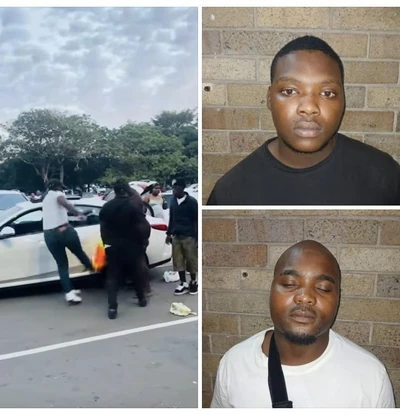
East London, Eastern Cape – Two suspects captured on camera brutally assaulting a security guard at eBuhlanti Marina Glen Beachfront have been released on warning after their swift arrest, Eastern Cape police have confirmed.
The incident, which sparked widespread outrage on social media following the circulation of the footage, occurred on New Year’s Eve 2025 when the guard reportedly asked the group to move their improperly parked vehicle.
The duo now faces charges of common assault and is scheduled to appear in the East London Magistrate’s Court on January 7, 2026.
As investigations continue, authorities have indicated that further arrests and additional charges remain possible.
This case has highlighted ongoing concerns about public safety at popular beachfront spots during festive periods, prompting calls for increased security measures.
The viral video, which quickly amassed thousands of views, shows the suspects punching and kicking the guard, drawing condemnation from netizens and officials alike.
Acting Provincial Commissioner Major General Thandiswa Kupiso praised the rapid response of law enforcement, emphasising the importance of community vigilance in reporting such incidents.
The Assault Incident and Viral Footage
The attack unfolded at eBuhlanti Marina Glen, a well-known recreational area in East London, where the security guard was performing his duties to ensure visitor safety.
According to eyewitness accounts shared online, the confrontation began when the guard approached the suspects and requested they relocate their vehicle, which was obstructing the road near the beach.
The situation escalated rapidly, with the men allegedly assaulting the guard physically.
The footage, captured by bystanders and shared widely on platforms like Facebook and X (formerly Twitter), depicts the brutal beating, leading to the suspects’ quick identification and arrest.
Provincial police spokesperson Brigadier Nobuntu Gantana confirmed the details, stating: “The duo was swiftly arrested after footage of the brutal assault circulated online.”
No further information on the suspects’ identities or the guard’s condition has been released, as the investigation remains active.
Arrest, Release on Warning, and Court Proceedings
Following the video’s spread, police acted promptly, arresting the two men on charges of common assault.
They were processed and released on warning on January 1, 2026, a decision that has raised questions among some community members about the handling of violent offences.
Gantana explained: “They were processed and released on warning on January 1, 2026. They are scheduled to appear in the East London Magistrate’s Court on January 7, 2026.”
The release on warning means the suspects must adhere to specific conditions, such as not contacting the victim or committing further offences, pending their court date.
Police have emphasised that the probe is ongoing, with Brigadier Gantana adding: “The investigation is ongoing, and further arrests are possible. No further information is available for release.”
Acting Provincial Commissioner Kupiso commended the officers involved:
“The prompt action of law enforcement officers that led to the arrests” demonstrates the commitment to maintaining order, especially during high-traffic holiday periods.
2026.1.1 Fake Prophet Nabbed: Suspect Linked to 8 Graveyard Rapes Across Free State
“The forensic evidence links him to crimes dating back as far as 1999,” Kareli said.
A 55-year-old man who allegedly posed as a prophet to prey on women has been arrested and linked to eight rape and robbery cases spanning more than two decades in the Free State.
Police believe the suspect targeted victims in Welkom, Thabong and Bloemfontein, using graveyards as hunting grounds and claiming to “cleanse” women before attacking them.
Fake Prophet Suspect Caught After Graveyard Attack in Bloemfontein
Free State police spokesperson Sergeant Mahlomola Kareli said the suspect’s run from the law came to an end after he allegedly attacked a 21-year-old woman in Bloemfontein.
“The suspect’s run from the law ended recently after he allegedly attacked a 21-year-old female victim,” Kareli said on Thursday.
The victim was walking home through the Magengenene graveyard when she was attacked and raped. Community members intervened, apprehended the suspect and handed him over to Mangaung police.
Victims ‘Cleansed’ Before Being Raped and Robbed
Police allege the suspect used a disturbing modus operandi.
According to Kareli, once inside the graveyard, the man would persuade victims to undress under the pretence of performing a cleansing ritual.
He allegedly cut the victims’ hair and burned it on a nearby grave before raping them. He would then rob them of their cellphones, claiming that “witches” could use the devices to track them.
DNA Links Suspect to Crimes Dating Back to 1999
Through detective work and DNA profiling, police have now linked the suspect to seven additional cases of rape and robbery — five in Mangaung and two in Welkom.
“The forensic evidence links him to crimes dating back as far as 1999,” Kareli said.
Police records indicate the suspect was out on parole when he allegedly resumed his criminal activities in 2022.
“The recent graveyard attack marks the eighth case now officially tied to his name,” Kareli added.
Police Appeal for More Victims to Come Forward
The suspect is expected to appear in the Bloemfontein Magistrate’s Court soon, where he will face multiple charges of rape and robbery.
Police believe there may be more victims who have not yet reported their cases.
Anyone who may have been victimised in a similar manner is urged to contact Detective Sergeant Bessie Nthoba on 082 886 8979, call Crime Stop on 08600 10111, or report to their nearest police station.
发表回复