
2026.3.12 Violents affrontements au centre-ville : la PNH et la Task-Force poursuivent leur offensive contre les gangs
La Police nationale d’Haïti (PNH), appuyée par la Task-Force, a poursuivi ce jeudi 12 mars 2026, les opérations lancées la veille au centre-ville de Port-au-Prince afin de déloger les groupes armés installés dans plusieurs zones de la capitale.
En effet, de violents affrontements armés ont été signalés notamment dans les rues Charreron et Joseph Janvier, où les forces de l’ordre affrontaient des membres de la coalition criminelle « Viv Ansanm ». Selon des riverains, les combats se sont intensifiés en milieu de journée, transformant ces artères du centre-ville en véritable théâtre d’opérations.
Plusieurs vidéos amateurs circulant sur les réseaux sociaux témoignent de l’ampleur de l’opération. Des habitants vivant à proximité du centre-ville rapportent avoir entendu de nombreuses détonations et explosions tout au long de la journée. Jusqu’à présent, les autorités policières n’ont communiqué aucun bilan officiel de ces affrontements.
—
2026.3.12 Widow of Haiti president describes his killing at US trial of four charged with conspiracy
MIAMI (AP) — The widow of Jovenel Moïse — Haiti’s last elected president — described being shot and wounded during the 2021 assassination of her husband while testifying Wednesday in the U.S. federal trial of four men charged with conspiracy in the case.
Martine Moïse returned to the stand in a Miami courtroom after testifying for about an hour the day before. She had been the prosecution’s first witness, following opening statements by attorneys on Tuesday.
Jovenel Moïse was killed in the early morning hours of July 7, 2021, when about two dozen foreign mercenaries — mostly from Colombia — attacked his home near Port-au-Prince, officials said.
Arcangel Pretel Ortiz, Antonio Intriago, Walter Veintemilla and James Solages are charged in Miami federal court with conspiring in South Florida to kidnap or kill Haiti’s former leader. Jovenel Moïse’s assassination led to unprecedented turmoil in the Caribbean nation, where gang leaders have grown increasingly violent and empowered.
Testifying Wednesday, Martine Moïse described through a Creole interpreter how she went to bed around 10 p.m. the night before the attack and awoke to the sounds of gunfire about three hours later. She said she turned to her husband in bed next to her to ask what was going on.
“Honey, we are dead,” Jovenel Moïse said, according to his wife’s testimony.
Martine Moïse said gunfire continued as she crawled downstairs to check on her two adult children. She said she then returned to her and her husband’s bedroom, where she and Jovenel Moïse got on the floor on either side of the bed and used it as protection from gunfire.
Men eventually burst into the room and opened fire with what sounded like an automatic weapon, Martine Moïse said. She was struck several times. She said she heard men speaking in Spanish before someone shot Jovenel Moïse multiple times, killing him.
After the attackers cleared out, Martine Moïse said she expected to find the dead bodies of the 30 to 50 security officers assigned to protect the house, but there were none. She said she later learned that they were paid to leave their posts.
Moïse was taken to a nearby hospital for treatment and then flown to a Miami hospital for surgery. She testified that her right arm remains disabled and she still has pain.
Defense attorneys asked if Moïse was aware that she was under investigation in Haiti in connection to her husband’s death. She said the people behind her husband’s killing are now in power and that she has fled the country for her own safety. She said she has offered to answer questions remotely, but that the people who killed her husband want her to return to Haiti so they can also kill her. Moïse was previously indicted in the case, but the charge was later annulled.
The defense also asked Moïse about inconsistencies between her testimony and earlier interviews with the FBI. She insisted that her current statements were correct and couldn’t explain discrepancies in FBI reports.
Attorneys for the four men on trial have argued that the investigation initiated in Haiti was a mess and that their clients were manipulated into taking the blame for an internal coup.
According to prosecutors, South Florida was a central location for planning and financing the plot to oust Moïse and replace him with someone the conspirators chose.
All four defendants face possible life sentences and have pleaded not guilty.
Ortiz and Intriago were principals of Counter Terrorist Unit Federal Academy and Counter Terrorist Unit Security, collectively known as CTU, and Veintemilla was a principal of Worldwide Capital Lending Group. Both companies were based in South Florida.
Solages was a CTU representative in Haiti who investigators say coordinated with others, including Christian Sanon, a dual Haitian-U.S. citizen whom the conspirators initially favored to replace Moïse.
Defense attorneys have said the group was working with FBI agents, U.S. Embassy officials and members of the Haitian government in what they believed was the lawful arrest of a criminal president. The defense has pointed to Joseph Félix Badio, a former Haitian government worker who was arrested in Haiti in 2023, as the mastermind behind a plan to use the president’s arrest to assassinate Moïse.
U.S. District Judge Jacqueline Becerra has blocked out more than two months for the trial.
Five others previously pleaded guilty to conspiracy charges in the U.S. and are serving life sentences. A sixth person was sentenced to nine years behind bars after pleading guilty to providing body armor to the conspirators. Sanon’s trial will be scheduled later.
Seventeen Colombian soldiers and three Haitian officials face charges in Haiti. Gang violence, death threats and a crumbling judicial system have stalled the investigation.
2026.3.11 Trial opens in Miami for 4 men charged in Haitian President Jovenel Moïse’s assassination
MIAMI (AP) — Greed, arrogance and power were the driving forces behind four men charged in the U.S. for the 2021 assassination of Haiti’s last elected president, Jovenel Moïse, prosecutors said Tuesday during opening statements.
Federal prosecutors and defense attorneys began presenting opening statements in the trial in Miami for Arcangel Pretel Ortiz, Antonio Intriago, Walter Veintemilla and James Solages. They are charged with conspiring in South Florida to kidnap or kill Haiti’s former leader. Moïse’s assassination led to unprecedented turmoil in the Caribbean nation, where gang leaders have grown increasingly violent and empowered.
Assistant U.S. Attorney Sean McLaughlin told the jury that the case against the four men wasn’t complicated: They wanted to seize power and get rich.
“So arrogant and confident in themselves, the evidence will show, and thinking so little of the Republic of Haiti and its people, they actually thought they could pull it off,” McLaughlin said.
Defense attorneys argued that the investigation initiated in Haiti was a mess and that their clients were manipulated into taking the blame for an internal coup.
“Once you get off on the wrong foot, everything that comes after is hard to trust,” Ortiz’s attorney Orlando do Campo said.
Moïse was killed on July 7, 2021, when about two dozen foreign mercenaries — mostly from Colombia — attacked his home near Port-au-Prince, officials said. According to court documents, South Florida was a central location for planning and financing the plot to oust Moïse and replace him with someone the conspirators chose.
All four defendants face possible life sentences and have pleaded not guilty.
Ortiz and Intriago were principals of Counter Terrorist Unit Federal Academy and Counter Terrorist Unit Security, collectively known as CTU, and Veintemilla was a principal of Worldwide Capital Lending Group. Both companies were based in South Florida.
Solages was a CTU representative in Haiti who investigators say coordinated with others, including Christian Sanon, a dual Haitian-U.S. citizen whom the conspirators initially favored to replace Moïse.
The conspirators met in South Florida in April 2021 and agreed that, once in power, Sanon would award contracts to CTU for infrastructure projects, security forces and military equipment, investigators said. Worldwide Capital agreed to help finance the coup, extending a $175,000 line of credit to CTU and sending money to co-conspirators in Haiti to purchase ammunition, officials said.
CTU initially retained about 20 Colombian nationals with military training to provide security for Sanon. Conspirators also spent months obtaining weapons and body armor and attempting to build relationships with Haitian gangs, officials said.
By June 2021, the conspirators realized Sanon had neither the constitutional qualifications nor sufficient popular support to become president. They then backed Wendelle Coq Thélot, a former Haitian Superior Court judge. She died in January 2025 while still a fugitive.
Defense attorneys told jurors that Sanon approached their clients in early 2021 with plans to liberate Haiti from Moïse, who had overstayed his term as president and faced criticism from Haitian citizens, U.S. politicians and United Nations officials.
Emmanuel Perez, an attorney for Intriago, said the group was working with FBI agents, U.S. Embassy officials and members of the Haitian government in what they believed was the lawful arrest of a criminal president.
The defense has pointed to Joseph Félix Badio, a former Haitian government worker who was arrested in Haiti in 2023, as the mastermind behind a plan to use the president’s arrest to assassinate Moïse. Defense attorneys claim Moïse had already been killed by men dressed as Haitian police officers when the Colombian security force arrived to arrest him.
The group had a real arrest warrant signed by a judge, Solages’ attorney Jonathan Friedman said. The judge later claimed the warrant was signed under duress.
“None of the people here on trial knew that,” Friedman said.
Marissel Descalzo, an attorney for Veintemilla, reserved the right to present her opening after the government makes its case.
After openings, prosecutors called their first witness, Moïse’s widow. Martine Moïse, who was wounded during the attack, testified for about an hour before court recessed for the day. She’s set to return Wednesday.
U.S. District Judge Jacqueline Becerra has blocked out more than two months for the trial.
Five others previously pleaded guilty to conspiracy charges in the U.S. and are serving life sentences. A sixth person was sentenced to nine years behind bars after pleading guilty to providing body armor to the conspirators. Sanon’s trial will be scheduled later.
Seventeen Colombian soldiers and three Haitian officials face charges in Haiti. Gang violence, death threats and a crumbling judicial system have stalled the investigation.
—
2026.3.10 La violence s’intensifie en périphérie de la capitale
Les forces de l’ordre exercent depuis plusieurs mois une pression constante sur les gangs dans la région métropolitaine de Port-au-Prince. Ces assauts, qui ont fait reculer les gangs, sont à l’origine de la poussée de violence en périphérie de la capitale, estiment de
nombreux spécialistes et autorités locales.
Une resurgence de la terreur est enregistrée dans la Plaine du Cul de sac et à Kenskof notamment.
Le spécialiste en sécurité publique M. Réginald Delva juge qu’il existe un lien entre les violences aux village Renaissance dans la Plaine du Cul de Sac et la récupération du quartier de Bel Air par les forces de l’ordre. De nombreux déplacés, considérés comme proches des chefs de gangs, avaient trouvé refuge dans cette zone au nord de la capitale. Un conflit entre des chefs de gang a été à l’origine des affrontements toujours en cours. Le nombre de victimes ne peut être déterminé dans cette région privée de présence policière depuis plus de 4 ans.
Les gangs Taliban et Chien Méchant exercent leur emprise sur cette région.
Par ailleurs le responsable de l’hôpital Fontaine, M. Jose Ulysses, a fait état de 14 cas de blessures graves par balles. Cependant l’hôpital a dû être évacué à cause de l’intensification des affrontements. Une équipe d’urgence est maintenue pour réaliser les accouchements et prendre en charge les nouveaux nés présentant des déficiences.
Plus d’une dizaine d’enfants malades sous assistance respiratoire n’ont pu être évacués.
Assaut des gangs dans les zones reculées de Kenskof
Un peu au Sud est de la région métropolitaine de Port-au-Prince, c’est un scénario similaire. Des bandits, ayant pris la fuite face aux assauts des unités spécialisées de la PNH, ont attaqué les habitants des sections rurales de Kenskof. 3 personnes ont été tuées et plus d’une centaine de maisons incendiées dans les localités de Gelin et Belle Fontaine le week end écoulé.
Les bandits ont également emporté de nombreuses têtes de bétail.
Le Maire M. Massillon Jean, exhorte les autorités policières à réaliser de manière simultanée des opérations dans le centre ville de Port-au-Prince et dans les régions reculées de la commune. À son avis les bandits ont pu reprendre leur forces à cause de l’arrêt des opérations. Ils avaient concédé de lourdes pertes lors des récentes opérations.
L’Agent Exécutif intérimaire confirme que les difficultés d’accès aux repaires des bandits compliquent la situation. Les véhicules blindés ne peuvent accéder à ces régions, dit il préconisant le recours à des appuis aériens. Il rappelle que l’utilisation des drones avait récemment permis de neutraliser un grand nombre de criminels.
Les forces de l’ordre sont présentes uniquement au centre ville de Kenskof ce qui permet la poursuite des activités économiques et académiques. Le Maire presse les autorités gouvernementales à allouer des ressources aux CASEC afin qu’ils puissent organiser une défense face aux assaut des malfrats.
La situation reste précaire dans les 5 sections communales toujours sous la menace des bandits en provenance de Carrefour et du centre ville de Port-au-Prince.
2026.2.26 Glimmers of life appear after Haiti retakes control of a key area from powerful gangs

PORT-AU-PRINCE, Haiti (AP) — As the sun rose, a handful of women opened tattered beach umbrellas in the heart of Port-au-Prince and scanned the horizon before opening their fruit and vegetable stands.
It was unusually quiet in Carrefour Aéroport, a famed intersection in Haiti’s capital that once bustled with traffic and commerce until hundreds of gang members stormed the area in early March 2024 in an unprecedented wave of violence.
They smashed businesses, killed civilians and set fire to a police substation as officers fled.
For nearly two years after the attack, gangs drained the life out of Carrefour Aéroport.
Then in December, Haitian police officers launched a sustained attack against powerful gangs to drive them out of the area with the help of a private security firm and Kenyan police officers leading a U.N.-backed mission that is winding down.
The retaking of Carrefour Aéroport is “probably one of the very first tangible messages sent by the authorities that, ‘yes, we can take back the territory of … no man’s land,’” said Romain Le Cour, head of the Haiti Observatory at the Global Initiative Against Transnational Organized Crime.
It’s a hint of what could happen elsewhere in Port-au-Prince after a powerful gang federation known as Viv Ansanm began raiding neighborhoods and targeting key government infrastructure in February 2024 in a series of attacks that forced the closure of the country’s main international airport and eventually led to the resignation of former Prime Minister Ariel Henry.
“It is a sign of hope,” Le Cour said. “It sends the message that this is doable.”
A glimmer of life
On Feb. 7, Haitian authorities reopened a renovated police substation in Carrefour Aéroport to much fanfare in a capital that is 90% controlled by gangs.
Curious onlookers watched and one of them clapped as heavily guarded police officers entered their restored building nearly two years after gangs had torched it.
“Life is timidly returning to normal,” Jacques Ader, a police commissioner, told reporters.
Since the reopening, street vendors and the drivers of colorful buses, known as tap taps, have reinserted themselves in the area.
“Small businesses are recovering,” said Jean-Remy Laveau, a 35-year-old motorcycle taxi driver who used to work in the area before gangs seized control.
“It will be good for me, more activities, more money more work. I’ll be able to better feed my two kids and my wife,” he said.
Also eager for work was Mario Volcy, a 44-year-old tap tap driver who on a recent morning pointed out the vans and big buses circulating in the area for the first time since early 2024.
He called on the government to prosecute those who unleashed the violence and help those affected by it.
“All victims should receive support from the state,” he said as he cut the interview short, noting with a smile that his tap tap was full. “I have to go now!”
And off he went, with a Bible on his dashboard and his tap tap emblazoned with “God is my guide” on its side.
Frustrations simmer
Not all are celebrating the revival of Carrefour Aéroport.
Gaspar Caseus, 49, said he remains frustrated because gangs still control the main highway leading to southern Haiti. He called on authorities to retake control of other major intersections.
“I need to be able to move south,” he said. “That is where I pick up coal to bring back to the city for sale.”
“Things changed after the attack,” he added. “It destroyed my life. It forced my family to move. I look like a beggar. I was able to eat whenever I felt like it. Now, I eat only if something comes around or a good friend remembers me.”
Caseus said he heard on the radio that more help was arriving in April. That’s when a so-called gang-suppression force is expected to take the reins of the current U.N.-backed mission that is winding down after a lack of funds and personnel.
“As long as I am alive,” he said, “someday, things will change for the better.”
‘What’s the plan?’
On a recent morning, 32-year-old Antoinette Desulmon donned a big hat to block out the sun and laid out mangoes, oranges, tomatoes and peppers in the hope that someone at Carrefour Aéroport would buy from her that day.
She noted police were on patrol in an armored vehicle and the substation had reopened, but she was afraid the peace was fleeting.
“Fear is with me every second,” she said. “I am here selling, but my head is somewhere else.”
Desulmon’s partner went missing two years ago; she believes he was a victim of gang violence.
“I miss him a lot,” she said, adding that she is also concerned about her two children who are living in a makeshift shelter with a cousin, among the 1.4 million Haitians displaced by gang violence.
Desulmon said she had no other choice but to resume selling vegetables and fruit to feed her two children and cousin.
“My heart is broken,” she said. “The depression is real.”
Around her, nothing has been rebuilt except for the police station. Dozens of charred homes remain in ruins while businesses and schools are still shuttered.
Le Cour, the Haiti expert, said it will likely take time before Carrefour Aéroport is restored to its bustling glory of street vendors, stores selling car parts and restaurants offering coffee to morning commuters and a local soup known as bouillon for lunch.
He said he was hopeful that the incoming gang-suppression force would retake control of even more territory.
But even if it does, big concerns remain.
“We’re missing the other side of the equation, which is, what do you do with gang members? What’s the plan for the day after you retake the territory?” Le Cour questioned. “Are you able to rebuild the territory? Are you able to bring people back in?”
The children went alongside family members the U.S. claims had criminal records
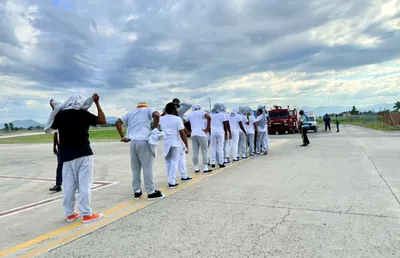
CAP-HAÏTIEN — A United States deportation flight carrying 136 people, including individuals who previously held Temporary Protected Status (TPS) or permanent residency, arrived in Cap-Haitien Thursday, according to Haiti’s National Office of Migration (ONM). About 10 women and five children were on the flight, the second to arrive in the northern city in 2026.
The children were removed alongside family members who were being expelled, ONM officials told The Haitian Times. The adults have been convicted of committing crimes, some of which appear to have stemmed from immigration-related offenses.

Neïssa Tima, a 19-year-old student studying financial business management at Université Quisqueya, was found dead on January 26, 2026, in Pétion-Ville under troubling and yet unresolved circumstances.
According to her family, Tima’s body was discovered inside a vehicle near a local clinic with visible signs of injury and damaged clothing, and certain personal items were reportedly missing. Relatives have raised serious concerns about the circumstances surrounding her death, alleging possible violence and even sexual assault, and have urged authorities to conduct a rigorous and transparent
2026.1.30 Ka Jak: au moins sept morts par balle, des blessés et des habitations incendiées
Au moins sept personnes ont été tuées et quatre autres blessées par balles lors d’une attaque armée survenue tôt dans la matinée du vendredi 30 janvier 2026 à Tèt Ka Jak, section communale de Macary, dans la commune de Marigot.

2026.1.25 Fire ravages Cap-Haitien’s Cluny Market, vendors reeling in despair
Blaze at the indoor market wipes out livelihoods, raises safety and security concerns
CAP-HAÏTIEN — Hours after a fire tore through the indoor market Cluny Market in downtown Cap-Haïtien overnight on Jan. 24, locals were climbing over charred beams and broken concrete, digging through the debris for any merchandise that might still be saved. Vendors stood nearby, inspecting bags pulled from the wreckage, brushing off smoke stains and deciding whether what remained could still be sold.
For many, it was a last attempt to recover something — anything — from what had been their livelihood.
One long-time vendor who goes by ManTi Lime was among them. She said she had 80 bags of black beans, worth $2,000 stored inside the building. When five men retrieve what they could for her, the bags were scorched at the top, blackened by smoke and heat.
In a press release from town hall, authorities said about 30 storages and hundreds of small shops were destroyed, according. As of Sunday, no deaths or injuries were reported, and the cause of the fire had not been determined.
Cluny Market, renovated in July 2024, housed hundreds of vendors selling food and household goods. By morning, most of that space has been destroyed. Residents said the fire began around 10:30 p.m. Merchants attempted to extinguish the fire by throwing buckets of water while others scrambled to pick up their goods.
Firefighters arrived hours after the blaze began, residents said. After they left, small fires were still burning on the ground. People poured water over hot spots, not only to prevent flare-ups, but to dig deeper into the debris for goods.
As people picked through the ruins, tensions rose. Some residents questioned whether food pulled from the debris was safe to eat.
“I don’t want those beans,” Jodelin Auguste, taxi-moto driver, said. “The owners of those beans have no common sense. But I’m not happy because the market caught on fire. The vendors lost a lot of stuff. And many probably borrowed money to buy them.”
x1200
2026.1.9 Haitian police begin 2026 with multiple offensives against gangs
Since Jan. 2, the Haitian National Police has carried out several operations against gang networks, seizing weapons and combat equipment in Port-au-Prince, Arcahaie and northern Haiti
PORT-AU-PRINCE — The Haitian National Police (PNH) began 2026 with a series of operations targeting armed gangs and weapons trafficking across several Port-au-Prince neighborhoods, Arcahaie and some areas in the Northern Department, seizing assault rifles, ammunition and tactical gear while arresting several suspects.
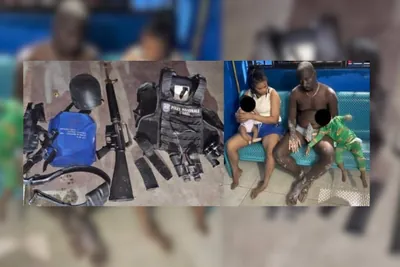
The most recent operation took place Thursday, Jan. 8, in Delmas 2, an area authorities describe as a stronghold of the “Krache Dife” gang, a Viv Ansanm coalition affiliate led by Jean Gardy. Police reported seizing two M4 assault rifles, four magazines for M14 rifles, four bulletproof vests, four tactical vests, two ballistic plates and a container of 5.56 mm ammunition.
In the capital, operations began earlier in the Bel-Air neighborhood of Delmas 4 on Tuesday, Jan. 6. Police said the intervention was aimed at armed groups they classify as terrorist organizations, accused of terrorizing residents and restricting movement.
On Wednesday, Jan. 7, officers searched a house near the residence of a gang leader known as Jamesley, seizing an M16 rifle, a magazine, a police-issued bulletproof vest, binoculars, a ballistic helmet and other equipment. Police said a man, a woman and two children were found inside the house, though authorities have not disclosed further details about their presence.
Earlier, on Friday, Jan. 2, police intervened in the Bercy area of Arcahaie, west of Port-au-Prince, where armed groups had erected roadblocks to extort residents and disrupt traffic.
Police said the operation dismantled the barricades and led to the seizure of three firearms — two M4 rifles and one Kalashnikov-style rifle. Several suspects were injured during exchanges of gunfire with officers, authorities said.
2026.1.7 US Marshals search for Brockton double murder suspect believed to have ties to Haiti
Authorities offer $7,500 reward as victim’s mother urges Haitian community to help locate Davinci Leonard
According to authorities, Brockton police responded to a 911 call around 7:04 p.m. on March 22 reporting a shooting outside the Chipotle at 500 Westgate Drive. Both victims were transported to hospitals, where they later died from their injuries.
State and local investigators identified Leonard as the suspected shooter. An arrest warrant has been issued out of Plymouth Superior Court with authorization for nationwide extradition. Authorities say Leonard should be considered armed and dangerous.
Leonard is described as a Black man standing about 5 feet 9 inches tall and weighing about 140 pounds. Investigators believe he may have changed his appearance by cutting his hair.
Alvarez said her daughter had been dating Leonard and was with him in the hours leading up to the shooting. She said Leonard fled the scene, leaving her daughter and his 14-year-old sister behind.
发表回复