2026.8.23 Kigoma’s Immigration Office enhances measures to curb illegal immigration
—
2026.8.21 Tundu Lissu Treason Trial: High Court Explains Its Reasoning Behind Case-to-Answer Ruling
The Court noted that at this point, it is not assessing the weight or reliability of the evidence in depth, but only whether the evidence presented relates to the charge against the accused
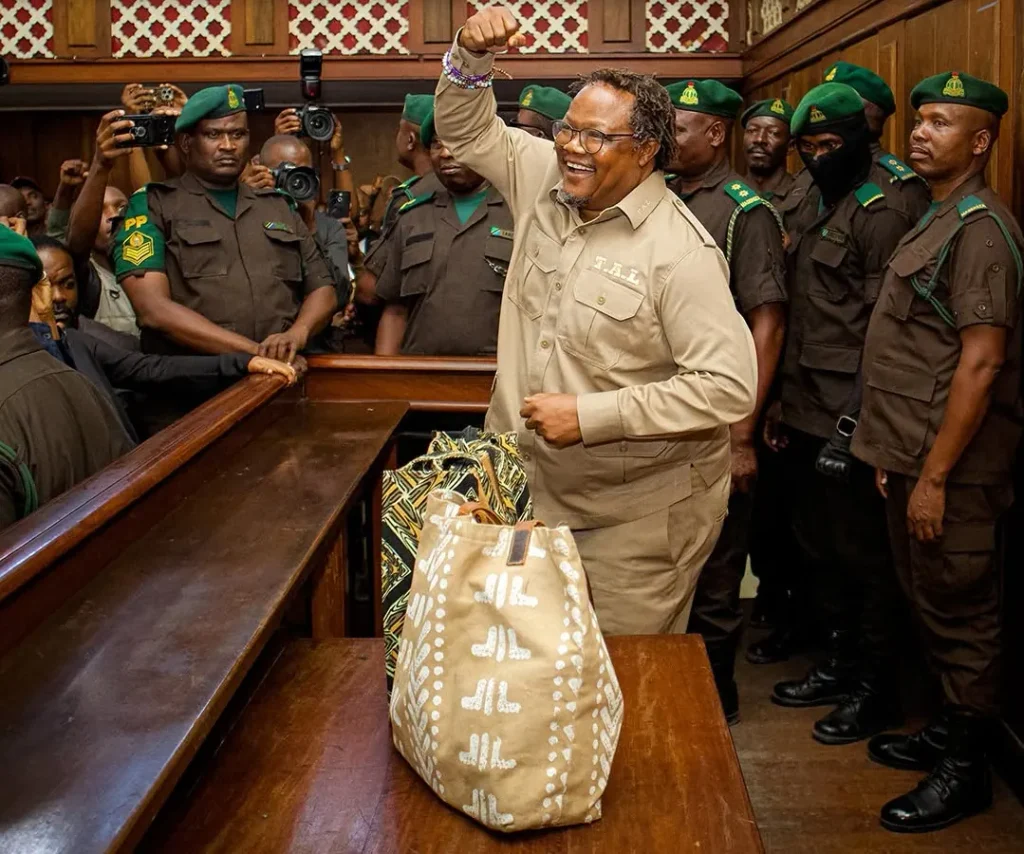
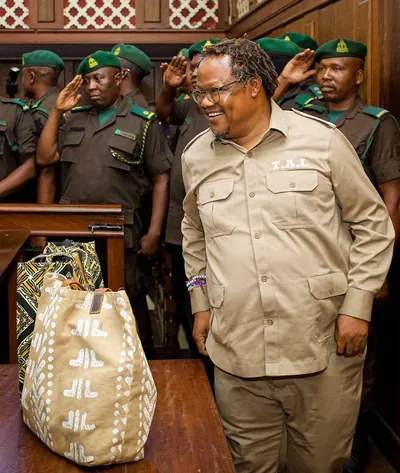
Dar es Salaam — The treason case against Tanzania’s main opposition party leader, Tundu Lissu, continued today , August 21, 2026, at the Dar es Salaam Sub-Registry of the High Court where a panel of three judges, Dunstan Ndunguru, James Karayemaha, and Ferdinand Kiwonde, ruled that Tundu Lissu has a case to answer.
Judge Ndunguru began reading the Court’s ruling at 9:57 a.m. and finished at 10:20 a.m. He began by revisiting the course of the proceedings, starting with a reading of the charges and noting that the accused had plead not guilty. Judge Ndunguru continued to name all 17 witnesses who had testified for the prosecution before moving into the reasoning behind the ruling.
He explained that among the principles the Court applied in reaching its decision was the rule that an accused person has a case to answer if the prosecution’s evidence, left unrebutted, would be sufficient to sustain a conviction.
The Court elaborated further, explaining that at this stage of proceedings, what must be shown is whether the prosecution’s evidence has established a case strong enough that the accused should be given the chance to respond . The Court stressed that at this point it does not examine, or go into detail on, the weight or credibility of the evidence; rather, it looks at the connection between the evidence presented and the charge itself, and how the accused is linked to that charge.
“So, since the Court does not go that far, and as I have said, all the evidence points back to the accused and to the words contained in the charge sheet,” Judge Ndunguru stated.
“This Court therefore finds, under section 312 [of the Criminal Procedure Act], that a case has been built against the accused — it has been ‘established,’ not ‘proven’; the word used is ‘established.’ This Court accordingly holds that the accused has a case to answer, so that he may have the opportunity to defend himself or present evidence against that brought by the prosecution,” he continued.
After delivering the ruling, the Court informed the accused of his rights in the matter, including the right to defend himself, or, should he choose to remain silent, the Court would allow the prosecution to comment on that silence. Tundu Lissu stated that he will defend himsel and proceeded to name his witnesses.
Below you can follow an excerpt of Judge Dunstan Ndunguru’s remarks as he read the Court’s ruling:
Judge Dunstan Ndunguru: …Both sides, the accused and the prosecution, indicated their intention to make submissions on whether the accused has a case to answer.
The court agreed with the submissions made by both sides regarding whether to raise the issue of whether the accused has a case to answer. Therefore, this ruling was based on the arguments presented by both the accused and the prosecution.
In presenting arguments on whether the accused has a case to answer, the accused went first, disputing the matter and arguing that the prosecution had entirely failed to build a case — that is, failed to establish an initial case that would require him to mount a defence.
In his submissions, the accused directed the Court to various principles previously discussed in a number of Court of Appeal decisions, concerning the point at which a court is expected to rule on whether an accused has a case to answer. He referred the Court to several decisions, beginning with Ramanlal Trambaklal Bhatt v. R [1957] E.A, at pages 334 and 335, and also to Murimi v. Republic [1967] EA 542, particularly at page 544, noting that this latter case adopted the principles already established in the former.
Even in responding on the applicable principles or the guidance already laid down by various court decisions, with reference to the cases cited above, the prosecution agreed that these were indeed the established principles to be applied when a court has to decide whether an accused has a case to answer or not.
Because these are legal principles laid down by the higher courts, this Court likewise endorses them as the principles that essentially apply, and holds that when a court faces circumstances requiring a decision on whether an accused has a case to answer, these principles must be followed. In essence, the principle holds that before a court can rule that an accused has a case to answer, it must address the central question that if the prosecution’s evidence is left unanswered by the accused, would it be enough or sufficient to sustain a conviction.
The prosecution need not call a large number of witnesses; rather, the Court must look at the evidence the prosecution has presented and ask whether, if left unrebutted, if the accused is not given the chance to mount a defence would that evidence be enough to convict him. That is the underlying principle.
Together with the said decisions, this Court also took into account and drew on the guidance given in DPP v. Morgan Marinyi and Others, Criminal Appeal No. 133 of 2023, a decision that in essence extended the reasoning in the Bhatt (EA) case somewhat further. In it, the Court explained that, at the stage when it is determining whether an accused person has a case to answer, what needs to be considered is whether the evidence presented points to or establishes the offence allegedly committed by the accused and whether it show there is a connection to the offence with which the accused has been charged. If not, the Court must consider whether the evidence can establish or support a lesser offence that is substantially similar, arising from the same genus as the offence with which the accused has been charged.
The Court also drew on DPP v. Philipo Ntonda, Criminal Appeal No. 217 of 2020 ,also available on TanzLII, in which the Court of Appeal went further still, holding that when a court is deciding whether an accused has a case to answer or not, it should not delve into analysing the evidence in depth, nor into assessing its weight or credibility, the Court should not go in that direction at all.
What matters fundamentally is examining the connection between the evidence presented and the charge at hand, and how the accused is linked to that charge. I would basically say that, having considered these principles together with the persuasive rulings the accused himself cited from neighbouring countries, such as Antony Njeru v. Republic (2006) from Kenya, as well as Republic v. Bernard Wangu Yankubu from Kenya, and also Republic v. James Nyagina and Others.
The accused also argued before the Court that, in his view, the prosecution had failed to prove the charge because it had failed to establish the three essential elements of the offence of treason, as set out under section 39(d), and as further elaborated in Gray Mattaka and Others and also as it appears in the Gandhi and Others case.
Thus, because these elements are drawn from the law itself and it is the law that created the offence, the prosecution did not, in fact, dispute what those elements are, which are essentially drawn from the cases I have mentioned, Gray Likungu Mattaka together with Hatibu. It says, the elements of the treason charge are: first, that the accused must owe allegiance to the United Republic; second, that the accused must have formed the intention to commit an act of treason; and third, that the accused carried out or manifested that intention through a publication or some overt act. So, as I have said, the accused argued before the Court that the prosecution had failed to establish these elements, while the prosecution, relying on the 17 witnesses it called, maintained that it believed all three elements had been established.
Essentially, based on the arguments of both sides, the first element , that the accused owes allegiance to the United Republic of Tanzania, was not in dispute. What remained contested were the other two elements: whether the accused formed the intention to commit the offence of treason, and, third, whether he manifested that intention through his actions or through a publication. Given both sets of arguments, this Court, having reviewed the charge sheet, the evidence brought by the prosecution, and the legal principles discussed and agreed upon by both sides, principles that are general in nature and which both sides accepted.
The question before this Court is whether it finds that the prosecution has established, not prove, the word used is established, a case against the accused. In other words, whether the prosecution, through its evidence, has built a case that would lead the accused to the opportunity to answer or defend himself.
This Court, in brief, reviewed the evidence and found that there was no dispute, it was not contested, that the words contained in the charge sheet were spoken by the accused, and that they were spoken in front of party leaders, supporters, and the public at large through the media, and that each witness who testified sought to connect the accused to those words and to the offence with which he is charged. Taking all of this into account, the evidence presented links the accused to the words spoken, and, looking further at the testimony of the last witness, referred to as “P,” who stated that he was present on the day of the meeting in question and recounted some of the words spoken, stating that those words were uttered by the accused in his presence and before other people as well.
Therefore, given this evidence, and as I said at the outset, at this stage the Court does not examine or go into depth on the weight of the evidence or its credibility. The weight and credibility of evidence are matters to be assessed once the other side has also had the opportunity to defend thesmelves, that is when the credibility of a witness’s testimony can properly be assessed. At this stage, the Court does not go that far.
So, because the Court does not go that far, and as I have said, all the evidence points to the accused and to the words in the charge sheet, this Court finds, under section 312 of the Criminal Procedure Act, that a case has been built, it has been established, not proven; the word used is established, against the accused. This Court therefore holds that the accused has a case to answer, so that he may have the opportunity to defend himself or present evidence against that brought by the prosecution.
The accused has the right to be informed of his right to mount his own defence or give his own testimony. He also has a second right, the accused has the right to call his own witnesses after giving his own testimony. However, section 312(3) still allows for the possibility that, should the accused choose to remain silent, that is, not offer a defence, the Court will be obliged to draw an adverse inference.
This Court states that, having informed him of that right, should he opt to remain silent, section 312 provides that the prosecution will also be given the opportunity to comment on the accused’s decision not to testify. The Court therefore informs the accused of all his rights under section 312. The accused will be given the opportunity to say anything regarding the rights just outlined to him under section 312(2).
Tundu Lissu: Honorable Judges, having heard the Court’s ruling, I wish to inform the Court that yes, I will defend myself. I will defend myself as a witness, the first witness, and, Honorable Judges, I will also call the following witnesses; I will ask the Court to issue them with summonses.
[He continued mentioning his witness]
2026.8.21 High Court Finds Lissu Has a Case to Answer as He Seeks Summons for President Samia
The CHADEMA chairperson has begun his defence, asking the court to call the President, security chiefs and party leaders as witnesses.
Dar es Salaam — The High Court has found that Tundu Lissu has a case to answer in his treason trial and directed him to enter a defence, after ruling that the prosecution’s evidence was sufficient at this stage to require an answer from the CHADEMA chairperson.
Lissu immediately elected to testify under oath and asked the three-judge panel to issue summonses to 11 proposed defence witnesses, including President Samia Suluhu Hassan, former Vice-President Philip Mpango, former Prime Minister Kassim Majaliwa, the Inspector-General of Police and the head of the Tanzania Intelligence and Security Service.
The ruling follows the prosecution’s closure of its case after calling 17 witnesses and Lissu’s submission that the evidence disclosed no case for him to answer. In the August 17 proceedings, Lissu argued that prosecutors had not proved either a treasonous intention or that he published the video material at the centre of the charge.
Friday’s ruling is not a conviction. At this intermediate point in a criminal trial, the court decides whether the prosecution has produced evidence which, if left unanswered, could support a conviction; it does not finally decide the accused person’s guilt or undertake a detailed assessment of each witness’s credibility.
Evidence warrants a defence
Justice Dunstan Ndunguru, reading the decision on behalf of the panel, said Lissu is charged under Section 39(2)(d) of the Penal Code over allegations that he conceived an intention to commit treason and uttered and published words at a meeting on April 3, 2025.
The court said the prosecution called 17 witnesses, including police officers and confidential witnesses. According to the ruling, the prosecution argued that Lissu intended to stop the election by intimidating the government, and some confidential witnesses said they had been influenced by his words.
The judges also considered Lissu’s no-case-to-answer arguments and the authorities he cited on the applicable test. They said the question was whether the prosecution’s evidence, if not answered, could establish the charged offence or a related lesser offence, rather than whether it had already proved the case beyond reasonable doubt.
Justice Ndunguru said there was no dispute at this stage that the alleged words had been spoken at a meeting in the presence of journalists and other people. The court referred in particular to evidence from the confidential witness identified as P, who said Lissu had made the remarks at the gathering.
“At this stage, the court does not examine the weight or credibility of the evidence,” Justice Dunstan Ndunguru said.
On that basis, the panel held that a case had been established which Lissu must answer. It informed him that Section 312 of the Criminal Procedure Act allowed him to testify, call witnesses or remain silent.
11 proposed witnesses
Lissu told the court he would be his own first defence witness. He then asked for summonses to be sent to President Samia; Mpango; Majaliwa; Inspector-General of Police Camillus Wambura; General John Mkunda; the Director-General of TISS; and the Director of Criminal Investigations, Ramadhani Kingai.
He also sought to call CHADEMA Secretary-General John Mnyika, Deputy Secretary-General Amani Golugwa, party Vice-Chairperson John Heche and communications director Brenda Rupia. Lissu said Heche had attended the April 3 meeting, while evidence from Jambo TV staff had identified Rupia as the person who invited journalists to cover it.
The defence’s proposed witness list goes to the central dispute in the case. Lissu said senior members of the National Security Council and its secretariat could address whether there was a genuine treasonous threat to the United Republic, while party officials could speak to the meeting and its organisation.
“We want to know whether they had information about the alleged treason,” he said.
Lissu also renewed his complaint that prison authorities had, since November 2025, prevented some of the CHADEMA leaders he wants to call from visiting him. He asked the judges to ensure that consultations with his lawyers and prospective witnesses would not be listened to by prison officers or other government officials.
“Otherwise, this will not be a court; it will be a kangaroo court,” he added. “Fair trial will be words only.”
Prosecution opposes
Principal State Attorney Nassoro Katuga opposed the first seven proposed witnesses, arguing that the defence had not named them during the committal proceedings at Kisutu and had not shown that their evidence was material to the treason charge.
Katuga said the prosecution alleged that Lissu formed an intention to intimidate the government, not that the government had in fact been intimidated. He argued that evidence from the President, the former Vice-President and former Prime Minister on whether they felt threatened was therefore immaterial.
“Our 17 witnesses gave evidence on behalf of the government,” he told the court.
Katuga urged the court to consider whether each proposed witness was relevant, competent and capable of being compelled to attend before it issued a summons. He argued that a court should not issue a process that it could not enforce, raising the question of what would happen if a President did not appear.
State Attorney Ignas Mwinuka separately argued that the Presidential Affairs Act did not give the court power to compel the President to attend. Another prosecutor, Job Mrema, pointed to statutory restrictions on intelligence sources and argued that the court had discretion to refuse witnesses whose evidence would not assist it.
The prosecution said it had no objection in principle to Lissu’s proposed CHADEMA witnesses, provided the required procedure was followed. Its objection was directed chiefly at the seven senior government and security officials.
Lissu replies
Lissu rejected the prosecution’s account of the earlier proceedings. He said he had attempted to name defence witnesses before the Kisutu court, but that the presiding magistrate had declined to record them, telling him that he could name them at the High Court.
He said the High Court had subsequently asked him to identify his intended witnesses, recorded the names in its own proceedings and told him he would have an opportunity to prepare his defence when the time came.
“They were named at Kisutu, they were named before you, and today I have named them again,” Lissu told the court. “Decide whether you will give me that right or deny your own record.”
On the question of whether the President could receive a summons, Lissu argued that the law should be read as providing a route through the Chief Secretary or the President’s private secretary. In his submission, serving a summons was distinct from issuing an arrest warrant if a witness later chose not to attend.
“Send them the summonses, and we shall see,” Lissu said.
Katuga objected when Lissu said the prosecution was effectively predicting that President Samia would not come to court. Justice Ndunguru said that was Lissu’s interpretation of the prosecution’s argument and allowed him to continue.
Lissu told the bench that the President, security chiefs and other office holders were relevant because of their roles in national security and because the charge alleges an intention to intimidate the government. The prosecutor’s contention that public servants had already testified “on behalf” of the President had no legal foundation, he argued, adding: “There is no vicarious testimony in Tanzanian law.”
He also said any sensitive evidence could be heard in camera if necessary, rather than used as a reason not to call a witness. The State maintained that the evidence of the senior officials would be immaterial and that the court retained discretion to refuse the summonses.
The supplied notes do not record a separate, detailed decision on the legal objections to each individual witness. But as the judges adjourned, they directed that summonses be issued for the witnesses.
Defence begins
After a short break, the court allowed Lissu to consult his lawyers and four CHADEMA figures — Heche, Mnyika, Golugwa and Rupia — in an arrangement that the judges said would not compromise other security procedures. The party officials then left the courtroom when Justice Ndunguru said they could be called when needed.
Lissu moved from the accused’s dock to the witness box and was sworn in. He told the court that he was 59, a Roman Catholic, a lawyer and CHADEMA’s national chairperson, having been elected to the post in January 2025.
In the opening portion of his defence, Lissu set out his political and professional background. He told the court about his service as a CHADEMA Member of Parliament, his former leadership of the Tanganyika Law Society, his work in constitutional and election matters, and the 2017 shooting in Dodoma from which he said he underwent extensive treatment in Kenya and Belgium.
He said the April 3 speech must be understood against his long record of advocating for electoral reform and his experience in election law. The treason prosecution, he said in his evidence, arose from a political conflict rather than a criminal act.
“What brought us here is a political conflict; it is a political war, not treason,” he said.
Lissu also made several assertions about international responses to his detention and the case. Those assertions formed part of his defence testimony; they were not findings made by the High Court on Friday.
The judges adjourned the case to Monday, August 24, at 9:00 a.m., when Lissu is to continue giving evidence. Justice Ndunguru said the court expected him to complete his testimony on Monday, but Lissu responded that he could not finish in one day.
2026.8.21 Tundu Lissu Treason Trial: A Day-by-Day Timeline of the Case That Led to Friday’s ‘Case to Answer’ Ruling
After 16 months of litigation, secret witnesses, and an appeal, the High Court has directed Tundu Lissu to enter his defence. Here is the complete story of how the case got there.
Dar es Salaam — The High Court on Friday, August 21, 2026, found that CHADEMA national chairperson Tundu Lissu has a case to answer on the treason charge arising from his April 2025 remarks on the election.
The decision does not amount to a conviction. It means the three-judge panel concluded that the prosecution’s evidence and Lissu’s submissions were sufficient at this stage to require him to enter a defence.
For readers joining the story now, the case has travelled through more than 16 months of litigation. It began with Lissu’s arrest after a CHADEMA rally in Mbinga, Ruvuma region, moved through a lengthy committal process at Kisutu, and then into a High Court trial marked by disputes over anonymous witnesses, courtroom access, police evidence and the meaning of the words attributed to him.
What follows is a timeline of the principal moments that explain how the trial reached Friday’s ruling. Each entry links to the relevant full report published by The Chanzo:
April 3, 2025: During a meeting with CHADEMA aspirants at the party’s Mikocheni offices in Dar es Salaam, Lissu speaks about the party’s No Reforms, No Election campaign. Prosecutors would later rely on remarks from this meeting, including statements about stopping the election, mobilising rebellion and kukinukisha, as the foundation of the treason count.
April 9, 2025: Police arrest Lissu in Mbinga, Ruvuma region, after he had concluded a CHADEMA rally under the same reform campaign. CHADEMA said he was moved to Dar es Salaam that night, together with other party officials who were also detained.
April 10, 2025: After interrogation at Dar es Salaam’s Central Police Station, Lissu is taken to the Kisutu Resident Magistrate’s Court. He is charged with treason, a capital offence, and separately faces counts of publishing false information. The treason investigation is not complete, so the case remains at the committal stage, where the lower court handles the preliminary process before a High Court trial.
April 24, 2025: The first weeks of the case are also marked by conflict over access to the court. People who sought to attend Lissu’s Kisutu hearing are prevented from entering, while reports and eyewitness accounts allege arrests, beatings and the abandonment of some detainees in bush areas.
May 6 and May 19, 2025: The Kisutu court urges the prosecution to complete its investigation and provide an update. It also directs the prison service to produce Lissu physically at the next hearing and maintains that the proceedings should remain open to the public. By May 19, however, the prosecution still says its investigation is being finalised.
June 16, 2025: Lissu tells the court he will represent himself. He says restrictions on confidential consultations with his lawyers have made it impossible for him to prepare a defence through counsel in the ordinary way. The court accepts his decision, setting the pattern for the hearings that follow, in which he personally conducts his own legal arguments and cross-examinations.
July 1, 2025: Still at Kisutu, Lissu asks the court to order the State to withdraw the case or to move it to the High Court. He describes repeated delays in completing the investigation as an abuse of the court process.
July 15 to August 18, 2025: A dispute over witness security becomes a defining feature of the case. Prosecutors say they need protection for civilian witnesses, and the High Court approves protective measures that permit anonymous testimony. After the prosecution asks to halt live broadcasting on witness-protection grounds, Kisutu later orders that live transmissions of the proceedings stop.
September 8, 2025: The treason trial formally begins at the High Court, Dar es Salaam Sub-Registry. Lissu again tells the court that he will defend himself and raises preliminary objections, including concerns over the papers and procedures before the panel.
September 15 to September 22, 2025: The judges dismiss Lissu’s principal preliminary objections, later rule the charge sheet valid, and clear the way for the prosecution to begin calling witnesses. The rulings do not decide Lissu’s guilt or innocence. They determine that the trial can continue to the evidence stage.
October 6 to October 17, 2025: The prosecution begins its evidence. Police witnesses describe the investigation, while Lissu cross-examines them on their written statements, the alleged publication of the speech and the legal ingredients of treason. The case then turns to digital evidence, including a flash disk, memory card and a police forensic examination of the Jambo TV video.
October 22 and October 23, 2025: In a major evidentiary setback for the prosecution, the High Court finds that the police witness called to tender the video material is not qualified to do so. The flash disk and memory card are not admitted through that witness, and the court subsequently rejects the related forensic report. Lissu uses the next hearing to challenge the remaining police evidence.
October 24, 2025: The prosecution fails to bring witnesses to court. The matter is adjourned to November 3, while Lissu remains in remand custody through the October 29 General Election.
November 10 and November 12, 2025: Proceedings are first postponed when the prison service does not produce Lissu and the prosecution does not bring witnesses, with unspecified security concerns cited. Two days later, Lissu challenges the prosecution’s plan to use a completely concealed witness, arguing that the arrangement lacks sufficient safeguards for a fair trial. That challenge produces another long interruption in the case.
February 9 and February 11, 2026: After the break, the High Court resumes the trial to hear arguments over the secret-witness arrangement. The judges grant Lissu a limited victory by ordering modifications that would enable them to see the witness, but reject his wider challenge to the witness-protection framework and allow the trial to continue.
February 12 to February 20, 2026: The court hears a succession of prosecution witnesses. Lissu’s cross-examinations focus on differences between their oral evidence and police statements, the basis for the alleged election-disruption offences, and the use of concealed witnesses. These hearings also feature separate court orders on witness-protection law, concerns over Lissu’s treatment in custody, and a judicial refusal of the prosecution’s request to restrict reporting on the proceedings.
February 23 and February 24, 2026: The legal dispute shifts from the witness box to a prosecution bid to add evidence from ACP Amini Mahamba, a witness who had already testified. The High Court strikes out the notice, finding that the procedure invoked by the prosecution does not allow a previously heard witness to be recalled in that way. The DPP immediately seeks revision at the Court of Appeal, and the High Court stays the trial pending the outcome.
February 23, 2026: Alongside the litigation, the United Nations Working Group on Arbitrary Detention issues an opinion finding Lissu’s detention arbitrary and calling for his release and compensation. The finding does not itself end the domestic treason proceedings, but it adds an international human-rights dimension to the case.
June 11, 2026: The Court of Appeal hearing of the DPP’s revision application, initially scheduled for this date, is postponed to July 6 without an explanation in the notice issued by the registrar. The postponement prompts questions from CHADEMA and prolongs the High Court stay.
July 30, 2026: The Court of Appeal dismisses the DPP’s revision application. It agrees that the prosecution’s notice to add evidence through a witness who had already testified was misconceived, leaving the High Court’s February ruling intact and removing the appellate barrier to the trial’s resumption.
August 10 to August 13, 2026: The High Court trial resumes. ACP Amini Mahamba, who coordinated the investigation, testifies about how police examined the video of Lissu’s April 2025 speech and connected it to files from several regions. During cross-examination, Lissu questions who actually published the video. A confidential Jambo TV journalist later tells the court that the outlet’s team livestreamed the meeting and that Lissu did not operate the camera or instruct staff to post the footage.
August 17, 2026: The prosecution closes its case after calling 17 witnesses, although it had listed 30. Lissu submits that there is no prima facie case to answer, arguing, among other things, that the evidence does not prove an intention to intimidate the institutions named in the law or prove that he published the disputed video. The prosecution responds that its oral evidence is enough to require a defence.
August 21, 2026: The High Court panel, led by Justice Dunstan Ndunguru, rules that Lissu has a case to answer under Section 39(2)(d) of the Penal Code. The judges say that at this stage they are not required to undertake a detailed assessment of the credibility of the evidence. Lissu is directed to enter his defence.
The ruling moves the case into its defence stage. Lissu may now give evidence, call witnesses, or rely on the legal choices available to an accused person. Lissu told the court on Friday that he will call evidence, naming high-profile figures like President Samia Suluhu Hassan and Prime Minister Mwigulu Nchemba, among others, as his witnesses.
Only after the defence stage, if it proceeds, will the High Court determine whether the prosecution has proved the treason charge beyond reasonable doubt, the standard of proof in criminal matters.
2026.8.17 High Court of Tanzania to Rule Friday on Whether Tundu Lissu Must Answer Treason Charge
As the prosecution rests after calling 17 witnesses, Lissu argues the evidence is insufficient for a conviction, while state attorneys insist it establishes a case to answer.
Dar es Salaam — The High Court will rule on Friday, August 21, on whether CHADEMA national chairperson Tundu Lissu must enter a defence in his treason trial, after the prosecution closed its case and the opposing sides made sharply different submissions on the sufficiency of its evidence.
The prosecution closed after calling 17 of the 30 witnesses it had listed, telling the three-judge panel that the evidence was sufficient. Lissu, representing himself, responded that the case did not meet the legal threshold for a prima facie case, meaning evidence which, if left unanswered, could support a conviction.
The case concerns one count under Section 39(2)(d) of the Penal Code, arising from remarks that prosecutors say Lissu made at an April 3, 2025 meeting about stopping the General Election, mobilising rebellion and disrupting the election.
Justice Dunstan Ndunguru, leading Justices James Karayemaha and Ferdinand Kiwonde, said the judges needed time to consider the parties’ oral arguments and adjourned the matter to 9:00 a.m. on Friday.
Prosecution closes
Principal State Attorney Nassoro Katuga informed the court that, after reviewing the testimony already adduced, the agreed facts, and the remaining witnesses, the Republic considered its evidence sufficient and would close its case.
Lissu did not object to the closure. In a light moment, he told the bench that he had said the previous week that the prosecution had “already run out of breath,” prompting laughter in the courtroom.
The parties then briefly differed over procedure. Katuga said there was no specific statutory provision governing submissions on a case to answer, and asked the court to decide whether written or oral submissions should be used.
Lissu replied that Section 312(1) of the Criminal Procedure Act imposed a duty, rather than a discretion, on the court to determine whether there was no case to answer. Justice Ndunguru ended the exchange by noting that both sides agreed that submissions were required, and directed that they be made orally.
“The prosecution case is closed, and you should submit orally,” Judge Ndunguru said.
Lissu submits
Lissu began by inviting the judges to find that the prosecution had failed to establish a prima facie case. He cited the East African decision in Ramanlal Trambaklal Bhatt v Republic and other authorities for the proposition that the prosecution must produce evidence with sufficient weight and credibility, not merely a volume of testimony.
He argued that the evidence had to demonstrate the legal elements of treason before the court could call him to defend himself. Referring to earlier treason decisions, including Grey Likungu Matata and Others v Republic, he said the prosecution needed to show allegiance to the Republic, an intent to commit treason, and an expression of that intent through words or conduct meeting the legal threshold.
His central argument was that the alleged words did not threaten the government, Parliament or the courts, the institutions he said were specified in the relevant provision. He told the bench that the charge sheet did not name any of them.
“The law says there must be an intention to intimidate the government, Parliament or the courts,” Lissu argued. “In the words before you, Parliament, the courts and the government are not mentioned even once.”
Lissu further argued that the Constitution places the administration of elections with the Electoral Commission, not the government. He said the phrases relied on by the prosecution, including “we will stop the election” and “tutakinukisha,” were not identified as criminal offences under the election law.
He also submitted that he was the only accused person and that words spoken by one person, without proof of a qualifying act, could not, on the evidence presented, establish treason.
The court should therefore acquit him at this stage, he argued, rather than call him to a defence that would be unnecessary if the prosecution’s evidence could not found a conviction.
Who published the video?
Lissu devoted a substantial part of his submission to the allegation that he published the disputed remarks through Jambo TV’s online platforms. He told the court that the prosecution had listed documentary and video material but had not tendered the video clip or the other material he said was necessary to prove publication.
He cited the testimony of the confidential witness identified as PW17, a Jambo TV journalist, whom he described as the prosecution’s only eyewitness to the meeting. According to Lissu’s submission, the witness said the Jambo TV team recorded and live-streamed the meeting and that the footage remained with the outlet.
That account aligns with PW17’s evidence reported last week, in which the witness agreed that Jambo TV broadcast the meeting and said that Lissu neither handled the camera nor instructed journalists to live-stream or post the footage.
Lissu also said the invitation to cover the meeting came from CHADEMA’s communications director, Brenda Rupia, not from him. He argued that the prosecution had therefore failed to show that he organised the broadcast or performed the act of publication alleged in the charge.
“If there is no proof of committing a treasonous act, there is no intention,” Lissu told the court. “That means there is no prima facie case.”
Lissu asked the judges to make an immediate finding of no case to answer and permit him to address the question of compensation on a later date. He also asked to place before the court a United Nations Working Group document which, he said, called for his release and compensation.
Republic’s arguments
Katuga opposed Lissu’s application, arguing that the prosecution had established each necessary element through its 17 witnesses. He agreed that Lissu’s citizenship was not in dispute and said the remaining questions, intention and manifestation of that intention, had been sufficiently demonstrated for the case to proceed.
The state attorney relied on the words set out in the charge, including the alleged statement that the accused would mobilise rebellion and disrupt the election. Katuga argued that those words could support an inference that Lissu intended to intimidate the government, even if it was not named expressly.
“The government is mentioned constructively,” Katuga told the court. “What was mentioned is the government. Parliament and the courts were not threatened, and therefore we say a prima facie case has been established through the question of intimidation.”
Katuga referred to testimony from witnesses identified as PW1, PW3 and PW16, which the prosecution said showed the alleged words were aimed at intimidating the government and that some listeners planned acts of violence. He also cited authorities on the prima facie test and on the meaning of publication.
Addressing the absence of the video exhibit, Katuga said the court could still rely on credible oral evidence. He argued that the failure to admit the footage on technical grounds did not cause all the other evidence to collapse, and that witness testimony could establish that Lissu’s remarks were live-streamed to reach the public.
“In the absence of video evidence, that does not mean all evidence collapses,” he added.
The judges will now decide whether the prosecution’s evidence, taken at its highest, warrants a defence or whether Lissu should be acquitted without being called to testify or present other evidence.
The trial resumed on August 10 after the Court of Appeal dismissed the DPP’s revision application, leaving intact the High Court’s earlier decision to block the prosecution from adding further evidence through a witness who had already testified.
2026.8.12 Treason Trial: Lissu Says Police Have Undertaken Campaign of Systematic Persecution Against Him For Over Two Decades
Lissu accused police of decades-long political persecution and exposed procedural gaps in the treason case against him during cross-examination on August 11, 2026.
Dar es Salaam-The treason trial of opposition leader Tundu Lissu continued on August 11, 2026, where he continued his cross-examination of the case’s chief investigation officer, Amin Mahamba. Lissu began by targeting procedural issues in the course of the investigation, then broadened the scope of his questions to link the case to freedoms guaranteed by the constitution, using the witness to showcase the police’s understanding of the key issues.
As he was finishing the day, Lissu brought up his years of interaction with the police, underscoring that the trend never stopped since 2002, when he was arrested in Bulyanhulu for “defending small-scale miners,” alongside his party’s Chief Lawyer, Rugemeleza Nshala, and opposition politician Augustino Mrema.
“For nearly a quarter century, the police force has greatly persecuted me through arresting me and filing false cases against me,” Lissu told the court. “I have been greatly wronged by the Police Force. There has been a campaign of systematic persecution for more than 25 years, I have been persecuted like the way I am currently being persecuted in this case.”
Lissu went into detail on each of the cases over the years, using the phrase “tell the Judges if you know…” as he cross-examined the state witness. He started with the first case, in Bulyanhulu in 2002, then the 2011 case in Nyamongo, both linked to activism for small-scale miners. He then highlighted the 2012 and 2015 arrests in Arusha, and singled out the most intense period, between 2016 and 2017, when he was arrested about eight times.
“For all those years, I have never been convicted of a single offence; I have no criminal record. After all efforts failed, unknown assailants were sent to attack me outside my home in Dodoma,” Lissu said, reminding the court of his 2017 assassination attempt.
“To this day, the Tanzania Police Force has never once asked me what happened. While I was shot, the Police Force banned people from even praying for me to God,” Lissu said in a satirical voice, prompting the court audience and even the witness to laugh. “Even those who volunteered to donate blood were forbidden by the Police Force, so it ended up being Kenyans who had to donate the blood.”
As Lissu was detailing his ordeal, the prosecution lawyer interjected and questioned its relevance, citing that the witness did not know about any of the issues. Lissu responded by saying the witness had correctly answered that he did not know. Lissu underscored that all the cases filed against him were withdrawn midway by the police, and that none of the cases ever stuck.
Procedural Issues
Early in the morning, Lissu started by tackling procedural issues in the course of putting together the case, including who had the mandate to coordinate the investigation, and the key documents used.
One of the issues raised was challenge on prosecution argument that witnesses were threatened, prompting the prosecution to ask the court to hide their identities. In his cross-examination, Lissu challenged the affidavit that had allowed a witness’s identity to be kept secret. Lissu pointed out that during the course of the case, he had asked the witnesses if they had ever received threats, and none of them said yes.
Lissu also went on to challenge the way the witness statement of the Chief Investigator, who is on the stand, was recorded.
Lissu: Exhibit number D15, explain who wrote that statement.
Witness: I wrote it myself.
Lissu: Tell the Judges whether a witness has the authority to write his own statement.
Witness: For any witness, their statement is taken down by a Police Officer, but the relevant provision does not clarify, if the Police Officer is the witness himself, how does it work?
Lissu: So you decided to just write? In that statement, who is it that gave you the caution statement as witness?
Witness: I cautioned myself.
Lissu: That caution statement, was undertaken before which Police Officer?
Witness: I wrote it myself.
Lissu: Is there a section showing the signature of the person giving the statement, did you sign it?
Witness: I signed it.
Lissu: Is there a section for the Police Officer?
Witness: It’s left blank.
Lissu went on to challenge the claim that he had published the video at the center of the case. Using the Cybercrimes Act’s definition of the word “publish”, defined as distributing, transmitting, circulating, and delivering, Lissu asked the witness whether he had done any of the mentioned acts, were the witness said he did.
Lissu: Am I a Director, Employee, or Staff member of Jambo TV?
Witness: I’m not sure.
Lissu: State whether I am a photographer/cameraman or broadcaster for Jambo TV.
Witness: I’m not sure.
Lissu: State whether I have a password to log into Jambo TV’s Youtube
Witness: I’m not sure.
Lissu: You were the Chief Investigator, and you’re not sure about any of this?
Lissu went on to detail that witnesses P and P1 had already confirmed that they livestreamed the video. He also noted that other media outlets were in the room, including Azam TV, ITV, Mwananchi Digital, Arusha One Digital TV, Clouds Media, and Chanzo TV, and asked whether any of them had reported treason to the police.
Lissu: All the journalists who were present broadcasted the meeting through their TVs?
Witness: They broadcasted [it] from Jambo TV.
Lissu: They heard and broadcast these words you’re talking about. A person who receives information about treason is required to report that information to the police, true or not true?
Witness: True.
Lissu: A person who knows about information of treason and [fails to report it] has committed the offense of misprision of treason, Penal Code [Section] 41, is there even one person who reported information about statements of treason?
Witness: There is none.
Lissu: Is there even one person who was arrested by the Police Force for concealing treason?
Witness: There is none.
Lissu: There were many CHADEMA members who were listening at the meeting, state whether even one of them brought forward a report.
Witness: No one did
Lissu: State whether even one of them has been arrested and charged with concealing treason.
Witness: There is none.
When asked, the chief investigator said he did not involve the Regional Security Officer, officers of the Tanzania Intelligence and Security Service, Dar es Salaam’s regional security committee, State House, the Vice President’s Office or the Prime Minister’s Office in his investigation.
Asked to identify the DPP official who coordinated the investigation, Mahamba said the DPP had appointed somebody from Dodoma, but he could not remember the official’s name.
Tundu Lissu: Which DPP or which State Attorney coordinated the investigation?
ACP Amin Mahamba: It was the DPP himself. He appointed someone. I said yesterday that I do not know his name. He came from the DPP’s office in Dodoma and had an African name that I have forgotten.
Tundu Lissu: We will go to DPP Mwakitalu for that name. These are serious matters.”
There was laughter in the courtroom following the exchange. Mahamba also said this was his first investigation into a political case, a treason case, or a case involving a Member of Parliament and party leader.
When asked about cybercrime cases, he initially named only the discontinued prosecution involving former CHADEMA chairperson Freeman Mbowe and former party secretary general Dr Wilbrod Slaa. He later said he had handled other cases but could not remember them.
Constitution
In his argument, Lissu put into context key constitutional rights and freedoms, highlighting Articles 15, 18, and 19 of the Tanzanian Constitution, which guarantee the right to freedom and to live as a free person, and freedom of opinion and expression.
He highlighted that his party had called the meeting, at which its chairperson gave remarks, as guaranteed under Article 20(1), which protects a person’s freedom of association. The witness responded to this line of questioning with “I don’t know,” and on the issue of freedom of opinion, he said Lissu’s remarks were meant to intimidate the government.
Lissu spent time detailing his speech, highlighting areas where he said the election system was set up to favor the ruling party, and that since 1995, opposition politicians have faced challenges, including being bombed and killed. He argued that he had said “No reform, no election,” meaning they would not go into an election unless there were changes. For most of Lissu’s questioning on this issue, the witness responded that he did not remember.
Lissu: Do you know the meaning of ‘uasi’ [rebellion]?
Witness: The word “uasi” is the act of betraying your country.
Lissu: Tell the Judges where you got that definition/interpretation from.
Witness: That is the interpretation
Lissu: Here is the official Swahili dictionary, read the meaning of the word “uasi,” read it aloud.
Witness: “An act of breaking the law carried out by a group of people with the aim of changing the political system of the country. An act of opposing those in authority or opposing laws and procedures.”
Lissu: Allow me to read Section 63 of the Penal Code: “A person who, to any assembly, makes any statement likely to raise discontent amongst any of the inhabitants of the United Republic or to promote feelings of ill-will between different classes or communities of persons of the United Republic, commits an offence…”
Lissu went on to read the exceptions set by that same law where it is not considered an offence: to show that the Government has been misled or mistaken in any of its measures; to point out errors or defects in the Government or its policies or the Constitution of the United Republic as by law established, or in any legislation or in the administration of justice with a view to remedying those errors or defects; to persuade any inhabitants of the United Republic to attempt to procure by lawful means the alteration of any matter in the United Republic.
Lissu: If you say “we are tired of being killed because of elections,” that is not an offence under this law? Do you agree with my interpretation or not?
Witness: I do not agree.
Lissu went on to point to Sections 55(1) and 55(2) of the same Penal Code, showing the areas where such actions, when carried out, do not amount to incitement. In his line of questioning, Lissu entered into an argument with the witness over whether the April 3, 2025, internal meeting of CHADEMA was legal.
Lissu: Do parties like CHADEMA have the right to hold public rallies and internal/private meetings?
Witness: They have that right.
Lissu: Tell the Judges whether the meeting of April 3rd was a lawful internal meeting.
Witness: I don’t recall whether it obtained lawful clearance.
Lissu: Is a political party like CHADEMA not permitted to hold an internal meeting without permission?
Witness: Yes, they need clearance/permit in accordance with the PGO [Police General Orders].
Lissu: Give him the PGO, show us.
Judge: You may proceed [with questioning], since the Court will have the opportunity to verify [this later].
Lissu: This is the Chief Investigator in a treason case, it is only proper that he shows us where it is written. If an ACP [Assistant Commissioner of Police] doesn’t know, that’s exactly why we’re being killed.The witness then continued searching through the PGO.
Witness: PGO 402, paragraph 06: “The party or candidate shall inform the local police authorities of the venue and time of any proposed meeting well in time so as to enable the police to make necessary arrangements for controlling traffic and maintaining peace and order.”
Lissu: If a senior police officer like you believes that holding a Central Committee meeting must require permission/clearance, then we are a dictatorship.
An exchange continued, with Lissu highlighting that the PGO is a set of police rules written by the police chief, while the witness pointed to the fact that it is written as part of police law. In the end, Lissu showed that the provision in the PGO falls under the title “Political Parties Election Campaign,” meaning it was not meant to be applied to the day-to-day operations of the party, which are instead governed by political party law.
Lissu also took time to highlight several of the treason cases related to October 29, underscoring that hundreds of them had been removed from court, linking that to the police’s “lack of competence,” as he quoted findings from the Presidential Commission on Criminal Justice Reform.
Outside the proceedings, early in the afternoon, Tundu Lissu asked the court for permission to speak and laid out his frustration that he was not being allowed to talk to party leadership, some of whom are his lawyers. He argued that the majority of them form part of his witness list, and questioned whether the trial could be considered fair if the situation continued.
“I have been completely blocked from speaking with these witnesses of mine, not at the Ukonga prison, not here [either]. Every time I come here, I am put in the lock-up. I am requesting guidance on how I can speak with them, please direct/order that those I need to speak with be [permitted], whether through a court order,” Lissu argued.
For its part, the prosecution responded by asking the judge to treat the matter as off the record, but cautioned that for the judges to act on it now would be to get ahead of the case, since it is only after the prosecution has closed its witness list that the court will decide whether there is a case to answer.
The court also assured Lissu that the matter would be resolved when the time came.
2026.7.22 Siku ya Pili ya Kesi ya Kikatiba ya Lissu Juu ya Haki ya Faragha na Mawakili: Ahoji Utaratibu wa Wafungwa Waliohukumiwa Kifo Kutumika Dhidi Yake
Katika dodoso na Mawakili wake Lissu amehoji juu ya utaratibu wa wafungwa waliohukumiwa kifo kutumika dhidi yake, huku akitaja nyaraka mbalimbali kutofikishwa kwake au kuzuiwa
Dar es Salaam-Ukumbi wa Mahakama Kuu ya Tanzania, Masjala Ndogo ya Dar es Salaam, umeendelea kuwa jukwaa la mjadala kuhusu mipaka ya haki za mawakili William Maduhu, Nashon Nkung na Paul Kisabo na mazingira ya mawasiliano kati yao na mteja wao Tundu Lissu, huku mawakili hawa wakiwasilisha ushahidi katika kesi ya kikatiba inayopinga madai ya kunyimwa faragha wanapomtembelea gerezani.
Katika siku ya pili ya usikilizwaji wa shauri hilo, Julai 21, 2026, jopo la majaji watatu Amir Mruma, Dkt. Angelo Rumisha na Dkt. Evaristo Longopa liliendelea kusikiliza ushahidi kutoka kwa waleta maombi, huku Tundu Lissu akiwa miongoni mwa wajibu maombi katika shauri hilo waliododosa mashahidi.
Tofauti na siku ya kwanza ya usikilizwaji wa kesi hiyo Julai 20, 2026, ambapo Wakili William Maduhu aliwasilisha ushahidi wake na kudodoswa na upande wa utetezi pamoja na wakili wa Serikali, leo mashahidi wawili wengine, Nashon Nkung na Paul Kisabo, wameendelea kueleza mazingira waliyodai kukutana nayo walipokuwa wakimtembelea Tundu Lissu katika Gereza la Ukonga.
Katika ushahidi wake siku ya kwanza, Maduhu alionekana akitokwa machozi mahakamani baada ya kueleza madai kuwa alinyimwa fursa ya kuzungumza na Lissu kutokana na changamoto yake ya ngozi (ualbino). Alidai kuwa miongoni mwa mawakili watatu wa Lissu, yeye ndiye aliyepata nafasi chache zaidi za kumuona mteja wao, huku akieleza kuwa kulikuwa na nyakati ambapo aliambatana na mawakili wenzake ambao waliruhusiwa kumuona Lissu lakini yeye hakuruhusiwa.
Katika mwendelezo wa ushahidi huo, mjadala wa leo umejikita kwenye mazingira ya mawasiliano kati ya mawakili hao na Lissu gerezani. Mashahidi hao walieleza madai kuhusu uwepo wa askari magereza katika maeneo ya mazungumzo pamoja na kuwepo kwa kamera za usalama (CCTV) ndani ya chumba walichokuwa wakikutana na mteja wao, wakidai kuwa hali hiyo iliathiri faragha ya mawasiliano ya wakili na mteja.
Lissu alionekana akiwa mchangamfu huku aina yake mpya ya nywele ya kama rasta ikionekana kumea alianza kwa kumuuliza maswali Wakili wake Paul Kisabo.
Lissu : Nitakuuliza maswali kuanzia Juni 16, 2025 hadi November 15.
Tarehe 16 mwezi wa sita pale Kisutu Nililalamika kuhusu mawasiliano yangu na mawakili wangu?
Wakili Kisabo: Ni kweli na ukasema umetuondoa kazini.
Lissu: Baada ya hapo utaratibu wa mawasiliano ulibadilika?
Wakili Kisabo: Ni kweli
Lissu: Utaratibu ulibadilika na tukawa tunazungumza kwenye admission office.
Wakili Kisabo: Ndio na walikuwa wanatusikiliza
Lissu: Kwenye kiti cha wakili anachokaa pale admission kuna askari anaandika. Na wengine wengi wanaandika humo ndani na kuna mwingine wa sheria na mwingine wa usalama.
Wakili Kisabo: ni kweli kabisa.
Lissu: Na kule kwenye kile chumba cha awali tunachoongea na simu ni kweli wanakusimamia na kukusikia unachoongea kwenye hiyo simu?
Wakili Kisabo: Ni kweli.
Lissu: Kuna CCTV camera hapo kwenye kale ka Chumba?
Lissu: Je unapozungumza na mteja wako kuna usiri wowote?
Wakili Kisabo: Hakuna usiri maana wanakusikiliza na kutusimamia kwa kila kitu.
Lissu aliendelea kumdodosa Wakili Kisabo ambapo alimhoji zaidi juu ya utaratibu wa wafungwa waliohukumiwa kifo kutumika dhidi yake, ambapo aligusia juu ya kanuni ya 33(1)(a) ya Kanuni za Magereza. Kanuni inayotaka mfungwa wa kifo kusimamiwa mara zote na Askari wawili usiku na mchana, kupewa eneo maalum la kuongea na ndugu, jamaa pamoja na mawakili. Huku kanuni ikitaka mfungwa aliyehukumiwa kifo kila anapotembelewa lazima kuwepo na maofisa wawili wanaotakiwa kusikiliza kila kitu.
Lissu: Baada ya 15/11/2025 utaratibu ukabadilika kutoka admission office kwenda kwa Naibu Mkuu wa Gereza, ofisi ambayo yupo pia mtu wa usalama wa gereza?
Wakili Kisabo: ilikuwa hivyo.
Lissu: Ofisi ya Mkuu wa Magereza tumekutana mara ngapi ukazungumza na mimi?
Wakili Kisabo: Zaidi ya mara tatu.
Lissu: Tulipofanya kwa mkuu wa gereza tulikuwa peke yetu?
Wakili Kisabo: Alikuwepo Mkuu wa Gereza, Walinzi wako na maaskari wengine wanajaaa mle.
Lissu: Ni kweli hujawahi kupima ukubwa wa ofisi ya Mkuu wa Gereza?
Wakili Kisabo: sijawahi kupima.
Lissu: Je sasa kuna uwezekano wa kusikia au kutosikia tunachoongea?
Wakili Kisabo: Lazima watusikie. Wametusikia mara zote.
Lissu: Kwanini unasema wanatusikia.
Wakili Kisabo: Kwanza wako karibu na sisi chumba ni kidogo. Kuna muda tukicheka wanacheka na kuna muda tukisikitika na wao wanasikitika. Maana yake wanatufuatilia.
Lissu: Tuzungumze mabadilishano ya nyaraka, Ni kweli mmeniletea nyaraka mbalimbali kuhusu kesi inayonikabili Mahakama kuu.
Wakili Kisabo: Ni kweli lakini kabla hatujakupa wanazichukua na kuzisoma.
Lissu: Na hadi unapoondoka huwa bado wako nazo wao?
Wakili Kisabo: Ni sahihi
Lissu: Ni kweli mara nyingi nimewalalamikia kuwa sipati hizo nyaraka mara nyingine?
Wakili Kisabo: Mara nyingi sana umelalamika hata ile hotuba ya Jaji Chande kuhusu ripoti ya uchunguzi wa matukio ya oktoba 29 hujapata hadi leo.
Lissu: Unafahamu kama mawakili wa serikali walisema Mahakamani wanataka kuongeza ushahidi kuniunganisha na matukio ya oktoba 29
Wakili Kisabo: Ni kweli na nyaraka ile nilikuletea ujiandae na utetezi.
Lissu: Ni kweli mwezi uliopita uliniletea nyaraka kutoka umoja wa mataifa ikisema niachiwe kwa kesi hii.
Wakili Kisabo: Ni sahihi nilikuletea lakini admission officer aliichukua akaisoma na kuwapa wengine na baada ya hapo wakasema hatuwezi kuruhusu umpatie Tundu Lissu hii nyaraka.
Nyaraka ya Umoja wa Mataifa inayotajwa ni ile ya wataalamu wa Umoja wa Mataifa iliyotambuliwa rasmi katika kikao kilichofanyika Novemba 10 mpaka Novemba 14, 2025, ambapo walieleza kushikiliwa kwa Tundu Lissu hakufuati sheria. Nyaraka hiyo ilionesha kusikitishwa juu ya hoja kuwa haki za Lissu kuonana na mawakili kwa faragha zimekuwa hazifuatwi.
“Madai kuwa vikao vya Lissu na Mawakili hufanyika mbele ya maofisa wa magereza, na kupitia simu ambayo inawezekana kuwa inafuatiliwa, na kuwa nyaraka zote zinasomwa na maofisa wa magereza ni uvunjwaji mkubwa wa haki ya faragha na Mawakili. Hoja ya ujumla ya serikali kuwa ufuatiliaji ni kwa ajili ya sababu za kiusalama hazitoi majibu juu ya hitaji kuwa mawasiliano kati ya mawakili na mteja yanatakiwa kuwa na faragha,” ilieleza taarifa hiyo ya wataalamu wa Umoja wa Mataifa.
Akizungumza Mahakamani, Wakili Kisabo alieleza nyaraka zingine ambazo alishindwa kupatia Lissu ni pamoja na zinazohusu Jumuiya ya Madola (Commonwealth), ikiwemo tamko lililohusishwa na wito wa Lissu kuachiwa ndani ya siku 30.
Wakili Nkung, ambaye ni mmoja wa waleta maombi, alidai kuwa wakati wa mazungumzo yao na Lissu kulikuwa na zaidi ya askari zaidi ya wanne katika eneo hilo, huku akieleza pia kuwa walipokea maelekezo kutoka kwa baadhi ya viongozi wa gereza kuhusu mambo yaliyokuwa yanaweza au yasiyoruhusiwa kujadiliwa wakati wa mawasiliano yao. Kwamba hawapasi kuzungumza mambo ya siasa hasa kesi ya mgawanyo wa mali za chama iliyopo mahakamani.
Shauri hilo la kikatiba namba 7300/2026 limefunguliwa na mawakili William Maduhu, Nashon Nkung na Paul Kisabo, wakidai kuwa hatua za mamlaka ya Gereza la Ukonga zimewaathiri katika utekelezaji wa majukumu yao ya kisheria na haki yao ya mawasiliano ya siri na mteja wao.
Wajibu maombi katika shauri hilo ni pamoja na Mwanasheria Mkuu wa Serikali, Kamishna Jenerali wa Magereza, Mkuu wa Gereza la Ukonga, Chama cha Mawakili na Tundu Lissu ambaye ameunganishwa katika shauri hilo ili kueleza nafasi yake kuhusu madai yanayowasilishwa.
Akimdodosa Wakili wa Lissu, Wakili wa Serikali, Stanley Kalokola alihoji kama malalamiko yaliyoletwa Mahakamani yaliwahi kuwasilishwa katika ngazi za juu za magereza.
Wakili wa Serikali Kalokola: ulioneshwa maoni mbalimbali ya Mkuu wa Gereza?
Wakili Kisabo: Niliona.
Wakili Kalokola: Kila anayeona anasikia.
Wakili Kisabo: Inategemea na mazingira.
Wakili Kalokola: umewahi kuwapima masikio maaskari magereza wa Ukonga ukajua wamesikia au hawajasikia?
Wakili Kisabo: Watu nikifika naongea nao wananijibu. Ukisema hawasikii tena labda uwe na tatizo lako wewe.
Wakili Kalokola : Sasa mawasiliano ya simu kwenye chumba chenye vioo na ukasema kuna uwezekano wa kusikilizwa.
Wakili Kisabo: Yanasikilizwa.
Wakili Kalokola: Ulitaja kifaa kinachorekodi.
Wakili Kisabo: Sikijui, lakini simu yenyewe inarekodi. Sasa unataka kifaa gani kingine.
Wakili Kalokola: Unafahamu kwenye gereza la ukonga na magereza mengine kuna mtu anaitwa Principal Officer ambae yuko juu ya wakuu wa magereza?
Wakili Kisabo: Hawanihusu kama wakili mimi.
Wakili Kalokola: Ulienda au hukuenda kupeleka malalamiko kwa askari magereza wa juu?
Wakili Kisabo: Nimeshajibu hilo swali.
Wakili Kalokola: Mahakama hii ina uwezo wa kutekeleza maamuzi ya working group ya UN? Na uamuzi wa Jaji Mkwizu. Inaweza kutekeleza?
Kisabo: Kwanini isiweze. Kama jambo ni la kisheria. Lazima litekelezwe.
Lissu amekuwa mahabusu katika Gereza la Ukonga tangu Aprili 10, 2025, akikabiliwa na mashtaka ya uhaini. Katika hatua mbalimbali za kesi hiyo, amewahi kueleza mahakamani kuwa yeye na mawakili wake wamekuwa wakikumbana na changamoto katika kupata mazingira ya mawasiliano ya faragha.
Mahakama inatarajia kuendelea na usikilizwaji wa shauri hilo Julai 22, 2026, ambapo shahidi kutoka upande wa Serikali anayewakilisha wajibu maombi namba moja, mbili na tatu anatarajiwa kuwasilisha ushahidi.
—
2026.8.19 Police hunt suspect over mother, infant murder in Morogoro
MOROGORO – Police in Morogoro Region have launched a manhunt for a suspect identified as Anderson Jackson in connection with the brutal killing of a 38-year-old woman and her nine-month-old son in Kilosa District.
The victims have been named as Asha Lukonge, a farmer residing in Muoso Hamlet within Ilakala Village, and her infant child Ashim Mkeza. Their bodies were discovered on the evening of August 15, 2026, under circumstances that have shaken the local community.
Morogoro Regional Police Commander, Assistant Commissioner of Police (ACP) Andrew Kantimbo, confirmed the incident and revealed that preliminary investigations indicate both victims were strangled. The suspect is believed to have fled the scene immediately after the attack and remains at large despite ongoing efforts to track him down.
According to ACP Kantimbo, Jackson had been entrusted with the responsibility of caring for Lukonge and her child while her husband, Fabiano Mkeza, was away travelling in the Kigoma Region. This arrangement, police say, placed the suspect in close proximity to the victims and may have provided him with the opportunity to commit the crime.
The police chief further disclosed that investigators have established a possible motive linked to theft. Evidence gathered so far suggests that the killings may have been connected to the disappearance of eight sacks of maize that had been stored at the victims’ home. The suspect is alleged to have stolen the maize and subsequently sold it for 300,000 Tanzanian shillings. Investigators believe the theft may have been the catalyst for the violent act, though the full circumstances surrounding the murders are still being pieced together.
“The suspect is still being sought in connection with the alleged murder of the mother and her child,” ACP Kantimbo stated. He appealed directly to members of the public to come forward with any information that could assist in locating Jackson. “We urge anyone with knowledge of his whereabouts to report to the nearest police station without delay,” the commander added.
The double murder has sent shockwaves through the otherwise quiet agricultural community of Ilakala Village, where residents are known for their reliance on farming as the primary means of livelihood. The loss of a young mother and her infant has left neighbours and relatives grappling with grief, while also raising concerns about safety in the area.
Kilosa District, situated in the Morogoro Region of central Tanzania, is primarily an agrarian area known for its production of maize, rice, and other staple crops. Cases of theft targeting stored harvests have occasionally been reported in rural parts of the country, but crimes of this nature—culminating in loss of life—remain rare and are treated with the utmost seriousness by law enforcement.
Regional police have ramped up patrols and are following multiple leads in their search for the suspect. Authorities are also working closely with local village leadership and community members to gather intelligence that might reveal the fugitive’s possible hideouts, including whether he may have sought refuge with relatives or acquaintances in neighbouring districts.
As the manhunt continues, police are urging calm within the community while assuring residents that every available resource is being deployed to ensure the suspect is apprehended swiftly and brought to justice. Anyone with information related to the case is encouraged to contact the Morogoro Regional Police Command or the nearest police station.
The investigation remains ongoing, and further updates are expected as police uncover additional details about the events leading up to the double homicide.
2026.8.14 Akiri kuua mke na mume akiwatuhumu kwa uchawi Njombe
Jeshi la Polisi mkoani Njombe linamshikilia Jacktani Mgeni (31) kwa tuhuma za mauaji ya Alfred Mgeni (65) na mke wake Betes Msigara (55) wote wakazi wa Ivigo wilaya ya Wanging’ombe.
Taarifa iliyotolewa na Jeshi la Polisi imesema mtuhumiwa amekiri kutenda kosa hilo kutokana na kuwatuhumu baba yake mdogo na mama yake mdogo (marehemu) kuwa ni wachawi wanamroga mama yake aitwaye Yusta Yohana ambaye aliteguka mguu tangu Julai, 2026 na hajapona licha ya kumpeleka hospitali ya Ikonda na Hospitali ya Rufaa Mbeya.
Polisi wamesema mtuhumiwa atafikishwa mahakamani mara baada ya upelelezi kukamilika ili kujibu tuhuma zinazomkabili.
2026.8.11 Wanandoa wauawa kwa kukatwa mapanga Njombe
Wanandoa wawili, Alfred Mgeni na Betes Msigala, wakazi wa Kijiji cha Ivigo, wilayani Wanging’ombe, Njombe, wameuawa kwa kukatwa mapanga baada ya watu wasiojulikana kuvamia nyumbani kwao usiku wa kuamkia Jumapili, Agosti 9, 2026.
Mkuu wa Wilaya ya Wanging’ombe, Zakaria Mwansasu, ameagiza Jeshi la Polisi kuweka kambi katika kijiji hicho ili kuhakikisha wahusika wote wanakamatwa na kufikishwa kwenye vyombo vya sheria.
“Tayari tumekamata watu wawili ambao ni watoto wake kwa ajili ya mahojiano, lakini yeyote ambaye amehusika hatumvumilii na watafuatiliwa popote walipo,” amesema Mwansasu.
Aidha, uongozi wa Kata ya Igosi kupitia Diwani wa kata hiyo, Damasco Mgaya, umechukua hatua za kiusalama kwa kuzuia wakazi wa Kijiji cha Ivigo kuondoka ndani ya kijiji bila kibali hadi pale uchunguzi wa tukio hilo utakapokamilika.
2026.7.26 51 officials arrested and charged with terrorism over planned July protests, opposition says
NAIROBI, Kenya (AP) — Tanzania’s main opposition party on Saturday said 51 of its officials were arrested and charged with terrorism, accusing the government of using law enforcement to intimidate critics.
Chadema deputy chairperson John Heche said the officials were arrested over planned protests this month that failed to materialize because of a heavy police presence.
Tanzanians had planned to take to the streets on July 7, a date that commemorates the formation of the ruling party and is also associated with pro-democracy protests in neighboring Kenya. Protest organizers were calling for democratic reforms following the disputed October general election, in which President Samia Suluhu Hassan was declared the winner with 98% of the vote.
2026.7.7 Kenya, Tanzania suppress protests with heavy police deployments
NAIROBI, Kenya (AP) — Heavy police deployments in the capitals of Kenya and Tanzania suppressed planned protests on Tuesday, with July 7 a significant date for the East African neighbors.
In Kenya, the day commemorates the 1990s struggle for multiparty democracy. In Tanzania, it marks the founding of what would become the ruling party 72 years ago.
Tanzania’s protests were meant to call for democratic reforms following the disputed October election and to demand the release of opposition leader Tundu Lissu, who is jailed on treason charges.
In Tanzania’s commercial capital, Dar es Salaam, police and military personnel were deployed and no protesters were seen. An annual trade fair continued under heavy protection.
Speaking to journalists on Monday evening, Tanzania’s Home Affairs Minister, Patrobas Katambi, said Tanzania was not a country where people could dictate protest dates. He added that the country was prepared to defend itself against any threat to public order.
Analysts say the government has remained on high alert since the October election and ensuing protests and crackdown that saw the deaths of hundreds of people.
Analyst Wade Green with Aldebaran Threat Consultants said protesters in Tanzania would have to “catch the security forces off-guard because their guard is so up right now.”
He added: “Unless the protesters were really strong and organized, there would be no way to overcome the lethality that the Tanzanian security forces unleashed last year and are willing to unleash again.”
A few people were arrested as police in Kenya’s capital, Nairobi, cordoned off parliament buildings with barbed wire and blocked major roads. Businesses were closed.
Kenyan opposition politician James Orengo described the police presence in Nairobi as an effort to scare citizens.
“These are the characteristics of a police state. You find police deployed even when there is no fracas, there is no march, there is no demonstration, there are no vehicles on the road, and even holding a press conference becomes difficult, but we are undeterred,” he said.
2026.6.26 Tanzania suspends political rallies three years after lifting ban
The Tanzanian government has suspended political rallies across the country until further notice, saying the move is necessary to maintain security in the country.
The government says it has identified security threats, including individuals allegedly found in possession of weapons while planning criminal acts.
The decision has been criticised by opposition groups, which say the suspension is unlawful. Opposition party ACT Wazalendo has said it will challenge the directive in court.
It comes amid reports of planned demonstrations calling for democratic reforms and accountability for the deadly suppression of protests after last year’s election.
The suspension marks a reversal of reforms introduced by President Samia Suluhu Hassan, who lifted a six-year ban on political rallies in 2023 after restrictions imposed by her predecessor, John Magufuli.
At the time Samia acknowledged that political parties had the right to hold rallies but urged them to be “civil” and not to “trade insults”.
When announcing the current suspension, Home Affairs Minister Patrobas Katambi told parliament: “We should focus on building our economy.”
He highlighted an upcoming international trade fair that the country was hosting “where we anticipate receiving guests from various countries”.
“During this period, we will not tolerate anyone who engages in any form of disorder.”
ACT Wazalendo has accused the governing CCM party of using state institutions to suppress the opposition. CCM has not responded to the allegations or commented on the government’s move.
Veteran opposition politician Joseph Selasini, from the Chadema party, said the government’s move came as opposition rallies had been drawing big crowds demanding justice for those killed in last year’s post-poll violence.
During widespread protests that followed the results of the 29 October election, 518 people died from “unnatural causes”, including 197 who were shot dead, a commission of inquiry set up by President Samia to investigate the violence found.
The scale of the violence was shocking for a nation that had cultivated an image of calm, consensus and order for nearly six decades.
The two main opposition presidential candidates were blocked from contesting the 2025 poll.
Magufuli first banned political rallies between elections in 2016 what was widely seen as an attempt to weaken the opposition.
He said they were a waste of time and money, adding that they distracted from the country’s key challenge of building the economy.
2026.5.27 Man sentenced to death for killing mother
KAGERA: THE High Court has sentenced Adolf Daudi, a resident of Nyamilanda Village in Muleba District, to death by hanging after convicting him of murdering his mother.
The prosecution, led by Senior State Attorney Edith Tuka assisted by State Attorneys Emmanuel Kimey and Ray Mirambo, called six witnesses to support the case.
Court records show that on December 23, 2024, at around 2:00 am, the late Coretha Daudi was sleeping in her house at Nyamilanda Village when a group of attackers stormed the house and assaulted her.
Mr Josephat Daudi, identified in court as PW1, testified that he was awakened by his mother’s screams and rushed to the scene. He told the court he clearly recognised the accused, his younger brother Adolf, because there was enough light from a solar lamp.
According to the witness, the accused used a stick to assault the deceased and continued beating her until she died. The testimony was corroborated by another witness, Ms Biligitha Protase (PW2), who told the court that Adolf, her uncle, was clearly identified during the attack.
Evidence presented before the court showed that after the killing, the accused fled the scene but later returned wearing different clothes in an attempt to conceal his involvement.
The prosecution said the killing was linked to a land dispute. Before delivering the sentence, former Bukoba High Court Judge Immaculata Banzi said the prosecution had proved Criminal Case No 10980/2025 beyond reasonable doubt.
“PW1 and PW2 were credible witnesses and there is no plausible reason to disbelieve them on evidence of recognition,” she said.
Judge Banzi added that the conviction considered the weapon used, the force applied, the body parts targeted and the injuries inflicted on the deceased. She was recently promoted to the Court of Appeal by President Samia Suluhu Hassan.
—
2026.5.26 Four Chinese Nationals Arrested in Tanzania Over $20 Million Kidnapping Extortion Plot
Police rescue two businessmen held for ransom in Dar es Salaam, exposing a sophisticated criminal network involving foreign nationals.
Dar es Salaam – Police here have arrested four Chinese nationals in connection with the kidnapping and extortion of two fellow Chinese businessmen, marking a significant operation against organised crime involving foreign nationals operating in Tanzania.
The suspects—Fan Zhong (49), Deng Anging (49), Zhang Jianjun (51), and Deng Qiang (40)—were apprehended following investigations into the abduction of Weiyi Chen (64) and Liang Xiolo (44), who were held for a US$20 million ransom demand.
According to Dar es Salaam Special Zone Police Commander Jumanne Muliro, the victims were ambushed and abducted from the PSSSF Twin Towers in Dar es Salaam on May 14, 2026, at approximately 1:30 am.
A group of seven individuals forcibly took the businessmen to an undisclosed location, after which the suspects contacted their relatives demanding US$20 million (approximately Sh52.2 billion) for their release.
Police launched a rescue operation on May 16, 2026, successfully locating and freeing the victims in the Mbezi Beach area of Kinondoni District.
Both men were found with injuries on various parts of their bodies, indicating they had been subjected to physical abuse during their captivity.
One of the victims, Weiyi Chen, remained hospitalised at Agakhan Hospital in Dar es Salaam following the rescue, with his condition described as serious. The other victim received treatment at the same facility.
Police investigations revealed that the kidnapping was a carefully planned and executed operation.
Officers identified two vehicles used in the crime: a Toyota Alphard with registration number T305 DRA, whose plates were found to be irregular, and a Toyota Harrier bearing registration number T188 DHT.
Muliro disclosed that the suspects employed sophisticated communication methods to coordinate the kidnapping and extortion.
They utilised multiple mobile phones before and after the operation, then discarded them and switched to other devices and SIM cards to avoid detection.
“They were using four phones before and after the incident, but after committing the crime, they discarded them and switched to other phones,” Muliro told a press conference.
“This was a well-planned and executed crime, but a criminal is a criminal and crime does not pay.”
Following intensive investigations, police arrested the four suspects. Officers recovered the victims’ mobile phones and other exhibits linked to the crime. The suspects have been interrogated and are providing information to assist ongoing investigations.
Muliro confirmed that the suspects had threatened the victims’ relatives before the kidnapping, indicating a pattern of premeditation. The kidnappers specifically instructed relatives on how to deliver the ransom.
The police commander noted that investigations into the kidnapping are continuing, and anyone implicated in the case will face legal action in accordance with due process.
“Anyone implicated in the case will face legal action as police continue to follow due process in both investigation and prosecution,” Muliro stated.
Muliro also referenced other serious crimes under investigation in Dar es Salaam, including the killing of businessman Baozang Ge, owner of XIL LI plastic recycling factory in Mabibo Sokoni, as well as the kidnapping of David Djumbe, an assistant to CHADEMA chairman Tundu Lissu.
He indicated that investigations into those cases are ongoing and the public will be informed once suspects are apprehended.
Muliro urged members of the public to continue cooperating with police by providing timely and accurate information to help curb crime in society.
“We thank citizens who have been providing true information,” he said. “Some of it has helped prevent crime, and others have helped us arrest those involved in criminal activities.”
“We continue to thank those who provide true information, which has enabled us to carry out our basic duty of preventing crime.”
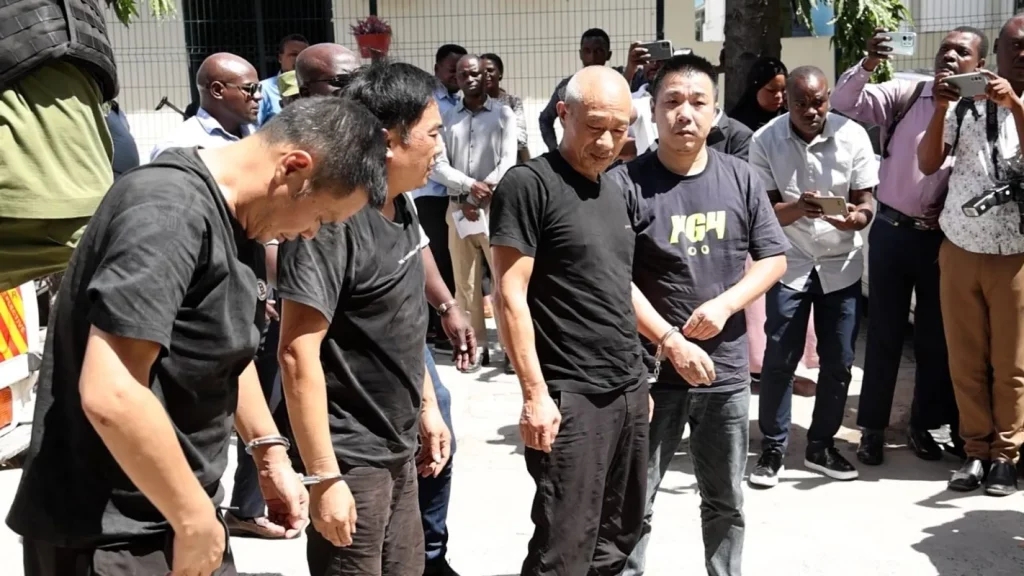
Dar es Salaam police have arrested four Chinese nationals in connection with the kidnapping of two fellow Chinese businessmen, an incident that involved a ransom demand of 20 million US dollars and ended with both victims being rescued with injuries two days after their abduction.
The Dar es Salaam Special Zone Police announced the arrests on May 25, 2026, following an investigation into a brazen daylight kidnapping that took place in the heart of Tanzania’s commercial capital. Senior Assistant Commissioner of Police Jumanne Muliro detailed the incident during a press briefing, revealing how coordinated police work led to the rescue of the victims and the apprehension of four suspects.
According to SACP Muliro, the kidnapping occurred on May 14, 2026, at approximately 4:30 in the afternoon near the PSSSF buildings along Mission Street in Ilala District. The location, situated in a busy commercial area of Dar es Salaam, raised concerns about security in public spaces frequented by the business community.
The victims have been identified as Weiyi Chen, 64, and Liang Xiolo, 44, both Chinese nationals conducting business in Tanzania. Muliro explained that a group of seven individuals ambushed the two men and forcibly took them to an undisclosed location. The boldness of the operation, carried out in broad daylight in a populated area, prompted an immediate response from law enforcement.
Police worked in collaboration with other security agencies to track down the suspects. Investigators successfully traced two vehicles believed to have been used in the kidnapping: a Toyota Alphard bearing registration number T.305 DRP and a Toyota Harrier with registration number T.188 DHT. Both vehicles were found to have irregular license plates, a common tactic used by criminals to evade detection.
Following the abduction, the suspects contacted relatives of the victims and demanded a ransom of 20 million US dollars for their safe release. The massive sum underscores what appears to be a targeted operation against businessmen believed to have significant financial resources. Such high-value kidnappings have become a growing concern in several African countries where foreign business communities operate.
The police rescue operation proved successful just two days after the kidnapping. On May 16, 2026, officers located and freed both hostages in the Mbezi area of Dar es Salaam Region. However, both victims had sustained injuries to various parts of their bodies during their captivity, though the extent and severity of these injuries were not disclosed by authorities.
Four suspects are now in police custody. They have been identified as Deng Anqing, 49, Fan Zhong, 49, Zhang Jianjun, 51, and Deng Qiang, 40, all Chinese nationals. The fact that both perpetrators and victims share the same nationality suggests this may have been an internal dispute within the Chinese business community in Tanzania, though police have not confirmed any motive.
During the arrests, police recovered mobile phones belonging to the victims along with other items believed to be connected to the crime. These items will likely serve as crucial evidence in the prosecution of the case.
SACP Muliro confirmed that investigations are continuing and warned that anyone found to be implicated in the kidnapping will face legal action. Three suspects from the original group of seven remain at large, and police efforts to apprehend them are ongoing.
The incident highlights the challenges facing Tanzania’s growing expatriate business community, particularly Chinese nationals who have become increasingly prominent in the country’s commercial sector. Chinese investment in Tanzania has grown substantially in recent years, spanning sectors including construction, manufacturing, retail, and telecommunications. This case may prompt calls for enhanced security measures to protect foreign investors and business operators in the East African nation. x1200
—
2026.5.25 60 Tanzanians Confirmed Detained at South African Repatriation Centre Amid Rising Anti-Immigrant Sentiment
Tanzania confirms that over 60 of its citizens are being held at the Lindela Repatriation Centre, as South Africa faces mounting criticism over its crackdown on African migrants.
Tanzania’s High Commission in Pretoria has confirmed that 60 of its citizens are currently being held at the Lindela Repatriation Centre in South Africa. The nationals were detained for allegedly living in the country without valid permits, according to High Commissioner James Bwana.
In a statement posted on X (formerly Twitter) on May 24, the embassy responded to a tip from user @DuniaSlaveDunia regarding the arrests. Officials visited the centre on May 19 and identified the detained Tanzanians, all of whom were issued Emergency Travel Documents (ETD).
The confirmation comes amidst a broader and increasingly violent crackdown on African immigrants in South Africa. This phenomenon, which critics and human rights advocates have termed “afrophobia,” primarily targets people of African descent before any other communities.
Vigilante groups and citizen-led movements, such as March and March and Operation Dudula, have recently intensified their campaigns against undocumented migrants. In April and May 2026, these groups organised demonstrations in major cities like Pretoria, Johannesburg, and Durban, resulting in violent and sometimes fatal attacks against foreign nationals.
These groups frequently scapegoat African and Asian immigrants for South Africa’s economic struggles, including an unemployment rate exceeding 43 per cent, high crime rates, and poor service delivery. However, studies consistently disprove these claims, showing that migrants are not the root cause of these systemic issues.
The deteriorating situation has prompted strong diplomatic reactions from other African nations. The government of Ghana recently summoned the South African ambassador to demand an explanation for the treatment of Ghanaian and other African nationals.
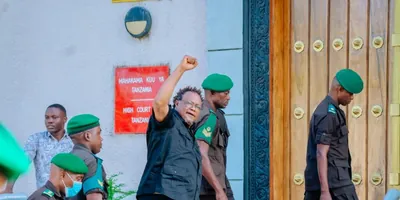
The High Court of Tanzania, Dar es Salaam Sub-Registry, has directed respondents in an application filed by Chadema Chairman Tundu Lissu to file their responses within seven days, ahead of a hearing scheduled for June 2, 2026.
Mr Lissu, who is currently in remand custody facing treason charges, is seeking to be joined in an ongoing civil suit involving a dispute over the distribution of party resources and alleged discrimination between Mainland Tanzania and Zanzibar.
The main case, Civil Case No. 8323 of 2025, was filed by Chadema’s former vice chairman, Mr Said Issa Mohamed, together with two members of the party’s Board of Trustees from Zanzibar, Mr Ahmed Rashid Khamis and the late Ms Maulida Anna Komu.
The defendants are Chadema’s Board of Trustees and the party’s Secretary-General.
In Miscellaneous Civil Cause No. 12194 of 2026, Mr Lissu argues that he should be joined in the proceedings in his capacity as national chairman, saying he has a direct interest in the outcome of the dispute.
The matter was mentioned before the court on Monday, May 25, 2026. Counsel for the first to third respondents, Mr Shabani Marijani, told the court they had not been formally served with the application documents.
He said they only became aware of the case through social media on Sunday, before later confirming it on the Judiciary’s electronic filing system.
“We therefore request 14 days to file a replying affidavit in accordance with the law,” he submitted.
However, Mr Lissu’s legal team, together with counsel for the fourth and fifth respondents, led by Chadema principal legal counsel, Dr Rugemeleza Nshala, opposed the request and urged the court to shorten the timeline to avoid delays.
High Court Judge David Ngunyale partially agreed, granting respondents seven days to file their replying affidavits by May 31, 2026.
“The matter will be heard on June 2, 2026,” ruled Justice Ngunyale.
However, the hearing will depend on the outcome of a preliminary objection raised in the main suit, in which the defendants argue the case is defective for failing to specify when the alleged violations began.
The ruling on the objection is expected on May 28, 2026, and will determine whether the proceedings continue or collapse.
If the objection succeeds, the main case will be struck out, automatically rendering Mr Lissu’s application moot.
If it is dismissed, both the main suit and the application will proceed.
This is the second time Mr Lissu has sought to join the case. His earlier application, filed in his personal capacity, was dismissed on April 30, 2026.
In that ruling, Deputy Registrar Hussein Mushi, reading a decision by Justice Hamidu Mwanga, held that Mr Lissu had failed to demonstrate sufficient personal interest to justify joinder.
The court said the interest he relied on was purely representative, arising from his position as party chairman, which is not tied to a single individual.
Following that ruling, Mr Lissu filed a fresh application, this time explicitly in his capacity as Chadema chairman.
In the substantive suit, the plaintiffs allege unequal distribution of party assets and resources between Zanzibar and Mainland Tanzania, contrary to the Political Parties Act and Chadema’s constitution.
They also accuse the party of religious and gender discrimination, as well as making statements that could undermine the Union.
They are seeking declarations that Chadema violated sections 6A(1), (2), and (5) of the Political Parties Act, and that its management of funds, assets, and resources is unlawful.
They further seek orders suspending the party’s political activities until court directives are complied with, as well as an injunction restraining the use of party assets pending resolution of the dispute.
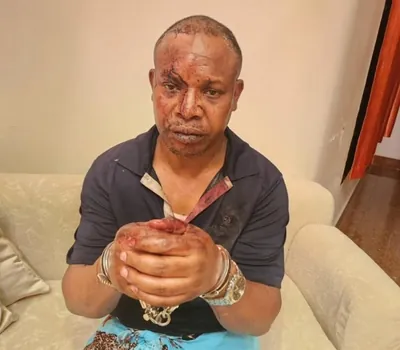
David Joseph Mghanja, who is the personal assistant of Tanzania’s top opposition leader, Tundu Lissu was abducted, taken away, tortured and beaten up in Dar-es-salaam, before managing to escape by sheer luck.
Speaking of the incident, the deputy Secretary General of the Chama Cha Demokrasia na Maendeleo (CHADEMA) the main opposition party, Amani Golugwa said Mghanja was accosted by a team of people who identified themselves as members of the Police and took him away by force from a car he was riding in.
“We reported the issue to the police but instead of them looking for the abducted person they came to the party office and alleged that Mghanja was actually hiding in the premises,” said Golugwa.
Mghanja, also known as Djumbe, who was clearly destined for death, reportedly managed to escape by sheer luck after some motorcycle riders who were pursuing the vehicle which had captured him somehow scared the abductors.
Mghanja was abducted at the time when his boss, Tundu Lissu, the chairperson of CHADEMA, is still under prison custody.
As they stopped the vehicle, got out and started shooting on the air in an attempt to discourage the motorcycle riders from their hot pursuit, David slipped out and dragged himself into the nearby thickest
Djumbe was later reported to be at his home, badly injured and still handcuffed and according to Golugwa the nation is under siege and nobody in Tanzania is safe anymore.
“He was badly beaten up, and has deep wounds on the head,” Golugwa maintained.
A police statement which was later released from the central Dar-es-salaam district, revealed that Djumbe was abducted in the Bunju area of the city, when a black car, a Toyota Wish with plate registration numbers T 609 DTD in which he was reportedly a passenger.
This car was stopped by the unknown people who then cuffed Lissu’s assistant, bundled him in their own vehicle and sped off.
The owner of the car in which the victim was earlier on riding in was identified as Allan Elisonguo Macha who also reported the incident to the police afterwards.
2026.5.20 Chinese factory owner killed by his own security guards in Tanzania | suspects disappear with cash worth USD 3800
A Chinese investor has, reportedly, been killed by his own members of staff in Dar-es-salaam, Tanzania.
According to an official statement from the Tanzania Police Force, the Chinese National, identified as Bhaozang Ge, a resident of Dar-es-salaam city, died in the late night of May 17, 2026, after being attacked by some suspects.
Whoever killed the Chinese national, also managed to disappear with a bag of money containing 10 million/- Tanzanian currencies, equivalent to USD 3800.
The 50-year-old, Bhaozang Ge, was a businessman who owned and operated at a plastic bottle recycling and manufacturing plant known as Xil Li which is based at the Mabibo Ward of Ubungo District in Dar-es-salaam.
Some employees at the plant say the night guards, who are believed to have been two or three Maasai warriors left the premises in the late hours of the night and later on their boss was discovered dead.
So far, the police report also confirms that the late Bhaozang Ge was attacked and beaten up by security personnel at his own factory in Mabibo area.
However, the cause of the attacks is still not known and no suspects have been arrested so far, though the police say they are investigating the matter.
Without mentioning the name of the firm, earlier reports from the area had claimed that the Chinese industrialist could have been killed by guards belonging to a private security company which had been commissioned to protect the Xil Li factory premises in Dar-es-salaam.
However, it turned out that Bhaozang had hired his own security people, suspected to have been locals, possibly Maasai or Konde guards.
“Many local guards nowadays adorn Maasai shukas’ attires, so it doesn’t necessarily mean the killers could have been Morans,” says an observer.
The incident reportedly occurred at around 2 hours after midnight, which means the Chinese investor could have gone to the factory at that time of the night or maybe was staying there as typical of most Asian business people.
The Chinese factory owner was found with a deep wound on the head, which means he could have been slashed with something sharp before his body was concealed at one corner of his factory.
2026.4.23 More than 500 people killed in Tanzania election violence, inquiry finds
A total of 518 people died in Tanzania from “unnatural causes”, including 197 who were shot dead, in the widespread protests that followed last year’s general election, the commission of inquiry set up to investigate the violence has announced.
However, commission chairman Mohamed Chande Othman did not say who was responsible for the deaths, recommending further investigations.
This is the first time the authorities have said how many people died.
Opposition parties and human rights groups had previously accused the security forces of unleashing a brutal crackdown on anti-government protesters, killing thousands.
President Samia Suluhu Hassan was declared the winner of the 29 October poll with 98% of the vote – which the opposition described as a “mockery” of democracy after her main challengers were excluded.
At the time, the president said the election was fair and transparent and blamed foreigners for the violence, saying it was part of a plot to overthrow her.
International observers, however, last year raised concerns over the lack of transparency in the vote, with the African Union and the southern Africa bloc Sadc saying the election had fallen short of democratic standards.
Last year, the BBC verified multiple videos of police shooting towards groups of protesters. Footage posted online showed that demonstrators were confronted by heavily armed police units blocking their progress and firing tear gas to disperse crowds. In many of the videos, gunfire can clearly be heard as people scatter in the ensuing chaos.
The scale of Tanzania’s election violence was shocking for a nation that had cultivated an image of calm, consensus and order for nearly six decades.
2026.4.16 Irate crowd attacks and kills a Police Officer in Arusha
A crowd of angry people is alleged to have chased, attacked, beaten up and eventually killed a police officer in Arusha.
The deceased, identified as Roland Mollel, was reportedly killed on the night of April 15, 2026 at the Muriet Ward, South of Arusha City.
The policeman is said to have been on his way home, when a gang of irate people accosted him and his mate, chased the duo and then started beating them, claiming they were among the robbery suspects who had just terrorized the precinct a few hours before.
The Senior Assistant Commissioner of Police (SACP) Justine Masejo confirmed the incident, adding that the saga occurred at the Mlimani street of Muriet Ward in the outskirts of Arusha Urban District.
SACP Masejo, who is also the Arusha Regional Police Commander, explained that the late Roland Mollel who was one of the police officers in the precinct, had just accomplished his daily duties at the station and was on the way home when disaster struck.
As it happens, there had been a robbery incident in the area that afternoon and the angry residents were patrolling the area looking for the culprits, when they came upon the policeman and another man, both riding on a motorcycle.
Some reports say, the police officer had actually hired the motorbike to take him home, while others claim that the late cop and the other person on the saddle were either friends or neighbors, escorting each other home.
Suddenly! A crowd of irate people started chasing them, shouting and swearing.
It seems some members of the community mistook the two riders as part of the criminals who had wreaked havoc in the precinct earlier on.
And according to observers, the police officer was in his ordinary civilian clothes, plus it was already dark, when the angry crowd descended on them.
According to the Arusha Regional Police Commander, RPC, Justine Masejo, already six suspects have been arrested in connection with the incident.
“But we are also still looking for others who could have taken part in the attack against the police officer,” Masejo added.
It is still not known what could have happened to the motorcycle rider who had carried the late Mollel.
2026.2.12 Watoto wawili wauawa Mara, chanzo imani ya kishirikina
Watoto wawili wa familia moja wamefariki katika tukio la mauaji lililotokea Kijiji cha Rung’abure, Wilaya ya Serengeti, mkoani Mara, ambapo chanzo kinadaiwa ni imani za kishirikina.
Watoto hao ni Mwikwabe Saina (10), mwanafunzi wa darasa la tatu, na Joseph Saina (4). Tukio hilo lilitokea Februari 10, 2026 majira ya saa 11 alfajiri katika Kitongoji cha Getasamo, Kata ya Rung’abure.
Kwa mujibu wa Jeshi la Polisi Mkoa wa Mara, watoto hao walishambuliwa kwa kuchomwa na kitu chenye ncha kali, huku mtuhumiwa akitajwa kuwa Joseph Marwa (18), mkazi wa eneo hilo.
Uchunguzi wa awali umeeleza kuwa mtuhumiwa alimtuhumu mama wa watoto hao kujihusisha na vitendo vya kishirikina, akidai anawaloga ndugu zake.
Baada ya tukio, wananchi walimkamata mtuhumiwa na kuanza kumshambulia kwa fimbo na mawe kabla ya kuokolewa na Polisi. Alipata majeraha makubwa na kupelekwa Hospitali ya Rufaa ya Wilaya ya Nyerere (DDH) Mugumu kwa matibabu, ambako alifariki dunia.
Jeshi la Polisi limesema linaendelea na uchunguzi wa kina na kwamba hatua za kisheria zitachukuliwa kwa yeyote atakayebainika kuhusika.

NAIROBI, Kenya (AP) — Tanzania’s opposition leader charged with treason appeared in court for the first time in months on Monday, but the hearing was adjourned yet again after he opposed the prosecution’s plan to have secret witnesses appear in a special enclosed cell.
Opposition leader Tundu Lissu has been in prison for 10 months after he was arrested following an opposition rally in which he called for constitutional and electoral law reforms before last year’s disputed election.
Lissu, who is representing himself in the case, said the punishment for treason is death and that secret witnesses in enclosed cells pose a huge risk and are likely to result in an unjust outcome for the case.
Judges said a decision on the objection would be delivered to the court on Wednesday.
Tanzania’s October 2025 election led to days of protests, the internet was shut down for days, hundreds of people were killed, and thousands of protesters were arrested.
The East African country, a largely peaceful nation, saw its first major wave of violence, which was blamed on foreigners by President Samia Suluhu, who won a second term with more than 97% of the vote, with no major opposition candidate in the running.
Suluhu apologized to diplomats for the internet shutdown and said it would never happen again. She then formed a commission of inquiry, which she said would champion reconciliation, but the main opposition party, Chadema, has been calling for justice for the families whose kin died in the protests.
Chadema deputy party leader, John Heche, on Monday called for the “unconditional release” of Lissu, alleging that Tanzanian authorities had proposed releasing him from prison on condition that he leave the country.
Lissu, whose party did not participate in the October election, has been protesting the slow judicial process, with his case yet to be determined despite his arrest in April 2025.
Last year, he told the court he would represent himself because of frustration with prison authorities, who he said were not allowing him to confer with his lawyers in private.
Lissu is the most visible of Tanzania’s fierce critics of the ruling CCM Party, which has been in power since independence. He survived an assassination attempt in 2017 and was in and out of exile until last year, when he campaigned for reforms ahead of the election.
2026.2.4 ‘Notorious Tanzanian drug trafficker’ arrested during raid in Zambia
A “notorious” Tanzanian drug-trafficking kingpin has been arrested in Zambia during a raid, the Zambian Drug Enforcement Commission (DEC) has announced.
Ahmed Muharram was among several suspects detained in Zambia’s capital, Lusaka, along with large quantities of marijuana and cough syrup containing codeine in several drug busts on Tuesday, the authorities said.
“The suspect is a known transnational drug trafficker,” the DEC said, adding that the 40-year-old had long been on the anti-drug agency’s watch-list.
The arrest of Muharram, who has not yet commented, was made possible thanks to a series of intelligence-led operations, the agency said.
Under Zambian law, marijuana is classed as a dangerous drug and is illegal to possess.
The trafficking, possession and use of illegal drugs such as cannabis is punishable by a fine or a prison sentence.
The southern Africa country struggles with drug abuse and trafficking, especially cannabis and heroin.
Police in Mbeya have detained the Secretary of the opposition Chadema in Rungwe District, Mr Award Karonga, over allegations of criminal offences, including incitement.
Karonga, who also serves as Deputy National Chairperson of the party’s youth wing, was reportedly arrested Friday, 30 January, in Katumba, Ibighi-Tukuyu Ward, Rungwe District.
According to a statement by Mbeya Regional Police Commander Benjamin Kuzaga, Karonga is being held on multiple charges, including incitement.
“The suspect was arrested at 4:00 a.m. in Katumba. Investigations are ongoing and will inform further legal action against him,” the statement said.
The statement further read: “The Mbeya Regional Police have arrested and detained Award Karonga, a resident of Katumba, who serves as Chadema Secretary for Rungwe District and Deputy National Chairperson of the party’s youth wing, on multiple charges including incitement. He was arrested on 29 January and investigations are being finalised to enable legal proceedings.”
Speaking on the matter, Chadema Mbeya Regional Secretary Hamad Mbeyale said the party received news of the detention and condemned what he described as a continued pattern of arbitrary arrests of party leaders.
“After his detention, he was searched at his home in Tukuyu before being taken to the central police station. His family, relatives, friends, and party officials are closely following up,” Mbeyale said.
He added: “We have met with him but are yet to be informed of the reasons for his detention. We strongly condemn these recurring acts of arresting our leaders. It should be noted that he is a National Youth Chairperson.”
2025.12.10 Buffalo kills villager in Serengeti
An angry buffalo is reported to have stomped a farmer to death in a horrid incident which occurred at Wegete Village of Serengeti District in Mara Region.
The deceased was identified as Marungu Chacha Ruhuro, a local male peasant and former resident of Manuna Village in Serengeti, within the Lake Victoria Zone of Tanzania.
He was, reportedly, the second victim of the animal which earlier on had attacked and wounded another person in a nearby village.
The buffalo which attacked and killed the farmer, was later hunted down by game rangers who killed it, leaving the irate villagers to divide the animal’s carcass among themselves for meat.
Juma Samuel Sabuda is the Chairperson of Wegete, the village where the incident occurred and who confirmed that, the deceased, Chacha Ruhuro met his fate on the Independence Day of 9th December 2025.
According to the Chairperson, a buffalo which possibly could have strayed from the nearby Serengeti National Park, invaded the nearby villages and the local residents were trying to drive the animal away.
“It was about 11.00 am in morning when the large buffalo appeared in the village, causing panic among residents, especially women and children who shouted for help,” said Sabuda.
During that instance a group of men organized themselves in a team which then started to chase the animal away from the residential areas, attempting to drive it back to the reserve.
However, the irritated buffalo fought back by hitting one of the men, Marungu Chacha with its horns, lifting him up before throwing the victim on the ground and proceeding to trudge him.
Chacha was still alive when the buffalo finally left him, but he died later while receiving medical treatment at the Village Dispensary.
The village chairperson later phoned the Serengeti District Wildlife officers, who hunted down the buffalo and managed to shoot it to death.
The Serengeti District’s Wildlife Department promised to foot the bills related to the burial process for the deceased, the late Marungu Chacha.
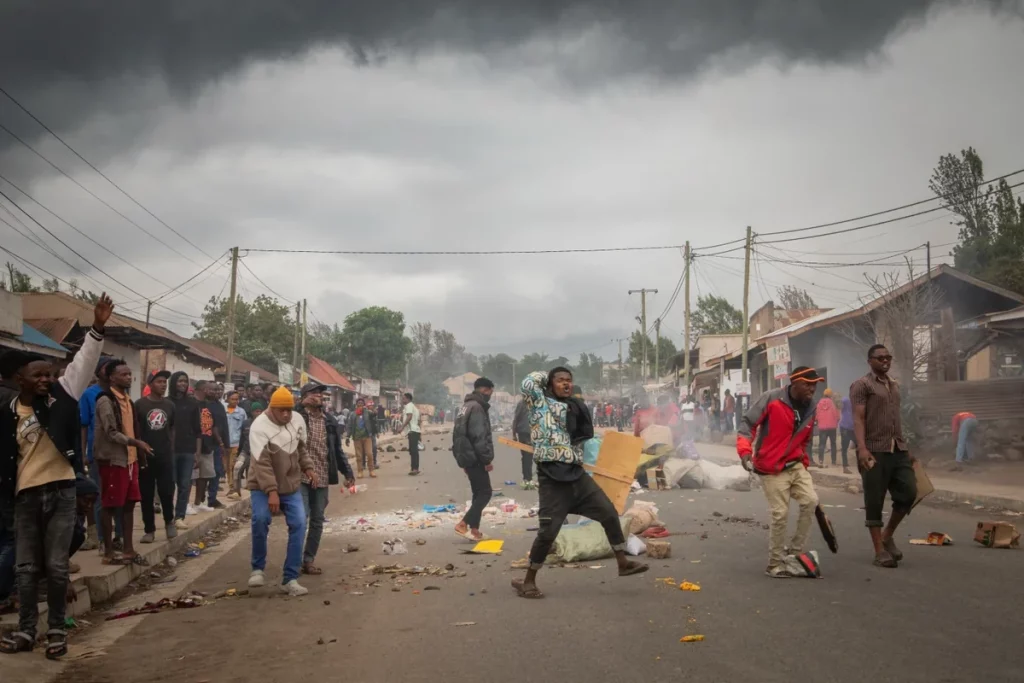
2025.10.31 Protests in Tanzania spread after a disputed election, with the military on the streets
NAIROBI, Kenya (AP) — Hundreds of protesters took to the streets for a second day of demonstrations in Tanzania on Thursday after a disputed election, while Amnesty International reported that two people have died.
After the protests broke out on Wednesday, the government shut down the internet, imposed a curfew and deployed the military to the streets.
The ruling Chama Cha Mapinduzi or CCM party, which has been in power since independence in 1961, sought to extend its rule in Wednesday’s election, with presidential candidates from the two main opposition parties barred from running.
The incumbent, President Samia Suluhu Hassan, faced 16 other candidates from smaller parties who barely campaigned.
The electoral body on Thursday announced through state television that President Hassan had taken an early lead, garnering 96.99% of the votes in 8 out of 272 constituencies tallied early Thursday.
Lawmakers from the European Parliament said in a statement Thursday that the elections in Tanzania were “neither free nor fair” and urged democratic partners to “stand firm in the defense of democracy and human rights.”
Turnout during Wednesday’s election was low, and chaos broke out in the afternoon as protesters burned a bus and a gas station, attacked police stations and vandalized polling centers.
Two people, a civilian and a police officer, died in Wednesday’s protests, according to Amnesty International. The government has yet to comment about casualties in the ongoing protests.
Tanzania’s government imposed a curfew Wednesday evening in the commercial capital, Dar es Salaam, where most protests had occurred, but protests continued late into the night.
The government asked public servants to work from home on Thursday to limit the movement of nonessential staff.
Roadblocks manned by the Tanzanian army were erected across the country, with those approaching them turned away if they could not prove they were essential workers.
Hundreds of protesters breached security barriers to access a road leading to the country’s main airport but were unable to enter.
Amnesty International called for investigations into the use of force on protesters by police.
Several protesters were injured in the town of Namanga, on the border with Kenya, as demonstrators lit bonfires on the highway and police fired tear gas to disperse them.
Business people said the protests had halted business operations in the usually busy border town.
Ferry services from the Tanzanian mainland to the semiautonomous archipelago of Zanzibar, whose electoral body is expected to announce results Thursday, were also suspended.
Tanzanians cast ballots for a president, members of parliament and ward councilors.
The main opposition leader Tundu Lissu remains in prison after he was charged with treason for calling for electoral reforms. The presidential candidate for the second largest opposition party, Luhaga Mpina, was barred from running.
x1200
2025.10.28 Tanzanian journalist Erick Kabendera, author of ‘In the Name of the President’, leaves Tanzanian court after being accused of money laundering, tax evasion and organised crime.
发表回复