2026.7.29 Human trafficking in Cape Breton: ‘It often looks very different than people expect’
‘Human trafficking is often misunderstood as something that happens somewhere else’
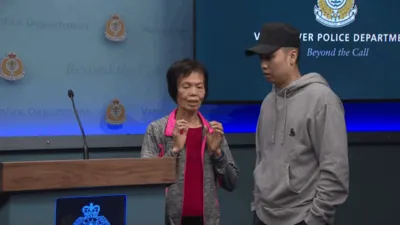
The Vancouver Police Department (VPD) is issuing a public warning after 11 reports of distraction theft were made between June and July alone, contributing to the 35 cases in Vancouver in 2026, with losses in excess of $245,000.
Sgt. Tim Russell of the VPD Robbery, Assault, and Arson unit says the thieves involved in these incidents are part of organized crime rings.
“They often criss-cross across Canada in rental vehicles, robbing seniors along the way,” Russell said.
“While we have seen a reduction of these incidents in Vancouver over this last year, one victim is too many.”
One of said victims is 72-year-old Janice Yang, who was targeted in front of her home June 12, resulting in the brazen theft of her necklace.
Janice Yang and her son, Phillip. Janice was a victim of a distraction theft, the VPD says.
“A lady came out of the vehicle [and] came up to my mom while she was gardening,” said Yang’s Son, Phillip Yang.
“The lady grabbed my mom’s chain, and she pushed my mom down. They saw the licence plate, and they recorded that incident and shared it with police.”
A separate incident on July 14 was reported to police after a 76-year-old woman was targeted by a group in a vehicle. The suspect approached the victim, said she looked like her mother, and leaned in to give her a hug. It was in that moment when her gold necklace, which had two rings attached, was stolen and replaced with a fake.
“Traditionally, it’s sleight of hand, it’s distraction in putting fake jewelry on you and in the process they remove the real jewelry from the victim,” Russell said.
“If there’s any sort of pushback, now we are starting to see, ‘I’m taking the necklace, and I’m ripping it off from you.”
These distraction thefts are separate from the blessing scams CityNews reported on last week targeting Chinese seniors in Vancouver. Those crimes prey on the fear of cultural traditions that make people believe that if their valuables are not blessed, a terrible misfortune or curse will fall upon them.
While both these crimes prey on the elderly, they aren’t believed to be connected.
The VPD is reminding seniors to be vigilant, conceal valuables, maintain physical boundaries, and gain the attention of bystanders if they feel threatened or targeted. As well, they should always call 911 to report any incidents or robbery attempts.
2026.7.27 ‘One of Toronto’s oldest mysteries:’ Murdered woman whose remains were found 31 years ago now identified by police
Toronto police say they have now identified the victims of two separate cold cases, including a woman who was murdered 90 years ago and buried underneath a building in the city’s east end.
According to police, the first cold case is related to the skeletal remains of a woman found under a former auto dealership in the area of Danforth and Coxwell avenues in 1995.
On May 18, 1995, police said officers were called to the area after demolition workers discovered the skeletal remains of an unknown woman.
“A forensic examination determined the victim had been intentionally buried after suffering at least six blunt force injuries to the head from a hammer-like weapon,” police said in a news release issued Monday.
“The investigation was classified as a homicide.”
“We were unable to identify her at that time. We created a composite image of her, released it to the public in 1995,” Det. -Const. Michael Kelly told CTV News Toronto.
“We got a lot of tips come forward, a lot of people saying, ‘My mom, my aunt, my sister went missing in the 40s. This could be her.’ None of those ultimately panned out.”
He said the case was recommended for IGG in 2022, but investigators initially had issues developing a DNA profile.
“Because of the nature of how long the remains had been in the ground, some other bacterial issues and contamination, it made very difficult for us to get a good DNA sample to work with,” he said.
Kelly noted that it was just in the last three months that investigators were able to make significant progress in that area.
“There is different parts of our anatomy which are more resistant to forms of bacterial contamination or degradation, so we were able to obtain a segment of bone from her that was actually able to yield a perfect, nice, clean, fully robust DNA profile for her,” Kelly said.
The victim has now been identified as Mary McLeod Moffat, police said.
Moffat was born in Scotland in 1905 and immigrated to Canada with her family 1913. They believe she was likely murdered 90 years ago.
“Historical records, family interviews, and evidence recovered from the burial site established that she was likely murdered in approximately April 1936,” police said.
According to police, the victim’s husband, Andrew Lloyd Moffat, who died 10 years before his wife’s body was discovered, is believed to be responsible for her murder.
Through their investigation, Kelly said officers learned that Moffat and her husband had one child before he left and married a woman in the Toronto area, unbeknownst to his first wife.
“She obviously came to Toronto. We surmised that some form of confrontation occurred, which resulted in her death and burial.”
Her body, he said, was found at a property that was adjacent to a tire business that her husband operated.
He at one point assumed the alias Drake Lloyd Cummings and lived in the United States and Vancouver before his death in 1985.
Kelly said the suspect ultimately married four women, having children with three of them.
“We have been able to have discussions with those family members as well,” the detective said.
“Obviously this begins and ends with a very sad, difficult tale to hear about, but for some family members it answers a few questions.”
He called Moffat’s murder “one of Toronto’s oldest mysteries.”
“This never would have been solved without IGG,” Kelly said.
Hwy. 401 arson victim identified
Toronto police say the second person recently identified through the use of IGG is a woman whose badly burned body was found in the passenger seat of a vehicle operated by a driver who investigators believe intentionally collided with a tractor-trailer on Hwy. 401 on April 22, 2004.
“The Office of the Fire Marshal determined the fire had been deliberately set using gasoline and that the woman had died before the fire was ignited, confirming it had been used to conceal the cause of death,” police said in the news release issued Monday.
“Due to the extent of the injuries from the fire, the cause of death was never determined.”
Police said in 2006, the driver of the vehicle, 38-year-old Siumi Kilflu, of Toronto, was convicted of a number of charges, including arson to property, arson endangering life, indignity to a dead body, and dangerous operation of a vehicle.
He was handed an eight-year prison sentence and was deported from Canada in 2012.
“He never wound up telling us the true identity of this woman or how he came across her,” Kelly said.
The victim, police said, remained unidentified for more than 20 years despite public appeals, police said.
The case was selected for IGG investigation in 2022.
Police said DNA analysis determined that she possessed Indigenous ancestry connected to Cree communities along James Bay and the Fisher River Cree Nation in Manitoba.
She was ultimately identified as Patsy Flora Lagarde, who was born in Ontario in 1962. Her parents, police noted, were from the Berens River First Nation and the Long Lake #58 First Nation. She had two biological children, including one living in Alberta, according to police.
“These investigations represent two of the most significant unidentified human remains identifications completed by the Toronto Police Service through IGG,” police said in the news release.
“These identifications represent the significant impact that investigative genetic genealogy can have on long-term unidentified human remains investigations,” said Det. Sgt. Stephen Smith of the Homicide and Missing Persons Cold Case unit.
“After decades without answers, we have been able to restore the identities of Mary (Moffatt) and Patsy Lagarde, provide information to their families, and uncover important facts about the circumstances surrounding their deaths. This work reflects the dedication of our investigators and the value of Project 31 in advancing cold case investigations.”
—
2026.7.29 B.C. woman dies by MAID at 49 after young-onset Alzheimer’s diagnosis: ‘This was chosen for me’
Rebecca Luna, a mother of two who first noticed a cognitive drop at 46 and was diagnosed at 48, said she was rapidly declining and wanted to die before she couldn’t remember her family
A 49-year-old B.C. woman who documented her experience with young-onset Alzheimer’s disease has died after she was approved for medical assistance in dying (MAID).
Rebecca Luna, a mother of two from Victoria, B.C., died at approximately 1:15 p.m. on July 25, according to a post on the TikTok account where she described the disease and what it was doing to her to more than 97,000 followers. She called herself a young-onset Alzheimer’s and MAID advocate.
Maya Findlay, Luna’s eldest daughter, posted a tribute to her mother on TikTok on Monday.
“I miss my mom in a way that feels like homesickness. Like I just want to go home, but home was her,” Findlay wrote in a TikTok post alongside a screen recording of Luna on a video call.
Luna was diagnosed at 48, she wrote on a fundraiser page in June. She first noticed cognitive decline at 46.
“Young onset Alzheimer’s has nothing to do with what you expect from somebody with Alzheimer’s that’s 80 years old,” she said in a video posted four days before she died. She said it was hard not to be bothered by the fact that she looked too good to be terminally ill. In an interview with Yahoo Life in May 2025, she said she originally attributed her symptoms of forgetfulness to stress, perimenopause and ADHD, but was eventually diagnosed by a neurologist.
In July 2025, Luna posted a video saying she had met with a MAID doctor.
“You get to choose when you go and how much suffering you deem to be too much suffering. And we sat down and kind of wrote out a list of the things that I’m not willing to put up with, or what kind of quality of life I’d like to leave the world with,” she said, adding that everybody’s standard is different. She reported that she was rapidly declining and wanted to die before she got to the point where she couldn’t remember her family.
“I want to leave the world where I still feel laughter and joy and fun, and I don’t want to have a caregiver, and I’m already struggling with paperwork and managing basic daily tasks,” she said.
Heather Cooke, manager of research and knowledge mobilization at the Alzheimer Society of B.C. and Yukon, spoke to National Post about what the disease does to people diagnosed young. Dementia is the set of symptoms, she said, and Alzheimer’s disease is the most common cause of them.
“When we think of people living with dementia, our brain often goes to the 85 year old,” Cooke said. “Our brain doesn’t go to the 60 year old or the 65 year old.”
About 28,000 people in Canada are living with young-onset dementia, Cooke said, citing an Alzheimer Society of Canada estimate. In B.C. the number is roughly 4,500, and she said it is expected to pass 6,000 within 20 years.
“The national average is around two years from the onset of symptoms to receiving a formal diagnosis,” Cooke said, adding that Canada’s wait is among the longest in wealthy nations.
Symptoms are easier to miss at that age. “Often they are people who are still working. They are often at an age when they’re at the pinnacle of their career,” Cooke said.
The Alzheimer Society of Canada lists 10 possible signs of dementia. They include memory changes that affect day-to-day abilities, difficulty doing familiar tasks, disorientation in time and place and misplacing things.
The isolation is different at that age too. “It’s a life-altering diagnosis, to receive that in your 40s and your 50s and your early 60s, when all of your friends are living very different lives,” Cooke said.
Luna wrote on a fundraiser page in January that her neurologist had given her five to seven years. She was raising money for a first and last trip with her daughters. The timeline moved in her favour once. In a February update she wrote that she had pushed her MAID date further into the year. “Such good news,” she wrote. “Still progressing as steadily as before I’m just moving the goal post.”
By June she had opened a second fundraiser, for her end-of-life expenses. “I’m 49 and I will be accessing MAID as my decline has come faster than I had hoped,” she wrote, adding that she did not want to leave her family the cost of funeral expenses on top of their grief.
In the July 21 video, Luna said she was exactly two weeks out from her MAID appointment, which set her date for early August. The disease was taking her mind, her feelings and her connections, she said, and had brought night terrors and delusions. “I’ve spent the last few days just in bed sleeping,” she said. “I’ve just been crying for a week.”
I want to leave the world where I still feel laughter and joy and fun
In her final video, posted the next day, Luna said the date had moved again, to July 25, and that her palliative care doctor had been at her home telling her the decision belonged to her. “She said, when would you go if it was just your choice? And I said, now,” Luna said. “And so we called and the hospital had an opening for Saturday at 10 o’clock.”
She added: “It’s a hard decision to make, I have to tell you, because I’m living in a body that doesn’t feel comfortable, safe, good, nothing.”
Under the Criminal Code, a person must have decision-making capacity to receive MAID and must consent immediately before it is provided, according to Justice Canada. That final consent can be waived only in narrow circumstances, and only where a person’s natural death is already reasonably foreseeable.
“I’m not choosing this. This was chosen for me,” Luna said in the final video. “I didn’t wake up and think, ‘whoa, I would love to have young onset Alzheimer’s at the age of 46.’ With two children? No.”
Findlay, Luna’s daughter, posted a message to the June fundraiser confirming the death. “Thank you for all the love, support and privacy,” she wrote. The page had raised $11,766 of a $20,000 goal as of Tuesday evening.
In her final video, Luna said there was one thing she hoped people took from her. “You just need to act your way into loving yourself,” she said. “If I can do it, you can do it, too.”
2026.7.26 Canadian TikTok star dies using MAID at 49 following Alzheimer’s diagnosis
Posted July 26, 2026 4:39 pm. Last Updated July 27, 2026 2:16 pm.
A Canadian TikTok star who openly documented her struggle with Alzheimer’s disease through viral social media videos has ended her life at 49 using medical assistance in dying (MAID).
Rebecca Luna, of Victoria, B.C. died on July 25 at 1:15 p.m. surrounded by her loved ones, according to a post shared to the creator’s TikTok account over the weekend.
An update was also posted to an online fundraiser set up to cover Luna’s end-of-life expenses. It included a message from her eldest daughter which confirmed her death.
Luna was diagnosed with young-onset Alzheimer’s at the age of 48.
In the days leading up to her death, she posted a final message telling her some 93,000 followers that she had moved up her MAID date to July 25 because her decline had come faster than she hoped.
“It’s a hard decision to make,” Luna explained. “Because I’m living in a body that doesn’t feel safe, good, nothing. It feels terrible.”
“It’s taken so much from me,” she said of her disease.
According to Statistics Canada, approximately 750,000 Canadians are living with Alzheimer’s disease or another form of dementia. The disease is more common among women, who are also twice more likely to die with the disease than men.
Luna leaves behind two daughters.
—
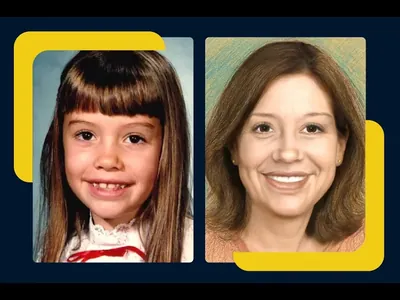
This week on Village Media’s ‘Closer Look’ podcast: July 30 will mark the 41st anniversary of an unsolved mystery that has baffled investigators since the early hours of the case
Four decades later, it remains one of Canada’s most perplexing unsolved mysteries: What happened to Nicole Morin?
On July 30, 1985, the eight-year-old girl left her penthouse apartment in west-end Toronto to meet a friend for a swim. She was never seen again — and not a single piece of physical evidence linked to her disappearance has ever been found.
Last summer, the Toronto Police Service marked the 40th anniversary of Nicole’s case by announcing a $50,000 reward for new information that leads to her location. Police also released a new forensic age-progression sketch that shows what Morin could possibly look like today.
This Thursday will mark the 41st anniversary of Nicole’s sudden disappearance.
2026.7.16 U.S. immigration authorities detain Canadian accused of assaulting a teenager wearing pro-Trump clothing
Police file four charges against Caitlin Tracey after an altercation on a boardwalk in New Jersey, while authorities say she overstayed her legal residence in the United States
2026.7.15 Montreal police arrest 2 suspects in connection with antisemitic attacks
Attacks against 8 members of Jewish community took place earlier this month
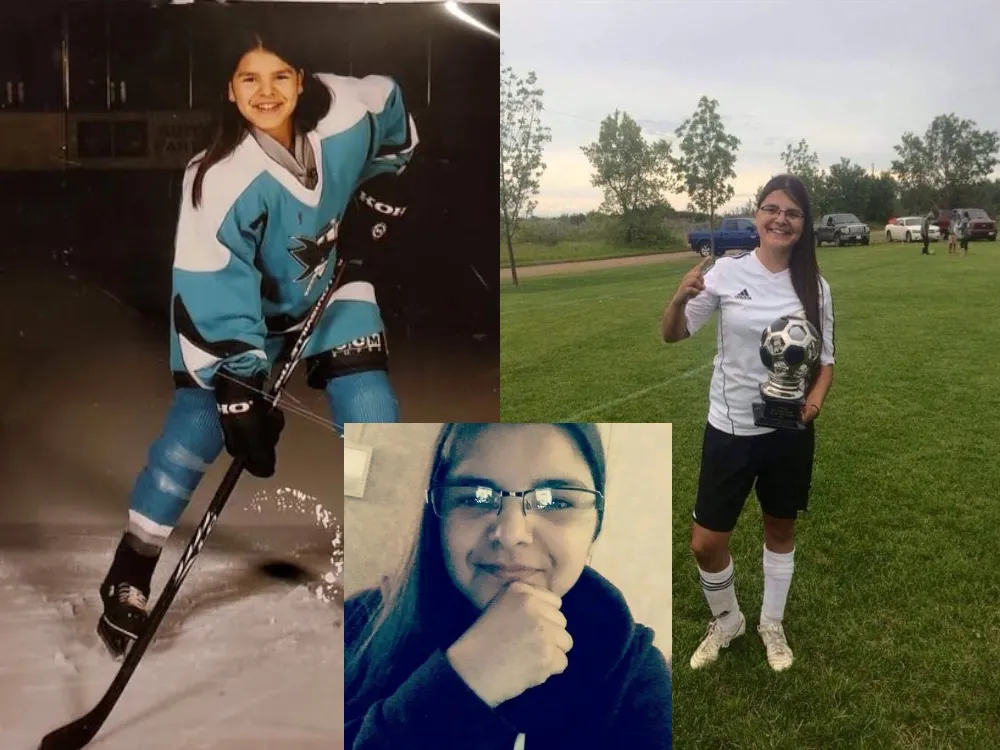
Saskatchewan RCMP are again asking the public for information eight years after Ashley Morin disappeared from North Battleford.
Morin was 31 years old when she went missing on July 10, 2018.
RCMP say investigators continue to treat her disappearance as a homicide.
Historical Case Unit still investigating
Police say the case remains active and investigators with the Saskatchewan RCMP Historical Case Unit are still working to find answers for Morin’s family, friends and community.
RCMP say progress has been made over the years with support from the public, but investigators believe there are still people who have not come forward with critical information.
Police say they have reason to believe multiple people were involved in Morin’s disappearance.
Police urge people to come forward
Investigators are asking anyone with information, no matter how small it may seem, to contact police.
“Eight years is a long time to carry the weight of what happened to Ashley. We believe there are people who know the truth, and we are asking them to come forward now,” Insp. Ashley St. Germaine, acting officer in charge of Saskatchewan RCMP’s Major Crimes Branch, said in a release.
St. Germaine said relationships and circumstances can change over time, but Morin’s family is still waiting for answers.
“One conversation could be the breakthrough that brings Ashley home and helps deliver the justice and closure her family deserves,” St. Germaine said.
Anyone with information is asked to call the Saskatchewan RCMP Historical Case Unit at 639-625-3156, 310-RCMP or their local police department.x1200
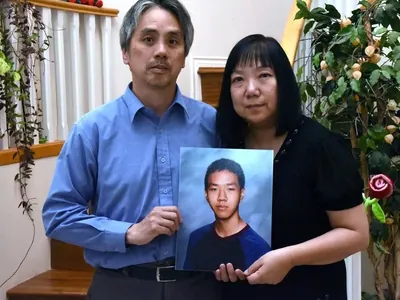
Kane Carter, 29, has been sentenced to life in prison with no parole for 17 years for shooting Alfred Wong, 15, who was in the back seat of his parents’ car
Kane Carter, the man found guilty of second-degree murder in the death of a teenage passerby eight years ago in Vancouver, has been sentenced to life in prison with no chance of parole for 17 years.
The court also imposed a mandatory lifetime firearms prohibition, a DNA order, and a $200 victim fine surcharge, the B.C. Prosecution Service said Thursday.
In December, a jury found Carter, 29, guilty of two counts of second-degree murder in connection with the shooting deaths of gangster Kevin Whiteside and 15-year-old Alfred Wong, who was just passing by in the area with his family in a car on the night of Jan. 13, 2018.
The ruling was during a retrial, after the collapse of the prosecution case in September 2024 when a jury could not come to a decision after five days of deliberation.
Prosecutors said the slayings were linked to Carter using video, cellphone records and Carter’s DNA in a getaway vehicle.
At that time of the shooting, Whiteside was running along Broadway shooting at two people in a taxi. Court heard the target was a gangster associated with Carter. Whiteside was hit by gunfire and died.
Wong, a student at Pinetree Secondary in Coquitlam, was in the back seat of his parents’ car when a stray bullet hit him in the chest. The family was travelling home after dinner.
Court heard that a red van linked to Carter was seen leaving the area after the shooting. The van was later found in a parkade of a Surrey building where Carter rented an apartment.
2026.6.22 Police officer and civilian killed in Montreal shooting, suspect also dead
Montreal police (SPVM) say three people are dead following a shooting in the city’s Côte-des-Neiges neighbourhood on Monday.
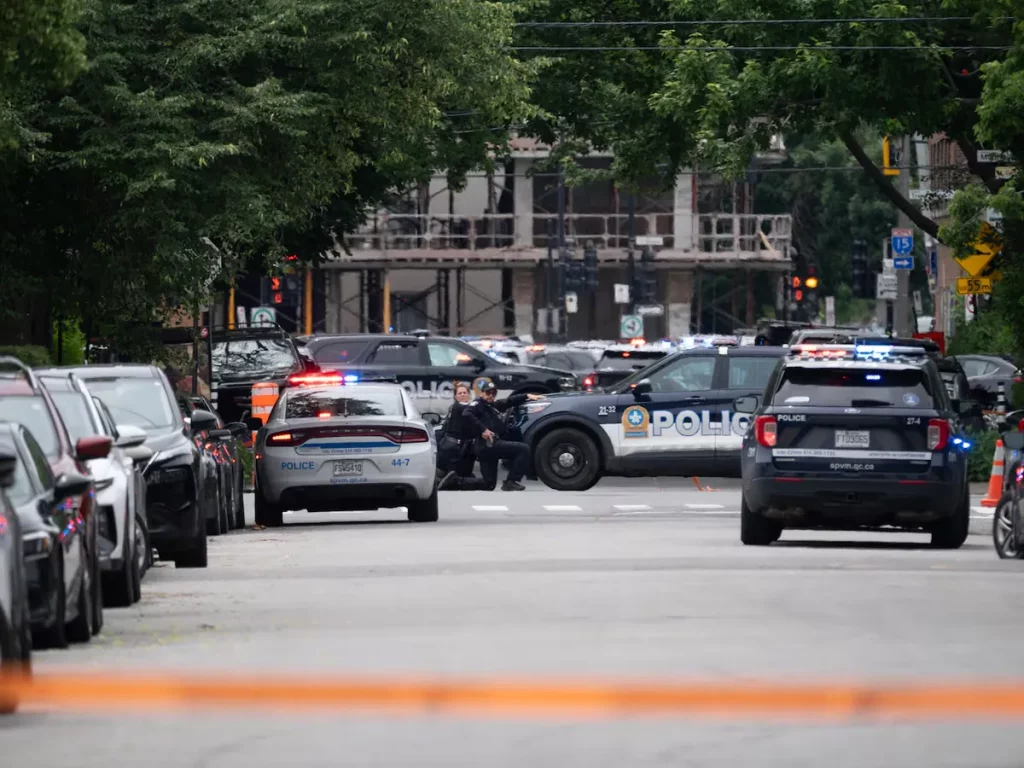

A 34-year-old police officer was killed in the shooting, which started at around 11:35 a.m. near the corner of Courtrai and Trans Island avenues. Another female officer was sent to hospital with serious injuries, but her life is no longer in danger.
A civilian was also shot dead in the shooting.
The gunman, whose identity has not been released, has been killed as well, police say.
The threat to the public is now over and the investigation has been turned over to Quebec’s police watchdog, the the Bureau des enquêtes indépendantes (BEI).
Here’s everything that happened on June 22:
9:45 p.m.: Manifesto delves into incel ideology, porn industry
The manifesto that was found in the hotel room is more than 100 pages long and delves into a number of grievances. It talks about incel (involuntary celibate) ideology, resisting the emancipation of women, and the porn industry.
The manifesto lists several groups of people and entities that should be targeted.
The document lists one of those entities as: “Large pornographic industry conferences, the headquarters of international pornography companies, and prominent individuals who are pornographic actors or actresses themselves, and who are very wealthy, and actively promote pornography to the public.”
The shooting on Monday took place near the offices of Aylo, the parent company of PornHub — the world’s largest pornography website — and its subsidiaries.
When reached on Monday, Aylo told Noovo Info it was co-operating with the investigation but declined to comment further, citing the ongoing police investigation.
A police spokesperson in British Columbia says forces across the province were told of the possibility of “documentation or some type of manifesto” calling for police to be targeted with violence, The Canadian Press reported.
Staff Sgt. Lindsey Houghton with the Surrey Police Service says the warning was issued by an intelligence unit operating out of the RCMP B.C. headquarters Monday afternoon, after the “tragic events” in Montreal.
9:39 p.m.: Civilian killed in shooting has been identified
The identity of the civilian killed in the shooting in Côte-des-Neiges has been released.
CTV News has confirmed that the victim’s name is Michael Moshe Mizrahi.
The Centre for Israel and Jewish Affairs (CIJA), a Jewish advocacy group, described him as a valued member of the community and “an innocent victim” of Monday’s tragic events.
“Our thoughts and deepest condolences go out to his family, friends, and loved ones during this time of unimaginable grief. May his memory be a blessing,” CIJA wrote on Facebook.
8:20 p.m.: Slain Montreal police officer identified
Montreal police (SPVM) have identified the officer who was killed in Monday’s shooting.
The force said 34-year-old Mohamed Lamine Benredouane died while trying to protect the public.
The officer had been with the SPVM since 2021.
“His death is a great loss for our organization. His sense of duty, his dedication, and his professionalism will remain forever in our memories,” the police said in a statement.
“As a sign of respect to express our collective grief and pay tribute to our colleague, our flags are flying at half-mast. Fallen, but never forgotten.”
The force added that condolences can be sent to the officers family by contacting condoleances@spvm.qc.ca.
7:45 p.m. Flags lowered as Montreal mourns victims
Quebec Premier Christine Fréchette and Montreal Mayor Soraya Martinez Ferrada expressed their condolences to victims and their families at the news conference, announcing that Quebec’s flag would be lowered with the city grieving.
The mayor also praised the response of Montreal police officers, saying their courage helped protect the public during a dangerous situation.
Fréchette added that members of the public could access psychological support services through the 811 hotline.
7:05 p.m.: Gunman’s manifesto allegedly found in hotel room
Citing a police source, Noovo Info reported that the gunman allegedly wrote a manifesto of more than 100 pages that was found in a hotel room.
In it, he allegedly called on citizens to take up arms and “rebel against the system.”
Authorities, however, declined to comment on the existence of the manifesto and called on residents to not speculate on a motive.
“We have to let the BEI do its work,” said the Minister of Domestic Security, Ian Lafrenière.
6:40 p.m. Shooting not linked to terrorism: minister
In a press conference early Monday evening, Quebec’s Minister of Domestic Security declined to confirm the motive behind the shooting, who shot and killed the civilian, or the identity of the police officer who was killed.
Minister Ian Lafrenière said he was limited in what he could say due to the fact that the investigation has been turned over to Quebec’s police watchdog, the Bureau des enquêtes indépendantes (BEI).
He also declined to confirm reports that the gunman travelled to Quebec from Alberta. The province’s counter-terrorism unit, the Structure de gestion policière contre le terrorisme (SGPCT), was deployed but Lafrenière said the shooting was not linked to terrorism.
4:40 p.m.: Police operation in Westmount
A police operation is ongoing in Westmount as officers are carrying out searches in the area near the St. Joseph’s Oratory.
Police spokesperson Manuel Couture said the search is related to the deadly shooting in Côte-des-Neiges earlier today.
The searches are being carried out “to make sure there are no more suspects,” Couture said. So far, no person of interest has been located.
Quebec’s Ministry of Domestic Security said in a post on X at 4:08 p.m. that the immediate threat to the public in Côte-des-Neiges is now over.
4:20 p.m.: Premier to hold news conference
Quebec Premier Christine Fréchette is scheduled to speak at a news conference later today.
Fréchette will be joined by Montreal Mayor Soraya Martinez Ferrada, Domestic Security Minister Ian Lafrenière, and Chantale Rouleau, the minister responsible for the Montreal region.
4:10 p.m.: ‘I was lucky,’ says witness
John David Ballesderos said he was in a vehicle with his grandmother just before the shooting started.
He saw the gunman, describing him as a white male who was wearing “camouflage” attire, a backpack, and carrying a long firearm. Within a minute he was ordered by police to get out of the vehicle.
“There’s a bunch of kids crying, calling their dad … it’s scary,” he told CTV News. “I’m still shaking from the moment.”
3:45 p.m.: ‘I’m horrified,’ says prime minister
Prime Minister Mark Carney said he was “horrified” to learn about the deadly shooting in Montreal.
“My thoughts are with the victims, their loved ones, the first responders, and the entire community of Côte‑des‑Neiges. My gratitude is with our courageous police officers whose heroic dedication protects our communities,” Carney said in a post on X.
3:30 p.m.: ‘Very traumatic,’ says business owner who witnessed shooting
Yosef Hadad, who owns Deli 770 on Courtrai Avenue, says he had just stepped outside the family business when he heard gunshots.
“Right when I went out of the deli, the shooting started happening,” Hadad tells CTV News in an interview.
“I live right in front. So I went outside to get something from my house, and I just hear shooting,” he recalls.
“I see two guys with military uniforms (camouflage) running. I didn’t know what was going on. I ran to my house.”
Soon after, from his balcony, he says he witnessed a police officer get shot.
“I saw one of the cops that died, I saw him literally fall down in front of us. We heard the whistling of bullets flying from the balcony,” he says.
“It was something that’s very traumatic.”
Hadad says the deli had recently opened for the day and was already serving customers, several of whom were “stuck” inside for hours as the incident unfolded.
“So we had like five or six usual customers to get their lunch. They got stuck at the deli, for like five hours they were there,” he says, adding that other locals he’s spoken with are shaken up, especially with it being a family-friendly area.
“This is my house. This is our community. Our business is here, our family business is here. There are kids in the park. There are schools all over the place,” he says.
“It’s really a situation where no one would like to even remember it.”
3:15 p.m.: Shelter-in-place over
Montreal police have lifted the shelter-in-place order that was issued following the shooting this morning.
In an afternoon press conference, police chief Fady Dagher said there is no other suspect being sought.
On the police officer who was killed, Dagher described him as “a great, great, great police officer,” who was “very passionate” about his job.
3 p.m.: Investigation will involve a ‘real deep dive’ into shooter’s history
CTV News’ public safety analyst and former OPP commissioner Chris Lewis says “there’s a million possibilities” as to why the gunman opened fire, but it will “take some time to sort all those out.”
Lewis said finding a motive will involve a “real deep dive” into who the gunman is and “interviewing everyone around him,” including co-workers, neighbours, family, friends, and determining if there are any ongoing grievances against specific people, or mental health issues.
In response to police chief Fady Dagher saying no other suspect is being sought, despite witness accounts of two active shooters, Lewis says a forensic examination will need to occur to determine if there were bullets fired from more than the one suspect’s firearm.
3 p.m.: ‘It’s a nightmare’
A visibly distraught Montreal police chief Fady Dagher gave details of the shooting, confirming that the operation is continuing.
“It’s a very, very sad day,” he said. “It’s a nightmare, but we have to be solid. We have to be solid for the lady for this officer who survived and we’re all behind.”
2:28 p.m.: Premier ‘shaken’
Quebec Premier Christine Fréchette said she was “deeply shaken” by the shooting.
“I thank the police officers, first responders, and all those mobilized on the ground,“ she wrote on X. ”As the operation and investigation are still ongoing, it is essential to let the authorities do their work and to avoid any speculation.”
She added that the Government of Quebec will cooperate and be available for the victims.
“Such acts have no place,” she said.
2:08 p.m.: Mayor sends condolences
Montreal Mayor Soraya Martinez Ferrada posted her condolences for those killed in the shooting.
“My deepest condolences to the family, loved ones, and colleagues of the police officer who died in the line of duty in Côte-des-Neiges,“ she wrote on X. ”My thoughts are also with all those affected by this tragedy.”
1:55 p.m.: Civilian, suspect killed
SPVM spokesperson Jean-Pierre Brabant confirmed that the other female officer who was injured is in critical condition.
The suspect and the civilian who were injured were also reported dead.
1:40 p.m.: Officer killed
At 1:40 p.m., the SPVM reported that one of the officers who was shot died.
“It is with great sadness that we confirm the death of one of our police officers while on duty,” police said.
1:22 p.m.: Two officers, one citizen injured
Montreal police posted on X that a suspect was neutralized after two police officers and one citizen were injured.
The operation remains ongoing and police are advising to avoid the area.
1:10 p.m.: STM not stopping at Namur
The Société de transport de Montréal (STM) has confirmed that the Orange line will not be stopping at Namur station for the time being.
12:57 p.m.: Witness describes chaotic scene
Brandon Elkaim, who lives nearby, says he was completely shocked to find out that there was a shooting in his neighbourhood.
“It was about 10 or 12, what we now know, were shots in a row,” he told CTV News. “About 10 minutes went by of quiet but in that time, we saw the park completely empty out, parents and kids running in a panic.”
He says police quickly swarmed the area, and the operation is ongoing.
“We’re all in complete shock that this is happening in our usually quiet neighbourhood,” he said. “We’re surrounded by schools. This is usually a very family area. So, we’re all completely shocked at what we just saw happening here.”
12:34 p.m.: ‘Armed and dangerous’
An emergency alert was issued just after midday for an “armed and dangerous suspect” in the sector.
“If you are in the affected area, shelter indoors, lock the doors, stay away from windows and follow instructions of local authorities,” it warned.
Montreal police are unable to share any details on the causes and circumstances surrounding the gunfire.
12:14 p.m.: Decarie closures
The Decarie Expressway (A-15) northbound is completely blocked to traffic at the exit to Côte-St-Luc Road, according to Quebec 511.
People are being asked to avoid the area due to a police intervention.
2026.6.22 Montreal shooting that killed 3, including police officer and civilian, was not terrorist attack: public security minister
The shooting in Montreal that left three people dead – a police officer, a civilian, and the lone suspect – was not an act of terrorism, according to Quebec’s public security minister.
The Monday morning shooting in the Côte-des-Neiges borough triggered an active shooter alert and shelter-in-place order that lasted several hours.
A second police officer was critically injured and later upgraded to stable condition. A civilian sustained minor injuries.
Police say the suspect was killed early in the operation during a confrontation with officers.
Monday evening, SPVM confirmed the officer who was killed was 34-year-old Mohamed Lamine Benredouane, who had been on the force since 2021.
Public Security Minister Ian Lafrenière says multiple police forces were deployed and gathered intelligence throughout the day and determined “it was not considered as a possible terrorism attack.”
Earlier, the shooting deaths of an officer and civilian were described as “one of the worst nightmares” by Montreal police (SPVM) Chief Fady Dagher.
Benredouane’s death marked the first police officer killed in the line of duty in Montreal since 2002.
“He was a great, great police officer. He was so passionate,” said Dagher, who described the conversation with the officer’s brother as “very tough.”
Police did not provide any information about the civilian who died, nor who had shot them, with Lafrenière later addressing rumours about their death.
“There has been some information stating that the civilian was shot by police,” Lafrenière acknowledged. “This is not the kind of information we can share at this moment.”
The Centre for Israel and Jewish Affairs (CIJA), however, confirmed that Michael (Michel) Moshe Mizrahi was killed during the shooting.
In a post to social media, the CIJA said Mizrahi was “a beloved member of Montreal’s Jewish community, an innocent victim of today’s events.”
The public security minister repeatedly indicated the investigation by Quebec’s police watchdog, the Bureau des enquêtes indépendantes (BEI), will shed more light on the shooting.
The flag at Quebec City’s National Assembly and Montreal City Hall will be lowered to half-mast, Quebec’s premier and Montreal’s mayor indicated at the same Monday evening press conference.
Officers were called to the multicultural borough of Côte-des-Neiges around 11:35 a.m. after the report — called in by a citizen — of a gun muzzle sticking out of the window of the Hilton Hotel near Trans Island and De Courtrai avenues.
Dagher says the officers who arrived on scene were shot at while they were at street level.
“It was a 911 call from a citizen telling us that somebody was shooting from a specific place, and at that moment when police came, that person wasn’t on the specific floors, he was already on the ground floor. Then the crossfire started.”
Broken windows could be seen at the Hilton Hotel — what’s believed to be the location of the first shots.
Lafrenière would not say if the shooter himself contacted 911, again pointing to the BEI as the future source of any specific questions regarding the investigation.
Police Chief Dagher would not describe the shooting as a police ambush, saying it was too early in the investigation.
“We’re investigating to know about his motives,” said Dagher, who also would not confirm to CityNews the suspect was wearing army camouflage clothing, as could be seen in multiple images and videos shared to social media.
“I don’t think it was police target. But maybe. We’ll see what the investigation will tell us,” he said.
The SPVM police chief described the suspect’s weapon as a long-range firearm.
“Let’s be extremely careful about rumours,” said Dagher. “Let’s be extremely careful about social media. What I can tell people, it’s that the threat has been neutralized.”
A police spokesperson in British Columbia says forces across the province were later warned of the possibility of an anti-police manifesto.
Staff Sgt. Lindsey Houghton with the Surrey Police Service says the information was issued by an intelligence unit operating out of the RCMP B.C. headquarters Monday afternoon.
“Following the tragic events of what happened in Montreal earlier today, police in British Columbia were advised that there is the possibility of either documentation or some type of manifesto that is rumoured to be out there calling on individuals to target and commit violence against police officers,” he said.
‘Hiding and fighting,’ witness says
A witness told CityNews he heard multiple gunshots and people firing between two buildings.
“We heard four or five gunshots, then silent, then 10-15 minutes later, we hear many more gunshots and we see all the cops coming in. So, we were just watching it and it went down,” said Jacob Coutu, who was working construction near where the shooting took place.
“I saw the gunfight and we see the police going down. We see the gunman, the hostile gunman coming down, hiding and fighting. You know, he recharges it. He had like a rifle or something. He recharges it and yeah, it was pretty crazy.”
Tanner Burell, another witness, said police showed up very soon after he heard initial gunshots.
“From our vantage point, we got to see the police hiding behind a pillar (and) we saw one of them get hit,” Burell recalled. “And then we saw what looked like maybe the gunman coming around that pillar, and then that person also got hit.
“There was a couple more gunshots. We heard the glass break from the windows.”
Shoppers at the nearby Supermarché PA grocery store, near De Courtrai Avenue and Décarie Boulevard, were asked to take cover in a freezer, according to a person shopping at the time.
Alert sent after suspect killed
An emergency alert went out around 12:35 p.m. to Montrealers’ cellphones about an armed and dangerous suspect, urging them to stay indoors and away from windows.
“We’re asking everyone to avoid the sector. The situation is not under control,” SPVM spokesperson Jean-Pierre Brabant said as the situation was developing.
Dagher later clarified the alert went out when the suspect was already dead.
“We wanted to make sure the whole population knew about it and to avoid a certain area. That’s why we did it right away,” Dagher told reporters.
‘Such acts have no place in our society’
Quebec Premier Christine Fréchette said she was profoundly shocked and saddened by the events in Montreal.
“I would like to extend my most sincere condolences to the families and loved ones of those who lost their lives doing their duty,” Fréchette told the press conference. “My thoughts are also with those who were injured, the members of our police services, and all those affected directly or indirectly by this tragedy.
“The Government of Quebec is offering its full cooperation to the responsible authorities and will remain present to support the victims, their loved ones and the affected community.
The Quebec premier said psychological support services are being offered to anyone who needs it, including members of the public who can access them by dialing 811.
“Such acts have no place in our society,” she wrote on X earlier in the day.
Montreal Mayor Soraya Martinez Ferrada offered her condolences to the police officer’s family members and loved ones.
“The entire SPVM family is grieving today,” she said. “These are incredibly difficult moments, and I want to acknowledge the courage, the professionalism and the composure shown by the SPVM officers who responded under extremely dangerous circumstance in order to protect the public.”
Both Premier Fréchette and Mayor Martinez Ferrada assured members of the public Montreal remains a safe city.
“I’m horrified to learn that a police officer and a civilian have been killed and others injured in a shooting in Montréal today,” Prime Minister Mark Carney said in a statement.
“My thoughts are with the victims, their loved ones, the first responders, and the entire community of Côte‑des‑Neiges. My gratitude is with our courageous police officers whose heroic dedication protects our communities.”
Quebec’s Transport Department closed sections of the Décarie Expressway and other parts of the highway network in the central part of the city due to the police operation.
Officials also closed the Namur metro station in the area. The STM said service on its orange and blue metro lines were interrupted at the time.
–With files from Manoj Subramaniam and Gareth Madoc-Jones
2026.6.22 ‘Bang, bang, bang’: Melville residents recount shooting that wounded two Mounties
Multiple gunshots shattered a quiet Sunday evening in Melville, Sask. The violent altercation left two RCMP officers seriously injured and residents searching for answers.
Richard Goebel, who lives just across the street from the scene on 8th Avenue West, said he heard the shots shortly after noticing a heated argument outside.
“[The RCMP] went around the corner on the east side of the house and then all of a sudden bang, bang, bang, bang, bang,” he said. ”I heard the whistle after. So, I know it was a gunshot. It wasn’t a firework. It wasn’t a firecracker. It was a clear out a firearm.”
Goebel recorded about eight short videos prior to police responding. The videos showed four people appearing to argue along a property line.
None of the footage captured gunshots or injuries.
“The man that lives there and the lady that lives there were arguing with a neighbor about a property line,” Goebel said.
Another neighbour, Damian Goebel, said he and his family were enjoying the weekend at home on Sunday evening. His children were returning from a friend’s house when they heard the shots.
“They were just walking home and they heard a boom-boom-boom, and they then stopped and looked because they were just coming up the back alley [behind their home] because they were at a friend’s place,” he said.
“They ran and they came in the house and said, ‘There’s gunshots.’”
At the time he thought his kids mistook the sounds for Father’s Day fireworks. He said he was indoors and unaware of any police presence across the street. When he stepped outside moments later, more shots were fired.
“I came out and I stood in the back by the truck here, and there was another three shots fired,” he said.
He then witnessed one of the officers being struck and falling to the ground.
“I do physically know the one officer for sure was down, because I saw him crawling to the other side of the cruiser to take cover. I heard him yelling, ‘Help! I’ve been shot! I’ve been hit,’” he said, adding he did not see the second officer get injured.
As a first responder with Melville Fire Protective Services, Goebel said he felt helpless watching from a distance.
“I just felt really helpless with him. Like I could physically see him on the ground in pain,” he said. “I just … it’s crazy for Melville.”
Melville Mayor Joe Kirwan said the incident has left many residents shaken but emphasized this kind of event is not typical for the community.
“Recognize that this isn’t a new normal for Melville,” he told CTV News Monday afternoon. “Be close to one another.”
The City of Melville also issued a statement on social media, expressing support for the injured officers.
“We are praying for your healing, your strength, and your safe recovery. We are grateful for your courage, your service, and the sacrifices you make for our community every day,” the statement reads.
Kirwan said he hopes the community is rallying around the officers and their families as they recover.
“It’s sad and shocking, and two families are really shaken because of the injuries of the two officers,” he said.
He asked residents to continue to show their support in the days ahead.
“Support them,” Kirwan said. “They’re going to need that.”
2026.6.20 Inmate released in error from North Battleford correctional facility
Saskatchewan correctional officials are asking the public for help locating a woman who was released from custody in error earlier this year.
In a release issued Friday, officials said 26-year-old Keleisha Jackson was unlawfully at large following an administrative error that resulted in her release from the Saskatchewan Hospital North Battleford Integrated Correctional Facility on March 19.
Jackson was in custody while facing charges related to assault and forcible confinement.
Police notified
Correctional officials said both the Regina Police Service and the RCMP have been notified of the incident and efforts are underway to locate Jackson.
Authorities are asking anyone who sees Jackson or has information about her whereabouts to contact police immediately.
Not considered a public safety risk
Officials said Jackson is not believed to pose a risk to public safety.
She is described as five feet three inches tall, weighing approximately 130 pounds, with brown hair and brown eyes.
2026.6.18 The alarming details behind a 14-year-old’s random murder of a retired teacher in Ontario
A doorbell camera video, the police investigation, and the boy’s confessions captured the brutality and banality of Eleanor Doney’s murder, and reveal the killer’s disturbing obsessions

Biggar RCMP members continued what’s been a busy month of June looking at the most recent detachment report.
Making the list with further evidence was a reported theft of liquor from the Westwinds in Biggar. The photo below is security camera footage of the suspect in question who is not believed to be from the area.
Another call during the week involved an intersection collision in Biggar where the victim vehicle was t-boned following the subject of complaint blowing a stop sign.
Reports of bullying in town led to a reminder for parents to speak to their kids about the effects of bullying and gave special direction to the parents of the bully in question to have a serious conversation with their kid.
Two arraignments were also detailed in the report, one including 26-year-old Tami Falcon out again on a probation order, later being arrested for assault, released, and scheduled to make her next appearance in Biggar Provincial court on July 15.
2026.6.16 Truro music instructor gets four-year prison sentence for sexually exploiting student
Lorna Elaine Letcher, 68, was found guilty this February of taking advantage of position of trust over girl between 2005 and 2007
2026.6.16 ‘Criminals for hire’: Police say young people paid to shoot synagogues, U.S. Consulate
Toronto police have revealed sweeping new details about a series of connected firearm attacks across the GTA — including the March 10 shooting at the U.S. Consulate, two additional pre‑dawn shootings in late March, and the June 11 operation that resulted in the line‑of‑duty death of Const. Marc Pinizzotto.
Police Chief Myron Demkiw told reporters on Tuesday that officers seized multiple firearms imported from the U.S. during a search warrant last week, allegedly connected to multiple shootings across the GTA. Several arrests have been made, Demkiw confirmed, including 19-year-old Nicholas Bennett, allegedly responsible for fatally shooting Const. Pinizzotto on June 11.
“What we are dealing with in this case, and in other unrelated incidents, including shootings at synagogues and Jewish schools, is a recurring and similar modus operandi,” said the police chief. “That is, criminals for hire. Through encrypted messaging apps, young people are hired to carry out attacks against various targets. In order to get paid, they are required to film their attacks.”
The update comes amid months of developments stemming from the early‑morning attack on the downtown consulate, when two suspects exited a white Honda CR‑V and fired multiple rounds at the fortified building before fleeing.
No injuries were reported, but investigators recovered shell casings and documented damage to the front entrance. Police and RCMP officials immediately classified the incident as a national security matter.
“As our investigation progressed, we determined this incident was connected to several firearm discharges across the GTA, both in terms of the individuals involved and the firearms being used,” said Joe Matthews.
March 25: Shots fired at Scarborough apartment
Around 3:45 a.m. on March 25, officers responded to gunfire at a Markham Road and Eglinton Avenue East high‑rise. Police say shots were fired through the front door of an apartment unit while someone was inside. No injuries were reported.
A black Honda CR‑V fled the scene — a vehicle later tied to Bennett, now charged in multiple related incidents.
March 26: Storefront shot at in Etobicoke
Roughly 24 hours later, at 3:30 a.m. on March 26, shots were fired at a business near Islington Avenue and Lake Shore Boulevard West, damaging the storefront. No one was inside.
A dark Honda Civic was seen fleeing. Officers attempted to initiate a traffic stop, but the vehicle sped off and eventually crashed into a fence near Royal York Road and North Drive. Two suspects — Jayon Burgher, 18, of Barrie, and Bennett — fled on foot.
Police believe a neighbouring business was the intended target.
Toronto police now say the March 10 U.S. Consulate attack, the March 25 Scarborough shooting, and the March 26 Etobicoke shooting are connected through suspects, vehicles, and firearms.
June 11 search warrants: 2 arrests, 1 deadly confrontation
On June 11, an early‑morning series of search warrants tied to the consulate shooting and the other gunfire incidents led to the fatal shooting of Const. Pinizzotto, a veteran Emergency Task Force officer.
Toronto police — supported by the RCMP — executed five search warrants in the Black Creek Drive and Trethewey Drive area. Two suspects were arrested and charged: Police say Sheldon Tracey‑Stewart, 18, is linked to the U.S. Consulate shooting and Bennett is expected to be charged in the March 26 Etobicoke shooting and is facing a first-degree murder charge in Const. Pinizzotto’s death.
Const. Pinizzotto was struck during an exchange of gunfire inside a fourth‑floor apartment unit on Martha Eaton Way and later died in the hospital.
Bennett was shot by police during the same operation and remains in the hospital.
A second suspect, 19‑year‑old Zara Jabbi, remains wanted in connection with the U.S. Consulate shooting and is considered armed and dangerous. A court has authorized the release of his identity for five days, expiring June 19.
“He will be arrested,” Demkiw added.
Burgher was arrested by Halton police on April 15 in connection with a separate Oakville shooting, Matthews said. While in custody, Toronto police charged him in relation to the March 26 Etobicoke shooting.
2026.6.16 B.C. woman guilty of giving fentanyl to cat in euthanasia attempt
The cat was later humanely euthanized. Two other cats in the home were found with illicit drugs in their system.
An Okanagan woman has pleaded guilty to animal cruelty charges after trying to euthanize her cat by injecting it with fentanyl.
Jayme-Jo Crystal Brooks appeared in Kelowna Law Courts on May 29 to face a charge of administering a poisonous or injurious drug or substance to a domestic animal.
The B.C. SPCA began investigating Brooks in December 2024 after learning of the euthanasia attempt.
After a concerned veterinarian humanely euthanized the female cat, the B.C. SPCA animal help line got a call about the animal having been in critical distress. A necropsy showed the cat had been exposed to fentanyl.
During a search, SPCA officers seized two other cats in Brooks’s care. “Both cats were found to have cocaine, amphetamines and methamphetamine in their systems.
“One cat was happily adopted into a loving family,” said Jamie Wiltse, the regional manager for animal protection services. “However, the other unfortunately had severe underlying health concerns and was humanely euthanized upon the recommendation of veterinarians.”
The B.C. SPCA, the only animal welfare organization that can investigate animal cruelty, recommended charges to Crown counsel. The guilty plea is a victory, Wiltse said, as it sets a precedent against at-home euthanasia that inflicts unnecessary suffering.
“We often see charges go through at the provincial level under the Prevention of Cruelty to Animals act, but this case was prosecuted under the Criminal Code of Canada.”
The conviction “sends a stronger message and reflects a higher level of societal condemnation and accountability.” Unlike a provincial conviction, the federal one carries with it a criminal record, explained Wiltse.
Brooks was hit with a five-year prohibition from owning, having custody or control of living with an animal or bird. She is also on a 12-month probation order with conditions, including having to attend counselling or educational programs, and must complete 30 hours of community service.
2026.6.16 Cape Breton man wanted on Canada-wide warrant for parole violations arrested
A Cape Breton man wanted on a Canada-wide warrant for parole violations has been arrested.
Dylan Edwards, 29, of North Sydney, was arrested on June 11 after RCMP stopped a vehicle that had been reported stolen in Inverness County.
On June 11, around 1:35 p.m., Inverness County District RCMP received a report of a truck that had been stolen in Middle River.
A responding officer observed the black Chevrolet Silverado travelling at a high rate of speed on Highway 105 in Baddeck. The officer didn’t pursue the truck out of concern for public safety.
Shortly after, around 2:15 p.m., an officer with RCMP Northeast Traffic Services – Cape Breton saw the truck travelling on Highway 105 in Boularderie East.
The officer activated their emergency equipment and attempted to stop the vehicle, but the truck fled at a high rate of speed. The office did not pursue the vehicle for public safety reasons.
Later, an officer deployed a spike belt further along Highway 105. The truck drove over the belt, deflating all four tires on the vehicle.
The driver pulled off the highway onto Hillside Boularderie Road and fled on foot. A short time later, the officer located and safely arrested the driver with the assistance of multiple witnesses.
Edwards is now facing charges of possession of property obtained by crime, flight from a peace officer, obstructing justice, and driving while prohibited related to this incident. He was remanded into custody.
The investigation is ongoing.
Anyone with information is asked to contact RCMP Northwest Traffic Services – Cape Breton at 902-794-5800. To remain anonymous, contact Nova Scotia Crime Stoppers at 1-800-222-8477 or online at crimestoppers.ns.ca.
2026.6.16 Misha Pavelick’s killer to serve 7-year sentence, judge rules
A sentence of seven years was handed down to the man convicted of killing Misha Pavelick back in 2006. Sierra D’Souza Butts has the details.
The man convicted of fatally stabbing Misha Pavelick in 2006 will serve the maximum youth sentence, seven years, four of which will be spent behind bars.
Justice Catherine Dawson issued her decision on Tuesday. The now 37-year-old man is serving a youth sentence, due to the fact he was 17 when the incident took place.
“I find the depravity of the offence and the degree of [the man’s] moral culpability to be the high end of the spectrum,” Dawson read in court, when laying out her decision.
“Second-degree in any form is one of the most serious offences no matter how it is committed.”
The man will not receive credit for time already served in prison, with Dawson noting the man’s need for “accountability, the need for sustained programming and ongoing education.”
The first four years of his sentence will be spent behind bars at an adult facility, while the remaining three years will be spent in the community under supervision.
Other conditions of his sentence include prohibiting him from consuming alcohol and owning weapons for a period beginning the day of sentencing and ending 10 years from when he completes his sentence.
“This is a most difficult case and if sentencing was a simple question of the seriousness of the crime, it would be straightforward, but that is not the law and the courts are bound to sentence by the laws enacted,” Dawson said.
Pavelick was 19-years-old when he was fatally stabbed at a graduation party at the Kinookimaw Campground near Regina Beach on May 21, 2006.
On Monday, Dawson revealed the man will receive a youth sentence for second-degree murder. The decision comes after the Crown petitioned to have the man sentenced as an adult, following the three-week trial where a 12-member jury found the man guilty last November.
The adult sentence for second-degree murder holds a penalty of life in prison with no chance of parole for 10 years. The convicted man has been in police custody since Oct. 3, 2024.
Speaking to reporters after the decision, Crown prosecutor Adam Breker said he was “satisfied” with the court’s decision.
“It was obviously a very long process getting to today. We’re satisfied with the outcome from Justice Dawson this afternoon,” he said, adding he was not entirely surprised the Crown’s attempt at an adult sentence was rejected.
“We’re relieved that we were able to bring this matter to court, that the facts of this incident were covered and that someone’s been finally held accountable, albeit a long, long time after.”
Although the case has come to a close, the burden of losing Pavelick does not end today for his family, Breker added.
Defence lawyer Andrew Hitchcock noted there were challenges throughout the case, however he was not surprised by the outcome.
“I’ll never forget this case. I mean, it’s very difficult for a jury to decide because there were several potential suspects, memories of all the witnesses were contaminated by talking to each other and all the years that have gone by,” Hitchcock told reporters.
“It was a difficult case I think, but the Crown put the witnesses forward and we pointed all the problems in the case, and the jury decided how they did.”
He added there is potential to appeal.
“We’re contemplating. He’s got 30 days to decide, but there’s a lot of things to weigh in,” he explained. “I certainly think he has grounds to appeal, but it’s going to be his decision.”
2026.6.15 B.C. senior speaks out about elder abuse after being scammed more than $60,000
Our seniors are often the most vulnerable population to fall victim to scams.
On this World Elder Abuse Awareness Day, one BC senior is speaking out about how she lost over $60,000 in an online romance scam, and warning others from falling.
After Sharon Blakeborough’s separation from her husband, she was happy to form a new connection online
“He was really nice to me, he was sweet, kind, tender and told me he had a son and he was in the army as a doctor,” said Sharon Blakeborough.
But it didn’t take long for the man, who presented himself as David Thompson, began asking Blakeborough to send him money. Each demand came with a different excuse and a greater sum.
“$2000 here, $2000 there, $1500, $3000 – I borrowed $5000 from the bank to send him money. I borrowed from other people.”
She sent him over $60,000 over a year and half. Despite warnings from her family, Blakeborough refused to believe she was being scammed. Until she sent him thousands to come visit her in Hope and he never showed up. Her broken heart led to a heart attack.
“I thought I loved him. I felt like a total idiot, like why am I doing this? I cried so hard so many times. So stressed. I could hardly breathe.”
Blakeborough is just one of thousands of victims who reported elder abuse in B.C.
While financial abuse is most common, it can also come in the form of physical or psychological abuse, mistreatment and neglect it may be perpetrated by those closest to the victim, including family members, friends, neighbours and caregivers.
“Using an older adult’s money or shelter for their own purposes, abusing their power of attorney…people make the older adult doubt, can be pressuring them to see them,” said Marie-Noel Campbell, executive director, Seniors First BC.
Seniors First BC says their seniors abuse information line, or SAIL, has been seeing a steady increase in calls. The troubling trend could be due to an ageing population and scams becoming more sophisticated.
“But it’s really that emotional attachment that can be difficult to discuss with other people, there are feelings of shame. Early detection, talking to someone they trust is so important,” said Campbell.
As Blakeborough recovers from financial debt and rebuilds trust, she has a message out to others who might be falling for a similar scheme.
“Block them. Because they’re not looking out for your health, they’re looking out for our money.”
2026.6.13 That’s all, folks – no wascally wabbits for B.C. couple
Penticton council have rejected an application by a local couple who pleaded they be allowed to raise and consume rabbits inside their Penticton home.
The couple, who were not named in documents, presented to council at Tuesday’s regular meeting. They applied to have a temporary use permit that would allow for intensive impact agricultural use and an associated structure for keeping rabbits for personal consumption inside their home on Columbia Street.
Staff recommended denying the temporary use permit.
Just over 100 public notices were sent to nearby properties located within 100 metres of the house in question and staff received 14 letters, almost all of them opposed to the issuance of the temporary use permit.
Most of the letters voiced concerns about how this operation would affect their property and neighbourhood.
“I am a very close neighbor and I am not in favour of this proposal,” said one letter. “First and foremost this kind of activity in a residential area can infect our homes and vehicles by bringing rodent activity. I have spent money already to have my vehicles sprayed because of mice in this area. It’s very expensive to repair and remove rodent damage.”
A second neighbour voiced similar concerns.
“Accidents happen,” he wrote. “Rabbits escape their hutches all the time. We lived in Victoria BC for a number of years near the University of Victoria. The escaped domesticated rabbits caused massive problems for that area.
“They ate gardens and lawns, their burrows undermined foundations and they were almost impossible to stop. Here in our neighborhood, we already contend with deer eating our gardens, raccoons digging up our flower beds, and the more recent threat of marmots in the area. The possibility of rabbits joining this ever-expanding group of pests just doesn’t seem fair to the neighborhood.”
The local SPCA wrote a letter stating the applicants had met all safety requirements, but did voice some concerns about animal safety to the applicant.
Current zoning bylaws to allow for urban agriculture and the cultivation of a portion of a parcel for the production of food, including fruits, vegetables, nuts and herbs for human consumption, but production activities should not be noxious or an unreasonable nuisance to surrounding properties.
The City’s Animal Control Bylaw does allow for up to five rabbits on a property as companion animals, but does not permit the applicant’s stated intention to consume the rabbits that are bred and kept indoors at all times.
The husband and wife spoke briefly before council, detailing their love of animals and why they had applied for the temporary use permit.
“Before we begin, we want to clarify something on the record,” she said. “On April 13th, we received a letter from animal bylaw stating that our four pet rabbits were not compliant. We replied on April 27th asking for clarification on how our four pet rabbits violated the bylaw. We have not received a response.”
Neighbours who have voiced opposition are “falsely claiming” allegations without any evidence, she said.
“We submitted this temporary use permit because we want to add more rabbits, not because our pets are illegal,” she said. “My husband and I are here to request a temporary use permit that would allow us to keep a small number of domestic rabbits in a fully-contained, humane indoor environment.
“For us, this request is not just about food, it’s about how we want to live in this city and the values we believe Penticton stands for.”
She argues that rabbits compare favourably to hens in terms of odour, noise, visibility and space.
“Rabbits are quieter, cleaner and better suited to an urban environment,” she said. “We understand that we live in a residential area and cannot meet agricultural setbacks. Like most residents, our lot is simply not large enough. We cannot afford a property with agricultural zoning, but we still want to live sustainably and responsibly.”
Concerns from neigbours are not justified as the rabbits are kept indoors 24 hours a day, she said.
“They pose no more risk than other outdoor attractants already present in residential areas, including hens, outdoor pets, fruit trees and garbage bins.”
All feed for the rabbits are stored in airtight containers, eliminating concerns about attracting rodents, she said.
“We have never had a rat or mouse issue on our property and again, the rabbits will be indoors at all times.”
Concerns over the butchering of the rabbits relating to school children at a nearby elementary school are also unfounded as no one will be able to see the
rabbits.
“Any processing will be done indoors privately and it is permitted under provincial and municipal laws for personal household consumption,” she said.
“This is not a commercial operation.”
Butcher waste will not be placed in regular garbage bins and will be disposed of properly without risk to anyone, she said.
Her family has worked hard to tackle all concerns presented by SPCA officials and their care of their rabbits exceeds all provincial standards, she said.
“We are committed to transparency, compliance and the highest standard of welfare.”
Processing the animals for personal household consumption is not breaking any laws or bylaws they know of, she said.
Coun. Isaac Gilbert said he understands why the couple wanted the permit.
“We’re all feeling the pinch when it comes to food and food security,” he said.
Allowing this temporary use permit could lead to similar applications all over the city and he couldn’t support that, said Gilbert.
Council voted unanimously to support the staff recommendation and deny the issuance of the temporary use permit.
2026.6.11 Nova Scotia woman who killed pregnant Inuit student granted temporary unescorted absences
‘The psychologist reported that you are currently a low-moderate risk for both general and violent recidivism,’ said a new parole decision for Victoria Henneberry
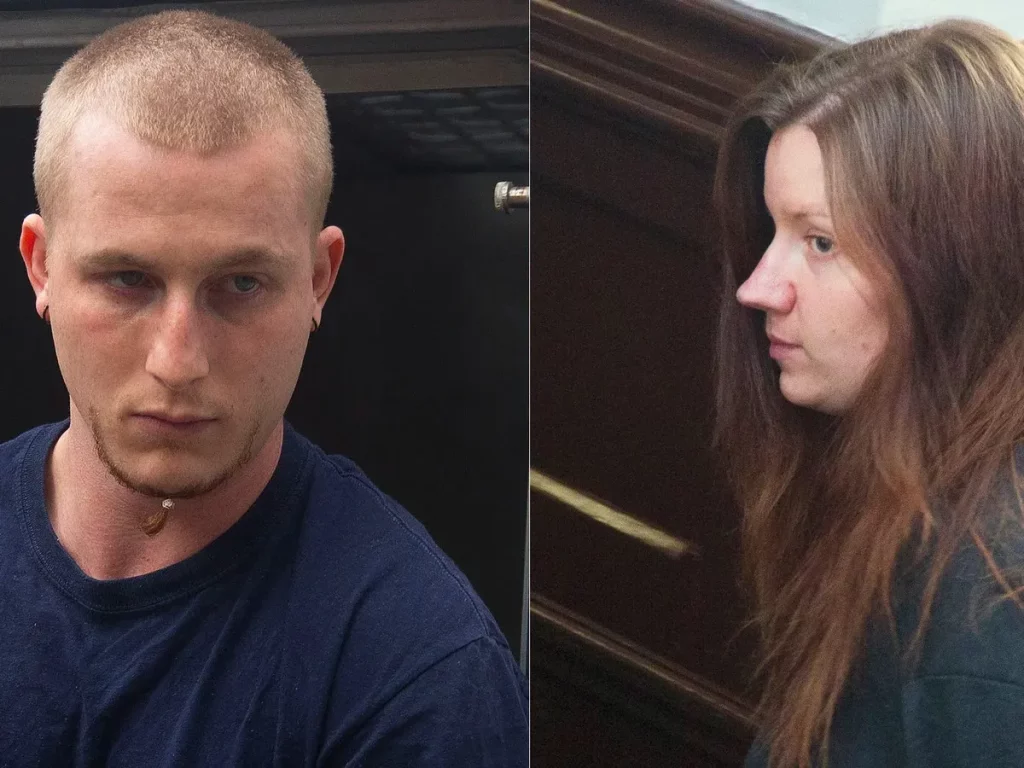
The Parole Board of Canada has granted unescorted temporary absences for the “personal development” and rehabilitation of a woman who helped kill a pregnant Inuit student from Labrador a dozen years ago in Halifax and dumped her body beside a highway in a hockey bag.
Victoria Lea Henneberry is serving a life sentence for the second-degree murder of Loretta Saunders in February 2014. In a decision released Wednesday, the parole board approved two 72-hour unescorted temporary absences (UTAs), so Henneberry, 40, can visit a halfway house.
“Your case management team believes it is desirable for you to participate in the proposed UTA so that you can focus on a gradual release to the community while allowing your risk factors to be closely monitored,” said the June 2 decision.
“This UTA allows a structured and supervised opportunity to assess your behaviour, decision-making and ability to comply with conditions in a community setting.”
Henneberry was in a minimum-security prison in Ontario last year. The parole decision out of Kingston, Ont., doesn’t indicate where she is imprisoned now, or where the halfway house is located that she’s planning to visit.
A spokeswoman for the parole board said Wednesday she could not divulge those locations because of inmate privacy.
The parole board granted Henneberry 30 days of unescorted leave in the fall of 2024 to take “personal development” courses at a halfway house.
But that was “prematurely cancelled days prior to its completion due to numerous violations of rules,” and Henneberry’s “emotional instability (self-reporting of suicidal ideation),” said the decision.
Henneberry and her boyfriend, Blake Leggette, were subletting a room in Saunders’ Halifax apartment when the couple killed the Saint Mary’s University student after she came to collect their rent that they didn’t have.
Saunders was 26 and pregnant when she died. Leggette attacked her from behind on Feb. 13, 2014, when she entered the apartment.
“Once inside the apartment, your boyfriend choked the victim and tried to suffocate her with plastic bags,” said the decision.
“The victim’s head was then hit against the floor twice.”
The pair put Saunders’ body in a hockey bag. They left the apartment to return a computer to a store for the money. When they returned, Leggette carried the hockey bag to the victim’s own car and put it in the trunk.
The couple left, using the victim’s bank card to buy food and other items.
They drove from Nova Scotia to New Brunswick, “where the victim’s body was then dumped, in the hockey bag, at the side of a highway, and continued to drive to Ontario,” said the decision.
They were later arrested in Ontario.
Henneberry “confessed to the murder the following day,” said the decision. “Video evidence showed that you and your boyfriend talked about killing the victim five days prior to the actual murder.”
Henneberry’s latest psychological risk assessment indicates she was diagnosed with a personality disorder (borderline personality disorder and narcissistic personality disorder), “with a suggestion of feigning psychological symptoms and negative impression management,” said the decision.
“Based on actuarial measures, the psychologist reported that you are currently a low-moderate risk for both general and violent recidivism.”
Henneberry hasn’t “demonstrated violent or aggressive behaviour or attitudes,” in the last three years, said the decision, and “there is no indication” she’s involved in the “institutional drug subculture.”
Henneberry, who the board has said practises the Wiccan religion, was born in Halifax, but mostly raised in Ontario.
The Correctional Service of Canada recommended she get the passes as part of her “gradual reintegration into society,” said the decision.
The parole board determined that Henneberry had “presented a structured plan that will both allow” her to complete her goals “and do so without additional risk to society.”
While she’s out of prison, Henneberry must “immediately report all sexual and nonsexual relationships and friendships” with men to her parole supervisor.
She’s also ordered to stay away from mobile phones and any device that can access the internet, and she must avoid contact with Saunders’ relatives.
“There are victims who have experienced trauma as a result of your criminal activity. As any contact with you will have negative impacts on them, you are not to have either direct or indirect contact with the victims or members of their families.” x1200
2026.6.11 ‘I’ll never forgive you, Montana’: Parents confront son’s killer in court
Victim impact statements were read during the sentencing hearing for Montana Lewis, who was found guilty of manslaughter in the 2020 stabbing death of Sam Graham Jr.
Emotions spilled out into a Sault Ste. Marie courtroom today as the parents of Sam Graham Jr. read victim impact statements during a sentencing hearing for their son’s killer.
In January, Montana Lewis was found guilty of manslaughter in Ontario Superior Court after he was initially tried for first-degree murder following the November 2020 stabbing death of the 19-year-old.
The incident when Sam Jr. died on Nov. 12, 2020, started with a fist fight and ended with Lewis killing him.
Sam and Brigette Graham, the victim’s parents, read their victim impact statements and understandably became overcome with emotion at times while Lewis sat a few feet away from them in the courtroom.
“I’ve been committed to serve a life sentence of heartache and despair, with no chance of parole — and I am no longer afraid of dying,” Brigette said at one point.
“I wait for the day I will see Sammy again, and maybe finally have some peace.”
Brigette was openly sobbing at some points, as she recalled that “nothing was making sense” on the night she found out from police that her son had been killed as the result of a stabbing.
She also recounted the moment she first saw her dead son laid out on a table in hospital, covered in blood with an intubation tube in his mouth.
“You’re surrounded by police officers that make sure you don’t touch your own child,” Brigette said.
Sam was beside Brigette for emotional support, grabbing tissues for himself at times while his wife read her statement before the court.
Brigette said her son’s death has left her “incomplete family” unable to celebrate holidays because of the “empty chair” where her son used to sit.
She now struggles day-to-day with post-traumatic stress disorder, anxiety and recurring thoughts of suicide following the loss of her son, who she said will never get the chance to be a father.
“It’s taken my happiness, my joy,” Brigette said.
She also made note of the teardrop tattoo under Lewis’ left eye, which in her mind is like “wearing your son’s murder like a badge of honour.”
A total of 47 victim impact statements were prepared by family and friends of Graham Jr., with portions of some being redacted over threats to Lewis’ family, criticisms of the justice system and calls for a stiff sentence.
The longest victim impact statement read today came courtesy of Sam, who spent more than an hour recounting the day his son died and the toll his death has taken on the Graham family.
He also spoke to what kind of person his son was, describing him as a “very bright light” who was always commended for his character at school and a “silent, gentle leader” on the football field.
“Over five-and-a-half years, every single day I wake up reliving my son’s murder,” Sam said.
He said his son made a “most honourable sacrifice,” for his then-girlfriend Semiah Lewis, who is Montana’s twin sibling.
“In that moment, Sammy gave his life to protect Semiah,” he said. “That was the only thing on his mind.”
The father of Graham Jr. also used his victim impact statement to lay out a number of issues he had with the justice system, which he called “a complete failure.”
“The system did not protect us,” Sam said.
Sam looked Montana directly in the eye at times while delivering his statement.
“I’ll never forgive you, Montana — never will I ever forgive you,” Sam said.
The sentencing hearing continues tomorrow with Ontario Superior Court Justice Alexander Kurke at the Sault Ste. Marie courthouse.
Submissions will come from both the Crown and defence.
A decision is expected to be reached at a later date.

What to know about today’s inquest proceedings
Officials with Niagara Health and a former peer support worker provided prominent testimony on Day 12 of the inquest for Heather Winterstein.
Winterstein, 24, died after a lengthy wait in the St. Catharines, Ont., emergency department on the second day she tried to seek help for pain. As an Indigenous woman with personal struggles, she may have been at higher risk in a health-care system with “systemic biases,” the inquest heard previously. She died on Dec. 10, 2021, despite hours of frantic efforts to save her.
On Thursday, Dr. Rafi Setrak, Niagara Health’s regional chief of emergency medicine, was questioned about the doctor who released Winterstein on Dec. 9 after giving her a Tylenol and telling her to return to the hospital if her condition got worse.
Setrak testified the health authority is “committed” to evaluating doctors, but added: “By virtue of the fact that Heather died, we failed.
“The question is, could we have succeeded [in saving her], and how could we have succeeded and what do we need to do to succeed?”
Dr. Kevin Chan, regional chief of staff and executive vice-president of medical affairs, said Niagara Health is constantly trying to improve its policies “and build systems that don’t fail people.”
Chan noted Dec. 10 was an “extraordinarily busy day” in the emergency department.
The inquest has heard the hospital faced extraordinary demands due to the COVID-19 pandemic. Ryan Pearson, commander of regulatory compliance at Niagara Emergency Medical Services, testified Thursday that call volumes were soaring at the time Winterstein took an ambulance to the hospital on Dec. 10.
Scott Cronkwright was a peer support worker with Niagara HELPS who aided Winterstein during her two days in hospital. He said he had lived experience with drug use and homelessness, so could understand how Winterstein felt.
On the day she died, he found her lying on the floor of the emergency waiting room in obvious pain.
During testimony by a triage nurse, notes presented at the inquest showed Winterstein had been having body pain for six days before she died.
Cronkwright said he’s haunted by the fact he didn’t push medical staff harder to get her urgent care.
“This young lady should have been in a bed. I don’t think she should have been in the waiting room.”
The inquest, which began March 30, continues Friday at 9 a.m. ET. Pearson, the Niagara EMS commander, is expected to resume testimony.
2026.4.16 LaSalle man sentenced to 2 years in jail for ‘vile’ antisemitic crimes
Public incitement of hatred a ‘rarely charged offence’ in Canada, says Crown
Before sentencing a 30-year-old LaSalle man to two years in jail, the Windsor judge described his antisemitic crimes as “vile, filth, disgusting.”
Nicholas Amor was sentenced Thursday for public incitement of hatred and possession of a weapon charges after pleading guilty on March 6.
He’s been in jail since his arrest in October. After credit for time already served, Amor’s sentence will be roughly 15 months behind bars.
Ontario Court Justice Mikolaj Bazylko called Amor’s social media posts repetitive and “repulsive.”
“These were not just words. You had the necessary means to inflict damage to seriously harm people, to kill people and based on your expression, Jewish people in particular,” said Bazylko.
During his sentencing hearing, the Crown read out some of Amor’s Facebook and Instagram posts.
Those included encouraging people to create Molotov cocktails at home and use them to “fight back” against Jewish people.
In another post, Amor said “Zionists are like rats and ticks … that must be cleansed with fire.”
“Call me antisemitic, anti-septic, I don’t give a shit,” said Amor in another one of the many social media posts.
The Crown also pointed out that public incitement of hatred is a “rarely charged offence” in Canada, but added that charges have increased since the Israel-Hamas war.
Once he’s out, he will be on probation for three years and cannot possess any weapons for a period of 10 years.
And his probation restrictions prohibit him from attending any synagogue, Jewish schools or other Jewish organizations as well as any protest or event that involves Palestine, Israel, the Jewish community and the Middle East.
Armor also cannot be on any form of social media once he’s released, except for WhatsApp and only to communicate with his family.
During his sentencing hearing, six community groups provided victim impact statements to the court, including the Windsor Jewish Federation and Community Centre.
Jewish people avoided public events over ‘fear’ Amor perpetuated
Executive director Marion Zeller said Amor’s posts had a “profound impact” on the roughly 1,500 Jewish people in Windsor-Essex.
“Our community lives in ongoing fear because of individuals like Mr. Amor,” said Zeller. “It’s also resulted in people not coming to community events because they fear being targeted in a public space.”
It was the Friends of Simon Wiesenthal Center — a non-profit human rights organization — that brought Amor’s posts to the attention of police.
During that organization’s statement in court, senior director of advocacy and policy Jaime Kirzner-Roberts said Amor’s posts create “a real and foreseeable risk to public safety.”
“For members of the Jewish community, this convergence of words and weapons is particularly frightening,” said Kirzner-Roberts.
Sorry for whoever I have impacted and thank you for the court’s time.
-Nicholas Amor
During these victim impact statements, Amor sat behind glass in the prisoner’s box rarely making eye contact with those who spoke.
Wearing a blue t-shirt and jeans, his arms were either crossed or he was leaning with his back up against the wall and at times his eyes would glance up at the ceiling.
Once members of the Jewish community finished expressing how Amor’s posts affected their community, the judge asked if he wished to say anything.
“Sorry for whoever I have impacted and thank you for the court’s time,” said Amor briefly.
Amor’s mother and aunt were present in court for sentencing.
“I’m confident with the strong family ties that this will be a turning point for him,” said defence lawyer Robert DiPietro Jr.
Amor has Jewish background himself, court hears
He added that Amor especially regrets his actions “because he does have a Jewish background.”
“Your family members are Jewish. I don’t even know what to say about that,” said Bazylko.
While in jail, the court heard that Amor worked with police to delete his Instagram page and is working to remove his Facebook account.
“Educate yourself,” said Bazylko. “That’s really at the end of the day is the main lesson I can tell you at this point sir.”
“It’s ok to have beliefs. It’s ok to be passionate about causes. But the promotion of hatred and violence is never ok,” the judge added.
The remaining charges laid by LaSalle police were withdrawn.
However, Amor was separately charged by London police and wanted on a warrant.
Officials are accusing Amor of taking part in an anti-war protest outside of a London convention centre in October, where police said he assaulted another man.

Two people were arrested after more than three kilograms of illicit drugs were found in a vehicle in Surrey, police say.
Officers with B.C.’s anti-gang unit, the Combined Forces Special Enforcement Unit of B.C., pulled the car over March 24 as part of an enforcement effort.
During the search, officers found 3.5 kilograms of drugs in bulk and vacuum-sealed bags. The drugs seized included nearly 1.3 kilograms of fentanyl in purple, yellow and red, about one kilogram of cocaine and 1.15 kilogram of methamphetamine.
One person was found to be in violation of study-permit conditions and remains in Canada Border Services Agency custody. Another person was issued a speeding ticket and received a seven-month driving prohibition.
Sgt. Sarbjhit K. Sangha, spokeswoman for the CFSEU, said the seizure represents a “significant financial blow to organized crime.”
No charges have been laid and the investigation is continuing.
The passage of time, credit for years spent in custody and loss of witnesses were factors in the Crown’s acceptance of Leslie Greenwood’s guilty pleas to manslaughter in the killing of a Hants County couple rather than going to trial a third time.
Greenwood, originally from East Mountain, Colchester County, had originally been charged with first-degree murder in the deaths of Barry Mersereau and Nancy Christensen in September 2000.
He wasn’t arrested until 2010 and was tried in 2012. He was convicted by a jury, but that was overturned on appeal.
He was retried in early 2018 and convicted again, but that was also overturned.
The case took this long to come back for what was a scheduled third trial because of other matters in Quebec. In 2015, Greenwood was tried in Montreal for a different double murder there. A mistrial was declared when the jury couldn’t reach a verdict, and he was convicted after a second trial in December 2017, which he unsuccessfully appealed.
He had been accused of being the driver of a getaway car for two men who shot two other men in a fast-food restaurant parking lot in Notre-Dame-de-Grace in 2010.
“To describe Mr. Greenwood’s situation and the chronology of the court proceedings as unusual is a gross understatement,” Crown attorney Peter Craig told Justice Josh Arnold at Greenwood’s sentencing last week on the manslaughter conviction.
Craig told Arnold that at least five significant Crown witnesses have died since the first trial. At the second trial, some witness testimony recordings from the first trial had to be played as evidence.
On top of that, Greenwood isn’t eligible for parole on his life sentence on the Quebec murders until 2035. If he was convicted of first-degree murder in the Hants County killings, his 15.3 years of credit for his time in custody since his arrest in 2010 would mean he was eligible for parole before 2035.
“This sounds dismissive to describe it this way, but you take into account the continuation of Mr. Greenwood accumulating time on remand if the matter was to go to trial. It could be argued it’s a bit of an academic exercise,” Craig said.
“There is not much from the Crown’s perspective to be gained by continuing with trial on the matters on the indictment and we saw it certainly in the interest of the public, taking all these things into account, to come to a true negotiated joint recommendation to resolution on the two manslaughter pleas.”
The agreed statement of facts to support the manslaughter conviction stated that the shooting happened at the Upper Burlington home of Mersereau and Christensen and included Greenwood and Michael Lawrence.
The statement also said:
Lawrence has admitted responsibility for the killings, and pleaded guilty in 2012 to the murders.
Greenwood knew Lawrence and had prior dealings with him.
In the days leading up to the killing, Lawrence was involved in criminal activity because of a significant drug debt that he owed.
As part of that activity, he stole a truck from an individual and killed him. Greenwood was aware of it.
Greenwood travelled with Lawrence to the Mersereau home and believed the purpose of the trip was to retrieve drugs or money, by force if necessary, and that there was a possibility that a confrontation could occur.
Greenwood knew Lawrence was armed with a firearm. Given the circumstances of the anticipated activity, Greenwood was aware that there was a risk of serious bodily harm.
Greenwood briefly entered the residence, but returned to the stolen truck outside prior to Lawrence firing the fatal gunshots.
Greenwood did not discharge a firearm. After the shooting occurred, he and Lawrence left the area.
Lastly, the statement said Greenwood “acknowledges that by attending at the residence with Mr. Lawrence in these circumstance, he was participating in unlawful conduct and understood that there was a real likelihood that violence could occur. He knew the situation carried a risk that bodily harm could result. Mr. Greenwood accepts that the deaths of Mr. Mersereau and Ms. Christensen occurred in accordance with an unlawful act, he was a co-principal to that unlawful act, and that he knew there was a likelihood of violence that could result in bodily harm.”
2026.4.16 Killing of Iranian activist in B.C. exposes increasingly bitter divisions within the diaspora
NEW YORK (AP) — Masood Masjoody had a long history of firing accusations at those he considered adversaries. So when he claimed on social media last fall that two fellow Iran-born activists were plotting to kill him, it did not get much notice.
Then the mathematician disappeared in early February. By mid-March, police in British Columbia had found his body and brought first-degree murder charges against the pair Masjoody said were after him.
It was startling news for Iranians outside the country, particularly those who oppose both its government and a campaign to make the son of its former king Iran’s next leader. Days after Masjoody disappeared, 10 other outspoken diaspora figures, most of them critics of the monarchist campaign or the war with Iran, were tagged in an ominous message on the social platform X.
“Soon you’ll have to find the corpses of many,” it warned.
The post, written in Farsi and topped by a knife emoji, came from a since-deactivated account named for the SAVAK, the feared secret police once used by the monarchy to crack down on dissent.

2026.4.16 Hate Crime Unit investigating alleged attack on Muslim woman on bus in Scarborough
The Toronto Police Service tells CityNews its Hate Crime Unit is investigating an alleged incident on a Durham transit bus where a man was caught on video verbally accosting and kicking at a Muslim woman.
The bus was in Scarborough at the time, prompting Toronto police to take on the investigation.
“I can confirm that police are aware of this incident,” a TPS spokesperson confirmed on Thursday night. “A report has been filed and (the) Hate Crime Unit is investigating.”
The spokesperson could not confirm the exact date or time of the incident.
In a brief video posted on X by the National Council of Canadian Muslims (NCCM), a man can be heard swearing at the woman and saying the word “terror” at least twice before he lunges and kicks at her.
It’s not clear if the kick struck the woman.
“We are outraged by a recent incident of Islamophobia that occurred on the Durham Transit,” the NCCM said in the social media post. “A hijabi women travelling between Scarborough and Ajax was allegedly both verbally and physically assaulted.”
“The incident further escalated when the man began to physically assault her. Another hijabi passenger on the bus intervened.”
The NCCM says they are in contact with the victim.
No suspect information has been released by police.

A lab was searched in October 2025 that uncovered one of the largest clandestine labs producing fentanyl and other illicit drugs in recent B.C. history
Police have now processed a vast cache of illicit drugs, including nearly 40 kilograms of fentanyl, that were seized late last year during a bust of a clandestine drug lab in Chilliwack.
Chilliwack RCMP gave an update on the investigation Wednesday after a drug trafficking and production investigation that led to the arrest of two men in October.
On Oct. 2, Chilliwack Mounties, specialized RCMP units and other agencies searched several homes, storage lockers and a clandestine lab on South Sumas Road.
Two men, 35‑year‑old Justin Fauth and 37‑year‑old Carlos Martinez, were arrested the same day.
The seized items have since been analyzed and include:
•39.31 kilograms of fentanyl, fluorofentanyl, fentanyl analogs, and mixtures containing fentanyl, the equivalent of nearly 400,000 doses
•43.09 kilograms of methyl-methcathinone, often referred to as “bath salts”
•2.9 kilograms of methamphetamine and mixtures containing meth
•3.96 kilograms of MDMA, plus 3,766 MDMA pills
•Over 5,000 kilograms of chemicals and precursors used in producing illegal drugs
•Production equipment associated with clandestine drug labs, including reactor vessels, glassware, evaporators, holding tanks and mixers, and a pill press
In November 2025, police also seized 50.47 kilograms of fluorofentanyl, the equivalent of 504,700 doses, which investigators have tied to the clandestine lab.
“Due to the inherent dangers associated with clandestine drug laboratories, the safe handling, dismantling and analysis of the substances and equipment seized was a process that took a significant amount of time,” said Chilliwack RCMP in a news release.
Chemists from Health Canada and the RCMP’s clandestine lab enforcement team removed and disposed of the drugs, chemicals and equipment, and civilian hazardous waste experts were brought in from out-of-province to deal with the stash, which included a “highly dangerous chemical located on-site that posed a significant risk to public safety.”
The operation cost “several hundred thousand dollars.”
“The scale of this seizure underscores the serious threat organized crime poses to public safety,” said Supt. Gary Hiar of the enforcement unit.
Hiar said the unit works with police partners across B.C. “to identify and prioritize the most harmful offenders, ensuring resources are directed where they will have the greatest impact in protecting our communities.”
Bylaw officers from the City of Chilliwack are also working to recover the costs of the seizure and cleanup.
Fauth and Martinez are still in custody as the case makes its way through the court process.
“Investigations like this demonstrate our ongoing commitment to targeting those responsible and working with our partners to reduce the presence of dangerous drugs in Chilliwack,” said Supt. Darren Pankratz, the officer in charge of the Upper Fraser Valley RCMP.
The Chilliwack haul is among the largest from a drug lab in recent B.C. history.
Canada’s largest fentanyl lab, in the small community of Falkland east of Kamloops, was busted in late 2024.
Police found 54 kilograms of fentanyl, 390 kilograms of meth, 35 kilograms of cocaine, 15 kilograms of MDMA and six kilograms of cannabis. There were also tonnes of precursor chemicals, enough that combined with the finished fentanyl could have produced 95 million potentially lethal doses of fentanyl, police said at the time. Postmedia News learned it was connected to the Wolfpack gang alliance.
Since then, B.C. RCMP have raided at least 14 more clandestine labs across the province, including the Chilliwack lab that was one of the largest uncovered since Falkland. Another lab was busted in September 2025 outside Sooke on Vancouver Island.
Also last September, the clandestine lab team searched a home in Surrey and a condo in Richmond where fentanyl, precursor chemicals and weapons were seized. Three labs were searched at the same time in March 2025, in Aldergrove, Pitt Meadows and Mission, all linked to the same Langley man.
In February 2025, another lab was discovered during a police call on an unrelated matter in the Township of Spallumcheen in the Okanagan.
In many cases, the province has filed civil forfeiture lawsuits against the properties and their owners.
2026.4.9 Canadian organizer of notorious cocaine plot finally loses epic 7-year fight to remain free
Ali Lalji was part of a case that revealed abuse of the Toronto headquarters of Vice Media to recruit interns, models and musicians as drug mules to smuggle cocaine into Australia

More than 10 years after his transnational cocaine smuggling plot crumbled and seven years after his arrest for orchestrating it, Ali Lalji has lost his epic campaign to stay out of prison.
Lalji, 37, was part of a sensational case that revealed abuse of the Toronto headquarters of the youth-oriented Vice Media to recruit interns, models and musicians as drug mules to smuggle bricks of cocaine glued into the lining of their luggage when they flew to Australia.
While five recruited mules — four Canadians and one American — languished for years in an Australian prison after they were caught at Sydney airport with cocaine valued at $22 million, and while Lalji’s partner, a former Vice editor, spent years locked up in Ontario, Lalji remained free, courtesy of a keen legal strategy and logistical delays.
On Wednesday, he ran out of runway.
Lalji surrendered into custody Wednesday morning in anticipation of the decision by the Court of Appeal for Ontario. He would soon hear the verdict: Appeals of his conviction at his 2023 trial and of his punishment were dismissed, leaving him with a nine-year prison sentence.
The actual time he will remain behind bars was previously reduced somewhat by credit for the brief time he spent in pre-trial custody and a longer period while out on a $1 million bail to his parents’ home while awaiting the conclusion of the legal rigmarole.
Lalji’s lawyer, Ravin Pillay, declined to comment to National Post without first consulting his client. A response was not received prior to publishing deadline.
Lalji became embroiled in the large-scale cocaine plot through his time at Vice, where he worked in advertising for the once mighty media brand. That is where he befriended Vice’s music editor for Canada, Yaroslav Pastukhov, better known by his pen name Slava Pastuk.
The pair recruited young people into a drug smuggling scheme that sent couriers on free trips to Las Vegas, where they were given suitcases with bricks of cocaine hidden inside, which they then took as their luggage on a flight to Sydney, Australia.
Neither man was the brains of the operation, nor its boss. That was the work of B.C.-based men who arranged with a cartel to supply the drugs and jerry rig the luggage, but Pastukhov and Lalji proved to be capable recruiters, convincing sometimes reluctant young people to risk becoming international drug couriers.
Lalji and Pastukhov had both successfully made the same journey themselves, court heard, which proved to be a powerful sales pitch.
It is unknown how long the network had been running or how many couriers made the trek, but the wheels fell off when a group of mules arranged by Lalji and Pastukhov were caught in Australia in 2015 with 40 kilograms of cocaine. Five were arrested, convicted and imprisoned.
The secrets behind the cocaine plot were revealed in an investigative feature by National Post, including the shocking role of Vice’s music editor.
On Jan. 31, 2019, RCMP officers arrested and charged both men with conspiracy to import cocaine into Australia. Pastukhov pleaded guilty and was sentenced that same year.
Lalji, however, took a different tact, leaning on support and resources from his wealthy, globe-hopping family; from his first court appearance to his last, he was represented by top-tier lawyers, seemingly with a mandate to do whatever legal maneuvering they could muster, all while Lalji was free on bail.
Much of the evidence against Lalji at his trial came from the phones of the drug mules that had been seized in Australia — including text messages and recordings that one mule had secretly made of his recruitment meetings — and testimony by Pastukhov, who was called as a reluctant witness.
In late 2023, Justice Russell Silverstein released his guilty verdict against Lalji. Lalji was immediately released on bail pending an appeal.
Every six months since, his bail was renewed while his appeal was perfected, as the court refers to completed appeal documentation.
Three appeal court judges finally heard Lalji’s appeal this January. Lalji’s case was argued by Pillay and opposed by Crown prosecutors Maria Gaspar and Sarah Malik.
Pillay had argued the secret recordings should not have been accepted as evidence because they were not adequately authenticated.
Justice Jonathan Dawe, writing on behalf of the appeal panel, said it was open for the trial judge to accept the recordings because the contents on them inferred the time they were recorded when compared to other evidence, and Pastukhov confirmed some of the voices. There was also no evidence of tampering or fabrication.
Pillay also complained of the trial judge’s handling of Pastukhov’s inconsistent testimony, some of which seemed to help Lalji’s case and some hurt it.
Dawe said it was reasonable for the trial judge to reject most but not all of Pastukhov’s testimony in accordance with other evidence in the case, and to conclude Lalji knew the contraband being smuggled was cocaine, or he was willfully blind to that fact.
Pillay’s argument that Lalji was convicted of a different conspiracy than the one he was charged with was trickier for appeal judges to parse.
Evidence at Lalji’s trial showed that Lalji and Pastukhov jointly recruited and organized trips for two of the five mules who were busted, while Pastukhov, at his own trial, pleaded guilty to recruiting four of them.
Pillay argued that because the men were charged together on a single count of conspiracy, it needed to be the same plot for both accused. And since evidence did not establish beyond a reasonable doubt that Lalji was a part of the larger conspiracy, he should have been acquitted, even if evidence showed he was part of a smaller conspiracy.
“I agree that some of the underlying planks Mr. Lalji relies on to construct this argument are sound,” Dawe wrote. Pillay was right that the accused in a jointly charged conspiracy needs to be part of the same conspiracy.
In this case, however, the court found the two had the same objective — recruiting mules to smuggle cocaine into Australia — and it was reasonable for the trial judge to conclude they were members of a single conspiracy even if Pastukhov knew more specifics than Lalji.
The evidence suggested Lalji was aware there were other moving parts to the plot. He did not think his two couriers were “a stand-alone criminal venture that was not part of a broader overarching conspiracy,” Dawe wrote.
Lalji also objected to his nine-year sentence.
Pillay argued there was not sufficient evidence that Lalji had made a smuggling trip prior to recruiting the others, but the appeal judges disagreed. Pillay also said the 40-kg size of the load carried by the five mules should not have been considered an “extremely aggravating” factor against Lalji, arguing the two mules Lalji recruited only carried 17.3 kg of cocaine.
The judges disagreed: “There was evidence supporting the inference that Mr. Lalji knew that he was participating in a very large-scale ongoing importing scheme, even if he did not know exactly how much contraband was being imported on this one occasion,” Dawe wrote.
And while evidence showed Pastukhov played a larger role, Pastukhov also quickly pleaded guilty while Lalji definitely did not, meaning the two factors balanced out to both men being given the same punishment.
2026.4.8 Ringleader of $22M Toronto airport gold heist gets four years in prison for his spectacularly simple plan
Arsalan Chaudhary, 43, had already pleaded guilty for orchestrating the heist and was sentenced in a Brampton, Ont., courtroom

The ringleader of the spectacular Toronto Pearson Airport gold heist that made off with more than $22 million in gold and cash that had just arrived on a flight from Switzerland has been sentenced to four years for his daring snatch.
Arsalan Chaudhary, a 43-year-old man formerly of Mississauga, Ont., had already pleaded guilty for orchestrating the shockingly simple heist and was sentenced Wednesday afternoon in a Brampton, Ont., courtroom, with his parents and sister there to support him.
Chaudhary’s lawyer, Harval Bassi, asked for a four-year sentence minus time his client has spent in pretrial custody, while the Crown prosecutor, Jelena Vlacic, asked for seven years. Judge Shannon McPherson of the Ontario Court of Justice accepted four years minus 174 days (on a two-for-one basis) that Chaudhary spent in custody prior to sentencing.
He was also ordered to pay $22 million in restitution to Brink’s, an international secure transit company who was moving the cargo on behalf of two clients, the TD Bank in Toronto and a foreign exchange in Vancouver.
It’s a quirk of Canadian law that the sixth largest gold theft in modern history and the largest ever in Canada brings a charge of theft over $5,000, to which Chaudhary pleaded guilty to. In return, his other charges — two counts of possession of property obtained by crime, and conspiracy to commit an indictable offence — were dropped.
The shipping container filled with almost-pure gold bars weighing 400.19 kilograms was stolen from an Air Canada cargo facility shortly after arriving on an Air Canada flight from Zurich, Switzerland, on April 17, 2023.
Even though the load was valued at $22.5 million, a driver showed up, presented an Air Canada waybill for a shipment of seafood that had already been picked up the day before, and have an Air Canada employee whirl the high-value container onto his truck by forklift.
The snatch was so smooth it wasn’t noticed until three hours later, when Brink’s security personnel arrived to collect the valuable container and Air Canada employees couldn’t find it.
Court earlier heard that Chaudhary spoke with the driver of the truck 50 times in the days leading to the heist.
And as the truck pulled out from the warehouse onto Britannia Road East, turning onto Dixie Road and then west on Highway 401, Chaudhary shadowed it, driving in tandem for about 50 kilometres, to Acton, Ont., where Chaudhary took some of the gold and the rest of it was delivered to a jeweller.
Alleged co-conspirators were anxious to get a piece of it, but Chaudhary urged patience, court heard, texting one partner who worked at the airport there was “too much heat” right now to melt down the gold and distribute the proceeds.
Melt gold is a process. LOL
“We going to have to wait now. Melt gold is a process. LOL,” he wrote in his message, according to an agreed statement of fact read into the record. Police said the gold was melted in the basement of a Mississauga jewelry store and forged into crude gold bracelets that could no longer be forensically traced to the stolen gold bars, which had been individually imprinted with serial numbers.
That melting and forging process was complete 53 days later, when a text informed Chaudhary that their buyer “took all of it.”
“They got horny when they see it. Hahaha. They can’t let it go,” a co-conspirator messaged him. “The price dropped more today, but honoured yesterday’s price. They said it’s about to be a s–t show.”
Chaudhary was right about the heat. A gold heist electrifies any headline and news of the theft spread internationally as police poured resources into the case.
A huge break for investigators came when they discovered that the driver, who had covered his face, had removed a glove from his left hand during the pick-up, leaving behind a fingerprint on the paperwork.
Two handwritten “debt lists” — with nearly identical breakdowns of 18 entries for how the money from the sale of the gold was to be divvied up — were seized by police on Sept. 14, 2023. One of them was found at Chaudhary’s Mississauga apartment, where police also seized $154,000 in cash.
The list breaks down the intended recipients of approximately $10 million, suggesting that because of its illicit source the gold was sold for around half its value.
There was an unspecified “5M” taken off the top. Other portions were listed by initials, first names, nicknames, job description, or consumer items, including “boss,” “trucks,” “driver,” “supplies,” “Tommy,” “AR,” “K,” “P,” “safe spot,” “Dubai,” “condo,” “boat + slip,” “parents,” and “watch.”
It was soon too hot for Chaudhary, who told his family he was relocating to Dubai, in the United Arab Emirates, at the end of 2023.
On the first anniversary of the gold heist, Peel Regional Police held a dramatic press conference announcing the results of their probe, codenamed Project 24K. There were nine arrest warrants for suspects, five of whom had been arrested in Canada and one in the United States. Two of the suspects were Air Canada employees at the time of the heist, and one was a jewelry store owner.
Chaudhary couldn’t be found and was declared a wanted fugitive.
He returned to Canada in January from Dubai and surrendered to police who were expecting him at the same airport from where the gold had been taken.
The alleged driver of the truck, Durante King-Mclean, from Brampton, is in custody in the United States, after police stopped a car in Pennsylvania with 65 handguns in the trunk that were being smuggled into Canada. Authorities said a portion of the stolen gold proceeds was used to fund a cross-border gun-running plot. King-Mclean recently pleaded guilty to firearms trafficking-related charges in the United States
Two people remain fugitives.
Simran Preet Panesar, 33, from Brampton, is believed to be in India. He quit his job as a manager at the cargo warehouse where the gold was taken a few months after the heist and disappeared.
Prasath Paramalingam, 36, from Brampton, was arrested in the original sweep but later disappeared after his release. He is the subject of a bench warrant for arrest after failing to appear in court on Aug. 19, 2024. Paramalingam is also wanted in the United States in a related gun-running case.
Only a small portion of the gold has been recovered, seized by police in the form of six crudely made gold bracelets, worth about $90,000.
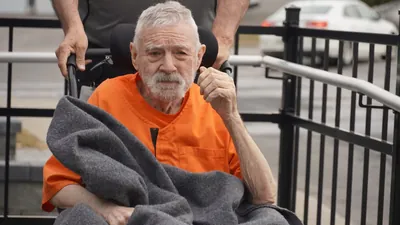
Rodney Nichols, accused of murdering Jewell Parchman Langford in 1975, is living with dementia
Rodney Nichols, the former Montreal man accused of murdering a Tennessee woman whose body was found in 1975 in an eastern Ontario river, is not fit to stand trial, a judge decided Wednesday.
Nichols, now 83 and living with dementia, was charged by Ontario Provincial Police in 2022 with murdering 48-year-old Jewell Parchman Langford, who was his girlfriend back in 1975.
Her killing was one of Canada’s oldest cold cases until her remains were identified in 2020 with the help of investigative genetic genealogy.
Nichols was extradited from the United States in 2023 to stand trial in Canada. He had been living for years in a retirement home in Hollywood, Fla., and was interviewed there by the FBI, OPP and other police agencies in 2022.
At the end of the three-day fitness hearing in L’Orignal, Ont., Justice Brian Holowka accepted a joint submission by assistant Crown attorney Louise Tansey and defence lawyer Laura Metcalfe that Nichols’s dementia renders him unable to understand and participate in the case against him.
He had been due to stand trial starting in April.
The hearing was unusual, with the Crown presenting case evidence that would typically not be allowed because of its irrelevance to Nichols’s health.
But it was presented with the consent of the defence after much negotiation, with the judge noting the transparency will help the public better understand the context of the hearing and why a trial on the merits of the case is not going ahead.
Parchman Langford’s niece, Denise Chung, was also allowed to read a victim impact statement during the hearing. That was done out of compassion for the family, the judge said, as they’ll likely have no other public forum to express their loss.
With her husband’s arm draped around her shoulder, Chung told court that Parchman Langford was “a remarkable woman” who was “bright and cheerful and full of life” and “heavily involved” with her community and her family back in Tennessee.
Her disappearance “traumatized the family” and “completely broke” Parchman Langford’s mother, who “spent every dollar she could” trying to hire investigators and chase leads, Chung said.
In the end, Parchman Langford’s mother and siblings died never knowing where she’d ended up or what had happened to her, Chung said.
Outside court, Chung said she felt closure and that all the justice that could have done in the case had been done.
While it was hard to hear the results of the Westmount, Montreal and Ontario police investigations — details she hadn’t heard before, and which have since been playing over and over in her mind — Chung said she’s grateful for all their efforts over the years and the fact they didn’t give up.
“We got the best that we could get under the circumstances. I feel like there was so much evidence of what really happened,” Chung said.
“And I feel like for our family, we will be as content as we can be that as much justice as can be done at this point is done.”
Admissibility of video would have been challenged
The evidence against Nichols has not and will likely not be tested in court, and he remains innocent.
Earlier this week, court watched video evidence showing Nichols making incriminating statements to law enforcement officials, including that the dress ties binding her wrists and ankles were his.
But he was already suffering from cognitive decline at the time he made the statement, and court heard Wednesday that if Nichols had been deemed fit to stand trial, the defence would have challenged the video’s admissibility during pre-trial motions.
Now that he has been deemed unfit, Nichols will be transferred from the medical wing of the Ottawa-Carleton Detention Centre to the forensic unit of the Royal Ottawa Mental Health Centre, under the jurisdiction of the Ontario Review Board.
The evidence against Nichols has not and will likely not be tested in court, and he remains innocent.
Typically, alleged offenders deemed unfit are treated with the goal of making them fit again, but it’s unlikely that will happen due to Nichols’s ongoing cognitive decline.
It is too early, however, for a judge to rule that he will never be fit to stand trial.
A case going back decades
Unidentified for 45 years, Parchman Langford was long known only as the “Nation River Lady” after the location where her body was located in Casselman, Ont., along Highway 417 between Ottawa and Montreal.
In 1975, Nichols was a star player for the Westmount rugby club and had just moved into a house in Montreal with Parchman Langford, a woman from Tennessee he’d met in Florida.
She paid for the house herself in cash, but only Nichols’s name was on the deed.
A few days later, Parchman Langford stopped communicating with her family in the United States. Her body was found on May 3, 1975.
Parchman Langford’s identity was established through genetic genealogy, which helped find her family members in Tennessee. Parchman Langford had left the state in the 1975 to live in Montreal with Nichols.
The discovery led the OPP to work with police in Montreal, where her family had reported her missing in 1975.
Outside the courthouse Wednesday, assistant Crown attorney Louise Tansey reflected on the five-decade wait for justice.
“Time revealed the secret of the identity of the remains of Jewell Langford, the remains known as Nation River Lady. Time gave us investigative genetic genealogy and revealed the mystery of the disappearance of Jewell Langford,” she said.
“Time also deprived all of us — the community, Mr. Nichols, Jewell Langford’s family — of a trial on its merits.”
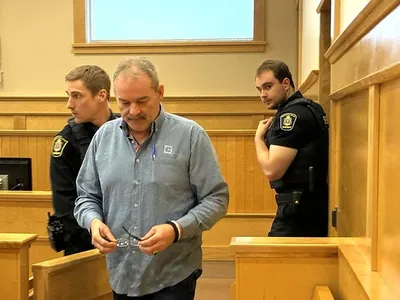
Penney is accused of killing his estranged wife, Jennifer Hillier-Penney, in St. Anthony in 2016
Courtroom one at the Corner Brook courthouse was filled to capacity on Wednesday, April 1, as the long-awaited trial of Dean Penney began with jury selection.
Penney, 52, is charged with the first-degree murder of his estranged wife, Jennifer Hillier-Penney.
Hillier-Penney disappeared from the St. Anthony home she once shared with Penney on Nov. 30, 2016.
She had been at the home to care for their youngest daughter, Deana Penney, while Penney was supposedly duck hunting at his cabin.
When Deana Penney woke the next morning, there was no sign of her mother. Hillier-Penney’s purse, boots and jacket were where she left them. Her car was in the driveway with the keys in the ignition. There was no sign of a struggle, no evidence of anything out of place.
As a search for the missing woman took place, her disappearance was deemed suspicious.
Even though her body has not been found, the RCMP is certain that Hillier-Penney was killed that night. Family, friends and others in the community have not hidden their belief that Penney killed her.
On Dec. 15, 2023, Penney was arrested and charged with Hillier-Penney’s first-degree murder.
Who will make up the jury?
Of the group of potential jurors assembled in the courtroom, 48 people were called to come forward. After Justice Vikas Khaladkar exempted some of them, 17 people were sworn or affirmed as members of the jury.
One of those was dismissed, leaving 16 members.
Khaladkar intends to dismiss two more of them before the Crown begins to call its evidence.
That will leave 14 jurors, 12 of whom will sit in the jury box and two who will sit as alternates.
The trial is expected to last a month, and Khaladkar said choosing 14 jurors is in the best interest of justice to ensure that there is a complete jury when the time comes for the jury to deliberate. At that time, the jury will be reduced again, as only 12 can deliberate.
Penney replied with “not guilty.”
After the jury was selected, they were dismissed until 2 p.m.
Khaladkar is to address the jury during the afternoon sitting, and then opening statements will be heard from the Crown and defence. The Crown also plans to call its first witness today.
The Crown attorneys assigned to the case are Shawn Patten, of the Special Prosecutions Office, and Kate Ashton of the Corner Brook office.
Penney is represented by Jeff Brace and Mark Gruchy.

2026.4.1 Tumbler Ridge shooting victim moved out of ICU, father says
Maya Gebala moved to recovery and rehab unit, slowly making progress, family says
The father of Tumbler Ridge, B.C., mass shooting victim Maya Gebala says his daughter has been transferred out of intensive care into a “recovery and rehab-focused unit.”
David Gebala said in a Facebook post that the 12-year-old doesn’t seem to be in as much pain now, and is more energetic, with her colour coming back.
He said the time spent in the intensive care unit (ICU) was a “whirlwind” of highs and lows, but she’s slowly making progress.
Gebala said he was “completely overwhelmed” as Maya was able to sit up with the help of hospital therapists, and he was “finally able” to wrap his arms around her.
Gebala said he can’t put into words how hugging his daughter felt in the moment, and all he wanted to do was “lift her up, hold her close and never let go.”
Maya is being treated at B.C. Children’s Hospital in Vancouver for injuries including a gunshot wound to the head suffered in the mass shooting in February.
2026.4.1 Stronach had pattern with women that led to sex assault charges, Crown alleges in closing arguments
The judge must decide whether the ‘similar fact evidence’ is legally admissible, and if so, what force it should have in her reasoning on each specific count
In the early 1980s, when he was approaching 50 years old, auto parts billionaire Frank Stronach followed an alleged pattern in the sexual encounters that have brought him to trial today on criminal sexual assault charges, the Ontario Crown argued Wednesday in its closing submissions.
The pattern went like this. First there would be a dinner or drinks at a public location, said prosecutor Jelena Vlacic, either the midtown Toronto nightspot he owned called Rooney’s or a restaurant near his waterfront condo. Then he and the woman would shift locations to a nearby private place, typically that same condo. Then there would be an abrupt and unheralded change in Stronach’s demeanour “from the friendlier professional to the amorous,” Vlacic said. That change in demeanour was not preceded by any words or discussion, and the complainants only remained for the duration of offences, leaving immediately after.
All the alleged incidents involve similarly aged complainants, young women in their 20s. The similarity is not just that they were the same age, Vlacic argued, but that they had a similar age gap to Stronach, which Judge Anne Molloy observed stood to reason.
All the women had a similar level of familiarity to him. The relationships were not identical, and included both an employee and casual acquaintances, but none were strangers, nor intimates, nor family members.
“They sort of occupy a similar level of distance from Mr. Stronach,” Vlacic said.
“That’s not very distinctive,” Molloy said, but she agreed with the Crown that similarities need not be “striking” in order to qualify as corroborating circumstantial evidence.
These are the similar facts that the Crown argues support the allegations by the remaining complainants in his sexual assault trial.
Molloy must decide both whether this “similar fact evidence” is legally admissible, and if it is, what force it should have in her reasoning on each specific count in Stronach’s indictment.
As the Crown described it, the judge’s job is not to simply add up similarities and discrepancies to make some “formulaic” conclusion about the net balance. Rather, to use similar fact evidence as circumstantial corroboration for criminal allegations requires “a persuasive degree of connection” between similar fact evidence and facts charged, prosecutor Vlacic said. It need not be “striking” but it must be persuasive.
Vlacic mixed metaphors in describing this area of law, speaking about a house of cards built on shifting sands, to make the point that “you need the foundation before you can stack with the similar fact reasoning.”
But much has changed since the issue of “similar fact” was first raised on the trial’s opening day.
What began in February as a trial on 12 charges involving seven women returned to court this week as seven charges involving four women, after the Crown abandoned some charges as having no reasonable prospect of conviction, largely due to credibility concerns about the complainants’ testimony. Then, on Wednesday, Molloy indicated she could not possibly convict Stronach on the two charges involving the first woman to testify because her testimony was unreliable, even about the year the incident occurred. So now it is down to five charges involving three women.
As a result, some of the similarities are becoming less compelling, as the judge made clear in her back and forth comments with the prosecutor.
Molloy also wondered aloud whether similar fact evidence can “work both ways.” She said she had never before encountered this problem in her years on the bench, and is unaware of any case law on it, but if similar facts of alleged crimes can add up to a propensity to bad character, then maybe other similarities might arguably go to good character, or as Molloy put it, what’s sauce for the goose is sauce for the gander.
In two incidents, she said, Stronach allegedly made sexual advances but immediately stopped when the women said no, and then they went home, one on her own, another with Stronach’s driver. “If we’re looking at minor similarities, why not include the fact that he seemed to have stopped when told to?” Molloy asked prosecutor Vlacic, who did not immediately reply, but was instead granted time to reflect and consider her response over the lunch hour. It remains unsettled.
The persuasive power of similar facts is also arguably lessened by the possibility of what the Crown called “inadvertent tainting,” in which some complainants read media reports and learned details of other complainants’ stories, which then figured in their own. The key issue is whether sharing of stories led to changing of stories, and one key point is that two women described Stronach ripping through their pantyhose. One woman who alleged this happened to her acknowledged that she had seen an account of another woman who alleged the same.
Vlacic said there was nothing wrong with doing this research, that it was a “completely normal human response” for a sexual assault victim, and that now the Crown must prove a negative, that learning this detail did not taint the women’s evidence.
To rule on this, Vlacic said Molloy must consider whether this complainant sought this information out to make her own account better.
“I don’t think that’s right,” the judge said. “What it does is diminish the improbability of two people saying the same bizarre thing, about the pantyhose… The likelihood of that being a coincidence is remote, so that buttresses the evidence of one and the other. But she read about the pantyhose thing. She knew about it. It’s not such a big coincidence.”
This does not mean it was not true or was deliberately misleading, it just means it is no longer a provocative coincidence. “It loses its impact when she knew someone else said it too,” Molloy said.
To the defence complaint that the complainants were blindly believed with no questioning or investigation, Vlacic agreed that no one should be treated with a presumption of credibility. But likewise no complainant should be saddled with a “presumption of incredibility,” she said.
For the majority of Canadian legal history, much of the way courts have tested evidence of sexual assault was “in a word, wrong,” Vlacic said. Just because an accused has been brought to trial “is not tantamount to a presumption of guilt.” It is how the process works. “It is not for the police to assess reliability,” Vlacic said. That is for trial courts.
Before delivering her verdict, Molloy is set to hear a defence motion next week about whether police and prosecutors tainted the witnesses themselves by improperly coaching them on what to say and how to say it.
2026.4.1 Calgary police make arrest in ongoing extortion investigation
Calgary police have made an arrest as part of an investigation into a series of extortion attempts targeting the city’s South Asian community.
Rana Cheema, 45, has been charged with extortion and uttering threats.
Police say between March 4 and 22, there was “a series of escalating incidents,” including a shooting and reports of property damage and suspicious activity at multiple daycare facilities outside Calgary.
Investigators believe all the incidents were connected to ongoing extortion attempts.
Police say the accused was trying to acquire large sums of money and control of the businesses.
Officials do not believe any children were at risk of being harmed but, given the locations involved, officials treated these threats very seriously.
“These charges represent an important step forward, but this is only the beginning of our enforcement efforts,” said Calgary Police Service Supt. Jeff Bell in a news release.
“We want to be very clear: Calgary is not a place where extortion, intimidation or violence will be tolerated.”
Cheema is expected in court on April 22.
Since January 2025, there have been 41 extortion attempts in Calgary, with 18 of those involving shootings at homes, businesses or vehicles.
No one has been hurt in any of these incidents.

Toronto police are searching for three women after someone was allegedly drugged and robbed.
Investigators say the victim met a woman at a hotel in the Yonge Street and Gerrard Street area in the early morning hours of March 29.
After going up to the woman’s hotel room, police allege she mixed an unknown substance into their drink, causing them to become sick.
“The suspect escorted the victim into a black Dodge Durango, which was occupied by two other females,” police said in a release. “These females took the victim’s phone and made multiple e-transfers to themselves. Once the e-transfer limit was reached, the victim was taken to an ATM to withdraw more money.”
Police say the women then drove the victim to a hotel in the University Avenue and Adelaide Street West area before fleeing the scene.
Investigators released a photo of one of the female suspects but provided no further suspect descriptions.
Police believe there may be more victims and are asking anyone with information to contact them.
2026.3.31 Murder victim found in Quebec decades ago identified as missing northern Ontario woman
Pamela Harvey’s family reported her missing to Sudbury police on Christmas Day, 1978
Police say dental records and genetic testing have been used to confirm that a homicide victim found in Quebec in 1979 was a woman who had been reported missing months earlier from Sudbury, Ont.
Police say 23-year-old Pamela Harvey was reported missing by her family on Christmas Day, 1978.
Detective Sergeant Bob Weston, who leads the forensic identification unit with Greater Sudbury Police, said Harvey had been in a relationship with the member of an outlaw motorcycle gang.
He said her disappearance actually co-incided with the shooting of a rival gang member weeks earlier in November of 1978.
In March 1979, the body of an unidentified woman who police say was murdered was found in St-Eustache, Que.
Sudbury police continued to investigate Harvey’s disappearance, and she remained on file as a missing person for more than 40 years.
At the same time, Quebec police carefully secured the forensic evidence from the unidentified murder victim, and as the result of an autopsy, X-rays were taken and photographs of her teeth were collected.
Weston said it wasn’t until he got a call in 2025 from a forensic dentist in Montreal that the two cases connected.
He said the dentist was involved in a project comparing dental records for unidentified human remains in Ontario and Quebec.
The Sudbury police had detailed records on file about Harvey, which noted she had protruding upper teeth, which Weston said, had sparked the attention of the dentist.
“When this forensic dentist in Montreal noticed protruding teeth, it stood out,” he said. “And she immediately recalled that case from 1979 where that unidentified body had protruding upper teeth.”
The dentist suggested further investigation to confirm the link.
Weston said Harvey’s family had provided DNA samples in 2018 to a newly launched national mission persons DNA program.
Follow-up tests by the Quebec coroner’s office confirmed the match using recent advances in forensic technology.
Weston credits the original police officers in 1978 for providing the clue that eventually helped solve the case.
“It’s the little details that matter,” he said. “If they would not have put in the in the remarks category about protruding uppers, then this might have been missed and it could have taken a little bit longer to actually make this identification.”
Weston said he brought the news to Harvey’s family this week.
“I think it’s probably one of the milestones in my career when you can actually sit down with a family and break this news to them that a loved one of theirs who’s been missing for 47 years has been found,” he said.
While the family has requested privacy as they cope with the news, Weston said they were overwhelmed with joy to finally have closure.
Police say detectives determined the person believed to be responsible for her killing died in 1979.
A spokesperson with the Quebec provincial police would not provide further comment about the presumed killer or details about the homicide investigation.
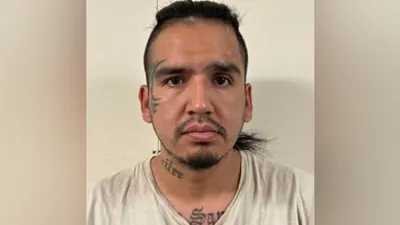
Woman was punched, kicked, hit with various weapons, RCMP said
A 33-year-old man RCMP had been looking for after a woman was violently assaulted and forcibly confined for hours at a house in northern Manitoba has been arrested.
Police issued a release on Monday, saying Darren Lachose was wanted in connection with the assault, which took place throughout Saturday night and into Sunday in Chemawawin Cree Nation, about 400 kilometres north of Winnipeg.
RCMP learned about it on Sunday morning when the woman escaped and called them. She was taken to hospital for treatment of multiple non-life-threatening injuries.
A man who knew the victim had punched and kicked her, and hit her with various weapons, RCMP said in the Monday release.
They issued an arrest warrant for Lachose on charges of aggravated sexual assault, aggravated assault, forcible confinement, two counts of uttering threats and mischief, as well as two counts of breaching conditions of a previous release from custody.
RCMP asked the public to keep an eye out for Lachose and to call them if he was seen.
In an updated release on Tuesday, police said he was located and arrested at a residence in Chemawawin.

The Saskatchewan RCMP is asking for the public’s help in locating several wanted individuals believed to have ties to communities in and around west-central Saskatchewan as part of its March warrant enforcement update.
The monthly list identifies individuals with active warrants who were last known to be living in the province. Police say those included are selected using a data-driven scoring system based on the Crime Severity Index, a measurement developed by Statistics Canada that considers both the number and seriousness of alleged offences.
RCMP note the list is not exhaustive and does not include all wanted persons in Saskatchewan. Factors such as age, gender, race, ethnicity, socio-economic status, religion, sexuality or disability are not considered in the selection process.
Among those highlighted this month is 21-year-old Mia Starchief, who may be in North Battleford. Starchief is wanted on numerous charges, including robbery, assault with a weapon, unlawful confinement, uttering threats and multiple counts of failing to comply with a release order.
Also believed to be in North Battleford is 30-year-old Charnelle Swiftwolfe, also known as “Sunshine.” She is wanted for offences including aggravated assault, forcible confinement, uttering threats and failure to attend court.
Police are also searching for 37-year-old Ryan Montgrand, who may be in Lloydminster. He is facing charges including sexual assault, sexual interference and failing to comply with court-ordered conditions.
In southwest Saskatchewan, 34-year-old Brenden Taylor is believed to frequent the Cabri and Swift Current areas. Taylor is wanted on multiple charges, including sexual assault, sexual interference and several firearms-related offences.
RCMP say the purpose of releasing the list is to encourage members of the public to come forward with information that may assist ongoing investigations and lead to arrests.
Anyone who recognizes these individuals or has information about their whereabouts, activities or associations is asked not to approach them. Instead, contact RCMP by calling 310-RCMP (7267), or 911 in an emergency.
The Saskatchewan RCMP updates its most wanted list on a monthly basis as part of its efforts to enhance public safety across the province.
2026.3.18 Ontario man wanted for two Mafia murders arrested in Mexico after 8 years on the run
Daniel Tomassetti was one of Canada’s most wanted. Two other men linked to the shootings who also fled to Mexico were found dead
An Ontario man who flew to Mexico eight years ago — four days after police released a photo of a suspect wanted for two mob murders — has been arrested in Mexico and is fighting extradition back to Canada to face murder charges.
Daniel Tomassetti, 35, one of Canada’s most wanted, being found alive is as surprising as his arrest, because two other men linked to the shootings who also fled to Mexico were found dead.
Tomassetti was named by police in Hamilton and York Region, north of Toronto, as a suspect in two high-profile targeted shootings in 2017 linked to a Mafia feud.
2026.3.10 The Monster of the Miramichi is dead: How a serial killer and rapist terrorized New Brunswick
Allan Joseph Legere died Monday at the age of 78 while serving a life sentence at the Edmonton Institution in Alberta for a series of rapes and murders
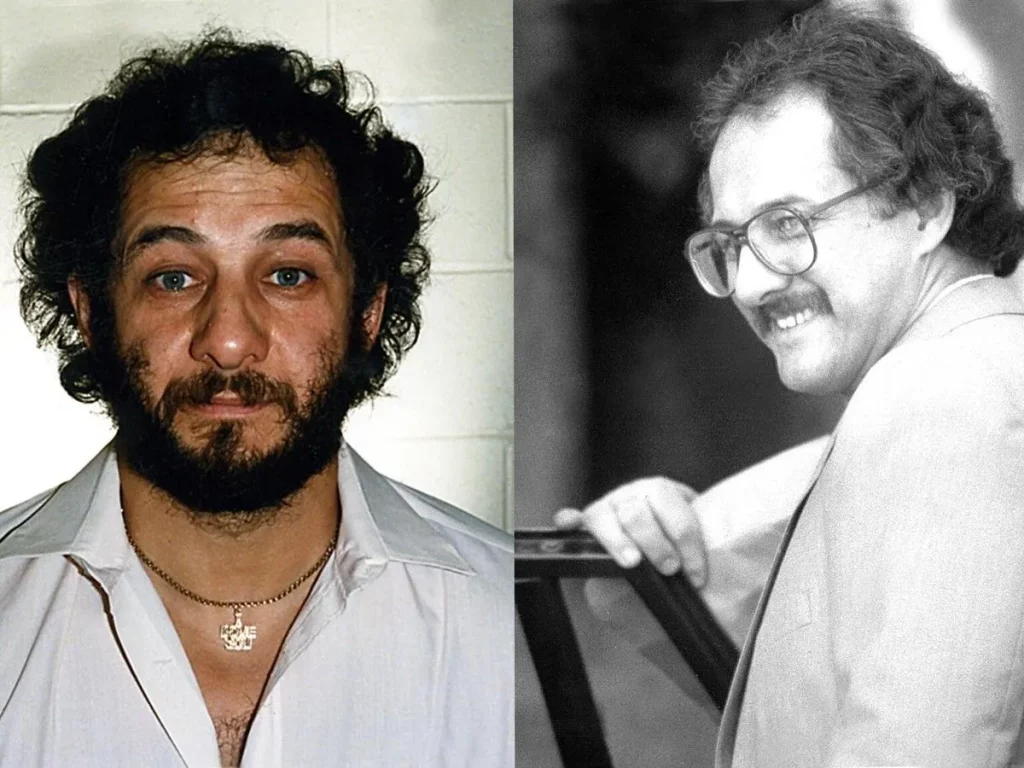

The crowd shouted “hang him” as Allan Joseph Legere was led into a New Brunswick courtroom to answer for what would be his first murder.
Little did they know on that unsettled, cool day in July 1986 that the Chatham man who would come to be known as the Monster of the Miramichi was just getting started.
Then 38, Legere was charged, along with two men from Newcastle, N.B., with second-degree murder in the beating death of John Glendenning, a 66-year-old shopkeeper, during a robbery at his Black River home the month previous. He died from strangulation, with a shirt tied around his neck.
The robbers tied, beat and sexually assaulted his 62-year-old wife as they hunted for a safe said to contain a substantial amount of money, but she eventually got free and called police. The doctor who first saw her later told the court he “couldn’t believe that a person could be that badly beaten and still be alive.”
The robbers had tied John Glendenning’s hands and feet. He was beaten so thoroughly that photos of his body showed hardly a spot that was not bruised. Some of his injuries may have been caused by blows from a piece of wood. But mostly the men just used their fists and their boots.
Two of them pleaded guilty minutes before his widow took the stand.
Legere put up a fight, but a jury convicted him in January 1987. He was sentenced to life in prison with no chance of parole for 18 years.
Then on May 3, 1989, Legere escaped while guards from the Atlantic Institution, a maximum-security prison in Renous, N.B., escorted him to Georges Dumont Hospital in Moncton.
They’d taken him to a washroom, where Legere “faked needing toilet paper and escaped out of the hospital,” according to a chronology of events from the University of New Brunswick. “He had hidden a collapsed TV antenna in his rectum and a piece of metal in a cigar to open both his cuffs and leg shackles. His body belt remained buckled.”
The Correctional Service of Canada would later blame sloppy security for Legere’s well-planned escape.
In the hospital parking lot, Legere pushed a woman inside her car and took off with her as a hostage inside the vehicle.
She escaped unharmed, but many others would not be so lucky.
Legere went on to terrorize the Miramichi area for seven months.
Soon after his hospital escape, Legere beat up, bound and robbed a man whose wallet and 1986 Chrysler New Yorker were later found in Newcastle.
His crime spree continued when Legere stole the jewelry of a woman who told police she’d spotted someone in her window. People were reporting sightings of Legere to police when someone broke into another Chatham home, stealing a duffle bag, pie and $100 worth of meat from a freezer.
Then on May 28, 1989, Legere beat Chatham storeowner Annie Flam to death. “Her body was found in the smouldering remains of her home,” according to UNB’s chronology. “Her sister-in-law, Nina, was rescued. She was found raped and beaten, sitting at the bottom of the stairs.”
Nina Flam later testified that she was woken up after 11 p.m. by a masked man. “The intruder knew who she was and called her by her name, asking questions about her family,” according to court records. “Her hands were bound with nylons.”
Legere “threatened her with a knife and tried to strangle her. At one point, he asked her if she knew where Annie Flam kept her money.”
After sexually assaulting her, Legere “‘tucked’ her into bed and set fire to clothing and material he obtained from a closet in the room,” according to court records. “Then he left, closing the door behind him. She managed to get out of bed and go to the door. When she opened it, she found the intruder waiting at the door. She was pushed back into the room and the door was again closed on her.”
Nina Flam eventually escaped and made it downstairs on her own, but passed out. She was rescued by a police officer who was investigating reports of smoke.
According to court records, Legere “had also set fire to Annie Flam’s apartment and it had burned for an hour or more. When the police and firemen entered Annie Flam’s apartment, they found her dead body ‘tucked’ into bed. They had difficulty removing her from the bedding.”
Investigators later found glasses near the scene like the ones Legere was wearing when he escaped in Moncton. Crime Stoppers offered a $2,000 reward for information leading to his arrest.
“Police had approximately 50 reports (indicating Legere was in) both Fredericton and Toronto but the police believed he was still in the Miramichi area,” said the UNB chronology.
They were right.
On Oct. 14, 1989, two Newcastle sisters, Donna Alberta Daughney, 45, and Linda Lou Daughney, 41, were found sexually assaulted and beaten to death in their fire-damaged home.
“Donna Daughney’s body was found ‘tucked’ in her bed,” said court records. “Linda Daughney’s body was found on the floor in Donna’s bedroom. An autopsy showed that Donna Daughney died of the beating she sustained, as well as from aspirating her own vomit. There was evidence that the murderer spent several hours torturing these two women.”
A headline in New Brunswick’s Telegraph-Journal screamed: “Police say Legere is a prime suspect in their murders.”
Just over a month later, on Nov. 16, 1989, Roman Catholic priest James Smith, 69, was found beaten to death in the rectory of the Nativity of the Blessed Virgin Mary Church in Chatham Head.
“During the day (in Father Smith’s house) the killer ate, washed his boots, put plastic bread bags on his feet to keep them dry, changed clothes putting the bloody ones in another bag, and didn’t notice one bloody footprint on a church magazine,” according to the UNB chronology.
“He answered the phone saying ‘wrong number,’ and later that day hotwired the priest’s car, a 1984 Oldsmobile Delta 88.”
When the priest didn’t show up for evening mass, parishioners went to the rectory to check on him. “The evidence indicated that Smith had been kicked, pounded and hit for several hours before he finally died,” said court records. “Blood was found in many rooms of the house, but the main attacks on Smith had taken place in the kitchen and office. There was blood over much of these two rooms. Foot imprints in the blood were found on two church publications which were lying on the kitchen floor. Other footprints were found in the blood in both the office and kitchen.”
The bloody footprints were later identified as coming from Legere’s boots.
He was recaptured on Nov. 24, 1989, after commandeering three vehicles at gunpoint, according to The Associated Press.
The killer’s arrest came after he forced a taxi he’d hailed in Saint John to head for Moncton. When it went off the road, a vacationing police officer who stopped to offer help was taken hostage. But the officer fled at a gas station.
Legere was caught near the community of Nelson-Miramichi after commandeering a truck.
He was eventually convicted of four more murders.
“The evidence is that Legere was kicked in the face as he was resisting arrest. Some time later, he blew his nose with a tissue paper, which he threw into a garbage can,” according to court records. “The tissue contained drops of blood from the injury to his nose caused by the kick. This tissue was recovered by the RCMP and sent to the crime lab for DNA testing.”
An analysis of that blood and hair samples taken from Legere later showed that a vaginal swab taken from Nina Flam on the night she was raped matched Legere’s DNA. Court records indicated the estimated frequency of such a match would be less than 1 in 5.2 million male Caucasians.
After the manhunt for Legere came to a close, Maclean’s reported that “drivers passing the RCMP station in Newcastle, N.B., honked their horns in joy. People on the street embraced.”
In the hospital in nearby Chatham, “the announcement on the public-address system led to a spontaneous coffee-and-doughnuts party in the cafeteria,” the magazine reported.
“The reason for the elation that swept across New Brunswick’s Miramichi area” was clear, according to Maclean’s: “after a manhunt that had lasted more than six months, police had finally captured escaped killer Allan Legere, 41, the prime suspect in a string of brutal murders in the region.”
Legere died Monday at the age of 78 while serving a life sentence at the Edmonton Institution in Alberta.
2026.3.6 Slain Windsor woman expressed fears to CBC News days before she died
She spoke of death threats and arson at her home
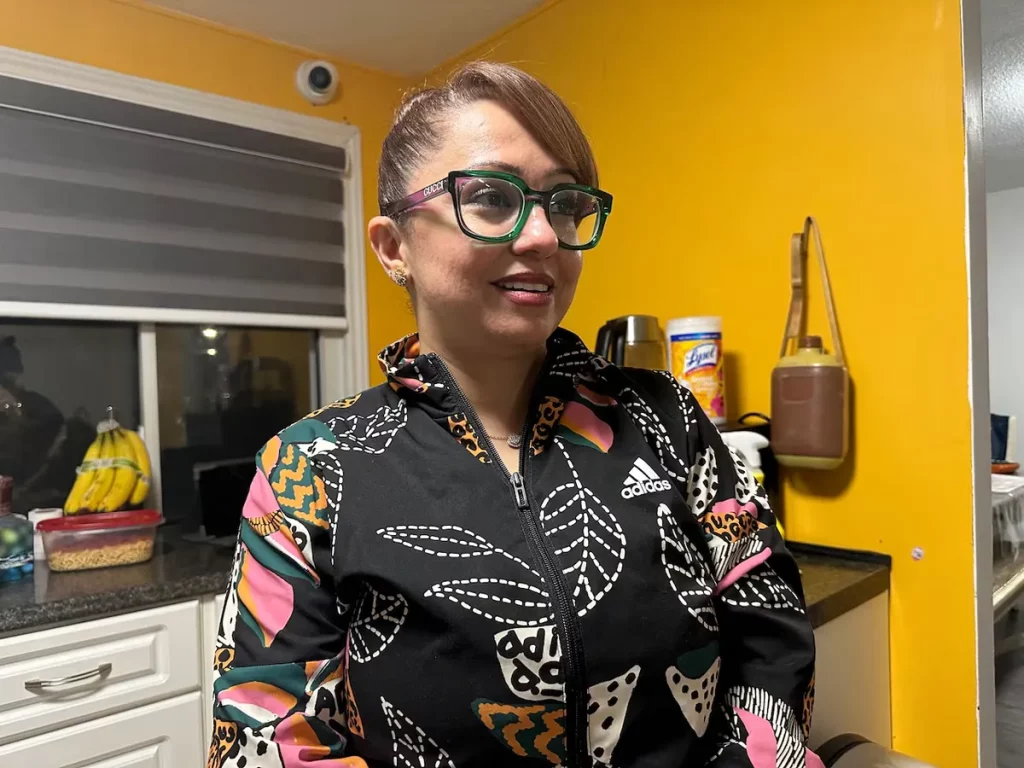
Less than a week before she died, a woman stabbed in a small southwestern Ontario town had spoken to CBC about the threats she was facing for speaking out about Khalistan extremism.
Nancy Grewal, 45, was identified by police as the victim in a stabbing outside a home on Todd Lane in LaSalle, Ont., on Tuesday.
She was at the home working as a personal support worker.
On Feb. 25, she spoke with a CBC journalist about extremism within the Sikh separatist movement.
“I know sometimes I feel scared when they said ‘[we’ll] kill you’ then I said ‘OK, you can kill me anytime,’” she said in the interview.
The Khalistani movement calls for a Sikh homeland separate from India that independence activists have long demanded. Not all separatists support violence. However, factions of the movement have been involved in violent incidents.
The movement was started around 1940, when a secessionist group sought to create an independent country called Khalistan in the Sikh-dominated state of Punjab. Extremists have been linked to deadly attacks over the decades, including the 1985 Air India bombing.
Grewal, a Sikh social media influencer who was a strong critic of Khalistan extremism, said she had been harassed and threatened for speaking about violence in the movement.
LaSalle police, which are investigating Grewal’s death, have said her killing is believed to be targeted.
They haven’t commented on what they believe is the motive in the stabbing. Const. Alaina Atkins said on Friday that an OPP canine unit helped in the early stages of the investigation.
The RCMP says they have not been called in to assist.
In the interview Grewal gave the week before she was killed, she said men started a fire on the front deck of her Windsor, Ont., home one early morning in November.
“I don’t feel safe here,” she said. “The guys attack on my house.”
Video from a home security camera Grewal shared with CBC showed a man in a hooded sweater approaching the front deck of her home and dumping liquid from a red gas can across the surface before lighting it.
The fire quickly spread down the length of the deck while the man ran toward the road across the front lawn. However, it quickly went down because of wet weather and the paint on the deck, Grewal said.
A burned chair and some damage from the fire remained visible on Grewal’s porch when CBC spoke with her.
Grewal said she had received 40 death threats, and said she had reported those threats to Windsor police.
Windsor police, to whom Grewal said she reported the November fire and the death threats, on Thursday referred all comment to LaSalle police and did not respond to a request for comment Friday.
CBC tried to confirm reports of an arson attack and death threats with Windsor police multiple times before Grewal’s death but did not receive a response.
Grewal expressed concerns about Khalistani signage at Windsor’s gurdwara
Grewal had been critical online of the abundant Khalistani signage at the Gurdwara Khalsa Parkash in Windsor, saying images of martyrs and weapons that adorned the walls were counter to the need for a peaceful prayer space. She said she worried about the impact on the gurdwara’s children.
“When we [are] going in the gurdwara, we need a peace and prayer. But everywhere you look at the gurdwara … all pictures with the AK-47s, guns.”
Images at Gurdwara Khalsa Parkash include martyrs flanked by guns and Khalistan flags.
Asked about the images in an interview prior to Grewal’s death, the president of the Windsor gurdwara defended the Khalistani signs and imagery.
“It is nothing to be afraid of,” he said. “It’s open to everybody, regardless of your colour, creed or religion. The same thing is for Khalistan.”
Grewal’s sister Alishaa was reached in India late on Friday and said she and her sister used to talk often by video call.
“I can never think [of] my life without her, never ever,” Alishaa said. She urged a full investigation and “action” on her sister’s death.
In a press conference from India, Shinderpal Kaur, Grewal’s mother, says she was aware her daughter had received threats and had at times urged her not to post on social media.
“I am grateful, she had so many people who loved her all over the world. She was so blessed to have so many people who loved her and the best thing was she never lied.
The president of the Gurdwara Khalsa Parkash in Windsor told CBC the community is in mourning over Grewal’s death — but expressed skepticism over social media accounts claiming responsibility for her murder.
Manjinder Singh Kooner said he’d known Grewal for the last four or five years, and the community is in shock.
“Pointing a finger at somebody I think it’s too early, over there, like anybody can claim, right?” Kooner said.
Kooner said he was not aware of threats made against Grewal, and does not believe there is a Khalistan extremist movement in Windsor.
“I deal with the whole community, right? Not that I know of, no,” Kooner said.
“Violence is not [the] answer to anything. And Sikhs don’t believe in violence.”
On Friday, people present at the home where Grewal was killed declined to comment. A person was cleaning the steps at the front of the home.
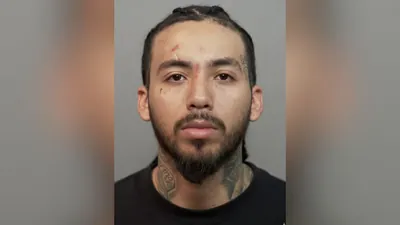
Bryan Fuentes Gramajo arrested in connection with shooting last July at Toronto’s Yorkdale mall
Montreal police arrested Canada’s most wanted fugitive overnight Wednesday, 24-year-old Bryan Fuentes Gramajo, who was wanted in connection with a deadly shooting in Toronto last July.
Fuentes Gramajo was set to appear in court Thursday in Montreal charged with first-degree murder. He will then be sent to Toronto where he’s scheduled to appear in court March 10.
Fuentes Gramajo had been wanted on a Canada-wide warrant in connection with the shooting death of 28-year-old Kashif Jamal Bentley-Jean in the parking lot of the Yorkdale Shopping Centre.
Mélanie Dupont, the head of the Montreal police major crimes unit, said Fuentes Gramajo was arrested without incident at 2:40 a.m. in the Rosemont–La Petite-Patrie borough.
“He was arrested with the SWAT team because he was considered dangerous,” Dupont said.
In October 2025, Fuentes Gramajo was named Canada’s most-wanted fugitive by the Bolo Program, which alerts the public about dangerous criminals.
At a news conference last fall, Toronto police Supt. Joe Matthews said investigators believed Fuentes Gramajo was a member of the Montreal-based gang Zone 43.
“You don’t make it to number one for stealing a car. You’re at the top of this list because we believe you pose a serious threat to any person in any place where you may be. Bryan Fuentes Gramaho fits that bill,” Matthews said at the time.
Another suspect in the shooting, 20-year-old Bradley Lucate-Nicolas, was arrested in Laval, Que., last August and charged with first-degree murder.
Toronto police are still looking for a third suspect, 28-year-old Jimmy Prudent of Montreal.
—
2026.3.7 Inside the Crown’s teetering case against billionaire Frank Stronach at Toronto rape trial
Analysis: Seven young women of 1980s Toronto are the alleged victims in this high stakes prosecution of a powerful man. All have now testified
She entered the courtroom on crutches, tottering toward the witness stand, barely managing to get up and seated, an elderly woman of 73. But she spoke with confidence, lively and engaged with her questioner, telling a story that happened in Toronto in 1977, soon after her 25th birthday.
“It happened so quickly. I was just pushed forward, face first, from behind, fairly forceful,” she said. “It wasn’t violent but it was firm.”
She had met Frank Stronach at Rooney’s, the nightspot the billionaire auto parts magnate owned near Yonge and St. Clair. Stronach, now 93 but then 45, had sent Champagne to her birthday party table, and they had eaten dinner together multiple times in the adjoining restaurant he also owned, Le Connaisseur.
They ate lobster there that fall evening, she testified. “I can’t remember whether we migrated to Rooney’s but at some point he said ‘Would you like to see my apartment?’”
She said she felt no apprehension, that they were on polite and friendly terms, so she agreed, and they drove the short way in his Cadillac to an apartment near Mount Pleasant Road and Balliol Street. Inside, he briefly stepped away, then suddenly reappeared behind her.
He pushed her over an armchair, she said, lifted her skirt. She remembered her two-piece dress in red wool with a dashed pattern of ivory and grey from the St. Regis Room in the old Simpsons department store. She was wearing stockings and a garter belt, bra, panties and a half slip. She testified he tried to penetrate the underwear that remained on. She could feel his penis, she said, but could not say whether it was exposed.
“Frankly, it was kind of bizarre,” she said. “It was kind of pathetic…. I have to say I felt betrayed.… I freed myself from this bizarre event and I gathered up my things and I left.”
Seven young women of 1980s Toronto are the alleged victims in this high stakes rape prosecution of a famous, powerful man. All have now testified, and the Crown’s case is complete. The defence will call evidence starting Monday. Stronach has pleaded not guilty to all 12 charges for offences that allegedly took place between 1977 and 1990.
Now older and in some cases frail and elderly, most complainants came forward ten years ago, amid a cultural revolution in the ethics and law of sexual assault, broadly known as #MeToo. Looking back to the incidents, many said they tried to put it behind them, expecting not to be believed or even listened to.
Back then, some lived in apartments in the Yonge and Eglinton area, another with her mother in Cabbagetown. Most first crossed paths with Stronach at Rooney’s. Some allege he raped them at his Harbour Castle condo, in one case after a dinner date in the adjoined revolving restaurant. The Balliol incident is unique, and seems to be among the cases the defence will claim never happened at all, that he may never have even had an apartment there. With others at the Harbour Castle condo, Stronach’s counsel will argue that either the women consented to sex or he reasonably and honestly believed they had.
“When you find yourself in a condominium, I don’t know how many storeys up, late at night, with a man you really don’t know, and he starts doing something like that, you have a choice, I suppose, to struggle or just to acquiesce, and you don’t know what’s going to happen if you struggle,” one woman testified.
Rooney’s is long since torn down and the Harbour Castle restaurant no longer revolves, but these places make up more than just the geographical context of the alleged crimes. They are circumstantial similarities that mutually support the credibility of each other, Crown prosecutors argue. For example, the drive in Stronach’s sports car down Yonge Street from Rooney’s to Harbourfront to see the view of the Toronto Islands from his condo was not just a common coincidence in these stories, but also allegedly a legally relevant criminal pattern.
In their testimony that ended this week, the women’s memories of these places were among the most deeply examined, some details vague and hazy, others shockingly precise: the peacocks etched in the mirrors at Rooney’s, with its mirrored disco ball, the black leather and chrome furniture at the Harbour Castle condo, the mirrored ceiling over the bed, the mucked out stalls of Stronach’s equestrian barn in Aurora.
Many complainants alleged a routine of being urged into the apartment to admire the view, then briefly left alone only to have Stronach appear suddenly behind them, lead them firmly toward a bed, and be all over them, ripping at their pantyhose, ignoring their tears and refusals, barely undressing either of them, just enough for quick intercourse not using a condom. Then, his uncomfortable insistence on driving her home, to Cabbagetown, High Park, Yonge and Eglinton.
Many of these details intersect. But in criminal law, common narrative features can cut both ways. They can cast suspicion on a witness as much as a defendant.
They can suggest separate similar stories are more likely true, as the Crown argues. But they can also suggest the storytellers have influenced each other, as the defence argues. More crucially, they can suggest the Crown improperly coached them, as will be argued in an all-or-nothing application that could torpedo all the charges at the trial’s end, in about two weeks.
This is a case that played out in public media before it reached Ontario Superior Court. Already, the court has watched a witness’s anonymized segment on a CBC documentary about Stronach, and heard a transcript of her interview with a Toronto Star reporter. There has even been a cameo by Jane Boon, a writer who lives in New York, who is not a complainant in this trial but is suing Stronach civilly for allegedly sexually assaulting her when she was a co-op student at his auto parts company Magna, a story broadly similar to the others, and very similar to one.
Boon showed up at court during the complainants’ testimony despite an order that potential witnesses were excluded, and had to be explicitly told by the judge to leave, but not before coming in and approaching the bench to within a couple of feet of where Stronach himself was sitting, perhaps not their final courtroom encounter.
Boon’s public disclosure of her allegations figured in one of the trial’s most dramatic moments so far.
A complainant witness had testified that her father had known Stronach, that her family had visited the Stronach mansion for dinner, and that as a university student her mother got her a summer job at Magna. Instantly credible, sophisticated, articulate, this witness under cross-examination eventually started to seem like she was trying to outfox the defence lawyer and not quite managing it.
She flagged her own use of the conditional tense for her memories, “I would have …” which she used in her preparatory meetings with Crown. She had discussed it as a weird way to phrase testimony, and so made efforts not to use it on the stand, none of which made her memory seem more natural. Nor did her testimony about making sure to avoid the “omissions” the Crown had drawn to her attention, details that would be useful to the prosecution’s case. Rather, it made her testimony seem like a series of deductions and efforts to be precisely consistent with how she had told the story before.
So, when she showed up the next day wanting to apologize for lying to the court under oath that she had not read Boon’s newspaper article about her allegations, you could almost hear another plank splitting in the architecture of this case.
“I wanted to say, sorry, I don’t have anything to hide or anything to gain by being here,” she said. She continued to explain why she initially lied until the judge stopped her, saying it wasn’t “an opportunity to make a speech.”
This episode also got the prosecutors in trouble, one of several mistakes so far.
“You knew she wasn’t telling the truth and you did nothing,” the judge said. “I want you to reflect on that. It’s not what I expect from the Crown.”
Stronach also faces another upcoming criminal trial for six sexual assault charges in York Region, spanning dates from 1988 to 2024.
In the Toronto case, seven witnesses have now testified. The Crown’s case is over, and the defence will begin on Monday.
The testimony of each witness has failed in its own way to definitively seal the case against him. Witnesses have had their credibility attacked for lying, or seeming to invent details, or conveniently remember them on the witness stand. In one case, a witness acknowledged a long track record of litigation that reveals what even a civil judge has described as dishonesty, including allegedly framing a man for making death threats.
One witness had such an emotional breakdown on the stand, after hours of rambling testimony in which the judge instructed her over and over again in vain to simply answer the questions, that a Toronto Police crisis team with medical support was called in. Not long before that, another dramatic moment came when defence counsel caught this witness secretly reading from hidden notes. She falsely claimed this was just a recipe for salmon in cream sauce, prompting a brief panic about whether these notes — written, she eventually admitted, the night before about what to say in testimony — could be taken into evidence, and whether they might include private information. They were, but the point is moot because the Crown asked the judge to withdraw both charges involving this witness: first the forcible confinement because her testimony did not support it, then the sexual assault because her testimony was so “garbled,” as the judge said, that she had to be excused. A brief recess was called to break this hard news to her before it was published by media.
Two other charges are the subject of a defence request for directed verdicts of not guilty: one because it is charged under the post-1983 sexual assault law but the witness testified it might have been 1982, and the other from 1977 because it might not meet the legal requirements of the outdated charge of attempted rape.
In courtroom 4-9 at the University Avenue courthouse, this long awaited case, 40 years in the making and 20 years since the first report was made to police, is slowly falling apart.
Its significance may be neither here nor there, but it should not go unmentioned that this is a trial conducted by women. There are men around: the bailiff on the door, a defence associate, a Crown specialist who lost an early battle, Stronach himself, always silent. But beyond the gallery threshold it is almost all women: registrar, reporter, judge, prosecutors, defence counsel.
The defence will argue at the end of trial that the Crown has improperly coached and tainted the witnesses, and so the charges should be stayed because of this abuse of process. The judge has already ruled this claim has an “air of reality,” but has yet to hear the arguments.
The way things are going, it seems Stronach might not even need that.
Through cross examination, the defence has elicited some details of witnesses learning details of other complainants’ stories through the media — including torn pantyhose and the view from the condo over the Toronto Islands — but nothing like the deliberate collusion it seemed to hint at when the trial began. None of the complainants said they knew each other or had discussed the case, although some have had discussions with the same civil lawyer.
Over and over again, witnesses explained key details of their stories not as memories but as deductions. Not “I did this,” but “I would have done this,” or “It must have been….” That includes date ranges for the alleged rapes in some cases more than a year wide, and in one case maybe spring but also maybe fall, a deduction based on the memory of not wearing a coat.
The overall impression is of a prosecution on the ropes, sometimes blindsided by its own witnesses, despite the alleged coaching.
Last month, the first witness initially presented as especially credible because of her experience in politics. But there were hints of the troubles to come, including a cursory mention to the prosecutor of bipolar disorder, and a curious claim to have suffered at the time from paralyzed vocal chords that left her functionally mute, even though at least some of her story involved her talking.
Asked to estimate what floor she was on in the alleged crime scene condo, she paused, and curiously said, “Excuse me for a second as a I use my hands for my own brain,” and then arranged her hands in front of her face to visualize.
For someone who had testified about this before at a preliminary inquiry, as all the witnesses had, it was an odd way to go about it, no less baffling than when she later explained the vocal paralysis was a consequence of doing John Wayne impressions to amuse herself.
By the end of her cross examination, she was flummoxed and flailing on every question, seemed to realize it, and tried to be combative in return.
She described working at Stronach’s thoroughbred horse racing stables in Aurora, Ont., a rich countryside area just north of Toronto. She had come from working at Woodbine Racetrack, where Stronach was a legend, famous as much for his equestrian interests as for Magna. She had been there just two weeks before the alleged incident, which she claimed to be “90 per cent” sure it was in 1981.
At Rooney’s with two other female grooms to celebrate her birthday, she said Stronach showed up with Champagne, molested her on the dance floor, shoved her into a booth, he was like an “octopus.” She testified she woke up later on her back, looking up into her own face reflected in a mirrored ceiling with Stronach’s naked back and buttocks on top of her.
“I have spent 40 years trying to figure out how I got into that bed,” she testified.
She said he drove her back up Yonge Street to her car at Rooney’s, then she drove back south toward the westbound highway to her parents’ house in Mississauga, but stopped on Queen Street West to get her rage out through yelling, swearing, and stomping her feet.
She reported this first in 2015. She came to feel then that she would be a hypocrite to keep silent as the Ghomeshi saga unfolded. She also once told a police officer she was prompted by that year’s news about Bill Cosby. Defence counsel suggested she was a “storyteller,” a fabulist if not actually a liar, who had never worked at Stronach’s barn at all.
The final witness brought the prosecution’s case to a close with similar allegations of rape in the Harbour Castle condo as she cried throughout.
But she also introduced similar problems of credibility, including factually false testimony the defence characterized as lies, not about the alleged crime, which the defence is set to argue was consensual sex, but about what she had read about the case before testifying, and the discussions she had with other people before speaking to police, including civil lawyers. She has not filed a lawsuit.
“I’m not some retired housewife,” she said. “I’m risking a lot just being here today.” She repeatedly called herself a “tax-paying citizen” before cross-examination about her business drew even that into doubt.
With nothing but defence evidence to come, and legal arguments about whether prosecutors and police engaged in an abuse of process, it seems the Ontario Crown is on track to bookend the #MeToo movement with two major failed rape prosecutions of powerful famous men, Jian Ghomeshi, whose case prompted many of these women to come forward, and now Frank Stronach.
2026.3.4 Crown wraps up case in Frank Stronach sexual assault trial
Stronach has denied the allegations and has pleaded not guilty to all charges
WARNING: This story references sexual assault allegations and may affect those who have experienced sexual violence or know someone affected by it.
The Crown has wrapped up its case in the sexual assault trial of Frank Stronach, having heard from all seven complainants whose allegations against the Canadian businessman included sexual assault, attempted rape and rape.
The allegations span the period between 1977 and 1990. Many of the women told similar stories — meeting Stronach at Rooney’s, the Toronto restaurant he used to own, and then accepting an invitation back to his Harbourfront condo. It’s there where they allege he sexually assaulted them.
The 93-year-old founder of auto-parts giant Magna International has been in court during the entire proceedings, wearing a dark suit and listening to all the testimony.
He faces a total of 10 charges, including sexual assault. Two of the 10 counts, rape and attempted rape, are considered historical charges as they were abolished when the Criminal Code was amended in 1983 to create the offence of sexual assault.
‘Justice would prevail’
There were initially 12 counts, but two of the charges related to the sixth complainant were withdrawn by the Crown.
Stronach has denied the allegations and has pleaded not guilty to all charges.
On Tuesday, just after court had recessed for the day, Stronach told CBC’s Jamie Strashin that “justice would prevail” when asked how he was feeling after hearing allegations from all seven female complainants.
Shemesh, who is expected to launch her defence for Stronach on Monday, would not comment on whether her client will take the witness box.
But she will be arguing this Friday for a directed verdict on two charges for two of the complainants. A directed verdict would allow a judge to come to the determination that no jury properly instructed could ever convict on that count, Shemesh told reporters.
One involves the date on which Stronach is alleged to have committed the assault against one of the complainants and whether the charge falls under the old legislation of rape or new legislation of sexual assault.
The other, Shemesh said, has to do with whether Stronach should have been charged with attempt rape in connection with another complainant.
The Crown called eight witnesses, all seven complainants and the friend and co-worker of the final complainant, to testify.
The final complainant, now 69, testified that she had met Stronach at Rooney’s, the restaurant he owned, sometime between 1982 and 1983.
The week after they met, the woman said that they ended up going out to a restaurant at a Harbourfront hotel. She said that during dessert, she accepted Stronach’s offer to go back to his condo.
‘Not here for that’
Once there, Stronach attempted to kiss her, but she rebuffed him, telling him she was “not here for the that,” the woman told court.
She said he then pulled her to a room with a cot, and she reluctantly followed him.
The woman said that she was thinking she could control the situation by giving Stronach “a few smooches” there, and then she would “be on my way. And we’re going to be done with it.”
She said Stronach, laying on the cot, pulled her on top of him. Stronach again attempted to kiss her and then put his hand up her dress, the woman testified.
She told the court she was overpowered by Stronach and said to herself she had to “let this happen because you can’t fight him, you can’t push him off …. he’s got you trapped.”
The woman said Stronach climbed on top of her, unzipped his pants, took out his penis and raped her with no condom.
But on Tuesday, Shemesh put to the woman that all the sexual acts between her and Stronach were consensual, an accusation the woman flatly denied.
Shemesh also accused the woman of lying at various times during her testimony in court.
‘So you lied’
Shemesh referred to the woman’s preliminary testimony, in which she told court she had not read an account in the media from another woman who alleged Stronach ripped her pantyhose during her encounter with him.
Shemesh pointed out that the woman had told police and the Crown attorneys that she had read that report.
“So you lied,” Shemesh said.
The woman said the testimony was incorrect, but that she was incredibly overwhelmed and discombobulated by the experience of being in court.
Shemesh also referred to another section of the woman’s testimony at the preliminary hearing, in which she testified she didn’t reach out to anyone before contacting police in 2024 about the alleged rape.
The woman, however, testified at the trial that she had reached out to a civil litigator before making contact with police.
The woman told Shemesh that she was under the assumption that her conversation with any lawyer was privileged information.
“So you thought it was OK to lie to a judge,” Shemesh said.
The woman repeated that she thought that because it was privileged information she did not have to disclose the contact.
‘Not about money’
Shemesh also suggested that the woman may be looking for some financial gain and that she wanted to keep her options open regarding any potential civil suit.
“This is not about money. There’s no amount of money that can fix this, and I’ve said this several times,” the woman said.
Court had previously heard from the woman that she runs some successful businesses and is involved in multi-million dollar deals.
But on Wednesday, Shemesh challenged her on the success of some of these businesses.
“As far as the companies that I have taken you through, those companies have really not earned very much money at all,” Shemesh said.
The woman said that one of those companies was not making money now, but during the COVID pandemic it was doing very well.
—
2026.2.20 Former B.C. school trustee ordered to pay $750K for hate speech, discrimination: human rights tribunal
Tribunal says Barry Neufeld ‘invoked negative and insidious stereotypes’ about 2SLGBTQ+ people
The B.C. Human Rights Tribunal has ordered former Chilliwack school trustee Barry Neufeld to pay $750,000 for violating the Human Rights Code by publishing hate speech and discriminatory content against 2SLGBTQ+ people.
“Mr. Neufeld invoked negative and insidious stereotypes about LGBTQ people, especially trans people, which denied their inherent dignity and, in some cases, reflected the hallmarks of hate against them as a group,” the tribunal said in a decision Wednesday.
Neufeld was one of the “loudest critics” against the B.C. government’s move in 2017 directing school boards to update codes of conduct to address bullying based on “SOGI,” or sexual orientation and gender identity, according to the tribunal’s decision.
2026.2.17 Second complainant testifies Frank Stronach groped her in downtown condo
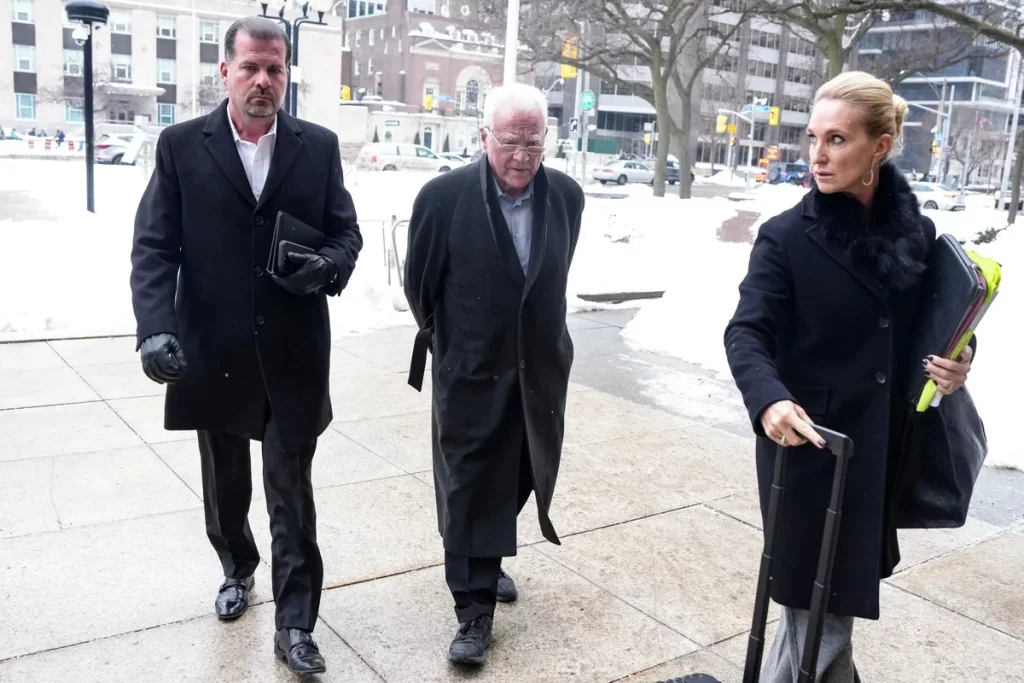
At dinner, Frank Stronach had felt like a “fatherly mentor” but things changed once they were alone in his downtown Toronto condo, a woman told his sexual assault trial as she described an evening in the early 1980s.
The woman had previously worked at Stronach’s restaurant and nightclub and agreed to meet him for dinner after asking him for details on her termination from the popular hot spot, she said.
After dinner, she said, her former employer asked her to come see his nearby condo and she reluctantly agreed despite feeling “uncomfortable.”
She felt the hair raise on the back of her neck and her heart start pounding almost immediately after stepping inside what she believed to be a penthouse apartment, she said.
“I felt afraid to be in that apartment with him alone,” she said, adding that the “fatherly vibe” was gone.
When she insisted that she had to go, Stronach helped her slip on her coat, but he held on to her lapels or shoulders as she turned back around to face him, she said. The woman backed up against the wall by the door and then Stronach was up against her, groping her as he tried to convince her to stay, she said.
“He was going up and down, up and down my body,” touching her breasts and hips, she said, mimicking the motion with both hands. “I was terrified.”
The woman said she did her best to get out of the situation, expressing her gratitude for Stronach’s professional help while making it clear that physical intimacy “wasn’t going to happen.”
After what “felt like forever” but was likely a minute or two, Stronach backed off and the woman bolted, confused by the way things had unfolded, she said.
Stronach, who is 93, has pleaded not guilty to a dozen charges related to seven complainants over alleged incidents that date as far back as the 1970s.
The woman, now 63, is the second complainant to take the stand. All seven complainants — none of whom can be identified under a standard publication ban — are expected to testify at the judge-alone trial, which began last week after some delay.
The woman’s testimony Tuesday was emotional at times, and she wiped away tears as she voiced her discomfort at having to discuss such intimate things in public.
The first complainant, a woman in her 60s, told the court last week that Stronach came over with champagne when she was at his restaurant with friends in the early 1980s, then groped her on the dance floor.
She testified that she woke up in an unknown place later that night and realized he was raping her.
The defence suggested the first woman’s narrative of what happened has evolved with time, highlighting discrepancies in what she told police, media and the court over the years.
2026.2.17 Prison à la maison pour avoir habité avec le cadavre de sa conjointe pendant des mois
Deux frères qui ont vécu pendant des mois avec le cadavre d’une femme purgeront leur peine à la maison en raison de leurs problèmes de santé mentale. Le juge a souligné le deuil difficile des proches de la victime, une Inuk morte dans des circonstances inhumaines.
« Elle était une fille, une sœur, une amie, une membre de la communauté. [Ses proches] ont vécu une terrible angoisse en ne sachant pas ce qui lui arrivait pendant plus d’un an et demi. Ils ont ensuite vécu avec la culpabilité de ne pas avoir été là pour elle », a souligné le juge Pierre E. Labelle au palais de justice de Montréal.
Francesco Sansalone et Nicodemo Sansalone, deux sexagénaires, ont plaidé coupables l’an dernier à une accusation d’outrage à un cadavre. La victime est Alasie Tukkiapik, une femme de 41 ans originaire de Kangiqsujuaq. Elle était la « blonde » de Francesco Sansalone depuis 10 ans. Le trio se partageait un petit appartement à Montréal-Nord.
Alertés par ses proches inquiets, les policiers ont découvert le corps d’Alasie Tukkiapik dans l’appartement en avril 2023. L’odeur dans l’appartement était insupportable. Une simple couverture recouvrait le corps momifié dans le salon. « Elle est couchée là depuis six mois », a alors dit Nicodemo Sansalone à un policier.
Arrêté un mois plus tard, Francesco Sansalone a raconté aux policiers qu’Alasie Tukkiapik saignait depuis des semaines. Il changeait ses bandages, mais elle continuait de s’affaiblir, selon son récit. Elle refusait d’appeler le 911, car elle ne voulait pas aller à l’hôpital.
La cause du décès n’a pas été déterminée. Il n’y a aucune trace de fracture ou de blessures traumatiques sur le corps.
Nicodemo Sansalone a été condamné lundi à une peine relativement peu sévère, soit un « sursis de peine » et une probation de trois ans. Il avait déjà purgé 70 jours de prison. Le juge a ainsi suivi la suggestion commune des parties. Il a cité la « santé » du délinquant pour expliquer sa décision.
Quant au conjoint de la victime, Francesco Sansalone, la Couronne réclamait une peine plus sévère, soit de la détention ferme ou une importante peine de prison dans la collectivité. La défense n’était pas du même avis.
Le juge Labelle lui a finalement imposé une peine de 10 mois à purger dans la collectivité. Car malgré la présence de plusieurs facteurs aggravants, Francesco Sansalone a d’importants problèmes de santé mentale diminuant sa culpabilité morale. Il souffre possiblement de schizophrénie depuis des années, sans aucun traitement.
Francesco Sansalone a des obsessions « religieuses et mystiques » et n’a pas une « bonne compréhension de la réalité », selon le juge. Devant les journalistes, l’an dernier, il avait tenu des propos incompréhensibles sur l’Enfer, Dieu et la folie des gens. En salle d’audience, il avait aussi invoqué « Dieu » pour justifier ses gestes.
« Ses problèmes de santé mentale ont pu influencer le processus décisionnel de l’accusé. Si cela n’excuse pas son comportement, cela permet de le comprendre », a conclu le juge Labelle.
Également, le magistrat rappelle que rien ne démontre que l’accusé a été impliqué dans la mort de la victime.
Me Simon Lapirre a piloté le dossier pour le ministère public, alors que Me David Leclair et Me Delphine Tremblin ont représenté les délinquants.
2026.2.16 Police warn of distraction thefts targeting seniors at Surrey gurdwaras
Gurdwara spokesperson says they have seen theft activity increase over the last month
Officials are warning that thieves are targeting seniors near places of worship in Surrey, B.C., by attempting to distract them while they make off with valuable items.
So-called “distraction thefts” involve perpetrators approaching their victims and reaching in close to grab jewelry, cash or other items — sometimes by swapping valuables with cheaper imitations — while the unsuspecting victim is distracted.
The Surrey Police Service (SPS) says that they investigated 50 reported distraction thefts last year, and have had four reports so far this year.
—
2026.2.20 Tumbler Ridge shooter’s ChatGPT activity flagged internally 7 months before tragedy
ChatGPT has confirmed that an account connected with the Tumbler Ridge shooter, Jesse VanRootelsar, was identified in June 2025 for “abuse and detection and enforcement efforts.”
VanRootelsar shot and killed eight people on Feb. 10 — her mother and half-brother at their home and then five students and an educator at Tumbler Ridge Secondary School. She was then found dead of what appeared to be a self-inflicted gunshot wound inside the school, RCMP later confirmed.
“Our thoughts are with everyone affected by the Tumbler Ridge tragedy,” a spokesperson for OpenAI, which owns ChatGPT, confirmed on Friday afternoon, adding that after the incident on Feb. 10, the company contacted the RCMP.
“We proactively reached out to the Royal Canadian Mounted Police with information on the individual and their use of ChatGPT, and we’ll continue to support their investigation.”
The organization stated that when an account associated with VanRootelsar was identified in June, it was subsequently banned for violating the usage policy.
The company considered referring the account to law enforcement, but determined that the account activity did not meet the higher threshold required for such a referral.
They determined that the case did not meet the threshold for referring a user to law enforcement because it did not involve an imminent and credible risk or planning of serious physical harm to others.
In a statement, RCMP Staff Sgt. Kris Clark said the platform did reach out to the RCMP after the shooting.
“As part of the investigation, digital and physical evidence is being collected, prioritized, and methodically processed,” he said. “This includes a thorough review of the content on electronic devices, as well as social media and online activities.”
OpenAI said that its goal is to support people’s safety and well-being and over-enforcement in these situations can be distressing for a young person and their family, for example, if police show up unannounced at their door.
The company says it trains ChatGPT to discourage imminent real-world harm when it identifies a dangerous situation and instead is trained to provide advice to avoid any result of immediate physical harm.
VanRootelsar’s online activity has already been in the spotlight following the deadly mass shooting.
Online platforms YouTube and Roblox each shared statements with Global News last Friday.
“Following this horrific incident, our Trust and Safety teams identified and removed a YouTube channel associated with the alleged suspect in accordance with our Creator Responsibility Guidelines,” YouTube said in a written statement.
Roblox, which is a social gaming platform and creation system where millions of users play, create and socialize in virtual worlds called “experiences,” also said it deleted an account.
“We have removed the user account connected to this horrifying incident as well as any content associated with the suspect. We are committed to fully supporting law enforcement in their investigation,” a Roblox spokesperson said in a written statement.
“The user’s account and any content created by the user was removed from Roblox on Feb. 11, 2026.”
Meanwhile, a former RCMP weapons officer says guns in a photo posted by VanRootselaar’s mother all appear to have been legal to own in Canada at the time, although they include a semi-automatic rifle that was later prohibited.
Jennifer Jacobs posted the photo of guns in a cabinet to Facebook in August 2024 with the caption, “Think it’s time to take them out for some target practice.”
Jacobs and her 11-year-old son were among eight people killed in the shooting.
VanRootselaar’s father issued a statement last week saying in part: ” As the biological father of the individual responsible, I carry a sorrow that is difficult to put into words. I was estranged from Jesse Strang and was not part of his life. His mother declined my involvement from the beginning, and I was not given the opportunity to be a part of raising him. Jesse did not use the VanRootselaar family name at any point in his life. While that distance is the reality of our relationship, it does not lessen the heartbreak I feel for the pain that has been caused to innocent people and to the town we call home.”
RCMP identified the shooter as “Jesse Van Rootselaar” and said she was assigned male at birth but had started transitioning to a female.
Global News is spelling the surname as VanRootselaar to match the father’s spelling of the last name.
2026.2.20 OpenAI had banned account of Tumbler Ridge, B.C., shooter; reached out to RCMP
RCMP say platform reached out after shooting, but say OpenAI only flagged account internally at first
OpenAI, the American company behind ChatGPT, has said that it banned the account associated with the teenager behind a mass shooting in Tumbler Ridge, B.C., last June.
The company said, in response to questions from CBC News, that Jesse Van Rootselaar’s account was detected via automated tools and human investigations that “identify misuses of our models in furtherance of violent activities.”
In its statement, OpenAI said that the account’s activity in June 2025 didn’t meet the “higher threshold required” to refer it to law enforcement.
The threshold, according to the company, is that the case involves an “imminent and credible risk” of serious physical harm, and Van Rootselaar’s use of ChatGPT didn’t meet that bar in June 2025.
Van Rootselaar has been identified by RCMP as the person who killed eight people in the northeast B.C. community on Feb. 10, including five children and an education assistant at Tumbler Ridge Secondary School, before killing herself.
The story about her ChatGPT account was first reported by the Wall Street Journal.
In its statement, OpenAI said that after learning of the shooting, it proactively reached out to RCMP with information on Van Rootselaar and her use of ChatGPT.
An RCMP spokesperson confirmed to CBC News that the platform reached out after the shooting, but said OpenAI had only flagged the account internally at first.
“What I can say is that as part of the investigation, digital and physical evidence is being collected, prioritized, and methodically processed,” Staff Sgt. Kris Clark said in a statement.
“This includes a thorough review of the content on electronic devices, as well as social media and online activities.”
High threshold
In its statement, referring to its threshold to refer cases to law enforcement, the company argues that “over-enforcement” could be distressing for young people and their family, and it could also raise privacy concerns.
OpenAI also says that its chatbot is trained to avoid giving people advice if it could result in immediate physical harm to people.
“When we detect users who are planning to harm others, we route their conversations to specialized pipelines where they are reviewed by a small team trained on our usage policies and who are authorized to take action, including banning accounts,” the company says on its website.
OpenAI adds that it is reviewing the circumstances of the Tumbler Ridge case to see if improvements can be made to its criteria for referring cases to law enforcement.
The Tumbler Ridge mass shooting is one of Canada’s worst-ever, and it led to an outpouring of grief across the country and the world.
2026.2.17 12-year-old Tumbler Ridge shooting survivor shares her story
A week after the Tumbler Ridge shooting, a student is sharing her account of what happened.
12-year-old Maddy Mansky is a Grade 7 student at the secondary school.
On Feb. 10, an armed teen entered the school and fatally shot five students and an education assistant. Most of the victims were in the library — where Maddy was supposed to be.
But she and a friend were in the bathroom when they heard gunfire erupt.
“There was loud bangs. It didn’t sound like gunshots. The only reason I knew it was a gunshot is because I heard the shells falling,” Maddy recalls.
“There was kids screaming everywhere, and it was just scary.”
They then went into a bathroom stall, locked the door, and hid there.
Maddy says she spent two hours inside the bathroom, scared and worried.
“I was texting my mom and her best friend and everybody that I could,” she said
“My friend was just standing there, being quiet.”
Eventually, police kicked down the door and escorted her and her friend out.
She was taken down the stairs, where she had to pass the shooter’s body, an experience she describes as “scary.”
Most of the victims were Maddy’s friends. She says Ezekiel Shofield would always make her laugh when she was upset. Kylie Smith was always joking around and would never hurt anyone, while Ticaria Lampert was one of her best friends. Maddy feels sad the two got in a fight the day of the shooting.
“I never got to say sorry. She’d always make everybody smile and everything.”
Maddy says she’s still trying to process everything and is taking things day by day. She says staying off social media and talking with family has helped.
Politicians and school leaders have said students shouldn’t be expected to return to the building, but Maddy doesn’t agree.
“I want the school to stay, because even though the parents are scared and the kids are, us kids need to know we’re going to be safe, and it most likely is not going to happen again, and we need to face our fears, and the parents need to put their fears aside.”
For now, there will be no school at all in the community for at least another week.
2026.2.15 Online activity of Canada school shooter shows a fascination with mass violence and violent content, expert says
The online activity of the 18-year-old behind the deadly shooting inside a Canadian high school last week revealed an interest in firearms, mass violence and a history of consuming violent “gore” content, according to expert analysis.
The shooter, identified as Jesse Van Rootselaar, who died of a self-inflicted gunshot wound, spent time in dark corners of the internet, posting about her struggles with substance use and mental health. Van Rootselaar referred to gore content as “addictive” in posts shared with CBS News by analysts at the Institute for Strategic Dialogue, a nonpartisan, nonprofit organization that works toward solutions to combat extremism.
She was active on the website WatchPeopleDie, which hosts material portraying graphic violence against people and animals. The site has become a common thread between perpetrators of mass violence, CBS News has previously reported, with several other school shooters frequenting the site. Cody Zoschak, a senior manager at the institute, told CBS News that Van Rootselaar’s digital footprint revealed a visit to the WatchPeopleDie page of 15-year-old Natalie Rupnow, who shot and killed a student and a teacher at a school in Wisconsin in 2024.
Zoschak said these online communities can exacerbate typical teenage emotions like loneliness and desperation. In the digital era, teens feeling isolated can opt into online spaces where they might receive validation from strangers, instead of seeking help within their communities. But these spaces can be a dangerous echo chamber with ill-intentioned strangers, he said.
“The worst influence you could have was the worst kid in your school. Now, the worst influence you can have is the worst person on the internet,” Zoschak said. “There’s a big difference in the degree between those two.”
By comparing social media profile elements and usernames and cross-referencing photos and content posted online, ISD analysts were able to identify accounts associated with Van Rootselaar and pinpoint when the shooter’s online activity began to take a troubling turn.
Zoschak said ISD was able to trace Van Rootselaar’s activity across various online accounts spanning from 2019, when the shooter would have been around 12. Posts began with discussions about video games, and then, in 2021, there was a post with a photo of a gun that Van Rootselaar claimed to own. Around 2023, Van Rootselaar began posting about drug use and mental health struggles. Zoschak said Van Rootselaar had a year of possible inactivity in 2024, with no traceable posts. Then, about five months ago, Van Rootselaar created an account on WatchPeopleDie, which revealed comments made on dozens of gore posts.
In addition, independent media company 404 Media recently reported on a mass shooting simulation game created on Roblox that online sleuths linked back to Van Rootselaar. It was not immediately clear when that simulation was created.
“We have removed the user account connected to this horrifying incident as well as any content associated with the suspect,” Roblox said in a statement to CBS News. “We are committed to fully supporting law enforcement in their investigation.”
The game was in a separate app called Roblox Studio, which could only be accessed by coders and developers, so the game only had seven visits. But these types of games and other grim content have made their way onto the main platform before with recreation games of the school shootings at Columbine, Uvalde and Parkland, according to the Anti-Defamation League.
As Van Rootselaar descended into violent content online, mental health concerns also unfolded at home, with police responding to mental health calls at Van Rootselaar’s family residence over the last several years.
During a news conference last week, police said Van Rootselaar was apprehended on different occasions under the Mental Health Act, which in British Columbia allows police to apprehend someone experiencing a mental health crisis that may need treatment.
Six people were killed at Tumbler Ridge Secondary School — most of them younger than 13. Van Rootselaar’s 11-year-old brother and mother were also found dead at a residence. The shooting at Tumbler Ridge Secondary School was Canada’s deadliest since 1989, when 25-year-old Marc Lepine shot and killed 14 women at Montreal’s École Polytechnique before taking his own life.
2026.2.16 Here’s what we know about the Tumbler Ridge mass shooting investigation
The investigation into last week’s shootings in Tumbler Ridge, B.C., that claimed nine lives has moved into a new phase after police cleared the two crime scenes.
While police say the only known suspect in the case, 18-year-old Jesse Van Rootselaar, killed herself as police closed in Tuesday, questions remain.
By Friday, police had interviewed more than 80 students, educators, and first responders, with more underway. They are also gathering digital evidence, including videos shot at the school, CCTV footage and video from police body-worn cameras.
Here’s what we know about the investigation so far:
THE CRIME SCENES
Police tape came down Saturday at the home Van Rootselaar shared with her siblings and mother, Jennifer Jacobs, who had five children. The home was where police found the bodies of Jacobs and 11-year-old Emmett Jacobs, Van Rootselaar’s half brother.
Police also completed investigations at Tumbler Ridge Secondary school, about 1.6 kilometres away, where Van Rootselaar shot dead five children aged 12 and 13 and a teaching assistant.
RCMP say the final moments of the rampage were captured on video at the school. RCMP Assistant Commissioner Dwayne McDonald said Friday that the video showed a final burst of gunfire, which “was not directed at any persons,” before Van Rootselaar shot herself dead. The video has not been made public.
RCMP say an unregistered shotgun was used to kill Jennifer and Emmett Jacobs. Police had previously seized guns from the home under the Criminal Code and returned them after a request from their owner. But McDonald said the shotgun had never been seized. A second weapon found at the home is also under investigation, and other weapons have been seized.
A photo posted on social media last year by Jennifer Jacobs, who held a gun licence, showed at least six long guns, including what looks like a shotgun. Shotguns and other unrestricted weapons do not need to be registered if the owner has a valid Possession and Acquisition Licence.
Police say Van Rootselaar took two weapons to the school, a long gun and a modified rifle, which was previously reported to be a modified handgun. The main firearm used in the killings at the school had never been seized by police. McDonald declined to describe it Friday, because of its “unknown origin.” He said investigators are looking into whether other parties were involved “in terms of procuring that weapon.”
McDonald said Van Rootselaar had a gun licence that expired in 2024 and had no weapons registered to her.
MENTAL HEALTH
McDonald said last week that police had attended Jacobs’s home on “multiple occasions” over the past several years due to concerns about Van Rootselaar’s mental health. She was apprehended at least twice under B.C.’s Mental Health Act and taken to hospital “in some circumstances.”
He said he didn’t know if Van Rootselaar was receiving care at the time of the attacks.
THE MOTIVE AND THE VICTIMS
Police have said that they don’t believe Van Rootselaar was targeting specific victims. McDonald has said she was “hunting.”
Van Rootselaar was “prepared and engaging anybody and everybody they could come in contact with,” McDonald said Friday.
Van Rootselaar was not related to any of the victims at the school, although her mother was a friend of the mother of 12-year-old Maya Gebala, who is gravely wounded in hospital.
Police said last week they had no information about whether Van Rootselaar had been bullied at school and officers didn’t find a note. Van Rootselaar dropped out of school four years ago. She was transgender and had started transitioning about six years ago, McDonald said.
Autopsies on the victims were expected to have been finished have finished by Sunday, including for the shooter.
2026.2.15 Investigation into Tumbler Ridge shooting should shed light on this crucial detail, lawyers say
The investigation into the mass shooting that has devastated the small town of Tumbler Ridge, B.C. will have to answer an uncomfortable question, according to lawyers who spoke with CTV News.
The RCMP had already seized firearms from the home where Jesse Van Rootselaar lived before the shooting, so why did police return guns to a residence where the teenage suspect was previously apprehended under the Mental Health Act?
The shooting began at the 18-year-old suspect’s family home, then continued on to Tumbler Ridge Secondary School where Van Rootselaar shot at students in the stairwell and library, according to police.
The suspect also shot at responding officers before turning a gun on herself. Eight people were killed, including Van Rootselaar’s mother, Jennifer Jacobs, and her younger brother, Emmett.
In an update on Friday, the Mounties now say that they are focused on three suspected murder weapons, one more than they had mentioned in their first briefing.
In a news release, investigators say they are prioritizing the analysis of a long gun and a modified rifle that was recovered at the school, as well as a shotgun located at Van Rootselaar’s home. At this time, police are unsure of how and where the shooter obtained two of those guns.
According to police, the shotgun Van Rootselaar used in the killing of her mother and 11-year-old brother was found among other firearms at the house and has never previously been seized. B.C. RCMP say they also don’t know the origin of the main firearm used at the school and that it was not previously seized.
“Efforts continue to identify the owner and source of all other firearms,” the statement read.
Deputy RCMP Commissioner Dwayne McDonald has said that over the past few years, police have attended the suspect’s home multiple times and have previously apprehended Van Rootselaar under the Mental Health Act.
Police can arrest someone who they deem a threat to themselves and others. When that happens, they’re hospitalized and can be released after 72 hours following assessment.
About two years ago, the deputy commissioner said firearms were seized from the home.
“At a later point in time, the lawful owner of those firearms petitioned for those firearms to be returned – and they were.” But McDonald did not stipulate when those guns were given back and by whom.
Under Canadian law, when police seize guns, they have to document each firearm and surrounding circumstances then justify it in court.
In mental health cases, police do not need to get a warrant if they are concerned about public safety. A legal firearm owner can make an application to return their seized weapons. But according to Edward Burlew, an Ontario attorney who has practiced firearm law for more than three decades, it is not easy for owners to get their guns back, especially if the mental health act is involved.
Burlew says depending on what point in the process an application was made, a justice of the peace, crown attorney or police officer can make the decision to release the guns and stipulate the conditions.
In cases where a person other than the legal owner was taken into custody under the act, Burlew says he has been able successfully argue for the return of the firearms but under strict conditions. In those rare decisions, the owner had to store their guns in a secure combination safe (not a key safe) or agree to store their guns at a location outside the home, where it can’t be easily accessed by other residents.
Police have said that Van Rootselaar had a firearms license, but that it had expired.
Since there is a history of mental health calls pertaining to Van Rootselaar, Burlew says police can take the additional step of asking the chief firearms officer in the province to prohibit the teenager from handling or possessing firearms.
“The question is, why was the prohibition application, which was begun by the seizure not followed through on because even if they are under, even if they are juvenile, sanctions can be applied even if they are juvenile.”
CTV News asked if officers placed such a weapons ban on Van Rootselaar. In a statement the RCMP responded that the details are part of the “ongoing investigation, but may also be subject to relevant legislation or processes that preclude the release of information currently.”
The BC RCMP said it’s committed to answering as many questions as possible but must also “adhere to the law and some information may never be available, while other information will take time.”
That lack of transparency is problematic, say legal experts. These cases usually involve some type of court proceedings and should be part of the public record, according to Ottawa defense lawyer, Michael Spratt
“This information should be readily available to the public and it should be information we can look at,” Spratt said in an interview with CTV News. “Only with that information can we see if mistakes are made.”
2026.2.14 Tumbler Ridge: Will we ever know the shooter’s motive?
Eight people were killed in Tumbler Ridge by 18-year-old Jesse Van Rootselaar, who had a history of interactions with police for mental health concerns.
With no manifesto or confession left by the shooter, investigators now face the difficult task of determining why the Tumbler Ridge shootings happened — and some questions may never be answered.
The RCMP would not say Friday whether investigators are continuing to pursue the motive, given that Jesse Van Rootselaar, the 18-year-old shooter is dead.
But a former B.C. solicitor general and former West Vancouver police chief, Kash Heed, says understanding the motive is more important than ever.
“We need to find out the reason why the shooter did this, so we can ask: Were there any red flags we could have dealt with to prevent this? Are there policy gaps that allowed this to happen?” he said.
While Heed said the shooter’s documented history of police interactions related to mental health suggests her motive may have been linked to an underlying mental health condition, he cautioned that the cause cannot be reduced to a single factor and requires expert analysis.
“Police are good at criminal investigations, but not at investigating motives related to mental health,” he said, adding that psychiatrists and psychologists are often better suited to weigh in on such questions. However, with Van Rootselaar dead, police are not required to determine a motive as criminal charges cannot be laid against her.
As of Friday, a specialized team of investigators were combing through a history of Van Rootselaar’s online activity, police said. “In addition, we continue to review all previous police or professional interactions with the suspect,” it said in a statement.
When asked whether authorities will be investigating a motive for the mass shooting, RCMP Cpl. Brett Urano said some information may never be available.
“Our investigators continue to examine all aspects and circumstances that may have contributed to this tragic incident, as well as the motive,” he said in an email on Monday. “At this time, we are not providing specifics regarding investigative steps or techniques.”
SFU criminology Prof. Neil Boyd said in retrospect there were plenty of red flags in Jesse’s behaviour, including dropping out of school, watching violent content online and posting about gun use.
He noted the killings began with the shooting of his mother and half brother.
“It would appear there was some resentment and anger towards (the) mother,” he said.
If the motive for the shootings is determined, it could help provide “lessons for the future,” especially around gun ownership, he said.
Steven Rai of the Institute for Strategic Dialogue, a pro-democracy think tank specializing in fighting extremism and authoritarianism, told the New York Times how Van Rootselaar avidly consumed violent, nihilistic content.
“We are seeing a trend proliferating globally of children being attracted to this concept of nihilistic violence,” Rai said. “These are individuals who gain a sense of excitement and entertainment from consuming violent content online, attack footage and extremist content in some cases.”
A 2025 article in the Journal of Mass Violence Research looked at 112 mass shootings between 2001 and 2023 and found that 80 per cent of the shooters experienced “thwarted belongingness,” or difficulty feeling a part of a community, and capability for suicide, including access to guns or excessive medication.
And it suggested that because mass shooters typically experience “suicide-related thoughts and behaviours” before killings, proven efforts to address these thoughts could help prevent mass shootings.
It also said 61 per cent of mass shooters had demonstrated a fascination with violence, and almost 20 per cent had a fascination with firearms, often acquiring them from family members.
“Immersing themselves in prior shootings or other forms of violence and frequently having ready access to firearms feeds into a capability for suicide,” according to the article.
Urano said on Monday that police evidence teams in Tumbler Ridge have ended their investigation at the two crime scenes. One was at Tumbler Ridge Secondary School where six students and a teacher were killed and a nearby home where Van Rootselaar’s 39-year-old mother and 11-year-old half brother were found dead.
The school “has now been turned over to the school district,” he said in an email. “Any questions about plans for the school should be directed to them.”
Premier David Eby told the community last week students wouldn’t have to return to the building.
Meanwhile, the Independent Investigations Office of B.C., which investigates certain incidents involving police, said it is taking “initial steps” to determine if it needs to investigate the Tumbler Ridge shootings, spokesman Simon Druker said in an email.
“If the IIO determines that there is no connection between the death or injury of any person involved in the incident and police action or inaction, the IIO will not proceed with an investigation,” he said.
2026.2.14 Tumbler Ridge shooter was ‘hunting,’ not targeting specific people at high school: B.C. RCMP
What we learned from the RCMP today
It’s been three days since one of the deadliest mass shootings in Canada’s history and there are still many unknowns. But we did get some more information from the RCMP this afternoon, in an approximately 10-minute update.
Deputy Commissioner Dwayne McDonald told reporters police are looking at four guns used in the Tumbler Ridge shooting that left eight people dead, including six children.
He said the shooter had two guns at their home and used a shotgun to kill her mother and half-brother there. That shotgun had never been seized by police, McDonald clarified.
Two other guns were later used in the school shooting that killed five students and an educational assistant.
McDonald said the firearm “believed to be the one that caused the most significant damage” at the school had never been seized by the RCMP, either.
“We’re trying to determine how our suspect got that firearm.”
He also said it appeared the shooter was not targeting specific people at the school.
“This suspect was, for lack of a better term, hunting. They were prepared and engaging anybody and everybody they could come in contact with.”
Police had initially described one of the guns found at the school as a modified handgun. However they clarified today that it was a modified rifle, and its origin is unknown.
McDonald said the shooter’s mother, Jennifer Strang, held a valid possession and acquisition licence but there were no firearms registered to that licence.
RCMP also released a verified photo of the shooter.
The investigation continues and McDonald said the RCMP hope to clear the school as soon as possible, “recognizing that the community needs to heal.”
2026.2.13 B.C. RCMP release image of Tumbler Ridge shooter
Age and identity
Van Rootselaar was 18 years old at the time of the shooting and was a resident of Tumbler Ridge, B.C.
Deputy commissioner Dwayne McDonald said they “identified the suspect as they chose to be identified in public and social media,” explaining that Van Rootselaar was born biologically male and began transitioning “approximately six years ago to female.”
In a press conference Wednesday, he confirmed that authorities have “a history of police attendance at the family residence” in relation to mental health issues, “with respect to the suspect.”
McDonald added that police had visited the house on multiple occasions over the last several years, and that the suspect had been “apprehended for assessment” under the Mental Health Act.
The last time authorities had contact with the shooter was “sometime last year,” McDonald said.
When asked if Van Rootselaar had been receiving mental health counselling, McDonald said he did not have information on whether she was currently receiving care.
Court records from earlier family proceedings show Van Rootselaar’s parents were involved in custody disputes during her childhood. In one decision, a provincial court judge described the family as having led an “almost nomadic” life, with frequent moves across Western Canada.
The ruling noted the father had limited involvement in her upbringing.
Police have now identified all 8 people who were killed in Tumbler Ridge
The names of the six children and two adults who died on Tuesday were released by RCMP this afternoon.
Victims found inside Tumbler Ridge Secondary School:
Zoey Benoit, 12, a student. In a statement, her loved ones described her as “resilient, vibrant, smart, caring and the strongest little girl you could meet.”
Ticaria Lampert, 12, a student. Her mother Sarah described her daughter in an interview as a “tiki torch powered by love and happiness.”
Abel Mwansa, 12, a student. His father told CBC News he was a bright, ambitious boy with a smile everybody knew in town.
Ezekiel Schofield, 13, a student.
Kylie Smith, 12, a student. In a statement, her family said she was a talented artist who dreamed of one day studying in Toronto.
Shannda Aviugana-Durand, 39, an educator. Her family declined to comment, but one student said she and other staff at the high school were heroes.
Victims found inside the home on Fellers Avenue:
Emmett Jacobs, 11, the step-brother of the shooter.
Jennifer Strang, 39, the mother of the shooter. Police identified her using her legal name, Jennifer Jacobs.
2026.2.12 Tumbler Ridge students who survived shooting spree describe terrifying lockdown
WARNING: Some of the details in this story are disturbing. Discretion is advised.
The routine of a regular school day at Tumbler Ridge Secondary School in B.C.’s Peace Region was shattered on Feb. 10 when alarm bells rang out shortly before 1:30 p.m.
Duncan Mckay, who is in Grade 11, was playing badminton in gym class and said at first, he thought construction had started up nearby.
“The one teacher went up the stairs and looked around and he saw some bodies on the floor,” Mckay told Global News.
“Mr. B. was staring out the doors of the gym to see if he could see anyone and he was shot at; they hit his pant leg, did not hit him.”
Mckay said he was trying to keep everyone calm as best he could. A Grade 7 student had also come running into the gym and she was hysterical.
“Everyone was supporting each other, trying to help out the Grade 7 student that joined our class as she was freaking out, crying,” he said.
“Everyone was trying to keep her composed, calm her down.”
Grade 12 student Zachary Taylor was in the mechanic’s shop at the time. One of his classmates spoke up and said he could hear bangs.
“We’re wondering who’s hunting close to town and a few minutes later, you hear all the alarms going off,” he told Global News.
“We closed all the doors and all went to the back thinking it was just a drill, a random Tuesday.”
However, he realized something was going on when their teacher told them to pick up big heavy tables and push them against the door, barricading themselves inside.
“I was communicating with a few of my friends in the library where it was happening and they seemed devastated and that’s when it hit me that this is happening,” Taylor said.
Mckay said they were locked inside the school for two hours and 40 minutes before they were escorted out with their hands up.
“That’s when I saw the shots in the gym door and looked around and saw upstairs windows riddled with bullets, some blood on the floor in front of the stairway,” he said.
Mckay said he knew two of the victims and one was his little brother’s best friend.
“I’m just lucky he stayed home that day. It was his class,” he said.
Taylor said he was in the library about half an hour before the shooting started and he has been going over events in his mind about what could have happened if he had not left.
“Our community, we’re close together, everyone knows each other. I’ve been around these people since I was two years old,” he said.
Mckay said councillors have been offered to everyone affected by the tragedy but he has not seen one yet.
“I keep having flashbacks in my mind about the gunshots going off, keep hearing them over and over and over,” he said.
Eight people were shot and killed in the Tumbler Ridge shooting.
Five of them were students, one was an educator and two have been identified as family members of the shooter.
The shooter was also found deceased from what appeared to be a self-inflicted gunshot wound, police said, bringing the total deaths to nine.
Glenn Miller, a local Canadian Junior Rangers leader, told Global News that he knows some of the victims, describing them as “great little kids.”
“It hurts,” he said. “You can’t eat, you can’t sleep and the question always comes up: why, why in a nice little place like this?”
Miller said he never could have envisioned something like this happening in their small town.
“People say look in the world, it happens, but when you’re in a place like this, you know everyone, see everyone and it doesn’t work that way,” he said.
Tumbler Ridge Mayor Darryl Krakowka said on Thursday that it feels like the community is coming together as one big family.
“We’re going to need support long-term. What long-term means, I’ve asked for six months,” he said.
“This tragedy will definitely be around and talked about for months and maybe years to come. This community is strong enough that we are going to change that vision.
“We need to make sure when we come out of this, we’re not known for eight people passing away, mom and her son and students and a teacher and the shooter taking their own life… We need to make sure the world realizes it’s not that tragedy that marks what Tumbler Ridge is about.”
2026.2.12 Tumbler Ridge: A timeline of how the school shooting unfolded
EDITOR’S NOTE: This story has been updated to reflect that RCMP in the region use Pacific time, but the community uses Mountain time.
The town of Tumbler Ridge, B.C., is in mourning after eight people, as well as the shooter, were killed in a mass shooting Tuesday at Tumbler Ridge Secondary School and a nearby residence.
“We are thinking of the community of Tumbler Ridge, British Columbia, following today’s tragic events. Our hearts are with the victims, their families, and all those affected. We are grateful to everyone supporting the community during this difficult time,” the RCMP said in a post on social media late Tuesday evening.
Tuesday’s mass shooting is one of the worst in Canadian history.
Here’s what we know about how the attack unfolded based on information provided by RCMP, B.C. government officials and Emergency Health Services.
2:20 p.m. to 2:50 p.m. local time
The RCMP sent out an emergency alert and placed the entire Tumbler Ridge community of just over 2,000 people under lockdown at 1:20 p.m. Pacific time, which is 2:20 p.m. mountain time and local time, shortly after receiving reports of an active shooter at Tumbler Ridge Secondary School.
That’s roughly 4:20 p.m. eastern time.
“Those in the Tumbler Ridge area are asked to stay inside (shelter in place), lock your doors and refrain from leaving your home or business at this time. All others need to avoid the area and follow police directions and restrictions,” the RCMP said in the alert.
At 2:22 p.m. local time, officers arrived at the scene, which was also confirmed by Nina Kriger, B.C.’s minister of public safety and solicitor general, in a statement late Tuesday evening.
Police were called again at 2:47 p.m. local time after a “young female” alerted a neighbour. RCMP would later confirm that two people were found dead in a home.
At 2:50 p.m. local time, the local school district posted on its website that it was aware of the situation at Tumbler Ridge Secondary School and that the affiliated elementary school nearby was also placed under lockdown.
“The District is aware of a lockdown and secure and hold at Tumbler Ridge Secondary and Tumbler Ridge Elementary schools. We are asking people to have patience as we work with the RCMP,” said School District 59 – Peace River South.
3:15 p.m. to 6:50 p.m. local time
Around 3:15 p.m. local time, an emergency alert was sent to the phones of residents of Tumbler Ridge. It warned of a suspect “described as female in a dress with brown hair.” Residents were told to shelter in place.
At 4:16 p.m. local time, RCMP for B.C.’s Lower Mainland District issued a press release saying police were on the “scene of a confirmed active shooter incident at Tumbler Ridge Secondary School.” They say the “original suspect” is believed dead but they are determining if a second suspect is involved.
The active shooter alert was lifted by officials at approximately 5:45 p.m. Pacific time, or 6:45 p.m. local mountain time and roughly 8:45 p.m. eastern, who said they “do not believe there were any outstanding suspects or ongoing threats to the public.”
At 6:50 p.m. mountain time (8:50 p.m. eastern time), Tumbler Ridge district school officials provided an update on its website.
“The Active Alert was cancelled by the RCMP at 6:45 p.m. [local time] ending the lockdown and secure and hold at Tumbler Ridge Secondary and Tumbler Ridge Elementary Schools,” said School District 59 – Peace River South.
7:00 p.m. to 7:45 p.m. local time
The RCMP for B.C.’s Lower Mainland District put out an updated release at 7:00 p.m. mountain time detailing how officers responded and what they discovered after arriving at the scene of the shooting and commencing a search shortly after.
Officers located six victims, not including the shooter, dead inside the school, according to the RCMP’s release.
Officers also located the shooter, dead from what was believed to be a self-inflicted injury.
Two victims were airlifted to hospital with serious injuries.
Twenty-five others with non-life-threatening injuries were also assessed and triaged at a local medical centre, according to the RCMP’s release, adding that all remaining students and staff were safely evacuated.
The release also mentioned there were two more victims found deceased in a residence that RCMP said is believed to be connected to the attack at the school.
After discovering the other deceased individuals, RCMP began searching additional homes and properties for any other casualties that may be linked, according to the release.
Police also said in the release that they were working closely with the school district to support a co-ordinated reunification process for families.
RCMP said they began deploying additional resources into the Tumbler Ridge community to support the response and investigation, including front-line officers, emergency response teams, B.C.’s RCMP major crime unit and victim services.
Major crime also began conducting an investigation to determine the full circumstances of what led to the incident, according to the release.
“This was a rapidly evolving and dynamic situation, and the swift cooperation from the school, first responders, and the community played a critical role in our response,” RCMP Supt. Ken Floyd said in the updated police release post Tuesday evening.
“Our thoughts are with the families, loved ones, and all those impacted by this tragic incident. This has been an incredibly difficult and emotional day for our community, and we are grateful for the cooperation shown as officers continue their work to advance the investigation.”
At 7:45 p.m. mountain time, Floyd said to reporters that police are “not in a place” to understand the shooter’s motivations. He confirmed the deceased shooter is the same person described in the alert.
Prime Minister Mark Carney posted on social media at 10:54 p.m. eastern time, which is 8:54 p.m. mountain time, saying he is “devastated by today’s [Tuesday’s] horrific shootings in Tumbler Ridge, B.C. My prayers and deepest condolences are with the families and friends who have lost loved ones to these horrific acts of violence.”
B.C. Premier David Eby said late Tuesday, “We can’t imagine what the [Tumbler Ridge] community is going through, but I know it’s causing us all to hug our kids a little bit tighter tonight.”
“I’d like to take this opportunity to ask British Columbians, to ask all Canadians to wrap the people of Tumbler Ridge, wrap these families with love, not just tonight, but tomorrow and into the future,” he said.
Carney also announced Wednesday morning that flags will fly at half-mast for seven days at all federal government buildings.
Speaking to reporters in Ottawa Wednesday morning outside the Liberal caucus, Carney said, “It’s obviously a very difficult day for the nation.”
“This morning, parents, grandparents, sisters, brothers will wake up without someone they love. The nation mourns with you, and Canada stands by you,” he said.
2026.2.12 ‘Nomadic lifestyle’ of Tumbler Ridge shooter, who created shopping mall massacre game
x1200
A picture of the troubled life of Tumbler Ridge, B.C., shooter Jesse Van Rootselaar is emerging, with a court ruling depicting her family’s “nomadic lifestyle” and a gaming company removing her account, which was used to create a shopping mall massacre simulation.
Online platform Roblox said in a statement Thursday that it had removed the account “connected to this horrifying incident as well as any content associated with the suspect.”
Videos of the “gaming experience” that have been shared on social media show a character running around a mall, picking up guns and shooting other characters.
Roblox says it’s committed to “fully supporting law enforcement in their investigation.”
Police have said they made multiple visits for mental health concerns to the split-level home in Tumbler Ridge that Van Rootselaar shared with her mother, Jennifer Jacobs, and 11-year-old stepbrother, Emmett Jacobs.
RCMP say Van Rootselaar killed them both in the family home before continuing her killing spree at Tumbler Ridge Secondary School, where she shot dead a teacher’s aide and five children.
A 2015 B.C. Supreme Court decision in a dispute between the shooter’s parents describes Jennifer Jacobs, moving with her children between Newfoundland and Labrador, Grand Cache in Alberta and Powell River, B.C., in the previous five years.
Jacobs, also known as Jennifer Strang, was found to have engaged in “reprehensible conduct” by failing to give her children’s father enough notice that she was moving back to Newfoundland in August 2015.
She was ordered to return their children to B.C.
Police investigators in white protective suits were working Thursday at the Tumbler Ridge home where the killings began.
Outside the home, there were signs of the lives erased, blue bins and a pickup truck in the driveway.
In the snowy front yard lay a bicycle, tangled in yellow police tape.
In the court ruling, Justice Anthony Saunders blames Jennifer Jacobs’ “nomadic lifestyle” for Justin Jan Vanrootselaar not having vigorously pursued his parental rights. The court spells the father’s surname without the space.
“Ms. Strang acknowledges in her affidavit that there have been at least months at a time when Mr. Vanrootselaar has had no idea where the children have been,” Saunders notes.
Strang is described in the court documents as being pregnant with a child due in January 2016. Her existing children, Saunders’ ruling says, had had “no personal contact” with their father at the time of the ruling, although they were beginning to have phone contact.
Jennifer Jacobs’ Facebook account lists her hometown as Lawn, N.L.
In that small community of about 600 near the coast of the French islands of St. Pierre-Miquelon and about a 400-kilometre drive west of St. John’s, she is remembered as an occasional visitor.
Resident Doris Strang is unrelated but says Jennifer Strang used to visit from B.C. when her grandmother was still alive, never staying for very long.
“It’s a tragedy,” Doris Strang said in an interview Thursday. “It’s affected a lot of people in this little town … (people) are just outraged about it, that this could happen, and it could have been worse.”
According to a 2018 post on her social media, Jennifer Strang had five children. She was featured in a 2023 article from the northeast B.C. news site Energeticcity.ca, urging parents to push for better health care.
The article was published after a nurse said Strang’s then-seven-year-old son had a stomach bug that turned out to be appendicitis.
Strang’s Facebook profile says she worked for Tumbler Ridge coal mining company Conuma Resources. Her friend list includes numerous residents of both Lawn and Tumbler Ridge.
They include Cia Edmonds, the mother of 12-year-old Maya Gebala who was shot by Van Rootselaar and is gravely injured in BC Children’s Hospital.
Police have said Van Rootselaar chose her victims at the school at random.
2026.2.12 A trail of police calls, ‘violent’ online activity, and gun access for Tumbler Ridge mass shooter
Jesse Van Rootselaar had a troubled history and mental health issues, recently calling violent online content ‘addictive’
Jesse Van Rootselaar grew up moving between provinces, her life marked by court battles and a troubled history with mental health. By the time she turned 18, she had access to firearms in the northeastern community of Tumbler Ridge, B.C. — a failure, critics say, of Canada’s firearms licensing system.
On Tuesday, RCMP say the 18-year-old went on a shooting rampage, targeting students and relatives at both her home and a local high school, killing nine people, including her mother, stepbrother and herself. Authorities recovered a long gun and a modified handgun at the scene.
The mountain-surrounded town of roughly 2,400 residents is small and heavily tied to hunting and outdoor life. Brian Landry, an RCMP-certified firearms instructor who works with residents in Tumbler Ridge, Dawson Creek and surrounding areas, said the system “failed” in Van Rootselaar’s case.
“An individual with mental illness slipped through the cracks. This person should have never been in a place where they had access to firearms,” Landry said.
In Canada, youth aged 12 to 17 can apply for a minor’s firearms licence with parental consent, personal references and a medical background check. This allows them to borrow non-restricted firearms for approved purposes such as target practice and hunting, which are commonplace in B.C.’s rural towns. At age 18, licence holders must reapply for a standard possession and acquisition licence.
RCMP say Van Rootselaar had a firearms licence that expired in 2024. Authorities said officers had been called to the family’s home repeatedly over the years for mental health concerns. More than once, police apprehended Van Rootselaar for assessment under the province’s Mental Health Act.
Two years ago, police seized firearms in the home under the Criminal Code, but they were later returned to the lawful owner following a petition. The last police visit, in spring 2025, was in response to concerns about the suspect’s mental health and possibility of self-harm.
“Where the shooter lived, if she had documented mental health issues, there should have never been firearms in the home,” Landry said.
Landry described security requirements taught during the eight-hour firearms possession course: guns must be stored in a locked safe, with keys kept inaccessible to just anyone. If not, others living in the residence are legally considered to have access.
Van Rootselaar’s passion for firearms was shared by her mother, Jennifer Strang, 39.
“Think it’s time to take them out for some target practice,” the mother captioned a 2024 Facebook photo of multiple rifles in a hunting box.
Years earlier, Strang — who was one of Van Rootselaar’s shooting victims — encouraged Facebook friends to follow the page in a July 2021 post, noting the child “posts about hunting, self-reliance, guns and stuff.” Archived copies of the now-deleted account showed videos of Van Rootselaar practicing shooting a tactical 12-gauge shotgun and a semi-automatic rifle at a range. The account’s profile description last read: “None of this makes sense.”
Another of Van Rootselaar’s social media profiles, a TikTok account that is now private, reposted several videos of 2023 Nashville school shooter Audrey Hale.
U.S.-based Anti-Defamation League’s Center on Extremism said Thursday in a preliminary investigation that it found that Van Rootselaar “followed a troubling pattern of online radicalization marked by engagement with violence and gore content.”
The centre identified an X account it believes belonged to the shooter, which shared content celebrating a 2022 Buffalo supermarket mass shooting and the 2019 attack on the Christchurch mosque in New Zealand. It also reported Van Rootselaar was active on WatchPeopleDie, a forum that hosts videos of people being maimed or killed.
In a post to the forum this year, Van Rootselaar called violent content “addictive.”
“I’ve tried to stray away from watching this type of thing before cuz it really sucks me in and is a massive useless time dump,” the post read. “To say it ‘doesn’t (a)ffect me’ is likely naive.”
Landry said the Canadian Firearms Program, run by the RCMP, has strict laws in place to prevent people with documented interactions with police over mental health concerns from possessing or having access to firearms.
“Everyone with a firearms licence is monitored by being run through federal screening every 24 hours,” Landry said, noting he has held his firearms possession licence since 1995.
“I’ve known cases where someone gets a criminal record, and their license is immediately revoked, along with their spouse being sent a letter ordering them to remove all the guns from the house,” he said.
He added that only members of the RCMP and the army can legally possess a modified firearm, such as the handgun recovered in the attack.
In rural communities such as Tumbler Ridge, Landry said not having a gun license is the exception, as firearms are common for hunting, protecting livestock and outdoor life. There is a single gun club in town, the Tumbler Ridge Sportsmen’s Association.
“Guns are not the problem. They do not have a mind of their own. They cannot get up and kill people. It’s the wrong people who get access to them,” he said. “There is simply not enough mental health resources in rural communities like ours to help people with such issues.”
Speaking from Tumbler Ridge on Wednesday night and fighting back tears, B.C. Premier David Eby promised he “will get answers to all questions” about Van Rootselaar’s interactions with police and mental health services, including why weapons were taken from the family home and later returned. Eby said he would use all avenues of investigation to answer every question raised by the killing.
The suspect, a transgender woman, began transitioning six years ago and dropped out of school four years ago, RCMP said.
Van Rootselaar and her siblings lived a “nomadic lifestyle,” moving between Newfoundland, Grand Cache and Powell River for years after Strang separated from the suspect’s father in 2009, court records show.
“It can hardly be the case that the children are tied in any meaningful sense to that one location,” Justice Anthony Saunders wrote in a 2015 B.C. Supreme Court ruling that found that Strang had moved the children to Newfoundland without giving the father the legally required notice.
The ruling ordered the mother to allow the children regular phone contact with their father, who had been trying to build a relationship. Strang said she moved the family to Newfoundland to be close to family support while pregnant.
2026.2.11 What we know about Tumbler Ridge mass shooter Jesse Van Rootselaar
The shooter’s YouTube account profile image featured a female anime character and a rifle set against a pink-and-white-striped background
In a YouTube post six months ago, Jesse Van Rootselaar wrote: “I’ve been pretty um, aimless.”
The now-deleted channel’s description read: “None of this makes sense.”
The account’s profile image featured a female anime character and a rifle set against a pink-and-white-striped background.
Rootselaar, 18, was identified Wednesday as the person behind a mass shooting that killed eight people Tuesday in the rural northeastern B.C. community of Tumbler Ridge, RCMP confirmed. It was one of the deadliest shootings in Canadian history.
Four years ago, Van Rootselaar’s mother, Jennifer Strang, promoted the teenager’s YouTube channel in a Facebook post, noting that her child “posts about hunting, self-reliance, guns.”
By Wednesday afternoon, the profile had been removed for violating the platform’s community guidelines.
A TikTok account using the same profile image, under the username “jessestrangg,” reposted multiple videos of 28-year-old Audrey Hale, who in March 2023 shot and killed six students after opening fire at a Christian school in Nashville.
The motive for the shooting this week in Tumbler Ridge remains under investigation.
Police investigators believe the shooter first killed her 39-year-old mother and 11-year-old stepbrother at a home at 112 Fellers Ave., before travelling to Tumbler Ridge Secondary School and launching a second attack. Police said a 39-year-old female teacher, three 12-year-old female students and two male students ages 12 and 13 were killed. Two other victims were airlifted to the hospital for emergency care.
Authorities said officers had been called to the shooter’s home repeatedly over the years.
“Police had attended that residence on multiple occasions over the past several years, dealing with concerns of mental health with respect to our suspect,” said RCMP Deputy Commissioner Dwayne McDonald.
During one of those visits, “firearms were seized,” McDonald said. They were eventually returned to the lawful owner following a petition. More than once, police apprehended Van Rootselaar for assessment under the province’s Mental Health Act.
The last police visit, in the spring, was in response to concerns about the suspect’s mental health and self-harm.
Van Rootselaar, who dropped out of school four years ago, wasn’t related to any of the school victims, McDonald said.
She was assigned male at birth but began transitioning six years ago, he added.
In August 2020, Strang was tagged in a birthday post recounting Jesse’s 13th birthday celebration, which included a photograph of the teen holding two cakes.
Police believe Van Rootselaar opened fire at the Fellers Avenue residence on Tuesday before doing the same at Tumbler Ridge Secondary.
Police arrived at the high school at about 1:20 p.m. while bullets were still being fired. Some rounds were shot in their direction. Within minutes, officers found Van Rootselaar dead with what appeared to be a self-inflicted gunshot wound.
Authorities recovered a long gun and a modified handgun. McDonald said that the suspect’s firearms licence expired in 2024. She didn’t have any guns registered to her during the time of the shooting.
Most of the victims killed within the high school were found in the library. One was found in the stairwell, McDonald said. More than 25 people were triaged for possible injuries, with the majority being unharmed.
Police said they weren’t informed about the scene at the home until about 1:47 p.m., after the school shooting, when a resident called 911.
“There was a young female at that home that went to the neighbour’s — that’s how we learned that there were two deceased at that residence,” McDonald said.
2026.2.11 Understanding what triggers a school shooting and knowing how to prevent such incidents can be difficult, and historical data shows a complex web of social and environmental factors.
While no single pattern emerged, research suggests a strong link between adverse childhood experiences such as maltreatment, alcoholism or mental health issues in the home, as well as marginalization and bullying.
While student attackers may share mental health issues underpinned by early childhood trauma and exposure to violence, the U.S. Secret Service’s national threat assessment centre’s 2019 report concluded that there is no identifiable profile of a student attacker’s traits or characteristics, but “student’s behaviours, situational factors, and circumstances” are relevant.

2026.2.11 Tumbler Ridge: Feb. 10 started just like every other day for most families in this northeastern B.C. town. But the tight-knit community would face unimaginable tragedy by day’s end
Eight people were killed by 18-year-old Jesse Van Rootselaar, who had a history of mental health interactions with police. The transgender woman began transitioning six years ago and dropped out of school four years ago, said RCMP Deputy Commissioner Dwayne McDonald.
The victims include a female teacher, 39, and five students inside Tumbler Ridge Secondary, three girls and two boys all 12 or 13 years old. Van Rootselaar’s mother, 39, and 11-year-old stepbrother had been shot dead inside the family home earlier that day.
It was one of the worst mass shootings in Canadian history.
—
2026.2.12 Crown closes case in Moncton double-murder trial
Fingerprint expert, pathologist are final prosecution witnesses in Janson Baker’s trial

Crown prosecutors in Moncton have finished presenting evidence in Janson Baker’s trial on two counts of first-degree murder.
Baker is accused of killing 74-year-old Rose-Marie Saulnier and her husband, 78-year-old Bernard Saulnier, in Dieppe on Sept. 7, 2019.
The Crown alleges the 29-year-old was directed by a drug-trafficking network to find and kill the couple’s son, Sylvio Saulnier, over a rift that had developed. Instead, it’s alleged Baker killed Sylvio’s parents.
The final prosecution witness in the trial, which began at the start of January, was a forensic pathologist who carried out autopsies on the couple.
Dr. Ken Obenson testified each had been shot in the head and this caused their deaths.
Obenson testified Bernard Saulnier had an entrance wound by his left eye near the nose. The bullet went through his skull, exiting behind his left ear.
He said the bullet left a bruise on his left shoulder. The bullet was found in his clothing during the autopsy and entered as an exhibit earlier in the trial.
Obenson testified Rose-Marie Saulnier was shot near her right ear, and the bullet exited near her left temple.
Baker’s defence lawyer, Brian Munro asked the pathologist questions about how far away the shots would have been fired.
Obenson said stippling, gunshot residue around the entrance wounds, suggest they were shot from a distance of two to four feet, or about 0.6 metres to 1.2 metres.
The second-last Crown witness was RCMP Sgt. Louis Bédard. The forensics officer, who was qualified to give expert testimony about fingerprint comparison, testified he examined a fingerprint on a CD. The CD was found in the entertainment system of a grey Hyundai Sonata.
Witnesses have testified that a Sonata was captured on surveillance video near the Saulnier home the night they died. Zachery Trevors testified he was with Baker who drove a Sonata to the Saulnier home.
Bédard testified he compared the print on the CD to Baker’s prints police had collected during an arrest.
Crown prosecutor Brad Burgess asked Bédard if it was “fair to say, in plain English, that both these prints belong to Janson Baker?”
“Yes,” Bédard said.
Following the testimony Thursday, Justice Cameron Gunn asked if the Crown would be calling any other witnesses.
“No, Mr. Justice, that’s the case for the Crown,” Burgess said.
Gunn told the 14 jurors that now it would be up to the defence to decide whether to present evidence. Munro said he would be discussing this with Baker over the long weekend.
Jurors were told to return to court Tuesday morning.
2026.2.7 New evidence suggests last man executed in Halifax was wrongfully convicted: lawyer
A discussion at the Dalhousie University’s Schulich School of Law in Halifax Thursday night focused on the last man executed in the city.
About 50 people turned out for the public event, which re-examined the case of Daniel Perry Sampson.
Sampson, a Black man, was a member of the celebrated No. 2 Construction Battalion in the First World War.
By 1933 the unemployed labourer was arrested and charged with murder after the bodies of two young white brothers, named Edward and Bramwell Heffernan, were found by railroad tracks in Halifax’s Chain Lake area.
The case went all the way to the Supreme Court of Canada, but Sampson’s conviction stood.
He was hanged behind a Halifax courthouse on March 7, 1935.
Some of his descendants say he was wrongfully convicted and argue newly-discovered evidence proves it.
“Over the last couple of years, I’ve been able to identify at least 16 pieces of new evidence. Probably the biggest of which is a purported confession by Daniel P. Sampson that we now believe was forged and wasn’t his at all,” says David Steeves, a Toronto-based lawyer for Sampson’s great-great-grandson, Lance Sampson.
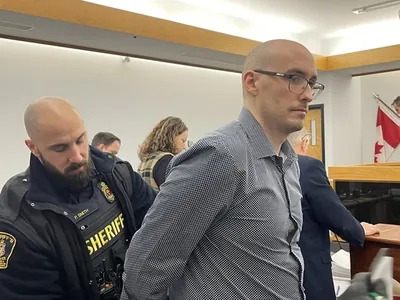
2026.2.6 Crown hopes to send Markus Hicks to jail for 18 to 20 years; says he used teacher, coach positions as ‘hunting ground’ for victims
‘It can’t be to the point of vengeance,’ argues defence, asking for roughly half the jail time proposed by Crown
Markus Hicks’ lawyers urged the court Friday, Feb. 6, not to impose what they called a crushing sentence, arguing he has shown remorse for his sexual violence offences and accepts sole responsibility for them, despite what’s indicated in a pre-sentence report.
Jason Edwards and Ellen O’Gorman say a jail sentence of nine-and-a-half to 12 years is no slap on the wrist, and is appropriate for 34-year-old Hicks.
Prosecutors Mark James and Lesley Pike, meanwhile, are seeking a jail sentence of 18 to 20 years for the former high school teacher and volleyball coach, whom they say took advantage of those positions as a “hunting ground” for vulnerable victims.
Friday marked the final day of a sentencing hearing for Hicks, who has pleaded guilty to 54 charges against 18 people between the ages of 15 and 30.
Among his crimes are 13 counts of sexual assault, 12 of wearing a disguise with the intent to commit a crime, several counts each of child pornography offences, breach of trust, child luring, and making sexually explicit material available to children; and single counts of exploitation, invitation to sexual touching, sexual interference, identity fraud and impersonation.
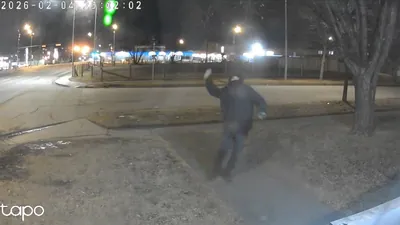
2026.2.6 ‘I can’t stress that enough, I’m scared’: Calgary man’s home attacked 4 times in 6 days
Chris Boucher is living a nightmare after his northeast home was the target of vandals in four separate incidents that included spray paint and having multiple rocks thrown through his windows.
“We have no idea why any of this is happening to us,” Boucher said, in an interview with CTV News. “I’ve been here for 20 years, I have a large friend group, we’re friendly, polite people, I know all my neighbours and even more so after a bunch of the social media posts that my neighbours have really been nice and we don’t know why this is happening.”
It all started on the evening of Thursday, Jan. 29, when his home was spray painted with offensive graffiti and an Amazon package was stolen from the front step.
The following night, a rock was thrown through one of his windows.
“Whenever I think of what could have happened, I think the worst,” he said. “It scares me, I’m scared to my core right now just thinking of what could have happened to me then.”
Boucher filed police reports for both attacks. But the home was targeted yet again on Jan. 31.
This time, some of Boucher’s friends were watching the home and spotted two people armed with a large piece of wood and a knife. An altercation ensued and the two fled.
“We thought we were safe after that, no other incidents for three days,” he said. “Then (Feb. 4) what looked to be a young man threw two large rocks into my living room, one went through a main window and one went through our master bedroom window.”
Boucher filed yet another police report and installed a number of security measures in his home to protect he and his wife from further violence.
“I’ve installed three cameras, two internal facing north and west and then one in the backyard facing west and south, covering that area and installed spotlights in the back (yard),” he said. “My lights are always on, I have installed numerous door stopping mechanisms to prevent any sort of armed assault on my doors again.”
Boucher says he’s received a lot of support from neighbours, people in his community and some on social media after posting a video and images of his attackers.
“Despite many friends and family telling me I should be out of this house now, I don’t want to go because they’ve been here for (20 years) and I just don’t know why this is happening,” he said. “I have no plans of leaving, I want to stay here as long as I can because I love this place and this community.”
Boucher is frustrated he isn’t hearing more from the Calgary police about its investigation. He’s sent emails to CPS and others.
“I’m just trying to get any sort of response and understanding,” he said. “I’ve emailed the mayor’s office and gotten a response from there telling me to go to the police commissioner, I reached out to the premier’s office as well as my MLA and city councilors on this, I want as many people as possible to know what’s going on, if the bad guys know already, I want everyone to know where I am and what’s happening.”
Calgary police are investigating the occurrences that may be connected, but at this time have not identified any suspects seen in the CCTV footage.
2026.2.5 7 TPS officers, retired officer charged in police corruption, organized crime investigationSeven Toronto police officers and a retired officer have been charged in an investigation into police corruption and organized crime that includes conspiracy to commit murder, shootings, extortion and drug trafficking.
York Regional Police Chief Jim MacSween said the seven-month-long investigation found officers unlawfully accessed information, which was then funneled to criminals who carried out shootings and other violent offences.
“While this is a deeply disappointing and sad day for policing, this investigation also underscores the insidious, corrosive nature of organized crime.”
The investigation began in June 2025 when they allege a conspiracy unfolded to murder a member of corrections management who was working at a Ontario Correctional Institute institution.
2026.2.5 New Minas man sentenced for hammer death of friend in 2017 charged with assault and threats
A New Minas man who was sentenced to more than seven years in jail for the 2017 beating death of a friend has been arrested and charged with four counts of assault and one of uttering threats.
Nikolas Derrick Salsman, 39, was arrested this week.
Court documents show the alleged assaults happened between July and December of 2025, while the threats allegation is from Tuesday.
Salsman remained in custody until Thursday, when he was released on cash bail put up by himself and his mother. He is applying to Nova Scotia Legal Aid for representation, duty counsel Tim Peacock told Judge Angela Caseley.
He must reside at his residence, is under a 10 p.m.-6 a.m. curfew, and must have no contact with two witnesses.
He will return to court March 10 for election and plea.
His release was agreed to by the Crown.
Salsman was sentenced in July 2019 for beating Trevor Pelton to death with a hammer in September 2017.
Court heard at the sentencing that the two men got into an argument outside Salsman’s parents’ home. Pelton pulled out a knife, slashing toward Salsman’s face or neck, and that as he raised his hand in defence he was cut on the thumb.
Salsman fell backward, saw a hammer by a wood pile, picked it up and hit Pelton several times when he lunged again with the knife. As they grappled, Pelton stabbed or sliced him twice in the back of the leg. Salsman hit Pelton each time he came at him until he dropped to the ground.
Salsman moved the body and wrapped it in a blanket. He went into the home and asked his mother to take him to hospital because he had been hurt in a car crash. He received stitches.
Salsman’s father later went to pick up his son from the hospital and, after returning home, found Pelton’s body and called 911.
Salsman was charged with second-degree murder. He pleaded guilty to manslaughter.
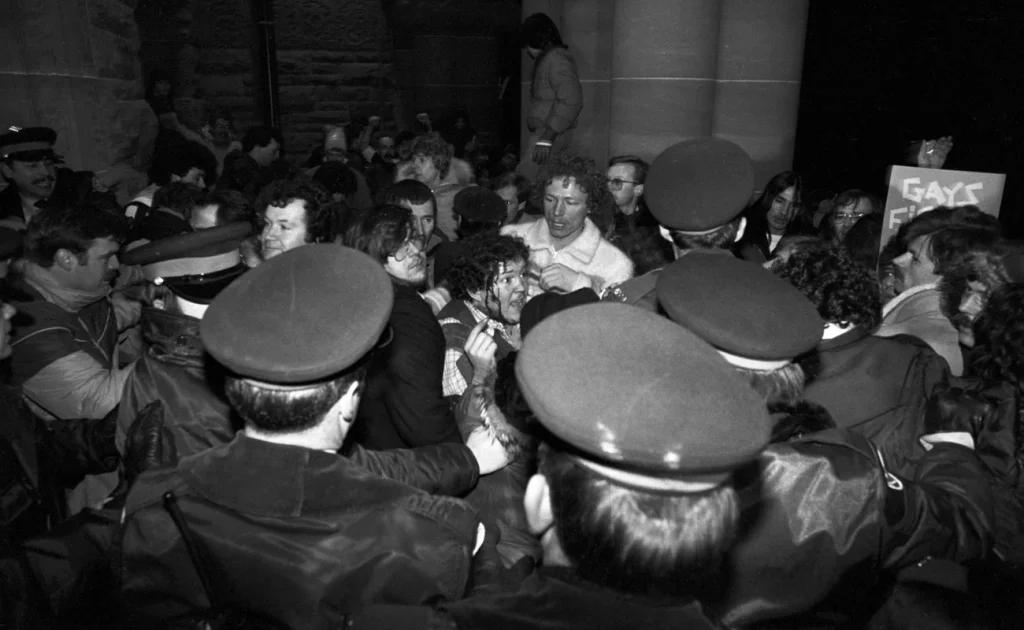
2026.2.5 City of Toronto commemorating 45th anniversary of the Bathhouse Raids
The City of Toronto commemorated the 45th anniversary of the Bathhouse Raids on Thursday — a dark day in the city’s history that led to outrage from citizens and forced a change from police and the courts.
The police raids on Feb. 5, 1981, part of ‘Operation Soap,’ targeted gay men at four bathhouses in the city with nearly 300 of them being arrested. Their names were released to the media, which led to many being publicly outed and losing jobs or housing. Witnesses reported police officers using crowbars and sledgehammers to destroy property and verbally abusing protestors with homophobic taunts.
The move sparked mass protests and rallies in the city the next day, denouncing the incident and the police.
x1200
2026.2.3 What we know (so far) about the people accused in London, Ont., bomb-making scheme
All 4 studied engineering or science at Western University

Three men and one woman who are currently attending, or are alumni of, Western University face a slew of charges alleging — among other things — that they were storing chemicals that could be made into explosives at a house just west of campus in London, Ont.
“This is usually a pretty quiet neighbourhood. Nothing too exciting happens here,” said area resident Vivette Martin, after police taped off the beige corner house at 212 Chesham Pl. last Tuesday. “Everyone’s just been very curious as to what’s going on.”
All four received additional charges on Monday, including the manufacturing of a gun. Here’s what else we know about them:
Jerry Tong
The oldest of the accused, 27-year-old Jerry Tong, is the only one who doesn’t live in London.
Police and court records have linked him to Ottawa and to a house in Gatineau, Que., respectively, and the case has seen search warrants issued for locations in both cities.
According to a LinkedIn profile that matches Tong’s name and appearance, he got an engineering degree at Western in 2022.
He stayed in London for another year, working as a wealth adviser at National Bank Financial, which a company spokesperson confirmed.
The profile says he then moved to Ottawa to work as an investment adviser for another company until 2025. Tong faces the following 11 charges:
Carrying a concealed weapon.
Careless use of a firearm.
Possessing a loaded regulated firearm.
Resisting arrest.
Breaking and entering with intent.
Occupying a motor vehicle with a firearm.
Possessing an explosive substance.
Storing a restricted weapon in a careless manner.
Possessing a prohibited firearm.
Possessing a loaded firearm at the residence.
Manufacturing a prohibited firearm.
Fei (Frank) Han
Fei (Frank) Han, 25, appeared in a virtual bail hearing on Monday wearing the same black, square glasses frames as seen in Facebook and LinkedIn pictures that match the accused’s name and general appearance.
Those photos include one of a smiling young man wearing a Queen’s Rocket Engineering Team (QRET) hoodie while holding a bright orange rocket.
After completing an undergraduate degree at Queen’s University in Kingston, Ont., Han continued his education at Western where he pursued a master of engineering, according to the LinkedIn profile.
He was an active member of rocketry teams at both schools, it says, participating in the Western Engineering Rocketry Team from 2023-24 and on QRET for five years before that.
CBC News reached out to both teams for comment, but Western’s did not respond and the Queen’s team declined to comment.
Han is one of three accused who live at 212 Chesham Pl. He is charged with the following:
Unlawful possession of explosives, including several precursor substances and finished high explosives.
Storing a restricted weapon in a careless manner.
Possessing a prohibited firearm.
Possessing a loaded firearm at the residence.
Manufacturing a prohibited firearm.
Zekun Wang
Also listed by police and court documents as living at the house on Chesham, 26-year-old Zekun Wang is currently on Western’s student directory as a graduate student — and convocation programs show that he has graduated with both a master of engineering science and bachelor of science.
While doing his undergraduate degree, he spent a year with a research group called the Multiscale Deformation Lab within Western’s Spencer Engineering Building, according to an entry on the lab’s website which has since been deleted.
Wang faces the following seven charges:
Breaking and entering with intent.
Occupying a motor vehicle with a firearm.
Possessing an explosive substance.
Storing a restricted weapon in a careless manner.
Possessing a prohibited firearm.
Possessing a loaded firearm at the residence.
Manufacturing a prohibited firearm.
Feiyang (Astrid) Ji
The only woman charged, 21-year-old Feiyang (Astrid) Ji, is the biggest mystery of all.
Ji’s name appears on the Western student directory listed as a faculty of science student. An otherwise-empty LinkedIn profile matching her name says she is set to graduate in 2027.
She is accused of the following:
Unlawful possession of explosives, including several precursor substances and finished high explosives.
Storing a restricted weapon in a careless manner.
Possessing a prohibited firearm.
Possessing a loaded firearm at the residence.
Manufacturing a prohibited firearm.
2026.2.3 Corner Brook murderer Malcolm Cuff granted six months day parole
‘It is evident that the passage of time has not numbed the pain you have caused,’ says parole board
Convicted murderer Malcolm Cuff has been granted six months of day parole, despite opposition from the police and loved ones of the two women he killed.
Cuff’s Correctional Service of Canada case management team recommended day parole as the next step in Cuff’s gradual reintegration, and in a Jan. 20, 2026 decision, the Parole Board of Canada agreed.
However, it imposed special conditions it said were necessary to protect the public and the victims’ families.
Cuff, 66, of Corner Brook, is serving a life sentence on the mainland for the 1983 killing of 20-year-old Marilyn Ann Newman. Newman was abducted, sexually assaulted and murdered.
Cuff’s accomplice, Robert Durnford, was granted full parole in 2008 and died four years later.
Cuff was also sentenced in 2000 to 14 years for manslaughter in the 1979 death of 16-year-old Janet Louvelle. He maintained her death was accidental until a parole board hearing in 2012, when he admitted he had killed her in anger.
ON THE PATH TO BECOMING A SERIAL KILLER
In its recent decision, the parole board noted Cuff said he had previously been “a loose cannon,” consumed by anger from past sexual trauma, selfish, preoccupied with sex, out of control, and feeling society owed him something.
He described himself as becoming “numb” after killing Louvelle, and shared that he had drawn up a list of people to kill before he murdered Newman.
He conceded to the board that he had been on the path to becoming a serial killer.
He told the board that rejection over the years made him feel inferior, and he wanted to “get even” and make the community suffer.
“All told, it is very unsettling that the murder in 1979 did not cause you to reflect on your behaviour; rather, it seems to have emboldened you, as after approximately four years, you returned to the same offence type,” the board wrote, adding that Cuff failed to explain why rejection had led him to kill.
LOVED ONES DETAIL THEIR ENDURING PAIN
As they have done consistently over the years, loved ones of Louvelle and Newman opposed Cuff’s day parole. They told the hearing they continue to suffer anguish, anxiety, depression and lasting grief, and expressed frustration at having to repeatedly submit victim statements and live in fear of his release.
“It is evident that the passage of time has not numbed the pain you have caused,” the board told Cuff.
Police in the area where Cuff will reside — its name redacted from the decision — did not support his request for release, deeming him a danger to the public and pointing out he has no ties to the community.
The board noted ongoing concerns in areas including marital/family, emotional and community functioning, and said Cuff had been assessed on a psychological risk assessment as a below-average risk for sexual offences and low to low-moderate risk for further violent or general offences — which it considered relatively high.
The board concluded that Cuff’s risk could be managed in the community with support, given his insight and treatment when it comes to his mental health issues; engagement in programming; his mostly positive institutional behaviour, and his successful completed temporary absences.
CUFF’S RISK CAN BE MANAGED IN THE COMMUNITY
“You took full responsibility for the index offences, which you described as brutal and horrific. You expressed deep remorse for killing two young females who did not in any way deserve what you did to them and their families,” it continued, stating Cuff showed some understanding of the harm he caused the victims’ loved ones.
“You stated you owe it to the victims’ memory never to return to the dark place you were at when you committed those offences, and to live life as a good person.
“It is the board’s opinion that you will not present an undue risk to society if released, and that your release will contribute to the protection of society by facilitating your reintegration into society as a law-abiding citizen.”
Cuff will live at a community-based residential facility, and plans to seek work in the automotive field. He has no leave privileges and must return to the facility every night.
He must report to his parole supervisor all relationships with females and attempts to initiate them; disclose all relationships with people responsible for children; avoid all contact with Newman’s and Louvelle’s families; follow treatment plans to address violence, aggression, sexual offending, emotion management and boundaries; work with a mental health professional, and have no contact or association with anyone involved in criminal activity.
2026.2.2 ‘Tracking a Killer: The Cold Case Files’: Margaret McWilliam
The Toronto Police Service Homicide Unit has been highly successful in solving murders in the city.
The service says overall, clearance rates have averaged near 80 per cent from 1921 until now, but they still have hundreds of cold cases on file including the unsolved homicide of Margaret McWilliam.
Margaret McWilliam, 21, left her home near St. Clair and Warden in Scarborough on August 27, 1987, for a run and never returned. Detective Constable Andrew Doyle said she was found dead the next day.
“Officers from 41 Division assisted by Peel Regional Canine Unit located her body deceased in a very wooded area of Warden Woods Park,” said Detective Constable Doyle.
Her killer has never been found. Margaret’s mother, Charlotte McWilliam, who is now in her 80s, is still looking for answers.
“It was a terrible thing. He just can’t get away with it,” said McWilliam.
Detective Constable Doyle says they have the killer’s DNA profile.
“I need a name. We’ll do the rest. I still believe there is someone out there, maybe more than someone, maybe more than one person that knows exactly what happened to Margaret,” said Doyle.
This is one of the cases that will be featured on the new season of “Tracking a Killer: The Cold Case Files.” Podcast episode 1 is now available on the Frequency Podcast Network.
2026.1.15 B.C. teen faces manslaughter charge in fatal 2024 fentanyl overdose
Police in Prince George were called to a home where a 16-year-old was found unconscious. She died in hospital a week later
A 17-year-old has been charged with manslaughter in the death of another teen who died after suffering a fentanyl overdose.
On June 26, 2024, Prince George RCMP were called to a home in the 7600-block of McMaster Crescent, in the city’s College Heights neighbourhood, where a 16-year-old girl was found unconscious.
She was taken to hospital where it was determined she had high levels of fentanyl in her blood. She died the following week.
A charge of manslaughter has since been approved by the B.C. Prosecution Service. On Tuesday, the RCMP serious crime unit arrested a suspect, who can’t be identified under the Youth Criminal Justice Act.

2026.1.10 ‘Strong possibility of foul play’: 2 years after Scarborough man vanished, Toronto police reclassify case as homicide
Toronto police say the disappearance of Taron Stepanyan — a Scarborough man who vanished more than two years ago is now being investigated as a homicide.
Investigators announced the update Saturday morning, saying new information has led them to conclude the circumstances of Stepanyan’s disappearance now meet the threshold for a homicide investigation, marking the first time police have publicly said they believe the now 42-year-old father likely met with foul play.
“Based on information we’ve recently obtained, the circumstances of his disappearance now meet the threshold for a homicide investigation,” Det. Sgt. Phillip Campbell told reporters.
“What I can say is that we believe there is a strong possibility that foul play was involved in Taron’s disappearance.”
Stepanyan was last seen on Dec. 23, 2023, in Scarborough’s West Hill area, near Morningside Avenue and Kingston Road.
He was 40 years old at the time.
He is described by police as five-foot-11 and weighing 229 pounds with short brown hair, a brown/grey beard, and brown eyes.
‘Now is the time to come forward,’ police say

A rash of break-ins hit Unity early Thursday morning, with at least eight local businesses targeted, Unity RCMP said Friday.
Detachment Commander Sgt. Christopher Neufeld said video surveillance and the method of entry indicate a single suspect likely acted alone. Investigators are still in the early stages of the inquiry and are coordinating with neighbouring RCMP detachments and the Serious Crime Unit to determine whether these incidents are connected to other break-ins in the region over recent months.
“The suspect was seen hiding in dark places waiting for traffic to go by” Neufeld said. “We are reviewing all available footage and working to identify the individual.”
Police are advising homeowners and business operators to take precautions, including keeping properties well lit, installing quality cameras that can be monitored remotely, reinforcing locks, and minimizing cash on the premises.
Anyone with information about the break-ins or who may have observed suspicious activity is asked to contact the Unity RCMP or call Saskatchewan Crime Stoppers anonymously.

2026.1.8 Man, woman charged in human trafficking investigation: Toronto police
Toronto Police officers have charged a man and woman after a human trafficking investigation that began back in October, 2025.
In a release, investigators said the accused used “deception, coercion and control” to traffic a female in southern Ontario.
“The accused persons created and posted online ads for sexual services, this included the taking of sexualized pictures,” the release alleged.
On Tuesday, December 30, 2025, the Toronto Police Service Human Trafficking Enforcement Team located and arrested Romelle Morgan, 33, and Feza Ngongo, 21, of Toronto.
Morgan has been charged with procuring and fail to comply with a probation order.
Ngongo faces charges of trafficking in persons and advertising another person’s sexual services.
The allegations have not been tested in court.
2026.1.7 Mother convicted in death of girl born on plane gets 10 years in prison
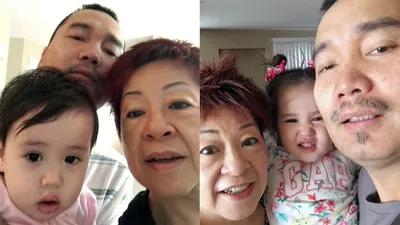
A former Ottawa woman convicted of manslaughter in the death of her five-year-old daughter at the height of the COVID-19 pandemic has been sentenced to 10 years in prison minus some time already spent in custody — marking the end of a chapter in the strange, brief and tragic saga of Chloe Guan-Branch’s life.
In the spring of 2020, Chloe desperately needed medical care to save her life. Her bladder had somehow ruptured in her Ottawa apartment on May 9, and her body’s waste was slowly leaking into her bloodstream, poisoning her.
For six days, her mother Ada Guan and Guan’s boyfriend Justin Cassie-Berube did not get Chloe the help she needed. They searched online about her increasingly dire symptoms and Guan consulted a pharmacist, but they never took the girl to a doctor — even as she lost the ability to walk, became incontinent, vomited repeatedly and was groaning in pain.
In a case like this one, where a vulnerable child is essentially left to die … the sentence must reflect society’s response to this kind of malignant neglect by a parent of a child.
-Ottawa Superior Court Justice Anne London-Weinstein
Court heard they were worried that taking Chloe to hospital would alert officials to the physical abuse she’d been enduring at the hands of Cassie-Berube, including a strike to Chloe’s mouth on her fifth birthday, May 10, that split the skin under her lip.
The girl whose birth on a plane had made international headlines five years earlier died alone in her room on May 15, 2020, in her soiled bed, as Guan watched TV in the living room and Cassie-Berube was out.
Wednesday’s sentence by Superior Court Justice Anne London-Weinstein comes 17 months after Guan, 33, pleaded guilty to manslaughter.
After the plea she remained out on bail, and in September she was arrested in Calgary and jailed in Ottawa after repeatedly neglecting to show up in court ahead of sentencing.
Guan pleaded guilty to failing to attend court, in addition to the manslaughter. The Crown and defence jointly proposed that she should receive an additional month in prison for the failure to attend, but they were far apart on their recommendations for the manslaughter charge.
Assistant Crown attorney Khorshid Rad called for an 11- to 12-year sentence, while defence lawyer Diane Magas asked for three to six years, saying Guan had been the victim of emotional abuse and controlling behaviour in previous relationships, including with Cassie-Berube.
Rad acknowledged the relationship dynamic should be taken into consideration, but argued it should be weighed against the number of days Chloe was left to suffer. Guan’s failure to act became an increasingly aggravating circumstance “every day Chloe gets weaker,” Rad said during sentencing submissions in December, adding that Guan’s moral blameworthiness is “very high.”
London-Weinstein echoed the Crown’s position in her ruling.
“In a case like this one, where a vulnerable child is essentially left to die … the sentence must reflect society’s response to this kind of malignant neglect by a parent of a child,” the judge said.
Ex-boyfriend convicted, sentenced 2 years ago
In 2024, a different judge found Cassie-Berube guilty of manslaughter, criminal negligence causing death, failing to provide the necessaries of life, assault causing bodily harm and assault, all involving Chloe.
He was handed a 14-year prison sentence for what the judge called a “shocking example of abuse.”
Not long after the Crown’s successful prosecution on all the charges Cassie-Berube faced, Guan and her lawyer Diane Magas struck a plea deal. Guan was facing many of the same charges, and in exchange for a guilty plea to manslaughter the other charges have been dropped.
During sentencing submissions last month the Crown read a long, impassioned victim impact statement from Guan and Cassie-Berube’s next door neighbour. Crystal James interacted with Chloe in their apartment building’s hallway, giving her small gifts and treats. She sometimes noticed bruises and swelling, as well as her quiet, timid manner.
I cannot believe that anyone who has touched this case has walked away unmarred. Irrevocably I am changed.
-Crystal James, former neighbour
“I imagine [Chloe] laying in pain in that apartment, maybe wondering why her neighbour didn’t come save her … her imagined whisper plays in a loop in my mind,” James wrote. She switched apartments but it wasn’t far enough, and she ended up moving from Ottawa entirely.
“I cannot believe that anyone who has touched this case has walked away unmarred. Irrevocably I am changed,” she wrote. But she’s also grateful she got to know Chloe, however briefly.
Guan also read a statement in court, saying she “deeply regretted everything that I didn’t do.”
“I should have known better when I first saw the signs. For this, I do not deserve to be her mom — not in the past, present or future…. If I had another chance to tell you how sorry I am and show you how much I love you and be able to hug you again, I would do anything for that chance,” she said.
Looking up from her written decision and directly into Guan’s eyes on Wednesday, London-Weinstein said the violation of the absolute trust Chloe placed in her mother was one of the “extremely aggravating factors” in the case.
However, the judge also found that Guan’s history of emotionally abusive and controlling relationships contributed to her inaction. It wasn’t an excuse for failing to act, London-Weinstein said, but it was part of the equation.
On Wednesday, Guan was quiet and still in the prisoner’s box as the sentence was being read.
She has 30 days to decide whether to appeal the sentence, which works out to about nine and a half years including credit for the time she’s already served in jail.
2026.1.2 Jury selected in trial of man accused of Dieppe double homicide
Janson Bryan Baker, 29, scheduled to stand trial over 3 months in Moncton
A jury was selected Saturday in Moncton for the trial of a 29-year-old accused of killing a Dieppe couple in 2019.
Janson Bryan Baker, 29, is being tried on two charges of first-degree murder. It’s alleged the Moncton man killed Bernard Saulnier, 78, and his wife Rose-Marie Saulnier, 74, on Sept. 7, 2019 in Dieppe.
Baker formally pleaded not guilty to the charges Saturday morning as jury selection began. Selection continued through the day and was completed just after 7 p.m.
The Crown’s opening statement is expected Tuesday morning, offering an overview of the evidence jurors are expected to hear as the trial unfolds.
The Saulniers’ deaths shocked community members and led to questions about the status of the case over the following years as police continued to investigate with little said publicly.
Baker was charged in September 2023, the fourth anniversary of the discovery of the Saulniers’ bodies in their Amirault Street home. Their cause of death hasn’t been released.
Rose-Marie Saulnier owned Natural Choice Health Centre in Dieppe and later worked as a nutritionist, herbalist and naturotherapist at Sequoia Dieppe.
Bernard Saulnier was a past president of Acadia Electric and was involved with the Dieppe Rotary Club and a New Brunswick construction association, according to his obituary.
The couple had two sons, Sylvio Saulnier and Luc Saulnier.
Sylvio died in 2023. Police say his death was not criminal in nature.
A standard publication ban prevents reporting much of what’s occurred in court over the years leading up to the trial.
The trial is scheduled for three months.
1,000 summonses sent
Jury summonses were sent to 1,000 people, according to a spokesperson for the Department of Justice.
Jury selection on a Saturday is not common but has happened before in Moncton.
“Holding the selection on a Saturday, while not typical, allows use of the secure courthouse, gather larger groups in multiple courtrooms, utilize existing technology, and facilitate parking,” Geoffrey Downey said in an email.
“It also enables us to bring in additional personnel without impacting weekday operations.”
4 courtrooms with potential jurors
Hundreds of people filled benches in four courtrooms linked by audio and video as jury selection began.
After randomizing the order, the main courtroom was cleared and potential jurors were called in to answer questions. A publication ban prohibits reporting details of their answers.
Lawyers asked for the jury to include more than the usual 12 people. Sixteen people were selected, including two alternates.
Justice Cameron Gunn, who normally sits in Woodstock, N.B., is presiding over the trial.
Baker is represented by Saint John defence lawyer Brian Munro.
James McConnell, Bradley Burgess and Victoria Quirk are prosecuting the case for the Crown.
First-degree murder, the charges Baker faces, involve a homicide that’s planned and deliberate. Conviction results in an automatic life sentence with no chance of parole for at least 25 years.
2026.1.2 Former Millbrook First Nation employee gets 4.5-year prison sentence for ‘staggering’ fraud
Band’s financial clerk misappropriated $4.3 million over four-year period
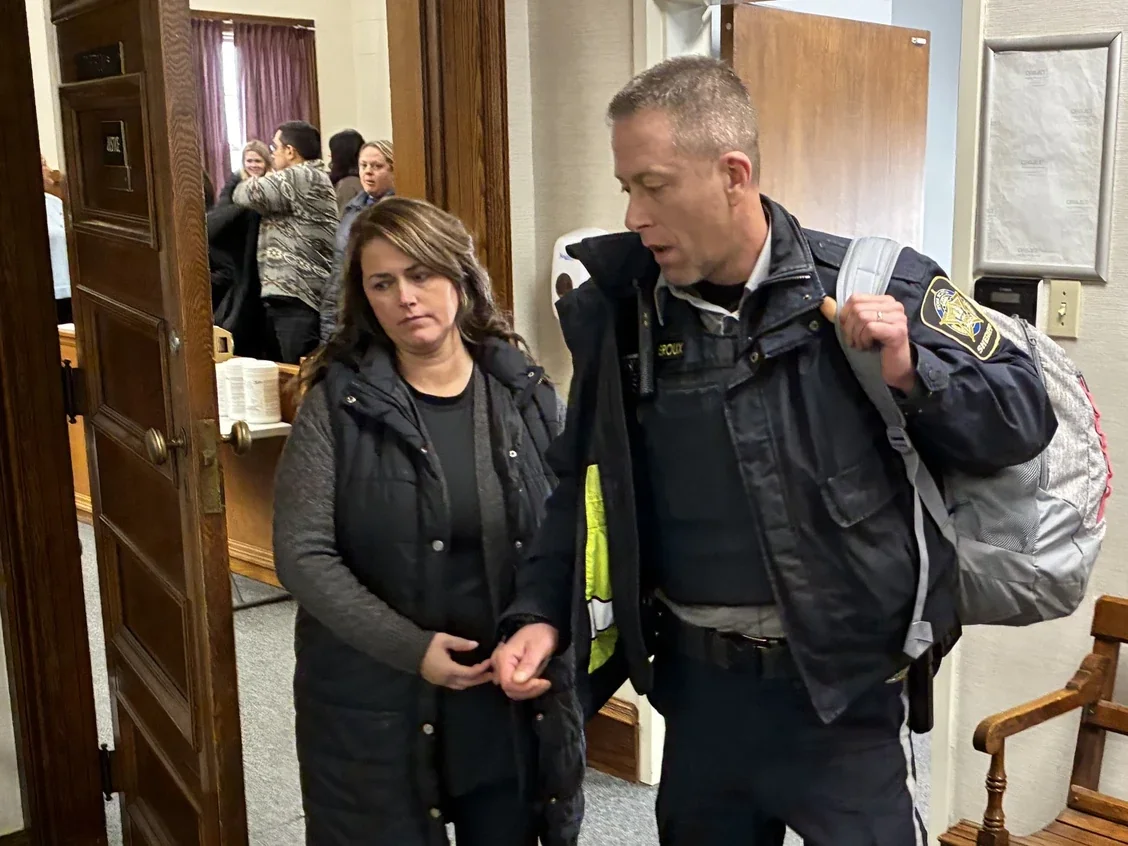
A Bible Hill woman who defrauded her former employer, the Millbrook First Nation, of more than $4.3 million has been sentenced to 4.5 years in prison.
Dawn Marie Ellis-Abbott, 45, pleaded guilty last June in Nova Scotia Supreme Court in Truro to a charge of fraud over $5,000.
The offence was committed over a four-year period between January 2016 and December 2019, while Ellis-Abbott was a financial clerk at the Millbrook band office.
Ellis-Abbott was sentenced Friday by Justice Jeffrey Hunt, who echoed the Crown and defence lawyers’ comments in describing the size of the fraud as “staggering.”
“While sentencings for the offence of fraud are not in and of themselves rare or unusual, sentencings involving a magnitude of loss experienced here are relatively uncommon,” Hunt said. “This was a large-scale fraud by any measure.
“These funds were converted to her own selfish use. I’m told that nothing has been recovered and, somewhat surprisingly, there are no available assets against which immediate recovery is thought to be possible.”
Counsel agreed the sentence for the offence should be in the range of 3.5 to 5.5 years. Crown attorney Shauna MacDonald called for a sentence at the high end of that range, while defence lawyer Alfie Seaman argued for a prison term at the low end.
“It is evident that a significant custodial sentence is required for Ms. Ellis-Abbott,” Hunt said.
“It is the order of the court that you will serve a period of 4.5 years. In my view, this sentence is required to reflect the gravity of the offence and your moral blameworthiness in all the circumstances.
“I should add that but for your change of plea and your acceptance of responsibility, you were at risk that this sentence would have been a different one.”
The judge said he would recommend that the Nova Institution for Women, the federal prison in Truro, provide culturally sensitive resources and programming to Ellis-Abbott, who is Indigenous and a member of the First Nation that she defrauded.
According to an agreed statement of facts, Ellis-Abbott was employed with the band from 2003 until she was terminated in December 2019. She had assumed additional responsibilities from the band’s chief financial officer in anticipation of taking over his position when he retired.
Along with preparing financial documents, working with the band’s auditors and dealing with band councillors, Ellis-Abbott was responsible for the everyday accounting of the bank accounts for Millbrook Fisheries and the Millbrook Economic Development Corp.
Ellis-Abbott’s annual salary was $59,509 as of December 2019. In addition, Millbrook band members received a $1,250 payment twice a year, in June and November, usually via an electronic payment.
She owned High Maintenance Hair Salon in Bible Hill. Her sister managed and worked in the salon.
The facts say Ellis-Abbott got into the business after being approached by her sister and her sister’s business partner “to help with their failing salon.”
Ellis-Abbott also had expenses associated with 36 horses that were owned by her family.
Between Jan. 1, 2016, and Dec. 31, 2019, Ellis-Abbott defrauded the band of $4,380,986 through various means, the statement says.
During that time period, she had a corporate credit card in her name that was supposed to be used only for Millbrook business purposes. Instead, she used the card to incur $2,927,529 in charges for personal transactions.
The transactions with the RBC Visa card included $717,071 in cash advances and payments of $339,749 to a plumbing and heating company, $169,409 to Amazon, $106,122 to Maritime Beauty, $106,112 to Home Hardware and $102,275 to Wayfair.
She also used the credit card to pay for saddles, veterinary expenses, other horse-related bills, automobiles, utility bills, fencing, insurance, roofing, waste collection, hotels, travel, entertainment, auto detailing, tattoos and shopping.
Payments made on the card came directly from the band via RBC banking transfers and 80 cheques from the Millbrook Fisheries and Millbrook Economic Development Corp. accounts.
In addition, Ellis-Abbott received 227 cheques totalling $1,068,330 from the Millbrook Fisheries account. Signatures were forged on 218 of the cheques.
“Each cheque required two signatures of individuals with signing authority,” the facts read. “Ms. Ellis-Abbott did not have sole signing authority.”
During the same time period, she received $261,240 in 66 cheques that were made payable to her from the economic development corporation. Signatures were forged on all 66 cheques.
Between March 2019 and November 2019, Ellis-Abbott made 12 e-transfers from the fisheries account and the band’s administrative account to her personal account, the High Maintenance business account, a contracting company and to buy horses. The unauthorized e-transfers came to a total of $121,586.
In February 2016, Ellis-Abbott used a Millbrook Fisheries cheque to pay a $2,300 invoice from a paving company for patching of the hair salon’s parking lot.
On top of the funds that were fraudulently acquired, the band authorized loans to Ellis-Abbott, and $68,827 of that money was never repaid.
RCMP opened an investigation in late 2019 and announced in April 2023 that Ellis-Abbott had been charged with fraud over $5,000, theft over $5,000 and possession of more than $5,000 in property that was obtained by crime.
The band filed a civil action against Ellis-Abbott in Supreme Court and was successful in obtaining a partial summary judgment in March 2023 for $3,209,909, plus $849,584 in prejudgment interest.
MacDonald, in her submissions Friday, said the fraud was not a “one-time exercise of bad judgment.”
“This is almost a daily occurrence of accessing funds that she was not entitled to,” the prosecutor said. “This was sustained, prolonged bad judgment for Ms. Ellis-Abbott. The amount of money involved here is staggering.”
MacDonald noted that the money misappropriated by Ellis-Abbott was 73 times her yearly salary.
Three band members submitted community impact statements for the sentencing hearing.
“It’s not a surprise that the band and members of the community would say that they are not able to do things that they would otherwise have been able to do,” MacDonald said.
“It is not a surprise either that members of the band who work in the financial areas of the band would say … that there’s a distrust now, because all of this money was misappropriated. … Community members look to those that work in the financial office and say, ‘Is this how you run things?’
“That distrust was obviously bred by Ms. Ellis-Abbott. … Understandably, the other community members who were working alongside her feel that they have been taken in or subsumed by this fraud.”
Defence lawyer Alfie Seaman said his client wanted to plead guilty quite a while ago, but the plea was delayed because of changes in counsel that were beyond her control.
“We are probably a year or so later than we should have been,” Seaman said. “It’s no one’s fault, but I do apologize to the Millbrook community. I’m sure they wanted to see closure long before this.”
Ellis-Abbott told the author of a Gladue report – a special kind of presentence report prepared for Indigenous offenders – that she developed a shopping addiction when she was about 34 years old and was having mental health and matrimonial issues.
The report said Ellis-Abbott began therapy sessions in 2025 and has gained insight into her conduct, is making progress in dealing with her mental health issues and is taking medication for anxiety.
“Dawn is focused on moving forward from this period in her life and preparing for the challenges ahead,” the report said. “She acknowledges the wrongs she has made and the impact this has had on community members, (and) has expressed remorse.”
In a letter to the court, Ellis-Abbott said: “To this day, I can’t even imagine acting like this. I don’t recognize this person.”
She said she is confident that she is going to come out of this better than she was before.
Besides the prison time, the judge compelled Ellis-Abbott to provide a DNA sample for a national databank, ordered her to make restitution to the Millbrook band for the full amount and gave her 15 years to pay a fine in lieu of forfeiture in the same amount. If she defaults on the fine without a reasonable excuse, she could be liable to five more years in prison.
Any payment she makes will be deducted from both the restitution and fine orders, as well as the civil judgment.
In addition, Hunt granted a 25-year order prohibiting Ellis-Abbott from working or volunteering in any capacity that would give her authority over the real property, money or valuable security of another person.
The Millbrook band, in a statement posted on its Facebook page, said the sentencing brought closure and justice for the First Nation.
“This crime has significantly impacted our community, and no amount of time served will replace the economic opportunities and community benefits lost because of this selfish act (by) this former employee,” Chief Bob Gloade said in the post. “I am disappointed, as I was hopeful for a longer sentence.
“I am thankful for the dedication and understanding that our Millbrook staff and community has shown over the last few years as we navigated this investigation and legal battle. It has been a long, difficult road and I am looking forward to continuing to work on improvements with my team at Millbrook and rebuilding the trust that this individual compromised.”
2026.1.1 Five years later: The search for Zack Lefave, and for answers, continues in Yarmouth County
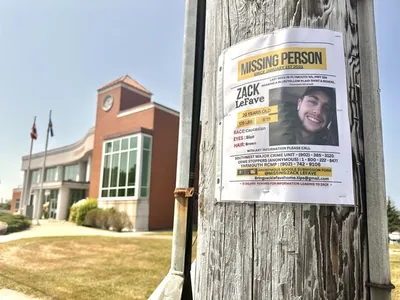
New Year’s Day 2026 marked five years since Zack Lefave of Yarmouth County went missing.
Yet while each passing year is a sombre anniversary to mark, each year also comes with renewed hope for Lefave’s family, friends and the community that there will finally be answers about what happened to him.
On the anniversary of Lefave’s disappearance, the Southwest Nova RCMP Major Crime Unit (SWN MCU) issued a media release saying the RCMP continues to investigate this case.
“Our investigators have spoken with over two hundred people during the course of this investigation,” said Cst. Shawn Himmelman, lead investigator with the SWN MCU. “The information and details provided have shaped where and how searches have taken place, and will support any new search efforts going forward.”
On Jan. 1, 2021, the Yarmouth RCMP started a missing person investigation following a report that Lefave did not return to a New Year’s Eve gathering he had attended earlier in the evening with friends. According to the RCMP, he was last seen walking on Highway 334 in Plymouth, Yarmouth County, at approximately 12:15 a.m.
Lefave was just days shy of his 21st birthday when he went missing.
Missing person posters continue to dot locations in Yarmouth County. Social media, where people plead for answers and information about Lefave’s disappearance, continues to be active.
The RCMP says over the last five years, investigators with the SWN MCU have collaborated with multiple partner agencies inside and outside of the RCMP to find Lefave.
It says regional ground search and rescue (GSAR) teams have volunteered countless hours over the years. RCMP Police Dog Services, including an RCMP cadaver dog team from British Columbia, officers from RCMP Forensic Identification Services, various units from Yarmouth RCMP, Meteghan RCMP, Shelburne RCMP and Lunenburg District RCMP have all contributed to the search and investigation.
The RCMP Southwest Nova Major Crime Unit continues to investigate and seek any information that will assist in locating Lefave. In particular, the RCMP would like to speak with anyone who was driving or walking on or near Hwy. 334 between Arcadia and Wedgeport between the hours of 11:30 p.m. on Dec. 31, 2020, and 3 a.m. on Jan. 1, 2021. It makes a similar plea every year.
In 2025, there had been renewed hope for answers or clues when a new development led to a May weekend search in the area of Yarmouth County where Lefave went missing.
That scene during the first weekend of May 2025 was reminiscent of one in the early days of January 2021. Searchers from various ground search and rescue teams in southwestern Nova Scotia, along with the RCMP, set up a command centre in the parking lot of the Plymouth elementary school. Everyone’s hope was focused on finding Lefave.
Unfortunately, the RCMP said the weekend search did not locate anything relevant to the ongoing investigation.
Asked at the time what had triggered this newest large-scale search, Sergeant Jeff LeBlanc, the weekend’s incident commander, said it had been due to a new development in the investigation.
“Recently, there was a new development that was learned that the last point of contact may have been made while he was walking down a dirt road, which triggered what we’re seeing here,” Sgt. LeBlanc had said on May 3, 2025. “A large sum of people have gathered together to try to find Zack.”
The search size was significant. There were search teams from Digby around to Queens, which also included teams from Yarmouth, Clare and Barrington. There were in excess of 70 searchers from the ground search teams, with another 18 or so RCMP officers on the ground.
Asked how the May 2025 search effort differed from the initial one in January 2021, and another one that the RCMP conducted in July 2023, LeBlanc had said, “We’re focus-driven this time around. We’re concentrating specifically on two different roads.” He did not refer to the roads by name.
The RCMP had posted on social media prior to that weekend that people would be seeing a large search effort in Plymouth, Yarmouth County. By the next morning, that RCMP’s post had been shared over 1,100 times with people holding out hope for a break in the case that for years has left a family and a community heartbroken and searching for answers.
As the physical search was happening, RCMP Major Crime investigators were also in the Tri-County area continuing to conduct follow-up interviews in relation to the case.
“I’m hopeful we can find answers,” Sgt. LeBlanc had said during the search. “I am hopeful that we are going to have some closure for the family and the community … We’re doing everything we can to obtain that. But of course, in this line of work, nothing is certain.”
And last year, it was not meant to be.
Still, there is always hope.
In addition to the RCMP’s ongoing public appeal for information that could aid in the investigation, Lefave’s case is also included in the Nova Scotia Department of Justice Reward for Major Unsolved Crimes Program. A reward of up to $150,000 is available for information leading to the arrest and conviction of the person(s) responsible for the disappearance of Lefave.
In the past, Lefave’s family has described the young man as someone who was always on the go doing something, whether it be fishing, hunting, or taking a drive on his four-wheeler. He loved to be outside. He loved animals. Loved to cook. Loved his family deeply. In a July 2023 interview with the Tri-County Vanguard, his mother Lorna said her son, “Had a smile that would light up any room.”
The years have been very difficult for Lefave’s family.
“He basically just disappeared without a trace,” his mother said in that interview.
When no one had heard from Zack as the hours ticked by on Jan. 1, 2021, and because he also hadn’t shown up for work that morning, his family immediately knew something was wrong. His mother knew her son wouldn’t have just purposely run off, even if he was in an intoxicated or impaired state. He wouldn’t have neglected his responsibilities and wouldn’t have purposely caused worry to his family.
“It’s a big world out there, and it continues to carry on. Our life seems like it’s in slow motion, or put on pause,” said his mother. “We see the world and life in a different way. Nothing is or will be the same.”
Still, five years later, there is something that hasn’t changed – the love Zack’s family has for him, their grief that is immeasurable, and the hope that they cling to that one day they will have answers about what happened to the young man, and that they will be able to bring him home.
发表回复