—
2026.8.30 Civilian leader helps free Haiti’s Kenscoff hostages with UNICEF support as questions grow over police response
Community leader Luckson Jean entered gang-controlled territory and helped secure the release of six children and seven women after an attack killed at least 47 people and left dozens kidnapped, raising questions about the government’s response
PORT-AU-PRINCE — A Haitian community leader entered a gang-controlled area of Kenscoff on Aug. 28 and helped secure the release of 13 people abducted during a deadly attack, including six children and seven women, with support from UNICEF.
The release has prompted renewed questions about the government’s ability to protect civilians from armed groups, particularly after a civilian intermediary was able to enter gang territory to retrieve hostages.
Luckson Jean, known as Frè Luckson, leads the nonprofit Fondation Frè Luckson Zòn Pa Fè Moun (FLZPFM). In a video posted on social media, he said he entered the gang stronghold after learning that children were among those being held.
Jean said the hostages were released without a ransom and credited UNICEF and other community-based organizations with supporting the negotiations.
“I thank God that the mission was successful despite the great risks I took to help save the lives of these innocent children,” Jean told journalist Rudy Sanon on the Team Rudy YouTube show.
Jean said organizations including Haiti’s Social Welfare and Research Institute (IBERS), with UNICEF’s support, participated in negotiations. He said gang members told negotiators they would trust only him to retrieve the children.
UNICEF said in a statement that six children and seven women had been released after several days in captivity. The children included three babies younger than two, a 7-year-old and two teenagers.
Other accounts, including Jean’s, put the number released at about 19. UNICEF’s figure of 13 is the confirmed number.
“This release offers a rare moment of hope amid the violence threatening children in Haiti,” said UNICEF deputy representative in Haiti, Yannig Dussart.
“The Kenscoff abduction was not an isolated incident but another stark reminder of the scale and frequency of attacks on children across the country,” the official added.
A civilian intervention raises questions
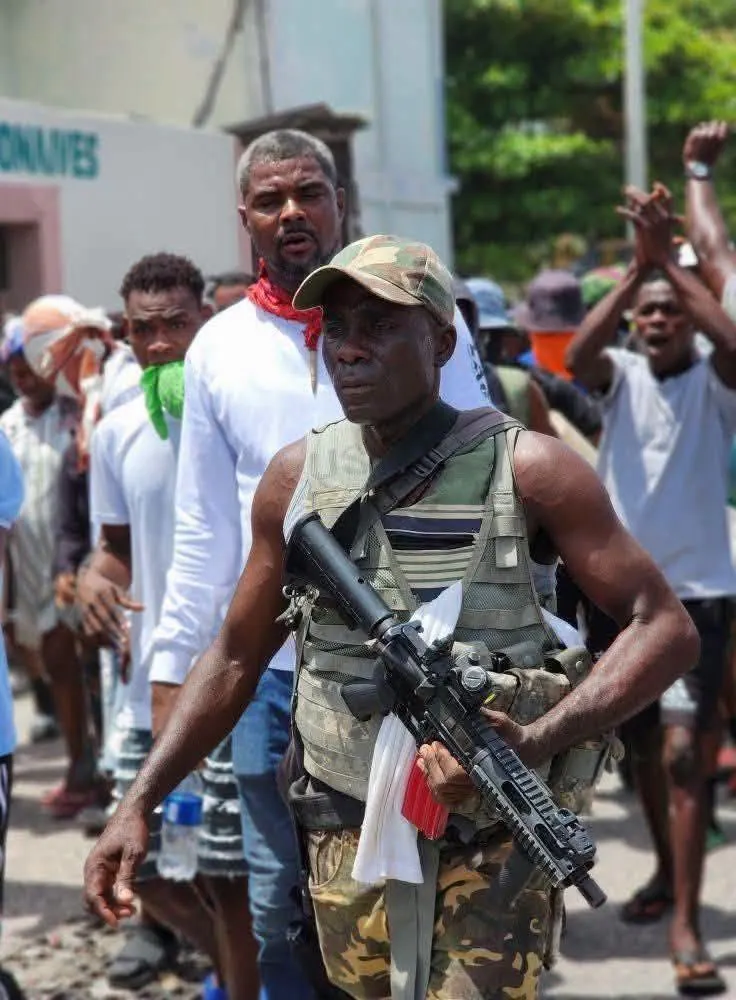
The intervention video shows Jean, founder and CEO of FLZPFM, holding a young girl while seated beside a masked, armed man. The man identifies himself as Didi—leader of the Izo #2 gang—referring to Johnson “Izo” André, who leads the notorious 5 Segond network.
The circumstances of the release have fueled debate in Haiti and among Haitians abroad over why a civilian leader could enter an armed group’s territory while residents continue to question the state’s ability to prevent kidnappings and attacks.
Those questions intensified after residents of Kenscoff protested Aug. 26, calling for an end to gang control, the return of displaced residents and justice for victims.
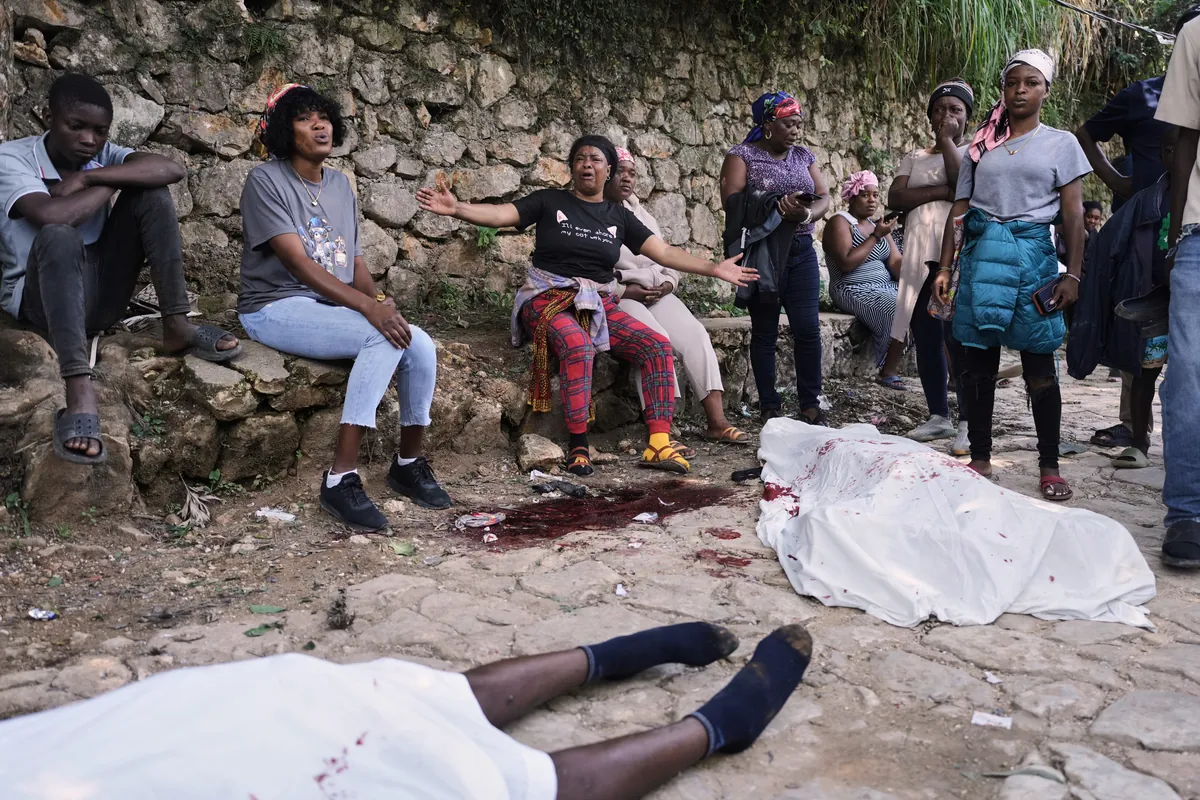
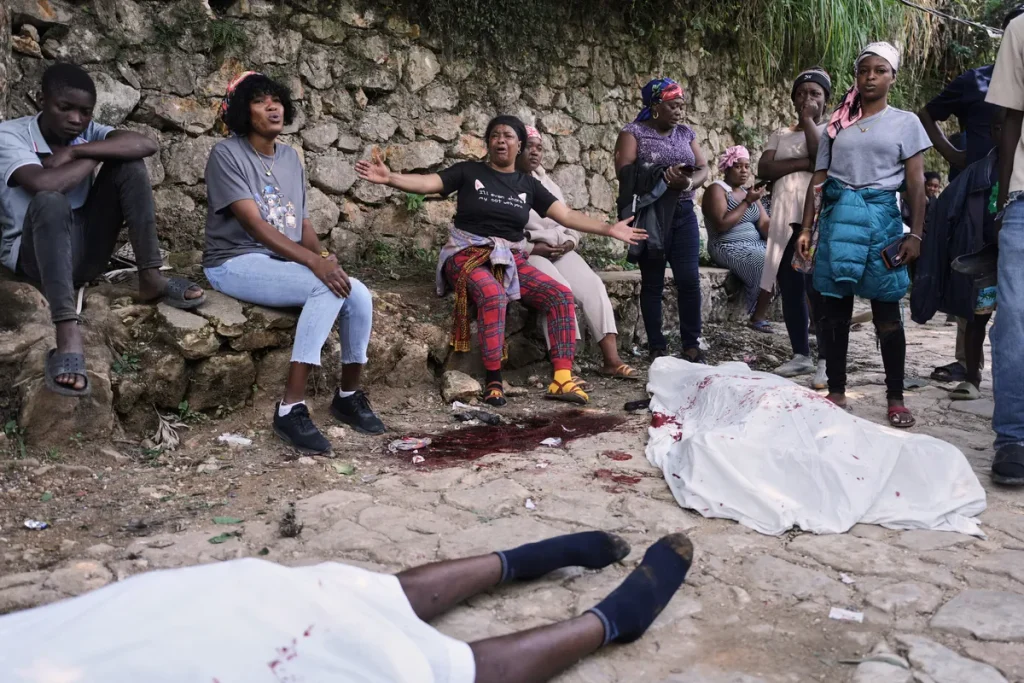
The protest followed an overnight Aug. 23-24 attack in which at least 47 people were killed and more than 50 kidnapped, according to the United Nations. Five of those killed were children, and 22 people were reportedly executed at a church compound where residents had sought shelter. Local reports said that as many as 100 people may have been massacred by the gangs during the bloodbath.
Some social media posts have questioned whether the government has a strategy to protect civilians. Many claims that officials were complicit in creating an atmosphere of fear around the December elections have not been independently substantiated.
Police face scrutiny after deadly attack
The Haitian National Police (PNH) has faced mounting criticism over its response to the Kenscoff attack. People also questioned the presence of the U.N.-backed Gang Suppression Force (GSF) and Erik Prince’s Vectus Global forces, linked to a $52 million-a-year mercenary contract.
Police Director Vladimir Paraison ordered an investigation into whether negligence or complicity contributed to the attack and ordered additional specialized units to the area. Police also announced a new command structure for the commune.
The debate comes as Haiti’s security forces confront heavily armed gangs with limited numbers of trained personnel.
Lt. Gen. Derby Guerrier, commander of the remobilized Haitian Armed Forces (FAd’H), said gang members are often heavily armed and in some cases better equipped than government forces.
“Haiti is facing heavily fortified armed groups,” Guerrier said during a Defense Ministry forum on the future of the army. “The biggest problem currently facing the police and the army is that we are up against gang members who are well armed, and sometimes even better armed than our security forces.”
International Crisis Group analyst Diego Da Rin has pointed to another constraint: the limited number of trained and properly equipped police officers available for direct combat with gangs.
“The shortage of police personnel is one of the main obstacles preventing the police from anticipating and taking concrete action when there is reliable intelligence about planned gang attacks,” Da Rin said.
He said the police’s specialized units were generally designed for civilian law enforcement rather than urban warfare and called for better coordination among the different security forces operating in Haiti.
A former United States chargé d’affaires in Haiti, Henry Wooster, told the U.S. Senate in February that Haiti’s crisis involved a coalition of about 20 armed groups and an estimated 12,000 gang members, with roughly 3,000 considered the greatest threat. He said the PNH had about 6,000 officers on its payroll, but at most 400 were doing most of the fighting.
Police union official’s view
Meleck Pierre, deputy spokesman for the police union SYNAPOHA, said the security forces remain constrained by resources and political support.
“Without the political will to pull the country out of this crisis, bringing in more forces will not solve the problem,” Pierre told The Haitian Times. “Haitian security forces can deliver results, but they need stronger support and commitment from the authorities.”
Pierre said that although he could not estimate the number of PNH officers, the institution has more than enough capability to fight the gangs, echoing an Aug. 26 editorial by Frantz Duval, Le Nouvelliste’s editor-in-chief.
Duval asked how law enforcement institutions with such significant resources could remain so ineffective, noting that the PNH and the reconstituted FAd’H have never had as many personnel, weapons, vehicles and budgetary resources as they have had over the past five years.
“Yet defeats and missed opportunities continue to mount,” he said. “Over the past five years, our security forces have been unable to improve their tactics or to strengthen their capabilities and equipment.”
2026.8.30 Hundreds attend funeral in Haiti for 4 victims of brutal gang attack that killed 47
PORT-AU-PRINCE, Haiti (AP) — Hundreds of people crowded into a church near Haiti’s capital on Sunday for the funeral of four of the 47 people killed in a recent gang attack so brutal that it shook a country that has long struggled with violence.
Mourners wiped away tears, raised their hands and cried out as coffins arrived at a church in the farming community of Kenscoff.
“We thank everyone who came in solidarity with the families that died and those who lost their loved ones,” Pastor Jean Robert Dorlus said. “God will open a space to receive them.”
Armed men attacked Kenscoff on Aug. 23, killing at least 47 people and kidnapping more than 50 others in the middle of the night. It was one of the biggest mass kidnappings in Haiti in recent years, and survivors have organized protests and blamed police for not preventing the attack, which pierced the belief that security in the troubled Caribbean country was improving.
Inside the church, people swayed to gospel music. Some wailed as their shoulders shook. The church was so packed that dozens had to stand outside, peering through the windows, as they honored those being laid to rest: a mother, father and their son, and a 70-year-old man whose body had been set on fire by the gang members.
“I’ve known them for a long time,” said Yvon Marleus, a Kenscoff resident who lost a cousin in the attack. “These are people who are respected in the community.”
“They didn’t act in time to stop the carnage,” Marleus alleged, referring to police.
Haiti’s National Police has said that it ordered an investigation to establish the truth about the attack, and whether it was “due to complicity or negligence.”
Outside the church, civilians stood guard with automatic weapons, ready to repel any potential new gang attacks with the help of police officers stationed nearby.
Kenscoff resident Jean Calixte Juste said he and two cousins survived the attack “by luck.”
“I almost died,” he recalled. “I almost fell into a ravine running. This is the worst and most terrible night I’ve ever experienced.”
He didn’t know the four people whose funerals were held Sunday, but he said he wanted to honor their memories.
It wasn’t clear when funerals of the other victims might be held.
On Sunday, Pope Leo XIV condemned the massacre.
“I express my prayerful closeness to the victims and their families and ask that all the hostages be released without delay,” he said. “I make a heartfelt appeal to all those responsible to make a concrete commitment to ensuring the safety of the population and putting an end to every form of violence.”
Marta Hurtado, a spokesperson for the U.N. Human Rights Office, said some 150 heavily armed gang members participated in the Aug. 23 attack. She said they first killed 13 people who tried to flee and then pursued 50 more who had sought refuge inside a church.
“After forcing them out from the premises, they executed 22 of them on the church courtyard and 12 others behind the church,” she said.
Dozens of others were injured, and more than 2,600 people were left homeless.
The gang later released six children and seven women following an intervention by community leaders and UNICEF, but dozens remain abducted.
Armed men control an estimated 70% of Port-au-Prince and swaths of land in Haiti’s central region and beyond, and they are also seeking to seize territory in Kenscoff.
Gang violence has displaced a record of nearly 1.5 million people across Haiti, where more than 3,050 people were reported killed from January to June, according to U.N. statistics.
“I’m ready to leave,” said Juste, one of the residents. “Because after this, I don’t think we’re going to survive another big attack.”
2026.8.30 Violent Haitian gang releases women and children after mass kidnapping and deadly attack
Six children and seven women were released by a gang in Haiti that had kidnapped more than 50 people after launching a deadly attack on a community near the capital, Port-au-Prince, nearly a week ago, according to UNICEF.
The United Nations children’s agency said late Friday that among those released are three children under the age of 2, a 7-year-old and two teenage girls.
While individual kidnappings in Haiti are commonplace, mass abductions are more unusual. The outcomes vary: Some people are released without a ransom, while others are killed despite multiple ransoms being paid.
Gangs killed at least 47 people during the attack late Sunday on Kenscoff, a once-peaceful farming community nestled in the hills above Haiti’s capital.
A gang leader known as Izo 2 had threatened to execute all the hostages if police killed any gang members in their push to secure Kenscoff. Izo 2 leads an armed group in that area on behalf of and in coordination with other gang leaders including Izo, considered one of Haiti’s most powerful gang leaders.
The recent attack sparked an outcry Friday at an emergency meeting of the U.N. Security Council for swift deployment of the new U.N.-backed gang-fighting force and action to rein in the lawless bands.
—
2026.8.24 AI-generated image distorts death of Haitian woman, obscuring rural health care crisis
A fabricated image depicting a Mare-Rouge resident, 32-year-old woman Salanda Thermitus, as heavily pregnant beside a buried ambulance spread a false account of her death while residents continue to struggle with inadequate emergency care and poor roads
PORT-DE-PAIX — An AI-generated image circulating on social media after the death of a 32-year-old pregnant woman from Mare-Rouge, Môle Saint-Nicolas has distorted the circumstances of her death, diverting attention from serious concerns about the condition of emergency medical services in Haiti’s Northwest region.
Salanda Thermitus died Aug. 12 while being transported from Môle-Saint-Nicolas’ Life Medical Clinic to Béraca Hospital in Pointe-des-Palmistes— a 46-mile journey. Her older sister, Betty Thermitus, said she was only about three months pregnant and had become ill from a condition unrelated to her pregnancy.
“At only about three months pregnant, my sister was not yet ready to give birth to her baby,” the older Thermitus sister told The Haitian Times. “Her death occurred after she experienced a simple bout of illness, which left me deeply devastated.”
But a fabricated image that breaks the news depicts a heavily pregnant woman sitting on a roadside rock while several men attempt to dig an ambulance out of deep mud. It suggests a dramatic rescue scene that did not occur as depicted.
The image illustrates how artificial intelligence can add false details to real tragedies, making an already painful event more emotionally compelling while obscuring the actual problems surrounding it.
For residents of Haiti’s rural Northwest, those problems include limited access to emergency medical care, poorly maintained ambulances, shortages of medical personnel and difficult road conditions.
A real tragedy, surrounded by false details
Thermitus was initially treated at Life Medical Clinic, directed by Dr. Edgar Dénoît, before being transferred to Béraca Hospital in La Pointe-des-Palmistes for further medical care when the ambulance transporting her experienced a tire problem.
Salanda died on her way to the hospital.
Emayson Fraël, Thermitus’ nephew, said the tragedy has raised questions about the condition of emergency medical services in the region.
“This tragedy has affected my entire family,” Fraël said.
“My aunt should not have died if adequate health care conditions had been in place here [Mare-Rouge]. It outrages me that an ambulance issue was at the root of this loss. This is the responsibility of the state,” he added.
“We cannot hold anyone or any authority responsible for my sister’s death. It is something that can happen.”-Betty Thermitus, Sister of the deceased
But accounts from Thermitus’s family members who were with her and the ambulance driver complicate any simple conclusion that the tire problem directly caused Thermitus’ death. They disputed the AI depiction of the event.
According to the driver, the vehicle was not buried in mud. Dieubon Salomon, who works for Haiti’s National Ambulance Center (CAN, its French acronym), said the ambulance stopped for less than an hour to repair a flat tire. After the repair, the vehicle continued toward the hospital.
“The tire had been repaired, and as we continued on our way, the patient’s sister asked me to stop and check on her condition, which had worsened,” Salomon said. “It was at that point that we realized she had unfortunately passed away.”
Salomon said no nurse or other medical professional accompanied Thermitus during the trip.
The driver’s account does not establish that the tire problem caused her death. It does, however, raise questions about the resources available to emergency medical crews serving remote communities.
“State authorities must provide emergency services with adequate logistical resources,” Salomon said in an interview with The Haitian Times. “Ambulances should always be kept in good working condition so they can respond to patients facing critical medical emergencies.”
But the AI image changed the story
The AI-generated image added several elements that were not supported by the accounts of people directly involved in Thermitus’ final journey.
It portrayed Thermitus as near the end of her pregnancy, suggesting she died of labor complications because the ambulance was stuck on bad roads.
It also showed an ambulance apparently trapped deep in mud, with men attempting to free it. Salomon said the ambulance briefly stopped because of a flat tire and was repaired within minutes.
The fabricated image of a visibly pregnant woman stranded beside a buried ambulance creates an immediate narrative of a catastrophic medical evacuation. Social media viewers concluded that a pregnant woman died because rescuers could not free an ambulance.
The false version obscures the real questions raised by Thermitus’ death: whether the ambulance was adequately maintained, why no medical professional accompanied her, what emergency services are available in Mare-Rouge, and how road conditions affect emergency transportation.
A rural health care system under pressure
Mare-Rouge is a rural community like any other, especially in Haiti’s lower Northwest Department, where residents often face long journeys when they need specialized or emergency medical care.
Many health facilities serve communities in the region, including Môle-Saint-Nicolas, Jean-Rabel, Bombardopolis and Baie-de-Henne. But residents have raised concerns about shortages of equipment, qualified medical personnel and reliable emergency transportation.
Poor roads can further complicate medical evacuations.
“If the roads are in such poor condition that transporting patients becomes dangerous and difficult, that is another failure on the part of the state,” Salomon said.
“And when all these problems come together, it is the people who pay the price — sometimes with their lives,” he added.
The broader challenge is not unique to the Northwest. Haiti’s health care system has faced severe disruptions from insecurity, shortages and restricted access to medical facilities. In August, Doctors Without Borders (MSF) again suspended operations at the Isaïe Jeanty Maternity Hospital in Cité Soleil after renewed gang clashes, depriving thousands of women of reproductive health care in an area where access was already extremely limited.
For rural residents, the barriers are different but can be equally consequential: distance, road conditions, transportation and the availability of trained medical personnel and specialists.
Naïsson Charles, a Mare-Rouge resident, said Thermitus’ death should prompt questions about the broader health care system.
“As a citizen who is deeply involved in the Northwest Department, Salanda Thermitus’ death deeply affects my conscience,” Charles said. “Behind such a loss is a family plunged into grief, but also many questions that the state and those responsible for the health care system must answer.”
Charles said emergency transportation and road conditions remain serious concerns.
Weslet Nelson, 36, also concurred, saying the tragedy should also prompt authorities to improve access to reliable and adequate public health services.
Thermitus’ funeral was held on Aug. 17. She leaves behind a 10-year-old son, her husband, nine brothers and sisters and other relatives.
“We cannot hold anyone or any authority responsible for my sister’s death,” the older Thermitus sister said. “It is something that can happen.
CAP-HAITIEN, Haiti (AP) — The U.S. deported more than 160 people to Haiti on Thursday for the first time since the Trump administration won a legal battle to end Temporary Protected Status for some 350,000 Haitians.
The plane landed in the northern Haitian city of Cap-Haitien because the main international airport in Port-au-Prince is considered too dangerous. The U.S. government currently has a ban on U.S. commercial flights to Haiti’s capital through early September because of ongoing gang violence.
The deportees were clad in white, and many covered their faces out of safety as journalists filmed their arrival. Nearly all declined to talk, with some fearing being targeted by gangs that control an estimated 70% of Port-au-Prince and swaths of land beyond.
The deportees included TPS holders and Haitians who had served prison sentences, said Jean Négot Bonheur Delva, director general of Haiti’s National Office of Migration.
“It is not the Haitian state that asks for them to be sent back,” he said. “Our mission is to welcome migrants of forced return. … We welcome them with the aim of accompanying them to their home.”
Deported Haitians search for a home
Delva noted that some of the deportees were not born in Haiti, although they are of Haitian descent.
He said that several deportees planned to travel to Haiti’s southern region, a dangerous journey because gangs control the main routes leading to that area and are known to randomly open fire on vehicles passing through.
Others are going to Haiti’s western region, he said.
2026.8.21 Salomon Rose Daphkar écope de trois ans de prison
Salomon Rose Daphkar a été condamnée à trois ans de prison, ce mercredi 19 août 2026, par le tribunal criminel siégeant sans assistance de jury. Détenue depuis plus de deux (2) ans, l’ex-influenceuse et ancienne ambassadrice de Paryaj Pa m devrait voir la durée déjà passée en détention déduite de la peine prononcée.
Son arrestation remonte au 9 avril 2024, après un incident de circulation. Son dossier avait ensuite été transmis au commissariat de Pétion-Ville où des accusations supplémentaires, dont l’association de malfaiteurs, avaient été évoquées.
Cette décision marque l’issue du procès en première instance. Un éventuel recours contre le jugement reste à confirmer.
2026.8.3 Jacmel : un homme arrêté pour meurtre conjugal
Justin Duffault, accusé d’avoir poignardé sa femme Pascale Antoine le 27 juillet dernier, a été appréhendé, ce lundi, par des citoyens dans la localité de La Montagne, Jacmel, puis remis aux autorités concernées.
Justin Duffault, accusé d’avoir poignardé sa femme Pascale Antoine le 27 juillet dernier, a été appréhendé, ce lundi, par des citoyens dans la localité de La Montagne, Jacmel, puis remis aux autorités concernées. Une vidéo diffusée sur les réseaux sociaux le montre menotté et escorté. Après les faits, l’homme aurait publié des messages laissant penser à une tentative d’autodestruction avant de prendre la fuite.
2026.8.3 Kidnappings à Delmas : le commissariat est-il toujours opérationnel ?
La recrudescence des kidnappings à Delmas soulève une question que de nombreux citoyens se posent : où est passé l’état-major de la PNH et, surtout, où est le responsable du commissariat de Delmas ? Alors que cette commune est redevenue l’un des principaux foyers des enlèvements, les habitants ont le sentiment que les criminels agissent avec une inquiétante liberté.
Un élément renforce particulièrement le climat de peur : de nombreux témoignages font état de ravisseurs opérant vêtus d’uniformes ressemblant à ceux de la Police nationale d’Haïti (PNH). Qu’ils soient authentiques ou contrefaits, ces uniformes sèment la confusion, retardent les réactions des victimes et contribuent à éroder davantage la confiance envers les institutions chargées de protéger la population.
Les enlèvements se multiplient sur les principaux axes de Delmas, sans qu’une réponse sécuritaire suffisamment visible ne semble parvenir à inverser la tendance. Cette situation alimente un profond sentiment d’abandon. Les citoyens sont en droit de se demander où sont les patrouilles, les contrôles et les opérations destinées à reprendre le contrôle de cette commune stratégique.
Il ne s’agit pas de remettre en cause le courage des policiers, qui travaillent souvent dans des conditions extrêmement difficiles. En revanche, les autorités doivent expliquer clairement leur stratégie face à cette nouvelle flambée de kidnappings.
Chaque enlèvement est une blessure infligée à toute la société. À Delmas, il est plus que temps de restaurer une présence effective de l’État et de redonner confiance à une population qui vit désormais dans la peur permanente.

La Direction centrale de la police judiciaire (DCPJ) aurait procédé, ce dimanche 2 août 2026, à l’interpellation de l’influenceuse TikTok connue sous le pseudonyme de « Ti Kreyòl Dyab », selon plusieurs informations circulant sur les réseaux sociaux.
La créatrice de contenu, suivie par près de 595 000 abonnés sur TikTok et ambassadrice de plusieurs marques, est soupçonnée d’entretenir des liens avec des groupes armés. Selon les informations, elle serait l’une des femmes du chef de gang connu sous le sobriquet de « Chalè ».
À ce stade, la Police nationale d’Haïti (PNH) n’a publié aucun communiqué concernant cette arrestation.
2026.8.3 Haïti : La police sensibilise contre les violences sexuelles dans le Sud-est
P-au-P., 03 août 2026 — La direction départementale de la Police nationale d’Haïti (Pnh) dans le Sud-est a lancé, vendredi 31 juillet 2026, à Jacmel, une grande campagne de sensibilisation contre les violences faites aux femmes, aux enfants et aux hommes, apprend AlterPresse.
La campagne, qui a démarré au marché Beaudouin, s’inscrit dans le cadre des actions de prévention et de lutte contre toutes les formes de violences et de violations des droits humains.
L’initiative vise à informer et sensibiliser la population, notamment les commerçant.e.s, les agriculteurs.trices, les conducteurs.trices d’engins lourds et les motocyclistes, sur l’importance du respect des droits de chaque personne et la nécessité de signaler tout acte de violence.
Dans le cadre de cette activité, une équipe s’est également rendue au parquet, au tribunal de paix et à la Direction générale des impôts (Dgi) de Jacmel, afin de diffuser des messages de prévention et d’encourager les institutions publiques à renforcer leur collaboration dans la lutte contre les violences, indique la Direction de communication de la Pnh (Dircom).
La Pnh affirme avoir reçu un accueil favorable de la population, qui se dit disposée à participer à cette campagne et à contribuer à la construction d’une société plus sûre, où le respect des droits humains demeure une priorité.
Un contexte marqué par une forte hausse des violences sexuelles
Cette initiative intervient dans un contexte de recrudescence des violences sexuelles en Haïti. Plus de 3 000 cas ont été signalés entre avril et juin 2026, dont plus de 1 000 au cours du seul mois de juin 2026, selon l’Organisation des Nations unies (Onu).
Citant des données du Bureau de la coordination des affaires humanitaires des Nations unies (Ocha), le porte-parole adjoint du Secrétaire général de l’Onu, Farhan Haq, a indiqué que près de 70 % des cas recensés durant les six premiers mois de l’année 2026 concernent des viols.
De nombreux cas de viols collectifs seraient attribués à des groupes armés, alors que plus de la moitié des survivantes sont des personnes déplacées, selon les informations communiquées par l’Onu.
Gonaïves, 1ye out 2026 — Yon gwo panik anvayi vil Gonaïves jodi samdi a, apre yon ensidan ki enplike yon ajan fòs de lourd ak yon sitwayen yo konnen sou non Djerry Bien-Aimé. Sitiyasyon sa a boulvèse aktivite yo nan vil la pandan yon bon bout tan.
Kisa ki pase ?
Ensidan an: Nan zòn Byennak, yon polisye ki rele Stivenson (yo rekonèt sou non Sonsonn), ki rete Gatwo, dezame Djerry Bien-Aimé.
Reyaksyon an: Apre li fin pèdi zam li, Djerry tounen nan baz li nan Raboteau. Sipòtè li yo, ki pa t dakò ak aksyon polisye a, dechaje zam fann fwa nan plizyè direksyon toupre Mache Kominal Gonaïves la pou montre solidarite yo.
Konsekans sou popilasyon an
Panik jeneral: Kout zam yo lakòz gwo kouri nan mitan vil la.
Komès bloke: Ti machann yo te blije kouri kite machandiz yo atè pou al chache kote pou yo kache.
Sitiyasyon an kounye a
Pou kounye a, kalm lan tounen nan Site Endepandans lan. Tansyon an desann depi Djerry Bien-Aimé fin rekiperere zam nèf milimèt (9mm) polisye a te sezi nan men l lan. x1200
2026.7.29 Une entente avec les gangs pour rétablir la paix à Mirebalais
Les autorités locales de Mirebalais ont donné hier Dimanche 26 juillet 2026, leur accord en vue de l’implémentation d’une entente devant conduire au retrait des bandits armés. Le Maire M. Lochard Laguerre, a décrété la dissolution du groupe d’autodéfense Back up Ferrailles, se conformant ainsi aux revendications du chef de gang de Canaan.
Ce sont les leaders de la société civile, initiateurs du mouvement visant le retour de la paix, qui avaient transmis la semaine écoulée les exigences du chef de gang. M. Laguerre a eu deux séances de travail avec les membres de la commission pour la Paix ce qui lui a permis de s’enquérir des grandes lignes de l’accord. Le Maire n’avait à aucun moment été impliqué dans des négociations avec ce chef de gang. Toutefois il soutient qu’il n’avait d’autres choix que de satisfaire aux revendications de la majorité de la population.
Il fait état de menaces proférées à son encontre par des Mirebalaisiens désireux de revenir dans leurs quartiers et considérant cette négociation comme une grande opportunité. Le Maire a fait valoir qu’il ne pouvait se mettre au travers de la volonté de l’écrasante majorité de ses mandants d’autant que le gouvernement n’est pas parvenu à repousser le gang afin de favoriser le retour des déplacés. Le laxisme des autorités centrales est interprété comme un abandon par les habitants exaspérés par des conditions de vie précaire depuis 17 mois.
Un processus de paix en branle
Le Maire se montre confiant que le chef de gang de Canaan respectera ses engagements et entamera le retrait de ses hommes. Il dit avoir des signaux positifs en ce sens. Dans le même temps les autorités locales et policières ont lancé le processus de démantèlement du groupe d’autodéfense. Au cours de la première journée après le décret municipal trois armes à feu ont été récupérées et remises aux forces de l’ordre. D’autres armes, utilisées par des brigadiers se trouvant sur les fronts, devront être remises au cours de cette semaine.
Le Maire refuse de considérer ce processus comme une capitulation. À son avis il s’agit de prendre en compte une opportunité de paix qui ne conduira pas à une cohabitation avec les gangs. Les habitants de Mirebalais avaient en maintes occasions exprimé leur refus catégorique de cohabiter et collaborer avec les gangs. 80% de la population avait fui Mirebalais lors de la chute de la ville. Des dégâts considérables, notamment des incendies de nombreuses maisons, ont été enregistrés en près d’un an et demie. Toutefois le Maire confie que la situation pourrait être pire si la ville avait été sous le contrôle du regroupement de gang dénommé Viv Ansanm.
Démantèlement du groupe d’autodéfense
Le groupe Backup Ferrailles était devenu au cours des derniers mois encombrant pour la société civile et les autorités locales. Des révélations sur une certaine complicité antérieure de certains leaders avec le chef du gang de Canaan ont provoqué des ressentiments au sein de la population. Le Maire évoque ces rumeurs qui en quelque sorte justifieraient le démantèlement du gang. Le chef de gang de Canaan redoute ce groupe d’autodéfense qui non seulement avait pu endiguer son offensive mais également récupérer des territoires.
Les victoires de Back up Ferrailles avaient provoqué des réjouissances et suscité l’espoir au sein de la population. Cependant plusieurs citoyens faisaient part de leur crainte en ce qui a trait à la poursuite des activités du groupe après le départ des bandits. Ils redoutaient que le groupe se transforme en force oppressive. Le Maire assure avoir apprécié à sa juste valeur le sacrifice des membres du groupe qui a contribué grandement à la résistance de Mirabalais.
Cependant il explique que la décision de supporter l’initiative de paix de la société civile vise à favoriser le retour des déplacés et la reprise du contrôle par la forces de l’ordre. Il donne la garantie que les forces de Police pourront mettre en place un dispositif pour protéger la population.
2026.7.29 Le gouvernement est préoccupé par les 1.5 millions de déplacés
La situation des personnes déplacées internes diffère d’une région à l’autre. Si dans la région métropolitaine de Port-au-Prince la tendance est au retour dans les quartiers, dans d’autres communes de L’Ouest tel Kenscoff et dans d’autres villes de province, les gangs poursuivent leurs offensives forçant le départ de plusieurs centaines de personnes.
La ministre des affaires étrangères, lors d’une intervention à l’ONU, en début de semaine a fait état de la fermeture de trois sites d’hébergement dans la capitale. Le site de l’OPC, où étaient logés des déplacés du quartier de Solino, fait partie des sites libérés. Les occupants avaient bénéficié d’une subvention de 100 000 gourdes afin de louer une nouvelle maison.
Depuis le début de la semaine des efforts sont déployés en vue de la mise en œuvre du plan de reconstruction de Solino. Le projet prend en compte les garanties sécuritaires et l’accès aux services sociaux de base. Au sud de la capitale, à Gressier les autorités locales remuent ciel et terre en vue de favoriser le retour des déplacés.
La démolition des murs, érigés sur la route nationale numéro 2, a permis des avancées mais les forces de l’ordre ne contrôlent pas l’entrée nord de la ville. L’administration communale s’est engagée à concrétiser le retour des habitants au centre ville de Gressier.
Recrudescence de la violence à Kenscoff
La situation est totalement différente à Kenscoff. Le centre ville reste sous la menace des gangs qui contrôlent la quasi-totalité des sections communales. Des rumeurs sur un assaut des bandits contre le centre ville avaient circulé en début de semaine. La dernière offensive des bandits a fait trois blessés et un disparu parmi les brigadiers.
Toutefois les forces de l’ordre ont pu repousser les assauts des malfrats qui ne cachent pas leur velléité de poursuivre leurs offensives vers Pétion ville. Dans le Plateau Central les autorités locales de Mirebalais ont approuvé un plan visant le retour des déplacés.
Le plan prévoit le retrait du gang de Canaan moyennant la dissolution du groupe d’autodéfense Back up Ferrailles. Le processus de démantèlement du groupe a été lancé le dimanche 26 juillet 2026 par un décret municipal. Plusieurs déplacés ont déjà exprimé leur souhait de revenir dans leur quartier après 17 mois de fuite. Le Maire a assuré qu’il n’y aura aucune cohabitation avec les gangs mais une reprise du contrôle par les forces de l’ordre.
Hausse du nombre des déplacés
Entre Mars et Juin 2026 le Bureau des Affaires Humanitaires de l’ONU, (Ocha) et les partenaires humanitaires avaient recensé 20 000 nouveaux déplacés internes. Selon l’Organisation Internationale pour la Migration (OIM), le nombre de personnes déplacées internes (PDI) a légèrement augmenté, passant de 1,45 million fin 2025 à 1,47 million en mai 2026. Cette hausse, bien que modérée, reflète la persistance des facteurs d’insécurité et de vulnérabilité qui contraignent les populations à quitter leurs lieux de résidence.
Dans sa dernière publication en Juillet 2026 le haut commissariat des nations unies aux réfugiés (UNHCR) fait état de 1.5 million de personnes déplacées internes et depuis juin, de plus de 140 000 rapatriés. L’augmentation du nombre des déplacés est liée à la hausse des incidents sécuritaires et humanitaires au cours du dernier trimestre. Entre Mars et Juin 2026 le nombre d’incidents a doublé par rapport au trimestre précédent. 185 incidents sécuritaires et humanitaires ont été signalés notamment dans les départements de l’Ouest et de l’Artibonite.
2026.7.29 Loss of work authorization sows confusion for thousands of Haitian immigrants and their US employers
KEY WEST, Fla. (AP) — For more than a month, Bobby Kuchinsky arrived at his restaurant each morning worried about whether he still had enough staff or if this might be the last shift for some of his Haitian workers, who have spent over a decade as cooks, busboys and oyster shuckers.
On Tuesday, he suspended six of them after they lost authorization to work in the U.S.
Kuchinsky and thousands of other businesses owners and managers are living in a state of constant uncertainty because confusion clouds the status of work permits for Haitian employees with Temporary Protected Status, better known as TPS.
As part of its crackdown on legal and illegal immigration, the Trump administration terminated TPS for about 1 million people from more than a dozen countries, including 350,000 Haitians who have been living and working legally in the U.S. since 2010. The termination, which exposed them to deportation, was challenged in district courts. On June 25, the Supreme Court sided with the government, allowing the TPS program to end.
The cases went back to the lower courts, which generally take 32 days to announce their decisions following the high court’s recommendations. In the meantime, U.S. Citizenship and Immigration Services, extended the Haitians’ work permits. The agency usually acted on the same day that the permits expired and offered extensions of only a few days, creating confusion and desperation among employers and the Haitian community.
2026.7.23 Haïti : 39 ans après le massacre de Jean-Rabel, Tèt Kole relance son combat pour la réforme agraire et appelle à la mobilisation
P-au-P., 23 juillet 2026 — Trente-neuf ans après le massacre de Jean-Rabel, Tèt Kole Ti Peyizan Ayisyen affirme que les revendications des paysans tués en 1987 demeurent inchangées. L’organisation appelle les forces sociales à défendre la souveraineté nationale, les ressources du pays et à promouvoir une « solution haïtienne » à la crise.
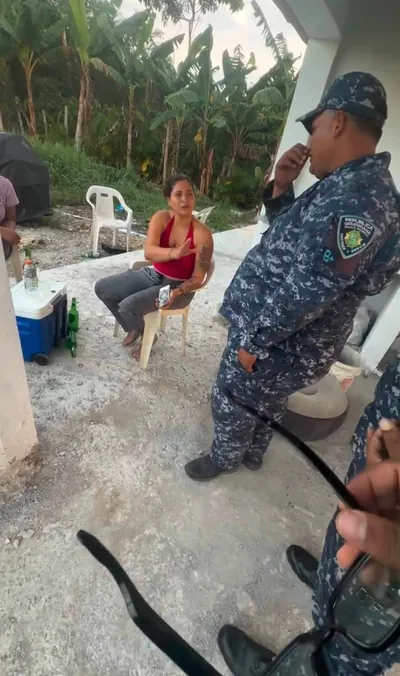
Men lakay yo depi yon gang parèt a zam sou rezo sosyal yo, Nan mwenske 48 èd tan, L AP GEN TAN NAN MEN LA POLIS✊🏿.. yè jèn dam sa parèt devan kay 2 Ayisyen ak gwo manch long li nan menl menase poul touye Moun yo ebyen granm maten lapolis debake lakay li yo metel anba kòd…
2026.6.13 Armed men kidnap respected security expert in gang-wracked Haiti
Armed men snatched a highly respected security expert earlier this week in one of the few places in the capital city of Haiti to be considered relatively safe.
It was not clear who kidnapped the politician, identified as James Boyard, cabinet director of the Defense Ministry and a highly respected security expert who also serves as inspector general of Haiti’s police, a person with the knowledge of the situation said Saturday.
He is the highest-ranking official to be kidnapped in the gang-wracked Caribbean country in recent years.
A person with knowledge of the situation who was not authorized to speak publicly about the case confirmed the kidnapping to The Associated Press on Saturday.
Boyard was seized Thursday in Bourdon, local media reported, one of the few areas in Port-au-Prince that is considered relatively safe. An estimated 70% of the capital is controlled by a powerful gang coalition known as Viv Ansanm, which the U.S. designated as a foreign terrorist organization in May last year.
Boyard, who is also a political scientist, was tasked with helping rebuild Haiti’s armed forces and has helped assess Haiti’s National Police to implement reforms.
It was not clear whether a ransom has been requested.
“A person of this rank clearly has a fairly important security detail,” said Diego Da Rin, an analyst with the International Crisis Group.
He said the abduction of Boyard possibly suggests the kidnapping was planned with great detail and might have depended on the collaboration of someone close to his security detail.
Da Rin said kidnappings are increasingly occurring in areas of Port-au-Prince once considered safe, with gang members sometimes donning police uniforms and stopping drivers as part of fake operations.
He noted that gangs have been kidnapping people with double nationalities and targeting public officials. That could mean they are seeking higher ransoms and possibly trying to dissuade authorities from attacking certain gang-controlled territories where kidnapping victims are being held, Da Rin said.
Police recently attacked Village de Dieu, which is controlled by the 5 Segond gang, led by Johnson Andre. Best known as “Izo,” he is considered one of Haiti’s most powerful gang leaders.
Da Rin noted that gangs have been taking some kidnapping victims to Village de Dieu.
High-profile kidnappings in recent years have targeted people including Haitian journalists and international missionaries. At least 267 people were reported kidnapped from December 2025 to February 2026, most of them men, according to a U.N. report.
In 2025, 1,268 kidnappings were reported, a nearly 40% drop from the 2,058 kidnapping reported the previous year, the report stated.
2026.5.23 ‘They took Josué from me,’ mourns father of 11-year-old caught in crossfire in Haiti
Josué Saint-Vilus, an upcoming soccer star, was among hundreds killed in clashes between rival gangs and police around Port-au-Prince in recent weeks
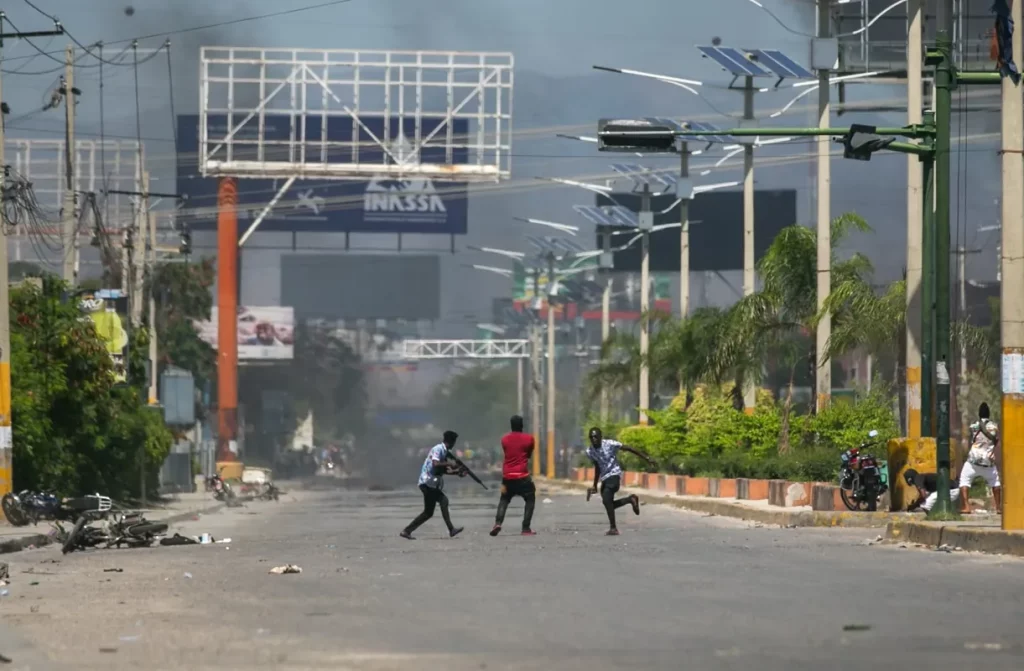
Overview: Josué Saint-Vilus, 11, who dreamed of becoming a soccer star as a goalkeeper, was killed after being struck by gunfire during clashes between rival gangs and police in Cul-de-Sac Plain, near Haiti’s capital. His death underscores worsening violence in the region, where civilians remain trapped between armed groups battling for territorial control.
PORT-AU-PRINCE — All 11-year-old Josué Saint-Vilus talked about was becoming a professional soccer goalkeeper. Passionate about the game, he followed the moves of Belgian star goalkeeper Thibaut Courtois and spent his days training hard, imagining a future on the field.
The dream came to an abrupt halt, however, when escalating gang violence in Haiti’s Cul-de-Sac Plain ended the boy’s life. In the middle of the Sarthe neighborhood, just north of Port-au-Prince, where clashes between rival gangs and police have intensified in recent weeks, his father tried to lead the boy out of a hail of gunfire. But several bullets struck the child.
“They took Josué’s life from me. They took my life as well,” his father, Phélisnord Saint-Vilus, said Wednesday on Radio Mega. “I endured misery and many humiliations.”
The young Saint-Vilus, an eighth-grade student and member of the FONDAPS soccer club, was the fourth among seven children. His family had spent days trapped inside their home as armed groups battled for territorial control in the plain, a sprawling area that includes parts of Cité Soleil, Croix-des-Bouquets and Tabarre communes.
Since early April, neighborhoods including Duvivier, Marin, Croix-des-Missions, Fourdjy and Sarthe have become battlegrounds amid renewed rivalries among gangs affiliated with the Viv Ansanm coalition. Armed groups, including Chen Mechan, Pyè 6, Taliban and 400 Mawozo have been involved in the fighting.
The clashes mark a breakdown in fragile alliances among gangs that had previously coordinated attacks against Haitian security forces and the now-defunct Multinational Security Support (MSS) mission, recently replaced by a United Nations-backed Gang Suppression Force (GSF).
Civilians bear brunt of gang battles
At least 78 people were killed and dozens injured last week in the latest wave of clashes, according to the United Nations. The International Organization for Migration estimates that more than 10,000 residents fled their homes during that week alone.
The figure is in addition to the estimated 390 people killed between March 6 and May 16 in violence affecting Cité Soleil and Croix-des-Bouquets, the UN reports. Armed groups also burned at least 87 homes and public buildings during the attacks.
Saint-Vilus, 55, said his family initially stayed inside their home, hiding under beds while gunfire erupted outside.
“I didn’t want to go outside with the children so they wouldn’t become victims,” said the father of seven, who has lived in Sarthe since 1984.
But after homes in the neighborhood were set ablaze, the family fled to a church shelter in the nearby Bethesda neighborhood along with other scared residents.
As fighting intensified and police operations expanded, Saint-Vilus decided to move his children to relatives in Delmas for safety. He believed the presence of a police armored vehicle near their home would allow them to leave safely.
“They took Josué’s life from me; they took my life as well. I endured misery and many humiliations.”
Phelisnord Saint-Vilus, Father of seven
“To protect him [Josué Saint-Vilus], I placed my hands on his shoulders and spread my legs so that if shots were fired from behind, I would be the one hit instead of him,” Saint-Vilus said.
Moments later, he heard a gunshot and his son calling for him, crying, ‘Papa, papa.’
“Josué was hit in two fingers on his right hand, and another bullet entered through his navel,” he said. “In the La Couronne area of Sarthe, Josué took his last breath.”
Patience runs thin with government response
The child’s death has shocked many Haitians in the Port-au-Prince metropolitan area, already exhausted by years of escalating violence and state collapse.
Business leader Delphine Gardère, CEO of Rhum Barbancourt, was among those who criticized authorities after the killing.
“How many more Josués will we have to mourn before those in power finally take responsibility?” Gardère wrote on X.
“A state that no longer protects its children, its schools, its sports fields and its neighborhoods is failing in its most basic duty,” she added.
The violence in Cul-de-Sac Plain has also disrupted major economic activity in the area, home to Haiti’s main international airport and several large businesses, including the Barbancourt distillery.
Sandra Pellegrini, a senior analyst at the Armed Conflict Location & Event Data Project (ACLED), said the latest clashes stand out for their intensity and duration.
“Civilians are the primary victims of gang rivalries and the escalation of violence, often caught in the crossfire or deliberately targeted,” Pellegrini said in an email. “Many are also unable to return home because gangs increasingly use scorched-earth tactics to expand territorial control.”
As violence spreads across Port-au-Prince and the Artibonite region, Haitian authorities have promised stronger action against gangs.
“A state that no longer protects its children, its schools, its sports fields and its neighborhoods is failing in its most basic duty.”
Delphine Gardère, CEO of Rhum Barbancourt
On May 20, government officials met with leaders of the Haitian National Police, the Armed Forces of Haiti (FAd’H) and the GSF, pledging “absolute zero tolerance” toward criminal armed groups and announcing new operations to retake gang-controlled territory.
Police also launched operations this week against the ‘Kokorat San Ras’ and ‘Gran Grif’ gangs in Haiti’s Lower Artibonite region.
Despite the announcements, insecurity remains widespread. Large portions of Port-au-Prince remain under gang control, armed groups frequently block roads and more than 1.4 million Haitians are now internally displaced, according to international organizations.
For families like the Saint-Vilus family, the promises come too late.
Josué’s dream of becoming a goalkeeper ended on a street in Sarthe, another child lost in a conflict that continues consuming the lives of ordinary Haitians caught between gangs, police operations and a collapsing state.
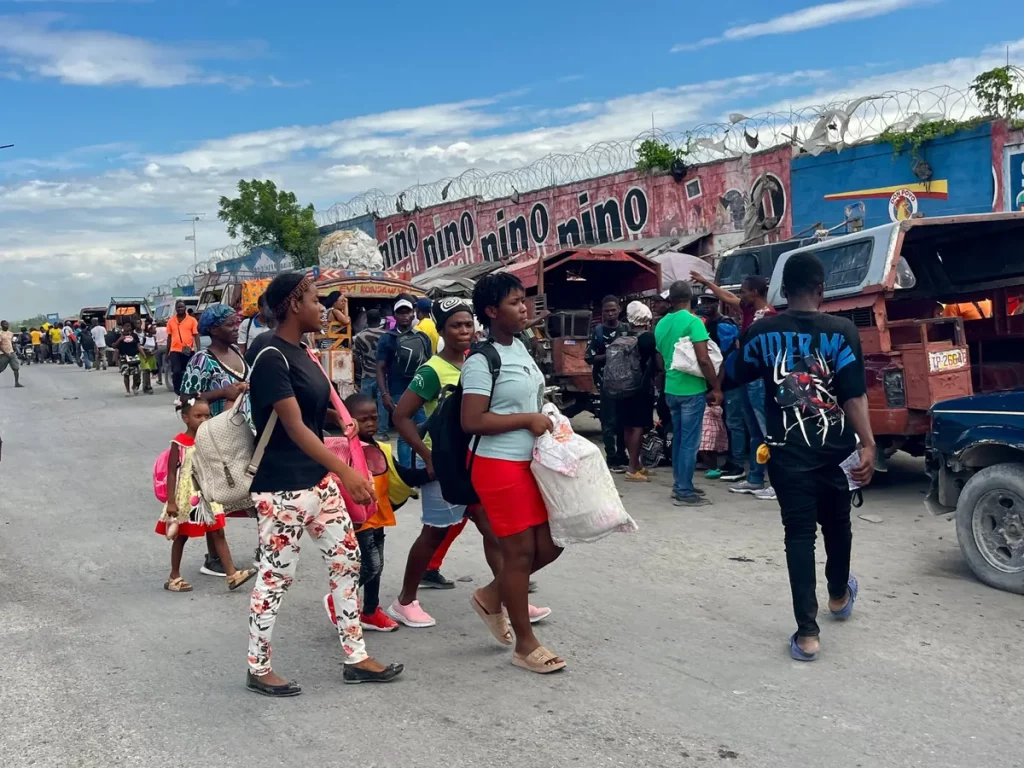
2026.5.12 Hundreds flee homes as gang clashes paralyze Haiti’s Cul-de-Sac Plain
Fighting between rival factions tied to the “Viv Ansanm” coalition has disrupted schools, businesses and healthcare services, forcing families to flee with only a few belongings
Overview: Hundreds fled Haiti’s Cul-de-Sac Plain as rival gangs battled for territorial control, disrupting hospitals, schools and businesses since the past weekend. Armed groups affiliated with the “Viv Ansanm,” including Chen Mechan and Taliban gangs, have been fighting for the upper hand in the area crucial to the passage of cargo trucks to and from businesses in the metropolitan region.
PORT-AU-PRINCE — Hundreds of residents fled their homes Monday in Haiti’s Cul-de-Sac Plain, north of Port-au-Prince, as violent clashes between rival armed groups paralyzed daily life across the area and forced the temporary closure of a major hospital, schools and businesses.
The fighting, which began over the weekend and continued through May 11, involved gangs affiliated with the powerful and the United States-designated terrorist organization “Viv Ansanm” coalition. Residents said the violence stemmed from battles for territorial control and extortion routes targeting cargo trucks moving through the area.
Families carrying bags, backpacks and small children fled along the roads leading to Carrefour Trois Mains and Toussaint Louverture International Airport areas in search of shelter, while gunfire echoed through nearby neighborhoods.
The latest violence underscores Haiti’s worsening security crisis, as armed groups continue expanding their control despite the deployment of a Kenya-led Multinational Security Support (MSS) mission— now replaced by a UN-backed Gang Suppression Force (GSF)— and repeated anti-gang operations by Haitian police. The United Nations estimates gangs now control most of the Port-au-Prince metropolitan area, between 80% and 90%, where kidnappings, killings, arson attacks and mass displacement have become routine. Thousands of residents have been forced to abandon their homes in recent years as gangs battle for territory and control of strategic roads linking the capital to the rest of the country.
Schools, public transportation, markets and businesses across the Cul-de-Sac Plain were largely shut down since Monday as residents sheltered indoors or fled.
The violence also crippled healthcare services in nearby Cité Soleil. Doctors Without Borders (MSF in French) announced it had evacuated patients from its hospital and temporarily suspended operations because of the fighting.
According to MSF, the facility sheltered more than 800 people seeking refuge and treated more than 40 gunshot victims, including one of the organization’s security guards.
“Our objective is to protect patients and our staff members. It is impossible for us to provide care amid gunfire,” said Davina Hayles, MSF project director in Haiti. “A hospital where staff are not safe cannot function. This suspension is temporary, due to the extremely high level of insecurity.”
MSF said there are currently no functioning hospitals in northern Cité Soleil.
No official casualty toll had been released as of Monday evening. However, residents told The Haitian Times that several people were killed or wounded, while stray bullets struck homes and some houses were set ablaze during the clashes.
Witnesses said the violence involved the Duvivier and Pyè 6 gangs against armed groups based in Croix-des-Missions and Canaan, including factions tied to the Chen Mechan and Taliban gangs. Although the groups belong to the same “Viv Ansanm” coalition, the clashes appear to reflect growing tensions and rivalries over influence and revenue streams.
The renewed fighting comes as Haiti’s transitional government struggles to contain spiraling insecurity ahead of proposed elections expected later this year. Gang violence has spread beyond the capital into the Artibonite and Centre departments, disrupting transportation, agriculture and commerce.
In Saint-Marc, in the Artibonite region, at least eight people were killed in recent gang attacks in the Carrefour Robert community, less than 50 miles north of Port-au-Prince, according to local reports.
The violence has continued despite increased police operations and Prime Minister Alix Didier Fils-Aimé’s promises to restore the security conditions necessary for elections by the end of the year.
A recent report from the United Nations Integrated Office in Haiti (BINUH) said at least 1,642 people were killed and 745 injured across Haiti during the first quarter of 2026 alone.x1200
—
2026.6.8 Assassinat de Jovenel Moïse : Léon Charles, Nenel Cassy et Michel Martelly convoqués par le juge Jean Denis Cyprien
La justice haïtienne poursuit ses investigations sur l’assassinat de l’ancien président avec une nouvelle série d’auditions ordonnées dans le cadre d’un supplément d’information judiciaire.
Près de cinq ans après l’assassinat de l’ancien président Jovenel Moïse, la justice haïtienne poursuit ses investigations avec de nouvelles convocations visant plusieurs personnalités politiques et institutionnelles.
Selon les informations communiquées par la chambre d’instruction criminelle, l’ancien directeur général de la Police nationale d’Haïti, Léon Charles, est attendu devant le juge instructeur Jean Denis Cyprien le 9 juin 2026 à 13 heures.
L’ancien chef de la police figure parmi les personnes mises en cause dans le dossier et fait l’objet d’accusations liées à des faits de complicité présumée dans des infractions telles que l’association de malfaiteurs, le terrorisme, le vol à main armée, l’assassinat et la tentative d’assassinat.
Ces accusations sont directement liées à l’attaque menée dans la nuit du 6 au 7 juillet 2021 contre la résidence privée du président Jovenel Moïse à Pèlerin 5, au cours de laquelle le chef de l’État a été tué et son épouse, Martine Moïse, grièvement blessée.
Le 11 juin, ce sera au tour de l’ancien sénateur des Nippes, Nenel Cassy, de comparaître devant la chambre d’instruction criminelle.
Selon les autorités judiciaires, cette audition s’inscrit dans le cadre d’un supplément d’information ordonné par la Cour afin de poursuivre les investigations sur différents aspects du dossier.
L’ancien président Michel Joseph Martelly a également été convoqué et doit être entendu le 18 juin 2026.
Sa comparution s’inscrit dans le même cadre procédural lié aux investigations complémentaires ordonnées par les autorités judiciaires.
Ces nouvelles auditions témoignent de la volonté de la justice haïtienne de poursuivre les démarches visant à établir les responsabilités dans cette affaire qui demeure l’un des dossiers criminels les plus importants de l’histoire récente du pays.
L’assassinat de Jovenel Moïse continue de faire l’objet d’enquêtes parallèles en Haïti et aux États-Unis.
Plusieurs personnes ont déjà été poursuivies, inculpées ou condamnées par la justice américaine pour leur implication présumée dans le complot ayant conduit à l’assassinat du président haïtien.
La poursuite de ces procédures judiciaires est suivie de près par l’opinion publique haïtienne ainsi que par plusieurs organisations nationales et internationales qui réclament que toute la lumière soit faite sur les circonstances entourant le crime.
À ce stade, les convocations annoncées constituent des actes d’enquête et ne préjugent pas de la responsabilité pénale des personnes concernées.
Les auditions prévues au cours du mois de juin devraient permettre à la justice de recueillir de nouveaux éléments dans le cadre du supplément d’information ordonné par la Cour.
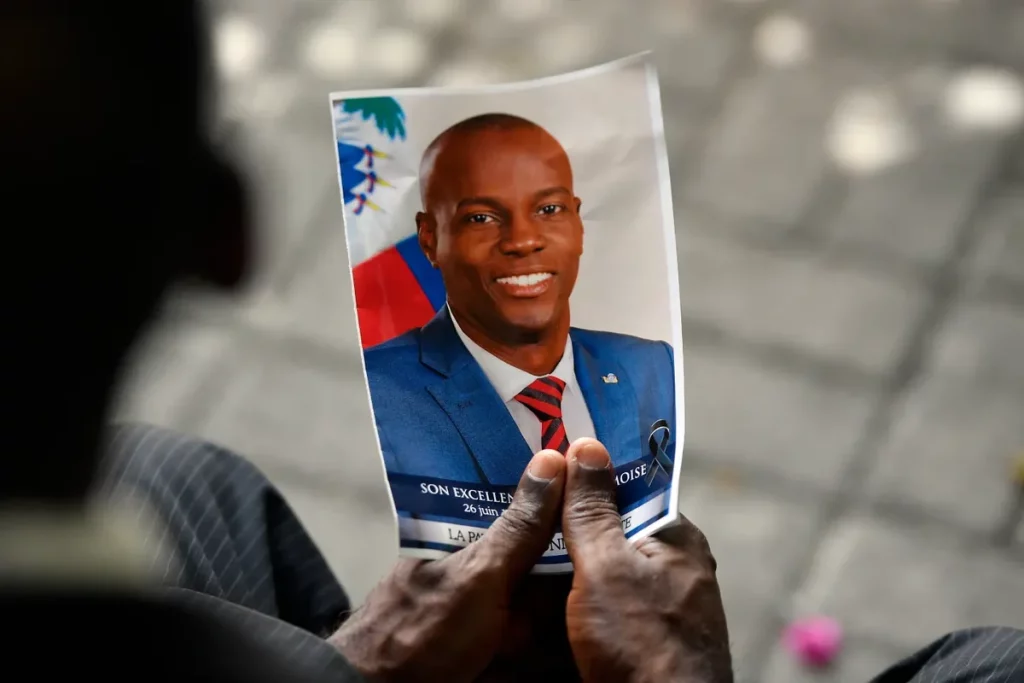
2026.5.9 4 people convicted of conspiracy in US trial tied to 2021 assassination of Haiti’s president
MIAMI (AP) — A Florida jury on Friday convicted four men of conspiracy in the 2021 assassination of Haitian President Jovenel Moïse, whose death led to extraordinary turmoil in the Caribbean nation.
South Florida served as a central location for planning and financing the plot to oust Moïse and replace him with someone of the conspirators’ choosing, U.S. prosecutors alleged.
Arcangel Pretel Ortiz, Antonio Intriago, Walter Veintemilla and James Solages were found guilty of conspiring to kill or kidnap Haiti’s elected leader and providing material support for the plot. They were also convicted of violating the U.S. Neutrality Act and could face possible life sentences.
“These defendants pursued power, influence, and profit through violence,” U.S. Attorney for the Southern District of Florida Jason Reding Quiñones said in a statement. “They supported a conspiracy that crossed borders, destabilized a friendly nation, and ended with the murder of a sitting president. The jury has spoken, and the rule of law has answered.”
Prosecutors argued that the men had their own leader in mind and had hoped to enrich themselves with a new government.
Moïse was killed on July 7, 2021, when about two dozen foreign mercenaries, mostly from Colombia, attacked his home near Port-au-Prince. Moïse’s wife, Martine, was wounded during the attack and flown to the U.S. for treatment. In Haiti, meanwhile, gang leaders have grown increasingly violent and empowered.
Martine Moïse was the first witness at trial, which began in March in Miami’s federal court, describing through a Creole interpreter how she awoke to the sounds of gunfire after midnight. She told jurors that she turned to her husband in bed next to her to ask what was going on.
“Honey, we are dead,” Jovenel Moïse replied, according to his wife’s testimony.
Ortiz and Intriago were principals of Counter Terrorist Unit Federal Academy and Counter Terrorist Unit Security, collectively known as CTU, and Veintemilla was a principal of Worldwide Capital Lending Group. Both companies were based in South Florida.
Christian Sanon is a dual Haitian-American citizen whom investigators say was initially favored by the conspirators to replace Moïse. Solages was a CTU representative in Haiti who coordinated with Sanon and others, officials said. Sanon will face trial at a later date.
Defense attorneys argued at trial that the investigation into the assassination was a mess and that the four were manipulated into taking blame for an internal coup. They said the men believed they had a legitimate warrant signed by a Haitian judge and that they were liberating Haiti from Moïse, who had overstayed his term as president.
At least five others have pleaded guilty in the conspiracy and are serving life sentences.
Separately, 20 people, including 17 Colombian soldiers, face charges in Haiti. Gang violence, death threats and a crumbling judicial system have stalled an ongoing investigation. x1200
Nan kad jijman ki ap fèt Etazini nan kad lanmò ansyen prezidan Jovenel Moïse la, 12 manm jiri yo bay denyè mo yo. Se konsa, yo kondane jodi vandredi 8 me 2026 la Antonio Intriago, Arcángel Pretel Ortiz, James Solages ak Walter Veintemilla pou konplo teworis, èd materyèl ak vyolasyon Neutrality Act ameriken an. Lwa sa entedi tout sitwayen ameriken pou fè lagè ak lòt peyi ki anpè ak Etazini.
« Dezisyon jiri a deklare 4 akize yo koupab e yo gen 5 gwo akizasyon sou do yo », daprè Miami Herald. Li revele mesye sa yo ka kondane pou pase lavi yo nan prizon tou. Pi lwen, jounal la prezise tou lè kat mesye akize sa yo te konplote nan Sid Florid epi te anplwaye yon pakèt ansyen sòlda Kolonbyen pou te bay Prezidan an koudeta. Yon sitiyasyon ki ta pral bay lanmò chèf leta a 7 jiyè 2021 an.
Pou te demanti pawòl sa a, avoka defans lan te eseye mansyone se ta lapolis Ayiti ak sekirite prezansyèl yo ki te touye prezidan an, puiske yo defann « ekip kolonbyèn nan te rive jis aprè nan mitan lannuit lan ». Nan deklarasyon pwokirè yo, yo menm yo fè konnen se gwoup Sid Florid la ak kèk aktè Ayisyen ki te vle bay yon lòt moun plas prezidan an depi nan mwa avril 2021 an ki ta fè zak la. Se moun sa ki te pare pou te bay akize sa yo gwo kontra sitou nan zafè sekirite ak enfraestrikti an Ayiti.
Anplis akizasyon avan yo, Intriago li menm gen 4 lòt akizasyon sou do l. Pami yo, jounal la pale sou rapò li ta genyen ak jilè pa bal ki te voye an Ayiti pou anviwon 20 ansyen sòlda Kolonbyen, epi yo jwenn Counter Terrorist Unit Federal Academy (CTU) te chache epi voye Kolonbyen nan peyi a yon mwa avan zak la.
Pou sa ki konsène Christian Emmanuel Sanon, yon pastè ki te vle ranplase Moïse la, yo fè konnen lajistis amerikèn ap gen pou tande l tou. Puiske li ta gen pwoblèm sante pou kounye a.
Fòk nou di, nan pwosè sa gen anviwon 8 akize ki plede koupab deja. Ladan yo nou jwenn Roodolph Jaar, German Rivera ak John Joel Joseph. Nan bò kondane yo nou jwenn plizyè aktè tou.
Paralèlman, premye pitit ansyen prezidan an, Joverlein Moïse pa t pran tan pou te reyaji. Li te eksprime l konsa : « Pèp Ayisyen, yon lòt fwa ankò enmi nou yo demaske ». Yon deklarasyon ki kole ak divès rapèl li fè nan yon kominike li pibliye sou rezo sosyo li yo jodi vandredi 8 me 2026 la. Nan eleman sa yo li site kondanasyon 4 mesye yo, nivo enplikasyon divès aktè ki t ap planifye zak la sou teritwa ameriken an, operasyon «bolivi» a, ki se daprè li yon konplo byen monte pou te monte pèp la kont Jovenel Moïse, gras ak èd atis yo, medya yo, opozisyon an ak manm Sosyete sivil la. Konsa, li tou kritike lajistis Ayisyen ki jiskaprezan ap mòde lage.
N ap raple, nan kad pwosè ameriken sa se premye desizyon ki tonbe aprè 5 lane lanmò Prezidan Jovenel Moïse la. Desizyon yo tonbe sou 9 semèn ki te gen 39 jou temwanyaj.
—

Fourth major drug seizure in under a month underscores Haiti’s growing role as a regional transit hub
PORT-AU-PRINCE — The Haitian National Police (PNH) has taken custody of nearly 1.4 metric tons of marijuana seized by the U.S. Coast Guard off Haiti’s northwestern coast, in one of the largest recent drug interceptions in the country.
The shipment — 1,376 kilograms valued at roughly $3.8 million — was handed over on May 3 to the Haitian National Police’s Anti-Drug Trafficking Brigade (BLTS) following an April 30 maritime operation near Môle Saint-Nicolas in Haiti’s northwest.
The seizure adds to multiple drug busts conducted by police in recent weeks, according to authorities, pointing to a sustained flow of narcotics through Haitian territory even as enforcement efforts increase.
U.S. Coast Guard officers intercepted a suspicious vessel carrying dozens of packages of what officials described as compressed marijuana wrapped in plastic. Police said they recovered 66 sacks of the drug.
A Jamaican national, identified as Aldane “Ali” Anderson, was arrested during the operation. The drugs and the suspect were transferred to Haitian authorities in the presence of Cap-Haïtien Examining Judge Samuel Philippaux for judicial processing.
“All evidence, along with the trafficker, is now in the custody of BLTS North for judicial proceedings,” the PNH said in a May 4 statement.
Haiti’s growing role in regional drug routes
The latest seizure highlights Haiti’s increasingly prominent role as a drug transit corridor linking South and Central American producers to markets in the Caribbean, North America and Europe.
Traffickers frequently move cocaine and marijuana through Haiti’s poorly monitored coastlines and remote airstrips, routing shipments onward to destinations including notably the Bahamas, Jamaica and the United States. Some drug shipments are also believed to continue toward Europe via transatlantic routes.
Security analysts and international agencies have long warned that Haiti’s limited state presence, porous borders and worsening instability make it attractive to trafficking networks seeking alternatives to more heavily policed routes.
Recent operations suggest the flow is ongoing. In Haiti’s Southern Department, BLTS agents and coast guard officers arrested a suspect, Peterson Lavajesse, on May 2 in Torbeck with two packages of cocaine. Authorities say it was the fourth drug seizure in less than a month in the region.
While Haitian officials point to these operations as progress, experts caution that seizures represent only a fraction of the total volume transiting the country.
The United Nations has also flagged Haiti as a growing hub for narcotics and arms trafficking, with gangs using profits to fuel violence. In September 2025, the U.S. renewed Haiti’s designation as a major drug transit route for a 36th consecutive year.
Haiti’s continued designation as a drug transit hub, experts say, reflects not only geography but also the impunity gangs and traffickers enjoy amid a weak justice system. With limited state control and widespread corruption, international cartels have found Haiti an indispensable node in their trafficking routes.
Himler Rébu, an ex-army colonel and political leader, recently told The Haitian Times that under the influence of the gangs, Haiti has turned more into a narco state.
“This is no longer just about local drug traffickers — it involves a transnational network operating through Haiti’s ports and airspace under gang protection,” said Rébu, leader of the political party Grand Rassemblement pour l’Évolution d’Haïti (GREH).
Security crisis complicates enforcement
Anti-drug efforts are unfolding alongside Haiti’s deepening security crisis, where armed groups control large swaths of territory and complicate law enforcement operations.
The powerful gang coalition known as “Viv Ansanm” has expanded its influence across the Port-au-Prince metropolitan area, with estimates suggesting gangs control more than 80% to 90% of the capital.
Police said that on May 1, officers intercepted a vehicle suspected of being used in kidnappings in Pétion-Ville and Delmas. After an exchange of gunfire, the occupants were killed. Authorities seized ammunition, police-style equipment and tactical gear from the vehicle.
Despite such operations, gang violence continues to drive mass displacement and disrupt economic life. More than 1.45 million people are internally displaced, according to recent estimates.
Communities outside the capital are also affected. Towns including Mirebalais, Saut-d’Eau, La Chapelle and parts of the Artibonite region remain under gang influence, with repeated attacks, arson and killings reported.
In Kenscoff, above the hills of southeast Port-au-Prince, authorities said security had improved, but a gang attack on May 1 left two people dead and another missing, underscoring the fragility of gains.
Economic pressure and calls for action
The deteriorating security situation is increasingly alarming business leaders. Several major Haitian companies — including Rhum Barbancourt S.A., Séjourné S.A., Brasserie de la Couronne S.A. and Comme Il Faut S.A. — warned Prime Minister Alix Didier Fils-Aimé in an April 29 letter about the collapse of security in the Cul-de-Sac plain, a key economic corridor.
“When such a strategic area becomes inaccessible, even to armored vehicles, it signals a breakdown of a vital national space,” the companies wrote.
They urged immediate government action to restore access, secure roads and enable police intervention, warning the zone risks becoming a “lost territory” near Toussaint Louverture International Airport.
2026.5.3 L’ASHAPS exige une enquête approfondie après la mort violente de Jean-Brunet Bontemps
L’Association haïtienne de la presse sportive (ASHAPS) a annoncé, ce samedi 02 mai 2026, le décès du journaliste sportif Jean-Brunet Bontemps, survenu la veille. Touché par balles, le professionnel des médias a été tué dans des circonstances qui restent à ce stade indéterminées.
Réagissant à ce drame, le secrétaire général de l’ASHAPS Kenson Désir, a dénoncé une perte majeure pour le paysage médiatique sportif haïtien. Il a, par ailleurs, exhorté les autorités à diligenter une enquête afin de faire toute la lumière sur cet acte.
D’après les premiers éléments recueillis, Jean-Brunet Bontemps aurait été atteint de plusieurs balles alors qu’il se trouvait sur la galerie de sa résidence. Le fait s’est déroulé à la Ruelle Alerte, située à l’arrière du cimetière de Port-au-Prince, où la victime vivait et gérait également une petite activité commerciale.
Des témoignages concordants font état d’une fusillade survenue dans la zone au moment des faits. Certains habitants évoquent la présence d’un véhicule de la police dont les occupants auraient fait usage de leurs armes. Toutefois, il n’est pas encore établi si les tirs ayant coûté la vie au journaliste sont liés à cette intervention.
Figure bien connue du journalisme sportif en Haïti, Jean-Brunet Bontemps collaborait depuis les années 2000 avec la station Énergie FM.

2026.4.29 Haiti court orders Episcopal Church leaders, ex-officials to stand trial in arms trafficking case
Appeals court reverses earlier ruling, sending clergy and former officials to criminal court nearly four years after weapons seizure
PORT-AU-PRINCE — Haiti’s Court of Appeal has ordered several clergy members of the Episcopal Church of Haiti, along with former senior government officials, to stand trial in a high-profile arms and ammunition trafficking case dating back to 2022.
The decision, issued April 28, reopens one of the country’s most closely watched cases, nearly four years after police seized a cache of weapons from a shipment linked to the Church.
Among those referred to criminal court are priests Frantz Cole, Jean Madoché Vil and Fritz Désiré, as well as Jean Marie Gilles, Mamion Saint-Germain and pastor Dieuné Day. Former public officials, including ex-Minister of Economy Michel Patrick Boisvert and former religious affairs official Evens Souffrant, are also named in the proceedings.
Prosecutors accuse the defendants of complicity in the illegal importation and trafficking of firearms and ammunition, as well as related charges including smuggling and counterfeiting.
Case rooted in a major weapons seizure, legal reversals and renewed investigation
The case began in July 2022, when Haitian police intercepted a shipping container at the Caribbean Port Services (CPS) terminal in La Saline, Port-au-Prince.
Inside, authorities found 18 assault rifles — including AK-47, Galil and M4 models — along with a shotgun, four pistols, nearly 20,000 rounds of ammunition, dozens of magazines, a rifle sight and about $50,000 in counterfeit currency.
The discovery shocked the public and raised concerns about how weapons continue to enter Haiti, where armed groups have expanded their control in recent years.
In September 2023, investigating judge Marthel Jean Claude dismissed charges against Church members, citing a lack of evidence linking them directly to the shipment. He suggested the possibility that a criminal network had exploited the Church’s import privileges without its knowledge.
“Thus, it is made known to all that the Episcopal Church of Haiti, its priests, and its lay members are the main victims of this mafia network.”
Episcopal Church of Haiti
However, the Court of Appeal reopened the case in June 2025 after it was re-assigned to investigating judge Noé Masillon Pierre, citing gaps in the investigation and the need for further examination. The latest ruling reverses the earlier dismissal and sends the case to trial.
Several other individuals, including business and logistics actors, were also implicated in earlier stages of the investigation.
Church maintains innocence amid broader security implications
The Episcopal Church of Haiti has consistently denied involvement, arguing that it never ordered or cleared the shipment.
“The Episcopal Church of Haiti has not placed any container orders and has undertaken no customs clearance procedures,” the institution said in a July 2022 statement.
Earlier this month, Church leaders renewed calls for the release of detained clergy and lay members, describing them as victims of a broader criminal scheme.
“Thus, it is made known to all that the Episcopal Church of Haiti, its priests, and its lay members are the main victims of this mafia network,” the Church clergy said, breaking their silence for the first time since the July 2022 statement.
The case unfolds against the backdrop of Haiti’s deepening security crisis, where the proliferation of illegal weapons has fueled gang violence and weakened state authority.
Observers say the trial could shed light on trafficking networks that supply arms to criminal groups, a key factor in the country’s instability.
The court’s decision marks a new phase in one of Haiti’s most closely watched criminal cases, with potential implications for both accountability and public trust in institutions.
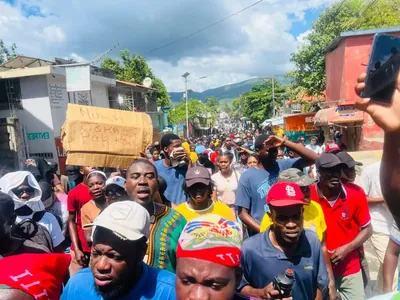
Demonstrators at Wednesday’s shut down Jacmel after at least eight people were killed and a police station burned in nearby Seguin
JACMEL, Haiti — Hundreds of residents flooded the streets Wednesday to protest a surge in gang violence following the deadly attacks in nearby Seguin, which left at least eight people dead and forced thousands to flee.
The demonstrations, which began early in the morning, paralyzed much of Jacmel as protesters marched through the city center and the Sainte-Hélène, Lamandou and Aviation district — forcing schools, businesses and public offices to close as they made an urgent appeal to the police and judicial authorities.
“The Southeast will not become a lost territory,” protester Guerlince Lohier, a high school principal, said.
“We call on the police and the justice system to regain control of Seguin and restore order,” Lohier said. “We have nowhere else to go.”
The protest follows attacks in Seguin, a locality in the commune of Marigot, that took place Monday and Tuesday. Armed bandits killed residents, set fire to a sub-police station and destroyed police vehicles, according to local authorities and Civil Protection agency officials.
“We refuse to let armed groups impose their law, burn down our homes and kill our children.”
Protester Guerline Lohier
More than 4,000 people have fled their homes as violence continues to spread, Civil Protection officials in the region said. Fear that the crisis could reach Jacmel and other parts of the department is rising.
Protesters called for urgent government intervention, warning that continued inaction could allow gangs to expand their control into areas once considered relatively stable.
“Rapid deployment of police reinforcements could have prevented this escalation of violence,” resident Emmanuel Ladouceur said.
‘Not another Martissant’
The identity of the attackers remains unknown, and the circumstances surrounding the assault are still under investigation. However, locals blame the violence on security failures at the Seguin police outpost.
Residents and community leaders say the attack reflects a broader pattern of expanding gang violence beyond Port-au-Prince, as armed groups tighten their grip on new regions with limited state presence.
Ladouceur, for one, blamed Vladimir Paraison, the director general of the Haitian National Police (PNH). Ladouceur said that police reinforcements deployed in time could have prevented the violence. He also indicated that citizens are organizing to help the affected populations in Seguin.
Some demonstrators also demanded the resignation of Southeast Police Director Magalie Belneau, accusing authorities of failing to prevent the attack or respond quickly enough and of complicity.
“Jacmel will not become another Martissant,” said Lohier, referring to a neighborhood near Port-au-Prince notorious that gangs took over years ago.
“We refuse to let armed groups impose their law, burn down our homes and kill our children,” he said.
Lohier describes the attack as “orchestrated insecurity,” arguing that the state has failed in its duty to protect citizens.
Leriche Moïse, a protester who described the Southeast as a region being “under siege.”
“The people have no other choice but to take to the streets,” he said. “What is happening shows the incompetence of the authorities.”
2026.4.15 Mayor of Milot in custody after deadly tragedy at historic Citadelle
Protesters call for Mayor Wesner Joseph’s release after three days of interrogation by police
CAP-HAÏTIEN — Wesner Joseph, the mayor of Milot, was in police custody Wednesday in the ongoing investigation into the deadly crowd surge at Citadelle Lafferière in his town over the weekend. His detention of three days, so far, prompted a protest demanding his release by townspeople who believe he is being scapegoated.
“They’re interviewing authorities in Milot, he’s the mayor so of course they’re going to interrogate him too,” Joseph’s attorney, Plauguste Carcéus told The Haitian Times.
“But after the interrogation, they must release him,” he said.
Joseph has been detained since April 13, two days after the stampede that left more than 25 people dead, at the police station in Cap-Haïtien, the capital of the Northern Department to which Milot belongs. His cell is extremely unsanitary, sources at the police station said, causing Joseph great distress.
Suspecting that he may be blamed for the party that turned into a national tragedy, some residents of Milot burned tires in the streets Tuesday to demand his release.
It is unknown when the interrogation will end.
Photos of party bracelets with “Milot’s Mayor’s Office 2026” written on them went viral after news of the stampede broke, suggesting that the small commune’s had given permission for the party. However, Carcéus said, Milot officials did not give anyone permission to hold events that fateful day and therefore should not be held accountable. Carcéus said the Haitian Institute for the Protection of National Heritage — known by its French acronym ISPAN — is the institution in charge authorizing events at Citadelle.
“Citadelle Vibes 3.0,” as the party was dubbed, is a youth event promoted by social media influencer Dope Fresh that drew the most visitors. However, numerous visitors were part of school and church trips, a common excursion in April, were also there in part to mark the Citadelle’s anniversary on April 12.
About 3,000 people ended up at the UNESCO world heritage site the day of the tragedy, authorities said.
Others arrested and minister of culture resignation
In addition to Joseph being detained, police arrested five security agents at the Mayor’s office and two ISPAN employees Monday. Police identified the security guards as Jhon ‘Misyon’ Coxllee, Genovè Octavien, Altidor Arly, Louis Max Andy and Césaire Wilner Billy. The two ISPAN employees were identified as Wilfrid César and Valmyr Tchelin.
“We had to bring everyone involved into custody so they could eventually be held accountable,” Cap-Haïtien’s City Attorney Eno Zéphyrin told The Haitian Times.
To add to the arrests, Jean Garry Denis, the head of the Ministry of Culture and Communication, sent a resignation letter to Alix Fils-Aimé. Denis did not state he resigned due to the Citadelle incident but did mention the lack of “protection for cultural properties” as a reason.
Denis will leave office by May 1, according to his letter.
The crowd surge reportedly started when town hall security agents shut one of the site’s two doors to collect the entry fee money. Visitors who stood outside attempted to force their way in when it started raining. Police officers or town hall security agents fired gunshots into the air then threw tear gas. Some died of asphyxiation, others from the scramble.
Haiti is currently observing a three-day mourning, which started on April 14.
2026.4.14 At least 7 killed as gang violence spreads to southeastern Haiti
Armed men attack Marigot community, target civilians and their property, burn police station and vehicles
PORT-AU-PRINCE — Armed men killed at least seven people and burned a police station on the night of April 13 in southeastern Haiti as residents come under increasing attack while gang violence spreads beyond the capital into new regions.
The killing took place in Seguin, a locality in the commune of Marigot, where attackers also set fire to police vehicles, Lionel Lazarre, a former spokesperson for the Haitian National Police, said Tuesday via his X account. He warned that the situation remains critical and that the population continues to call for help in the face of the gang assault.
“We are issuing an urgent appeal to the authorities, especially the Haitian National Police, to take swift action to regain control of the area, protect people’s lives, and prevent further casualties,” Lazarre said, warning that “Seguin must not become a lost territory.”
For now, the reasons for the attack are not yet known, and the identity of the armed group that orchestrated it has not yet been revealed. However, this assault has left the commune of Marigot in mourning and anguish, as residents grieve the victims.
The identity of the armed group remains unclear, and authorities have not said what triggered the attack. Residents, however, described a scene of fear and devastation. Videos circulating on social media show several victims burned and lying side by side. Three of the victims were identified by locals as Sonet Andresen, Joel and Jeff.
“Look at the condition of my people on the ground, my God. Jeff is dead on the ground,” a voice says in the video. “All the men are dead,” another voice responds.
The attack has left the Marigot community in mourning and underscored the growing reach of armed groups into areas once considered relatively calm.
The violence extends beyond the Southeast. In the Artibonite region, the Savien gang attacked the localities of Kapenyen and Esther the same day, burning several homes, according to local media reports. No official death toll has been released.
In videos circulating on social media, heavily armed men appeared, seemingly celebrating their attack on the towns.
This new attack in Artibonite comes more than two weeks after the late-March assault carried out by another armed group, the Gran Grif gang, in the locality of Jean-Denis, which left more than 70 people dead, dozens injured, and over 50 houses burned.
The massacre underscores the rapid expansion of gang violence beyond Port-au-Prince into regions like Artibonite and the Centre department — areas once considered relatively stable but now increasingly under daily threats.
Across Haiti, armed groups have tightened their control over roads and key farming areas, disrupting food supply routes and displacing communities. In many areas, authorities’ presence remains minimal or absent.
Despite the Haitian National Police’s ongoing operations against criminal groups and the gradual deployment of an international security force, attacks on civilians continue, with little visible state presence in many affected areas.
The United Nations estimates that more than 1.5 million people are now displaced, while thousands have been killed since 2022.
—
2026.5.8 Un guide touristique critique la décision de fermer la Citadelle
Guide à la Citadelle Henry depuis les années 1970, Maurice Étienne a exprimé son regret face à la fermeture du monument historique à la suite du drame survenu le 11 avril 2026.
2026.4.13 Seven arrested in Citadelle stampede reportedly triggered by tear gas, officials say
Police arrest five Milot town hall security agents and two heritage preservation employees in ongoing investigation
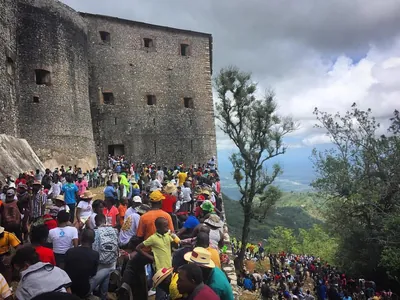
Overview:
Multiple Milot residents and the former director ISPAN, Haiti’s historical preservation agency, said the use of tear gas led to the crowd surge that left at least 25 people dead at Citadelle Laferrière on April 11.
MILOT, Haiti — The death of 25 people at Citadelle Laferrière occurred after police officers or town hall security agents allegedly threw tear gas to disperse visitors leading to a crowd surge at the UNESCO site on April 11, Safeguarding National Heritage (ISPAN) former director and residents in Milot told The Haitian Times.
The incident began when town hall security agents went to the Citadelle to retrieve money collected from visitors’ entry fees, according to Jean-Hérold Pérard, the site’s engineer and former ISPAN director. Visitors pay 250 gourdes, about $2, to enter. With roughly 3,000 visitors present that day, the site reportedly generated about $6,000.
Pérard said agents closed one of the Citadelle’s two entrances to safely collect the money. As rain began to fall, people outside tried to force their way in around 4:00 p.m. Gunshots were fired in the air, and tear gas was used to disperse the crowd. While it remains unclear who deployed the tear gas, many residents blamed Departmental Unit for Maintaining Order (UDMO) police officers.
“People were pushing each other and some died of asphyxiation especially after they threw tear gas,” Pérard said during an April 13 interview with The Haitian Times recounting witnesses’ accounts.
Police have arrested five town hall security agents and two ISPAN employees as part of the investigation into the Citadelle Laferrière tragedy, according to an April 13 note from Haitian National Police (PNH). The town hall security agents were identified as Jhon ‘Misyon’ Coxllee, Genovè Octavien, Altidor Arly, Louis Max Andy and Césaire Wilner Billy. Meanwhile the two ISPAN employees are Wilfrid César and Valmyr Tchelin.
The northern police force and the town hall have yet to answer The Haitian Times’ messages or return phone calls seeking an interview for this article.
Milot’s mayor on a hot seat
In addition to police and town hall security agents, some residents blamed Milot’s mayor, Wesner Joseph, including Pérard, who criticized the town hall’s handling of entry fees.
“Milot’s town hall has the right to do that [collect Citadelle’s entry fee] but this isn’t normal,” Pérard said.
“They [Milot’s Town Hall] think Citadelle is a place where they can make their money and do nonsense,” he added.
Pérard has worked at the Citadelle since 1980 and served as ISPAN’s director from 1995 to 2006.
The mayor of Saint-Raphaël also criticized Milot’s town hall for authorizing Citadelle Vibe 3.0, a yearly event held at the site. Schools had also organized trips there on April 11.
“They should never have allowed this activity. It’s the city hall that killed my family members,” Saint-Raphaël’s Mayor Gelin Robert Junior told the Unissons Nous news outlet. “It bears primary responsibility for this tragedy… There must be consequences.”
However, Joseph told Altidor Le Capois TV the town hall was unaware of the event and noted there were too few law enforcement officers present to ensure safety. He reported that about 20 police officers and 10 town hall security guards were on site.
“The judge of peace should command the police to start an investigation so we can know what caused this and who was behind it, who were the accomplices,” Joseph said.
Built in 1820 by King Henri Christophe, the Citadelle is one of Haiti’s most cherished historical landmarks. Located atop a hill 900 meters above sea level, it attracts both locals and tourists daily. Schools often organize visits, and April is a peak period due to the site’s anniversary on April 12.
“People were pushing each other and some died of asphyxiation especially after they threw tear gas.”
Jean-Hérold Pérard, former ISPAN director
Residents said the crowd on April 11 was unusually large, with visitors arriving as early as 4:00 a.m. Some people were already leaving earlier in the day due to breathing difficulties caused by overcrowding.
Community left devastated
The Citadelle is a major source of income for Milot residents. Many work as guides, motorcycle drivers and horse riders at the site. The tragedy has left the community grieving and shaken.
“I never slept last night because I was thinking so hard about how this happened,” Francisque Almonord said as he stood in Citadelle’s parking lot on April 12. “We don’t receive enough help as an area with a touristic site. We don’t even have a nurse’s office here. Maybe if there were even two nurses here not so many people would have died.”
“They need to rethink stuff,” Almonord, 54 ,added. “This is a tourist site, they’re making money from it. We need better services.”
After the incident, some accidents occurred as vehicles descended the wet and slippery hill. One gray minivan flipped over.
The following morning, residents carried bodies wrapped in white sheets down the hill. Families mourned as they accompanied their loved ones.
“Why is there blood on him?” one woman said while weeping. “Was my brother hurt?”
Residents now worry the tragedy will discourage tourism, further hurting their livelihoods. Visitor numbers had already declined due to gang violence in Port-au-Prince.
“So many people lost their lives I’ve never seen anything like this,” Joseph Agenord, a former tour guide who lives on the hill that leads to the Citadelle, said. “Good thing I have wood, I’m just going to keep making charcoal to take care of my children.”
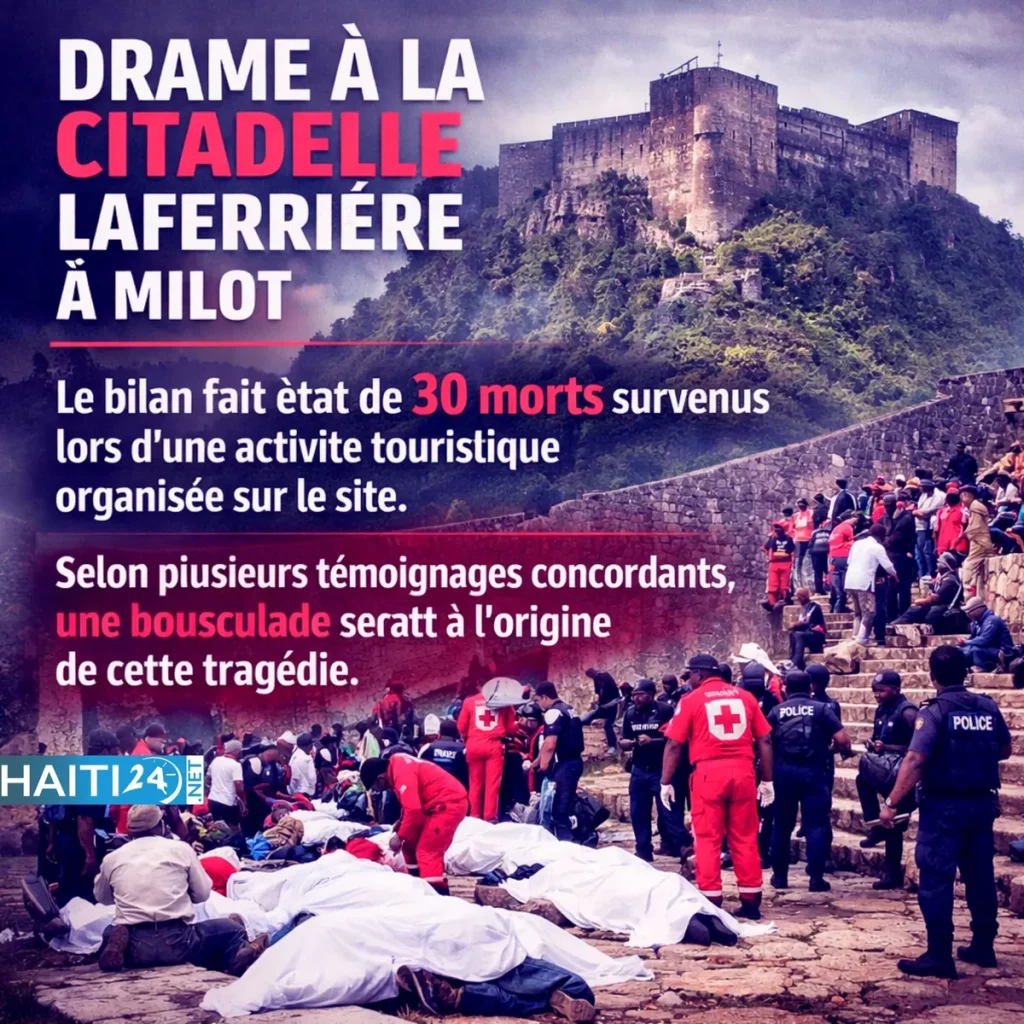
Cap-Haïtien, 11 avril 2026 — Une catastrophe d’une ampleur exceptionnelle s’est produite ce samedi à la Citadelle Laferrière, haut lieu du patrimoine national haïtien, à l’occasion des festivités traditionnelles ayant attiré une affluence particulièrement dense de visiteurs venus de divers horizons.
Selon des données préliminaires communiquées par la Protection Civile, une congestion humaine d’une intensité critique, aggravée par des insuffisances manifestes dans les dispositifs de régulation des flux, a dégénéré en un mouvement de panique incontrôlé. Cette situation chaotique a engendré des cas multiples d’asphyxie, de piétinement et de pertes de conscience parmi les participants.
Le bilan provisoire, encore susceptible d’évolution, fait état d’environ une trentaine de victimes décédées, de plusieurs dizaines de blessés actuellement pris en charge dans différentes structures hospitalières, ainsi que de personnes toujours portées disparues, accentuant l’inquiétude des familles.
Face à cette tragédie, la Commission municipale du Cap-Haïtien a immédiatement activé un dispositif d’intervention d’urgence, procédant à l’envoi d’une ambulance et au déploiement d’équipes de soutien afin de participer aux opérations de secours, d’évacuation et d’assistance aux victimes. Cette mobilisation rapide s’inscrit dans une dynamique de solidarité intercommunale et de gestion coordonnée des situations critiques.
Les autorités municipales ont salué l’engagement soutenu des équipes de la Protection Civile, des professionnels de santé ainsi que de l’ensemble des intervenants mobilisés sur le terrain, opérant dans des conditions particulièrement éprouvantes.
Dans ce contexte de deuil et de consternation, la Commission municipale a adressé ses condoléances les plus attristées aux familles endeuillées, tout en réaffirmant son soutien indéfectible aux personnes affectées par cette tragédie.
Par ailleurs, les autorités locales lancent un appel pressant à un renforcement rigoureux des mécanismes d’encadrement des grands rassemblements, soulignant la nécessité d’une vigilance accrue afin de prévenir la répétition de tels drames. Elles assurent demeurer pleinement engagées aux côtés des institutions concernées dans la gestion et le suivi de cette crise.
Haiti24 suivra de près l’évolution de la situation et fournira des mises à jour en temps réel sur ce drame national.
x1200
—
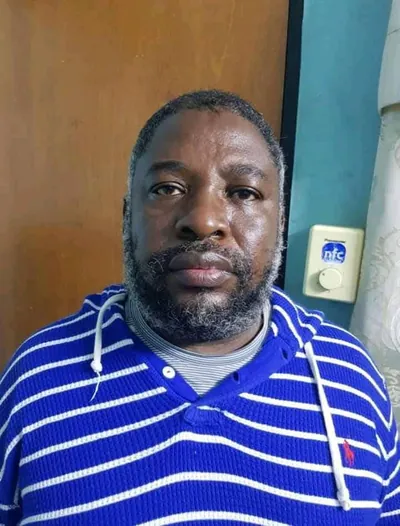
Li deklare ke se sèlman de zè de tan anvan atak la Joseph Vincent te fè l konnen plan final la te chanje: pou yo touye Prezidan Jovenel Moïse ak madanm li, epi mete dife nan kay la.
2026.3.30 At least 70 dead in Haiti’s Artibonite armed gang attack, local rights groups say
The assault began Saturday in Jean-Denis village and continued through Monday, forcing residents to flee as the Gran Grif gang targeted civilians and their
PORT-AU-PRINCE — At least 70 people have been killed, more than 30 injured and over 50 homes burned in a deadly gang attack in Haiti’s Artibonite region, according to local advocacy groups. This bloodbath adds to several mass killings recorded in recent months as violence spreads beyond the capital.
The assault targeted Jean-Denis, a section in the Petite Rivière de l’Artibonite commune, and has been attributed to the heavily armed Gran Grif gang, an affiliate of Viv Ansansanm, which operates in the nearby Savien area.
The Collective to Save Artibonite, working with Defender Plus, said on Radio Television Caraïbes that the attack began the evening of March 28 and continued through Monday morning, March 30, as residents fled in panic.
“I don’t see how I can describe what is happening in Jean-Denis, in the Pont-Sondé area,” said Antonal Mortimé of Defender Plus.
“In one family, three brothers were killed. In another, three cousins have already been buried because the bodies could not be kept, as the gangs had mutilated and crushed them.”
Witnesses said gunmen entered the area in large numbers, opening fire and targeting civilians as families tried to escape. Homes were burned and entire neighborhoods emptied.
Residents reported that attackers briefly withdrew when police and self-defense groups arrived, but returned after officers left, prolonging the assault.
From Sunday into Monday, the violence continued, with the death toll still rising as search efforts uncovered more bodies.
While at least 70 deaths have been confirmed by the local advocacy groups, they said local officials told them the number could reach between 85 and 100 victims.
André Saint-Louis, coordinator of the Committee for Peace Initiative in Lower Artibonite, provided a lower estimate but confirmed the scale of the attack.
“The attackers killed at least 20 people, wounded several others and set dozens of homes on fire,” he told The Haitian Times, adding the assault may have initially targeted self-defense groups but quickly spread to civilians.
2026.3.30 Central Haitian town descends into fire and bloodshed from gang warfare
PORT-AU-PRINCE, Haiti (AP) — Violence erupted in the central Haitian town of Petite-Rivière de l’Artibonite early Sunday morning as a powerful gang warred with a vigilante group, regional officials confirmed to The Associated Press.
The rampage from the gang Gran Grif left bloodied bodies scattered across the streets of the neighborhood of Jean-Denis, videos show. Gangs set fire to houses and left civilians reeling.
It wasn’t immediately clear how many people were slain by the gang. The massacre is just the latest bloodshed in a nation that has been left reeling by spiraling gang warfare for five years following the 2021 assassination of President Jovenel Moïse.
Around 2023, vigilante groups began to emerge in the Caribbean nation to strike back against gangs sucking the life from Haiti. The wave of brutal vigilante justice has made the conflict in Haiti even more complicated at the same time as international forces have sought to pacify the country.
Vigilante groups often close off neighborhoods, stone and chop off the limbs of suspected gangster, behead them and set them afire, sometimes while they are still alive.
Meanwhile, the Gran Grif gang has continues to sow terror in the Artibonite region of Haiti, where Petite-Rivière de l’Artibonite is located. The Gran Grif gang was among a number of Haitian gangs to be designated as a foreign terrorist organization by the Trump administration last year.
According to the U.N., it’s the largest gang in the region, responsible for 80% of civilian deaths there. It has massacred and raped civilians, including a minor, forced thousands of people to flee their homes and dismembered people, the organization said.
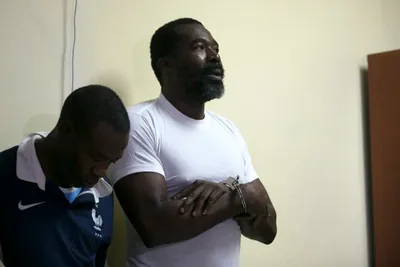
2026.3.16 Police in Haiti arrest lawmaker Arnel Belizaire, who faces charges including terror financing
PORT-AU-PRINCE, Haiti (AP) — Authorities say they have arrested Haitian legislator Arnel Belizaire on charges including financing terrorism and conspiracy against state security.
It’s the latest arrest of Belizaire in a country where powerful political figures have long operated with impunity. Some have been linked to financing and supporting gangs that control an estimated 90% of Port-au-Prince, Haiti’s capital.
Haiti’s National Police made the announcement late Sunday, ending a hunt for the well-known lawmaker, who was first accused around two months ago.
Belizaire previously characterized the arrest warrant against him as political intimidation. It wasn’t immediately clear if he had an attorney.
Belizaire had registered his new political party late last week for the upcoming general election.
The U.S. government already had accused Belizaire of “significant corruption” last year, announcing that he and his immediate family members were blocked from entering the United States.
Belizaire was arrested in the early 2000s on an illegal weapons charge and sentenced to prison. He escaped and was rearrested, only to escape again following Haiti’s devastating 2010 earthquake.
He was elected to Haiti’s parliament in 2011 and then rearrested when police noted that he had escaped during the earthquake. He was subsequently released following political pressure.
Belizaire was arrested again several years ago, after being accused of arms trafficking, but those charges were dropped.
2026.3.12 Violents affrontements au centre-ville : la PNH et la Task-Force poursuivent leur offensive contre les gangs
La Police nationale d’Haïti (PNH), appuyée par la Task-Force, a poursuivi ce jeudi 12 mars 2026, les opérations lancées la veille au centre-ville de Port-au-Prince afin de déloger les groupes armés installés dans plusieurs zones de la capitale.
En effet, de violents affrontements armés ont été signalés notamment dans les rues Charreron et Joseph Janvier, où les forces de l’ordre affrontaient des membres de la coalition criminelle « Viv Ansanm ». Selon des riverains, les combats se sont intensifiés en milieu de journée, transformant ces artères du centre-ville en véritable théâtre d’opérations.
Plusieurs vidéos amateurs circulant sur les réseaux sociaux témoignent de l’ampleur de l’opération. Des habitants vivant à proximité du centre-ville rapportent avoir entendu de nombreuses détonations et explosions tout au long de la journée. Jusqu’à présent, les autorités policières n’ont communiqué aucun bilan officiel de ces affrontements.
—
2026.3.12 Widow of Haiti president describes his killing at US trial of four charged with conspiracy
MIAMI (AP) — The widow of Jovenel Moïse — Haiti’s last elected president — described being shot and wounded during the 2021 assassination of her husband while testifying Wednesday in the U.S. federal trial of four men charged with conspiracy in the case.
Martine Moïse returned to the stand in a Miami courtroom after testifying for about an hour the day before. She had been the prosecution’s first witness, following opening statements by attorneys on Tuesday.
Jovenel Moïse was killed in the early morning hours of July 7, 2021, when about two dozen foreign mercenaries — mostly from Colombia — attacked his home near Port-au-Prince, officials said.
Arcangel Pretel Ortiz, Antonio Intriago, Walter Veintemilla and James Solages are charged in Miami federal court with conspiring in South Florida to kidnap or kill Haiti’s former leader. Jovenel Moïse’s assassination led to unprecedented turmoil in the Caribbean nation, where gang leaders have grown increasingly violent and empowered.
Testifying Wednesday, Martine Moïse described through a Creole interpreter how she went to bed around 10 p.m. the night before the attack and awoke to the sounds of gunfire about three hours later. She said she turned to her husband in bed next to her to ask what was going on.
“Honey, we are dead,” Jovenel Moïse said, according to his wife’s testimony.
Martine Moïse said gunfire continued as she crawled downstairs to check on her two adult children. She said she then returned to her and her husband’s bedroom, where she and Jovenel Moïse got on the floor on either side of the bed and used it as protection from gunfire.
Men eventually burst into the room and opened fire with what sounded like an automatic weapon, Martine Moïse said. She was struck several times. She said she heard men speaking in Spanish before someone shot Jovenel Moïse multiple times, killing him.
After the attackers cleared out, Martine Moïse said she expected to find the dead bodies of the 30 to 50 security officers assigned to protect the house, but there were none. She said she later learned that they were paid to leave their posts.
Moïse was taken to a nearby hospital for treatment and then flown to a Miami hospital for surgery. She testified that her right arm remains disabled and she still has pain.
Defense attorneys asked if Moïse was aware that she was under investigation in Haiti in connection to her husband’s death. She said the people behind her husband’s killing are now in power and that she has fled the country for her own safety. She said she has offered to answer questions remotely, but that the people who killed her husband want her to return to Haiti so they can also kill her. Moïse was previously indicted in the case, but the charge was later annulled.
The defense also asked Moïse about inconsistencies between her testimony and earlier interviews with the FBI. She insisted that her current statements were correct and couldn’t explain discrepancies in FBI reports.
Attorneys for the four men on trial have argued that the investigation initiated in Haiti was a mess and that their clients were manipulated into taking the blame for an internal coup.
According to prosecutors, South Florida was a central location for planning and financing the plot to oust Moïse and replace him with someone the conspirators chose.
All four defendants face possible life sentences and have pleaded not guilty.
Ortiz and Intriago were principals of Counter Terrorist Unit Federal Academy and Counter Terrorist Unit Security, collectively known as CTU, and Veintemilla was a principal of Worldwide Capital Lending Group. Both companies were based in South Florida.
Solages was a CTU representative in Haiti who investigators say coordinated with others, including Christian Sanon, a dual Haitian-U.S. citizen whom the conspirators initially favored to replace Moïse.
Defense attorneys have said the group was working with FBI agents, U.S. Embassy officials and members of the Haitian government in what they believed was the lawful arrest of a criminal president. The defense has pointed to Joseph Félix Badio, a former Haitian government worker who was arrested in Haiti in 2023, as the mastermind behind a plan to use the president’s arrest to assassinate Moïse.
U.S. District Judge Jacqueline Becerra has blocked out more than two months for the trial.
Five others previously pleaded guilty to conspiracy charges in the U.S. and are serving life sentences. A sixth person was sentenced to nine years behind bars after pleading guilty to providing body armor to the conspirators. Sanon’s trial will be scheduled later.
Seventeen Colombian soldiers and three Haitian officials face charges in Haiti. Gang violence, death threats and a crumbling judicial system have stalled the investigation.
2026.3.11 Trial opens in Miami for 4 men charged in Haitian President Jovenel Moïse’s assassination
MIAMI (AP) — Greed, arrogance and power were the driving forces behind four men charged in the U.S. for the 2021 assassination of Haiti’s last elected president, Jovenel Moïse, prosecutors said Tuesday during opening statements.
Federal prosecutors and defense attorneys began presenting opening statements in the trial in Miami for Arcangel Pretel Ortiz, Antonio Intriago, Walter Veintemilla and James Solages. They are charged with conspiring in South Florida to kidnap or kill Haiti’s former leader. Moïse’s assassination led to unprecedented turmoil in the Caribbean nation, where gang leaders have grown increasingly violent and empowered.
Assistant U.S. Attorney Sean McLaughlin told the jury that the case against the four men wasn’t complicated: They wanted to seize power and get rich.
“So arrogant and confident in themselves, the evidence will show, and thinking so little of the Republic of Haiti and its people, they actually thought they could pull it off,” McLaughlin said.
Defense attorneys argued that the investigation initiated in Haiti was a mess and that their clients were manipulated into taking the blame for an internal coup.
“Once you get off on the wrong foot, everything that comes after is hard to trust,” Ortiz’s attorney Orlando do Campo said.
Moïse was killed on July 7, 2021, when about two dozen foreign mercenaries — mostly from Colombia — attacked his home near Port-au-Prince, officials said. According to court documents, South Florida was a central location for planning and financing the plot to oust Moïse and replace him with someone the conspirators chose.
All four defendants face possible life sentences and have pleaded not guilty.
Ortiz and Intriago were principals of Counter Terrorist Unit Federal Academy and Counter Terrorist Unit Security, collectively known as CTU, and Veintemilla was a principal of Worldwide Capital Lending Group. Both companies were based in South Florida.
Solages was a CTU representative in Haiti who investigators say coordinated with others, including Christian Sanon, a dual Haitian-U.S. citizen whom the conspirators initially favored to replace Moïse.
The conspirators met in South Florida in April 2021 and agreed that, once in power, Sanon would award contracts to CTU for infrastructure projects, security forces and military equipment, investigators said. Worldwide Capital agreed to help finance the coup, extending a $175,000 line of credit to CTU and sending money to co-conspirators in Haiti to purchase ammunition, officials said.
CTU initially retained about 20 Colombian nationals with military training to provide security for Sanon. Conspirators also spent months obtaining weapons and body armor and attempting to build relationships with Haitian gangs, officials said.
By June 2021, the conspirators realized Sanon had neither the constitutional qualifications nor sufficient popular support to become president. They then backed Wendelle Coq Thélot, a former Haitian Superior Court judge. She died in January 2025 while still a fugitive.
Defense attorneys told jurors that Sanon approached their clients in early 2021 with plans to liberate Haiti from Moïse, who had overstayed his term as president and faced criticism from Haitian citizens, U.S. politicians and United Nations officials.
Emmanuel Perez, an attorney for Intriago, said the group was working with FBI agents, U.S. Embassy officials and members of the Haitian government in what they believed was the lawful arrest of a criminal president.
The defense has pointed to Joseph Félix Badio, a former Haitian government worker who was arrested in Haiti in 2023, as the mastermind behind a plan to use the president’s arrest to assassinate Moïse. Defense attorneys claim Moïse had already been killed by men dressed as Haitian police officers when the Colombian security force arrived to arrest him.
The group had a real arrest warrant signed by a judge, Solages’ attorney Jonathan Friedman said. The judge later claimed the warrant was signed under duress.
“None of the people here on trial knew that,” Friedman said.
Marissel Descalzo, an attorney for Veintemilla, reserved the right to present her opening after the government makes its case.
After openings, prosecutors called their first witness, Moïse’s widow. Martine Moïse, who was wounded during the attack, testified for about an hour before court recessed for the day. She’s set to return Wednesday.
U.S. District Judge Jacqueline Becerra has blocked out more than two months for the trial.
Five others previously pleaded guilty to conspiracy charges in the U.S. and are serving life sentences. A sixth person was sentenced to nine years behind bars after pleading guilty to providing body armor to the conspirators. Sanon’s trial will be scheduled later.
Seventeen Colombian soldiers and three Haitian officials face charges in Haiti. Gang violence, death threats and a crumbling judicial system have stalled the investigation.
—
2026.3.10 La violence s’intensifie en périphérie de la capitale
Les forces de l’ordre exercent depuis plusieurs mois une pression constante sur les gangs dans la région métropolitaine de Port-au-Prince. Ces assauts, qui ont fait reculer les gangs, sont à l’origine de la poussée de violence en périphérie de la capitale, estiment de
nombreux spécialistes et autorités locales.
Une resurgence de la terreur est enregistrée dans la Plaine du Cul de sac et à Kenskof notamment.
Le spécialiste en sécurité publique M. Réginald Delva juge qu’il existe un lien entre les violences aux village Renaissance dans la Plaine du Cul de Sac et la récupération du quartier de Bel Air par les forces de l’ordre. De nombreux déplacés, considérés comme proches des chefs de gangs, avaient trouvé refuge dans cette zone au nord de la capitale. Un conflit entre des chefs de gang a été à l’origine des affrontements toujours en cours. Le nombre de victimes ne peut être déterminé dans cette région privée de présence policière depuis plus de 4 ans.
Les gangs Taliban et Chien Méchant exercent leur emprise sur cette région.
Par ailleurs le responsable de l’hôpital Fontaine, M. Jose Ulysses, a fait état de 14 cas de blessures graves par balles. Cependant l’hôpital a dû être évacué à cause de l’intensification des affrontements. Une équipe d’urgence est maintenue pour réaliser les accouchements et prendre en charge les nouveaux nés présentant des déficiences.
Plus d’une dizaine d’enfants malades sous assistance respiratoire n’ont pu être évacués.
Assaut des gangs dans les zones reculées de Kenskof
Un peu au Sud est de la région métropolitaine de Port-au-Prince, c’est un scénario similaire. Des bandits, ayant pris la fuite face aux assauts des unités spécialisées de la PNH, ont attaqué les habitants des sections rurales de Kenskof. 3 personnes ont été tuées et plus d’une centaine de maisons incendiées dans les localités de Gelin et Belle Fontaine le week end écoulé.
Les bandits ont également emporté de nombreuses têtes de bétail.
Le Maire M. Massillon Jean, exhorte les autorités policières à réaliser de manière simultanée des opérations dans le centre ville de Port-au-Prince et dans les régions reculées de la commune. À son avis les bandits ont pu reprendre leur forces à cause de l’arrêt des opérations. Ils avaient concédé de lourdes pertes lors des récentes opérations.
L’Agent Exécutif intérimaire confirme que les difficultés d’accès aux repaires des bandits compliquent la situation. Les véhicules blindés ne peuvent accéder à ces régions, dit il préconisant le recours à des appuis aériens. Il rappelle que l’utilisation des drones avait récemment permis de neutraliser un grand nombre de criminels.
Les forces de l’ordre sont présentes uniquement au centre ville de Kenskof ce qui permet la poursuite des activités économiques et académiques. Le Maire presse les autorités gouvernementales à allouer des ressources aux CASEC afin qu’ils puissent organiser une défense face aux assaut des malfrats.
La situation reste précaire dans les 5 sections communales toujours sous la menace des bandits en provenance de Carrefour et du centre ville de Port-au-Prince.
2026.2.26 Glimmers of life appear after Haiti retakes control of a key area from powerful gangs

PORT-AU-PRINCE, Haiti (AP) — As the sun rose, a handful of women opened tattered beach umbrellas in the heart of Port-au-Prince and scanned the horizon before opening their fruit and vegetable stands.
It was unusually quiet in Carrefour Aéroport, a famed intersection in Haiti’s capital that once bustled with traffic and commerce until hundreds of gang members stormed the area in early March 2024 in an unprecedented wave of violence.
They smashed businesses, killed civilians and set fire to a police substation as officers fled.
For nearly two years after the attack, gangs drained the life out of Carrefour Aéroport.
Then in December, Haitian police officers launched a sustained attack against powerful gangs to drive them out of the area with the help of a private security firm and Kenyan police officers leading a U.N.-backed mission that is winding down.
The retaking of Carrefour Aéroport is “probably one of the very first tangible messages sent by the authorities that, ‘yes, we can take back the territory of … no man’s land,’” said Romain Le Cour, head of the Haiti Observatory at the Global Initiative Against Transnational Organized Crime.
It’s a hint of what could happen elsewhere in Port-au-Prince after a powerful gang federation known as Viv Ansanm began raiding neighborhoods and targeting key government infrastructure in February 2024 in a series of attacks that forced the closure of the country’s main international airport and eventually led to the resignation of former Prime Minister Ariel Henry.
“It is a sign of hope,” Le Cour said. “It sends the message that this is doable.”
A glimmer of life
On Feb. 7, Haitian authorities reopened a renovated police substation in Carrefour Aéroport to much fanfare in a capital that is 90% controlled by gangs.
Curious onlookers watched and one of them clapped as heavily guarded police officers entered their restored building nearly two years after gangs had torched it.
“Life is timidly returning to normal,” Jacques Ader, a police commissioner, told reporters.
Since the reopening, street vendors and the drivers of colorful buses, known as tap taps, have reinserted themselves in the area.
“Small businesses are recovering,” said Jean-Remy Laveau, a 35-year-old motorcycle taxi driver who used to work in the area before gangs seized control.
“It will be good for me, more activities, more money more work. I’ll be able to better feed my two kids and my wife,” he said.
Also eager for work was Mario Volcy, a 44-year-old tap tap driver who on a recent morning pointed out the vans and big buses circulating in the area for the first time since early 2024.
He called on the government to prosecute those who unleashed the violence and help those affected by it.
“All victims should receive support from the state,” he said as he cut the interview short, noting with a smile that his tap tap was full. “I have to go now!”
And off he went, with a Bible on his dashboard and his tap tap emblazoned with “God is my guide” on its side.
Frustrations simmer
Not all are celebrating the revival of Carrefour Aéroport.
Gaspar Caseus, 49, said he remains frustrated because gangs still control the main highway leading to southern Haiti. He called on authorities to retake control of other major intersections.
“I need to be able to move south,” he said. “That is where I pick up coal to bring back to the city for sale.”
“Things changed after the attack,” he added. “It destroyed my life. It forced my family to move. I look like a beggar. I was able to eat whenever I felt like it. Now, I eat only if something comes around or a good friend remembers me.”
Caseus said he heard on the radio that more help was arriving in April. That’s when a so-called gang-suppression force is expected to take the reins of the current U.N.-backed mission that is winding down after a lack of funds and personnel.
“As long as I am alive,” he said, “someday, things will change for the better.”
‘What’s the plan?’
On a recent morning, 32-year-old Antoinette Desulmon donned a big hat to block out the sun and laid out mangoes, oranges, tomatoes and peppers in the hope that someone at Carrefour Aéroport would buy from her that day.
She noted police were on patrol in an armored vehicle and the substation had reopened, but she was afraid the peace was fleeting.
“Fear is with me every second,” she said. “I am here selling, but my head is somewhere else.”
Desulmon’s partner went missing two years ago; she believes he was a victim of gang violence.
“I miss him a lot,” she said, adding that she is also concerned about her two children who are living in a makeshift shelter with a cousin, among the 1.4 million Haitians displaced by gang violence.
Desulmon said she had no other choice but to resume selling vegetables and fruit to feed her two children and cousin.
“My heart is broken,” she said. “The depression is real.”
Around her, nothing has been rebuilt except for the police station. Dozens of charred homes remain in ruins while businesses and schools are still shuttered.
Le Cour, the Haiti expert, said it will likely take time before Carrefour Aéroport is restored to its bustling glory of street vendors, stores selling car parts and restaurants offering coffee to morning commuters and a local soup known as bouillon for lunch.
He said he was hopeful that the incoming gang-suppression force would retake control of even more territory.
But even if it does, big concerns remain.
“We’re missing the other side of the equation, which is, what do you do with gang members? What’s the plan for the day after you retake the territory?” Le Cour questioned. “Are you able to rebuild the territory? Are you able to bring people back in?”
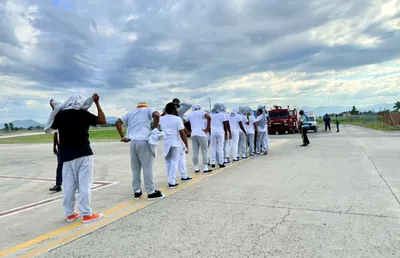
The children went alongside family members the U.S. claims had criminal records
CAP-HAÏTIEN — A United States deportation flight carrying 136 people, including individuals who previously held Temporary Protected Status (TPS) or permanent residency, arrived in Cap-Haitien Thursday, according to Haiti’s National Office of Migration (ONM). About 10 women and five children were on the flight, the second to arrive in the northern city in 2026.
The children were removed alongside family members who were being expelled, ONM officials told The Haitian Times. The adults have been convicted of committing crimes, some of which appear to have stemmed from immigration-related offenses.

Neïssa Tima, a 19-year-old student studying financial business management at Université Quisqueya, was found dead on January 26, 2026, in Pétion-Ville under troubling and yet unresolved circumstances.
According to her family, Tima’s body was discovered inside a vehicle near a local clinic with visible signs of injury and damaged clothing, and certain personal items were reportedly missing. Relatives have raised serious concerns about the circumstances surrounding her death, alleging possible violence and even sexual assault, and have urged authorities to conduct a rigorous and transparent
2026.1.30 Ka Jak: au moins sept morts par balle, des blessés et des habitations incendiées
Au moins sept personnes ont été tuées et quatre autres blessées par balles lors d’une attaque armée survenue tôt dans la matinée du vendredi 30 janvier 2026 à Tèt Ka Jak, section communale de Macary, dans la commune de Marigot.

2026.1.25 Fire ravages Cap-Haitien’s Cluny Market, vendors reeling in despair
Blaze at the indoor market wipes out livelihoods, raises safety and security concerns
CAP-HAÏTIEN — Hours after a fire tore through the indoor market Cluny Market in downtown Cap-Haïtien overnight on Jan. 24, locals were climbing over charred beams and broken concrete, digging through the debris for any merchandise that might still be saved. Vendors stood nearby, inspecting bags pulled from the wreckage, brushing off smoke stains and deciding whether what remained could still be sold.
For many, it was a last attempt to recover something — anything — from what had been their livelihood.
One long-time vendor who goes by ManTi Lime was among them. She said she had 80 bags of black beans, worth $2,000 stored inside the building. When five men retrieve what they could for her, the bags were scorched at the top, blackened by smoke and heat.
In a press release from town hall, authorities said about 30 storages and hundreds of small shops were destroyed, according. As of Sunday, no deaths or injuries were reported, and the cause of the fire had not been determined.
Cluny Market, renovated in July 2024, housed hundreds of vendors selling food and household goods. By morning, most of that space has been destroyed. Residents said the fire began around 10:30 p.m. Merchants attempted to extinguish the fire by throwing buckets of water while others scrambled to pick up their goods.
Firefighters arrived hours after the blaze began, residents said. After they left, small fires were still burning on the ground. People poured water over hot spots, not only to prevent flare-ups, but to dig deeper into the debris for goods.
As people picked through the ruins, tensions rose. Some residents questioned whether food pulled from the debris was safe to eat.
“I don’t want those beans,” Jodelin Auguste, taxi-moto driver, said. “The owners of those beans have no common sense. But I’m not happy because the market caught on fire. The vendors lost a lot of stuff. And many probably borrowed money to buy them.”
x1200
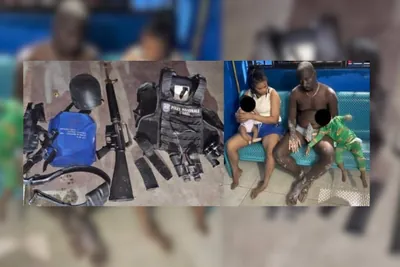
2026.1.9 Haitian police begin 2026 with multiple offensives against gangs
Since Jan. 2, the Haitian National Police has carried out several operations against gang networks, seizing weapons and combat equipment in Port-au-Prince, Arcahaie and northern Haiti
PORT-AU-PRINCE — The Haitian National Police (PNH) began 2026 with a series of operations targeting armed gangs and weapons trafficking across several Port-au-Prince neighborhoods, Arcahaie and some areas in the Northern Department, seizing assault rifles, ammunition and tactical gear while arresting several suspects.
The most recent operation took place Thursday, Jan. 8, in Delmas 2, an area authorities describe as a stronghold of the “Krache Dife” gang, a Viv Ansanm coalition affiliate led by Jean Gardy. Police reported seizing two M4 assault rifles, four magazines for M14 rifles, four bulletproof vests, four tactical vests, two ballistic plates and a container of 5.56 mm ammunition.
In the capital, operations began earlier in the Bel-Air neighborhood of Delmas 4 on Tuesday, Jan. 6. Police said the intervention was aimed at armed groups they classify as terrorist organizations, accused of terrorizing residents and restricting movement.
On Wednesday, Jan. 7, officers searched a house near the residence of a gang leader known as Jamesley, seizing an M16 rifle, a magazine, a police-issued bulletproof vest, binoculars, a ballistic helmet and other equipment. Police said a man, a woman and two children were found inside the house, though authorities have not disclosed further details about their presence.
Earlier, on Friday, Jan. 2, police intervened in the Bercy area of Arcahaie, west of Port-au-Prince, where armed groups had erected roadblocks to extort residents and disrupt traffic.
Police said the operation dismantled the barricades and led to the seizure of three firearms — two M4 rifles and one Kalashnikov-style rifle. Several suspects were injured during exchanges of gunfire with officers, authorities said.
2026.1.7 US Marshals search for Brockton double murder suspect believed to have ties to Haiti
Authorities offer $7,500 reward as victim’s mother urges Haitian community to help locate Davinci Leonard
According to authorities, Brockton police responded to a 911 call around 7:04 p.m. on March 22 reporting a shooting outside the Chipotle at 500 Westgate Drive. Both victims were transported to hospitals, where they later died from their injuries.
State and local investigators identified Leonard as the suspected shooter. An arrest warrant has been issued out of Plymouth Superior Court with authorization for nationwide extradition. Authorities say Leonard should be considered armed and dangerous.
Leonard is described as a Black man standing about 5 feet 9 inches tall and weighing about 140 pounds. Investigators believe he may have changed his appearance by cutting his hair.
Alvarez said her daughter had been dating Leonard and was with him in the hours leading up to the shooting. She said Leonard fled the scene, leaving her daughter and his 14-year-old sister behind.
发表回复