2026.8.27 Jerusalem court acquits a man indicted in nun attack, orders psychiatric care
JERUSALEM (AP) — A Jerusalem Magistrate’s Court judge acquitted a man accused of attacking a Catholic nun based on his insanity defense, but ordered him committed to psychiatric hospitalization for up to six years.
The violent assault in April on a nun walking in her habit in Jerusalem’s Old City sent shock waves across Israel and its many Christian communities.
Clergy and advocates say verbal abuse and spitting have grown increasingly common in the densely packed historic heart of Jerusalem. There, Christians, Jews and Muslims daily cross paths, mostly uneventfully, as they visit some of the holiest sites of Christianity, Islam and Judaism.
But the violent beating of the nun was seen as a rare and worrisome escalation in the volatile environment that people of all faiths have been experiencing in nearly three years of war.
On Wednesday, a judge ruled that there was evidence that a Jewish man from a settlement in the occupied West Bank committed the actions he was charged with, but he was entitled to an insanity defense after the district psychiatrist found he was psychotic at the time of the attack.
2026.8.27 Forensics unable to determine Eldar Dayan’s cause of death, suspects released from house arrest
The decision does not close the investigation or clear the suspects, but without knowing how Dayan died, police have been unable to establish the evidence needed to sustain a murder allegation.
Police did not ask the court to extend the house arrest of seven suspects in the investigation into Eldar Dayan’s death on Thursday, allowing the house-arrest restrictions to expire after forensic experts were unable to determine his cause of death.
The decision does not close the investigation or clear the suspects. It does, however, leave all seven outside custody and reflects the central difficulty facing investigators: Without knowing how Dayan died, police have been unable to establish the evidence needed to sustain a murder allegation.
Two of Dayan’s friends, Omri Peretz and Maxim Barberman, were initially arrested on suspicion of murder. Police are now investigating them on suspicion of attempted murder.
Advertisement
Five other suspects from Petah Tikva are suspected of involvement in a fight that preceded Dayan’s disappearance and death.
Earlier this week, police asked the Petah Tikva Magistrate’s Court to place the seven under house arrest for two weeks. Judge Ronen Peleg instead ordered that they remain under house arrest only until Thursday.
Police did not file a request to extend that order, meaning the house arrest expired without a further court hearing.
Condition of remains makes it impossible to determine cause of death
The change followed a report from the L. Greenberg Institute of Forensic Medicine at Abu Kabir, which found that the condition of Dayan’s remains made it impossible to determine his cause of death.
The finding does not establish that Dayan was not killed. It leaves investigators unable to determine how he died or connect any of the suspects’ alleged actions to his death.
At the previous hearing, a police representative acknowledged that the evidence gathered did not support a murder allegation. Police nevertheless said additional laboratory findings were still pending and that the investigation could potentially support a suspicion of attempted murder against Peretz and Barberman.
Their attorneys rejected that suspicion and argued that police had not presented substantial evidence linking their clients either to Dayan’s death or to an attempt to kill him.
Dayan’s relatives have sharply criticized the handling of the investigation, alleging that delays in locating his remains allowed evidence to be compromised.
The investigation can continue despite the end of the house arrest, and police may seek to arrest the suspects again if new evidence emerges. Whether any of the seven will ultimately be charged remains undecided.
2026.8.26 Man indicted for allegedly assaulting seven-year-old nephew, throwing child into garbage bin
The suspect was indicted on August 24, and the Northern District State Attorney’s Office requested to keep him in custody until the end of legal proceedings.
2026.8.24 Israeli teenager arrested for allegedly extorting peers through TikTok for ‘protection’
In one text message, he wrote to one victim: “Listen, today you only brought 700. Tomorrow bring me another 250 shekels, and we’ll settle this, and if anyone bothers you, call me.”
2026.8.23 Caucasian mafia head Yanis Yushayev killed in shooting at Caesarea gas station
Video footage of the incident showed Yushayev leaving a restaurant at the gas station before the suspected killer approached him from behind and shot him at close range in the head.
Yanis Yushayev, the head of the Caucasian mafia, was shot dead outside of a gas station in Caesarea on Sunday.
Video footage of the incident showed Yushayev leaving a restaurant at the gas station before the suspected killer approached him from behind and shot him at close range in the head.
Yushayev collapsed and was taken to the hospital in critical condition, where he was pronounced dead.
A large number of Coastal District police officers were dispatched to the scene to collect evidence and begin an investigation into the killing.
A helicopter was also launched as part of the search for the suspected killer, who has not yet been identified.
Yushayev’s suspected involvement in organized crime
According to police and crime figures in the Hadera and Or Akiva areas, over the years, Yushayev developed a network of connections with several prominent figures in the local criminal world, primarily Patrick Krasnopolsky, described as his confidant and “right-hand man,” and Osher Shmilov.
Yushayev and Krasnopolsky were arrested in June 2025 on suspicion of involvement in shooting and throwing grenades at businesses in Or Akiva, but they were both released without charge.
In March 2026, Krasnopolsky and Shmilov were arrested on suspicion of attempting to assassinate a rival criminal.
According to police assessments, Yushayev was believed to have had a significant alliance with Eli and Matan Arbiv, who are believed to have controlled organized crime operations in the Hadera area. The police estimated that the parties operated as a joint criminal group in Hadera, Or Akiva, Caesarea, and parts of the Sharon region.
2026.8.23 Kidnapping and murder solved decades later
In an attack by an Arab gang during the Great Arab Revolt on the home of the Lazarevich family, members of the family were kidnapped; the three adults were murdered, and the children were released.
2026.8.22 Haredi protesters block Jerusalem cafe amid ongoing months-long dispute over Shabbat opening
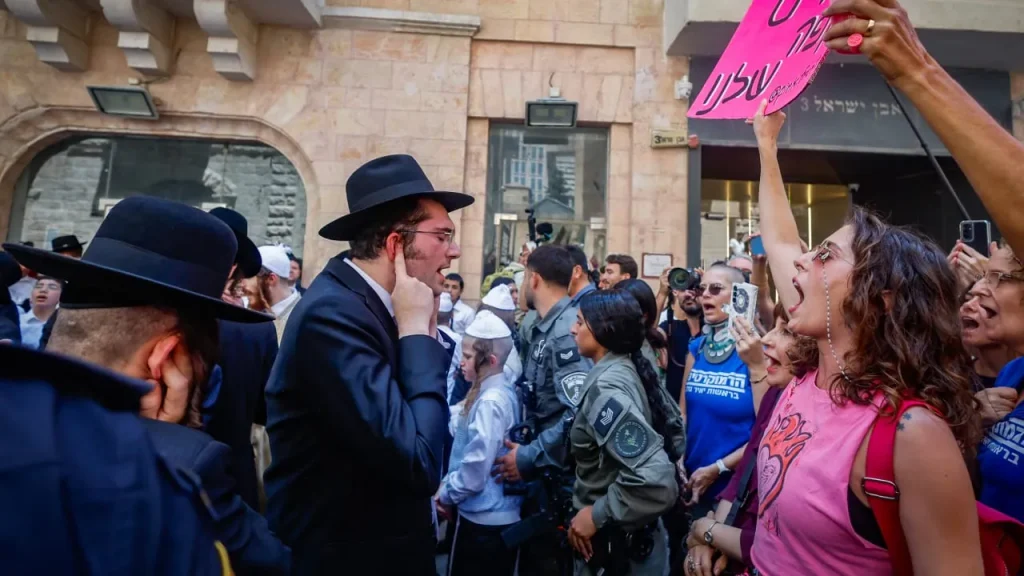
This marks the eighth consecutive week of protests. Several MKs, including Yisrael Beytenu chairman Avigdor Liberman, have joined counterprotests in previous weeks.
Haredi protesters reportedly set up barricades outside Jerusalem’s Basimta Cafe on Saturday morning to protest its opening on Shabbat, security footage published by N12 News showed.
The incident came during the eighth consecutive week of Haredi protests against the cafe’s opening on Shabbat.
Earlier in this week, Israel Police arrested a 75-year-old suspect on Tuesday for allegedly spray-painting graffiti on the cafe, throwing garbage at it, and damaging its lock.
The protests began on Saturday, July 4, when dozens of Haredi demonstrators, many of whom were reportedly minors, descended on the cafe in four separate waves, surrounding the building, banging on its windows, and overturning tables.
Last month, the cafe was revealed to be an official project of Jews for Jesus, a prominent organization within the broader Messianic Jewish movement, which believes in the divinity of Jesus while claiming to practice Judaism, a combination that no mainstream Jewish denomination considers compatible.
Several politicians have participated in counterprotests in recent weeks.
MKs participate in counterprotests
Earlier this month, Democrats Party chairman Yair Golan, Party CEO Omer Lubaton Granot, and MK Meirav Cohen joined one of the counterprotests.
In a post on X, Cohen addressed the ongoing dispute surrounding the cafe and described meeting its owner, Yoel Ben David.
“When he opened the place on Shabbat, emissaries came to him and offered him money so that he would close,” Cohen wrote. “He said ‘no thank you,’ and from that moment he has been subjected to demonstrations outside his café every Shabbat.”
“We came to strengthen him and thank him for his steadfastness in the name of the values of freedom and liberalism,” she added. “Jerusalem belongs to everyone, Israel belongs to everyone, and besides that, the coffee is really good.”
Liberman: ‘Live and let live’
Yisrael Beytenu chairman Avigdor Liberman also joined Basimta Cafe supporters earlier this month, as haredi demonstrators protested outside for the fifth consecutive week.
Liberman condemned the protesters, used the opportunity to campaign ahead of the upcoming election, and called for Haredi men to enlist in the military.
“I believe above all in the principle of live and let live. Drinking coffee on a Saturday morning cannot become an act of civic courage,” Liberman said.
“The vandalism we see behind me only proves that these guys need to direct their energy against Hamas, Hezbollah, and the Houthis, but not here in Jerusalem against peaceful citizens,” he added, referring to the ultra-Orthodox protesters.
Liberman then said the protesters would be required to serve in the military if his party came to power.
“When we come to power, they will not have time to demonstrate here. Everyone will be running through basic training!”
+
2026.8.18 Suspect arrested for allegedly vandalizing Basimta cafe during protests against its Shabbat opening
According to the police, the suspect is thought to have vandalized the cafe with graffiti, thrown garbage at it, and damaged the cafe’s lock.
A 75-year-old suspect was arrested for allegedly vandalizing the Basimta cafe in Jerusalem, following weeks of haredi (ultra-Orthodox) protests against it for being open on Shabbat, Israel Police announced on Tuesday.
According to the police, the suspect is thought to have vandalized the cafe with graffiti, thrown garbage at it, and damaged the cafe’s lock.
The suspect had restrictive conditions on her extension by the court, which also barred her from approaching or entering Basimta.
Haredim protest cafe for being open on Shabbat
The cafe has seen protests against it being open on Shabbat every weekend for seven consecutive weeks, alongside counterprotests in support of the business owners.
On July 4, the first Saturday it drew protesters, dozens of haredi demonstrators, many of them reportedly minors, descended on the cafe in four separate waves, surrounding it, banging on its windows and overturning tables, according to cafe staff and footage circulated online.
Last month, it was revealed that the cafe is an official project of Jews for Jesus, a flagship organization of the diffuse movement of Messianic Judaism, which believes in the divinity of Jesus while claiming to practice Judaism, an overlap that no denomination across the Jewish world accepts as compatible.
2026.8.19 ‘No one left behind’: Rabbi who fought at Sultan Yacoub reflects on Yehuda Katz recovery
Rabbi Yuval Cherlow, who fought near the 1982 battle, tells i24NEWS the recovery of Katz’s remains closes a 44-year wound for Israel, even as it confronts the failure that left soldiers behind
The recovery of the remains of Sgt. First Class Yehuda Katz, missing for 44 years after the Battle of Sultan Yacoub, has brought a long-awaited measure of closure to one of Israel’s most painful military mysteries.
For Rabbi Yuval Cherlow, head of the Ethics Center at the Tzohar Rabbinical Organization and a former deputy company commander who fought on the outskirts of the battle, the news carries both personal and national weight.
“You have to understand that missing soldiers is the worst situation,” Cherlow told i24NEWS.
Katz went missing during the Battle of Sultan Yacoub on June 11, 1982, during the First Lebanon War. Israeli forces encountered a Syrian ambush in Lebanon’s Beqaa Valley, in a fierce battle that left roughly 20 Israeli soldiers dead and dozens wounded.
Cherlow described a battle that went badly wrong.
“It was a kind of an ambush, that the Syrian army… we were trapped in the ambush,” he said. “We really ran into the ambush and we understood too late that we made a big mistake.”
Katz was one of three soldiers who remained missing from the battle for decades, alongside Zachary Baumel and Zvi Feldman. Baumel’s remains were returned to Israel in 2019, while Feldman’s were recovered in a covert operation in 2025.
The IDF said Katz’s remains were located in a recent operation based on intelligence gathered over several years. His family was informed, though the military has not yet released details about where the operation took place.
For Cherlow, the recovery speaks to Israel’s enduring obligation to those sent into battle.
“This is something that is affecting the entire IDF. That is, no one will be left behind,” he said.
“We have to know that everyone who is sacrificing their life in order to save the State of Israel will not be left behind and we always feel that we have a debt toward him to always bring him back.”
Cherlow said the return matters deeply for the family and for the country.
“The first thing is at least for the families, even though his parents passed away years ago … the fact that at least now we know and are closing the circle is very important.”
The recovery also forces Israel to reckon with the battle itself, Cherlow said, praising the soldiers who fought while acknowledging the operational failure.
“The soldiers that were on the battlefield are heroes,” he said. “But from the other hand, it was a failure. And when you have a stain of a failure for 44 years, the fact that the story is going to be closed and that’s the end of this story, I think it’s very important for us to understand that sometimes we don’t succeed. And sometimes we fail to complete the mission.”
Cherlow said the commitment to bring missing soldiers home is essential not only for grieving families, but also for those currently serving. It’s a timely message, as more than four decades later, there are still Israeli soldiers currently operating in Lebanon.
“A soldier when he goes to the battlefield knows… that he’s not alone. The entire society, the entire state, the IDF, are behind him.”
“I hope that the families really believe and can trust the state of Israel and the authorities… that we will do as much as we can and we will be devoted to finding the bodies of everyone that is missing,” he added. “Everyone will know that we are doing as much as we can.”
2026.8.19 44 years after his disappearance, the remains of Maj. Katz were found and identified by the IDF
With the identification of Yehuda Katz’s remains, the three missing soldiers from the Battle of Sultan Yacoub have now all been found and brought back to Israel
Israel has recovered the remains of armored corps officer Maj. Gen. Yehuda Yekutiel Katz, who was killed during the 1982 Battle of Sultan Yacoub in Lebanon, Prime Minister Netanyahu said Tuesday.
Netanyahu said the remains were recovered in a joint operation by the Israel Defense Forces and Mossad, bringing to an end more than four decades of uncertainty over Katz’s fate.
Yehuda Katz was just ten days away from completing his military service when he disappeared during the Battle of Sultan Yacoub, considered one of the most tragic episodes of the First Lebanon War.
The fighting took place during the night and morning of June 11, 1982, six days after the outbreak of the war and just hours before a ceasefire was to take effect. The IDF suffered heavy losses, with numerous soldiers killed, wounded, or captured.
Three Israeli soldiers had been missing since then: Yehuda Katz, Zachary Baumel, and Zvi Feldman. Zachary Baumel’s remains were recovered and repatriated to Israel in April 2019.
Zvi Feldman’s remains were brought back to Israel in May 2025, following a complex, multi-stage Mossad operation in Syrian territory. This mission carried such high risks that senior Israeli security officials considered canceling it. With the identification of Yehuda Katz’s remains, all three soldiers missing from the Battle of Sultan Yacoub have now been found and returned to Israel.
“For many years, I authorized many secret operations to locate the missing from Sultan Yacoub,” Netanyahu said. “I promised their families that we would never stop working to bring them home.”
Netanyahu paid tribute to Katz’s parents, Sarah and Yosef, who he said had spent years searching for their son but died before his remains could be returned.
He also thanked the IDF, Mossad, Shin Bet and other security and intelligence personnel involved in the operation, saying the government remained committed to recovering the remains of missing and fallen Israelis.
The Battle of Sultan Yacoub took place in June 1982 during Israel’s invasion of Lebanon. Several Israeli soldiers were killed, wounded or went missing in the fighting.
Netanyahu concluded his statement by quoting the biblical prophet Jeremiah: “And there is hope for your future, says the Lord, and that your children may return to their border.”
2026.8.10 Settler suspected of attacks on Palestinians released from house arrest, barred from West Bank
Dardik is suspected of involvement in attacks against Palestinians and other nationalist-motivated offenses, including a suspected attack in March.

במשטרה מעריכים כי גישה למכשיר עשויה לקדם משמעותית את החקירה, אך החשוד חן כהן מסרב לשתף פעולה: “כנראה יש לו משהו להסתיר”
גורם המעורה בפרטים אומר: “כנראה יש לו מה להסתיר אם הוא חושש לתת לחוקרים את הקוד לטלפון שלו”. במשטרה מנסים לשחזר את הימים האחרונים בחייה של מלכה, ואספו בין היתר סרטוני מצלמות אבטחה בניסיון להבין מי הניח את מטען החבלה ברכב שבו נסעה, תוך שימוש באמצעים טכנולוגיים מתקדמים
במקביל, כהן מסר בתחילה כי בזמן פיצוץ מטען החבלה לא יצא מביתו בבוקר האירוע, אך בימים האחרונים שינה גרסה וטען כי יצא לזמן קצר וחזר, וכי בזמן הרצח היה בביתו
2026.6.14 Police officers attempt to disperse haredi protest in Jerusalem
“Dozens of rioters began blocking traffic routes and public buses with their bodies, significantly disrupting the routine of life in the area and putting road users at risk,” the police said.
Haredi (ultra-Orthodox) activists protested on Jerusalem’s Bar Ilan Street on Sunday, Israel Police confirmed.
Police and Border Police officers attempted to disperse the crowd, who were blocking traffic and threatening to damage construction work on Jerusalem’s Light Rail expansion.
“Dozens of rioters began blocking traffic routes and public buses with their bodies, significantly disrupting the routine of life in the area and putting road users at risk,” the police said.
Advertisement
The officers attempted to disperse the protesters in order to facilitate reopening traffic and avoid damage to nearby infrastructure.
Haredi draft protests shut down highways, trains for two hours, scuffle with police
On Thursday, several haredi protests shut down highways and trains nationwide for several hours, causing immense traffic in Israel for over two hours.
Haredi protesters clash with police on Highway 1 on June 11, 2026. (credit: Israel Police)
Two people were injured in the protests: one 21-year-old haredi protester who was hit by a car on Highway 1, and one 93-year-old man whose reasons for being injured have yet to be released.
One woman later turned herself in to Israel Police and confessed to running over protesters.
Footage on social media showed several haredi youths at different sites of protest getting into physical altercations with drivers and Israel Police officers.
2026.6.13 Settler shoots Palestinian in West Bank; reports say victim was mentally disabled
An Israeli settler shot and wounded a Palestinian man who threatened him with a rock, police said Saturday, while Palestinian media reported that the man was mentally disabled.
According to police, the Palestinian man arrived at an outpost farm near the northern West Bank village of Duma “already armed with a large stone and began to go wild and behave suspiciously, and, at a certain point, threatened a local resident who approached to inquire about his actions and attempted to attack him with the stone.”
At that point, the settler felt threatened and shot and “neutralized” the man, police said.
The official Palestinian news agency WAFA quoted Red Crescent medics as saying that the man, 29, was mentally disabled and had been shot in the stomach and leg.
According to the Haaretz news site, the man was taken to Rafidia Hospital in Nablus for treatment.
2026.6.13 Four UK pro-Palestinian activists jailed for violent raid on Israeli defense factory
Judge hands out years-long sentences as he highlights ‘terrorist connection’ in 2024 attack on Elbit, during which one activist fractured a policewoman’s spine with a sledgehammer
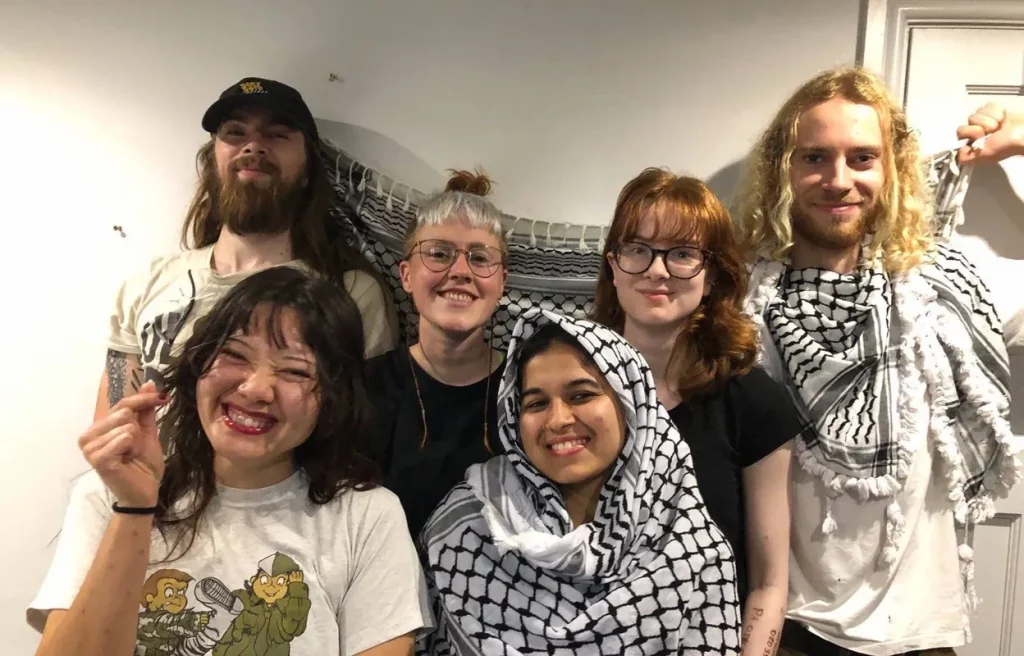
Four British pro-Palestinian activists were sentenced on Friday to years in prison over a 2024 raid on a factory operated by Israeli defense firm Elbit that caused more than $1 million in damage, with the judge giving longer terms after determining a “terrorism connection.”
Charlotte Head, 30, Samuel Corner, 23, Leona Kamio, 30, and Fatema Zainab Rajwani, 21, were members of the since-banned group Palestine Action, which organized the assault on the Elbit Systems UK facility in Bristol, in southwest England.
They were convicted of criminal damage at Woolwich Crown Court in May, while Corner, who prosecutors said hit a police officer with a sledgehammer and fractured her spine, was found guilty of inflicting grievous bodily harm. Corner was given the lengthiest jail term of the four.
The conviction followed a retrial, after a different jury in February cleared the six of aggravated burglary but failed to reach verdicts regarding criminal damage and some other charges.
Wearing red boilersuits, the four activists damaged computers, drones and other equipment, before clashing with security guards and police who tried to stop them in the August 2024 raid. The group said they aimed to “dismantle drones and weaponry” they believed would be used to kill people, particularly in the Gaza Strip.
Prosecutors said the incident should be treated as having a terrorism connection and the four should be sentenced accordingly with harsher punishments, drawing condemnation from human rights groups and high-profile supporters.
Judge Jeremy Johnson said it was an “aggravating factor that the offending had a terrorist connection,” but added that their previous good character was a substantial mitigating factor.
He sentenced Corner to seven years and eight months in total for the two convictions, after finding he used “extreme and gratuitous” force and that his autism didn’t explain why he swung the sledgehammer.
Kamio and Head were sentenced to five years, while Rajwani was sentenced to four years and eight months for the criminal damage. They will all spend another year on parole after release.
Two more activists accused ot taking part in the raid, Zoe Rogers and Jordan Devlin, were acquitted of criminal damage.
Elbit Systems is a defense technology company with around 20,000 staff and revenues of $2 billion, according to the firm’s website.
“Each defendant agreed to take part in high-level actions, and did so with the shared aim of shutting down Elbit and ending what they regarded as British complicity in Israeli war crimes,” Johnson said. “The action was designed to influence the UK government and also to intimidate a section of the public, and was for the purpose of advancing an ideological or political cause.”
The injured policewoman, Sgt. Kate Evans told the court she was still recovering from her injuries and was targeted with nasty emails suggesting she worked for “the Zionist occupation of Britain.”
“The emotional impact of this incident has been profound and ongoing,” she said. “I experience disturbed sleep, often waking in a panicked state or after distressing dreams.”
About 500 protesters gathered outside the court on Friday in support of the four activists, leading to the arrests of 107 showing support for Palestine Action, police said.
Friday’s ruling comes just before the High Court is due to rule on Monday on the government’s appeal against the lifting of a ban on Palestine Action.
The assault on the Bristol factory in 2024 was one of the events that led the government last year to ban Palestine Action as a terrorist organization. The ban under the 2000 Terrorism Act, which went into force on July 5 last year, made membership of or support for the direct action group a criminal offense punishable by up to 14 years in prison.
Since then some 3,000 people have been arrested at rallies and demonstrations.
After Palestine Action challenged the ban, the High Court in London ruled in February that the decision was “disproportionate,” had a “very significant” impact on human rights and should be lifted.
The government has appealed against that ruling, with the judgment due on Monday. x1200

2026.6.12 Gazan doctor accused of Hamas affiliation held without charge in Israel appears before High Court
The media were briefly allowed into the courtroom before being ushered out as proceedings got underway.
A prominent Palestinian doctor captured by the Israeli military in Gaza in late 2024 and held in detention ever since appeared by video link at a High Court of Justice hearing in Jerusalem on Wednesday.
Hussam Abu Safiya appeared in the video to have lost weight since being captured at a Gaza hospital. The media were briefly allowed into the courtroom before being ushered out as proceedings got underway.
Abu Safiya’s brother, Muafaq, said in April that the family learned through his lawyer that he had lost 40 kg. (88 lb.) in prison and suffered four fractured ribs and other ailments. An Israeli rights group has said Abu Safiya is among a group of Gazan doctors held by Israel who have been denied adequate food.
The Israel Prison Service has denied those allegations.
The Supreme Court was hearing an appeal from Abu Safiya’s lawyer, Nasser Odeh, challenging his detention. The court is expected to announce its decision later on Wednesday.
Abu Safiya has been held without charge, according to the Physicians for Human Rights Israel (PHRI), an Israeli rights group, for more than 500 days. His appearance before the court on Wednesday, by video link, was the first time he has been seen publicly since February 2025, the group said in a statement.
IDF does not provide evidence for Hamas accusation
Abu Safiya was captured by the IDF from the Kamal Adwan Hospital in Beit Lahiya, northern Gaza, and is accused of being a member of Hamas.
Gaza’s Hamas-run health ministry and Hamas have denied the allegation.
Following the hearing on Wednesday, Odeh told reporters his client was handcuffed and shackled throughout the proceedings and said he was being held in solitary confinement.
Odeh also claimed that Abu Safiya was not receiving medical treatment, including for what he described as severe neck and back pain caused by an assault during detention, or medications for what he said was needed to treat a chronic illness.
Abu Safiya also had his eyeglasses confiscated and was experiencing vision problems as a result, and his hands were showing signs of skin disease, which Odeh said was widespread among Palestinian prisoners held in Israeli prisons.
IPS did not immediately respond to a request for comment on Abu Safiya’s treatment in detention.
Palestinian doctors denied medical care, food, rights group says
During the hearing, Abu Safiya could be seen handcuffed and wearing a white t-shirt and grey tracksuit pants, clothing commonly worn by Palestinian prisoners in Israeli jails.
Abu Safiya is among 14 Palestinian doctors captured in Gaza by the IDF and detained for over a year without charge.
PHRI in April called for their release, saying they had been denied adequate medical care and food and subjected to physical abuse while in detention.
IPS at the time said it rejected all allegations that the doctors had been mistreated in prison.
2026.6.12 Israel releases Hamas co-founder, father of ‘Green Prince,’ after more than two years of detention
Yousef is a senior leader of Hamas in the West Bank, having co-founded the group in 1987 along with Sheikh Ahmed Yassin and other Palestinian members of the Muslim Brotherhood.
Hamas co-founder Hassan Yousef, 71, has been released from Israeli administrative detention, Yousef’s son Owais confirmed to local and international media late Thursday night.
Additionally, Hamas confirmed in an official statement that Yousef had been released, congratulating him and his family, and noting that he had spent over 20 years in prison, cumulatively.
During Yousef’s last prior detention, he spent 16 months in prison and was released in July 2020.
Most recently, following his post-October 2023 detention, Yousef was reportedly released near Hebron and taken directly to a hospital in Ramallah. Media reports indicated that he was not given a trial and therefore not charged with anything during this latest detention and release.
‘I can’t sleep because of the pain’
Footage reviewed by Agence France-Presse (AFP) appeared to show Yousef lying in a hospital bed with one arm in a sling; the source of his injury is not publicly known, according to the media outlet. The footage also reportedly captured Yousef telling loved ones, “I can’t sleep because of the pain.”
Yousef is a senior Hamas leader in the West Bank – AFP noted – having co-founded the group in 1987 along with Sheikh Ahmed Yassin and other Palestinian Muslim Brotherhood members.
He is the father of Mosab Hassan Yousef, who wrote the book Son of Hamas in 2010, and has rallied against the terror group since defecting in the 1990s.
Mosab Hassan Yousef worked with Israeli counter-intelligence and helped the Mossad in various operations, including incarcerating his father.
2026.6.12 Alleged Hamas operative ordered detained pending trial in Greece on terror charges
Greek police sources link case to recent arrest of two Palestinians in Cyprus suspected of plotting attacks on Israeli targets in Europe and Asia
REUTERS — Greek judges on Thursday ordered the detention pending trial of a Palestinian accused of being part of a Hamas-linked network plotting attacks on Israeli targets in Europe and Asia, legal and police sources said.
The 37-year-old suspect, who denies wrongdoing, was detained on June 6 on the island of Crete, in a joint operation by Greece’s intelligence service and police anti-terrorism unit, authorities said.
Police confiscated mobile phones, a laptop and hard discs from his residences and investigators found evidence he had ordered online materials that could be used to make explosives, but had not received them.
His lawyer told Reuters the evidence was thin and revealed inconsistencies.
“The defendant’s character, mindset and overall demeanor bear no resemblance to the profile of a criminal or terrorist. Rather, he appears to have been cast as a scapegoat in a case founded on tenuous evidence and riddled with significant gaps,” said criminal defense lawyer Spyridon Pantazis.
The arrest in Greece follows the detention of two Palestinians, aged 32 and 38, in Cyprus on May 22. They are under investigation for terrorism-related activities after explosive-making materials were found during searches, police have said.
According to Greek police sources, the two cases are linked.
One of the suspects detained in Cyprus told authorities there he believed their recruiters planned attacks in Greece, Cyprus, Turkey, Myanmar, Thailand and Malaysia, where they received training on explosives, the sources said.
The 37-year-old man arrested in Crete arrived in Greece in 2023 after living for years in Gaza, and was granted asylum. The probe found that in 2025 he travelled to Malaysia, where he met one of the men later detained in Cyprus.
The detainees in Cyprus had met Hamas members in Istanbul, the sources said.
Greek Citizen Protection Minister Michalis Chrysochoidis told Skai radio on Wednesday that the two cases point to a wider network trying to plan terrorist acts in Europe.
A court in Cyprus on Thursday ordered the arraignment of the two suspects arrested there, as well as a third individual, before a criminal court on August 6. They face terrorism-linked charges and membership in an outlawed organization, the semi-official Cyprus News Agency reported.
2026.6.12 Dozens of trucks seized in anti-pollution campaign
Civil Administration foils smuggling of 110 tons of waste in Judea and Samaria; trucks confiscated to prevent illegal dumping and burning.
The Civil Administration announced that during a targeted enforcement operation conducted this week at crossings throughout Judea and Samaria, attempts to smuggle approximately 110 tons of waste were thwarted.
The waste was suspected to be destined for illegal dumping and burning at unauthorized sites in Palestinian Authority areas.
The operation was led by the “David Unit,” operating under the Civil Administration’s Environmental Quality Staff Officer and funded by the Environmental Protection Ministry. Trucks were inspected at several key crossings, including Mizmoria, the Tunnels Checkpoint, and Qalandiya.
According to the Civil Administration, the intercepted trucks carried various types of waste. All trucks and their contents were confiscated and transferred to a military impound lot for further processing by enforcement authorities.
The Civil Administration noted that this operation is part of a broader enforcement effort which has been ongoing for several months and aims to combat illegal waste burning in Judea and Samaria. Data provided indicate that nearly half a million tons of waste destined for burning in Judea and Samaria were seized in various enforcement actions over the past month.
The Civil Administration emphasized that the activities are carried out as part of a coordinated task force that brings together all relevant security bodies to reduce air pollution and environmental hazards in the region.
2026.6.12 High school student’s killer accepts plea deal, sentenced to 25 years in prison
The defense emphasized that Khlo was not accused of shooting or driving the vehicle, as the prosecution was unable to determine who involved had shot and killed the student.
The 32-year-old man who killed a high school student from Nahariya after he accidentally stumbled upon the scene of an attempted assassination in January 2020 was sentenced on Wednesday in the Haifa District Court.
Halal Khlo from Acre was given 25 years in prison following his conviction for the murder of the 17-year-old. He was also sentenced to 12 months in prison, on probation, and the maximum possible compensation to the victim’s family.
After more than six years of a complex trial, largely based on circumstantial evidence, Khlo accepted a plea deal arranged by defense attorneys Uri Ben Natan and Zohar Arbel for the Haifa District Attorney’s Office.
Khlo pleaded guilty to an amended indictment and was ultimately convicted of intentional murder, attempted murder, carrying a weapon, recklessness, and negligence.
What happened in the run-up to the student’s murder?
According to the amended indictment, Khlo and others conspired to harm Muhammad Rubai, 28, while he was in Nahariya. They intended to shoot him from a passing vehicle as he walked. They opened fire on the target, who was wounded, but one of the bullets also hit the high school student who happened to be walking nearby.
The 17-year-old was taken to the hospital and died due to his wounds a few hours later.
The case was reportedly close to a conviction when the defense attorneys requested a plea deal. Prosecutor, attorney Muhammad Molla said that “examining the evidentiary difficulties that emerged during the trial and involving the families of the deceased and the injured in the incident, the prosecution came to the conclusion that this was a proper and balanced arrangement.”
The defense’s arguements for the deal
The defense emphasized that Khlo was not accused of shooting or driving the vehicle, but rather of committing the offenses along with others, as the prosecution was unable to determine which of the individuals involved had hit the deceased and the injured.
Attorney Tomer Ben Hamo, who represents the family on behalf of the SNA program, the assistance for families of victims of homicide, said in court that agreeing to the settlement was a “very difficult decision” after six years of conducting a trial, but the family preferred the certainty of convicting the defendant of murder and bringing the case to an end.
According to him, financial compensation was not a consideration for the family.
2026.6.11 Suspect arrested after photographing influencer naked in changing room also accused of rape
The additional allegation followed a complaint filed by another woman after the suspect’s photograph was published by police.
A 25-year-old Tel Aviv resident was arrested Wednesday evening on suspicion of violating the privacy of social media influencer Shir Weiss, and was questioned overnight on suspicion of rape.
The additional allegation followed a complaint filed by another woman after the Israel Police published the suspect’s photograph.
Officers from the Lev Tel Aviv police station in the Yarkon district arrested the suspect on Wednesday on suspicion of privacy violations and alleged sexual offenses. The suspect was taken in for questioning and was subsequently remanded in custody.
The investigation was launched following a complaint filed by social media influencer Shir Weiss, who said that while she was in a Bershka store at the TLV Mall, she noticed the suspect in a neighboring fitting room allegedly peering into the stall where she was trying on clothes and photographing her.
Following the complaint, investigators conducted an extensive covert investigation during which they gathered evidence linking the suspect to the alleged offenses.
As a result, police received court authorization to publish the suspect’s photograph to locate him and establish his identity, after the evidence collected indicated suspicion beyond a reasonable doubt that he had committed the act.
Woman files rape complaint against privacy-violating suspect
After the suspect’s photograph was published with court approval, another complainant, a woman in her twenties who recognized the suspect from the published photograph, went to the Yarkon district police station and filed a complaint alleging that he raped her during the past several days.
Maariv learned that the suspect is not known to police but is well acquainted with Tel Aviv’s nightlife scene through his work.
Police emphasized that the investigation is ongoing and said that any information from the public could help advance the legal proceedings and ensure a swift and effective response to the offenses attributed to the suspect.
During the night, the suspect was questioned regarding both complaints, which are unrelated and were filed by two different complainants. On Thursday morning, he is expected to be brought before the Tel Aviv Magistrate’s Court, where police will request an extension of his detention to continue the investigation.
2026.6.10 Three female soldiers wounded by settlers while clearing illegal West Bank outpost
Security forces arrived at the outpost adjacent to Ma’aleh Amos during the night, where they announced that the area was a closed military zone and demanded that all civilians disperse.
Three female soldiers were lightly wounded by settlers while clearing an illegal outpost outside of Gush Etzion overnight, the Israel Police announced on Wednesday.
Security forces arrived at the outpost adjacent to Ma’aleh Amos during the night, where they announced that the area was a closed military zone and demanded that all civilians disperse.
The forces encountered active resistance, the police stated, including direct attacks on officers at the scene and obstruction of construction equipment.
Soldier’s nose broken by settler during West Bank riots
During the altercation, one soldier was punched in the face, resulting in her being taken to the hospital with a broken nose. Two other soldiers were also given medical treatment after being affected by pepper spray.
Ynet reported that security forces responded to the violence using flashbangs and other protest dispersal techniques to restore order.
One 18-year-old suspect was arrested for attacking the security forces and taken in for questioning by the police.
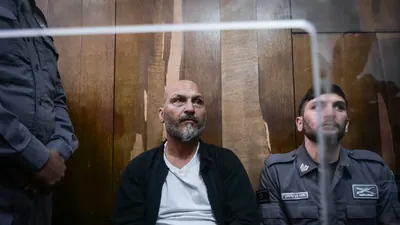
2026.6.9 Former soccer player Haim Sirotkin sentenced to one year in prison for running over protesters
The court convicted him of reckless and negligent conduct involving a vehicle, finding that while he did not intend to hit the protesters, he knowingly accelerated his car and disregarded risks.
Former soccer player Haim Sirotkin was sentenced on Tuesday to one year in prison after being convicted of reckless and negligent conduct involving a vehicle that injured five protesters during an anti-government demonstration in Tel Aviv.
The Tel Aviv Magistrate’s Court also suspended his driver’s license for four years and ordered him to pay NIS 20,000 in compensation to one victim and NIS 4,000 each to four additional victims.
The incident occurred on the evening of April 6, 2024. Sirotkin was driving with his wife and another couple on their way to a party when they reached the Namir Road-Begin Road-Shaul Hamelech Boulevard intersection in Tel Aviv, where protesters were crossing the road.
Sirotkin stopped his vehicle, and he and his wife exchanged words with demonstrators who passed near the car. According to the court, after a police officer who had offered to help guide him through the intersection stepped away, Sirotkin accelerated into the intersection and struck five protesters.
One victim, a woman in her 60s, suffered a head injury and four broken ribs. The court noted that Sirotkin continued driving for more than 10 seconds before bringing the vehicle to a stop.
Sirotkin was convicted of reckless, negligent conduct involving vehicle
The court convicted him of reckless and negligent conduct involving a vehicle, finding that while he did not intend to hit the protesters, he knowingly accelerated while numerous people were crossing in front of his car and disregarded the risk that he could strike them.
In its sentencing decision, the court said three aggravating factors justified a prison sentence.
First, the judges said the case involved more than ordinary negligence because Sirotkin consciously pressed the accelerator despite the presence of pedestrians directly ahead of him. The police officer who had been assisting him was no longer directing traffic and was instead speaking with Sirotkin’s wife, who was arguing with protesters.
Second, the court cited the number of victims and the seriousness of the injuries suffered by one of them.
Third, the court pointed to a connection between Sirotkin’s impatience and the earlier confrontation between the vehicle’s occupants and protesters. According to the ruling, his decision not to wait for demonstrators to finish crossing reflected a lack of tolerance that contributed to the dangerous situation.
The court further stated that the incident affected not only the victims but also others who witnessed it, creating concerns about the ability to express political views freely during public demonstrations.
In concluding the sentencing, the judge expressed hope that the case would serve as a public lesson in patience and tolerance. The ruling stated that Sirotkin should have remained in his vehicle and waited for the road to clear rather than driving forward while protesters were still crossing.
The judge emphasized that the prosecution never argued that Sirotkin intentionally drove into the demonstrators. Instead, prosecutors maintained that he acted recklessly, showing indifference to the consequences of his actions. They attributed to him a mental state more serious than negligence but short of intent.
Sirotkin deliberately hit gas when protesters were on road
The defense, meanwhile, did not maintain at trial Sirotkin’s original claim that a mechanical malfunction had prevented him from controlling the vehicle. As a result, the court concluded that the manner in which the car was driven stemmed directly from Sirotkin’s operation of it.
The judges said the evidence did not allow them to determine with certainty why Sirotkin drove as he did. The ruling noted that several factors may have played a role, including frustration over the delay, anger at remarks made by a protester, negative feelings toward the demonstrators, pressure created by his wife’s shouting, disregard for the possibility of injuring people, and alcohol consumption.
However, the court stressed that the issue of alcohol was not sufficiently investigated to support firm conclusions and was not included in the indictment. The ruling added that some of Sirotkin’s actions may also have resulted from an unintentional failure to operate the vehicle properly amid the combination of factors present at the scene.
2026.6.7 Pride flags vandalized across Israel over weekend, police launch probes
In Jaffa, police launched an investigation after receiving a report of an individual seen tearing down LGBT flags displayed at the Clock Tower Square.
A string of pride flag vandalism cases across the country over the weekend has drawn sharp condemnation from local authorities and the police.
In Jaffa, police launched an investigation after receiving a report of an individual seen tearing down LGBT flags displayed at the Clock Tower Square. Officers from the Jaffa station arrived at the scene, located two flags that had been thrown onto the ground, collected evidence, and opened an inquiry.
A 21-year-old resident of Tel Aviv was subsequently identified as a suspect, interrogated under caution, and released under restrictive conditions. Israel Police emphasized that they take any bias-motivated offenses or actions targeting community symbols and sentiments very seriously.
Meanwhile, in Moshav Bethlehem of Galilee in the Jezreel Valley, pride flags that had been put up for Pride Month were vandalized and removed. Police identified a suspect, a local youth, whose interrogation also concluded with a release under restrictive conditions.
Following the incident, Shlomit Shichor Reichman, head of the Jezreel Valley Regional Council, directed educational staff to open the school week with discussions centered on tolerance, acceptance of others, and combating manifestations of hatred.
In a message to residents, Reichman strongly condemned the act, saying, “Last night, a red line was crossed in Bethlehem of Galilee. This is not ‘just a prank’ – it is ugly vandalism, and it is fueled by hatred. This is an expression of intolerance that harms the core values of our society and the principles we educate by here in the Valley, human dignity, tolerance, and shared coexistence.”
She added that the council will show zero tolerance toward incitement, exclusion, and violence, and will continue working to preserve the community’s shared social fabric.
Pride flags stolen in Zichron Yaakov
Another incident was reported in Zichron Yaakov, where pride flags displayed at the town’s entrance rotary from the direction of Givat Eden were vandalized on Friday. After council employees rehung the flags, they were completely stolen.
These three incidents add to a growing list of similar events recorded nationwide since the start of Pride Month, reigniting public debate surrounding hate incidents, tolerance, and the ongoing struggle against violence targeting the LGBT community.
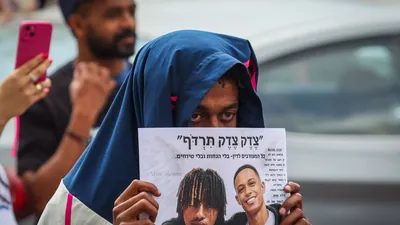
2026.6.4 Four minors face murder charges in killing of Destao Tzakul, indictment expected soon
19-year-old Destao Tzakul was killed just a week before he was scheduled to enlist in the Golani Brigade.
Investigation materials into the murder of 19-year-old Destao Tzakul have recently been transferred to the prosecution, with authorities expecting that an indictment against the suspects will be filed on Wednesday.
The police arrested four teenagers, aged 16 to 17, who are believed to have ambushed Tzakul near his home while he was with friends. They attacked him upon his return home, beating and stabbing him to death.
Tzakul was killed in April, just a week before he was scheduled to enlist in the Golani Brigade. He was his family’s youngest child, leaving behind an older brother and sister.
The four suspects are scheduled to appear on Wednesday for a hearing to extend their detention. Since a prosecutor’s declaration has already been filed, the court is expected to be asked to keep them in custody until legal proceedings conclude. Earlier this week, police announced they had recovered the knife used in the stabbing.
Tzakul’s family plans to attend court to confront the suspects. His sister told Maariv that the family receives almost no updates on the investigation and learns about developments only through the media. She demanded that the video documenting the incident be released, as the stabbing video of Yemano Binyamin Zalka in Petah Tikva was.
The family is expected to meet with representatives from the Central Unit for Investigations, who are handling the case.
They will likely be shown parts of the investigation materials, including footage documenting the murder.
Victim’s sister: We want to see suspects’ faces
The meeting is scheduled for the morning, before the family attends court for the indictment filing. “We want them to see the faces of those who did this,” the victim’s sister said. “This must be made public; why hide them?”
Following Tzakul and Zalka’s murders, many teenagers from Beersheba and surrounding areas held a protest rally, calling for “an end to violence and bloodshed.”
Family’s attorney: ‘Destao was not there by accident’
Attorney Lee Asaf Almalich, representing the Tzakul family, said they want justice and that those responsible be brought to trial quickly. “The family believes that some of the publications presented so far do not fully reflect the circumstances of the incident,” she said. “Destao was not there by accident, and this is not a random event, as presented in some of the reports.”
In response to the family’s claims that they only receive updates from the media, police said the investigation is ongoing and that they do not release details on ongoing investigations.
2026.6.4 Israeli businessman ‘King of Slot Machines’ Tony Bargig murdered in Prague
Bargig, 54, had been living and working in Prague for several years, Ynet reported, and had owned several gambling businesses.
Tony Bargig, an Israeli businessman and casino owner once known as the “King of Slot Machines,” was reportedly murdered on Wednesday in Prague.
Bargig, 54, had been living and working in Prague for several years, Ynet reported, and had owned several gambling businesses.
Prague police confirmed that the matter was under investigation, and that someone else had been involved in Bargig’s death.
Bargig indicted for operating illegal casinos
Bargig had previously faced legal trouble in Israel, operating around 15 illegal casinos across the country from 2008 to 2014.
He had been indicted for his crimes, but in 2020 was sentenced under a plea deal to only 15 months in prison, as well as a forfeiture of one million shekels and an additional fine of 350 thousand shekels.
Afterward, Bargig had entered a dispute with the Israeli Tax Authority, which claimed that records seized during his arrest indicated that his illegal gambling organization had earned him tens of millions more shekels than he had reported as his income.
Another controversy associated with Bargig, as reported by iGamingToday, was that his wife, Nurit, had been an active-duty officer in the Israel Police while he was being investigated for potential criminal activity.
While no allegations of improper conduct were made against Nurit, police officials reportedly viewed their marriage as a concern, and she was eventually transferred to a different district.
2026.5.18 Police investigating after West Bank settler filmed running over sheep with ATV
Assailant also appears to beat Palestinian man; incident, caught on video, comes a day after a settler was filmed beating a dog in a Palestinian village
The Israel Police began an investigation Sunday after a settler driving an ATV was filmed running over a flock of sheep owned by a Palestinian in the area of Khirbet al-Tawil, near Nablus, earlier in the day.
In the video, the ATV is seen with the skull of a bull mounted on its front bumper. The footage shows the settler stepping off the ATV while two sheep are trapped underneath it. He then appears to begin beating a Palestinian man who is filming the altercation.
Multiple sheep were injured as a result of the incident, according to reports in Hebrew media.
Police said that “as part of the investigation, actions are being taken using all tools at the police’s disposal to clarify the circumstances of the incident.”
The shepherd of the flock, named as Rafe by the Ynet outlet, said that the settler driving the ATV “causes trouble every day.”
“One day the [driver] came to my home, another day he followed me in a cave and sprayed pepper spray,” the shepherd added. “These settlers are criminals. Every day they cause trouble.”
The incident is the latest to occur amid a monthslong surge in mostly unchecked settler violence in the West Bank. Arrests and convictions of perpetrators are rare.
Last week, Prime Minister Benjamin Netanyahu was reportedly told that up to 80 percent of incidents that Israeli troops in the West Bank record are Jewish attacks on Palestinians. The statistic was shared with the premier by an officer in the IDF Central Command during a meeting on Jewish terrorism, the Kan public broadcaster reported.
The running over of the sheep was the second incident in as many days in which a settler was filmed hurting an animal belonging to a Palestinian. On Saturday, footage circulated of a young masked assailant repeatedly beating a dog in a Palestinian village.
The dog was taken to a veterinarian and received medical care, according to Hebrew reports.
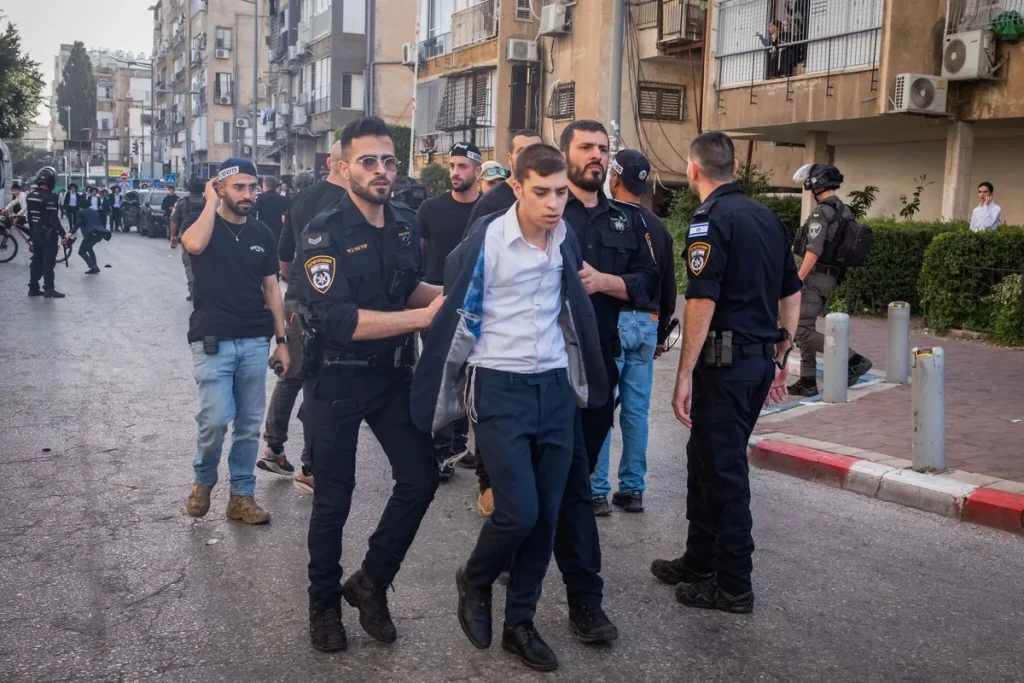
2026.5.17 Haredi extremists brag openly of campaign to obstruct cops, but evade consequences
In carefully worded emails, Jerusalem Faction organizers boast of mobilizing protests to block enforcement against draft dodgers, sometimes violently, while hiding behind laws protecting free speech
Last month, ultra-Orthodox demonstrators belonging to the extremist Jerusalem Faction breached the home of the head of the IDF’s Military Police in the southern city of Ashkelon to protest the arrest of yeshiva students who had evaded military conscription.
During the incident, which occurred while Brig. Gen. Yuval Yamin’s family was at home, dozens of rioters “trespassed into the yard, acted violently, and disrupted the routine of life in the area,” according to police. Twenty-five of them were arrested.
Responding to harsh criticism of its actions, the Jerusalem Faction was unapologetic, simply stating: “Red lines have been crossed; leave the Torah students alone.”
This simple statement, and the accompanying riot, neatly encapsulate the ideology of the extremist ultra-Orthodox group, numbering some 60,000 members, which regularly holds rowdy demonstrations against the military enlistment of yeshiva students.
While the leaders of the Jerusalem Faction’s anti-IDF campaign have distanced themselves from the illegal actions of those they have mobilized, a Times of Israel investigation has found the group openly and repeatedly boasting of obstructing the arrest of draft evaders, including mobilizing masses of young men, as they wage a campaign aimed at circumventing the government’s already weak efforts to enforce conscription.
Despite the group’s brazen activities, many of which have captured national attention, authorities acting under the orders of a government that critics say is in the thrall of ultra-Orthodox interests have largely failed to crack down on the group in any systematic way, allowing the Jerusalem Faction to continue bringing chaos to Israel’s streets.
Among other activities, Jerusalem Faction organizers have been involved in paying evaders financial rewards, have awarded raffle prizes to yeshiva students who refuse conscription orders, and even established more than one “national alert system” to mobilize wildcat street action when someone spots a draft dodger being arrested.
On more than one occasion, messages on the group’s alert system have resulted in mass riots, with those called to the streets overturning patrol cars, vandalizing property and fighting with police, putting some of them in hospitals.
Obstructing police operations
Over the past two years, the military has sent out tens of thousands of enlistment orders to members of the ultra-Orthodox community whose exemptions from mandatory service in the Israel Defense Forces were revoked under a 2024 High Court ruling. Most have ignored the orders, leading to large numbers of young men being classified as evaders and being subject to arrest or other sanctions.
While the military has made no move to arrest all 80,000 ultra-Orthodox men aged 18-24 believed to be eligible for service, the detainment of even a small fraction has ignited anger and occasionally violence in the country’s various Haredi enclaves.
At least some of the attempts to prevent arrests have been organized by the Jerusalem Faction, according to an extensive review of email updates sent to supporters of the group’s Notnim Gav (Got Your Back) anti-conscription initiative and its affiliated Tzeva Shachor effort.
Tzeva Shachor, whose name translates to Color Black but also sounds similar to Black Army, operates both as a hotline for activists to report arrest attempts and as an alert system to call activists to action in real time.
Multiple messages sent by official addresses maintained by Notnim Gav and Tzeva Shachor appeared to explicitly admit to having actively prevented military and civil police from arresting draft evaders — actions that could potentially constitute obstruction of justice.
In a July 6, 2025, email, the group bragged about its network of “tens of thousands of Haredi Jews who are determined to protect the yeshiva students,” asserting that it had “been proven time and again” that “the army has been forced to release every deserter it has come across following threats of protests.”
“Now, too,” the group stated, “the army is expected to suffer a crushing defeat.”
Subsequent emails showed that Notnim Gav and Tzeva Shachor were adhering to this playbook, describing repeated mobilizations of yeshiva students in order to block law enforcement. Tzeva Shachor also used emails to get people into the streets to stop arrests.
A January 29 message to supporters reported that the police were “attempting to send a yeshiva student to the Military Police at the Kfar Saba police station” and called for the public to show up and offer support. A follow-up email sent 20 minutes later indicated that the protesters had prevented the handover.
“With the arrival of the crowds at the scene, with God’s help, the yeshiva student was released and will not be handed over to the Military Police,” the email stated.
On February 3 and 10, Notnim Gav boasted that it had mobilized groups that had turned the Military Police away from two evaders’ homes, and on February 15, its hotline marshaled protesters in the central Israel city of Bnei Brak after a resident who spotted two IDF servicewomen falsely claimed that they were attempting to deliver conscription orders.
The latter incident quickly spiraled out of control, with a mob attacking the soldiers, overturning a patrol car and setting fire to a police motorcycle.
Speaking with The Times of Israel following the incident, a spokesman for the Jerusalem Faction denied any responsibility for the violence, stating that the riots were “not something organized.”
Asked about the legality of its operations, a spokesman for Notnim Gav told The Times of Israel that it encouraged legitimate protest and that its calls to action served “not to prevent arrests, but rather to provide support and backing” for yeshiva students “privileged to be arrested for the sake of our holy Torah.”
The protesters gather to “strengthen him so that he may go to prison with his head held high” and all of Tzeva Shachor’s activities “are conducted according to the law and are regularly supervised by an attorney,” the spokesman said.
While arrests of protesters at such demonstrations are common, no effort has been made to prosecute the organizers helping bring masses to the street.
Under the law, someone inciting others to evade service during wartime is liable to a prison term of 15 years. Proving incitement, though, can prove tricky.
According to Ran Cohen Rochverger, the IDF’s former chief military defense counsel, demonstrators blocking military or civilian police from approaching the home of a draft evader can be easily prosecuted for obstructing an officer performing his duty. But securing indictments for those who call for such protests is much more difficult.
Regardless of whether they know that the demonstrations they call are likely to end in violence or illegal activity, the messages sent out by the Tzeva Shachor hotline are “clearly drafted with deliberate caution and ambiguity,” he said.
“People are called to come and protest, and sometimes riots occur during the protest, but it’s too far of a stretch to say that everyone who calls for and initiates a protest is responsible for everything that happens during that protest,” Cohen Rochverger added. “Even though we all know the truth, legally you still need evidence and sufficient proof to link them, and it’s not always possible.”
“They are careful with their phrasing, but everyone knows what is meant,” he said. x1200

أكدت محافظة القدس أن مصادقة الاحتلال على مخطط للاستيلاء على 15 إلى 20 عقارا تاريخيا بحي باب السلسلة، وتخويل شركة تطوير الحي اليهودي بتنفيذه، تصعيد استيطاني، يهدف لتفريغ محيط الأقصى، وفرض وقائع تهويدية جديدة.
2026.5.17 مديد اعتقال 3 شبان من الجولان وإطلاق سراح 3 آخرين على خلفية احتجاجات عنفات الرياح
ددت محكمة الصلح في طبرية اعتقال ثلاثة شبان من الجولان العربي السوري المحتل حتى الثلاثاء المقبل، وأفرجت عن ثلاثة آخرين، وذلك على خلفية احتجاجات مشروع عنفات الرياح التي شهدتها المنطقة الشهر الماضي.
2026.5.16 Palestinian man sentenced to 30 months for trying to sell lion cub
The man will also pay an NIS 5,000 fine in addition to his prison term.
A Palestinian who tried to sell a lion cub was sentenced to 30 months in prison as part of a plea deal, Israeli media reported on Wednesday.
The West Bank man was sentenced by the Judea Military Court after pleading guilty to several offenses, including possessing a stolen M-16 rifle.
According to the man’s WhatsApp records, he tried to sell the cub for NIS 50,000 and offered to sell other animals, including a tiger. However, police couldn’t locate the cub or any of the other animals the man claimed to own.
Advertisement
In addition to a prison term, the man will also pay a NIS 5,000 fine.
Chief prosecutor for the Israel Nature and Parks Authority, Shai Peretz, welcomed the ruling.
“I see the sentence as a clear and unequivocal message from the military court against the illegal possession of wild animals and harm to them,” said Peretz.
“The significant punishment imposed reflects the severity of the acts and the importance of protecting wildlife, alongside the deterrence required against those involved in offenses of this kind,” he added.
Lions often smuggled throughout Israel
Wildlife smugglers have trafficked lions in Israel before. In January, authorities transferred two cubs recovered from illegal smuggling to a wildlife reserve in South Africa.
In 2025, a video showing a person driving a car with a lion cub and monkey went viral online, leading police to seize a cub in a southern Bedouin village.
According to Ynet, Israel Nature and Parks Authority Inspector Adva Peretz said at the time that lions, being wild animals, shouldn’t be kept in homes.
“They are social animals that require complex care,” said the inspector. “They are also dangerous and, as they grow, can pose a serious threat to humans. We will do everything possible to return them to their natural habitat.”
According to a 2025 Channel 12 report, police believe that smugglers use drones to bring animals into the country while evading border searches.
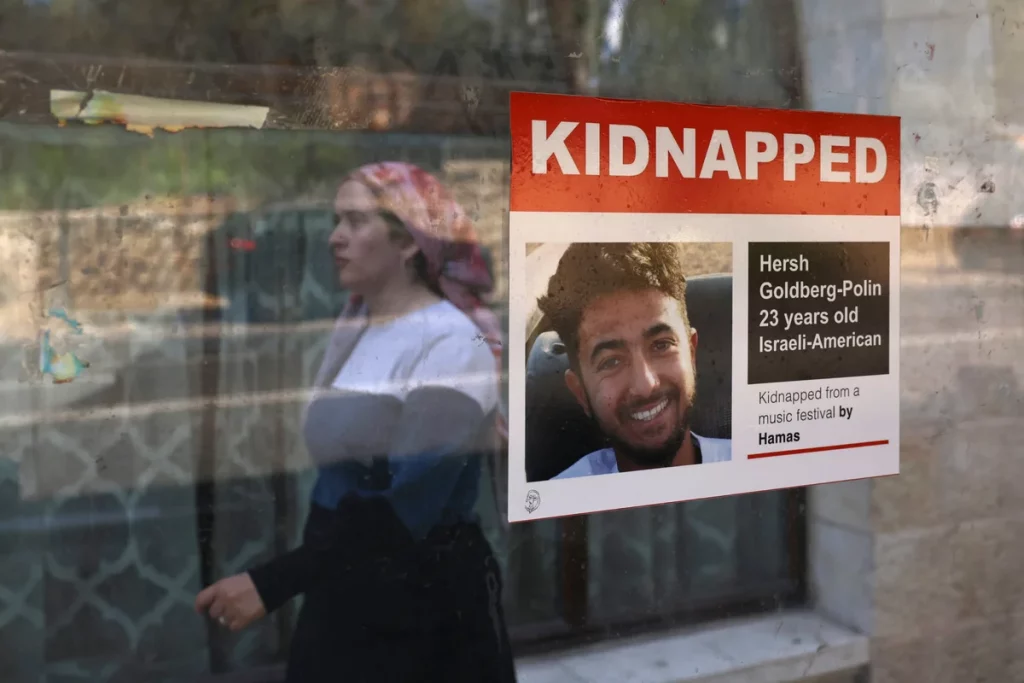
2026.5.15 Knesset establishes ‘historic’ law to prosecute Oct. 7 terrorists
( May 15, 2026 / JNS ) On May 11, the Knesset voted 93-0 in favor of a law providing a legal framework for the prosecution of terrorists involved in the Oct. 7, 2023, Hamas invasion. The law was hailed as “historic” by its legislators.
The legislation details how judges and prosecutors are to be selected, how trials are to be conducted, and provides for an appeals process.
“The purpose of this law is to regulate the prosecution of perpetrators of acts of hostility, murder, sexual crimes, kidnapping and looting carried out by the Hamas terrorist organization and its partners as part of the murderous terrorist attack,” its explanatory section says.
Analysts JNS spoke with hope that it will facilitate the trial and conviction of the terrorists responsible for the worst massacre of Jews since the Holocaust. Gazan invaders killed at least 1,200 people and took 251 others hostage.
The law establishes a special military court in Jerusalem dedicated to trying the terrorists involved in the attack on Oct. 7-10, 2023. These will include the Nukhba terrorists, the “elite” Hamas force that spearheaded the attack.
There are an estimated 300 Nukhba terrorists in Israeli prisons. They are among several thousand terrorists and suspected terrorists detained by Israel since the war’s outbreak.
Indictments are expected to be brought against 400 suspects. That number may increase depending on ongoing investigations.
Judge Haran Fainstein, a retired Israeli judge who teaches at Bar-Ilan University’s Department of Criminology, told JNS, “The ‘regular’ courts and the military courts do not have the manpower or the facilities to handle such complicated cases.”
Knesset member Simcha Rothman of the Religious Zionism Party, who sponsored the law together with MK Yulia Malinovsky of the Israel Beiteinu Party, told the Knesset Channel this week that a regular court would have taken a minimum of 15 to 30 years to reach a verdict.
“Here, we will start to see verdicts within three to five years, even less,” Rothman said.
Avraham Russell Shalev, an international law expert at the Jerusalem-based Kohelet Policy Forum, told JNS, “The recently passed law is a rare opportunity for justice to be done.
“While Israel is falsely accused of atrocities, the world has mostly forgotten the real horrors perpetrated by Hamas on Oct. 7. This is a chance to remind the world and punish the perpetrators.”
Rothman referred to the importance of the educational component of these trials. “There’s an interest in broadcasting this to the world and broadcasting it to the public in Israel. Everything will be recorded and preserved in the archives for the coming generations,” he told the Knesset Channel.
Justice Minister Yariv Levin of the Likud Party also referred to the historical aspect of the trials. “This law ensures not only justice, but also historical documentation,” he said.
Malinovsky said, “There will be an orderly, filmed and broadcast legal proceeding. These will be the trials of the modern Nazis, and it will go down in the history books.”
‘The inexcusable delay’
Avi Bell, an Israeli professor of law at the University of San Diego School of Law and at Bar-Ilan University’s Faculty of Law, told JNS, “Hopefully the new law will end the inexcusable delay, and result in the trial and conviction of the Palestinian terrorists, and the imposition of capital punishment.”
He lays the delay in trying the terrorists at the feet of senior Israeli law enforcement officials, who “for reasons that have not been articulated, and are unfathomable to me,” have refused “to take any steps to try, convict and punish the thousands of Palestinian terrorists who have been captured by Israel and bear responsibility for the atrocities of Oct. 7, 2023.
“It is evident that the pursuit of justice for the Palestinian terrorist crimes will remain in a deep freeze unless law enforcement is forced to act,” Bell said.
Although one of the law’s key provisions permits courts to apply the death penalty, not only for acts of murder but for extreme crimes, such as rape, which the Oct. 7 terrorists carried out with abandon, Bell said one of the issues he has with the law is that it doesn’t go far enough “to advance the probability of capital punishment for convicted terrorists.”
The law also prohibits the inclusion in prisoner release deals of terrorists who are “suspected, charged or convicted of an offense committed” in connection to the Oct. 7 atrocities.
“The law’s success will ultimately depend on the degree to which military prosecutors live up to their legal duty, a duty that law enforcement has shirked to date, and the degree to which the judges understand that every punishment must leave the terrorists with no hope that their comrades in arms will win their future release by seizing new hostages,” Bell said.
Those who brought about the law are positive it will be effective. Rothman, speaking before the Knesset plenum just before the vote, said, “This is a historic plan designed to do justice and bring to justice the terrorists who carried out the most horrific massacre in the history of the state.”
Malinovsky said in her speech, “The State of Israel is a state of law. These terrorists will be tried in court, according to all the rules, and the judges will sentence them. … I dedicate this law to all the murdered, the hostages and the families. In the end, our spirit and our ability to cope and face the immense pain—that’s what makes us great.” x1200
2026.5.13 النيابة تطالب بسجن الشيخ كمال خطيب بين 36-42 شهرا وطاقم الدفاع يقرر الاستئناف
البت النيابة العامة بفرض العقوبة السجن بحق الشيخ كمال خطيب لمدة 36-42 شهرا بعد إدانته بتهمة “التحريض على الإرهاب والعنف” وهي تعود إلى منشورين له على “فيسبوك”، فيما قرر مركز “عدالة” الاستئناف على الحكم مهما كانت نتيجته.
2026.5.10 Israeli authorities indict 16 teens over Independence Day murder of pizzeria worker
The suspects were also charged with additional offenses, including obstruction of justice and witness tampering.
Nearly three weeks after the fatal stabbing of Yemanu Binyamin Zalka, 16 teenagers were indicted Sunday in connection with his murder on the eve of Independence Day.
The indictments, filed by prosecutors to the Central District Court in Lod, were split into two cases. The first charges the main suspect, a 15-year-old boy identified only as “H,” with murder, with prosecutors alleging that he acted with indifference to the possibility of Zalka’s death.
The second indictment charges 15 other minors, all between the ages of 14 and 16, with aggravated assault with intent to cause serious harm – an offense that carries a sentence of up to 20 years in prison.
The suspects were also charged with additional offenses, including obstruction of justice and evidence tampering. The prosecution requested that all of them be remanded until the end of legal proceedings.
The case has drawn widespread shock and prompted renewed discussion about teen violence, both because of the suspects’ young age and because, according to the indictment, the fatal confrontation began over a trivial argument at the Pizza Hut branch where Zalka worked.
Police Commissioner Daniel Levi called the case “a cruel and shocking murder of a young man whose whole life was ahead of him,” adding that Israel Police views all serious violence with severity, “particularly incidents in which teenagers choose to resolve conflicts through unrestrained violence.”
On Saturday night, hours ahead of the planned indictments, dozens gathered outside the prosecution’s offices in Tel Aviv in support of Zalka’s family, demanding that all the teens involved be charged with murder committed jointly, not only the teen accused of carrying out the stabbing.
Yemanu’s sister, Yaros, said at the protest, “Anyone who so much as touched my brother is a murderer, not just the one who stabbed him. The prosecution has not internalized that if the others walk free, they will kill again without hesitation.”
According to the indictment, the teens – all friends, and some of them relatives – met on the evening of Tuesday, April 21, to celebrate Independence Day. At some point, some of the teens began spraying snow spray toward a group of girls, one of whom ran to the nearest shelter: a Pizza Hut branch located in a shopping center on Independence Street in Petah Tikva.
She entered the restaurant covered in snow spray, while three of the boys followed her inside, spraying the shop’s floor and counter.
Workers at the restaurant, including Zalka, rebuked them and asked them to leave the premises. Zalka escorted them outside, where an argument broke out.
During the exchange, H allegedly told Zalka, “Come over here if you’re a man, come to where there are no cameras.” Zalka demanded that they leave.
‘Cold, calculating nature’
The teens began shouting and cursing at Zalka, while two other workers came out and tried to calm the situation down. According to the indictment, H told the two staffers that Zalka had offended him and threatened to stab him.
He allegedly said that he would “come back at the end of the shift and settle the score with him,” that he would “screw him,” and that he “would be willing to serve time for it.”
The teens left the pizza shop but remained nearby, as more of their friends arrived. About two hours later, at around 1 a.m., Zalka and one of his coworkers walked out and were in the shopping center area near the pizza shop.
At that point, H approached Zalka and resumed the argument.
The group then began crowding around Zalka, prosecutors said, preparing for an attack, including by wrapping sweatshirts around their heads and readying the snow spray cans.
Another teen, identified only as “N,” approached Zalka aggressively, and an intense argument broke out between the two.
When N pushed Zalka to the ground, prosecutors said, “that was the signal that launched the violent attack.”
The rest of the group joined in, punching and kicking Zalka, throwing snow spray cans at his head, and thrusting them toward his back and collarbone.
H, who had been standing off to the side, then ran back toward the circle with a knife in his hand. Zalka noticed and managed to distance himself from the group.
But H noticed as well, approached him, and stabbed him violently, according to the indictment.
Zalka immediately fell to the ground. Even then, the group continued to strike him with their hands and with the spray cans as he tried to protect his head. H, who saw this from nearby, ran off.
At that point, Zalka could no longer lift himself off the ground.
As Zalka lay dying, the group ran away after one of his coworkers urged them to leave him alone, once they realized he would not fight back. The teens did not call emergency services.
Zalka was eventually evacuated to Rabin Medical Center-Beilinson Campus in Petah Tikva, in critical condition, having lost a massive amount of blood. He died the next day from the fatal stabbing wound at the age of 20.
The prosecution said the cold and calculated nature of the teens’ actions reflected the alarming level of danger in the case.
The Central District Attorney’s Office said it “views the incident and its grave consequences with great severity, and attaches paramount importance to combating the phenomenon of violence among teenagers.”
It added, “Their dangerousness is glaring, after they brutally and viciously attacked the late Zalka, who was stabbed over a trivial matter, when all he sought to do was maintain order at his workplace.
“For the offense of murder, the court has the authority to impose a life sentence on the stabber, while for the other minors, it may impose heavy and significant prison sentences,” it continued. “We will do everything in our power to see that justice is fully served.”
Other than the main defendant, the teens were charged with a series of additional offenses, including aggravated assault with intent to cause serious harm, committed jointly. Three of them were also indicted for obstruction of justice and tampering with evidence.
After the details of the indictment were publicized Sunday morning, Zalka’s family sharply criticized the prosecution’s decision not to charge all the teens with murder.
“The prosecution this morning chose the side of the criminals. Instead of understanding the gravity of the moment and filing indictments with unprecedented charges that would prevent the next murder, they chose to go easy and let Yemanu’s murderers off cheaply,” the family said.
They argued that the suspect had understood exactly what evidence needed to be concealed to reduce his legal exposure, and called the prosecution’s position that there was insufficient evidence “a disgrace.”
They also claimed that, in their view, the evidence showed planning, execution, and premeditated intent to murder.
“But while everyone sees reality clearly, the prosecution chooses to be blind and to enable the next murder,” the family said.
2026.5.7 Meron rabbi arrested over serious sex-crime allegations
Four testimonies included allegations of sexual harm under spiritual authority, with alleged acts described to victims as part of a “spiritual process,” “rectification,” or “special closeness.”
Rabbi Yosef Shoveli, 54, of Meron, was arrested overnight Thursday on suspicion of serious sex offenses following a covert Northern District police investigation.
The investigation into Shoveli was opened after several complaints were filed over the past month, police said, adding that evidence connecting the suspect to the allegations led to his arrest. He was taken for questioning and is expected to appear in court for a remand hearing.
Police urged anyone who was harmed or has relevant information to contact the nearest police station or call 100.
Rabbis warned public to stay away
In a public warning letter, Eliyahu and several other rabbis said they had received serious testimony against a man who presented himself as righteous while allegedly committing grave acts. The rabbis said they could not detail the allegations “because of modesty,” and cited claims of intimidation against those who said they were harmed.
“Due to the severity of the testimony, we express our view and call on the public to distance themselves from him and his bad deeds, and not to listen to his guidance or lessons,” the rabbis wrote, according to the letter cited by Ynet.
Claims of control and exploitation
The Israeli Center for Cult Victims said it had gathered 16 testimonies since 2011 about a group in the Safed-Meron area allegedly led by Shoveli.
The testimonies described patterns of control, dependence, family estrangement, unpaid labor, fear, humiliation, and exploitation, the center said. Some witnesses alleged that members in Shoveli’s inner circle subjected personal and family decisions to his approval.
Four testimonies included allegations of sexual harm under spiritual authority, with alleged acts described to victims as part of a “spiritual process,” “rectification,” or “special closeness,” according to the center.
Shoveli denied the allegations through his attorney, saying he “categorically rejects everything stated and dismisses the claims outright.”
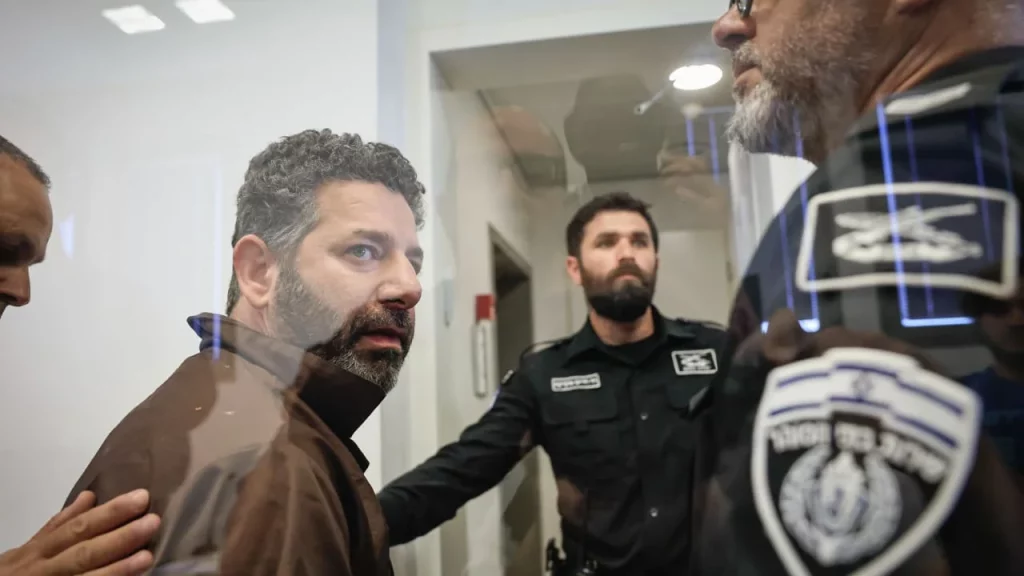
2026.5.6 Court rejects appeal by Gaza flotilla activists, keeps them in detention until Sunday
The hearing, scheduled for 2 p.m., will address an appeal filed by Adalah on behalf of Brazilian activist Thiago Ávila and Spanish national Saif Abu Keshek, whose detention was extended Tuesday.
The Beersheba District Court on Wednesday rejected an appeal filed by two foreign activists taken into Israeli custody after Israel intercepted a Gaza-bound flotilla last week, leaving in place a lower court decision extending their detention until Sunday.
Brazilian activist Thiago Ávila and Palestinian-Spanish-Swedish national Saif Abu Keshek were among the activists aboard the Global Sumud Flotilla, which set sail in an attempt to break Israel’s naval blockade of Gaza and allegedly deliver humanitarian aid.
Israeli forces intercepted the flotilla near Crete, hundreds of nautical miles from Israel. Most of the activists were later released in Greece, while Abu Keshek and Ávila were brought to Israel for questioning.
The Ashkelon Magistrate’s Court had extended their detention until Sunday morning. On Wednesday, Beersheba District Court Judge Tal Lahayani Shoham upheld that decision, ruling that there was no error in the lower court’s finding that reasonable suspicion existed.
They are suspected of aiding the enemy during wartime. In earlier hearings, police also cited suspicions of contact with a foreign agent, contact with terrorist elements, and additional terrorism-related offenses.
The judge also rejected, at this stage, the defense’s argument that the allegations did not meet the legal threshold for aiding the enemy during wartime. She said a recent ruling cited by the defense, which analyzed the elements of that offense, was not applicable to the case before her because of the substantive difference between the acts alleged in the two cases.
Lahayani Shoham said she had reviewed the investigation file and materials marked by the Magistrate’s Court in hearings held on Sunday and Tuesday. She ruled that the material supported the lower court’s decision and added that the material in the file appeared to raise further security-related offenses.
The judge also rejected, at this stage, the defense’s argument that the allegations did not meet the legal threshold for aiding the enemy during wartime. She said a recent ruling cited by the defense, which analyzed the elements of that offense, was not applicable to the case before her because of the substantive difference between the acts alleged in the two cases.
“In this case,” the judge wrote, the acts attributed to the two were “clearer” and could amount to the offense attributed to them.
The court further ruled that the nature of the suspected offense establishes grounds for detention and that, based on the investigative plan detailed in classified material, there were still investigative actions to be carried out, some of which required the continued detention of the two activists.
Adalah attorneys Hadeel Abu Salih and Lubna Tuma argued that Israel had no authority to arrest and investigate the activists because they were detained outside Israeli territorial waters, in international waters near Greece, aboard a foreign-flagged vessel.
The court rejected that argument, citing the Magistrate’s Court’s reasoning that some offenses may be adjudicated in Israel even when they are not committed inside Israeli territory. Lahayani Shoham also cited case law stating that when an Israeli court has substantive jurisdiction over a defendant, the legality of the trial or detention is not affected by the manner in which the defendant was brought into Israeli territory.
The defense also argued that the two were being discriminated against compared with other activists who were released after the flotilla was intercepted. The court rejected that claim as well, saying the investigation material and the state’s arguments indicated that there was specific evidence and reasonable suspicion against the two and not against those who had been released.
The judge added that this distinction now also applied to Ávila – who, according to the defense, had previously been released despite taking part in other flotillas – due to the amount of evidence collected against him and when it was gathered.
Adalah said after the ruling that it continued to view the detention as unlawful and unreasonable, and maintained that the activists had been engaged in a transparent humanitarian mission to Gaza. The organization also said the two had been on hunger strike for nearly a week, and that Abu Keshek had escalated his strike and was refusing water.
The court did not rule on the hunger strike claim in the written decision, but addressed complaints regarding the activists’ detention conditions. Regarding Abu Keshek, the court said initial equipment that had been brought for him should be transferred to him as soon as possible. Regarding Ávila, the court noted the claim that personal items had been taken from him and that he was suffering from cold in his cell, saying that basic conditions must be provided and that there was no place to cause him unnecessary suffering.
The court also ordered that a claim regarding socks that had been brought for Ávila but not transferred to him be checked, and that if correct, the equipment should be handed over. x1200

2026.5.4 ‘They see naked women’: Haredi leaders urge boycott of Tiberias mall over bikini ads
Proposed boycott over immodest photos has led to backlash from northern city’s deputy mayor, in latest instance of a mall being at the center of a Haredi-secular clash
Haredi leaders in Tiberias are calling for a boycott of the city’s mall over large ads that show women wearing immodest clothing such as bikinis, the latest such controversy to erupt in a city with a growing ultra-Orthodox population.
That demand has led to backlash from the northern city’s deputy mayor, and has sparked a threat from secular residents of the city to stop patronizing the mall, called Big Fashion Danilof, if it caves to the Haredi leaders’ demands.
In a video that has circulated online, Leah Kook, wife of one of the city’s most prominent spiritual leaders, Rabbi Dov Kook, called the ads an insult to the city’s majority religious population.
The ultra-Orthodox population in Tiberias has increased to about 25 percent of the city in recent years, raising tensions over its character and way of life, according to the Walla outlet.
“They enter the mall, they see naked women as big as screens,” she said in a pained voice. She claimed that after speaking to a manager at the mall, nine of 12 such ads were taken down, but three remained, including one belonging to the clothing chain Castro.
Photos of the Castro store published in Hebrew media show a floor-to-ceiling ad displaying a woman wearing a bikini.
Kook called on residents to boycott the store.
“My loves, we’re boycotting them,” she said. “Don’t go into the mall.”
Ultra-Orthodox parties are part of the municipal coalition led by Mayor Yossi Naba’a, who was elected in 2024 with their backing. A former mayor, Ron Cobi, who had run unsuccessfully to regain the position, had warned of the rising influence of the ultra-Orthodox over the city.
“Unless I’m elected, Tiberias will become the next Bnei Brak,” Cobi told The Times of Israel in 2023, referring to the heavily Haredi Tel Aviv suburb.
Following the call for a boycott, Deputy Mayor Aviv Yitzhak and another member of his party condemned the call and urged the public to continue visiting the mall.
“Especially these days, when business owners are struggling to survive after a prolonged period of war and we public officials are working to assist them, it is unacceptable to issue a statement that causes direct harm to the livelihoods of so many business owners and families,” their party said in a statement.
According to a Facebook page that carries local Tiberias news, secular residents of the city are threatening to boycott the mall if the ads are taken down.
This is not the first time Haredi and secular Israelis have clashed over a local mall. In the southern city of Arad earlier this year, a pair of Gur Hasidic businessmen bought the city’s mall, and there were claims that shop owners were pressured to take down pictures of women, and to have mannequins wear only modest clothing. The city government threatened to close down the mall over the new requirements.
Charlie Summers contributed to this story.
2026.5.4 IDF captures Palestinian man who murdered son, burned his body, infiltrated Israel
The man had taken his 12-year-old son to the Palestinian village of Beit Ur, near Ramallah, and stabbed him near an agricultural area of the town.
A Palestinian man suspected of murdering his 12-year-old son and burning his body was found in Israel after infiltrating the country, the IDF said on Sunday.
According to Palestinian sources that spoke with KAN News, the man had taken his son to the Palestinian village of Beit Ur, near Ramallah, West Bank, and stabbed him near an agricultural area of the town.
He then burned the body, fled the scene, and infiltrated Israel near the Hashmonaim checkpoint, evading the Palestinian Authority security forces in the process.
The PA then contacted the IDF after being unable to locate the man, with the military finding him inside Israel and near the checkpoint to leave the West Bank.
The IDF interrogated the suspect and then handed him to the PA.
“IDF forces operating last night at the Hashmonaim checkpoint in the Central Command detained a Palestinian suspect for questioning. Initial questioning at the checkpoint revealed that the suspect murdered his son in the Ramallah area and fled the scene,” the military statement read.
Seven members of Hariri organization indicted
Last week, the military and the Israel Police announced that they had arrested and indicted seven members of the Hariri crime organization for extortion, threats, and the planting of explosive devices.
The filing of indictments and prosecutors’ statements followed a series of raids conducted in Arab villages and the West Bank on April 12, during which 11 suspects were arrested. Multiple vehicles and a large amount of cash were also seized during the raids.
The investigation and raids were the product of collaboration between multiple bodies, including the Israel Police, Border Police, dog squad units, and the IDF.
2026.5.3 Court extends detention of 2 Gaza flotilla activists accused of Hamas links
Spanish national Saif Abu Keshek, Brazilian Thiago Avila accused of ‘assisting the enemy during wartime’ and membership in terror group; Spain calls for release of its citizen
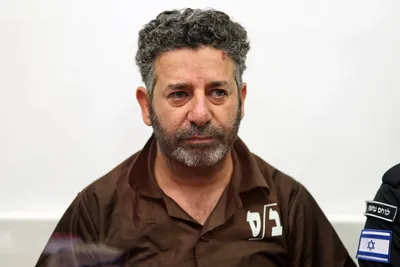
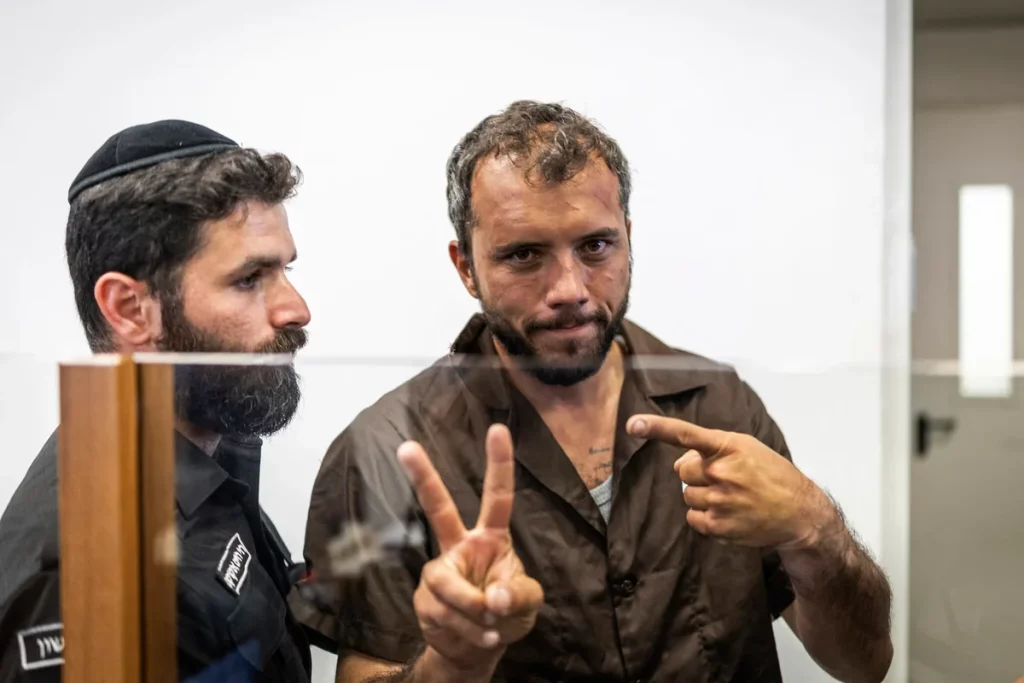

The Ashkelon Magistrate’s Court approved a two-day extension to the detention of two foreign activists from a Gaza-bound flotilla who were brought to Israel for questioning, a rights group representing them told AFP on Sunday.
The activists, Spanish national Saif Abu Keshek and Brazilian Thiago Avila, were among more than 170 detained by Israel last week when the flotilla was intercepted by the Israeli Navy in international waters. The remainder were all freed on Friday in Greece, while Abu Keshek and Avila were brought to Israel on suspicion of ties to a group the US says acts on behalf of the terror group Hamas.
“The court extended their detention by two days,” said Miriam Azem, international advocacy coordinator at the rights group Adalah, of Abu Keshek and Avila.
Israeli authorities had asked to extend their detention by four days, Azem said earlier.
Spain’s foreign ministry called for the “immediate release” of Spanish-Palestinian activist Abu Keshek.
“The government of Spain demands his immediate release,” the ministry said in a comment sent to AFP, adding that the Spanish consul in Tel Aviv accompanied Abu Keshek, who is being “illegally detained,” to the hearing.
In a separate statement, Adalah said the state attorney had presented a list of suspected offenses committed by the pair, including “assisting the enemy during wartime” and “membership in and providing services to a terrorist organization.”
Adalah challenged the state’s jurisdiction, arguing that the activists were seized in international waters.
The group’s lawyers told the court that Avila and Abu Keshek had testified to “severe physical abuse amounting to torture, including being beaten and held in isolation and blindfolded for days at sea.”
No formal charges were filed against the two, it said.
“Both activists are continuing their hunger strike in protest of their unlawful detention and ill-treatment,” the group added.
Adalah said Saturday that its lawyers had met the two detained activists at Shikma Prison in Ashkelon.
Avila told the lawyers he had been “subjected to extreme brutality” when the vessels were seized, and that he was “dragged face-down across the floor and beaten so severely that he passed out twice.”
Adalah said that since arriving in Israel, Avila said he had been “kept in isolation and blindfolded.”
Abu Keshek was also “hand-tied and blindfolded… and forced to lie face-down on the floor from the moment of his seizure” until reaching Israel, the group said.
Israel said that Keshek and Avila are affiliated with the Popular Conference for Palestinians Abroad (PCPA), which has been accused by the US Treasury of “clandestinely acting on behalf of” Hamas.
The Foreign Ministry said Abu Keshek was a leading PCPA member and that Avila was also linked to the organization and “suspected of illegal activity.”
They are both members of the Global Sumud Flotilla’s steering committee, which is behind the repeated attempts to break Israel’s naval blockade of Gaza.
Spain has rejected the Israeli accusation against Abu Keshek.
The latest attempt to reach Gaza comes less than a year after Israeli authorities foiled the previous effort by the group. Participants, including Swedish climate activist Greta Thunberg, detained on those flotillas were questioned in Israel before later being deported.
Israeli officials repeatedly denounced the flotillas as publicity stunts, saying they brought insignificant amounts of aid.
The Israeli Navy intercepted the latest flotilla, comprising 58 boats, overnight between Wednesday and Thursday off the coast of Crete, hundreds of nautical miles (over 1,000 kilometers) from Israel.
During past attempts to challenge the naval blockade, the Navy has intercepted the boats much closer to Gaza’s shores, which the flotilla had hoped to reach over the weekend.
Group is the latest to try, unsuccessfully, to revive animal sacrifice at the site of the ancient Jewish temples
Police said Sunday that they arrested 21 people suspected of trying to bring a sacrificial goat up to the Temple Mount in Jerusalem’s Old City on Friday.
It was the second time in as many months that a group was arrested for attempting to perform a traditional sacrifice at the historical site of Judaism’s two ancient holy temples. While the temples have not existed and Jews have not performed such sacrifices for nearly 2,000 years, small groups ascend the mount perennially to try to revive the ritual, without success.
The Temple Mount, revered by Muslims as the Noble Sanctuary, is Judaism’s holiest site and one of the holiest sites in Islam, and has long been a flashpoint for conflict. Public Jewish prayer (and animal sacrifice) is prohibited there. National Security Minister Itamar Ben Gvir, a frequent visitor to the site, has pushed to change the ban on prayer, prompting fury in the Muslim world and denials from Prime Minister Benjamin Netanyahu that the status quo has changed.
The group that took a goat to the mount on Friday was attempting to perform the sacrifice in honor of Pesach Sheni, or Second Passover. Before the destruction of the Second Temple in the year 70 CE, the day offered an opportunity for Jews who were unable to bring the Passover sacrifice to do so exactly one Hebrew month later.
Police said that on Friday, “a group of rioters that arrived at one of the entrances tried to break through the gate with the goal of bringing a baby goat onto the grounds of the mount, thereby disrupting public order.”
They were arrested before they could perform the ritual sacrifice. The detainees were brought to the Jerusalem Magistrate’s Court and police sought to keep them in custody, but a judge released them.
Police filed an appeal on Sunday, but the decision to free the suspects was upheld, according to the police statement.
Small groups have been trying to bring back sacrifice at the mount for years, connected to a fringe movement that seeks to build a Third Temple at the site where the Al-Aqsa Mosque and Dome of the Rock now stand. Ritual sacrifice and actively working to reconstruct the temple have not been part of mainstream Jewish practice for many centuries, and Jewish legal authorities are divided on whether it is permissible for Jews to even set foot on the mount.
“Bringing a sacrifice to the Temple Mount is contrary to the Chief Rabbinate of Israel’s ruling,” Rabbi Shmuel Rabinovitch, the chief rabbi of the Western Wall, said in a statement in 2022.
One month before Friday’s arrest, on the day when the Passover sacrifice would have been brought in ancient times, police arrested 14 Jewish men and boys for trying to smuggle sacrificial goats onto the Temple Mount in Jerusalem, according to the far-right legal aid group Honenu.
The group, called Returning to the Mount, has submitted a request annually to perform the Passover sacrifice, but has been denied by police. In 2024, 13 suspects, all between the ages of 13 and 21, were caught with goats in their possession that they intended to sacrifice for Passover, including one that was hidden inside a baby carriage and another inside a shopping bag, a police statement said at the time.
Similar incidents occurred in 2023 prior to Passover and sparked clashes with Muslim worshipers.
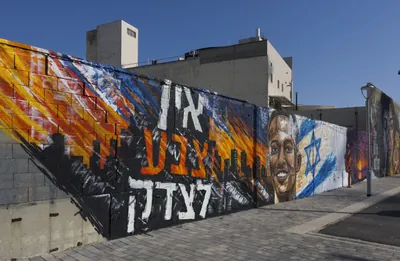
2026.5.2 Police arrest a total of 16 suspects related to the murder of Yemanu Binyamin Zalka
Two minors and an additional suspect were arrested for their ties to the case. The police claimed to have known their identities and the fact that they participated in the attack against Zalka.
Police detained three new suspects linked with the killing of Yemanu Binyamin Zalka, the pizzeria manager in Petah Tikva, killed on the eve of Independence Day, media reported on Saturday.
Two of the suspects were minors, and one of them turned himself in to the police after a manhunt in the Sharon area.
There are now 16 suspects tied to the case. The police said they knew their identities and were sure of their participation in Zalka’s murder.
The police also said that the hunt for additional suspects was still underway. “The Israel Police shares the family’s grief and will continue to act resolutely to establish the evidentiary infrastructure and bring all those involved to justice.”
The latest suspects will be taken for questioning, and later, the police are expected to bring them for a hearing on a request to extend their remand in accordance with the needs of the investigation.
What happened in Zalka’s murder?
Zalka was killed on the eve of Independence Day after asking a group of teenagers to stop causing a disturbance in the pizzeria where he was working.
According to witnesses, the group waited for him to leave work, attacked him, and one of the suspects eventually stabbed him. He was rushed to the hospital and was pronounced dead after doctors fought to save him.
“A lot of people loved him,” Zalka’s older brother told the press outside the pizzeria where he used to work. “A very good boy who never bothered his parents, us, or me, his older brother. Really, a really good boy.”
He added that “my brother didn’t cause trouble either at home or outside. You have no idea how much my brother knew how to come help at home, for his mother, in the most everyday ways, getting the little ones out to kindergarten, out to school.”
His brother said that he went to work on Independence Day “and didn’t come home.”
—
2026.5.3 Jerusalem Christians not surprised by attack on nun as abuse becomes routine
Priest says once-isolated incidents of ultra-Orthodox people spitting near them have become daily occurrences; 61 physical attacks recorded in 2025
Footage of an attack on a Catholic nun in Jerusalem shocked the world when it went viral last week, but for worshipers attending Sunday mass at Saint Stephen’s Basilica, it was just the latest example of mounting religious hostility.
The attack on Tuesday was captured by CCTV and shared widely, showing a Jewish extremist shoving the nun to the ground and leaving, before returning to resume his attack on her, at which point by-passers intervened.
As the congregation poured out of the Sunday service, the story was still on everyone’s lips, as many offered words and tokens of support for the French nun, who was not in attendance.
“She still has pains,” but she is “surrounded by support,” said the priest who led the service, Olivier Catel.
When Catel arrived in Jerusalem over a decade ago, such incidents were rare. Roughly once a year, he said, “when I went out in my habit, people — usually ultra-Orthodox Jews — would spit behind our back.”
“We never paid attention because they were isolated incidents,” he said. But for the past three or four years, it has become something of a daily occurrence.
Bruising on the face of a nun following an assault in Jerusalem, April 29, 2026. (Israel Police)
“When we go out, people spit next to us.”
The Rossing Center, a Jerusalem-based association for interreligious dialogue, has documented “growing harassment” of Christians in Israel and East Jerusalem, according to a study released in March.
Throughout 2025, it recorded 61 physical attacks, including spitting, the use of pepper spray, and blows. It also recorded 28 cases of verbal harassment and 52 cases of defacement of church property.
A British priest who preferred to remain anonymous confirmed that such incidents occurred daily.
He never went out without his black robes and was invariably met with spitting or shouts of “Go home!” in his direction.
‘He should be killed’
“Everyone said this would happen someday,” said Pierre, a 30-year-old parishioner, who was “not surprised” by the incident and in fact expected things to escalate to a possible death if there were no intervention.
The day of the attack on the nun, a priest he knew was in the supermarket when a man stopped before him.
“He told his son, in Hebrew, ‘He should be killed,’” said Pierre. “If nothing is done… someone will take that step.”
The attack occurred a few steps away from the Old City of Jerusalem, the flashpoint of tensions in the Israeli-Palestinian conflict, at the foot of the Church of the Dormition.
A young Israeli who said he witnessed the incident from a distance described the attacker as “a madman.”
Israeli media had described the assailant as a far-right activist with a history of mental illness.
“It’s very shocking,” said Uriel Levisohn, a 28-year-old rabbi, who expressed disbelief at how commonplace such incidents have become.
“With God’s help, this will be the last time something like this happens here.”
But worshipers leaving the mass were less hopeful, saying they were waiting for a firm response from the Israeli authorities.
They pointed to increasingly “supremacist” rhetoric in the country, including among senior officials.
They recalled recent incidents in southern Lebanon, where Israel is fighting the Hezbollah terror group, and where an Israeli soldier was filmed destroying a statue of Jesus.
Catel nonetheless said he refused to “live in fear.”
“I continue to go to the Old City in my robes,” he said, adding that while he avoided certain neighborhoods, “overall, I haven’t changed my habits.”

RAMALLAH, West Bank (AP) — Israeli police said Friday that they arrested a 36-year-old caught on video attacking a nun in the latest incident targeting Christians near Jerusalem’s Old City.
Police said the unnamed man was arrested after the attack Wednesday near David’s Tomb — a holy site outside Zion’s Gate on the southern side of the Old City — “on suspicion of a racially motivated attack,” and remained in custody.
Police video showed the nun bruised and the attacker wearing tzitzit, a fringed undergarment worn by some observant Jewish men.
Olivier Poquillon, the director of the French School of Biblical and Archaeological Research, said the nun was a researcher at the school. He called the attack an “act of sectarian violence” in a post on X.
The Old City in Israel-annexed east Jerusalem is a centuries-old walled enclave built atop millennia of history and home to some of the holiest sites for Jews, Christians and Muslims. It is a flash point for tensions as access and ownership to the sites are deeply entangled with the historic and political claims that lie at the heart of the Israeli-Palestinian conflict.
Religious groups have documented a rise in acts of harassment and violence against Christian pilgrims and clergy as well as Palestinian Christian residents, including assaults and spitting, often by ultra-Orthodox Jewish yeshiva students.
Wadie Abunassar, the coordinator of the Holy Land Christian Forum, called attacks targeting Christians a growing phenomenon. He attributed the quick response to the attack on the nun to the fact that it was caught on video.
He said he felt “great anger on the system and great sadness because I feel that this will not end anytime soon.” One of the problems, he said, was the deterrence against such violence.
“Many times in such cases there are no arrests and if there are arrests, sometimes after one or two days, (suspects) are released,” he added. “In some cases, the police do not recommend the prosecution to file charges or to indict them. And in some cases, when there is indictment, the indictment is mild.”
The arrest comes as Israeli treatment of religious minorities is under scrutiny, weeks after police limited access for holiday worship to Muslims as well as Christians, up to Latin Patriarch Cardinal Pierbattista Pizzaballa.
Israel also drew international criticism after a soldier photographed himself having bludgeoned a fallen statue of Jesus on the cross with an ax in southern Lebanon. Israeli leaders later disavowed the incident and said he would be reprimanded.
“In a city sacred to Jews, Christians, and Muslims alike, we remain committed to protecting all communities and ensuring those responsible for violence are held accountable,” Israeli police said in a social media post about the man arrested for attacking the nun.
—
2026.4.29 Petah Tikva teacher sentenced to 11 years in prison for sex offenses against student
Sharon, who was an English teacher at a middle school, committed the offenses over a period of about two years, when the student was between the ages of 12 and 14, according to the prosecution.
The Central District Court in Lod sentenced Petah Tikva teacher Orel Sharon to 11 years in prison after he admitted and was convicted of committing serious sex offenses against one of his students.
Sharon, who was an English teacher at a middle school, committed the offenses over approximately two years, when the student was between 12 and 14, according to the prosecution.
The sentence was handed down as part of an agreement in the case. In addition to the prison term, the court imposed a suspended sentence and ordered Sharon to pay the complainant NIS 90,000 in compensation.
Sharon was indicted in September in the Central District Court, after first being named as a suspect in the case in August, following his arrest and repeated extensions of his detention. He was 32 at the time of the indictment.
At the time, the prosecution said the case involved a student at the Petah Tikva middle school where Sharon taught English, and that the alleged conduct continued for about two years. The girl, whose identity is barred from publication because she is a minor, was 16 by the time the indictment was filed.
The relationship ended in March 2024
The investigation began after the girl filed a complaint against Sharon. Police had said at the time that the relationship ended in March 2024, shortly before she turned 15.
Prosecutor Meital Ilan of the Central District Attorney’s Office said Sharon had exploited his position and role as a teacher to harm the student in a place that was supposed to be safe and protected.
“Sharon exploited his status and role as a teacher in order to sexually harm his student, specifically in a space that is supposed to be safe and protected,” Ilan said.
“This was a severe and prolonged harm, and a breach of the trust of the complainant and her family, as well as of every parent in the country,” she added.
The prosecution said it would continue to act decisively to bring offenders to justice and stand by victims of crime.
2026.4.20 Beersheba woman killed, eight-year-old severely injured in domestic stabbing attack
Beersheba police responded to the incident, arrested the woman’s husband for the murder, and began an investigation into the circumstances surrounding the attack.
A 40-year-old woman died, and her eight-year-old son was severely injured in Beersheba after being stabbed in the early morning hours of Monday, according to emergency services.
Upon being called to the victim’s home shortly before 4 a.m., Magen David Adom first responders discovered the woman unconscious with severe wounds and attempted life-saving measures, but she was declared dead at the scene.
Her son was also found injured at the home and was transferred to Soroka Medical Center in serious condition for treatment.
Victim’s husband arrested for stabbing attack
Beersheba police responded to the incident, arresting the woman’s husband for the murder, and began an investigation into the circumstances surrounding the attack.
According to police, it is still unknown whether the suspect has an arrest history or if the victim filed any previous domestic violence complaints.
2026.3.13 Israel’s top military lawyer has dropped charges against five reservist soldiers accused of assaulting a Palestinian detainee at the Sde Teiman military prison.
The charges of aggravated abuse and serious assault stemmed from an investigation into the incident in July 2024, which took a dramatic turn after the leak of a video a month later, which appeared to show the Gazan detainee being attacked as some two dozen other detainees lay face-down nearby.
According to a February 2025 indictment, the five soldiers beat the man, dragging him across the floor, stepping on his body, breaking his ribs and puncturing a lung. One of the charges also describes the detainee suffering an internal rectal tear after being stabbed in the buttocks. All five of the soldiers denied any wrongdoing.
Explaining why the charges were being dropped, the army’s top lawyer – known as the Military Advocate General (MAG) – said the security camera footage captured on the leaked video did not “clearly and irrefutably show acts of severe violence at the level required for a criminal conviction.”
The MAG also cited multiple “exceptional circumstances” in the case including misconduct by senior officials working in the Military Advocate General’s Office at the time of the investigation, as well as the fact that the detainee had been released to Gaza as part of the October 2025 ceasefire agreement, and was therefore in no position to be cross-examined in any trial.
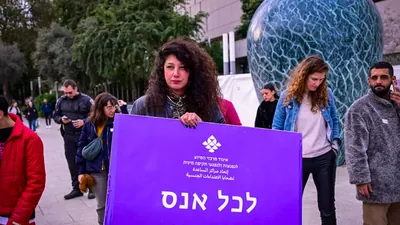
Justice Alex Stein says there is ‘first-order public interest’ in disclosure, holds publication pending further review of claimed suicide risk.
The Supreme Court on Thursday temporarily barred publication of the name of the suspect accused of raping singer and creator Shay-Li Atari, holding off on disclosure pending further arguments over whether a psychiatric opinion is required regarding claims that publication could trigger a suicidal act.
The decision came at the end of a hearing on the suspect’s appeal against a lower court ruling that had allowed his name to be published. Supreme Court Justice Alex Stein said there was a “first-order public interest” in publication of the suspect’s identity, but held that the court must still examine whether publication could pose a suicide risk before allowing that publication to go forward.
The suspect’s attorney argued that publication at this stage, before any indictment has been filed, would cause irreversible harm. He warned that in the digital era, public exposure would amount to a permanent destruction of his client’s life, while the suspect himself told the court that friends had distanced themselves from him and that he had lost his job, saying publication would “collapse his world.”
Atari, who was present at the hearing, sharply criticized that line of argument. Outside the courtroom, she said she wanted to believe justice would be done and rejected the idea that a suspect could avoid exposure simply by raising claims about his mental state at the moment his name was about to be published. She said that she herself bears scars from five suicide attempts and questioned how the system could now give decisive weight to the suspect’s current distress.
The case stems from a complaint Atari filed in 2022 over an alleged rape and fraud offense tied to an incident she says took place in April 2011 in the parking area beneath the Tel Aviv apartment where she then lived. She told the Knesset Committee on the Status of Women and Gender Equality earlier this year that she had been violently raped on the asphalt and was later found unconscious outside her apartment door by her roommate.
The complaint was initially closed by the prosecution, but the case was later reopened. The latest hearing followed appeals by Atari and the Association of Rape Crisis Centers in Israel (ARCCI) against an earlier magistrate’s court decision not to allow publication of the suspect’s identity. A separate lower-court ruling last week had permitted publication, prompting the suspect’s appeal to the Supreme Court.
Concealing suspect’s identity may harm other victims, Atari argues
Atari has publicly argued that concealing the suspect’s name does not only affect her own case, but may also prevent other alleged victims from realizing they are speaking about the same man. After the earlier ruling in favor of publication, she said that when a suspect’s name is hidden, other women who may have been harmed cannot “connect the pieces” and understand that it is the same person.
The affair has drawn wide public attention not only because of Atari’s standing as an artist, but also because of her public profile since the October 7 attack, in which her husband, filmmaker Yahav Winner, was killed in Kibbutz Kfar Aza while she and their infant daughter survived. The legal battle surrounding the rape complaint has accompanied her for years, and she has increasingly spoken publicly about both the alleged assault and what she describes as systemic failures in the way sexual-offense complaints are handled.
The immediate result of Thursday’s hearing is procedural but significant: the Supreme Court did not reverse the idea that the suspect’s identity may ultimately be made public, and indeed signaled that the public interest in doing so is substantial. But it stopped short of allowing publication immediately, leaving the gag order in place until it decides whether further psychiatric material or legal argument is required.
2026.3.12 Man seriously wounded in Ramat Gan stabbing; police suspect terror motive
Cops arrest alleged assailant, a 20-year-old Arab Israeli, shortly after attack; victim, Shas-linked head of Ramat Gan’s religious council, receives visit from Deri in hospital
The head of Ramat Gan’s religious council was stabbed and seriously wounded Thursday afternoon, in an attack police were investigating as a likely terror attack.
The suspected perpetrator, a 20-year-old from the central Arab town of Jatt, was arrested by officers shortly after the incident and transferred for interrogation, police said.
The victim, 47-year-old Gedalyahu Ben Shimon, was in very serious condition after sustaining several stab wounds. Paramedics rushed him to Tel Aviv’s Ichilov Medical Center, where he underwent emergency surgery, after which he was in stable condition.
The rabbi had no previous acquaintance with his attacker, according to Tel Aviv District police chief Haim Sargaroff, who spoke to the press at the scene.
Security camera footage of the stabbing showed a man dressed in a black sweatshirt and pants as he unsheathed a knife and proceeded to lunge at his unsuspecting victim’s back.
The attacker stabbed the man several times before he collapsed to the ground, still conscious. After the knife appeared to fall from the younger man’s grip, he resorted to beating his victim.
The attacker fled the scene once the battered man managed to kick the knife further from his reach and another man on a motorcycle approached.
Sargaroff said officers tracked down and arrested the suspect soon after the incident, some 300 meters (yards) from the crime scene.
“The knife wasn’t in his possession, but during searches we found both his clothing items that he threw as well as the knife that he used,” said Sargaroff.
The investigation into the stabbing is being conducted jointly by the Shin Bet and police’s investigations and intelligence division. “There’s a lot more work to be done, but the suspect is with us,” the district chief continued.
An eyewitness who had been taking shelter from Iranian missiles in a nearby mall told Haaretz that the suspect fled into the building after the attack. “The moment we exited [the protected space], we heard shouts and a massive amount of police and security forces,” Omri told the outlet.
“The attacker ran and entered the mall, and caused a commotion. He screamed and cursed and everyone chased after him in the mall,” he added.
Later that day, Shas chairman MK Aryeh Deri came to the hospital to visit Ben Shimon, who has ties to the Sephardic ultra-Orthodox party. The longtime politician offered his support to the injured man and his family.
“I am deeply shocked by the criminal assault that was carried out by a wicked person against the head of Ramat Gan’s religious council, attorney Gedalyahu Ben Shimon, who was injured and is currently in serious condition,” Deri said.
At around the same time of the attack, the IDF said troops shot dead two Palestinians who attempted to carry out a car-ramming and shooting attack against Israeli forces near the Tapuah Junction in the West Bank.
“The troops responded with fire and neutralized the terrorists,” the army said, adding that no soldiers were hurt.
According to an initial military investigation, the two gunmen first opened fire at an army post before fleeing in their vehicle toward the junction where they tried to ram into soldiers. Both assailants were shot dead, first responders said.
2026.3.11 תושב שטחים נאשם ב-14 פריצות לרכבים וגניבה
שוטרי תחנת קריית גת לכדו את החשוד סמוך לאשקלון לאחר פעילות יזומה. בחיפוש בביתו נמצא רכוש רב שהושב לבעליו, וכעת מוגש נגדו כתב אישום חמור ובקשה למעצר עד תום ההליכים
במסגרת פעילות מבצעית יזומה שנערכה לפני כשבועיים, עצרו שוטרי תחנת קריית גת נאשם, תושב השטחים השוהה בישראל שלא כחוק, סמוך לאשקלון. המעצר התבצע לאחר שהחשוד היה דרוש לחקירה בחשד למעורבות בשורה ארוכה של עבירות רכוש ברחבי הארץ. במהלך המעצר נתפס ברשותו שלט רישוי מותאם, ובהמשך נערך חיפוש בביתו שבו אותר ונתפס רכוש רב שעל פי החשד נגנב במסגרת האירועים המיוחסים לו. לאחר פעולות זיהוי ואימות, הושב הרכוש לבעליו החוקיים.
מחקירת המשטרה עלה כי הנאשם מעורב ב-14 מקרי התפרצות לכלי רכב וגניבת רכוש שאירעו במוקדים שונים בארץ, ובהם הערים יפו, קריית גת, קריית מלאכי ואילת. החקירה הממוקדת והמורכבת נוהלה בתחנת קריית גת ובמהלכה נאספו ראיות הקושרות את הנאשם למעשים בכל אותן זירות.
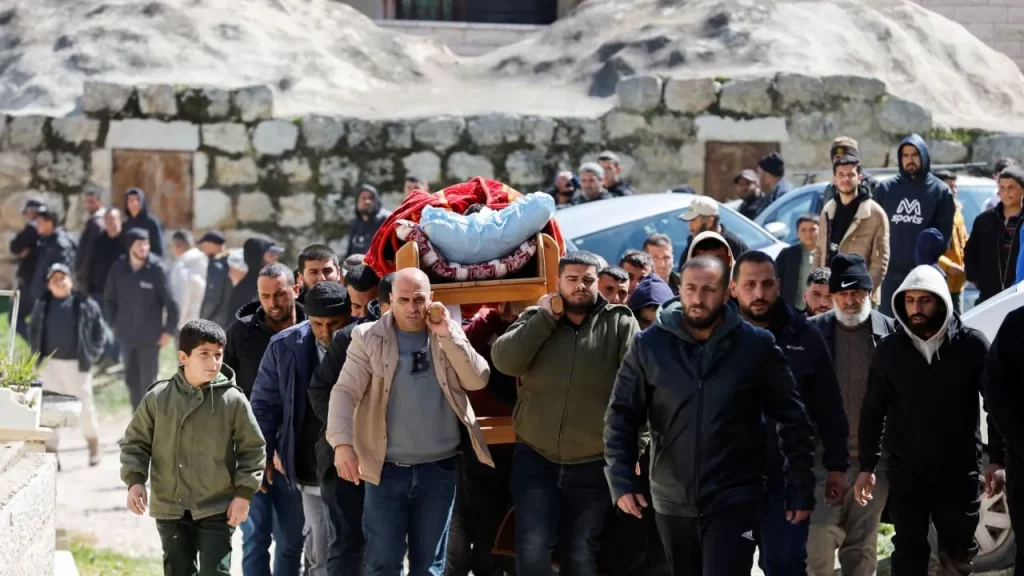
Two of the Palestinians killed by the Israeli civilians were reportedly shot, while a third died of suffocation due to inhalation of tear gas.
The IDF said it launched an investigation on Sunday morning after receiving reports of three Palestinians who were killed in an overnight attack by Israeli settlers on the village of Khirbet Abu Falah, north of Ramallah, in the West Bank.
Two of the Palestinians killed by the Israeli civilians were reportedly shot, while a third died of suffocation.
Palestinian Authority-controlled media WAFA identified the slain Palestinians as Thaer Farouq Hamayel, 24, and Farea Jawdat Hamayel, 57. WAFA claimed the third killed individual, 55-year-old Mohammad Hassan Murra died after inhaling tear gas fired by Israeli forces in the area. Five others were wounded by gunfire, WAFA reported.
According to the IDF spokesperson, security forces were dispatched to the village after receiving reports of Palestinians being attacked near homes in the area.
On arrival, the IDF used crowd dispersal measures to end the altercation. A criminal investigation was opened shortly afterwards, the Israeli military added.
IDF commander denounces violent West Bank incident
“This is an unacceptable incident,” IDF’s Central Command Commander Maj.-Gen. Avi Bluth stated.
“There will be zero tolerance for civilians who take the law into their own hands. These actions are dangerous, they do not represent the Jewish people or the State of Israel, and they divert us from our mission of defending the population and thwarting terrorism, while also undermining security and stability in the area.
“We are working together with all security agencies to quickly reach those responsible and bring them to justice,” Bluth added, concluding with, “Especially at a time when the IDF is striking our bitter enemies, Iran and Hezbollah, with a firm hand – we cannot allow reckless internal violence to undermine the rule of law and the security of the region.”
x1200

2026.2.9 Haredi protesters block highway, clash with police after suspected draft dodgers arrested
Lapid slams stipends given to draft evaders, calls for government funding for ultra-Orthodox to be withheld; lawmakers advance bill banning use of ‘skunk’ spray at protests
Dozens of ultra-Orthodox anti-draft demonstrators clashed with police and blocked the Route 4 highway near the Haredi city of Bnei Brak on Monday to protest the arrest of two suspected draft evaders the previous night.
Footage from the protest declared illegal by police showed a crowd of young men sitting in front of cars on the highway as a police officer yelled at them through a megaphone, demanding they clear the road.
Haredi street protests over military conscription have increased in frequency, during a national debate over whether and how to draft ultra-Orthodox men.
Monday saw lawmakers vote to advance a Haredi-backed bill banning the use of a putrid spray often employed to disperse such protests. And Opposition Leader Yair Lapid decried an effort to financially support those jailed for draft evasion.
After a 2024 High Court decision struck down sweeping exemptions from conscription for Haredi men, the military began sending those men draft notices and, more recently, arresting some who did not obey the notices. Military police attempting to arrest draft evaders have at times encountered street demonstrations.
2026.2.1 Hadera woman fires handgun at husband after catching him mid-sex act with coworker
On Saturday night, police brought the suspect to the Haifa Magistrate’s Court, where the woman’s defense attorney said she, a mother of two, discovered her husband mid-sex act with a coworker.
A Hadera Magistrate’s Court judge on Sunday extended the detention of a 40-year-old local resident suspected of taking her husband’s handgun and firing a single round toward him after having found him engaged in intercourse with a coworker the previous day, according to court proceedings and police.
No one was injured in the incident, which occurred beneath the couple’s building while the husband was on shift as a security guard. The woman expressed remorse in court and said she did not intend to kill her husband.
Police initially listed suspicions of attempted murder, theft of a weapon, discharging a firearm, and making threats.
However, Judge Ehud Kaplan said that based on the investigative file before him, he found no indication of an attempted murder or of theft of the weapon, and that the case likely concerns unlawful use of a firearm. The court ordered a 24-hour extension after police requested five days.
The alleged shooting occurred in the parking area under the couple’s home in Givat Olga. During Sunday’s remand hearing, the suspect told the court she wanted to return home to her son, who has special needs, and insisted she had no intention to harm her husband.
Woman returned home to find husband having sex with coworker
On Saturday night, police brought the suspect to the Haifa Magistrate’s Court, where Defense Attorney Nes Ben Natan said the woman, a mother of two, discovered her husband mid-sex act with a coworker during his security shift.
He argued that she grabbed the pistol in anger and fired at the floor to express her outrage. “This is what she says, and this is what her husband says,” the attorney told the court, noting she volunteered to take a polygraph and gave an uncontradicted statement.
Police representative Sgt. First Class Naif Kaabiya asked the court to extend the suspect’s detention by five days, while the defense sought her release, or alternatively, release under restrictive terms.
Judge Ilana Hadar partially granted the request, ordering a one-day extension. The woman was brought back to the Hadera Magistrate’s Court on Sunday as police continued to seek an additional five days.
“It was one shot,” Attorney Ben Natan argued in court. “If she wanted to hit him, she could have hit him. She did not want to harm him.”
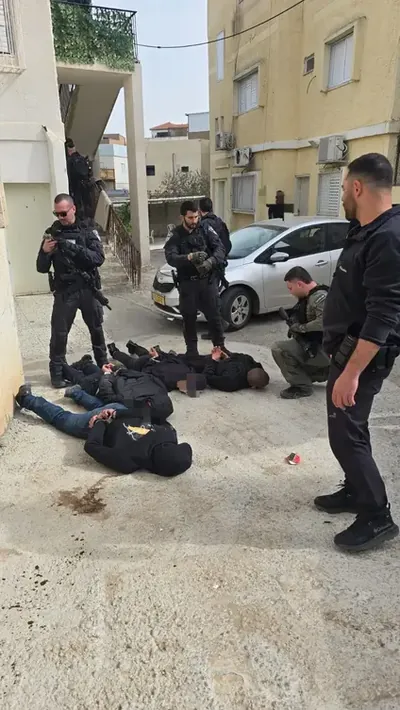
לפני זמן קצר, פתחה משטרת ישראל בחקירת אירוע ירי ברהט בעקבותיו נפצע באורח בינוני תושב העיר, כבן 40.
כוחות גדולים של תחנת משטרת רהט בפיקוד מפקד התחנה, סנ״צ יונה יצחק, הוזעקו לזירה ופתחו בחקירת נסיבות האירוע.
במסגרת הערכת מצב שביצע, הנחה מפקד התחנה את הכוחות בשטח על פעולות נחושות ומהירות לאיתור המעורבים באירוע.
תוך זמן קצר, הצליחו השוטרים להתחקות אחר זהות המעורבים ועצרו 7 תושבי רהט בחשד למעורבותם באירוע.
מחקירה ראשונית עולה כי מדובר בסכסוך משפחות בפזורה הבדואית.
2026.1.29 Jerusalem man indicted for premeditated murder, abduction of cousin’s husband
According to the indictment, Mizrahi planned the killing in advance, tracked the victim for days across Jerusalem and beyond, and prepared in advance to conceal his actions and destroy evidence.
The prosecution on Thursday filed an indictment against 26-year-old Avinoam Mizrahi from moshav Shafir, on the charge of premeditated murder of Moshe Tzabari, whom he is accused of abducting, stabbing, and pushing alive into a deep, abandoned water cistern, causing his death.
According to the indictment, Mizrahi planned the killing in advance, tracked the victim for days across Jerusalem and beyond, and prepared in advance to conceal his actions and destroy evidence.
The victim, Tzabari, was married to Mizrahi’s cousin. At the time of the events, the couple were separated and embroiled in an ongoing dispute, of which Mizrahi was aware, according to the indictment.
Prosecutors allege that on the night of December 7, Mizrahi followed Tzabari from Bat Yam to Jerusalem and later lay in wait near Tzabari’s home in the neighborhood of Pisgat Ze’ev. After disabling his phone and disguising his appearance, Mizrahi allegedly entered Tzabari’s vehicle, concealed identifying features of the car, and forced him to drive out of the city.
The two traveled to a remote area south of Route 35, near the Zoharim youth village, where Mizrahi is accused of stabbing Tzabari in the thigh and cutting both his arms before pushing him alive into a dry water cistern approximately 25 meters deep. The indictment states that Tzabari suffered severe blunt-force trauma and massive blood loss and died as a result of the combined injuries.
After the killing, Mizrahi allegedly drove the victim’s car to Malachim Forest, where he set it on fire in an effort to erase evidence and hinder efforts to locate the victim. He then returned home on foot, a distance of roughly 18 kilometers, prosecutors said.
Charges include murder, arson, kidnapping, destruction of evidence
The indictment charges Mizrahi with murder with aggravating circumstances, kidnapping for the purpose of murder, arson, illegal possession of a knife, destruction of evidence, and violation of privacy, citing prolonged surveillance of the victim prior to the killing.
Alongside the indictment, the prosecution requested that Mizrahi be remanded in custody until the end of proceedings, citing the extreme severity of the alleged acts, the danger he poses to the public, and a concrete risk of flight and obstruction of justice.
The prosecution noted, in its detention request, that Mizrahi was found in possession of a one-way airline ticket to Paris dated December 30, which prosecutors say indicates an intention to flee the country if released. Mizrahi has been in custody since December 28.
Attorney Idan Gamlieli, who represents Mizrahi on behalf of the Public Defender’s Office, said, “We are at the very early stages of the legal proceedings. Naturally, we have not yet received the investigative materials. After we receive and study them, we will present Avinoam’s arguments.”
Attorney Ravit Zilberfarb, who represents the victim’s family on behalf of the Justice Ministry’s Legal Aid Department, said the family was “stunned and shaken by the brutal murder, carried out by the cousin of the victim’s estranged wife, without any apparent motive,” and said they trust law enforcement authorities “to fully pursue justice and uncover the truth.” She added that the family is focused on mourning and has asked to refrain from interpretations regarding the circumstances of the killing, which “are not yet fully understood even by the family.”
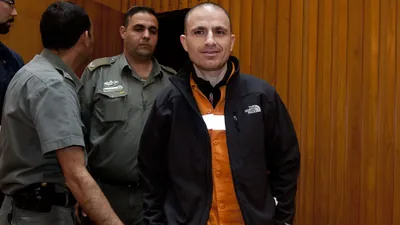
משפטו של ראש ארגון הפשע אסי אבוטבול, המואשם בשלושה תיקי רצח, מתקרב לישורת האחרונה. עד הגנה שהעיד מטעם אבוטבול טען כי ראה את משה הדס יחד עם אבוטבול יום לפני היעלמותו – גרסה הסותרת את עדותו של עד המדינה ועשויה לערער את האישום ברצח: “אני לא מחפה על אף אחד, אני רק אומר את האמת”
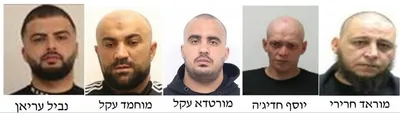
הם אמרו שיהרגו אותו, שירצחו את משפחתו, ירו 75 כדורים על בית הוריו, סחטו אותו במאות אלפי שקלים, החליטו שהוא הופך ל”עבד” שלהם – ואז הוא התהפך עליהם והחליט לפתוח הכל. הצצה נדירה למלחמה שמתנהלת בין הפשע המאורגן בארץ למערכת החוק. הכתבה המלאה מחכה בגיליון סוף השבוע של ידיעות אחרונות
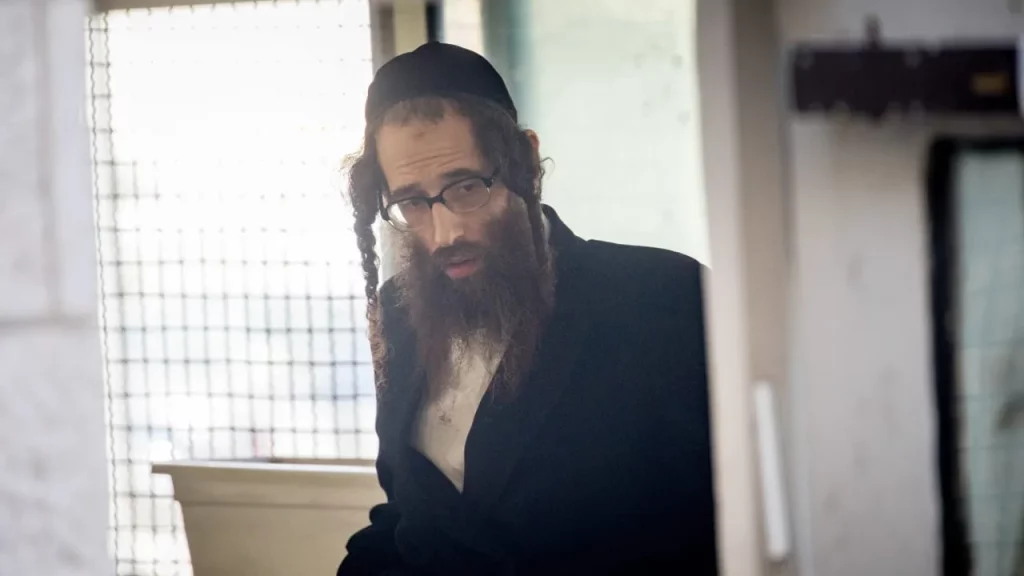
2026.1.9 Jerusalem court sends senior Lev Tahor cult leader Elazar Rumpler to prison in child abuse case
Elazar Rumpler, a Lev Tahor haredi cult leader, was sentenced to two years in prison and ordered to pay a total of NIS 22,000 in fines and compensation for assaulting a 10-year-old child.
Content warning: This story contains descriptions of child abuse, violence, and assault.
The Jerusalem District Court sentenced Elazar Rumpler, a senior figure within extremist haredi (ultra-Orthodox) cult Lev Tahor, to two years in prison and fines, following a conviction for a serious act of violence against a 10-year-old child in front of other Lev Tahor cult members, the State Attorney’s Office confirmed on Thursday.
Rumpler consented to a plea agreement with the court, the State Attorney’s Office clarified. As part of the agreement, he was sentenced to two years in prison, minus time served as part of his detention, a conditional prison sentence, a fine of NIS 10,000, and ordered to pay the victim compensation worth NIS 12,000.
Rumpler, according to the court’s findings, was involved in an incident where the child was stripped, placed on a table, and beaten on his back and buttocks, in front of peers.
Rumpler was, therefore, convicted of aggravated assault causing actual bodily harm. He was also convicted of leaving Israel in violation of a travel ban.
Israel requests Rumpler’s arrest in El Salvador after breaching travel ban
Rumpler was arrested in El Salvador last January, following an Israeli request to arrest and extradite him to face justice in the Israeli system.
The Jerusalem District Prosecutor’s Office attorney stressed the extreme severity of harming a helpless child, particularly when it was carried out within a closed community, and exploiting the power dynamics shown within the cult.
Lev Tahor cult leaders have history of ties to cases of child abuse
This is not the first scandal tying Lev Tahor cult leaders with instances of child abuse.
The cult fled Quebec in November 2013, after provincial authorities closed in on cases of child abuse and neglect across the community. Almost the entire community drove by bus overnight to Ontario, where Quebecois authorities could not enforce the findings of their investigation.
However, in March 2014, the Ontario Superior Court of Justice effectuated a ruling of the Superior Court of Quebec, causing some senior cult leaders to attempt to flee to Guatemala, via Trinidad and Tobago.
In December 2024, Guatemalan authorities raided a cult compound in the central American country, rescuing 160 children and adolescents.
In May, Guatemalan authorities located the remains of a one-year-old baby within the compound, KAN News reported at the time.
Such instances led the Knesset Immigration, Absorption, and Diaspora Affairs Committee in June to discuss the possibility that Jerusalem should involve itself in rescuing children from the cult.
In 2018, the cult was heavily denounced, even by other anti-Zionist haredi sects, for attempting to seek asylum in Iran and pledging loyalty to Iranian Supreme Leader Ayatollah Ali Khamenei.
x1200

2026.1.7 Israel Police raid cannabis dens in Tel Aviv apartment, find drug bags in Haifa vehicle
Israel Police raided an apartment in Tel Aviv’s Kfar Shalem, seizing 42.5 kilograms of suspected cannabis, while separate operations in Haifa led to additional arrests and drug seizures.
Israel Police officers from Tel Aviv, including Special Patrol Unit personnel, seized 42.5 kilograms of material, suspected to be cannabis, in a Tel Aviv apartment, arresting two suspected drug dealers, the police confirmed.
The police officers raided an apartment in Kfar Shalem in the south of the city.
The officers, acting upon a search warrant, found a storage room inside the apartment, which contained “many sacks” filled with the substance, as well as 2,110 shekels in cash, and other evidence of drug trafficking activity, police clarified.
The two suspects are registered as residing at the apartment: a man aged 52 and a woman aged 41. They were transferred for further investigation following their arrest.
Police find cannabis in Haifa vehicle
Police officers in Haifa’s Halisa neighborhood stopped a vehicle for an inspection and, during a search, found dozens of bags containing a substance, police confirmed on Wednesday.
The bags, weighing hundreds of grams, were seized after officers suspected the material to be cannabis.
The officers arrested the suspect, who they believe intended to distribute the narcotics.
Israel Police officers also raided a business in Haifa, finding two illegal residents at a business in Sirkin Street, the police confirmed on Wednesday.
The police arrested both of the illegal residents, as well as the business owner suspected of employing them.
2026.1.4 Terrorist sentenced to life in prison for murder of 83-year-old Holocaust survivor
The court also ordered him to pay the maximum compensation permitted by law – NIS 258,000 – to Lipovsky’s family.
The Tel Aviv District Court on Sunday sentenced Ibrahim Shalhoub, 29, from the West Bank city of Tulkarm, to life imprisonment for the murder of Ludmila Lipovsky, an 83-year-old woman who was stabbed to death i in Herzliya in December 2024.
Shalhoub pleaded guilty and was convicted of murder under aggravated circumstances as an act of terrorism, as well as unlawful possession of a knife. The court also ordered him to pay the maximum compensation permitted by law – NIS 258,000 – to Lipovsky’s family.
According to the indictment and court findings, the attack took place on December 27, 2024, near a commercial area adjacent to an assisted-living complex in Herzliya.
Shalhoub armed himself with a knife and attacked Lipovsky at close range, stabbing her approximately 11 times. She later died of her wounds. Shalhoub was shot by security personnel and apprehended at the scene.
Shalhoub had been living in Israel after being relocated from the West Bank following the exposure of his past cooperation with Israeli security authorities. The court noted that he was living in Israel lawfully when he carried out the attack.
‘Exceptionally brutal’ act of terror against defenseless woman
In its sentencing decision, the court described the killing as an exceptionally brutal act of terror carried out against a defenseless elderly woman. Senior Judge Yaron Levy wrote that the offense gravely violated protected social values and was intended to terrorize the civilian population.
The ruling emphasized that the attack was committed during wartime, when Israel’s home front was under sustained threat. The court cited the broader social harm caused by such attacks, noting that beyond the murder itself, the act conveyed a message that no civilian or public space is safe.
During sentencing arguments, the prosecution sought a life sentence, stressing the severity of the attack and its timing. Prosecutor Hadas Forer Gafni told the court that the murder was carried out at a moment of heightened national anxiety, when Israel was facing attacks on multiple fronts.
“The horrifying murder was committed during a war, when fears are at their peak, and the state is under attack from every direction,” the prosecution said. “A terror attack of this kind in the heart of Herzliya is all the more severe.”
The court rejected defense arguments for leniency, finding no mitigating circumstances that could reduce Shalhoub’s culpability. In addition to the life sentence, the judges stressed the importance of deterrence and of imposing the harshest punishment available under Israeli law in cases of terror murder.
The sentence was handed down on Sunday, bringing the criminal proceedings to a close just over a year after the stabbing, which shocked residents of Herzliya and renewed public focus on lone-actor attacks carried out by individuals legally present inside Israel.
发表回复