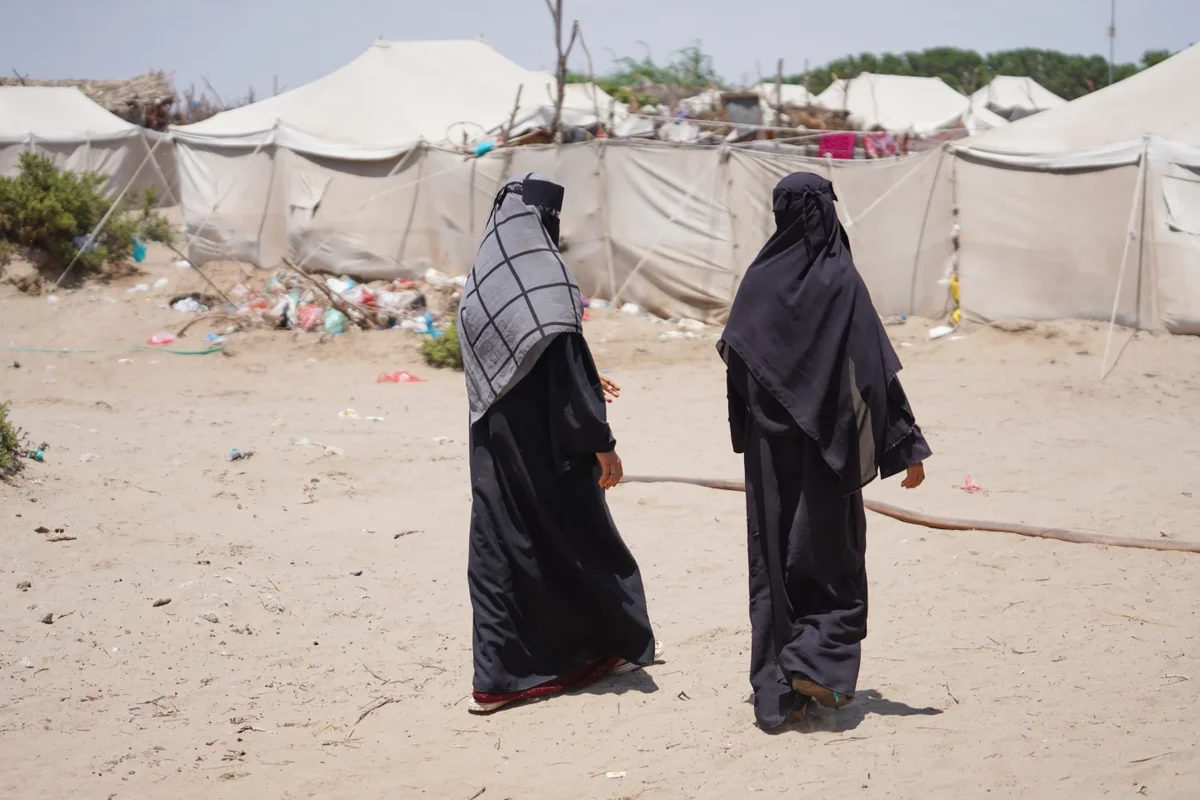
2026.9.13 Iran-backed Houthis in Yemen claim new attacks on Saudi Arabia
CAIRO (AP) — Iran-backed Houthis in Yemen overnight claimed new attacks on neighboring Saudi Arabia, as the Saudi-backed Yemeni government described the rebels’ swift advance along the Red Sea coast as a “painful” development in a new front in the Iran war.
The Houthis’ capture of a key port city and an island on the Bab el-Mandeb Strait, a crucial shipping alternative to the Strait of Hormuz, in recent days has alarmed markets and Yemeni civilians who fear a return to devastating civil war.
The Houthis claimed more attacks with missiles and drones on Saudi Arabia, which supports Yemen’s internationally recognized government.
A Houthi military spokesperson, Brig. Gen. Yahya Saree, claimed in a statement that they targeted a military base in Sharurah province in Saudi Arabia’s Najran region. He didn’t provide evidence or say when the attack occurred.
The Saudi civil defense overnight said a projectile fell in al-Tawwal governorate near the border with Yemen along the Red Sea, injuring two people and damaging a mosque and several other buildings. The statement blamed the Houthis. It also said sirens went off in Sharurah province but didn’t report casualties or damage.
There was no Saudi statement Sunday on any new attacks targeting the Houthis, who have been hitting Saudi oil infrastructure and shipping as part of a recently declared blockade.
While the rebels have said there is no threat to other commercial shipping, markets remain wary and oil prices have risen again.
2026.9.12 Blogger sentenced to death in Iran on security-related charges
Marziyeh “Sevda” Ebrahimi Shamsabadi, a 33-year-old blogger from Bandar Abbas who has been detained since March, has been sentenced to death, according to information obtained by Iran International.
Branch 3 of the Bandar Abbas Revolutionary Court convicted her on charges including insulting Iran’s supreme leader, media and propaganda activity against national security, intelligence and security activity on behalf of hostile governments, and taking and sending photographs to Persian-language media abroad, according to the information.
The court also sentenced her to between two and five years in prison, barred her from some government services and ordered the confiscation of property. Her lawyer was notified of the death sentence on August 23.
Ebrahimi Shamsabadi was held in solitary confinement for 20 days and faced severe pressure during interrogation, according to information obtained by Iran International. Her family was not told where she was being held or about her condition during that period.
The sentence was issued by Judge Khajeh-Hassani, who was previously praised by judiciary officials as an exemplary judge for, among other things, issuing a high number of rulings and what they described as diligence in his work.
More political and protest-related death sentences
The case comes amid a series of death sentences against protesters and political detainees in Iran.
Earlier this month, US-based rights outlet HRANA reported that Ali Zarei Doozdarresi, a protester who lost sight in one eye after being shot during the 2022 Woman, Life, Freedom protests, had been sentenced to death after returning to Iran from Germany.
Iran International also reported in August that Leila Abolhassani, a 43-year-old mother of two detained during the January protests in Shahin Shahr, had been sentenced to death on charges of “waging war against God.” Her case was sent to the Supreme Court following an appeal.
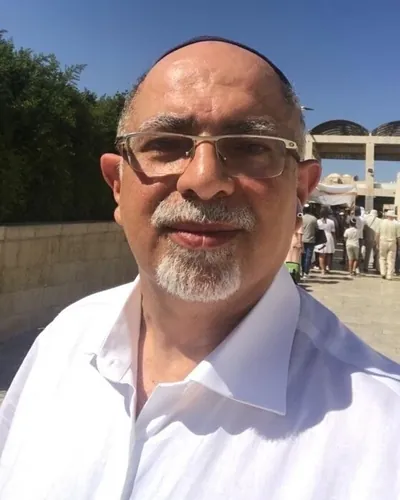
NEW YORK (AP) — An Iranian American jeweler from New York has been released from prison in Iran, but he is prohibited from leaving the country, according to his family and federal officials.
Kamran Hekmati was let out of Tehran’s notorious Evin prison on Sept. 5 after completing about half of a two-year sentence, his family recently wrote on a website advocating for his release.
The family said they are also “desperately afraid for his health and well-being” as he requires regular medical checkups to ensure his bladder cancer doesn’t relapse.
“The Iranian regime couldn’t care less,” the family wrote of Hekmati’s medical challenges. “Much like other wrongful detention cases in Iran, Kamran appears to be caught up in Iran’s traditional approach of detaining Americans to obtain political concessions from the US.”
Representatives for the family and the federal government didn’t say where Hekmati, who turned 62 in August, is currently staying in Iran.
But Shohreh Nowfar, Hekmati’s cousin in California, said Friday that the family is “excited” and hopeful that his passport can be returned soon so he can leave the country, which has been at war with the U.S. and Israel for more than six months now.
“We continue to hope this is a signal from the Iranian side as to their willingness to send Kamran home,” added Kieran Ramsey, chief investigative officer at Global Reach, a U.S. nonprofit working on Hekmati’s case.
The Iranian American, who is also Jewish, owns a jewelry business in Manhattan’s Diamond District and has lived with his family for years in Great Neck Estates, on suburban Long Island.
He was arrested by Iranian authorities last July after having his passport seized while trying to fly out of the airport in Tehran that May.
Hekmati’s family says he was charged under an Iranian law that bans Iranian citizens from visiting Israel within the last 10 years. But they maintain his last trip to Israel was 13 years ago — prior to the passage of the law — for his son’s bar mitzvah.
“Mr. Hekmati did nothing wrong,” said U.S. Rep. Thomas Suozzi, a Long Island Democrat who advocated for the State Department to officially designate Hekmati as wrongfully detained earlier this year. “We cannot rest until he is reunited with his family.”
The State Department similarly called on Iran to lift its so-called exit ban so Hekmati can return to the U.S. It also said the country should “immediately release” Iranian American journalist Reza Valizadeh and other Americans “unjustly detained in Iran.”
Valizadeh and Hekmati are the two Americans so far officially designated as wrongfully detained in Iran, while up to eight others who have not been publicly named are prohibited from leaving the country, according to Ramsey.
Valizadeh’s lawyer, Ryan Fayhee, declined to comment Friday, citing the risks his client could face behind bars.
But in recent months, the journalist has sent voice messages describing conditions inside Evin prison, a high-security facility that holds many of the Islamic Republic’s political prisoners.
In an August recording, Valizadeh, who has been imprisoned since 2024, said prison officials have not allowed his family to visit for the past five months. He also said medical care is “almost non-existent,” save for the most basic medications.
“Diseases that were eradicated decades ago have returned inside the prison, including pulmonary and gastrointestinal tuberculosis,” he said in the voice message, which was shared by CBS.
Valizadeh also said that prior to his release, Hekmati had been granted a medical furlough for cancer treatment but was ordered back to prison after about a month, rather than being allowed to begin chemotherapy.
Valizadeh is among at least nine reporters currently jailed in Iran, according to the Committee to Protect Journalists.
He was arrested after returning to Iran to visit his elderly parents and charged with collaborating with the U.S. government.
Valizadeh obtained U.S. citizenship in 2022 while working in Washington, D.C., for Radio Farda, the Persian-language arm of Radio Free Europe, which receives U.S. government funding.
2026.9.9 18 Iranian prisoners face possible death sentences over prison unrest
Eighteen prisoners held at Dastgerd prison in the central Iranian city of Isfahan could face death sentences over unrest and a fire at the facility, according to a judicial document obtained by Iran International.
The case has been sent to a Revolutionary Court, with some of the defendants accused of “leading the unrest” or “inciting war and killing,” charges that can carry severe penalties under Iranian law.
The document lists 75 prisoners as defendants in the case, while prosecutors in Isfahan have ordered at least 26 of them to stand trial.
The case was opened after unrest and a fire at Isfahan Central Prison, also known as Dastgerd, following an air strike near the prison in March. A military base and ammunition depot behind the prison were hit, while parts of the prison grounds and accommodation areas were also damaged.
Information accompanying the document said some prisoners were killed during the incident, and others died in the fire.
Human rights groups, citing witnesses and relatives of prisoners, have said the unrest began after missiles struck a military site behind the prison and projectiles also hit parts of the prison complex. Guards and prison officials left some posts after the explosions, and inmates came out of their wards fearing the facility could collapse, according to those accounts.
The groups said some prisoners then set fire to blankets, sheets and other materials in an effort to force authorities to open doors and allow them into safer areas. Smoke spread through enclosed corridors as the fires grew.
Human rights groups have also said security forces later entered the prison and used live ammunition, pellet rounds and tear gas against inmates. According to witness accounts cited by the groups, some prisoners were shot, while others died from burns or smoke inhalation during the unrest.
Serious charges brought
Prosecutors have brought charges including “inciting people to war and killing each other with the aim of disrupting national security,” deliberate arson, destruction of public facilities and taking part in an illegal prison gathering that led to a riot during wartime, according to the document.
Other accusations include destroying surveillance cameras, windows and security doors, taking part in or assisting with property damage and setting fire to the prison infirmary.
Iran International identified 17 prisoners facing such accusations. The documents indicate that 18 prisoners could face death sentences.
Five prisoners executed in separate case
The referral to the Revolutionary Court comes after five protesters held at Dastgerd were executed over the past two months in a separate case known as the “Alikhani Square” case.
Five other people sentenced in that case are at risk of imminent execution.
The latest case comes amid a rise in executions and heavy prison sentences in Iran in recent weeks as tensions with the United States have intensified.
Concerns over prison conditions
Concerns over Dastgerd have also grown over treatment of inmates and health conditions.
Political prisoner Abdolrasoul Mortazavi said in an audio message from the prison in June that some people detained during the January protests had been tortured. He also reported beatings, harsh interrogations, restrictions on contact with families and limits on outdoor exercise.
Iran International has also received reports of worsening health conditions and a meningitis outbreak at the prison in recent weeks.
A source familiar with the situation told Iran International in August that several prisoners had died from infectious diseases. Information obtained by Iran International also indicated that meningitis had spread to most prison wards and that some inmates had been taken to Al-Zahra hospital in Isfahan.
2026.8.16 Iran says Qatar is holding 3 of its pilots
Qatar’s armed forces captured and were holding three pilots who went missing in March when their jets were downed, the Missing Persons Committee of Iran’s Armed Forces General Staff said. Qatar, however, denied it.
Until now, Tehran had said it had no information about their fate. This is the first known case in the war where Iran has said a regional country is holding its fighters. Qatar on March 2 said its air force shot down two Iranian bombers as Tehran lashed out against countries hosting U.S. military bases in the opening days of the war.
Saturday’s statement alleged that Qatar had not allowed the pilots to meet or communicate with families or Iranian officials handling their cases. Iran asked the International Committee of the Red Cross president for help. The letter said a fourth pilot was killed while on the mission “targeting an enemy military base in Qatar,” state media reported.
A spokesperson with Qatar’s foreign ministry, Majed Al Ansari, later denied the claims and indicated on X that the pilots had been shot down and that Qatar’s search and rescue teams found the remains of one. He said Iran was invited in April to visit and be briefed on those efforts, with no response.
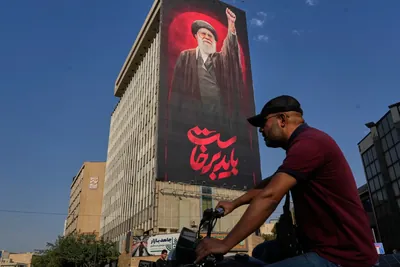
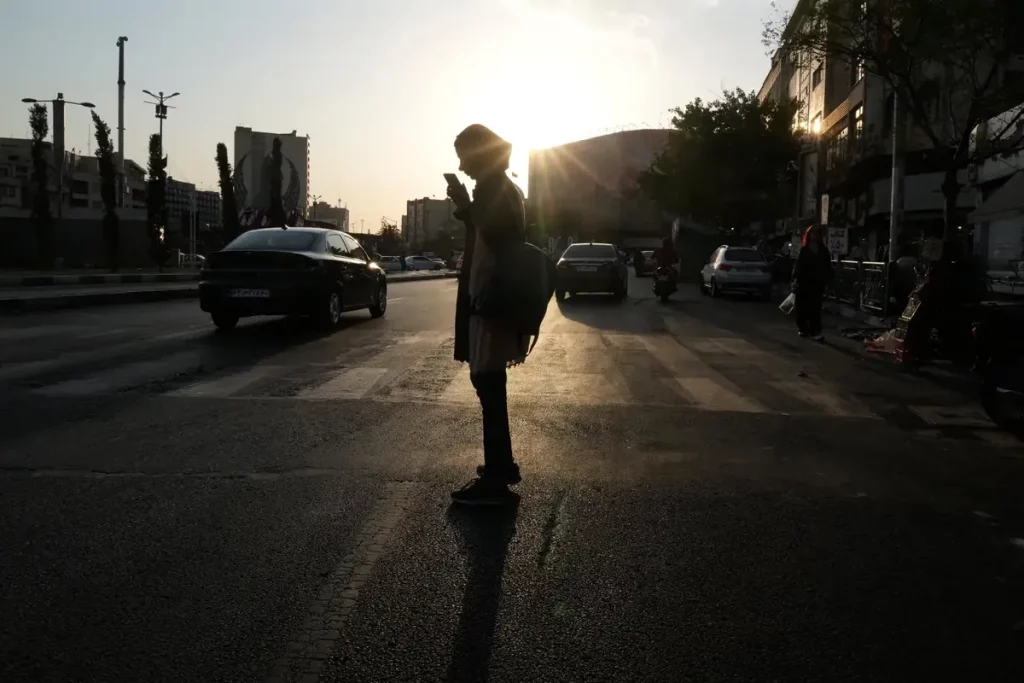
2026.8.13 Iran seals dozens of businesses in renewed hijab crackdown
Iranian authorities have sealed at least 42 cafés, restaurants, shops, sports clubs and other businesses across the country in the past three weeks, over compulsory hijab rules and what officials describe as violations of Islamic norms.
The figure is based on individual closure cases reported separately by state media and rights groups.
The closures were reported in at least 17 cities, including Tehran, Mashhad, Yazd, Kerman, Ardabil and Birjand, and affected cafés and restaurants, women’s gyms, shops and a cultural center.
In just three weeks, the number of closures has already reached about 22% of the 191 cases HRANA documented over the entire previous Iranian calendar year.
Cafés, shops and gyms targeted
Among the latest cases, an optician in Qaen was sealed on Wednesday after authorities said customers and employees had failed to comply with compulsory hijab rules.
The Yin Yang café in Khomein was sealed over what authorities described as “improper hijab” and Instagram content, while a women’s clothing store called Shabnam Maison in Kerman was also shut.
A café-restaurant in Tehran’s Velenjak district was sealed a day earlier. Authorities in Ardabil also closed three coffee shops and arrested 16 people in connection with the businesses.
Hossein Salari, Ardabil’s deputy prosecutor, said inspections of cafés would increase and authorities would act against shops selling clothing that he described as contrary to Islamic law or harmful to “public chastity.”
Three cafés in Mashhad, Bojnourd and Birjand were sealed on August 10. Authorities also shut the Zhovan café in Minudasht on August 9 and the Arghavan café-bookstore in Mashhad on August 5.
The enforcement has extended beyond cafés. Two sports clubs in Borujerd were sealed by judicial order on August 4, while authorities shut a Shahr-e Ketab bookstore in Babol the same day.
Four women’s sports clubs were also sealed in Yazd, while authorities in Abadeh shut five businesses and arrested a café operator.
In Dezful, the local prosecutor announced the closure of 15 cafés and hookah lounges on July 23.
Enforcement rises sharply in Mashhad
Authorities have used terms including failure to observe compulsory hijab, “violations of norms,” failure to observe “Islamic standards,” and promotion of indecency to explain the closures.
Some businesses have also faced other accusations. Authorities in Ardabil cited alleged gambling and promotion of corruption among the reasons for closing three cafés.
One café in Mashhad was cited for issues including failing to list matcha on its price list and selling cakes and desserts without required health certification. Police described the alleged violations at four women’s gyms in Yazd only as “disciplinary offenses.”
Official figures from Mashhad point to a sharp rise in closures.
Mohsen Sayadi, the city’s head of trade inspection and supervision, said authorities sealed 104 businesses during the first four months of the current Iranian year, which began on March 21, compared with five during the same period a year earlier – an increase of about twentyfold.
Pressure extends to social media
The enforcement has also extended online.
HRANA said that between July 11 and August 1, authorities sealed at least 23 businesses, blocked or seized at least 72 social media pages and accounts, and required the operators of 21 pages to publish statements pledging compliance.
Those affected included bloggers, content creators, athletes, artists, fashion and beauty workers, online businesses, travel agencies and cafés.
HRANA also reported that authorities had identified and removed 56 Instagram pages in Qazvin and deleted 3,258 pieces of content from social media pages belonging to 32 businesses in Rasht.
Businesses face wider pressure
The closures come as businesses are also struggling with falling purchasing power and broader economic pressure.
Iranian authorities have previously sealed businesses that joined strikes, supported anti-government protests or did not enforce compulsory hijab, including during the 2022 Woman, Life, Freedom protests and demonstrations earlier this year.
Many Iranian women have increasingly appeared in public without the mandatory headscarf since 2022, while authorities have continued to use business closures and action against social media accounts to enforce compulsory hijab rules.
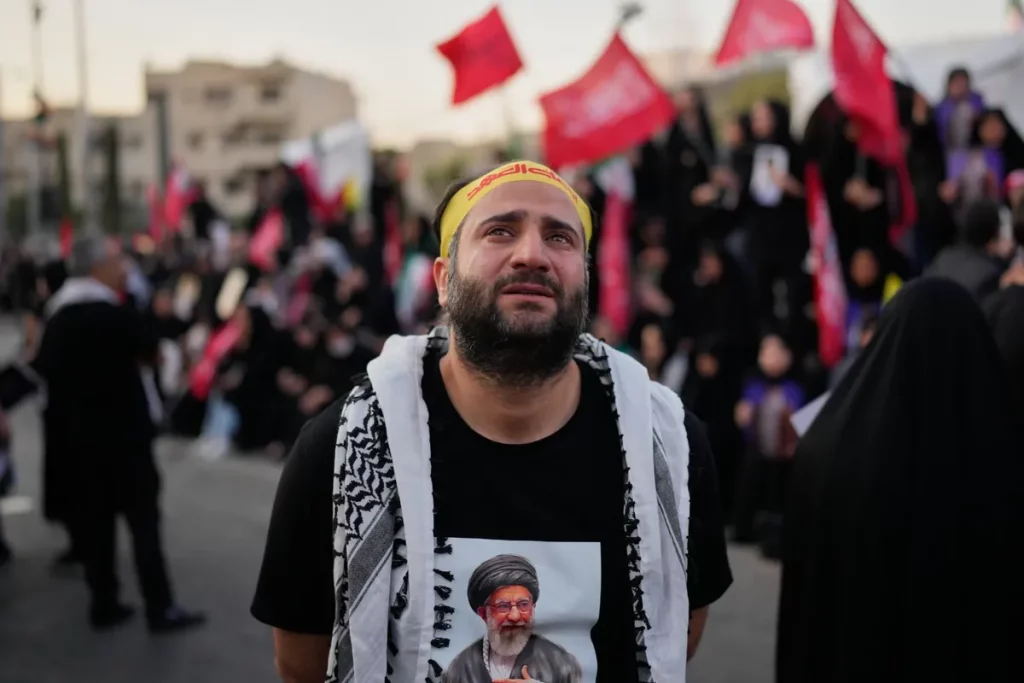
TEHRAN, Iran (AP) — Mourners dressed in black flooded into Iran’s capital Monday for a procession as part of the funeral of the late Supreme Leader Ayatollah Ali Khamenei, with throngs of people calling for the death of U.S. President Donald Trump.
Khamenei’s flag-draped coffin, and those of members of his family killed Feb. 28 in an airstrike at the start of the war launched by Israel and the United States, sat on board a truck decorated to resemble the ornamental grating that surrounds the shrine of an imam. The massive turnout, encouraged by Iran’s theocracy as a sign of strength, came as it negotiates with the U.S. over a permanent end to the war.
Helicopter images aired on Iranian state television showed a massive crowd stretching from Tehran’s Azadi, or Freedom, Square for kilometers (miles) down a multilane street of the same name. The crowd appeared to be larger than the one that turned out for the 2020 procession for the late Revolutionary Guard Gen. Qassem Soleimani, which drew over 1 million people.
Authorities offered no immediate crowd count as the truck crept down the street. But people alongside the truck and elsewhere on the route carried placards, signs and banners calling for Trump’s death.
“Today that we are here for the funeral for our leader, it’s a very tough day,” mourner Fatima Hassan said. “We are not here to say goodbye to him, we are here for revenge. And we will take revenge.”
Sea of mourners greets Khamenei
Mourners reached out to touch the truck, and some threw scarves and other items for attendants to brush against the coffin, a common practice in Iran seen as a blessing. Attendants, some on the ladders of fire trucks, sprayed misted water across the crowds to cool them in the heat.
Authorities appeared concerned about the dangers of having a large crowd alongside the procession, with officials on loudspeakers urging the public to walk slowly, not to push and to stay to the edges of the street.
The coffins will be taken through the streets of Tehran on a 12-hour journey to Mehrabad International Airport, said Revolutionary Guard Gen. Hasan Hasanzadeh, who is overseeing the procession.
Authorities have shut down streets, airspace and daily life for the mourning, which began Saturday and will end Thursday as Khamenei is buried at the Imam Reza shrine in Mashhad, his birthplace. Khamenei was 86.
“This is the last time I am seeing him,” said a weeping Maryam Alizadeh. “Our generation lived with him for decades.”x1200
2026.7.3 Five more protesters sentenced to death in central Iran
Five protesters arrested in central Iran in connection with the January uprising have been sentenced to death on charges of “enmity against God,” sources familiar with their cases told Iran International.
The prisoners arrested in the city of Mahallat have been identified as Erfan Khalili, Ali-Akbar Mahlooji, Hesam Issaei, Hossein Shokouhi and Abolghasem Kazem-Aslani.
They are being held in Arak prison and have only 10 days to appeal the verdicts.
Their verdict was announced on the same day that fellow political prisoner Arghavan Fallahi was sentenced to death on a charge of “baghi,” or armed rebellion, the US-based HRANA news agency reported.
The 24-year-old, held in Evin Prison, was sentenced by Judge Abolghasem Salavati of Branch 15 of Tehran’s Revolutionary Court, HRANA said.
The charge was based on allegations of membership in anti-government groups and involvement in armed activities. Human rights activists say she is accused of links to the exiled opposition group Mojahedin-e-Khalq (MEK).
Salavati also sentenced political prisoner Mehdi Nazer and his fiancée, Mahnaz Chardouli, to death and also 10 years in prison. The couple were arrested in Tehran on January 11, 2026.
The charges include attacking a mosque with Molotov cocktails, taking part in illegal gatherings, “assembly and collusion,” and alleged offenses under Iran’s espionage law, including cooperation with Israel.
The sentences come as rights groups have warned against the Islamic Republic’s growing use of capital punishment following nationwide unrest and the US-Israel war against Iran.
Iran Human Rights, based in Norway, and Together Against the Death Penalty, based in Paris, said in a joint annual report released in April that the Islamic Republic executed at least 1,639 people in 2025, the highest annual figure recorded in Iran since 1989.
The groups said the number marked a 68% increase from 975 executions in 2024 and included 48 women.
2026.7.3 Romanian men get combined 20 years over Iran International journalist attack
A London court on Friday sentenced Romanian nationals George Stana and Nandito Badea to a combined 20 years in prison for stabbing Iran International journalist Pouria Zeraati outside his Wimbledon home in March 2024.
Stana and Badea, who received 12 years and eight years in prison, respectively, were found guilty last month of wounding Zeraati with intent in the 2024 attack.
The Judge agreed with the prosecution’s case and assessment that this was a state-sponsored attack, concluding that the evidence overwhelmingly supported the conclusion that the attack was carried out in the interests of and on behalf of the Iranian state, according to a police statement.
“The judge ruled that the ‘foreign power condition’ under section 31 of the National Security Act was met in the case of Stana due to the extensive planning and his lengthy involvement in the plot, indicating that he knew, or at very least ought to have known of the connection to the Iranian state,” the statement said.
“The condition was not deemed to have been met in the case of Badea, who was not aware of the connection to Iran as the motivation behind the attack.”
UK Security Minister Angela Eagle said the “abhorrent” attack on Zeraati was “carried out on behalf of Iran before both men cowardly fled the country.”
“These sentences send a clear message: anyone acting on behalf of a foreign state to commit crimes in the UK will be identified, pursued and punished,” she said.
Eagle added that Britain takes the threat from Iran “extremely seriously” and vowed that the UK would “continue to hold the regime to account.”
Chief Superintendent Kris Wright, head of Protective Security Operations for Counter Terrorism Policing London, told Iran International after the sentencing that police and prosecutors had always treated the attack as one “coordinated and orchestrated on behalf of, or by, the Iranian regime.”
Chief Superintendent Kris Wright of Counter Terrorism Policing London says the sentencing in the Pouria Zeraati case sends a message to regimes around the world that Britain will use “every available means” to expose and punish foreign state-backed attacks on journalists and… pic.twitter.com/0PB7tuFiYq
The case has drawn renewed attention to threats facing Persian-language journalists and dissidents in Britain, particularly after UK authorities previously said they had disrupted around 20 Iran-related plots or hostile activities since 2022.
Wright said Counter Terrorism Policing had worked extensively with Persian-language media organizations in London and across the UK for several years, adding that police recognized the position they were in and would continue helping them “enjoy the freedoms available in the UK” and continue their work.
Asked whether the attack reflected a broader pattern, Wright said police were seeing “an increasing number of hostile activities, criminal activities, and planning activities” directed or coordinated by foreign states.
He said authorities were also seeing a growing use of “criminals-for-hire,” or proxies, including UK-based criminals and individuals who enter the country on behalf of foreign regimes to carry out attacks.
Wright said one suspect in the Zeraati case remains outside UK custody and is still subject to legal proceedings in Romania. He said the Metropolitan Police were working closely with international partners and remained “fully committed” to bringing everyone involved to justice.
“This is a hugely important verdict today, and it sends a message to regimes around the world that Britain values and thrives on democracy,” Wright said.
“Those who seek to undermine the values we hold dear will not be allowed to thrive here in the UK,” he added, saying police would use every available means within the justice system to hold those responsible to account and expose the overseas agencies, bodies and regimes behind such activity.
2026.7.3 Iran sentences political prisoner and fiancée to death on Israel-linked charges
A Tehran Revolutionary Court judge has sentenced political prisoner Mehdi Nazer and his fiancée, Mahnaz Chardouli, to death and also 10 years in prison, according to information received by Iran International.
Judge Abolghasem Salavati, head of Branch 15 of Tehran’s Revolutionary Court, also sentenced Nazer’s sister, Atefeh Nazer, to 10 years in prison.
The three political prisoners were arrested in Tehran on January 11, 2026.
The charges include attacking a mosque with Molotov cocktails, taking part in illegal gatherings, “assembly and collusion,” and alleged offenses under Iran’s espionage law, including cooperation with Israel.
Information shared with Iran International indicates that the charges of attending protests and attacking a mosque were brought despite there being no published reports of any protest or mosque attack on the date of their arrest.
A source familiar with their case said Salavati sentenced each of the three to 10 years in prison on the charge of “assembly and collusion,” even though the legal punishment for that charge is two to five years in prison.
The families of the prisoners have been under heavy pressure from security agencies not to publicize the case, according to the information received.
During the legal proceedings, the three were represented by a court-appointed lawyer, Younes Karimi.
A source familiar with the case said Karimi had received money from the families but effectively followed Salavati’s demands during the proceedings.
2026.6.30 Two Revolutionary Guards members killed by gunmen in western Iran
DUBAI, June 30 (Reuters) – Two members of Iran’s Revolutionary Guards were killed and two wounded in what the Guards described as a “terrorist” shooting in the western province of Kermanshah on Monday evening, state media reported on Tuesday.
The attackers opened fire outside the Guards members’ home and authorities were investigating in an effort to identify those responsible, state media reported.
The Norway-based Kurdish rights group Hengaw said a newly formed armed group calling itself “Xori Hiwa” (Sun of Hope) had claimed responsibility for the operation.
It said the attack had targeted Revolutionary Guards personnel whom it accused of involvement in the suppression of protests in Kurdish areas during the “Women, Life, Freedom” movement.
The movement erupted in 2022 after the death of Kurdish Iranian Mahsa Amini while in the custody of the morality police following her arrest over alleged violations of Iran’s public dress code, leading to nationwide protests.
Reporting by Dubai Newsroom; Editing by Tom Hogue and Timothy Heritage
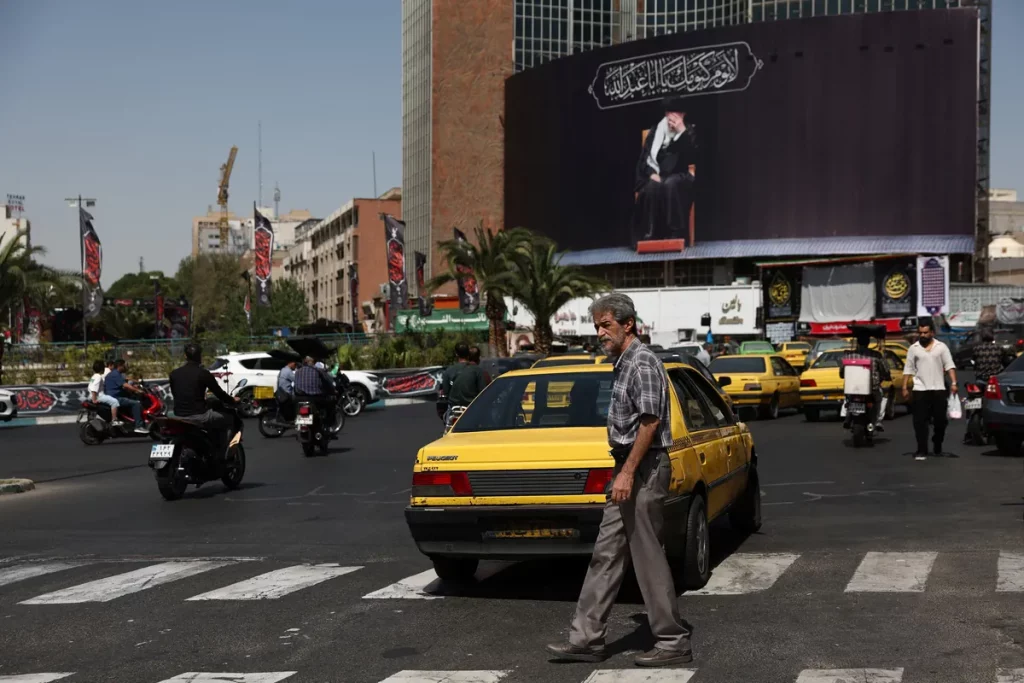
2026.6.30 Uncertainty over Qatar diplomacy clouds prospects for US-Iran deal
DOHA, June 30 (Reuters) – Top U.S. envoys who have arrived in Doha will not hold a high-level meeting with Iran, a Qatari official said on Tuesday, casting doubt on the progress of efforts to bring a lasting halt to the Iran war and fully reopen the Strait of Hormuz.
Instead, there will be technical talks this week on issues including regional security that could later be elevated to senior level, Qatar’s Foreign Ministry spokesperson Majed Al Ansari told a media briefing.
The arrival of U.S. President Donald Trump’s son-in-law Jared Kushner and envoy Steve Witkoff in Doha on Tuesday followed exchanges of fire over the weekend that tested the June 17 interim accord between the United States and Iran.
The 14-point pact allowed 60 days for the two sides to negotiate a permanent truce in the conflict that began with U.S. and Israeli strikes on Iran on February 28 and to resolve thorny issues including the future of Iran’s nuclear programme.
The conflict disrupted global trade in oil and other goods, exposed Gulf states to Iranian drone and missile fire and killed thousands of people, the vast majority of them in Iran and Lebanon.
UNCERTAINTY OVER DIPLOMATIC TRACK
Iranian Foreign Ministry spokesperson Esmaeil Baghaei said dialogue with mediator Qatar on the implementation of the interim deal, including on the release of frozen Iranian assets, was likely to take place in Doha on Wednesday.
“No meeting at any level with the American side has been scheduled for the coming days,” he said.
The White House had said on Monday that Kushner and Witkoff would hold “high-level meetings”, with technical discussions to continue on the sidelines.
The exact timing of the technical talks was not immediately clear.
“We have a track on the nuclear side, you have a track on the economic and state performance issue, you have a track on security and the regional security,” said Ansari.
Despite the uncertainty over diplomatic moves, oil prices have fallen on the de-escalation since the weekend and are set for their biggest quarterly loss since the COVID-19 pandemic in 2020.
IRAN TRIES TO EXERT CONTROL OVER STRAIT
After the war began four months ago, maritime traffic through the strait, which previously carried about a fifth of the global trade in oil and liquefied natural gas, came to a virtual standstill.
Iran has since sought to exert control over the strait alongside Oman, which lies across the waterway, saying it plans to charge fees to ships to use it and obstructing vessels that stray outside defined paths.
Since Thursday, the U.S. has accused Iran of hitting at least two commercial ships with missiles or drones, and bombed Iranian military facilities in response.
Iran in turn launched missiles and drones at U.S. military sites in Kuwait and Bahrain on Sunday, with both sides accusing each other of breaking the ceasefire.
The war pushed up global inflation and has put Trump under political pressure domestically before midterm elections in November that will determine control of the U.S. Congress.
On Monday, the White House said Trump had authorised a temporary suspension of some duties on imports of phosphate fertilizer from Morocco, as U.S. farmers grapple with shortages and shipments of fertilizer through the Strait of Hormuz are expected to return to pre-conflict levels only gradually.
“The meeting in Doha is going to be perhaps important, perhaps not,” Trump told reporters in the Oval Office. “We’re going to find out.”
In Iran, where the theocratic leadership survived the war but faces domestic anger over a battered economy, two members of the Revolutionary Guards were killed in what the elite force described as a “terrorist” shooting in a western province.
The interim deal between the U.S. and Iran also provides for an end to the conflict between Israel and Iran-backed militant group Hezbollah in Lebanon.
But Lebanon’s powerful parliament speaker Nabih Berri, an ally of Hezbollah, cast doubt on a separate, U.S.-brokered framework deal between Lebanon and Israel to halt that war.
Analysts said the deal risks entrenching a stalemate by tying Israel’s withdrawal from southern Lebanon to Hezbollah’s disarmament.x1200
2026.6.27 Iran’s banks keep failing, but no one explains why – Iranian daily
Iranian daily Shargh says Iran’s banking system is trapped in a familiar cycle: cyberattack, service collapse, public confusion, brief official statements and a gradual return to normal without any clear report on what failed or who was responsible.
The newspaper wrote that banking outages have become almost routine for many Iranians over the past two years. Cards stop working, ATMs and mobile banking services fail, customers line up outside branches, and officials ask people to be patient and follow news from official sources.
Then, after hours, days or sometimes weeks, services return without a full explanation of the cause, the damage, the vulnerable points in the system or the responsibility of the banks and regulators involved.
The latest wave of disruption hit several major banks in June, including Melli, Saderat, Tejarat and the Export Development Bank of Iran. Mobile banking, internet banking, ATMs, point-of-sale terminals and card-based services were disrupted. The Coordination Council of Banks and the Informatics Services Corporation confirmed cyberattacks but said customer data remained safe.
Days later, another wider disruption affected card-based services across the banking network, with Melli, Saderat and Tejarat again among the banks most affected. The Informatics Services Corporation said some services had been deliberately restricted to prevent unauthorized access and protect customers’ data and assets.
But Shargh said many users were still reporting problems even after officials said services had been restored. The paper said ordinary transactions had become difficult for some people, including buying bread, paying taxi fares and transferring or receiving money.
The pattern is not new. During the 12-day Iran-Israel war last year, Bank Sepah suffered a major cyberattack that disrupted non-branch services.
The hacker group Predatory Sparrow claimed responsibility and said it had destroyed part of the bank’s infrastructure. Bank Pasargad was also hit shortly afterward. The government confirmed attacks on both banks and said public data had not been harmed, but full restoration of some services took days or weeks.
Shargh said the repeated failures have left one central question unanswered: why does Iran’s banking network collapse every few months, while no transparent report is published on the cause of the attacks, the scale of the damage or the responsibility of the institutions in charge?
Nima Amirshakari, an electronic banking specialist, told Shargh that the root of the problem is Iran’s weak connection to the outside world. He said parts of the country’s banking infrastructure are nearly three decades old and were built around systems bought long ago from foreign companies.
According to Amirshakari, many of those systems have been expanded through hardware upgrades, with more processors, storage and equipment, but their core software has not been properly modernized. A system that is not updated, patched or redesigned, he said, becomes easier for attackers to predict.
He argued that banks connected to the global financial system are forced to keep pace with changing standards in security, credit, lending and technology. Iranian banks, by contrast, operate in a closed environment where modernization is often treated as a choice rather than a necessity.
Shargh also quoted cybersecurity expert Saeed Souzangar as saying that the problem is not just technology. Sanctions, internet restrictions, weak administrative structures and limited investment in skilled personnel have left many institutions with expensive equipment but not enough expertise to use it securely.
Souzangar said banks and regulators in Iran do not appear to face a serious obligation to inform the public during cyber incidents. In many countries, organizations hit by cyberattacks must explain the scope of the incident, the number of users affected and the corrective steps taken. In Iran, he said, such reporting is often replaced by short and general statements.
That absence of accountability may be the most damaging part of the crisis. If banks face no clear legal, financial or reputational cost for service failures or security weaknesses, there is little pressure to invest seriously in prevention, training and public reporting.
The latest attacks have also triggered a political dispute over whether access to the international internet made the banking system more vulnerable.
Some officials blamed the reopening of internet access, but Behdad Akbari, deputy communications minister and head of Iran’s Infrastructure Communications Company, rejected the claim, saying the affected core banking systems were not connected to the public internet.
Shargh’s experts said blaming internet access alone is not a serious explanation. Internet restrictions can weaken security by limiting updates and access to global tools, but the causes of repeated banking failures cannot be reduced to a single technical claim without a proper investigation.
2026.6.23 Iranian Singer Sentenced to 74 Lashes for Performing Without Hijab
Parastoo Ahmadi and her band will also be barred from leaving the country or performing for two years, making clear to Iranians that their new leaders may be just as severe as those killed in the war.
An Iranian court has sentenced an outspoken female singer to 74 lashes for performing at a concert without wearing a hijab, according to a person close to her family and state media news reports. The punishment indicated a possible tightening of religious rules for women under an Iranian political order reshaped by war.
The singer, Parastoo Ahmadi, was sentenced last week at a closed trial in Qom Province along with eight band and crew colleagues.
A video of the 2024 performance in which the singer’s hair, arms and shoulders are uncovered, in defiance of Iranian law, went viral on YouTube.
Ms. Ahmadi and her colleagues were also banned from performing or leaving the country for two years, said the person close to the family, who asked to remain anonymous, fearing reprisal for speaking to the media. Two of the nine individuals sentenced were not in Iran when the verdict was announced, the family member said.
It was in that context that the video of Ms. Ahmadi’s 2024 performance, in which she crooned a set of patriotic folk songs while wearing a simple black dress, went viral. The caption read: “I am Parastoo, a girl who wants to sing for the people I love. This is a right I could not ignore; singing for the land I love passionately.”
Ms. Ahmadi and two of her collaborators were briefly detained after the video was posted.
2026.5.19 London journalist was stabbed by men working for Iran, court hears
Romanian nationals Nandito Badea, 21, and George Stana, 25, have both pleaded not guilty to charges of wounding with intent to cause grievous bodily harm and wounding
A journalist was stabbed outside his home in London by men working for Iran as part of a campaign of “Iranian terror”, a court was told.
Pouria Zeraati was left bleeding in the street after he was attacked by “proxies” of the Iranian regime in Wimbledon in March 2024, Woolwich Crown Court heard.
Posters of Zeraati had been put up in the Iranian capital of Tehran with the caption, ‘Wanted: dead or alive’.
Zeraati worked for Iran International, a Farsi-language dissident broadcaster, which the regime in Iran branded as “a network of spies”, and its journalists were subjected to harassment, the jury heard.
Romanian nationals Nandito Badea, 21, and George Stana, 25, have both denied charges of wounding with intent to cause grievous bodily harm and unlawful wounding.
They were the money-motivated “hired help” who were on a mission to cause Mr Zeraati “really serious harm”, according to prosecutor Duncan Atkinson KC.
It is alleged they carried out “a planned attack preceded by reconnaissance, and which was ordered by a third party acting on behalf of the Iranian state”.
Mr Atkinson added: “The targeting and the use of proxies provides, the prosecution say, a clear context and explanation for the attack on Pouria Zeraati and the motivation of those involved.
“It reveals this to have been a deliberate attack for the intentional infliction of serious injury on Zeraati – in other words this was no robbery, no fight that got out of control, it was deliberate, planned violence to achieve what it did – serious injury to its target.”
Iran International, with its liberal funding and links to Saudi Arabia, had come under attack because of its support for opposition groups and criticism relating to the Islamic Republic, the court heard.
The Persian-language news outlet was based in Chiswick until February 2023 when threats made against the network, its employees and their families led it to relocate temporarily to Washington DC.
As a well-known journalist, Mr Zeraati was “an obvious and readily identifiable target for violence to be inflicted by proxies acting for the Islamic Republic of Iran”, according to the prosecution.
His photograph was among a number of journalists who appeared on a “Wanted: dead or alive” poster that was put up in Tehran, the Iranian capital, in November 2022.
It is alleged the defendants were “in a team” along with another man, named as David Andrei – who is not part of this trial, who took part in the attack.
Stana’s role was as the getaway driver and the team spent such “a significant period of time” in the area that passers-by thought they were waiting for a taxi, the court heard.
Mr Atkinson added: “The prosecution say that the attack, which involved the stabbing of Pouria Zeraati committed by two assailants and a getaway driver, was preceded by reconnaissance, and was ordered by a third party.”
Mr Zeraati was attacked by two men as he walked to his car.
Mr Atkinson said: “One grabbed him whilst the other stabbed Zeraati three times to the leg before the two attackers ran to a nearby car, in which their waiting getaway driver then drove them away.”
It is alleged that Stana, Badea and Andrei had stayed at a hotel in West Brompton the night before the assault.
The attack was launched moments after Badea approached Mr Zeraati and asked for money. He was then joined by Andrei.
Mr Atkinson told the court: “Pouria Zeraati noticed that Badea looked towards Andrei, who then grabbed him with a very strong and firm grip to his front.
“Mr Zeraati then saw Badea produce a knife from his pocket, and Badea then stabbed Mr Zeraati to the top of his thigh near his buttock.
“He was stabbed three times in rapid succession before the two attackers ran off leaving Mr Zeraati injured and bleeding.”
Stana then drove them from the scene in a Mazda.
The car was dumped, along with clothing including Badea’s distinctive hooded top and Stana’s green jumper, before they fled in a taxi.
They eventually headed to Heathrow Airport and fled to Geneva, the court heard.
Mr Atkinson added: “In other words, once they had done what they had gone to Wimbledon to do, they made good their escape.
“The evidence demonstrates that this was not a random assault, or a robbery. Rather it was a planned and targeted attack.”
Mr Atkinson said the jury will hear evidence that an “autocratic” and “more paranoid and security-driven” Islamic Republic of Iran emerged from the overthrow of the Shah in 1979.
There is a prominent role for the Islamic Revolutionary Guard Corps and it is “more reactive to criticism and restrictive of the media”.
Mr Atkinson also said a prosecution expert is set to tell that jury that “in terms of modus operandi, the Islamic Republic turned less to its own operatives and increasingly used proxies in the form of criminal gangs”.
He said the expert will add that “the Islamic Republic has a long tradition of assassinating and murdering dissidents abroad, at times using their own agents and on other occasions using proxies and ideological fellow travellers”.
2026.5.18 هرمان سابق وزنهبرداری جهان متهم به قتل خود را تسلیم پلیس کرد
رمانده انتظامی استان ایلام گفت: متهمان پرونده درگیری منجر به مرگ یک جوان ۲۱ ساله در ایلام، از جمله قهرمان سابق وزنهبرداری جهان، خود را به پلیس معرفی کردند.
سردار جمال سلمانی اظهار کرد: در پی وقوع یک فقره درگیری منجر به قتل در شهرستان ایلام و متواری شدن سه نفر از عوامل دخیل در این حادثه، موضوع بهصورت ویژه در دستور کار مأموران پلیس آگاهی استان قرار گرفت.
وی افزود: کارآگاهان پلیس آگاهی با انجام اقدامات اطلاعاتی، رایزنی و برگزاری جلساتی با خانواده متهمان و همچنین با استفاده از ظرفیت بزرگان و معتمدین، زمینه معرفی متهمان را فراهم کردند.
فرمانده انتظامی استان ایلام تصریح کرد: متهمان امروز با حضور در انتظامی شهرستان چوار، خود را به پلیس معرفی کردند.
سردار سلمانی خاطرنشان کرد: در اجرای دستور مقام قضایی، متهمان برای طی مراحل قانونی به زندان مرکزی ایلام معرفی شدند.
وی با تأکید بر برخورد قاطع پلیس با مخلان نظم و امنیت عمومی، از شهروندان خواست اختلافات خود را از طریق مجاری قانونی پیگیری کرده و از هرگونه رفتار هیجانی و خشونتآمیز پرهیز کنند.
2026.5.18 شف ۳ تن مواد موادمخدر و یک میلیون لیتر سوخت قاچاق توسط مرزبانان
رمانده مرزبانی فراجا با تشریح عملکرد مرزبانی در حوزه مقابله با مفاسد اقتصادی و قاچاق گفت: کشف و ضبط بالغ بر یک میلیون لیتر سوخت قاچاق، جلوگیری از خروج غیرقانونی ۳ هزار و ۵۰۰ رأس احشام در مرزهای غربی و کشف بیش از ۳ تن انواع مواد مخدر از این شمار است.
فرمانده مرزبانی فراجا در سفر به استان بوشهر در جمع خبرنگاران با ادای احترام به روح پرفتوح شهدای مقاومت و تجلیل از مجاهدتهای دریادلان منطقه، وضعیت امنیتی مرزهای جمهوری اسلامی ایران را بسیار مطلوب ارزیابی کرد.
سردار علیاکبر جاویدان با تاکید بر امنیت پایدار مرزهای کشور، گزارشی از برخورد قاطع با گروهکهای تروریستی و باندهای قاچاق سازمانیافته ارائه کرد.
فرمانده مرزبانی انتظامی با اشاره به تلاشهای مستمر استکبار جهانی برای ناامنسازی مرزها و انتقال ناامنی به عمق خاک کشور، تصریح کرد: دشمن با تجهیز، تسلیح و تطمیع گروهکهای معاند هزینههای سنگینی را برای ضربه زدن به اقتدار ایران اسلامی صرف کرد، اما با هوشیاری و اراده پولادین مرزبانان و اجرای دقیق تدابیر فرماندهی کل انتظامی، تمام این توطئهها در نطفه خفه شد.
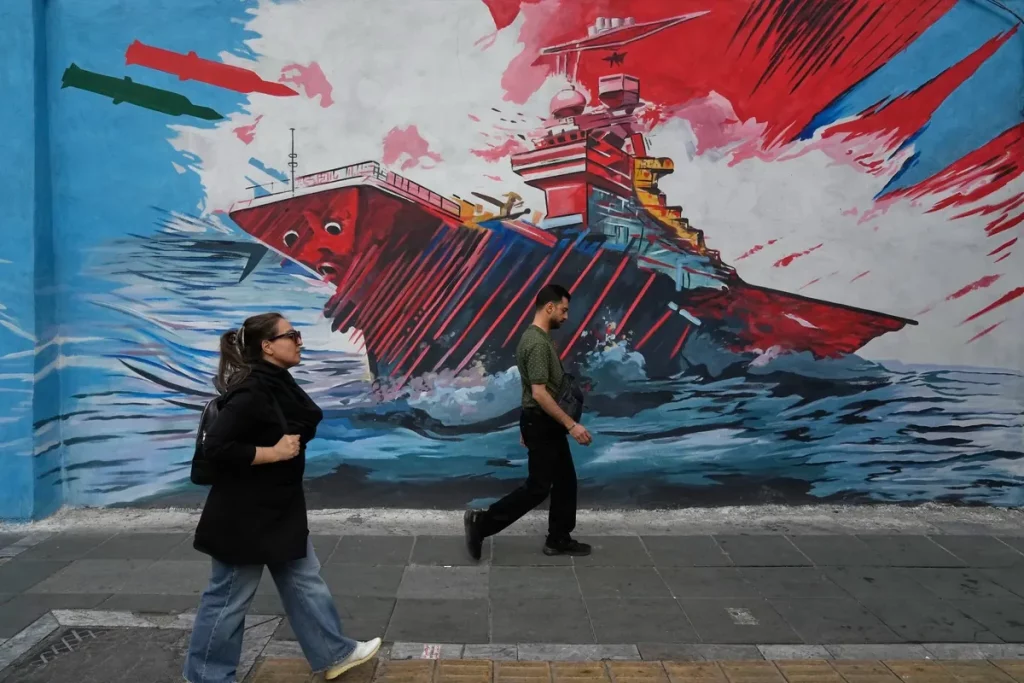
2026.5.17 Shortage of opium syrup threatens addiction treatment in Iran
Severe shortages of opium syrup are disrupting addiction treatment across Iran, Shargh daily reported on Sunday, raising fears that thousands of recovering drug users could return to narcotics use as clinics struggle to secure supplies of a key maintenance medication.
The shortages follow repeated disruptions in the production and distribution chain of opium syrup, a drug widely used in Iran’s maintenance treatment programs for patients who cannot easily switch to alternatives such as methadone because of physical dependence or medical complications.
Experts and addiction treatment activists warned the shortages are no longer only a clinical problem but a broader social crisis with potential consequences for public health, crime and family stability.
“These medications are essential for patients and stopping access does not mean they stop using drugs,” addiction expert Habib Bahrami told Shargh. “In many cases they return directly to narcotics use, bringing social, economic and family consequences.”
Some clinics, according to the report, have seen supplies fall so sharply that only one out of every 100 eligible patients can obtain opium syrup.
Patients pushed back toward illicit drugs
Bahrami said shortages had already emerged before the recent regional conflicts and economic pressures intensified.
“Before the war we were already seeing reduced supplies,” he said. “In some medical universities, opium syrup distribution was nearly halted before the Persian New Year (late March) without explanation.”
Patients unable to obtain the medication, he said, often return to street narcotics markets to avoid severe withdrawal symptoms, undermining years of treatment and increasing pressure on healthcare.
Methadone syrup continues to be distributed more consistently, Bahrami said, but many patients cannot easily transition to substitute medications.
Supply chain problems deepen shortages
Activists and treatment providers offered differing explanations for the shortages, with some blaming administrative restrictions and others pointing to shortages of raw materials used in production.
Abbas Deilamizadeh, head of the addiction recovery NGO Tavallod-e Dobareh (Rebirth Society), said insufficient access to raw opium materials has sharply reduced production and fueled the emergence of a black market.
“The shortage of raw materials has caused shortages in the market and created serious problems for patients,” Deilamizadeh told Shargh.
He argued that tighter state oversight of legal cultivation could provide a long-term solution.
“The only solution, in my view, is government-supervised poppy cultivation to supply the raw materials needed for this treatment method,” he said.
Addiction centers face mounting pressure
Treatment providers also warned that financial pressures and recent regional conflict have weakened addiction recovery services more broadly.
Deilamizadeh said many residential treatment centers are struggling with unrealistic state tariffs that fail to cover operational costs amid high inflation.
“For a 30-day stay, less than 100 million rials ($55) is allocated per patient,” he said. “That amount does not realistically cover accommodation, utilities, staff and treatment standards.”
He also said voluntary admissions to treatment centers have dropped sharply in recent months because of insecurity and public anxiety linked to regional military escalation.
“Based on our experience, voluntary admissions have fallen by around 40 percent,” he said.
Bahrami said some centers discharged patients during periods of heightened military tension and avoided taking new admissions because of security concerns.
“When society is overwhelmed by war-related fears, vulnerable groups are pushed further to the margins,” he said.
2026.3.1 به گزارش جام جم آنلاین، محمدصادق معتمدیان استاندار تهران اظهار کرد: در پی تجاوز رژیم سفاک آمریکا به همراهی رژِیم فاسد صهیونیستی و بر اساس اطلاعیه شماره یک شورای عالی امنیت ملی در راستای تامین آرامش و امنیت مردم عزیز فعالیت کلیه مدارس و دانشگاههای استان تا اطلاع ثانوی تعطیل و دستگاههای اجرایی مستقر در استان تهران بصورت ٥٠ درصدبه فعالیت خود خواهند پرداخت.
وی افزود: واحد های پشتیبان و فنی ستاد بانک ها در شهر و استان تهران با ٥٠ درصد نیروها و ٥٠ درصد شعب منتخب و همچنین شعب ارزی و شعب دارای صندوق امانات دایر خواهند بود.
استاندار تهران افزود: واحدهای عملیاتی دستگاههای خدماترسان و شهرداریها، مراکز درمانی، نظامی، انتظامی و امنیتی از شمول این بخشنامه مستثنی هستند.
استاندار تهران تأکید کرد: با توجه به اقدامات بعمل آمده در راستای تامین مایحتاج و کالاهای اساسی مورد نیاز شهروندان عزیز ، هیچ کمبودی وجود نداشته و مردم عزیز با آسودگی خاطر میتوانند کالاهارا تهیه نمایند.
وی ادامه داد: مردم عزیز کلیه اخبار و اطلاعات مورد نیاز را از رسانه های رسمی و صدا و سیمای جمهوری اسلامی ایران پیگیری کنند.
معتمدیان افزود: مدیران دستگاهها نیز موظف هستند تمهیدات و برنامه ریزی های لازم جهت بهره مندی کارکنان از ظرفیت دورکاری را انجام داده و بهگونهای که در روند خدماترسانی به مردم عزیز خللی ایجاد نشود و کارکنان ضمن ارتباط مستمر با محل خدمت در صورت نیاز دستگاهها، آمادگی لازم جهت حضور در محل کار و ارائه خدمات را داشته باشند.
براساس گزارش استانداری تهران، معتمدیان تاکید کرد: کلیه رده های مدیریتی استان تهران از شمولیت این بخشنامه مستثنی هستند و میبایست در محل خدمت ارائه خدمت کنند.
2026.3.1 فوری/ حضرت آیتالله خامنهای رهبر معظم انقلاب اسلامی به شهادت رسیدند
به گزارش خبرآنلاین، به استحضار مردم شهیدپرور ایران میرساند حضرت آیتالله العظمی خامنهای، رهبر معظم انقلاب اسلامی در حمله مشترک آمریکای جنایتکار و رژیم صهیونیستی در صبح شنبه نهم اسفند ماه به شهادت رسیدند.
—
—
2025.2.15 عاون مبارزه با جعل و کلاهبرداری پلیس آگاهی فراجا از دستگیری ۱۱۰ متهم و کشف بیش از ۲۰ هزار سند و کالای تقلبی در هفته اول بهمن ماه خبر داد.
سرهنگ حجت متقی، معاون مبارزه با جعل و کلاهبرداری پلیس آگاهی فراجا گفت: مرحله دوم طرح عملیاتی مقابله با جعل و تقلب در سراسر کشور با محوریت پلیس آگاهی ضمن هماهنگیهای بین استانی به مدت شش روز در هفته اول بهمن ماه سال جاری به اجرا درآمد.
به گزارش مهر، وی افزود: در جریان اجرای این طرح، ۱۱۰ نفر از متهمان شامل جاعلان حرفهای، استفاده کنندگان اسناد مجعول و تولید و توزیع کنندگان کالای تقلبی شناسایی و دستگیر شدند.
معاون مبارزه با جعل و کلاهبرداری پلیس آگاهی فراجا تصریح کرد: ماموران در این عملیات موفق شدند ۲۰ هزار و ۲۰۰ فقره انواع اسناد جعلی، مدارک هویتی، اسناد مالی و تجاری و همچنین اقلام و کالای تقلبی را کشف و ضبط کنند که بخش قابل توجهی از آنها پیش از ورود چرخه مصرف یا سوء استفاده گسترده توقیف شد.
وی با اشاره به آثار مخرب جعل و تقلب بر امنیت اقتصادی و اجتماعی جامعه گفت: جعل اسناد و عرضه کالای تقلبی علاوه بر وارد کردن خسارات مالی به شهروندان، اعتماد عمومی و سلامت نظام اقتصادی را نیز هدف قرار میدهدو پلیس با قاطعیت با این جرایم برخورد خواهد کرد.
سرهنگ متقی ضمن قدردانی از همکاری دستگاه قضایی و مشارکت شهروندان در ارائه گزارشهای مردمی، از مردم خواست در صورت مشاهده هر گونه فعالیت مشکوک در زمینه جعل اسناد، فروش مدارک هویتی، یا عرضه کالای تقلبی، مراتب را از طریق سامانههای ارتباطی پلیس اطلاع دهند.
وی در پایان تاکید کرد: اجرای این طرحها با هدف ارتقای امنیت، صیانت از حقوق شهروندان و مقابله جدی با باندهای سازمان یافته جعل و تقلب ادامه خواهد داشت.
发表回复