2026.8.19 Syria receives deposed regime’s General from Lebanon over murder, torture charges
Damascus, Aug. 19 – Syrian authorities on Wednesday received from Lebanon former Major General Adel Issa, an officer in the army of the ousted regime who is wanted in Syria on charges including murder and torture resulting in death.
Syria receives deposed regime’s General from Lebanon over murder, torture charges
Issa, a former commander of the 17th Division who also commanded ground forces in Deir Ezzor until 2016, had been detained by Lebanese authorities under an arrest warrant issued by Lebanon’s public prosecutor.
Syria’s Interior Ministry said on Telegram that coordination for Issa’s extradition was carried out at the request of the Syrian prosecutor general after an arrest warrant in absentia was issued against him by the seventh investigating judge.
The ministry said Issa is accused of premeditated murder, , killing of more than two people and torture resulting in death. He also faces charges related to acts allegedly intended to incite civil war and sectarian violence.
2026.8.18 Syrian court sentences Wassim al-Assad to death
Damascus, Aug. 18 – The Fourth Criminal Court in Damascus sentenced Wassim al-Assad, a cousin of head of the ousted regime Bashar al-Assad, to death on Tuesday after convicting him of intentional killings and acts of torture constituting crimes against humanity and war crimes.
Head of the court Judge Fakhr al-Din al-Aryan said investigations established that al-Assad was involved in forming irregular armed groups at the direction of Brig. Gen. Ghiath Dalla. The groups targeted civilian areas in Eastern Ghouta and committed massacres, particularly in Al-Malihah.
Al-Aryan said the court established beyond doubt that an armed group affiliated with al-Assad attacked a shop in Jaramana, stole its contents and abducted its owner because of his opposition to the ousted regime. The group was also involved in abducting and killing Syrian citizens in several areas.
The court convicted al-Assad of intentionally killing more than one person and acts of torture constituting crimes against humanity and war crimes. It also ordered the confiscation of his movable and immovable assets in favor of the public treasury.
The verdict was delivered at the court’s sixth hearing after the completion of all stages of the trial and related judicial proceedings. Members of the National Authority for Transitional Justice and representatives of international legal and humanitarian organizations attended.
The Fourth Criminal Court in Damascus had also sentenced Bashar al-Assad and several former officials to death on August 11 after convicting them of crimes including premeditated murder, torture, arbitrary detention and crimes against humanity.
2026.8.18 Interior Ministry Investigates Detainee’s Death in Latakia
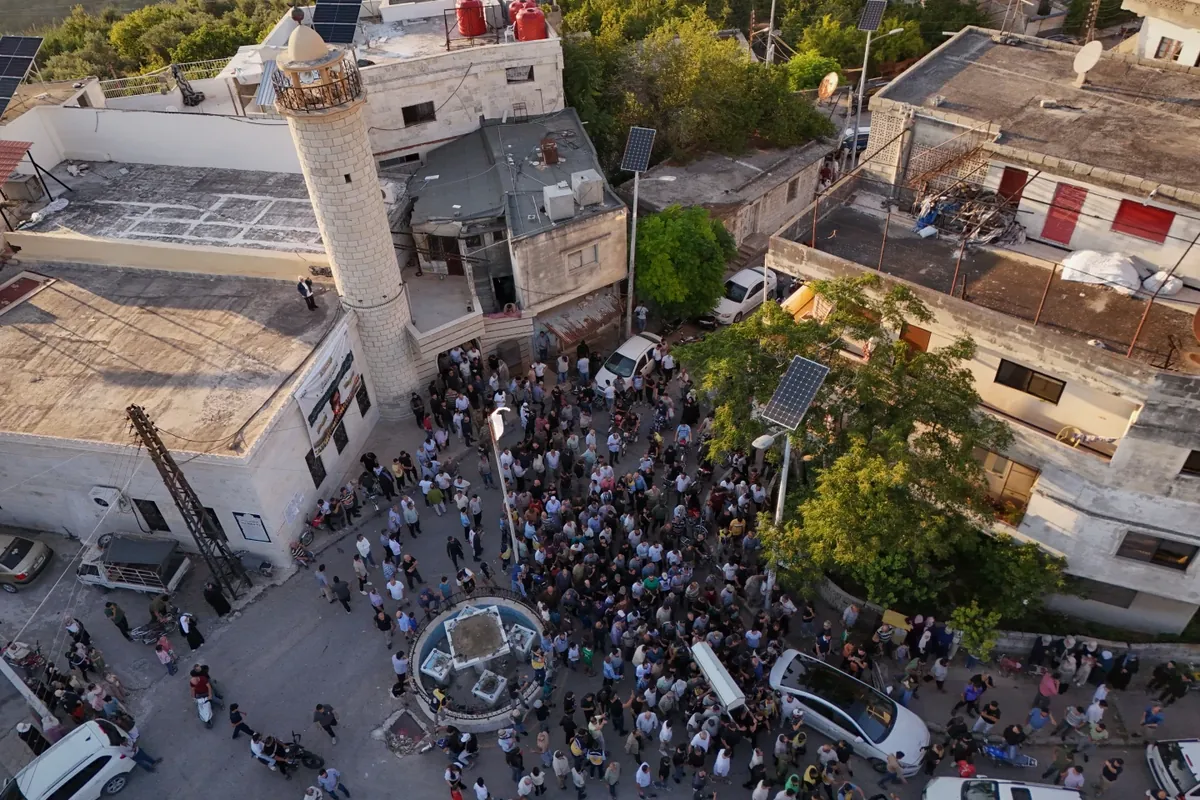
Members of the White Helmets carry their deceased colleague, Muhammad Ghamera, during his funeral procession. Monday Aug. 17, 2026 Latakia.
Minister of Emergency and Disaster Management Raed al-Saleh mourned Muhammad Ghamera, who died Sunday, Aug. 16, at the University Hospital in Latakia. In a post on X, Saleh said Ghamera died from complications related to a cerebral hemorrhage and gastrointestinal bleeding following an alleged beating during his detention at the Haffa police station in Latakia province.
He noted Ghamera had hemophilia, a condition that can increase the risk of bleeding and related complications. Saleh offered his condolences to Ghamera’s family, colleagues and Syrians, saying the new state is committed to the rule of law and justice. He added he and Interior Minister Anas Khattab had followed the case from day one. Police officers accused of beating Ghamera were arrested and will face legal proceedings, he said.
Committee Given 72 Hours to Investigate
Khattab formed a committee to investigate the circumstances surrounding Ghamera’s death. The committee is headed by Deputy Interior Minister for Police Affairs Ahmad Latouf and is tasked with determining the causes and circumstances of the death. The committee is required to submit its findings to the interior minister within 72 hours.
As part of the investigation, the committee met with the Forensic Medicine Department at the University Hospital in Latakia to review medical data and reports related to the case and complete investigative procedures.
The Internal Security Command in Latakia province also detained seven people who were present in the detention cell when the incident occurred, based on the findings of the specialized investigation committee. Authorities said the investigation remains ongoing to establish what happened and determine responsibility.
Family Calls for Justice through Legal System
A family source said Ghamera had been “accused of theft and detained for three days before release for lack of evidence,” adding that he “was severely tortured, leading to his health decline and death.” Essam Ghamera, the victim’s uncle and director of Haffa Hospital, told SANA the family trusts the judiciary and is awaiting the investigation’s findings.
He said residents remain committed to pursuing the case through legal channels and maintaining calm. He described the incident as an “individual barbaric act” that caused Ghamera’s health to deteriorate and ultimately required hospitalization.
The investigation will determine the circumstances surrounding Ghamera’s death and whether those detained in connection with the incident bear legal responsibility. Authorities have said the findings will be submitted within the 72-hour period established by the Interior Ministry.
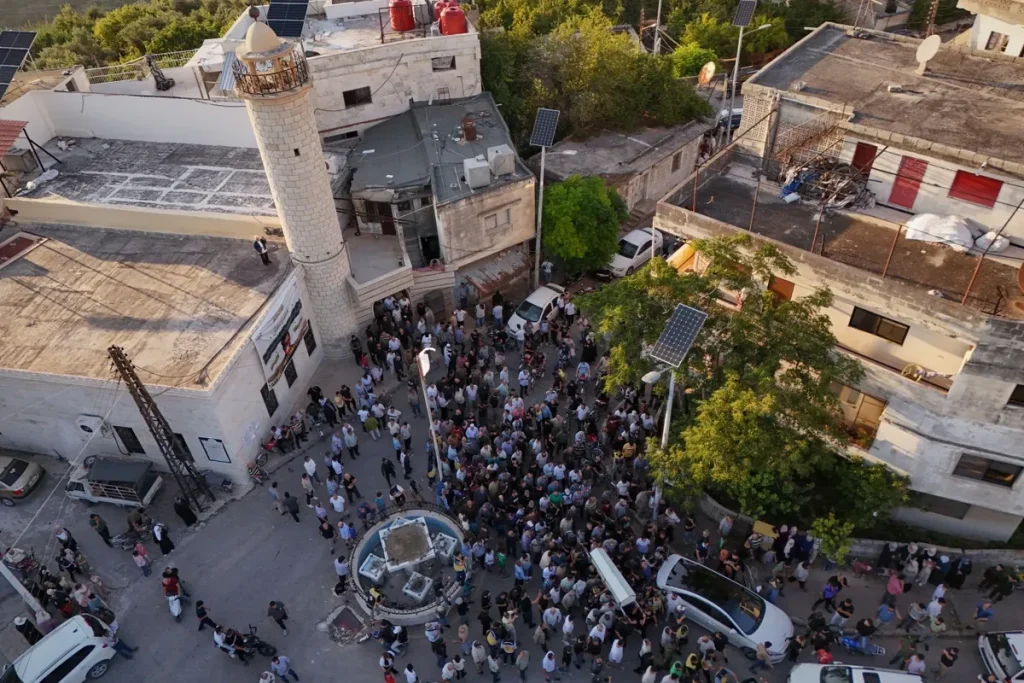
DAMASCUS, Syria (AP) — The death of a young man with a serious medical condition who was arrested and allegedly beaten by Syrian security forces has stirred up dark memories of torture and other abuse in detention centers under the Assad dynasty’s decades-long rule.
Syrians have taken to social media and the streets in recent days to demand answers about the death of Mohammad Ghamira, who was buried Monday in his hometown of al-Haffah in coastal Latakia province.
When insurgents unseated former President Bashar Assad in December 2024 after a nearly 14-year civil war, they opened the country’s notorious prisons. During Assad’s rule, rights groups say, thousands of prisoners were killed in mass executions or died from injuries and disease. Detainees were subjected to torture, beatings and rape.
Officials with the government of interim President Ahmad al-Sharaa have promised accountability in Ghamira’s case, but rights groups say it is not an isolated incident and that abuses persist in detention centers.
The detainee had hemophilia, which affects blood clotting
Ghamira, a 29-year-old father of two, was a former volunteer with the White Helmets civil defense organization, which operated in opposition-held areas before Assad’s fall.
He died in a hospital in Latakia on Sunday after being released from jail. He had been detained days earlier following an “allegation of theft involving a sum of money,” Latakia’s internal security command said in a statement, without giving more details.
Syria’s Minister of Emergency and Disaster Management Raed al-Saleh, who was previously head of the White Helmets, said on X that Ghamira had died of “complications from cerebral and gastrointestinal hemorrhaging” that “resulted from a beating he sustained after being detained at the al-Haffah police station.”
Al-Saleh and Ghamira’s relatives said he had hemophilia, a condition affecting the blood’s ability to clot.
Ghamira’s uncle, Issam Ghamira, said in a video interview with state news agency SANA that the family had told the police chief in al-Haffah that his nephew had hemophilia and warned against hitting him. Despite that, he said, his nephew was hit while in custody.
Syria’s interior ministry announced an investigation into Ghamira’s death and said seven interior ministry personnel were detained for questioning.
Syria’s Interior Ministry spokesperson Noureddine al-Baba, speaking to journalists, acknowledged “shortcomings and deficiencies” in some of the country’s police departments but said others were doing “exceptional” work.
“God willing, this painful incident will serve as a catalyst for positive change in the operations of the ministry of interior,” he said.
Watchdogs call Ghamira’s death part of a wider problem
In a report released in March, the U.N. Independent International Commission of Inquiry on the Syrian Arab Republic said it had documented “torture and ill-treatment” in 18 official detention facilities and 12 “makeshift facilities” in different areas of Syria between January and October 2025, in the months following Assad’s ouster as the new government asserted control.
The practices it documented included beating prisoners with rifle butts, sticks, pipes, bars and cables; the use of electric shocks and other forms of torture; mock executions; and sexual violence.
Syrians for Truth and Justice, a human rights organization that tracks abuses, in a report published earlier this month said that “severe beatings, electric shocks, humiliation, threats, deprivation of basic necessities, and deaths in custody continue to be common practices at the hands of multiple security and military actors.”
The group concluded that the incidents were too widespread to treat as isolated incidents but that there was not evidence of a “single centralized system equivalent in structure and direction to the torture apparatus entrenched by the Assad regime.”
“It is somehow widespread, but it’s not structured,” Bassam Alahmad, the group’s executive director, told The Associated Press. “For us, there is no evidence that these orders came from the commanders to torture people, but still (the authorities) have a responsibility to stop this behavior.”
Syrians whose loved ones disappeared or died in detention centers during Assad’s rule said they were disturbed to see the patterns being repeated under the new government.
Families for Freedom, a group representing relatives of detainees, said in a statement, “What happened to Mohammed reopens the wounds of torture and death in detention for thousands of Syrian families — practices Syrians have struggled for years to end, and the recurrence of which cannot be accepted today.”x1200
2026.8.18 Syrian court outlines findings behind death sentence for Wassim al-Assad
Damascus, Aug. 18 – The Fourth Criminal Court in Damascus on Tuesday outlined the findings behind its death sentence against Wassim al-Assad, a cousin of ousted regime head Bashar al-Assad, for crimes against humanity and war crimes in Eastern Ghouta.
The court sentenced al-Assad to death at the sixth hearing of his trial and ordered the confiscation of his movable and immovable assets after fulfilling civil compensation obligations. The hearing was chaired by head of the court Judge Fakhr al-Din al-Aryan.
Court findings
The court established al-Assad’s involvement in forming and supervising armed auxiliary groups that participated in military operations in Eastern Ghouta, particularly al-Malihah, between 2012 and 2014.
According to the ruling, al-Assad formed two groups affiliated with auxiliary forces, supplied them with weapons, ammunition, food and financial support, and supervised their operations through field commanders.
The groups participated in operations following bombardment of civilian areas, taking control of positions, preventing residents from returning and looting property.
Al-Aryan said the court found evidence of intentional killing, torture, deprivation of liberty and other acts classified as crimes against humanity and war crimes.
The ruling established that dozens of civilians were killed in the 2013 al-Malihah massacre following air and artillery bombardment. The court found that al-Assad and groups under his supervision formed part of a broader criminal project involving systematic violations against civilians.
Ruling and other charges
The court convicted al-Assad of offenses including intentional killing, torture, unlawful detention and crimes related to attacks on civilians.
He was also convicted of causing permanent disability and fraud and received additional prison terms and fines, with the court ordering implementation of the most severe sentence.
The court preserved the rights of victims and their families to pursue legal claims and maintained witness protection measures.
Al-Assad was acquitted of drug trafficking and smuggling charges due to insufficient evidence. The ruling noted that no narcotics were seized from him and no laboratory analysis was conducted to establish the charges.
Transitional justice officials assess ruling
The National Commission for Transitional Justice (NCTJ) said the sentence against al-Assad represents a key pillar in strengthening the rule of law and implementing transitional justice mechanisms in accordance with international standards and national safeguards.
In a statement on Telegram, the commission said it would continue following judicial cases to ensure justice for victims, document the facts and combat impunity.
Radif Mustafa, director of the commission’s Accountability Department at the NCTJ, told SANA that the sentence was “fair and just” and proportionate to the scale of the crimes for which al-Assad was convicted.
Mustafa said the court applied two main standards: international law governing crimes against humanity and war crimes, and Syrian law.
He said al-Assad provided no substantial information during the trial that could help establish the responsibility or roles of other defendants, leaving no basis for mitigating circumstances. The court also rejected his plea for clemency because of the scale of the crimes.
Mustafa said international law determines the legal classification and gravity of such crimes, while penalties are governed by national law. He described the ruling as part of an ongoing judicial process in which responsibility is determined by the acts and evidence established against each defendant.
Al-Assad’s trial began June 24 on charges including forming and managing irregular armed groups and participating in operations targeting civilian areas in Eastern Ghouta.
Mustafa said accountability is essential to stability, civil peace, reparations and truth, adding that rulings by courts handling transitional justice cases strengthen both transitional justice and the rule of law.
2026.8.16 What the death sentence for former Syrian dictator Bashar al-Assad tells us about the future of the country
2026.8.11 Damascus court sentences Bashar, Maher al-Assad, and Atef Najib to death
Syria sentences Bashar Assad to death in absentia
Damascus court sentences Bashar, Maher al-Assad, and Atef Najib to death
Damascus, Aug. 11 – The Fourth Criminal Court in Damascus, presided over by Judge Fakhr al-Din al-Aryan, on Tuesday issued its verdict in the case filed against Atef Najib and a number of fugitives, sentencing Bashar al-Assad, Maher al-Assad and Atef Najib to death, along with five other fugitives, after convicting them of murder, torture, unlawful deprivation of liberty, crimes against humanity and war crimes.
The court also dropped the public prosecution against defendant Mohammad Ayman Ayoush following his death.
The verdict was delivered during the ninth hearing in the case, which concerns crimes committed against the Syrian people. The session was attended by Public Prosecutor Judge Hassan al-Turba, Chairman of the National Commission for Transitional Justice Abdul Basit Abdul Latif and several members of the commission, representatives of international legal and humanitarian organizations, and relatives of victims.
Judge al-Aryan said the court unanimously concluded the trial and issued Decision No. 1 of 2026 in Case No. 1 of 2026, comprising 396 pages. The decision will later be published on the Ministry of Justice’s official website after removing the names of protected witnesses.
Historical and legal context
The court’s decision addressed the historical and political context preceding the events covered by the case, including the establishment of the ousted regime following Hafiz al-Assad’s 1970 coup and decades of authoritarian rule, Bashar al-Assad assumed power in 2000, continuing systemic repression through security agencies and the 4th Armored Division, commanded by Maher al-Assad.
The court said the events underlying the case began with the popular movement in Daraa in early 2011, following calls for reform and the arrest and torture of schoolchildren after they wrote anti-government slogans on school walls.
According to the court, witnesses who were minors at the time testified that they had been subjected to beatings, torture, electric shocks, suspension and nail removal, while Atef Najib personally interrogated some of them and insulted their families.
The court said a March 18, 2011 demonstration calling for the release of the detained children was met with live fire, killing Mahmoud al-Jawabreh and Hossam Ayyash.
It further said security forces subsequently stormed the Omari Mosque in Daraa during March 22-23, 2011, using tear gas and live ammunition, resulting in deaths and injuries. The court also said ambulances were fired upon and wounded people were detained, with some subsequently dying, including physician Ali Ghassab al-Mahamid.
The decision also addressed the subsequent mobilization of residents from surrounding villages in a coordinated security operation against peaceful protesters, resulting in scores of deaths and injuries.
Court affirms national jurisdiction over international crimes
The court examined the principle of complementarity between national and international justice, stating that international law recognizes national courts as having primary jurisdiction over international crimes, while international courts serve a complementary rather than substitute role.
It also ruled that statutes of limitation and amnesties do not apply to the international crimes covered by the case and that immunities do not apply to those crimes.
The court further examined the legal basis for trials in absentia under Article 322 and subsequent provisions of Syria’s Code of Criminal Procedure, stating that all requirements for a valid trial in absentia had been fulfilled.
In defining crimes against humanity, the court adopted the definition contained in Article 7 of the Rome Statute. It also adopted the established international criminal law standard for determining the existence of a non-international armed conflict, stating that the conflict in Syria became a non-international armed conflict in mid-July 2012.
Court distinguishes charges against defendants
The court said that the acts attributed to Atef Najib occurred between February and April 2011, before the start of the non-international armed conflict, and therefore constituted crimes against humanity and national crimes.
As for the remaining fugitives, including fugitive Bashar al-Assad, the court said their proven acts extended beyond mid-July 2012 and therefore constituted war crimes in a non-international armed conflict, in addition to crimes against humanity and national crimes.
The court also held fugitive Bashar al-Assad responsible for what it described as a joint criminal project, saying that, as president throughout the period covered by the case, he exercised the authorities provided for under the Constitution and directed state institutions.
The court said his contribution went beyond a failure to exercise oversight, describing him as the principal decision-maker who established policies, announced them and used state institutions to implement them while shielding those responsible from accountability.
Court details responsibility of Atef Najib
The court said Atef Najib’s responsibility stemmed from his leadership of the Political Security Branch in Daraa beginning in 2007, his membership in the provincial security committee, his involvement in its meetings, and his role in detaining and torturing minors.
It said Najib personally interrogated detainees, subjected them to abuse, requested military support from Damascus and was present during security operations in Daraa.
The court also attributed to him orders to open fire, responsibility for dozens of deaths and injuries, the presence of snipers and armed personnel on the roof of the Political Security Branch building under his authority, and the detention of wounded people after ambulances were stopped.
Evidence and witness protection
The court said its decision was based on public prosecution witnesses, statements by civil claimants, official documents, medical reports, audio and visual material presented during hearings, and documented international reports.
Judge al-Aryan said witness testimonies were mutually corroborative and converged on specific events, dates and locations.
The court said it also heard defense witnesses and provided protection to them, applying measures intended to safeguard the lives and physical integrity of victims and witnesses and preserve evidence.
Protected witnesses testified using numbers without their identities being disclosed to the public, a measure the court described as a national judicial precedent within the transitional justice process and one consistent with international judicial practice.
The court also noted that Atef Najib denied all charges and rejected the testimony against him, while showing no remorse or apology when confronted with victims during the proceedings. The court therefore said it found no discretionary grounds for mitigation and imposed the maximum applicable penalty.
Court orders compensation and preservation of victims’ rights
The court ruled that victims were entitled to reparations, describing redress as an essential component of transitional justice.
It ordered the convicted defendants to jointly and severally compensate the civil claimants whose claims were accepted, with compensation assessed according to the harm suffered by each claimant.
The court also preserved the rights of other victims, relatives of victims and missing persons who had not yet brought individual claims, allowing them to seek redress before the competent judicial authorities.
Verdicts
The court sentenced fugitive Bashar al-Assad to death after convicting him of intentional murder, intentional murder of multiple people, intentional killing of children under 15, intentional killing accompanied by torture and brutality, and incitement to intentional murder on multiple occasions, classified by the court as crimes against humanity and war crimes.
It also convicted him of torture, torture resulting in death and unlawful deprivation of liberty on multiple occasions, likewise classified as crimes against humanity and war crimes.
Atef Najib was sentenced to death after being convicted of intentional murder, intentional killing of multiple people, intentional killing of children, intentional killing accompanied by torture and brutality, incitement to intentional murder on multiple occasions, torture resulting in death, unlawful deprivation of liberty and multiple counts of abduction, classified as crimes against humanity and national crimes.
The court separately convicted Najib of offenses including acts targeting civil war and sectarian fighting, embezzlement of public funds, money laundering, incitement of sectarian tensions, abuse of authority, breach of official duties and fraud. The custodial sentences were consolidated, with the death penalty imposed as the most severe sentence, while the fines were ordered to be enforced cumulatively.
Death sentences for six additional fugitives
The court sentenced six additional fugitives — Fahd al-Freij, Maher al-Assad, Louay al-Ali, Qusay Mayhoub, Wafiq al-Nasser and Talal al-Aysami — to death after convicting them of intentional murder, intentional killing of multiple people, intentional killing accompanied by torture and brutality, incitement to intentional murder on multiple occasions, torture resulting in death, unlawful deprivation of liberty and multiple counts of abduction, which the court classified as crimes against humanity and war crimes.
The court also convicted Louay al-Ali, Qusay Mayhoub, Wafiq al-Nasser and Talal al-Aysami of intentional killing of children under 15 and acts aimed at inciting sectarian tensions and civil strife. The resulting sentences were consolidated, with the death penalty imposed as the most severe punishment.
The defendants were also convicted of offenses including incitement of sectarian tensions, abuse of authority and breach of official duties.
Warrants and international prosecution
The court ordered that arrest warrants issued in absentia against all fugitives remain in force and be circulated to the competent authorities. It also ordered the relevant authorities to take the necessary measures for their international prosecution in accordance with legal procedures.
The court confirmed the provisional seizure of the defendants’ movable and immovable property and converted it into an enforceable seizure. It further ordered the imposition of civil restrictions on the fugitives and the administration of their assets under the rules governing the property of absent persons.
The court preserved the right of the competent state authorities to seek public funds and public property and authorized the Public Prosecution to pursue other officials, participants and partners not covered by the current proceedings and to open separate cases whenever sufficient evidence becomes available.
The court also ordered that witness-protection measures remain in force following the verdict, including the use of codes and pseudonyms, confidential preservation of witnesses’ identities and a prohibition on publishing or circulating information that could reveal the identity or whereabouts of protected witnesses.
The convicted defendants were ordered to bear judicial fees and expenses. The verdict is subject to the applicable procedures for publication and appeal, with the ruling issued in the presence of the Public Prosecution, the claimant and Atef Najib, while it was issued in absentia against the remaining fugitives and may be annulled upon their arrest or surrender.
The first hearing in Atef Najib’s trial was held on April 26 as part of a judicial process aimed at establishing the truth, securing justice for victims and holding those responsible accountable in accordance with judicial procedures.
–
Syria sentences Bashar Assad to death in absentia
A Syrian court has sentenced ousted President Bashar Assad to death in absentia. The ruling comes over a year and a half after the dictator was overthrown and fled to Russia.
A Syrian court on Tuesday sentenced former President Bashar Assad to death in absentia.
Assad was ousted in December 2024 after rebel forces swept into Damascus, ending more than five decades of rule by the Assad family.
He and his family fled to Russia, where he was granted asylum, as Syria’s new authorities began pursuing former officials over alleged crimes committed during the country’s civil war.
What did the court say about Assad?
Assad was convicted of the crimes of “premeditated and intentional murder of more than one person and of children, torture, arbitrary arrest and crimes against humanity.”
“The contribution of the criminal Bashar Assad to the crimes was that of the person ultimately responsible for decision-making, mobilizing state institutions to commit them,” the judge said.
The verdict was handed down by Damascus’ Fourth Criminal Court and read out live on Syrian state television.
Assad, born in 1965, became president in 2000 after the death of his father, Hafez Assad.
He continued his family’s decadeslong rule, maintaining the dominance of the Alawite minority in Sunni-majority Syria and the country’s close alliance with Iran as well as hostility toward Israel and the US.
The Syrian government has been demanding that Moscow extradite Assad.
Assad’s brother Maher and several other figures from the ousted government were also sentenced to death in absentia.
They were convicted of premeditated murder and torture resulting in death.
Assad’s cousin sentenced in person
In the same case, the court also handed the death penalty to Atef Najib, a senior security official under Assad’s rule and a cousin of the former dictator. He was arrested while trying to flee the country in January 2025 and became one of the highest-ranking officials to be put on trial.
Najib, a former Syrian army brigadier general, headed the Political Security Branch in the southern province of Daraa when the uprising against Assad’s government began in 2011.
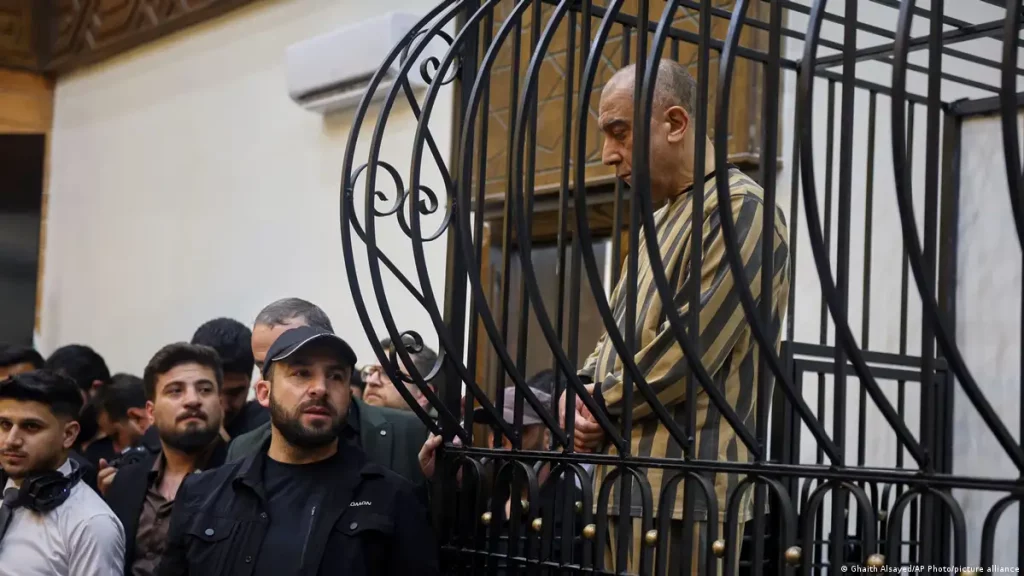
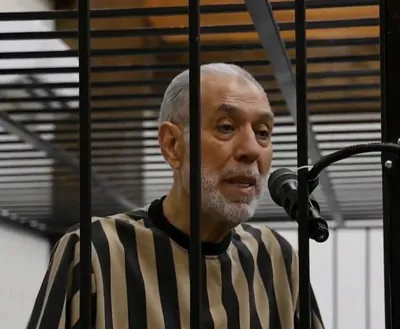
He appeared in court under tight security, standing inside a cage in a prison uniform as the judge read out the sentence.
The court convicted Najib of crimes including murder, the intentional killing of children under 15 and torture resulting in death, describing the acts as crimes against humanity.
2026.8.8 Investigation Underway in Jaramana Bombing of Mini-Bus
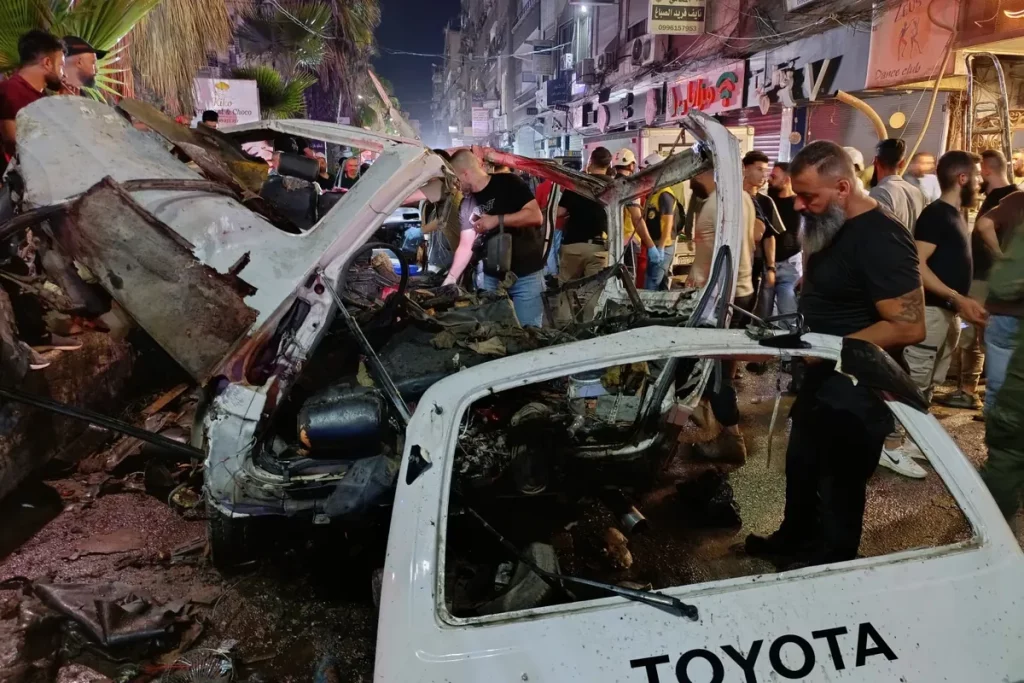
A bombing targeting a passenger bus in Jaramana, in the Damascus countryside, renewed concerns about security around the Syrian capital and tested the government’s ability to prevent attacks in areas with complex social and security dynamics. The explosion occurred Thursday at the Rawda intersection, a busy commercial area, a security source told Al-Ikhbariyah TV that initial information indicated an explosive device was planted inside the bus.
Casualty figures changed as authorities reviewed the incident. Initial reports cited deaths and injuries, while the Rural Damascus Health Directorate later said 14 people had been injured and that no deaths had been recorded. On Friday, Rural Damascus Health Director Tawfiq Hasaba gave a revised account, saying one woman had died from her injuries and that 13 others remained injured.
Other reports cited higher death tolls, underscoring the uncertainty surrounding the initial aftermath. The Interior Ministry said its security forces immediately cordoned off the site, collected evidence and began investigating the circumstances of the explosion and those responsible.
Attack Follows Call for Unity
The bombing came only hours after sheikhs, community figures and residents of Jaramana issued a statement emphasizing national unity, rejecting foreign interference and warning against attempts to provoke sectarian tensions.
The statement described Jaramana as a model of civil peace and coexistence and stressed the importance of maintaining its social and geographic ties with Damascus and the surrounding Ghouta region. Residents also rejected efforts to exploit the city or use it as a venue for broader political conflicts.
That timing has fueled speculation about the possible political significance of the attack. There are reports that an armed group calling itself the “Ansar Platform” claimed responsibility, however official investigations are still underway.
Government Vows to Protect Stability
Foreign Minister Asaad al-Shaibani condemned the targeting of civilians, saying such attacks and attempts to destabilize security and stability would not deter Syrians from pursuing recovery and state-building. He also expressed condolences to the families of those killed and injured promising the government would continue working to protect citizens, pursue those responsible and bring them to justice.
The Interior Ministry similarly linked the bombing to recent calls in Jaramana for national unity and adherence to the Syrian state. It urged residents not to be drawn into efforts to spread discord or undermine civil peace, while emphasizing security forces were continuing their investigation.
The attack also drew condemnation from neighboring countries. Turkey’s ambassador to Damascus and special representative for Syrian affairs, Nuh Yilmaz, said Ankara strongly condemned the bombing stressing there was no place for violence and terrorism in Syria. Jordan’s Foreign Ministry also condemned the attack, reaffirming Amman’s support for Syria’s security, stability, sovereignty and territorial integrity while rejecting violence aimed at undermining the country’s stability.
Jaramana’s Complex Security Landscape
Political activist Kinan Masoud told the New Arab the attack carries particular significance because of Jaramana’s social composition and security structure. The city has a large Druze population but also includes Christians and displaced Syrians from Deir Ezzor and other parts of the country.
That diversity contributes to Jaramana’s reputation as an example of coexistence despite Syria’s prolonged conflict. Any attack in the city therefore risks affecting not only public safety but also perceptions of social cohesion.
Security responsibilities in Jaramana are also complicated. The city falls under Syrian state institutions and security agencies while local armed groups from the Druze community continue to operate independently. The overlapping arrangements can create challenges involving coordination, jurisdiction and the state’s ability to maintain unified security authority.
Damascus Faces Wider Bombing Threat
The Jaramana explosion also comes amid a series of recent attacks in Damascus. On July 7, two explosions occurred near the Ministry of Tourism during French President Emmanuel Macron’s visit to Syria, injuring about 18 people, according to the supplied reports.
Two days earlier, a homemade explosive device struck the Mushiriyah cafe near the Palace of Justice, killing 10 civilians and injuring 21 others. Syrian authorities later announced the arrest of a cell they said was responsible for the Damascus attacks. The Interior Ministry said the operation involved raids in Damascus and surrounding areas.
The recurrence of explosive attacks nevertheless presents the government with a broader challenge. Beyond identifying and prosecuting those responsible for individual incidents, authorities must demonstrate state institutions can protect civilians while maintaining confidence among communities with distinct political and security concerns.
For Jaramana, the bombing is more than a single security incident. The investigation into the attack and the authorities’ handling of its aftermath will help determine whether the city’s message of unity and coexistence can withstand renewed attempts to exploit Syria’s continuing security vulnerabilities.
2026.8.7 Syria’s Health Ministry corrects Damascus minibus blast toll: 14 wounded, no deaths
DAMASCUS, Syria (AP) — Syria’s Health Ministry said Friday that 14 people were wounded, three of them critically, but that there were no fatalities in the explosion of a minivan taxi a day earlier in a Damascus suburb.
The Health Ministry had said Thursday night that two people were killed in the blast. In a statement Friday, it said the fatalities had been incorrectly recorded based on three severed limbs that were pulled from the wreckage.
After further investigation, the limbs were determined to belong to living patients who were undergoing surgery, the statement said.
Officials said the explosion in Jaramana was caused by an explosive device planted in the minivan taxi, which was carrying passengers at the time of the blast.
A little-known group calling itself Minbar Ansar al-Rasoul issued a statement claiming responsibility for the attack. Syrian authorities have not announced any arrests or the results of their investigation into the bombing.
Jaramana, which is home to a large population of the Druze religious minority, has faced tensions between some members of the community and Sunni Muslim Syrians supportive of the country’s current Islamist-led government.
Tensions flared in April 2025, when at least 10 people were killed in sectarian clashes between Druze gunmen and pro-government fighters.
The apparent bombing attack, the third in just over a month, is the latest of several challenges that interim President Ahmad al-Sharaa has faced since coming to power in December 2024 after leading an insurgency that overthrew the Assad dynasty and ended its half-century rule.
In early July, two explosions wounded at least 18 people during French President Emmanuel Macron’s landmark visit to Syria. Explosive devices were placed in a garbage bin and a parked car. Syrian authorities arrested suspects days later, who they said were part of an Islamic State cell.
Al-Sharaa has pushed to assert full control over Syria, appeal to minority groups skeptical of his Islamist-led rule and win the support of Western governments who were concerned about his past leadership of the formerly al-Qaida-linked Hayat Tahrir al-Sham group. His government has promised political and economic reform after decades of autocratic rule under the Assad family.
2026.8.5 Calm Restored to Ain Minan Following Release of Detainees
Calm returned to the town of Ain Minan after authorities reached agreements with residents and released detainees following protests and arrests linked to tensions surrounding maintenance work at local water facilities.
The town witnessed demonstrations and widespread shop closures on Sunday, Aug. 2, including a general strike demanding the release of residents who had been arrested on Friday, July 31. The arrests followed tensions after drilling equipment entered the town to carry out maintenance work on water infrastructure.
Mayor and Council Resign Over Arrests
The mayor and members of the Ain Minan Municipal Council submitted their resignations to the reconciliation committee in protest over the detention of several residents. The mayor said they would not participate in negotiations until all detainees were released, emphasizing that “the town’s residents are with the state, not against it, but they are only demanding their rights.” He also said the council would seek accountability for security personnel accused of assaulting residents during the incident.
Security Chief Announces Resolution
The situation eased after the Syrian Ministry of Interior (MoI) released the detainees, coinciding with the arrival of Damascus Countryside Security Chief Gen. Ahmad al-Dalati in the town. “We were able to resolve the issue in Ain Minan and released the detainees after taking the appropriate legal procedures,” Dalati said.
He added that security personnel found to have exceeded their authority had been suspended. Dalati also said the governorate and relevant authorities would work with officials in Tal and Ain Minan to resolve the town’s water issues through legal channels.
Authorities Outline Protest and Arrests
The Internal Security Command in Damascus Countryside said the Ministry of Interior respects citizens’ right to peaceful protest and freedom of expression as rights guaranteed by law. The command said the gathering held two days earlier had not received legal authorization and was accompanied by assaults on several internal security personnel while they were carrying out their duties.
It added the arrests were limited to individuals accused of involvement in rioting, disorder, and disrupting public order, and did not include participants in the peaceful protest. According to the statement, legal procedures were completed before the detainees were released after fulfilling the required legal commitments. Levant24 reached out to released detainees who declined to comment at the time of publication.
Government Pledges Continued Water Support
Abdullah al-Khatib, deputy governor of Damascus Countryside, told Al-Ikhbariyah the government remains committed to ensuring Ain Minan has an adequate water supply if water levels decline. He said the General Water Authority is responsible for providing water to residents and continues to monitor well production while studying additional water extraction options to address potential shortages. Khatib also said all citizens are subject to the law and that authorities will not tolerate assaults on security personnel.
2026.8.4 Syrian body confirms death of journalist, son missing since 2013
DAMASCUS, Syria – Syria’s National Commission for Missing Persons on Monday announced it had determined the fate of journalist Bassam Bahra and his son, Samih, who disappeared in Damascus on April 28, 2013.
Bahra was a Syrian journalist who worked for Damascus Radio. According to media reports, neither he nor his son, Samih, was known to have been involved in military activities or affiliated with any armed group.
The commission said in a statement that, in coordination with the Ministry of Interior, its investigation concluded that the two were killed after being taken by members of the al-Assad regime’s security services to a house in Damascus.
The commission said the family had been informed of the findings in accordance with established procedures that respect the family’s right to know the truth and preserve the dignity of the victims.
It added that efforts will continue to locate the victims’ remains and return them to their family.
The commission reaffirmed its commitment to continuing efforts to determine the fate of all missing persons in Syria.
2026.8.4 Syrian authorities arrest man accused of insulting the state
QAMISHLI, Syria – The Syrian Interior Ministry announced on Tuesday the arrest of Hussein Abdulqader al-Ahmad, known as “Hayho”, after he was located on the Syrian-Lebanese border.
Earlier, the Lebanese judiciary issued a judicial commission against al-Ahmad, accusing him of undermining the prestige of the Syrian state and violating Lebanese laws that prohibit provocative behavior and public insults in front of diplomatic missions.
In a statement, the Interior Ministry said the Internal Security Forces, in coordination with the General Intelligence Service, carried out the arrest after locating al-Ahmad on the Syrian-Lebanese border.
According to the ministry, the arrest followed the circulation of a video in which al-Ahmad appeared outside the Syrian embassy in Beirut, where he directed insulting and offensive remarks at Syrian President Ahmad al-Sharaa and his wife while speaking about a request related to a consular procedure.
The video was widely shared on social media on July 27 after al-Ahmad posted it on his personal accounts.
2026.8.3 Ain Minan Protests Erupt Over Water Well Dispute
Recent protests and tensions have emerged in the town of Ain Minan in the Damascus countryside over technical work at local water facilities, with residents expressing concern that the project could reduce the town’s already limited water supply.
The General Company for Drinking Water and Sanitation in Damascus and its countryside issued a statement saying the work involved routine maintenance and reinforcement of existing wells, not new drilling or construction outside its jurisdiction or on private property, as some residents have claimed.
The company said it had explained the purpose of the work during meetings with community representatives. It also expressed regret over attacks on its staff and equipment that disrupted operations, stressing all work complies with technical standards and regulations in coordination with the Damascus Countryside Governorate to ensure uninterrupted water services.
2026.7.27 Deadly Bus Crash Kills 35 on Deir Ezzor-Damascus Highway
A collision between two passenger buses on the Deir Ezzor-Damascus highway killed at least 35 people and injured 30 others on Saturday, July 25, according to Syrian authorities. The crash occurred on the road between Palmyra and Sukhnah and involved civilians as well as Internal Security personnel.
Government Orders Emergency Response
Ambulance teams and government authorities responded immediately, evacuating victims and transporting the injured from the remote crash site. Because of the distance from specialized medical facilities, the Ministry of Defense carried out emergency medical evacuations by helicopter to Homs Military Hospital.
President Ahmad al-Sharaa ordered the mobilization of all available resources to respond to the disaster, provide treatment for the injured, and support the families of those killed. He also expressed condolences to the victims’ families while wishing those injured a speedy recovery.
Sharaa said investigators are examining several possible causes of the collision, including the possibility that it was an accident. The Ministry of Transport said the final cause will be determined following a technical review.
The ministry also noted that the Palmyra-Deir Ezzor highway has suffered from years of limited maintenance and that its rehabilitation had already been identified as a priority before the crash. Officials said a tender for the road’s rehabilitation was launched last month as part of broader efforts to improve infrastructure and road safety.
Rescue Teams Coordinate Across Provinces
According to the Ministry of Emergency and Disaster Management, emergency teams from Homs and Deir Ezzor coordinated rescue and evacuation operations with the Health, Defense, and Interior ministries.
Seven Syrian Civil Defense teams, including rescue, ambulance, and firefighting units, participated in the response. Crews evacuated survivors and victims, secured the crash site, cleared the roadway, and reopened it to traffic while ensuring the surrounding area was safe.
The Health Ministry also raised the alert level at hospitals, health directorates, and blood banks in Homs and Rural Damascus. Emergency referral systems were activated to transfer patients requiring specialized treatment. Some of the injured were taken to hospitals in Deir Ezzor, while others were transported to Palmyra Hospital before being transferred to Homs for additional care.
Witnesses Describe Devastating Scene
Speaking to Levant24, Talha Abdurahman said he arrived at the scene within minutes of the collision. “I reached the site minutes after the crash, which happened at a bend due to speeding and a narrow road. One bus was heading from Damascus to Deir Ezzor and the other in the opposite direction,” he said.
Abdurahman described extensive destruction, saying one bus had burned completely, with seats scattered across the area. He added that the location, about 10 kilometers from Sukhnah and 60 kilometers from Palmyra, complicated rescue efforts because of its distance from medical centers. He also said he saw military helicopters transporting injured passengers to hospitals in Homs and Damascus.
Survivor Recalls Escaping the Wreckage
Ahmad Saeed al-Thamer, who survived the collision, told Levant24 he had been traveling after visiting his children in Damascus. “I was sitting in seat number 18, and there was an empty space at the back, so I moved there to sleep. After that, I didn’t feel anything except the impact,” he said.
Thamer said he was taken first to a hospital in Deir Ezzor before being transferred to Albukamal and later returning to his family. Following further medical examinations, doctors determined that he had multiple fractures in his left arm, which was placed in a cast. He also said glass remained lodged in one of his eyes and that both of his legs sustained severe bruising.
International Condolences
Messages of condolence and solidarity were issued by several Arab countries, including Egypt, Qatar, and Jordan, as well as members of the international community. French Ambassador Jean-Baptiste Faivre, Turkish Ambassador Nuh Yılmaz, and UN Deputy Spokesperson Farhan Haq expressed sympathy for the Syrian people and the victims’ families while wishing those injured a full recovery. Iraqi Kurdistan President Masoud Barzani also extended condolences following the crash.
2026.7.25 Hasakah Protests Expose Grievances and Frustrations of ‘SDF Governance’
Protests across Syria’s Hasakah governorate are highlighting mounting dissatisfaction over years of violations under former Autonomous Administration of North and East Syria (AANES) and the Syrian Democratic Forces (SDF) governance, as residents voice grievances extending beyond recent fuel price increases.
Demonstrations continued for days in Qamishli, Amuda and several towns across the governorate following a decision to raise diesel and gasoline prices. Residents say the increase further strained household finances amid deteriorating living conditions, rising transportation and production costs, and declining purchasing power. However, the unrest has increasingly evolved into broader criticism over governance, services and political representation.
At the same time, tribal movements have expanded in southern Hasakah, particularly in Shaddadi, Tel Hamis and Yarubiyah, where participants accuse both Damascus and the AANES of marginalizing predominantly Arab communities and excluding them from administrative appointments, development projects and public services.
Tribal Movement Broadens the Protest
Protests have taken on greater significance with the establishment of protest camps known as “war tents,” a tribal symbol traditionally associated with mobilization after peaceful avenues have been exhausted. While organizers later dismantled the tents in Tel Hamis and Yarubiyah, a third remained in Milbiyah as discussions with government representatives continued.
Civil activist Amer al-Hassouni told Syria TV the movement reflects multiple unresolved issues facing residents, including the return of displaced families, the release of detainees transferred to Iraq by the SDF, and demands to end the presence of groups linked to the PKK. He said protesters remain willing to end the sit-ins if authorities seriously address their concerns.
Government delegations visited several protest sites to meet tribal representatives in an effort to contain tensions. Discussions reportedly focused on restoring state institutions, improving security, facilitating the return of displaced people and addressing detainee cases.
Integration Process Faces New Pressure
The demonstrations come as Damascus and the SDF continue implementing agreements aimed at integrating administrative and service institutions in northeastern Syria. Officials pointed to the appointment of district administrators and the merger of several government institutions as evidence that the process remains on track.
Despite those steps, observers say simultaneous economic protests and tribal mobilization underscore lingering frustration over years of governance, unresolved displacement, weak public services and competing claims over local authority. An incident in which Hasakah Governor Nouruddin Ahmad reportedly faced obstruction while traveling with a ministerial delegation to the Alouk water station further illustrated the area’s continuing political and security sensitivities.
Farid Saadoun, a Kurdish political analyst from Qamishli, told the New Arab that reconciliation, equal citizenship and improved governance are essential to avoiding further instability. He warned against allowing tensions to develop into broader communal conflict, arguing long-term stability depends on restoring rights, improving infrastructure, expanding services and rebuilding trust among the region’s diverse communities.
As negotiations continue, the evolving protests reflect broader public demands for accountable governance and lasting solutions to longstanding political, economic and humanitarian challenges in northeastern Syria.
2026.7.21 Former Detainees Detail Alleged Abuses in SDF Prisons
2026.7.13 Syrian Forces Dismantle Terror Cell Behind String of Bombings
Syrian Internal Security Forces, working in coordination with the General Intelligence Directorate, have dismantled the terrorist network responsible for the recent wave of bombings in Damascus. Authorities carried out a coordinated security operation involving simultaneous raids across multiple locations in the capital and its surrounding countryside.
The operation targeted the suspected cell hideouts in the Damascus neighborhood of Ash al-Warwar and the towns of Qutayfah, Sayyida Zainab and Qudsaya. According to the Ministry of Interior (MoI), ongoing interrogations of those arrested in Friday’s raids confirmed the group involvement in the bombing that targeted the Armament Directorate, part of the Ministry of Defense in Damascus.
The ministry said in a statement published through its official channels that investigators reached their conclusions through technical evidence, cross-referenced security data and confessions obtained from the detainees.
The bombing occurred in May, when a vehicle-borne improvised explosive device (IED) detonated near the Armament Directorate headquarters in the Bab Sharqi district. At the time, the Ministry of Defense Media and Communications Department said an army engineering unit had been attempting to defuse an IED discovered inside a ministry-affiliated building.
During the operation, a second vehicle bomb exploded nearby, killing one soldier and injuring 18 others. The MoI said the suspects admitted they carried out the attack with the stated objective of targeting public institutions, undermining national security and spreading fear among civilians.
Investigators Discover Explosives Cache
Authorities said continued interrogations led investigators to a concealed cache of explosives allegedly intended for use in future attacks. Following information obtained from the detainees, Internal Security Forces raided the location and seized several IEDs.
Engineering and explosive ordnance disposal teams were then deployed to safely defuse the devices in accordance with established technical procedures. The MoI said security and judicial investigations remain ongoing as authorities continue searching for additional weapons or explosives caches that may be connected to the network.
Search Continues for Additional Suspects
The ministry also said investigators are working to identify and apprehend any remaining accomplices linked to the cell. It added that legal proceedings will be pursued against anyone found to have participated in planning or supporting the attacks.
Abu Yaman, a resident of Ash al-Warwar, told Levant24 that the security operation lasted about an hour. He said security personnel sealed off the area, raided specific homes and apartments, and arrested several wanted individuals.
According to Abu Yaman, officers searched multiple residences in an organized manner and did not harm residents during the operation. He added that security forces did not fire a single shot, which he said suggested they knew exactly where to conduct the arrests.
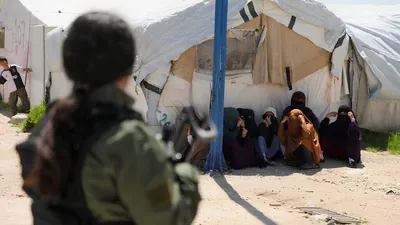
2026.7.4 France Faces Appeal Over Girls Held in Syria Camp
A French lawyer has filed an appeal before the administrative judiciary in Paris against an implicit decision by the French Foreign Ministry refusing to repatriate two French girls held in Roj camp in al-Hasakah governorate (northeastern Syria), after their mother died in April, according to Agence France-Presse.
The agency said the appeal targets an undeclared administrative decision issued after the Foreign Ministry failed to respond to repeated requests submitted by lawyer Marie Dosé to repatriate the two girls, aged 10 and 12, who have been living in the camp since December 2018.
According to the text of the appeal reviewed by the agency, the older girl was born in France, while the two sisters remained with their mother inside the camp until her death in April, prompting the lawyer to demand their repatriation on the grounds that they had become orphans.
The lawyer said the two girls are in a “state of extreme vulnerability,” arguing that the Foreign Ministry’s failure to respond to the repatriation requests effectively constitutes an implicit decision of refusal.
She added that the appeal filed this week is based on the argument that “the absence of a response constitutes an absence of reasoning for the refusal decision,” saying this violates a 2022 ruling by the Grand Chamber of the European Court of Human Rights, which addressed states’ procedures in handling requests to repatriate their nationals held in northeastern Syria.
The French Foreign Ministry did not issue an immediate comment on the case, according to Agence France-Presse.
Lawyer: France Had Repatriated Orphans
Lawyer Marie Dosé views the case as different from previous files, explaining that French authorities had routinely repatriated orphaned children even during years when they refused to carry out broad repatriations from the camps.
She said, “The problem is that France has always repatriated orphans, even in 2019 when it refused any repatriation,” adding that other countries have continued in recent months to take back women and children from the camps, including Turkey, Indonesia, and Australia.
She considered that the political developments Syria witnessed after the fall of Bashar al-Assad’s regime in December 2024 changed the circumstances on which Paris had previously relied.
She added, “We are no longer at all in a geopolitical situation where everything is in the hands of the Kurds and in a lawless zone. There are now diplomatic relations with Syria.”
Hundreds of French Nationals Left for Syria and Iraq
Data from France’s National Anti-Terrorism Prosecutor’s Office, issued at the start of this year, states that 1,490 people have left France since 2012 for the Iraqi-Syrian region, including 417 adult women.
According to the same data, 395 adults have so far returned to France, including 176 women, in addition to 361 minors, 325 of whom are still underage, while 36 others have reached adulthood.
France’s most recent repatriation operation dates back to mid-September 2025 and included ten children and three women aged between 18 and 34, according to the agency.
Syrian Calls for Repatriation
The case comes as the Syrian government continues to call on foreign countries to take back their nationals present in al-Hol and Roj camps in the northeast of the country.
Syria’s permanent representative to the United Nations, Ibrahim Olabi, called during a Security Council session on June 24 on all concerned states to assume their responsibilities toward their citizens in the two camps, urging cooperation to find lasting solutions and speed up their return to their countries.
Olabi described al-Hol and Roj as “camps of hell,” saying that thousands of women and children of multiple nationalities had been deprived for years of basic services, including healthcare and education.
The Syrian government announced in February the closure of al-Hol camp after transferring its residents to Aq Burhan camp in rural Aleppo, while the file of Roj camp remained under review.
Previous Plans to Evacuate Roj Camp
On February 21, Sheikhmous Ahmed, co-chair of the Office for Displaced Persons and Refugees Affairs in the Autonomous Administration of North and East Syria (AANES), said Roj camp would be evacuated soon.
He explained at the time that the camp housed about 730 foreign families from 42 countries, alongside 15 Iraqi families and 11 Syrian families, with a total of nearly 2,225 people.
He added that the camp remained under the administration of the Autonomous Administration and the protection of the Asayish forces, noting that there was a decision to evacuate it at a later stage.
Return of Australians Reignited Debate
The case also coincided with ongoing repatriations by some countries from Roj camp, as Australia recently took back a group of 13 people, including four women and nine children, who had been living in the camp in northeastern al-Hasakah.
No charges were brought against members of the group upon their arrival, according to the Australian Federal Police, but authorities later arrested two women, a mother and her daughter, in Melbourne and charged them with offenses related to detaining and enslaving a woman during their presence in Syria in 2014.
Authorities also arrested a third woman in Sydney and charged her with offenses related to entering a prohibited conflict zone and joining a listed terrorist organization, a step that revived political and security debate inside Australia over how to deal with returnees from camps in northeastern Syria.
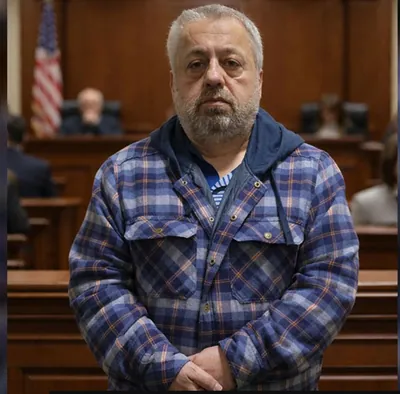
An Assad family relative convicted of participating in a narcotics and weapons trafficking conspiracy was sentenced to 30 years in federal prison, marking another high-profile US prosecution tied to the former Assad regime.
Antoine Kassis, 59, a dual Lebanese-Syrian national, received a 30-year sentence on July 2 for conspiracy to commit narco-terrorism and a concurrent 20-year sentence for conspiracy to provide material support to a designated foreign terrorist organization, according to the US Department of Justice and the US Drug Enforcement Administration.
The sentencing follows Kassis’ conviction on charges stemming from a scheme to exchange military-grade weapons linked to the Assad regime for hundreds of kilograms of cocaine supplied by Colombia’s National Liberation Army, or ELN, which the US has designated as a foreign terrorist organization.
Weapons-for-Cocaine Plot Detailed
According to court records cited by the Justice Department, Kassis used his access to senior Assad regime officials to facilitate the trafficking operation. Prosecutors said he identified himself as a cousin of Bashar al-Assad and claimed he worked directly with Maher Assad and other senior military officials during the negotiations.
Authorities said the conspiracy began in 2024 and centered on a $14 million deal involving 500 kilograms of cocaine in exchange for military equipment that included rocket-propelled grenades, missiles and sniper rifles. The Syrian Emergency Task Force (SETF) said the arrangement involved weapons diverted from Assad regime stockpiles.
The Justice Department revealed Kassis traveled from Lebanon to Kenya to meet an ELN weapons inspector before signing an agreement to ship what appeared to be a container of fruit from Colombia to Syria’s Port of Latakia. Investigators said the shipment was intended to conceal the cocaine, which Kassis planned to distribute across the Middle East.
International Cooperation Led to Arrest
Federal prosecutors said Kassis laundered drug proceeds through a Colombian co-conspirator’s organization. Evidence presented during the trial showed the network moved nearly $100 million in less than 18 months on behalf of organizations that included the Sinaloa Cartel and Hamas, according to the Justice Department.
Kenyan authorities arrested Kassis before extraditing him to the US in May 2025. The investigation involved the DEA’s Special Operations Division and law enforcement agencies in multiple countries across Africa, Europe, the Middle East and Latin America, according to the DEA.
SETF said Kassis is the second individual affiliated with the Assad regime to be convicted in the US. In March 2026, former Syrian Brig. Gen. Samir Othman al-Sheikh was found guilty of torture and defrauding US immigration authorities. Sheikh has not yet been sentenced.
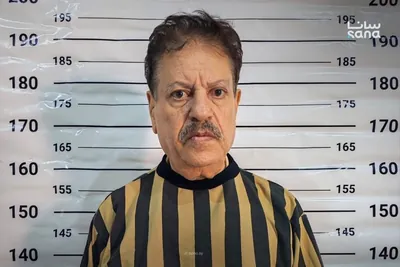
Hasakah, July 3 (SANA) The Internal Security Forces on Friday arrested former Major General Ali Saleh Diab, a prominent officer within the military and security apparatus of the deposed regime, during a specialized security operation based on precise tracking and monitoring.
The Ministry of Interior clarified via its official Telegram channel that security records indicate Diab served as the head of the Military Security Branch in the city of Qamishli within Hasakah province for ten years, between 2008 and 2018.
His name is linked to the commission of systematic violations and crimes, and he was known to be a close associate of the top security agency chiefs during that era.
The ministry stated that investigations point to Diab’s responsibility for the tracking and arrest of large numbers of young men in Hasakah and Qamishli, who were subsequently handed over to the notorious Palestine Branch and Sednaya Prison.
This operation comes within the framework of the efforts by the Ministry of Interior and relevant authorities to pursue and hold accountable officials of the deposed regime involved in committing crimes and violations against the Syrian people, based on applying the principle of non-impunity, achieving transitional justice, and guaranteeing the rights of victims and their families.
—
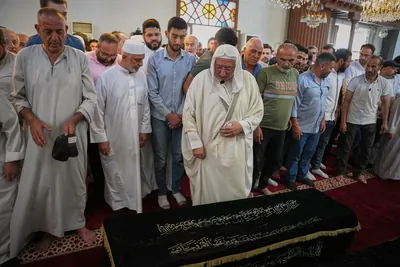
DAMASCUS, Syria (AP) — Mourners filed through Damascus on Friday, a day after an explosive device set off in a cafe in the Syrian capital killed 10 people.
The funeral procession in the normally bustling Midan neighborhood carried the coffins of three of the victims. Another 21 were wounded in the explosion at a popular cafe near the capital’s main judicial complex, which was often frequented by lawyers.
Syria’s Health Ministry raised the death toll Friday from nine to 10. Officials have promised to arrest those behind the attack, but no updates were announced in the investigation. No group has claimed responsibility for the attack.
Bahaa Qabbani said his brother, Fathi Qabbani, a married father of one son, worked at a shop near the site of the explosion and was passing by the cafe at the moment of the blast. He was killed.
Qabbani called the perpetrators of the attack “a group of terrorists who are against the homeland,” and called on security forces to “take hold of the country with an iron fist.”
Although there is so far no indication who carried out the attack, many were quick to blame loyalists of former President Bashar Assad, who was ousted in an insurgent offensive in December 2024. During the funeral procession, some mourners chanted, “The people want remnants of the former regime to be executed.”
Also Friday, Syria’s state-run news agency SANA reported that three members of security forces were wounded in an attack on a checkpoint at the entrance to the Damascus suburb of Jaramana. It said that a man on a motorcycle threw two hand grenades at the checkpoint guards and tried to throw a third one, but it exploded in his hand, killing him.
Another person was arrested in connection with the attack, SANA reported.
Since overthrowing the Assad dynasty, Syria’s new rulers have struggled to exert control across the country and to check extremist groups.
Deadly attacks blamed on the Islamic State group have targeted religious minorities, including a suicide attack on a church in a Damascus suburb and a bomb set off in a mosque in a predominantly Alawite area in the city of Homs.
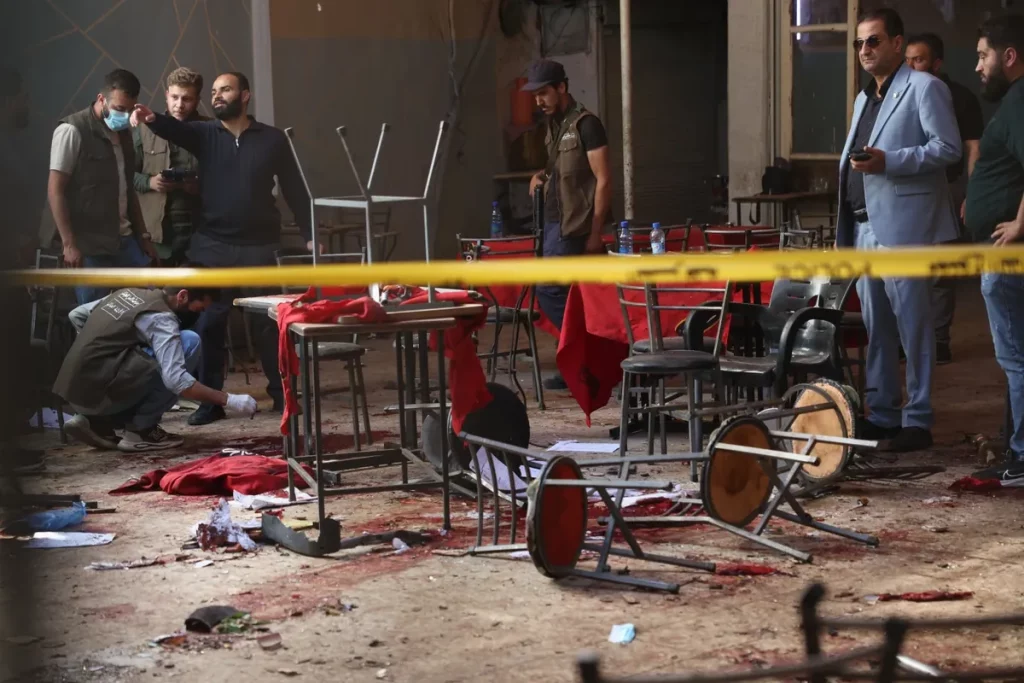
2026.7.3 Explosive device goes off in cafe in Syria’s capital, killing at least 9 people
DAMASCUS, Syria (AP) — An explosive device was detonated Thursday in a popular cafe in the Syrian capital of Damascus, killing at least nine people, Syria’s Health Ministry said.
The explosion near the main courthouse complex left 20 others wounded, the ministry said as reported by Syria’s state-run Al-Ikhbariya network.
No group immediately claimed responsibility. Security forces rushed to the cafe and cordoned off the area as they investigate the attack.
Syria’s Interior Ministry said in a statement that the explosive was a “crude improvised explosive device weighing approximately one kilogram equipped with metal shrapnel.” It said investigators were reviewing security camera footage, collecting forensic evidence and interviewing witnesses.
“The perpetrators of this terrorist act and those behind it will be brought to justice, and no one involved will escape accountability,” it said.
A video circulating on social media showed several wounded people lying on the ground, with police officers nearby. Ambulances later rushed to the scene treating people on site and taking the more severely wounded to hospitals in the Syrian capital.
The cafe is near the Syrian capital’s main judicial complex and was frequented by lawyers who worked in the neighborhood.
Jalal Aljanani, who owns a restaurant next door, ran toward the cafe when he heard the explosion and was horrified by the sight of the bodies on the floor.
“We carried the victims to the cars until the traffic police arrived,” he told The Associated Press, his shirt covered in blood. “Many of them had suffered severe impact injuries, and almost all of them were bleeding.”
Since overthrowing the Assad dynasty and taking power in a lightning insurgency in December 2024, Syria’s new rulers have cracked down on militants from the extremist Islamic State group in an attempt to thwart attacks in and around the capital.
During the uprising-turned war in Syria that began in 2011, Syrian President Ahmad al-Sharaa led the Hayat Tahrir al Sham group, formerly affiliated with al-Qaida, but since coming to power has vowed to protect Syrians of all backgrounds, especially religious and ethnic minorities.
Al-Sharaa has reasserted the government’s full authority across the vast majority of the country, wresting control back from extremist groups or Kurdish-led forces. However, he still contends with security concerns as he tries to stabilize the country.
Security agencies frequently announce that they have raided IS cells and thwarted attacks reportedly targeting minorities and busy commercial areas. However, several incidents such as a suicide bombing in a church in July 2025 have raised concerns among many Syrians. x1200
2026.7.2 Nine killed, 20 injured in Damascus café bombing, Interior Ministry says
Damascus, July 2 (SANA) Nine people were killed and 20 others injured after a bombing that targeted a café in al-Nasr Street near the Justice Palace in central Damascus on Thursday , according to the Syrian Interior Ministry.
In a statement, the ministry said preliminary investigations indicate the explosion was caused by an improvised explosive device containing approximately one kilogram of explosive material and packed with metal fragments, resulting in multiple casualties and significant damage at the scene.
Security forces immediately cordoned off the area, while engineering units and police K9 teams conducted searches to ensure no additional threats remained.
Forensic investigators have begun collecting evidence, reviewing surveillance footage and interviewing witnesses as part of efforts to determine the circumstances of the attack and identify those responsible.
The Interior Ministry said investigations are ongoing and urged the public to rely on official statements for updates and avoid spreading unverified information.
The ministry extended its condolences to the families of the victims, wished the injured a speedy recovery, and pledged to bring those responsible to justice.
—
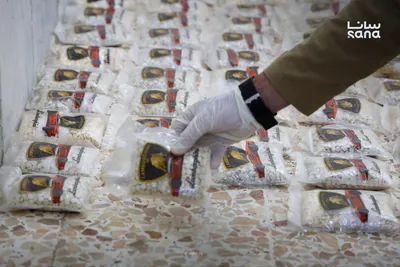
Damascus Countryside, July 1 (SANA) Syria’s Drug Enforcement Administration (DEA), in coordination with the Internal Security Command in Damascus Countryside, foiled an attempt to smuggle a large shipment of narcotics from Lebanese territory into the Nabk farms area following precise surveillance and security monitoring.
According to the DEA, the operation resulted in the arrest of one suspect and the seizure of 832,000 Captagon pills.
Authorities confirmed that the necessary legal report was filed and the detainee, along with the confiscated substances, was referred to the competent judiciary to complete the legal proceedings.
2026.6.27 High Profile Defendants Face Accountability in Syria’s Transitional Justice Procedures
Syria’s transitional justice process reached a significant milestone this week as courts in Damascus opened proceedings against some of the most prominent figures associated with the former Assad regime. The trials of former Grand Mufti Ahmad Badruddin Hassoun and Bashar al-Assad’s cousin, Wassim al-Assad, mark a new phase in efforts to hold former regime officials and supporters accountable after decades of impunity.
The Fourth Criminal Court at the Palace of Justice in Damascus convened its first session June 25 in the case against Hassoun, who served as Syria’s Grand Mufti under Bashar al-Assad. According to the indictment read in court, Hassoun faces charges including complicity in war crimes, crimes against humanity and incitement to murder during Syria’s conflict.
The hearing was attended by the attorney general and representatives from local and international human rights organizations, while the Ministry of Justice broadcast portions of the proceedings live on its official Facebook page.
Prosecutors Detail Allegations Against Former Mufti
The prosecution argues Hassoun used his position as Syria’s highest religious authority to provide religious and political legitimacy for the actions of the Assad regime, its allies and affiliated militias. Court documents allege he encouraged violence against civilians, praised military commanders accused of war crimes and publicly supported Russian and Iranian intervention in Syria.
Judge Fakhruddin al-Arian, who presided over the session alongside Judges Abdulhamid al-Hamoud and Hussam Abdurahman, stated that Hassoun’s repeated public statements allegedly encouraged attacks against civilian areas opposed to the government while providing justification for crimes committed during the conflict.
Attorney General Hassan al-Turba argued the case was “not for an ordinary person,” but for someone who occupied a prominent religious office and, according to prosecutors, used that position to legitimize violence rather than promote peace.
Among the allegations presented in court were claims that Hassoun lectured military officers in support of the regime, threatened civilians in the lilberated areas and maintained close relationships with senior security officials, including former intelligence chief Ali Mamlouk. The court adjourned the proceedings until July 16, when defense arguments and witness testimony are expected to continue.
Parallel Cases Target Former Regime Figures
One day earlier, the same court opened proceedings against Wassim al-Assad, a cousin of the Assad who has long been associated with allegations of Captagon trafficking and organized criminal activity during the Assad era.
According to SANA, Wassim faces charges related to drug trafficking, war crimes, crimes against humanity and other criminal offenses allegedly committed under Assad’s regime. Witness testimony began during the opening session.
Syrian authorities arrested Wassim June 21, 2025, as part of ongoing efforts to investigate individuals accused of crimes committed before the Assad’s fall.
The cases against Hassoun and Wassim are part of a broader series of prosecutions now underway before the Fourth Criminal Court. Proceedings have also continued against former Political Security chief Atef Najib and informant Abdulnasir Baraq.
A Test of Syria’s Judicial Transition
Syrian authorities describe the prosecutions as part of the country’s transitional justice framework following the fall of the Assad in 2024. Attorney General al-Turba said the objective is ensuring accountability for those accused of crimes against the Syrian people while protecting the rights of victims and their families through judicial proceedings.
The charges against Hassoun also demonstrate a key legal principle emphasized by the court. Judges noted war crimes and crimes against humanity are not subject to statutes of limitation and cannot be erased through amnesty because of their gravity under international law.
For many Syrians, the proceedings represent one of the first public tests of whether institutions that once protected powerful regime figures can now deliver justice through an independent legal process after decades in which senior officials and influential allies largely operated without fear of prosecution.
2026.6.25 Najib Trial Advances Amid Transitional Justice Efforts
Syria’s transitional justice process took another step forward as the trial of Atef Najib, a former security official and prominent figure under Assad’s regime in Daraa, resumed before the Fourth Criminal Court for Transitional Justice in Damascus.
Speaking to Levant24, lawyer Jassim al-Mousleh described proceedings as an important test of Syria’s commitment to the rule of law. He emphasized transitional justice should not serve as an act of public revenge or a political instrument but as a responsibility entrusted to state institutions and the judiciary.
Mousleh said Syrians should support the legal process and allow justice to proceed through fair trials rather than retribution. He pointed to President Ahmad al-Sharaa’s references to the arrest of Amjad Yusuf as an indication of the government’s commitment to accountability through lawful judicial mechanisms intended to promote reconciliation and prevent renewed conflict.
Witnesses Describe Alleged Abuses
During its fourth session on Tuesday, the court heard testimony from 13 witnesses, including a protected witness identified as “One.” According to Radif Mustafa, director of accountability at the National Commission, the hearing focused exclusively on prosecution witnesses and was attended by representatives from international and human rights organizations.
Witnesses presented testimony and evidence concerning alleged human rights violations committed under Najib’s authority. The allegations included arbitrary detention, extrajudicial killings, systematic torture and abuses against children, who reportedly represented a significant portion of detainees in the cases under review.
One witness described physical and sexual abuse inside a security branch in Daraa. Najib rejected the allegations and challenged the witness accounts. The court later adjourned proceedings until July 14, when additional prosecution witnesses are expected to testify.
Charges Tied to the Daraa revolution
Najib, a cousin of Bashar al-Assad and the former head of Political Security in Daraa province, faces charges that prosecutors say amount to war crimes. They accuse him of direct and command responsibility for systematic crimes against civilians, including murder, torture, arbitrary detention and the suppression of peaceful demonstrations.
The indictment alleges Najib oversaw the use of live ammunition and excessive force against protesters and bears responsibility for the Omari Mosque massacre, an event widely associated with the early stages of the Syrian revolution. Prosecutors also accuse him of participating in coordinated efforts with other security, military and political officials to carry out widespread abuses.
Throughout previous hearings, Najib has denied all charges. He argues other security agencies arrested the schoolchildren, whose anti-government graffiti in March 2011, helped spark demonstrations in Daraa. He has also blamed Military Security and Air Force Intelligence for opening fire on protesters claiming disagreements among senior officials influenced the government’s response to the protests.
Expanding Accountability Measures
Najib’s case is part of a broader transitional justice initiative aimed at uncovering the truth, delivering justice for victims and addressing impunity while maintaining fair trial standards. The National Commission announced upcoming trials involving other former officials, including Wassim al-Assad, a relative of Assad, and Ahmad Hassoun, the former grand mufti. Together, these proceedings reflect a wider effort to pursue accountability through legal institutions while emphasizing due process and national reconciliation in post-conflict Syria.
2026.6.14 Syria dismantles drug trafficking network in joint operation with Iraq
DAMASCUS, Syria (North Press) – Syria’s Ministry of Interior on Sunday announced the dismantling of an organized international drug trafficking network and the arrest of several of its members during a joint operation with Iraq.
In a statement, the ministry said that Syria’s Anti-Narcotics Department, working alongside Iraqi authorities, conducted a series of coordinated and simultaneous operations in the governorates of Homs and Deir ez-Zor.
The operation resulted in the dismantling of an organized international drug trafficking network, the arrest of a number of its members, and the seizure of 800,000 captagon pills and 60 kilograms of hashish that were prepared for smuggling and distribution, the statement said.
The ministry added that the operation reflects the high level of coordination and intelligence cooperation between the relevant agencies in both countries.
No further details were provided regarding the identities of those arrested or the intended destination of the seized narcotics.
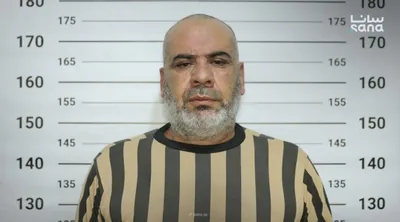
Damacus-The Syrian Interior Ministry announced on Sunday the arrest of criminal Abdulilah Ismail al-Hamad, who was involved in war crimes, drug trafficking and other abuses committed during the rule of the deposed regime.
According to a statement issued by the Ministry on its Telegram channel, investigations found that al-Hamad lead a military formation affiliated with the Al-Quds Brigade militia and participated in military operations in several Syrian provinces.
Investigators also linked al-Hamad to security facilities involved in kidnappings, drug trafficking and the torture of civilians, including cases that resulted in deaths, the statement said.
The arrest followed an intelligence-led operation involving surveillance and monitoring that prevented the suspect from evading capture.
The Ministry said legal procedures are continuing and that the case will be referred to the judiciary.
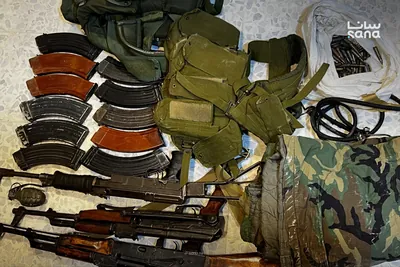
Damascus-Syrian authorities have dismantled an international drug-trafficking network and seized 800,000 captagon pills and 60 kilograms of cannabis in coordinated operations in Homs and Deir Ezzor provinces, the Interior Ministry said on Saturday.
The ministry said the operations were carried out by Syria’s Drug Enforcement Administration (DEA) in coordination with Iraq’s General Directorate for Narcotics Affairs and Psychotropic Substances as part of efforts to combat organized crime and cross-border smuggling.
Several suspects were arrested during the raids, according to a ministry statement posted on Telegram.
The ministry said the drugs were intended for smuggling and distribution.
It described the operation as the result of close coordination and intelligence-sharing between Syrian and Iraqi authorities aimed at disrupting international trafficking networks and supply routes.
The operation follows a similar crackdown announced in April. On April 26, Syria’s DEA, working with Iraqi anti-narcotics authorities, conducted coordinated raids in Damascus Countryside and Homs targeting what officials described as an international trafficking network with regional links. According to the Interior Ministry, authorities seized 1.73 million captagon pills and arrested eight suspects, including a woman.
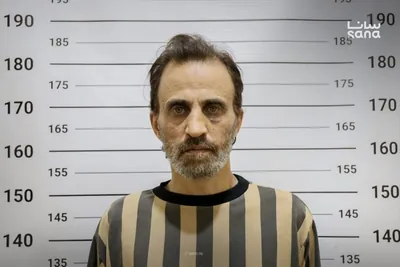
Daraa-Syrian security forces, in coordination with the Counter-Terrorism Directorate, have arrested Raafat Anwar Al-Amoudi, a wanted suspect accused of working for the deposed regime’s Popular Committees militia in Daraa Province.
The Ministry of Interior said Saturday preliminary investigations indicate that al-Amoudi was involved in the arrest and enforced disappearance of a number of Daraa residents through direct coordination with deposed security agencies.
Investigators also found that Amoudi worked for former Military Security Branch chief Brigadier General Wafiq Nasser and operated under the supervision of assistant officer Osama Abu Jaafar.
According to the ministry, evidence revealed close cooperation between al-Amoudi and the Air Force Intelligence branch led by Colonel Qusai Mihoub. Authorities said he allegedly handed over individuals to security services and later blackmailed their families, demanding large sums of money in exchange for false promises of securing their release.
Authorities continue to investigate the case to uncover all related circumstances before referring the suspect to the judiciary for legal proceedings.
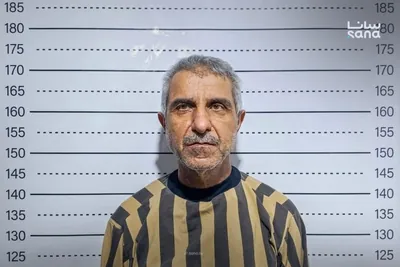
Damascus – Syria’s Interior Ministry announced on Friday the arrest of a deposed regime senior intelligence official involved in violations committed against the Syrian people.
The ministry said Qais Hassan al-Abd al-Rajab, a former brigadier general who served as deputy director of the General Intelligence Directorate (State Security), was arrested by the Counterterrorism Directorate following extensive efforts to track his movements.
According to a statement posted on the ministry’s Telegram channel, al-Abd al-Rajab is involved in violations committed against residents of the Damascus countryside areas of Hajar al-Aswad, Daraya and Moadamiyat al-Sham, as well as a number of towns and villages in Daraa province.
The ministry said authorities had monitored attempts by al-Abd al-Rajab to evade arrest before he was taken into custody.
Investigations are ongoing, and legal procedures are being completed ahead of referring the case to the judiciary, the statement said.
In earlier remarks, Interior Minister Anas Khattab said the Counterterrorism Directorate, in coordination with internal security commands across the provinces, continues to pursue individuals accused of crimes and violations in order to bring them before the courts.
He said security agencies are carrying out surveillance, intelligence-gathering and enforcement operations as part of efforts to ensure accountability and uphold the rule of law.
The arrest comes as Syrian authorities continue broader efforts aimed at pursuing former officials and others involved in crimes and violations, as part of measures focused on accountability, transitional justice and the protection of victims’ rights.
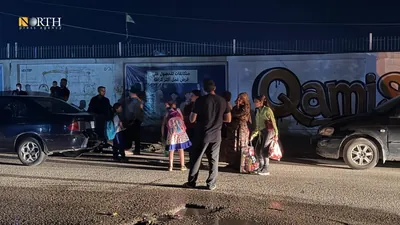
2026.6.9 Syrian security forces arrest 235 ISIS suspects in three months
DAMASCUS, Syria (North Press) – The Syrian Ministry of Interior on Tuesday announced that security forces arrested 235 individuals suspected of belonging to the Islamic State (ISIS) over the past three months.
In a statement, the ministry said security operations also led to the dismantling of seven ISIS-affiliated cells across several governorates.
According to the ministry, those detained include 198 Syrians and 37 foreign nationals. The operations were carried out in the governorates of Hama, Aleppo, Deir ez-Zor, Homs, and Damascus.
The ministry added that security forces seized 120 pieces of equipment during the raids, including 25 weapons, six vehicles, 22 explosive-related devices, and 67 electronic devices.
It noted that the security campaign began in March and targeted ISIS-linked cells in the town of Abu Kamal and surrounding areas, extending to the al-Busayrah countryside in Deir ez-Zor Governorate.
The Interior Ministry said it would continue pursuing activities linked to extremist organizations or any actions that threaten security and stability, in coordination with relevant security agencies.
2026.6.8 Seven years on, Abdul Baset al-Sarout remains defining icon of the Syrian revolution
Damascus – Syrians on Sunday marked the seventh anniversary of the death of Syrian revolution figure Abdul Baset al-Sarout, whose life and sacrifice continue to embody the spirit of resistance, resilience and unwavering commitment that defined a pivotal chapter of the country’s modern history.
Al-Sarout, a former goalkeeper for Al-Karamah Club and Syria’s youth national team, rose from the stadiums to become one of the most powerful voices of the early protests in Homs, where his chants and public presence helped ignite demonstrations and sustain morale during the most violent stages of the uprising.
Those who accompanied him throughout the revolution said he remained a symbol of courage despite immense personal loss, including the killing of close family members and companions. They described him as a figure who never withdrew from the streets or the struggle, moving from peaceful protest to armed resistance while maintaining his influence among demonstrators.
Activists, journalists and former comrades said his impact extended far beyond the battlefield, shaping the identity and spirit of a generation that rallied around calls for change.
Born in 1991, al-Sarout was killed on June 8, 2019, at the age of 27. For many Syrians, his death remains a defining moment, and his legacy continues to stand as a symbol of sacrifice, defiance and hope.
2026.6.2 Austria tries former Syrian intelligence chief over torture allegations
QAMISHLI, Syria – A former Syrian intelligence chief who served in the northern city of Raqqa on Monday appeared before a court in Austria, facing charges of torture, sexual abuse, and other crimes allegedly committed against opponents of former Syrian President Bashar al-Assad during the early years of the Syrian conflict.
The trial, which is expected to continue for a month, is among a limited number of cases in which European courts have exercised jurisdiction over alleged crimes committed by officials of the former Syrian government.
The main defendant, identified under Austrian privacy laws only as Khaled al-Halabi, headed the General Intelligence Directorate branch in Raqqa between 2011 and 2013, during a period marked by widespread anti-government protests and armed conflict.
Prosecutors accuse al-Halabi of overseeing torture and mistreatment of detainees held by Syrian intelligence services. A second defendant, a former senior police official in Raqqa known by the nickname “Angel of Death,” faces charges including serious bodily harm, aggravated coercion, and sexual assault.
If convicted, both men could face prison sentences of up to 10 years. The defendants pleaded not guilty and denied participating in torture or other abuses.
When questioned by the court, al-Halabi rejected allegations that violence was used against detainees under his authority. “Impossible. That would not be in my interest. It is also not how I was raised,” he told the presiding judge.
According to prosecutors, detainees were held in overcrowded cells and subjected to systematic abuse, including beatings and other forms of ill-treatment. Khaled al-Halabi denied witnessing or authorizing such practices and said detainees were not kept overnight at the intelligence facility.
He also denied any knowledge of the so-called “magic carpet,” a torture device reportedly used in Syrian detention centers.
Al-Halabi arrived in Austria in 2015 and was granted asylum after leaving Syria. During the hearing, he declined to confirm reports that intelligence agencies assisted his departure from the country, saying only that relatives had helped arrange his travel.
The case follows a series of war crimes prosecutions in Europe targeting former Syrian officials accused of human rights violations during Syria’s conflict, which began in 2011.
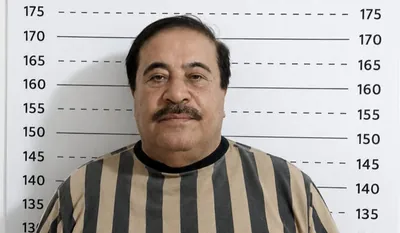
DAMASCUS: Syrian authorities said Tuesday that they had arrested a former air force chief of staff under Bashar Assad who was sanctioned by the European Union including for his role in chemical attacks.
Since Assad’s December 2024 overthrow, Syria’s new Islamist authorities have periodically announced the arrest of military and security officials involved in atrocities during Syria’s more than decade-long civil war.
Last month, authorities launched the first trials for such senior figures as part of their commitment to providing justice for victims and their families.
An interior ministry statement announced the arrest of Jayez Al-Moussa, “chief of staff for the air force during the era of the former regime” in a security operation.
Moussa served for more than four decades in Syria’s military under the Assad dynasty.
After the civil war erupted in 2011, he took control of the 20th division, which ran six military airports, before becoming air force chief of staff in early 2015.
For a time, he was responsible for coordinating with Russian forces, which intervened militarily in Syria’s conflict on Assad’s behalf later that year.
After retiring in 2016, Moussa was named governor of northeast Syria’s Hasakah province.
He hails from an Arab tribe in the eastern Deir Ezzor province and is known for his absolute loyalty to Assad and his calls to crush the former leader’s adversaries.
The EU added Moussa to its sanctions list in 2017, saying he was responsible “for the violent repression of the civilian population in Syria, including the use of chemical weapons attacks” during his tenure as air force chief.
Syrian authorities have recently announced the arrest of a number of Assad-era figures, including two former generals detained on Friday, one of whom is accused of involvement in a 2013 chemical attack on a Damascus suburb.
2026.5.11 Syrian teen arrested in Germany over suspected Daesh-inspired plot
BERLIN: A 17-year-old Syrian was arrested in Hamburg on suspicion of planning an attack likely inspired by Daesh, German prosecutors said Monday.
The teenager is suspected of wanting to try to kill “unbelievers” in a shopping center, bar or police station using explosives, Molotov cocktails or a knife, prosecutors said in a statement.
They added that a raid on a property used by the suspect had turned up fertilizer, a liquid barbecue lighter, a balaclava and a knife.
He was arrested on May 7 by a specialized Hamburg police unit.
Information from the German intelligence services and federal police was “crucial” to the investigation, the statement said.
Prosecutors have ordered a psychiatric evaluation of the suspect while the investigation continues.
The teenager is also suspected of “financing terrorism,” although it is not clear exactly what form this took.
Germany has been on high alert for attacks after several deadly incidents in recent years, some motivated by extremist ideology, others carried out by people found to have psychological problems.
2026.5.8 3 Australian women back from Syria face slavery and terrorism charges over alleged IS links
MELBOURNE, Australia (AP) — Three Australian women were refused bail when they appeared in courts on Friday charged with slavery and terrorism offenses after they arrived home from Syria with another 10 others whom police allege are linked to the Islamic State group.
The four women and nine children, who have spent years in Roj camp in the Syrian desert, landed on two Qatar Airways flights from Doha on Thursday despite the Australian government warning they would face charges if they returned.
Kawsar Abbas, 53, and her daughter Zeinab Ahmed, 31, were charged in a Melbourne court in relation to allegations that their family bought a female Yazidi slave for $10,000, police said in a statement.
Their lawyers said they would apply for both women to be released on bail on Monday. Neither woman spoke during their brief court appearance. Bail was formally denied.
Abbas, her husband and children traveled in 2014 to Syria, which was then the center of IS’s co-called caliphate, police allege.
Abbas was complicit in buying the slave, who was kept in the family home, police allege.
The mother was charged with four crimes against humanity under Australian law, and the daughter was charged with two slavery crimes. Each charge carries a potential penalty of 25 years in prison.
—
2026.4.30 Syria trial seen as first step on long road for Assad’s victims
The highly charged scenes in a Damascus court on Sunday, as the first official of the former Assad regime went on trial, were a stark reminder of the clamour for justice among the families of its countless victims. While some say it is a start, it has also raised concerns over the will of Syria’s new authorities to bring the many perpetrators to account.
“People want to hang Atef Najib!” the crowd chanted inside the Palace of Justice, where the former head of the Political Security intelligence agency in the southern city of Deraa faced charges of “crimes against the Syrian nation”.
There were also shouts of “Signs of victory have arrived from Houran”, a slogan sung during the uprising, referring to the region surrounding Deraa, where anti-government protests began in 2011 before spiralling into a civil war.
Families of the victims of the regime of ousted President Bashar al-Assad gathered in the courtroom, waiting for Najib – Assad’s first cousin – to be brought before the judges. This was the first trial in a court specially designed for such cases.
One mother sat on a bench quietly, tears rolling down her face, as others around her chanted “death and no humiliation”, another slogan used during the uprising, and “Syria for us and not for the Assad regime”. Another woman behind her wiped tears from her own face.
This was a moment when many families felt justice was prevailing, allowing their relatives killed under Assad to finally rest in peace.
Najib walked into the courtroom dressed in a black-and-white prison uniform. He took his place, standing behind bars as the families looked on.
He is being prosecuted for crimes committed against the people of Deraa in the uprising. It began there after security forces violently cracked down on protesters who took to the streets after several boys had been arrested and tortured for writing anti-government graffiti inspired by the “Arab Spring”.
Najib is reported to have met representatives of the boys’ families at the time and said: “Forget your children. If you want children, make more children. If you don’t know how, bring us your women and we will make them for you.”
Under Assad’s regime, human rights activists and protesters were prosecuted at the Palace of Justice, with many of them sentenced to death after unfair trials. Now, by a twist of fate, former officials are facing trial in the same place.
Nuha al-Masri, a 54-year-old lawyer from Deraa, was one of those who filed a case against Najib and was in court to see him.
Masri’s brother was killed when Najib ordered security forces to crush protests in March 2011.
“I felt that today we started to get justice. It tells everyone that no-one is exempt from justice. It was a dream to see a regime member behind bars,” she said.
But while Najib’s trial is a milestone for many families, there are those who criticise it as a show to appease the public.
Anwar al-Bunni is a Syrian human rights lawyer and head of the Syrian Centre for Legal Studies and Research.
He played a key role in gathering evidence for the trial of former Syrian colonel Anwar Raslan in Germany in 2020-22. That trial, which was the world’s first criminal case brought over state-led torture in Syria, saw Raslan sentenced to life in prison after being found guilty of crimes against humanity over the murder of 58 people and the torture of more than 4,000.
“Syrian law has no legislation [for prosecuting] war crimes and crimes against humanity,” he told the BBC. “They are ridiculing his [Najib’s] crimes and ridiculing the victims with this trial.”
“This should have been done when there is a law passed by the parliament for war crimes and conducted by a different body like the Commission for Transitional Justice, but not with this court with no experienced judges,” he added.
Zahra Barazi, vice-president of the National Commission for Transitional Justice set up in 2025 to deal with past abuses, said they were working closely with the ministry of justice on the case.
“We drafted a Transitional Justice law to ensure that in the future once the law is passed by the parliament, new charges of crimes against humanity and war crimes will be added to the charges,” she added. “The court itself is a specialised court with specialised Transitional Justice judges.”
Syria’s new Islamist government has arrested several members of the Assad regime. The most recent was Amjad Youssef, a key suspect in the Tadamon massacre in 2013, when 41 civilians were blindfolded, shot dead and thrown into a pit.
But there is still mounting criticism of the government’s approach to dealing with those from the former authorities accused of serious crimes.
For example, a former commander of a pro-Assad militia, Fadi Saqr, has been linked to the killings in Tadamon but is now working with the government’s civil peace commission, raising concerns among activists about accountability.
For victims of the former regime though, the opening of this trial has brought some of them closure, and hope that the path towards justice has finally begun.
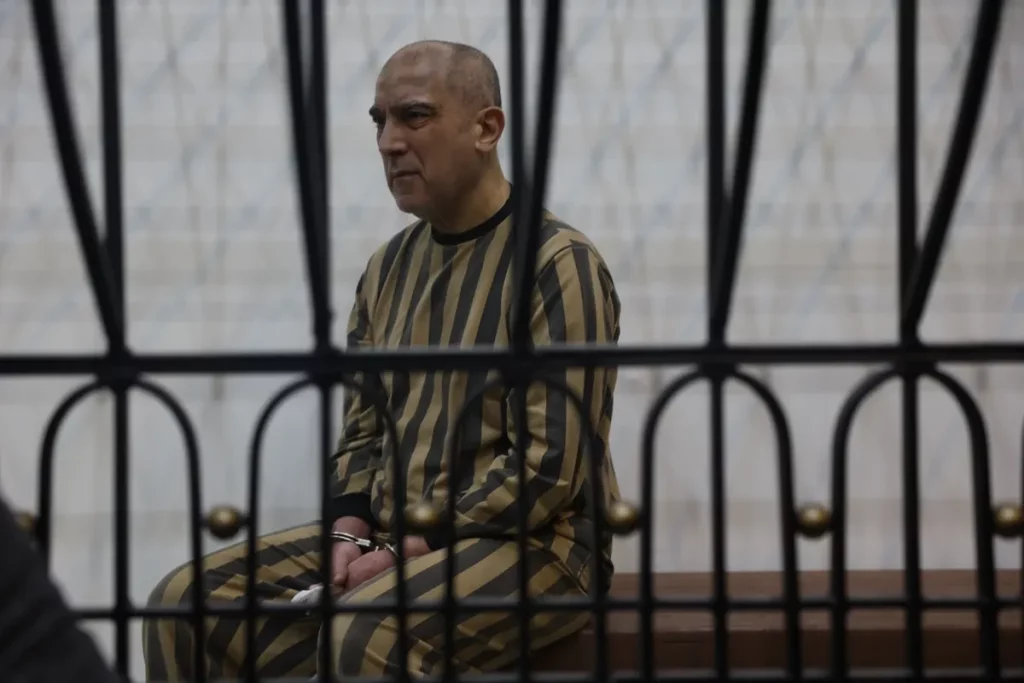
2026.4.26 Syria’s first public trial of Assad-era officials opens in Damascus
DAMASCUS, Syria (AP) — The first public trial in Syria of officials linked to the rule of former President Bashar Assad opened Sunday in Damascus.
Atef Najib, a former Syrian army brigadier general who was head of the Political Security Branch in southern Syria’s Daraa province under Assad and who is also a cousin of the former president, appeared in the courtroom to face charges related to “crimes against the Syrian people,” state-run news agency SANA reported.
Najib was in that position in 2011, when teenagers who scrawled anti-government graffiti on a school wall in Daraa were arrested and tortured. The case became a catalyst for mass protests against the repressive policies of Assad’s security forces.
The protests were met by a brutal government crackdown and spiraled into a 14-year civil war that ended with Assad’s ouster in December 2024 in a lightning rebel offensive. Assad fled to Russia, while most members of his inner circle also escaped Syria.
Assad and his brother, Maher, former commander of the Syrian military’s 4th Armored Division — which Syrian opposition activists have accused of killings, torture, extortion and drug trafficking, in addition to running its own detention centers — were charged in absentia, along with a number of other former high-ranking security officials.
Najib was the only one of the defendants who was arrested and present in person in court Sunday for a preparatory session in the trial, which will continue next month.
Crowds gathered outside the courthouse to celebrate. Baraa Abdulrahman, a spokesperson for the Syrian Ministry of Justice, said the trial “is of great importance for the independence of the judiciary, for transparency and accountability.”
One of the plaintiffs, Ramez Abu Nabbout, said his brother, a father of three, was killed when security forces opened fire on protesters at Daraa’s Omari Mosque.
“He was a civilian and peaceful, but Atef Najib greeted peaceful (protesters) with gunfire,” he said. “Of course we hope Atef Najib will be quickly convicted and will get the most serious sentence, which is the death penalty.”
The government of interim President Ahmad al-Sharaa has faced criticism over delays in launching a promised transitional justice process. Syria is struggling to heal following 14 years of civil war that left an estimated half a million people dead, millions more displaced, and the country battered and divided.
Authorities now appear to be moving more aggressively to prosecute officials linked to Assad.
Syrian authorities on Friday arrested Amjad Yousef, a former intelligence officer who appeared in a video leaked four years ago that purportedly showed him and his comrades executing dozens of blindfolded and shackled prisoners in the Damascus suburb of Tadamon during the country’s civil war.
x1200
—
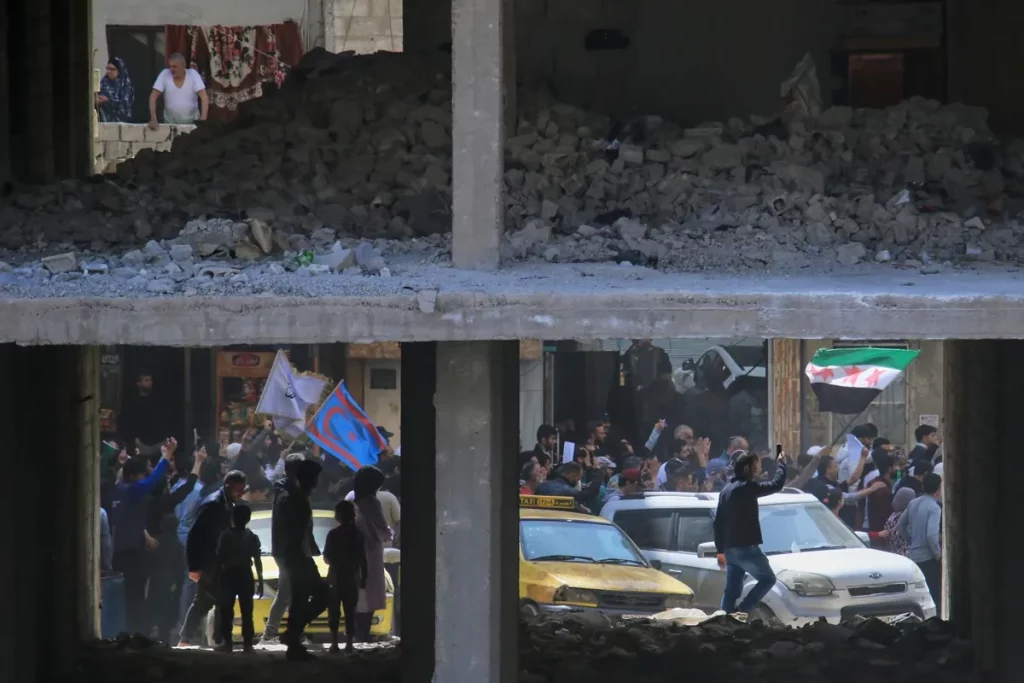
2026.4.25 Syrian authorities arrest ex-intelligence officer tied to a leaked video of a massacre
DAMASCUS, Syria (AP) — Syrian authorities said Friday they have arrested a former intelligence officer who appeared in a video leaked four years ago that purportedly showed him and his comrades fatally shooting dozens of people during the country’s civil war.
Amjad Yousef was arrested in the central province of Hama, where he had been hiding, the Interior Ministry said, and posted a photo of him in a striped prison uniform.
Since insurgents ousted former President Bashar Assad in December 2024, dozens of members of his security agencies that were blamed for atrocities during the conflict have been arrested. Assad fled to Russia.
The conflict, which began with anti-government protests in March 2011 before turning into a civil war, left half a million people dead and over 1 million wounded.
Yousef was one of several Syrian security agents who authorities said appeared in a video leaked in 2022, in which dozens of blindfolded, bound men were shot and thrown into a trench.
U.S. special envoy to Syria Tom Barrack posted on X that the arrest was “a powerful step away from impunity toward accountability, exemplifying the new paradigm of justice emerging in post-Assad Syria: one rooted in the rule of law, national reconciliation, and the equal application of justice regardless of past affiliations.”
Syria’s U.N. Ambassador Ibrahim Olabi told reporters at U.N. headquarters in New York the arrest is a major achievement and vowed, “We will not rest until we reach those higher in the chain of command.”
He called on the international community not to harbor perpetrators of crimes under the Assad regime. “Our message is very clear, you may run, but you will never escape justice,” Olabi said.
The 6 minute and 43 second clip shows members of Syria’s notorious Military Intelligence Branch 227 with a line of around 40 prisoners in an abandoned building in Tadamon, a suburb of Damascus near the Palestinian refugee camp of Yarmouk. For much of the war, the district was a front line between government forces and opposition fighters.
The prisoners were blindfolded, with their arms tied behind their backs. One after another, the Branch 227 gunmen stand them at the edge of a trench filled with old tires, then push or kick the men in, shooting them as they fall.
In the video, the intelligence agents tell some of the prisoners that they are going to pass through a sniper’s alley and that they should run. The men tumble onto the bodies of those who went before them. As bodies pile up in the trench, some still move, and the gunmen shoot into the pile.
The gunmen later set the bodies on fire, presumably to erase evidence of the massacre.
Last year, security forces in Syria said that they arrested three people involved in the same killings.
The Interior Ministry said in its statement Friday that authorities will go after all those involved in the Tadamon shooting to bring them to justice.
In March 2023, the U.S. State Department banned entry into the U.S. of Yousef, his wife and immediate members of his family.x1200
2026.4.24 Key suspect in notorious Tadamon massacre during Syria civil war arrested
A key suspect in one of the most notorious killings of the Syrian civil war has been arrested, Syria’s interior minister has said.
Amjad Youssef was wanted over the mass killing of civilians in April 2013 in the Tadamon district of Damascus.
Footage emerged in 2022 showing Syrian soldiers leading victims, bound and blindfolded, to a pit before shooting them. The video became one of the most direct pieces of visual evidence of extrajudicial killings by then government forces.
Interior Minister Anas Khattab said Youssef was the main perpetrator of the massacre and was taken into custody after a “well-executed” security operation.
Syria’s state news agency said he was detained in Hama province.
Footage published by the UK-based monitoring group the Syrian Observatory for Human Rights (SOHR) appeared to show Youssef after his arrest, sitting in a police car, his nose and forehead bloodied.
The killings at Tadamon attracted widespread attention after video, filmed by the perpetrators, showing it taking place was leaked nine years later.
In the film, victims are seen being led one by one to the pit and shot. It was one of several mass killings in Tadamon by government forces around that time.
Human Rights Watch (HRW), which has visited the site, said there was evidence that 288 were killed in Tadamon, 41 in the incident in April 2013.
It said 11 blindfolded victims shown in the video were shot at close range and pushed into a machine-dug grave.
It has called the area “a huge crime scene”.
HRW senior researcher Hiba Zayadin said the leaked video “filmed by the perpetrators themselves who laughed as they killed their victims, shows the [former] Syrian government’s callous disregard for people’s lives.
“This massacre is just one horrific incident in a pattern of state violence and apparent war crimes.”
The government at the time, led by President Bashar al-Assad, was toppled by rebels in December 2024. Assad’s forces had fought jihadist and rebel groups in the civil war which began in March 2011 when security forces cracked down violently on peaceful pro-democracy protests.
More than half a million people were killed in over 13 years of conflict which followed.
اعتقلت قوى الأمن العام التابعة لوزارة الداخلية، صانع المحتوى حسام اليونس من أبناء السويداء، خلال عودته من لبنان، مساء الخميس.
وبحسب مصادر إعلامية محلية، أوقفت قوات الأمن العام اليونس عند معبر “المتونة” أثناء عودته من لبنان، بسبب الحرب.
وبينت المصادر أنه جرى تحويله إلى بلدة المزرعة التي تتمركز فيها قوات الحكومة في ريف السويداء الغربي، دون تفاصيل إضافية.
يذكر أن اليونس من صناع المحتوى المعروفين في السويداء وكان قد أسس فريق إغاثي عقب أحداث السويداء في تموز الماضي، وقدم المساعدات لمئات العائلات، وغادر إلى لبنان منذ نحو شهر.
2026.3.10 Ex-Syrian intelligence officer appears in UK court charged with crimes against humanity
LONDON: A former member of Syria’s Air Force Intelligence attended a British court hearing via videolink on Tuesday charged with crimes against humanity and torture relating to the suppression of pro-democracy demonstrations in Damascus in 2011.
Salem Michel Al-Salem, 58, who now lives in Britain, appeared virtually at the hearing at London’s Westminster Magistrates’ Court from his home. He was wearing a breathing apparatus mask and the court was told he suffered from degenerative motor neurone disease.
Al-Salem is charged with three counts of murder as a crime against humanity relating to deaths in April and July 2011 “as part of a widespread or systematic attack against a civilian population with knowledge of the attack”.
He is also accused of three charges of torture relating to incidents in 2011 and 2012, and one of conduct ancillary to murder as a crime against humanity. He did not speak during the hearing and there was no indication as to how he would plead.
His lawyer Sean Caulfield told the court that Al-Salem was too unwell to confirm his name.
The seven charges were brought under a British law that allows the prosecution of serious international crimes committed abroad. The Crown Prosecution Service said it was the first time it had brought charges of murder as crimes against humanity.
In 2005, Afghan warlord Faryadi Zardad was convicted by a British court of torture that had taken place in Afghanistan.
Al-Salem, who has sought indefinite leave to remain in Britain, was a colonel in the Syrian Air Force Intelligence department with oversight of the Information Branch in the district of Jobar, to the east of central Damascus, British prosecutors say.
He is accused of leading a group tasked with quelling the demonstrations, which mostly occurred during Friday afternoon prayers. Prosecutors say he gave his men orders to open fire on protesters, which led to the deaths of some individuals.
Prosecutors say he was also present at, or took part in, the torture of men at the Information Branch building.
Al-Salem was first arrested in central England in December 2021. His lawyer had sought an order to withhold his name, arguing it could pose a risk to his safety. England’s Chief Magistrate Paul Goldspring rejected the application but ordered that his address not be made public.
He will next appear on Friday at London’s Old Bailey court.
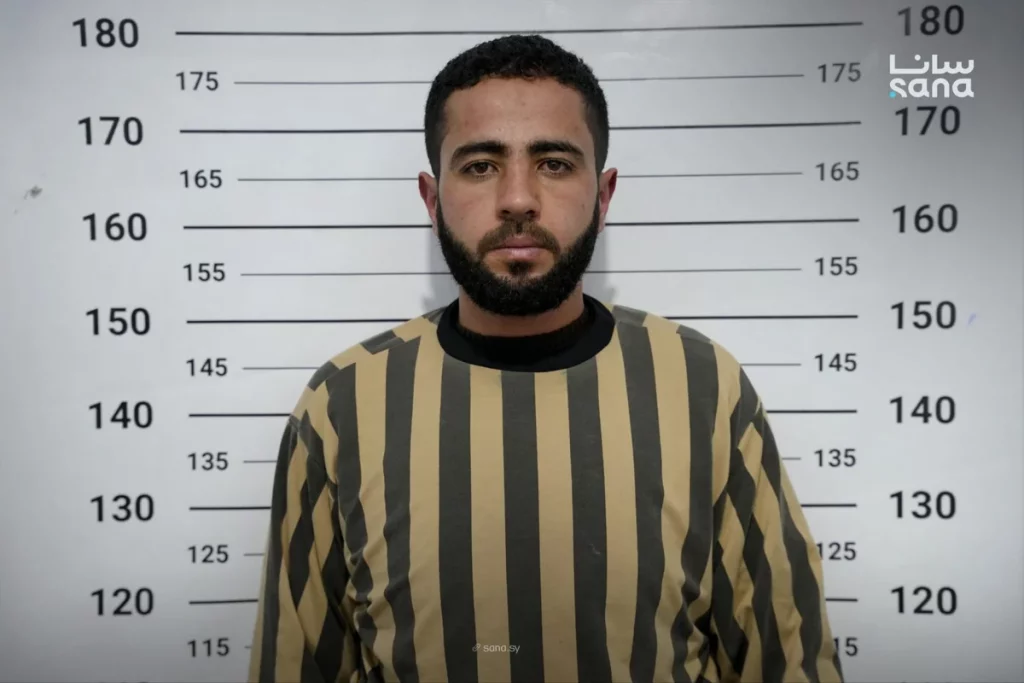
Deir Ezzor, Feb. 25 Syrian Internal Security Forces have arrested a member of ISIS in the northeastern province of Deir Ezzor following a security operation linked to a recent deadly attack on a member of the Defense Ministry.
Colonel Dirar al-Shamlan, head of Internal Security in Deir Ezzor, said the man was detained in the city of al-Mayadeen after an operation based on precise intelligence.
Al-Shamlan added that the man identified as Mahmoud Eid al-Ali was involved in an attack carried out by an ISIS cell that resulted in the martyrdom of a member of the Defense Ministry’s 86th Division two days ago.
The arrest followed the collection of evidence linking the man to the attack, the colonel said, adding that he admitted during preliminary questioning to being affiliated with ISIS and participating in the operation.
On Monday, an Internal Security checkpoint in the northeastern city of Raqqa was attacked by ISIS militants, martyring four personnel, authorities said.
x1200
2026.2.23 Photos show filming of Ramadan TV drama series on the war-scarred streets of Syria’s Aleppo
ALEPPO, Syria (AP) — Ramadan in the Arab world is a month of fasting and prayer by day — and television by night. For decades, families have gathered after the iftar, the evening meal that breaks the daytime fast, to follow the season’s highly anticipated drama series, produced specially to air during the Islamic holy month.
In the week before Ramadan, a television crew in central Aleppo was busy preparing one of those productions, with a battered street in the historic city transformed into a scene from decades past.
Classic 1970s cars lined the curb. A horse-drawn cart rolled through the frame. A vendor in a red tarboush, a brimless cone-shaped hat, stood beside steaming pots of sahlep — a sweet, thickened milk drink flavored with spices and associated with winter evenings.
Just outside the camera’s view stood a stark reminder of Syria’s more recent history. Collapsed buildings and damaged facades testified to Aleppo’s role as a major battleground during the country’s civil war. However, with costumes, props and careful framing, the production temporarily carried the street back to what it portrays as a more innocent era.
The series being filmed — “Al-Souriyoun al-Aada,” or “The Syrian Enemies” — is based on a novel that was banned during the rule of former President Bashar Assad. The story examines painful chapters of Syria’s past, including the 1982 events in Hama, when government forces crushed an uprising led by the Muslim Brotherhood, killing or disappearing an estimated 10,000 to 40,000 people and leaving the city in ruins.
As filming continues into Ramadan, the production reflects both a cherished seasonal tradition and Syria’s complex, layered history.
x1200
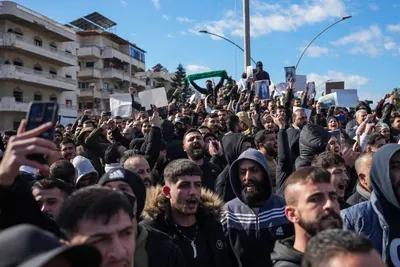
AP — Clashes broke out on Syria’s coast between protesters from the Alawite religious minority and counterdemonstrators on Sunday, killing at least three people and injuring dozens of others, health officials said.
The clashes came two days after a bombing at an Alawite mosque in the city of Homs killed eight people and wounded 18 others during prayers.
Thousands of protesters gathered in the coastal cities of Latakia and Tartous, and elsewhere. Officials have said that preliminary investigations indicate that explosive devices were planted inside the mosque in Homs, but authorities haven’t publicly identified a suspect yet in Friday’s bombing. Funerals for the dead were held on Saturday.
A little-known group calling itself Saraya Ansar al-Sunna claimed responsibility for the attack in a statement posted on its Telegram channel, in which it indicated that the attack intended to target members of the Alawite sect, an offshoot of Shiite Islam whom hard-line Islamists consider to be apostates.
Sunday’s demonstrations were called for by Ghazal Ghazal, an Alawite sheikh living outside of Syria who heads a group called the Supreme Alawite Islamic Council in Syria and the Diaspora.
An Associated Press photographer in Latakia saw pro-government counterprotesters throw rocks at the Alawite demonstrators, while a group of protesters beat a counterdemonstrator who crossed to their side. Security forces tried to break up the two sides and fired into the air in an attempt to disperse them. Demonstrators were injured in the scuffles, but it wasn’t immediately clear how many.
Syria’s state-run television reported that two members of the security forces were wounded in the area of Tartous after someone threw a hand grenade at a police station, and cars belonging to security forces were set on fire in Latakia.
Later, state-run news agency SANA reported that a member of the security forces was killed by gunfire. Local health officials said that three people were killed and 60 others wounded.
The country has experienced several waves of sectarian clashes since the fall of former President Bashar Assad in a lightning rebel offensive in December 2024 that brought to an end nearly 14 years of civil war. Assad, an Alawite, fled the country to Russia.
In March, an ambush carried out by Assad’s supporters against security forces triggered days of violence that left hundreds of people dead, most of them Alawites. Since then, although the situation has calmed, Alawites have been targeted sporadically in sectarian attacks. They have also complained of discrimination against them in public employment since Assad’s fall and of young Alawite men detained without charges.
During the rein of the Assad dynasty, Alawites were overrepresented in government jobs and in the army and security forces.
Government officials condemned Friday’s attack and promised to hold perpetrators accountable, but haven’t yet announced any arrests.
发表回复