2026.10.18 Corby man Reece McCarron denies strangling woman
2026.10.17 Road rage killer Tracie Andrews seen 30 years after murder that shocked the nation
She remains one of the most notorious killers in recent history – partly because of her televised attempt to cover up her heinous crime. Andrews is back in the spotlight after a TV drama recreated the events of 1996
2026.10.17 Met officer who climbed into sleeping colleague’s bed jailed for sexual assault
Sijanta Thapa showed ‘absolutely no remorse’ after assaulting a fellow officer who had offered him a place to stay
I would like to be emailed about offers, event and updates from Evening Standard. Read our privacy notice.
A former Metropolitan Police officer has been jailed for sexually assaulting a colleague after climbing into her bed while she was asleep.
Sijanta Thapa, 32, was convicted of the attack, which took place in October 2020 after a drinks gathering at a mutual friend’s home.
Woolwich Crown Court heard the woman had allowed Thapa to stay at her house to avoid a long journey home in the early hours, expecting him to sleep in the living room before leaving the following morning.
Instead, the former officer entered her bedroom during the night and got into bed beside her.
The woman told the court she initially woke to find Thapa spooning her from behind with his arm around her. Believing he was simply being affectionate, she went back to sleep.
She later woke again to discover Thapa was touching her breast after undoing part of her dress and exposing her chest.
The convicted murderer is now ‘decrepit’ and ‘rarely goes outside’
One of Britain’s most notorious serial killers “does not have long left” after a dramatic deterioration in her health.
Rose West received 10 life sentences in 1995 after she was found guilty of murdering 10 young girls and women with her husband, Fred West.
Following more than a decade incarcerated at Low Newton Prison, Durham, Rose was moved to HMP New Hall, near Wakefield, in the summer of 2019 after fellow inmate Joanna Dennehy plotted to kill her.
And with West now “on her last legs,” it appears she may remain there for the rest of her days.
Staff have been forced to put a Personal Emergency Evacuation Plan (Peep) in place for the murderer, who is becoming increasingly fragile as her health deteriorates.
The Peep is a bespoke escape plan for inmates who are unable to move without help in the event of a fire or serious emergency.
A source told The Sun that West is now in a “really bad way and can now barely move”.
They added: “The fact she has this Peep in place shows what a poor state her health is in.”
“She cannot leave her wing and is also resigned to dying in jail.”
The source also told the outlet West is “decrepit” and “rarely goes outside and cannot go to the gym or take part in activities like yoga”.
“It looks like the last days of Rose,” they added.
West has spent 31 years behind bars for her role in the murders of 10 girls and women at the couple’s Cromwell Street home in Gloucester.
Her husband Fred, who took his own life at the age of 53 while awaiting trial in 1995, buried several of the bodies beneath their house.
Horrifyingly, one of them was their 16-year-old daughter Heather, who was murdered in June 1987, while the youngest victim was Rose’s eight-year-old stepdaughter Charmaine.
25 Cromwell Street has since been dubbed the “House of Horrors” and was demolished in 1996 to be converted into a walkway.
The couple’s victims include Lynda Gough, Carole Ann Cooper, Lucy Partington, Therese Siegenthaler, Shirley Hubbard, Juanita Mott, Shirley Anne Robinson and Alison Chambers.
Comedian described as ‘ruthless, calculated and manipulative’ in opening days of rape trial
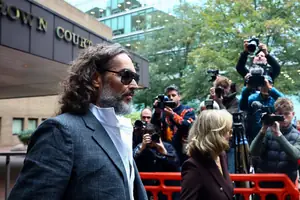
Russell Brand leaving Southwark Crown Court on Friday afternoon following the third day of proceedings Credit: PA Wire/Jordan Pettitt
The opening days of Russell Brand’s rape trial heard the comedian described as “ruthless, calculated and manipulative”, driven by an “indiscriminate and voracious” desire for sex.
Jurors at Southwark Crown Court this week were told that the actor could be “funny, charming, likeable when he wanted something” before becoming “demanding, entitled – a flirt with a huge sexual appetite”.
Brand, 51, is facing seven charges, including rape and sexual assault against six different women between 1999 and 2009. He denies all the charges and has pleaded not guilty.
Here is a day-by-day account of everything the court heard during the trial’s opening week.
+
2026.10.16 ‘Wild-eyed’ comedian Russell Brand tried to drag me into toilets, woman tells UK court
LONDON, Oct 16 (Reuters) – One of six women who accuse Russell Brand of sex offences told a London court on Friday that the British actor and comedian turned into a “wild-eyed maniac” when he tried to drag her into a toilet cubicle at her workplace.
Brand, once one of Britain’s most high-profile broadcasters and the former husband of US singer Katy Perry, is on trial accused of three counts of rape, three of sexual assault and one of indecent assault against six women between 1999 and 2009.
The 51-year-old denies the allegations and told police after his arrest that he had never engaged in non-consensual sexual activity.
The second of the complainants told London’s Southwark Crown Court that in 2001 Brand had tried to pull her into the male toilets at MTV Europe, in London, where she was working.
Initially she said she had exchanged “banter” with Brand about the T-shirt he was wearing, which she told him she liked, but she said his demeanour had changed after she accompanied him to show him where the bathrooms were located.
She said Brand had been quite affable but then become “a wild-eyed maniac trying to pull me into the toilet”.
BRAND’S LAWYER SAYS INCIDENT ‘SHORT-LIVED’
“He grabbed me by the arm and started to pull me and said ‘come on, come in with me’,” she said. “He started to plead almost, ‘go on, go on, come in’.”
She said although he had grabbed her arm hard she was able to wrench her arm free.
“I said to him ‘what are you doing, are you mad, let me go’,” she told the court.
She said when he realised “it wasn’t happening” because she was too strong, he went into the toilets. The whole incident lasted about 20 seconds, she said.
The woman did not report what had happened to her employer at the time, saying it would be just her word against his, but went to the police after seeing a 2023 documentary about Brand.
His lawyer Ian Winter put it to her that Brand had pleaded with her to go into the toilet for some sort of sexual activity and had accepted she was not consenting, with her view of what had occurred changing after she had seen the documentary.
2026.10.16 Police dogs bite record number of suspects
Canines ‘more effective than a taser or baton’ at making people listen to officers
Johannes Natland, 19, was arrested at Huddersfield hotel after being hired by international crime gang
A teenage Norwegian hitman has been jailed for 20 years for attempting to assassinate a target in the UK at the behest of an Iran-backed crime gang.
Johannes Kongsnes Natland, a 19-year-old aspiring footballer, was promised €25,000 (£21,500) by the international drugs syndicate Foxtrot to kill a target in England.
Police only stopped Natland in time because his recruiter, a Norwegian schoolboy with the online moniker “Generalen”, had been arrested three days earlier for arranging a hit on the son of a police chief in Stavanger, on Norway’s south-western coast.
Detectives learnt from messages on the teenager’s phone that Natland had flown from Stavanger to Manchester and had been positioned to kill his target.
Counter-terror police arrested Natland at a three-star hotel in Huddersfield, West Yorkshire, in March last year before he could carry out his assignment.
2026.10.15 Residents urged to identify ‘fly-tipping’ neighbours from CCTV
Council appeals to public to help find culprits in enforcement drive against illegal dumping
2026.10.15 Ex-leader of Northern Ireland’s largest unionist party sentenced to 15 years for sex abuse
LONDON (AP) — Jeffrey Donaldson, the former leader of Northern Ireland’s largest unionist party, was sentenced on Thursday to 15 years in prison for the rape and sex abuse of two girls decades ago.
The judge said that Donaldson, 63, had expressed no “regret, apology or shame” for crimes that had blighted the victims’ lives.
Donaldson was one of Northern Ireland’s best-known politicians until his arrest stunned his political colleagues and wider society two years ago.
He was convicted in June of one count of rape, four counts of gross indecency and 13 indecent assault charges involving two girls between 1985 and 2008. He had denied the charges.
Donaldson led the Democratic Unionist Party, the biggest party in favor of keeping Northern Ireland in the United Kingdom, from 2021 until 2024. He resigned as leader of the conservative DUP after his arrest and gave up the seat in the U.K. House of Commons that he had held since 1997.
+
Jeffrey Donaldson jailed for 15 years over child sex abuse
Former DUP leader expressed ‘not one word of regret, apology or shame’ for abuse of two girls, says judge
Jeffrey Donaldson has been jailed for 15 years over the abuse of two girls for more than 20 years.
In June, a jury found the former Democratic Unionist Party (DUP) leader guilty of two decades of abuse, including raping one victim when she was seven or eight years old, 13 indecent assaults and four counts of gross indecency.
The 63-year-old was sentenced to 11 years for the rape of Victim B and four years for all counts against Victim A, to be served consecutively.
The veteran unionist sat between two prison officers as he awaited his sentence.
Judge Paul Ramsey said the case had been “disturbing and disquieting” and left a “permanent mark” on the victims.
Donaldson, the judge declared, had maintained his innocence despite the unanimous verdicts of the jury.
“There has not been, and doubtless will not be, one word of regret, apology or shame from this man to at least provide his victims with some crumb of comfort,” he added.
He said Donaldson had experienced a “catastrophic descent into disgrace” and had a medium likelihood of reoffending.
Abuse ‘hidden behind a facade’
The sentence marks the final stage of Donaldson’s downfall.
The once influential politician was leader of the DUP from 2021 to 2024, which put him at the heart of Brexit negotiations.
Catherine Kierans, the head of the Public Prosecution Service’s serious crime unit, said the case showed sexual abuse “can be hidden behind a facade of respectability”.
“It also shows that no individual, irrespective of their position, status or public reputation, is beyond the reach of the law,” she added.
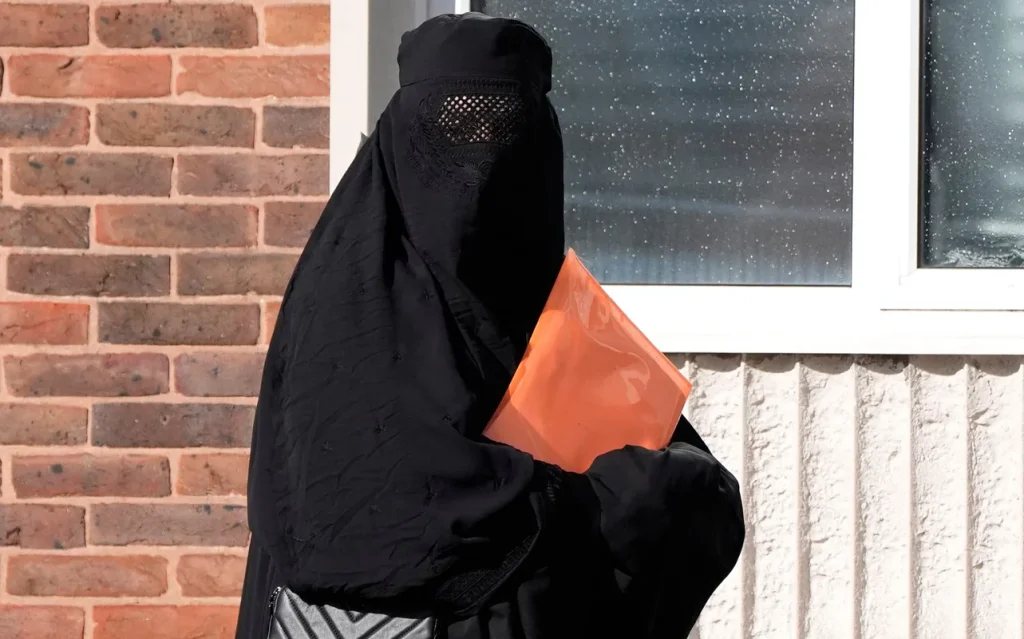
Pensioner, 76, claims to be studying Islam after wearing face covering at anti-migrant protest
A 76-year-old man has appeared in court wearing a burka to deny a charge of wearing the Islamic face covering to conceal his identity during a protest.
Timothy Miller, of Southampton, Hampshire, was arrested in relation to an anti-migrant demonstration in Portsmouth on Sept 12.
Mr Miller told Portsmouth magistrates’ court he had been “studying” Islam and had chosen to wear the burka to gain a “greater understanding” of the religion.
After the defendant had entered the dock, District Judge Stephen Apted asked him: “Can you remove your face covering so we can identify you please?”
Mr Miller lifted the veil of the burka as he confirmed his name, date of birth and address.
Asked how he pleaded to the charge of using the burka to conceal his identity within a designated area under section 158 of the Crime and Policing Act 2026, Mr Miller replied: “As I am in every police camera, I am not guilty.”
Asked what his legal defence to the charge was, he replied: “The issue quite simply is we should be all living under one law, of which I think everybody is under agreement.”
He said he had an “exemption” for “Islamic” religious observance, “which I am entitled to, therefore it was an exemption for which I told the police”.
Asked to clarify that the religion was Islam, Mr Miller responded: “I do not feel I should answer this question because nobody is asked this question when they come into the country.”
Mr Apted asked Mr Miller to clarify whether he observed Islam as a religion, and the defendant replied: “I am studying Islam as it seems to be the most beneficial religion to be noticed in this climate today.”
He said he had continued to wear a burka to gain a “greater understanding” from “this side of the veil”, adding: “It’s part of my inquiring mind of changing from one religion to another.”
Mr Miller told the court he had lived in Morocco and travelled to Bahrain and Dubai.
He said: “What I say is happening here is the movement generally, by law and everything, that we are moving towards an Islamic society, therefore it is more beneficial to me to have a full understanding and belief, that’s what I am doing.
“I think we are going down a very dangerous path questioning people about their religion, I think at the moment Jews are under the same pressure.”
Mr Miller said he felt his arrest had not been lawful “because I complied with everything, I was in every single camera, including the drones overhead, I presented myself to the cameras”. He added: “I was never once asked to remove my face covering.”
Mr Miller told the court he was not represented at the hearing but had been crowdfunding to pay for legal representatives.
Mr Apted said his defence representatives must produce a report confirming his case that “a male person who is considering moving to Islam can wear a burka in public in order to better understand the religion and enable that person to make an informed decision about observing that religion”.
The district judge adjourned the case for a trial to be held at the same court on Feb 16. He released Mr Miller on unconditional bail until the trial.x1200
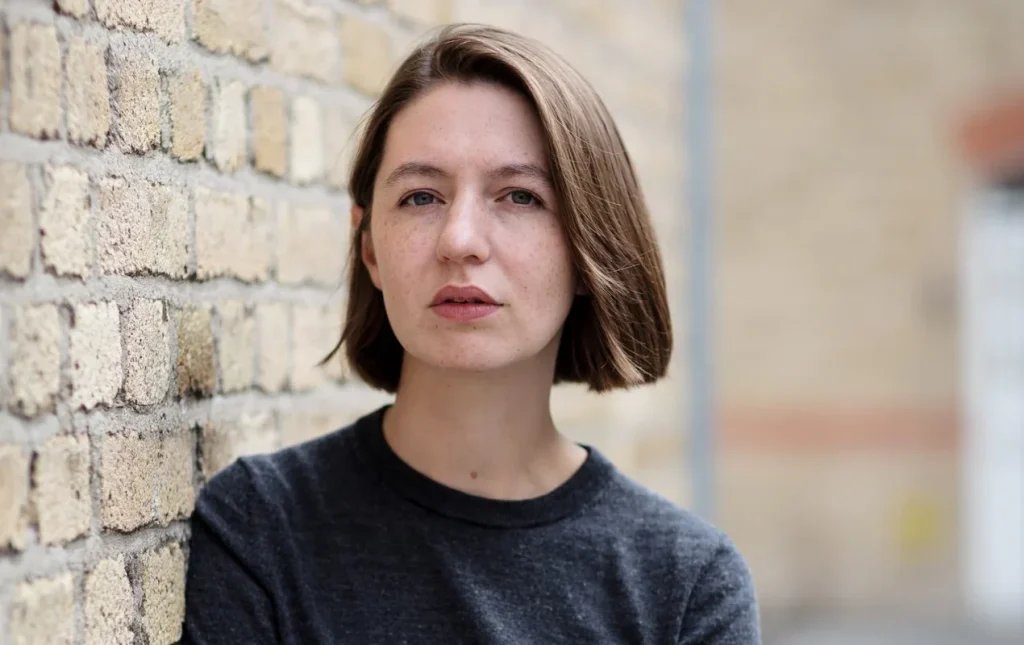
Irish author agrees to the move because her publisher is unable to pay her without breaching anti-terror laws
Sally Rooney’s books have been pulled from sale in Britain because of her support for Palestine Action.
The Irish author said she could no longer receive royalties for her work after she claimed she would use them to fund the proscribed group.
Providing money to someone when you know or suspect it could be used to fund terrorism carries a maximum sentence of 14 years under the Terrorism Act.
Faber, Rooney’s publisher, said it was no longer able to “pass on UK earnings” to her and would no longer sell her books, which include the bestsellers Normal People and Conversations with Friends, in Britain.
Rooney told The Telegraph: “In July 2025, the direct-action protest group Palestine Action was proscribed as a terrorist organisation in the UK.
“The following month, I wrote an opinion piece expressing my intention to go on supporting Palestine Action, which is not a proscribed or otherwise prohibited group here in the Republic of Ireland.
“As a result, the fulfilment of contracts to publish my work in the UK could now constitute a serious criminal offence. After a process of consultation and deliberation, and with my full agreement, my publisher Faber has therefore determined that it can no longer supply my work within the UK.”
Rooney wrote in The Irish Times in August last year that she planned to “go on supporting” Palestine Action using her book sales.
“I want to be clear that I intend to use these proceeds of my work, as well as my public platform generally, to go on supporting Palestine Action and direct action against genocide in whatever way I can,” she said.
Since the Oct 7 massacre in Israel, Palestine Action has conducted a campaign of trespass, vandalism and property damage against companies and buildings in the UK that it claims are linked to “Zionism”.
It was proscribed under terror laws in 2025 after protesters allegedly broke into the RAF Brize Norton military base and caused £7m worth of damage.
More than 3,000 people have since been arrested for expressing support for the group.
Last month, Donald Trump, the US president, declared Palestine Action to be a global terrorist organisation, adding it to a list that includes Hamas, al-Qaeda and Islamic State.
In July, Huda Ammori, one of its co-founders, was given permission by the Supreme Court to bring a legal challenge against proscription.
Rooney has given a statement at the High Court supporting the challenge, saying her works could disappear from British book shops.
A spokesman for Faber said: “Current legislation in the UK has led to circumstances where Faber cannot pass on UK earnings to Sally Rooney for her work. To sell a writer’s work and not be able to pass on earnings is an unconscionable situation for a publisher.
“As such, and in full agreement with Sally, we have taken the decision that we can no longer supply her works in the UK in any format. We remain the proud publisher of her remarkable body of work, which we will continue to sell in other territories.”x1200
2026.10.13 Prison nurse had year-long ‘inappropriate relationship’ with killer
Stephanie Adair, 29, pleads guilty to misconduct in public office while working at Wandsworth jail
A prison nurse has admitted having an “inappropriate personal relationship” with a convicted killer.
Stephanie Adair, 29, engaged in a relationship with inmate Jakhi Crosdale while working at HMP Wandsworth in south London, a court heard.
She appeared at Kingston Crown Court on Tuesday and pleaded guilty to one count of misconduct in a public office. She spoke only to confirm her name and plea in the dock.
2026.10.8 Jewish man beaten by two thugs after trying to stop them spray-painting anti-Israel ‘genocide’ slur
‘It is a worrying and scary time to be Jewish at the moment as a result,’ 52-year-old Dan Levene said
2026.10.2 All the major protests happening in London as Met Police issues serious warning
As many as half a dozen protests expected over the next week, while the Met Police plans “robust” action to keep control
2026.9.21 Man rearrested over women’s alleged murder after bones found in London
Joanne Sheen was 44 years old and a mother of three at the time of her disappearance in December 2019
A major breakthrough has emerged in a five-year-old missing person case following the discovery of human remains in London.
A 56-year-old man from Southampton has been rearrested on suspicion of murder, as well as conspiracy to commit murder, after the remains were positively identified as Joanne Sheen.
Joanne Sheen was 44 years old and a mother of three at the time of her disappearance.
She was last seen on December 5, 2019, while travelling from Fareham to Southampton, but was officially reported missing by her family two months later, in February 2020.
The discovery of the bones was made by a member of the public on August 12 at Padstow Walk in Feltham, south-west London.
The bones were located in an area of shrubland near Bedfont Lakes Country Park, which had been severely damaged by a two-hectare wildfire just a week prior.
2026.9.3 Lee Anderson backs referendum to let Britons decide whether to reinstate death penalty
The Reform chairman said he believes the British public would vote to bring back capital punishment
2026.9.2 ‘I investigated the seedy world of online upskirting – what I saw should worry Londoners’
For weeks my phone was filled with images of women and girls being followed and filmed across London.
They were some of the most uncomfortable videos I had seen in my career so far, as unbeknown to them, the women were being recorded by a discreet camera zooming in on their backsides.
However, unlike the usual crime footage I see, no hero police officer is swooping in. The people filming are still out there, and the 400 pieces of footage they claim to have are still on a website anyone can access.
Some women in the footage are being filmed because they wore shorts in the summer heatwave. Others wear leggings as they travel to and from the gym.
When I sent some of the example screenshots to my editors led to gasps across the newsroom. In particular, the footage of the two young girls being filmed as they ordered food at McDonald’s caused everyone to grimace.
No matter how hard we tried, it felt like muzzing the footage was never enough. Trying to find the balance between not exposing the victims anymore, but highlighting the danger of the website, was no easy task.
One woman who discovered she had been filmed was 29-year-old Eranta. As I sat on her sofa and spoke to her, as her two young children played nearby, her anger was still palpable.
2026.9.2 British woman stabbed to death at German train station named as pub landlady who was attacked randomly by homeless man
Rebecca Bullock was heading to Austria to support a friend at a funeral before she was brutally murdered
The British woman who was stabbed to death at a German train station has been named as a “much-loved” pub landlady.
Rebecca Bullock, known to family and friends as Becca, died after being stabbed multiple times after what is believed to have been a random attack on Sunday.
The 31-year-old, who was understood to have been travelling to Austria to support a friend at a funeral, died in hospital of her injuries.
German police were called to Rosenheim train station in Upper Bavaria at around 12.50am and quickly arrested a 27-year-old man of no fixed address.
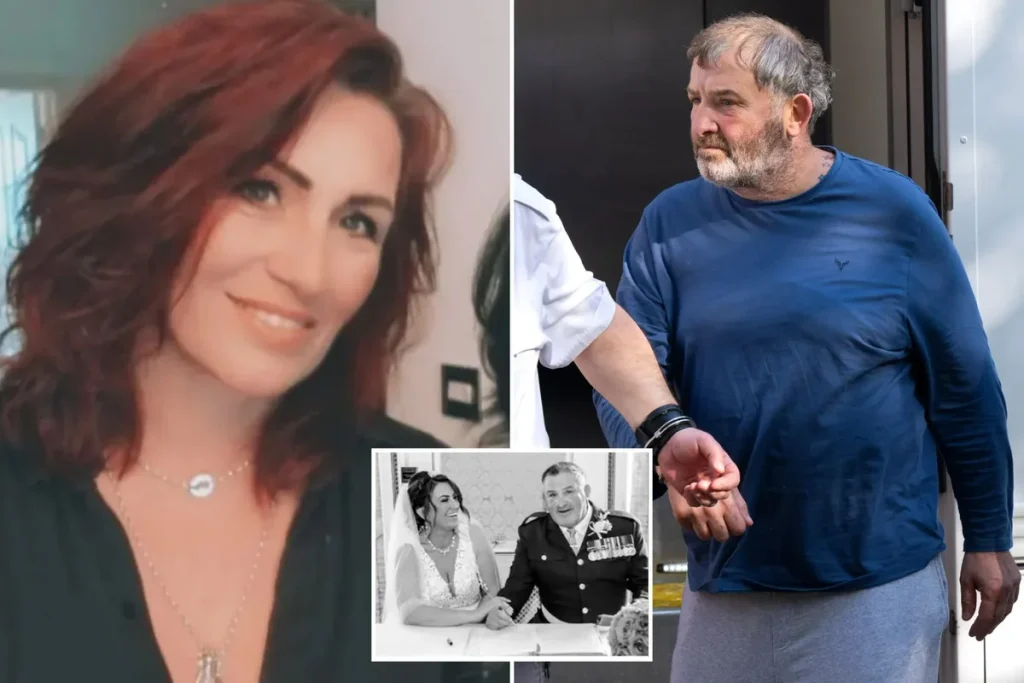
A FORMER solider strangled his wife to death just one year after their wedding when he wrongly suspected she was leaving him, a court heard.
Tracey Davies, 48, was discovered slumped on her bed by worried family members in Cefn Cribwr, near Bridgend, South Wales.
Her husband Michael Davies, 57, was also found in the bedroom and had self-inflicted stab wounds, jurors heard.
Prosecutor Mark Cotter KC said: “Davies killed his wife Tracey Davies by strangling her.
“He did this on the bed in the bedroom of the house they shared together. He then stabbed himself.”
Newport Crown Court heard Davies allegedly killed Tracey after becoming wrongly convinced that she was going to leave him a year into their marriage.
In the weeks before the horror, he had returned from his job as a private security guard in Abu Dhabi for “mental health reasons”, it was said.
Davies had allegedly made a number of internet searches for terms such as “paranoia”, “how to fight paranoia”, and “how to stop paranoid thoughts in a relationship”.
Jurors were told the former soldier was convinced that Tracey was about to “go off” and strangled her.
On April 18 last year, Tracey’s worried family members went to the home after she failed to show up at a concert.
One of the witnesses heard a faint snoring coming from Tracey’s room but when he tried to push the door open, but there was something blocking it.
Jurors heard he was “suddenly met by the smell of death and felt a dead weight against the door preventing him from opening it”.
Mr Cotter said the room was “messy, there were clothes everywhere and a washing basket on the floor”.
When the man pushed the door open, he found Davies covered in blood in his pyjama trousers, it was said.
Jurors heard Tracey was “kneeling down, flopped over to one side of the bed” and there was a kitchen knife on the headboard.
Mr Cotter said: “It was clear Tracey Davies was dead, Michael Davies was behind the door injured with stab wounds and was apparently unconscious.
“The emergency services were called and police officers and paramedics arrived at the scene. Michael Davies was taken to hospital for treatment but was also arrested on suspicion of murder.”
A post mortem found Tracey suffered injuries to her head and neck as a result of forceful pressure to the neck.
Former soldier Davies left the army in 2023 before gaining security work in Abu Dhabi.
He has pleaded guilty to manslaughter, but denies murdering his wife by means of diminished responsibility.
The trial continues.x1200
2026.9.1 Record 636 people arrested at this year’s Notting Hill Carnival as Met Police releases revised figures
Those arrested included individuals suspected of sexual offences, assault, and possession of weapons
A record 636 people were arrested at this year’s Notting Hill Carnival over the bank holiday weekend, according to the latest figures from Scotland Yard.
Those arrested included individuals suspected of sexual offences, assault, and possession of weapons, including a handgun.
The Metropolitan Police confirmed the total number of arrests as 242 arrests on Sunday and 394 on Monday.
Additionally, 193 arrests took place on the approaches to the event.
2026.9.1 UK husband accused of drugging and sexually abusing his wife stands trial with 12 others
Manchester, England — A husband accused of drugging and sexually abusing his wife for more than two decades will go on trial in Manchester, England, this week, alongside a dozen other men accused of taking part in or helping to facilitate the abuse.
The husband, a man in his 60s from Stockport, in the north of England, has been charged with 48 offenses dating back to 2004, according to prosecutors.
Police are not identifying the husband publicly to protect his wife’s privacy.
The husband initially denied all the offenses. He has since pleaded guilty to 15 counts, according to prosecutors: five counts of rape, six counts of assault by penetration, three counts of sexual assault and one count of sharing intimate images of his wife without her consent.
He has denied the remaining 33 counts.
A thirteenth man, Keith Fotheringham, a 59-year-old from Dundee, Scotland, has separately pleaded guilty to assault by penetration, conspiracy to assault by penetration, conspiracy to rape and conspiracy to administer a substance with intent. He remains in custody and will be sentenced at a later date.
The trial was scheduled to begin Tuesday but was delayed until Wednesday due to what the court described as “unforseen circumstances.”
In preliminary hearings, prosecutors allege some of the men were invited to the couple’s home in Stockport, about 30 minutes’ drive southeast from Manchester, to carry out the alleged crimes.
The 12 co-defendants, aged 28 to 73, come from across the UK and deny the charges against them.
Among them is Jonathan Kirk, 43, a paramedic from Stockport who was photographed shaking hands with Prince Harry in 2011, when the royal visited emergency workers in the area following riots in Manchester and Salford. Kirk is charged with rape, conspiracy to rape, and conspiracy to assault by penetration.
2026.9.1 Pet donkey called HeeHaw shot dead after ‘running at police’
An officer has been removed from duty after shooting and killing a donkey named HeeHaw.
Polk County Police in Georgia were searching for a missing child when a Cedartown police officer, who was assisting, opened fire on the animal as it grazed in its pasture.
Farm owner Hannah Israel said police claimed the donkey ran towards them while braying.
They tried to taser the donkey, thinking they were in danger, before shooting Heehaw.
‘We are heartbroken. He was my son,’ she said of the donkey, who she bottle-raised.
‘HeeHaw was raised in the house and did petting zoos; he never knew a stranger. He was shot and killed in his own pasture for doing what donkeys do. Alerting to a stranger.’
2026.9.1 Fraudster forced man to live in dirty shed and called him his ‘scrapyard dog’
A fraudster forced a man living in his dirty shed – who he allegedly referred to as his ‘scrapyard dog’ – into manual labour and paid him just £20 a day.
James Dean Harrison, 51, stole money from the victim in his 60s and was said to have beaten him into working at a scrapyard, unloading skips and cleaning lorry cabs.
Harrison took the victim’s bank cards away from him and began paying him just £20 a day using his own money from the stolen accounts.
Based on the victim’s universal credit and pension payments between 2023 and 2026, £63,600 was missing from his account, which police say Harrison used to fund lavish holidays for himself.
The swindler was alleged to have referred to the victim as his ‘scrapyard dog’, and was believed to have regularly subjected him to both physical and verbal abuse between November 1, 2022, and February 23 this year.
The victim had initially approached Harrison as a friend in need of help, but he decided to exploit him for labour and defraud him of his money instead.
Warwickshire Police began investigating Harrison when a local councillor alerted the force after meeting the victim and his partner.
Investigators later discovered the victim had been living in a dirty shed in Harrison’s garden.
He pleaded guilty to requiring a person to perform forced labour on August 28 and was sentenced to six-and-a-half years behind bars.
2026.8.30 Middlesbrough is reeling. The good people have had enough, we need to punish those scumbags
Former mayor Andy Preston has has the final word on a ‘horrific’ week of violence in the town
Seven people are dead.
We’ve had a knife attack, a house fire being treated as murder and several houses rammed by vehicles.
Police have made more than 24 arrests for suspected offences including firearms, drugs and organised crime. Two hundred officers from other forces have been drafted in.
The town is reeling. People are frightened and tired.
I’m tired too.
2026.8.28 More than 7,000 officers to be deployed for Notting Hill Carnival as Met Police sets out plans
Officers carried out intelligence-driven operations to disrupt potential offenders before they could reach the streets of West London
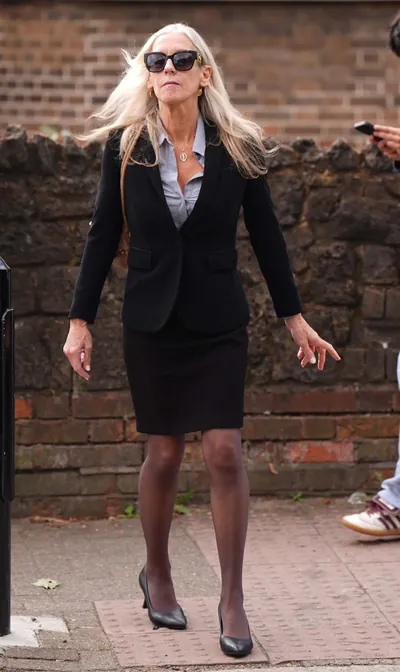
The court heard how Sally-Anne Bowen would be ‘very flirtatious’, telling her pupils how she enjoyed giving oral sex to her boyfriend
A paedophile teacher has been found guilty of having sex with a 14-year-old boy and kissing a second teenager in the 1980s.
Sally-Anne Bowen, 65, who taught Chemistry at Christ’s College in Finchley, north London, indecently assaulted the two teenagers, who were 14 and 15 years old at the time, when she was in her mid-20s.
A jury at Harrow Crown Court returned majority verdicts, finding the now-65-year-old guilty of seven counts of indecent assault after six and half hours of deliberation.
One victim said he had sex with Bowen “about 20 or 30 times” over a period of months, visiting the teacher’s home.
He said he considered her to be his girlfriend at the time, thinking he had fallen in love.
The other victim said he had kissed the then-25-year-old in a cafe when he was “goaded” by his other male classmates.
Bowen, who now lives in Hemel Hempstead, “engaged in flirtatious conduct” with her pupils and entered “in sexual relationships with them both”, the court heard.
She dressed in “short, very tight skirts” and walked around the north London school with her “ts sticking out”.
Comparing herself to a model in a porn magazine, the teacher told the teenage pupils: “That’s what my p*y looks like.”
Bowen first joined the school in the 1980s, the court heard.
She began talking to the first teenager, even though she did not directly teach him, which “made him feel special”.
The pair would spend lunchtime together, jurors heard, chatting and sometimes travelling back home together.
The now-adult man, who cannot be named, said he kept the relationship secret because he felt compelled to “protect” Bowen.
She had “drummed it” into him that he was to keep their relationship quiet.
He said: “I never, ever spoke to anyone about it.
“I was always really aware, she drummed it into me.”
“Years she got to teach because I remained silent,” he added.
After engaging in a sexual relationship with the boy, Bowen was confronted by his mother after she became suspicious.
The teacher denied anything untoward was happening.
The mother eventually called the school to lodge a complaint but found out Bowen was no longer working there with “no reason or explanation given”.
Bowen later told the teenager she was going to live at a kibbutz in Israel.
Jurors heard how Bowen urged the male pupils to “speak and joke openly about sex”, who considered her to be “more like trying to be one of us, like our friend, than a teacher”.
The paedophile teacher would dress in “sexually provocative” ways, with one pupil saying she acted like she was in “a Sabrina Carpenter video” while teaching.
Tobias Oliver, who did not know the two victims, previously told the court that lessons with Bowen “often strayed away from chemistry and became quite sexual”.
He said Bowen would be “very flirtatious” and told the class how she enjoyed giving oral sex to her boyfriend.
The former pupil recalled an occasion when a boy in the chemistry teacher’s class was reading a “sex manual”, which he believed to be the Kama Sutra.
Bowen went through the book with the class, discussing “the merits of different sexual positions”.
The victim first disclosed the abuse to his partner, who urged him to go to the police.
Bowen, who was first interviewed in 2015, claimed the boy at the time was a “bit of a nuisance” and “besotted” with her.
Richard Luker, who was head of science at the school in the late 1980s, told the court he recalled a complaint from the first alleged victim’s mother, who raised concerns her son was planning to travel abroad with Bowen at the end of term.
The paedophile claimed the allegations were “total fabrication” and she had a medical condition, which at the time had not been diagnosed, which made sexual intercourse painful for her.
Bowen was granted bail until her sentencing hearing on November 20.

The offender claimed he needed to empty the van for work purposes
A fly-tipper has been hit with a hefty fine after he dumped three fridges and claimed that he would come back and get them.
Algirdas Bardauskas was prosecuted after he fly-tipped in broad daylight on Fold Street in Wolverhampton.
He was ordered to pay £2,826 after he dumped two large fridges and one small one by the side of the road.
An onlooker reported the incident and has been rewarded with a £100 gift card by Wolverhampton Council.
Mr Bardauskas, of Chester Street, admitted one charge of depositing controlled waste after he dumped the items in August last year.
On August 3 last year, at around 2.30pm, a white van was driven into Fold Street. A man was captured on CCTV unloading two fridges from the rear of the vehicle and leaving them on the highway.
He then drove the vehicle out of view and reappeared carrying a third, smaller fridge, which he left with the others.
Mr Bardauskas was interviewed by council officers and shown images of the fly-tipping and admitted that he had been driving the van and had dumped the fridges.
He said he needed the van to be empty for some work he was doing that day but had left the fridges with the intention of collecting them again.
He said he returned to the location a week later to collect them again, but they had gone.
Mr Bardauskas apologised for what he had done and said he would accept his punishment.
A portion of the fine that Mr Bardauskas was ordered to pay will be reinvested into the council’s environmental crime service.
Councillor Qaiser Azeem, cabinet member for resident services, said: “Fly tipping is a blight on our communities and we will not tolerate this kind of irresponsible behaviour in Wolverhampton.
“Our environmental crime team is committed to tracking down and taking action against those who dump waste illegally, and this prosecution demonstrates that offenders will be held accountable for their actions.
“I would like to thank the resident who reported this incident. Information from the public plays a vital role in helping us investigate and bring offenders to justice.
“I would encourage anyone who witnesses fly tipping to report it to us so that together we can continue to tackle this thoughtless crime.”
The council has also announced an investment of £257,146 in it’s environmental crime service this year to fund extra enforcement staff and six more security cameras to be placed at known hot spots across the city.
Users on social media praised the proactive approach the council is taking fly-tipping.
One user said: “Great news let’s all get on board with reporting unsocial behaviour of any kind!”
Another simply added: “This is great news! Well done!”
2026.8.15 Southport businessman’s 1986 murder shows they were dark times in more ways than one
Some theorised Nigel Bostock was the victim of a serial killer – or that he had been murdered by a “gang of perverts” for a snuff film
Forty years ago, on a desirable residential street north of Southport, the brutalised body of a man was found slumped in the bathroom of his own home. Lancashire Police Detectives were called to solve a case among a community who had good reason not to trust them.
The victim in this murder case was 31-year-old Nigel Bostock, described by those how knew him as a ‘nice guy’, he was the proprietor of Wider Fitting Shoe Specialists on Wesley Street, Southport. Nigel Bostock was a successful businessman, a home-owner, moderately well-off, and gay.
He was found in the bathroom of his semi-detached bungalow at Abrams Fold, Banks, on December 20 1986 – draped halfway over the side of the bath, wearing only a T-shirt. He had been stabbed six times in the chest and strangled.
A briefcase containing £700 had been stolen from the scene, along with an expensive Bulova “Spaceview” watch and two gold rings: a signet ring bearing the initial “N”, and a nine carat dress ring with 28 small diamonds in two rows across the face.
It was believed Nigel knew his killer (or killers), and that he had willingly let them into his home on the night of the murder. While the last hours of his life remain a mystery to this day, signs of sexual activity were found at the property. The state of the living room indicated there were probably “three or more” people present.
The last confirmed sighting of Nigel alive was the previous day, December 19, at 5.20pm, when a central heating repairman called at his home. But neighbours reported seeing Nigel going out in his red Ford Fiesta car at 9.45pm, and the people living next-door said they heard the sound of a scuffle at 11.30pm, which they described as someone being dragged across floor.
The intimate nature of the crime could not be disentangled from Nigel’s personal life. At the height of the AIDs epidemic, and just five years after homosexuality was decriminalised in Scotland and Ireland, homophobia was rife.
Many gay men concealed their sexuality to protect themselves from discrimination, and so were unwilling to talk to the police and “out” themselves as patrons of the bars and clubs Nigel used to attend. Others were deeply mistrustful of the police due to the historic “sodomy laws”, venue raids, and entrapment operations in known gay cruising spots.
Speaking to the ECHO in May 1989, Det Sgt Mike Pacey said: “Often homosexuals are married and bisexual so they are very reluctant to come forward.
“It’s a shady, seedy world they live in and they are often subject to blackmail and violence. Homosexuals are often mugged and beaten up but they rarely complain to the police.
“Some of the people we came into contact with were highly respectable professionals – it really opened our eyes.”
DCI Tony Gudgeon said: “If it was a child killer, we would have a lot of public interest and help. But this happened when the AIDs scare broke and there was very little public sympathy for gays. In fact, Mr Bostock’s post-mortem examination had to be delayed for 12 hours for an AIDs check, but he didn’t have it.”
This lack of sympathy for Nigel was splashed in black and white across the papers at the time. Three days after his death, the ECHO reported: “LAST PARTY: The gay murder victim was host.”
It read: “Homosexual Nigel Bostock played host at a party before he was stabbed and strangled.” The report went on to say police were combing gay nightspots in Liverpool, Southport, Blackpool and Preston, and “among the people interviewed so far is an AIDs victim”.
The subject of AIDs featured prominently in the investigation, though it was known early on that Nigel was not HIV positive.
In the year that followed, Lancashire Police took over 1,600 statements and carried out 5,250 interviews, “924 of which have been conducted with homosexuals” (The Southport Visiter, December 1987).
Detective Supt John Boyd of Lancashire CID, who took a leading role in the investigation, told the Visiter: “I have always believed that there was more than one person involved. The scene indicated that there was not a twosome, while the scene in the living room indicated there was three or more people present.
“Mr Bostock spread his wings in the homosexual community and we have combed homosexual nightclubs in East Lancashire, Preston, Southport, Liverpool and Bolton which he occasionally visited.
“One theory of mine is that one person was upstairs with Bostock and involved in some kind of sexual play which went horribly wrong which resulted in Mr Bostock’s death.
“Possibly his accomplice downstairs was responsible for the thefts from the house and not for the murder. If that is the case then the person downstairs, who may well not be directly involved in murder, could come forward, in confidence, if they wish.”
He added: “Usually when you find your motive for crime you find your answer, and there is no doubt that the motive for the visit of the offender or offenders was sex.”
In 1993, it was theorised that Nigel’s murder could have been linked to an active serial killer targeting London’s gay community. Between March and June that year, the so-called “Gay Slayer” claimed the lives of five men, including Peter Walker, a Liverpool-born theatre director who had been a possible witness in the Nigel Bostock case.
The ECHO reported in June 1993: “Officers are looking at the possibility that all five murders are revenge attacks by a man who became HIV positive after a homosexual encounter.”
In fact, the perpetrator was Colin Ireland, an unhappily married heterosexual man with a history of domestic violence. He hunted his victims in gay S&M clubs, following them home under the pretence of a sexual encounter before robbing and strangling them.
A new line of investigation arose in January 1995, when Scotland Yard’s Obscene Publications Squad received a tip-off that Nigel was murdered by a “gang of perverts” for a snuff film.
The unknown tipster claimed he had been forced to trawl seafront arcades for lonely boys to lure back to a local house, where they were mutilated and murdered, and the events captured on camera. Nigel, he claimed, was among several victims.
Scotland Yard pledged to investigate the claims, but no such “gang of perverts” was ever uncovered.
The murder case was reopened in 2003, and newspaper clippings from the time point to an acknowledgement of changing attitudes.
Speaking to the Liverpool Daily Post, Acting Detective Superintendent Cath Thundercloud said: “In 1986, people were not as open about being gay and may not have come forward. But now attitudes are much more liberal and we would like anyone who did know Nigel to contact us.
“There was no such thing as DNA testing in 1986, and also our fingerprinting techniques are a lot more precise than they were then, so we hope to find some new leads. We will be reviewing old witness statements.”
In 2004, a BBC Crimewatch appeal gave police a number of new leads on the case. Lancashire Police revealed on TV that, 12 months earlier, they received a mystery letter that they could might lead them to the killer. Det Supt Mike Turner said: “We have had the letter for some time now and, thanks to information uncovered during the forensic review, we now have reason to believe that it could be significant.”
After the reconstruction, officers were sifting through new information from 30 callers, some of which provided new names that had not previously been investigated. In March, 2005, a man was arrested after he failed to volunteer a DNA sample being taken as part of the investigation into the death, but no one was ever charged.
A 2012 article in the Ormskirk Advertiser quoted Saratoga Antiques shop owners Rita Seddon and Sylvia Shuker who worked opposite Nigel and his shoe business for years.
Rita said: “We remember well when Nigel had his shoe shop over the road. He was a really nice guy, very pleasant to talk to and always happy. It was always Nigel you could turn to if you needed anything. It was such a shock, and, of course, at the time so unheard of.”
Sylvia said: “Nigel was so approachable, dependable and probably the least likely person to upset anybody. I recall that Saturday morning when the whole of the street was filled with police asking questions and talking to people. It was not an every-day thing back then. Today, it seems to be the norm. Nigel really was a lovely guy.”
Article continues below
Nigel’s case was featured on BBC Crimewatch several times, and his parents put up a £5,000 reward for information leading to his killer. Despite repeated appeals, the case went cold – Nigel Bostock’s murderer was never caught and may still be out there today.
The investigation remains under review by Lancashire Police. Anyone with information is asked to contact them on 101. Alternatively, you can report any information to independent charity Crimestoppers on 0800 555 111.
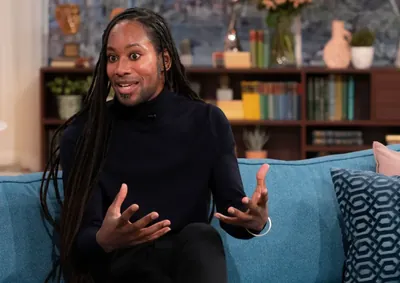
Embattled ex-Cambridge University professor Jason Arday was found dead Friday after quitting his job at the school over allegations that he plagiarized and lied about past jobs, according to a report.
Arday, 41 — the youngest ever black professor at the lauded university— was found “unresponsive” in his south London home and later pronounced dead at the scene, according to the UK Telegraph.
“Sadly, a 41-year-old man was pronounced dead at the scene. His next-of-kin have been informed and are being supported by officers,” a spokesman for the Metropolitan Police told the paper.
“At this time his death is being treated as unexpected, but is not believed to be suspicious. The case is being investigated by officers from the Met’s Central South Command Unit. A file will be prepared for the coroner.”
University of Cambridge Vice-Chancellor Professor Deborah Prentice expressed sympathy over his death Friday.
“We are desperately saddened to hear this tragic news. Our heartfelt sympathies go to Jason Arday’s family and friends at this incredibly difficult time,” Prentice said in a statement.
The sociology professor, who became a poster boy for diversity, resigned from the job on Aug. 5 as the school launched an investigation into accusations that he plagiarized parts of his Ph.D dissertation and lied about positions he held at other schools.
He cited an “unrelenting level of public scrutiny” as his reason for resigning.
“[It’s] simply the decision of someone who has reached the limits of what any person should reasonably be expected to endure,” he said at the time.
Arday had faced allegations that he lifted more than 100 passages in his dissertation from another academic, Brunel University student Paula Zwozdiak-Myers.
Nathan Cofnas, a postdoctoral researcher at Ghent University in Belgium, published a Substack article last month detailing several examples in which Arday’s doctoral dissertation appeared to be plagiarized.
An analysis later showed more than 100 passages in his thesis reportedly appeared to be similar to or lifted from the thesis of Zwozdiak-Myers.
Arday then came under fire for allegedly falsely claiming to have held three positions at academic institutions — Ohio State University, University of Glasgow and Durham University — on his official biography page for Cambridge University.
Before launching an investigation, the school initially stood behind the professor, claiming he was a victim of a “vile campaign to undermine his credibility.”
Arday — who said he was autistic, epileptic and a former pro soccer player — had admitted to a series of errors in his work, but insisted he was not a “liar and fantasist.”
Arday had also been accused of lying about his seemingly unbelievable list of personal accomplishments, including “running 30 marathons in just 35 days,” raising millions of dollars for charity, and playing professional snooker.
Arday, who became Cambridge’s youngest black professor at age 37, also said he had autism spectrum disorder and was nonverbal until age 11.
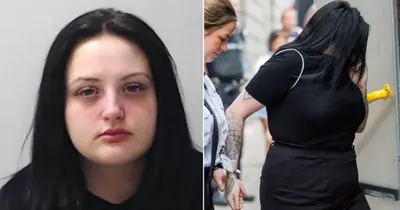
A mum who killed her three-month-old daughter with a hairdryer’s hot air has been jailed for six years.
Courtney Gartshore used the appliance to subject Dahlia-Rose Gartshore to ‘significant and sustained heat’ on the head and body, fatally injuring her.
The ‘harrowing’ incident took place at an address on King Street in Peterhead, Aberdeenshire, on September 30, 2023.
Gartshore, 28, was convicted of the culpable homicide of her daughter following a trial at the High Court in Aberdeen in July.
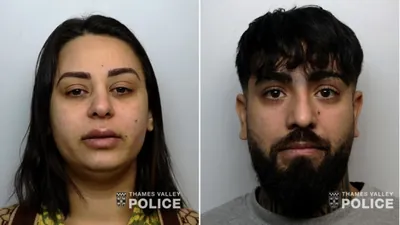
The nine-year-old son of a businessman killed by a Romanian couple as part of a honeytrap scam said ‘my family is destroyed now’ in a heartbreaking statement.
Gary Mouat, 37, was found dead at his home in Banbury, Oxfordshire, in July last year after his glass of wine was spiked with the sedative gamma-butyrolactone (GBL).
The married father-of-one was killed by Adina Mihai, 31, who was posing as a sex worker, and her partner Madalin Dumitru, 30.
They were each jailed for 17 years at Oxford Crown Court today.

A chemistry teacher had sex with a schoolboy up to 30 times after comparing herself to a porn model, a court heard.
Sally-Anne Bowen, 65, is on trial at Harrow Crown Court accused of eight counts of indecent assault against two boys, who cannot be named for legal reasons.
She is alleged to have entered into sexual relationships with each of them in the late 1980s, when they were around 14 to 15 and she was in her mid-twenties.
The teacher, of Hemel Hempstead, Hertfordshire, kissed one of the boys on multiple occasions and had sex with the other ‘about 20 or 30 times’, jurors heard.
Prosecutor Madeleine Wolfe said: ‘The prosecution do not suggest that Sally-Anne Bowen forced herself on either boy, and accept that, viewed superficially, they may have appeared to have been willing to participate in the sexual acts with Ms Bowen.
‘By flirting with them, by sexualising her relationships with them and by encouraging them to engage in sexual conduct with her, she exploited that position for her own sexual gratification.’
The court heard Bowen joined the school in her first job as a chemistry teacher and she spoke to the first boy even though he was not in her class.
Ms Wolfe said: ‘He felt she picked him out of all the other pupils at that school. He said she made him feel special.
‘As far as he was concerned, their relationship went to the point he thought she was his girlfriend – that he loved her and she loved him.’
Jurors were told ‘there was a lot of banter and rather than shut down sexually provocative conversations, she encouraged the boys to speak and joke openly about sex’.
Recalling one lunch break, the boy described flicking through a porn magazine with some friends when Bowen took it off them.
But rather than confiscate it, he claims she opened it up and pointed to an image of one of the naked models inside and said ‘that woman’s “p***y” was similar to her own’.
This led to the boy taking the bus home with her to Golders Green where they kissed in her flat, jurors heard.
Ms Wolfe said: ‘For the summer holidays of 1988 he was a regular visitor to that bedroom. He thought they had sex in excess of 20 to 30 times.
‘He told police he was never allowed to stay the night. He thought the latest he was allowed to stay was about one o’clock in the morning.’
The second complainant also recalls spending lunchtimes in the cafe with Bowen, the court heard.
Jurors were told he recalls being ‘goaded’ into kissing Bowen by the other boys and remembers touching her breasts while they were sat in the cafe.
On several occasions, Ms Wolfe added, the ‘besotted’ boy walked the teacher home and the two kissed before parting ways.
‘The prosecution suggests that this sexual behaviour towards a pupil was something that Sally-Anne Bowen should have put a stop to and it was an indecent assault on her behalf,’ Ms Wolfe said.
She told jurors: ‘Young as she was, she was not their peer, and she was not entitled to treat them as if they were adults capable of entering into sexual relationships with her.
‘She was a teacher, entrusted with the care and welfare of pupils, and the prosecution say she abused that trust for her own sexual gratification.
‘The issue in this case is not whether these boys appeared flattered, willing or besotted, as she describes it at the time.
‘It is whether Sally-Anne Bowen, knowing her position and their vulnerability, crossed the boundaries that existed to protect them at that school in the 1980s.’
The trial continues.
2026.8.12 Shirley Harrison, author who caused a sensation with The Diary of Jack the Ripper
Though her US publisher pulped 200,000 copies when doubts were raised about the diary’s authenticity, the book became a global bestseller
Shirley Harrison, who has died aged 91, was an obscure jobbing author before creating a publishing sensation in 1993 with The Diary of Jack the Ripper, her account of what purported to be a confession to the most notorious unsolved murder spree of the Victorian era.
A year earlier, Shirley Harrison had been summoned by her agent to meet an unemployed scrap-metal dealer from Liverpool called Michael Barrett who had brought the diary to London hoping to find a publisher and promising a solution, a century on, to the mystery of Britain’s greatest unsolved criminal case.
What Barrett was touting was not strictly speaking a diary at all but a 9,000-word handwritten narrative apparently tracking the killing of at least five Whitechapel prostitutes in 1888, an account covering 63 pages of an old scrapbook.
Barrett told Shirley Harrison that he had been given it in a Liverpool pub by a drinking companion who had since died, an explanation she heard with “a suppressed disbelief”. Barrett embroidered his tale by claiming that it been found under the floorboards of a Victorian house opposite Liverpool Cricket Club, the former home of a cotton broker, James Maybrick.
The journal, signed “Yours truly, Jack the Ripper”, was dated May 3 1889, a week before Maybrick died, allegedly poisoned by his beautiful young American wife Florence.
The diary’s author – deduced from the text to be Maybrick, an inveterate arsenic addict who kept a mistress with whom he had children – blamed the Ripper murders on his rage at Florence’s admitted infidelity. Convicted of her husband’s murder, Florence was spared the hangman at the last minute, served 15 years in prison and died in poverty in America in 1941.
Hitherto Shirley Harrison, a middle-aged widowed grandmother, had taken no interest in the Ripper story or the celebrated Maybrick case, having diffidently ventured into authorship with Who Is Father Christmas? (1981). Her only other work listed in booksellers’ guides, Colourful Characters from Dover Past (1991), a 25-page booklet, had attracted a niche readership in Kent, but in 1993, following the appearance of the diary, she accepted a £50,000 advance, shared equally with Barrett, and the opportunity to create a worldwide bestseller.
Even though she harboured doubts about the diary’s authenticity (her advance was later reduced to £15,000 when scientific tests suggested the ink used was too modern), Shirley Harrison’s account of the Ripper murders, with diary extracts and a facsimile of the original, was trumpeted as the publishing sensation of the year.
A huge initial print run of 250,000 hardback copies accompanied simultaneous publication in Britain, the US, Canada, Australia, Germany, France, the Netherlands, Spain, Italy and Japan. A video drama-documentary based on the diary was produced, and Hollywood expressed interested in making a feature film about its discovery.
But in September 1993, weeks before publication, The Sunday Times pulled out of a deal to buy the newspaper serial rights, mindful of the Hitler Diaries fiasco of the early 1980s. To Shirley Harrison’s dismay, not only had tests on the ink and paper used in the Ripper diary cast doubt on its authenticity, but Michael Barrett began to change his story.
Having first denied any fakery, he quickly confessed to having forged the diary himself, only to withdraw his sworn affidavit, his lawyer explaining that “he was not in full possession of his faculties”. To complicate matters, Barrett then claimed his wife had written the document at his dictation. He later suffered from alcohol and mental health problems and his marriage broke down.
The London publisher was forced to slap a sticker on the book’s front cover asking: “Is it genuine? Read the evidence and judge for yourself”. Shirley Harrison’s American publisher pulped 200,000 copies a month before they were due to go on sale. Notwithstanding, her book became a global bestseller, although the diary’s true provenance has never been satisfactorily established.
Shirley Harrison herself was wounded by the jealousy and hostility the diary provoked and the abusive onslaughts she had endured at the hands of a small group of people who sought to prevent publication.
One persistent critic, the self-styled hoaxbuster Melvin Harris, always claimed to know the names of those who, he said, had “forged” the diary, and in 1994 promised that “the identities of the three people involved in the forgery will soon be made known”. On his death 10 years later, Harris’s promise remained unfulfilled.
Shirley Harrison was born Shirley Williamson on March 31 1935 and grew up in Woodford Green on the border between east London and Essex. Her Conservative parents instructed her to cross the road when passing the nearby house occupied by the militant suffragette Sylvia Pankhurst – where, as Shirley would later note, “neighbours grumbled about the jungle in her garden and were hissed at by the cat.”
From Woodford County High School, she took a job as a reporter on the Walthamstow Guardian, and by the age of 19 she was reviewing radio programmes with Uncle Mac on the BBC’s Children’s Hour.
She joined a public relations agency in London, then a new phenomenon, and in 1954 launched her own PR business. Moving four years later to live in the country with her husband, John Harrison, she founded one of the first parent-run, pre-school playgroups in Britain.
She continued as a freelance feature writer working for national magazines and newspapers, but when her husband died in 1982 she turned to writing books. She published several travel guides as well as investigative books such as Cults: the Battle for God (1990), a history of the English Channel in 1986 and New Approaches to Cancer (1987).
In 1992 with her friend and researcher Sally Evemy, Shirley Harrison formed the Word Team, providing scripts for visitor attractions in Dover, Oxford and Jersey. Her agent thought she would be right for the Ripper diary investigation because of her tenacity and refusal to panic in the face of adversity. But she could hardly have foreseen the storm that broke over The Diary of Jack the Ripper.
Sceptical students of the Whitechapel murders, known as Ripperologists, thought that Shirley Harrison had been duped, and heaped spiteful criticism, vitriolic personal attacks and almost universal ridicule on her and her book. Yet, as she later pointed out, they failed to produce one shred of firm evidence to prove the diary a fake.
As the controversy deepened, she realised that Michael Barrett, who wrote to her swearing “on my daughter’s life” that he did not write the diary and insisting it was given to him by a drinking acquaintance, was now “terrified” and “out of his depth”. Increasingly prone to fantasies, he “confessed” to Shirley Harrison that he had worked for MI5, had single-handedly foiled the IRA, and in 1996 had remarried and was going to live in Russia. Barrett died in 2016, having drunk most of his £70,000 royalty payments.
Although Shirley Harrison revisited the Whitechapel murders in Jack the Ripper: the American Connection (2003), she strove to diversify as an author and was the first to complete a comprehensive biography of her former neighbour, Sylvia Pankhurst: A Crusading Life (also 2003), written with the co-operation of the Pankhurst family and based on previously unpublished documents.
Her later books included The Life and Times of Winnie-the-Pooh (2011).
Most Ripper experts may have denounced the Maybrick diary as a forgery, but Shirley Harrison remained confident of its status as a historic document, pointing out that after more than a century, Ripperologists themselves had failed to identify the Whitechapel killer with absolute certainty.
“It’s hardly surprising,” she added, “that such an extraordinary document as the diary should have added fuel to a fire that was already smouldering.”
Shirley Harrison’s second husband was Duncan Field, whose forebears were undertakers in Whitechapel at the time of Jack the Ripper; he died in 2024, and she is survived by four children from her first marriage.
Shirley Harrison, born March 31 1935, died June 8 2026
2026.8.12 ‘Evil’ sex predator Simon Levy who was left free to kill will die behind bars
A ‘predatory monster’ who murdered two women and left a third for dead while on bail amid a campaign of sex attacks will die behind bars.
Simon Levy smothered grandmother Carmenza Valencia-Trujillo, 53, in March 2025 and mother-of-four Sheryl Wilkins a day before her 40th birthday five months later.
The killings came after he subjected a third woman to a brutal sex attack in January last year in the same car park where Ms Wilkins’ body was later found.
Following his convictions at the Old Bailey last week it emerged a series of blunders by police and prosecutors saw Levy freed on bail time and again as his attacks on women escalated to double murder.
Today, the 40-year-old was told he will never again be released.
Sentencing him at the same court, Judge Mark Lucraft KC said: ‘You are clearly someone who ruthlessly exploits others for your own personal sexual satisfaction.’
Noting his disturbing internet history and collection of press cuttings about sexual crimes, he said Levy is ‘someone who appears to have a morbid fascination with sex, rape, and crime’.
Levy’s victims branded him a ‘monster’ and a ‘parasite’ as he faced the sentencing hearing.
2026.8.12 Over 100 arrested at London Palestine Action demo as co-founder told she can challenge terror ban at Supreme Court
Protest outside Westminster Magistrates Court held before it was confirmed Huda Ammori can challenge Home Office decision to ban the group
In an update just after 4pm the Met said that 117 people had so far been arrested. It said the majority had been arrested for expressing support for a proscribed organisation. Four people have been arrested for encouraging or assisting a criminal offence, the Met said.
Defend Our Juries said one of those those arrested for support for Palestine Action is Sir Jonathan Porritt, a campaigner and author who served as Director of Friends of the Earth and was an advisor to King Charles for over 30 years.
The group said in a statement: “From 12pm today, hundreds of people have been gathering to take part in a ‘Graduation Day’ organised by Defend Our Juries, coinciding with a scheduled review hearing for the prosecution of 1,579 people under section 13 of the Terrorism Act 2000 for holding signs in support of Palestine Action during mass silent vigils in Parliament Square last year.
“Since 1pm today, people have been taking to a stage one by one to speak the words: ‘I support Palestine Action and I encourage everyone to do the same. Saving lives is not terrorism.”
2026.8.10 Cold case appeal to find teenage girl who disappeared in London nearly 50 years ago
Michelle Hooper makes emotional plea for information to solve the mystery of her sister Suzanne’s disappearance
The sister of a schoolgirl who went missing in London nearly 50 years ago has made an emotional appeal to try to discover what happened to her.
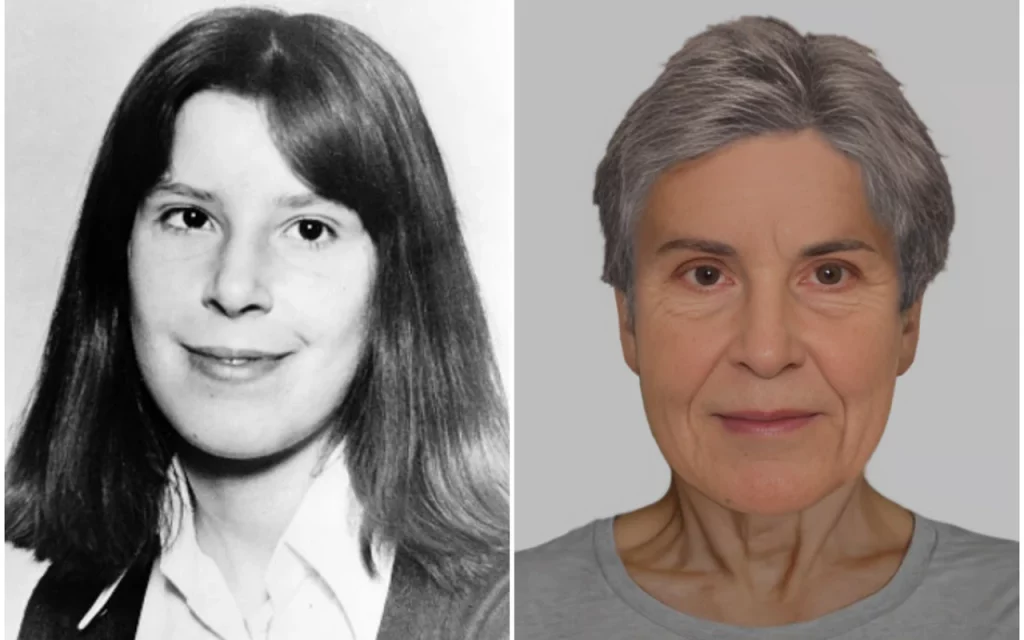
Michelle Hooper told how even after so many decades having passed she thinks about her sister Suzanne every single day.
Speaking directly to her sister, if she is still alive, Ms Hooper, 60, stressed that she has not been “forgotten”.
As police issued a cold case appeal seeking to solve the mystery of Suzanne’s disappearance, her sister added: “Our family simply wants the truth and the opportunity to finally understand what happened.”
Suzanne Lawrence, then aged 14, and her sister Michelle, 13, left their home in Harold Hill, east London, on 27 July 1979.
They told their mother they would be staying with friends in Dagenham.
Michelle returned home five days later, on 31 July, after the sisters had had an argument.
She told police they had met three boys, aged around 14 to 17, at a fair in Highbury Fields, north London.
The boys took them to a nearby squat but she was unable to locate it when she accompanied officers on a visit to the area.
Police thought at the time that Suzanne, who would now be 61, may have joined a travelling fair.
But enquiries by officers failed to find her.
Over the decades, detectives have never closed the case.
The Met Police’s East Area Missing Persons Unit, which has reviewed the case, has now launched a fresh attempt to try to establish what happened to Suzanne.
Ms Hooper is supporting the public appeal.
She said: “If my sister is alive, I want her to know that she has never been forgotten.
“If anyone knows what happened to her, I ask them to do the right thing and speak to the police.
“Our family simply wants the truth and the opportunity to finally understand what happened.”
Ms Hooper explained what had happened before Suzanne went missing.
“I was the last member of the family to be with my sister before she disappeared,” she said.
“We left home together and for a period we were both trying to survive away from home.
“Eventually I returned, but Suzanne did not.”
She added: “Many years have passed, but not a day goes by without wondering what happened to her.
“Our mother is now elderly and, like me, has lived for decades without knowing what became of her daughter.
“No family should have to endure such uncertainty for so long.
“If anyone remembers seeing us, helping us, giving us somewhere to stay, or speaking to my sister during those days in the summer of 1979, please come forward.
“Even the smallest piece of information could be important.“
At the time of Suzanne’s disappearance, her mother Pauline, then 38, appealed to her daughter: “Suzanne, just come back home and everything will be okay.”
The mother-of-six added: “Suzanne has never done anything like this before.
“We have not had any arguments.
“I will not be able to stop worrying until she is back safe and sound.”
Timeline
Friday, 27 July 1979 – Suzanne and her sister, Michelle, left Neave Comprehensive School in Harold Hill and caught the bus to Romford train station. They caught the train to central London.
Her sister recalls walking near Arsenal’s then Highbury Stadium. She cannot recall where they stayed.
Saturday, 28 July 1979 – They met a number of boys, aged around 14 to 17, while walking around a fair on Highbury Fields. The boys took them to stay at a squat around 15 minutes’ walk away.
Sunday, 29 July 1979 – Monday, 30 July 1979 – The girls spent two nights at the squat.
Tuesday, 31 July 1979 – Michelle returned to the family home in Leamington Road, Harold Hill, expecting Suzanne to return the following morning.
Wednesday, 1 August 1979 – Suzanne did not return to the family home. Michelle told her mother what had happened.
Thursday, 2 August 1979 – Police were informed that Suzanne was missing.
Police are keeping an open mind over the circumstances of Suzanne’s disappearance, including whether she may have come to harm.
Detective Chief Inspector Kam Sodhi, who is leading the Met’s investigation, said: “We’re committed to getting answers for Suzanne’s family, even after all these years.
“After they left the family home, Suzanne and her younger sibling are believed to have experienced a brief period of homelessness.
“During that period, we believe that three boys aged approximately 14 to 17 years, believed to be from the Highbury or Islington area, met the sisters and took them to a local squat.
“I believe these individuals may hold vital information about Suzanne’s movements after her sister returned home and I would urge them to come forward.
“We are also particularly interested in hearing from anyone who knew the family, attended school with Suzanne, helped either child, or had any contact with them during the summer of 1979. “
DCI Sodhi added: “Relationships and circumstances change over time. Information that may once have seemed insignificant could now be vital to finding answers for her family.
“Someone knows what happened to Suzanne. If you have any information, however small, please contact us.
“I’d also appeal to Suzanne herself, if she is reading this, to get in touch with us.”
Suzanne, who was a pupil at Neave Comprehensive School in Harold Hill, is described as a white girl, with dark brown straight hair, who was around 5’3” to 5’5” in height and of slim build.
She spoke with a local, Essex accent.
Anyone with information is asked to contact police by calling 101, quoting Op Examen and the reference 01/1106320/24.
Information can also be provided anonymously by calling Crimestoppers on 0800 555 111.
2026.8.5 It starts with a free holiday and ends in a Thai jail cell – NCA launches campaign warning against cannabis smuggling
The National Crime Agency (NCA) has launched a new social media campaign warning young people that smuggling cannabis from Thailand to the UK could land them in a foreign jail.
The number of people trying to bring cannabis into the UK has sharply increased over recent years. In 2024, 801 cannabis smugglers were caught arriving in the UK by plane – an increase of 464% on 2023. This figure rose to 976 in 2025, and it’s on track to rise again in 2026 with 600 air passenger couriers arrested from January to June.
In exchange for taking cannabis to the UK, criminal gangs are offering young people a taste of the influencer lifestyle through promises of free holidays and cash.
But the reality is very different. Last month Thailand announced a new fines regime, in which anyone caught trying to smuggle cannabis out of the country must pay Thai Customs 30,000 Baht (around £680) per kilo of the drug, or face prosecution and up to two years in prison. The ‘average’ smuggler caught in Thailand carries 26 kilos, equating to a fine of £17,680.
Since the regime began 95 smugglers have been caught, 62 of whom were heading for the UK.
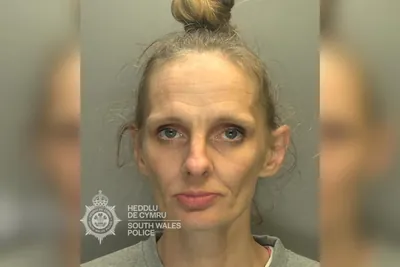
A shoplifter has been jailed after admitting two thefts from stores in Barry within the space of a month.
Hannah Hyde, 39, of no fixed abode, Barry appeared before Cardiff Magistrates’ Court where she indicated guilty pleas to both offences.
On July 4, Hyde stole a selection of fragrance products worth £108 from Boots and food and coffee worth £45 from Tesco on July 28.
Magistrates sentenced the defendant to four weeks’ imprisonment for the Boots theft.
For the Tesco offence, Hyde received a further four-week prison sentence to run consecutively.
She was locked up for 24 weeks in total because she was in breach of a suspended jail sentence which was activated for similar offences.
Adam Burcher appeared for the prosecution with Matthew Ridler representing the defendant.
2026.8.1 Darlington pervert caught with more than 150 sick images of children
A pervert caught with more than 150 sick images of children has been put behind bars after breaching a court order.
Darlington’s Jason Firmin received a total 26-month prison sentence, suspended for 18 months, at Teesside Crown Court on June 12.
It related to charges of possession of cocaine with intent to supply and drug sale proceeds, plus the downloading of more than 150 indecent images of children found on his iPhone.
As part of the sentence, Firmin was made subject of a Sexual Harm Prevention Order (SHPO) for ten years.
2026.8.1 ‘Black widow’ fraudster who stole £300K from vulnerable pensioner arrested at Manchester Airport
A fraudster who stole nearly £300,000 from a vulnerable pensioner has been arrested at Manchester Airport.
Pamela Gwinnett, 63, has been caught by Greater Manchester Police (GMP) after she fled to Spain to evade justice.
The fraudster, dubbed the “black widow”, flew to Tenerife in April 2025 while on bail.
She was extradited back to Britain after an investigation by GMP, the National Crime Agency (NCA) and Spanish authorities.
2026.8.1 £20,000 appeal for information over the murder of Lyra McKee
It comes after three men were found not guilty of her murder earlier this year following a trial.
An award of £20,000 has been offered in fresh appeal for information about the murder of journalist Lyra McKee.
The 29-year-old died after being hit by a bullet as she stood close to police vehicles while observing disturbances in the Creggan area of Londonderry on April 18 2019.
Earlier this year, three men were found not guilty of her murder following a trial.
Paul McIntyre, 58, of Kells Walk in Derry, Peter Cavanagh, 38, of Mary Street, and Jordan Gareth Devine, 25, of Bishop Street, faced a joint enterprise murder charge.
No-one has ever been charged with firing the gun in the incident.
Following the trial, Ms McKee’s sister Nichola Corner called for an end to the “culture of silence” in Northern Ireland which meant people did not come forward with information about the killing.
On Friday morning, the Police Service of Northern Ireland issued a renewed appeal for information.
The appeal is supported by the independent charity Crimestoppers, which is offering a reward of up to £20,000 for information given directly to the charity that leads to the arrest and conviction of those responsible.
Detective Chief Inspector Hazel Miller said Ms McKee’s family deserve answers.
“My thoughts remain, above all else, with Lyra’s loving family and friends,” she said.
“Her murder robbed them of a much-loved daughter, sister, partner, friend and colleague, and they have had to live with the pain of that loss every day since.
“No family should have to endure this ongoing torment. They deserve answers. They deserve to see those responsible held accountable.
“For more than seven years, detectives have worked tirelessly and with determination, to bring those responsible for this senseless and devastating murder to justice.
“That commitment has not weakened with time; it remains as strong today as it was on the day Lyra was killed.”
She welcomed the Crimestoppers renewed reward, and added: “In particular, we are seeking information on the gunman who carried out this senseless killing.

2026.8.1 Blackout serial killer’s eerie confession 80 years after he was hanged
For decades, a secret confession lay unread in official files. Now, the chilling words written a sick wartime killer minutes before his execution have been revealed
Thirty minutes before he was hanged, the Blackout Killer finally told the truth.
“Darling, although I don’t know, I think I must be guilty – the evidence is overwhelming,” Gordon Cummins wrote in a note handed to the prison chaplain. “Don’t try and go further in the matter – I think it would be useless.”
For more than 80 years that confession lay unread in an official file, missed by every book, podcast and documentary about the RAF airman who murdered four women in a single week of the wartime blackout. Now it has been uncovered by author Robin Jarossi, whose new book, Force of Darkness, pieces together one of the most savage killing sprees Britain has ever seen.
The blackout that hid Britain from the Luftwaffe also handed its criminals a gift. Looting, robbery and gun crime spread through streets shrouded in darkness. And it created the perfect conditions for a relentless killing spree.
“The blackout was ideal for criminals to mug people, and sexual crimes went up,” Robin said. “It created real difficulties for the police.”
The week of horror began on the freezing night of February 8, 1942. Evelyn Hamilton, a 41-year-old chemist passing through London for a single night, was strangled in an air-raid shelter on Montagu Place, her handbag and savings gone.
Hamilton had managed a chemist’s shop and was travelling from Essex to Grimsby to start a new job. Shy and studious, her few friends said she was “of the most reserved nature”.
On her last night she was turned away from one lodging house and grew flustered, searching he frozen streets for a bed. “They must put me up somewhere,” she told her cab driver. “I’ve got the money to pay for a room.”
Robin said: “Passing through London for one night, she encounters her killer in the street. Rushing home from a late-night meal, she is somehow inveigled into a bomb shelter and murdered, then just left there. A terribly sad and callous killing.”
The next night Evelyn Oatley was killed, a 34-year-old former poultry farmer’s wife who had come to London dreaming of the stage. Her body was mutilated in her Wardour Street flat.
She’d danced at Soho’s notorious Windmill Theatre, before drifting into sex work under the name Lita Ward.
Two nights later came Margaret Lowe, a widow known as “The Lady” who sold sex to fund her teenage daughter’s boarding school. She was strangled with her own stocking and slashed with kitchen knives. A neighbour called her a “very refined and superior type of woman,” which explained her nickname.
She kept her sex work secret to protect her adopted daughter, Barbara. On the day she died, Lowe called at a local butcher’s to set aside suet and bones, to cook Barbara a pudding for their weekend together. The 15-year-old arrived to find her mother’s door locked.
Hours after the murder, Doris Jouannet, 32, was killed the same way in her Sussex Gardens flat – her husband finding the milk still on the step when he came home.
Married to Henri, a hotel manager 35 years her senior who slept at his hotel most nights, on the Edgware Road, Doris was known as a woman who “never seemed to be hard-up”.
2026.7.31 ‘Monster’ undertaker behind Britain’s worst-ever funeral home scandal jailed for 20 years
Families of the Robert Bush’s victims deliver powerful statement following the disgraced funeral director’s sentencing | GB NEWS
A “monster” funeral director who handed dozens of grieving families the wrong ashes – including four mothers who lost stillborn babies – has been jailed for 20 years following a five-day sentencing.
Robert Bush, 48, pleaded guilty to 67 offences after police officers removed 35 bodies and a large quantity of cremains from Legacy Independent Funeral Directors in Hull in 2024.
His offences span across a period of 12 years, where he breached his customers’ trust “on an almost industrial scale” and “in a myriad of ways”, Mr Justice Hilliard said during the sentencing.
Around 80 victims and their family members attended Hull Crown Court today to watch the sentencing.
2026.7.31 Heartbroken family of British woman found dead in suitcase pay tribute to ‘loving’ daughter
The heartbroken family of a British woman whose body was found inside a suitcase in Athens have paid tribute to their “beautiful, loving and kind” daughter.
Elisabeth Jane Ross, 38, from Scotland, was discovered inside luggage in the Kypseli district of the Greek capital on July 18 after a homeless man spotted what he believed to be “a human limb” protruding from the suitcase and alerted police.
Investigators believe Ms Ross had been dead for between five and seven days before her body was discovered.
Her aunt, Anne Bangham, said the family were struggling to come to terms with the tragedy.
2026.7.30 Final text of British woman found dead in suitcase ‘said she wanted to be alone’
The final texts sent from the phone of a British woman whose body was found in a suitcase in Greece said she wanted to be alone.
But police in the country believe this was an attempted cover-up by her killers.
Elisabeth Jane Ross, from Scotland, was found dead in the Kypseli district in Athens on Saturday.
The final messages sent from the 38-year-old’s phone to her family asked them to leave her alone, Greek investigators say, but detectives believe the texts were sent by her murderers to buy time.
2026.7.30 Pair jailed for life for murder of Isabelle Welsh in Thornaby
A depraved mum and her new boyfriend have been jailed for life for the ‘sadistic’ murder of Teesside toddler Isabelle Welsh.
Alexandra Walker and Harrison Simpson were both convicted of murder after a trial at Teesside Crown Court, after they inflicted weeks of pain and degradation on the two-year-old.
Walker, Isabelle’s 26-year-old mum, was jailed for life with a minimum term of 22 years on Thursday (July 30).
Meanwhile, Simpson, 22, was jailed for life with a minimum term of 28 years.
The toddler also suffered serious sexually abuse at the hands of depraved Simpson.
2026.7.29 Norwegian teenager convicted for his role in murder-for-hire ordered by Iran-linked crime gang
LONDON (AP) — A Norwegian teenager was convicted in a London court on Wednesday of traveling to Britain to carry out a contract killing on behalf of an international crime gang linked to Iran.
Prosecutors said Johannes Kongsnes Natland, 19, agreed to shoot an unknown person for 25,000 euros ($28,000) in March last year. But two days after arriving in the UK, he was arrested at a hotel in Huddersfield in northern England with two guns and ammunition.
A jury at Central London Criminal Court found Natland guilty of conspiracy to murder after deliberating for more than 17 hours.
Natland, who was working part-time at a pizza restaurant at the time of his arrest, was recruited by a Swedish organized crime group known as the Foxtrot Network, which has links to the Iranian government, counterterrorism officers from London’s Metropolitan Police Service said in a statement.
“Although the target of the murder plot has never been identified, (counterterror) London officers uncovered a significant amount of evidence demonstrating that Natland was fully aware he was being asked to kill someone in the UK,” the statement said.
Natland was hired by a 17-year-old known as “Generalen.” A court in Norway last year convicted the teenager of attempting to “contribute to murder” and sentenced him to 14 years in custody. A 16-year-old is awaiting trial in Norway for his role in the conspiracy.
The U.K. government last year announced sanctions against Foxtrot Network and its leader “due to their involvement in violence against Jewish and Israeli targets in Europe on behalf of the Iranian regime.” The sanctions include an asset freeze that bars U.K. businesses from handling funds or other economic assets controlled by the organization.

A man has been jailed for his part in running a Peterborough property used for sex work.
Police say that Soon Chin (49) was arrested when officers visited the property in London Road following reports of concern that a woman was being sexually exploited.
A spokesperson for Cambridgeshire police said: “Inside the property officers found evidence of sex work, including signs detailing prices, multiple used condoms and other associated items.
“Chin, of London Road, was linked to a mobile phone at the address that had been used as part of online adverts and to liaise with people visiting the property.”
Police say that Chin admitted controlling prostitution for gain and was jailed for 10 months at Huntingdon Magistrates’ Court on July 25.
Afterwards, DC Steph Barnes-Dunlop said: “Chin was clearly involved in running this operation to use the property for sex work.
“This kind of activity is widely associated with exploitation, with women and girls forced to perform sexual acts for others to profit from.
He added: “We’re determined to do all we can to tackle exploitation in all its forms and bring people to justice who seek to prey on others for their own financial gain.”
2026.7.29 Is this Leicester’s biggest fly-tip? Investigation launched into ‘disgusting’ mess
A huge number of items including a broken porta-loo was seen
Pregnancy tests, broken bottles and dumped fridges have been found at a “disgusting” massive Leicester fly-tip that’s sparked anger from residents.
The fly-tip was discovered metres from people’s doorsteps on land just north of Benskins Oval in Leicester and adjacent to Ashton Green Road – about five minutes from Beaumont Shopping Centre – with many residents taking to social media to complain about it, saying it had caused great “upset”.
On a visit to the site, the Local Democracy Reporting Service (LDRS) found pregnancy tests, building supplies, a broken porta-loo, beds, broken bottles and foldable chairs among the many items dumped down a tarmac track.
Residents living on and near Benskins Oval said they were “disgusted” by the pictures when shown them by the LDRS.
One resident living on the street, who did not wish to be identified, said: “Luckily, I can’t see it here. It’s an absolute state.
2026.7.29 Children as young as six rushed to hospital after horror dog attack at playground
Two children have been rushed to hospital after a horror dog attack in a playground.
Both children, aged six and 11, received bites to their legs and thighs on Vernon Street in Leicester.
Leicestershire Police are now appealing to the public for information about the incident on April 19.
The force is now looking for a woman, pictured on CCTV holding a dog on a lead.
2026.7.28 Suzy Lamplugh murder investigation shelved
Forty years on from the estate agent’s disappearance, no trace of her or ‘Mr Kipper’ has been found
Forty years after Suzy Lamplugh disappeared without trace, Scotland Yard has announced it is shelving the murder investigation.
The 25-year-old estate agent was last seen on July 28, 1986, when she left her office in Fulham, west London, to show a client calling himself “Mr Kipper” around a property in nearby Shorrolds Road.
Detectives, who have been conducting a cold case review of thousands of potential leads, are to make one last push for a breakthrough before formally declaring the case “inactive”.
While they will continue to assess any new significant information that comes in, they will stand down their dedicated team in the coming months.
The decision means one of Britain’s most notorious missing-person cases is unlikely ever to be solved and her family will never get the closure they crave.
2026.7.24 Smirking Tunisian migrant assaulted five women in 90 minutes in picturesque UK town
A “dangerous” Tunisian migrant has been found guilty of carrying out a frenzied sex attack rampage in Jersey.
In the early hours of November 30 last year, Abdelkarim Arfaoui, 27, attacked five women in just 90 minutes on the Channel Island.
The Tunisian national was charged with 10 offences, including attempted rape, five of sexual touching without consent, one of grave and criminal assault, two counts of common assault and one count of threatening or abusive behaviour.
After four hours of deliberations, Arfaoui was found guilty of all charges by a jury in Jersey’s Royal Court.
2026.7.21 Norway teen did not plan to carry out ‘hit’ – court
A teenager accused of travelling from Norway to the UK to carry out a contract killing has told a court he was “petrified” and never intended to carry out the “hit”.
Johannes Natland, 19, was arrested in a hotel room in Huddersfield with two working guns and 19 rounds of live ammunition in March 2025.
He was allegedly recruited by the Foxtrot Network – described at the Old Bailey as a Swedish organised crime group backed by the Iranian regime – to shoot an unknown person in the UK.
Natland has pleaded guilty to possession of firearms and ammunition but denies a charge of conspiracy to murder.
Giving evidence in his defence on Monday, Natland told jurors he did not think the plan was real when he first received messages offering him €25,000 to travel from Stavanger in Norway to Manchester to shoot someone.
However, after plane tickets were booked for him and money was sent over for accommodation, he said he started to understand.
“When I received the money that’s when I realised,” he said.
“I wouldn’t have got involved in the first place – I’m scared and thinking this is not going to work out.
“I wasn’t trying to be a guy in the news.”
The defendant said he went along with the instructions sent to him – including those leading him to a secluded location to pick up the two guns – out of fear and never intended to carry out an attack.
“This is the biggest criminal enterprise in Scandinavia,” he said.
“I didn’t want them to think I’m scamming them.”
He told the court: “I thought, let me make it as inconspicuous as possible, not give them any clues that I wasn’t actually on board.”
When asked what he was planning to do instead, he replied: “My plan was to shoot myself in the foot.”
Natland’s defence barrister, Paul Hynes KC, asked his client if he meant his statement “literally or metaphorically”, to which he replied: “Literally.”
He added: “I knew I would never shoot anyone, I wouldn’t be able to ever shoot someone.”
The defendant said he had been using drugs “pretty much every day” by the end of 2024 and had spent time in a psychiatric unit in his home country.
“I got to a point where I was making wrong choices and became a bit of a recluse really,” he told the court.
“Distancing myself from the life I used to live.
“When I came home I was still throwing my life away, still deteriorating.”
Natland flew to Manchester on 17 March but was refused entry because he was travelling on an emergency passport with just £40 in cash, no hotel booking and no return flight.
He was still allowed to enter the UK on a temporary basis, the court previously heard, and was told to return to the airport for a flight back to Norway four days later.
During cross-examination by prosecutor Alistair Richardson, he was asked why he did not think to pull out of the plan.
“I didn’t want them to think I’ve come this way now and now I’m pulling out,” said Natland.
“I took the wrong decision at every turn, I should have never entertained it to begin with.”
The trial continues.
Two young men have been sentenced for launching a cyber attack on Transport for London (TfL) which cost tens of millions of pounds in losses and inconvenienced thousands of customers.
Thalha Jubair, 20, from East London, and Owen Flowers, 18, from Walsall, West Midlands, were identified by the NCA and City of London Police following the infiltration of TfL’s network between 31 August and 3 September 2024.
They both pleaded guilty to the attack last month in what was only the second criminal prosecution of its kind in the UK under the Computer Misuse Act (CMA).
Section 3ZA of the CMA is the most serious section as it applies where the unauthorised act causes or creates a significant risk of serious damage, and the person intends or is reckless as to that damage.
Jubair and Flowers, who were arrested at their home addresses on 16 September last year by the NCA and CoLP, were both leading members of the online criminal collective known as Scattered Spider.
Although other cybercriminals may continue to use the damaged Scattered Spider brand, the NCA’s action against Jubair and Flowers effectively halted the group’s criminal activity. Independent assessment supports this, with Microsoft confirming that the arrests materially degraded the group’s ability to continue conducting cybercriminal operations.
While swift action by TfL limited the impact, a number of services relied on by the public were disrupted. These included the Dial-a-Ride booking service, which provides transport to vulnerable Londoners, the provision of concessionary travel cards, the digital payments channel and a delay to the extension of contactless ticketing.
All 27,000 of TfL’s employees were forced to attend a TfL office for a password reset and a total of 148 systems became inoperable, including critical ones that required significant manual workarounds and delays. The organisation, which reported the incident to CoLP’s Report Fraud service, suffered a reported £29 million in loss and recovery costs.
However, had the attack succeeded in shutting down the transport network the estimated cost to the UK economy could have been up to £56 billion.
Data from TfL’s Oyster refunds system was accessed and the incident also affected TfL’s customer refund system, leaving some out of pocket for much longer than usual. It also closed down the application system for Oyster photocards for children and young people.
Flowers was initially arrested for the TfL attack on 6 September 2024, at which point he was found to be in the process of hacking the systems of US healthcare companies SSM Health Care Corporation and Sutter Health, which had been infiltrated and damaged.
Investigators found a number of devices at his home including laptops, computer towers, hard drives and USB sticks.
One laptop contained a screen shot showing network connectivity to TfL infrastructure.
The laptop also contained a number of videos that Flowers had recorded, showing Jubair accessing TfL systems during the attack. The pair were messaging each other over Telegram at the same time and also communicated via an online tool where multiple participants can work remotely in a common workspace.
Following his initial arrest, Flowers was arrested again for a bail breach relating to non-compliance with conditions concerning his device usage.
Jubair was also charged for failing to disclose the pin or passwords for devices seized from him.
Both individuals changed their pleas to guilty on the day they were due to stand trial at Woolwich Crown Court (22 June).
At the same court today (16 July) Flowers and Jubair were each sentenced to five years and six months imprisonment.
—
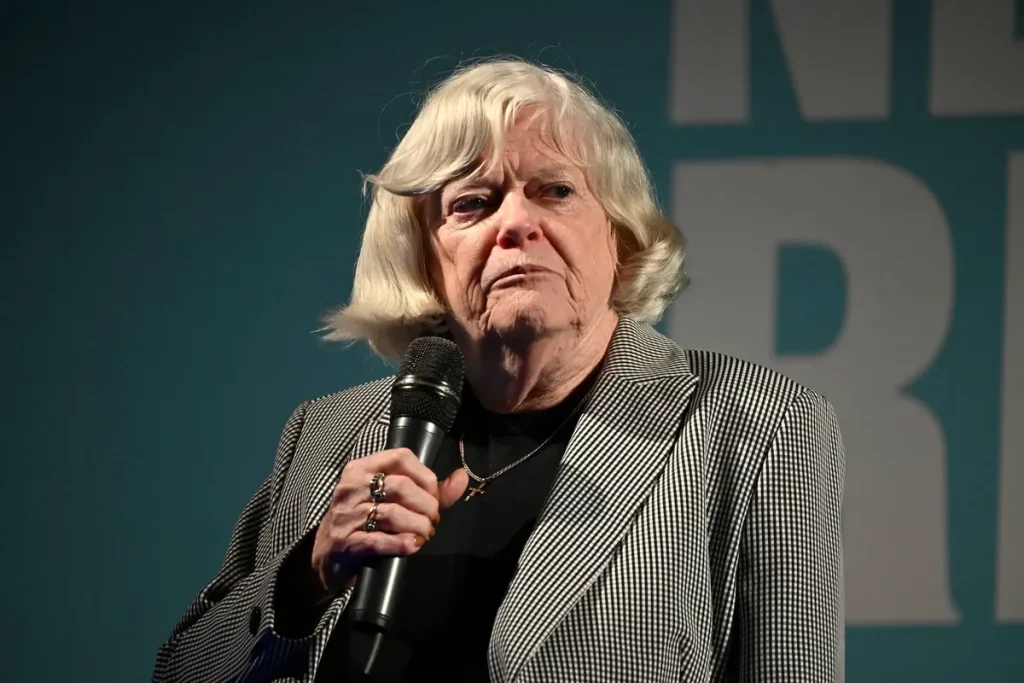
2026.7.12 Everything we know so far about Ann Widdecombe’s murder
Former MP and Strictly contestant Ann Widdecombe was found dead at her home, with her body left undiscovered for 24 hours.
Investigators say the 78-year-old was found in a pool of her own blood inside the kitchen of her remote Dartmoor bungalow.
The ex-Tory minister was last seen during an interview for Talk TV at around 8am on Wednesday. But she then failed to appear on Channel 5’s Matt Allwright show just a few hours later at 1pm.
A TV researcher sent her a message at 12.48pm requesting she join a Zoom call, but there was no reply, and her phone went unanswered.
A 26-year-old man was arrested on suspicion of murder before being released, and he is no longer part of the investigation, Devon and Cornwall Police said.
On Saturday, a 28-year-old man was arrested on suspicion of Miss Widdecombe’s murder, and he remains in custody, the force said.
Here is everything we know so far.
Who was Ann Widdecombe?
Miss Widdecombe was a Conservative MP between 1987 and 2010 for the Kent constituency of Maidstone, later Maidstone and the Weald, and held several ministerial positions in Sir John Major’s government.
In her post-Commons career, she appeared on the BBC’s Strictly Come Dancing in 2010, partnered with Anton du Beke, and reached the semi-finals thanks to the public vote.
She became a member of Nigel Farage’s Brexit Party from 2019 and served as an MEP representing South West England in Brussels between 2019 and 2020.
Miss Widdecombe became immigration and justice spokeswoman for Mr Farage’s Reform UK and remained active in the media – she appeared on TalkTV on Wednesday, the day before she was found dead.
How did Ann Widdecombe die?
The official cause of death has not yet been released.
Officers said they were called to the 78-year-old’s home in Haytor at around 11.40am on Thursday by the ambulance service.
Miss Widdecombe was found dead inside at her home, having sustained ‘serious injuries’.
She is believed to have been attacked at around 12.30pm Wednesday, but the alarm was not raised until 11.40am the next day.
The police said her next-of-kin have been informed and are being supported by specially trained officers.
Where did Ann Widdecombe live?
Miss Widdecombe lived in a remote bungalow in Haytor, on Dartmoor.
A cordon can still be seen around the property as police continue their investigation.
Did Ann Widdecombe have children?
Miss Widdecombe did not have any children, saying sex and TV were the two things in life she could ‘do without’.
She was openly celibate and said she did not agree with sex before marriage.
She told The Times: ‘I think that the brute truth is that I’ve enjoyed being alone.
‘I love my own company. I’m the best company I know – I mean, I can make myself laugh uproariously.’
What do we know about the suspect?
Police have arrested a 28-year-old man at an address in Rotherhamd, South Yorkshire, around 270 miles north of Miss Widdecombe’s home.
He is described as a white British national.
Counter-terrorism police were involved in the arrest carried out on behalf of Devon and Cornwall Police, but the force confirmed that there is still no information suggesting the death is terrorism related.
What has the police said about the investigation?
Assistant Chief Constable Matt Longman provided an update on the force’s investigation today: ‘At this point, there is still no information to suggest that this is a terrorism-related incident, and at this point, we are not looking for anyone else in connection with this murder.
‘We retain primacy of this investigation, and detectives remain open-minded about the potential motive.
‘At this stage, there is nothing to suggest it was politically motivated.’
He urged people to stop speculating over the death, saying it is ‘unhelpful’ for the investigation and ‘distressing’ to Miss Widdecombe’s family.
2026.7.11 Ann Widdecombe’s final text messages from day before she was found dead revealed
Ann Widdecombe’s final text messages have been revealed after she had been scheduled to appear on a TV show the day before her body was found.
The former Tory prisons minister’s body was found in her kitchen by a carer at her home in Haytor on Dartmoor on Thursday at around 11:40am, having sustained ‘serious injuries’.
However, on Wednesday, Widdecombe was due to be a guest, via video call from her remote bungalow, on Channel 5‘s Matt Allwright show at 1pm. She had already been interviewed on TalkTV that morning, discussing the Clacton by-election.
A researcher on the show spoke to the 78-year-old on the phone earlier that day to set up an interview, according to ITV News.
Following their call, the pair exchanged messages shortly after midday before her last message was received at 12:19pm. These messages have since been shared with police.
Newly released screenshots of her WhatsApp texts show that Widdecombe was communicating with a producer for five minutes from 12:14pm.
The crew member was sending her a Zoom link, which Widdecombe had trouble receiving.
After offering him an email address to send it to, he wrote: ‘Just sent to this address, let me know if you’ve got it’.
Widdecombe then sent her final message. It read: ‘Received! Panic over!!’
‘Amazing! Let me know if there’s any issues’, the producer responded in a message that ITV images prove was read, as it had two blue ticks.
At 12:48pm, the producer messaged again, asking Widdecombe to join the Zoom call, but the text was not opened.
After this, a phone call was made to her, which was not answered.
At 12:55pm, the producer asked: ‘Hi Ann is everything okay?’ before attempting to call two more times.
When the programme began airing, Allwright informed viewers at 1:27pm that Widdecombe was meant to appear, but she had failed to show up.
Concerns were then raised by the team about the uncharacteristic lack of response by Widdecombe, who was a regular on the show.
They contacted her agent later on Wednesday and followed up again on Thursday.
A source told The Sun: ‘It was very strange that Ann wasn’t on. Nobody could understand it.
‘She was usually very keen to be on, and she is popular with viewers. The producers couldn’t get a hold of her.
EXETER, ENGLAND – NOVEMBER 09: Ann Widdecombe, Immigration and Justice spokeswoman for Reform UK, speaks on stage during the South West conference at Westpoint Arena, on November 09, 2024 in Exeter, England. The populist party’s conference comes in the wake of Donald Trump’s win in the US Presidential election on Tuesday. Party leader Nigel Farage, a Trump ally, is headlining the event. (Photo by Finnbarr Webster/Getty Images)
A man was arrested on Friday on suspicion of murdering the ex-Tory prisons minister. He has since been released (Picture: Finnbarr Webster/Getty Images)
‘They tried multiple times on the phone and on text, but she wasn’t reading messages or responding.
‘Obviously, there was not much they could do except tell her agent she had not appeared and was not picking up calls.
‘There was some fear that she’d had a medical incident, or maybe needed someone to check on her, but nobody thought she might be dead.
‘The mood when everyone found out was very sad.’
Writing on social media, Dan Walker, who is a presenter on Channel 5 News, said this weekend: ‘Really sad news about Ann Widdecombe. Horrible to think about what she went through.
‘To clarify something we said on the programme tonight… Ann was due to appear on 5 Daytime on Wednesday afternoon but stopped responding to messages and didn’t turn up for the show.
‘The team contacted her agent to ask them to check in on her. This information has been passed to police as it’s part of the investigation.’
On Friday, Devon and Cornwall Police said that a white British national had been arrested at an address in Newton Abbot, Devon, close to where Widdecombe lived at her property named Widdecombe’s Rest.
Earlier today, it was revealed that the 26-year-old man had been released from custody and is no longer part of the investigation. The manhunt continues.
Meanwhile, with her local community in shock and mourning, flowers have been laid at Dartmoor National Park.
Reform UK leader Nigel Farage was photographed there this morning, telling reporters: ‘There are no words that I can utter that somebody who’s committed this act of barbarity against an innocent 78-year-old lady who wouldn’t harm a fly.’
He added that he hopes anyone involved in her death can be apprehended ‘quickly’ but refused to speculate about whether her alleged murder was ‘politically motivated’.
Farage, 62, did, however, weigh in on one working theory that Widdecombe’s death was the result of a lunchtime burglary gone wrong. He said this makes ‘no sense’ to him.
‘A car went onto the drive at approximately 12:25-12:30 on Wednesday,’ claimed Farage before referring to her Channel 5 no-show.
‘She had done one interview in the morning… She was due to do another one at 1pm.’
‘So if you were a burglar, would you literally drive your car onto someone’s drive?’, he continued, believing that a motive was ‘there from the very start’.
‘We will do anything we can to support the police,’ Farage also declared, revealing that he has talked to the chief constable of Devon and Cornwall Police twice.
The Reform Party, for which Widdecombe was a spokeswoman in her final position, has also been through Widdecombe’s emails and any emails sent about her in an attempt to identify potential threats or connections.
Police are still urging anyone with information to come forward, particularly those with CCTV from the area. A heightened authoritative presence remains outside Widdecombe’s property as forensic examinations and interviews are ongoing.
Ann Widdecombe’s death – what we know
Ann Widdecombe’s death announced
Former Conservative politician Ann Widdecombe’s death was announced by her management on the morning of Friday, July 10.
Their statement read: ‘It is with great sadness that today we announce the death of the Rt Hon Ann Widdecombe, DSG.
‘We send our deepest condolences to Ann’s family and friends. We ask that the family’s wish not to be contacted at this sad time is respected.’
Murder probe launched
Then, on Friday evening, it was confirmed that an investigation had been launched into possible foul play after the ex-MP’s body was found ‘covered in blood from sustaining a serious head wound’ at her Dartmoor home in Devon on Thursday.
Devon and Cornwall Police said in a statement: ‘Police officers were called to an address at Haytor by the ambulance service at around 11:40am on Thursday, 9 July.
‘Sadly, 78-year-old Miss Widdecombe was located deceased within the property. She had sustained serious injuries.
‘Her next-of-kin have been informed and are being supported by specially trained officers.
‘Detectives from the Force Major Crime Investigation Team have launched a murder investigation and are conducting extensive enquiries into the circumstances surrounding Miss Widdecombe’s death.’
A manhunt for a white male was launched as the investigation began moving at a ‘significant pace’.
Arrest made
During a media conference on Friday evening, Assistant Chief Constable Matt Longman confirmed that a 26-year-old male suspect, a white British national, is now in custody after being arrested at an address in Newton Abbot, a short drive away from Widdecombe’s residence.
He added in an evening press conference that while police presence is heightened in the area where Widdecombe lived and while the force has ‘consulted counter-terrorism policing’, the death of the ex-Strictly star is not being treated as terror-related.
Too early to comment on motive
Longman explained that investigators remain ‘open-minded’, but it is ‘too early to comment further’ on whether the suspect was known to the victim.
Asked whether the incident could have had political motivations, he repeated his prior response, adding: ‘At this time, I have got no information to believe that that is a politically motivated crime.’
Similarly, outgoing Prime Minister Sir Keir Starmer said it is vital to ‘rise above any political differences’.
Asked whether he believes Widdecombe’s possible murder could have been politically motivated, he responded: ‘It’s really important we remain vigilant. I’m not going to speculate about this particular case.’
Widdecombe’s management speaks out
Following the news of the murder investigation, Cloud9 Management said they are ‘absolutely devastated’ after ‘a very traumatic and upsetting 24 hours’.
‘We fully support the police in their investigations, and we reiterate the family’s desire not to be contacted at this difficult time. We implore anyone who may have relevant information to contact Devon and Cornwall Police.’
Local community ‘devastated’
Susan Coysh, Widdecombe’s neighbour, told the BBC: ‘I’m shocked. In this lovely setting where we live…’
‘I can’t see why anybody would want to hurt her… it hasn’t sunk in yet, actually,’ she said, describing Widdecombe as ‘a character and a lovely lady’.
She last saw Widdecombe at a petrol station 10 days ago. While ‘approachable’, she typically ‘kept to herself’.
Other neighbours said that Widdecombe had withdrawn from the local community in recent years.
Man seen arriving ‘in middle of the night’
Next door neighbour Peter Cornthwaite said Widdecombe was not known to have security or a secure garden at her home, called Widdecombe’s Rest. He referred to the area as ‘very quiet’, telling The Sun there is little crime.
He added that he saw a van arrive in the early hours of the morning on the day Widdecombe died.
The white man was dressed in hiking clothes.
Suspect released
The 26-year-old man arrested on Friday was released from custody on Saturday morning. Police confirmed he is no longer part of the investigation.
As the manhunt continues, Mr Longman said: ‘Our priority remains identifying those responsible and ensuring that all available evidence is thoroughly examined.’
Fresh details emerge
It has come to light that Widdecombe was attacked 24 hours before she was found, officers believe.
Devon and Cornwall Police said: ‘We believe the attack took place on Wednesday, 8 July, at around 12:30pm.
‘Our enquiries are moving at pace for a suspect who is believed to be a white male.’
Their theory ties in with the revelation that Widdecombe stopped responding to text messages at 12:19pm.
She had been due to appear via Zoom on a Channel 5 show but did not show. One producer repeatedly messaged her, asking if she was ‘OK’ and trying to call her, but the WhatsApps went unopened and unanswered.
—
2026.7.9 Injuries suffered by ‘murdered’ toddler Isabelle Welsh shown in court
A pathologist has told a jury of almost 100 injuries recorded outside and inside the body of “murdered” toddler Isabelle Welsh.
The two-year-old died hours after suffering a fatal brain injury when her skull was fractured in a way that was “highly suggestive of an abusive head trauma”, a court heard.
Jurors looked at computer-generated images cataloguing the bruising and scratching covering the toddler’s entire body.
Dr Sam Hoggard, a Home Office pathologist, told Teesside Crown Court that the vast majority of the injuries would have been clearly visible to the naked eye.
The toddler’s mother, Alexandra Walker, and her new boyfriend, Harrison Simpson, are on trial accused of murder at their Thornaby home on September 14, 2025.
The pathologist said there were four areas of bruising around the toddler’s vagina, with haemorrhages in the area.
Dr Hoggard said he believes the bruising is separate, but they are almost merging together.
“They indicate there has been some blunt force trauma to the pubic area,” he added.
He told the jury there were multiple ‘circular’ bruises around her body which were consistent with being gripped tightly.
Jurors also looked at an image outlining the significant bruising around the anus area of the two-year-old girl.
Other images shown to the jury depicted bruising inside her stomach area which could have been the result of a ‘very forceful’ punch. One harrowing picture of the left side of Isabelle’s head showed almost the entirety of it covered in a large area of dense bruising.
He said: “I will have required significant force to cause bruising across almost the entire of the left side of the scalp.”
Another image captured three injuries on the right-hand side of her head.
Dr Hoggard will conclude his evidence tomorrow (Thursday, July 9).
Another medical expert, Dr Jo McPartland, a pathologist who works in the Alder Hey Children’s hospital in Liverpool, dealt with the damage caused to Isabelle’s eyes before her death last year.
The specialist said there were too many haemorrhages in the toddler’s eyes for her to count.
She said: “The presence in both eyes is a pattern that is seen in abusive head injury rather than accidental head injury.”
Dr McPartland said there was no history of accidental trauma which could explain the skull fracture in the case.
She said: “There was no history provided of an accidental fall that could explain the skull fracture in this case.
“In the absence of an underlying medical cause, the finding of multiple haemorrhages in both eyes, the severe optic nerve haemorrhages in both eyes and orbital soft tissue haemorrhages.
“In combination with the brain injury, it is indicative of a severe traumatic head injury. In the absence of a history of an accidental head trauma of appropriate severity – it is highly suggestive of an abusive head trauma.”
Earlier in the trial, jurors heard how the toddler had also endured significant sexual abuse in the weeks leading up to her death.
Simpson, 22, of Greenham Close in Thorntree, Middlesbrough, and 25-year-old Walker, of Hartington Close in Thornaby, both deny murder.
The pair also deny four other charges involving Isabelle, including: causing or allowing the death of a child on September 14; two counts of assault by penetration between September 10 and September 14 last year; and cruelty to a person under 16.
The trial continues.
The kingpin of a £109 million drugs network has been jailed, after a National Crime Agency-led international investigation unearthed his criminality.
Steven Bullen, 51, of Marbella, Spain – formerly of Hornchurch, Essex – was today [9 July] sentenced to 16 years and four months in prison at Southwark Crown Court, for importing, producing and supplying large quantities of cocaine, ecstasy and amphetamine over a 10-month period.
Corrupt courier company employee Zak Archbold, 30, of Braintree, Essex was also jailed for 12 years for conspiring with Bullen to smuggle cocaine into the UK.
The NCA’s investigation began as part of Operation Venetic, the UK response to the takedown of Encrochat – an encrypted phone service for criminals – by counterparts in France and the Netherlands. Officers were also assisted by the Spanish National Police and judicial authorities in Spain to close the net on Bullen.
The NCA meticulously pieced together thousands of messages sent and received on Encrochat by a user with the handles ‘Domesticcar’ and ‘Rocketspark’, to identify that the individual had smuggled 1.1 tonnes of cocaine with a street value of £88 million into the UK between August 2019 and May 2020.
The messages revealed that the user – who officers later identified was expat Bullen – had been involved in the importation of cocaine via the Netherlands to the UK. The drug was to be supplied across the UK.
NCA investigators also identified that Bullen had colluded with a corrupt UPS employee to smuggle cocaine from the Netherlands. Bullen shared messages about a UPS manager nicknamed “King”, who had been suspended following an internal investigation by the company.
NCA investigators liaised the UPS who told them that an employee – Archbold – had been sacked after an internal investigation at their depot in Stanford-Le-Hope.
Archbold had told his employer that he was involved in the theft of parcels, however NCA investigators – assisted by the revealing Encrochat messages – proved that Archbold had in fact helped Bullen to slip around 28 parcels containing up to 12kg cocaine each through the depot.
Archbold managed a team sorting packages as they arrived at the depot. As team leader, Archbold received advanced notice of which parcels would be inspected by Border Force officers and he told Bullen that he’d be able to swap the labels to ensure the cocaine packages went undetected.
Encrochat messages revealed that Archbold was due to be paid £750 for each kilogram of cocaine successfully smuggled.
Within Bullen’s Encrochat messages, officers also found photos of ledgers detailing the prices of cocaine and ecstasy that he was supplying.
The messages revealed that Bullen had conspired to supply 410kg of the cocaine he had imported – with a street value of £32.8 million – and 242kg of ecstasy with a street value of £9.68 million.
Bullen also discussed recipes for producing “trainers” – slang for amphetamine – and detailed large quantities of chemicals he had access to, which officers calculated would enable him to produce up to 2,250kg of the drug with a street value of £11.25 million.
NCA officers painstakingly pored over each message sent to and by ‘Domesticcar’ and ‘Rocketspark’ for clues to the user’s identity.
Bullen arrested
They made a significant breakthrough when they found images of the user’s villa. With the assistance of Spanish National Police and judicial teams in Spain, they were able to locate Bullen in Spain, who was subsequently arrested at his villa on 8 April 2025.
The officers seized phones, a laptop and USB sticks at the address, from which they recovered around 250 spreadsheets detailing drugs supplied and money paid to Bullen.
NCA officers arrested Archbold the next day.
Bullen was extradited back to the UK in August 2025 and immediately charged by officers upon his arrival. Faced with the evidence against him, Bullen pleaded guilty to his crimes at Southwark Crown Court on 9 December 2025.
Archbold was found guilty of conspiring to import Class A drugs on 2 April this year, following a trial at the same court.
Senior Investigating Officer, Steve Black, of the NCA said:
“I believe Bullen felt unreachable because he was living in Spain and hiding his criminality on an encrypted phone. Bullen didn’t reckon on the NCA working with police forces across Europe to expose his multi-million-pound drug enterprise, to track him down and bring him back to the UK to face justice.
“Archbold was driven by greed. He thought that he had got away with smuggling cocaine, but our meticulous officers connected the dots between him and Bullen, and now he’s facing the consequences of his crime.
“Our international operation has put a stop to Bullen’s extensive cocaine business, ensuring that he is no longer making money from supplying some of the most harmful, life-wrecking drugs in the UK.
“I would like thank our partners, particularly the Crown Prosecution Service and the Spanish National Police and prosecution teams in Spain whose assistance was invaluable.”
Gemma Vincent from the Crown Prosecution Service said:
“Steven Bullen led an established organised crime group involved in the importation, production and supply, of controlled drugs. From his base in Spain he directed the widespread distribution of a staggering volume of drugs and the collection and movement of criminal money.
“Prosecutors worked closely with the National Crime Agency and our international parters to build a strong evidential case and secured his return to the UK. Faced with the strength of evidence, he pleaded guilty to all charges.
“Zak Archbold abused his position while working for a reputable courier company and facilitated the importation of cocaine from Europe into the UK.
“Their convictions would not have been possible without the combined efforts of prosecutors in the UK, Spain and France, Spanish law enforcement teams, and the NCA.
“Going forward, we will seek to confiscate their ill-gotten gains and we hope these sentences serve as a deterrent to other would be criminals.
“Drugs have a devastating and costly impact on society, and we will continue to work across borders to prosecute those who seek to flood our streets for their own gain.”
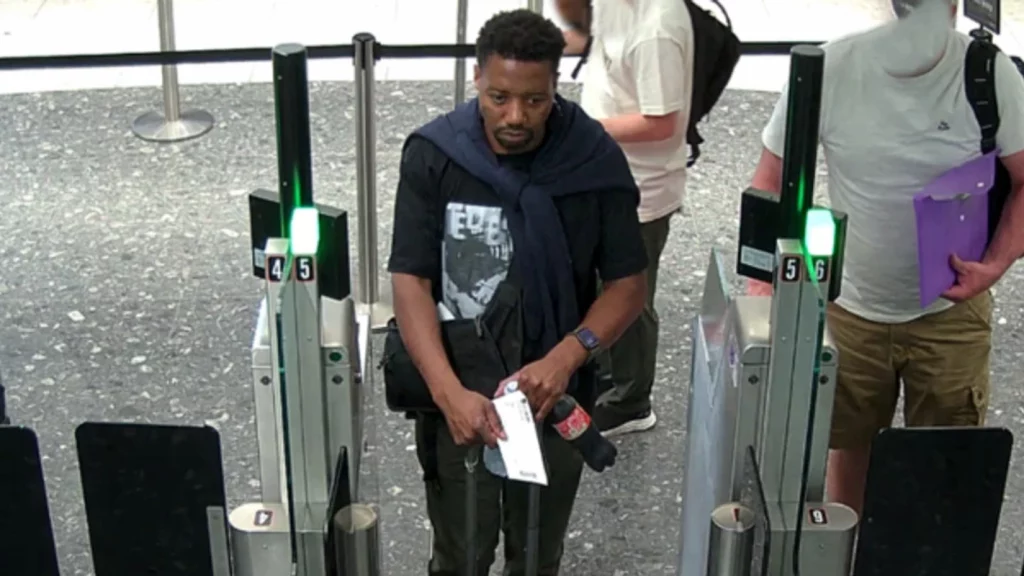
THE family of a mum found dead alongside her two daughters at home has said their deaths have left a “hole in our hearts”, as the kids’ dad flees the UK.
Nothabo Zandile Tshuma, 42, and her daughters Natalie, 15, and Nala, five, were discovered at their £1.3million home in Great Denham, Bedfordshire, on Monday.
Concerns were initially raised for the family after Zandile Tshuma and her daughters had not been seen for several days.
Officers later forced their way into the luxury detached home on Carnoustie Drive.
Police believe the trio were murdered and have identified the suspect as 45-year-old Ndodana Mkhanyisi Tshuma, the girls’ father and Mrs Tshuma’s husband.
In an emotional statement outside the home this evening Mrs Tshuma’s cousin Michelle Ncube described how the family “had such high dreams” for the girls, and paid tribute to their mother.
She said Mrs Tshuma would be remembered “as the loving, most patient, demure, person, that she was”.
“I think if there’s anything that we remember of her, it’s just how affectionate she was,” she told ITV News.
“She was a naturally private person but she had this warmth and this compassion that really drew you in.
“She was motivated to be a successful black woman,” she said, adding that Mrs Tshuma loved gardening and flowers “and she was a precious flower to us”.
Commenting on the two girls, Ms Ncube said that they “were absolute dreams” who “brought such love joy and light into our lives.”
“You knew you would leave that space feeling a lot lighter and happier,” she said.
“We had such high dreams for them. They had such joy, and brought such happiness.”
Reflecting on the devastation that had been left behind, Ms Ncube admitted that it “didn’t feel real”.
“It absolutely feels surreal. It feels like it’s happening, but not happening to us. It doesn’t feel real at all. It’s unbelievable. Most of us are in a state of shock.
“What we want is for us to remember that behind all of this was a woman and two beautiful girls. It’s left a massive hole in our hearts. Let the police do their jobs.
“We want people to talk about the person that she was, and the little girls.”
Triple murder suspect Ndodana Mkhanyisi Tshuma is understood to have fled the country in the wake of the tragedy.
CCTV released by cops shows suspect Tshuma – a British citizen of Zimbabwean heritage – boarding a plane at Heathrow Airport on Saturday.
Bedfordshire Police believe the 45-year-old flew to Zimbabwe on a British passport.
But Zimbabwe Republic Police say they had not received any communication from either Interpol or the UK authorities, reports the BBC.
Paul Nyathi, spokesperson for the force, said: “We are yet to receive an Interpol red notice; we are still to get that communication.
“Nonetheless, we are already on alert and closely monitoring the situation and ready to arrest him.”
He added that if Tshuma is in the country, he should turn himself in.
Yesterday, officers in the UK made a direct appeal to the triple murder suspect to hand himself in, saying that “unthinkable harm” had been caused to his family.
Detectives from Bedfordshire, Cambridgeshire and Hertfordshire Constabulary working on the investigation to track Tshuma down.
The senior IT executive spent more than a decade working for the Institute of Chartered Accountants in England and Wales (ICAEW).
He went on to become Head of Development and Support, according to his LinkedIn profile.
It describes him as an “experienced, results oriented and energetic IT leader with a proven delivery record”.
He also claims to have broad expertise in people management, stakeholder engagement and project and programme management.
Tshuma studied Management Information Systems at Solusi University in Zimbabwe.
He later graduated from the University of Plymouth with a BSc (Hons) in Computing Informatics in 2005.x1200
—
Ellis fired five shots at David Blakely outside a pub and was immediately arrested
Ruth Ellis was hanged at Holloway prison a month after being convicted of murdering her lover in 1955
2026.7.8 Theodore Dalrymple. Ruth Ellis was a murderer. She doesn’t deserve a pardon
Premeditation could not have been clearer in the night-club hostess’ case
Ruth Ellis was, as everyone knows, the last woman to be executed in Britain. At the time, 1955, there were widespread doubts, even among those in favour of capital punishment, as to whether this punishment was right in her case and should have been commuted. It was felt by many that to execute a woman was somehow more barbaric than to execute a man, whatever she had done.
She has now been granted a conditional pardon for having murdered her lover, David Blakely: her sentence has been posthumously commuted to life imprisonment. If that had been her sentence in 1955, she would probably have been released in circa 1970, and (who knows?) she might have lived happily, and above all, peacefully, ever after.
Her life story is one of almost unbelievable social pathology from a very early age. Her father sexually abused both her and her elder sister, Muriel, who gave birth to his daughter, who was then brought up as her own by her mother.
Possessed of glamorous good looks, Ruth Ellis became a night-club hostess and in effect a prostitute. She was abused by several men, including her husband, whom she divorced. She became the manageress of a night club, where she met the man she was to murder, a public schoolboy and racing-car driver. Their affair was passionate, but neither was faithful to the other.
Eventually, in April 1955, Ruth Ellis took a taxi from the flat of the man with whom she was then living (not Blakely) and went to Blakely’s flat. He, however, drove off, and she followed him to the pub where she thought he might be. As he came out, she shot him with a revolver, and when he tried to get away, she shot him a further four times, once from point blank in the back when he had already collapsed. She was arrested, tried, sentenced to death and executed.
In no murder could premeditation have been clearer. It was planned. There was no sudden rush of blood to the head in immediate response to an instance of abuse. It involved the pursuit of a man, however bad he might have been, with a weapon that most people in the country would not have known how to obtain and to which they would have had no access. She later said it was given to her by her other lover, who showed her how to use it. There was no question of self-defence or active coercion.
What was the mitigation that should supposedly have reduced her charge to manslaughter rather than murder? It is that she was under some kind of Svengali-type influence of the man she killed, having previously suffered so much abuse in her life.
As a grounds of excusing murder, this is somewhat dangerous, and rather demeaning to women. Apart from the fact that she clearly appears to have been a woman with a will of her own, however many mistakes she made (and she managed, after all, to divorce an abusive husband, divorce not being easy in 1951), the argument could be applied to untold thousands of women in Britain – alas, as I know from having listened to the stories of hundreds of them myself in a British hospital. None of them shot their abusers, however, and most managed in time to escape them, though they often found someone similar.
Is the background of the abusing man a strongly extenuating circumstance? After all, he has his psychology as much as a woman has. Many a man I have met through my work as a psychiatrist has said to me that he hit women because he saw his father do it. On the other hand, many a man has said to me that he would never hit a woman for precisely the same reason.
Ruth Ellis knew what she was doing. What she was doing was murder.
If anything, the whole story is an argument against the death penalty and perhaps, in her case, against a whole life sentence – but on the grounds of mercy, not on those of dangerous and bogus psychological theorising. We should never forget, moreover, that punishment is not a therapeutic manoeuvre, though it is good if it reforms, but is imposed for the protection of society.
Theodore Dalrymple was a prison physician and psychiatrist
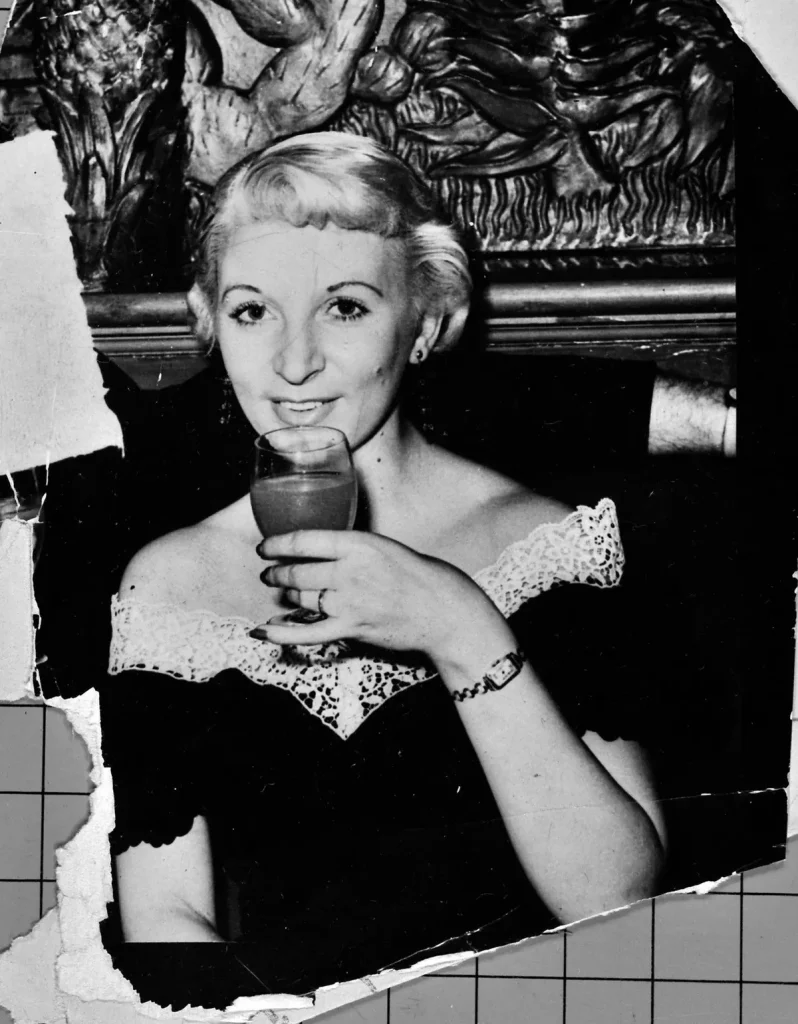
King ‘recognises historic injustice’ of death penalty given to nightclub hostess who suffered in violent relationship
The King has granted a pardon to Ruth Ellis, the last woman hanged in Britain.
David Lammy, the Deputy Prime Minister, announced that His Majesty had agreed to the conditional pardon as an “act of mercy recognising the historic injustice of the death penalty in this exceptional case”.
Ellis shot and killed David Blakely outside a pub in Hampstead, north London, on April 10 1955. She was convicted of murder after a trial and executed on July 13 that year. No reprieve was granted, and no appeal was lodged at the time.
The application for a pardon was brought by four of Ellis’s grandchildren, who argued that she was the victim of a historical injustice. They claimed that her responsibility was profoundly diminished by the domestic abuse she suffered, trauma and circumstances that were never properly recognised at her trial.
On Wednesday, Mr Lammy told the Commons: “I have the honour to say that His Majesty the King has accepted our advice to grant Ruth Ellis a conditional pardon, the last woman to be hanged in the United Kingdom.
“While the pardon does not claim she was innocent of killing David Blakely, it replaces the death penalty with a sentence of life imprisonment to recognise a profound injustice in this exceptional case.”
Laura Enston, Ellis’s granddaughter, said: “Today, justice has finally been done for our grandmother, Ruth Ellis – the last woman to be hanged in England in 1955.
“This pardon does not undo what happened 71 years ago. It does not restore the lives that were broken – the children left behind, the years lost. But it says, formally and finally, that Ruth should not have been executed; that the justice system failed her. That acknowledgement matters profoundly to our family.
“Ruth was a victim of sustained and brutal abuse. Her children – our mother and uncle – never recovered. My uncle took his own life; my mother’s trauma left her unable to be the parent we needed. The shadow of Ruth’s execution has fallen across two generations.
“We have carried shame that was never ours to bear.
“We are deeply grateful to the Justice Secretary for having the courage to act. We hope Ruth’s story serves as a lasting reminder that the justice system must reckon with the abuse that drives women to the edge – and must never be afraid to acknowledge when it has got things wrong.”
Katy Colton, a partner at Mishcon de Reya, which acted for Ellis’s grandchildren, said a conditional pardon was “a landmark moment” for justice in Britain.
Speaking outside the Houses of Parliament, she said: “The granting of a conditional pardon for Ruth Ellis is a landmark moment for the family, for the British justice system and for domestic abuse survivors who’ve been failed by the state.
“Our application demonstrated that Ruth suffered what is now known as battered woman syndrome and that the cumulative impact of the appalling abuse that she sustained would, under the law as it stands today, have led to a different outcome.”
The Ministry of Justice said the pardon “better reflects our improved understanding of the impact of intimate partner violence, including coercive and controlling behaviour, on individual’s subsequent actions – abuse that is disproportionately suffered by women”.
Catherine Atkinson, the victims’ minister, said: “For 70 years, Ruth Ellis’s family have carried the weight of what happened to her. Today we recognise the exceptional circumstances surrounding her case and the impact they had on her life.
“I want to thank her grandchildren for their determination in bringing this case forward, and for making sure her story was finally heard.”
Ellis was a Welsh-born nightclub hostess whose case caused widespread controversy among the press and the public. She was in a relationship with Blakely, who she met in a London club and who quickly moved into her flat.
But they started to see other people and their relationship became increasingly violent. Ellis told her trial that she suffered a miscarriage after Blakely punched her in the stomach just weeks before the killing.
In 1955, she fired five shots at Blakely and was immediately arrested by an off-duty policeman. In June that year, she was found guilty of premeditated murder, and she was hanged in July.
The case led to a petition with 50,000 signatures being sent to the Home Office for clemency, but none was granted.
The support from the public stemmed from the inadequacies of legal defences such as provocation, as she had faced years of abuse from partners and her father. Critics have also claimed that her lifestyle and work as a nightclub hostess and escort unfairly affected her case.
In 1957, the Homicide Act came into law, introducing the concepts of diminished responsibility and provocation in criminal cases.
The public sympathy surrounding Ellis’s execution helped strengthen support for the abolition of the death penalty. Capital punishment was temporarily outlawed in 1965, before being abolished in 1969.
Her family and legal team claim evidence shows she suffered from what is referred to as “battered women syndrome” – although the judge at the time told the jury not to consider her having been “badly treated by her lover”.x1200
2026.7.8 The last woman executed in Britain is given a conditional pardon
LONDON (AP) — The last woman to be executed in Britain, for gunning down her abusive lover outside a London pub more than 70 years ago, has been posthumously granted a conditional pardon, Deputy Prime Minister David Lammy said Wednesday.
Ruth Ellis, a 28-year-old single mother and nightclub hostess, was hanged on July 13, 1955, for the murder of race-car driver David Blakely. She shot him outside the Magdala pub in the Hampstead neighborhood on April 10, 1955.
“While the pardon does not claim she was innocent of killing David Blakely, it replaces the death penalty with a sentence of life imprisonment to recognize a profound injustice in this exceptional case,” Lammy said.
A sensational case that caused an outcry
The killing and trial caused a sensation, and became a cause celebre after she was sentenced to die. When she went to the gallows, 1,000 people held a silent vigil outside Holloway Prison in north London.
Her case is believed to have changed British law. At trial, she was not allowed to argue that she acted because of the emotional impact of abuse. Two years after the hanging, Parliament passed a law allowing a diminished responsibility defense.
The pardon was sought by her grandchildren, who have long fought to reduce her conviction because the repeated sexual, emotional and physical abuse Ellis endured was not considered during the trial or afterward, when she could have been granted a reprieve from the death penalty.
“Justice has finally been done,” Laura Enston, a granddaughter, said in a statement. “This pardon does not undo what happened 71 years ago. It does not restore the lives that were broken — the children left behind, the years lost. But it says, formally and finally, that Ruth should not have been executed; that the justice system failed her. That acknowledgment matters profoundly to our family.”
—
THIS is the shocking moment two brothers brazenly steal over £62,000 worth of Pokémon cards during a raid at a gaming shop.
Dramatic footage shows Shane Johnson, 37, and his younger brother Keith Johnson, 33, using a crowbar to break into Celestial Collectables in Warrington, Cheshire.
CCTV evidence shows the shameless duo sneaking in through a broken pane before approaching the specialist store’s till area on April 8.
The brothers then hastily clear the shelves, smashing up displays as they stuff the high-value items – including cards, packs and booster boxes – into a bag.
Video footage from the following day shows the door, wall cabinets and counter “obliterated”, with shattered glass, cards and boxes strewn across the floor.
The chaotic raid lasted just over four minutes and left the shop utterly “destroyed”, according to its co-owner Chris Grundy, 30.
Chris said: “The break-in left me devastated.
“A lot of work has gone into the shop, and for someone to destroy it was heartbreaking really.
“It took us a while to get back on our feet afterwards.
“But hopefully the court result will be a deterrent to anyone else who is thinking about doing the same.”
The shop, which specialises in rare Pokémon cards valuing up to £62,000, suffered in excess of £3000 of damage during the looting.
CCTV footage revealed the pair had used a white Ford transit van with a cloned number plate for the brazen theft.
Detectives discovered the van had travelled from Birmingham to Warrington on the day of the break-in and had previously been parked at Keith’s address.
Further CCTV analysis found the vehicle had broken down, leading the brothers to transfer the plunder into a waiting van from Birmingham, which was later found at Shane’s address.
The brothers struck again at The Graded Gallery in Rugby, Warwickshire on April 14, where they again used a crowbar to enter the property, wreaking similar havoc and stealing around £9000 in goods – including more Pokémon cards.
They made their escape in a Nissan X-Trail, an investigation found, which was subsequently found parked at Keith’s address, where the two men were ultimately arrested.
Keys to both vehicles were tracked down and the stolen property belonging to Celestial Collectables retrieved.
Both brothers went on to plead guilty to two counts of burglary with intent to steal .
Keith, from Yardley Wood in Birmingham, appeared at Birmingham Crown Court on July 2 where he was sentenced to 29 months imprisonment.
Shane, of no fixed address, will be sentenced at the same court on July 31.
Detective Constable Hannah Smith from Cheshire Police said: “The overwhelming evidence collected through our extensive enquiries put them at both crime scenes giving them no choice but to plead guilty.
“The brothers will now have to pay the price for their part in their criminal Pokémon enterprise.”
—
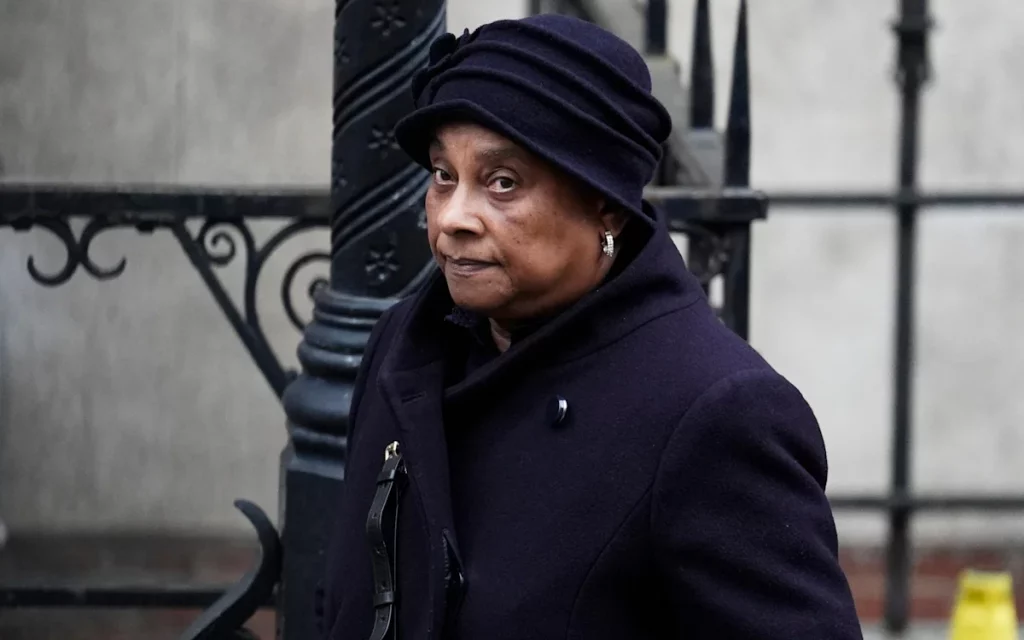
Prince Harry charged into his doomed court battle with Associated Newspapers with all the fanaticism of a kamikaze pilot – but Baroness Lawrence may be left wondering how she ever got caught up in a fight that was never hers to begin with.
While the other six claimants in the High Court case were all celebrities or politicians with an axe to grind against newspapers that had crossed them, Lady Lawrence owed a debt of gratitude to the Daily Mail for its courageous campaign for justice for her murdered son Stephen Lawrence.
It was for precisely that reason that the campaigners and lawyers behind Prince Harry, Sir Elton John and others targeted Lady Lawrence to join their litigation, knowing that nothing would be more wounding to the Mail and its journalists than to be turned on by her.
She was described in court as a “trophy claimant” for Prince Harry’s side, a woman who lent gravitas to a case that was otherwise a spat between celebrities and tabloids, and it was no coincidence that the official title of the litigation was “Baroness Lawrence & Others vs Associated Newspapers”.
It is her name that appears at the top of all 463 pages of the court judgment published on Tuesday.
For the celebrity-backed campaign group Hacked Off, Lady Lawrence, 73, represented its best chance of persuading the Government to set up a second Leveson inquiry into media standards that it hoped would result in even more restrictions on the free press.
Not only is she a member of the House of Lords, but she is also a woman whose reputation is beyond reproach.
Yet the court was told that she had been persuaded to get involved based on “supposed confessions” made by Gavin Burrows, a private investigator, who later denied ever making them.
Wild claims about the Mail spying on Lady Lawrence, “blagging” information with the use of private investigators and paying corrupt policemen for information were presented to her after she was personally contacted by Prince Harry.
The court was told that this was a “personal watershed moment” for Lady Lawrence, and that she felt a “sense of shock and betrayal”. Except none of it was true.
Much of the so-called evidence against the Mail was collected by Graham Johnson, a convicted phone hacker who worked as a researcher for Hacked Off and who was described by Mr Justice Nicklin as an “unconvincing” witness whose “credibility was materially undermined” during the hearing.
Rather than paying corrupt cops or using blaggers, the judge ruled that Stephen Wright, the Mail’s long-serving crime editor, had obtained his stories completely legitimately, using a combination of police contacts and the Metropolitan Police press office.
It was the Mail that famously described the five suspects in Stephen Lawrence’s 1993 killing as “murderers”, daring them to sue the newspaper if it was wrong, after Paul Dacre, its then editor, heard about Stephen’s largely unreported – and unsolved – murder and decided to make it front page news.
It led later to the conviction of two of the killers and the Macpherson inquiry into the Metropolitan Police, which concluded that the force was institutionally racist.
Mr Dacre said in response to the judgment: “Why Baroness Lawrence – for whom we have always had profound respect and sympathy – chose to turn on both the paper, and the brilliant reporter who campaigned for justice for her son for over two decades, is something I will never be able to comprehend.”
Her former husband, and Stephen’s father, Neville Lawrence, was similarly baffled by Lady Lawrence’s decision to turn against the Mail.
He told The Telegraph: “Only my ex-wife would be able to explain to you why she’s doing what she’s doing, because I wouldn’t even be thinking about doing that… this paper was supporting me all the way from the time they started doing my story. I have nothing bad to say about the Daily Mail.”
Lady Lawrence agreed to join the litigation after being told by her lawyers that two private investigators, Mr Burrows and Jonathan Rees, had admitted stealing and exploiting information on the instruction of the Mail newspapers and that she had been “a specific target”, with her phone bills, bank accounts and private communications monitored for several years.
But Mr Burrows said his supposed witness statement – put together by Johnson – was false and his signature on it was a forgery, which fatally undermined the claimants’ case.
Anthony White KC, representing the publisher, told the court: “The particular tragedy of the case is that the ‘evidence’ of Mr Burrows which was used to persuade Baroness Lawrence, the trophy claimant so prized by the claimants’ lawyers and research team… was not ultimately relied on by the claimants.”
It left her, in the judge’s words, presenting “limited evidence” to the court. He said Lady Lawrence was asking the court to “infer” wrongdoing and that her legal team’s suggestion that cash payments were made to corrupt officers was “entirely speculative” and not backed up by evidence.
Lady Lawrence had never expected the case to reach court, having been convinced by Hacked Off and her legal team that Associated Newspapers would settle before it ever went that far.
She said she was angry that she was being “made to fight” when all she wanted was the truth and an apology. But the Mail had nothing to apologise for.
David Sherborne, the barrister representing the claimants, said during the hearing that Lady Lawrence felt “used and violated, and like she has been taken for a fool”. The question she must now contemplate is, by whom?x1200

Prince Harry called out the court’s “whitewashed” decision to dismiss his and six others’ years-long lawsuit against Associated Newspapers Limited (ANL).
“We came to court seeking justice and accountability. But we have received neither,” the Duke of Sussex and his fellow claimant Baroness Doreen Lawrence told Page Six in a statement Tuesday.
“This judgment represents a complete reversal of the position which previous judges have taken in relation to the hacking claims successfully brought against both News Group Newspapers and Mirror Group Newspapers (who were represented by, at the time, the judge who made this decision),” they added.
“Generic findings about various private investigators that were held by the courts in these parallel claims to have carried out unlawful activity at the very same time in relation to similar stories and well-known individuals have been wholly ignored.”
Harry, 41, and Lawrence, 73, said the court has shown “inconsistency which is hard to understand or reconcile with common sense” by choosing to dismiss the evidence heard over the course of the trial.
“It is a complete and obvious whitewash, but sadly not altogether unexpected,” the “Spare” author and the activist claimed in the statement.
“However, the lengths to which the court has gone to exonerate the Mail is as shocking as it is totally unwarranted,” they added.
“When the court says there is not sufficient evidence of wrongdoing, despite the documents showing otherwise, then one does wonder how justice was ever going to be achieved.”
Harry and Lawrence said they feel like the court has “one rule for the newspapers and another for the claimants.”
“While the claimants presented evidence, Mail journalists simply gave denials, and the court chose uncritically to believe them, even in the face of inconsistencies, contradictions and blatant untruths that were obvious to neutral observers in court when compared to the documents,” they alleged.
“We presented to the court evidence which we believed was compelling at the time and remains so now.”
Harry and Lawrence concluded their statement by thanking their legal team “for all their hard work” and the witnesses “who were brave enough to come forward in the pursuit of justice.”
On Tuesday morning, a UK High Court judge ruled against Harry’s favor in his case against ANL — the publisher of the Daily Mail and the Mail on Sunday — whom the royal accused of unlawfully obtaining information.
Judge Matthew Nicklin said in his ruling that the claimants’ allegations were serious but they had not proven that the information used by ANL for its articles was not obtained unlawfully.
“The court rejected the argument that, simply because information was private, and because Associated could not positively explain how it had been sourced, the relevant article must have been unlawfully sourced,” he wrote in the summary, per CNN.
In 2022, Harry filed a lawsuit against ANL, claiming the company used listening devices placed in cars and homes and hired private detectives to illegally obtain information about them from the 1990s to 2011.
ANL previously denied the allegations and claimed their information was legitimately sourced.
In January, the 10-week trial began.
During Harry’s testimony, he shared that his wife, Meghan Markle, lived in “absolute misery” as a royal due to the media’s alleged constant invasion of privacy.
Harry arrived back in the UK on Monday to promote next year’s Invictus Games, which will be hosted in Birmingham.
The former helicopter pilot was supposed to bring the “Suits” alum, 44, and their children — Prince Archie, 7, and Princess Lilibet, 5 — to England; however, Markle and the kids stayed in the US after being denied taxpayer-funded security.
Moments after learning of the judge’s ruling, Harry gave a welcome address at the 14th Invictus Games Foundation Conversation: From Policy to Practice conference at Chatham House.x1200
2026.7.7 Prince Harry and other claimants could face £50m legal bill after losing phone-hacking case
High court dismisses claims by group including Duke of Sussex that Mail publisher used unlawful methods to source stories about them
Prince Harry and six other prominent figures are facing a legal bill of up to £50m after losing their case against the publisher of the Daily Mail over claims it used unlawful methods to source stories.
In an emphatic ruling that is likely to signal an end to new litigation relating to the phone-hacking scandal era, the high court dismissed all the group’s claims, stating that the claimants had not proved that any information had been obtained unlawfully.
The 436-page written verdict from Mr Justice Nicklin said the court could not simply infer that a story had been obtained unlawfully if there remained a legitimate and realistic legal way in which it could have been sourced.
Nicklin also dismissed suggestions that senior figures at the Mail, including its former editor Paul Dacre, had lied to the 2011-12 Leveson inquiry into press ethics, where Dacre said no hacking took place at the paper.
The Duke of Sussex – along with Doreen Lawrence, the mother of the murdered black teenager Stephen Lawrence; the singer Elton John and his husband, David Furnish; the actors Elizabeth Hurley and Sadie Frost; and the former Liberal Democrat minister Simon Hughes – launched the multimillion-pound case against Associated Newspapers Ltd (ANL), which publishes the Daily Mail, Mail on Sunday and MailOnline.
They accused the publisher of “clear, systematic and sustained use of unlawful information-gathering” over several years. Dozens of journalists and private investigators were named in the group’s claims.
Harry and Lawrence said the verdict was a “complete and obvious whitewash, but sadly not altogether unexpected”.
“When the court says there is not sufficient evidence of wrongdoing … then one does wonder how justice was ever going to be achieved,” a joint statement read.
ANL’s legal team described the claims as “lurid” and “preposterous”. In each instance, it said, stories were sourced legitimately from press officers, previous articles or the “leaky” social circles of celebrities.
Dacre, in a video statement after the verdict, said the case was a “conspiracy” orchestrated by press regulation campaigners to “destroy a paper”. He said he would “never be able to comprehend” why Lawrence joined the case, after the Mail had “campaigned for justice for her son for over two decades”.
He also said he had sympathy for Harry, whom he described as a “confused and angry young man”. He said his mother, Diana, Princess of Wales, had “liked the Mail. We were her paper.”
ANL will try to recover its costs from the mammoth case. It said the verdict represented “an overwhelming victory for the Daily Mail and its journalists, and for a free press generally”.
A spokesperson said: “This is a magnificent vindication of the Daily Mail’s journalism. For some of the most outrageous allegations made when the case was launched in a blaze of publicity four years ago – placing bugs in people’s cars and homes, listening to calls as they were made and illicitly accessing bank accounts – no credible evidence was ever presented.
“The reputations of our decent and hard-working journalists were terribly impugned, and today they have been exonerated. As the judgment clearly shows, every single article was legitimately sourced.”
The group presented the court with 55 articles published between 1997 and 2015, and three incidents that did not lead to articles, that they claimed demonstrated unlawful information-gathering.
A series of extraordinary claims of illegality at the Mail were made by the claimants’ legal team, which alleged “habitual and widespread” wrongdoing. They included claims of phone hacking, landline tapping and bugging via private investigators, as well as making corrupt payments to police.
In a comprehensive victory for the publisher, all the claims were dismissed by the court.
The claimants’ case was seriously damaged after a key witness, Gavin Burrows, a private investigator turned apparent whistleblower, said before his trial that his witness statement was a forgery and that he had not carried out illegal activity for the Mail titles.
In a stark finding for the claimants’ legal team, the judge said he could not reliably conclude that Burrows had said what was in the disowned statement.
In any case, he said, Burrows was “comprehensively undermined” as a witness and there was no independent corroboration for his claims.
During the 11-week trial, dozens of editors and journalists, including Dacre, gave evidence denying illegal activity.
Harry was the first of the claimants to give evidence and said the Mail’s titles had made his wife’s life “an absolute misery”.
The Mail case is the last to be brought against newspaper groups by the prince, who is coincidentally in the UK for a series of charity engagements. He has been at the forefront of legal attempts to hold British newspapers to account for alleged past wrongdoing.
He previously won substantial damages in his hacking case against the Daily Mirror, in which the judge found that 15 out of 33 articles related to Harry put to the court were the product of phone hacking or unlawful information-gathering.
Last year, the prince settled his high court legal action against the publisher of the Sun, News Group Newspapers (NGN), at the last minute. He did so after the group offered a “full and unequivocal apology” to him for the serious intrusion by the Sun between 1996 and 2011 into his private life, “including incidents of unlawful activities carried out by private investigators working for the Sun”.
However, the Mail made no admissions and defended all of the claims brought against it, stating that all the articles brought before the court were the product of legitimate journalism.
The claimants’ lawyers said their case had been hampered by a large number of documents from the era in question having gone missing, with invoices and emails deleted, destroyed or misplaced.
Newspapers have paid out millions in settlements to victims of illegal news-gathering since the Guardian broke the story of the UK’s phone-hacking scandal – a revelation that led to the closure of Rupert Murdoch’s tabloid newspaper the News of the World in 2011 and the Leveson inquiry into the ethics of the British press.
2026.7.7 Prince Harry’s privacy battle against daily mail reaches final verdict in UK Court
A London High Court judge will rule on Prince Harry’s privacy lawsuit against the Daily Mail publisher, concluding his legal battle over alleged unlawful snooping.
LONDON: Prince Harry ′s longtime battle with the British tabloids reaches its climax Tuesday.
A judge in London’s High Court will rule on the Duke of Sussex’s privacy invasion lawsuit against the publisher of the Daily Mail, ending a trio of lawsuits that accused the news media of unlawfully snooping on his life.
Harry and six others are seeking substantial damages in the celebrity-studded lawsuit where the legal costs for the 11-week trial have been estimated at about 40 million pounds ($53.5 million).
Harry, singer Elton John and actors Elizabeth Hurley and Sadie Frost are among those who accused Associated Newspapers Ltd. of tapping their phones, intercepting voicemails and obtaining personal information through deception.
The newspapers denied the allegations as “preposterous,” insisting the roughly 50 articles at issue were based on lawful sources including friends, royal aides and publicists who offered information to reporters.
The verdict coincides with Harry’s visit home to the U.K., but the court case has been overshadowed by the question of whether he will bring his wife, Meghan, Duchess of Sussex, and their two children, Prince Archie and Princess Lilibet, for a rare visit to their grandfather, King Charles III.
Harry has long criticized the news business
Harry’s self-proclaimed mission to reform the press for creating what he called a toxic environment is much deeper than headlines that documented his party boy youth and romantic ups and downs. His emotional testimony in February drove that point home.
The prince has blamed the press for the death of his mother, Princess Diana, who was killed in a car crash in 1997 while being pursued by paparazzi in Paris, and for attacks on his wife that led the couple to leave royal life and move to the United States in 2020.
“They continue to come after me, they have made my wife’s life an absolute misery,” he said as he choked back tears in the witness box.
The phone hacking scandal that began in the 1990s and continued for more than a decade gave Harry the opportunity to break with royal family tradition and take his case to court. Three years ago, he became the first senior royal to testify in court in over a century.
Harry won a judgment in 2023 that condemned the publishers of the Daily Mirror for “widespread and habitual” phone hacking. Last year, Rupert Murdoch’s flagship U.K. tabloid, The Sun, made an unprecedented apology for intruding on his life for years, and agreed to pay substantial damages to settle his privacy invasion lawsuit.
The case against the Daily Mail
Attorney David Sherborne said the Daily Mail and its sister publication, Mail on Sunday, used its journalists, freelance reporters and private eyes for “clear, systematic and sustained use of unlawful information gathering” to snoop on his clients.
He connected payments to detectives with dates of articles in question to try to show, for example, how journalists tracked down information about Harry’s then-girlfriend, Chelsy Davy, and her travel plans.
Harry testified at the start of the trial in January that press intrusions left him “paranoid beyond belief,” strained his relationships and took a toll on his mental health.
Hurley accused the Mail of putting microphones outside her windows and stealing her medical records among “other monstrous, staggering things.”
“It is like there is someone peeping into your life and into your home,” the model and actor testified. “My private life had been violated by violent intruders — that there had been sinister thieves in my home all along and that I had been living with them completely unaware.”
Other claimants in the case are anti‑racism activist Doreen Lawrence, former politician Simon Hughes and John’s husband, David Furnish.
Journalists were ‘lining up’ to testify in defense
Defense lawyer Antony White said the case relied on conjecture and inferences when the more likely source of information was “ordinary, legitimate journalism.”
White said Harry was “inclined to see unlawful evidence gathering, in particular voicemail interception, everywhere,” despite a lack of evidence.
The Mail trial has played out differently than the Mirror case, with White saying that journalists were “lining up” to defend their work in court. Some reporters pointed to official mouthpieces, such as a palace spokesperson, and others named their sources to dispute Harry’s assertion that his “social circles were not leaky.”
“They were not all tight-lipped,” Katie Nicholl, a former Mail on Sunday editor, said about Harry’s associates. “I had very good sources in the inner circle.”
Detective’s testimony could make or break case
One issue at the trial is whether the claimants should have been allowed to bring allegations dating to the 1990s, long after a six-year limit expired.
They avoided the deadline by saying they were unaware of the phone hacking until private investigator Gavin Burrows came forward in 2021 to “do the right thing” and help those he had targeted.
But Burrows, who once apologized to Harry in a BBC documentary for ruthlessly targeting him for tabloids in his teen years, testified at trial that he never worked for the Mail. He said a statement attributed to him was fabricated by the claimants’ legal team and his signature was forged.
Justice Matthew Nicklin repeatedly asked Sherborne what would happen to the case if he rejected Burrows’ original statement.
Sherborne said a wealth of other evidence implicated the newspapers, but White said the case collapsed with Burrows’ testimony contradicting the witness statement he disavowed.
Burrows denied switching sides to get revenge after a disagreement with Harry’s legal team.
Possible reunion with royal family overshadows the case
The judgment, which will be issued remotely without a hearing, comes as Harry is in London for charity events.
Harry had been expected to bring his children to visit Charles, who is being treated for an undisclosed type of cancer, for the first time in years. Harry has been trying to repair a rift since he moved to America and aired family grievances in the scorching 2023 memoir, “Spare,” and a Netflix series.
But a family reunion is up in the air as Harry haggles over security arrangements and accommodations. A government committee refused to authorize taxpayer-funded security, which was the source of disputes — including litigation — that Harry has repeatedly lost.
—
2026.7.7 Ethnic minority communities in NI still ‘living in fear’ one month after riots
A senior police officer gave evidence to MPs on widespread disorder in Northern Ireland in June.
Ethnic minority communities in Northern Ireland are still “living in fear” one month on from race riots which saw children having to be rescued from their homes, a senior police officer has said.
Police Service of Northern Ireland (PSNI) Assistant Chief Constable Davy Beck also told MPs that a man charged over a stabbing which preceded the violence may be from Chad, and not Sudan as previously believed.
Violence flared in several areas in Northern Ireland in June after a graphic video clip emerged of a man being stabbed in north Belfast.
The victim, Stephen Ogilvie, who is aged in his 40s, lost his left eye in the attack and also sustained deep wounds to his head, face and back.
Following the attack, Hadi Alodid, 30, appeared at Belfast Magistrates’ Court charged with attempted murder.
The disorder following the stabbing saw masked mobs set fire to homes, cars and a bus, with people targeted based on their race.
Foreign national healthcare workers were also subjected to threats and intimidation.
Mr Beck appeared before a joint sitting of the Home Affairs and Northern Ireland Affairs Committees to provide an update.
He told MPs: “This was the third year in a row that we in Northern Ireland have witnessed what I could only describe as atrocious violence and racism that impacted many of our communities, who are still very much reeling from what was experienced.”
In the immediate aftermath of the knife attack, the PSNI had said the suspect was believed to be Somalian before later stating that he was Sudanese.
Mr Beck told the committees: “Our inquiries would indicate that the male suspect entered Northern Ireland via the Common Travel Area in February 2023 and was subsequently granted leave to remain in UK until 2028.
“We do continue to investigate the origins of the male with one potential line of inquiry indicating that he may potentially be from Chad and not Sudan, as was initially indicated, and we continue to investigate that line of inquiry with the relevant authorities in Chad.”
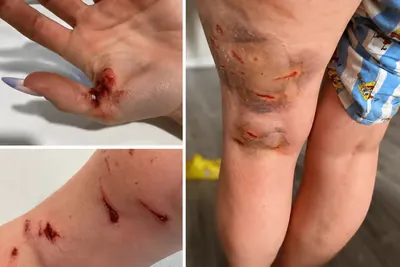
“I was incredibly lucky a lorry driver stopped and saved me. I genuinely believe he saved my life…”
A woman was taken to hospital with 17 bite wounds after being mauled by a dog in Lancashire.
Emergency services were called to the scene of the savage attack in Cockerham, near Lancaster, at around 11am on Friday (July 3).
The 40-year-old was returning from Lancaster to Catterall with her family when she spotted a woman with a bulldog parked up on the road, near Cockerham Garage petrol station.
Thinking she might have broken down, she stopped to ask whether the woman needed help. But the dog pounced on her – viciously biting her legs, arms and hands – and dragging her down to the ground, where it continued its frenzied attack.
Thankfully, a lorry driver passing the scene stopped and rescued the woman, bravely fighting off the bulldog while she escaped to her car.
“The attack was relentless,” she said. “I was incredibly lucky a lorry driver stopped and saved me. I genuinely believe his actions saved my life. Without a doubt.
“If he sees this story, or if anyone knows who he is, please try and contact me. I will never be able to thank him enough.”
How the attack unfolded
The woman, who has asked not to be named, explained: “I pulled up and I called out my window to the woman in a blue Skoda, who said she needed help, so I went over. As soon as I got to her car, I saw the dog.
“As I approached, she was holding him half in, half out of the car. She let him go and he lunged for me, biting my hand.
“I tried to get away and he bit my legs everywhere and dragged me to the floor. The attack was relentless and completely unprovoked.
“I sustained 17 bite wounds to my legs, hands and arms. I was dragged to the ground by the dog, hit my head on the road, and was left covered in bruises, scratches and multiple puncture wounds.
“I later learned this was not an isolated incident. I understand two other people were attacked by the same dog earlier that day, causing injuries.
“I have now been informed by Lancashire Police that the dog has been returned home while the investigation continues.
“I’m speaking out because I genuinely fear someone could be seriously injured or even killed if this happens again. I don’t want another family to go through what mine has. I’m terrified the dog will hurt someone else.”
What did Lancashire Police say?
A spokesperson for the force said: “We can confirm we have received a number of reports and that an investigation is underway.
“It remains in its relatively early stages and enquiries are ongoing. No one has been arrested and the dog hasn’t been seized.”
2026.7.8 Police do not know what country Belfast knife attack suspect is from
Police have admitted that they do not know what country the Belfast knife attack suspect is from.
Hadi Alodid was charged with the attempted murder of Stephen Ogilvie, 44, who lost an eye and suffered injuries to his back and head in the attack last month.
Footage shared widely on social media at the time showed a knifeman holding down and stabbing his victim, in an attack which triggered violent anti-immigration protests.
The Police Service of Northern Ireland (PSNI) originally said Mr Alodid was from Somalia, before stating that he was Sudanese. However, a month after the attack, the force has said he may be from the neighbouring African country of Chad.
Appearing before a joint Westminster committee on Tuesday, Asst Chief Constable Davy Beck said: “We do continue to investigate the origins of the male, with one potential line of inquiry indicating that he may potentially be from Chad and not Sudan as was initially indicated. And we continue to investigate that line of inquiry with the relevant authorities in Chad.”
The case has raised concerns about how the knife attack suspect managed to use a loophole in the asylum system to gain entry to the UK. Whichever his country of origin, he is believed to have headed to Europe via Libya.
The PSNI previously said he was thought to have travelled to Paris and then to Dublin before taking a bus to Belfast in February 2023. There, he claimed asylum and was given leave to remain in the UK in September that year.
The so-called “Irish route” involves migrants flying to Dublin from Europe, sometimes on false papers, before travelling unchecked to Northern Ireland by land to claim asylum. The UK and Ireland share a common travel agreement that allows free movement across the border without routine immigration checks.
The Home Office has previously confirmed that the suspect was granted refugee status after arriving in the UK and was granted leave to remain until 2028.
The incident provoked disorder across the city as protesters set fire to homes, a Middle Eastern supermarket and several vehicles including a bus and police car.
Mr Beck told MPs that ethnic minority communities in Northern Ireland were “still very much living in fear” following last month’s protests.
“People are afraid to go about their daily activity, and we have seen racist criminal damage and assaults and threats continuing in parts of the country,” he added. “So clearly tensions remain high at this stage, and we continue to see and remove racist material across a number of locations.”
He said the force had made 35 arrests as a result.
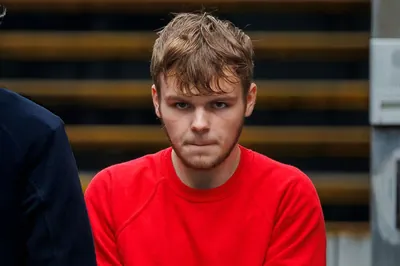
The 19-year-old was “an active and persistent participant” over a protracted period in rioting which had caused significant fear and distress in the community.
A Ballymena teenager who managed to set his clothes on fire when he tried to throw a petrol bomb at police during racially-motivated rioting was handed a 40-month sentence on Monday.
Ordering Michael Elliott to serve his sentence split equally between custody and licence conditions, Judge Sandra Crawford told the 19-year-old he had been “an active and persistent participant” over a protracted period in rioting which had caused significant fear and distress in the community.
The Antrim Crown Court judge said while he had thrown multiple missiles and a bin at police, the petrol bomb he tried to hurl “had the potential to cause very serious harm.”
At an earlier hearing, Elliott, from Raceview Road in Ballymena, entered a guilty plea to riot arising from events on 10 June last year.
The court heard it was the second night of disorder in the Co Antrim town which had erupted the previous day, hours after two Romanian teenagers appeared in court charged with attempted rape.
Those charges were ultimately withdrawn by the PPS following what was described as “significant evidential developments.”
Having erupted on 9 June, the rioting continued for three consecutive nights and spread to other towns and cities in Northern Ireland, but in Ballymena specifically there were attacks on property and businesses, targeting ethnic minorities.
The court heard that 20 homes were attacked, resulting in eight families being displaced and that in two incidents, including one involving a pregnant woman and her child, homes were set on fire while the residents were still inside.
In addition, police were attacked by hundreds of rioters throwing masonry, bricks, bottles, petrol bombs and fireworks, leaving dozens of officers injured, some of them seriously.
In relation to Elliott’s actions, prosecuting counsel Daniel McCarthy told the court the teenager had been present at the scene for around three and a half hours.
During that time, he was identified as throwing four “rock-like objects” at police lines, as well as a wheelie bin, but that the most serious aspect of his offending was that he had thrown a lit petrol bomb at officers.
The court heard however, that the petrol bomb went “straight up in the air” and landed on the defendant, setting his clothes on fire.
In his plea in mitigation defence counsel Jonathan Browne, instructed by Madden and Finucane Solicitors, described how the “Molotov cocktail slipped” and that the only thing the defendant managed to set on fire was himself.
The barrister highlighted that Elliott was already wearing “distinctive” clothing and gloves, but when those items were then burnt, “he only made himself even more recognisable.”
While Mr McCarthy contended that Elliott’s actions constituted “high culpability and high harm,” Mr Browne argued that given the fact the petrol bomb slipped and landed on the defendant, “it’s a case of the potential for high harm, rather than actual harm.”
In her sentencing remarks, Judge Crawford described how officers spotted a masked rioter running through an alleyway and when Elliott was caught and arrested, he still had the distinctive balaclava and gloves.
During police interviews, where Elliott was accompanied by his mother, the teenager “made admissions” to riot but blamed the police for his involvement.
He told interviewing officers he had wanted to join a peaceful protest, but when his path into Harryville was blocked, he “got caught up” in the rioting.
As Judge Crawford highlighted, despite his professed intention to protest peacefully, Elliott had the forethought to bring with him a balaclava and gloves.
She said while Elliott had a clear record and had expressed remorse, sentencing authorities were clear in that matters of personal mitigation carry little weight in comparison to the need for deterrence.
Judge Crawford explained that in cases of riot, the court had to assess not just the actions of the individual offender but also the collective actions of the rioting mob and the overall impact on the community.
The judge said while the defendant professes not to hold racist ideologies, nevertheless a factor she had to take into account was that the riot was aggravated by reason of hostility involving race.
It was also a matter of aggravation that Elliott had thrown multiple missiles, including a petrol bomb, and that he had sought to evade detection by wearing a balaclava, albeit a “distinctive one.”
“Plainly, the custody threshold is crossed,” Judge Crawford told Elliott.
Imposing the 40-month sentence, she said that but for his guilty plea the teenager would have faced a five-year sentence.
2026.7.6 British woman arrested for ‘stabbing boyfriend’ and claiming it was a suicide
A British businessman was found stabbed to death in mysterious circumstances at a luxury villa he shared with his wife in Thailand.
Thomas David Powell, 33, from Stoke-on-Trent, was allegedly attacked with a 20-inch machete by Isabelle Violet Carreras, 20, from Stafford, at a villa in Pattaya.
Thomas’s body was discovered on Thursday morning, when his British friend Charlie, 33, became concerned that his phone was unreachable.
Charlie then came to the luxury housing estate in the Bang Lamung district, where he found the villa in disarray and Thomas’s corpse in the shower before calling the police.
Isabelle was filmed saying: ‘It was after he did it, he realised how much he was bleeding, and he was walking around, and I tried calling an ambulance, but I couldn’t call an ambulance in time, I don’t want him to go.’
She’s since been charged with murder.
Officers said they found blood stains on the tiles and cabinets, while blood-soaked towels and rags were strewn across the floor from suspected attempts to clean up the scene.
Police said the businessman is believed to have been dead for around six hours before being discovered.
His wife claimed his death was a suicide, adding that he was ‘really into grass recently’ and that he ‘had been taking six strips of Valium daily’.
Investigators said evidence at the scene contradicted her claims. They reportedly found cuts on Isabelle’s fingers and signs of a struggle at the property. The 20-inch machete discovered in the kitchen sink had allegedly been washed and wiped clean.
Police Colonel Nattapon Phongsuksakul said officers were reviewing CCTV at the home to determine what really happened.
He said: ‘Based on the wounds, it is difficult for us to accept that claim because there was clearly a stab wound to the back.
‘There were multiple injuries across the body, including both slash and stab wounds. The fatal wound was a stab to the left side of the back, showing a direct plunging motion.
‘We firmly believe this was not a suicide as she claimed. What makes us doubt her account further is that she washed the knife.
‘The weapon used was a machete, and washing it suggests an attempt to conceal evidence. There is also CCTV footage from inside the house.’
2026.7.5 Islamist terrorist linked to 7/7 London bombings free to roam streets after release from mental hospital
A psychiatrist confirmed he suffers from extremist ideology
One of the terrorists linked to the 7/7 London bombings has been released back onto the streets following his release from a secure mental health unit.
Harron Aswat was jailed for 20 years for plotting to form an extremist training camp in 1999, and has been deemed a danger to national security by police.
A High Court judge ruled last year that the 50-year-old could be released from a south-east London mental hospital following the completion of his treatment.
The Telegraph claims that he has been released from the hospital despite multiple warnings.
He is believed to be moving to Batley, West Yorkshire, to live with his family.
It is understood that he will be monitored by the Home Office, and there are restrictions in place for Aswat, with consequences should he breach them.
In 2015, he was sentenced to 20 years in prison by a New York judge for plotting an extremist training camp in Oregon before 9/11, following orders from Abu Hamza.
He was deported from the US to the UK in 2022. He was detained upon his arrival at Bethlem Royal Hospital under the Mental Health Act, a move that is understood to be spurred on by national security concerns.
In the US, he reportedly confessed to being involved in both the 9/11 and the 7/7 terrorist atrocities.
In 2005, police traced 20 calls to a phone linked with Aswat, which were made by the 7/7 bombers hours before the attacks.
Aswat has been diagnosed with a mental health disorder called schizoaffective disorder.
The symptoms present as unpredictable and aggressive behaviour.
In 2022, a physiatrist said there was no evidence of him suffering from the disorder when the offenses were committed in Oregon in 1999.
The psychiatrist wrote in a report before he was brought to the UK: “Even when in a relatively stable mental state [Aswat] has continued to express violent extremist Islamic ideology.”
They added that Aswat was “highly ambivalent about the need for medication and had relapsed twice as a result of stopping treatment”, which coincided with violent outbursts.
The report concluded that “there remains the risk of Islamic violent extremism”.
The Shadow Home Secretary, Chris Philip, told The Telegraph: “It is staggering this man is being released. Aswat is a violent Islamist terrorist with serious mental health problems. He has been involved in plots that led to mass murder, and a psychiatrist concluded that he still espouses extremist views.
“Psychotic Islamist extremists like Aswat are an ongoing danger to the public and should not be released at all. If there is any basis upon which to deport him, then that would be a good alternative.”
A Home Office spokesman said: “Protecting the British public is the Government’s first priority. We have some of the most robust counter-terrorism measures in the world, including powers for police and intelligence services to monitor and manage the risk posed by terrorist offenders and criminals.
“We do not routinely comment on individual cases, but where individuals are released from detention, appropriate measures are in place to manage risk and ensure public safety.”
—
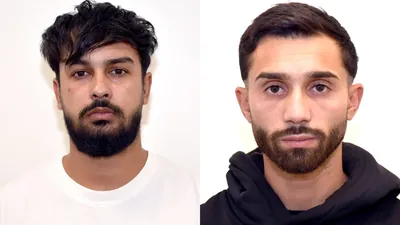
The attack happened in March 2024 and has been described as an act ‘carried out for and for the benefit of a foreign power’
Two Romanian men have been jailed after stabbing an Iranian journalist three times near his home in London.
Romanian nationals Nandito Badea, 21, and George Stana, 25, have been jailed for eight and 12 years respectively.
Iran International journalist Pouria Zeraati was stabbed three times on March 29, 2024, and was left bleeding on the streets outside his home in Wimbledon, south west London.
The Romanian nationals denied their charges but were convicted of wounding with intent to cause grievous bodily harm.
Mrs Justice Cheema-Grubb said at the Old Bailey today the “evidence overwhelmingly points” to the attack being carried out on behalf of the Iranian regime.
She said: “I am sure that this was an attack carried out for and for the benefit of a foreign power.”
“Pouria Zeraati was a well known critic of the regime and he had previously been subjected to threats, as had members of his family,” the judge added.
Mr Zeraati sustained stab wounds to his thigh in what prosecutors said was “a planned attack preceded by reconnaissance and which was ordered by a third party acting on behalf of the Iranian state”.
Badea and another man, David Andrei, who remains at large in Romania and was not on trial, “crowded” the journalist, with one of them stabbing him three times in the thigh, the court heard.
Stana waited in a blue Mazda 3 getaway car, which was flagged on CCTV during a “hostile reconnaissance” carried out before the stabbing.
In a victim impact statement, Mr Zeraati told the police the incident left him “scared and anxious”, compelling him to relocate abroad out of “fear of any reprisals”.
The two Romanians visited the property in Wimbledon on eight occasions across five dates and had flown into London “expressly” to attack the journalist, the prosecution said.
Plotting the attack had taken over a year, the prosecution added.
Rupert Kent, prosecuting, said: “These defendants knew, or at the very least ought reasonably to have known, the attack upon Mr Zeraati was instigated by a foreign power, we submit namely the Iranian regime, with which the defendants had an indirect relationship through third parties.”
Iran International, based in London, is “critical of the Iranian regime”, the court heard, with the publication being proscribed as a terrorist organisation by the Islamic Republic.
Mr Zeraati was a high-profile journalist on Iran International, with a billboard of his face being seen in Tehran with a “Wanted: Dead or Alive” message accompanying it, the court heard.
Judge Cheema-Grubb said: “Oppressive regimes tend to do all they can to suppress opposition, they cannot abide the serious scrutiny that fearless journalists provide.”
“His first thought upon being attacked was that he had been targeted due to his work as a journalist critical of the Iranian regime,” said Mr Kent.
Jurors heard the attackers were seen laughing as they fled the scene and headed to Heathrow airport, to fly to Geneva, Switzerland.
Stana was described by his barrister, Peter Caldwell KC as “functionally illiterate” and “not aware of current affairs” so “could not have known” he was operating on behalf of Iran.
“Mr Stana was useful to others for the conduct that they had intended but he himself did not know the use to which he was being put,” said Mr Caldwell.
Badea’s barrister, David Spens KC, said the court “cannot be sure” it was his client who had stabbed Mr Zeraati.
A spokesman for Iran International said: “The attack on Pouria was appalling – terrifying for him and his wife, and shocking to his colleagues at Iran International.
“We are thankful and grateful to the police and the UK government for their work and expertise in bringing these men to justice.
“It would be good to think these sentences would act as a deterrence against further attacks.
“Our journalists are subject to an ongoing campaign of intimidation by the Islamic Republic of Iran – both in Iran itself where their relatives are routinely threatened and treated harshly as well as to themselves on British soil.”
He continued by thanking the British authorities and police for the protection they give the media company.
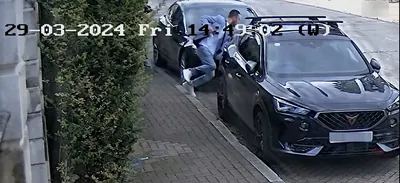
发表回复