2026.10.21 Zondacrypto: de nouveaux éléments troublants liés à Monaco
Alors que la plateforme de cryptomonnaies Zondacrypto s’effondrait et que la justice polonaise ouvrait une enquête pénale, son dirigeant Przemysław Kral, qui résidait jusqu’alors à Monaco, aurait quitté la Principauté pour Israël. Selon l’avocat des victimes Robert Nogacki, l’adresse de son appartement monégasque a ensuite été utilisée dans un document déposé en Floride, le 30 avril 2026, malgré l’ouverture de plusieurs enquêtes. Cet avocat polonais s’interroge aussi sur la pertinence des contrôles qui ont permis à l’homme d’affaires de s’installer durablement en Principauté (1). Par Clément Martinet
L’affaire Zondacrypto continue de soulever des questions à Monaco. Au-delà des partenariats noués par la plateforme avec des institutions et d’autres grands noms de la Principauté, alpagués malgré eux, des zones d’ombres resurgissent au sujet de Przemysław Kral, son dirigeant, qui y résidait depuis plusieurs années, avant de quitter le territoire en avril 2026 [à ce sujet, lire notre article Zondacrypto: comment Monaco est tombé dans le panneau, publié dans Monaco Hebdo n° 1422 — NDLR]. Dans un entretien accordé à Monaco Hebdo, Me Robert Nogacki, avocat polonais d’un groupe de plus de 200 victimes de Zondacrypto en Pologne et en Estonie [à ce sujet, lire son interview publiée dans ce dossier spécial — NDLR], révèle un élément troublant: l’usage répété d’une adresse monégasque dans des documents d’entreprise américains, alors que Przemysław Kral avait cessé d’apparaître publiquement, et que l’enquête polonaise venait de s’ouvrir pour fraude et blanchiment de capitaux. En effet, le 17 avril 2026, une enquête pénale concernant les activités de Zondacrypto venait de s’ouvrir à Katowice, en Pologne. Quelques jours plus tard, le 24 avril 2026, le média polonais Onet rapportait que Przemysław Kral avait quitté Monaco pour Israël environ une semaine auparavant, en s’appuyant sur plusieurs sources. Le dirigeant, qui possède la nationalité israélienne selon ces informations, aurait craint d’être confronté à la justice polonaise. Rien ne dit pour autant qu’un mandat d’arrêt formel avait été émis contre lui au moment de son départ. À Monaco, ce n’est qu’au mois de mai 2026 que le parquet a officiellement ouvert une enquête judiciaire (2).
Selon me robert nogacki, monaco n’était pas un simple lieu de résidence pour przemysław kral et son épouse, karolina gwóźdź, également directrice juridique de zondacrypto. Cette entreprise y avait multiplié les opérations de visibilité, entre sponsoring sportif, espaces vip et événements de communication.
Une adresse monégasque dans les registres américains
L’un des éléments soulevés par Robert Nogacki concerne une société enregistrée en Floride: BB Trade Florida Inc. Selon cet avocat, son rapport annuel a été déposé de manière électronique le 30 avril 2026 au nom de Przemysław Kral, avec comme adresse celle de son appartement situé à Monaco, au boulevard du Jardin Exotique. Le document aurait ainsi été transmis près de deux semaines après que le dirigeant ait disparu de la scène publique polonaise. Cette société avait été constituée à Tallahassee, en Floride, quelques jours après une interview de Kral publiée par le quotidien français L’Opinion, dans laquelle il évoquait notamment ses liens avec la « connexion Monaco ». Ironie du sort, en novembre 2025, BB Trade Florida Inc. avait obtenu une inscription auprès du FinCEN, l’organisme américain notamment chargé de lutter contre le blanchiment d’argent, en qualité de prestataire de services monétaires… Bien que cette inscription ne soit pas si simple à obtenir, elle ne constituait pas, pour autant, une licence financière américaine, contrairement à ce que Przemysław Kral aurait affirmé. Toujours est-il que, onze jours après l’ouverture de l’enquête à Katowice, deux des trois dirigeants déclarés de la société auraient été retirés du board, selon Robert Nogacki. L’entreprise demeurait néanmoins enregistrée, avec l’adresse monégasque. Mais pourquoi cette adresse, et pourquoi continuer à l’utiliser, malgré l’éclatement du scandale Zondacrypto en Europe? Ce dossier se déploie désormais essentiellement entre la Pologne, l’Estonie et Monaco. La Pologne conduit l’enquête pénale. L’Estonie, où l’opérateur de la plateforme était enregistré, est chargée de la procédure de faillite. Quant à Monaco, le parquet a ouvert de sa propre initiative une enquête pour blanchiment au début du mois de mai 2026. Mais la coordination de ces trois enquêtes reste difficile à mesurer, selon Me Robert Nogacki. La Principauté pourrait notamment éclaircir les flux financiers liés aux opérations de sponsoring et de communication de Zondacrypto, ainsi que les mouvements associés au lancement de son jeton numérique: « Le service de gestion des avoirs de Monaco détenait 340 millions d’euros de biens saisis à la fin de l’année dernière. J’aimerais savoir si un seul euro provenant de Zondacrypto en faisait partie. »
Robert Nogacki, avocat d’un groupe de plus de 200 victimes de Zondacrypto en Pologne et en Estonie, révèle un élément troublant: l’usage répété d’une adresse monégasque dans des documents d’entreprise américains, alors que Przemysław Kral avait cessé d’apparaître publiquement, et que l’enquête polonaise venait de s’ouvrir pour fraude et blanchiment de capitaux
La carte de résident renouvelée?
« Une carte de résident monégasque est une lettre de recommandation signée par l’État. Elle devrait être le document le plus difficile à obtenir de la Principauté et le plus facile à perdre », estime Robert Nogacki. Dans quelles conditions, en effet, Przemysław Kral a-t-il pu résider à Monaco et, surtout, renouveler sa carte de résident? « Si Kral est arrivé au début des années 2020, sa carte a été renouvelée au moins une fois après mars 2022, c’est-à-dire après la disparition du fondateur de sa plateforme avec les clés, quatre ans après que le superviseur polonais eut placé la société qui l’avait précédée sur sa liste d’alerte et […] après que le premier ministre polonais eut informé le Parlement à huis clos d’une piste russe en décembre 2024. » Cet avocat s’interroge sur la manière dont les vérifications ont été conduites, au regard des alertes qui avaient précédemment visé BitBay, l’ancienne appellation de la plateforme Zondacrypto. Dès février 2018, l’autorité de supervision financière polonaise avait mis en garde contre cette société. Par ailleurs, un rapport d’audit relatif à l’exercice 2023, enregistré en Estonie à l’automne 2024, n’aurait pas permis de confirmer l’existence de 172 millions d’euros de cryptomonnaies détenues pour les clients. Ces éléments ne disent pas que les autorités monégasques disposaient de l’ensemble de ces informations lors de l’examen du dossier de résidence de Kral, mais ils soulèvent tout de même une question: quelles informations les banques, les services de contrôle et les autorités judiciaires ont-ils reçues, et à quel moment? Pour Robert Nogacki les réponses se trouvent dans les signalements bancaires et dans les échanges entre les institutions concernées, s’ils existent.
Monaco, la vitrine
Pour cet avocat polonais, Monaco n’était pas un simple lieu de résidence pour Przemysław Kral et son épouse, Karolina Gwóźdź, également directrice juridique de cette société. Zondacrypto y avait multiplié les opérations de visibilité, entre sponsoring sportif, espaces VIP et événements de communication. La plateforme avait également participé à une vente aux enchères caritative liée à la fondation princesse Charlène, qui s’est entièrement désolidarisé depuis. Si aucune victime monégasque ou résidente de la Principauté n’ont été officiellement déclaré à ce jour [Monaco Hebdo bouclait ce numéro le 13 octobre 2026 — NDLR], la Principauté a contribué à donner au dirigeant une image de respectabilité auprès de partenaires et de publics susceptibles de lui accorder leur confiance, estime Me Nogacki. La question est désormais de savoir si les traces financières, administratives et immobilières laissées dans la Principauté permettront de reconstituer une partie des flux liés à Zondacrypto. Pour les victimes, l’enjeu dépasse celui des responsabilités éventuelles: il s’agit aussi d’identifier les actifs récupérables. À ce stade, les interrogations formulées par Me Robert Nogacki ne constituent pas des conclusions judiciaires.
L’architecture juridique et financière de la plateforme, qui s’étendait de Malte au Luxembourg, à la Suisse, à l’Estonie, à Dubaï, à la Floride et aux Bahamas, a été mise en place entre2018 et2021, en grande partie avant que le nom de Przemysław Kral n’apparaisse dans les documents
Des complices toujours à l’œuvre?
Przemysław Kral est-il pour autant le cerveau de cette affaire Zondacrypto? Pas si sûr: « Le terme « cerveau » suppose qu’il a conçu le système. Ce que je peux documenter, ce sont des signatures », explique Robert Nogacki. Kral a rejoint le conseil d’administration en novembre 2021 et le syndic estonien l’identifie comme le bénéficiaire effectif du groupe. Avant cela, il détenait une procuration sur les actifs de Sylwester Suszek, le fondateur de BitBay, devenu Zondacrypto. Mais l’architecture juridique et financière de la plateforme, qui s’étendait de Malte au Luxembourg, à la Suisse, à l’Estonie, à Dubaï, à la Floride et aux Bahamas, a été mise en place entre 2018 et 2021, en grande partie avant que le nom de Kral n’apparaisse dans les documents. « Un fondateur construit le coffre-fort. Kral est l’homme auquel on a remis l’entreprise et qui affirme n’avoir jamais reçu les clés », résume l’avocat, qui indique, par ailleurs, détenir deux éléments issus des registres qui n’ont pas encore été rendus publics. Ce n’est pas tout. Des procédures judiciaires au Luxembourg en 2025 et l’examen de plusieurs registres de sociétés font aussi apparaître des recoupements entre différentes entités liées à l’ancienne BitBay, devenue Zondacrypto, entre 2020 et 2025. Des changements successifs d’administrateurs, des sociétés enregistrées à une même adresse et des dirigeants présents dans plusieurs structures posent en effet questions sur les possibles ramifications du groupe présumé et sur l’identité de ceux qui en ont pris le contrôle ensuite. Ces éléments ne permettent pas, à eux seuls, d’établir une chaîne de responsabilité dans les difficultés actuelles de Zondacrypto, mais ils posent problème sur le devenir des actifs, car les victimes ne sont pas prêtes de récupérer leur argent. Plus de 100 millions de złotys d’actifs, soit environ 22,8 millions d’euros, auraient déjà été sécurisés par les autorités, mais rien ne garantit que les épargnants retrouveront leurs fonds [à ce sujet, lire notre article Victimes de Zondacrypto: l’argent n’est pas entièrement perdu, mais il est loin d’être rendu, publié dans ce dossier spécial — NDLR]. Entre la saisie des actifs, leur éventuelle réalisation et leur répartition entre les créanciers, plusieurs étapes judiciaires restent à franchir. Me Robert Nogacki estime que les procédures pourraient s’étendre sur dix ans.
2026.10.17 “Weapons” found during Monaco police stop were replicas, prosecutor confirms
Monaco’s Prosecutor General has confirmed that weapons found in a vehicle during a police operation were airsoft replicas, following a widely shared social media report that officers had discovered handguns.
In a statement sent to the press on Friday 16th October, Stéphane Thibault said: “Following the circulation on social media of photographs of a Sûreté Publique operation during which weapons were discovered in a vehicle, I wish to clarify that these were imitation weapons of the ‘airsoft’ type, firing plastic pellets, and that no offence was identified.”
2026.10.12 Une vaste enquête contre les call centers frauduleux en Ukraine s’intéresse à Ermolaev
2026.10.10 Explosion à Monaco visant Vadim Ermolaev : une double vie, 50.000 dollars, une piste ukrainienne et des zones d’ombre autour de la poseuse de bombe
Anastasiia Berezovska, soupçonnée d’avoir déposé l’engin explosif visant l’homme d’affaires Vadim Ermolaev à Monaco, aurait agi contre la promesse d’une importante rémunération, selon les déclarations d’un homme accusé du meurtre de la jeune femme en Ukraine.
Anastasiia Berezovska était-elle une agent secret en mission à Monaco ou simplement une jeune femme manipulée pour de l’argent ? Lors d’une audience devant le tribunal de Kiev, Vitalii Zhykovych, poursuivi pour le meurtre de la poseuse de bombe, livre de nouvelles révélations sur le rôle présumé de cette Ukrainienne de 39 ans, soupçonnée d’avoir tenté d’assassiner Vadim Ermolaev, le 29 juin dernier.
Réfugiée en Allemagne avec son jeune fils depuis le début de l’invasion russe en 2022, cette femme de 39 ans aurait mené une double vie d’après les déclarations de Vitalii Zhykovych, un ancien intermédiaire des services de sécurité (SBU) actuellement en détention à Kiev.
Selon son récit, la jeune femme aurait accepté de participer à l’opération en échange de 50.000 dollars. Une somme qu’elle souhaitait utiliser pour acheter une maison en Ukraine.
Zhykovych affirme qu’elle l’a appelé au lendemain de l’explosion et lui a expliqué que Vladyslav Reut, un autre suspect dans l’affaire, lui avait promis ce « contrat ». « 50.000 dollars, ça ne se trouve pas sous le sabot d’un cheval », lui aurait-elle déclaré.
La double vie d’Anastasiia ?
Toujours selon Vitalii Zhykovych, Anastasiia Berezovska menait une double vie. Partie d’Ukraine avec son jeune fils au après le début de la guerre en Ukraine, elle s’était installée en Allemagne et serait « une agente engagée dans la lutte contre l’agression russe ».
D’après son témoignage, l’ancien agent ukrainien affirme avoir rencontré la jeune femme « en ligne » et « mené avec elle des opérations ciblant les intérêts russes », affirmant qu’ils luttaient ensemble pour « repousser l’agression armée de la Fédération de Russie ».
Une version catégoriquement rejetée par son mari, qui a qualifié ces affirmations de « non-sens » auprès de la BBC. Selon lui, son épouse aurait été impliquée dans cette affaire à son insu.
Piégée par ses recruteurs ?
La tentative d’assassinat de Vadim Ermolaev faisait-elle partie de ces opérations contre la Russie ? C’est ce que souient Vitalii Zhykovych. A la barre, il confie que son complice – un agent du GUR Vladyslav Reut – a souhaité confier cette mission à Anastasiia Berezovska. Une mauvaise idée pour Zhykovych car « elle n’était pas suffisamment formée ». Elle n’aurait dû se rendre à Monaco uniquement pour une mission de repérage.
Selon son témoignage, l’agent du GUR a finalement communiqué directement avec Berezovska en secret et lui a confié les explosifs.
Le 29 juin, vers 21h, l’Ukrainienne déposait le colis piégé devant l’entrée de l’immeuble de Vadim Ermolaev blessant grièvement le milliardaire ukrainien, sa compagne et leur fils de 13 ans avant de prendre la fuite pour rentrer au pays.
Exécutée quand elle a demandé à être payée
Une fois en Ukraine, elle aurait contacté ces deux agents recruteurs pour récupérer son argent. D’après les éléments présentés par le parquet ukrainien lors d’une audience en juillet, Vitalii Zhykovych et Vladyslav Reut lui ont alors tendu un véritable guet-apens et l’ont abattue de 4 balles dans la tête dans une forêt près de Kiev.
Alors que Zhykovych et Reut se renvoient la responsabilité de son exécution, la question de savoir si la tentative d’assassinat de Vadim Ermolaev relevait d’une opération d’État clandestine ou d’un contrat financé commandité par un privé.
2026.10.8 Suspect linked to Monaco bomb attack on millionaire speaks to BBC
A former Ukrainian security services officer linked to a bomb attack in Monaco in June that targeted a multi-millionaire says he believed it was authorised by senior members of HUR, Ukraine’s military intelligence agency.
In an exclusive interview with the BBC from prison in Kyiv, facilitated by his lawyer, Vitalii Zhykovych has given his own account of the attempted assassination for the first time.
Ukrainian-born businessman Vadym Yermolayev and his 13-year-old son were badly hurt in the blast and his partner suffered catastrophic injuries. Yermolayev later described their survival as “nothing short of a miracle”.
Zhykovych describes himself as a “freelancer” for Ukraine’s SBU security service and says Anastasia Berezovska, the woman caught on camera planting the bomb in Monaco, was his “agent”.
A week after the bombing, Berezovska’s body was discovered in the woods west of Kyiv with gunshot wounds to the head.
But Zhykovych insists he did not send her to kill, and nor did he kill her.
He was arrested and accused of her murder together with an active-duty intelligence officer from HUR called Vladyslav Reut.
Reut initially confessed to investigators, and led them to the shallow grave. But days later in court, he changed his testimony to blame Zhykovych.
For a long time, Zhykovych himself stayed silent.
Now, responding to questions from the BBC, he alleges that Reut – who he refers to as “The Boss” – had “proposed the operation” in Monaco against Vadym Yermolayev.
He understood it was an official mission.
“As Reut informed me, this operation […] had been authorised and approved by Reut’s superiors, who served in the Main Intelligence Directorate of the Ministry of Defence [HUR],” he says.
Distancing himself from the explosion itself, he alleges that Reut asked to use Berezovska for the bombing and when Zhykovych refused – he says she was not fully trained – Reut agreed to send her for reconnaissance instead.
Reut then communicated directly with Berezovska without including him, according to Zhykovych, who alleges that Reut also provided her with the explosives.
The BBC asked HUR to comment on the latest claims. The agency has previously said that it is “committed to a full investigation” and providing “comprehensive support” to law enforcement bodies.
The SBU has described Zhykovych in a statement only as a “former law enforcement officer”.
Yermolayev was attacked in Monaco as he and his family were returning from an evening meal on the seafront. A surveillance video shows Berezovska walking slightly in front of the group, then leaving the device in a bag on their doorstep.
It detonates just as they get close, apparently shocking even Berezovska with its force.
Yermolayev later said he believed that serving HUR officers, “individuals close to the agency’s current and former leadership”, were linked to the attack.
He called for “the truth, protection, and justice”.
Berezovska was quickly identified as the suspected bomber and on 2 July her image, taken from CCTV footage, was circulated by Interpol.
She had already fled, first driving through Italy and Germany, then taking a bus from Frankfurt to Ukraine.
Before she could be caught and questioned though, she was driven to the woods by Reut and Zhykovych and killed. Each blames the other for her shooting.
The shocking case has prompted intense speculation, including over who may have wanted Yermolayev dead and why, and whether this could have been a state-ordered assassination attempt, a rogue operation or some kind of criminal score-settling.
The businessman himself, who renounced his Ukrainian passport some years ago and now has Cypriot citizenship, has dismissed multiple theories.
They include the idea the attack might be linked to a struggle between organised crime groups involved in highly lucrative scam call-centres in Ukraine.
Earlier this year, a court in Estonia convicted Yermolayev’s son, Artur, of defrauding its citizens out of millions of euros through such “offisy”, as the scam networks are known in Ukraine.
Vadym Yermolayev told the Ukrainska Pravda newspaper that he “never had anything to do with anything” in the case.
Now Zhykovych has put forward his own theory to us.
He alleges that Reut told him the bombing was in retaliation for “funding the annexation of Crimea”, which he understood to mean Yermolayev was paying taxes to Russia from businesses in Russian-occupied Crimea.
“In my view, this constitutes grounds for the operation,” he communicated from prison.
Yermolayev has repeatedly denied any remaining business interests linked to Russia.
But might this story be even murkier?
At his most recent custody hearing in Kyiv, surrounded by heavily armed guards, Zhykovych spoke publicly for the first time since his arrest. The BBC were the only media present.
At one point Zhykovych said Reut had in fact told him the attack in Monaco was not “authorised”.
“Someone had ordered this target from the civilian side,” Zhykovych said, without explaining.
The judge then interrupted, reminding him that he was addressing an open court.
Zhykovych also revealed that Reut originally talked of two targets.
When we asked, he said he could not disclose the second name. Other sources strongly suggest it was a pro-Russian blogger tried and convicted in absentia last year by Ukraine of treason.
As the investigation continues – into both the bombing in Monaco and the murder in Ukraine – Berezovska’s family have many questions of their own.
The 39-year-old had been in Germany since early 2022, when she left Ukraine as a refugee with her young son.
Zhykovych now claims she was living a double-life, working with him as an agent “against Muscovy” – meaning Russia.
He said they had met online and told us the pair were working to “repel the armed aggression of the Russian Federation”.
Berezovska’s husband has told the BBC that the allegation was “nonsense”. He believes she was dragged, unwittingly, into the whole affair.
Zhykovych says Berezovska called him the day after the Monaco attack, and when he asked why she had done it, she said Reut had promised her a huge fee. “$50,000 doesn’t just lie on the streets,” she supposedly explained.
Residents in her village have told us that Berezovska was saving to buy a flat. But when she travelled to Ukraine to collect the money, she was lured into the woods and shot.
2026.9.5 “Dossiers du Rocher” : l’ancien avocat et ami du Prince Albert II de Monaco, Thierry Lacoste, mis en examen pour corruption
2026.7.28 Blanchiment d’argent et financement du terrorisme : Monaco veut lutter plus efficacement contre cette “menace sourde”
Le 16 juin 2026, le secrétaire d’État à la justice de Monaco a réaffirmé la volonté de la principauté de sortir de la “liste grise de surveillance renforcée” du GAFi. Pour y parvenir, le parquet de Monaco a mis en place différentes mesures, dont celle du plaider-coupable.
C’est une liste sur laquelle Monaco ne veut plus figurer. En juin 2024, la principauté a été ajoutée à la “liste grise de surveillance renforcée” du GAFi (Groupe d’action financière). L’organisme de lutte anti-blanchiment y listait plusieurs domaines dans lesquels Monaco devait faire des progrès : le blanchiment d’argent et la fraude fiscale commis à l’étranger, la saisie des avoirs criminels à l’étranger, le niveau des ressources attribuées aux magistrats, l’application de sanctions efficaces et dissuasives, et l’accroissement de la saisie des biens soupçonnés de provenir d’activités criminelles.
Le “plaider-coupable”, nouvelle mesure de la justice
Le 16 juin 2026, le secrétaire d’État à la justice de Monaco, Samuel Vuelta Simon, réaffirmait cette volonté lors d’un discours devant le Conseil de l’Europe. “Le blanchiment d’argent est une menace sourde qui salit, qui corrompt, qui appauvrit et détruit les Etats”, a-t-il indiqué, avant de poursuivre sur un ton grave : “Il finance d’autres menaces majeures comme le terrorisme, les organisations criminelles, la corruption ou les ingérences étrangères”.
Pour mieux lutter contre le blanchiment de capitaux, le parquet de Monaco a mis en place différentes mesures. La plus récente, c’est celle du plaider-coupable et de la convention pénale. Elle a été votée fin juin 2026 par les élus du Conseil National. “Une personne qui reconnaît avoir commis des faits de blanchiment peut se voir proposer un espace de transaction. Elle va écoper d’une amende pénale, d’un montant souvent important, qui permet d’arrêter la procédure”, explique le secrétaire d’Etat monégasque.
2026.7.5 Ferrari à 190 km/h dans le tunnel Louis-II: la conductrice libérée avant son procès en appel
L’affaire a profondément marqué la Principauté. Le 1er mars 2026, une Ferrari 296 GTB s’écrasait dans le tunnel Louis-II, après avoir circulé à une vitesse estimée à près de 190 km/h sur un axe limité à 50 km/h. La conductrice était sortie indemne de l’accident, mais sa fille adolescente, passagère du véhicule, avait été blessée, alors que plusieurs usagers ont échappé de peu au drame. Jugée en comparution immédiate, cette résidente anglo-chypriote née à Grozny avait été condamnée à 24 mois d’emprisonnement, dont huit mois ferme, ainsi qu’à cinq ans d’interdiction de conduire en Principauté et à la confiscation de sa Ferrari. Selon Nice-Matin, la cour d’appel a toutefois ordonné sa remise en liberté, après le versement d’une caution de 500000 euros. Elle reste soumise à un contrôle judiciaire strict: interdiction de quitter Monaco, obligation de pointer chaque semaine à la sûreté publique et de répondre à toutes les convocations de la justice. Cette décision fait suite à un arrêt rendu le 10 juin 2026. Le parquet général indique que les magistrats ont retenu plusieurs « nouveaux éléments », parmi lesquels la séparation du couple parental, une demande de garde alternée concernant leur fille et une citation à comparaître délivrée contre le père pour des faits de violences sur mineur. Désormais assistée par Me Vincent Brengarth, la conductrice entend obtenir un nouvel examen de son dossier. Son avocat souligne qu’elle ne présente « strictement aucun antécédent judiciaire » et il décrit des faits « isolés », sans rapport avec son comportement habituel. Il affirme également qu’elle « n’a jamais voulu exposer sa fille à ce risque » et conteste l’hypothèse d’un geste volontaire évoquée lors des premiers débats. La défense prévoit également de remettre en cause la procédure de comparution immédiate et d’en solliciter l’annulation. Le procès en appel devra ainsi réexaminer à la fois les circonstances de l’accident et ces nouveaux éléments familiaux, alors que cette condamnation pourrait également avoir des conséquences sur la procédure de garde de leur fille mineure.
—
2026.7.10 Bombe à Monaco — Jean-Michel Verne : «Cela laisse penser à un mélange des genres entre crime organisé et services secrets»
Alors que l’enquête se poursuit, Jean-Michel Verne, journaliste d’investigation et consultant police-justice pour TVMonaco, analyse le mode opératoire et évoque prudemment les différentes pistes envisagées, du grand banditisme aux possibles liens avec les services secrets ukrainiens. Propos recueillis par Mélicia Poitiers
Alors que Monaco Hebdo bouclait ce numéro, le 7 juillet 2026, la suspecte, Anastasia Berezovska, aurait été retrouvée morte près de Kiev selon plusieurs médias russes et ukrainiens, et deux suspects auraient été arrêtés en Ukraine, un officier en activité de la direction principale du renseignement et un ancien agent des forces de l’ordre : vers quelles pistes cette information, qui n’a pas encore été confirmée par les autorités monégasques, oriente-t-elle l’enquête ?
On n’est pas certains de l’information qui n’a pas été confirmée par Monaco. Ceci étant, si ça l’est, on ne pense évidemment qu’aux commanditaires de l’attaque. Le fait qu’elle ait été identifié la rendait encombrante. Ils s’en sont débarrassé. C’est une pratique que l’on peut aussi bien retrouver dans les services secrets qu’au sein des réseaux criminels. Ce qui intrigue, c’est qu’au moindre passage d’une frontière internationale, elle aurait dû être identifiée et interpellée. Le fait qu’un ancien membre des services de sécurité ukrainien ait soi-disant été arrêté suite à cette découverte laisse penser à un mélange des genres, très probable, compte tenu de la personnalité de Vadim Ermolaev, entre des éléments qui touchent au crime organisé et des éléments qui touchent aux services de renseignement. L’un exclu pas l’autre. Cela me fait penser à certaines affaires corses dans lesquelles on a découvert des interconnexions entre police, groupes nationalistes et réseaux mafieux impliquant des anciens des renseignements. C’est de la spéculation, mais on peut, par exemple, imaginer que Vadim Ermolaev ait été impliqué dans une affaire de corruption et qu’il n’ait jamais renvoyé l’argent qu’il devait renvoyer…
« Ce qui intrigue, c’est qu’au moindre passage d’une frontière internationale, elle aurait dû être identifiée et interpellée »
Pourquoi le parquet monégasque ne confirme-t-il pas l’identité des victimes ?
Parce que les autorités ne les ont pas entendus, c’est ce qui a été dit par le parquet. Mais subsiste de bonne source un doute sur le fait que Vadim Ermolaev ait résidé à Monaco sous un autre nom (1). Je précise qu’il disposerait de deux passeports, un chypriote et un israélien.
Si l’on suit la piste du grand banditisme, il s’agirait de réseaux criminels liés à quels types de trafic, selon vous ?
Vadim Ermolaev agit sur beaucoup de fronts différents, ça peut être plein de choses. Il dirige un empire tout à la fois immobilier, industriel et viticole. Il baigne aussi, semble-t-il, dans des affaires de « call centers » frauduleux, un réseau d’arnaques financières massives à l’échelle européenne dans lequel l’un de ses fils Artur Ermolaev est lourdement impliqué. Notons qu’Igor Komarov – un homme d’affaires de 28 ans impliqué dans le racket des centres d’appels – a été kidnappé, torturé, tué et démembré, alors qu’il était en vacances à Bali, en Indonésie, en mars 2026.
Est-on certain que c’est Vadim Ermolaev qui était visé ?
On sait désormais que le suspect a volontairement appuyé sur le bouton de la télécommande, au moment où sa compagne Anna Nasobina s’est présentée à l’entrée de l’immeuble. Elle pouvait aussi être la cible. Résidente au Royaume-Uni, elle faisait de l’optimisation fiscale pour les ressortissants des pays de l’Est. Depuis 2023, elle est partie prenante de la société Wycombe Square Investments LLP, dont l’activité enregistrée par le gouvernement britannique tourne autour de services d’aide fiscale pour les non-résidents.
« Le fait qu’un ancien membre des services de sécurité ukrainien ait soi-disant été arrêté suite à cette découverte laisse penser à un mélange des genres, très probable, compte tenu de la personnalité de Vadim Ermolaev, entre des éléments qui touchent au crime organisé et des éléments qui touchent aux services de renseignement »
Elle est aussi la cofondatrice en 2016 du Club Éclectique. Il s’agit d’un club privé qui propose des concerts, des expositions, et des soirées sur invitation à ses membres. « Les événements du club présentent des artistes russes ayant des liens pro-Kremlin, et les participants comprennent des membres de la diaspora de Moscou à Londres » a précisé le Daily Mail. Ce club, qui a notamment pour sponsor la marque automobile de luxe Rolls-Royce, a déjà également organisé des galas et des soirées privées à Monaco. Les mafias des pays de l’Est sont-elles très présentes sur la Côte d’Azur ? La clientèle aristocratique des pays de l’Est depuis le XIXème siècle apprécie la Côte d’Azur. Des oligarques s’y sont installés, tout comme certains membres du crime organisé. Récemment une histoire a marqué, celle d’une policière monégasque très proche de Branimir V, un membre influent d’un puissant réseau mafieux serbe, lié à du trafic de drogue et d’armes.
« Vadim Ermolaev agit sur beaucoup de fronts différents, ça peut être plein de choses. Il dirige un empire tout à la fois immobilier, industriel et viticole. Il baigne aussi, semble-t-il, dans des affaires de « call centers » frauduleux, un réseau d’arnaques financières massives à l’échelle européenne dans lequel l’un de ses fils Arthur Ermolaev est lourdement impliqué. Notons qu’Igor Komarov – un homme d’affaires de 28 ans impliqué dans le racket des centres d’appels – a été kidnappé, torturé, tué et démembré, alors qu’il était en vacances à Bali, en Indonésie, en mars 2026. » Jean-Michel Verne. Journaliste d’investigation.
On entend plus souvent des règlements de comptes à l’arme à feu ou des passages à tabac qui attirent moins l’attention des autorités : les organisations criminelles ont-elles souvent recours aux explosifs et cela ne laisse-t-il pas penser que le ou les auteurs cherchaient à envoyer un message ?
C’est un mode opératoire connu, qui reste quand même assez exceptionnel c’est vrai, et qui vise à terroriser. Certains réseaux criminels l’utilisent lorsqu’ils cherchent à marquer les esprits.
Que pensez-vous de la piste des services secrets ukrainiens ?
Elle ne doit pas être écartée, mais elle me semble tout de même moins plausible, d’autant que Monaco a eu une politique très volontariste d’accueil des réfugiés ukrainiens.
Justement, Monaco accueille une partie de la population ukrainienne que Kiev aimerait voir participer à l’effort de guerre ?
Je pense tout de même que Volodymyr Zelensky a d’autres chats à fouetter en ce moment que de commanditer un attentat à Monaco. Et ce point de vue est partagé sur le Rocher par des sources judiciaires autorisées.
Seyar Kurshutov, qui se dit proche de Vadim Ermolaev, a affirmé au quotidien français Le Monde que ce dernier était « obsédé par la sécurité » et qu’il « vivait sur le fil du rasoir », pourtant, il occupait un appartement au premier étage d’un immeuble peu sécurisé à Monaco : n’est-ce pas contradictoire ?
C’était son immeuble, de ce que j’ai compris. Effectivement, ce laxisme au sujet de sa sécurité est assez étonnant.
« Le suspect a volontairement appuyé sur le bouton de la télécommande, au moment où sa compagne Anna Nasobina s’est présentée à l’entrée de l’immeuble. Elle pouvait aussi être la cible »
Vadim Ermolaev possédait une villa à Saint-Jean-Cap-Ferrat sécurisée, mais c’est à Monaco que la bombe a explosé : pour quelles raisons ?
C’est difficile à dire. D’un côté, en France, il n’y a pas toutes les caméras dont dispose Monaco et beaucoup moins de présence de police. En même temps ça aurait été plus difficile de monter cette opération à son domicile français, au vu de la configuration des lieux : une villa sécurisée avec un portail. Il serait entré en voiture. A Monaco le hall n’était pas sécurisé. Il y avait un laps de temps où il devait avancer à pied, sans sécurité.
Est-ce qu’on ne peut pas s’attendre à une vague de départs de certains résidents qui étaient venu à Monaco pour la sécurité ?
Non, les gens je crois ont compris que c’était un acte isolé, même si la sécurité à 100 % n’existe pas. Il n’en demeure pas moins que l’on est plus en sécurité à Monaco qu’ailleurs. Ermolaev est un contre-exemple.
« Volodymyr Zelensky a d’autres chats à fouetter en ce moment que de commanditer un attentat à Monaco. Et ce point de vue est partagé sur le Rocher par des sources judiciaires autorisées »
Quelles leçons faut-il tirer de ce drame, selon vous ?
Il faut rapidement ajouter de l’intelligence artificielle (IA) aux caméras de vidéosurveillance. Un homme grimé en pull et chapeau avec un sac qui tourne dans un quartier pendant longtemps… Elle aurait peut-être été repérée, car certaines caméras sont paramétrées pour détecter tout comportement suspect. Pour rassurer tout le monde, le parquet communique. C’est nouveau, ça tombe bien, et ce n’est pas le fruit du hasard. De hauts fonctionnaires français de grande valeur ont récemment été recrutés, à l’instar du directeur de la sûreté publique, Eric Arella, et du directeur des services judiciaires, Samuel Vuelta Simon. Des hommes d’expérience, à l’image du nouveau ministre d’Etat, Christophe Mirmand. Monaco est entre de bonnes mains.
Il faut remonter à 2004 pour retrouver un dossier comparable, avec une explosion à Monaco, près du stade Louis II : comment cette enquête s’était-elle terminée ?
Elle n’a jamais été élucidée. L’immeuble visé abritait la direction des services juridiques de la Principauté. Du C4, un explosif militaire, avait été dissimulé dans une jardinière, précisément dans un angle mort des caméras. Cela laissait penser que les auteurs étaient bien renseignés. L’enquête a duré plusieurs années. Parmi les pistes étudiées figurait notamment celle liée à la reprise de l’AS Monaco en 2002, qui avait suscité de nombreuses polémiques. Ce n’était pas la seule.
2026.7.10 Explosion à Monaco : deux hommes poursuivis pour le meurtre d’Anastasiia Berezovska, l’état des victimes s’améliore… le point sur les enquêtes
Le parquet de Kiev en Ukraine a annoncé ce jeudi 9 juillet qu’un policier à la retraite et un membre des renseignements militaires ukrainiens sont poursuivis pour le meurtre d’Anastasiia Berezovska, principale suspecte dans l’explosion survenue à Monaco. Dans la Principauté, l’enquête se poursuit, “toutes les pistes” étant encore sur la table.
C’est un nouvel élément dans une affaire qui semble de plus en plus invraisemblable. Ce jeudi 9 juillet, le parquet de Kiev a annoncé, dans un communiqué, que deux hommes avaient été inculpés pour “meurtre avec préméditation commis en groupe” dans le cadre de leur implication présumée dans la mort d’Anastasiia Berezovska, principale suspecte de l’explosion survenue à Monaco.
“À la demande des procureurs du Bureau du procureur général, un tribunal a ordonné le placement en détention provisoire des deux hommes”, est-il précisé dans ce même communiqué de presse. L’un d’entre eux est un policier à la retraite, tandis que l’autre est un membre actif des renseignements militaires ukrainiens.
D’après les premiers éléments de l’enquête communiqués, les deux hommes connaissaient bien Anastasiia Berezovska. Ils faisaient partie de son entourage. De plus, “tous deux avaient, à plusieurs reprises, effectué des virements vers les portefeuilles de cryptomonnaies et les comptes bancaires” de la victime, précise le parquet.
“Au cours des premières mesures d’enquête urgentes, l’un des suspects a reconnu le meurtre de Berezovska et a indiqué qu’un second suspect y avait également participé”, ajoute-t-il. Les investigations ont ensuite permis de déterminer le lieu exact où se trouvait le corps de la victime.
Une “salle de torture” découverte chez un des suspects
Lors des perquisitions menées au domicile de l’ancien membre des forces de l’ordre, les enquêteurs ont découvert, au sous-sol, ce qui s’apparenterait à “une salle de torture”. Pour l’heure, ils n’ont toutefois pas précisé si Anastasiia Berezovska y avait subi des sévices. En revanche, des douilles de pistolet ont été retrouvées sur place.
L’autopsie de Anastasiia Berezovska a également révélé des blessures par balle “à la tête”. Désormais, les enquêteurs poursuivent leurs investigations afin d’identifier les commanditaires, ainsi que toute autre personne susceptible d’être impliquée dans la tentative d’assassinat de la famille à Monaco.
L’enquête est toujours en cours. Le parquet de Kiev précise toutefois que “l’ensemble des informations recueillies a été transmis aux autorités d’enquête de la Principauté de Monaco”. L’Ukraine est également à l’origine de la création d’une “équipe commune d’enquête internationale” afin de mieux coordonner les investigations et d’identifier l’ensemble des personnes impliquées.
Le parquet conclut enfin son communiqué en rappelant que “toute personne est présumée innocente jusqu’à ce que sa culpabilité ait été établie conformément à la loi et constatée par une décision de justice définitive”.
L’état des victimes s’améliore, l’enquête monégasque se poursuit
À des centaines de kilomètres de Kiev, l’enquête se poursuit également près du lieu de l’explosion, sur le Rocher. Stéphane Thibault, le procureur général de Monaco, s’est exprimé ce vendredi 10 juillet à l’occasion d’une conférence de presse qui se tenait à 18h. S’il ne souhaite pas s’exprimer sur les dossiers ukrainiens de l’affaire, la justice monégasque a “eu un échange avec le procureur général d’Ukraine”, apprend-on.
Concernant l’enquête monégasque, les moyens déployés sont toujours “très importants” dix jours après les faits, selon Stéphane Thibault. “Toutes les pistes sont encore sur la table et en cours d’investigation”, a-t-il indiqué, précisant que la justice de la Principauté était encore en “phase de recueil d’éléments”, notamment en ce qui concerne la nature de l’explosif utilisé.
Le procureur général a enfin donné des nouvelles des victimes de l’explosion. L’enfant blessé est toujours actuellement hospitalisé à l’hôpital Lenval de Nice (Alpes-Maritimes), mais a pu être entendu dans le cadre de l’enquête.
Le magnat Vadim Ermolaev, cible présumée de l’attaque, verrait son état s’améliorer, mais l’homme ne serait toujours pas en état d’être entendu. Quant à la femme qui l’accompagnait, également très gravement blessée, son pronostic vital reste engagé à ce jour.
2026.7.10 Monaco prosecutor says motive remains unknown after bomb attack
Monaco’s Attorney General has confirmed that investigators are still pursuing every possible line of inquiry into the June 29 bomb attack targeting Ukrainian businessman Vadim Ermolaev, with the motive and those who ordered the assassination attempt yet to be identified…
Speaking at a press conference on Friday July 10, Attorney General Stéphane Thibault said no single theory was currently being favoured. “We are investigating all avenues without ruling anything out,” he said, adding that forensic analysis of the explosive device has not yet been completed.
Thibault confirmed that two investigating judges are overseeing the case, supported by Monaco’s Criminal Investigation Department and international partners. He said German authorities had played a key role in quickly identifying the alleged bomber, while cooperation with Ukrainian prosecutors remains ongoing through regular exchanges. However, Monaco has not yet received all of the judicial documents requested from Ukraine.
The Attorney General also provided an update on the victims. Ermolaev’s condition continues to improve, although he is not yet well enough to be interviewed. His 13-year-old son, who has already spoken to investigators, remains in hospital in Nice, while the seriously injured woman continues to recover but remains in critical condition.
2026.7.10 Two remanded without bail over murder of Monaco bombing suspect
Two men have been remanded in custody without bail over the murder of Anastasia Berezovska, the Ukrainian woman named as the chief suspect in the 29th June bomb attack in Monaco, Ukraine’s Prosecutor General’s Office has said. At the request of prosecutors, a court ordered both men detained on Thursday, with no bail set, as suspects in what investigators describe as the intentional murder of Berezovska by a group acting in prior conspiracy.
According to a statement by Ukraine’s Prosecutor General, released Thursday 9th July, the two are accused of premeditated murder committed by a group of people in a preliminary conspiracy, an offence under Article 115 of Ukraine’s Criminal Code. They had been formally notified of suspicion in Berezovska’s killing on 7th July, in a crime that prosecutors say was carried out after her return to Ukraine.
How the case unfolded
Anastasia Berezovska arrived in Ukraine on 1st July, two days after the 29th June attack on a family in Monaco that injured three people, including a child. On 3rd July, Monaco named her as the chief suspect and placed her on Interpol’s international wanted list on suspicion of involvement in the bombing.
Ukrainian investigators say that, after her return, they traced her contacts and movements and examined two men now charged with her murder — a former law enforcement officer and a serving officer of the Main Directorate of Intelligence (HUR) of the Ministry of Defence — who, according to prosecutors, had repeatedly transferred cryptocurrency and money to her accounts. Prosecutors say one of the suspects then admitted the killing and named the other as taking part, and that his testimony led investigators to her body.
Cooperation with Monaco
All the information gathered has been passed to the investigative authorities in Monaco, the Prosecutor General’s Office said, and Ukrainian law enforcement is continuing to identify those who ordered the attack and others who may have been involved in the attempted murder of the family in Monaco. The pre-trial investigation is ongoing.
2026.7.10 Zelensky vows update after Monaco bomb attack
Ukrainian President Volodymyr Zelensky says he will provide further information as investigations into the Monaco bomb attack continue.
Ukrainian President Volodymyr Zelensky has broken his silence over the bomb attack targeting Ukrainian billionaire Vadim Ermolaev in Monaco.
He described it as a “high-profile situation” and promising to brief the public once he receives further reports.
The attack took place on 29 June outside the Sun Palace in Monaco, where a parcel bomb injured three people, including Ermolaev.
Ukrainian investigators are examining claims the attack may have involved members of the country’s security services.
A woman identified by Interpol as the suspected bomber was later found shot dead near Kyiv.
Two men, including a serving military intelligence officer and a former security service officer, have been remanded in custody in Ukraine.
Prosecutors allege they financed and organised the Monaco attack as well as the killing of the suspected bomber.
The investigation is ongoing, and the allegations have yet to be tested in court.
2026.7.9 Ukrainian agent accused of murdering Monaco bomb suspect changes story
A Ukrainian intelligence agent who confessed to killing the woman suspected of trying to assassinate a multimillionaire and his family in Monaco last week, has now claimed he did not pull the trigger.
In court in Kyiv for a custody hearing on Thursday, Vladyslav Reut – who a few days ago led investigators to Anastasiia Berezovska’s grave in the woods – said that he “categorically denied” committing her murder and blamed his alleged accomplice instead.
This murky case is capturing attention because Reut is an active and decorated officer of Ukraine’s military intelligence agency, GUR, and his co-defendant Vitalii Zhykovych worked for the SBU security service until recently.
On Thursday evening President Volodymyr Zelensky said he would have “additional relevant reports” to share in the coming days.
But the motive for the Monaco blast that targeted Vadym Yermolayev remains unclear.
The businessman, who made his money in cognac and real estate, had renounced his Ukrainian citizenship some years ago. He has since been sanctioned by Kyiv for continuing to do business in Crimea after it was taken by Russia.
Now his would-be assassin has been murdered herself.
The two suspects were brought into court for separate hearings with their hands cuffed, surrounded by heavily armed security officers in balaclavas.
Both kept their hoods up throughout proceedings and their faces covered by masks so large only their eyes were still visible. They sat hunched inside the glass courtroom cage for most of the hearings, backs to the line of TV cameras.
In court, the prosecutor clarified that Anastasiia Berezovska had arrived in Ukraine two days after the blast in Monaco, and before she had been identified as the prime suspect in the case.
She crossed by bus from Poland.
Once alerted to the allegations against her, investigators seem to have homed in quickly on Zhykovych, 50, and Reut, 34, using Berezovska’s phone records.
They then identified cash and cryptocurrency transfers that the two had made to her accounts.
Straight away, Reut appears to have confessed to shooting Berezovska.
He then took investigators to the spot where he had buried her body in the woods west of Kyiv, in a grave covered with branches.
But in court just days later, the GUR agent announced that he wanted to “tell the truth”. He then shifted the blame squarely onto Zhykovych.
“I fought enemy combatants while defending my country,” he stressed. “I would never intentionally murder an innocent civilian woman.”
In his revised version, he claimed that the two men had driven in his BMW to pick up Berezovska on the highway to Kyiv because she “needed to be hidden” in connection with “a criminal matter”.
He doesn’t clarify what that was.
On the way, Reut says Zhykovych produced a modified Makarov pistol from his rucksack and loaded it. When he protested, he says Zhykovych claimed it was just a precaution “in case she panics”.
After collecting Berezovska he says he was directed to drive towards the village of Yuriv where all three got out on a forest path.
There Reut says Zhykovych ordered him to shoot, saying: “It’s either her or us.”
In Reut’s telling, Zhykovych then killed Berezovska himself, with four shots, before the pair dug a grave and hid her body.
He says Zhykovych then threw the gun into a nearby lake along with her belongings.
But if Reut didn’t shoot her, why would he confess?
He now says he was threatened by Zhykovych. “He said, ‘If anything happens to me, your relatives are in danger’,” he claims.
Zhykovych’s lawyer rejected that new account.
Shaven-headed and fiddling incessantly with wooden rosary beads, Anatoliy Ivanov described his client as a low-level former SBU officer and dismissed the idea that a mere civilian could have ordered a serving GUR member to do anything, let alone carry out a murder.
He called Zhykovych a “patriot” who had fought in eastern Ukraine in 2014, like himself, and then “actively defended” the Kyiv region after 2022 when Russia launched its full-scale invasion.
“He does not want to be imprisoned. I understand,” Ivanov commented on Reut’s statement.
But he insisted that his own client “did not kill”.
The prosecutor says the two men acted “jointly and in a coordinated fashion” and both have been charged with premeditated murder.
For now, there are many more questions than answers in this case, which is an uncomfortable one for the authorities in Kyiv.
In court, Zhykovych’s lawyer suggested there might be a “Russian trail”, as Ukrainian intelligence agents have been recruited by Moscow in the past.
“We’ve had a lot of such rats, unfortunately,” he said.
But he has no evidence of that, and other theories from corruption to organised crime have also been mooted.
“All versions are being considered,” prosecutor Dmytro Tkachuk told the BBC.
He added that one suspect had “revealed” some information about a possible motive but said it would hinder the investigation to make that public at this time.
“We are checking the information,” he said.
Both men were denied bail by the judge and remanded in custody while the investigation continues.
2026.7.7 Ukrainian intel officer admits to executing Monaco bomb attacker who tried to kill oligarch
A Ukrainian intelligence officer has admitted to executing the would-be assassin who tried to blow up a sanctioned oligarch in Monaco — after paying her off with crypto and cash, according to authorities in Kyiv.
The intelligence officer has said he went rogue and was not acting under orders of his spymasters.
Anastasiia Berezovska, 39, was found with gunshot wounds to her head at around 11 p.m. in the Ukranian capital, Monday — three days after an Interpol red notice was issued for her arrest.
The intel officer was one of two men arrested for the killing.
A former law enforcement officer was also taken into custody.
The intel officer “admitted to the murder of Berezovska, stating that he had committed the killing together with the other suspect,” according to prosecutors.
“He also stated that he had not informed his superiors about his contacts with Berezovska, the transfers of money to her, or any of his other actions, and that he had acted on his own initiative.”
Berezovska arrived back in Ukraine last Wednesday wanted on charges of attempted murder, placing an explosive device in a public place with criminal intent and criminal conspiracy — just two days after the attack in the principality.
She had been living outside Ukraine for more than a year.
The two men are suspected to have been “potentially involved” in the Monaco bombing after they “repeatedly transferred funds to Berezovska’s cryptocurrency and bank accounts.”
Cops searched the home of the law enforcement officer where they found a torture chamber.
Grisly video, seen by the Financial Times, shows a green tarp on the floor inside the eerie looking basement.
Axes and hatchets were resting on the wall.
Monaco prosecutors initially believed a man carried out the plot against Vadym Yermolaiev — an attack that resulted in the woman with him, Anna Nasobina, 46, losing her legs.
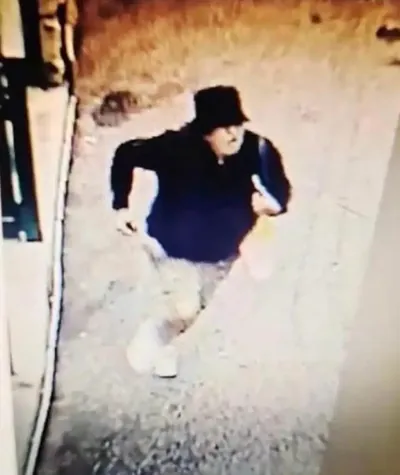
That was because they reviewed surveillance footage of a person, sporting a bucket hat, fleeing the scene.
Berezovska casually left a parcel in front of a building and waited for her victims to arrive — before detonating the bomb with a remote control.
Berezovska used a car she rented in Germany to flee the area. She fled to the French-Italian border before making her way to Switzerland, according to the Italian news agency ANSA.
The agency reported she made it back to her homeland — but it’s not clear how she reached Ukraine.
Yermolaiev is a multi-millionaire living in Monaco who had sanctions slapped on him by Kyiv beginning in December 2023 — reportedly stemming from his alcohol business activity in Russian-occupied Crimea, France24 reported.
He was among the wealthiest tycoons in Ukraine who led in the fields of commercial real estate, manufacturing and agriculture.
He told Forbes Ukraine that he renounced his Ukrainian citizenship and became a citizen of Cyprus in 2017.
Yermolaiev’s eldest son, Artur, was arrested in Cyprus last year and accused of organizing large-scale fraudulent call centers targeting Europeans, according to the Pravda newspaper.
Monaco’s Prosecutor General has confirmed that Ukrainian authorities have arrested two people suspected of involvement in the preparation of the attempted murders committed in the Principality, following Tuesday’s announcement that a woman believed to be the subject of Monaco’s international arrest warrant had been found dead near Kyiv.
In a press communiqué issued on Tuesday evening, Prosecutor General Stéphane Thibault said he had been informed by his Ukrainian counterpart that the investigation in Ukraine had already led to significant developments.
According to the communiqué, Ukrainian investigators have identified and arrested two individuals who “may have been involved in preparing the attempted murders committed in Monaco.”
The statement also confirmed that investigators had discovered the body of a woman who “could be the person targeted by the international arrest warrant issued by Monaco.”
While Monaco’s authorities did not identify the woman by name, Ukrainian prosecutors announced earlier on Tuesday that they had found the body of Anastasiia Berezovska, the Ukrainian national wanted by Monaco in connection with the 29th June parcel bomb attack, and had detained two men on suspicion of her murder.
International investigation continues across several countries
The investigation remains under the authority of Monaco’s investigating judges and is continuing in close cooperation with authorities from several countries, including Ukraine.
“The investigations are continuing very actively,” the Prosecutor General’s Office said, with investigators working to identify “all the persons who may have participated in the acts committed in Monaco, as well as their motives.”
Monaco press conference expected later this week
The Prosecutor General’s Office said a further press briefing may be held later this week, depending on the progress of the investigation, to communicate any information that can legally be made public.
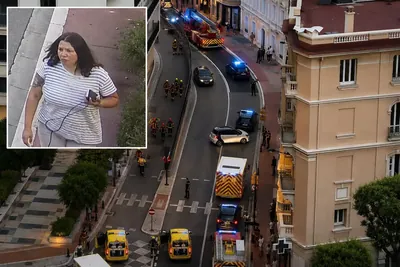
The parcel bomb exploded shortly before 9pm on 29th June outside a residential building on Rue du Révérend-Père-Louis-Frolla in Monaco, injuring Ukrainian businessman Vadym Iermolaiev, his 13-year-old son and his partner.
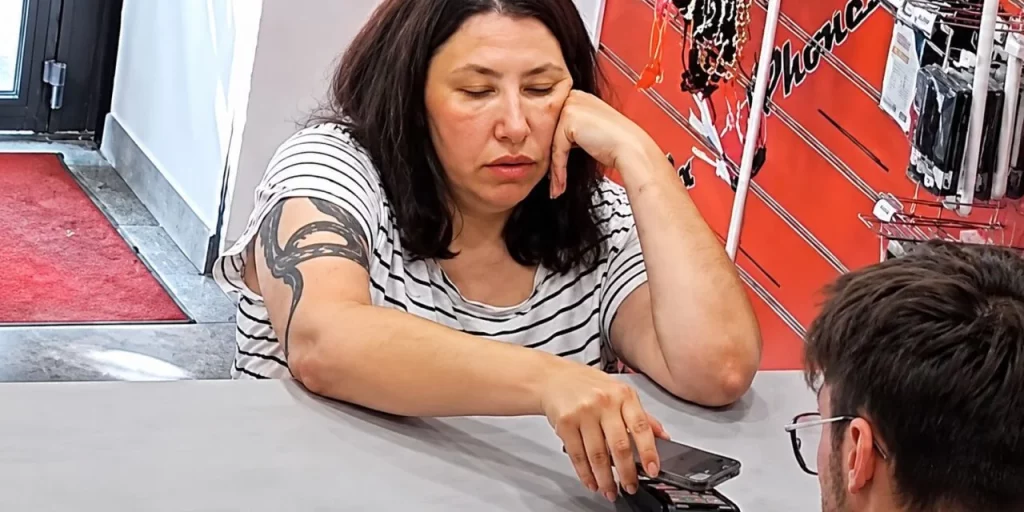
Anastasiia Berezovska, the woman wanted by Interpol in connection with the Monaco bombing of June 29, visited a shop in Beausoleil just hours before the attack to purchase a portable phone power bank, according to CCTV footage and an account from the shop assistant who served her.
Beausoleil sits directly on the French border with Monaco, a few hundred metres from the building targeted in the attack.
The shop assistant, named as Enzo, told investigators that Berezovska visited the store twice. She first came in to buy the power bank but was unable to complete the payment as her bank account had insufficient funds. She returned the same afternoon, at 5.09pm, to pay the outstanding amount.
Enzo said he was surprised when he realised she was the suspect. “When she came into the shop, she didn’t speak any English at all. She struggled a little, but she seemed completely normal,” he told investigators.
An Interpol photograph released in connection with the case shows Berezovska holding what appears to be a portable power bank, possibly the one purchased in Beausoleil earlier that day. Investigators believe the purchase could help establish the degree of premeditation behind the attack.
Berezovska’s vehicle has since been recovered in Germany. Ukrainian authorities have opened a parallel investigation into attempted premeditated murder.
The bomb detonated at around 9pm on June 29, injuring Vadim Ermolaev, his partner Anna Nasobina and their 13-year-old son. Ermolaev has since regained consciousness. Nasobina remains in a critical condition.
Berezovska remains at large. Interpol has issued a Red Notice for her arrest.x1200
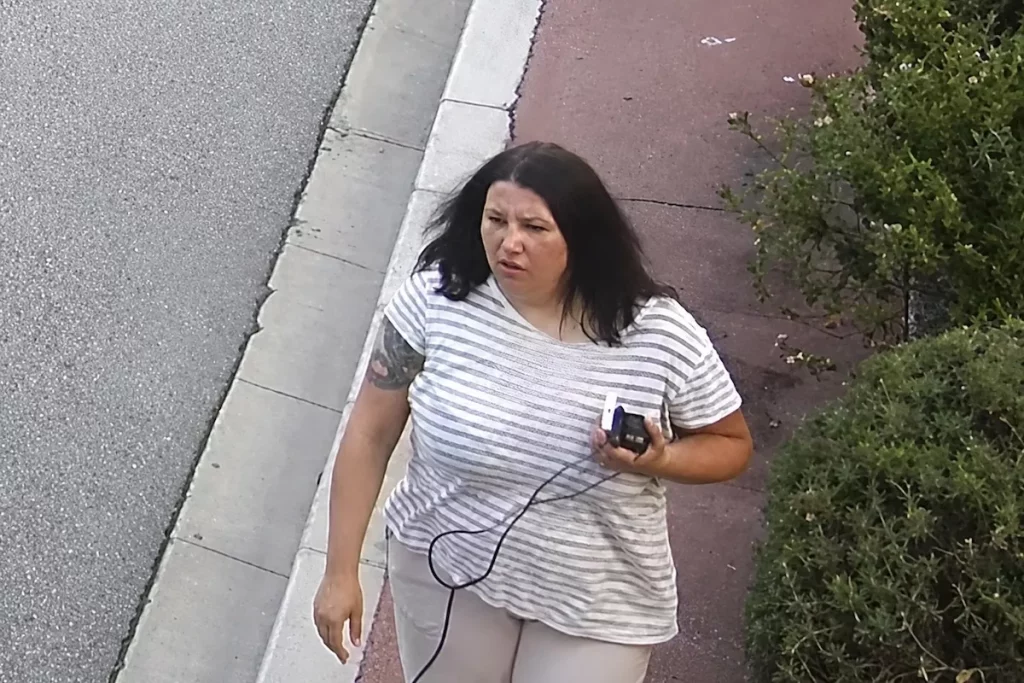
A serving officer of Ukraine’s military intelligence has confessed to the murder of Anastasiia Berezovska, the Ukrainian woman suspected of carrying out the 29th June bomb attack on a family in Monaco that injured three people, including a child, the Office of the Prosecutor General of Ukraine said on Tuesday. Her body was found near Kyiv with gunshot wounds to the head, and two men — the intelligence officer and a former law enforcement officer — have been detained on suspicion of her murder.
Ukrainian law enforcement opened a pre-trial investigation on 1st July, the day Berezovska arrived in the country, prosecutors said in a report seen by Monaco Life. Investigators identified the people she had been in contact with and traced her movements, establishing that, after returning to Ukraine, she had communicated with her family and with two men. The first was a former law enforcement officer; the second, a serving officer of the Main Intelligence Directorate of Ukraine’s Ministry of Defence, known as HUR.
Money sent to the suspect
Prosecutors said the two men had repeatedly transferred funds to Berezovska’s cryptocurrency wallets and bank accounts, which led investigators to examine them as people who may have been involved in the Monaco attack. Urgent searches and investigative actions followed. During these, the serving HUR officer confessed to the killing, saying he had carried it out together with the other suspect. He stated that he had not told his superiors about his contacts with Berezovska, the money transfers or his other actions, and that he had acted on his own initiative, according to the Office of the Prosecutor General.
A basement resembling a torture chamber
During a search of the former law enforcement officer’s home, investigators discovered what they described as a basement room resembling a torture chamber, prosecutors said. Both men have been detained on suspicion of murder committed by a group acting in prior conspiracy.
How the body was found
Based on the testimony of one of the suspects, investigators carried out a reconstruction of events, during which Berezovska’s body was found with gunshot wounds to the head, alongside spent pistol cartridge casings. Formal notices of suspicion are being prepared, and the investigation is continuing.
Cooperation with Monaco
The Office of the Prosecutor General said all the information available to Ukrainian law enforcement had been passed to the investigative authorities in Monaco, and that it was working in close cooperation with them. Ukrainian investigators are continuing to identify those who ordered the attempted murder of the family in Monaco, along with any others involved.
Monaco’s Prosecutor General has yet to confirm the development. Monaco Life reached out to the victim’s lawyer, who said they were not able to confirm or deny the information and would leave it up to the authorities to relay the appropriate information.
Who is leading the inquiry
The pre-trial investigation is being conducted by the National Police of Ukraine, with operational support from the counterintelligence department of the Security Service of Ukraine (SBU) and, prosecutors said, the personal assistance of the head of HUR, Oleh Ivashchenko — the agency whose serving officer has confessed to the killing.x1200
2026.7.7 Monaco bomb attack suspect reportedly found dead in Ukraine
Ukrainian media report that Anastasiia Berezovska, the main suspect in last week’s Monaco bomb attack, has been found dead near Kyiv, while two other suspects have reportedly been detained.
The woman identified by Interpol as the main suspect in last week’s bomb attack in Monaco has reportedly been found dead in Ukraine, according to an Ukrainian media outlet.
Ukrainska Pravda, citing law enforcement sources, reported that 39-year-old Anastasiia Berezovska was found near Kyiv at around 11:00pm local time on Monday.
The outlet said she had been shot.
Berezovska was the subject of an Interpol Red Notice issued by Monaco authorities, which identified her as the chief suspect in the 29 June explosion that injured three people, including a woman who remains in a critical condition after undergoing a double leg amputation.
Monaco prosecutors previously said the suspect fled the Principality on foot into France before travelling by car through several European countries, including Italy, eventually reaching Germany.
Ukrainska Pravda also reported that two suspects have been detained in connection with the case.
According to the publication, one is an officer with Ukraine’s Main Intelligence Directorate (HUR) and the other is a former law enforcement officer.
Ukrainian authorities have not publicly confirmed the reports.
The explosion targeted Ukrainian-born businessman Vadym Yermolaiev, who was injured along with his partner and son.
Monaco authorities have not yet commented on the reports from Ukraine.
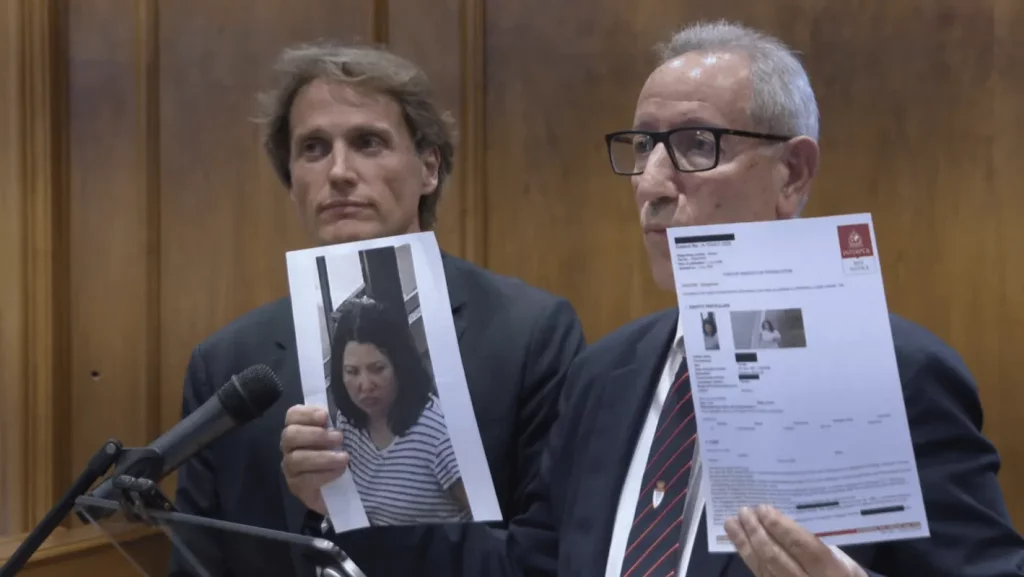
2026.7.5 Explosion à Monaco : l’Ukraine ouvre une enquête pour “tentative de meurtre” et souhaite créer une équipe “d’enquête internationale”
Le procureur général d’Ukraine l’a annoncé ce vendredi 3 juillet sur ses réseaux sociaux. L’attaque au colis piégé à Monaco a fait trois blessés, dont un oligarque ukrainien originaire de Dnipro.
Le bureau du procureur général d’Ukraine a annoncé, ce vendredi 3 juillet, l’ouverture d’une procédure pénale sous la qualification, utilisée dans le pays, de “tentative consommée de meurtre avec préméditation sur deux personnes ou plus, commise par un moyen dangereux pour la vie d’autrui et sur commande”, après l’attaque qui a fait trois blessés le 29 juin dernier à Monaco.
“Les autorités ukrainiennes mettent en œuvre toutes les mesures prévues par la loi afin d’identifier le ou les auteurs présumés de ce crime sur le territoire ukrainien, ainsi que les personnes qui auraient pu participer à son organisation ou en être les commanditaires”, a précisé le bureau du procureur général dans ce même communiqué.
Les autorités ukrainiennes ont également annoncé “coopérer avec les autorités compétentes de la Principauté de Monaco ainsi qu’avec d’autres partenaires étrangers” afin de retrouver les auteurs. Dans ce cadre, elles souhaitent la mise en place d’une “équipe commune d’enquête internationale”.
L’objectif affiché est de “mieux coordonner les investigations, d’identifier l’ensemble des personnes impliquées dans ce crime et de garantir qu’elles soient traduites en justice”. Pour l’heure, Anastasiia Berezovska, la femme au bob noir qui aurait déposé le colis piégé ayant fait trois blessés, est toujours recherchée.
Le point sur l’enquête à Monaco
Ce vendredi 3 juillet, le procureur général adjoint de la Principauté tenait une conférence de presse sur les suites de l’enquête ouverte après l’explosion survenue sur le Rocher le lundi 29 juin. Il a confirmé que le principal suspect dans cette affaire est bien cette femme, de nationalité ukrainienne qui vivait jusqu’alors en Allemagne.
Son domicile a été perquisitionné, mais l’intéressée n’a pas été retrouvée, a précisé la police allemande à l’AFP. “Des éléments de preuve ont pu être saisis et seront remis aux autorités monégasques”, indique-t-elle, avant d’ajouter “qu’un véhicule qu’elle utilisait a également été perquisitionné et saisi”.
Le parquet est également revenu sur les faits et gestes de la principale suspecte avant les faits. Anastasiia Berezovska a loué une voiture à son nom pour se rendre à Monaco. Puis, le 29 juin à 20h58, elle “s’est positionnée sur un banc préalablement, alors que les victimes revenaient d’un dîner en bord de mer”.
Désormais, les autorités monégasques souhaitent l’interpeller et identifier toute personne qui aurait pu l’épauler. Du côté des victimes, selon nos confrères de Monaco Matin, Vadim Ermolaev, oligarque ukrainien, est sorti du coma et son état de santé est rassurant. Son fils est hors de danger. En revanche, sa compagne reste hospitalisée dans un état critique.x1200
2026.7.5 Vadim Ermolaev emerges from coma as Monaco bomb investigation intensifies
Ukrainian businessman Vadim Ermolaev has reportedly emerged from a coma following Monday night’s bombing in Monaco, while his partner, Anna Nasobina, remains in a critical condition after suffering catastrophic injuries in the attack…
According to Monaco’s Prosecutor General’s Office, Nasobina underwent multiple amputations and her life remains in danger. Monaco-Matin reports that she has received extensive blood transfusions in recent days and faces the risk of losing several sensory functions, including her sight, hearing and speech. The couple’s 13-year-old son, who was also injured in the explosion, is now out of danger after being treated at Lenval Children’s Hospital in Nice.
The medical update comes as the investigation continues to gather pace. Monaco’s authorities have identified 39-year-old Ukrainian national Anastasiia Berezovska as the principal suspect and have secured an international arrest warrant supported by an Interpol Red Notice.
Investigators believe Berezovska carried out reconnaissance around the victims’ residence before allegedly planting the explosive device outside the building on June 29. Authorities say she fled Monaco on foot before travelling through France and Italy to Germany, her last known country of residence. German police have since searched her home and seized evidence, although she remains at large.
A judicial investigation into attempted murder and related offences has been entrusted to three investigating judges, while authorities continue to pursue both the suspected bomber and anyone who may have planned or assisted in the attack.
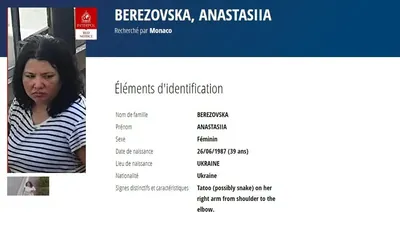
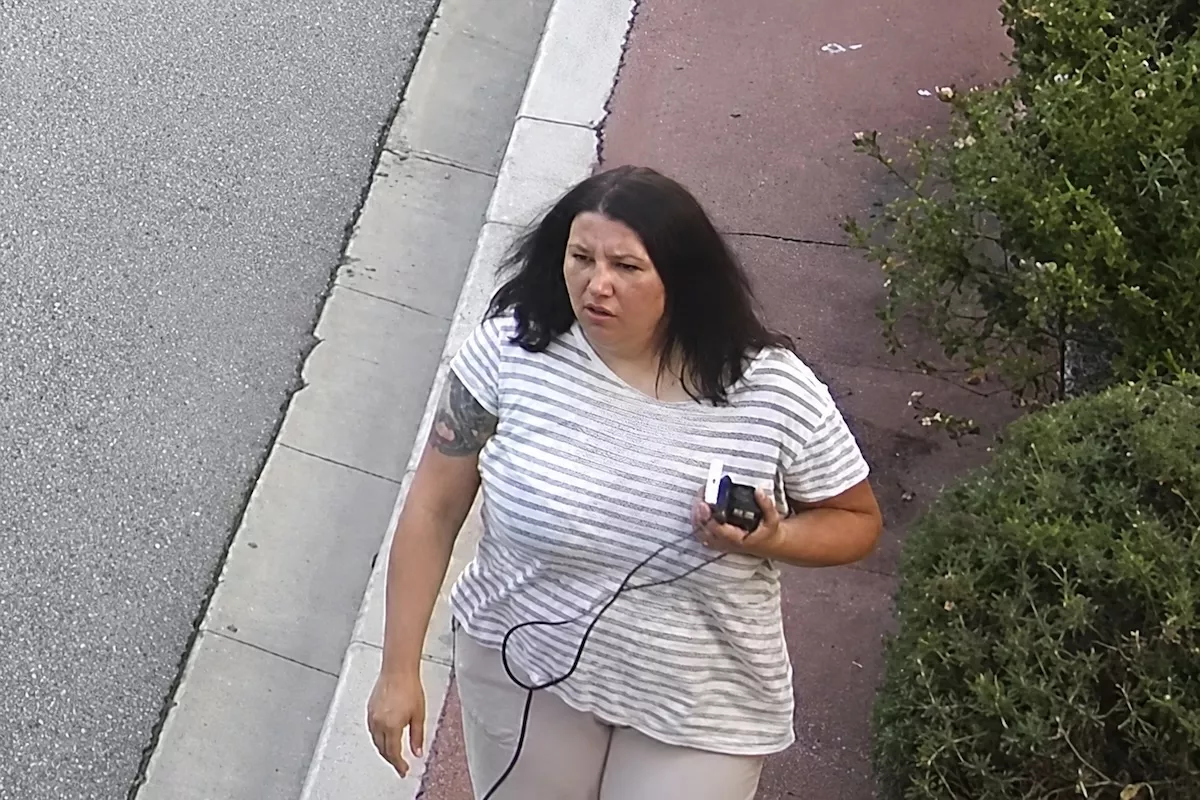
La personne portant un bob noir lors de l’explosion survenue à Monaco est bien une femme. Anastasiia Berezovska est recherchée par les autorités : la suspecte est de nationalité ukrainienne et vit en Allemagne.
Son visage est désormais connu de tous. Ce vendredi 3 juillet, la Principauté de Monaco tenait une conférence de presse à la suite de l’explosion survenue sur le Rocher lundi 29 juin.
La personne à l’origine de cet acte était vêtue d’un bob noir et avait une apparence masculine. Les enquêteurs sont désormais certains qu’il s’agit d’une femme. Lors de l’explosion, cette dernière portait des habits laissant penser qu’il s’agirait d’un homme.
Il s’agit d’une personne de sexe féminin, d’une trentaine d’années, de nationalité ukrainienne, dont le dernier domicile connu se situe en Allemagne.
Morgan Raymond, procureur général adjoint de la Principauté de Monaco
lors d’une conférence de presse ce vendredi 3 juillet
Intention criminelle de l’acte
Lors de cette conférence de presse, le parquet est revenu sur ces faits survenus le 29 juin à 20h58 précisément : “L’individu suspecté s’était positionné sur un banc préalablement. (…) Les victimes revenaient d’un dîner en bord de mer.” L’auteure a pu être identifiée après 53 heures d’enquête seulement.
Pour se rendre à Monaco, cette dernière a loué une voiture à son nom. Le véhicule a été restitué au retour.
Désormais, il s’agit aussi pour les autorités d’identifier toute personne qui aurait pu l’épauler. L’enquête travaille donc sur “l’existence de complices et de commanditaires”.
Domicile perquisitionné
Le domicile en Allemagne de la suspecte a été perquisitionné mais l’intéressée n’a pas été retrouvée, a indiqué vendredi la police allemande. “Des éléments de preuve ont pu être saisis et seront remis aux autorités monégasques”, précise un communiqué de la police de la région de Hesse (ouest) et du parquet de Francfort, ajoutant que “la femme recherchée est actuellement en fuite”.
Le parquet de Francfort indique dans une communication : “un véhicule qu’elle utilisait a également été perquisitionné et saisi. (…) Des preuves ont été recueillies et seront remises aux autorités monégasques.”
Entrée en Allemagne en 2022
Le journal Spiegel a publié des informations nouvelles ce vendredi 3 juillet au sujet de la suspecte. Le journal indique que l’auteure est originaire de la région de Louhansk, dans l’est de l’Ukraine, et qu’elle est entrée en Allemagne comme réfugiée de guerre en mars 2022, après le début de l’invasion russe. Elle aurait ensuite vécu, au moins temporairement, dans un centre d’hébergement collectif.
L’article mentionne également une expérience de chasseuse et la possible possession d’armes à feu légales. Toujours d’après les informations obtenues par le journal Spiegel, elle n’avait jusqu’alors jamais été signalée aux autorités allemandes.
Une enquête d’une grande rapidité
Trois jours après les faits, le suspect était toujours recherché par les autorités. Dans une communication envoyée mercredi 1ᵉʳ juillet aux médias, le procureur général de la Principauté de Monaco avait précisé que l’enquête “se poursuit très activement, avec I’appui des autorités françaises”.
Celle-ci a pris une nouvelle tournure à la suite d’un témoignage révélant que la personne à l’origine de l’explosion serait en réalité une femme qui aurait fui dans un pays européen. Cette piste a été très sérieusement envisagée.
Le 2 juillet, le procureur général indiquait : “Un mandat d’arrêt a été émis contre le suspect, lequel fera l’objet d’une notice rouge Interpol dès ce soir.”
À ce stade, la police technique et scientifique de Marseille continue d’analyser les restes du sac piégé pour trouver des traces d’ADN. Le pronostic vital de l’une des victimes reste quant à lui toujours engagé. Selon les informations du parquet, seul “le mineur victime a pu être entendu en France, mais les deux autres ne sont toujours pas en mesure de l’être”.
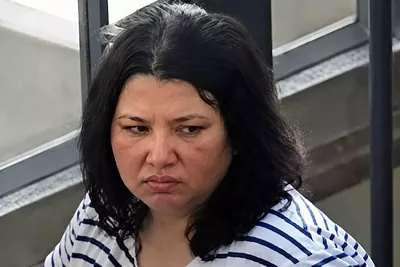
Monaco’s judicial authorities have publicly identified the principal suspect in the Principality’s first-ever parcel bomb attack as a Ukrainian woman in her 30s who disguised herself as a man — while Interpol, in a Red Notice published on Friday, names her as Anastasiia Berezovska, a Ukrainian national last residing in Germany.
Speaking at a press conference on Friday 3rd July, Monaco Deputy Attorney General Morgan Raymond was joined by Éric Arella, Controller in charge of Public Security, and Chief Commissioner Émeline Moreau, Head of the Criminal Investigation Division, to outline the investigation that led to an international arrest warrant and an Interpol Red Notice.
The conference followed Thursday evening’s announcement that investigators had identified the alleged perpetrator. Friday’s briefing marked the first time authorities publicly explained how they reconstructed the attack, tracked the suspect across several European countries and released her image through Interpol.
Suspect identified as Ukrainian woman living in Germany
While prosecutors declined to officially confirm the suspect’s identity during the press conference, the Interpol Red Notice issued shortly afterwards identifies her as Anastasiia Berezovska, a 39-year-old Ukrainian national whose last known residence was in Germany.
According to the notice, she was born in Ukraine on 26th June 1987, speaks German, has dark hair and a distinctive tattoo, believed to depict a snake, covering her right arm from the shoulder to the elbow.
Raymond confirmed that the suspect is wanted for attempted murder, placing an explosive device on the public highway with criminal intent, and criminal conspiracy.
Planned attack following days of surveillance
Raymond said investigators established that the suspect carried out several reconnaissance visits around the Sun Palace residence on Rue Révérend Père Frolla before the attack.
Security camera footage showed an individual appearing to be a man, dressed in a black bucket hat, dark long-sleeved clothing, light-coloured shorts and carrying a light-coloured shopping bag, visiting the area on 26th June and 27th June.
On the evening of 29th June, shortly before 9pm, the suspect allegedly waited on a bench at Place des Moulins before following the three intended victims as they returned home on foot after dining at a seafront restaurant.
“He stood up a few metres ahead of the victims, placed an explosive device taken from his shopping bag on the entrance steps of the building, then turned to confirm the presence of the three victims before triggering the explosion using a remote control,” Raymond explained.
Three people were injured in the blast – Ukrainian businessman Vadym Iermolaiev, his partner and teenage son.
CCTV revealed the suspect’s disguise
Investigators initially believed they were searching for a man. However, Raymond said a witness who had interacted with the individual on the evening of the explosion prompted detectives to re-examine surveillance footage.
Reviewing recordings from 28th June — the only day the apparent male suspect was absent — investigators identified a woman following exactly the same route around the scene.
Her movements, pauses outside the building and overall behaviour mirrored those of the individual previously captured wearing the bucket hat.
Combined with the discovery of a prominent tattoo on her right arm, investigators concluded the apparent male suspect and the woman were the same person.
“The repeated reconnaissance operations and the pauses made in front of the building clearly demonstrate the intention to specifically target the three victims,” Raymond said.
Escape reconstructed across Europe
Following the explosion, the suspect fled on foot towards France. Investigators were then able to identify a vehicle she had used during her stay in the Principality, obtaining a German registration plate. This allowed them to retrace her escape route from France into Italy and subsequently through several other European countries, before establishing that she had reached her country of residence. The car was found to have been rented specifically for the operation from a company in Germany where the suspect lived.
The woman is now the subject of an international arrest warrant, while an Interpol Red Notice has been circulated to police forces worldwide.
Investigation continues into possible accomplices
Although the alleged perpetrator has been identified, Raymond stressed that the investigation remains ongoing.
“The relative sophistication of the explosive device and the modus operandi appear to indicate that the person who placed the device was not acting alone,” he said.
Two men were arrested in Monaco on Wednesday 1st July and Thursday 2nd July as part of the investigation. However, Raymond confirmed that “the interviews and investigations carried out did not establish any active participation by these two individuals in the events of 29th June,” and both men were subsequently released.
Investigators are now focusing on determining whether the suspect had accomplices or whether the attack was commissioned by another party.
More than 250 officers mobilised
Public Security chief Éric Arella praised what he described as an exceptional mobilisation by Monaco’s security services.
“To be precise, the identification took 53 hours,” he said. He revealed that more than 250 officers were deployed immediately after the explosion to secure the Principality, while nearly 70 judicial police investigators worked continuously, day and night, on the criminal investigation.
Approximately 300 investigative actions were carried out and around 200 judicial reports were produced during the first stages of the inquiry.
Arella said Monaco’s CCTV network had proved “absolutely decisive” in identifying the suspect, while thanking the French National Police, the Gendarmerie, the Marseille forensic laboratory, Interpol, Europol and law enforcement agencies from more than 20 countries for their assistance.
“The identification of the material perpetrator in just over 48 hours — or, to be precise, 53 hours — is the result of the exceptional mobilisation of our personnel,” Arella said.
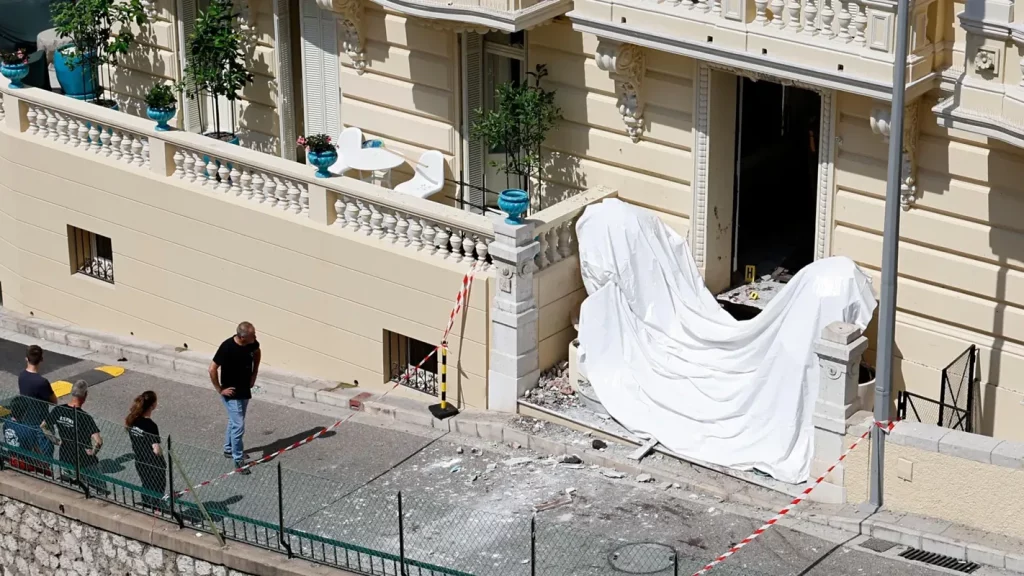
2026.7.2 With 556 police officers patrolling a country half the size of Central Park, everyone thought Monaco was safe
Monaco’s reputation as one of the safest countries on earth was shattered just before 9 p.m. local time on Monday night when a bomb exploded in the entrance of one of the city state’s fanciest apartment buildings.
The bomb went off as Ukrainian-born oligarch Vadym Yermolaiev, 58, a resident of the building, stepped out onto the street. He was seriously injured. A woman and a 13-year-old child were also seriously hurt in the first bomb assassination attempt ever recorded on Monaco’s highly-surveilled streets.
Prince Albert II, Monaco’s head of state since 2005 and the son of Prince Rainier III and Princess Grace (Kelly), described the bombing as “an odious act” as he mobilized Monaco’s police officers and security services to hunt for the attacker, and ordered a step-up in already very regular police street patrols to reassure the country’s wealthy residents.
The police have launched an investigation into “attempted premeditated murder and placing an explosive device in a public area.”
Christophe Mirmand, Monaco’s minister of state, said it was “the first time in history that such an act has taken place in the principality,” and noted that CCTV showed the suspect “had walked around the area several times while waiting for the victims.”
The tiny tax-free city state surrounded by France on three sides and the Mediterranean on the other, prides itself on its high level of safety and security.
There were no homicides, or even attempted murders, last year, according to the principality’s police department. By comparison, in the US there were more than 20,000 homicides – an average of 55-a-day, according to the Centers for Disease Control and Prevention (CDC).
There were also no armed robberies. However, a record number of overall offenses were registered: 1,055. That is still less than three per day on average, and 38% of them were classed as minor offenses including unintentional injuries, defamation, vandalism, petty theft and fraud.
Crime is low in Monaco because it is one of the most heavily policed places on earth. There are 556 police officers in the principality, which spans just 485 acres, making it the second-smallest independent state in the world after Vatican City and just over half the size of New York’s Central Park (843 acres).
With a population of 38,857, that means there is one police officer for every 70 residents, according to the Monegasque Institute of Statistics and Economic Studies.
In the US, there is roughly one police officer for every 400 people, but it varies widely depending on state and city. In Washington DC – the most heavily policed place – there is one police officer for every 185 people. In the UK it is one per 425 people.
In addition to the police force, there are 125 elite military officers from the Compagnie des Carabiniers du Prince (The Prince’s Company of Carabinieri) dedicated to guarding the prince and his family.
Monaco also has a network of 1,387 CCTV and facial recognition cameras monitored 24 hours a day at an “operational command and supervision center.” Random on-the-spot identity checks are regularly carried out, with more than 134,000 taking place last year.
The government is in the process of spending millions increasing security along its northern border with France. There are no physical barriers between Monaco and the neighboring French town of Beausoleil, and it is possible to walk between the two without realizing you have done so.
The suspect in the bombing of the cream colored 1920s Sun’s Palace apartment building on Rue Révérend-Père-Louis-Frolla, was captured on CCTV walking up the street – and into France. The suspect remains at-large despite a manhunt involving both Monegasque and French police.
The Monegasque government lists “a unique level of public safety” as a key reason why so many wealthy people and celebrities have chosen to move to Monaco. Famous faces who have made their homes there include Formula One drivers Lewis Hamilton, Jenson Button and Max Verstappen; tennis players Novak Djokovic and Björn Borg, as well as The Beatles drummer Ringo Starr and singer Shirley Bassey.
Nick Edmiston, the founder and chairman of superyacht builder Edmiston & Co, who has lived in Monaco since 1989, said feeling safe and secure was what made the country special.
“You can walk around wearing expensive jewelry and feel safe,” he said. “Many wealthy people are used to always being surrounded by bodyguards but that’s not necessary in Monaco.”
About 35 in every 100 Monaco residents are millionaires, according to research by estate agent Knight Frank.
As well as security, they have also been attracted by the country’s tax structures. There are no taxes on income, wealth, property or capital gains. Companies incorporated in Monaco are also exempt from taxes if most of their business is based in the principality. The only tax that does apply in the principality is VAT (sales tax) which is charged at 20% on most items.
In order to apply for residency, applicants must open a Monaco bank account and deposit at least €500,000 (£440,000).
The government is fielding so many applications from people wishing to move to Monaco, that it spent 2 billion euros ($2.28 billion USD) reclaiming 15 acres of land from the sea upon, which 120 apartments are being marketed for sale at more than $100,000 per sq meter. That’s more expensive than luxury apartment complexes like 15 Central Park West in Manhattan or One Hyde Park in London.
A cool $1 million in Monaco will buy just 16 square meter (172 square feet) of prime residential property, less than a third of the space it would buy in Paris, according to the Knight Frank report.
2026.7.2 Monaco bombing suspect identified as arrest warrant and Interpol Red Notice issued
Monaco’s judicial authorities have identified the man suspected of carrying out the parcel bomb attack that injured three people in the Principality on 29th June, issuing an arrest warrant and requesting an Interpol Red Notice as the investigation enters a new phase.
In a communiqué issued late on Thursday, the Prosecutor General’s Office announced that a formal judicial investigation has been opened following what it described as the rapid identification of the suspect through the combined efforts of Monaco’s judicial police and international law enforcement partners.
“The quality of the work carried out by the judicial police division of the Direction de la Sûreté Publique, whose responsiveness, combined with effective international criminal cooperation, both police and judicial, made it possible to identify the person suspected of being the perpetrator in a particularly short time,” the communiqué said.
The case has now been placed before three investigating judges, marking a significant procedural step in the criminal investigation. The judicial inquiry has been opened on charges of attempted murder and complicity, depositing an explosive device on the public highway with criminal intent and complicity, and criminal conspiracy.
The appointment of three investigating judges gives the inquiry access to broader investigative powers, including the authority to oversee international judicial cooperation. Within this framework, an arrest warrant has been issued for the suspect, while an Interpol Red Notice was due to be activated on Thursday evening.
The announcement represents the most significant breakthrough since the explosion outside a residential building on Rue du Révérend Père Louis Frolla shortly before 9pm on 29th June.
The attack injured Ukrainian businessman Vadym Iermolaiev, his 13-year-old son and his partner. Prosecutor General Stéphane Thibault said on Wednesday that one of the two adults remained in a life-threatening condition, while the other victims’ injuries were no longer considered life-threatening.
Judicial authorities are expected to provide further details during a press conference at 11.30am on Friday 3rd July in the Supreme Court chamber of Monaco’s Palais de Justice, where investigators are due to present the latest developments in what has become one of the most significant criminal investigations in the Principality’s recent history.
2026.7.1 Prince Albert II and Princess Charlene briefed by security forces after Monaco’s first ever bomb attack
2026.6.30 Prince Albert II condemns “criminal explosion” after Monaco blast
Prince Albert II has condemned the Monaco explosion that injured three people, praising the emergency response and reaffirming the Principality’s commitment to public safety as the investigation continues.
Prince Albert II has condemned the “criminal explosion” that injured three people in Monaco on Monday evening, pledging that the Principality will remain “united and determined in the face of violence and crime”.
The blast happened shortly before 9pm in a residential building near Place des Moulins.
Three people were injured, two of them seriously, while a suspect who allegedly left an explosive device at the scene remains on the run.
The Prince, who was in Germany for the inauguration of Monaco’s themed area at Europa-Park, cut short his trip and returned to the Principality overnight.
In a statement, he described the incident as “a shock for the entire Monegasque community” and expressed his and Princess Charlène’s support for the victims, their families and nearby residents.
He also praised the emergency services and police for their swift response, saying he had full confidence in the Monegasque and French authorities working together to identify those responsible.
“The Principality of Monaco will remain united and determined in the face of violence and crime,” the Prince said, adding that the safety of the community “has always been, and will remain, a top priority.”
Investigators are continuing their search for the suspect as the inquiry into the motive behind the attack continues.
Read Prince Albert II’s full statement in full below :
“The criminal explosion that occurred this evening in Monaco is a shock to the entire Monégasque community.
My thoughts go first to the victims, their loved ones, and the local residents directly affected by this heinous act. Princess Charlène, my family, and I wish to express to them our compassion and our unwavering support.
We also want to commend the remarkable work of the public security forces, who are managing the situation with rigour and composure, and who have enabled a rapid response in caring for the victims and securing the area.
Under the authority of the Government, all relevant State services are currently mobilised, in close cooperation with the French authorities. We trust them to clarify the circumstances of this tragedy as swiftly as possible, to identify those responsible, and to provide every appropriate response, at all levels.
More than ever, the Principality of Monaco will remain united and resolute in the face of violence and crime. The security of our community has always been a priority; it will remain so more than ever, whatever the threats.”
-Albert II, Prince of Monaco
2026.6.29 Blast in Monaco injures three people as police hunt suspected bomber after ‘terror attack’
A suspect is said to be at large after being seen on CCTV dumping a backpack on Rue du Révérend Père Louis Frolla, near the French border.
The blast, which has been described as an ‘attack’, occurred at around 9pm. Two of the three people injured are said to be critically hurt. Police said the victims are Ukrainian.
Monaco’s Minister of State has said that the explosion is “likely a terrorist attack”.
Christophe Mirmand told AFP that the explosive device “likely contained bolts and pellets”.
The victims have been evacuated to hospitals in Nice.
Prince Albert of Monaco said in a statement: “The criminal explosion that occurred tonight in Monaco is a shock for the entire Monegasque community.”
He added: “We also want to salute the remarkable work of the public safety forces, who manage the situation with rigour and serenity, and have allowed rapid support of victims and securing the premises.”
“Under the authority of the Government, all the state services concerned are currently mobilised, in close cooperation with the French authorities. We trust them to elucidate the circumstances of this tragedy as soon as possible, identify those responsible and provide him with all the necessary answers, at all levels.
“More than ever, the Principality of Monaco will remain united and determined in the face of the violence and crime.
“The security of our community has always been a priority; it will remain more than ever, whatever the threats.”
He went on: “This is the first time in history, to my knowledge, that such an act has occurred in the Principality.
“It has been confirmed that law enforcement has now mobilised on both the Monegasque and French sides of the border.
Eric Ciotti, Mayor of Nice, wrote on X: “The attack carried out this evening is a tragedy that strikes Monaco.
“Thoughts for the victims, their families, and the people of Monaco.
“Total support for the security forces and emergency services mobilised.”
The blast took place at a residential building, and a “red plan” has reportedly been initiated in Monaco as a result of the attack.
A red plan refers to a “pre-established action strategy for a sudden event resulting in, or likely to result in, numerous casualties” the Principality of Monaco’s website states.
It “allows for a gradual increase in resources depending on the number of victims”.
An update from the Government said: “This evening, shortly before 9 p.m., a violent explosion caused by a bomb was heard in the Principality, not far from Place des Moulins.
“The area was quickly cordoned off by law enforcement. Three people were injured: two adults and a child, who were taken to hospitals in Nice.
“Two people were treated for shock, and two others with minor injuries went to Princess Grace Hospital (CHPG) on their own.
“A suspect was spotted by CCTV fleeing towards the town of Beausoleil in France.
“Access to the Principality was immediately secured. The Attorney General was notified, and a judicial investigation was opened. Forensic evidence was collected late into the evening.
“Fifty firefighters were mobilized (40 Monegasque and 10 French) with 12 vehicles, and 84 police officers were deployed.
“The six unoccupied apartments in the targeted building were secured.”
发表回复